Alumni Recognition Event Planning: From Invitations to Interactive Displays
- Home /
- Touch Archive Blog /
- Alumni Recognition Event Planning: From Invitations to Interactive Displays
The Easiest Touchscreen Solution




Live Example: Rocket Alumni Solutions Touchscreen Display
Interact with a live example (16:9 scaled 1920x1080 display). All content is automatically responsive to all screen sizes and orientations.
Alumni recognition events serve as powerful touchpoints that honor graduate achievements while strengthening lifelong connections between individuals and their alma maters. When executed thoughtfully, these celebrations transform passive alumni into active advocates, donors, and mentors who remain engaged with institutional missions throughout their lives.
Many advancement professionals struggle with recognition event logistics—managing invitation lists, coordinating honoree schedules, creating memorable experiences, and measuring impact beyond attendance numbers. Traditional approaches often default to predictable dinner formats with plaques and speeches that fail to create lasting impressions or drive future engagement.
This comprehensive guide walks through every phase of alumni recognition event planning, from initial invitation strategy through incorporating interactive displays that extend recognition beyond single-night celebrations. Whether planning intimate departmental honors, milestone reunion celebrations, or institution-wide galas, these strategies help advancement teams, alumni relations directors, and development professionals create meaningful recognition experiences that resonate with graduates and advance institutional goals.
Alumni recognition events represent strategic investments in relationship-building rather than simple celebrations. Honored alumni feel valued and deepen institutional loyalty. Attendees witness peer accomplishments and envision their own potential contributions. Current students see success models worth emulating. The ripple effects extend far beyond event nights themselves.

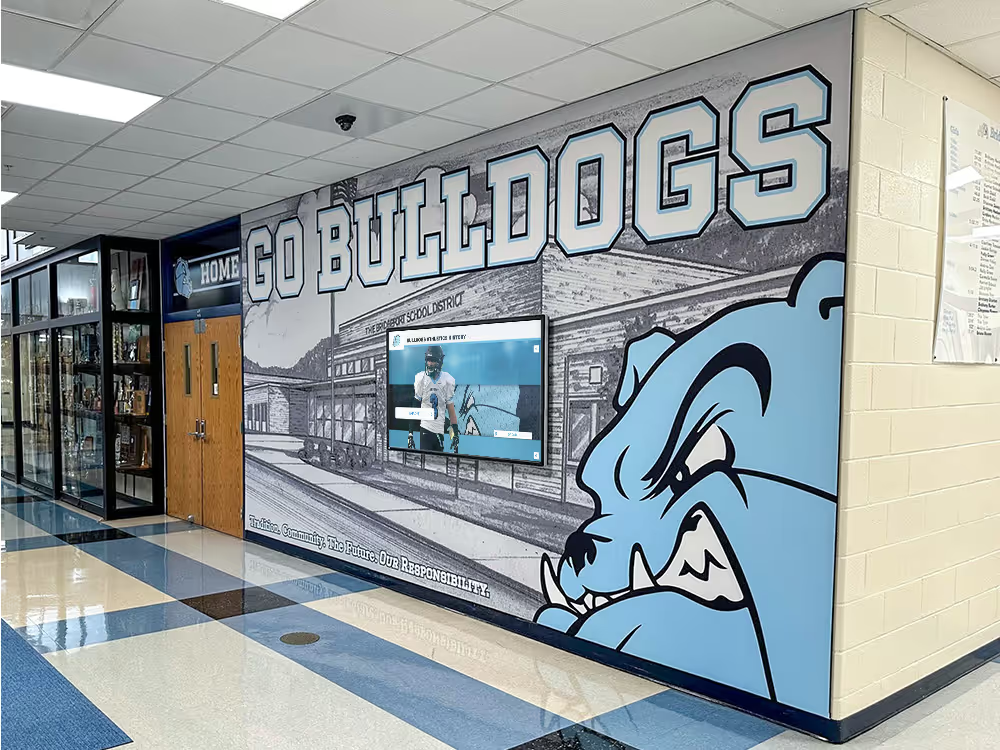
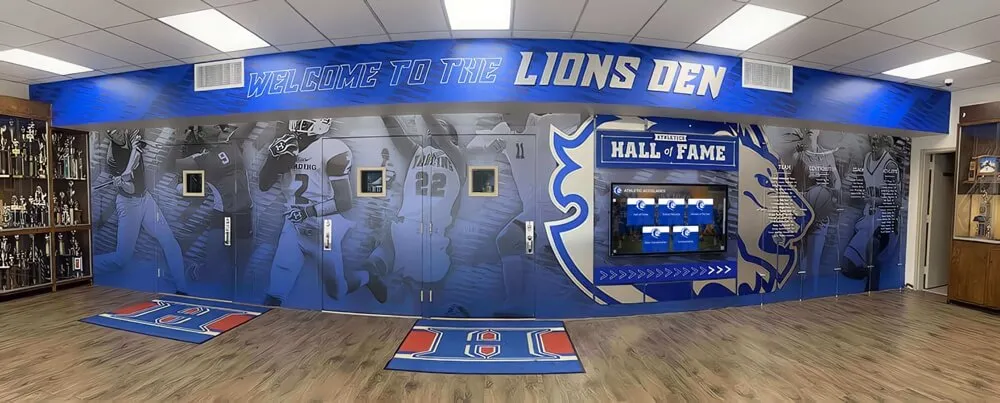
Modern alumni recognition combines thoughtful event planning with digital tools that honor achievements year-round
Understanding Alumni Recognition Event Types
Different recognition events serve distinct purposes within comprehensive alumni engagement strategies. Understanding these categories helps match planning approaches to intended outcomes.
Achievement Award Ceremonies
These formal events honor alumni who have distinguished themselves professionally, philanthropically, or through service. Achievement awards typically recognize career accomplishments, industry leadership, entrepreneurial success, or community impact. Ceremonies work best as standalone evening galas or integrated into larger institutional events like homecoming weekends.
Achievement awards create natural fundraising opportunities, as honorees often make significant gifts coinciding with recognition. They also generate media coverage and institutional prestige when celebrating notable graduates.
Service Recognition Events
Service awards honor volunteers who contribute time, expertise, and leadership to institutional advancement. Board members, regional chapter leaders, admissions ambassadors, mentorship program participants, and reunion coordinators receive recognition for strengthening alumni communities.
These events motivate continued service while demonstrating that institutions value non-financial contributions alongside monetary gifts. Service recognition builds volunteer pipelines by celebrating role models who inspire broader participation.
Milestone Reunion Celebrations
Reunions marking 10, 25, 50-year anniversaries naturally incorporate recognition elements honoring class accomplishments, significant donors, and distinguished classmates. Recognition components within reunion programming celebrate collective achievements while spotlighting individual excellence.
Planning resources for milestone reunions can be found in comprehensive alumni event planning guides that cover various celebration formats.
Hall of Fame Inductions
Athletic, academic, arts, or institutional halls of fame create elite recognition tiers celebrating exceptional achievement. Induction ceremonies often become signature annual events that attract broad alumni attendance beyond honorees and their families.
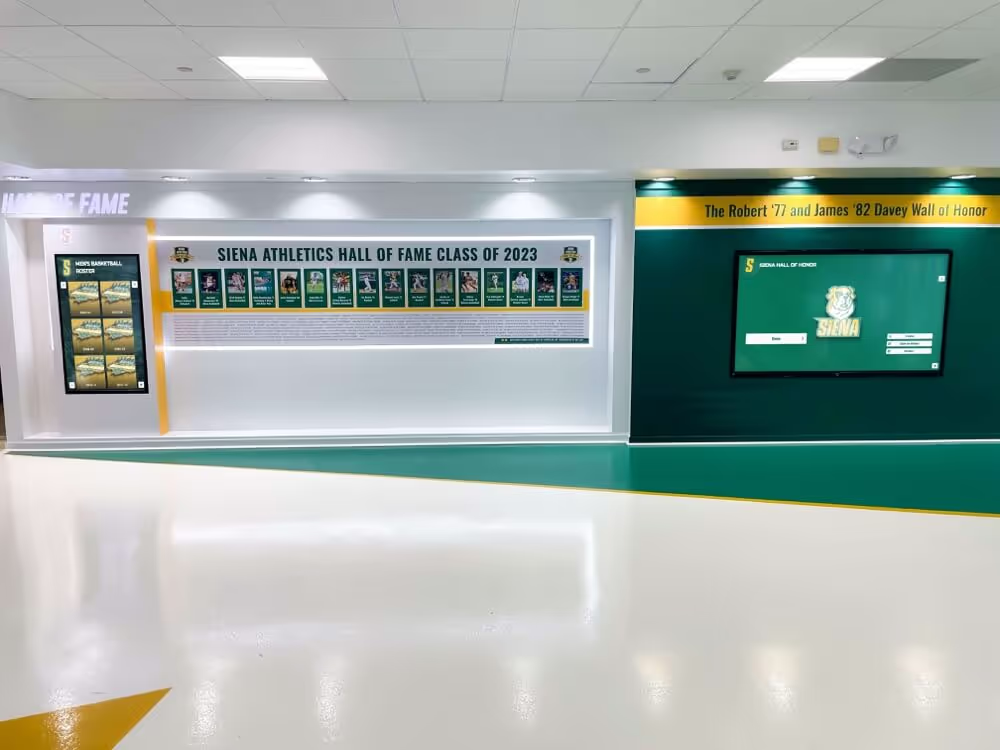
Hall of fame events combine formal recognition with social programming—receptions, dinners, campus tours, and interactive experiences. Physical displays complement ceremony nights by maintaining year-round visibility.
Young Alumni Achievement Awards
Recognizing recent graduates within 10-15 years of graduation demonstrates institutional pride in emerging leaders while engaging demographics that often show lower participation rates. Young alumni awards celebrate early career success, entrepreneurial ventures, creative accomplishments, or service impact.
These events typically feature contemporary formats—networking receptions, panel discussions, informal gatherings—that match younger graduate preferences over traditional banquet dinners.
Departmental and Affinity Recognition
Schools, colleges, departments, and programs host focused recognition celebrating alumni achievements within specific academic disciplines. Engineering schools honor technical innovators, business schools celebrate entrepreneurial leaders, education programs recognize teaching excellence, and arts programs showcase creative accomplishments.
Departmental events strengthen affinity connections that often prove more meaningful than general institutional loyalty, particularly at large universities where graduates identify primarily with majors rather than overall institutions.
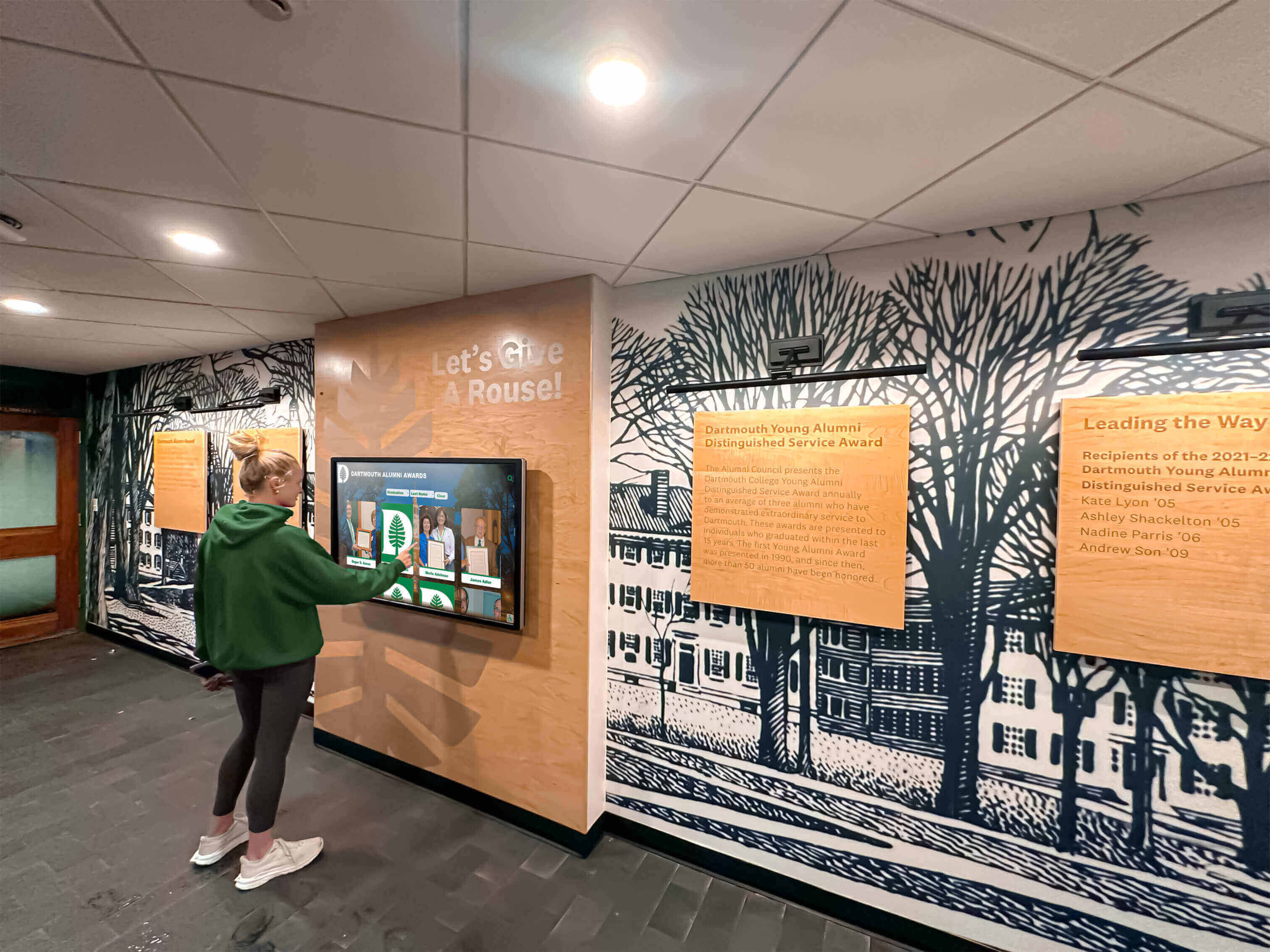
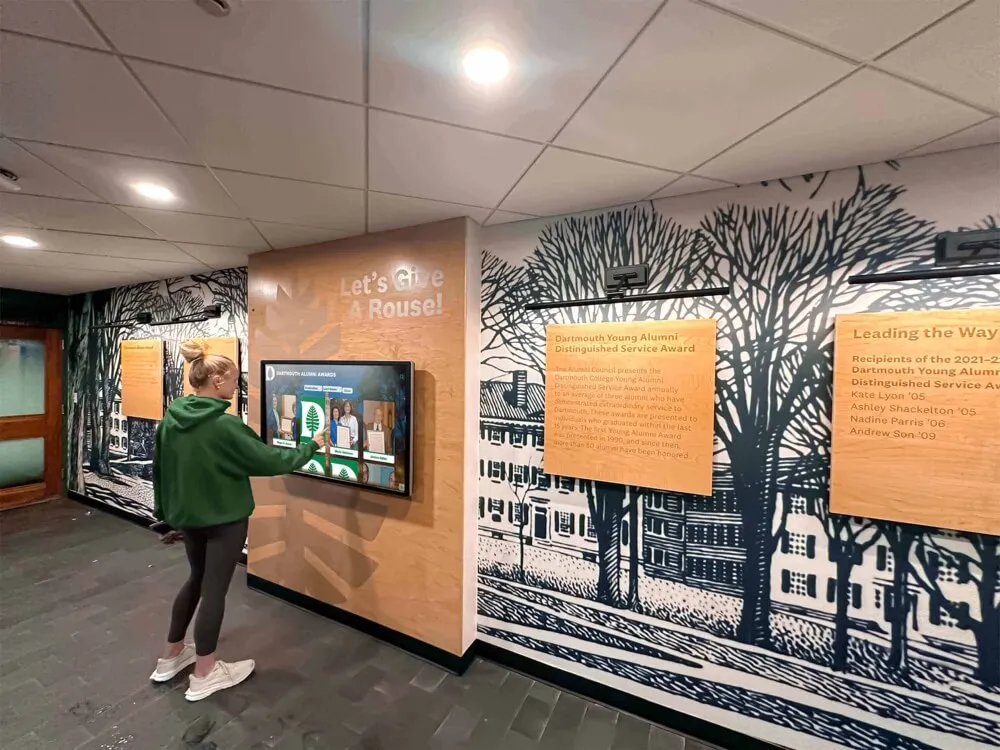
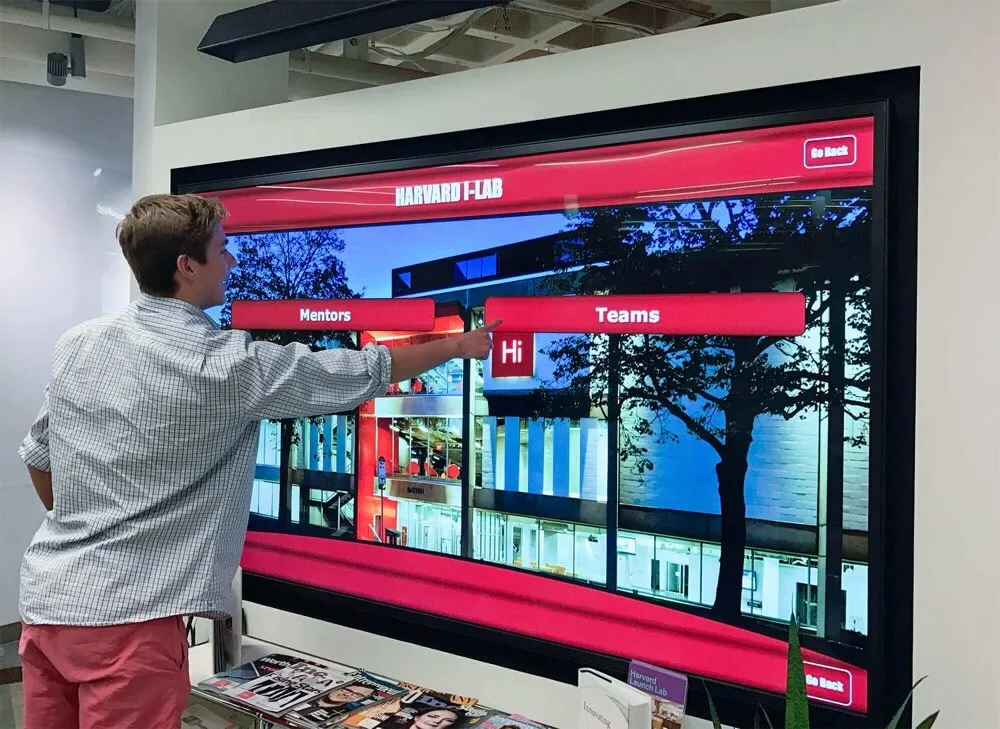
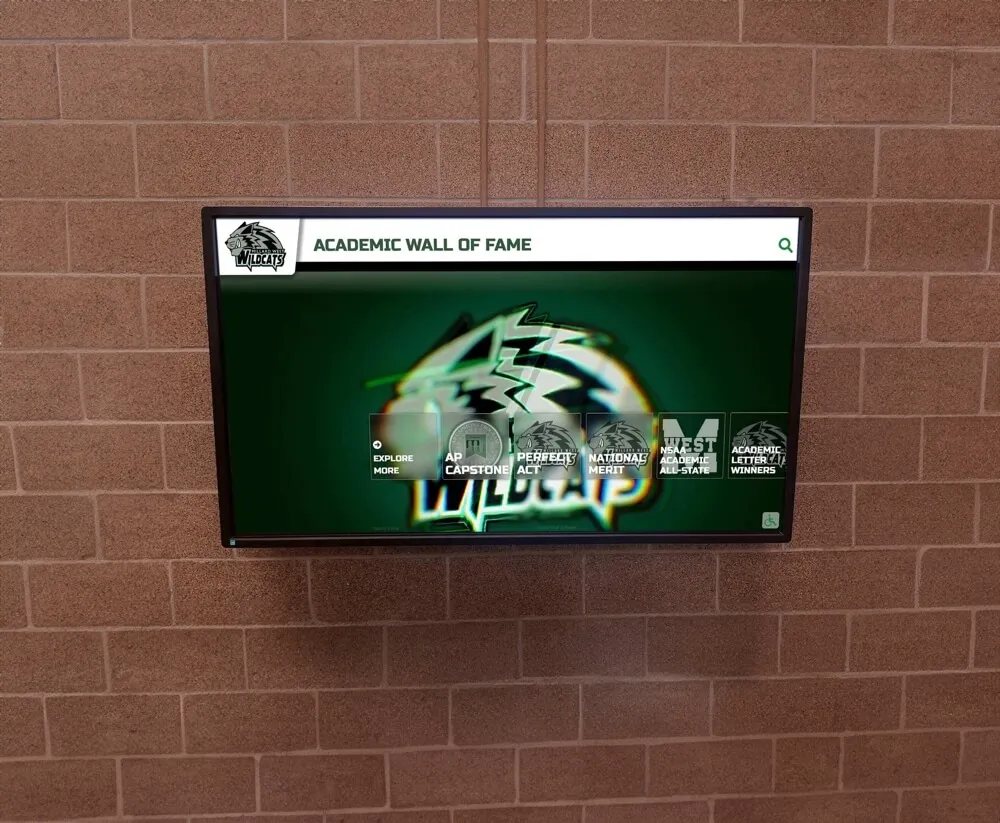
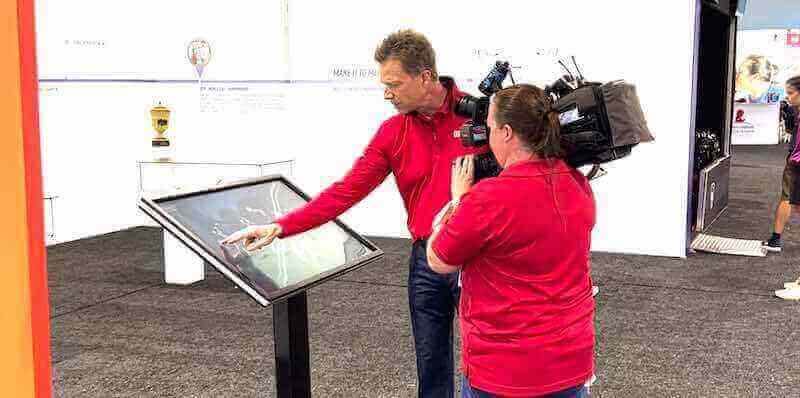
Interactive displays allow attendees to explore honoree accomplishments in depth, creating richer understanding than brief speeches permit
Strategic Invitation Planning
Effective invitations drive attendance, set event tone, and begin the recognition experience before guests arrive. Strategic invitation planning requires careful audience selection, compelling messaging, and multi-touchpoint communication.
Defining Invitation Lists
Alumni recognition events serve multiple audiences beyond honorees themselves. Consider these invitation categories:
Primary Honorees receive formal recognition and typically enjoy complimentary attendance with guest privileges. Invitations should arrive 8-12 weeks before events, allowing calendar clearing and travel arrangement.
Honoree Families and Guests share celebration moments. Clarify guest policies early—some events permit unlimited family attendance while others cap guests at one or two per honoree. Family members often become institutional supporters following positive recognition experiences.
Event Sponsors and Major Donors receive priority invitations as relationship cultivation opportunities. Recognition events showcase how institutions honor excellence, reinforcing that donor contributions support meaningful communities. Sponsor acknowledgment within programs demonstrates appreciation while encouraging continued support.
Institutional Leadership including presidents, provosts, deans, trustees, and development officers attend to demonstrate institutional commitment to honorees. Leadership presence elevates event importance and creates networking opportunities.
Alumni Board Members and Volunteers gain recognition insights that inform their service while celebrating peer accomplishments. Volunteer attendance strengthens communities and models engagement for broader alumni populations.
Classmates and Contemporaries of honorees increase attendance and create reunion atmospheres. Inviting graduation year cohorts, former teammates, or departmental peers builds audiences naturally inclined to attend.
General Alumni Community receives broader invitations after priority groups confirm attendance. Open invitations maximize attendance while maintaining manageable headcounts through pricing or registration requirements.
Current Students benefit from exposure to successful alumni role models. Student attendance connects generations and demonstrates career possibilities, particularly when honorees share similar backgrounds or academic paths.
Crafting Compelling Invitations
Invitation content determines whether recipients perceive events as must-attend celebrations or easily-declined obligations. Effective invitations communicate clear value propositions while honoring individuals appropriately.
Subject Lines and Headlines must capture attention immediately. “You’re Invited: Distinguished Alumni Awards Gala” lacks specificity. “Celebrate Sarah Chen’s Groundbreaking Medical Research: Alumni Achievement Gala” personalizes and creates interest. Naming specific honorees in communications drives higher open rates.
Opening Paragraphs should establish event significance and personal relevance. Explain why this event matters and what attendees will experience. “Join us as we honor five extraordinary graduates whose innovations are transforming their fields” positions events as celebrations of excellence rather than routine gatherings.
Honoree Profiles within invitations preview who will be celebrated and why. Brief biographical paragraphs with career highlights, institutional connections, and achievement summaries help recipients determine relevance and interest. Profiles also provide conversation starters for attendees unfamiliar with honorees.
Event Programming Details outline what will occur beyond awards presentations. Will there be networking receptions, keynote addresses, entertainment, campus tours, interactive exhibits, or professional development components? Programming details help alumni assess value and time investment.
Logistical Clarity prevents confusion and streamlines registration. State date, time, location, dress code, parking instructions, and costs explicitly. “Black-tie optional evening gala, Friday, October 15, 6:00 PM reception, 7:00 PM dinner and awards, University Grand Ballroom, complimentary valet parking” answers essential questions immediately.
Clear Calls-to-Action drive registration. Single-purpose buttons or links labeled “Reserve Your Seat,” “Register Now,” or “RSVP by September 15” create obvious next steps. Multiple competing CTAs dilute effectiveness.
Pricing and Payment transparency builds trust. If events charge attendance fees, communicate costs upfront with payment options and deadlines. If complimentary, state this clearly to eliminate uncertainty. Consider tiered pricing that makes events accessible across economic circumstances while generating revenue from those able to pay.
Multi-Channel Invitation Strategy
Single invitation touchpoints generate poor response rates. Effective campaigns employ multiple communication channels and reminder sequences that build awareness and urgency over time.
Save-the-Date Announcements 12-16 weeks before events establish calendar holds before detailed invitations arrive. Brief save-the-dates name honorees and provide essential date and location information without overwhelming recipients with details.
Formal Email Invitations 8-10 weeks before events serve as primary invitation vehicles. Well-designed emails with compelling copy, honoree photos, and clear registration links drive initial responses. Email allows easy forwarding, social sharing, and calendar integration.
Physical Mail Invitations for high-touch recognition events signal importance through tangible materials. Printed invitations with quality design and production values communicate that institutions invested in excellence. Printed materials also reach alumni who miss emails or prefer physical mail.
Social Media Promotion extends awareness beyond direct invitation lists. Posts highlighting honorees, sharing behind-the-scenes planning glimpses, and building anticipation reach broader audiences while encouraging invited alumni to share within their networks.
Personalized Outreach from volunteers, board members, or institutional leaders drives responses from priority guests. Personal phone calls or handwritten notes from people with existing relationships significantly increase attendance likelihood compared to mass communications.
Reminder Sequences maintain awareness as event dates approach. Strategic reminder emails at 4 weeks, 2 weeks, and 3 days before events recapture attention from those who saw initial invitations but didn’t immediately register. Reminders emphasize approaching deadlines and limited availability when applicable.
Post-Registration Communications to confirmed attendees sustain excitement and provide important details. Welcome emails confirming registration, event week emails with logistics reminders, and day-of messages with parking or program updates ensure smooth experiences.
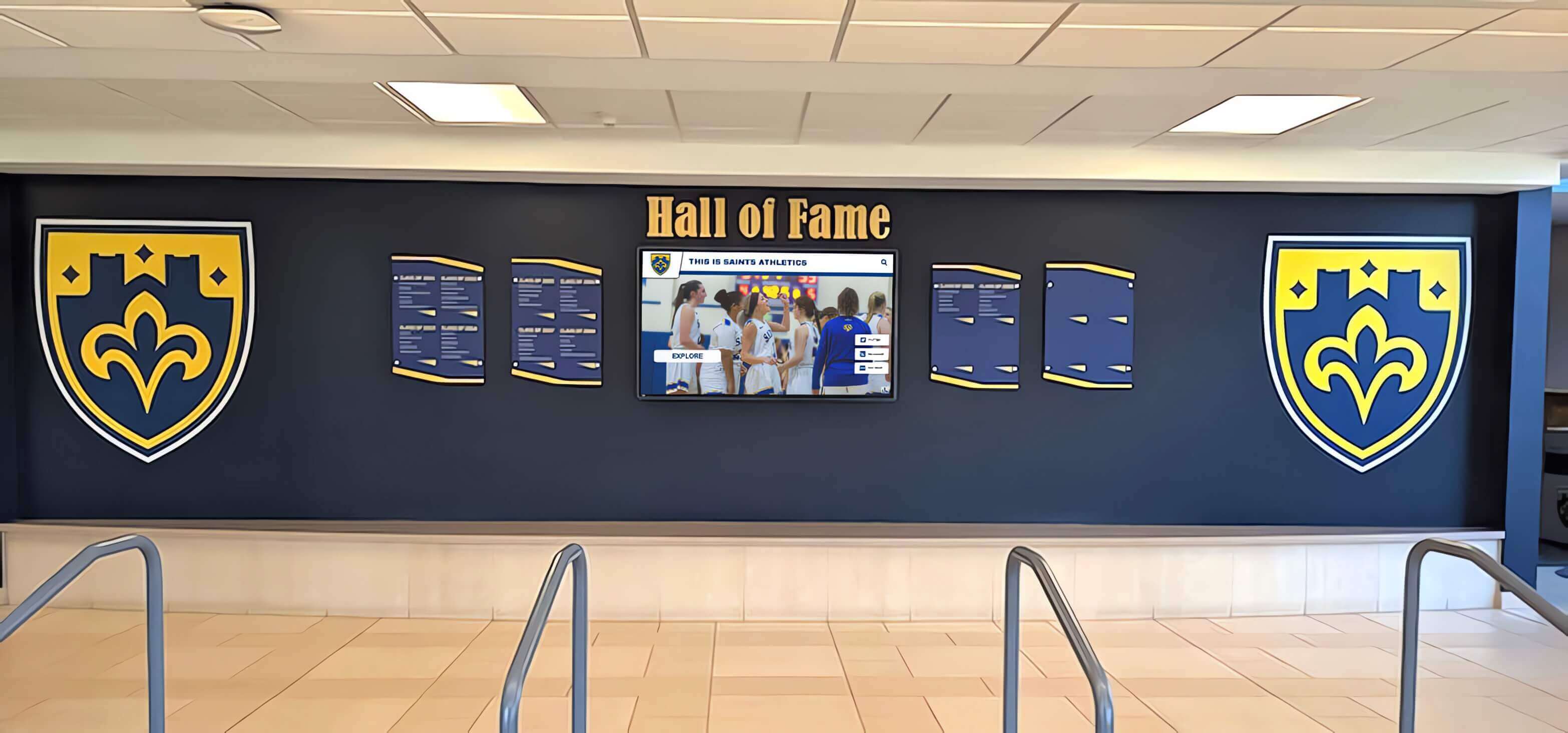
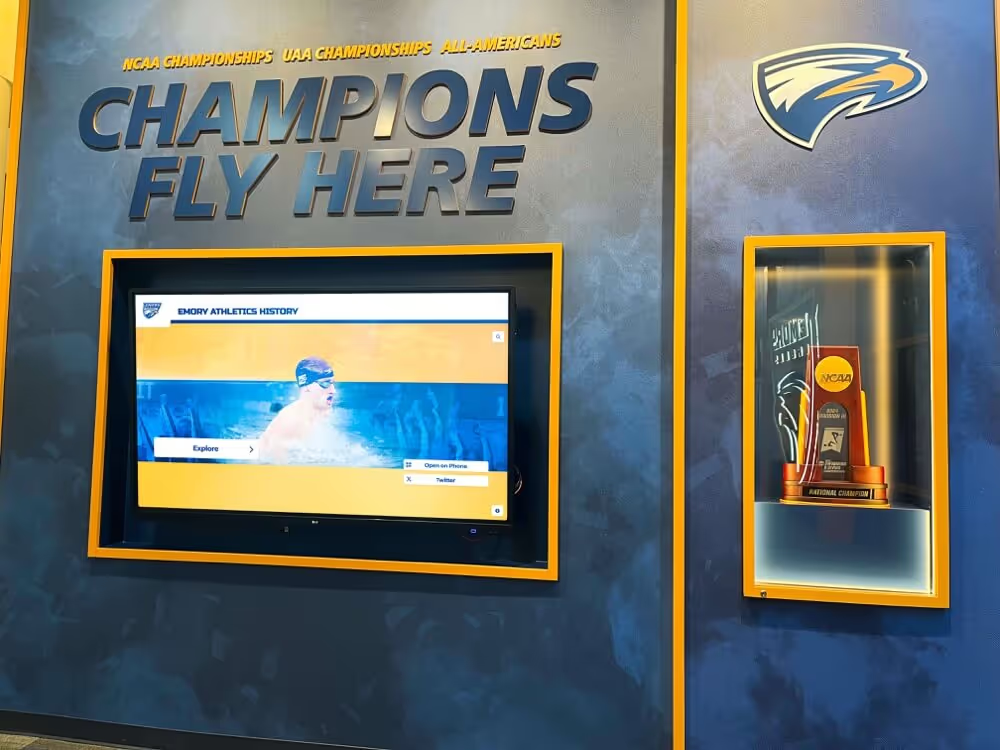
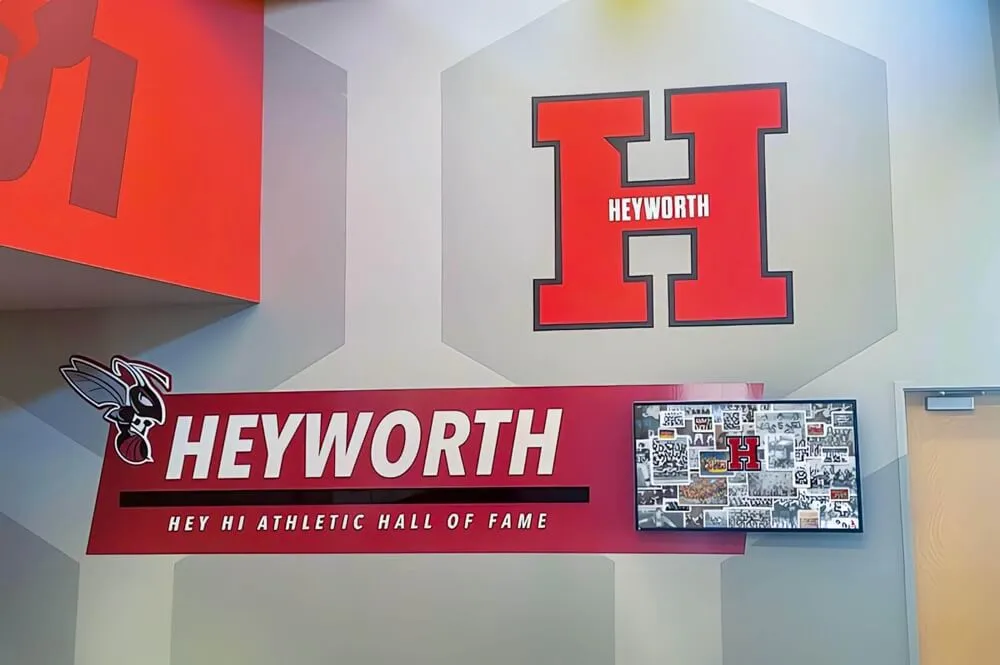
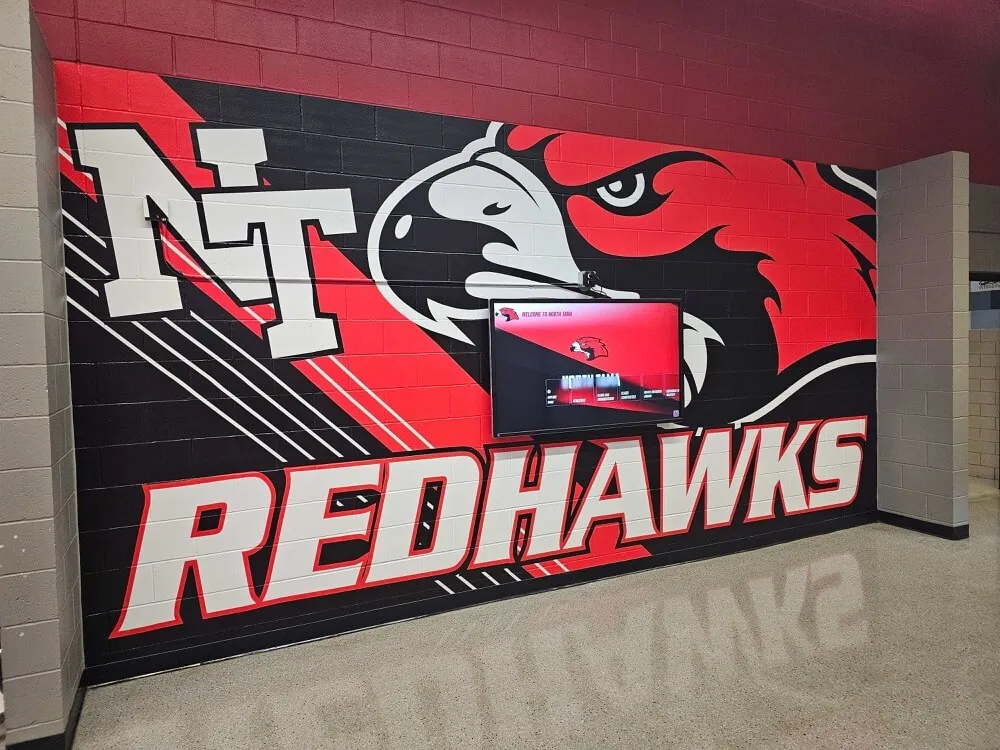
Physical recognition spaces create lasting visibility while event programming provides opportunities to share deeper stories about honoree achievements
Event Programming and Experience Design
Successful alumni recognition events balance formal award presentations with programming that creates meaningful interactions, emotional connections, and memorable experiences.
Reception and Networking Programming
Recognition events typically begin with reception periods allowing arrivals, social mixing, and relationship building before formal programs commence. Receptions serve essential functions beyond simply occupying time before dinners.
Strategic Duration should provide adequate networking without exhausting attendees before main programs. 60-90 minute receptions allow meaningful conversations while maintaining energy for subsequent programming. Shorter 30-45 minute receptions feel rushed, while receptions exceeding two hours drain attention for awards presentations.
Facilitated Networking through structured activities helps attendees connect beyond chance encounters. Name tag color-coding by graduation decade, profession, or geographic region creates natural conversation starters. Discussion prompts or question cards at tables encourage substantive exchanges. Host brief alumni professional speed networking where attendees rotate conversations every few minutes.
Interactive Elements transform passive cocktail hours into engaging experiences. Photo booths with institutional branding create social media content. Memory boards where alumni post favorite institutional memories generate nostalgia and conversation. Polls or trivia about honorees build anticipation for formal recognition.
Preview Opportunities allow attendees to explore honoree accomplishments before presentations. Display boards with biographical information, achievement timelines, photo collections, and video interviews create context that enriches subsequent awards acceptance. Interactive touchscreen displays enable deep exploration for interested attendees without forcing information on everyone.
Awards Presentation Formats
The core recognition segment determines overall event tone and memorability. Presentation formats should honor achievements meaningfully while respecting audience attention spans.
Video Tribute Presentations provide rich biographical context through interviews with honorees, colleagues, family members, and those impacted by their work. Well-produced videos evoke emotional responses that simple credential recitations cannot achieve. Videos also document recognition for institutional archives and social media sharing.
Production quality matters significantly. Amateur videos with poor audio, awkward editing, or technical issues undermine rather than enhance honorees. Invest in professional production or skilled volunteers with editing expertise. Videos should run 3-5 minutes per honoree—long enough for substantive storytelling, brief enough to maintain engagement when recognizing multiple individuals.
Honoree Remarks allow recognized alumni to share personal reflections, express gratitude, and connect with audiences. Brief prepared remarks typically prove more effective than lengthy impromptu speeches. Consider providing honorees with speaking frameworks: acknowledge influences, share pivotal moments, express institutional appreciation, offer advice to current students or young alumni.
Time limits maintain pace and audience engagement. Three to five minutes per honoree allows meaningful expression without testing patience, particularly when recognizing multiple individuals. Designate a subtle timekeeper who can signal when speakers approach limits.
Student or Faculty Introductions delivered by individuals with personal connections to honorees add intimate perspective to formal proceedings. A former professor introducing a distinguished alumnus can share classroom anecdotes and character insights that resonate differently than professional accomplishments. Current students describing how honoree mentorship shaped their paths creates powerful intergenerational moments.
Panel Discussions or Interviews offer alternatives to traditional speech formats, particularly for young alumni audiences less receptive to formal presentations. Moderated conversations with honorees discussing career journeys, challenges overcome, or industry insights create dynamic content that engages while honoring.
Recognition Displays and Exhibits provide visual focal points for honoree celebration. Display stands with plaques, photos, and accomplishment summaries create natural gathering points during receptions. Attendees photograph recognition materials, extending celebration beyond event nights through social sharing.
Comprehensive guides about digital recognition displays demonstrate various formats for showcasing honorees throughout campuses.
Meal Service Considerations
Recognition dinners present logistical challenges that impact overall experiences. Thoughtful meal planning prevents common pitfalls.
Service Timing must coordinate with program flow. Plated dinners with multi-course service require 75-90 minutes minimum, constraining program scheduling. Buffet service allows flexible timing but creates movement and noise during programs. Consider serving courses between awards presentations, using meal service as natural program breaks.
Dietary Accommodations should be collected during registration and communicated clearly to caterers. Vegetarian, vegan, gluten-free, kosher, halal, and allergy-sensitive options ensure all attendees can participate fully. Nothing communicates disregard like honorees or guests receiving meals they cannot eat.
Table Configuration influences networking and program visibility. Round tables facilitate conversation but may orient some guests away from stages. Classroom or theater-style seating maximizes sightlines but limits social interaction. Hybrid approaches position tables at angles ensuring all seats have acceptable views.
Assigned Seating vs. Open Seating presents trade-offs. Assigned seating allows strategic placement mixing new and established alumni, donors, and honoree families. Open seating provides autonomy but can result in cliques or isolated attendees. Consider assigned honoree tables with VIP guests while allowing open seating for general attendees.
Post-Award Program Elements
Recognition ceremonies form event cores, but surrounding programming determines lasting impressions.
After-Dinner Networking maintains energy following formal programs. Rather than immediate dismissal after final awards, facilitate mingling through informal dessert receptions, cordial service, or lounge spaces with comfortable seating. Post-program time allows attendees to congratulate honorees personally, exchange contact information, and extend conversations begun during receptions.
Campus Tours or Facility Showcases allow returning alumni to experience institutional evolution. Guided tours of new buildings, renovated facilities, laboratories, or special collections demonstrate how institutions advance while honoring traditions. Tours work particularly well for daytime or early evening events preceding dinner programs.
Interactive Technology Demonstrations showcase how institutions leverage innovation. Interactive displays for academic recognition and athletic achievements help attendees envision their own potential inclusion in institutional honors.
Student Performance or Presentation connects current institutional life with alumni heritage. Brief musical performances, athletic demonstrations, research presentations, or student speaker segments remind alumni why their support matters by showcasing today’s student excellence.

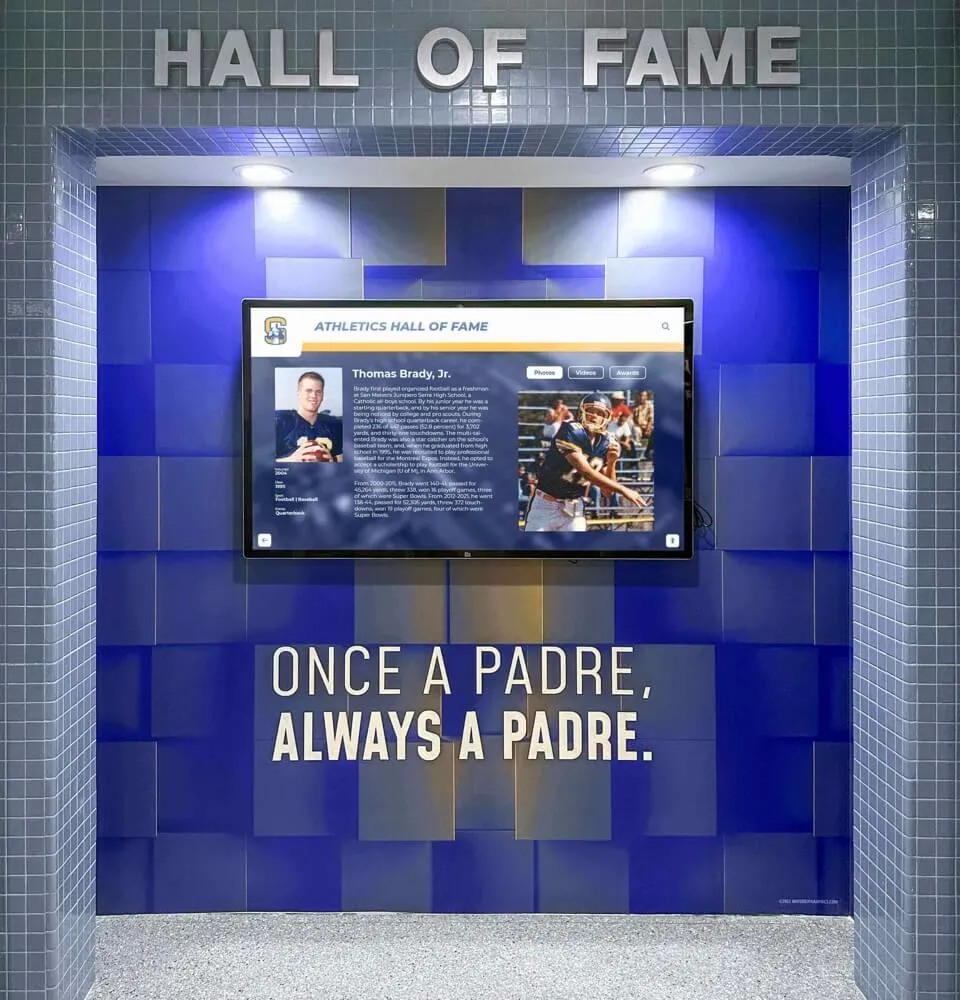
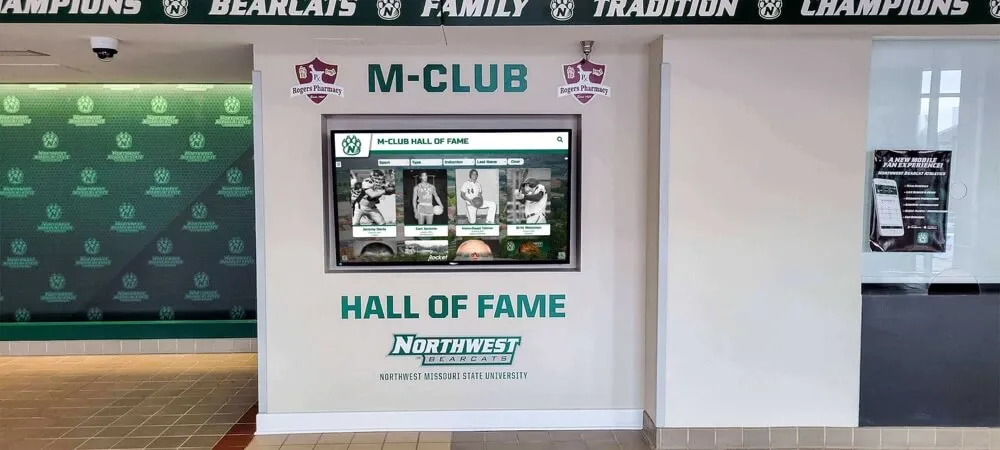
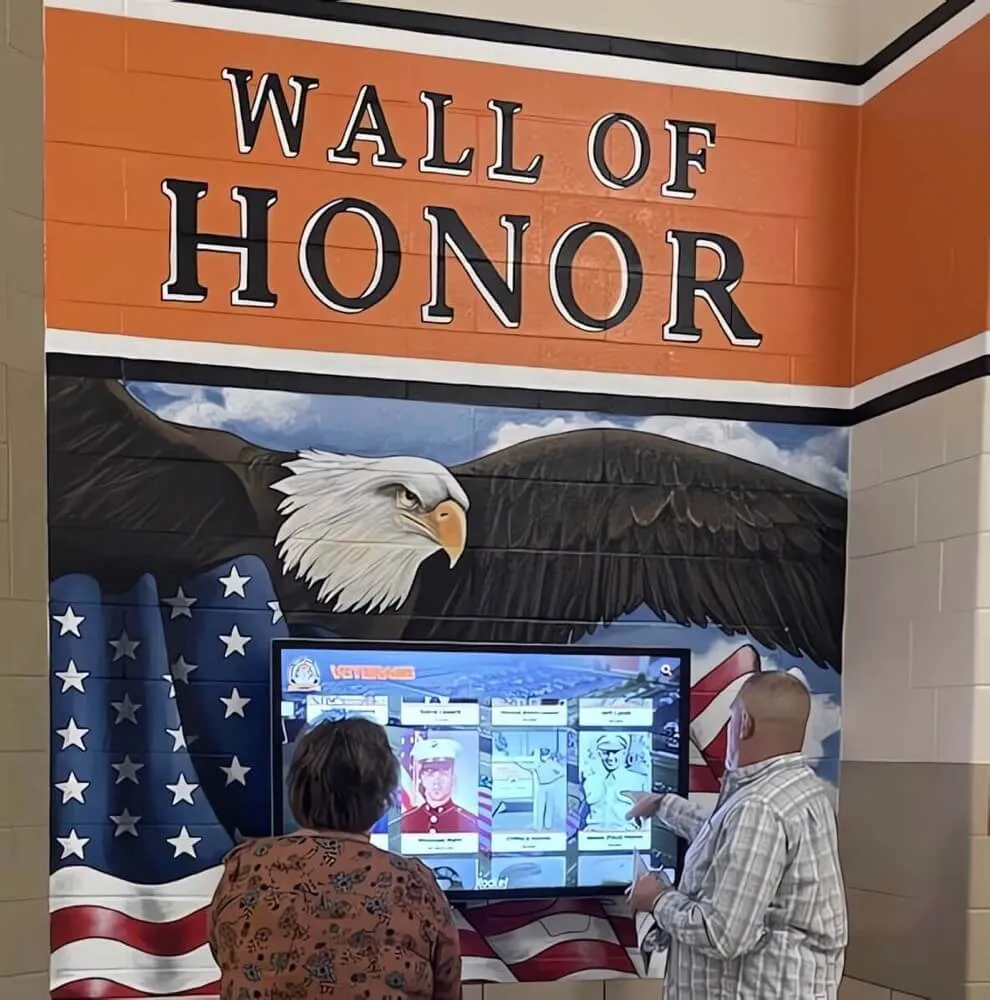
Interactive recognition technology enables self-directed exploration, allowing guests to discover honoree details that interest them most
Incorporating Interactive Displays and Technology
Digital recognition displays extend alumni honor beyond single-event celebrations, creating permanent visibility and engagement opportunities that complement traditional awards programming.
Strategic Integration of Interactive Displays
Recognition events provide ideal venues for unveiling or highlighting digital displays that honor alumni year-round. Rather than treating technology as separate from events, integrate displays into overall recognition strategies.
Event Premiere Opportunities build excitement around new recognition initiatives. Unveiling interactive displays during recognition galas creates ceremony moments while demonstrating institutional investment in honoring alumni comprehensively. Preview new digital features or content additions during events, positioning attendees as first to experience innovations.
Live Demonstration Stations during receptions or post-program networking allow hands-on interaction with digital recognition systems. Staff or student ambassadors guide attendees through touchscreen features, searchable databases, biographical content, photo galleries, and video interviews. Direct experience demonstrates capabilities more effectively than descriptions.
Content Featured in Programs can highlight how honorees will be permanently recognized through digital displays. Show screenshots or brief videos of honoree profiles within interactive systems during awards presentations. This demonstrates that recognition extends beyond plaques, creating ongoing visibility that future students, visitors, and alumni will encounter.
QR Code Access Points in printed programs allow attendees to explore honoree content on personal devices during events. QR codes linking to mobile-optimized profiles enable deeper engagement without requiring physical proximity to installed displays. Attendees can share honoree profiles through social media, extending recognition reach.
Types of Interactive Recognition Displays
Different display formats serve distinct recognition purposes and physical spaces. Understanding options helps match technology to institutional needs.
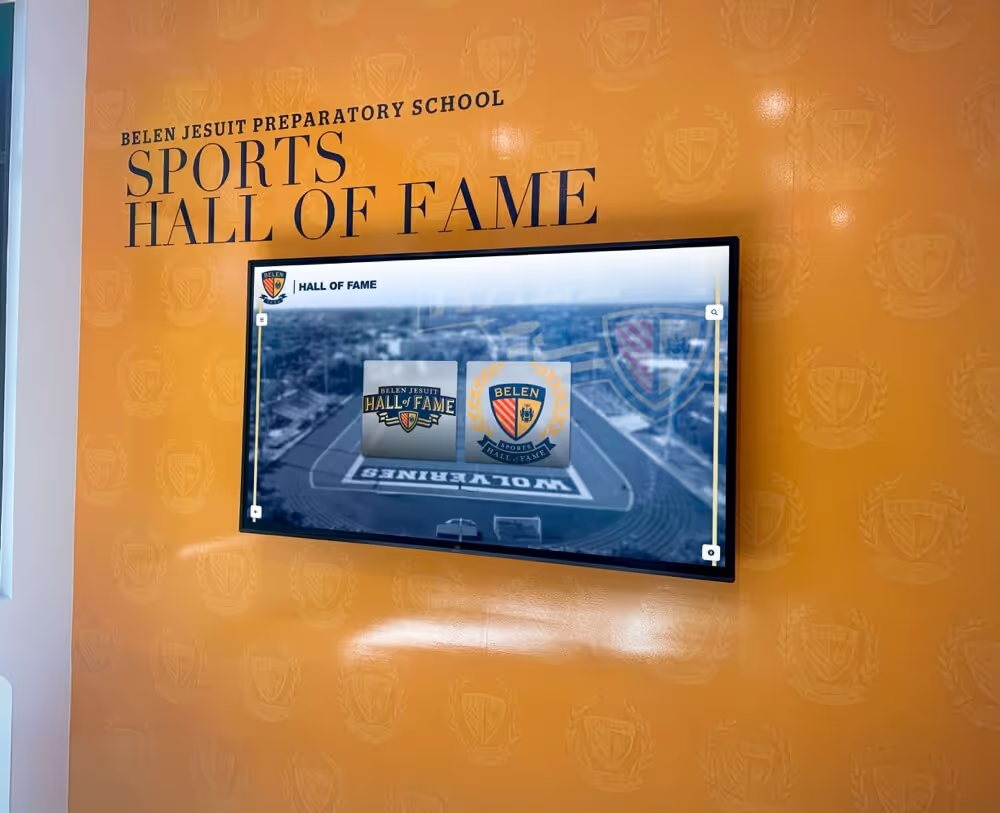
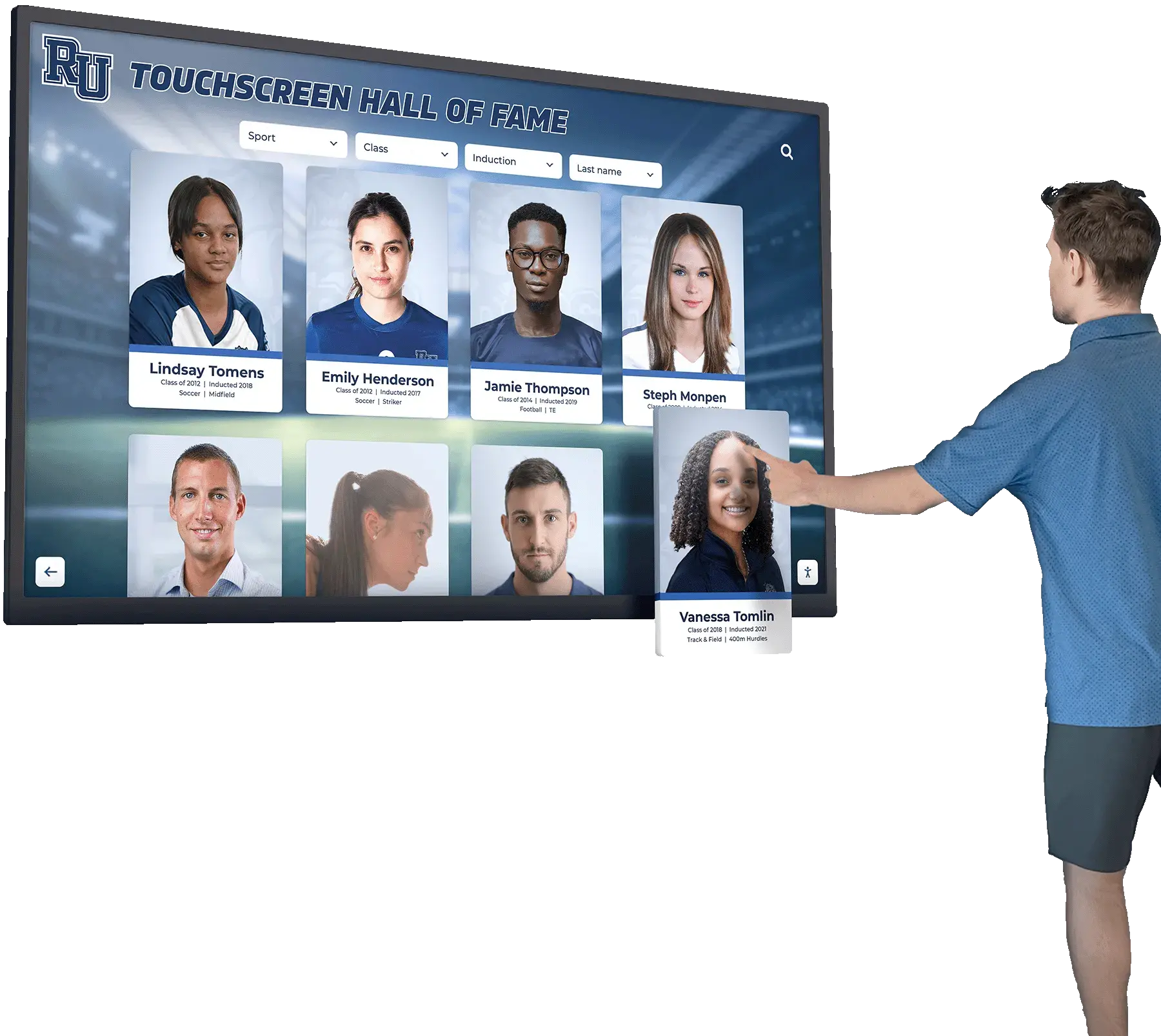
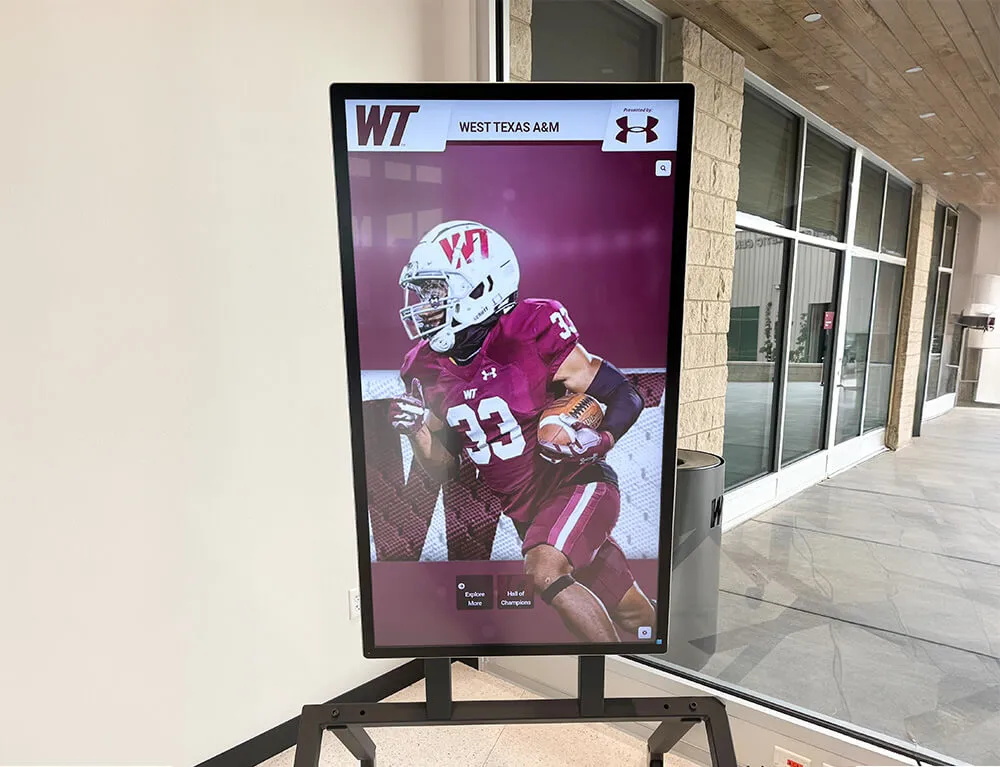
Touchscreen Kiosks provide freestanding interactive stations with intuitive interfaces allowing users to search honorees, filter by achievement category or era, explore biographical content, view photos and videos, and discover interconnected stories. Touchscreen kiosks work well in high-traffic areas like main lobbies, athletic facilities, alumni centers, or entrance hallways where passersby naturally pause and explore.
Resources about digital signage and interactive kiosks demonstrate various implementation approaches for schools and institutions.
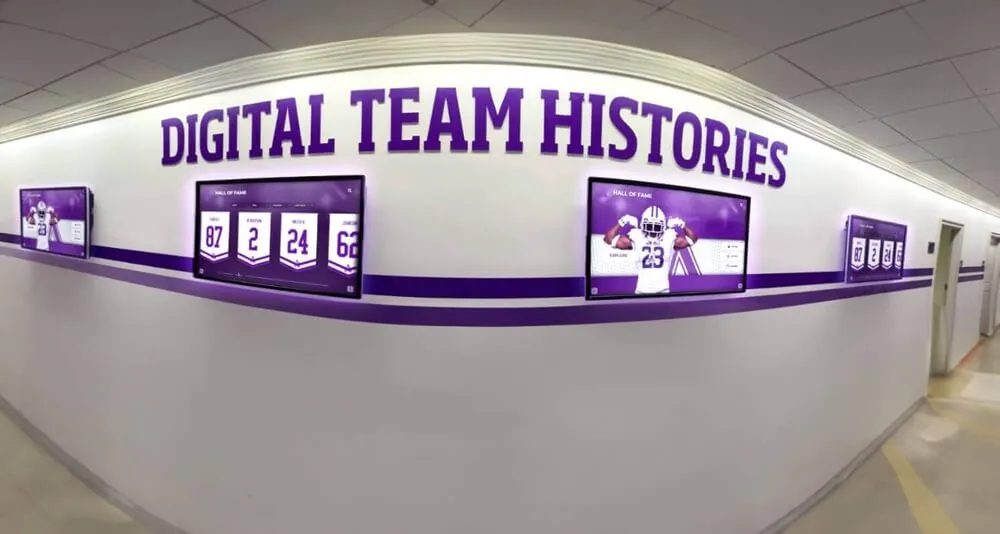
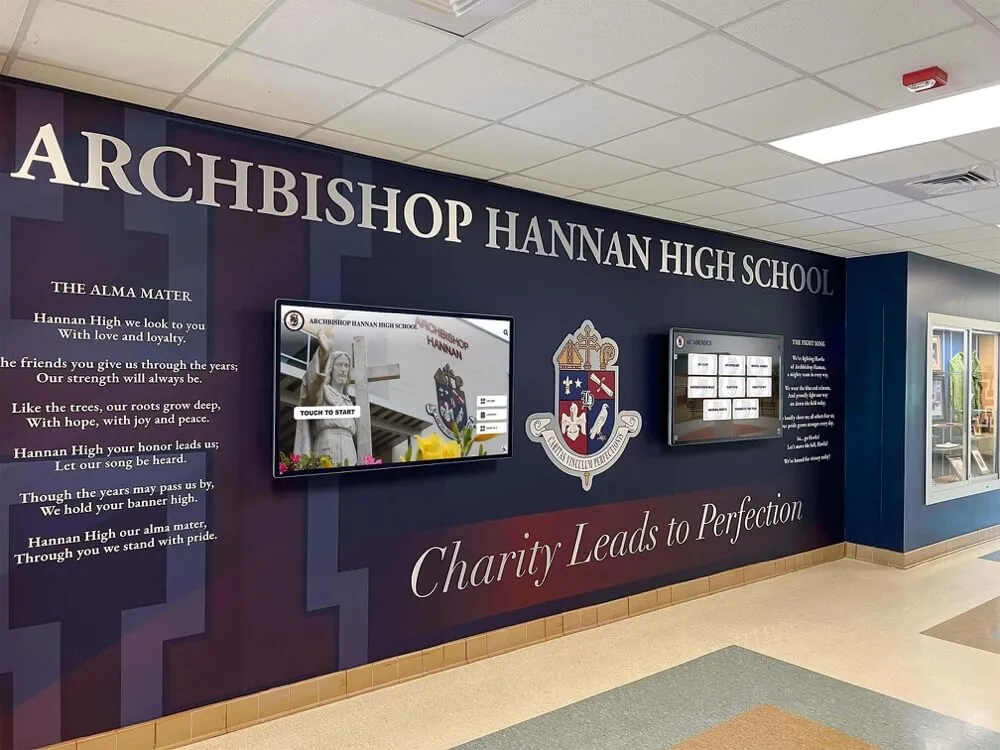
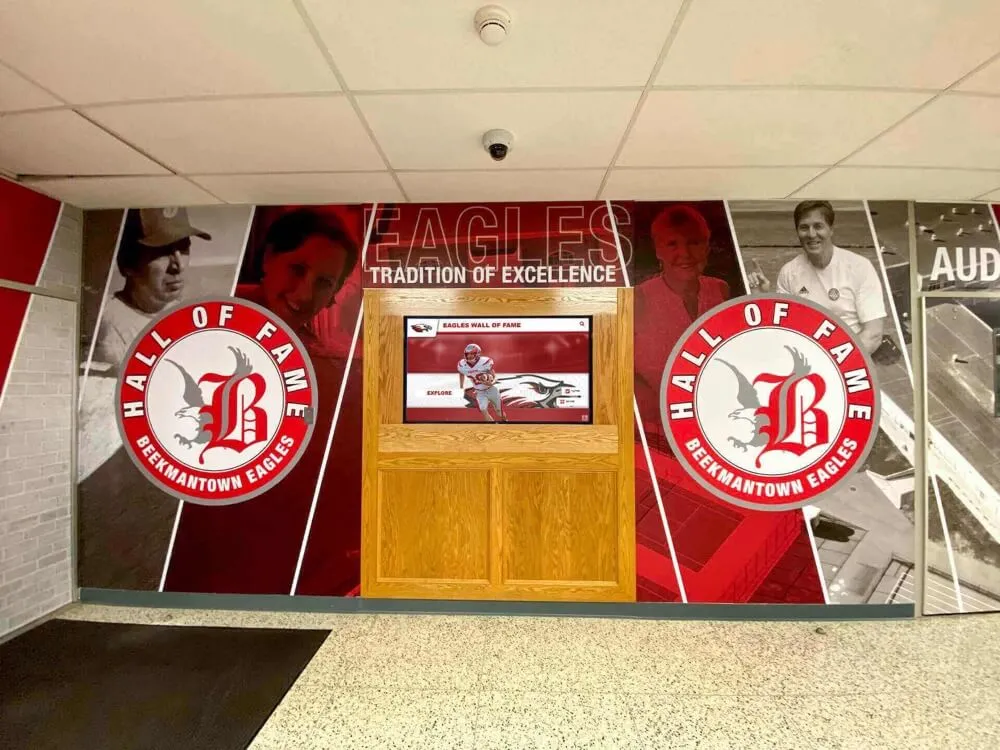
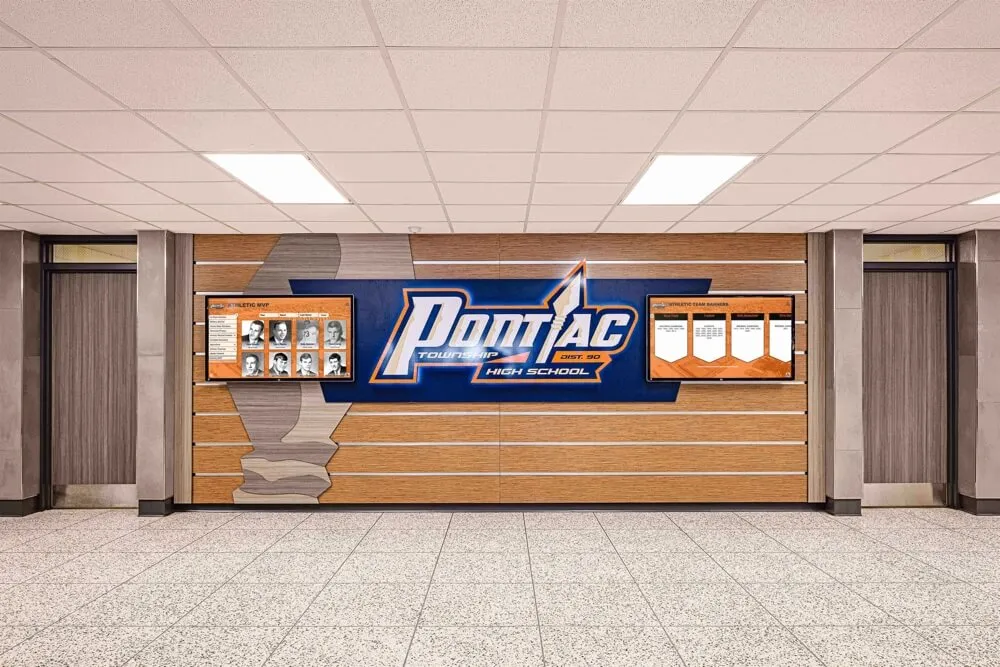
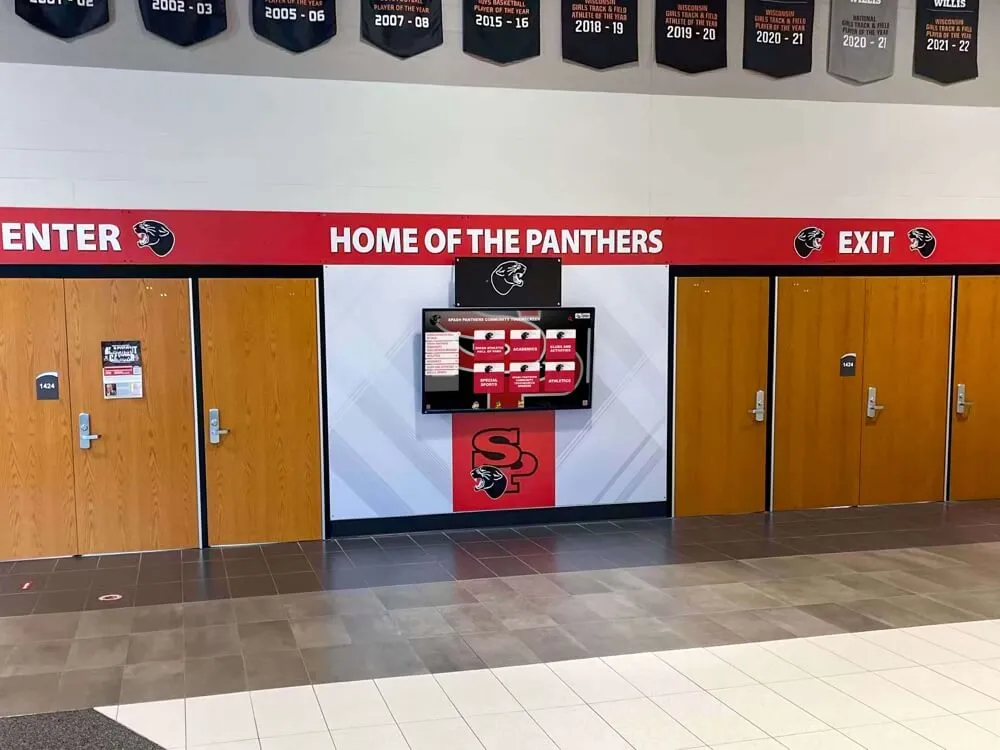
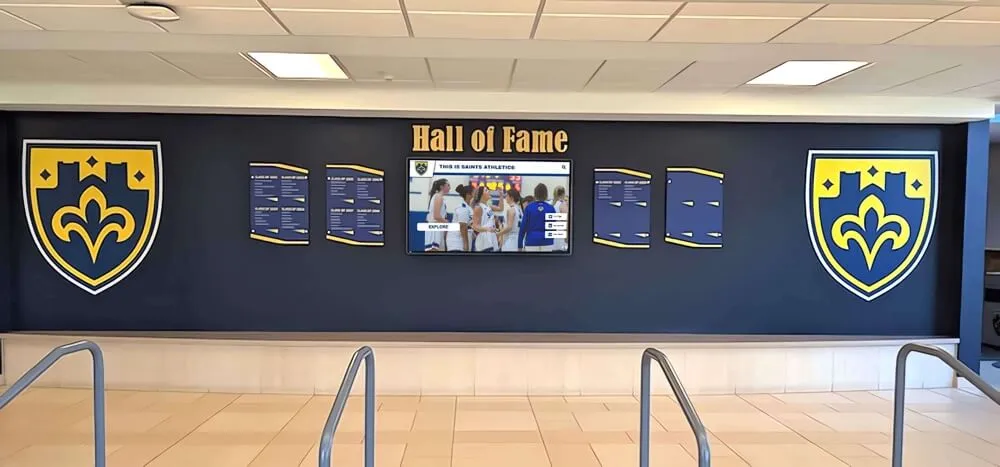
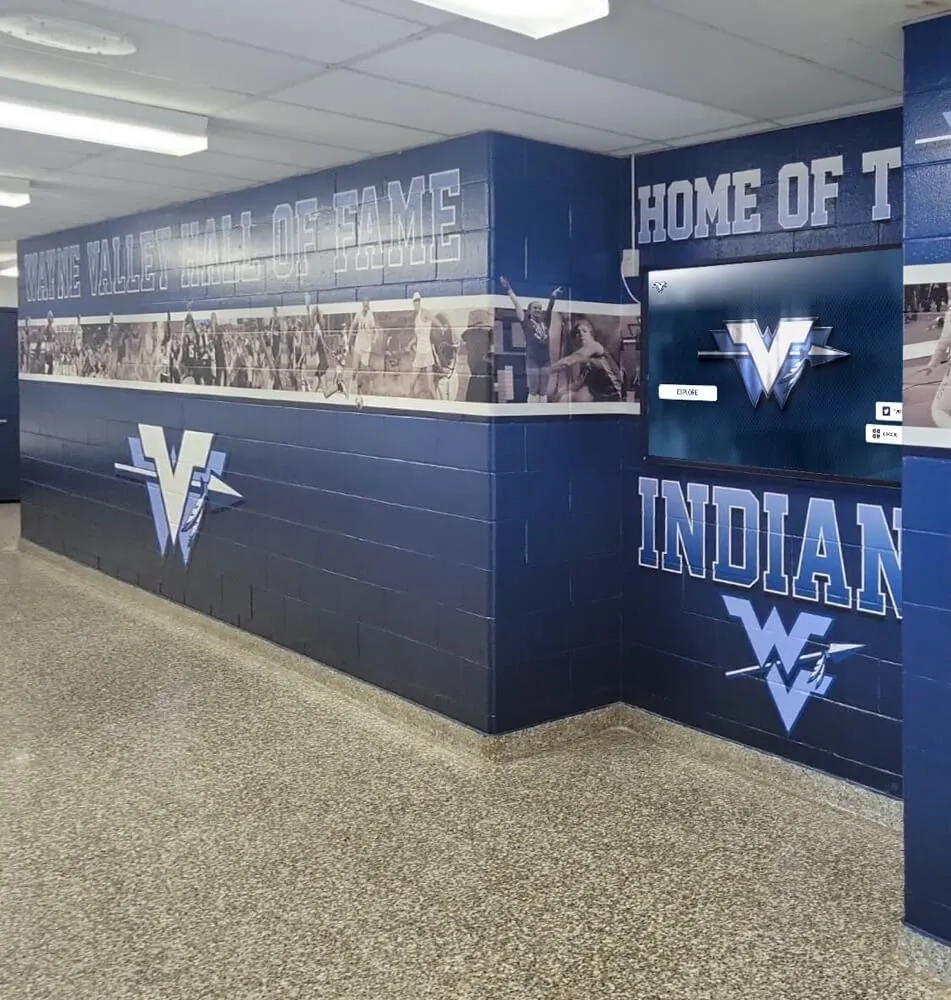
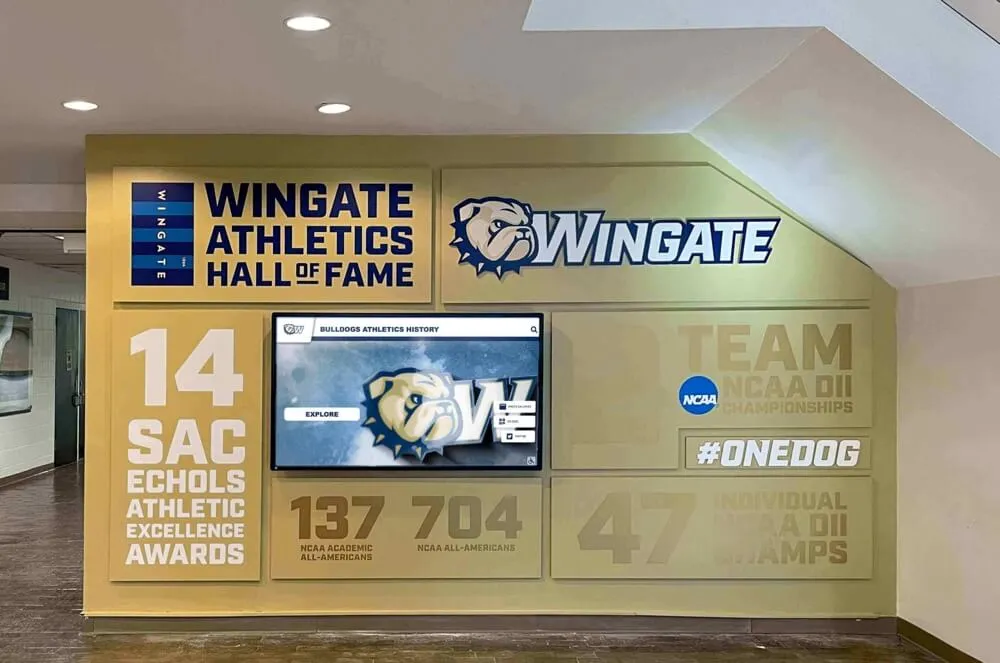
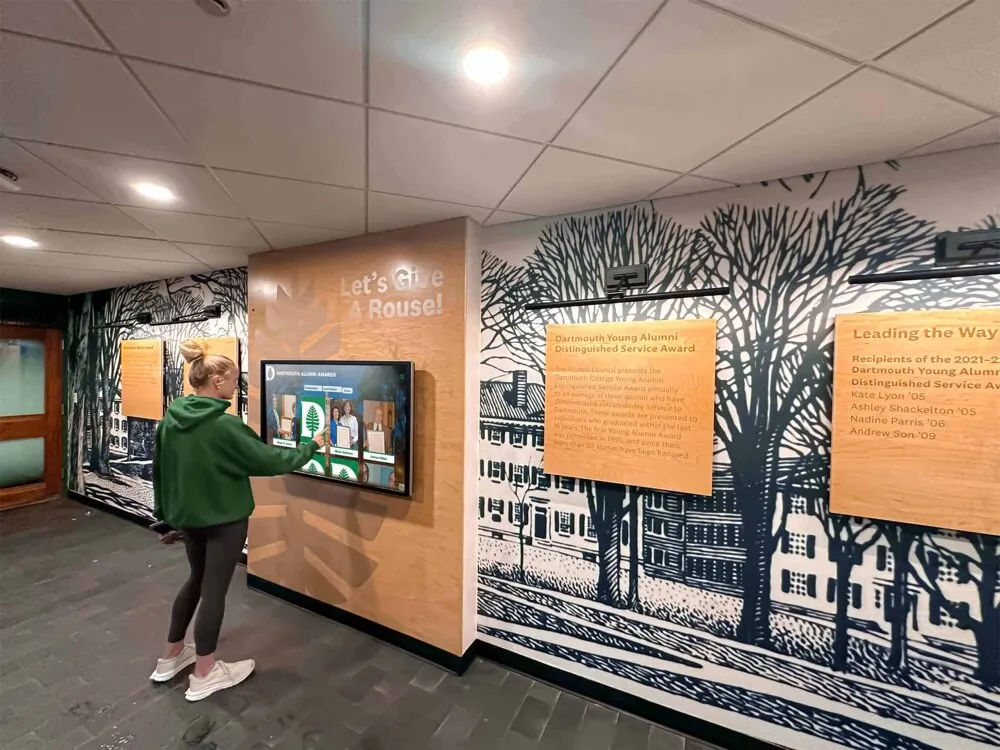
Wall-Mounted Interactive Displays integrate recognition technology into dedicated wall spaces, combining physical design elements with digital screens. These installations often feature branded surrounds, institutional colors, logo integration, and decorative framing that creates cohesive aesthetic appeal. Wall-mounted displays transform hallways into recognition galleries.
Digital Donor Walls recognize financial supporters alongside achievement honorees, acknowledging that philanthropy represents meaningful contribution worthy of prominence. Digital formats allow flexible recognition tiers, easy updates when new donors join, and creative presentation formats impossible with static plaques.
Detailed information about digital donor wall implementation helps institutions planning comprehensive recognition strategies.
Mobile-Responsive Web Platforms extend recognition access beyond physical installations. Web-based halls of fame allow anyone, anywhere to explore honorees through computers or mobile devices. Alumni share profiles with family and professional networks. Prospective students research successful graduates. Media access honoree information for stories.
Record Board Displays celebrate measurable achievements—athletic records, academic honors, competition placements, or milestone accomplishments. Digital record boards automatically update when records fall, maintain historical context about previous record holders, and showcase achievement evolution over decades.
Comprehensive guides to digital record boards and achievement displays demonstrate various approaches to celebrating milestone achievements.
Content Strategy for Interactive Recognition
Technology provides platforms, but content determines engagement quality. Thoughtful content strategy transforms basic directories into compelling storytelling experiences.
Rich Biographical Narratives move beyond resume listings to capture what makes honorees remarkable. Include formative experiences during student years, pivotal career moments, challenges overcome, philosophy and values, community impact, and personal interests beyond professional accomplishments. Narrative depth creates human connection.
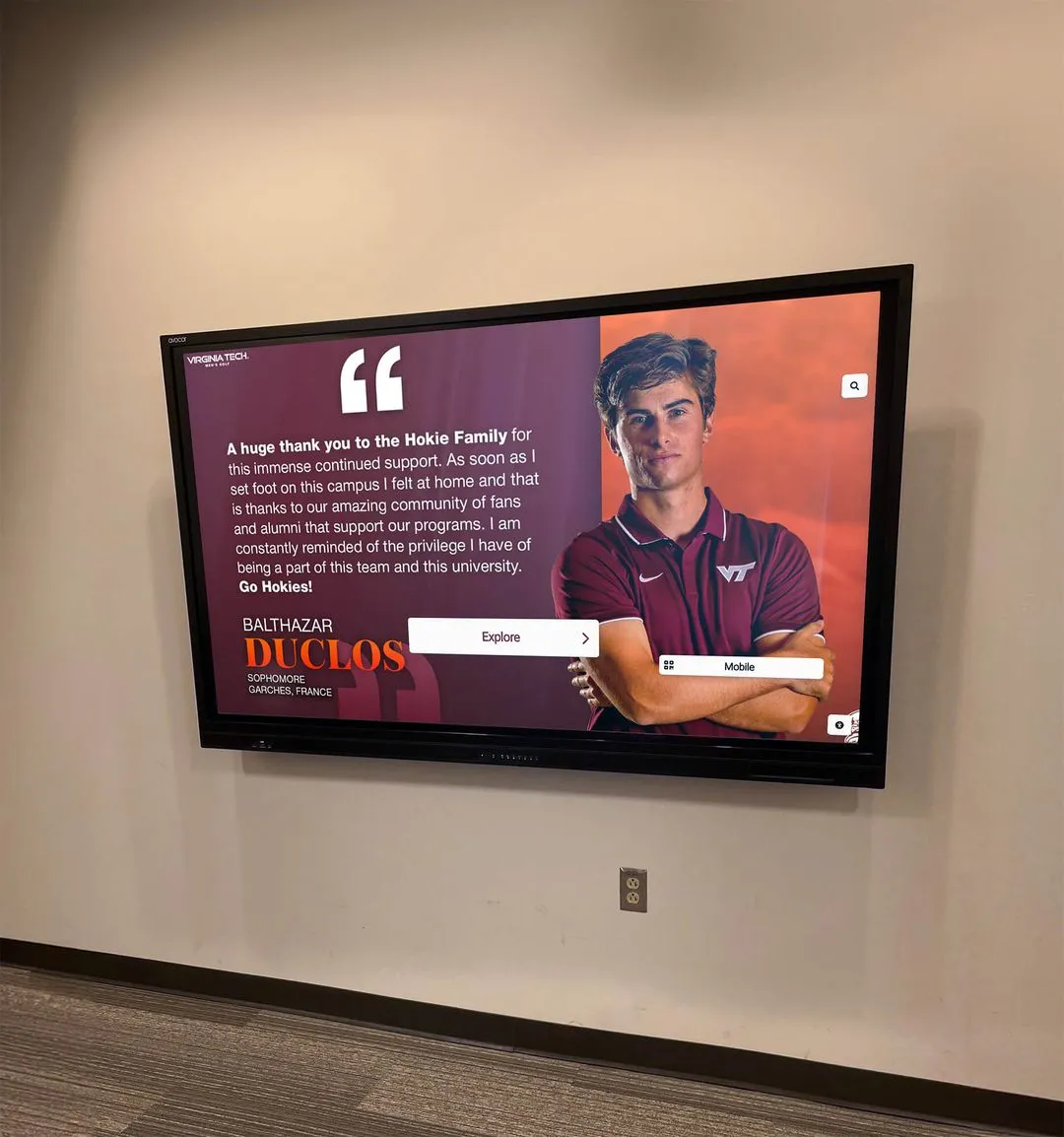
Multimedia Integration brings honorees to life through varied content formats. Professional headshots establish visual identity. Historic photos show honorees during student years, creating nostalgia and demonstrating growth. Video interviews allow honorees to share stories in their own voices. Audio clips from speeches or presentations preserve moments. Document scans show awards, publications, or significant materials.
Contextual Information helps viewers understand achievement significance. Explain what made accomplishments groundbreaking, who benefited from honorees’ work, what obstacles were overcome, and how contributions changed fields or communities. Context transforms credentials into inspiring stories.
Current Updates maintain content relevance over time. Initial induction content provides baseline, but ongoing updates reflect career evolution. Note new positions, recent honors, updated contact information, or current projects. Regular updates signal that recognition remains active rather than archived.
Interconnected Content creates discovery pathways through related honorees. Link teammates, classmates, mentees, colleagues, or individuals with similar achievement areas. Viewers exploring one honoree naturally discover others, increasing engagement depth and breadth.
Search and Filter Functionality enables purposeful discovery. Allow searching by name, graduation year, achievement category, profession, geographic location, or keywords. Filters help specific audiences—prospective students researching career paths, donors identifying peers, or alumni seeking classmates—find personally relevant content.
Accessibility Features ensure recognition reaches all audiences. Text alternatives for images, captions for videos, screen reader compatibility, keyboard navigation, and appropriate color contrast meet accessibility standards while expanding audience reach.
Information about accessibility in digital recognition systems ensures inclusive implementation.
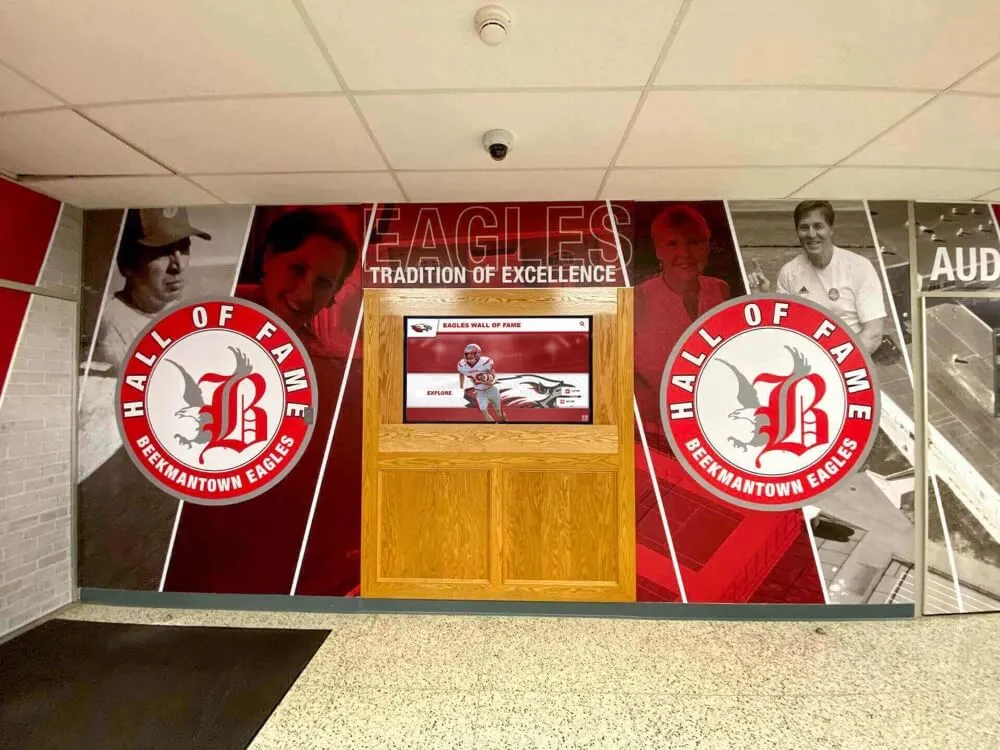
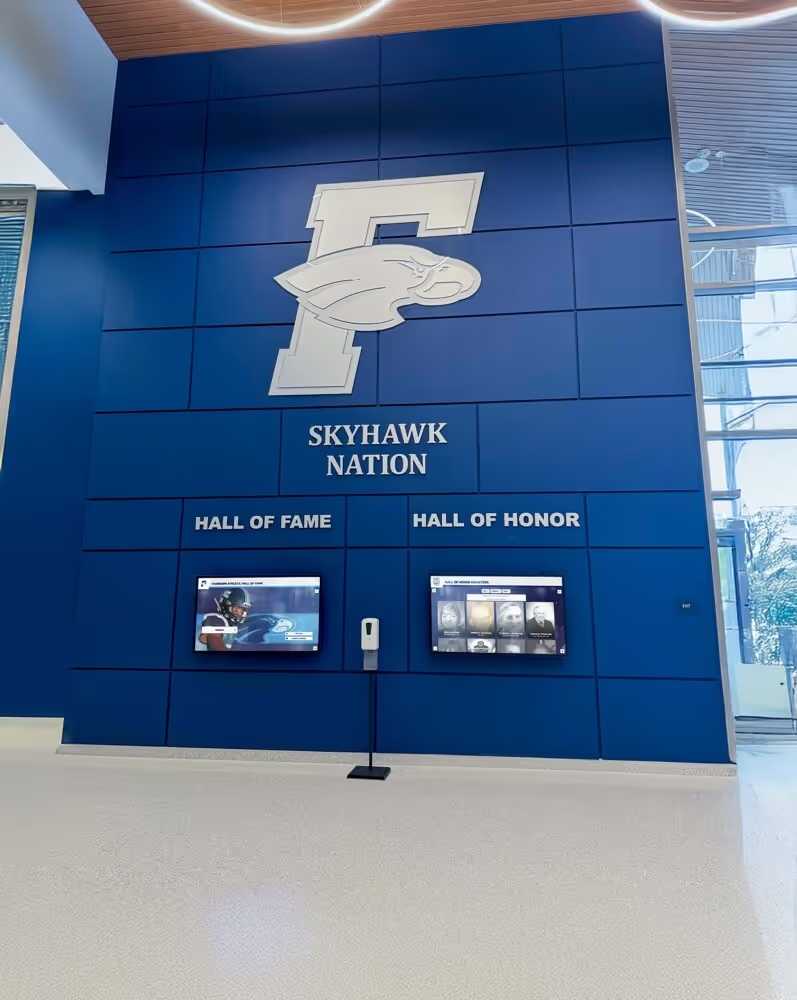
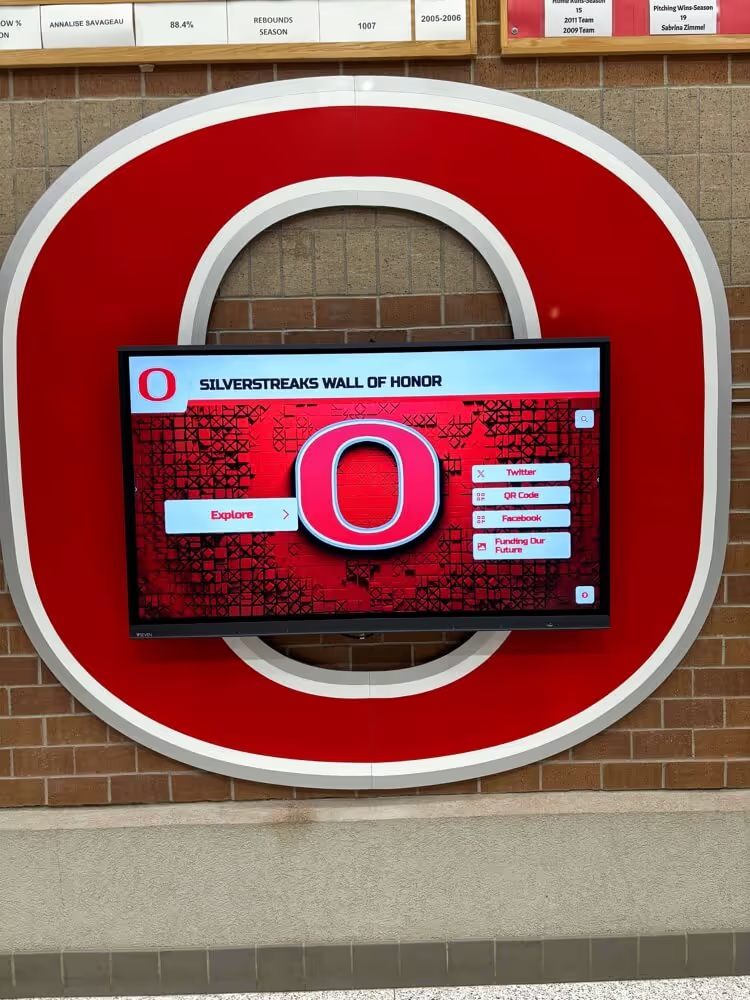
Digital recognition walls combine aesthetic design with functional technology, creating attractive installations that honor achievements comprehensively
Post-Event Follow-Up and Recognition Extension
Recognition impact extends far beyond event nights when institutions leverage post-event communications and ongoing visibility strategies.
Immediate Post-Event Communications
Timely follow-up maintains momentum and demonstrates organizational competence.
Thank You Messages to attendees should arrive within 48-72 hours while events remain fresh in recipients’ minds. Express appreciation for attendance, recap event highlights, share photos or videos from events, and reinforce institutional pride in honorees. Personalized messages to major donors, sponsors, and volunteers acknowledge specific contributions.
Honoree Recognition Packages formalize appreciation through tangible materials. Compile professional event photos featuring honorees, video recordings of their awards acceptance and tributes, copies of printed programs, attendee lists, and formal award certificates or plaques if not presented during events. These packages become cherished keepsakes.
Media Coverage extends recognition reach through institutional channels and external media. Publish event recaps with photos in alumni magazines, institutional news platforms, and social media channels. Issue press releases highlighting particularly newsworthy honorees to local, industry, or national media. Media coverage amplifies honoree accomplishments while showcasing institutional commitment to celebrating excellence.
Social Media Content maintains visibility for weeks following events. Share highlight photos, video clips from awards presentations, honoree quotes, behind-the-scenes planning glimpses, and attendee reactions. Tag honorees and encourage sharing within their networks. Extended social campaigns reach audiences unable to attend physical events.
Long-Term Recognition Visibility
Single-night celebrations fade quickly without ongoing visibility strategies that maintain honoree prominence.
Permanent Physical Recognition through plaques, photographic displays, or dedicated recognition spaces creates lasting campus presence. Traditional physical recognition maintains significance even as digital complements emerge. Combined approaches offer comprehensive visibility.
Digital Recognition Platforms provide evolving, searchable, multimedia-rich alternatives to static physical displays. Interactive systems accommodate unlimited honorees, allow regular content updates, enable global access, and create engaging discovery experiences impossible through physical plaques alone.
Guidance about selecting appropriate recognition tools and platforms helps institutions identify solutions matching their specific needs and contexts.
Annual Publication Features in alumni magazines or institutional publications profile recent honorees, maintaining awareness within broader communities. Annual recognition issues or special supplements compile honoree stories, creating permanent references that recipients cherish and share.
Website Integration ensures honoree visibility reaches prospective students, researchers, media, and global audiences. Dedicated web sections for halls of fame, distinguished alumni, or achievement awards create accessible resources showcasing institutional excellence through graduate accomplishments.
Mentorship and Engagement Opportunities for honorees transform recognition into ongoing relationship-building. Invite recognized alumni to serve as mentors, career advisors, guest lecturers, or volunteer leaders. Recognition creates natural entry points for deeper institutional involvement.
Anniversary Acknowledgments maintain connection by recognizing induction anniversaries—5, 10, 25 years since original honor. Anniversary notes demonstrate that institutions remember and value contributions over time, not just during induction years.
Measuring Recognition Program Success
Data-driven evaluation improves future recognition planning and demonstrates program value to institutional stakeholders.
Attendance Metrics provide basic success indicators. Track total attendance, honoree attendance rates, VIP guest participation, and demographic composition. Compare attendance across years and event types to identify trends and optimize planning.
Engagement Quality matters more than simple headcounts. Measure average event duration, networking activity levels, post-event survey satisfaction ratings, and content engagement with digital recognition platforms. Quality metrics reveal whether events create meaningful experiences.
Fundraising Impact quantifies tangible results from recognition programming. Track honoree giving following recognition, attendee contributions, sponsor revenue, and broader fundraising campaign progress among recognition event participants. Correlation between recognition and giving validates investment.
Media and Social Reach demonstrates visibility beyond physical attendance. Measure media placements, social media impressions, website traffic to honoree profiles, and video view counts. Extended reach multiplies single-event impact.
Volunteer Recruitment reveals whether recognition events inspire broader engagement. Monitor volunteer applications, mentorship program enrollment, regional chapter participation, and other engagement indicators following recognition events. Inspired attendees often convert to active volunteers.
Longitudinal Engagement tracks whether recognized alumni maintain enhanced involvement over time. Compare honoree engagement levels before and after recognition across multiple years. Sustained increased engagement validates recognition as relationship-building rather than one-time celebration.
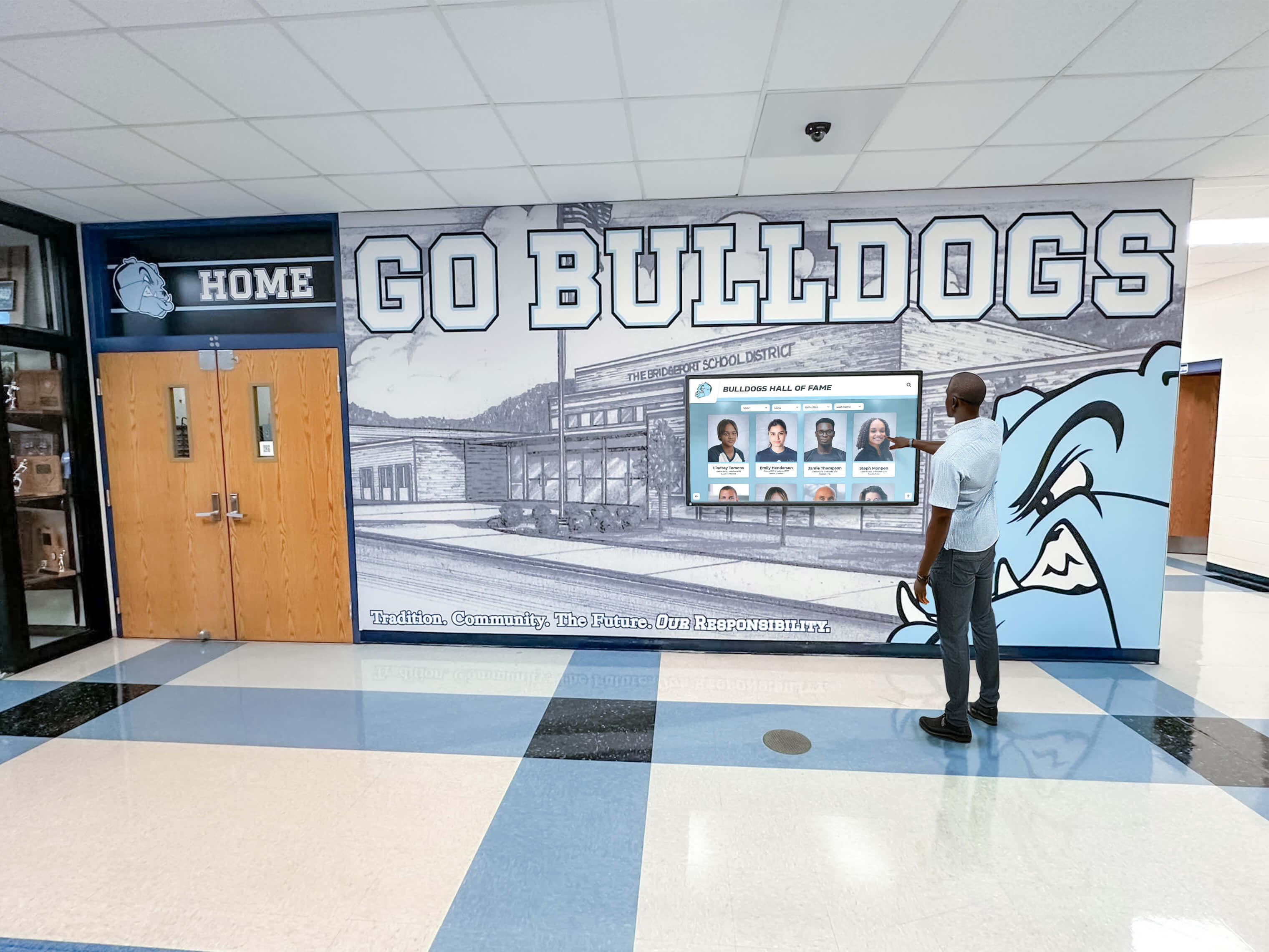
Year-round interactive access allows continuous engagement with honoree stories, creating recognition impact far beyond single-event celebrations
Common Planning Challenges and Solutions
Recognition event planning presents predictable obstacles. Anticipating challenges enables proactive problem-solving.
Limited Budget Constraints
Many institutions desire ambitious recognition programming but face budget limitations. Strategic approaches maximize impact within financial constraints.
Venue Selection significantly impacts costs. On-campus venues typically cost less than external event spaces while creating authentic institutional atmosphere. Campus venues also eliminate unfamiliarity and may accommodate specific needs like accessibility or technology integration more readily.
Volunteer Leverage reduces staffing costs. Recruit alumni volunteers to serve on planning committees, handle registration, coordinate logistics, or manage event-night responsibilities. Volunteer involvement builds ownership while controlling expenses.
Sponsorship Development offsets costs through corporate or individual sponsors. Businesses employ alumni, benefit from graduate talent, or seek community goodwill through event sponsorship. Tiered sponsorship packages with varying recognition benefits create accessible entry points while generating revenue.
Selective Programming focuses resources on highest-impact elements. Perhaps skip elaborate printed programs in favor of digital versions, simplify meal service, or reduce decorative elements while investing in excellent video production or interactive technology that creates lasting value.
Partnership Opportunities with other campus units share costs across multiple stakeholders. Athletic departments, development offices, academic schools, and alumni associations all benefit from recognition programming. Collaborative funding makes ambitious events feasible.
Honoree Selection Processes
Determining who to recognize challenges institutions balancing objectivity, inclusivity, and prestige. Transparent selection processes build credibility and trust.
Clear Criteria published publicly establish expectations and reduce perception of favoritism. Define what achievements merit recognition—career milestones, industry leadership, philanthropic impact, service contributions, or other specific accomplishments. Documented criteria guide both nominators and selection committees.
Nomination Processes should encourage broad participation while maintaining quality. Allow alumni, faculty, staff, students, and community members to submit nominations with supporting documentation. Structured nomination forms requesting specific information enable informed evaluation.
Diverse Selection Committees represent multiple perspectives and reduce bias. Include alumni from different eras, professional backgrounds, and demographics alongside faculty and administration. Diverse committees produce balanced honoree classes.
Rolling Recognition acknowledges that worthy candidates exceed available annual slots. Multi-year perspectives prevent excellent nominees from being permanently passed over because particular years featured exceptional candidate pools. Consider honorees who narrowly missed selection in prior years.
Category Diversification allows recognition across achievement types. Separate categories for young alumni, career achievement, service, philanthropy, or specific fields ensure varied honoree profiles rather than homogeneous selections.
More ideas about recognition approaches appear in resources covering academic achievement celebrations and other institutional recognition programs.
Schedule Coordination
Securing honoree attendance presents challenges when recognizing accomplished professionals with demanding schedules.
Early Date Setting provides maximum advance notice. Establish event dates 9-12 months ahead when possible, allowing honorees and guests to protect calendars before other commitments accumulate.
Honoree Input on date selection increases attendance likelihood. Survey potential honorees about general availability before finalizing dates. Weekend dates often work better than weekday events for working professionals.
Flexible Recognition Options accommodate those unable to attend primary events. Consider filming remote honoree acceptance videos, scheduling separate recognition moments during other campus visits, or hosting regional recognition events closer to honorees who cannot travel.
Managing Expectations
Honored individuals and their families sometimes hold expectations that exceed planned programming or create logistical challenges.
Clear Communication about event formats, timeline, guest allowances, and program elements prevents surprises. Provide detailed honoree packets explaining exactly what to expect, what will be required, and what is included.
Designated Honoree Liaisons offer responsive personal contact throughout planning processes. Single points of contact field questions, coordinate logistics, and troubleshoot issues, creating smoother experiences than shuffling honorees among multiple staff members.
Reasonable Guest Policies balance honoree desires to share celebrations with large groups against venue capacity and budget realities. Clearly communicate whether events accommodate unlimited guests, cap guest numbers, or require ticket purchase for attendees beyond honorees themselves.
Technology Integration Difficulties
Incorporating interactive displays and event technology sometimes presents technical or logistical obstacles.
Vendor Partnerships with experienced providers reduce implementation risks. Work with companies specializing in recognition technology who understand institutional contexts and provide comprehensive support including installation, training, content management, and ongoing maintenance.
Pilot Programs allow testing approaches before full commitments. Consider starting with single interactive displays in high-visibility locations, gathering usage data and feedback, then expanding based on demonstrated value.
Content Pipeline Development addresses the reality that technology provides platforms while quality content creates engagement. Establish sustainable processes for collecting honoree information, producing multimedia content, and maintaining current information over time. Content strategy matters as much as technology selection.
Training and Support ensure institutional staff can manage systems independently. Comprehensive training on content updates, system administration, and troubleshooting prevents dependence on external vendors for routine modifications.
Information about implementing hall of fame technology and software provides guidance for institutions exploring digital recognition solutions.
Best Practices for Sustainable Recognition Programs
Recognition programs require ongoing commitment beyond single events. Sustainable approaches integrate recognition into comprehensive alumni engagement strategies.
Multi-Year Planning Calendars
Rather than approaching recognition reactively year by year, develop three to five-year planning calendars establishing recognition rhythms, milestone celebrations, and strategic objectives.
Annual Signature Events create predictable recognition moments alumni anticipate. Consistent annual timing builds tradition and simplifies planning. Consider establishing signature events like spring awards galas, homecoming hall of fame inductions, or winter achievement celebrations.
Milestone Year Emphasis recognizes institutional anniversaries, facility dedications, or campaign completions through special recognition programming. Centennial celebrations, building inaugurations, or campaign victory events provide natural recognition opportunities.
Rotating Focus Areas ensure balanced recognition across constituencies. Perhaps emphasize young alumni one year, service volunteers the next, athletic achievement the following year. Rotation prevents perception that recognition favors particular groups.
Cross-Institutional Collaboration
Recognition programming benefits from coordination across advancement, academic affairs, athletics, and other units rather than siloed operation.
Shared Selection Processes involving multiple stakeholder representatives produce more comprehensive honoree evaluations. Athletic directors provide insight on athletic achievement nominees. Deans assess academic accomplishment candidates. Development officers contribute donor perspective.
Integrated Event Calendars prevent competing recognition events or unfortunate scheduling conflicts. Coordinate alumni relations programming with development events, athletic celebrations, academic ceremonies, and institutional commemorations through shared planning calendars.
Resource Sharing maximizes institutional investment. Perhaps one unit manages interactive display technology serving multiple recognition purposes—athletic halls of fame, donor walls, academic achievement showcases, and historical archives all leverage shared platforms with varied content.
Continuous Recognition Evolution
Alumni recognition practices should evolve alongside changing alumni expectations, technological capabilities, and institutional priorities rather than remaining static for decades.
Regular Program Evaluation through post-event surveys, focus groups, and data analysis identifies improvement opportunities. What worked well? What fell flat? What should change? Honest assessment drives refinement.
Emerging Practice Research keeps institutions current with recognition trends. Attend advancement conferences, visit peer institutions, study case examples, and explore new technologies. Borrowing proven innovations prevents reinventing wheels.
Pilot Testing allows low-risk experimentation with new approaches. Test alternative event formats, venue options, programming elements, or technology platforms on small scales before major commitments. Successful pilots become permanent practices. Unsuccessful experiments provide learning without catastrophic consequences.
Stakeholder Input from honored alumni, event attendees, volunteers, and institutional leadership informs program direction. Regular advisory board meetings or focus groups create feedback channels guiding strategic decisions.
Resources about innovative approaches to student and alumni recognition offer ideas applicable across educational contexts.
Alumni recognition represents one of the most powerful tools in advancement portfolios when executed thoughtfully and sustained over time. From initial invitation strategies through incorporating interactive technology that extends recognition visibility year-round, every element contributes to creating experiences that honor individual excellence while strengthening institutional community.
The most successful recognition programs balance tradition with innovation, formality with warmth, individual celebration with collective community building. They recognize that honored alumni serve as ambassadors demonstrating institutional impact through their accomplishments, inspire current students by modeling success paths, and often become more deeply engaged supporters following recognition experiences.
Whether planning intimate departmental honors or institution-wide galas, the fundamental principles remain constant: honor authentically, communicate clearly, create meaningful experiences, leverage technology thoughtfully, and maintain recognition visibility beyond single-event celebrations.
Transform Your Alumni Recognition Strategy
Ready to create lasting recognition experiences that extend far beyond single-event celebrations? Rocket Alumni Solutions specializes in interactive touchscreen displays and digital recognition systems that honor alumni achievements year-round while creating engagement opportunities for students, visitors, and returning graduates.
Our comprehensive platforms combine intuitive technology with beautiful design, allowing institutions to showcase unlimited honorees through searchable databases, rich multimedia content, and engaging interactive experiences. From hall of fame installations to donor recognition walls and digital record boards, we help schools and institutions celebrate excellence in ways that inspire and connect communities.
Discover how interactive recognition displays can transform your alumni engagement strategy and request a free demo showcasing how your honorees could be celebrated through modern touchscreen technology that complements your event programming and creates permanent campus visibility.
Live Example: Rocket Alumni Solutions Touchscreen Display
Interact with a live example (16:9 scaled 1920x1080 display). All content is automatically responsive to all screen sizes and orientations.