Archival Storage Materials for Schools: Acid-Free Boxes, Sleeves, Labels, and Display Prep
- Home /
- Touch Archive Blog /
- Archival Storage Materials for Schools: Acid-Free Boxes, Sleeves, Labels, and Display Prep
The Easiest Touchscreen Solution




Live Example: Rocket Alumni Solutions Touchscreen Display
Interact with a live example (16:9 scaled 1920x1080 display). All content is automatically responsive to all screen sizes and orientations.
Archival storage materials are acid-free, lignin-free supplies—boxes, sleeves, folders, labels, and interleaving papers—designed to slow or halt the chemical deterioration of photographs, documents, yearbooks, and school records. For schools managing decades of awards paperwork, athletic programs, donor recognition files, and portrait collections, choosing the right materials is the single most cost-effective preservation decision an archivist or administrator can make.
Yet most school storage rooms are filled with the wrong supplies: regular cardboard banker boxes, standard plastic sheet protectors, adhesive tape labels, and rubber-banded stacks of photographs. These everyday office materials accelerate decay rather than prevent it, quietly destroying irreplaceable institutional history with every passing year.
This guide covers everything a school archive coordinator needs to know—what to buy, what to avoid, how to prepare materials for scanning, and how physical preservation connects to a modern digital recognition program.
Proper archival storage is not just about protecting paper. It is about safeguarding the proof of every honor roll class, championship season, graduating cohort, and long-serving staff member your institution has ever produced. Physical materials that survive decades of improper storage can often be rescued; materials that turn brittle, yellow, or mold cannot.

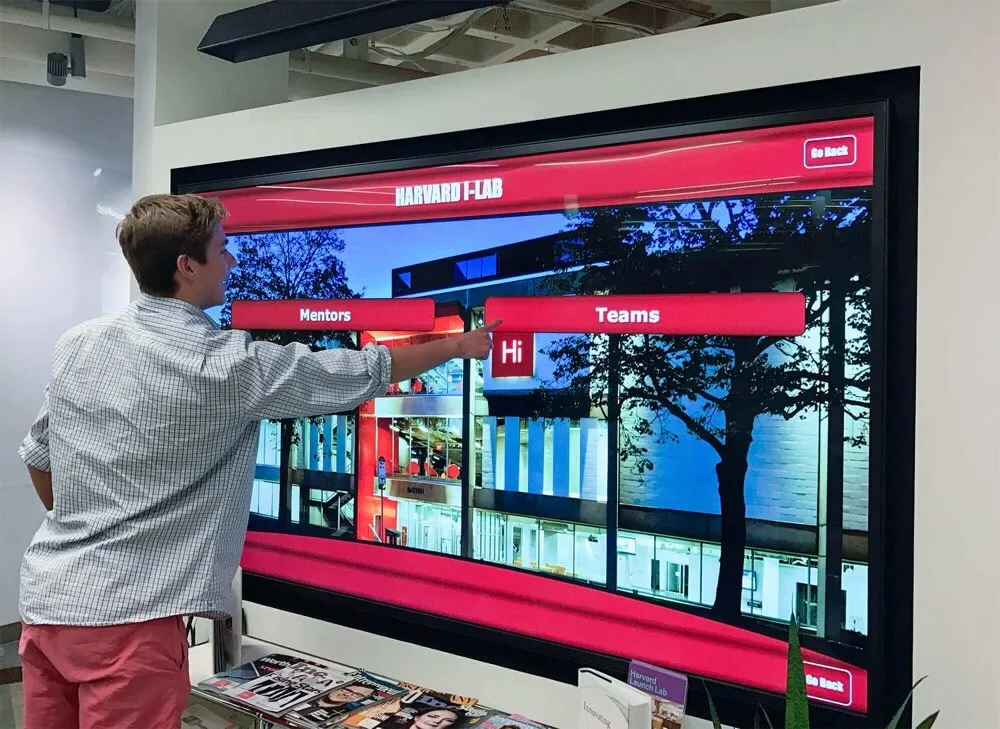
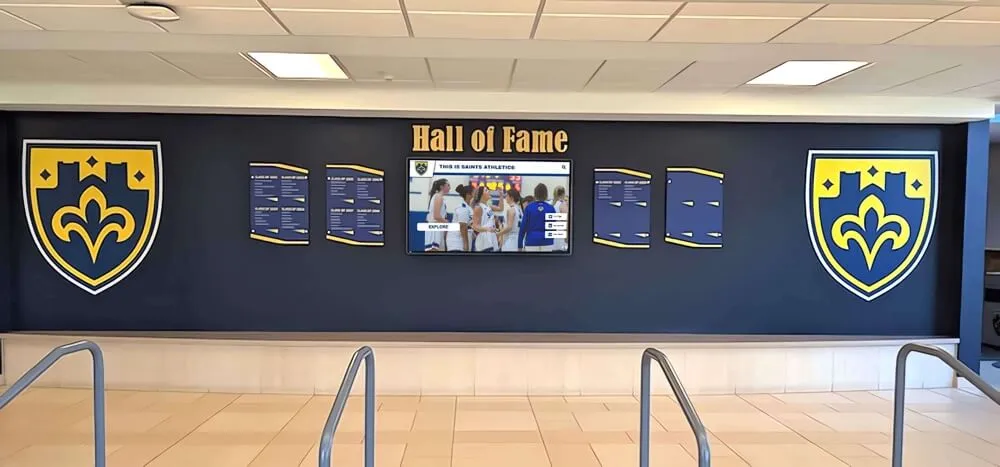
Properly stored historical records, portraits, and achievement documents form the foundation of a rich school archive display
What Are Archival Storage Materials?
Archival storage materials are supplies manufactured to museum and library conservation standards. The defining characteristics are:
- Acid-free: pH of 7.0 or higher, preventing the acid migration that yellows and embrittles paper and photographs
- Lignin-free: no wood pulp byproducts that off-gas damaging acids over time
- Buffered or unbuffered: calcium carbonate buffer added to paper products (unbuffered versions are required for cyanotype photos and certain dye-based prints)
- Inert plastics: polyester (Mylar), polypropylene, or polyethylene—never PVC, which releases plasticizers that damage surfaces
The term “archival quality” has no legal definition, so schools must look for specific certifications: PAT (Photographic Activity Test) approval from ISO 18916, products that meet ANSI/NISO Z39.48 for paper permanence, and materials listed in resources published by the Image Permanence Institute or the Library of Congress.
Why Schools Need Specialized Archival Supplies
Standard office supplies are engineered for short-term convenience. They are not built to last, and the difference matters enormously over a decade or two:
| Storage Material | Expected Lifespan | Common Failure Mode |
|---|---|---|
| Regular cardboard box | 5–10 years | Acid transfer, moisture damage |
| PVC sheet protector | 3–7 years | Off-gassing, surface sticking |
| Rubber band | 2–5 years | Snaps, leaves marks on paper |
| Pressure-sensitive tape | 3–10 years | Stains, lifts surface fibers |
| Acid-free document box | 50–100+ years | Minimal degradation |
| Polyester photo sleeve | 100+ years | Essentially inert |
| Buffered folder | 50–100+ years | Negligible acid transfer |
Schools routinely store items with significant institutional and sentimental value—championship banners, graduation photographs, donor plaques, yearbooks going back generations—in conditions that guarantee loss within a staff member’s career. The good news is that upgrading to proper school archive supplies is affordable and straightforward once you know what to purchase.
Core Archival Storage Materials Every School Needs
Acid-Free Storage Boxes and Document Containers
Acid-free storage boxes are the backbone of any school archive. They protect contents from light, dust, humidity fluctuations, and physical damage while creating a stable microenvironment that dramatically slows chemical reactions.
Box types to know:
- Clamshell or drop-front document boxes: ideal for letter- and legal-size folders, yearbooks, and bound volumes. Drop-front design allows retrieval without disturbing adjacent items.
- Shoe-style flat boxes: perfect for photographs, unbound documents, and materials that should lie flat rather than stand upright.
- Oversized print boxes: designed for 11×14 portraits, poster-size programs, and athletic banners. Available up to 20×24 inches.
- Archival clamshell book boxes: custom-fitted enclosures for individual yearbooks, especially valuable volumes or first editions of the school newspaper.
What to look for on the label: “acid-free,” “lignin-free,” pH ≥ 8.5 (with buffer), and double-wall or triple-wall board construction for anything stored on lower shelves where boxes may stack.
Archival Photo Sleeves and Negative Protectors
Photographs are among the most chemically active materials schools archive. Portrait composites, team photos, candid prints, and negatives each require specific sleeves.
Sleeve materials:
- Polyester (Mylar D or equivalent): the gold standard. Completely inert, crystal clear, allows viewing without handling. Ideal for frequently referenced prints and negatives.
- Polypropylene: slightly less clear than polyester but a solid, affordable choice for bulk photo storage. Avoid if prints show oily residue—polypropylene can trap oils.
- Polyethylene: flexible, soft, and good for oddly shaped prints. Acceptable for cold storage.
- Avoid PVC entirely: PVC sleeves (often sold as “non-glare” or “clear vinyl”) release plasticizers that cause photos to stick to the sleeve surface and eventually destroy the emulsion.
Archival photo sleeves are available in formats matching standard print sizes—wallet, 3.5×5, 4×6, 5×7, 8×10—as well as negative strips (35mm, 120, 4×5 large format). Schools with older athletic programs may find medium-format negatives from team photos shot in the 1960s–1980s.
Store sleeves upright in boxes, not stacked flat, unless prints are large format. Upright storage reduces pressure damage and makes retrieval far simpler.
Labels, Folders, and Interleaving Papers
Folders: Acid-free file folders in letter and legal sizes should replace all standard manila folders in archive boxes. Look for folders made from 100% rag or buffered sulfite paper. Folders act as a first line of defense, keeping individual records separated so acid cannot migrate between items.
Interleaving paper: Tissue-weight buffered interleaving paper (sometimes called barrier paper) is placed between individual photographs or prints within a folder. It prevents surface contact and creates a buffer against humidity spikes. Unbuffered interleaving is required for albumen prints, cyanotypes, and certain color processes—check with a conservator if your collection includes pre-1950 photographs.
Labels: Standard laser-printed adhesive labels are fine for the outside of archive boxes—they do not touch the materials inside. For folders and enclosures that make direct contact with documents, write identifiers in soft graphite pencil (2B or 4B). Never use ballpoint pen, felt-tip markers, or self-adhesive labels directly on archival materials. Ink and adhesive residue migrates into paper fibers and causes lasting stains.
Pencil note on photographs: Write lightly on the back of prints using a soft graphite pencil only. Press very gently; excessive pressure creates embossing that shows on the image surface.
Enclosures for Oversized and Irregular Items
Schools accumulate items that do not fit standard boxes: rolled athletic banners, framed team photographs, championship plaques, and trophy hardware.
- Rolled item tubes: acid-free cardboard tubes with archival tissue wrapping prevent cracking in rolled materials. Store tubes horizontally, not upright.
- Map or blueprint folders: oversized flat folders (up to 24×36 inches) for architectural drawings, large-format prints, and unrolled banners.
- Mylar envelopes: custom-sized polyester envelopes protect framed items before storage and keep dust off surfaces without trapping moisture.
For three-dimensional objects like trophies and plaques, acid-free tissue padding in an appropriately sized box prevents vibration damage. Avoid bubble wrap with direct contact—the plastic can imprint patterns on metal surfaces over time.
Use vs. Avoid: Quick Reference Table
| Material Category | Use | Avoid |
|---|---|---|
| Boxes | Acid-free, lignin-free, buffered board | Standard cardboard banker boxes, shoeboxes |
| Photo sleeves | Polyester (Mylar), polypropylene, polyethylene | PVC/“vinyl” sleeves, cellophane |
| Folders | 100% rag or buffered sulfite file folders | Standard manila folders, kraft paper |
| Interleaving | Buffered tissue or barrier paper | Newsprint, standard facial tissue, wax paper |
| Fasteners | Stainless steel staples, brass paper clips | Standard steel clips (rust), rubber bands |
| Adhesives | Heat-set tissue (for repairs, by conservator only) | Tape of any kind, rubber cement, glue sticks |
| Labels on items | Soft graphite pencil (2B/4B) | Ballpoint pen, felt-tip marker, self-adhesive labels |
| Wrapping | Acid-free tissue, polyester film | Newspaper, brown kraft paper, plastic wrap |
| Boxes for photos | Unbuffered polyester boxes (for color prints) | Any box with strong odor or off-gassing |
School Archive Supplies Checklist
Use this checklist when ordering supplies or auditing your current storage setup:
Boxes and Containers
- Acid-free, lignin-free document boxes (letter/legal size) — one per 50–75 folders
- Acid-free flat photo boxes (8×10 and 5×7 sizes)
- Oversized flat boxes for 11×14 and larger prints
- Clamshell book boxes for yearbooks (measure each volume before ordering)
- Acid-free cardboard tubes for rolled banners or maps
Sleeves and Enclosures
- Polyester photo sleeves in 4×6, 5×7, and 8×10 sizes
- 35mm negative strip sleeves (polyester or polypropylene)
- Polyester envelope sheets for unbound documents
Folders and Paper
- Acid-free file folders (letter and legal, buffered)
- Buffered interleaving tissue or barrier paper
- Acid-free tissue paper for wrapping three-dimensional items
Fasteners and Labeling
- Stainless steel staples and stapler
- Brass paper clips (box of 100+)
- 2B and 4B graphite pencils
- Laser-printable adhesive labels (for outside of boxes only)
- Pre-printed archival folder labels or a label printer
Environment and Handling
- Cotton or nitrile gloves (for photographs and negatives)
- Small dehumidifier or desiccant packs for storage room
- Hygrometer/thermometer for monitoring storage conditions
- Clean microfiber cloths for surface dusting
Scanning Prep
- Light box or light pad for reviewing negatives before scanning
- Soft anti-static brush for removing dust from prints
- Scanning log spreadsheet template
Climate and Storage Environment Basics
Archival materials are only as good as the environment they occupy. The best acid-free box will not prevent mold growth if your storage room stays at 80°F and 70% relative humidity all summer.
Recommended storage conditions:
- Temperature: 60–70°F (15–21°C) for general collections; 35–50°F for color photographs and motion picture film
- Relative humidity: 30–50% RH; avoid fluctuations greater than ±10% RH in a 24-hour period
- Light: zero UV exposure. Use opaque boxes and keep storage rooms dark when unoccupied. Fluorescent tubes emit UV—replace with LED or cover with UV-filtering sleeves.
- Air quality: avoid storage near HVAC returns (dust), chemical storage (off-gassing), or exterior walls prone to condensation
If your school cannot maintain ideal conditions year-round, prioritize the most at-risk materials: color photographs (which fade fastest), cellulose nitrate film (a fire hazard requiring professional cold storage), and acidic newsprint clippings, which should be photocopied onto acid-free paper before the originals disintegrate.
Preparing Materials for Scanning and Digital Display
Physical preservation and digital preservation work best as a team. Once your materials are properly housed, scanning creates a redundant digital copy that can be searched, shared, and displayed without further handling of the originals.
Documents and Paper Records
Before scanning, sort materials by condition:
- Stable items: scan as-is on a flatbed scanner at 400–600 dpi for documents, 600–800 dpi for printed photographs
- Fragile or torn items: use a book scanner or overhead copy stand to avoid pressing the platen against damaged paper
- Oversized items: scan in sections and stitch digitally, or contract with a reprographics service
Save master scans as uncompressed TIFF files. Create working copies as JPEG or PDF for everyday access. Name files with a consistent schema: YEAR_CATEGORY_DESCRIPTION_SEQUENCE.tif (e.g., 1987_HonorRoll_SeniorClass_001.tif).
The AI school graphics guide from Rocket Graphics is a useful companion resource for schools looking to enhance or restore scanned images before adding them to a digital display.
Photographs and Portraits
- Wear cotton or nitrile gloves at all times—skin oils cause permanent fingerprint stains
- Dust prints with a soft anti-static brush before placing on the scanner glass
- Scan color prints at 600 dpi minimum; scan negatives at 1200–4000 dpi depending on format
- Flag any photographs with obvious damage (tears, mold spots, fading) for conservator review before scanning
Trophies, Plaques, and Physical Awards
Three-dimensional awards cannot be scanned—they must be photographed. Use a lightbox or diffused natural light to eliminate harsh shadows. Photograph from multiple angles and capture any engraved text separately. If your school is building or expanding its athletic hall of fame, high-quality award photography becomes essential source material for digital displays.
For guidance on the physical awards themselves, the glass trophy awards buyer’s guide covers material selection and display options that complement a preservation-focused approach to school recognition.

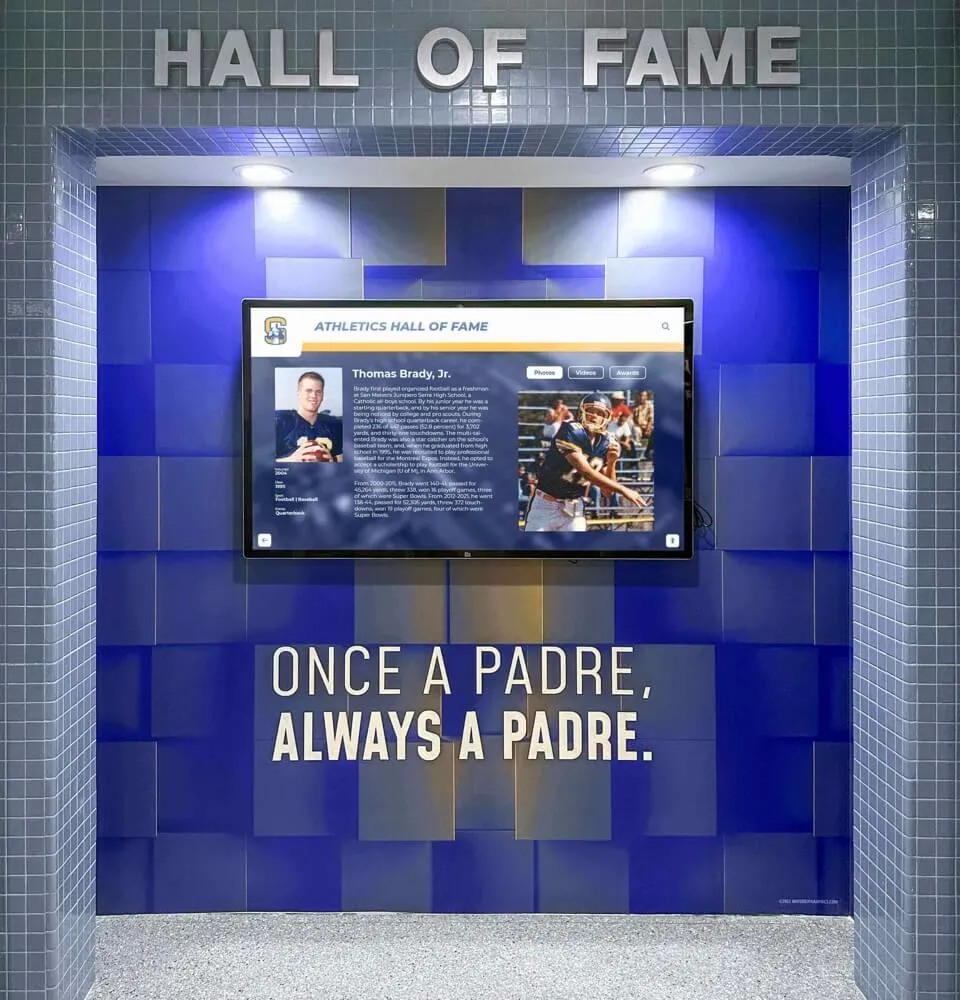
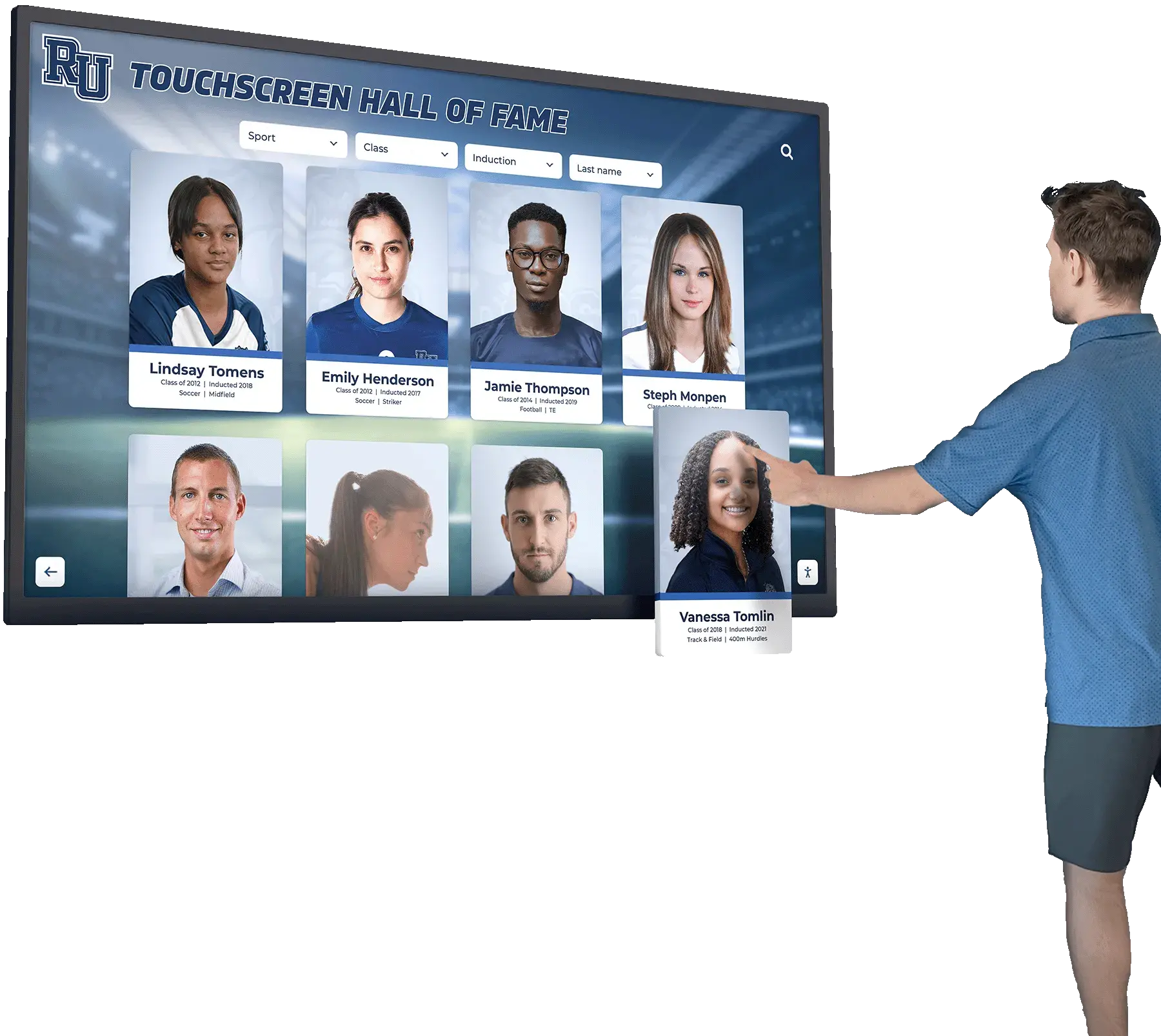
Once physical records are digitized, they can be surfaced in searchable interactive displays accessible to students, staff, alumni, and families
Integrating Physical Archives with Digital Recognition Displays
Proper archival storage protects the originals. Digital systems make that history accessible. The two approaches reinforce each other: physical archives provide the authoritative source, and digital displays give the content an audience.
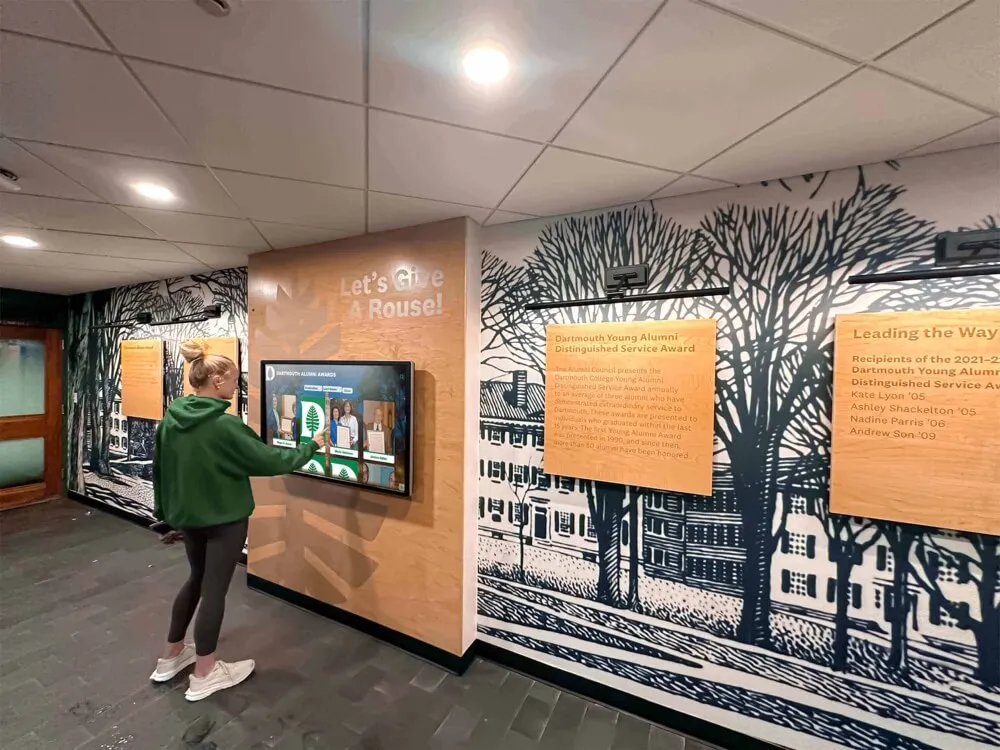
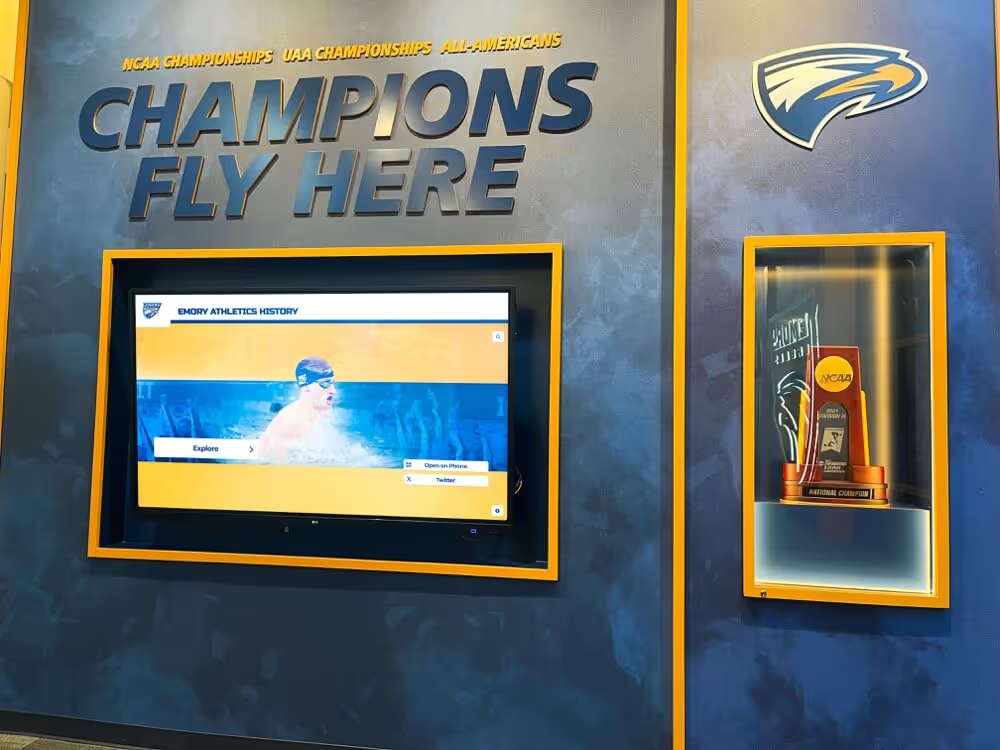
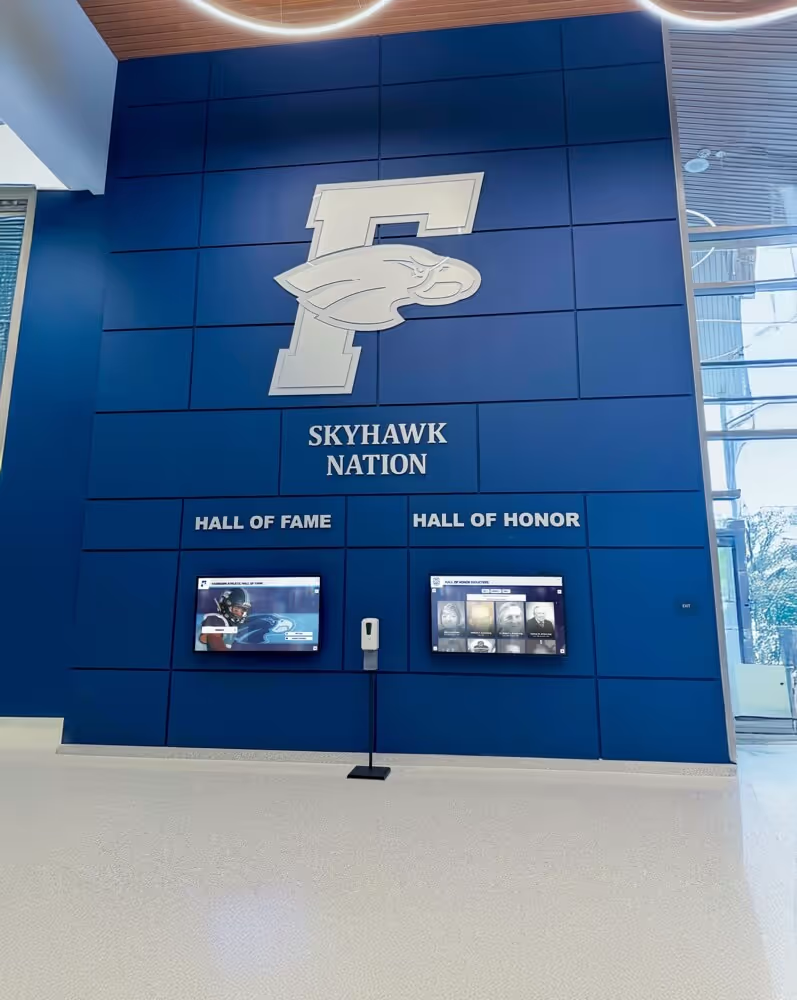
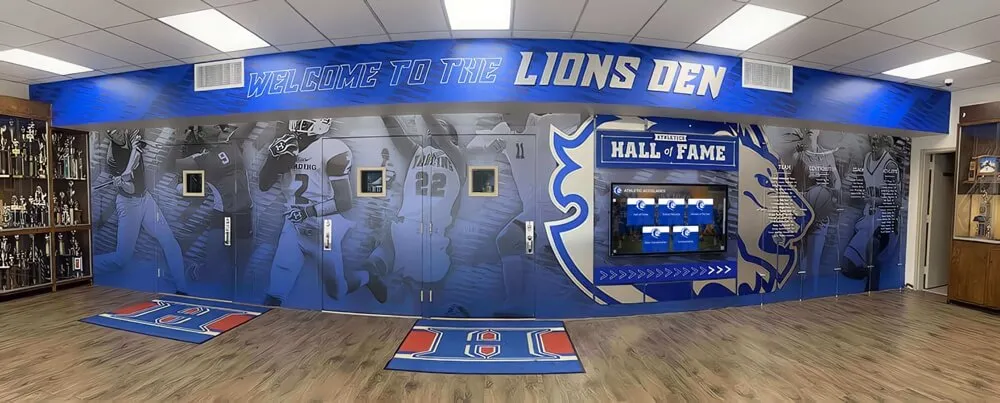
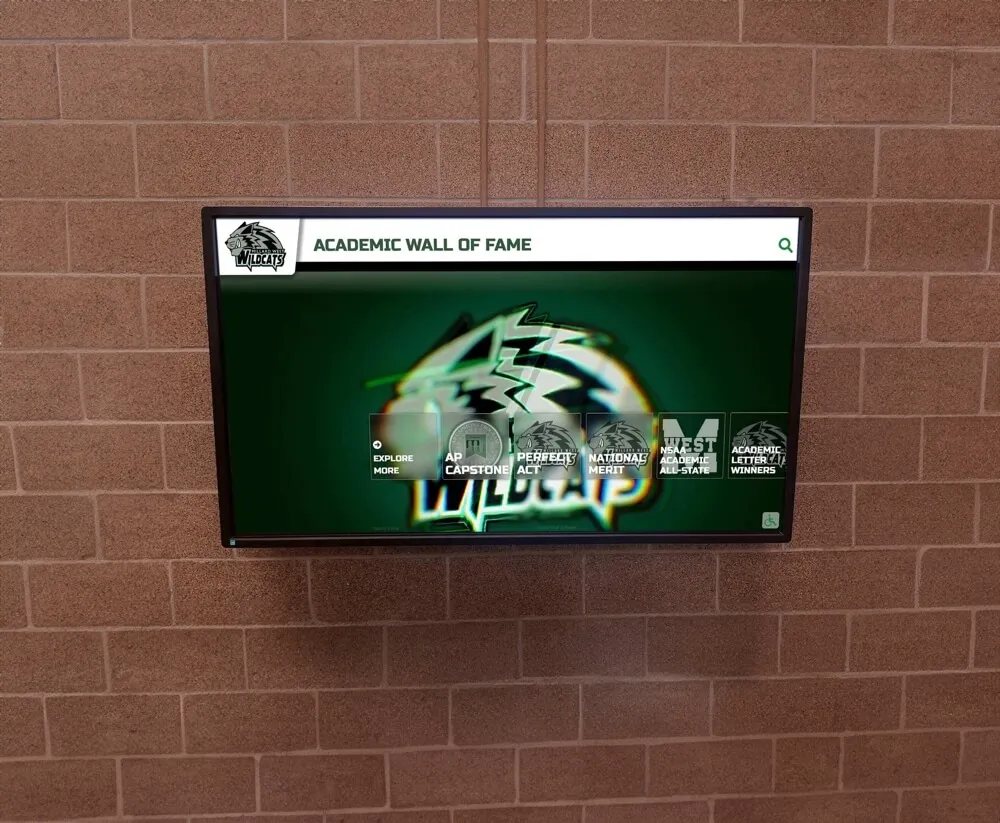
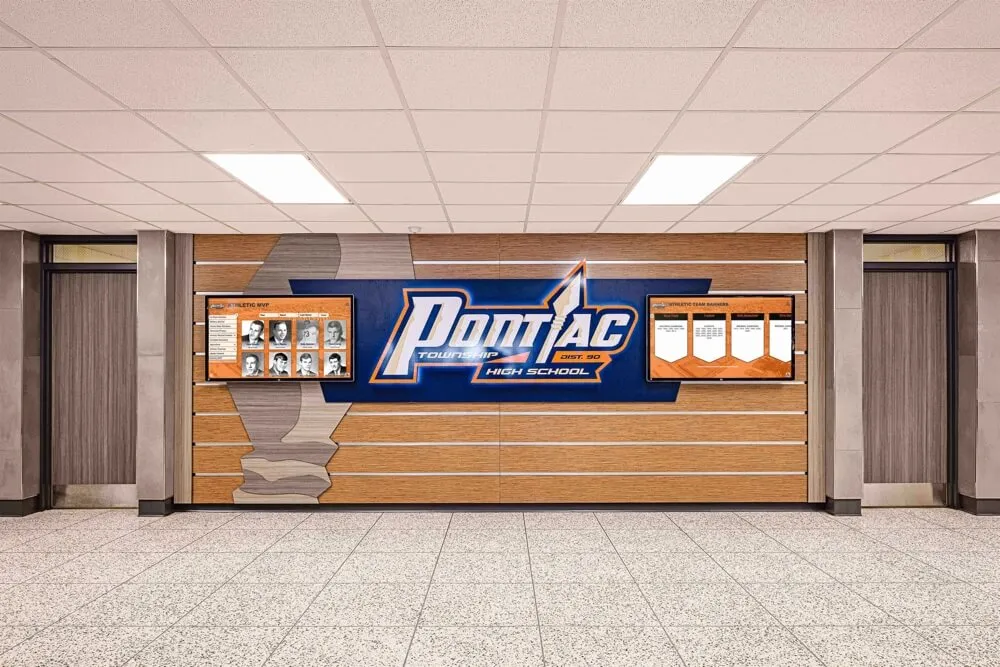
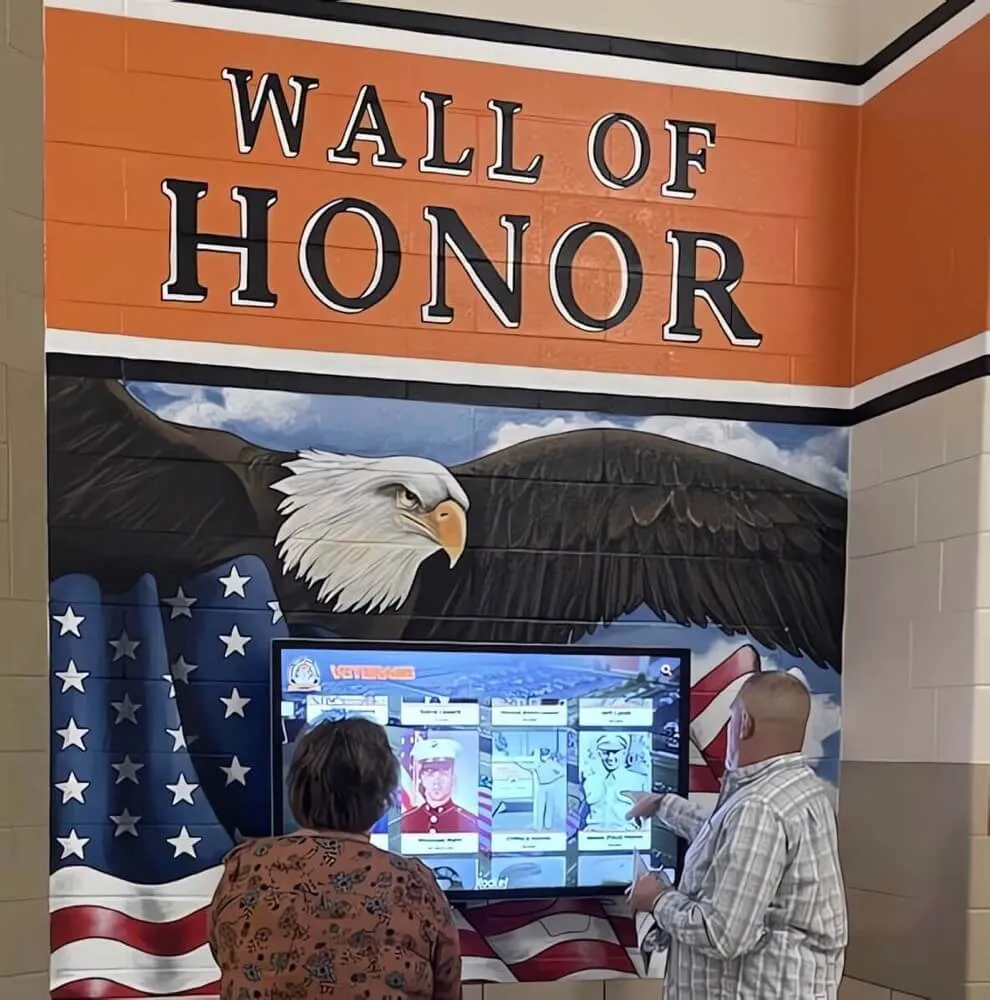
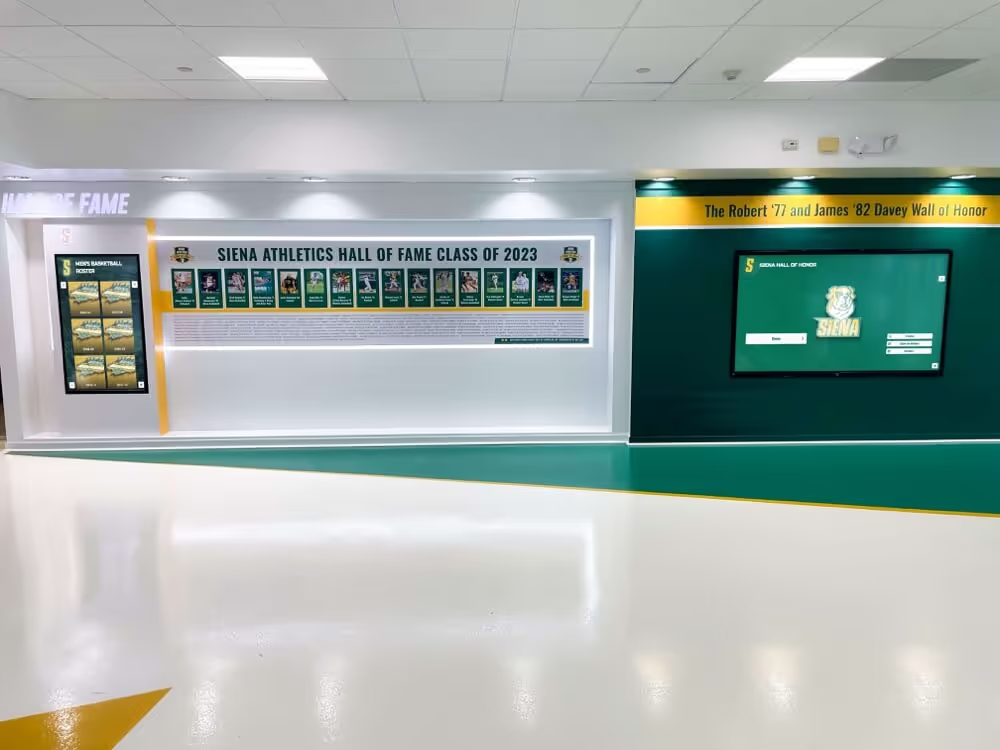
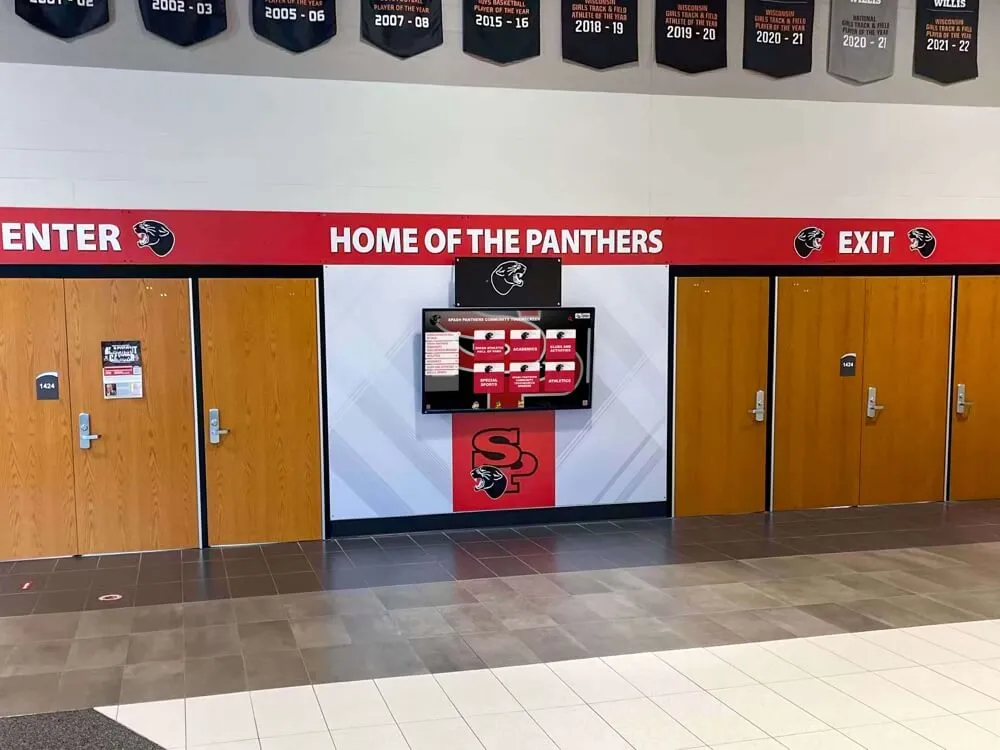
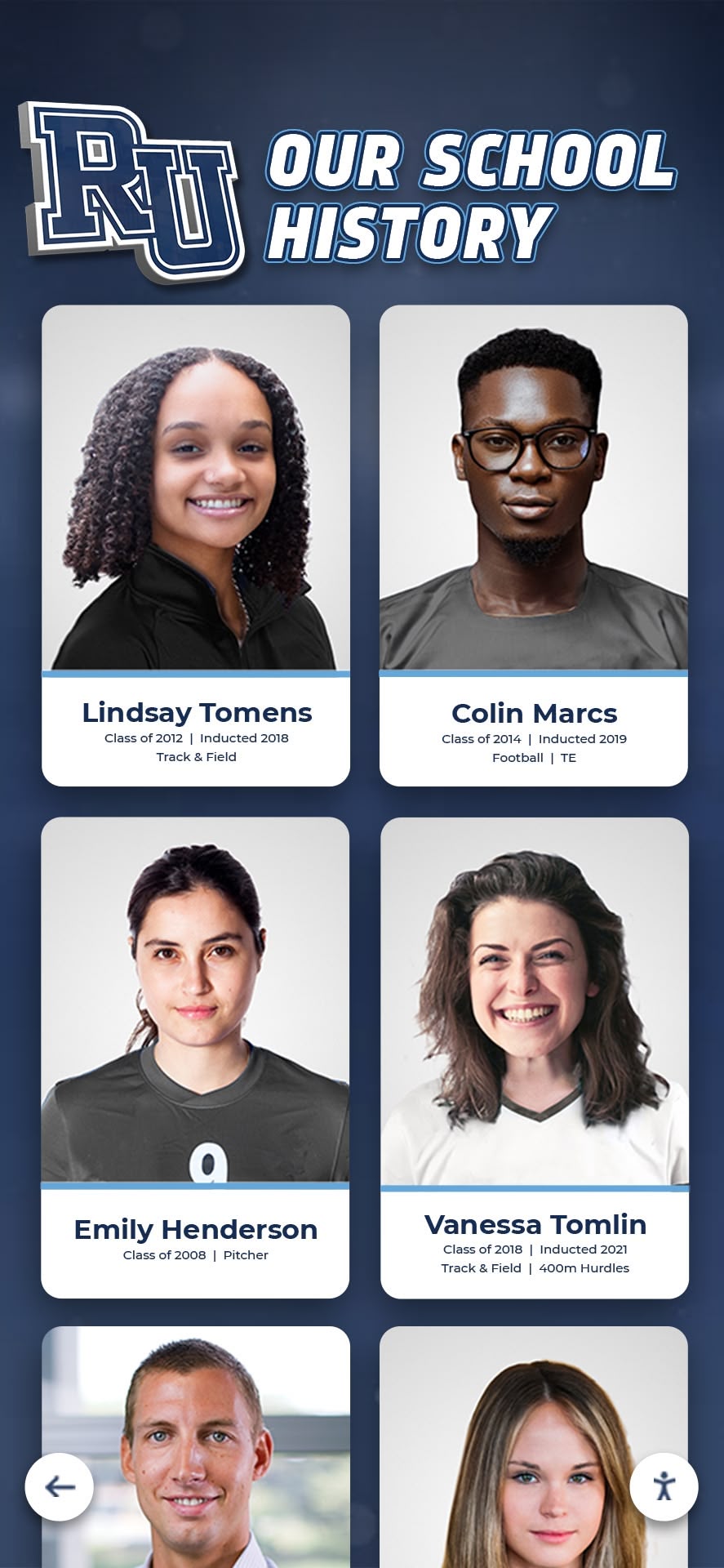
Schools using platforms like Rocket Alumni Solutions can import scanned documents, portrait photographs, and achievement records into a searchable touchscreen archive. A student browsing the lobby kiosk can pull up championship teams from 1978, honor roll classes from the 1990s, and current award winners—all from materials that started in properly labeled acid-free boxes in a storage room.
This kind of integration is especially powerful for academic recognition programs that span decades. When archivists house materials correctly from the start, the digitization pipeline is faster and cleaner, and the resulting displays are more complete.
Sports Records and Athletic Archives
Athletic programs generate a significant share of most school archives: team photos, roster records, statistics sheets, newspaper clippings, and seasonal programs going back to a school’s founding. Housing these correctly means separating acidic newspaper clippings from photographs, using labeled folders organized by sport and season, and boxing materials in chronological order.
Schools building all-time goal leaders boards or athletic halls of fame can draw directly from a well-organized physical archive rather than scrambling to find source materials at the last minute.
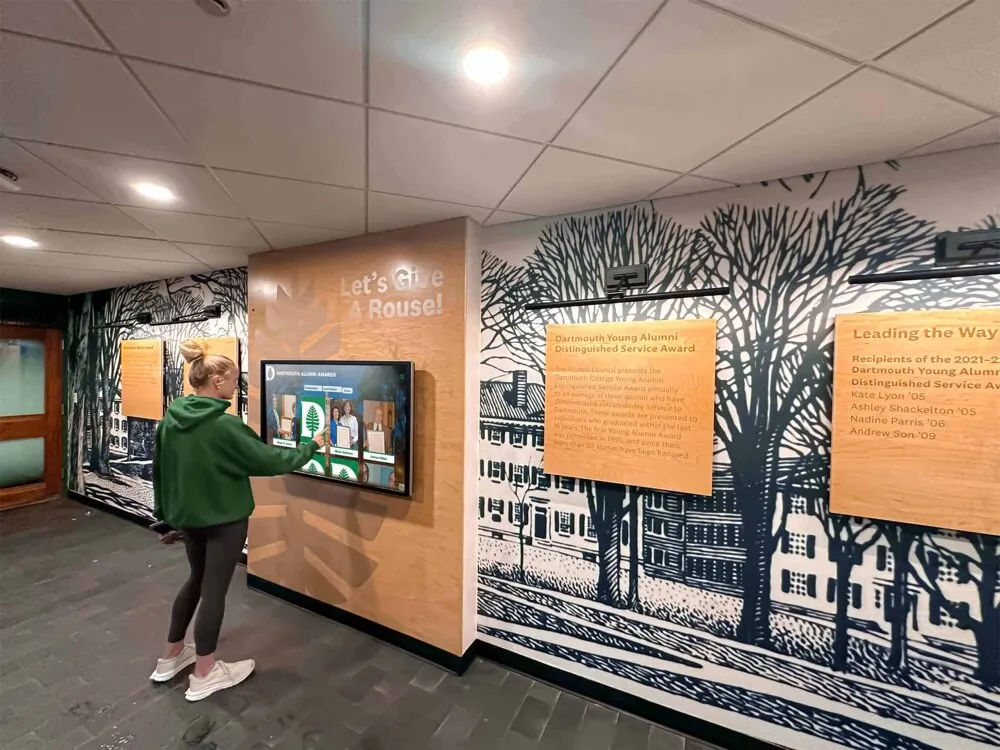
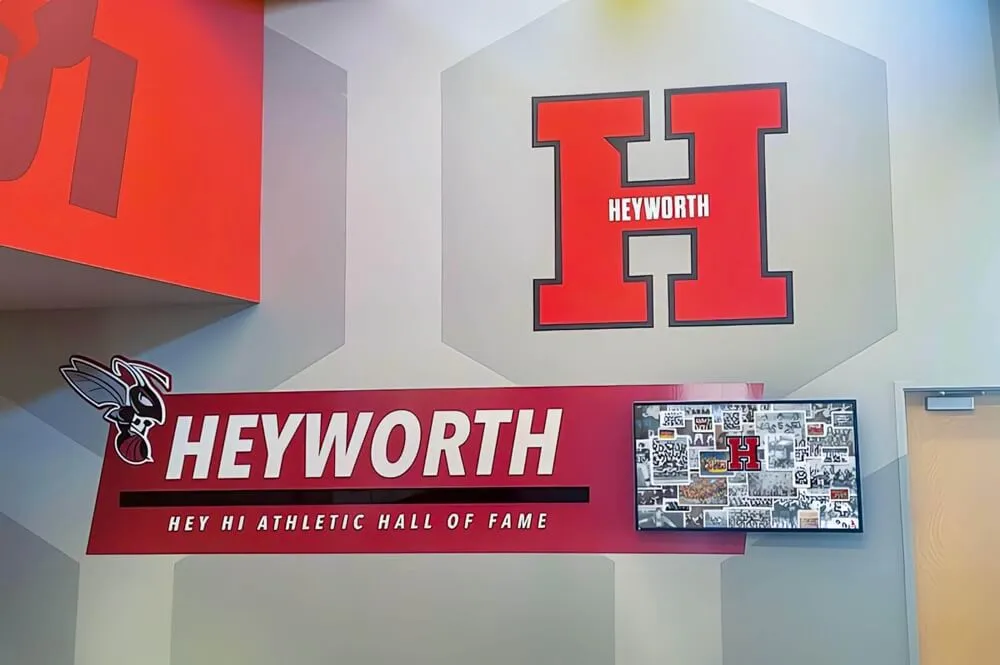
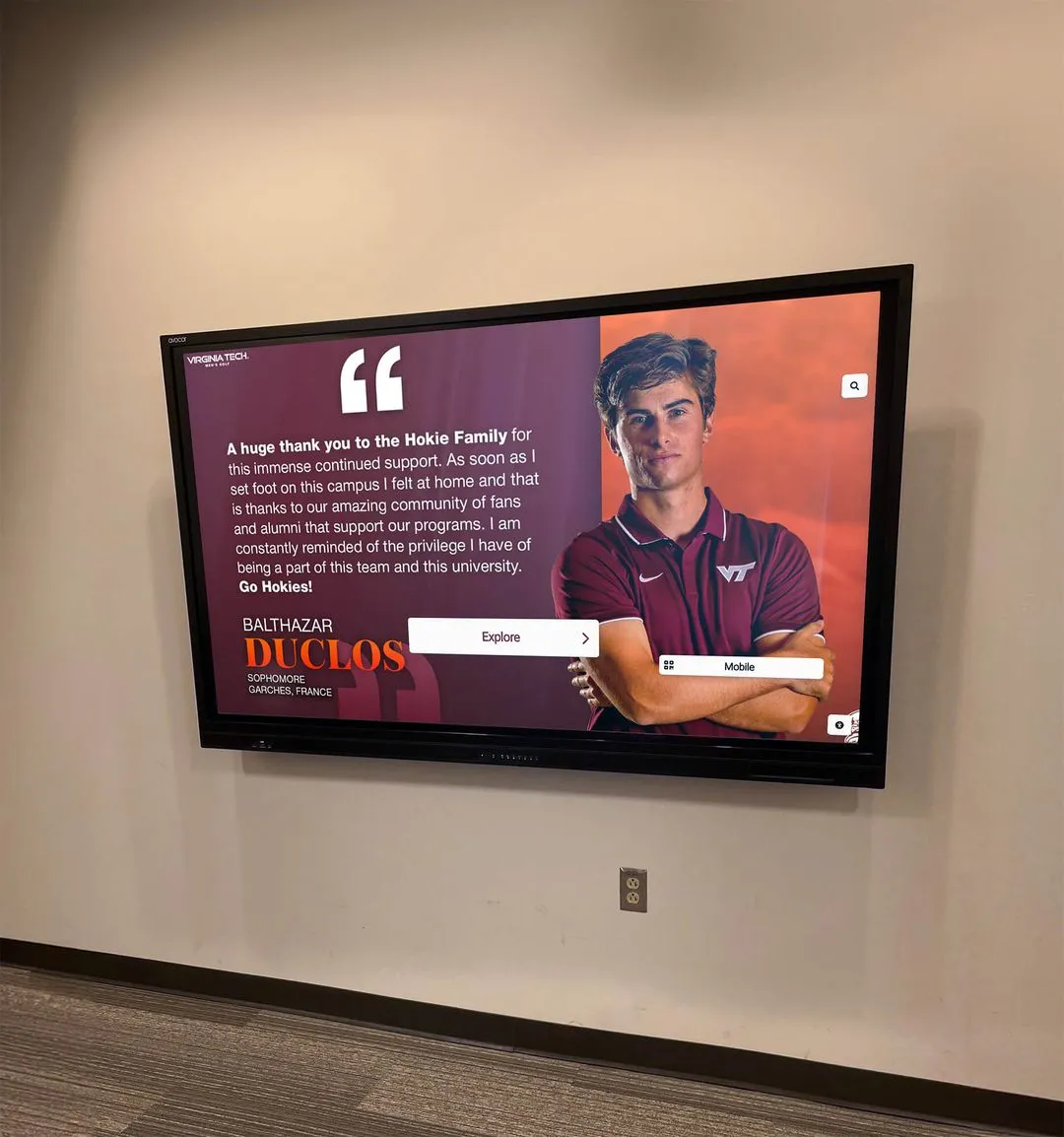
Well-organized physical archives feed richer, more complete digital recognition displays
Staff, Donor, and Alumni Archives
Staff service records, donor recognition files, and alumni correspondence deserve the same archival care as student-facing materials. These records support donor recognition display programs and alumni engagement initiatives that depend on accurate, accessible historical data.
Schools actively engaging alumni—for mentorship programs, fundraising, or capturing graduate wisdom—benefit from archives that connect past alumni to current students. A digitized record of 1990s scholarship recipients, for example, can be surfaced during an alumni event to recognize the donors whose gifts made those awards possible.
For schools funding archival projects through community support, booster club fundraising is one avenue that can earmark funds specifically for preservation supplies and digitization equipment.
Sourcing School Archive Supplies
Major suppliers that offer PAT-approved, museum-grade archival supplies include:
- Gaylord Archival — broad catalog covering all standard school archive needs, frequent institutional discount programs
- Hollinger Metal Edge — strong selection of boxes and enclosures, particularly for oversized items
- University Products — excellent for photo sleeves and conservation tissue
- Light Impressions — photographic materials specialist with good negative sleeve options
- Demco — familiar to school librarians; carries a solid archival basics line alongside standard library supplies
When comparing products, always request the supplier’s specification sheet and verify pH level, buffering status, and PAT certification before purchasing in bulk. A small pilot purchase of 10–20 boxes or sleeves allows you to verify fit, quality, and staff usability before committing to a large order.
Request institutional pricing—most suppliers offer educational discounts between 10–25% for schools, especially for orders above $500.
Frequently Asked Questions
What is the difference between acid-free and archival quality? “Acid-free” means the material has a pH of 7.0 or higher at the time of manufacture. “Archival quality” is an informal term with no legal definition. For genuine long-term preservation, look for materials that are acid-free, lignin-free, and either PAT-approved or certified to ANSI/NISO Z39.48 standards. Acid-free alone is a minimum requirement, not a guarantee of longevity.
Can I use regular plastic sheet protectors for school archives? No. Most standard sheet protectors are made from PVC, which releases plasticizing chemicals that damage documents and photographs on contact over time. Use polyester (Mylar), polypropylene, or polyethylene enclosures instead.
How should schools store old yearbooks? Yearbooks should be stored spine-down in clamshell book boxes fitted to their dimensions, or shelved upright with adequate support so they do not lean and warp. Keep them away from exterior walls, basements, and attics. If yearbooks show brittleness or significant yellowing, consult a paper conservator before attempting any cleaning or repair.
How often should archival boxes be inspected? Inspect collections at least once a year for signs of mold (fuzzy growth, musty odor), insect activity (frass, egg cases, damage patterns), and physical deterioration. Conduct a deeper review whenever storage conditions change—after flooding, HVAC system replacement, or a room relocation.
What should schools do with nitrate or acetate film? Cellulose nitrate film (produced before approximately 1951) is a serious fire hazard and must be identified by a professional and transferred to a climate-controlled facility that handles hazardous archival materials. Cellulose acetate film (common 1940s–1980s) may show “vinegar syndrome”—a strong acetic acid smell indicating deterioration. Both types require cold storage and professional assessment.
Do color photographs need different sleeves than black-and-white prints? Color prints are more sensitive to volatile compounds than black-and-white prints, so they benefit from polyester (Mylar) sleeves rather than polypropylene. Color prints should also be stored in unbuffered boxes—the calcium carbonate buffer that protects black-and-white prints can accelerate dye fading in certain color processes.
What is the easiest first step for a school with no existing archive system? Start with triage. Sort materials into three piles: photographs and negatives, paper documents, and oversized or three-dimensional items. Order a starter kit of acid-free document boxes, polyester photo sleeves, and acid-free file folders. Remove everything from any container that smells acidic or feels brittle. Rehouse in archival materials and label with soft pencil or printed labels on the outside of boxes. You do not need to digitize everything before you start protecting it.
Turn Your School Archives Into a Living Display
Properly stored physical records are the foundation — but a searchable digital archive lets students, alumni, and community members experience your school's history every day. See how Rocket Alumni Solutions connects physical preservation to interactive recognition displays.
Request a DemoConclusion
Archival storage materials are the unglamorous but essential foundation of every successful school preservation program. Acid-free storage boxes, polyester photo sleeves, buffered folders, and graphite pencil labels are not expensive—but they make the difference between a photographic portrait surviving a century and becoming unreadable within a decade.
The practical steps are straightforward: audit your current storage, replace non-archival materials systematically, maintain a stable storage environment, and build toward digitization so your physical archive has a digital backup that can be searched and displayed. Schools that get this right protect not just paper and photographs, but the institutional memory that ties generations of students, staff, and community members together.
When that foundation is solid, digital platforms like Rocket Alumni Solutions can surface the archive to a modern audience—making decades of preserved history visible, searchable, and celebrated in the hallways where it belongs. Explore digital donor recognition and school and team history archives to see how physical preservation and digital display work together, or request a demo to see a custom example for your institution.
Live Example: Rocket Alumni Solutions Touchscreen Display
Interact with a live example (16:9 scaled 1920x1080 display). All content is automatically responsive to all screen sizes and orientations.