



An athletic archive cloud exit plan is a documented, pre-approved procedure that a school or athletic program follows when a cloud storage vendor, digital archive platform, or recognition display provider stops operating, changes its pricing model, loses data, is acquired by another company, or no longer meets the school’s needs — covering what data must be exported, what formats it must be saved in, where off-platform backups are stored, who is authorized to execute the exit, and how historical records transfer to a replacement system without permanent loss. The direct answer: every school that stores photographs, record books, hall-of-fame inductee data, championship rosters, or recognition program content in any cloud or software-as-a-service platform should have a written exit plan before it is needed — because the moment a platform announces a shutdown or a contract dispute arises is not the moment to discover that your archive has no export path. This guide covers all five phases of a cloud exit plan — documentation, export testing, off-platform backup, contract review, and migration execution — and is written for athletic directors, school administrators, archive and recognition program coordinators, IT staff, and booster leaders who share responsibility for preserving institutional athletic history.
Nothing in this guide constitutes legal, IT security, or records management advice. Contract terms, data governance decisions, and vendor dispute procedures should be reviewed by your school district’s qualified staff and legal counsel before implementation.
A school’s athletic archive can represent more than a century of irreplaceable history — championship photographs, record books, hall-of-fame induction records, original team rosters, and the documentation of thousands of student-athletes who competed under that school’s name. When that history lives in a cloud platform, it exists under terms set by someone else. Platforms are acquired, rebranded, repriced, and discontinued. Vendors lose funding, pivot their product focus, or simply cease operations. Cloud storage contracts include terms that most schools never read until a crisis makes the terms suddenly consequential.
A cloud exit plan does not mean expecting failure or distrusting your current vendor. It means acknowledging that vendor relationships end — and that the school’s history must survive any vendor relationship. The exit plan is the procedural answer to the question: “If this platform stopped working tomorrow, what exactly would we do?”

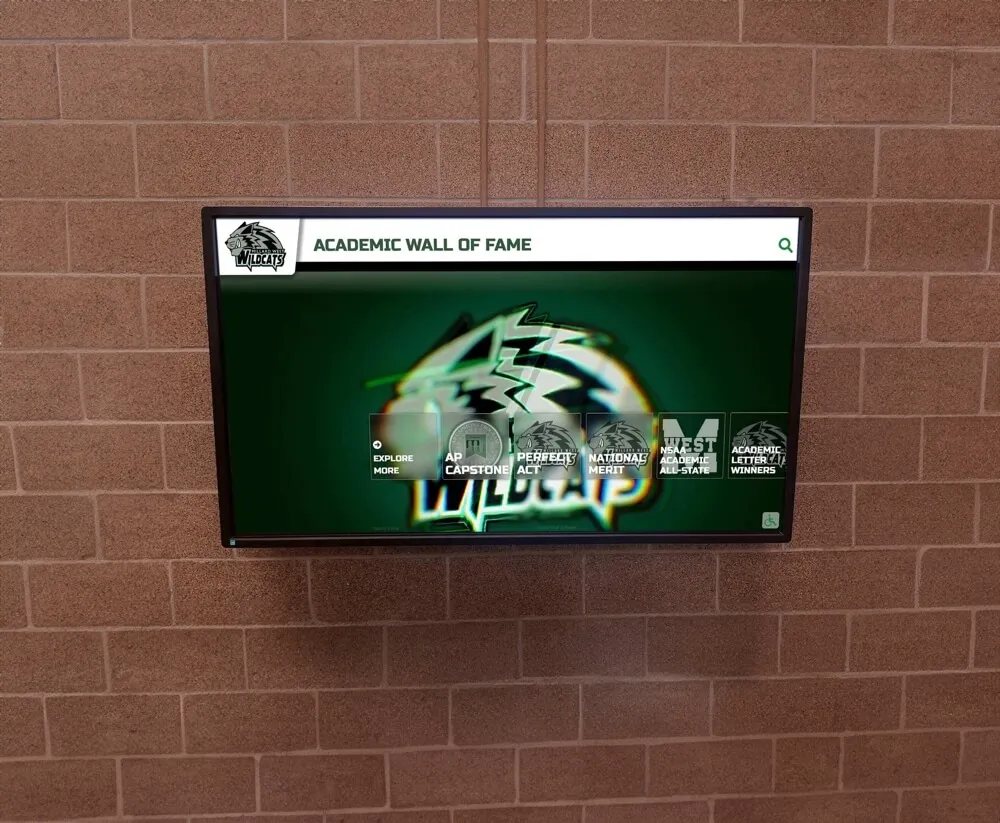
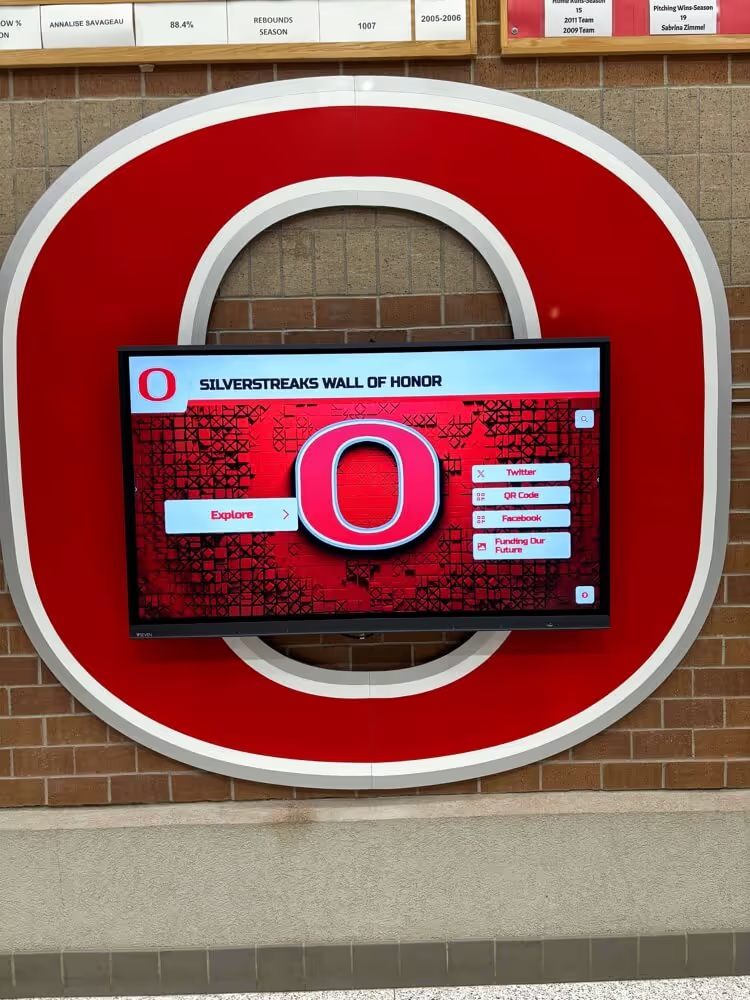
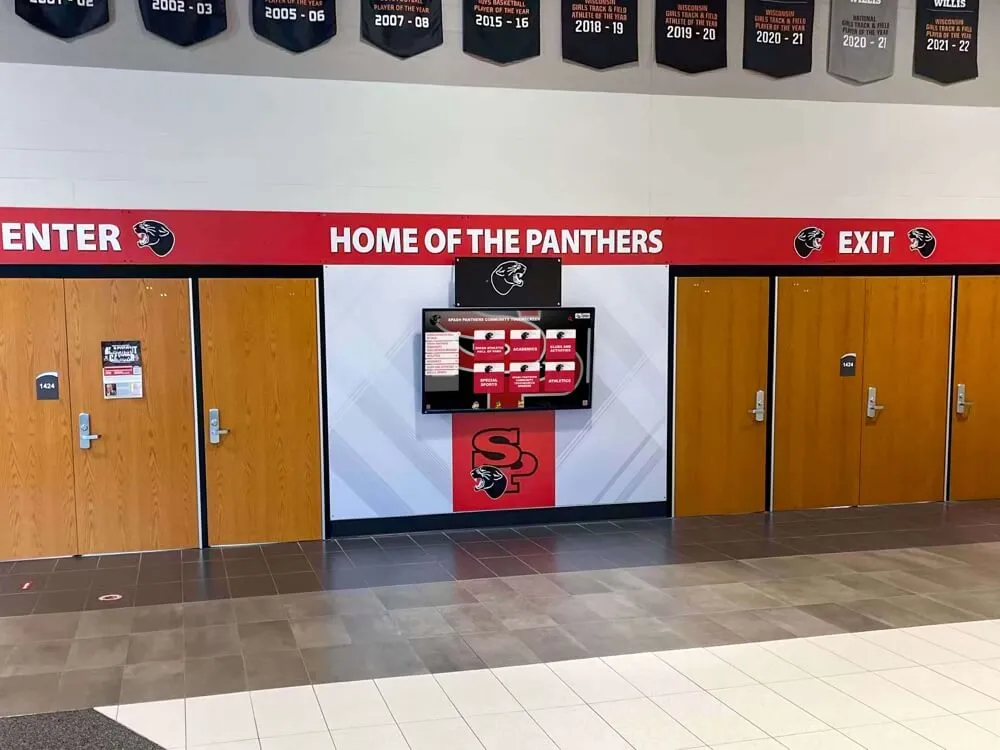
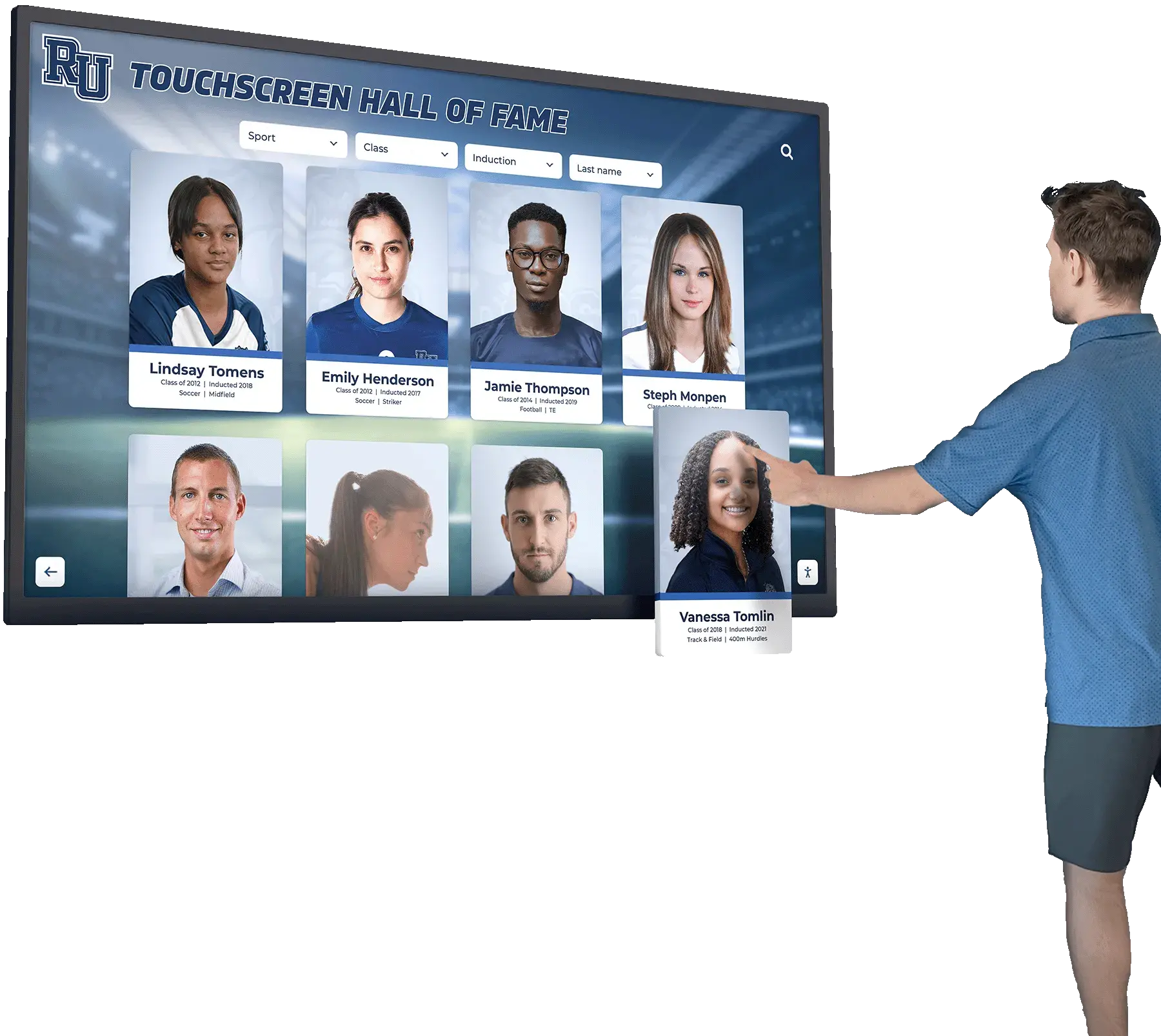
Recognition displays that surface decades of athletic history are only as useful as the data architecture behind them — photographs, inductee records, and recognition histories must be portable and backed up independent of any single cloud vendor
Why Schools Need a Cloud Exit Plan Before They Need One
The case for an exit plan is not hypothetical. Cloud platforms in the athletic recognition, digital archive, and school administration markets have been discontinued, acquired, or significantly repriced without adequate notice. Schools that had no export procedure in place before these events found themselves in one of three situations:
- Data held hostage: Platform terms required continued subscription payments to maintain export access to data already uploaded.
- Data inaccessible: Platform shutdown timelines were shorter than anticipated, and schools could not complete exports before access ended.
- Data degraded: Exports completed under time pressure were missing metadata, contextual information, or file relationships that made the raw files difficult to use in a replacement system.
None of these situations required the school to have anticipated a specific vendor’s failure. They required only that the school had a standing procedure for regular data export, off-platform backup, and a pre-documented migration path — the same procedure that serves equally well as a routine data governance practice when no crisis is happening.
Schools that celebrate institutional milestones — from 8th grade graduation ceremonies to decades-long athletic traditions — carry historical records that connect current students to the institutional story before them. A cloud exit plan protects that connective tissue.
What a Cloud Exit Plan Covers: The Five Core Components
A complete athletic archive cloud exit plan addresses five functional areas. Gaps in any one area create exposure that the other four cannot compensate for.
| Component | What It Covers | Why It Cannot Be Skipped |
|---|---|---|
| Data Inventory | Complete catalog of what the school owns in the platform | You cannot export what you have not documented — missing items in an inventory become missing items in an exit |
| Export Procedure | Step-by-step instructions for exporting each content type | Untested export procedures fail at the worst possible time — when time is already short |
| Off-Platform Backup | Independent backup storage not controlled by the vendor | If the vendor is the backup, vendor failure eliminates both the primary and the backup simultaneously |
| Contract Review | Summary of exit-relevant contract terms — notice periods, data retention windows, format restrictions | Discovering a 30-day data deletion window after the vendor has announced shutdown leaves no time to act |
| Migration Runbook | Step-by-step instructions for loading exported data into a replacement system | An export without a migration path produces an archive that exists as files but cannot be used |
Phase 1: Document What You Own Before You Need to Move It
The first phase of a cloud exit plan is a complete inventory of the athletic archive content stored in each cloud platform. This inventory is not a project unique to exit planning — it is the same inventory that a content migration checklist, a records management policy, and a disaster recovery plan all require. Maintaining a current inventory is the single most leveraged data governance practice for any school archive.
What to document for each content type:
- Photographs: Total count, date range covered, whether metadata (athlete names, team, sport, year) is embedded in the file or stored only in the platform database, average file size, original format (JPEG, TIFF, RAW)
- Athletic records and statistical data: Record categories covered (season records, all-time records, team records), data format (database records, spreadsheets, manually entered fields), whether the platform exports this data or holds it in a proprietary schema
- Hall-of-fame and inductee records: Number of inductee profiles, what fields each profile contains (name, year inducted, sport, achievements, photograph), whether photographs are linked or embedded, whether the inductee data exports as structured data or only as rendered pages
- Rosters and team histories: Years covered, sports covered, whether rosters link to individual athlete records elsewhere in the platform
- Video: Total storage volume, file formats, whether video is stored in the platform or linked from an external host (YouTube, Vimeo), whether embeds would break if the platform URL structure changed
- Recognition display content: Pages, slides, or display layouts built within a platform’s content management system — these often do not export as portable files and may require rebuilding from scratch in a replacement system
The inventory should be stored outside the platform being inventoried. A shared drive folder, district server, or separate cloud storage account owned directly by the school district — not by the vendor — is the appropriate location.
Assign a review cadence. The inventory is only useful if it reflects current content. Schedule a quarterly review with the athletic director or archive coordinator to update counts, flag new content types, and confirm that the export and backup procedures in the following phases still work.
Phase 2: Export and Test Your Data Routinely
The most common failure in cloud exit planning is the assumption that export will work when it is needed because the platform documentation says export is available. Export procedures fail for reasons that documentation does not predict: exports timeout on large datasets, metadata is excluded from bulk export formats, file naming conventions in the export differ from what the platform displays, or the export format requires software that the school does not have.
The only reliable test of an export procedure is executing it.
Schedule a full export test at least once per year, and retain the test export as an off-platform backup (see Phase 3). A test export that has never been opened and validated is not a tested export — it is a file that has never been confirmed to contain what was expected.
Export validation checklist:
- Execute the export using the platform’s standard export tools — do not rely on screenshots, print-to-PDF, or manual data entry as substitutes for a machine-readable export
- Count the exported items against the inventory count — verify that the number of photographs, records, inductee profiles, and other content types matches what the inventory documents
- Open a sample of exported files — confirm that photographs open and display correctly, that embedded metadata is present, and that record data is readable
- Confirm that the export format is a non-proprietary, widely readable format — CSV or JSON for structured data, JPEG or TIFF for photographs, MP4 for video — rather than a format that requires the vendor’s own software to open
- Test the export on a different computer or network than the one used to manage the platform — confirm that the export does not depend on platform login credentials or platform software to open
- Document the time the export required — a large archive may take hours to export, which matters when planning the timeline for an actual exit
If the export test reveals that certain content types cannot be exported in a usable format, document that gap explicitly. Some platforms store display layout data, presentation logic, or database relationships in formats that do not export cleanly. Knowing this before an exit allows the school to plan for the cost of rebuilding that content in a replacement system rather than discovering it as a surprise during a crisis.
Schools that support their archive programs through annual community events — including booster club fundraising activities that fund equipment, digitization, and display upgrades — benefit from ensuring that the archive data behind those programs is portable regardless of which vendor manages the current display.
Phase 3: Maintain an Off-Platform Backup Independent of the Vendor
An off-platform backup is a copy of the school’s athletic archive data stored in a location that the vendor does not control and that the school can access without the vendor’s cooperation. This is distinct from:
- Platform backups: Copies the vendor maintains for its own disaster recovery purposes — these are unavailable if the vendor shuts down or restricts access
- Cached downloads: Files saved to individual staff workstations without a systematic process — not a backup because they are not complete, not maintained, and not accessible to the school if that staff member leaves
- Third-party integrations: Automatic syncs to another service that the vendor set up — these often depend on the vendor’s continued operation to function
Acceptable off-platform backup locations:
| Storage Type | Appropriate For | Considerations |
|---|---|---|
| District-managed network server | All archive content | Requires IT management and sufficient storage capacity; most appropriate for schools with active IT support |
| School-controlled cloud storage account | All archive content | Must be in an account the school district owns and controls directly — not an account managed by or shared with the vendor |
| External hard drives (multiple copies, different locations) | Photographs, video, and large binary files | Appropriate as a supplement to network or cloud storage; not appropriate as a sole backup because drives fail |
| District document management system | Structured data — records, rosters, inductee profiles in CSV or spreadsheet format | Appropriate for text-based records; photograph storage should use a system designed for binary files |
Backup frequency guidance:
The appropriate backup frequency depends on how often new content is added to the archive. A program that adds content monthly should back up monthly. A program that adds new hall-of-fame inductees annually and updates records seasonally should back up at minimum after each major content update and quarterly otherwise. A backup that is six months old is better than no backup but represents six months of content that may be lost in a worst-case exit scenario.
Store the backup in at least two separate physical locations. A single copy stored only at the school building is vulnerable to facility incidents (fire, flood, theft) that would destroy both the primary platform data and the backup simultaneously.
Phase 4: Know Your Contract’s Exit Terms Before You Are in a Hurry to Leave
Most schools that sign cloud platform contracts for athletic archives or recognition display systems do not read the contract’s exit and data retention provisions carefully before signing. These provisions become critical in exactly the situations where there is least time to read them.
Exit-relevant contract terms to locate and summarize in your exit plan:
- Data retention window after cancellation: How long does the platform retain your data after you cancel the subscription? Thirty days is common; some platforms offer longer windows; some platforms delete data immediately upon cancellation. This window defines how much time the school has to complete an export after deciding to leave.
- Export format terms: Does the contract specify what format data exports in, or does the platform reserve the right to change export formats? Some contracts specify that export is available but do not commit to any specific format.
- Data portability clause: Does the contract explicitly state that the school owns its data and can export it at any time? Contracts that do not include this clause may allow the platform to argue that uploaded content, or the platform’s organization of that content, is the platform’s intellectual property.
- Notice period requirements: Does the contract require a notice period before cancellation takes effect? A 90-day notice period means the school must decide to leave before the problem becomes urgent — an exit plan that requires deciding within 90 days is too late if notice is already required.
- Data deletion policy: What happens to the school’s data after the retention window expires? Is deletion permanent, or does the vendor retain any copies for its own purposes (analytics, training data, archival)?
- Vendor assignment terms: If the vendor is acquired, does the contract transfer automatically to the new owner? Does the school have the right to exit without penalty if the vendor changes ownership?
- Uptime and data access SLAs: What happens if the platform is unavailable for an extended period — does the school have recourse, or does the contract limit liability to service credits?
Summarize these terms in a single-page document that lives alongside your exit plan. Update this summary each time the contract renews or is amended. A one-page summary is more likely to be read by the right people during a time-sensitive exit than a full contract document.
Schools that invest in recognition programs — including the kind of annual fundraising events that support athletic facilities and archive digitization — deserve contract terms that protect their historical data with the same care they bring to those community investments.
Phase 5: Execute the Exit Without Losing History
An exit execution plan documents the specific steps the school will take when it decides — voluntarily or in response to a platform problem — to leave a cloud vendor. This is a runbook: a step-by-step procedure with assigned roles, completion checkboxes, and clear hand-off points.
Exit Execution Runbook Template:
Step 1 — Trigger and Authorization
- Document who has the authority to initiate a cloud exit — athletic director, school administrator, IT director, or combination requiring joint sign-off
- Define the triggers that would initiate the plan: vendor shutdown announcement, data breach, significant price increase above a defined threshold, service quality falling below defined standards, or voluntary platform change decision
Step 2 — Stakeholder Notification
- Notify all stakeholders who need to be aware that an exit is in progress: athletic director, school administrator, IT staff, recognition program coordinator, booster leadership if relevant
- Assign a single exit coordinator who owns the runbook and is accountable for each completed step
Step 3 — Contract Review
- Pull the contract summary prepared in Phase 4 and confirm current data retention window, notice period, and export terms
- Submit cancellation notice if appropriate to start the clock on the data retention window without starting it prematurely
- Consult district legal counsel if there are contract disputes or terms requiring interpretation
Step 4 — Full Export
- Execute the export procedure documented in Phase 2
- Validate the export against the inventory documented in Phase 1
- Document all gaps between what was exported and what the inventory shows — identify content that cannot be exported and assess whether it can be recreated or must be replaced
Step 5 — Off-Platform Storage
- Store the validated export in the off-platform backup location designated in Phase 3
- Confirm the stored copy is complete and accessible before proceeding
- Create a second copy in an alternate location
Step 6 — Replacement Platform Selection
- Issue a requirements document based on the exported content — what content types must the replacement platform support, what import formats does it accept, and what are the exit terms of the replacement contract (do not sign a new platform contract without reviewing the exit terms learned from this experience)
- Evaluate candidate platforms against the requirements — particularly their data portability, export capability, and contract terms
Step 7 — Migration to Replacement Platform
- Import exported data into the replacement platform using the replacement’s standard import tools
- Validate imported content against the export inventory — confirm counts, open samples, and verify metadata integrity
- Identify any content that required manual reconstruction and document how it was handled
Step 8 — Redirect and Communication
- Update any internal links, staff bookmarks, or student and alumni-facing URLs that pointed to the previous platform
- Notify any external parties (alumni newsletter, school website, recognition program stakeholders) that the archive or display platform has changed
Step 9 — Sign-Off and Lessons Learned
- Conduct a post-exit review with the exit coordinator and key stakeholders
- Document what worked, what failed, and what the exit plan needs to change before the next vendor relationship begins
- Update the exit plan and backup procedures based on lessons learned
Vendor Shutdown Scenarios and Response Timelines
Different exit triggers require different response timelines. The exit plan should include guidance for each scenario type.
| Scenario | Typical Available Timeline | Priority Actions |
|---|---|---|
| Vendor announces shutdown with 90+ days notice | Sufficient for planned exit | Execute export, validate, select replacement, migrate at measured pace |
| Vendor announces shutdown with 30–90 days notice | Compressed but manageable | Prioritize export immediately, run validation in parallel with replacement selection, accept some manual reconstruction |
| Vendor announces shutdown with fewer than 30 days notice | Crisis mode | Export everything available immediately regardless of validation status; sort and validate after the deadline has passed; accept that some content may require reconstruction |
| Vendor becomes unresponsive or platform goes offline without notice | Unknown and potentially zero | Use off-platform backup as the primary source; file data access requests if platform terms include data retrieval rights; consult legal counsel if data is withheld |
| Voluntary exit (school initiates) | Controlled — school sets timeline | Execute at measured pace with full validation; no excuse for data loss in a school-initiated exit |
| Vendor acquisition (vendor sold to new owner) | Variable — often 30–180 days before changes take effect | Review new owner’s terms immediately; treat the acquisition as a trigger to execute a full export and backup update regardless of whether the exit plan is activated |
The digital history archive community has documented repeated patterns in platform acquisitions where service terms, pricing, and data portability changed significantly within months of ownership transfer. Schools that treat acquisition as a trigger for export — even when the new owner promises continuity — are better positioned than those that wait for service changes to materialize.
Choosing a Platform With Exit Planning in Mind
Exit planning begins before signing the first contract. The ease or difficulty of a future exit is largely determined by decisions made at platform selection time.
Platform selection criteria relevant to future exit:
| Criterion | Why It Matters for Exit | What to Confirm Before Signing |
|---|---|---|
| Data export availability | Platforms without export tools make exits extremely difficult | Confirm export availability and test a sample export during the evaluation period |
| Non-proprietary export formats | Proprietary formats require the vendor’s software to read — if the vendor closes, the software closes with it | Require CSV/JSON for structured data, JPEG/TIFF for photographs, MP4 for video |
| Contract data portability clause | Without this, uploaded content may be treated as vendor property | Require explicit written language that the school owns its data |
| Reasonable data retention window | Short windows prevent orderly exits | Require at minimum 90 days after cancellation before data deletion |
| No lock-in minimum terms | Long minimum contract terms with no exit clauses increase exposure | Negotiate for annual terms with exit rights, or ensure exit clauses match the school’s risk tolerance |
| Transparent ownership and funding | Underfunded or recently acquired vendors carry higher shutdown risk | Review vendor ownership, funding source, and business model — a vendor whose business model is unclear is a vendor whose longevity is unclear |
Schools that have built recognition programs around athletic award events understand that the history behind those programs — the photographs, records, and inductee data — is the institution’s most durable asset. The display system showing that history is a tool; the history itself is the irreplaceable element. Vendor selection decisions should reflect that priority.
Recognition Continuity During an Exit
One dimension of cloud exit planning that schools often underestimate is the continuity of recognition programs during the transition period between vendors. If a digital hall-of-fame display, an online archive, or a recognition record board is hosted by the departing platform, visitors, students, and alumni may lose access during the migration window.
Continuity planning for recognition programs:
- Identify which recognition displays and record boards are hosted by the departing platform and will be unavailable during migration
- Communicate the expected downtime to athletic directors, coaches, alumni relations staff, and any stakeholders who direct visitors to those displays
- Prioritize migrating high-visibility content — inductee records, record boards, and championship archives — before lower-visibility content
- If the replacement platform is available before the exit is complete, begin populating it with highest-priority content first so it is available to visitors even while the migration continues
- Consider whether interim measures — printed materials, temporary web pages, or static displays — are needed for high-visibility areas during the transition
Programs that recognize student-athlete milestones — including traditions like class ring ceremonies and other institutional touchstones — depend on accurate, accessible archive data. A vendor transition should not interrupt the school’s ability to honor those traditions accurately.
Recognition programs built around broader community engagement — such as act-30 club or booster-level showcase boards — carry a particular responsibility to maintain display continuity during any platform change, because disruptions are visible to the wider community, not just to internal staff.
Athletic Archive Cloud Exit Plan: Quick-Reference Checklist
| Phase | Action | Owner | Frequency |
|---|---|---|---|
| Inventory | Complete asset inventory of all cloud-stored archive content | Archive coordinator | Quarterly review |
| Inventory | Document metadata completeness for each content type | Archive coordinator | Quarterly review |
| Export | Execute and validate full export from each cloud platform | IT staff + archive coordinator | Annual minimum |
| Export | Confirm export formats are non-proprietary and machine-readable | IT staff | Annual minimum |
| Backup | Store validated export in off-platform backup location | IT staff | After each validated export |
| Backup | Confirm backup accessibility from a separate computer or network | IT staff | Quarterly |
| Backup | Store second copy in a different physical location | IT staff | After each validated export |
| Contract | Review and summarize exit-relevant contract terms | Administrator + legal | At signing and each renewal |
| Contract | Update contract summary if terms are amended | Administrator | Immediately upon amendment |
| Runbook | Document exit execution steps with assigned roles | Archive coordinator | Annual review |
| Runbook | Update runbook based on export test findings | Archive coordinator | After each export test |
| Selection | Evaluate new platform exit terms before signing any new contract | Administrator + IT | At each vendor evaluation |
Frequently Asked Questions
What triggers should automatically activate an athletic archive cloud exit plan?
Automatic triggers should include: vendor announcement of service discontinuation on any timeline; vendor announcement of acquisition or merger; significant unilateral changes to pricing, terms, or data access policies; platform data breach affecting the school’s archive data; and any extended platform outage (typically 72 hours or longer, depending on the school’s tolerance) without a vendor communication and restoration timeline. Voluntary triggers — the school choosing to switch platforms for quality, cost, or feature reasons — should also follow the same exit plan process, even though the timeline is less urgent.
How long should the school retain the off-platform backup after migrating to a new platform?
Retain the backup from the previous platform for at least 12 months after migration is complete and validated in the replacement system. This window allows the school to identify content gaps in the migration — items that were in the export but did not transfer correctly — and reconstruct them from the backup rather than from scratch. After 12 months, review the backup against the current platform’s content and make a deliberate decision about whether to retain it as a historical record or dispose of it according to the district’s records retention policy.
What if the vendor platform does not offer a data export function?
If a platform does not offer data export, that is a significant red flag for any school archive program. Do not upload new content to any platform that does not provide a complete data export path. For content already stored in a platform with no export function, consider manual export options: downloading files individually, using browser-based tools to capture rendered data, photographing or printing records for re-digitization, or contacting the vendor directly to request a data export as a service. Escalate to district legal counsel if the vendor refuses to provide export access and the school believes its data ownership rights are being violated.
How does an exit plan differ from a disaster recovery plan?
A disaster recovery plan addresses scenarios where the school’s own systems or infrastructure fail — fires, floods, hardware failures, ransomware attacks — and focuses on restoring the school’s own operations from backup. A cloud exit plan addresses scenarios where a third-party vendor’s service ends or degrades, and focuses on extracting the school’s data from a vendor’s system and establishing operations on a replacement. The two plans complement each other: a disaster recovery plan should include the off-platform backups that an exit plan maintains, and an exit plan should account for the disaster scenarios that could simultaneously affect the school’s own backup infrastructure. Schools with robust disaster recovery plans have a head start on exit planning because they have already addressed backup discipline — the exit plan adds vendor-specific procedures for extraction and migration.
Should the exit plan cover every cloud service the school uses, or only archive-specific platforms?
The exit plan described in this guide is specifically for athletic archive and recognition data — photographs, records, inductee profiles, and display content. Schools also likely use cloud services for email, student information systems, financial systems, and general file storage. Those systems have their own exit planning requirements, typically managed by district IT and outside the scope of athletic archive governance. The athletic archive exit plan should coordinate with district IT on off-platform backup infrastructure and data retention policies, but does not need to address systems outside the athletic archive scope.
What should the school do if the exiting platform charges a fee to export data?
Some vendors charge for data export, particularly for large archives. Review your contract — if it includes a data portability clause, the vendor’s right to charge for export may be limited. If the contract is silent, weigh the export fee against the cost of losing the data. In most cases, paying a reasonable export fee is significantly less costly than losing irreplaceable archive content. Document the fee, the circumstances, and the outcome in the exit plan’s lessons-learned record to inform future vendor contract negotiations. At minimum, require in future contracts that data export is provided at no additional charge as part of standard cancellation procedures.
How does this process apply to a digital hall-of-fame display hosted by a vendor?
Digital hall-of-fame displays hosted by a vendor typically involve two separate categories of assets: the content (photographs, inductee data, records) and the display presentation (templates, layouts, branding). The content should be exportable and should live in the exit plan’s scope — see the inventory and export phases above. The display presentation may not be portable and may need to be rebuilt in the replacement platform. Plan for the rebuild cost in your vendor transition budget, and during platform selection, evaluate how much of the display configuration can be exported or transferred versus how much requires rebuilding from scratch.
Protect Your Athletic Archive With a Platform Built for Permanence
An athletic archive cloud exit plan protects historical records regardless of what any vendor does next. But the exit plan also shapes which platforms are worth trusting with that history in the first place — platforms that offer open export formats, clear data ownership terms, and reasonable transition windows are partners in preservation, not obstacles to it.
If your school is evaluating recognition display platforms — or considering migrating an existing archive to a system built for long-term preservation — schedule a demo with Rocket Alumni Solutions to see how a platform designed for institutional legacy handles data portability, content migration, and the kind of historical stewardship that athletic archives require.