



An athletic archive collection development policy is the written framework that defines which record types a school’s athletic archive actively collects, which it accepts on a case-by-case basis, which it declines, and what criteria govern each of those decisions — before materials arrive, not after they accumulate in a storage room. The direct answer: without a collection development policy, athletic archives grow by default rather than design, absorbing whatever is handed to them until the collection is too large to manage, too undifferentiated to search, and too expensive to digitize in full. A collection development policy solves that problem at the source by establishing selection criteria, defining the scope of the archive’s mission, and creating an appraisal framework that staff can apply consistently to every donation, transfer, and acquisition decision. This guide provides a complete policy framework, a selection matrix covering the major record categories in school athletic archives — team records, photographs, video, game programs, awards documentation, and oral histories — and a practical FAQ written for school administrators, athletic directors, archive coordinators, and facilities or IT staff who need to build or formalize a sustainable athletic archive.
Nothing in this guide constitutes legal, records management, or conservation advice. Appraisal decisions, legal obligations, and institutional policies should be reviewed by qualified professionals before implementation.
A school that has preserved twenty years of athletic history has made many small decisions that added up to a collection. Whether those decisions were made intentionally — against a written policy that defined what the archive exists to collect — or by default — accepting everything offered without evaluation — determines whether the resulting collection is a manageable, searchable asset or a storage problem that grows faster than anyone can address.
Collection development is not a gatekeeping exercise. It is a commitment to sustainability. An athletic archive that collects everything cannot, over time, organize, describe, digitize, or maintain everything. A collection built against clear selection criteria can be organized, searched, displayed, and expanded on a predictable budget with realistic staffing.

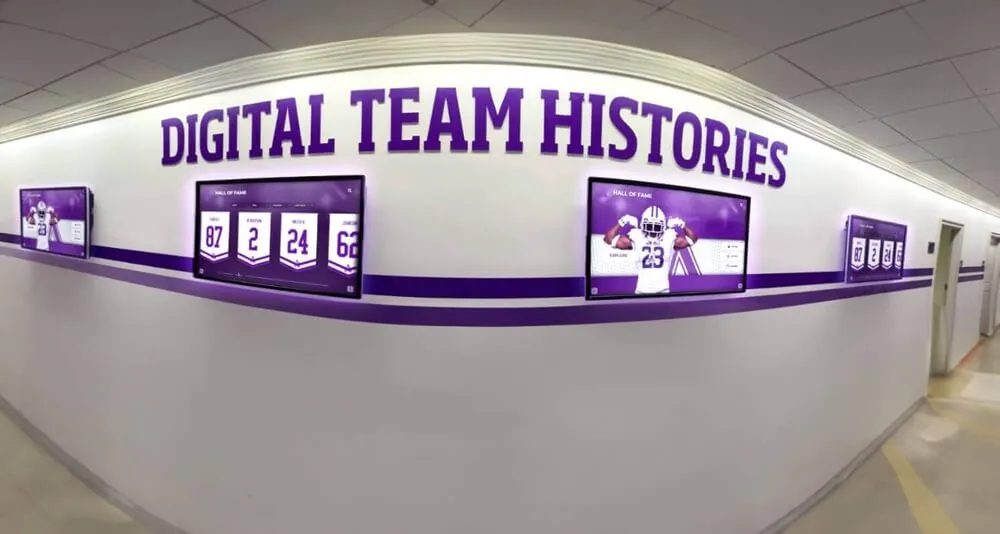
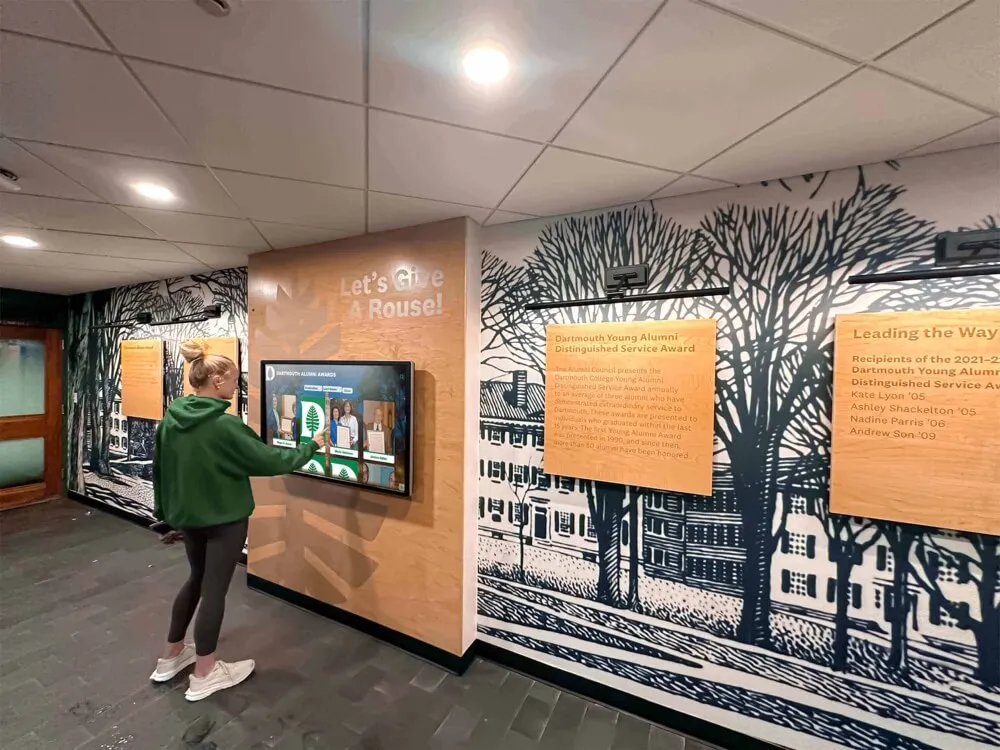
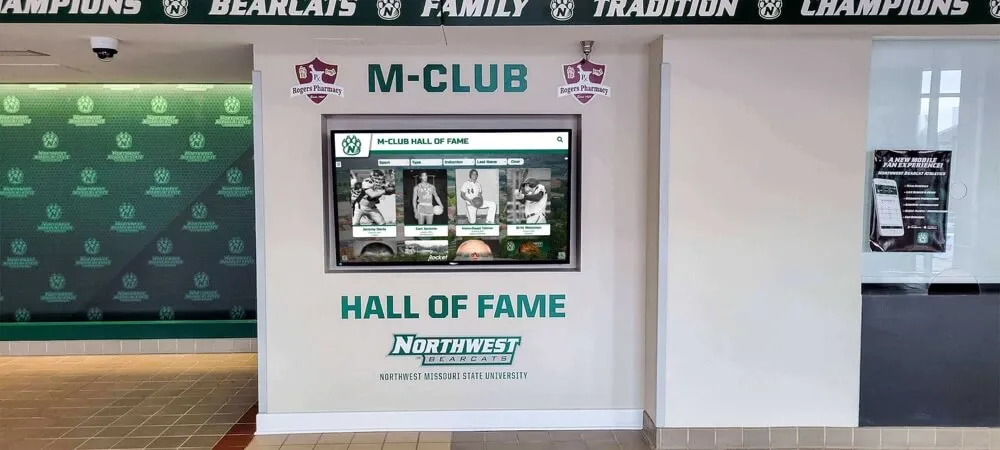
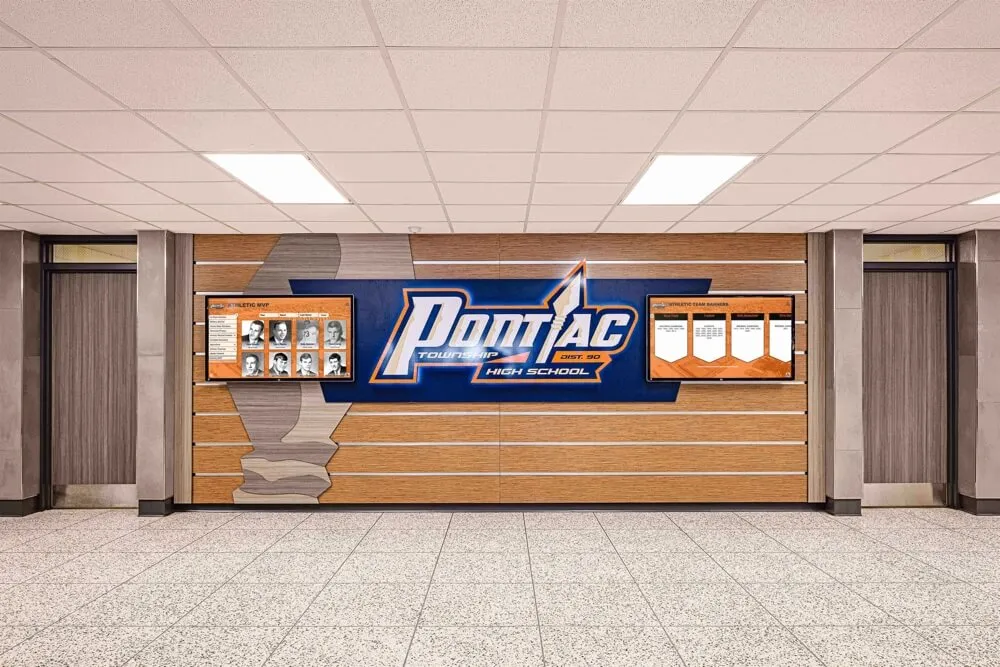
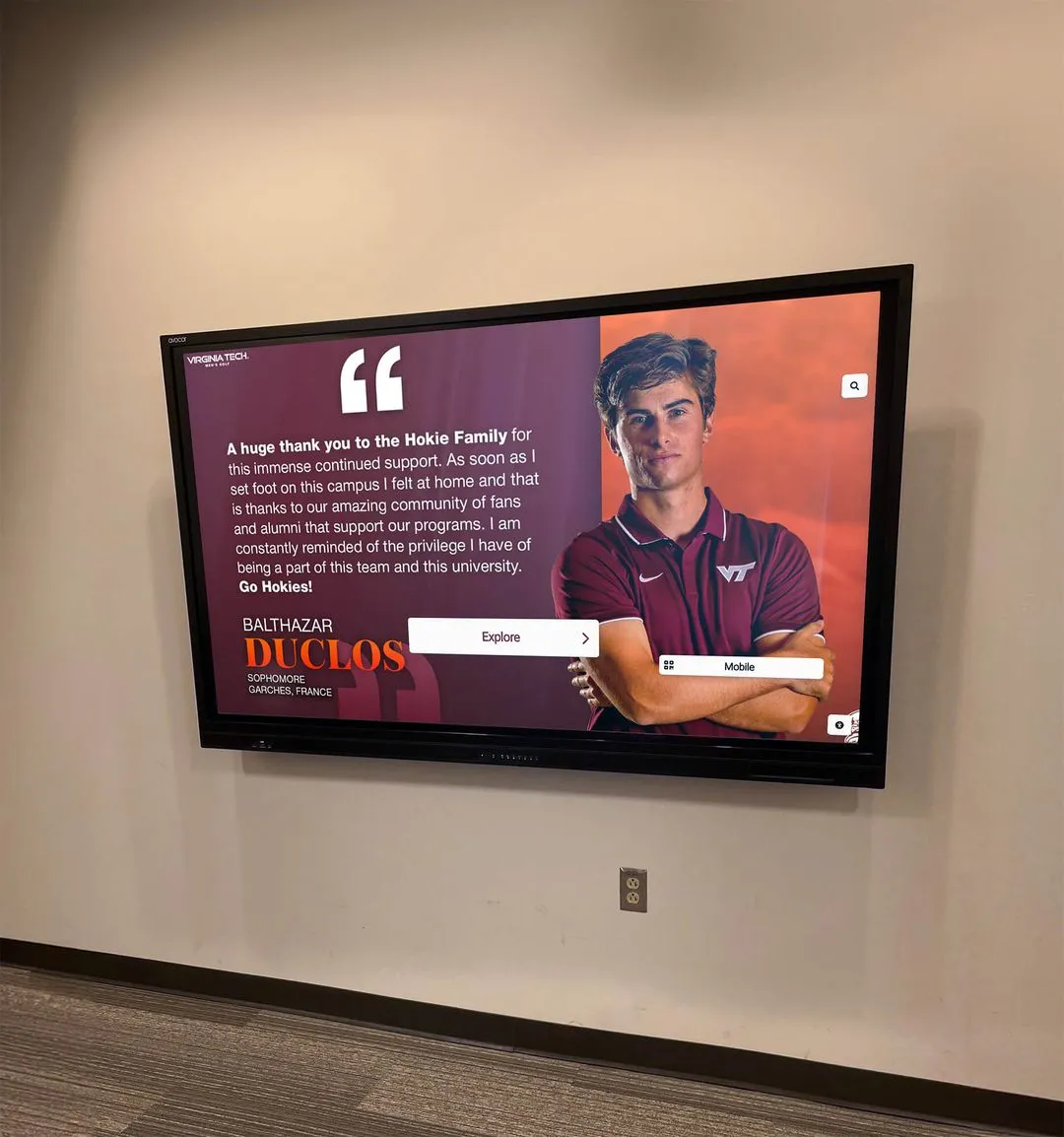
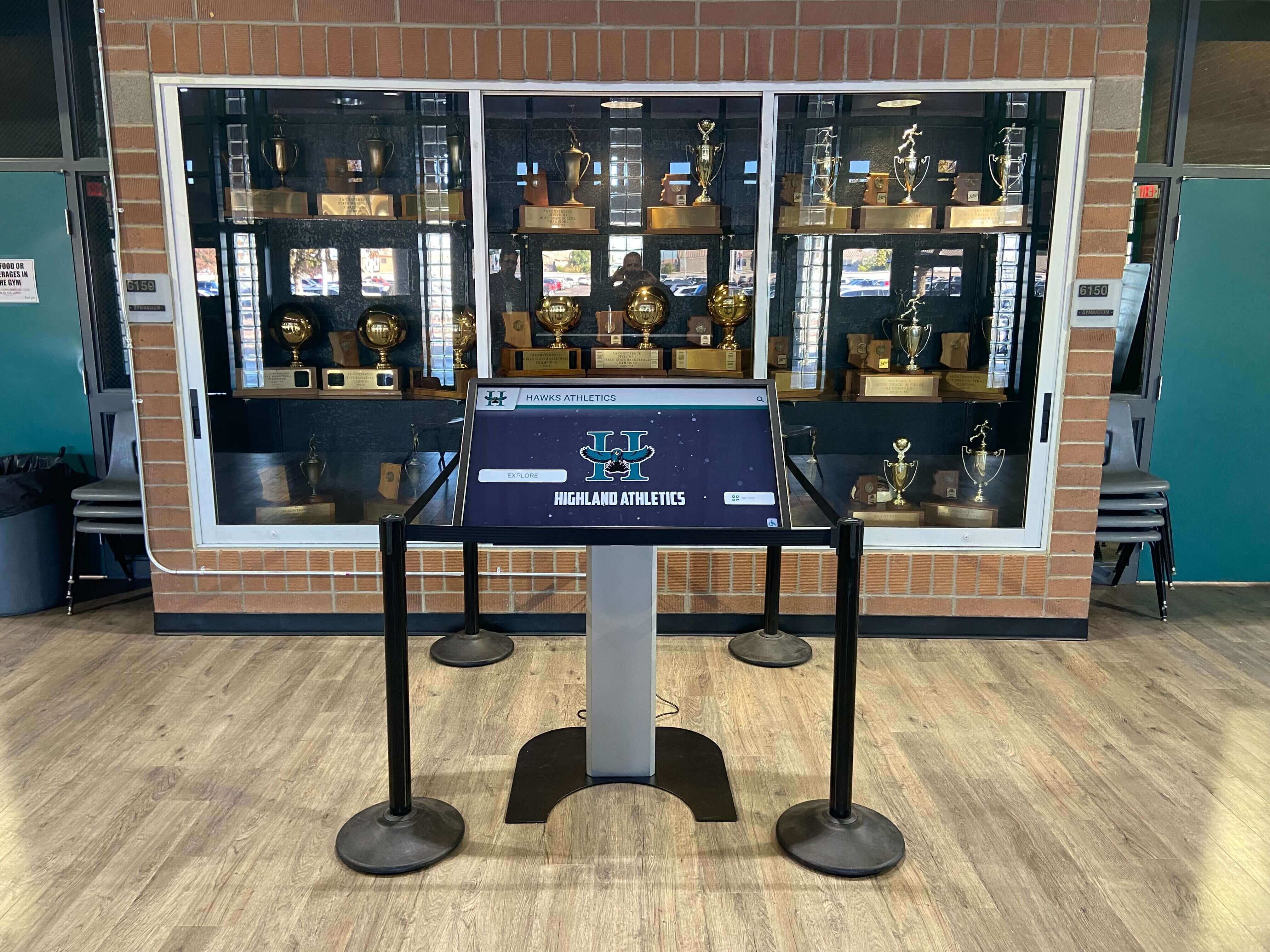
A well-designed recognition display reflects a well-developed collection — the athletic archive's collection development policy determines which records are preserved, described, and available to surface on displays like this one
Why Schools Need an Athletic Archive Collection Development Policy
Most school athletic archives do not begin with a policy. They begin with a donation: a former coach’s box of game programs, a retiring athletic director’s filing cabinet, a parent volunteer’s album of photographs from three decades ago. Each individual contribution is valuable. Without a framework for evaluating contributions against the archive’s mission and capacity, the collection grows in ways that cannot be predicted, funded, or managed.
Three specific problems follow from collection development without a policy.
Scope creep undermines searchability. When an archive accepts every type of material offered — regardless of its relevance to the institution’s athletic history — the collection becomes heterogeneous in ways that make cataloging difficult and searching unreliable. A collection that contains precisely what it set out to contain is fundamentally easier to describe and surface for recognition programs than one that contains whatever arrived.
Unlimited scope creates unlimited cost. Digitizing a well-scoped collection of 5,000 high-priority records is a fundable, completable project. Digitizing an undifferentiated collection of 50,000 records of mixed relevance is neither. Athletic archive scanning resolution guidelines depend on knowing what you are scanning and why — and those decisions are easier when the collection has been developed against documented selection criteria.
Absence of policy exposes institutions to unnecessary retention risk. An archive without selection criteria may retain records it has no institutional reason to keep — and which may carry privacy, licensing, or legal implications. A collection development policy creates the documented basis for declining inappropriate donations and disposing of out-of-scope materials appropriately.
Core Components of a Collection Development Policy
A workable athletic archive collection development policy addresses six questions, each with a corresponding policy component:
| Policy Component | Question It Answers |
|---|---|
| Mission statement | What is this archive for? What does it exist to document? |
| Scope statement | What subject areas, time periods, and record types fall within the collection’s defined scope? |
| Selection criteria | What characteristics make a record appropriate for active collection? |
| Selection matrix | For each record category, what is the collecting level (comprehensive, selective, reference only, or out of scope)? |
| Acquisition procedures | How does the archive accept new materials — transfer, donation, purchase, digitization of loans? |
| Appraisal and deaccessioning | How does the archive evaluate existing holdings for disposition, and what authorizes removal? |
The six components can be drafted in any order, but the mission statement should be settled before the scope statement, and both should precede the selection matrix. A matrix built before the mission is defined will need to be revised.
The Collection Development Selection Matrix
The selection matrix is the operational core of the policy — the table that staff and committees consult when a new batch of materials arrives or when a donation is offered. It assigns every major record category in a school athletic archive to one of four collecting levels:
- Comprehensive: Collect all items of this type that fall within the archive’s defined scope. Do not decline.
- Selective: Collect items of this type that meet defined significance criteria. Evaluate before accepting.
- Reference only: Retain a representative sample for context. Do not add further items of this type except to fill documented gaps.
- Out of scope: Do not collect. Decline donations; do not transfer from other institutional sources.
The following matrix covers the major record categories in school athletic archives. Collecting levels are illustrative defaults; each institution’s policy will reflect its specific mission, available resources, and legal obligations.
| Record Category | Default Collecting Level | Key Selection Criteria | Notes |
|---|---|---|---|
| Championship documentation (programs, certificates, official results) | Comprehensive | All levels of competition; all sports | State and national championships especially; regional and conference as capacity allows |
| Individual award records (all-conference, all-state, hall of fame) | Comprehensive | Publicly announced recognition | Award level, sport, year; complete for named hall of fame inductees |
| Team season records (win/loss, standings, records broken) | Comprehensive | All varsity sports; official results | Season-level summary records distinct from individual athlete statistics |
| Historical team photographs (group portraits, action photographs) | Selective | Identified individuals; significant seasons; good condition | Unidentified bulk action photographs lower priority; condition risk accelerates priority |
| Individual athlete portrait photographs | Selective | Hall of fame inductees; major award recipients; historically significant figures | Full-roster portrait sets acceptable when storage and digitization capacity allow |
| Video recordings (game footage, highlight reels, ceremonies) | Selective | Championship seasons; record-breaking performances; ceremonies and inductions | Analog video (VHS, 8mm) given priority due to condition degradation risk |
| Game programs and media guides | Selective | Championship seasons and significant milestones; reference copies for other seasons | One copy per program sufficient; duplicates deaccession after cataloging |
| Oral history recordings (interviews with coaches, athletes, staff) | Selective | Individuals with unique knowledge of significant events; perspectives not documented elsewhere | Created recordings rather than collected; require consent documentation |
| Booster club and fundraising records | Reference only | Representative samples documenting program support history | Financial detail not within athletic archive scope; institutional finance office retains official records |
| Administrative correspondence | Reference only | Documents related to program milestones, facility history, or major policy changes | Routine operational correspondence out of scope |
| Press clippings and news coverage | Reference only | Articles documenting championships, award announcements, significant milestones | Digital links acceptable for recent coverage; physical clippings for pre-digital era |
| Duplicate copies of already-cataloged items | Out of scope | N/A | Decline additional copies of materials already represented in the collection |
| Commercial merchandise and branded promotional items | Out of scope | N/A | Museum collections have different mandate; athletic archive focuses on records, not objects |
| Personal materials without institutional connection | Out of scope | N/A | Personal memorabilia with no documented connection to the institution’s athletic program |

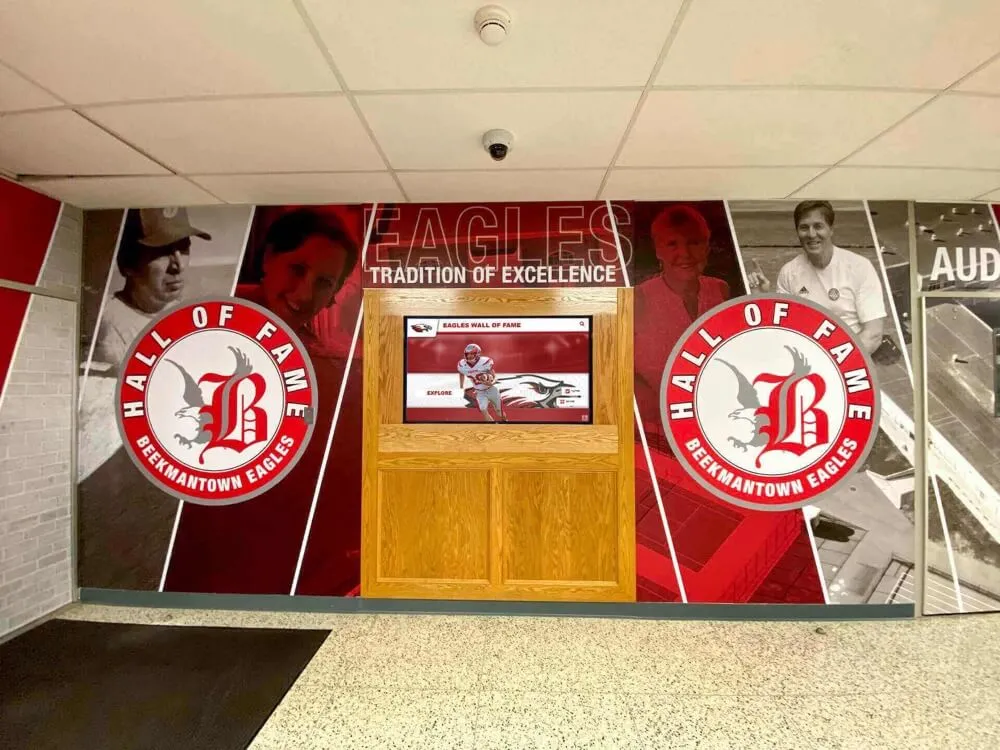
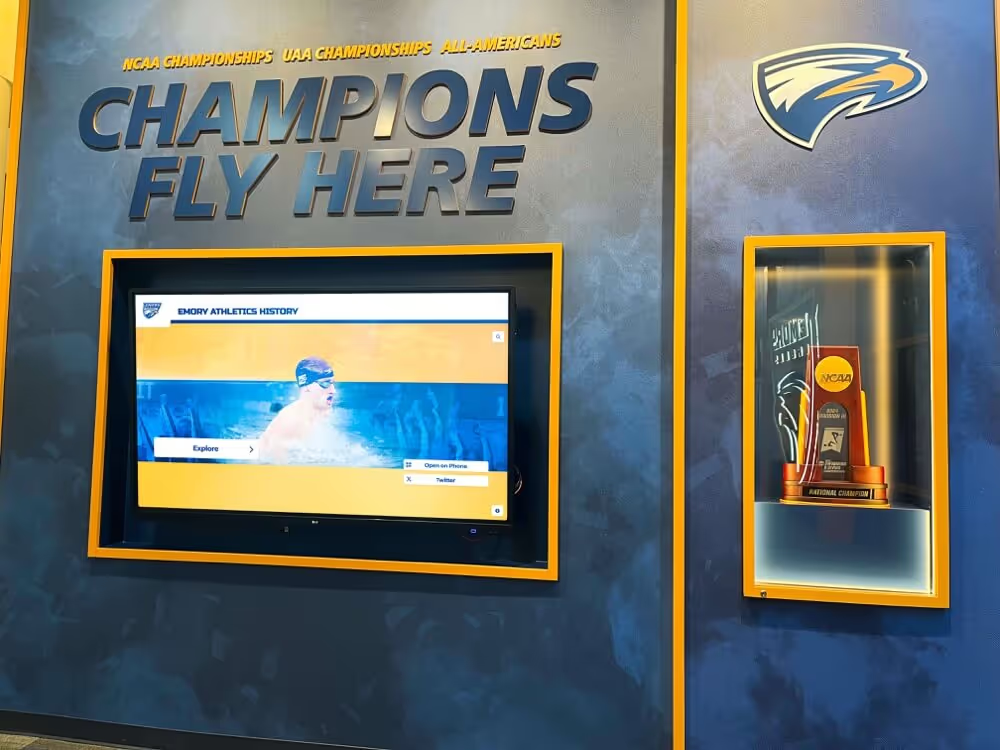
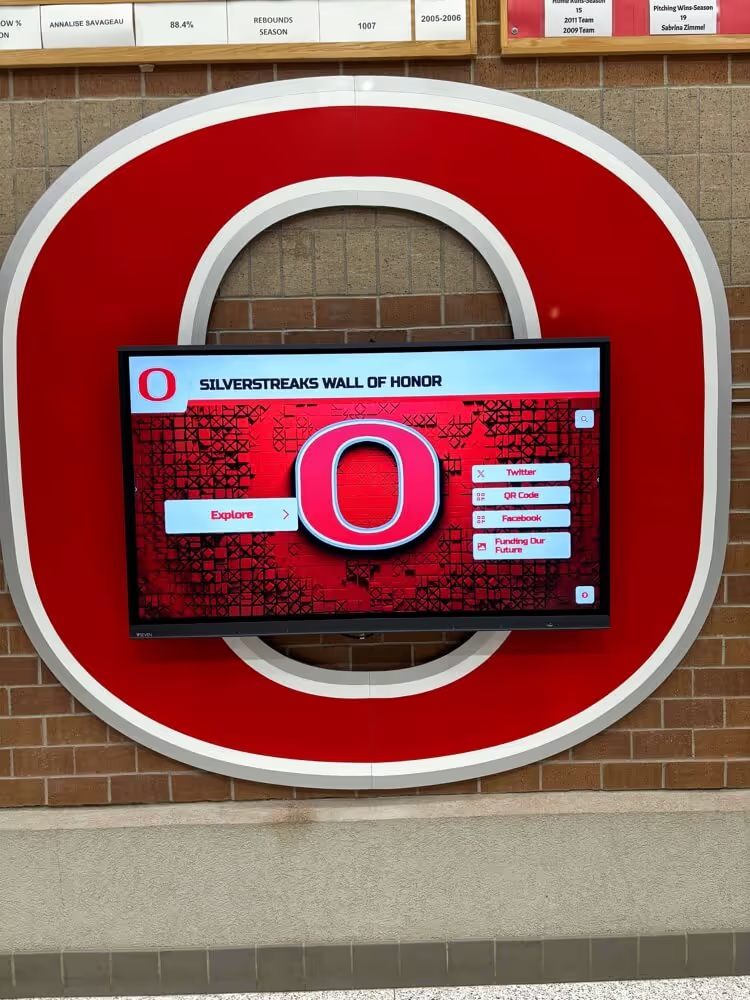
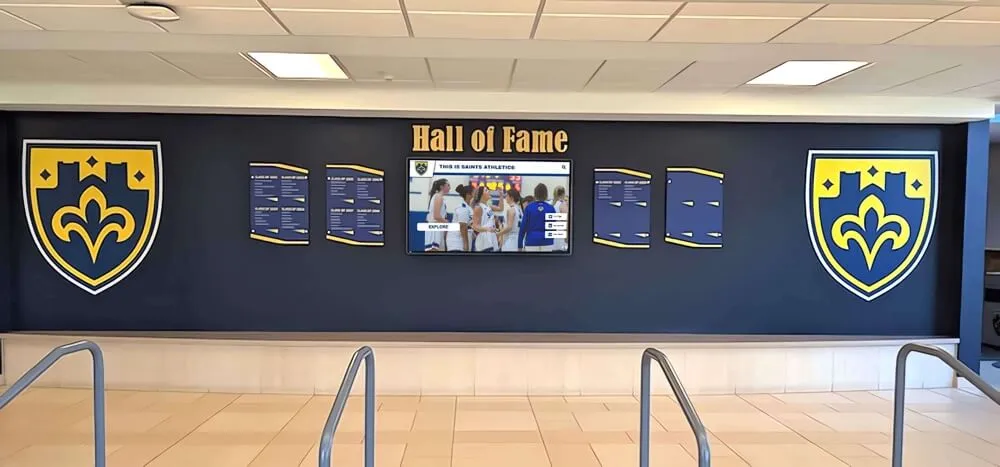
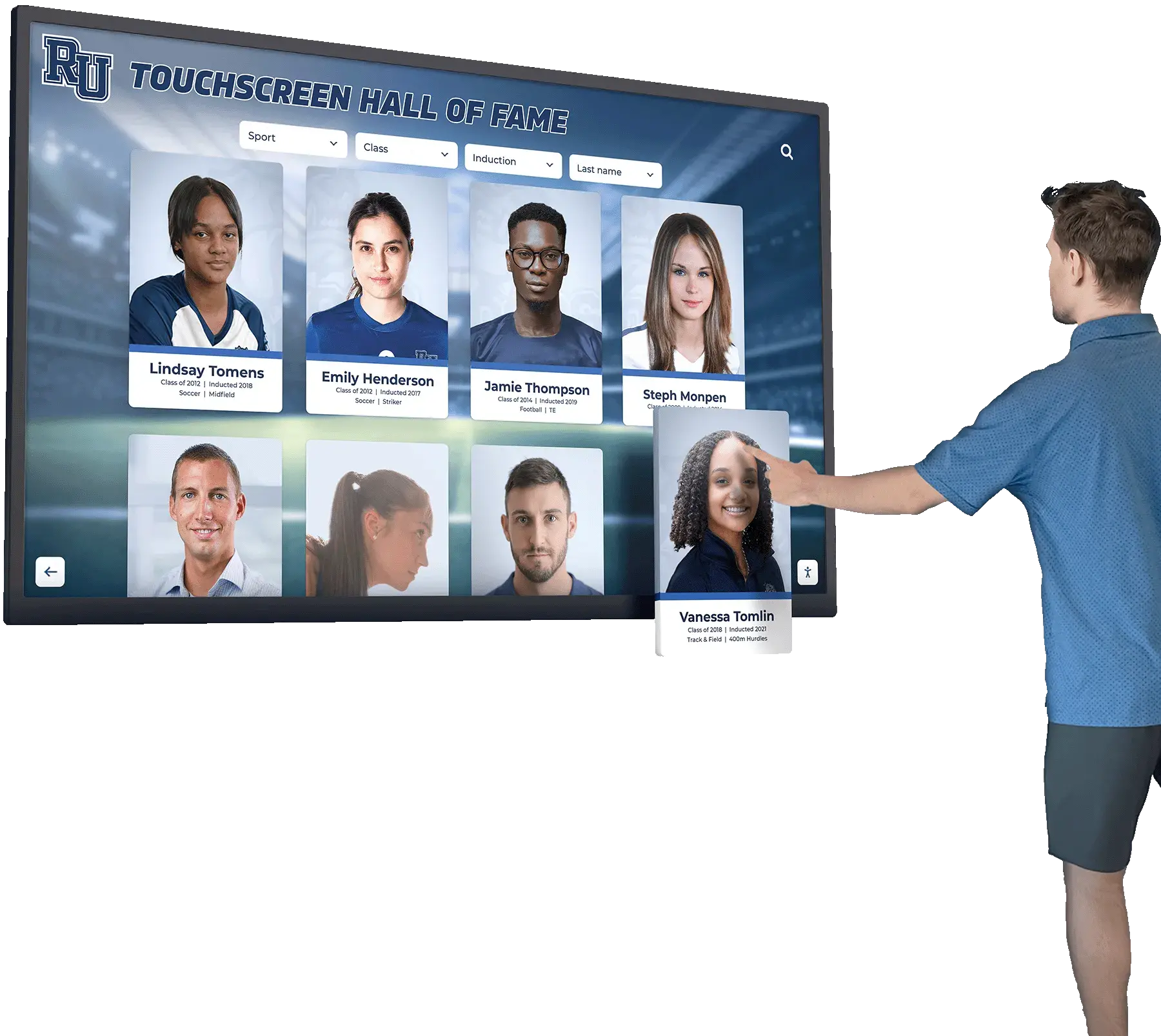
Recognition displays draw from the records the collection development policy defines as worth preserving — a selection matrix ensures that hall of fame documentation and individual award records receive comprehensive collecting regardless of staffing capacity
Record Categories in Depth
Team Records and Statistical Documentation
Team records — season win/loss records, championship titles, program milestones, all-time bests — are the institutional memory of the athletic program and the content that most directly feeds recognition displays, record boards, and hall-of-fame programs. A comprehensive collecting stance for team records at the season level is appropriate for virtually any school athletic archive: the volume is manageable, the significance is high, and the institutional identity connection is direct.
Individual athlete statistics require more nuanced treatment. Detailed game-by-game statistics for every athlete across every season quickly become voluminous, and their relevance to recognition programs is limited outside of record-holders and major award recipients. A selective approach — comprehensive for record-holders and major award recipients, summary-level for all others — keeps statistical documentation manageable while preserving the records that recognition programs actually need.
Photographs
Photographs are typically the largest category in a school athletic archive by volume and the category with the highest potential for both recognition value and condition risk. A collection development policy that fails to define clear selection criteria for photographs will produce a collection dominated by undifferentiated images — useful in aggregate but difficult to search or display individually.
Selection criteria for photographs should prioritize identification, significance, and condition:
- Identified individuals: A photograph of a named athlete — especially one who has received a major award or hall-of-fame induction — has significantly higher recognition value than an anonymous action photograph.
- Significant seasons: Photographs from championship seasons, record-breaking performances, and milestone events have higher collection priority than photographs from ordinary seasons.
- Condition: Physical photographs that are actively deteriorating — severely faded, brittle, mold-damaged — require priority processing regardless of their content significance, because the window to digitize them is closing. Scanning resolution guidelines for athletic archives provide specific technical requirements for capturing photographs at the quality level that supports long-term preservation and display use.
Oral history programs that document the contexts behind photographs — who the individuals in a group portrait are, what the circumstances of a championship photograph were — significantly increase the long-term value of a photographic collection that was originally collected without identification metadata.
Video Recordings
Video is the record category where condition urgency most dramatically affects collection development decisions. Analog video formats — VHS, Betamax, 8mm, Super-8 — are physically degrading, and the equipment required to play them is increasingly scarce. An athletic archive with analog video holdings should treat condition urgency as a collecting priority regardless of content significance: content that cannot be recovered from degraded tape is content that no longer exists.
For natively digital video — recordings made directly to digital formats — the collection development decision is primarily about scope: does the archive have the storage capacity and staff time to catalog and preserve all game recordings, or only championship seasons and record-breaking performances? A selective approach based on significance criteria is more sustainable for most school athletic programs than a comprehensive approach to all digital video.
Game Programs and Media Guides
Game programs and media guides document the athletic program at a specific moment — season roster, schedule, coaching staff, and the program’s self-presentation for that year. They are irreplaceable artifacts of institutional history and particularly valuable for the periods before digital record-keeping, when programs, rather than websites, were the primary vehicle for communicating athletic program information to the public.
A reference-level collecting stance — one copy of each program retained — is appropriate for most schools. Duplicate copies add no informational value and consume storage and cataloging capacity that could be directed to higher-priority record categories. For programs considering how to display historical game program content alongside hall of fame recognition materials, digitized programs with searchable metadata provide a more useful archive than a shelf of physical copies.
Awards Documentation
Awards documentation — certificates, letters of notification, all-conference and all-state designations, hall-of-fame induction materials — is the record category most directly connected to recognition programs and display content. A comprehensive collecting stance for awards documentation is appropriate because the volume is bounded, the significance is consistent, and the connection to recognition displays is direct.
For schools building senior recognition programs alongside longer-term hall-of-fame programs, the collection development policy should explicitly address how annual awards documentation is ingested — whether athletic department staff transfer it to the archive automatically, or whether it arrives through a donation or transfer process that requires active collection.
Birthday and milestone recognition programs that reference historical athletic achievements draw on the same awards documentation that hall-of-fame programs use — a well-organized awards archive supports both without duplication.
Oral Histories
Oral histories are created records rather than collected records: they are produced by the archive through recorded interviews rather than transferred from another institutional source. A collection development policy that addresses oral histories should specify what types of subjects justify an oral history recording, what consent documentation is required before any recording is made, and how the resulting recordings are stored and described.
Oral histories are particularly valuable in athletic archives because they capture contextual knowledge that no other record type preserves: the story behind a photograph, the circumstances of a record-setting performance, the institutional memory of long-serving coaches and staff. When commitment ceremonies and senior recognition events are documented photographically, an oral history interview with the athlete or coach adds the context that makes the documentary record meaningful beyond its surface content.

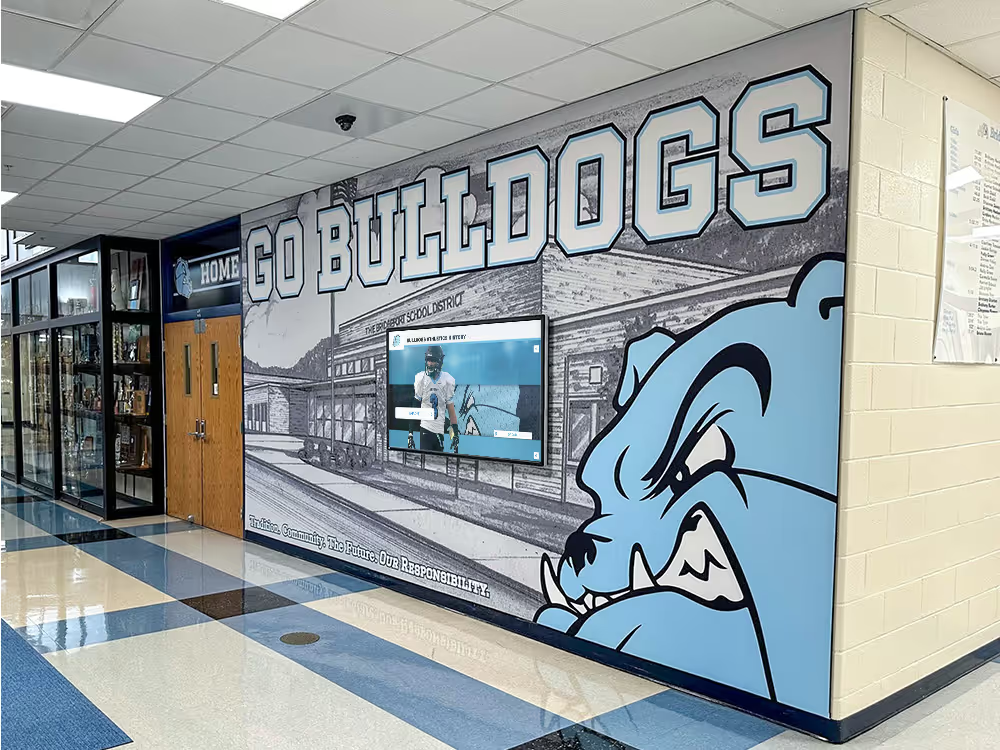
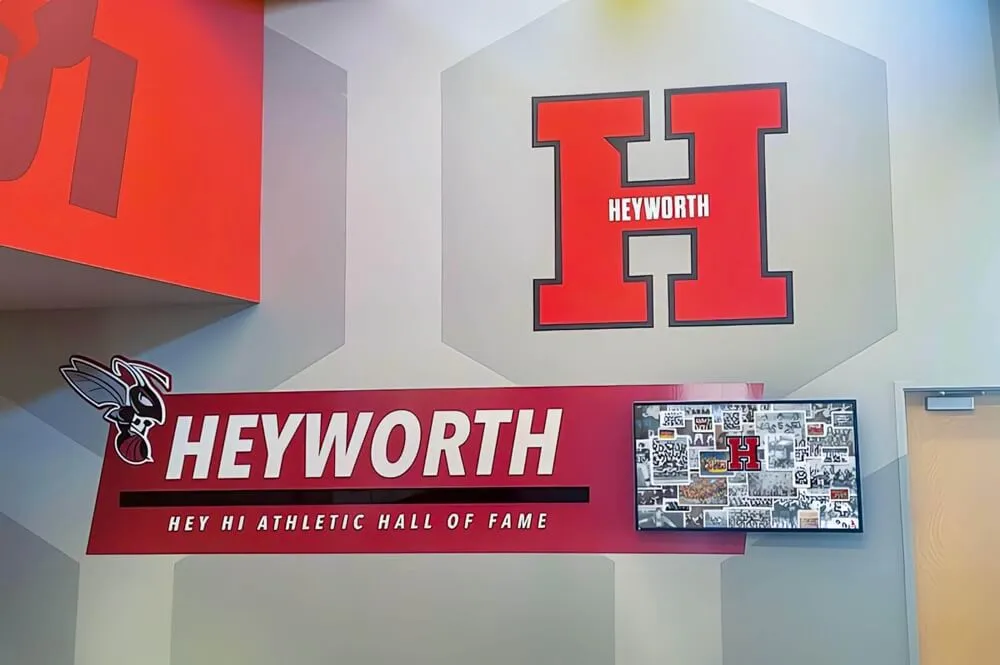
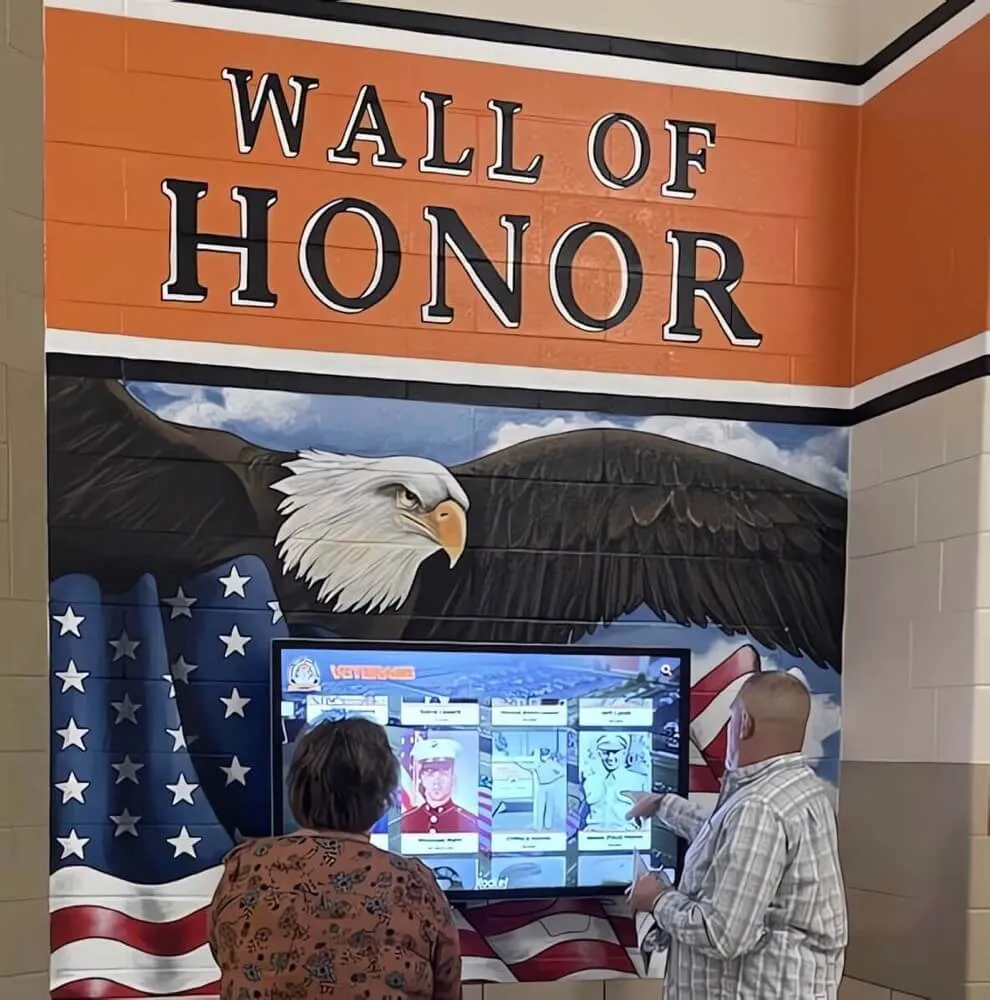
Portrait cards in a well-developed athletic archive represent a deliberate collecting decision — the collection development policy's selection matrix defines which athlete records receive comprehensive collection and which receive selective or reference-level treatment
Appraisal: What Makes a Record Worth Keeping
Appraisal is the process of evaluating a specific item or batch of materials against the selection criteria defined in the collection development policy. For athletic archives, four criteria apply across most record categories:
Evidential value: Does this record document something that happened — a championship, an award, a program milestone — in a way that could not be reconstructed from another source? Evidential value is highest for records that are unique and irreplaceable and lowest for records that are duplicated elsewhere.
Informational value: Does this record contain information — names, statistics, dates, events — that would be useful for recognition programs, historical research, or institutional memory? Informational value is highest for identified, described, contextualized records and lowest for undated, unidentified materials.
Display and recognition potential: Could this record be used directly in a recognition display, hall-of-fame nomination, or alumni engagement program? For school athletic archives, recognition potential is a primary appraisal criterion — the archive exists not only to preserve history but to make it accessible and usable for the programs that celebrate it.
Condition and format: Is this record in a condition that permits preservation, or is it already too degraded to warrant the processing cost? Is it in a format that the archive can access with available equipment, or would accessing it require specialized equipment or vendor services? Condition and format are appraisal criteria that affect cost, not significance — a high-significance item in poor condition warrants more processing investment than a low-significance item in excellent condition.
For schools considering how to connect an organized archive to a touchscreen display system, appraisal decisions made now — what to keep, what to describe, what to digitize at full resolution — directly determine what will be available to display, and at what quality level, when the system is installed.
Acquisition Procedures
A collection development policy should define how materials enter the archive — the acquisition pathway — not just what materials the archive seeks. Three common acquisition pathways for school athletic archives:
Institutional transfer: Athletic department records transferred to the archive by staff as part of normal records management. This pathway benefits from a transfer schedule — a standing agreement that championship documentation, award records, and season records transfer to the archive within a defined period after each season. Annual transfers prevent backlog accumulation.
Donation: Materials contributed by alumni, former athletes, coaches, or community members. Donations should be accompanied by a deed of gift — a document that records who donated the materials, what they donated, and what rights the institution holds over the donated materials. The deed of gift is a permanent institutional record and the basis for decisions about use and display.
Loan for digitization: Materials temporarily borrowed from donors who want their originals returned but are willing to allow the archive to create a digital copy. Loans for digitization require a loan agreement documenting the terms, a receipt confirming what was borrowed, and a return receipt confirming that originals were returned. The collection development policy should specify whether the archive accepts loans for digitization and under what conditions.
Booster clubs and parent organizations are common sources of donations in athletic archives — photographic collections, historical programs, and fundraising records. For schools where booster club records intersect with the athletic archive, the collection development policy should specify which types of booster records fall within the archive’s scope (records documenting program history and recognition events) and which do not (routine financial records, meeting minutes without historical significance).
Deaccessioning: When and How to Remove Items from the Collection
Deaccessioning — the formal removal of items from the archive’s collection — is a normal part of collection management, not a failure. Items are appropriately deaccessioned when:
- They are duplicates of materials already cataloged and preserved
- They fall outside the collection’s defined scope and were accepted before the collection development policy was established
- Their condition has deteriorated beyond a point where preservation is feasible and no higher-quality copy exists
- They are subject to a legal or rights claim that requires removal or return
Deaccessioning decisions should be documented — who authorized the removal, the reason, and the disposition method (transfer to another institution, return to donor, destruction per records management policy). The deaccessioning record is a permanent institutional document.
Items that are deaccessioned from the athletic archive may be appropriate candidates for transfer to another institutional repository — a school district archive, a local history library, or a sports heritage organization — rather than destruction. Transfer extends the useful life of the material without requiring the athletic archive to maintain it.
Connecting the Collection Development Policy to Recognition Programs
A collection development policy is not a separate administrative obligation layered on top of recognition programs. It is the operational foundation that makes recognition programs sustainable.
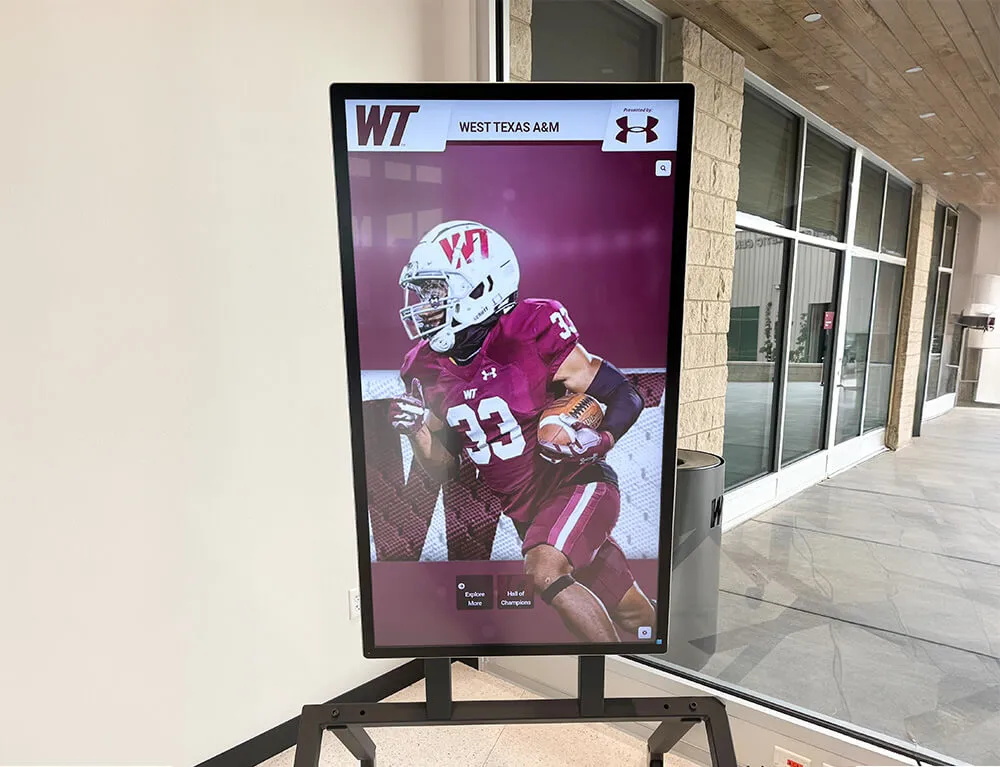
When a school installs a touchscreen display in a lobby, athletic facility, or trophy case, the display needs content — and the quality and organization of that content determines whether the display can be launched on schedule, updated efficiently, and expanded over time. A collection built against a documented policy, with consistent selection criteria and metadata standards, is a collection that can feed a recognition platform directly.
Schools that are building or expanding dedication and recognition displays alongside digital athletic archives benefit from aligning their collection development policy with their display content strategy from the start. The record categories the collection actively collects — comprehensive for championship documentation and awards records, selective for photographs and video — are precisely the categories that recognition displays draw on most heavily.
For programs expanding recognition to include graduating seniors and recent alumni, high school fundraising and recognition programs that generate public recognition events create documentation — photographs, programs, award certificates — that belongs in the athletic archive under the same selection criteria as historical records. A collection development policy that covers new documentation as it is created prevents the future backlog that forms when recent records are not processed at the time of creation.
When senior athletes participate in graduation and signing ceremonies, those events generate photographs, programs, and records that document the transition from active athletic participation to alumni status — a category of documentation that belongs in the archive and that, over time, builds the foundation for alumni recognition programs.
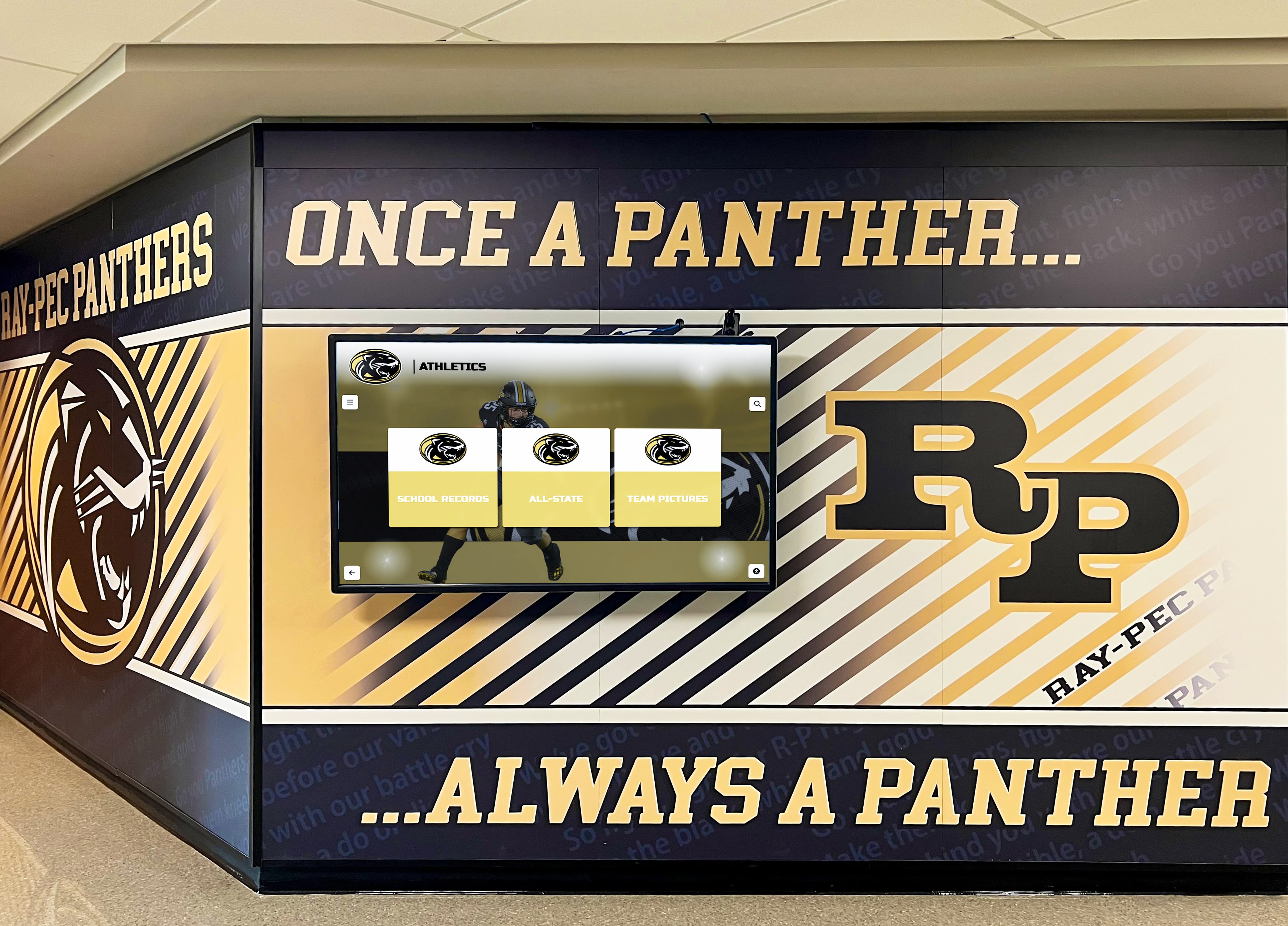
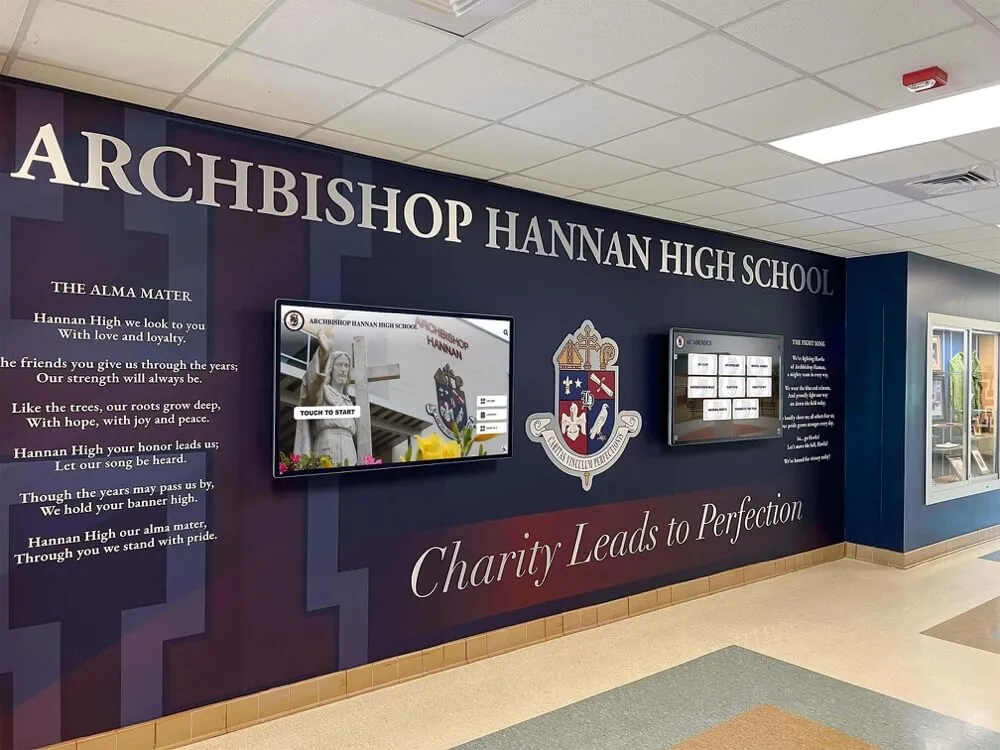
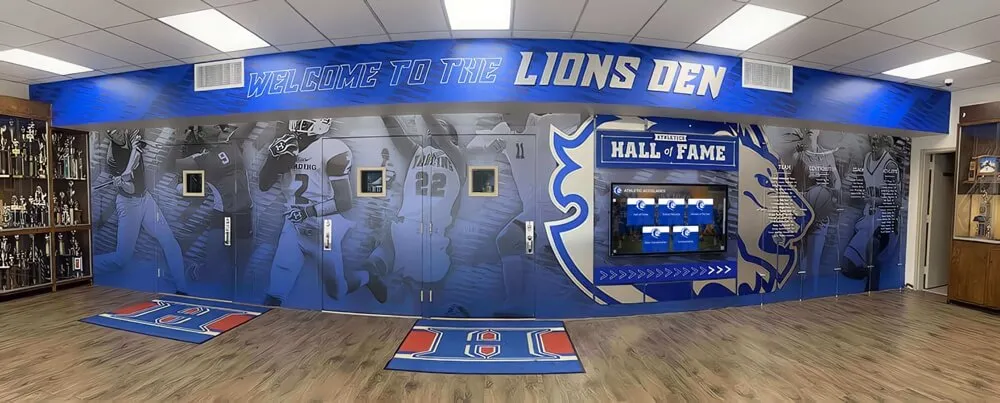
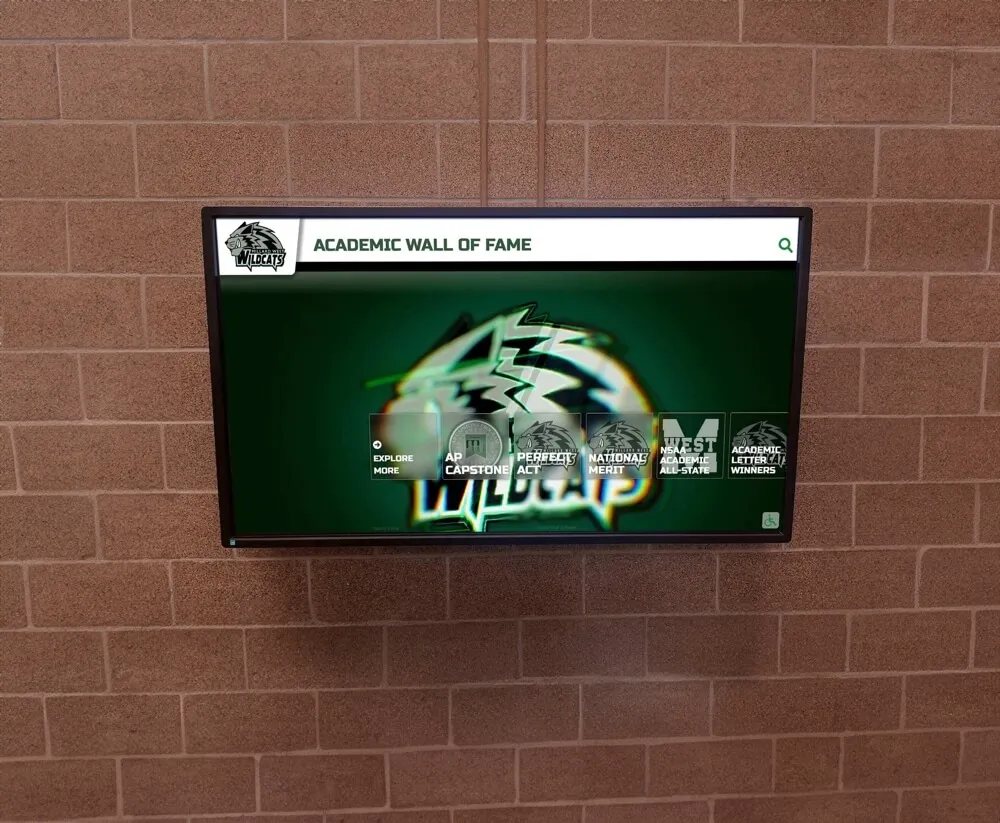
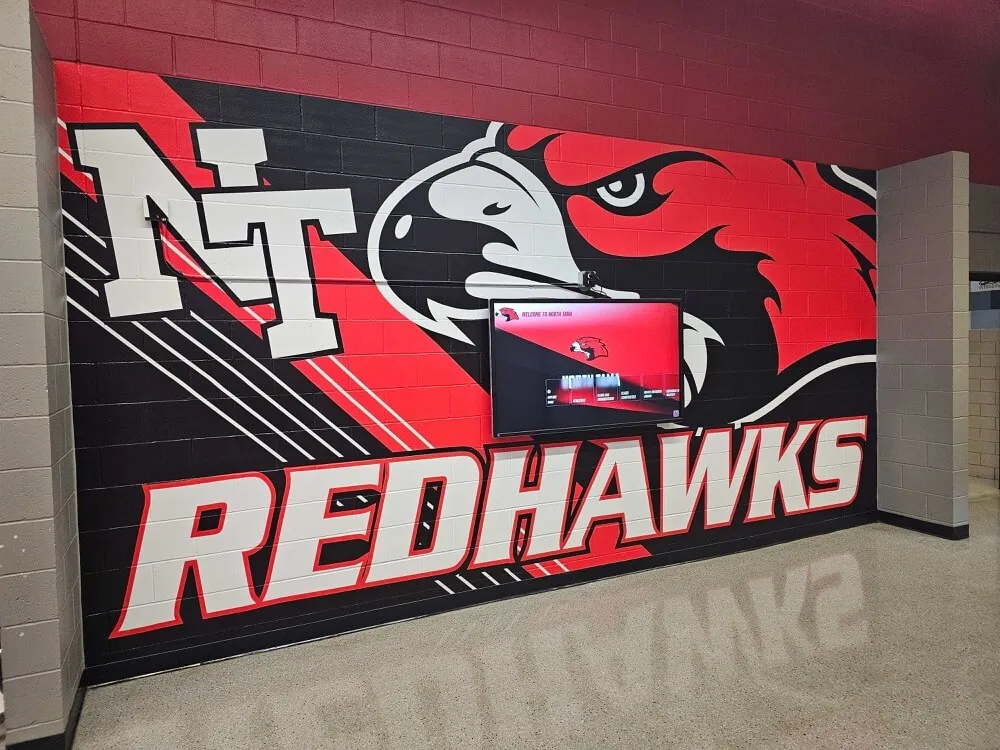
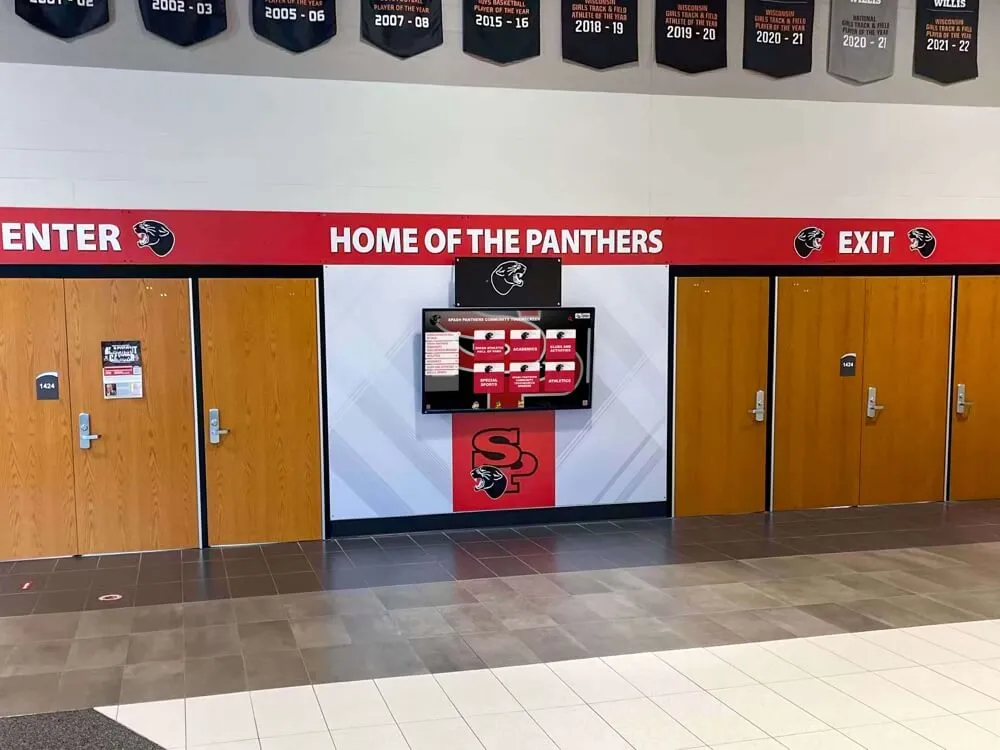
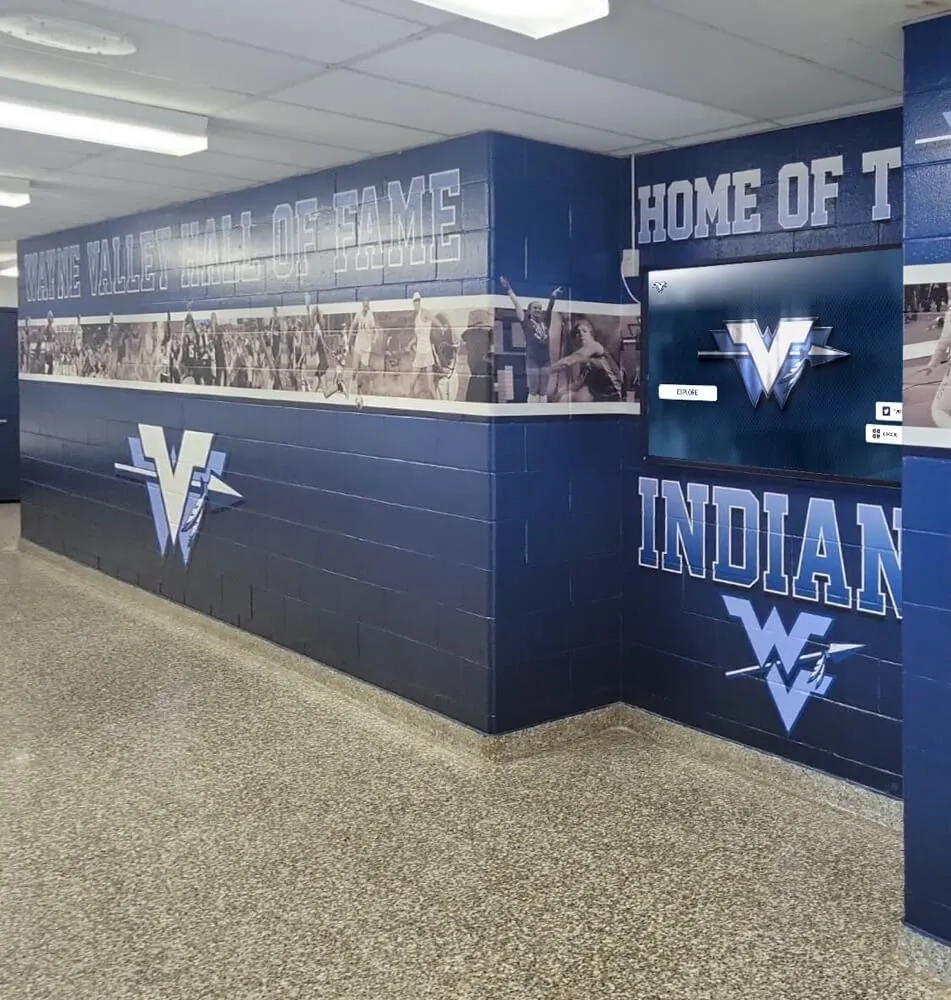
Recognition displays in school hallways reflect deliberate collection decisions — the collection development policy ensures that the archive contains what the display needs, organized and described well enough to surface it efficiently
Frequently Asked Questions
What is the difference between a collection development policy and a records retention policy?
A records retention policy governs how long records must be kept before they are eligible for disposal — it is a compliance document, often driven by legal or regulatory requirements. A collection development policy governs what a specific archive collects, at what level of comprehensiveness, and why — it is a curatorial document that reflects the archive’s mission. The two policies overlap but are not the same: an athletic archive’s retention schedule tells staff when championship records can be disposed of; the collection development policy tells staff to preserve championship records permanently as part of the archive’s core collection. Both documents are useful; the collection development policy drives acquisitions while the retention schedule drives disposition.
How should we handle unsolicited donations of materials we do not want to collect?
The collection development policy provides the basis for a clear, documented response. When a donor offers materials that fall outside the collection’s scope, the policy allows staff to decline the donation respectfully and specifically — not because the materials lack value, but because they fall outside the archive’s defined collecting area. Providing the donor with referrals to other institutions that may have a closer mission alignment (local history libraries, sports heritage organizations, school district archives) is a professional response that preserves the relationship without accepting materials the archive cannot manage. Accepting materials out of politeness and then failing to catalog or preserve them serves neither the donor nor the institution.
How detailed should the selection matrix be?
Detailed enough to make most common acquisition decisions without individual review, but not so granular that maintaining the matrix becomes a burden. A matrix that covers ten to fifteen record categories at the level of the one in this guide — with a collecting level, key criteria, and a brief note — provides sufficient operational guidance for most school athletic archives. If staff consistently encounter acquisition decisions that the matrix does not address, those record categories should be added to the matrix in the next annual review.
Who should have authority to approve exceptions to the selection matrix?
A single designated role — typically the athletic director or the archive coordinator — should hold exception authority, with a requirement that exceptions be documented in writing. Undocumented exceptions create inconsistent collecting practices over time and undermine the policy’s purpose. The exception log is a useful input for policy revisions: patterns in approved exceptions often indicate that the matrix needs to be updated to reflect actual collecting practice.
How often should a collection development policy be reviewed?
An annual review is appropriate for most school athletic archives. The review should examine whether the collecting levels in the selection matrix still reflect the archive’s capacity and mission, whether any new record categories have emerged that require matrix entries, whether deaccessioning decisions from the prior year indicate any policy gaps, and whether legal or regulatory changes affect any record categories. A policy that is reviewed annually remains an operational document; one that is not reviewed becomes an artifact that describes how the archive operated years ago, not how it operates now.
Does a collection development policy apply to digital records as well as physical records?
Yes. The same selection criteria and collecting levels that apply to physical records apply to born-digital records — natively digital photographs, video files, spreadsheet-based statistical records, and digital correspondence. A common misconception is that digital records are “free” to collect because they do not consume physical storage space. In practice, digital records require storage, backup, format migration, and metadata work — all of which have costs. A collection development policy that treats born-digital records as categorically different from physical records will produce a digital collection that is as unmanageable as the physical backlog it was meant to replace.
How does a collection development policy connect to data classification?
Collection development and data classification address adjacent questions. The collection development policy answers: what does the archive collect? The data classification policy answers: once collected, who can access it and under what conditions? Both policies are necessary for a complete archive governance framework, and they should be developed in parallel. Championship documentation collected under a comprehensive collecting policy may be Tier 1 public content under the data classification framework; individual athlete statistics collected under a selective policy may be Tier 2 restricted content. The two frameworks operate on the same collection from different governance angles.
A collection development policy does not limit what an athletic archive can become — it gives the archive the definition it needs to grow on purpose rather than by accident. Schools that invest in collection development policy work before launching a major digitization project, installing a recognition display, or opening a donation intake process find that every subsequent decision is faster, more consistent, and more clearly connected to the archive’s mission. The collection that results is one the institution can maintain, display, and be proud of — not just today, but across the next fifty years of athletic history.
Connect Your Athletic Archive to a Recognition Display Built to Last
When your collection development policy defines what to preserve — and your archive is organized, described, and ready — every photograph, championship record, and award document can feed an interactive touchscreen display that students, alumni, and visitors engage with every day. Rocket Alumni Solutions helps schools transform well-developed athletic archives into living recognition experiences. Request a demo to see what your archive can become on a display built to honor the history you have worked to preserve.
Request a Demo