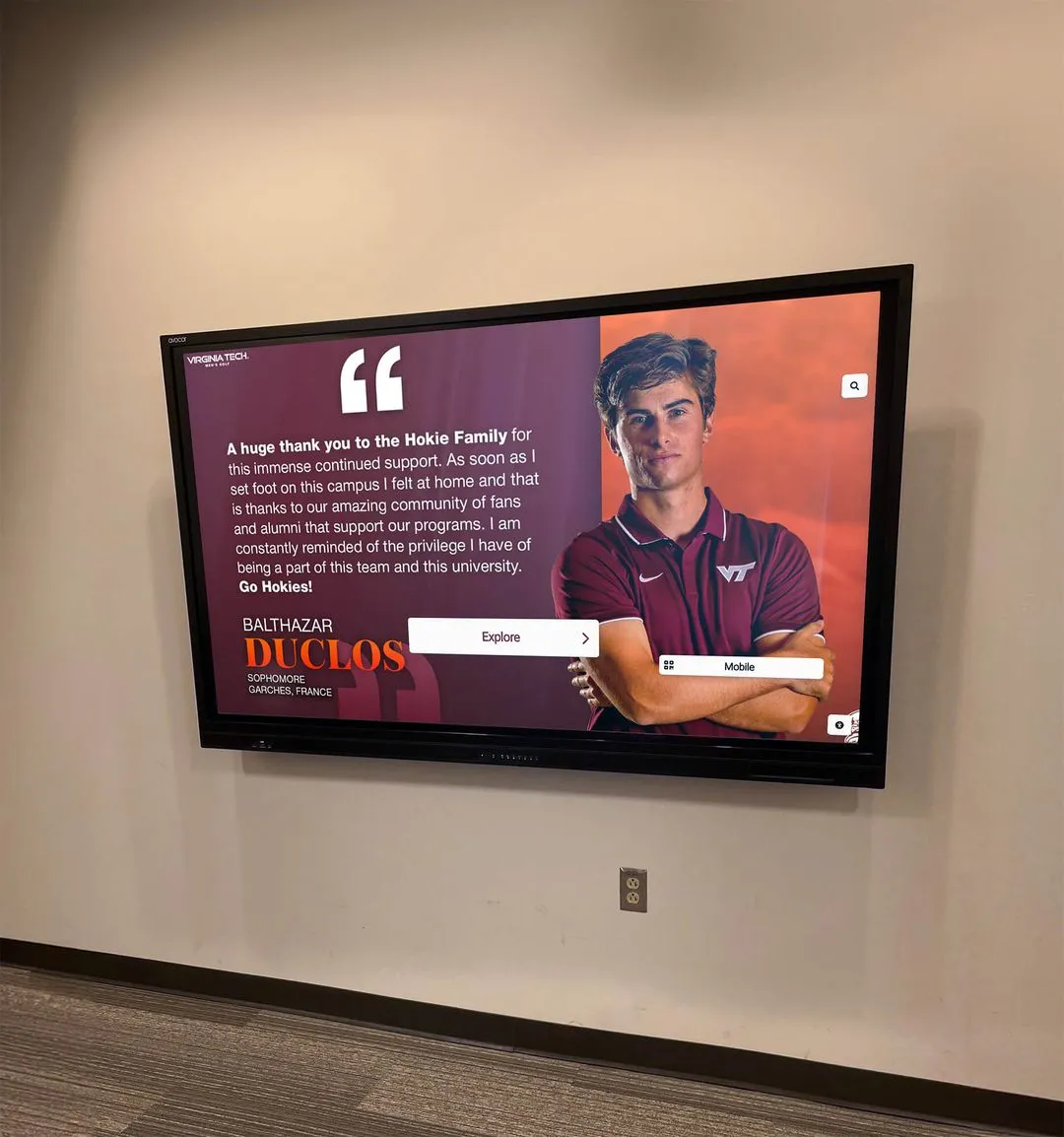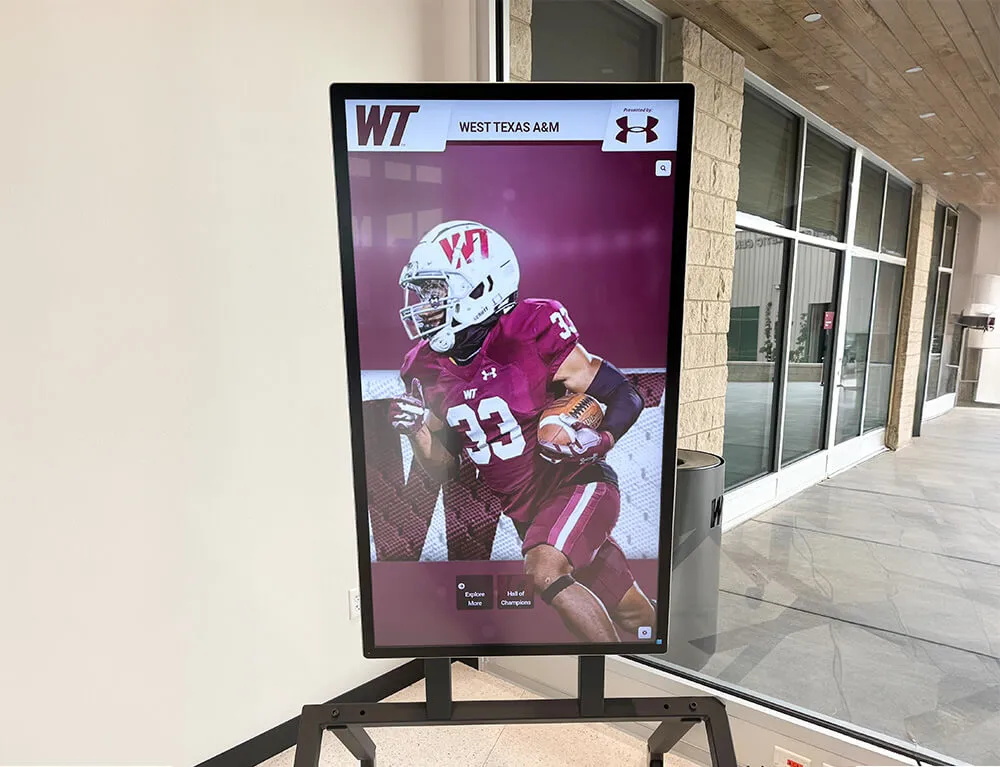




An athletic archive content provenance record is a structured metadata entry that documents the origin, chain of custody, and acquisition context of every photograph, game program, result document, or media file entering a school’s athletic archive — establishing a traceable source for each item before it is cataloged, displayed, or published. The direct answer: when a school publishes historical photographs on a touchscreen recognition display, posts championship records in a hall of fame, or uses game programs as source evidence for award nominations, content provenance documentation answers three questions that arise repeatedly — Where did this come from? How did we get it? Can we publish it? A complete provenance record answers all three at the moment of publication, not weeks after a question is raised. This guide provides a required-field metadata template, a six-step provenance workflow, and material-type guidance for the three most common athletic archive categories — photographs, programs, and results — written for athletic directors, archives staff, administrators, and school IT or facilities teams building or expanding a digital athletic archive or recognition program.
Nothing in this guide constitutes legal, copyright, or records management advice. Licensing, consent, and rights questions should be reviewed by qualified legal counsel before implementation.
A school athletic archive routinely assembles decades of photographs, programs, scorebooks, and award documentation from a wide range of sources: donations from former coaches, boxes transferred from retiring athletic directors, materials digitized from local newspaper files, photographs contributed by alumni, and statistical records pulled from third-party scoring services. Each source carries a different set of rights, consent assumptions, and accuracy implications.
Content provenance documentation — the practice of recording where each item came from, who contributed it, under what terms, and what review it received before entering the archive — is the mechanism that separates a display-ready record from one that creates unanswered questions at publication time.
An athletic archive content provenance record does not require archival expertise to maintain. It requires a consistent template, applied at the moment of acquisition — before the item is scanned, filed, or loaded into any display platform.

Every item entering a school's athletic archive — from portrait cards to championship programs — requires a provenance record that documents the source, acquisition method, and publication rights before the item is cataloged or displayed
Why Athletic Archive Content Provenance Records Matter
Athletic archives publish content in high-visibility contexts: hallway displays, touchscreen recognition kiosks, hall of fame inductee profiles, and digital record boards viewed by students, alumni, and visitors. Each of those contexts carries an expectation that the records displayed are accurate, that the images used are published with appropriate rights, and that individuals identified in photographs or roster entries have been recognized with their knowledge and in an appropriate context.
Content provenance documentation supports that expectation in three specific ways.
Accuracy verification. A provenance record that identifies the source of a statistical claim — “Championship game score sourced from official district game report, filed 1987-06-14” — provides the starting point for fact-checking that claim if it is ever questioned. A record with no provenance information can only be verified by searching for the original source again, often years after acquisition when the source may no longer be available.
Rights and consent clarity. Photographs in particular carry rights implications that vary significantly by source. A photograph taken by a school staff member at a public athletic event has a different rights profile than one purchased from a regional newspaper, contributed by a parent, or downloaded from a sports media platform. A provenance record documents the source and acquisition terms so that publication decisions — including display on a recognition platform — can be made with the rights basis on file. For programs evaluating data integrity standards for digital hall of fame displays, provenance documentation is the institutional record that supports those standards at the content level.
Chain of custody. When materials transfer from a coach’s personal collection to the school archive, from a retiring athletic director’s files to a new administrator, or from a physical storage room to a digital platform, the provenance record preserves the transfer history — who held the material, when it transferred, and what handling occurred. Chain of custody documentation is particularly important for materials whose accuracy or authenticity may be questioned by future administrators, recognition committees, or individuals identified in the records.
The Required-Field Metadata Template for Athletic Archive Content Provenance
A complete provenance record for each item in an athletic archive contains the following fields. Schools may add institution-specific fields; the required fields below apply across all common athletic archive material types.
| Field | Description | Example |
|---|---|---|
| Item Identifier | Unique alphanumeric ID assigned at acquisition | PHOTO_1994_FBWRLD_047 |
| Item Type | Category of material | Photograph / Game Program / Statistical Record / Award Document / Video Clip |
| Title or Description | Brief content description | “1994 State Championship team photograph, varsity football” |
| Date of Material | Date the original item was created | 1994-11-18 |
| Source Name | Individual or organization that provided the item | James Kirwan (former head coach), donated 2024-03-05 |
| Source Type | Classification of the source | Internal Staff / Alumni Donation / Commercial Vendor / Media Outlet / Institutional Transfer / Public Domain |
| Acquisition Method | How the item entered the archive | Physical donation / Institutional transfer / Digital download / Digitized from original |
| Acquisition Date | Date the item entered the archive | 2024-03-05 |
| Rights Statement | Known copyright or licensing status | School owns copyright (staff-created) / Donated with written consent for educational display / Source holds copyright — permission not obtained / Public domain |
| Consent Documentation | Reference to any consent or release on file | Signed donation agreement DA-2024-031 |
| Accuracy Source | Primary source used to verify claims in the record | Official district game report #1994-STATE-FB, filed 1994-11-22 |
| Accuracy Verified By | Staff member who verified the content | Archive Coordinator, 2024-03-12 |
| Chain of Custody Notes | Summary of transfers before archive acquisition | Held by J. Kirwan 1994–2024; transferred to athletic archive at retirement |
| Classification Tier | Data classification assignment | Public (Tier 1) / Restricted (Tier 2) / Sensitive (Tier 3) |
| Display Clearance Status | Whether the item is cleared for public-facing display | Cleared / Pending Review / Not Cleared |
| Processing Staff | Staff member who completed the provenance record | Archive Staff, initials MM |
| Record Created Date | Date the provenance record was completed | 2024-03-12 |
Not every field will be fully populated for every item on first processing. Fields that cannot be completed at acquisition should be marked “Pending” with a flag for follow-up — not left blank, which creates invisible gaps in the record. A “Pending” status is traceable; an empty field is not.
The Athletic Archive Content Provenance Workflow: Six Steps
Provenance documentation is most effective when it is part of the acquisition process rather than a retrospective metadata task. The following six steps integrate provenance recording into the standard athletic archive ingest process.
Step 1: Receive and Immediately Log Each Item at Acquisition
The moment a photograph, program, or statistical document enters the archive — whether through a physical donation, an institutional file transfer, a digital contribution, or a scanning project — create a provenance record shell with the Item Identifier, Item Type, Source Name, Source Type, Acquisition Method, and Acquisition Date. These fields can be populated before any scanning or cataloging begins and should be the first entries made.
Provenance records created at acquisition prevent the most common provenance failure: a well-intentioned digitization project that produces thousands of high-quality scan files with no documentation of where any of them came from. An archive full of unprovenanced scans is not a reliable source for recognition program publishing — it is a collection of files whose rights status and accuracy are both unknown.
Step 2: Classify the Source Type and Document the Rights Statement
After logging the acquisition, classify the source type using the controlled vocabulary in the provenance template. Source type determines which rights questions apply:
- Internal Staff or School-Owned: Items created by school staff in the course of employment are generally school-owned. Confirm with district legal counsel and document the basis.
- Alumni or Coach Donation: Items transferred from individuals require a written donation agreement or deed of gift that specifies the terms of the transfer and any restrictions on use. Without written documentation, the rights status is ambiguous.
- Commercial Vendor or Media Outlet: Items sourced from newspapers, wire services, commercial photography vendors, or broadcast partners carry licensing terms that typically restrict reproduction and redistribution. The license terms should be documented and the relevant agreement referenced in the provenance record.
- Institutional Transfer: Items transferred from another school office, a district archive, or a predecessor program may carry administrative custody but not copyright. Document the transfer and confirm the rights basis separately.
- Public Domain: Older materials may be in the public domain. Public domain status should be confirmed and the basis documented (e.g., “Published before 1928 with no copyright renewal”).
Step 3: Verify Accuracy Using a Primary Source and Document the Source
For records that assert factual claims — a statistical result, a championship title, a named inductee, a graduation year — document the primary source used to verify the claim. A provenance record that says “State championship score: 24-17” becomes significantly more reliable when it also says “Verified against official district game report #1994-STATE-FB.”
Primary sources for athletic archive fact verification include:
- Official district or conference game reports filed with governing bodies
- Board of education meeting minutes approving awards or recognitions
- School yearbooks from the relevant year
- Newspaper articles from the event date (note: verify against, not as a sole source)
- Physical trophies or award plaques with engraved text
Note the specific source, the document identifier or date if applicable, and the staff member who completed the verification. This step is particularly important for records that will be published in a recognition program. Athletic stats display programs that showcase team and player records depend on the accuracy of the underlying archive records — provenance documentation is the mechanism that makes that accuracy verifiable.
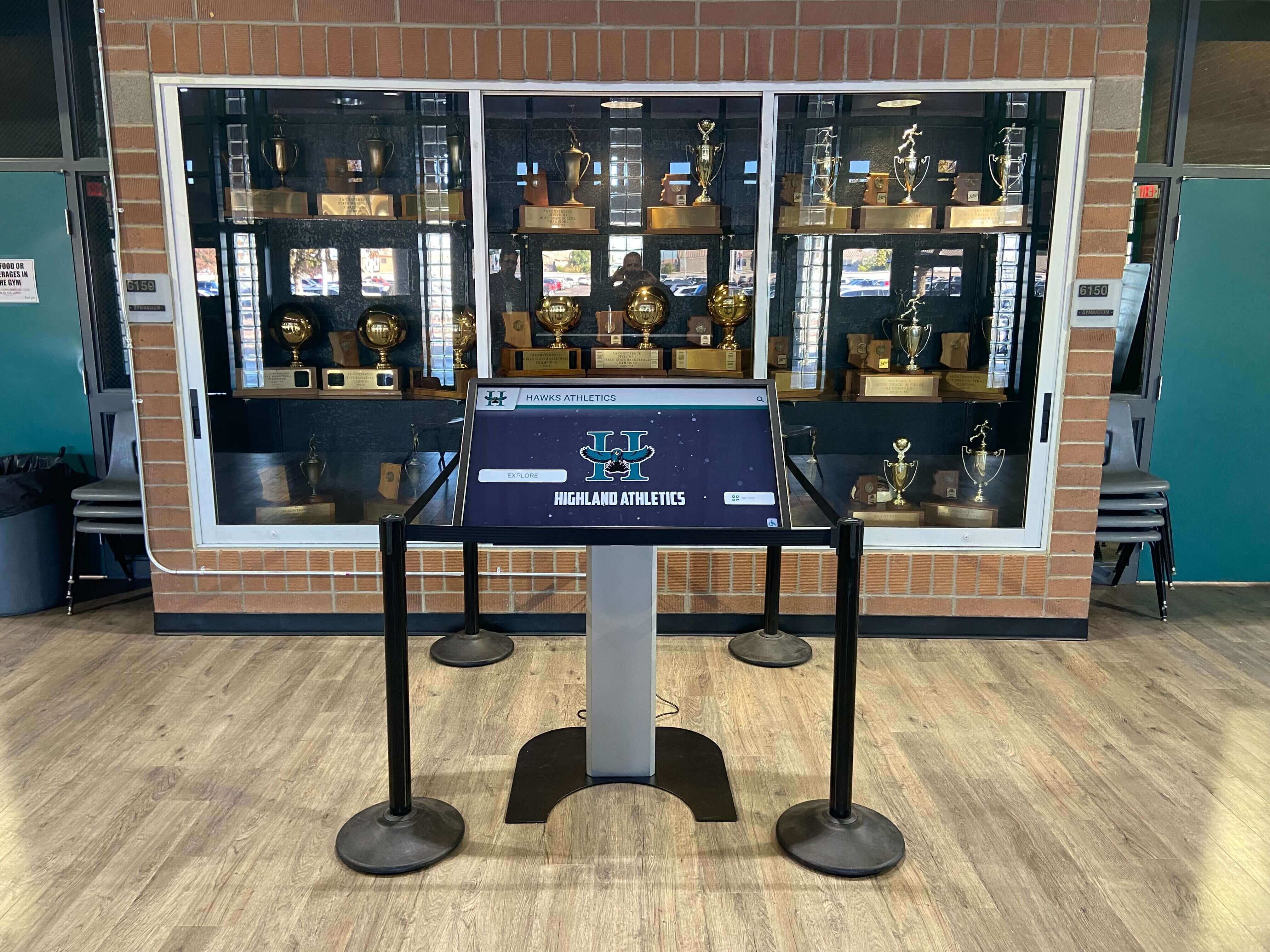
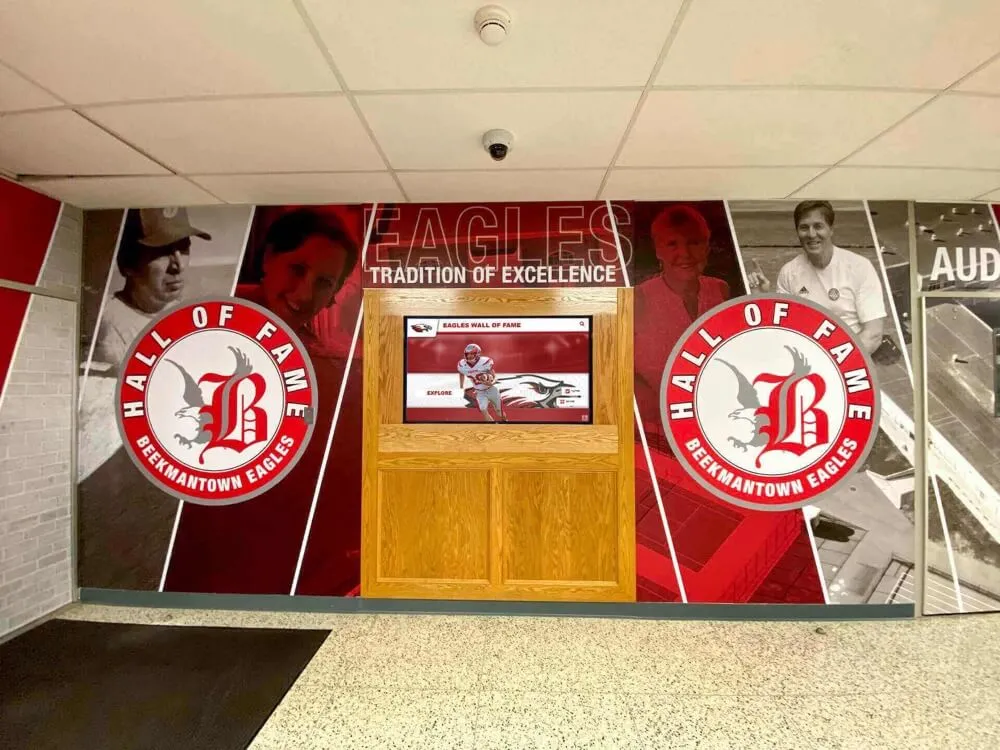
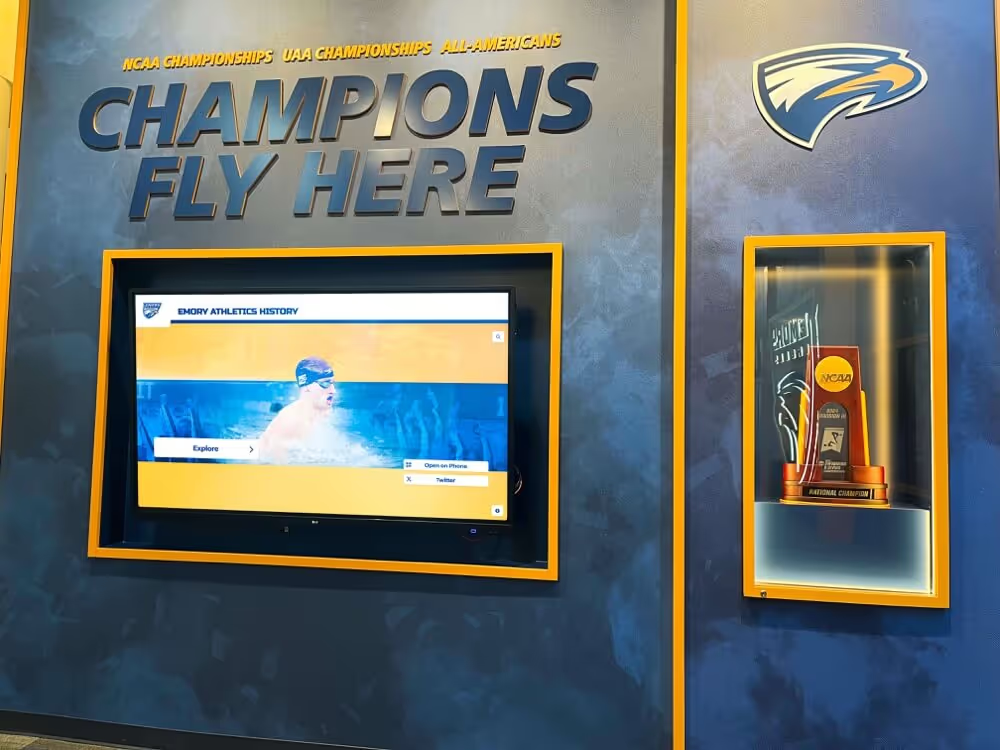
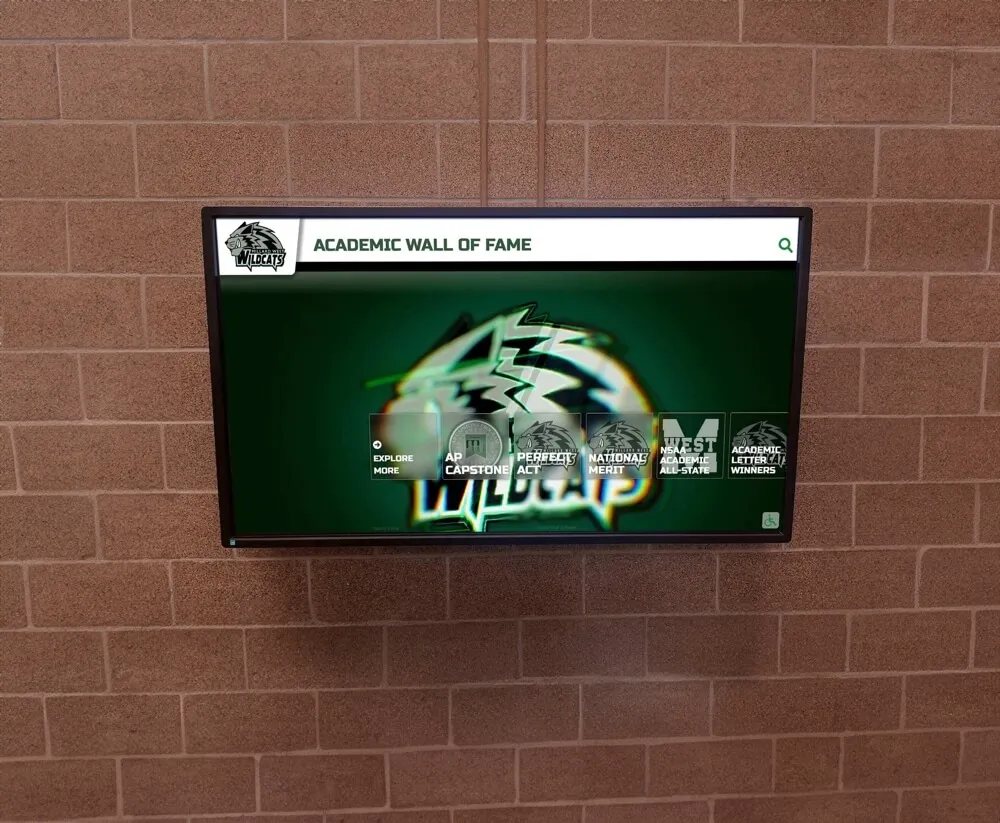
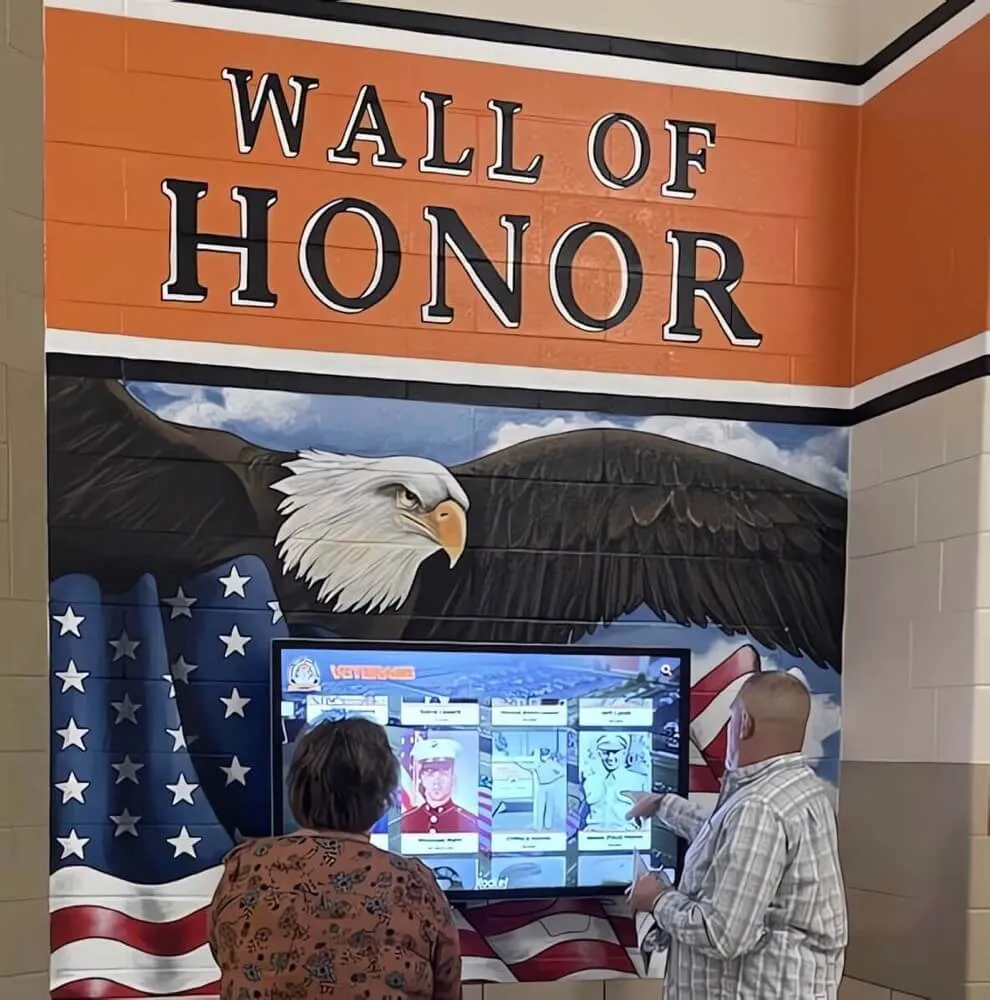
Recognition displays depend on the archive records behind them — content provenance documentation ensures that each record shown on a display has a documented source, a verified accuracy basis, and a confirmed rights status before it reaches the screen
Step 4: Assign the Display Clearance Status
After completing the Rights Statement and Accuracy Source fields, assign a Display Clearance Status to the item:
- Cleared: The item has a documented rights basis for display (school-owned, donated with written consent, or confirmed public domain); the factual claims have been verified against a primary source; and the data classification confirms the item is Tier 1 (Public). The item can be published to a recognition display.
- Pending Review: One or more provenance fields are incomplete, the rights status is unresolved, accuracy has not been verified, or the classification review has not been completed. The item cannot be published until the pending items are resolved.
- Not Cleared: A specific barrier to display has been identified — the license does not permit institutional display, consent was not obtained and cannot be, the accuracy source contradicts the claimed record, or the item has been classified as Restricted or Sensitive. The item remains in the archive but is not eligible for public display.
Separating provenance documentation from display clearance is important: a well-documented item may be Not Cleared, and that is useful information — the program knows exactly why the item cannot be displayed and what would be required to change that status. Showcasing athletic achievements and awards digitally begins with knowing which records in the archive are actually display-ready, not just which ones exist.
Step 5: Document the Chain of Custody for Items with Prior Holders
For materials held by individuals or organizations before entering the archive — a former coach’s personal collection, a retiring administrator’s files, a family donation — document the chain of custody in the provenance record. Chain of custody documentation includes:
- The earliest known holder and approximate retention start date
- Any transfers between holders before archive acquisition, with dates if known
- The condition of the item at transfer and any handling that occurred during prior custody
- Reference to any physical donation agreement, deed of gift, or transfer memo
Chain of custody notes do not need to be exhaustive for routine donations. The standard entry is a sentence or two: “Held by J. Kirwan in personal collection from approximately 1994 to 2024. Transferred to athletic archive March 2024 per donation agreement DA-2024-031. No known prior transfers.” For materials with complex histories — items that passed through multiple individuals or organizations — more detailed notes are appropriate.
Step 6: Complete the Provenance Record Before Moving to Cataloging
The provenance record should be complete — or at minimum, fully populated with “Pending” flags where information is not yet available — before the item is added to the main catalog and before scanning begins. This sequencing ensures that the provenance record exists as an independent document rather than being reconstructed from catalog data after the fact.
For programs building their archive alongside a recognition display, the provenance record is the backend document that the display record relies on. The display shows the athlete’s name, the award year, and the photograph — the provenance record is the file that answers “How do we know this is accurate and what gives us the right to show it?” when a question is raised at a board meeting, an alumni event, or a hall-of-fame nomination review. All-star achievement touchscreen recognition displays are most defensible when the records behind every profile on screen have been documented to this standard.
Provenance Records by Material Type
Photographs
Photographs are the highest-provenance-risk material type in most athletic archives. They carry copyright questions (who took the photograph and who owns the copyright), consent questions (particularly for photographs of minors), and accuracy questions (photographs can be mislabeled, misdated, or misattributed).
Key provenance fields for photographs:
- Photographer name and affiliation (school staff, parent volunteer, commercial vendor, unknown)
- Rights statement (school-owned, donated with consent, licensed, unresolved)
- Photograph date and event (verified against game schedule or yearbook if possible)
- Individuals identified and method of identification (caption, yearbook cross-reference, subject confirmation)
- Any known mislabeling or dating corrections noted in chain of custody
For unidentified photographs — images whose subjects cannot be confirmed — provenance records should note the identification status explicitly: “Subjects unidentified. Approximate date: 1980s based on uniform style. Community identification process initiated 2024-04-01.” Publishing unidentified photographs to a recognition display without this documentation creates a display error that is harder to correct than one that was flagged at acquisition.
Game Programs
Game programs are generally lower-risk from a rights perspective when produced by the school itself, but carry accuracy considerations when used as source documents for individual statistics or award verifications.
Key provenance fields for game programs:
- Publication source (school-produced, opponent-produced, conference-produced, commercial print vendor)
- Rights statement (school-owned, public domain, or licensed if obtained from a third party)
- Use as accuracy source: note when a program is cited as the primary source for a statistic, with the specific page and data point referenced
For booster club and donor recognition programs that incorporate historical game programs as context for recognition displays, provenance documentation clarifies whether programs were school-produced (generally clearable for display) or obtained from outside sources that may carry separate rights considerations.
Statistical Records and Results
Statistical records — scorebooks, game reports, season summaries, and individual performance records — carry the highest accuracy stakes of any athletic archive material type because they directly support hall-of-fame nominations, record board claims, and recognition program eligibility determinations.
Key provenance fields for statistical records:
- Original source type (official game report, scorebook, newspaper box score, internal coaching log, third-party scoring service)
- Verification against a second source, if available
- Any known discrepancies between sources noted in the provenance record
- Name of the staff member who verified the record and the date of verification
When statistical records from a third-party scoring platform or sports data service are incorporated into an athletic archive, the provenance record should reference the service, the data pull date, and any known data quality limitations for historical records on that platform.

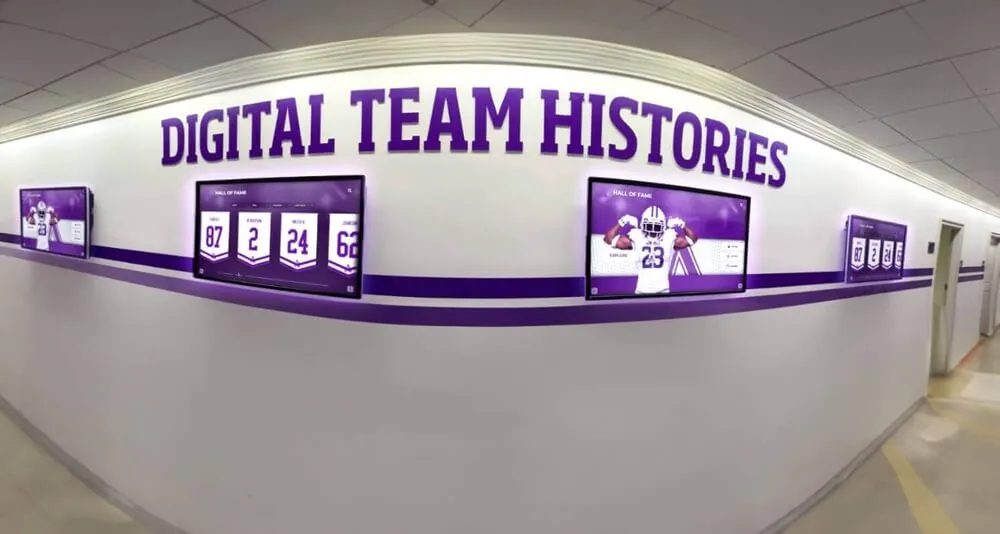
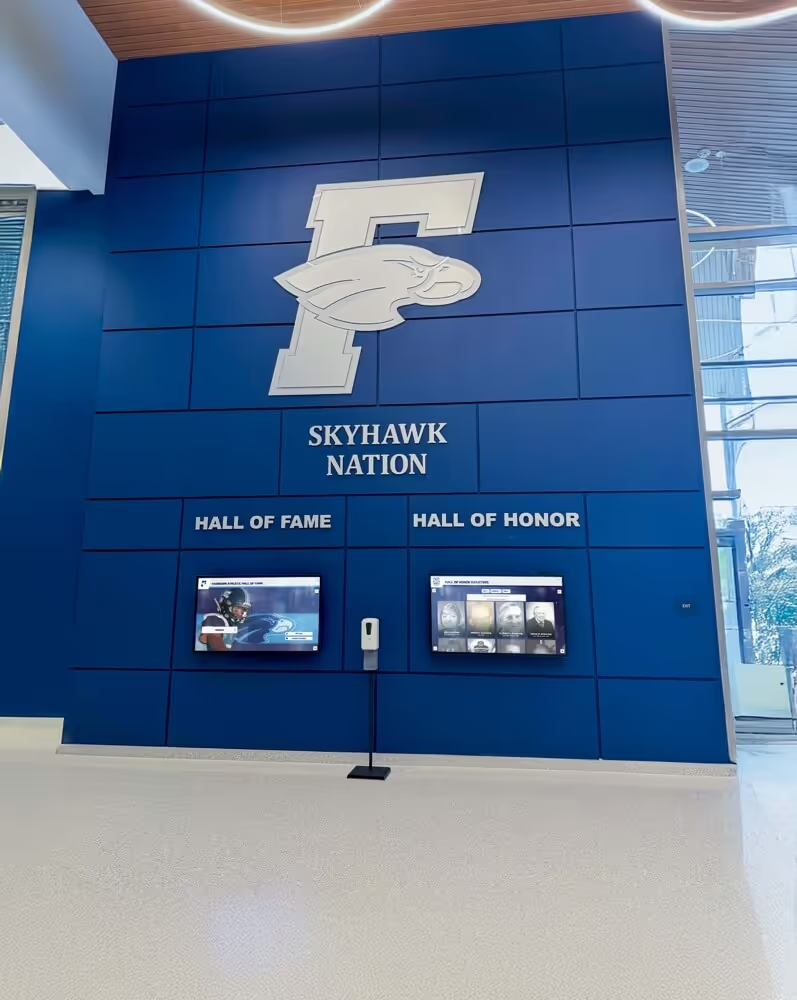
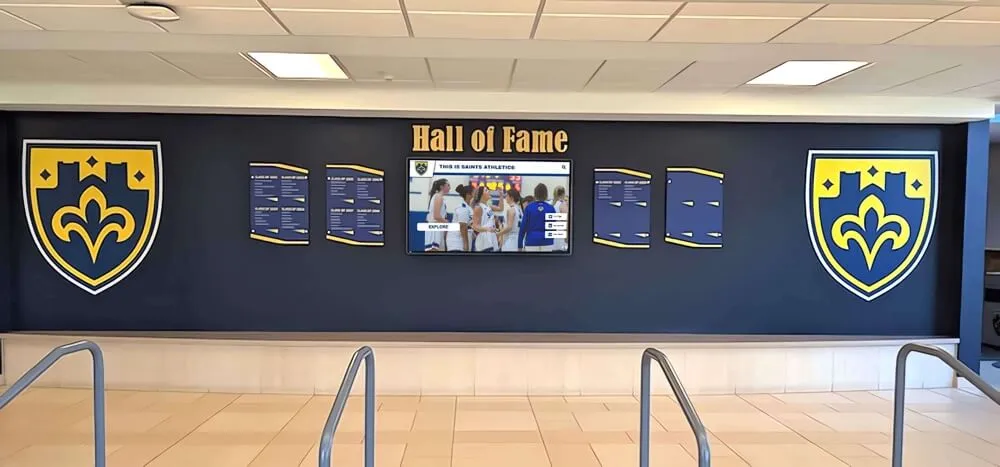
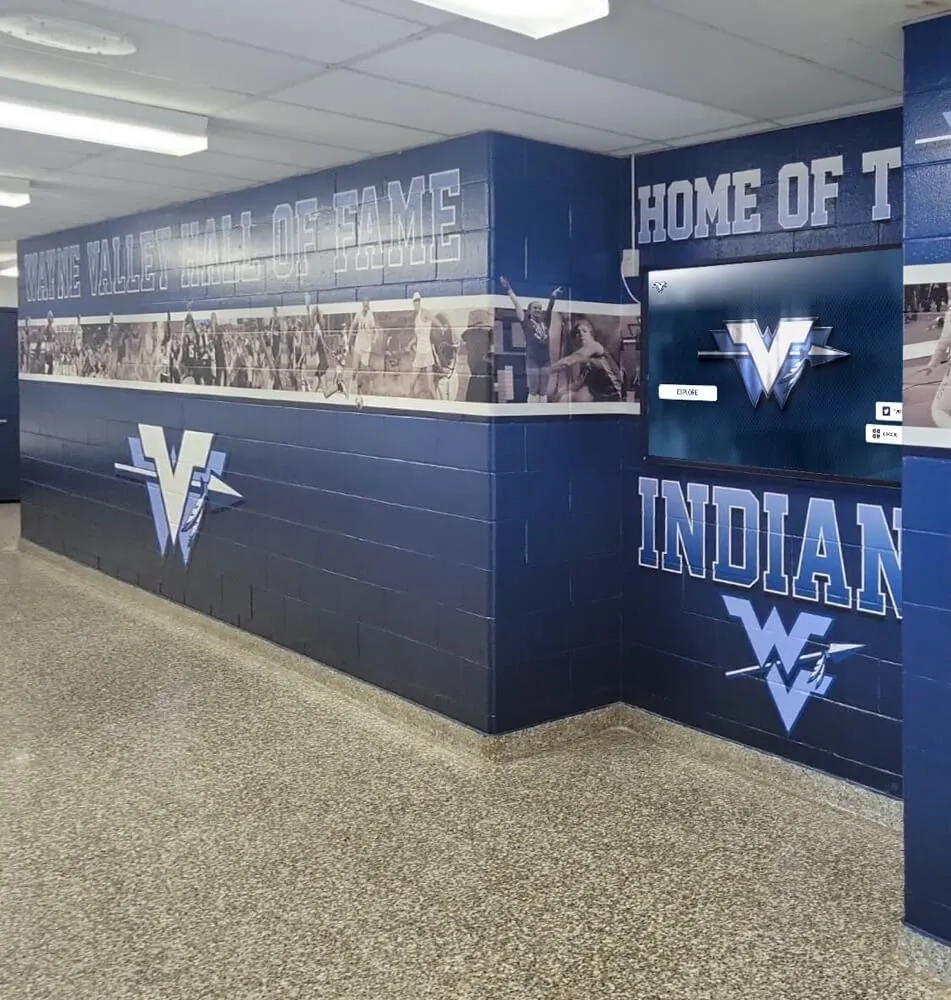
Hall of fame and honor wall displays reflect the provenance documentation behind them — programs that have completed provenance records for their archive materials can publish recognition displays with confidence that each record shown has a documented, verifiable source
Provenance Records and Retrospective Digitization Projects
Many schools begin content provenance documentation partway through a digitization project — or after a collection has already been digitized — rather than at the point of acquisition. Retrospective provenance documentation is more difficult than acquisition-time documentation, but it is still valuable and follows the same template.
For retrospective projects, a practical approach is to work through the collection in priority order — high-recognition-value materials first — and complete provenance records for those items before extending coverage to lower-priority materials. Materials for which provenance cannot be reconstructed should be flagged with a note in the Rights Statement field (“Source unknown — publication rights unresolved”) and assigned a Display Clearance Status of Pending Review rather than Cleared. A record with documented uncertainty is more useful than a record with no provenance information at all.
For programs building content provenance workflows for intramural and club sport archives alongside varsity records, the same template applies across all program levels. Digital recognition displays for college intramural sports programs benefit from the same provenance clarity that supports varsity hall-of-fame publishing — the questions about source, rights, and accuracy are the same regardless of the competition level being recognized.
How Provenance Records Connect to Recognition Display Programs
When an athletic archive is well-documented with content provenance records, the connection to a recognition display platform becomes straightforward: the Display Clearance Status field identifies which records are ready to publish, the Rights Statement field confirms the basis for publication, and the Accuracy Source field provides the verification chain that the school can cite if any displayed record is questioned.
Schools that build recognition displays without underlying provenance documentation expose themselves to a specific operational problem: content questions that cannot be answered. When a former athlete’s family asks how a graduation year on a hall-of-fame display was determined, or when a board member asks why a particular photograph was selected, a well-maintained provenance record provides a documented answer. A display built on unprovenanced records cannot.
The most effective pathway from an athletic archive to a touchscreen recognition display is one where provenance records and catalog records are built together — the provenance record as the access-controlled backend document and the catalog record as the display-facing data. The display shows what the catalog contains; the catalog references the provenance record that supports each entry.
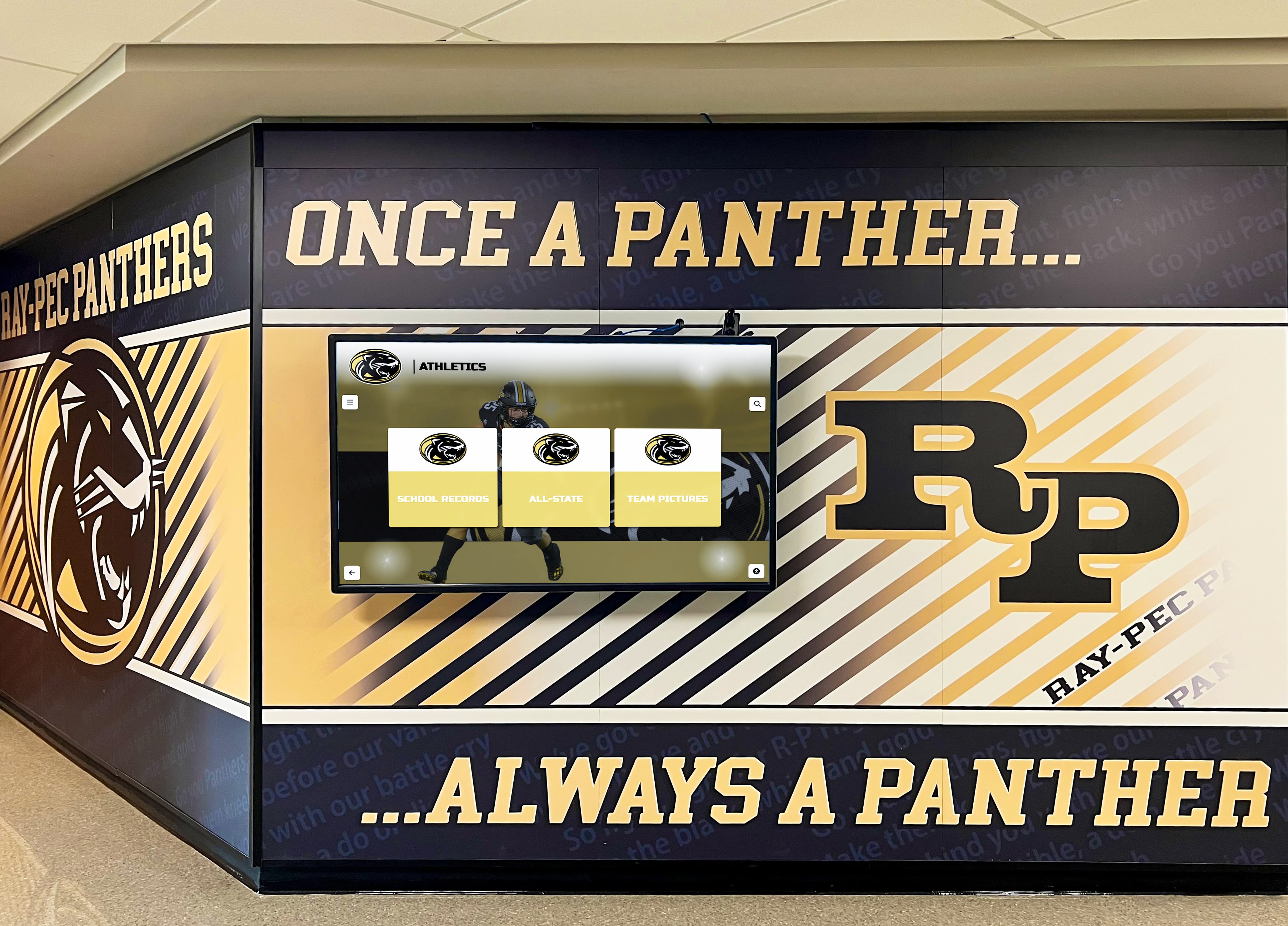
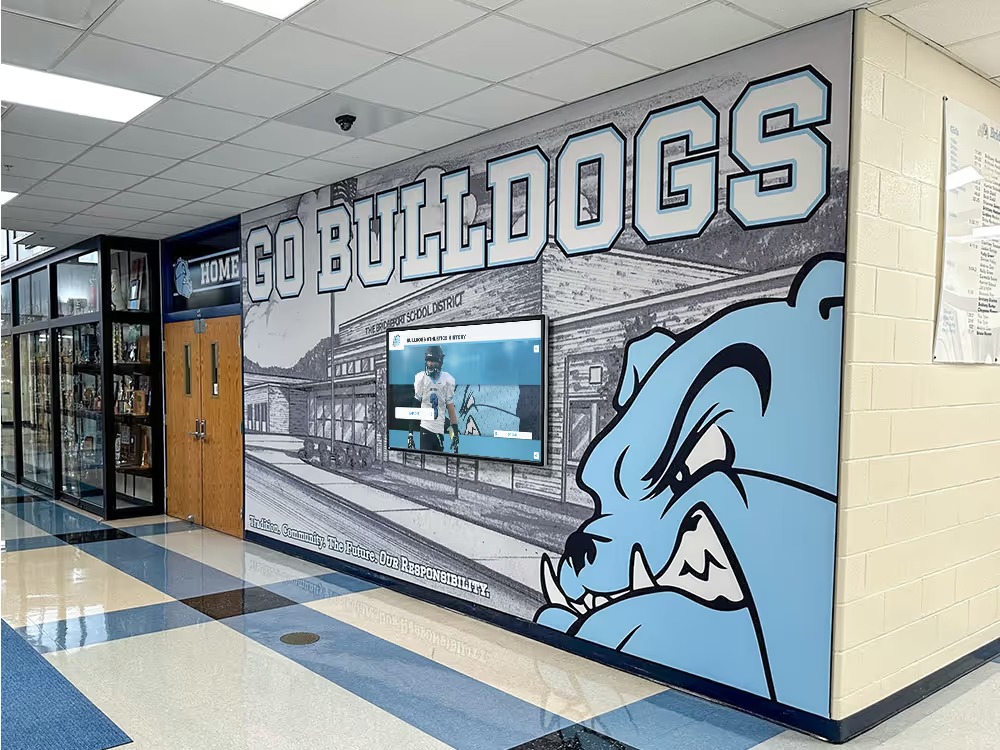
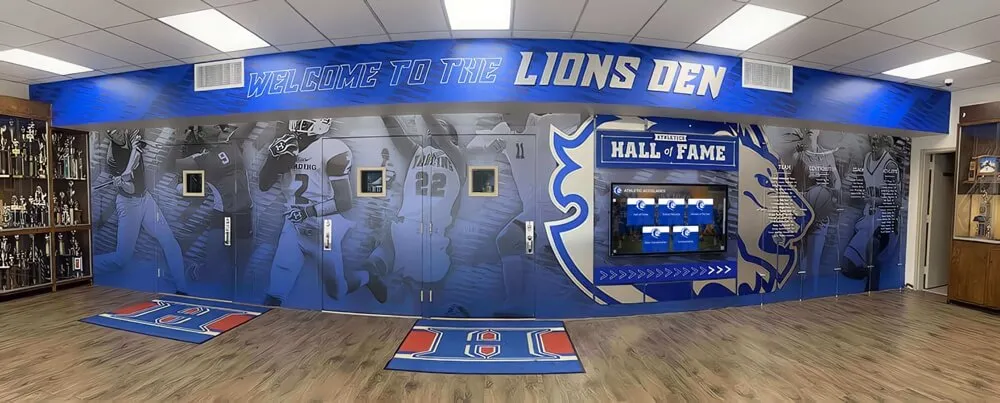
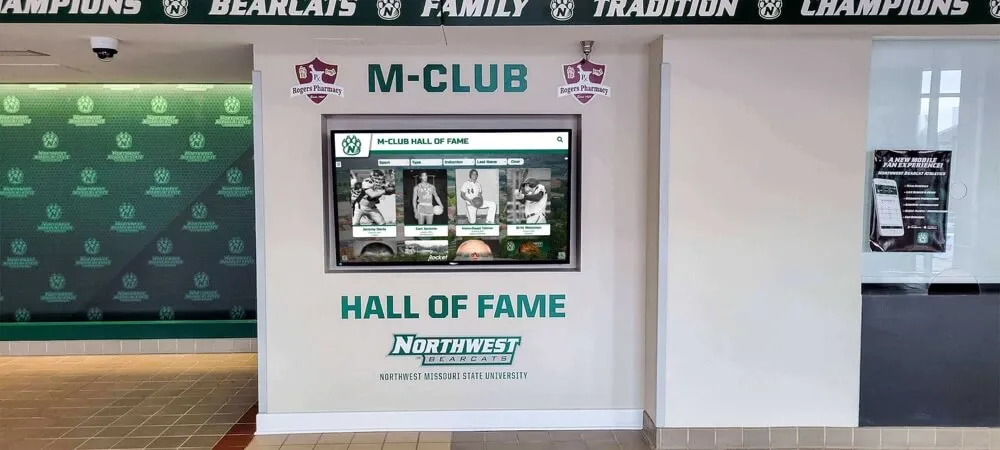
Hallway recognition displays reflect the strength of the archive behind them — provenance-documented records produce displays that administrators, families, and alumni can trust because every entry has a traceable, verifiable source
Frequently Asked Questions
What is a content provenance record in an athletic archive context?
A content provenance record is a structured metadata entry that documents the origin, acquisition history, rights status, and accuracy verification for a specific item in an athletic archive — a photograph, game program, statistical record, or other material. It answers “Where did this come from, how did we get it, and can we publish it?” for each item, creating a traceable record that persists as the item moves through the archive and into display contexts.
Do we need a provenance record for every item in the archive, or only for high-profile records?
A complete provenance record for every item is the standard goal for new acquisitions. For existing collections being processed retrospectively, prioritize provenance documentation for items with the highest recognition impact — hall-of-fame photographs, championship result records, individual award documents — before extending coverage to lower-priority materials. Items without provenance records should be assigned a Display Clearance Status of Pending Review and not published until documentation is complete.
What is the minimum provenance documentation needed to clear an item for display?
At minimum, a display-cleared item should have: (1) a documented source with a written donation agreement or rights basis; (2) an accuracy verification against a primary source for any factual claim; (3) a data classification of Tier 1 (Public); and (4) a Display Clearance Status of Cleared assigned by a staff member with authority to make that determination. Items missing any of these four elements should remain Pending Review.
How should we handle items where the source is genuinely unknown?
Record the source as “Unknown” with a note describing what is known — approximate date range based on physical evidence, material type, condition — and assign the Rights Statement as “Source unknown — publication rights unresolved.” Assign Display Clearance Status as Pending Review. Do not publish unprovenanced items to a public display. Initiate a community identification process through alumni outreach if the item has high recognition value and is worth the effort to document.
Should provenance records be stored with the item’s catalog record or separately?
Both approaches are used. Storing provenance fields as additional metadata in the main catalog record is efficient for smaller archives. For larger archives or programs with complex rights situations, maintaining a separate provenance database that references catalog item identifiers — and is access-controlled so that sensitive rights and chain-of-custody information is not visible to all catalog users — provides better separation. Either approach works; the critical requirement is that provenance records exist and are linked to the items they document.
How does content provenance documentation interact with a data classification policy?
Content provenance records are an input to data classification decisions. The Rights Statement field informs whether an item is appropriate for Tier 1 (Public) classification. The Accuracy Source field supports the reliability of the record for recognition program use. The Chain of Custody Notes inform whether any consent or rights complications arose during prior handling. Programs that build provenance and classification workflows together produce the most reliable and efficient path from acquisition to display.
What happens to provenance records when an archive migrates to a new platform?
Provenance records should migrate with the items they document. Before any platform migration, confirm that the destination system can store provenance fields — either natively or as custom metadata — and that the migration export includes those fields alongside catalog records and image files. Provenance records left behind in a legacy system are effectively lost; verify they are included in the migration export before decommissioning any platform that holds them.

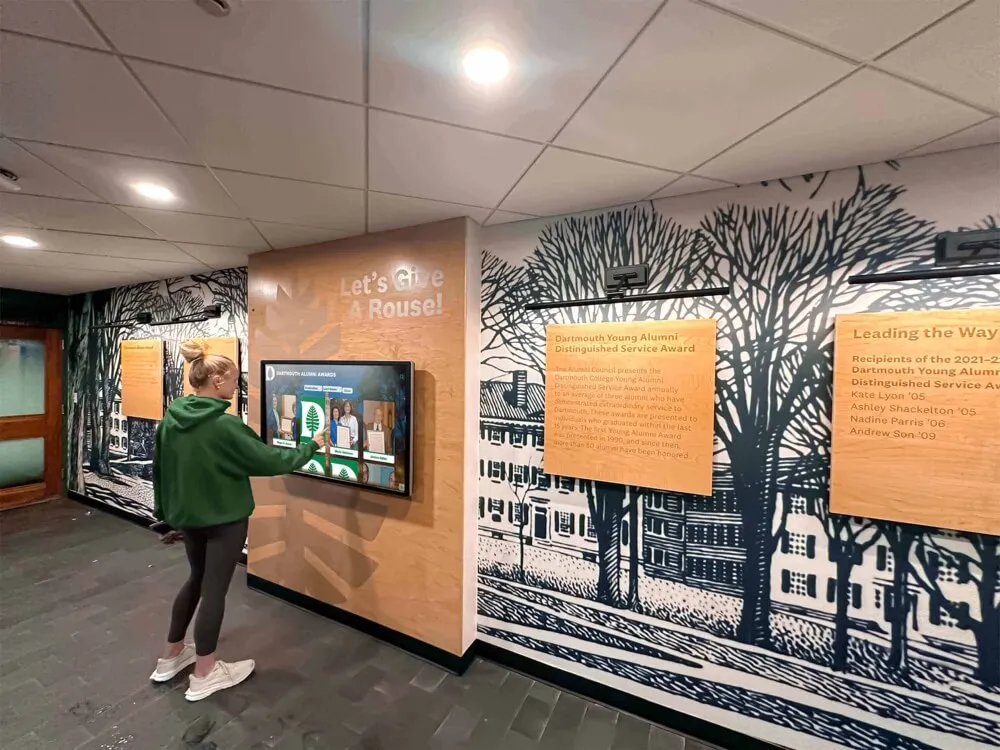
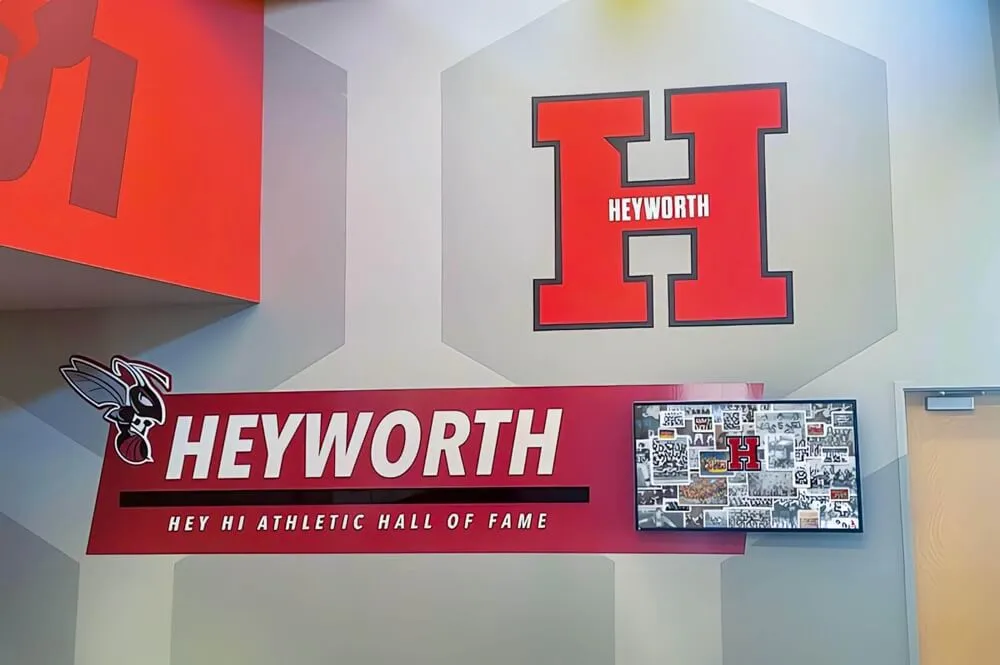
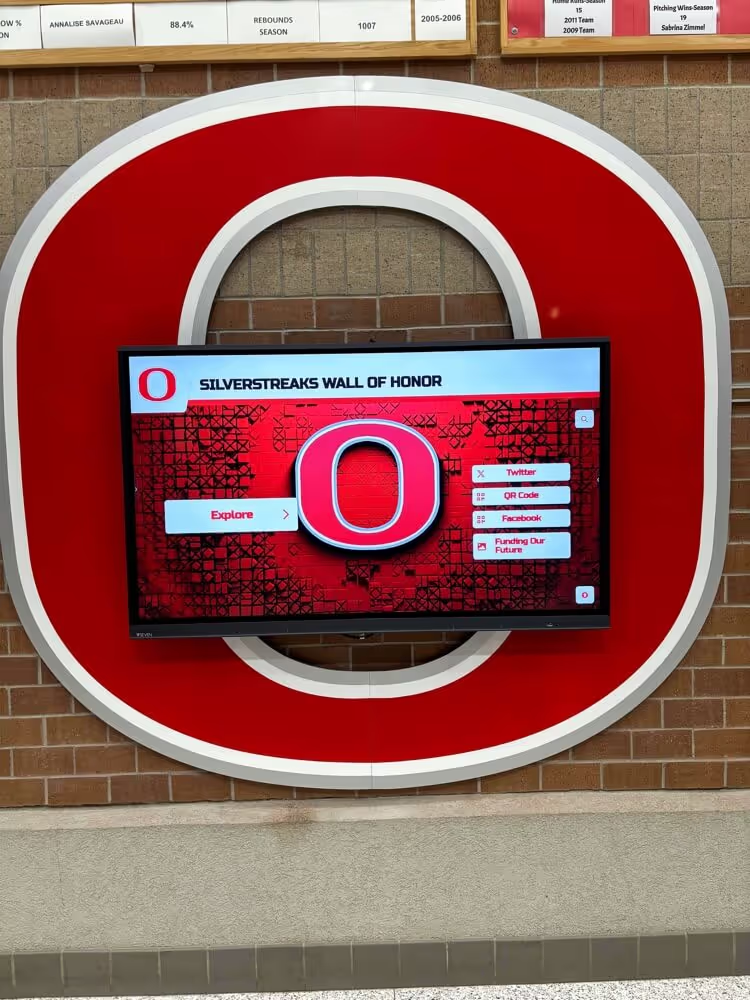
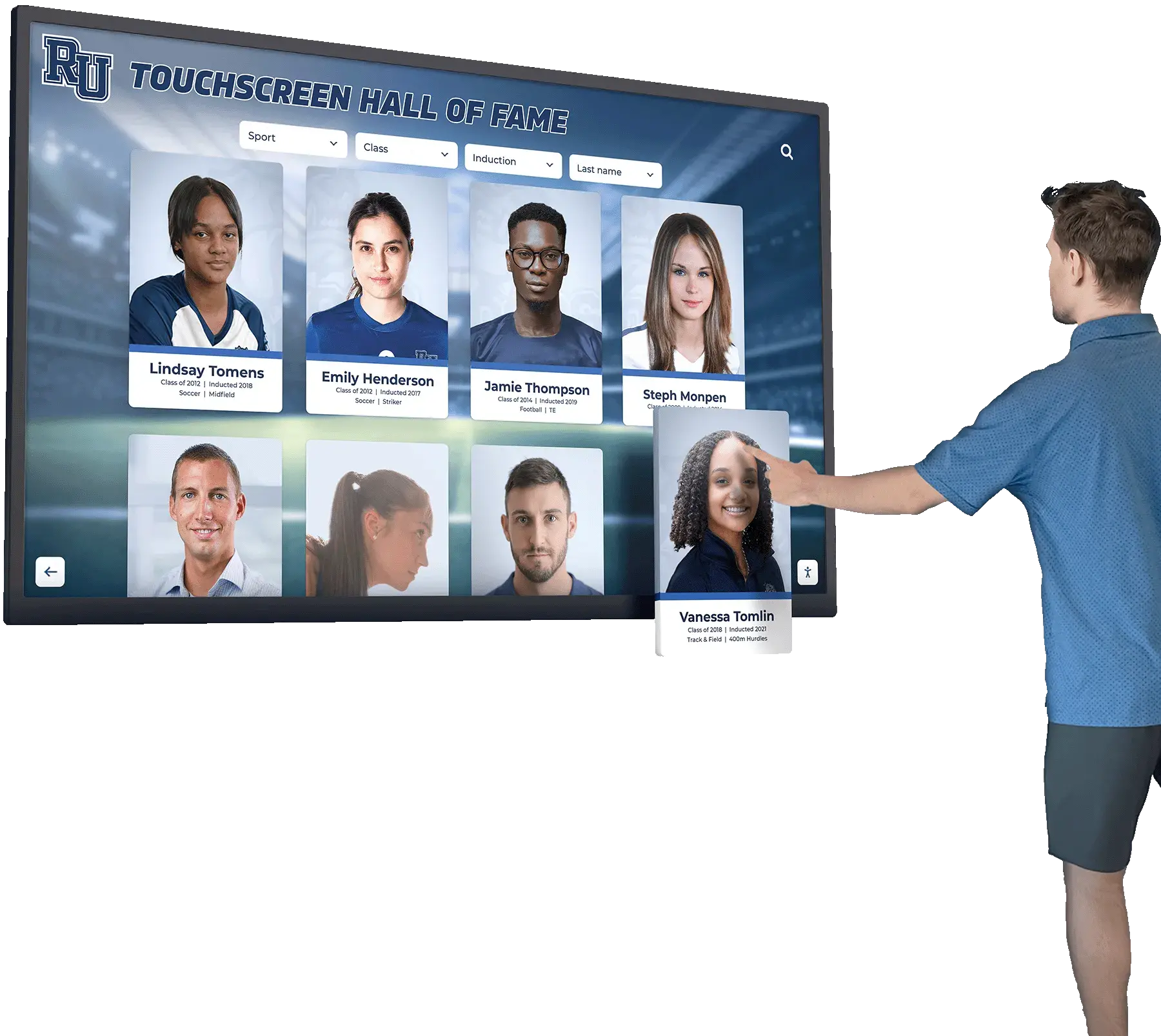
The end result of a well-documented athletic archive — a recognition display whose every entry traces back to a provenance record confirming the source, rights basis, and accuracy verification for the record shown
Turn a Well-Documented Archive Into a Recognition Display Your School Can Stand Behind
When every photograph, program, and result in your athletic archive has a content provenance record — a documented source, verified accuracy, and confirmed display clearance — your school is ready to build a recognition program with confidence. Rocket Alumni Solutions helps athletic programs transform provenance-documented archives into interactive touchscreen displays that showcase the full depth of your school's athletic history. Request a demo to see what your archive looks like on a display built for lasting recognition.
Request a Demo