



An athletic archive data classification policy is the documented framework that assigns every record type in a school’s athletic archive to a defined tier — public, restricted, or sensitive — based on the nature of the information it contains, the privacy interests it implicates, and the access controls that the tier requires. The direct answer: before a school publishes championship records on a touchscreen display, posts historical rosters on an alumni portal, or grants archive access to a recognition committee, it needs to know which records are safe to share openly, which require authenticated access, and which must remain protected behind administrative controls regardless of who asks. A data classification policy answers that question systematically, so individual display and access decisions do not have to be made from scratch each time. This guide provides a working three-tier classification framework, record-type tables, implementation steps, and a practical FAQ — written for school administrators, athletic directors, archives staff, facilities coordinators, and school IT teams preparing to build or expand a digital athletic archive or recognition program.
Nothing in this guide constitutes legal, records management, or IT security advice. Classification decisions, privacy obligations, and data governance arrangements should be reviewed by your district’s qualified staff and legal counsel before implementation.
A school that digitizes fifty years of athletic photographs and championship records has built a valuable institutional asset. A school that publishes those records on an interactive touchscreen without a classification framework has also, in the same action, potentially exposed roster information containing minors’ names, published photographs without confirming consent practices from earlier decades, and displayed content whose licensing status was never verified.
Data classification is not an obstacle to recognition. It is the prerequisite that makes confident, durable recognition programs possible. A school with a clear classification framework knows which records belong on the display, which belong in a staff-only database, and which require a formal review before they can move between tiers. A school without that framework makes those decisions ad hoc — sometimes correctly, sometimes not, and always without a documented basis for the choice.

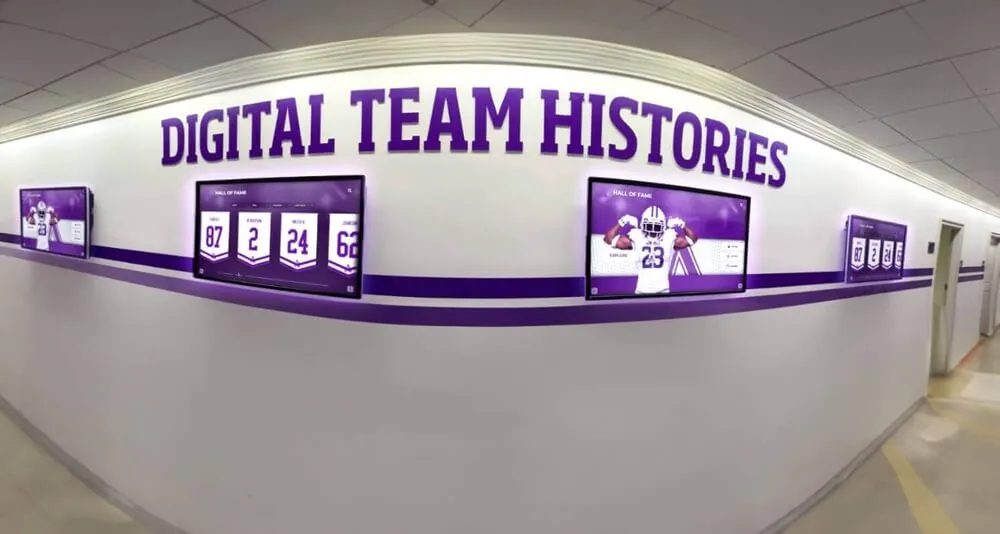
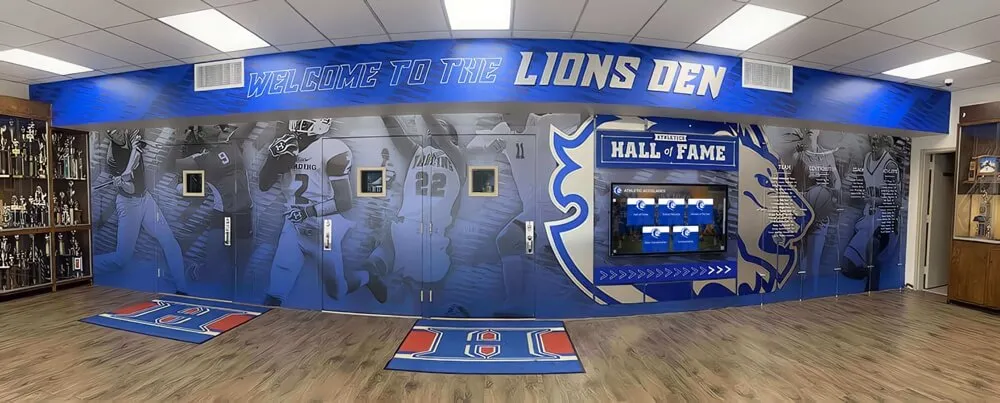
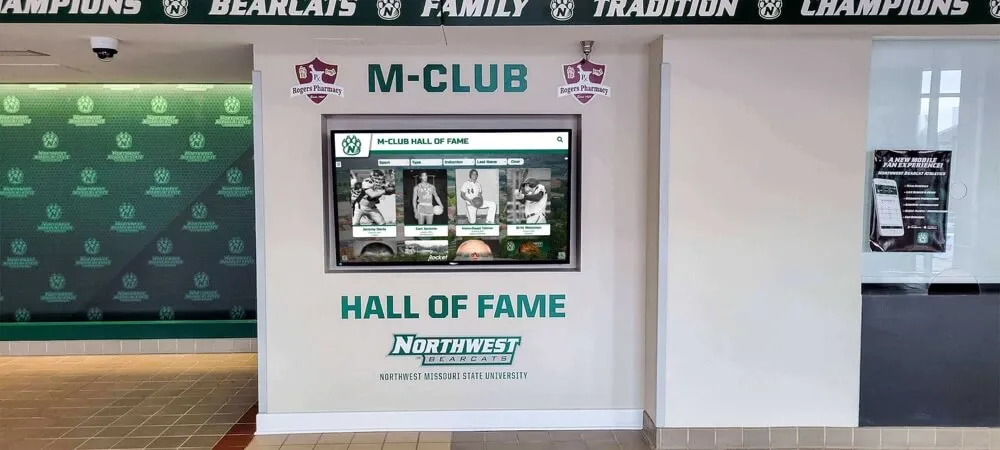
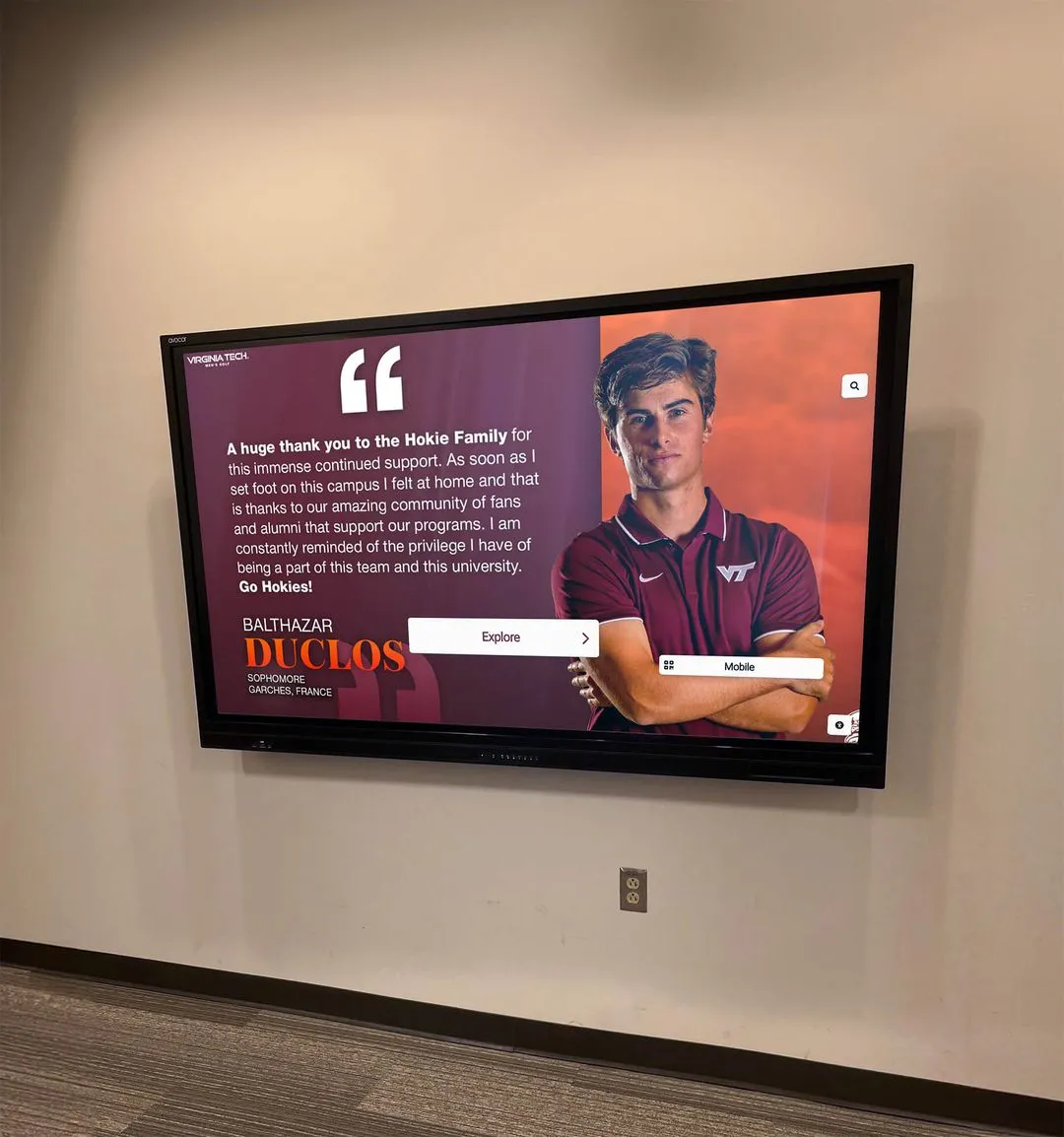
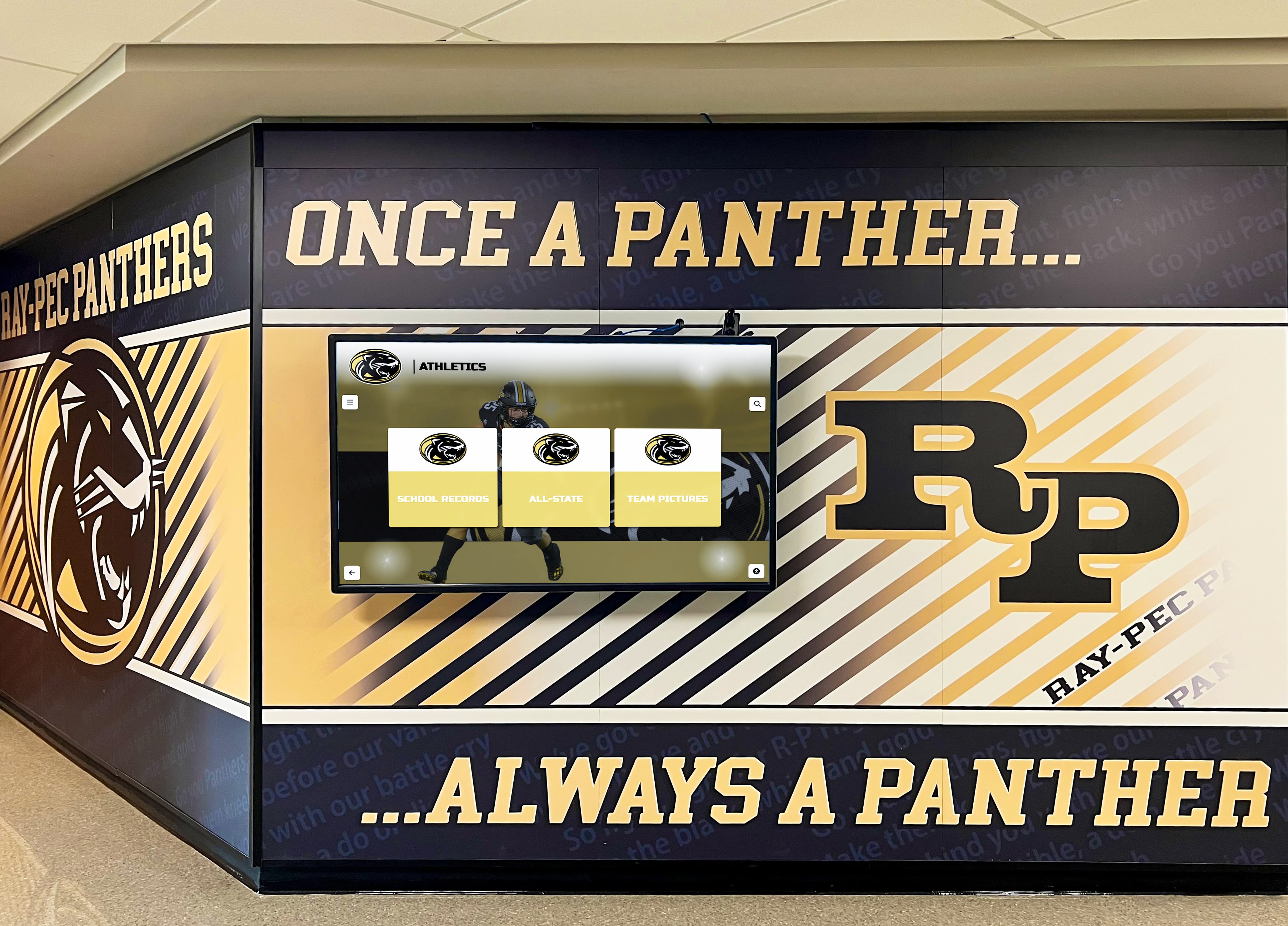
Hallway recognition displays draw directly from the athletic archive — a classification policy establishes which records are cleared for public display and which require restricted or administrative access controls
Why Schools Need an Athletic Archive Data Classification Policy
Athletic archives contain a wider range of information types than most programs initially recognize. A single season’s records may include photographs of minors, roster data with names and jersey numbers, game statistics, travel rosters, award documentation, eligibility certifications, and media files whose copyright belongs to a commercial photographer. Each of those record types carries different privacy implications, different regulatory considerations, and different appropriate handling rules.
Without a classification policy, handling decisions default to individual judgment at the point of access — which produces inconsistent outcomes and exposes the institution to risk in both directions: over-restricting content that should be publicly celebrated, and under-protecting information that should never appear on a public display.
Three practical needs drive the case for formal classification.
Recognition programs require a clear definition of what is safe to publish. When a school invests in an interactive touchscreen display for its hall of fame or record board, the display needs content. Knowing in advance which content is approved for public display — and which requires additional review or access controls — removes the bottleneck that slows recognition program development. Academic achievement displays and award recognition programs depend on the same foundation: a documented determination of which records are appropriate for the public-facing context before the display goes live, not after.
Digital access has changed the exposure model. Records that existed in a locked file cabinet were accessible only to staff who entered the archive room. The same records on an indexed, searchable touchscreen kiosk are accessible to every student, visitor, and community member who walks by. Classification establishes which records are appropriate for each access channel — and creates the institutional record to support that determination.
Regulatory and privacy obligations vary by record type. FERPA, state student records laws, copyright law, and licensing agreements each apply to different subsets of an athletic archive’s contents. A classification framework makes those distinctions operational — not by replacing legal review, but by ensuring that the right records go to legal review and the right records are cleared for publication without it.
The Three-Tier Classification Framework
A practical athletic archive data classification policy organizes all record types into three tiers: Public, Restricted, and Sensitive. The tiers define both the access level and the handling requirements for each record type.
Tier 1: Public
Public records are those the institution has determined are appropriate for unrestricted access — including display on publicly visible recognition platforms, searchable web archives, and physical hallway displays.
Characteristics of Tier 1 records:
- Describe institutional achievements rather than personal information
- Have been through a review process that confirms display appropriateness
- Do not implicate the privacy interests of currently enrolled students
- Are not subject to licensing, copyright, or contractual restrictions on public display
- Were publicly recognized in the original context (championship titles, school records, hall-of-fame induction)
Examples of Tier 1 records in athletic archives:
- School and program records (season wins, championships, national rankings) without individual identification
- Hall-of-fame inductee profiles for individuals who publicly accepted induction
- Championship titles, dates, and final scores from historical seasons
- Historical team photographs from events that were public at the time and for which display consent was obtained or implied by the public nature of the event
- Award names, years, and recipients for public recognition programs (most valuable player, all-conference, championship rings)
Programs building recognition displays to celebrate student awards and accomplishment histories draw primarily from Tier 1 content — records that are already publicly established and appropriate for the display context without additional access controls.
Tier 2: Restricted
Restricted records contain information appropriate for access by authenticated staff, specific committees, or verified alumni — but not for unrestricted public display.
Characteristics of Tier 2 records:
- Contain personally identifying information about individuals who attended the school
- Were not originally created for public distribution
- May include information about minors at the time the records were created
- Are appropriate for internal use but require confirmation before external publication
- May include content whose public display appropriateness has not been reviewed
Examples of Tier 2 records:
- Full season rosters with athlete names, jersey numbers, and positions
- Individual game and season statistics tied to named athletes
- Team photographs not yet reviewed for display consent compliance
- Historical programs, game day materials, and booster publications with individual athlete identification
- Award nomination files and committee deliberation records
- Contact and biographical information contributed by alumni for program use
Alumni engagement programs — including alumni welcome area recognition programs and alumni where-are-they-now spotlights — often draw from Tier 2 content after a review and consent process confirms that the individuals identified in the records have approved publication in the specific context.
Tier 3: Sensitive
Sensitive records require the highest level of access restriction and are not appropriate for any public or general staff access. They are accessible only to designated administrative roles with a documented need.
Characteristics of Tier 3 records:
- Contain information protected by FERPA or applicable state law
- Include health, medical, or safety information
- Contain disciplinary records or incident-related documentation
- Are subject to confidentiality obligations under contracts, licensing agreements, or consent arrangements
- Involve financial information, budget records, or donor arrangements under confidentiality
Examples of Tier 3 records:
- Academic eligibility certifications and academic standing records
- Medical clearance documentation for athlete participation
- Injury reports and treatment records
- Disciplinary incident records associated with individual athletes or staff
- Licensed media files (photographs from commercial press agencies, video from broadcast partners) whose license terms restrict redistribution
- Donor records with confidentiality designations
- Personnel records for coaches and athletic department staff

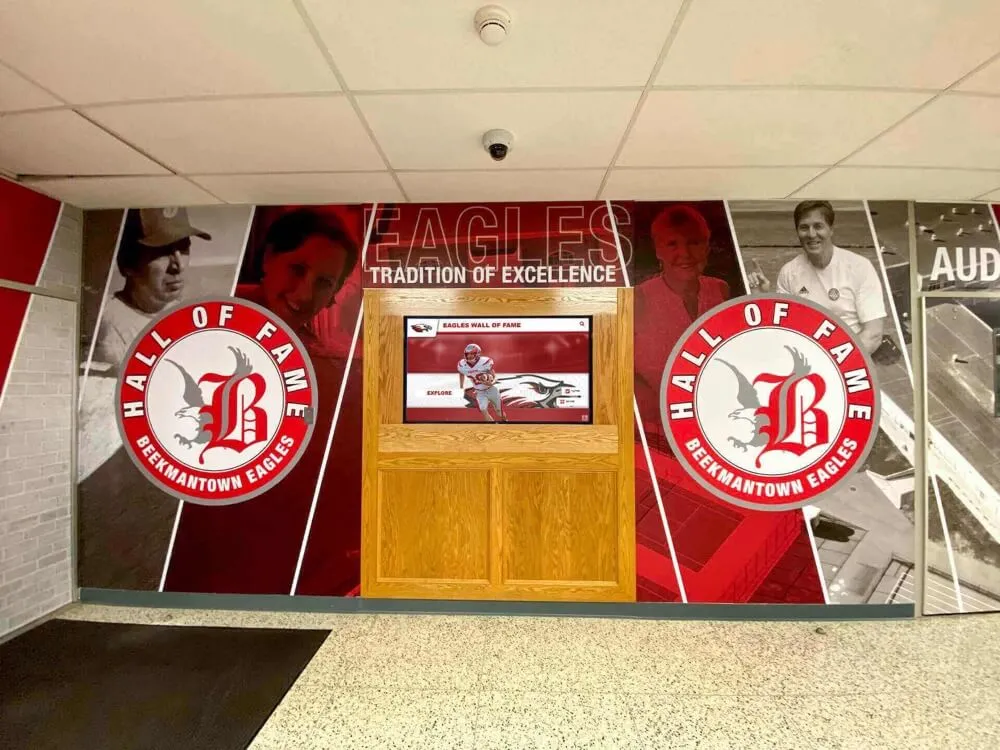
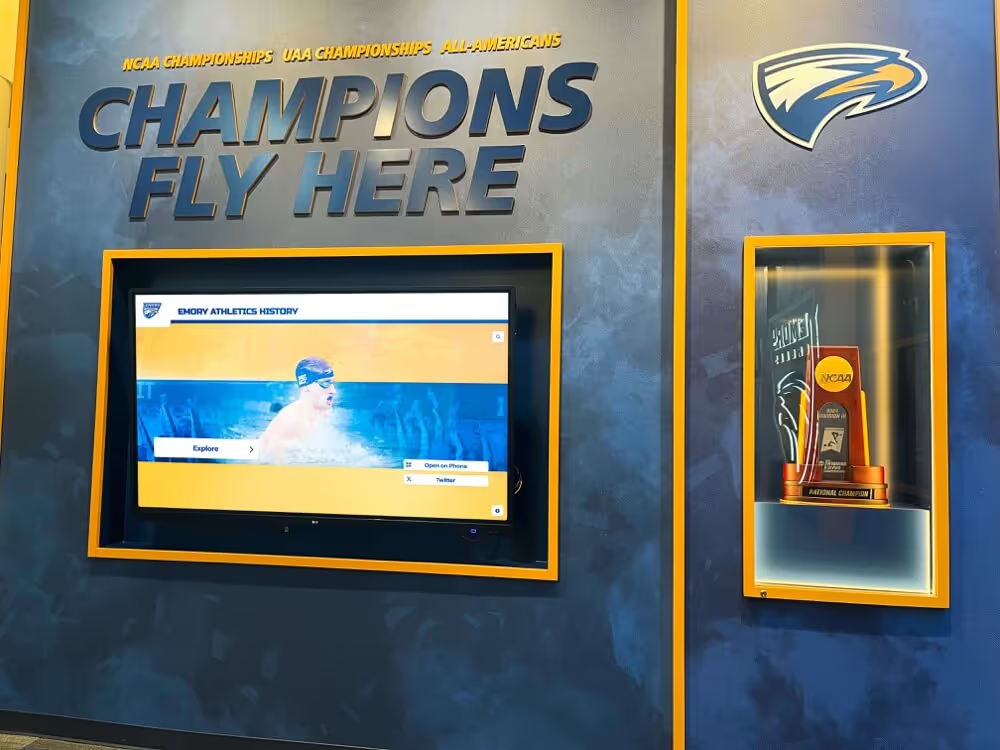
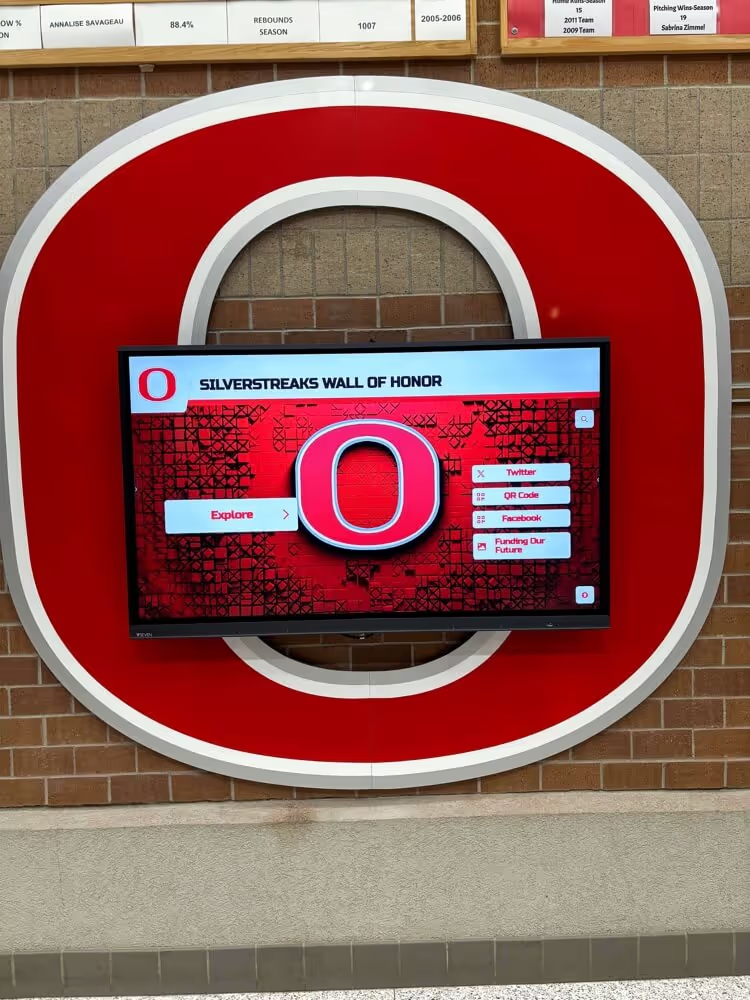
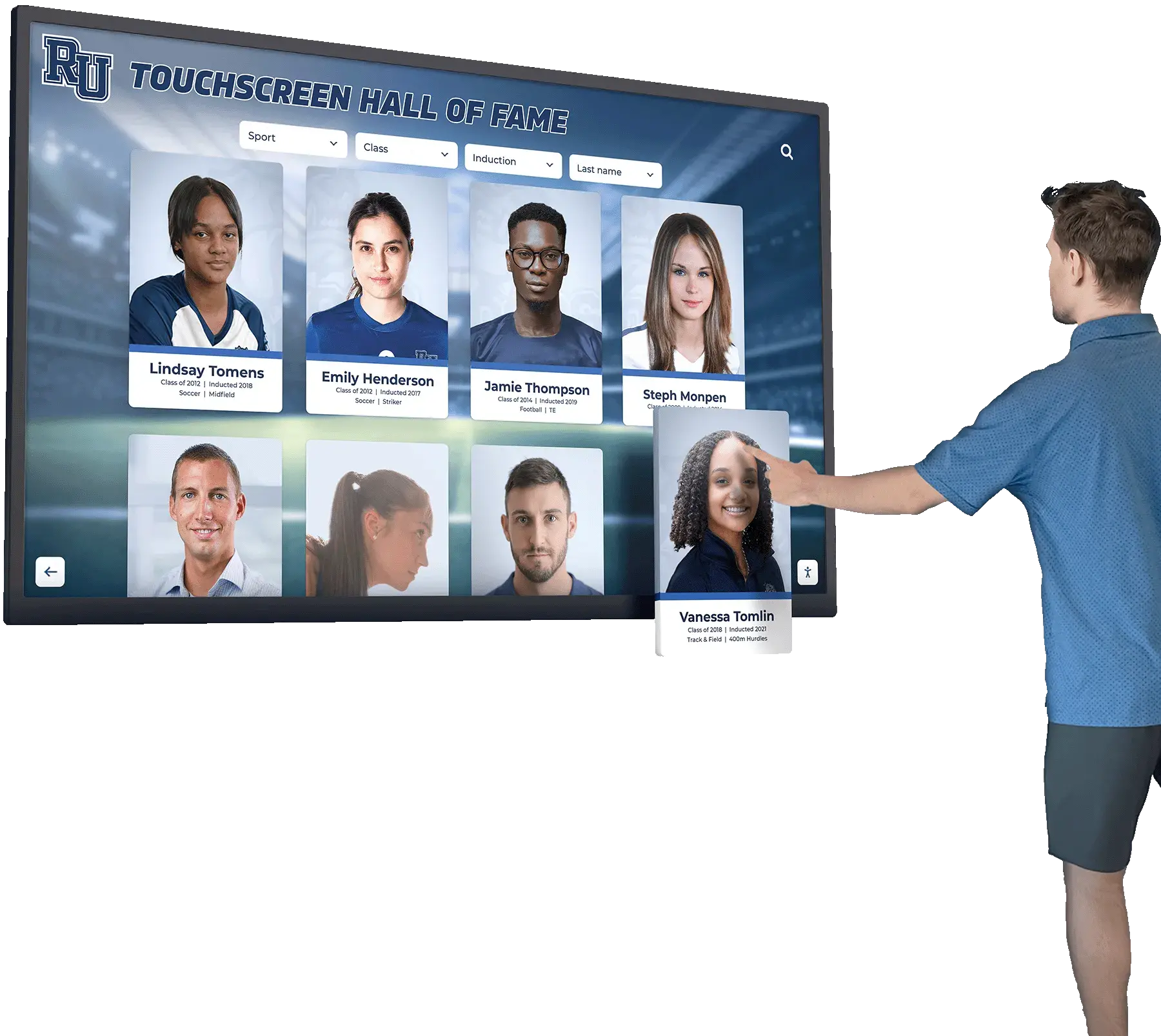
Touchscreen recognition displays draw from Tier 1 classified records — content confirmed as appropriate for public access; Tier 2 and Tier 3 content remains in access-controlled storage until reclassified through a documented review process
Record Type Classification Reference Table
The following table applies the three-tier framework to common athletic archive record types. This table provides a general reference; specific classifications depend on the institution’s circumstances and applicable law.
| Record Type | Default Tier | Key Reason |
|---|---|---|
| Championship titles and season records (no individual identification) | Public (Tier 1) | Institutional, not personal |
| Hall-of-fame inductee profiles (induction publicly accepted) | Public (Tier 1) | Public recognition established in original context |
| Individual all-conference and major award designations (publicly announced) | Public (Tier 1) | Publicly recognized at time of award |
| Full season rosters (names, positions, jersey numbers) | Restricted (Tier 2) | Personal identification of students |
| Individual game statistics (named athletes) | Restricted (Tier 2) | Personal performance data |
| Historical team photographs (consent not confirmed) | Restricted (Tier 2) | Requires review before public display |
| Alumni biographical data contributed for program use | Restricted (Tier 2) | Provided for program purposes; use limited to that scope |
| Award nomination and committee deliberation files | Restricted (Tier 2) | Internal committee process |
| Academic eligibility certifications | Sensitive (Tier 3) | FERPA-covered education record |
| Medical and injury records | Sensitive (Tier 3) | Health information; consent required for any disclosure |
| Disciplinary records | Sensitive (Tier 3) | Protected under FERPA and institutional policy |
| Licensed commercial photographs or broadcast video | Sensitive (Tier 3) | Licensing terms restrict redistribution |
| Financial and donor confidentiality records | Sensitive (Tier 3) | Contractual confidentiality obligations |
How Classification Connects to Display and Access Controls
Classification is only useful if it connects directly to operational access decisions. Three contexts where the framework guides daily decisions:
Public-facing recognition displays. A touchscreen display in a school lobby, a hallway honor wall, or an online alumni portal should contain only Tier 1 content — records confirmed as appropriate for unrestricted public access. When a recognition committee identifies a record for display that has not been classified, the appropriate response is to classify it before publishing, not to publish and address concerns afterward.
Touchscreen award displays for hall-of-fame programs operate on this principle: the content that appears on screen is a curated selection from a larger archive, filtered by display-appropriateness criteria the institution has established in advance. The display reflects the classification system’s output; it does not make classification decisions in real time.
Staff and committee access. Tier 2 records are accessible to authenticated staff — athletic directors, archive coordinators, recognition committee members — who need the information for program administration. Staff access is appropriate; public access is not. The distinction requires an access control mechanism: a password-protected shared drive, a role-restricted database, or a document management system with access levels. The classification framework defines who should have access; the access control system enforces it.
For programs managing annual alumni recognition events or school fundraising programs with recognition components that draw on alumni contact and participation records, Tier 2 classification ensures that working data stays within the program team and does not migrate to a public channel without a deliberate reclassification decision.
Administrative-only access. Tier 3 records are not accessible to general staff or committees. Access is limited to designated roles with documented need — typically the athletic director, the school principal, the records administrator, and legal counsel when applicable. Requests to access Tier 3 content require a documented justification and authorization from the appropriate administrative authority.
Reclassification: When Records Move Between Tiers
Classification is not permanent. Records may move between tiers when circumstances change.
Tier 2 to Tier 1 (reclassification for public display). A historical team photograph may start as Tier 2 (display consent not confirmed) and move to Tier 1 after a review confirms that the individuals depicted are no longer minors, the context of the photograph is appropriate for public display, and no individual has an active privacy request on file. Schools adding alumni profiles to back-to-school community events or extending recognition displays to honor past achievements run photographs and biographical records through this reclassification pathway before publishing.
Tier 1 to Tier 2 (downgrade following a privacy request). An inductee profile that was Tier 1 may move to Tier 2 if the individual requests removal from public display. The content does not leave the archive — it moves to restricted access and the display is updated. This is the operational mechanism that connects a redaction policy to the classification framework: redaction requests trigger reclassification, not deletion of the institutional record.
Any tier to Tier 3 (following a licensing or legal concern). A photograph that appeared to be Tier 1 content may move to Tier 3 if a subsequent review reveals that the image was taken by a commercial press agency whose license does not permit institutional redistribution. The record moves to restricted storage until the rights question is resolved.
Reclassification log requirements. Every tier change should be documented in a reclassification log that records the record identifier, the prior tier, the new tier, the date of reclassification, the reason, and the staff member who authorized the change. The reclassification log is a permanent institutional record.

Physical archive records like these portrait cards must be classified before their digital versions are published — the classification determines which tier of access controls applies and whether content is appropriate for a public-facing recognition display
Building the Classification Policy Document
A classification policy is a document, not just a practice. The written policy provides the basis for consistent decisions and the institutional record that supports those decisions when questions arise.
Minimum components of a written athletic archive data classification policy:
| Component | Content |
|---|---|
| Scope | Which records and systems the policy covers |
| Tier definitions | Criteria for Tier 1, Tier 2, and Tier 3 classification |
| Default classifications | Default tier assignment for each major record type |
| Classification authority | Which roles have authority to classify, reclassify, or override defaults |
| Access controls by tier | Required technical and administrative controls for each tier |
| Reclassification process | Steps for reviewing and changing a record’s tier |
| Reclassification log | Format and retention requirements for the log |
| Annual review requirement | Who reviews the policy, when, and how changes are documented |
| Compliance references | Applicable laws, regulations, or institutional policies that inform the framework |
The policy does not need to be long. A concise, operational document that covers these components is more useful than a comprehensive one that staff cannot navigate quickly in practice.
Who should review the draft policy before adoption:
- School district legal counsel (for FERPA, state law, and contract compliance)
- School IT or data security staff (for access control implementation)
- Athletic director (for operational workability)
- Records management coordinator or equivalent (for retention alignment)
For programs that have not yet built a formal archive, the classification policy is most useful when developed alongside the ingest workflow and the metadata standards that govern how records are described and organized. Classification at ingest — assigning a tier to each record when it first enters the archive — is faster and more accurate than retrospective classification of an existing collection.
Classification in the Context of Recognition Programs and Displays
Data classification is not a separate administrative obligation layered on top of recognition programs. It is the prerequisite that enables recognition programs to operate with confidence.
When a school builds a touchscreen display for a hallway, lobby, or trophy case, the people who interact with it — students, visitors, alumni, families — trust that content was selected appropriately. Programs that recognize AP scholars and academic achievers alongside athletic honorees benefit from a framework that explicitly distinguishes publicly announced recognition (Tier 1 eligible) from the underlying academic records that preceded it (Tier 3 under FERPA).
Donor recognition installations and community display programs also benefit from classification clarity. While schools are the primary setting for athletic archive classification, the underlying principle — separating display-appropriate public content from access-controlled records — applies in any recognition context where identifiable individuals appear on public-facing displays. Digital display programs in community or shared-facility settings face the same display-appropriateness question, though without the FERPA layer specific to educational records.
The classification framework also shapes how alumni engagement intersects with athletic history. Alumni welcome area recognition programs and alumni spotlight features that sit alongside athletic hall-of-fame content benefit from a pre-classified archive — knowing which records are Tier 1 display-ready means the recognition team can build the program without a classification review bottleneck at launch.
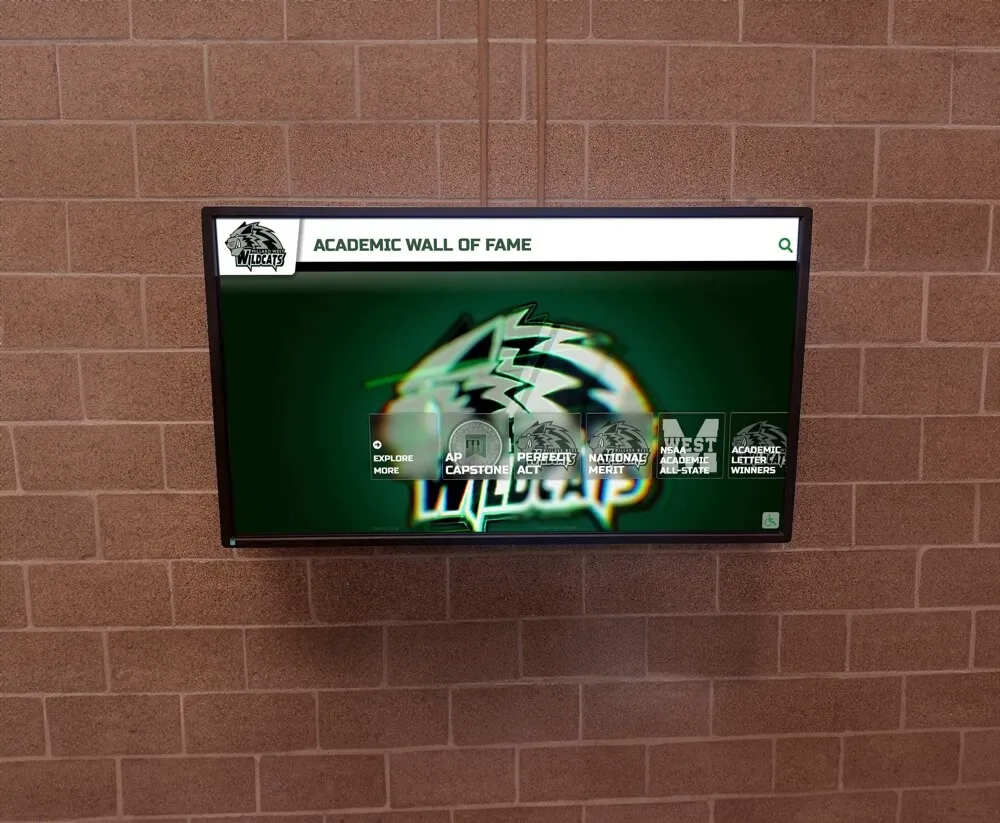
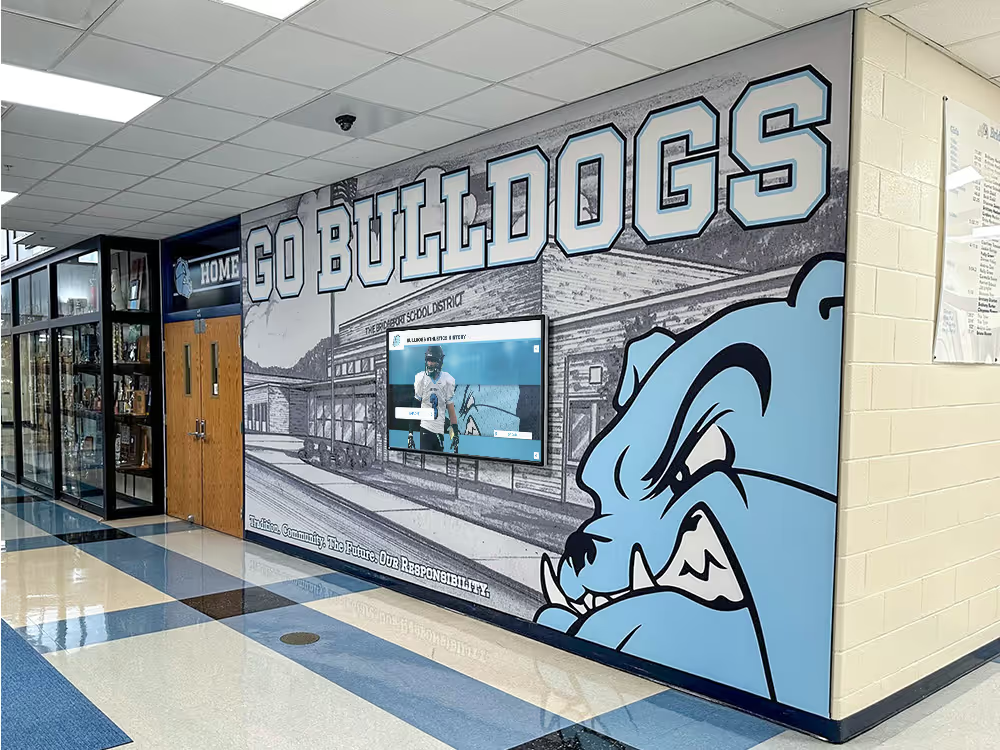
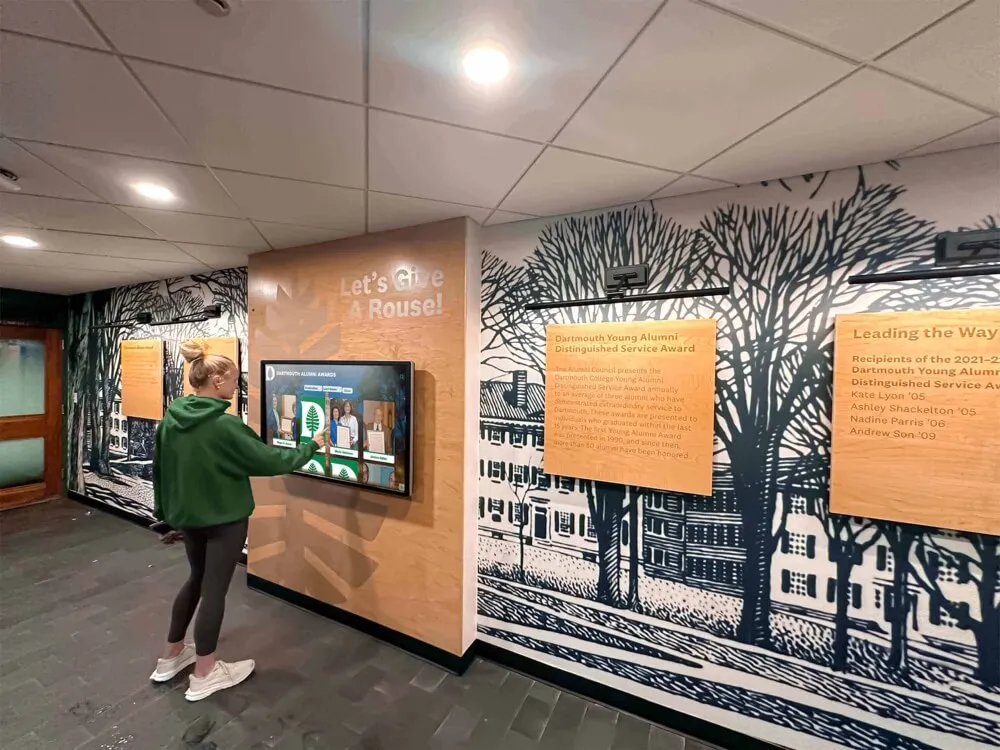
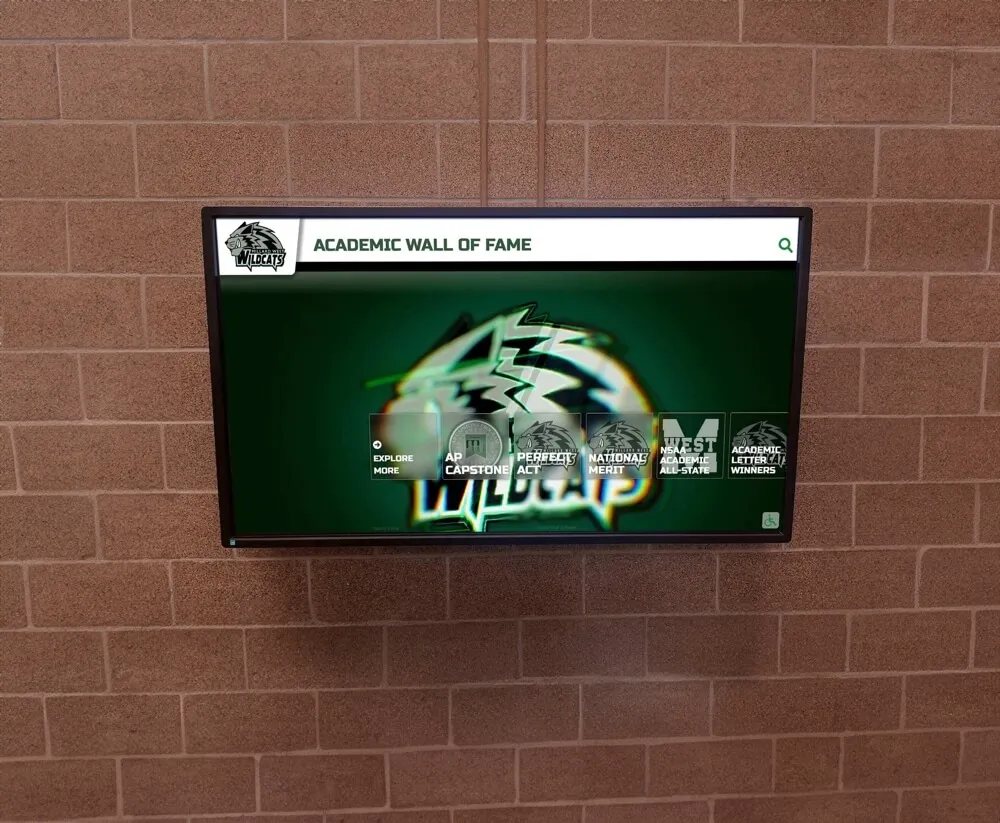
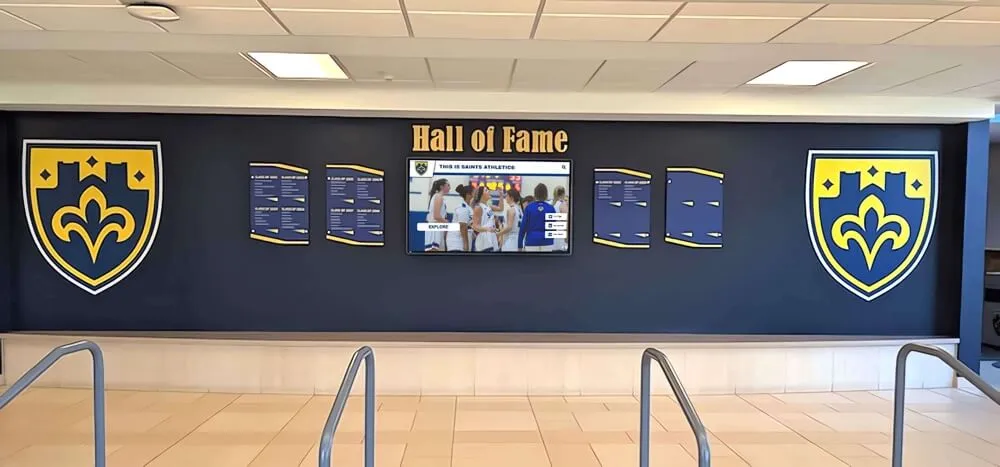
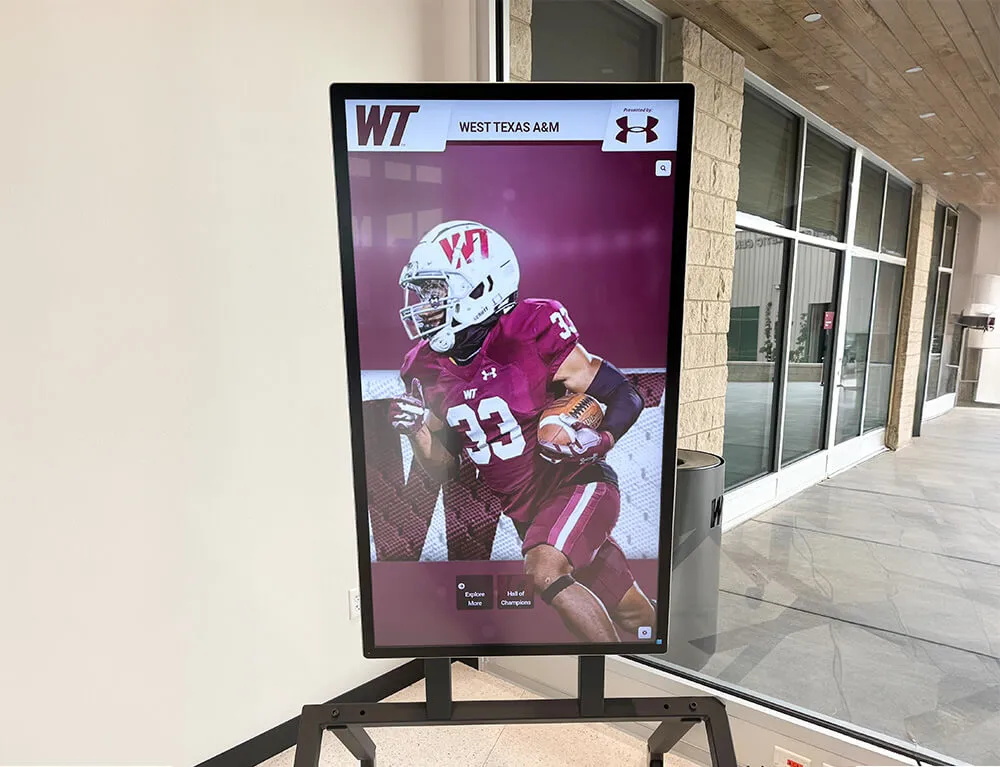
Academic and athletic recognition displays reflect the output of a classification policy — publicly announced recognition is Tier 1 content; the underlying academic or eligibility records that preceded the recognition remain Tier 3 and are never displayed publicly
Frequently Asked Questions
What is the difference between a data classification policy and a records retention policy?
A records retention policy governs how long records are kept and when they are eligible for disposal. A data classification policy governs who can access records, in what context, and with what controls — regardless of how long the record is retained. The two policies are complementary: retention defines the lifecycle; classification defines the access controls within that lifecycle. An athletic archive program benefits from having both, but classification comes first for programs building recognition displays, because the immediate operational need is access control, not disposal scheduling.
Does FERPA automatically classify all athletic records as Tier 3 sensitive?
Not automatically. FERPA applies to “education records” — records directly related to a student and maintained by the institution. Whether a specific athletic archive record qualifies as a FERPA-covered education record depends on how it was created and maintained. Athletic participation records and team rosters may or may not qualify depending on the institution’s records structure. Academic eligibility certifications and academic standing records associated with individual student-athletes typically are FERPA-covered. Consult your district’s legal counsel and the Department of Education’s resources at studentprivacy.ed.gov for guidance specific to your institution. This guide provides operational orientation, not legal advice.
How should we handle records where the classification tier is unclear?
When classification is unclear, default to the more restrictive tier pending review. This protects the institution and the individuals identified in the record while the classification question is resolved. Assign a staff member and a deadline for completing the review, and document the interim classification in the reclassification log. Do not publish unclear records to a public display while the classification question is open.
Do records contributed by alumni or donors need to be classified?
Yes. Records contributed to the archive — photographs, documents, video footage, biographical information — become part of the institutional archive and are subject to the classification framework regardless of who provided them. The classification process should consider the content of the record (who is identified, what information it contains) as well as the terms under which it was contributed. Contribution agreements that specify permitted uses help resolve classification questions for donated records.
How does classification apply to a recognition display that is already live?
If a display is already live and archive content has not been formally classified, the practical approach is to begin a retrospective classification review of currently displayed content before extending the display with new records. Review displayed content against Tier 1 criteria: confirm that each record is institutional rather than personal, that publicly recognized individuals were recognized in the original context, and that no licensing or consent concerns are unresolved. Records that do not meet Tier 1 criteria should move to Tier 2 pending a more detailed review.
Can we skip classification for records that were already public in a historical game program?
Historical publication in a game program does not automatically qualify a record for Tier 1 classification for current digital display. A printed program distributed at a single event in 1994 had a limited audience and a limited lifespan. The same information indexed and searchable on a display platform accessible indefinitely to anyone who visits the school has a fundamentally different access profile. The classification decision for current digital display should be made on the current access context, not the historical publication context.
What technical controls are needed to enforce classification tiers?
Tier 3 records should be stored in access-controlled systems — a protected network share, a records management platform with role-based permissions, or a document management system with explicit access lists. Tier 2 records should be accessible to authenticated staff via a password-protected platform or role-controlled system. Tier 1 records are appropriate for less-restricted storage, though they should still be under organizational control. For programs building a digital archive alongside a recognition display, the archive’s digital preservation file structure should be designed with classification tiers in mind — Tier 3 content in a segregated storage location that does not share access paths with Tier 1 display content.
How does classification connect to a disaster recovery plan?
Classification tiers determine recovery priority. Tier 1 content — the records powering recognition displays and alumni engagement — should have the shortest recovery time objective and be replicated to off-site or cloud backup. Tier 3 content should be backed up with equal rigor but with access controls maintained through the recovery process. For guidance on how classification informs a broader athletic archive disaster recovery plan, the classification framework provides the record inventory and access control baseline that a recovery plan depends on.
From the classification policy to a recognition program the institution can stand behind, the path is shorter than it appears when the framework is in place before the first record is published. Schools that invest in classification infrastructure before expanding their recognition displays save significant remediation work and build programs that are durable — able to grow, add new content, and respond to requests without uncertainty about what belongs on which display.
Build a Recognition Display Your Institution Can Stand Behind
When your athletic archive has a clear data classification policy — every record assigned to a tier, access controls in place, and Tier 1 content confirmed for public display — your school is ready to build a recognition program that celebrates history with confidence. Rocket Alumni Solutions helps schools connect well-classified, policy-compliant athletic archives to interactive touchscreen displays that students, alumni, and visitors engage with every day. Request a demo to see what your archive can look like on a recognition display built to last.
Request a Demo