



A school athletic archive folder hierarchy is the structured directory layout that organizes every digital asset a program collects — team photographs, season rosters, game video, championship records, booster club documents, and game programs — so that any staff member, committee volunteer, IT administrator, or future archivist can locate a specific file without knowing who created it, what system originally produced it, or how many staff transitions occurred since it was saved. This guide provides a complete, ready-to-deploy folder hierarchy for school athletic archives of every size, with tree diagrams, annotated tables, and answers to the most common structural questions facing athletic directors, archive coordinators, facilities staff, and booster leaders.
Nothing in this guide constitutes legal, records management, or IT security advice. Retention obligations, access controls, and compliance requirements should be reviewed by qualified district staff before implementation.
Finding a photograph from a state championship twelve years ago should not depend on remembering which coach ran the program that season, which shared drive was in use at the time, or whether the photos were delivered by the school photographer or a parent volunteer. A well-designed folder hierarchy makes that file locatable by anyone who knows the sport and the year — which is the entire point of maintaining a permanent archive rather than a steadily growing collection of miscellaneous files.

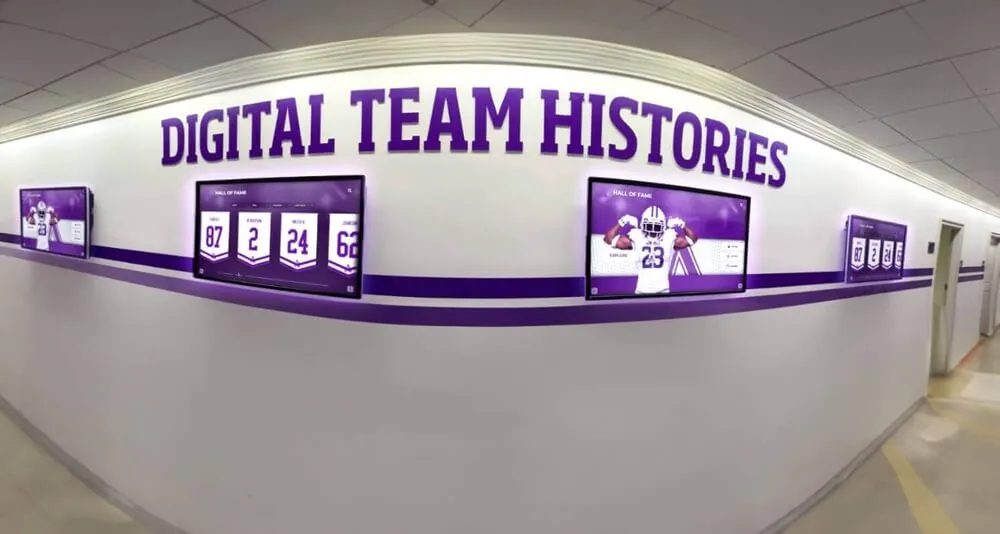
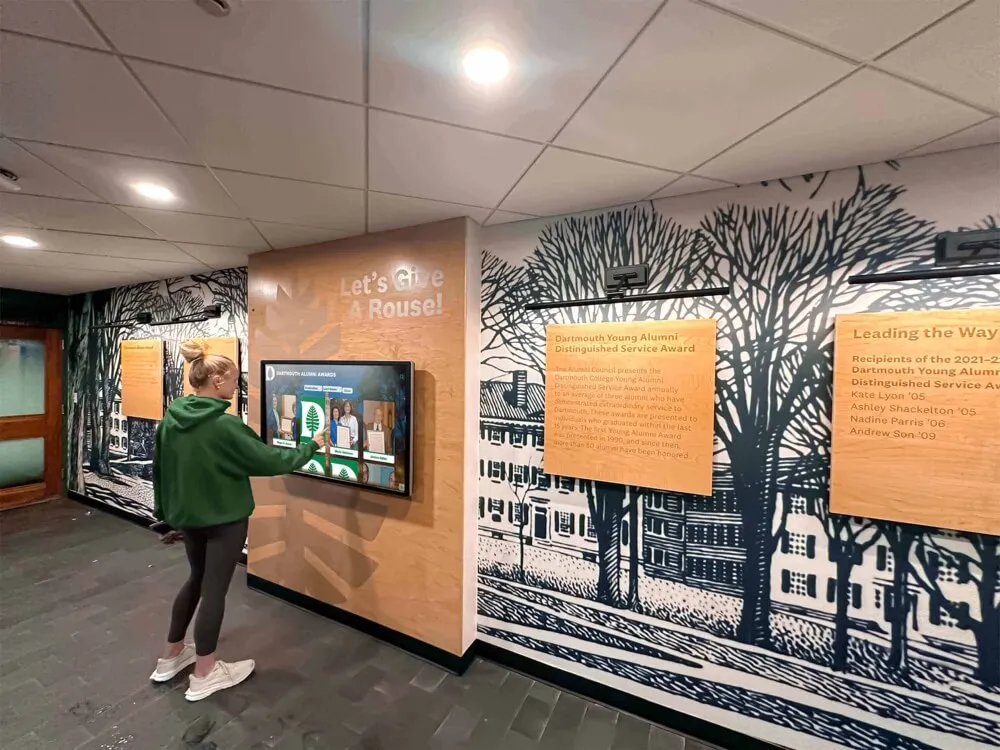
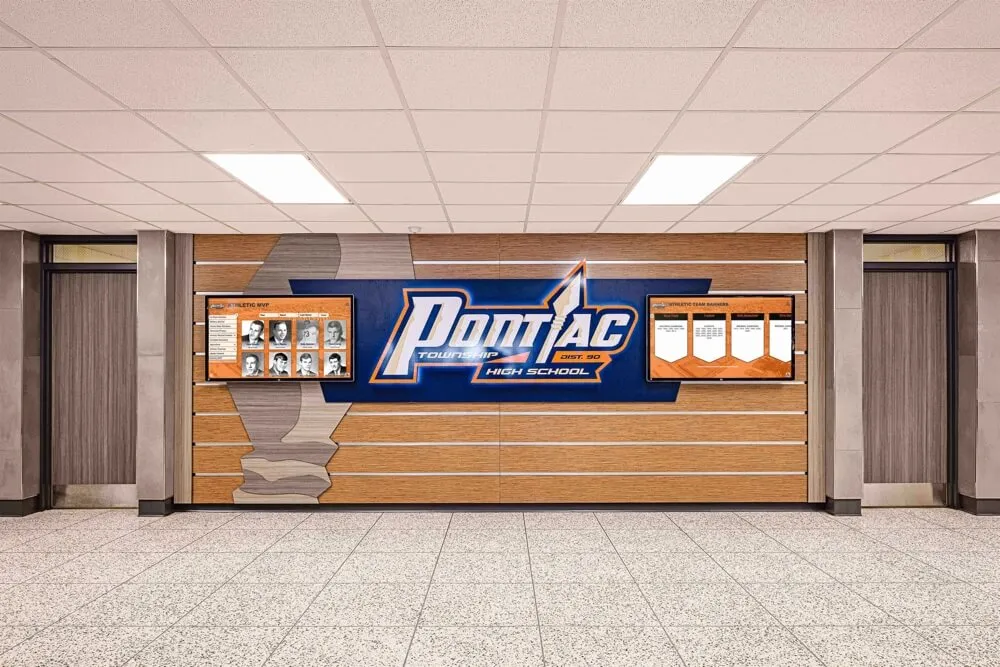
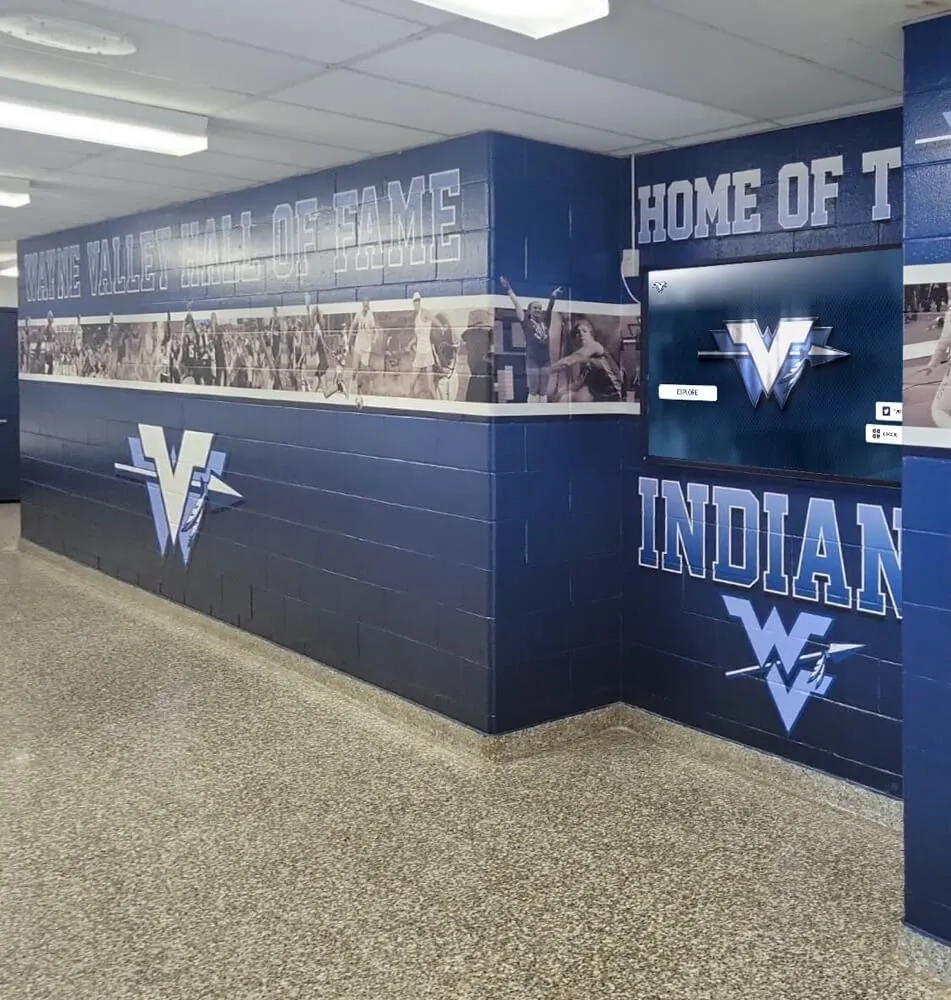
Athletic record displays in school hallways draw directly from organized digital archives — a consistent folder hierarchy ensures that content created in 2014 is as findable in 2034 as the day it was saved
Why Folder Hierarchy Is the Foundation of a Functional Athletic Archive
A shared drive with no intentional structure accumulates files through a predictable sequence: someone creates a folder for this season’s football photos, another person adds a roster spreadsheet to the root directory, a coach drops a video highlights file on the desktop and later moves it to a “Videos” folder with no sport or year label, and a booster club volunteer uploads scanned programs to a folder titled “Old Stuff” because nothing better exists. Three years later, that collection is effectively unsearchable. Ten years later, most of the context — which season a file belongs to, whether a document is final or a draft — exists only in the memory of whoever created it. Twenty years later, that memory is gone.
The folder hierarchy prevents this. It is a decision made once, documented clearly, and enforced consistently so that every contributor, regardless of role or tenure, saves files in predictable locations. A well-designed school athletic archive folder hierarchy serves five functions simultaneously:
- Discoverability: Anyone can navigate to a specific file by following logical categories — sport, year, media type — without knowing the file name or its creator.
- Completeness checking: At season’s end, a walk through the expected folder structure reveals missing content before it becomes unrecoverable.
- Onboarding: A new athletic director, archive volunteer, or IT staff member can understand the full scope of the archive’s contents from the folder structure alone.
- Migration readiness: When storage systems change — a new server, a district-wide cloud migration, a platform transition — a clean hierarchy moves intact rather than requiring manual reorganization.
- Display integration: Recognition platforms and interactive touchscreen systems that surface archived content can be populated accurately when the underlying files are organized predictably.
Folder structure and file naming are complementary systems: naming conventions identify what a file contains; the folder hierarchy determines where it lives. Both must be in place for an archive to function. Athletic archive file naming conventions define the labeling standard that complements the location standard described in this guide.
The Complete School Athletic Archive Folder Hierarchy
The following structure is designed for a school or athletic department managing multiple sports across multiple seasons. It scales from a single-sport program using a local shared drive to a multi-school district running a cloud-based document management system.
/Athletics-Archive/
├── _Admin/
│   ├── Archive-Policy/
│   ├── Contact-Directory/
│   └── Templates/
├── Sports/
│   ├── Football/
│   │   ├── 2025-26/
│   │   │   ├── Photos/
│   │   │   │   ├── Team-Portraits/
│   │   │   │   ├── Action/
│   │   │   │   └── Events/
│   │   │   ├── Rosters/
│   │   │   ├── Video/
│   │   │   │   ├── Game-Footage/
│   │   │   │   └── Highlights/
│   │   │   ├── Records/
│   │   │   └── Programs/
│   │   ├── 2024-25/
│   │   └── Historical/
│   │       ├── Pre-2000/
│   │       └── 2000-2009/
│   ├── Basketball-Boys/
│   ├── Basketball-Girls/
│   ├── Track-Boys/
│   ├── Track-Girls/
│   ├── [Additional Sports]/
│   └── All-Sports/
│       ├── 2025-26/
│       └── Historical/
├── Facilities/
│   ├── Gymnasium/
│   ├── Athletic-Fields/
│   └── Locker-Rooms/
└── Booster-Club/
    ├── 2025-26/
    └── Historical/
This hierarchy has four top-level divisions — _Admin, Sports, Facilities, and Booster-Club — each serving a distinct preservation purpose. The sections below explain each division in detail.
The _Admin Division: Archive Infrastructure First
The _Admin folder uses an underscore prefix so it sorts to the top of the directory in most file systems, making it the first thing any contributor sees when they open the archive. It holds the documentation that makes the rest of the archive usable.
| Subfolder | Contents | Who Needs It |
|---|---|---|
Archive-Policy/ | Naming convention guide, this folder hierarchy reference, retention schedules, access permissions | All contributors; IT staff |
Contact-Directory/ | Current and past archive coordinators, sport liaisons, IT contacts, platform vendor contacts | Archive administrators |
Templates/ | Blank season checklist, ingest log template, rights clearance form, metadata spreadsheet | Anyone adding content to the archive |
Critical rule: The _Admin folder must be readable by every contributor to the archive. It is useless if it exists only on one staff member’s local drive or in a location accessible only to IT. Post its location in every onboarding document for new staff members who contribute to the archive.
The Archive-Policy subfolder should contain, at minimum, one document that answers the question “where does this file go?” for every common file type the program creates. If a new booster club volunteer has to ask that question by email, the policy document is incomplete.
The Sports Division: The Core of the Hierarchy
The Sports division is where the majority of athletic archive content lives. Its structure rests on three nested levels: sport, season, and media type.
Sport-Level Folders
Create one folder per sport. When a sport has separate boys and girls programs with distinct rosters, records, and photographs, give each its own folder rather than sharing one parent.
| Sport | Folder Name | Notes |
|---|---|---|
| Football | Football/ | Single-gender program; no gender split needed |
| Boys Basketball | Basketball-Boys/ | Split by gender to avoid cross-contamination of rosters and records |
| Girls Basketball | Basketball-Girls/ | |
| Boys Track & Field | Track-Boys/ | |
| Girls Track & Field | Track-Girls/ | |
| Baseball | Baseball/ | |
| Softball | Softball/ | |
| Volleyball | Volleyball/ | |
| Cross Country | Cross-Country/ | |
| Swimming | Swimming/ | |
| Wrestling | Wrestling/ | |
| Boys Soccer | Soccer-Boys/ | Split if both programs exist |
| Girls Soccer | Soccer-Girls/ | |
| Tennis | Tennis/ | |
| Golf | Golf/ |
For a school with both boys and girls soccer, use Soccer-Boys/ and Soccer-Girls/ rather than a shared Soccer/ folder with internal splits. The split-at-sport-level approach is more consistent with how rosters, records, and photographs are organized in practice — a girls soccer roster in a shared Soccer/ folder is ambiguous; in Soccer-Girls/ it is not.
Add new sport folders when programs are added to the school’s athletic offering. Never retroactively combine sport folders to “simplify” the structure — the sport-level split is what enables efficient content retrieval.
Season-Level Folders
Within each sport folder, create one subfolder per academic year using the format YYYY-YY — for example, 2025-26. For sports that run entirely within a single calendar year, YYYY is acceptable, but YYYY-YY is preferred for consistency across the archive.
Always create the season folder at the start of the season, not at its end. Creating the folder before the first file arrives ensures that no files land directly in the sport-level folder by mistake. A file saved to Football/ rather than Football/2025-26/ is effectively lost in a large archive.
The Historical/ subfolder within each sport holds content from eras before the program began digitizing systematically. Subdivide it by decade if the volume warrants it: Pre-2000/, 2000-2009/, 2010-2019/. This separation keeps legacy digitization projects visible and allows quality expectations to be clearly scoped — files in Historical/Pre-2000/ may be scanned at lower resolution or with incomplete metadata, and the folder location communicates that without requiring a note on every individual file.
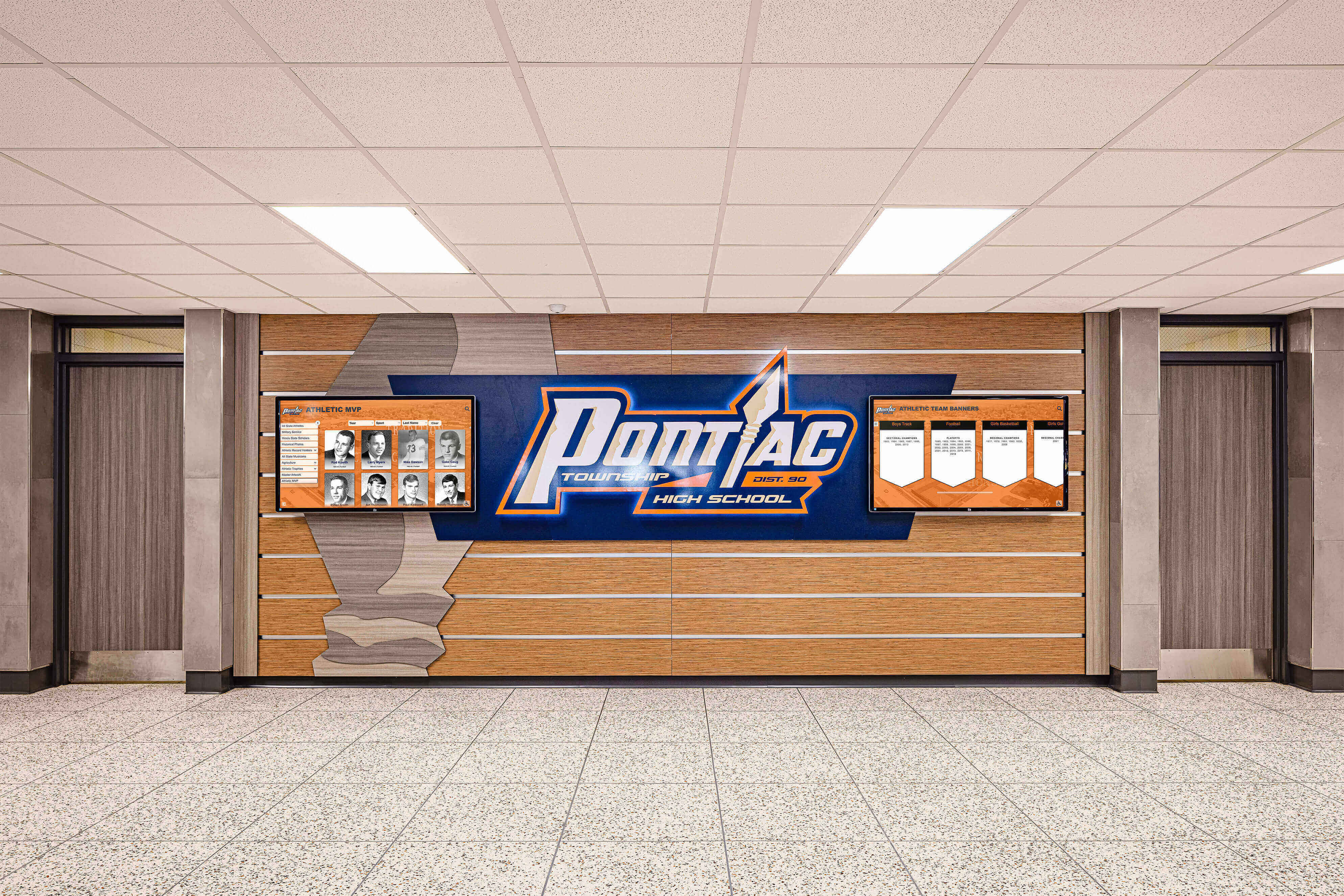
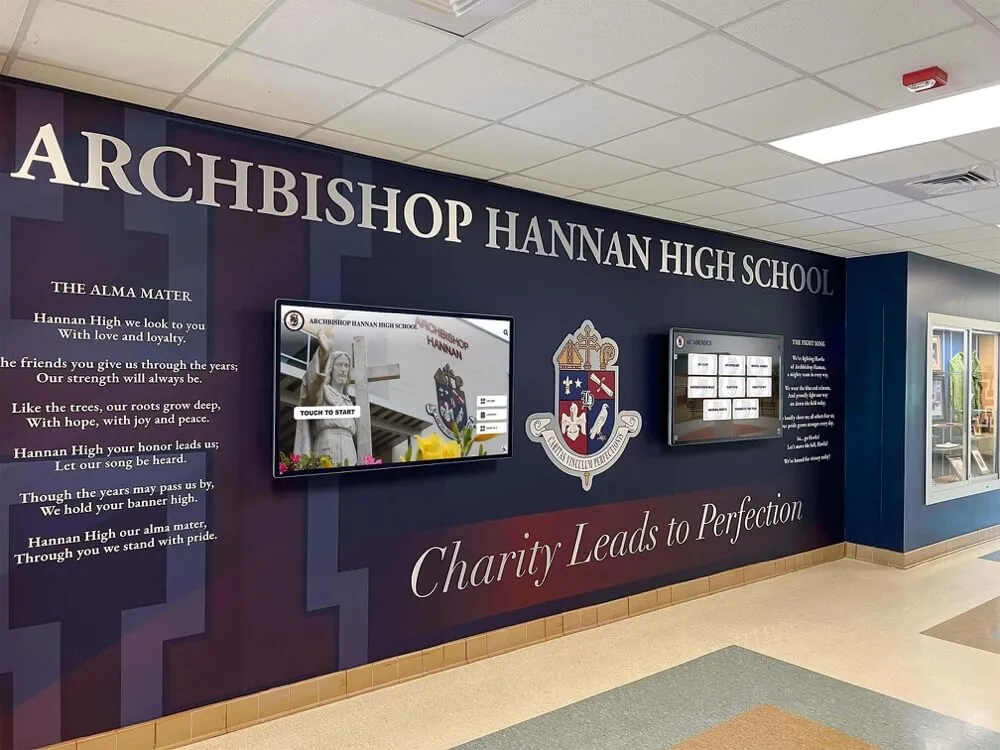
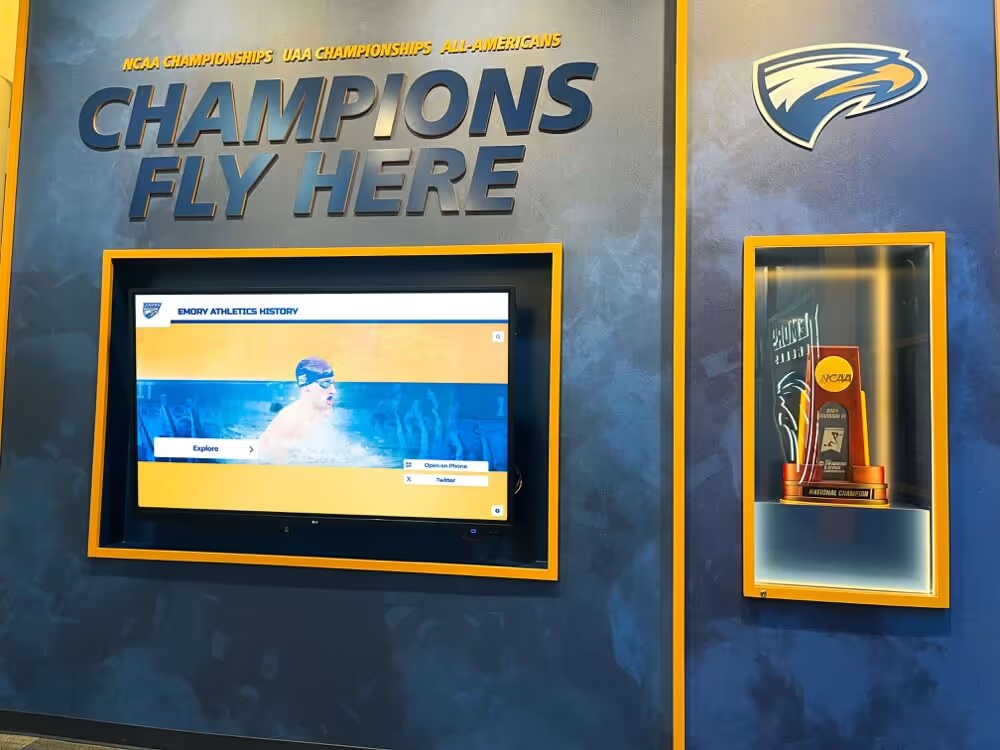
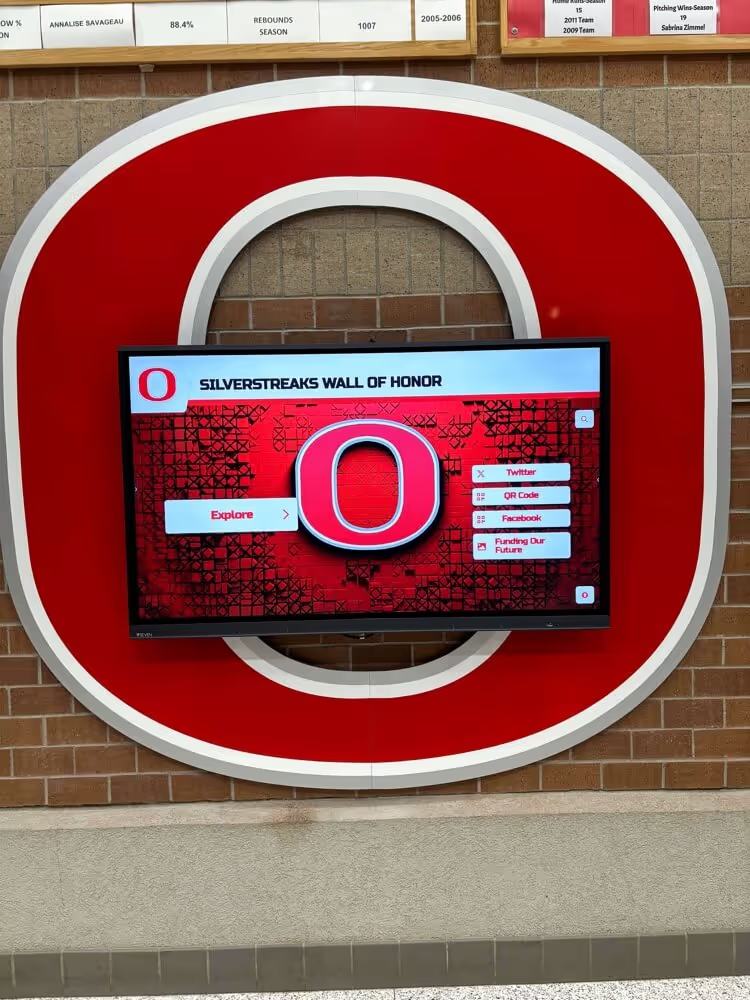
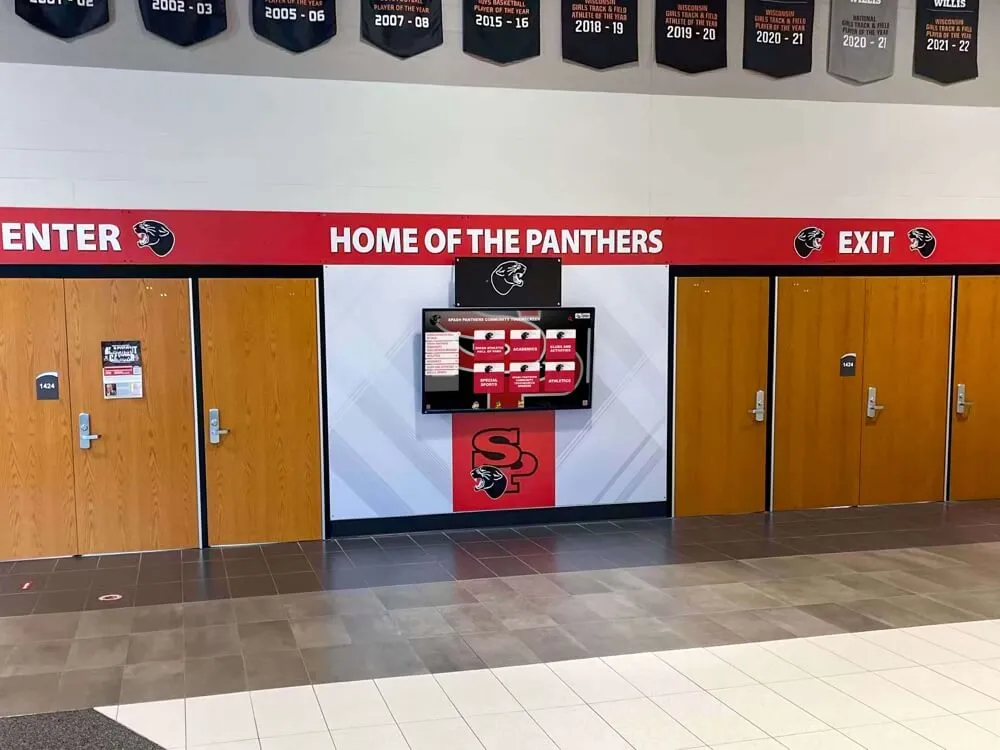
School athletic honor boards display records spanning many years — the folder hierarchy that organizes those years of content determines whether historical records are accessible in minutes or buried in a disorganized drive
Media Type Subfolders Within Each Season
Within each season folder, create five standard media type subfolders. Every athletic program produces these five types of content; create all five at the start of the season even if some will remain empty until content is added.
2025-26/
├── Photos/
│   ├── Team-Portraits/
│   ├── Action/
│   └── Events/
├── Rosters/
├── Video/
│   ├── Game-Footage/
│   └── Highlights/
├── Records/
└── Programs/
Photos — Photographs subdivide into three subcategories that cover the full range of athletic imagery:
Team-Portraits/: formal individual and team portraits from scheduled portrait sessionsAction/: game-day and practice photographs; further subdivision by opponent or date is optional but useful for high-volume programsEvents/: photographs from banquets, signing days, award ceremonies, and other non-competition events
Rosters — No subdivision is required in most cases. A season’s roster files are few enough that a flat folder with clearly named files is navigable without further hierarchy. If a program creates both official submission rosters and internal working copies, a single Working/ subfolder can separate the two — but do not create a parallel hierarchy within Rosters/ that mirrors the season structure already handled by the parent folders.
Video — Two subcategories handle the full range of video content without over-complicating the structure:
Game-Footage/: unedited recordings of complete competitionsHighlights/: edited compilations, season reels, ceremony clips, and any produced video content
Display-ready video clips created for recognition events or lobby screens belong in Highlights/ alongside other produced content. They are part of the institutional record, not temporary working files, and should be preserved with the same attention as game footage.
Records — Holds statistical records, achievement documentation, and evidence files for any performance mark the program maintains as an official record. For programs that connect records to all-time goal leaders and performance milestones displayed on recognition boards, the Records/ folder is where the evidence files that verify every displayed mark are stored and maintained.
Programs — Game programs, meet programs, tournament brackets, and season brochures. Scanned physical programs from historical seasons belong in the appropriate Historical/ year range within their sport’s folder tree, using the same Programs/ subfolder label. Programs are among the most frequently requested historical artifacts for anniversary events and hall-of-fame ceremonies — their organization directly affects how readily they can be produced on short notice when a committee needs them.
The All-Sports Subfolder: Cross-Program Content
Not all athletic archive content belongs to a single sport. Multi-sport banquets, all-athletics ceremonies, all-conference recognition events, signing days for multiple programs, and program-wide photography all produce files that have no logical home in any single sport folder.
The All-Sports/ subfolder within the Sports/ division handles this content with the same season-based structure:
All-Sports/
├── 2025-26/
│   ├── Photos/
│   │   └── Events/
│   ├── Awards/
│   ├── Video/
│   └── Publications/
├── 2024-25/
└── Historical/
The Awards/ subfolder within All-Sports/ holds program-wide recognition materials: all-state selection lists, academic achievement compilations, multi-sport award documentation, and similar content that spans more than one sport. When a school compiles scholar-athlete recognition across all sports — a common use case for annual reports and booster publications — the source documents belong here rather than distributed across every individual sport folder. Academic honors programs that recognize athletes across all sports rely on consolidated records to produce accurate, complete recognition lists each season.
The Publications/ subfolder holds the all-athletics program newsletter, annual report, booster club magazine, and similar publications that cannot be attributed to a single sport.
The Facilities Division: Physical Record of Athletic Spaces
Athletic facilities accumulate a specific category of archive content that belongs neither in a sport folder nor in administrative records: photographs and documentation of the physical spaces themselves — gymnasium configurations, field layouts, locker room installations, and facility renovation progressions.
Facilities/
├── Gymnasium/
│   ├── Current/
│   └── Historical/
├── Athletic-Fields/
│   ├── Current/
│   └── Historical/
└── Locker-Rooms/
    └── Historical/
Facility photographs serve multiple downstream uses: renovation projects that need documentation of what existed before, historical displays that show how the school’s athletic environment evolved, grant applications that require facility condition documentation, and anniversary programs that trace the physical history of the program.
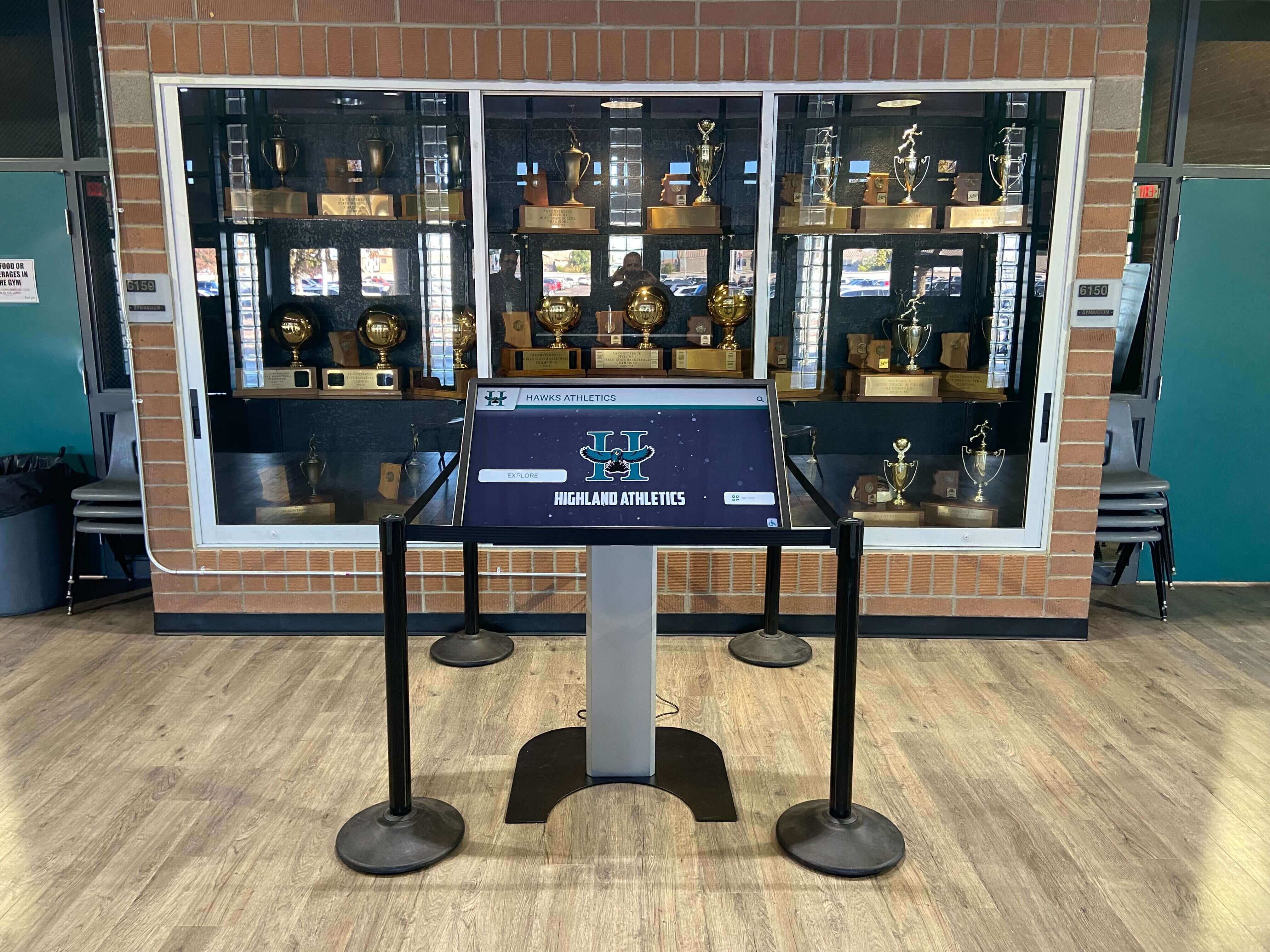
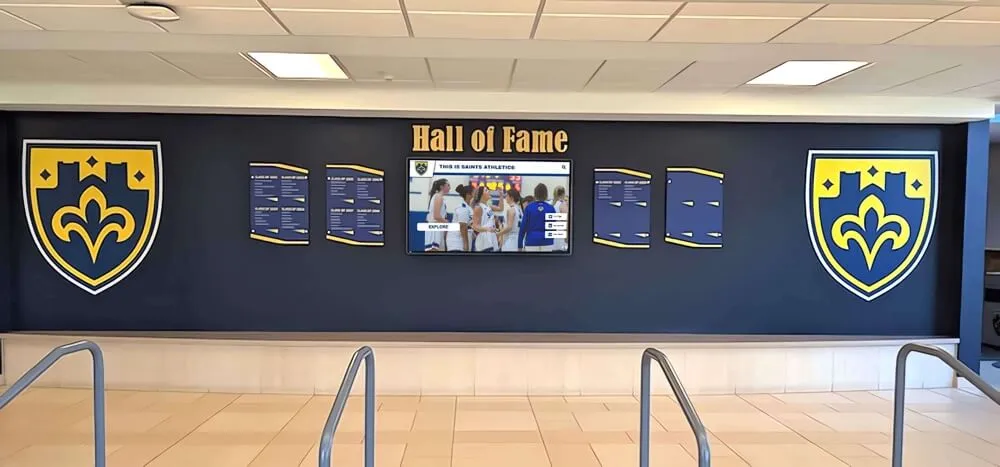
Archiving the physical spaces of athletic programs — not just the competition results — creates a complete institutional record that supports recognition displays, facility planning, and historical documentation for decades
For booster clubs managing grant cycles and facility improvement projects, clearly organized facility documentation makes it easier to produce evidence of current conditions and prior improvements for grant applications and closeout reporting. Booster club grant closeout documentation frequently requires photographic evidence that a funded facility improvement was completed as specified — those photographs belong in the appropriate Facilities/ subfolder, not scattered across individual season folders where a future searcher would never find them.
The Booster-Club Division: Program Support Records
Booster club records are a distinct category of athletic archive content: financial documentation, vendor contracts, certificate of insurance files, event planning records, and meeting minutes. They support the athletic program but are not competition records and carry different retention and access requirements than sport-level content.
Booster-Club/
├── 2025-26/
│   ├── Financials/
│   ├── Vendors/
│   ├── Events/
│   └── Meeting-Minutes/
├── 2024-25/
└── Historical/
The Vendors/ subfolder is particularly important for programs that work with multiple vendors across a season — photography studios, equipment suppliers, transportation providers, and display service providers. Vendor certificate of insurance documentation, contracts, and approval records belong here, organized by season. Booster club vendor certificate of insurance tracking is a compliance requirement for most school programs, and a dedicated subfolder ensures that documentation is locatable when an administrator requests it — not buried in a general “Documents” folder from three seasons ago.
Keep booster club financial records and meeting minutes in the archive with access restricted to authorized staff. Configure those restrictions at the Booster-Club/ folder level in your storage system rather than relying on informal agreements.
Practical Guidance for Implementing the Hierarchy
Start Each Season Folder Before the Season Starts
The single most common cause of files landing in the wrong location is that the correct folder did not exist when the contributor saved the file. At the beginning of each academic year, create all season folders for every active sport before any content is produced.
A one-page seasonal setup checklist — stored in _Admin/Templates/ — should list folder creation as the first task. The same checklist doubles as an end-of-season audit tool: walk through the expected structure and verify that every subfolder contains at least the minimum expected content. Empty folders at season’s end signal content that was never collected, not folders that were never needed.
Apply Access Controls at the Division Level
Different divisions warrant different access levels. Configure access in your storage system rather than relying on informal agreements.
| Division | Recommended Access | Notes |
|---|---|---|
_Admin/ | Archive coordinator + IT staff | Naming guides and templates; errors here affect the entire archive |
Sports/ | All athletic staff + designated volunteers | Broad access supports complete ingest from all contributors |
Facilities/ | Athletic director + facilities staff | Sensitive to renovation planning timelines |
Booster-Club/ | Athletic director + booster board | Financial records require restricted access |
Document the Hierarchy and Distribute It Widely
The folder hierarchy is only effective if every contributor uses it. Post the hierarchy reference document — a printable version stored in _Admin/Archive-Policy/ — where every active contributor can access it. For programs that rely on parent volunteers for photography, game program distribution, or booster club records, include the hierarchy document in volunteer onboarding materials.
Reunion and anniversary events often surface volunteers who want to contribute historical photographs or documents from decades past. Events that draw on institutional history — reunions, anniversary programs, multi-decade retrospectives — are meaningfully easier to coordinate when contributors receive a clear instruction: scan the file, name it according to the convention, and place it in this specific folder.
Handle Multi-Sport Athletes at the Metadata Level, Not the Folder Level
When the same athlete appears in both basketball and track records, the content lives in both sport folders — there is no “athlete-level” folder in this hierarchy. The metadata record linked to each file is what connects files across sports to a single person. This is intentional: a folder named after an athlete creates an organizational parallel structure that becomes unmanageable at scale and breaks down when athletes share similar names or when a file covers multiple athletes from different programs.
Establish Consistent Folder Naming Conventions
The folder hierarchy creates location; folder names must be consistent to make navigation predictable. Apply these rules to folder names throughout the archive:
- Use PascalCase or hyphen-separated words:
Basketball-Boys/notbasketballboysorBasketball Boys - Spell out years in full:
2025-26/not25-26 - Spell out sport names at the folder level:
Cross-Country/notXC; abbreviations belong in file names where they serve a compactness function, not in folder names where readability matters - Never use spaces in folder names — spaces cause problems in command-line operations and in URLs for cloud storage systems that generate shareable links

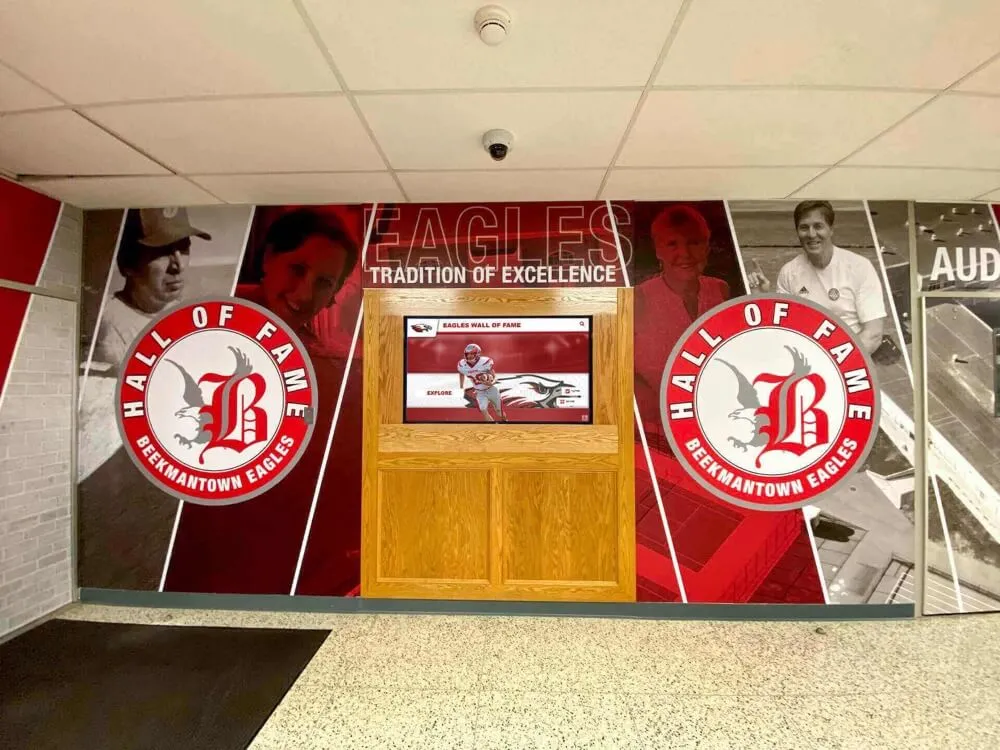
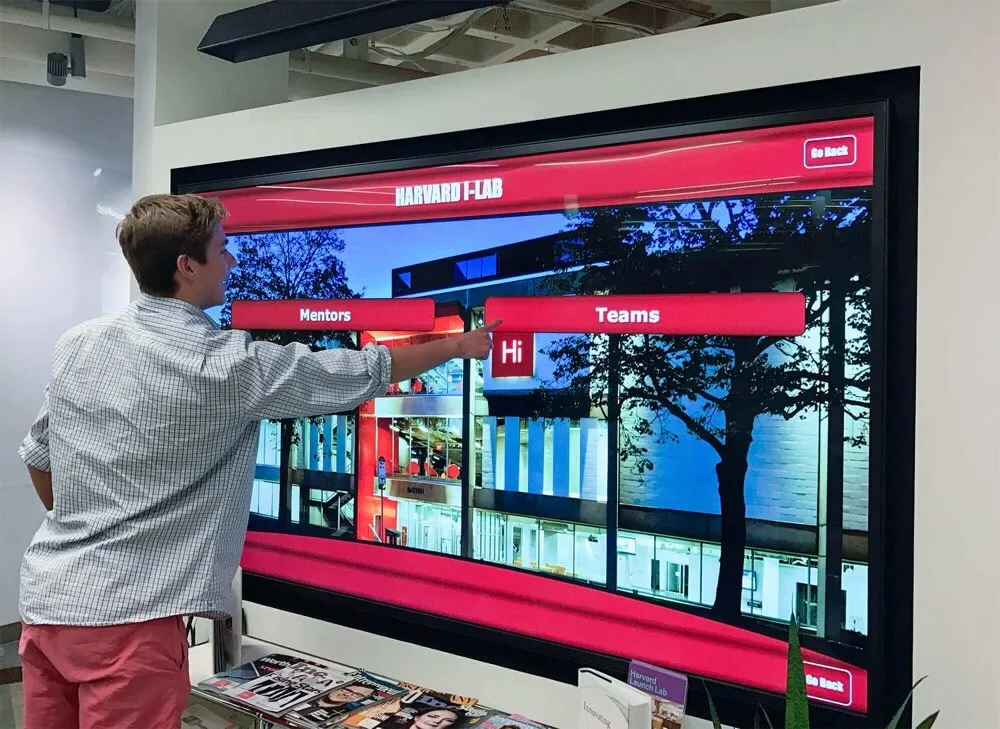
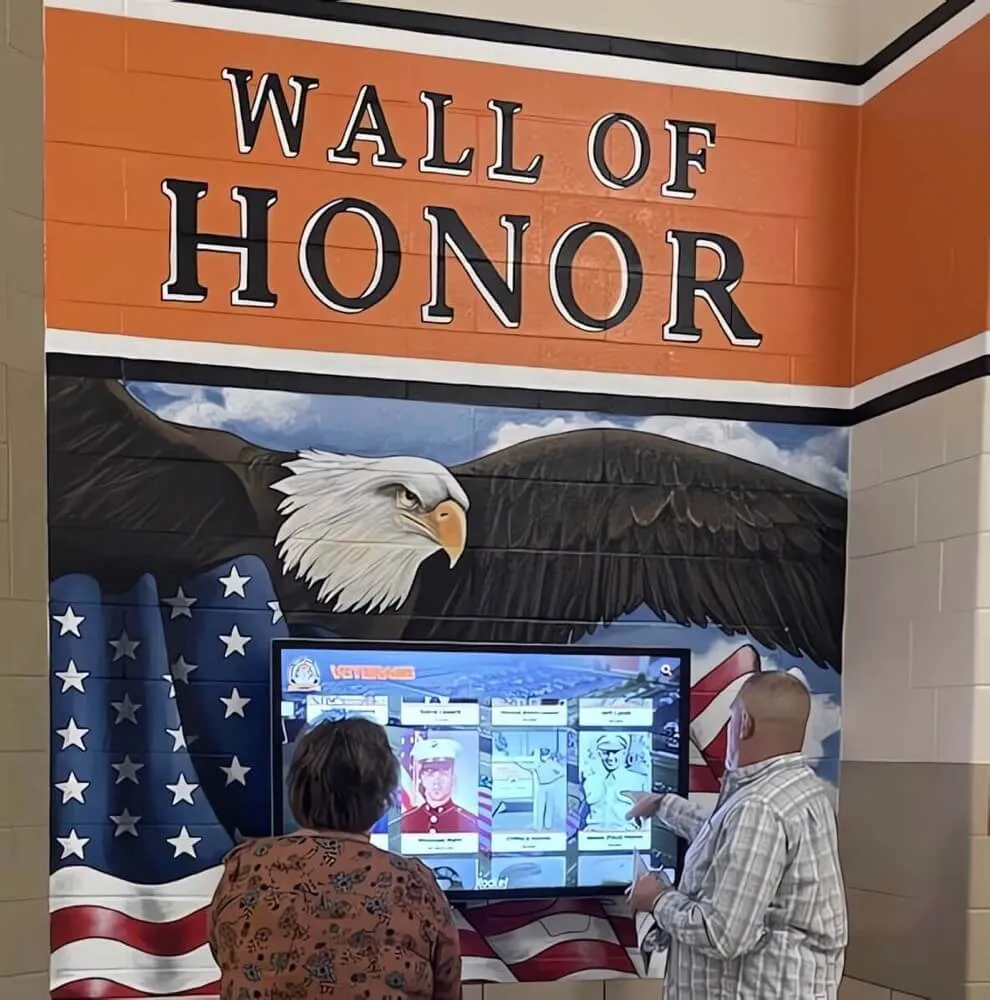
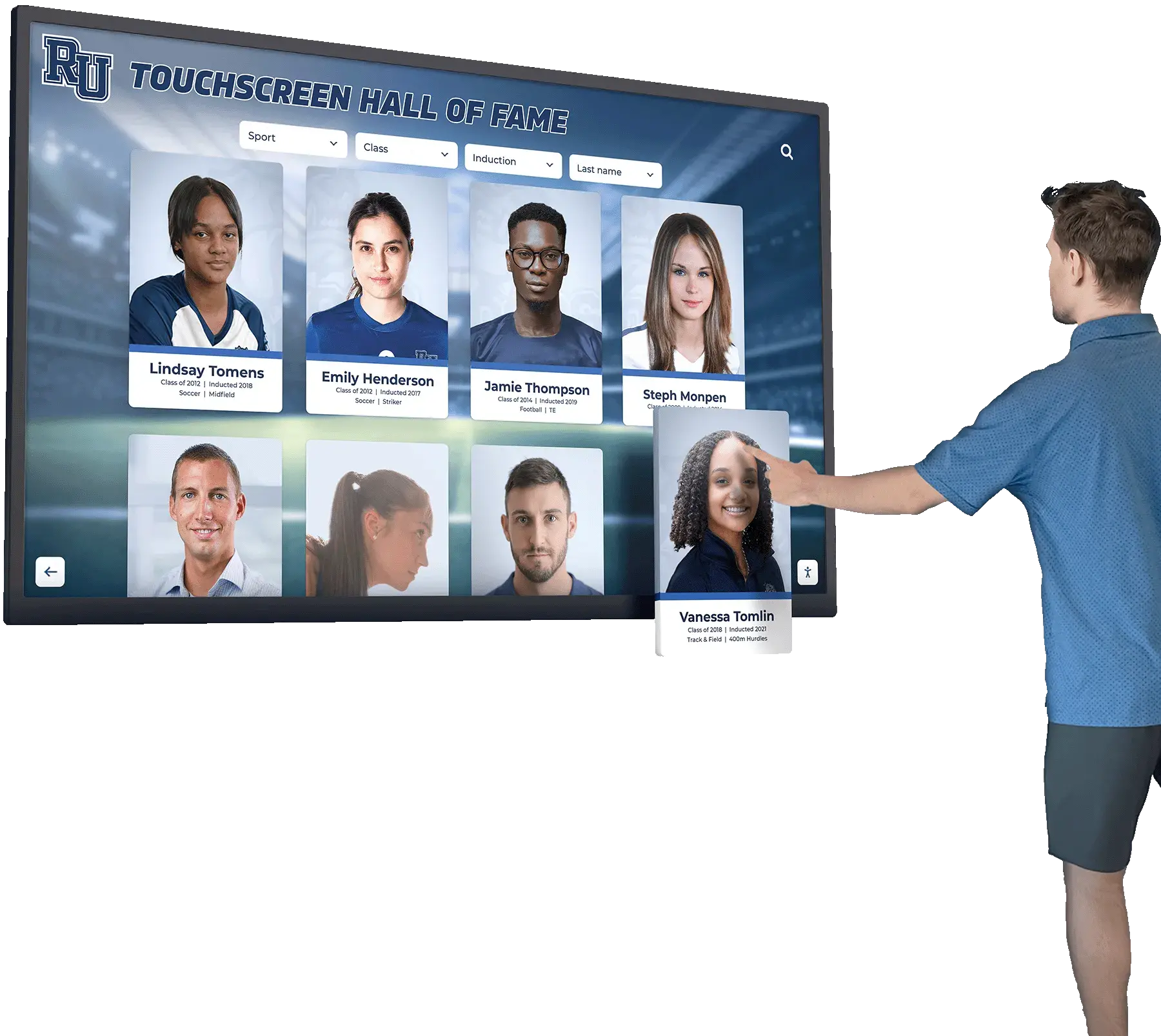
Touchscreen recognition displays surface athlete profiles across sports — the folder hierarchy organizes by sport and season, while metadata links files belonging to the same athlete across the archive without requiring athlete-level folders
Connecting the Hierarchy to Searchable Recognition Displays
A school athletic archive folder hierarchy is the structural prerequisite for every higher-value use of the archive’s content. When photographs are in Sports/Football/2025-26/Photos/Team-Portraits/ and records are in Sports/Football/2025-26/Records/, a staff member building a recognition display for the 2025-26 football program can locate every relevant file without coordination or manual searching.
Programs that connect their archives to interactive touchscreen recognition displays find that the folder hierarchy directly affects how quickly content can be published. A photographer who delivers files to the correct folder following the naming convention makes it possible for a display administrator to import that content the same day it arrives — rather than waiting for a manual sort-and-rename step that only one staff member knows how to do.
Recognition programs that span years — graduation honor recognition sequences, multi-year scholar-athlete acknowledgment, long-service staff tributes — depend on an archive where content from different eras is equally retrievable. Graduation honors across multiple years and levels require source records organized in a way that makes multi-year comparisons and historical acknowledgment practical, not a research project.
For schools building toward interactive hall-of-fame experiences, the folder hierarchy is the foundation that recognition platforms build on. Recognition displays that aggregate athlete portraits, season records, and championship documentation draw directly from an organized, accessible archive. Programs that arrive at platform evaluation with a complete, well-structured folder hierarchy are positioned to populate displays quickly rather than spending months on pre-launch content remediation.
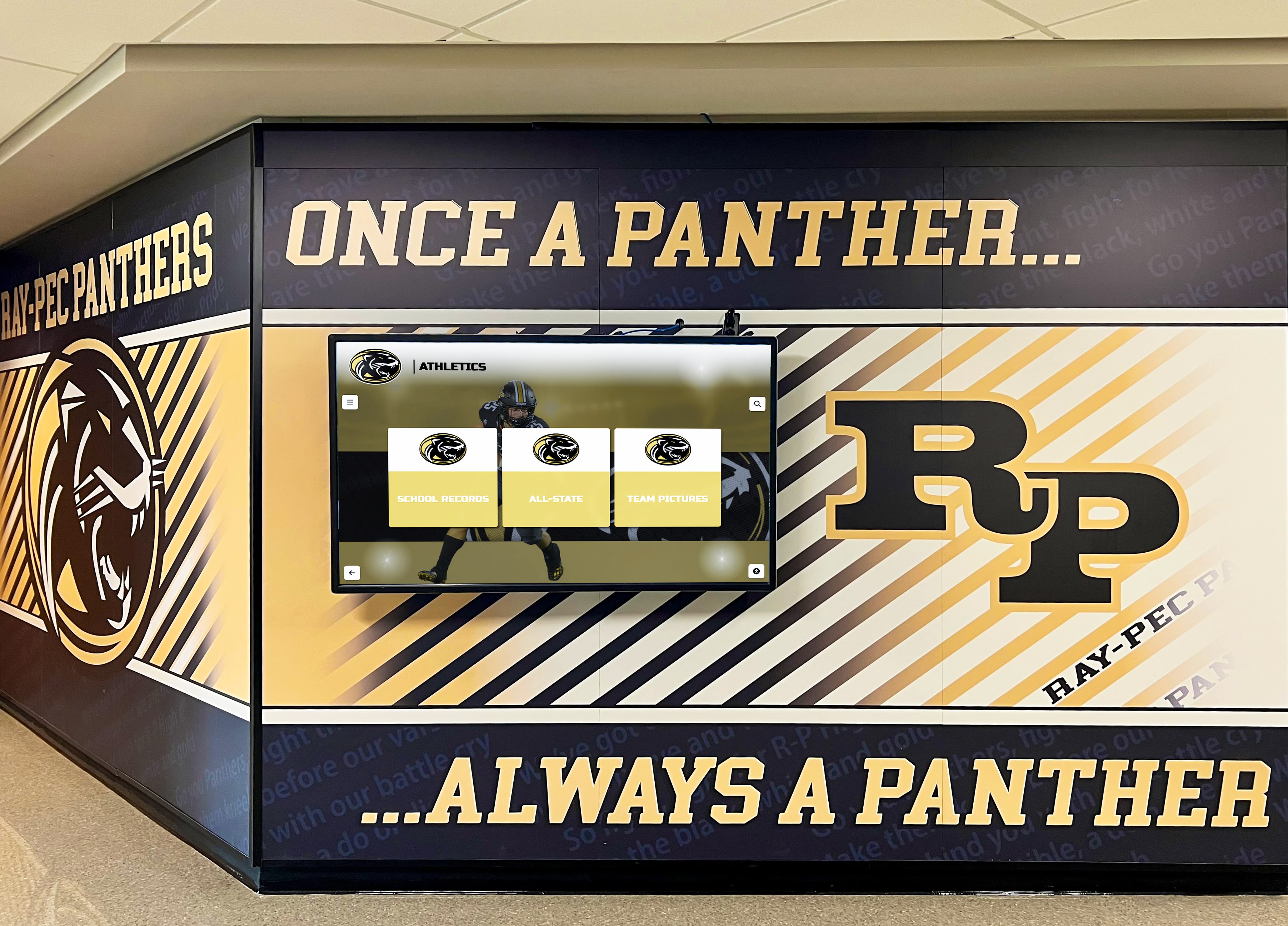
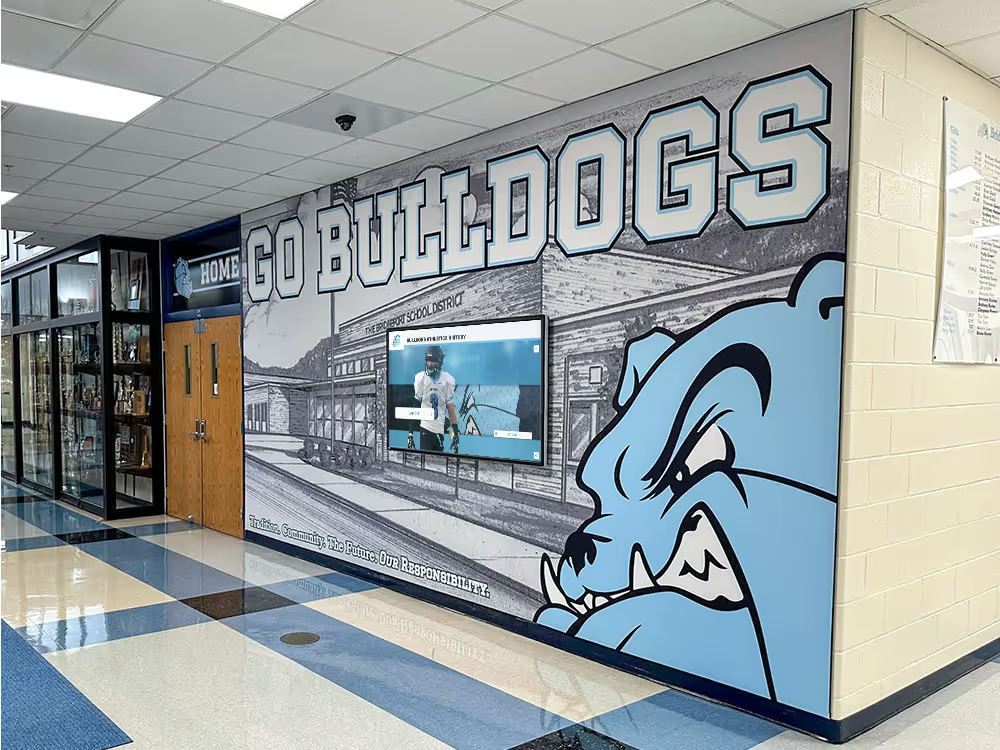
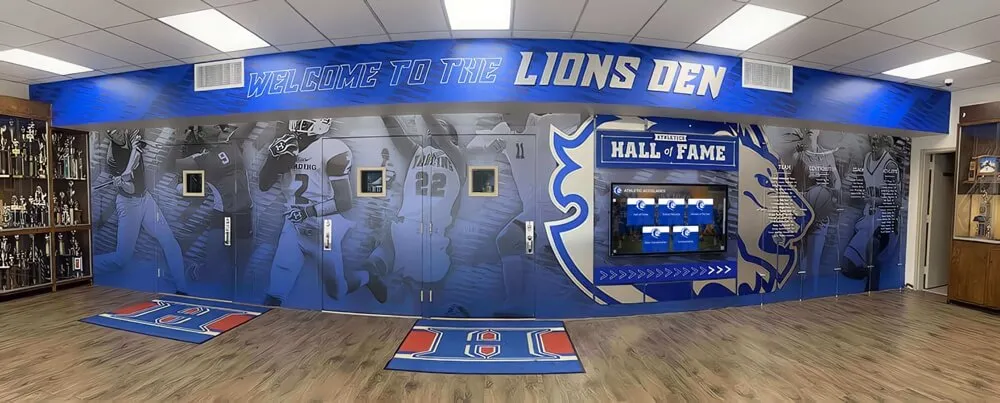
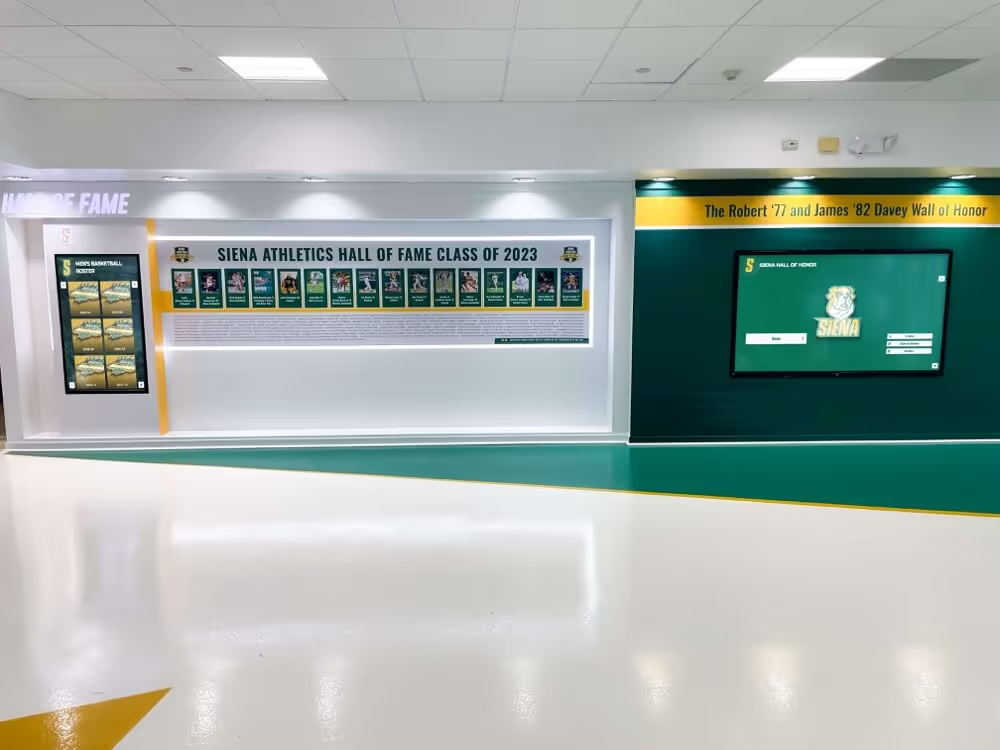
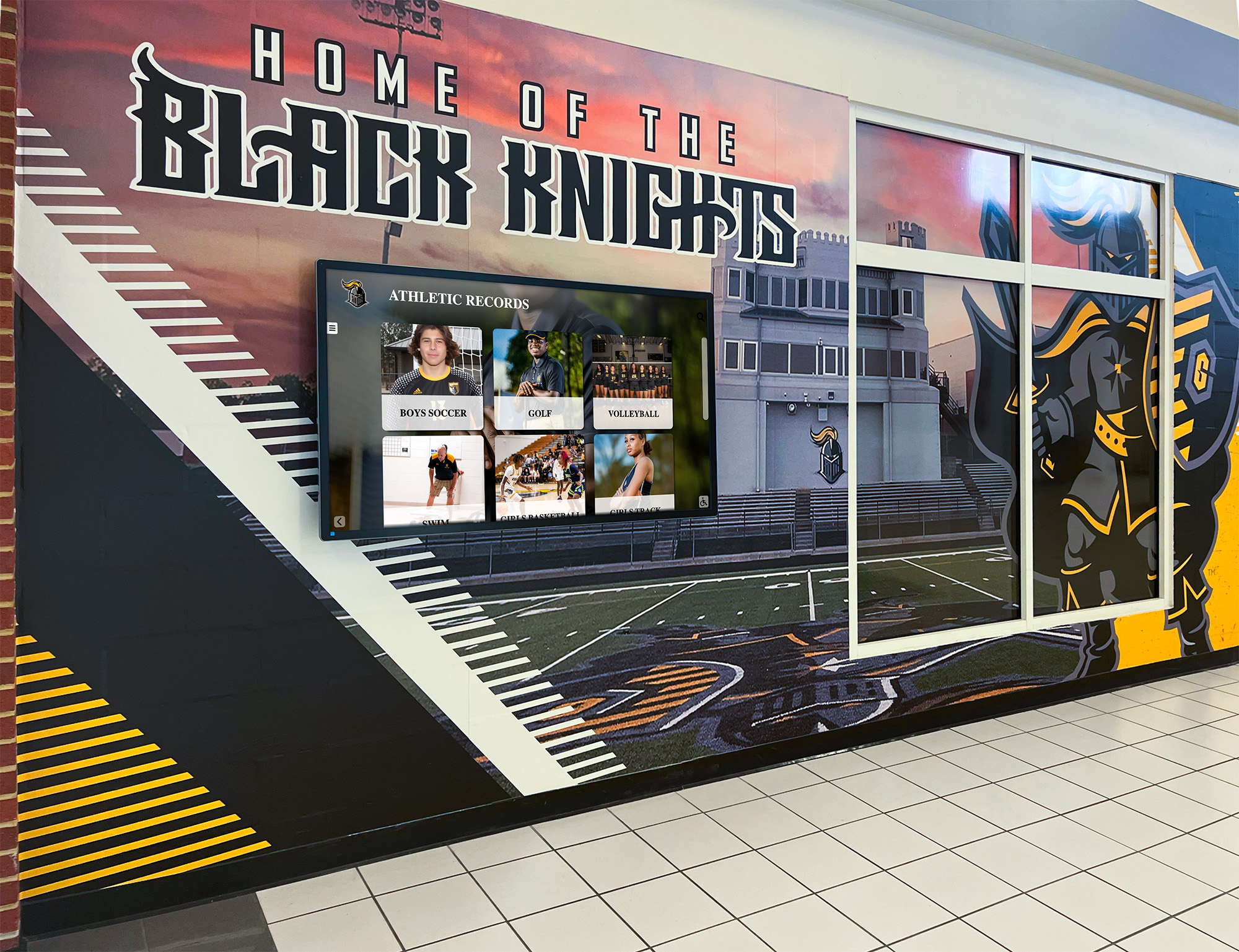
Athletic murals with integrated digital screens display current season content alongside historical records — a folder hierarchy that organizes both ensures that staff can update recognition displays as quickly as new season content arrives
Long-serving staff and coaches who transition out of programs often carry institutional knowledge about where historical content is stored. Retirement recognition programs that draw on decades of archived content are most effective when that content is in a predictable, documented location — not in a personal drive that leaves the building with the departing staff member.
Ready to Connect Your Organized Archive to an Interactive Display?
When your folder hierarchy is in place and your archive is organized by sport, season, and media type, Rocket Alumni Solutions can transform that content into a searchable, interactive touchscreen recognition experience that engages students, alumni, and visitors every day.
Request a DemoFAQ
How many levels deep should the folder hierarchy go?
For most school athletic programs, three levels of depth — sport, season, media type — are sufficient. Adding a fourth level (such as subfolders within Photos/ for team portraits and action shots) is appropriate for programs with high photo volume, but should be applied consistently across all sports. Avoid creating ad hoc sub-subfolders that exist in one sport’s folder structure but not others — inconsistency defeats the discoverability the hierarchy is designed to provide.
What do we do with files contributed by a parent volunteer or booster club photographer?
All files entering the archive should be renamed according to the program’s naming convention and placed in the appropriate media type folder before the archive considers them ingested. Volunteers who contribute regularly should receive a copy of the hierarchy reference document and the naming convention guide from _Admin/. Files contributed through informal channels — email attachments, USB drives, personal cloud folders — go to a staging area first, then into the correct season folder after review.
Should we create sport folders for sports that have been discontinued?
Yes. A discontinued sport is still part of the school’s athletic history. Its folder remains in the Sports/ division with the same structure it had when the program was active. Add a note in _Admin/Archive-Policy/ documenting the discontinuation date so future contributors understand that no new content will be added to that sport’s folders. For schools with long athletic traditions, discontinued sports often represent some of the richest historical content in the archive.
How should we handle championship trophies or physical awards that have corresponding digital documentation?
The digital documentation — photographs of the award, scanned citations, ceremony photographs — belongs in the Records/ or Events/ subfolder of the appropriate sport and season. Physical award custody is a separate record maintained by the athletic director or facilities staff. The folder hierarchy manages digital assets; physical custody tracking is a parallel system, typically a spreadsheet or facilities management log.
What is the right folder structure for video content produced by a media production class or student-run channel?
Student-produced video belongs in the same Video/ subfolder structure as staff-produced content, under the appropriate sport and season. Production credits belong in the file’s metadata record, not in the folder structure. If the same student team produces highlight reels for multiple sports, their content lands in each relevant sport folder — the folder hierarchy is organized around the subject of the content, not the creator.
How does the folder hierarchy interact with a digital recognition platform? Most digital recognition and hall-of-fame platforms accept file uploads directly through their content management systems. The folder hierarchy organizes the archive on your local or cloud storage; the platform is where display-ready content is published. A well-organized folder hierarchy makes it easier to locate the correct files for upload and to audit whether a display entry’s supporting documentation is complete. Sports programs that draw on decades of history for seasonal campaigns — basketball programs building content around transition offense and team history for banquets and recognition events — find that organized archives reduce preparation time for every event and every display update.
How do we manage the folder hierarchy when migrating from one storage system to another?
A clean folder hierarchy migrates intact because the structure itself carries the organizational logic. Before any migration, confirm that the current folder structure is fully documented in _Admin/Archive-Policy/. During migration, verify file counts at each folder level before and after transfer. After migration, run a completeness check against the seasonal checklists stored in _Admin/Templates/. For programs with large historical collections, a phased migration — current seasons first, then historical content by decade — reduces the risk of losing organizational context during transfer.
Do we need a separate folder for social media content or digital graphics produced from archive materials?
Yes. Consider adding a Digital-Assets/ subfolder within each season folder for content produced specifically for digital distribution — social media graphics, display overlays, digital posters created from archive photographs. These are derivative files, not archival originals, but they are part of the institutional record and belong in a predictable location rather than scattered across personal drives or social media platform storage.
From Folder Structure to Living Archive

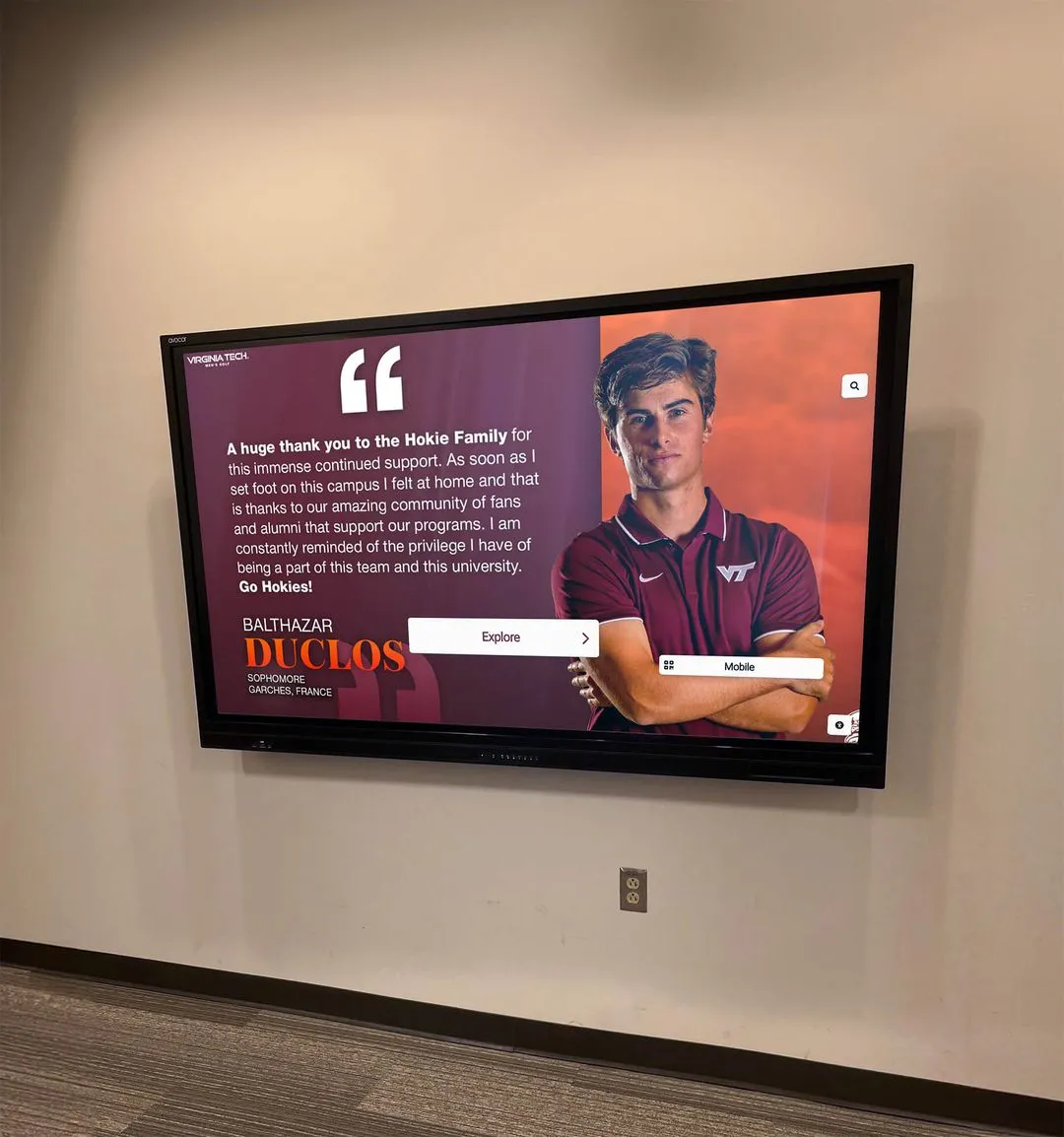
Touchscreen recognition displays that surface portraits and records across many seasons depend on archives where content from every year and every sport is stored in a consistent, navigable folder structure
A school athletic archive folder hierarchy that is documented, enforced, and understood by every contributor transforms the archive from a storage location into a functional institutional resource. Staff who follow it spend their time on meaningful recognition work — digitizing historical content, building nomination records, updating displays — rather than searching for files that may or may not exist in locations that may or may not be organized.
For programs ready to connect a well-organized archive to an interactive recognition platform, the folder hierarchy is what makes rapid, complete content population possible. When photographs, rosters, and records are exactly where a display administrator expects to find them, the path from organized archive to live interactive display is measured in days, not months.