Athletic Archive Redaction Policy: Protect Privacy Without Erasing School History
- Home /
- Touch Archive Blog /
- Athletic Archive Redaction Policy: Protect Privacy Without Erasing School History
The Easiest Touchscreen Solution




Live Example: Rocket Alumni Solutions Touchscreen Display
Interact with a live example (16:9 scaled 1920x1080 display). All content is automatically responsive to all screen sizes and orientations.
An athletic archive redaction policy is the institution’s documented framework for deciding which information in historical athletic records — rosters, programs, photographs, scorebooks, award logs, and recognition displays — may be removed or obscured from public access in response to a privacy concern, a formal request, or a change in applicable law, while preserving the institution’s complete historical record for administrative and archival purposes.
The short answer: define what redaction means in your context (public display versus institutional record), identify the categories of information and record types subject to redaction review, build a documented request and decision process, establish who has authority to approve or deny each type of request, and keep a permanent redaction log that connects every decision to the record it affected. This guide gives athletic directors, school administrators, hall-of-fame committees, and archives staff a workflow for protecting privacy without erasing the school’s athletic history.
A former athlete contacts the athletic office asking that her name be removed from a publicly displayed historical roster. A parent of a deceased student inquires about removing a photograph from the hall-of-fame touchscreen. A coach from an earlier era asks whether statistical records associated with a specific disciplinary incident can be removed from the searchable archive. None of these requests is unusual — and none of them has a simple universal answer. What all of them require is a documented institutional policy rather than an ad hoc decision made under the pressure of the moment.
An athletic archive redaction policy answers the recurring question before it arrives: not by making redaction automatic, but by defining the process that leads to a principled, defensible decision in each case.

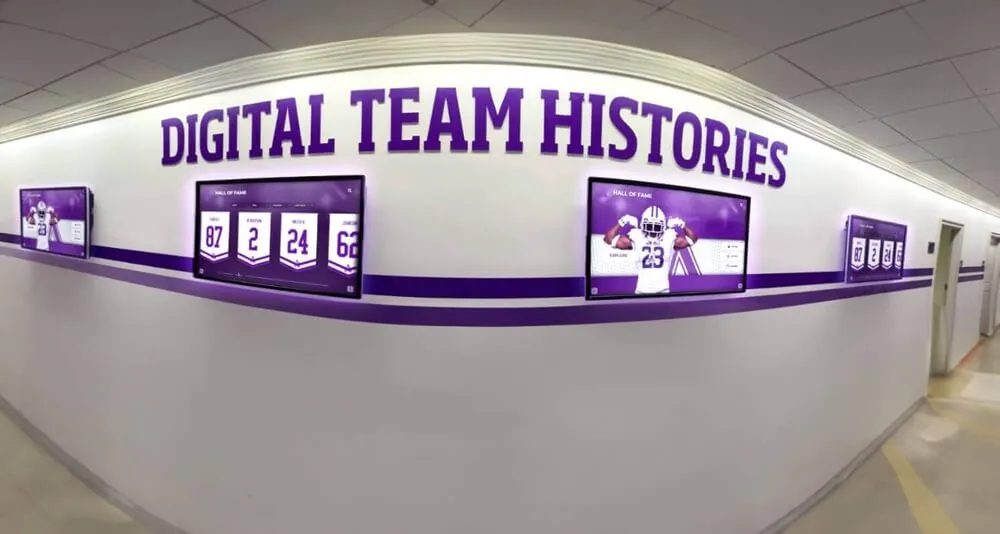
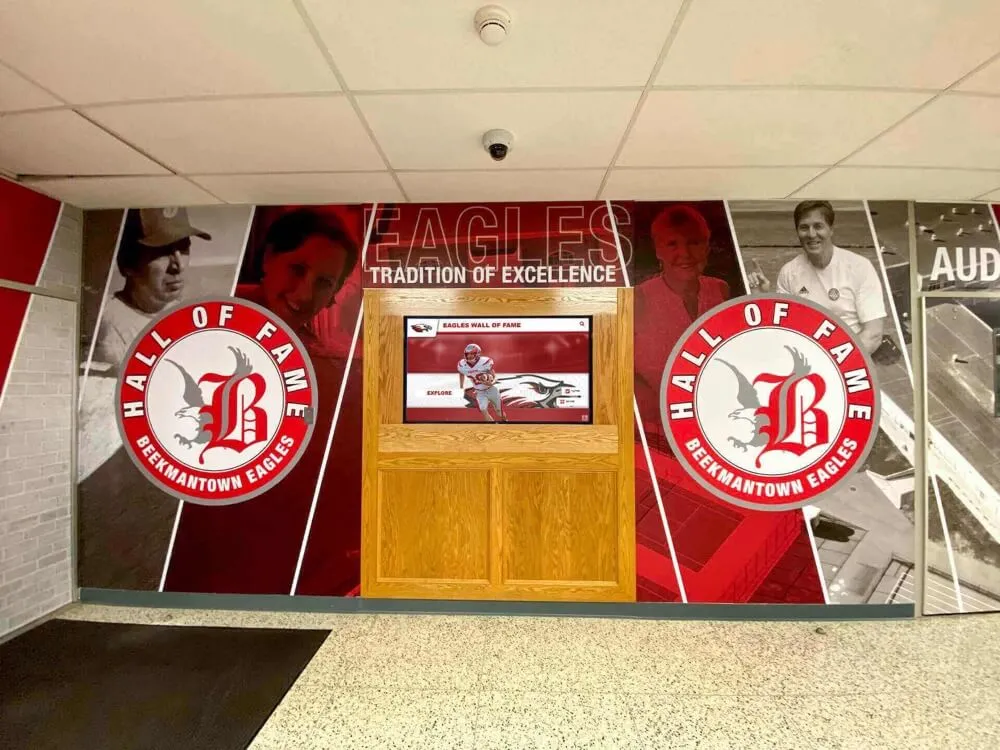
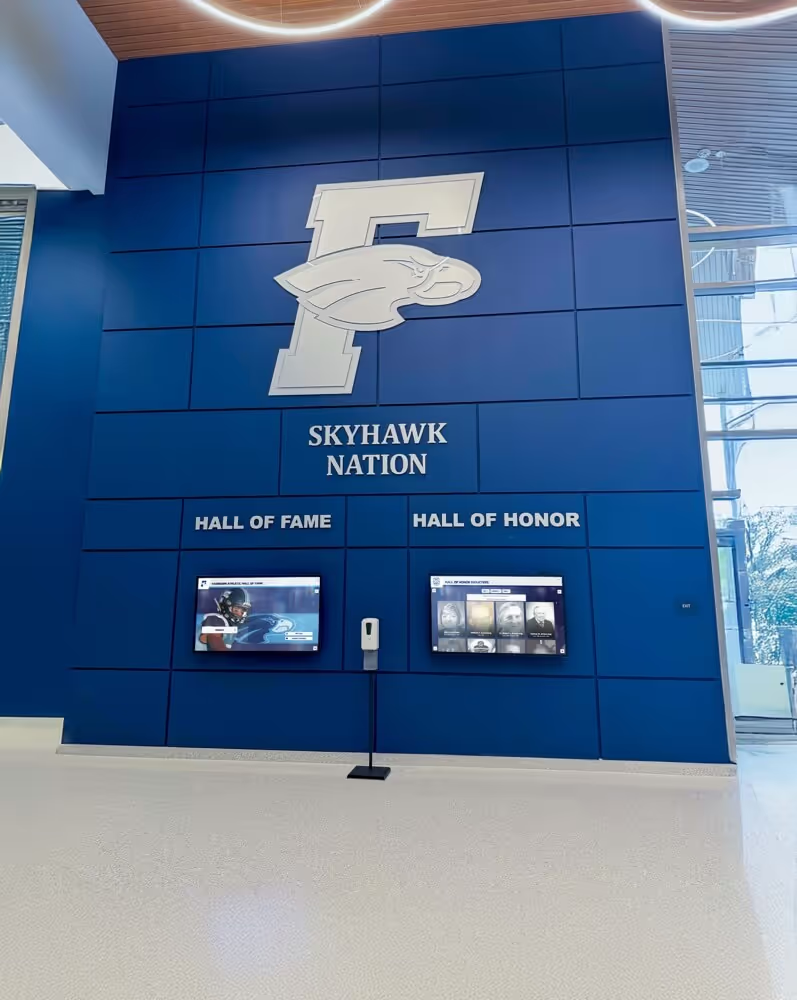
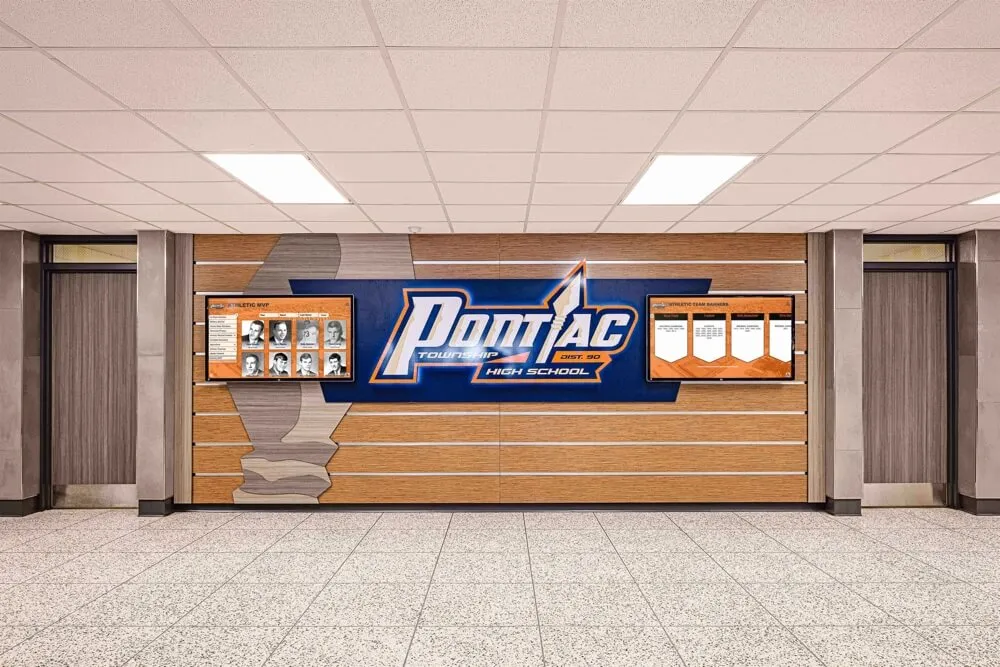
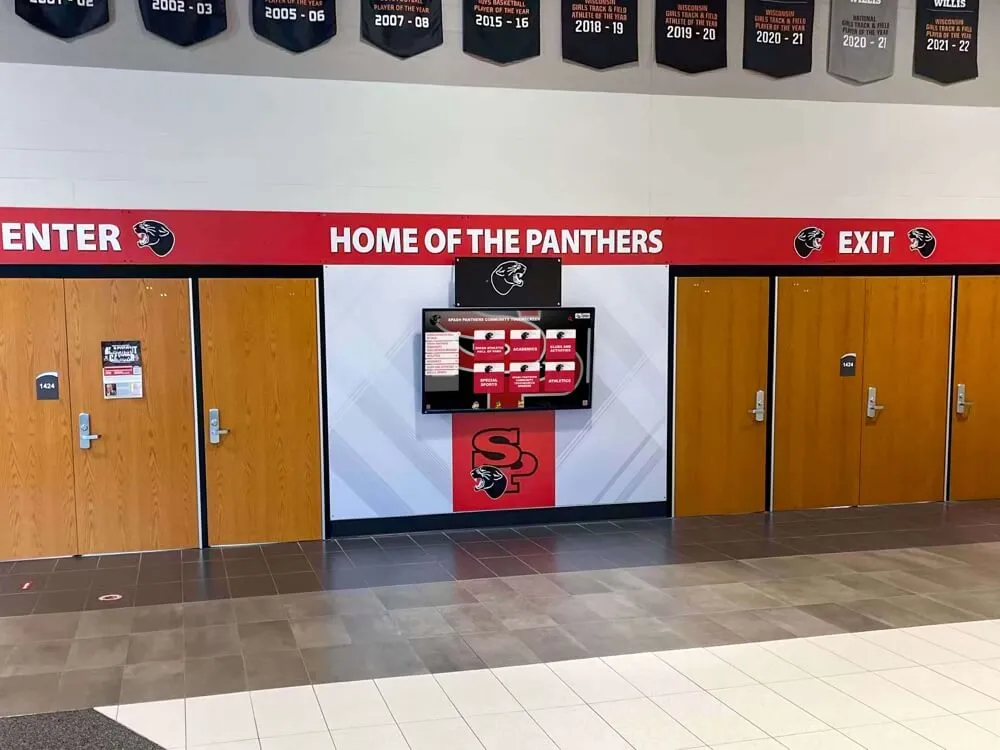
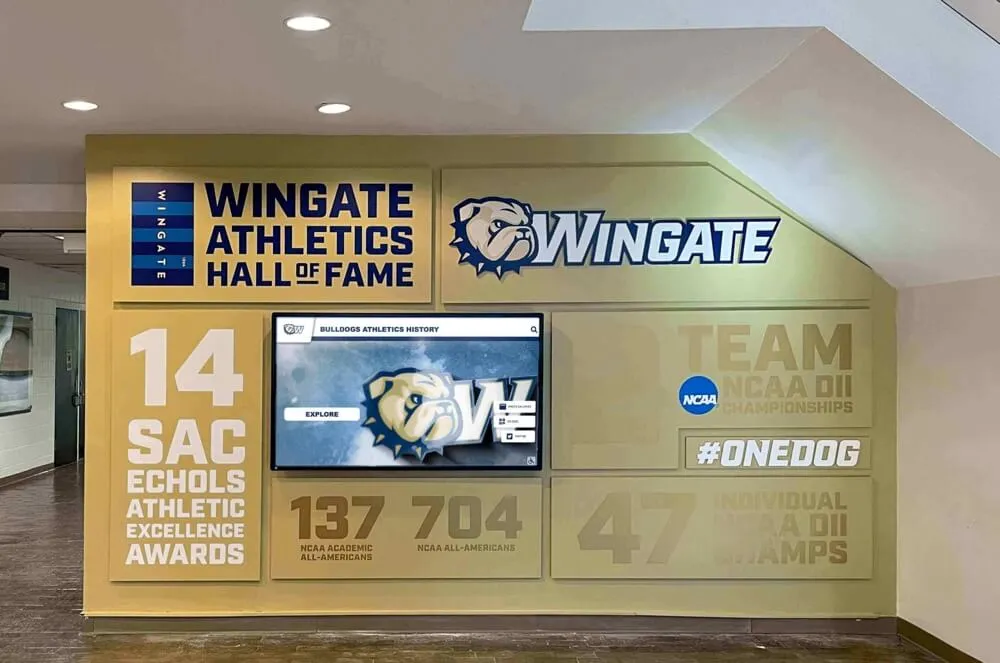
School hallways and recognition displays draw directly from the athletic archive — a redaction policy defines the boundary between what appears on a public screen and what remains protected in the institutional record
Why Athletic Archives Need a Formal Redaction Policy
Athletic archives are not purely historical artifacts. They contain identifying information about real individuals — most of whom were minors at the time the records were created — and that information is increasingly accessible through digital displays, searchable websites, and touchscreen kiosks that index decades of records in ways paper archives never could.
Three developments have raised the stakes for schools without a formal policy.
Digital display has changed the access model. A printed roster stored in a physical archive is accessible to whoever enters the archive room. The same roster digitized and displayed on an interactive kiosk in the school lobby is accessible to every visitor, every student passing through the hallway, and potentially to anyone searching online if the display has a public-facing web component. Interactive kiosk solutions in school environments offer compelling engagement for alumni and community visitors — but they also make archive contents available in a fundamentally different way than physical storage ever did. That shift in access creates a corresponding shift in institutional responsibility for what the archive displays.
Requests from former athletes are increasing. As schools build richer digital recognition programs, former athletes — some of whom attended decades ago — are discovering that records they did not consent to publish are now publicly searchable. These requests are not always about erasing recognition; they are often about correcting context, updating a name following a legal change, or removing a record that carries unintended personal exposure.
Privacy expectations and legal frameworks have evolved. The legal landscape around privacy for educational records has shifted since most schools built their athletic archives. Institutions subject to FERPA — the Family Educational Rights and Privacy Act — have obligations regarding education records that may extend to certain athletic program records. State privacy laws in various jurisdictions have added further requirements. This guide provides operational orientation, not legal advice; institutions should consult qualified legal counsel to evaluate how applicable laws affect their specific records and programs.
What Records an Athletic Archive Redaction Policy Covers
A complete athletic archive redaction policy addresses all record types that contain identifying information about individuals. The scope is wider than many programs initially assume.
Rosters and participation records. Season-by-season rosters, practice participation logs, travel authorization forms, and eligibility records all contain athlete names and often additional information — jersey numbers, positions, academic eligibility status — that may be sensitive in combination.
Photographs and video. Team photographs, action photographs from games and events, banquet photographs, and any video footage in the archive all contain identifying images of individuals. Consent practices from earlier decades may not meet current expectations or legal requirements.
Programs and printed publications. Game programs, tournament brackets, and booster newsletters frequently list athlete names, sometimes with additional identifying detail such as grade, position, and statistical summaries.
Award and recognition records. Academic all-conference lists, most valuable player awards, and hall-of-fame induction records associate specific individuals with specific achievements. These are generally records the individual would want preserved — but the policy should still address how requests for modification are handled.
Statistical records and scorebooks. Performance records — individual statistics, school records, personal bests — are particularly sensitive when associated with an event or period the individual prefers not to highlight publicly.
Hall-of-fame and recognition display content. Athletic hall-of-fame programs manage deaccession decisions that parallel redaction decisions in important ways: both require a documented policy for removing or modifying content previously displayed publicly, and both require a defined authority structure for those decisions. A redaction policy and a deaccession policy address different triggers but often travel through the same institutional decision pathway.
Legal and Regulatory Context
This section provides general orientation to the legal framework. It does not constitute legal advice. Consult qualified legal counsel for determinations specific to your institution’s records and jurisdiction.
FERPA and athletic records. The Family Educational Rights and Privacy Act covers “education records” — records directly related to a student and maintained by an educational institution — at institutions receiving federal funding. Whether specific athletic program records qualify as education records under FERPA depends on how the records were created and maintained. FERPA generally gives eligible students (or parents of students under 18) rights to inspect and request amendment of education records, and limits disclosure to third parties without consent. The Department of Education’s published guidance at studentprivacy.ed.gov is the authoritative source for FERPA interpretation.
State privacy and student records laws. Many states have enacted student records laws that go beyond FERPA’s requirements. The applicable state law depends on where the institution is located. Some state laws cover records that FERPA does not, and some provide rights for alumni or former students that FERPA’s enrollment-based framework does not reach.
Name and likeness considerations. Using an individual’s name or photograph in a commercial or promotional context without consent may implicate right-of-publicity laws that vary significantly by state. Athletic recognition programs that include sponsorships, fundraising elements, or donor solicitation adjacent to athlete profiles benefit from legal review of how those elements interact with the individuals depicted.
GDPR and international considerations. Schools with alumni networks that include individuals in European Union member states may have obligations under the General Data Protection Regulation, which grants data subjects rights to erasure and correction of personal data. If your institution maintains any digital presence accessible to EU residents, consult counsel familiar with GDPR’s scope for educational institutions.
Defining What Gets Redacted vs. What Gets Preserved
The most important definitional decision in building an athletic archive redaction policy is the distinction between public display and the institutional record.
Public display redaction does not require institutional deletion. When a former athlete requests that his name be removed from a hall-of-fame touchscreen, the appropriate response may be to remove the name from the public-facing display while retaining the complete record in the restricted institutional archive. The school’s historical record remains intact; what changes is what the public can access. This distinction protects the school’s legitimate interest in maintaining complete records while respecting the individual’s privacy interest in controlling what appears in a searchable, publicly accessible format.
Tiers of access enable nuanced responses. Programs that maintain tiered access to their archives — with a public display layer, an authenticated alumni or staff layer, and a fully restricted administrative layer — can respond to many redaction requests by moving content between tiers rather than deleting it. A record that previously appeared on a public display can move to the authenticated layer; a record in an authenticated alumni portal can move to the administrative-only layer. This approach requires a deliberate access architecture, but it makes the redaction response proportionate rather than binary.
Not all requests justify redaction. A documented policy should define the categories of requests that qualify for redaction review and the standards that govern approval and denial. Appropriate grounds for redaction review generally include: safety concerns, documented legal name changes, requests related to identity or status the individual did not publicly disclose at the time of the record, and records associated with events that involved minors in sensitive circumstances. The policy’s criteria for what constitutes appropriate grounds should be developed in consultation with legal counsel and, where applicable, the institution’s human resources or student services functions.
Recognition that was genuinely earned is generally not erased. A school record, a hall-of-fame induction, or an all-conference designation is typically part of the institution’s historical record in a way that extends beyond the individual’s own information. Award ceremonies and championship celebrations — like the ring ceremony programs that high school teams use to honor seasonal achievements — create institutional records that many stakeholders have an interest in preserving. The redaction policy should acknowledge this competing interest explicitly and define how it is weighed against privacy-based requests.
Building a Redaction Request Process
A documented request process prevents ad hoc decisions and creates a consistent, defensible record for every redaction determination. The following steps outline a baseline process.
Step 1: Designated intake point. Identify a single designated role — typically the athletic director, athletic records coordinator, or a named position in the archive or registrar’s office — as the first point of contact for all redaction requests. All requests should be directed to this role regardless of how they arrive (email, phone, in-person).
Step 2: Written request requirement. Require that all redaction requests be submitted in writing, describing: the specific record or records at issue, the basis for the request, the specific relief requested (removal from public display, removal from all institutional records, name correction, or other), and contact information for the requesting party. A standard intake form simplifies processing and ensures the institution captures all necessary information consistently.
Step 3: Identity verification. Before reviewing the substance of a request, verify that the requesting party is who they claim to be and has standing to make the request. Requests are typically accepted from: the individual named in the record, a legal guardian if the individual is a minor, a personal representative of a deceased individual’s estate, or a legal representative acting under a written authorization.
Step 4: Record identification and retrieval. Locate all records responsive to the request — including records across all formats (physical, digital, displayed) and all systems (physical archive, digital platform, touchscreen display, website). A request that covers one format and misses another leaves the institution’s response incomplete.
Step 5: Review and decision. Apply the policy’s defined criteria to the specific request. Document the decision — approval, partial approval, or denial — and the basis for the decision with reference to the applicable policy provision. Where the policy criteria do not clearly resolve the question, escalate to the appropriate authority: legal counsel, the school’s administration, or both.
Step 6: Implementation. If a redaction is approved, implement it across all identified formats and systems. Confirm in writing to the requesting party that the action has been completed and describe what was changed.
Step 7: Log the decision. Record the request, the decision, the basis, and the implementation in the redaction log. The log is a permanent institutional record.
School recognition days and calendar-driven recognition programs benefit from having a redaction request process in place before a recognition initiative goes live. When a school publishes a new recognition display or digital honor roll, some individuals depicted may request review. Processing those requests is easier when the institution already has a documented pathway rather than creating the policy in response to the first complaint.
Redaction in Digital Recognition Programs
Digital recognition platforms — touchscreen hall-of-fame displays, searchable online archives, interactive displays in hallways and lobbies — require explicit integration of the redaction policy into their operational workflow.
Implement redaction at the data level, not just the display level. When a record is approved for redaction from public display, the change should be implemented in the underlying data record, not just removed from the visible screen. Display-level changes that are not reflected at the data level create the risk that redacted content reappears when the display is rebuilt, updated, or the data is migrated to a new platform.
Document the display scope during setup. When a digital recognition program is launched or expanded, document explicitly which fields from the archive database are exposed to which audiences. This documentation serves as the baseline for redaction requests — when a request arrives, the response depends in part on what is currently visible and where. Award ceremony planning and recognition event records feed directly into digital displays; building the documentation practice into event planning ensures the display scope is understood from the beginning.
Create a review workflow for display content. Before any historical content is published on a touchscreen or digital display, assign a staff member responsibility for reviewing the content against the institution’s active redaction log. This review prevents a situation where content already approved for redaction is inadvertently republished when new content is added to the display.
Team recognition touchscreens draw from exactly the record categories most likely to generate requests. Displays that surface decades of team photos and rosters — like the touchscreen team recognition programs used at hockey rinks and sports facilities — draw from historical team photos, player names, multi-year roster data, and individual achievement records. Programs investing in these displays benefit from completing a redaction policy review before launch, rather than after the first request arrives.

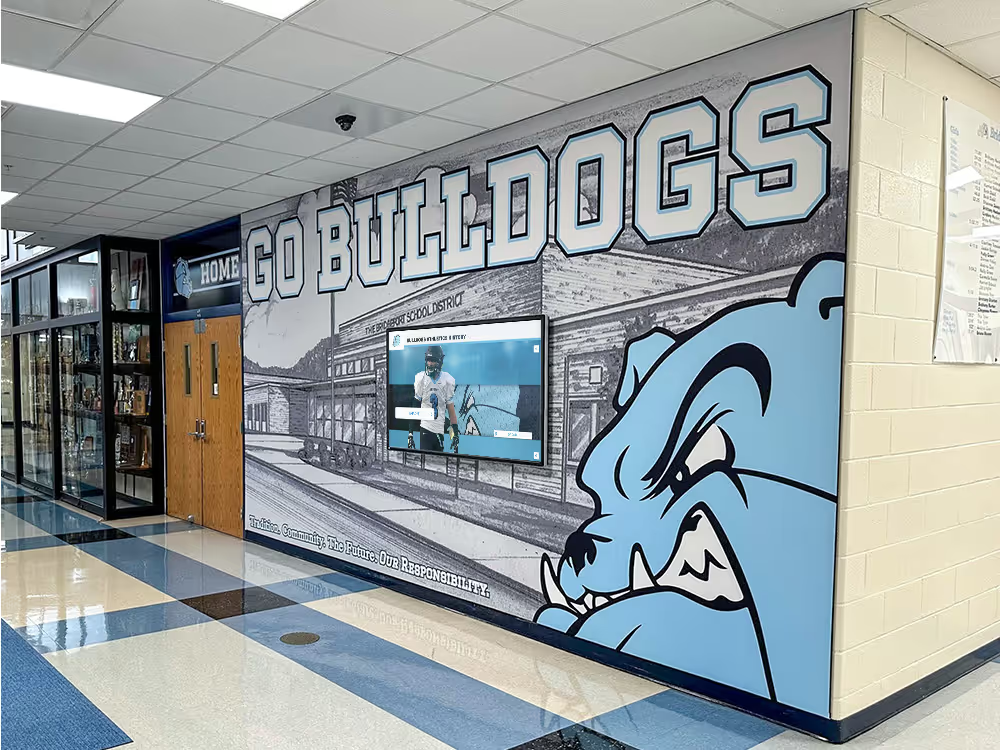
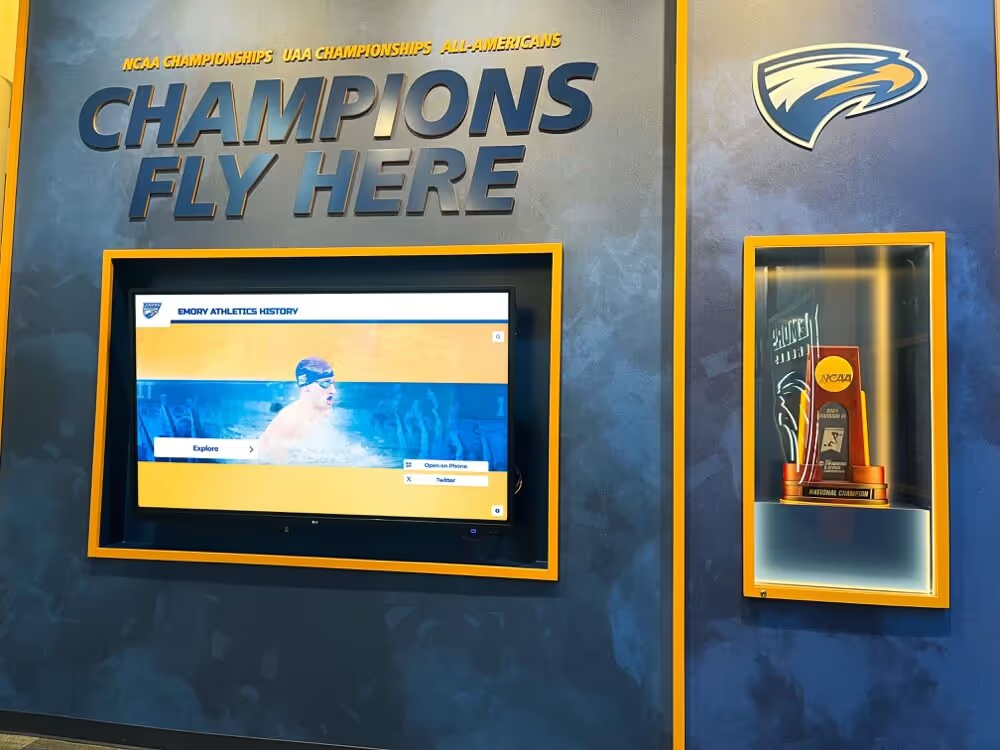
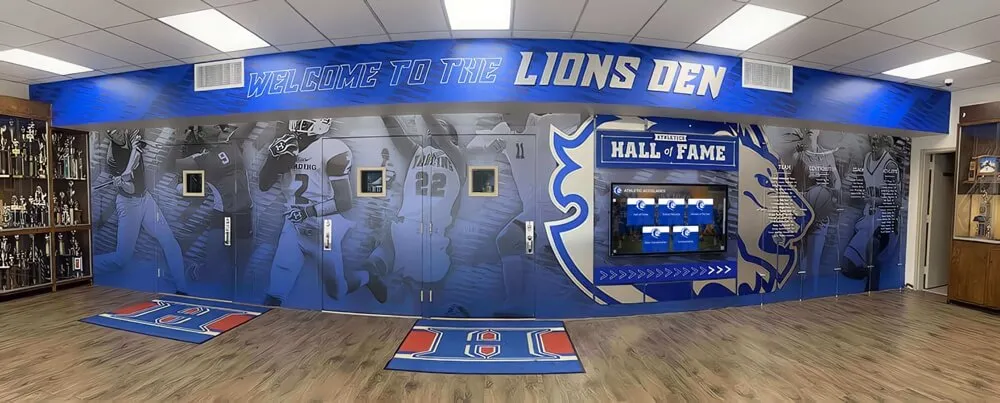
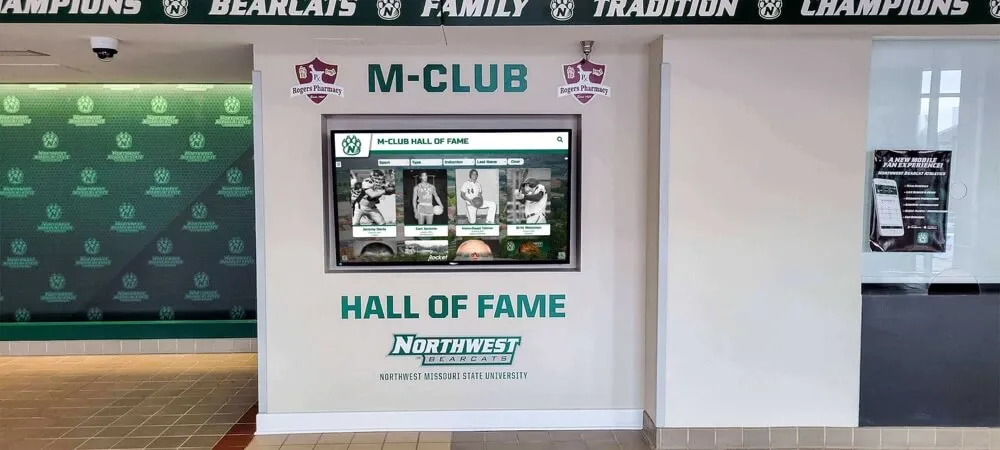
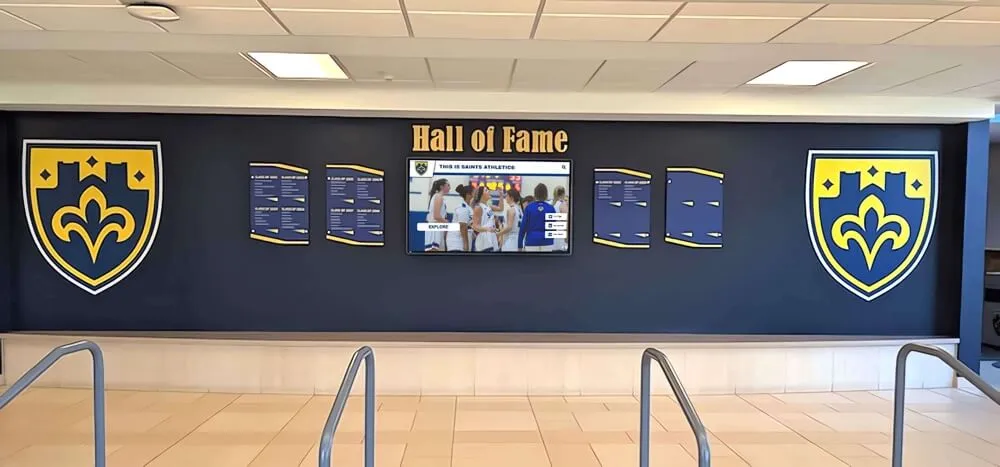
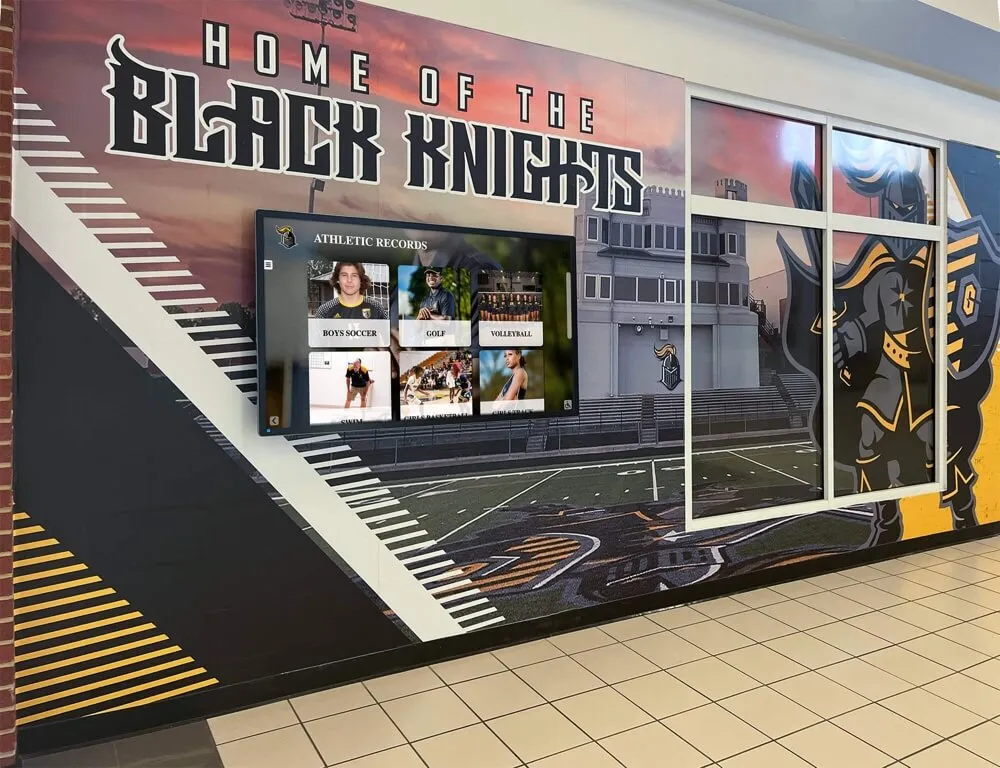
Interactive touchscreen hall-of-fame displays make decades of athlete records easily accessible — a documented redaction policy and review process protect both the institution and the individuals whose names and photographs appear on every screen
Documenting Redaction Decisions
Every redaction decision — approval or denial — generates documentation that the institution should maintain as a permanent record.
The redaction log. The redaction log is the master record of all requests received and decisions made. Maintain a single log at the institutional level, with one row per request. Minimum fields for each entry:
| Field | Description |
|---|---|
| Request ID | Unique identifier for the request |
| Date received | Date the request was submitted |
| Requesting party | Name and relationship to the record (self, guardian, representative) |
| Record(s) at issue | Description of the specific record(s) identified |
| Basis for request | The grounds cited by the requesting party |
| Decision | Approved / Partial / Denied |
| Decision date | Date the decision was made |
| Decision authority | Name and role of the person who approved or denied the request |
| Basis for decision | Reference to the applicable policy provision |
| Implementation date | Date the redaction was implemented (if approved) |
| Systems affected | All formats and systems where the change was made |
The item-level record. In addition to the central redaction log, note the redaction decision in the archive record for each affected item. If the archive uses a database, add a redaction field with a reference to the log entry. If the archive is paper-based, attach a note to the physical folder.
Retention. Redaction log entries should be retained indefinitely, or for whatever retention period the institution applies to records management decisions. A decision made today about a record from 1988 may become relevant again if the rights holder resurfaces, the institution’s policy changes, or the underlying record’s status is revisited.
Staff Training and Governance
A redaction policy is only effective if the staff who receive requests know it exists and know how to follow it.
Designate and train. Every staff member who has any contact with former athletes, alumni, or the general public — athletic directors, front office staff, archive staff, coaches who field calls from alumni — should know the name and contact information of the designated intake role and should be able to direct inquiries there without making any substantive commitment about the outcome.
Annual review. Review the policy annually against changes in applicable law, changes in the institution’s digital display program, and any lessons from requests processed during the year. A policy written when the school had a physical archive may need meaningful revision when a digital touchscreen display is added to the lobby.
Authority structure. The policy should name the roles — not individuals — with authority to approve, partially approve, or deny each category of request. Using roles rather than names ensures the policy remains operative when personnel change.
Coordination with legal counsel. Schools that process a meaningful volume of requests benefit from establishing a standing referral relationship with legal counsel familiar with the institution’s records program. Not every request requires counsel review, but having a clear protocol for when to escalate prevents ad hoc decisions in genuinely complex cases.
Frequently Asked Questions
Does FERPA require schools to remove former athletes’ names from public athletic records?
FERPA generally does not apply to individuals who are no longer enrolled students, though its provisions vary depending on whether the records at issue were created while the individual was enrolled and were maintained as education records. Alumni may retain some rights under FERPA to records created during their enrollment. The specific applicability of FERPA to athletic archive records depends on how those records were created, classified, and maintained. Consult qualified legal counsel and the Department of Education’s resources at studentprivacy.ed.gov for institution-specific guidance. This guide provides general operational orientation, not legal advice.
Should we require a reason for a redaction request before considering it?
Requiring a general description of the basis for a request is a reasonable operational practice — it helps the institution assess which policy provision applies and whether the request falls within the policy’s scope. However, requiring extensive justification as a condition of reviewing a request may discourage legitimate requests and create inconsistent outcomes. The policy should define the information required at intake without making the intake process a de facto denial mechanism.
What if a request would remove an inductee from the hall of fame?
Hall-of-fame induction decisions often involve institutional commitments to multiple stakeholders — nominating committees, donors, the inductee’s family, and the school community. A request to remove an inductee from the hall of fame raises different considerations than a request to update a roster or remove an individual photograph. The redaction policy should address hall-of-fame content explicitly, including whether the hall-of-fame committee is the appropriate decision authority and what the process is for requests that affect induction status rather than incidental display content.
How do we handle requests for records we cannot locate?
If the institution cannot locate the specific record identified in a request, respond in writing confirming the search conducted, the results, and the conclusion. If the record does not appear to exist in the institution’s holdings, say so. If the record may exist but has not been located, describe the scope of the search and invite the requesting party to provide additional identifying information. Do not represent that a record does not exist without conducting a genuine search.
Can we charge a fee for processing redaction requests?
Whether a school may charge a fee for processing requests depends on applicable law. FERPA, for example, permits institutions to charge a fee for providing copies of records but does not authorize fees for inspecting records. State laws vary. Review applicable law and the institution’s general records request fee schedule before establishing any fee practice for redaction requests.
A well-documented athletic archive is the foundation for recognition programs your school can stand behind.
An athletic archive redaction policy protects your institution and respects the individuals whose records you hold — and it enables a richer, more confident recognition program by establishing exactly which records are cleared for public display. Rocket Alumni Solutions works with schools to build recognition programs that draw from organized, policy-compliant archives and bring institutional athletic history to life on touchscreen displays that students, alumni, and visitors engage with every day.
Live Example: Rocket Alumni Solutions Touchscreen Display
Interact with a live example (16:9 scaled 1920x1080 display). All content is automatically responsive to all screen sizes and orientations.