Athletic Archive Social Media Preservation Policy: What School Programs Should Save
- Home /
- Touch Archive Blog /
- Athletic Archive Social Media Preservation Policy: What School Programs Should Save
The Easiest Touchscreen Solution




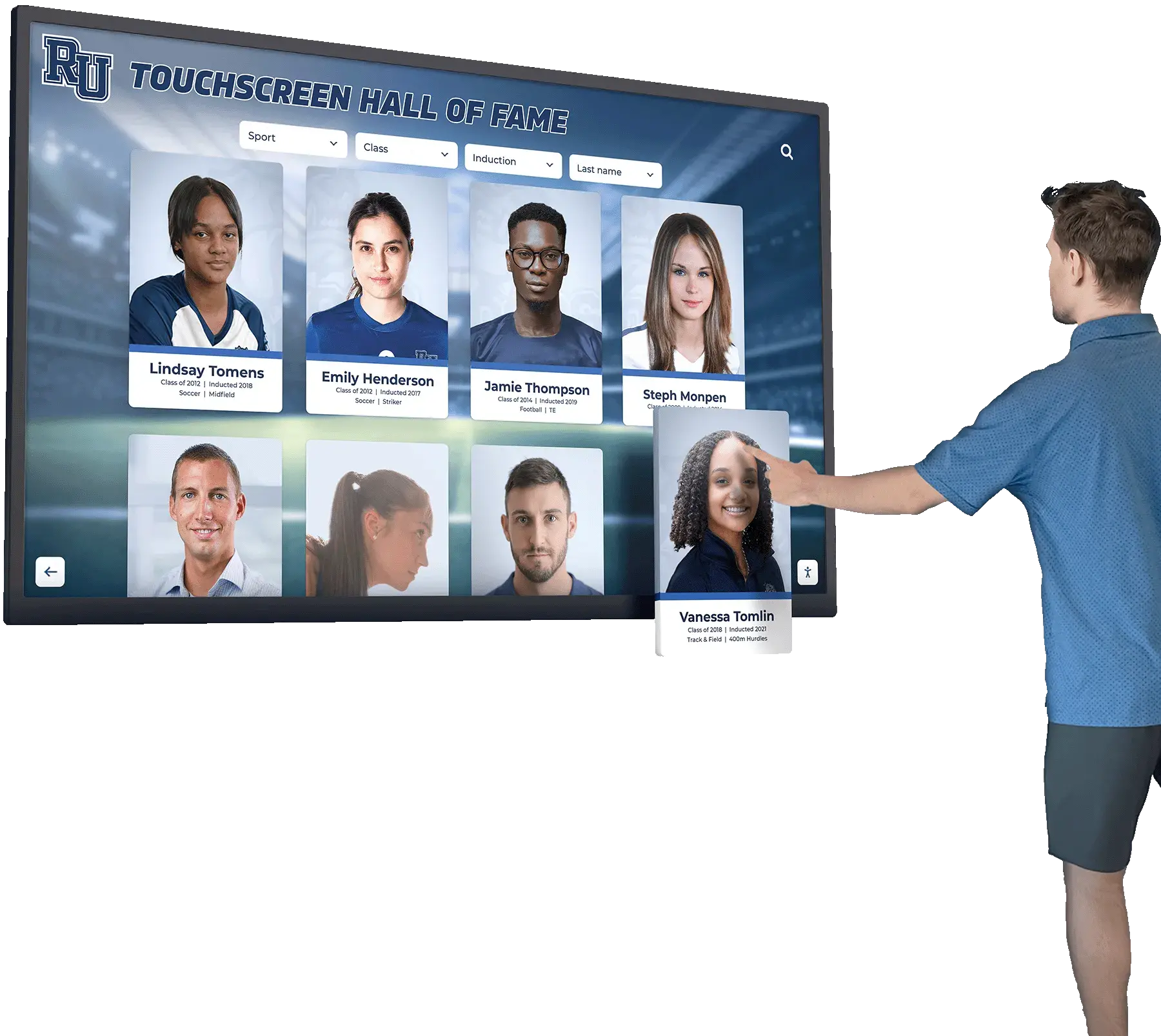
Live Example: Rocket Alumni Solutions Touchscreen Display
Interact with a live example (16:9 scaled 1920x1080 display). All content is automatically responsive to all screen sizes and orientations.
An athletic archive social media preservation policy is a written set of rules that defines which social media content from a school athletic program qualifies as a permanent institutional record, how that content should be captured and stored, who is responsible for capture, and how long retained files must be kept — so that championship announcements, season records, senior tributes, sponsor acknowledgments, and program milestones published on platforms like Instagram, X, Facebook, or TikTok survive platform outages, account changes, and staff turnover.
Without a documented policy, social media content exists in a state of unmanaged risk: visible today, gone tomorrow, with no clear decision-maker and no repeatable recovery process. This guide gives athletic directors, school administrators, booster leaders, and archivists the framework to close that gap — including a step-by-step policy structure, a reference table for content triage, and guidance on feeding preserved content into the digital recognition systems that make school history visible for years to come.
School athletic programs now publish a significant share of their historical record on social platforms — schedules, scores, all-conference announcements, senior recognition posts, and championship celebrations that may never appear in any official printed document. When those platforms change their terms, accounts go inactive, or an athletic director moves to a new role, that content disappears without warning. A preservation policy is what converts social media from an ephemeral communications channel into a durable component of the athletic archive.

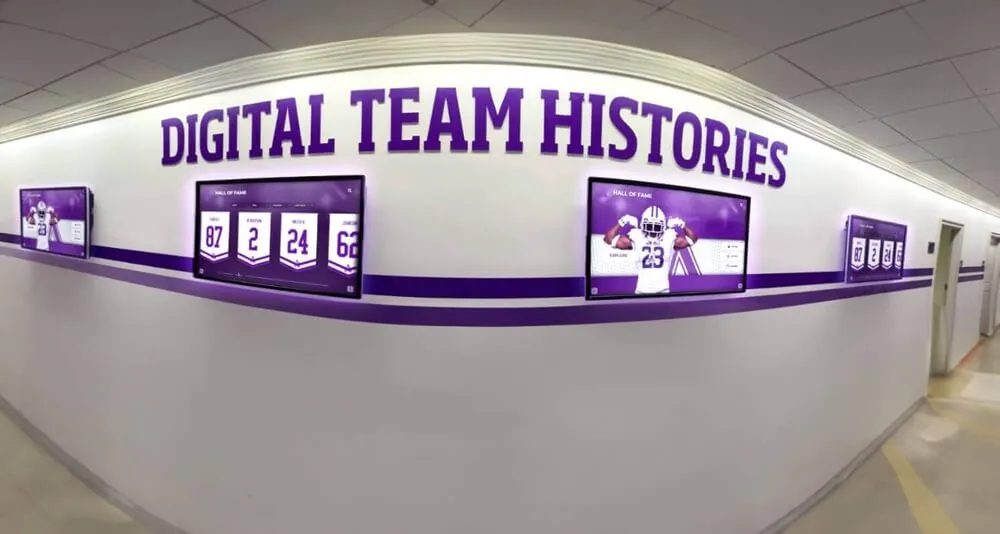
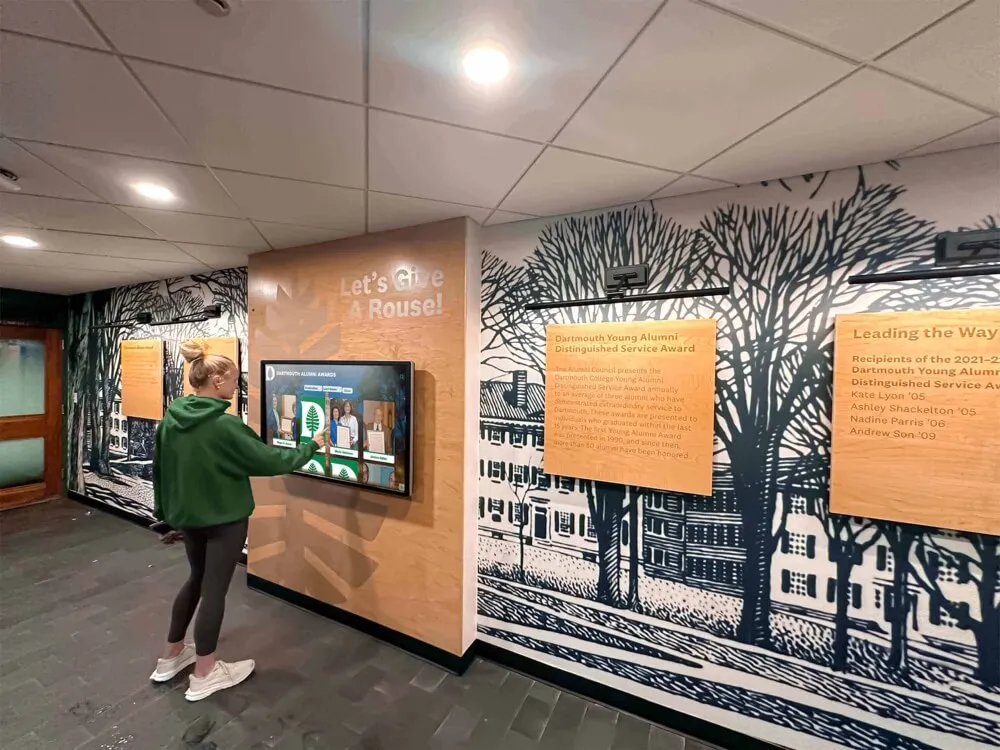
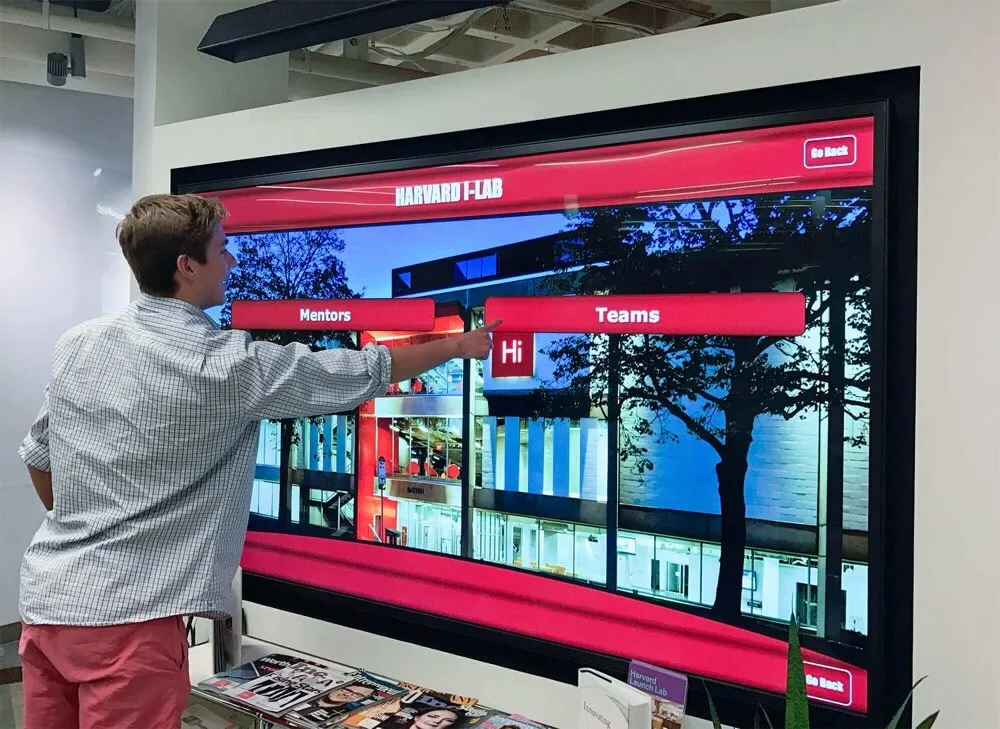
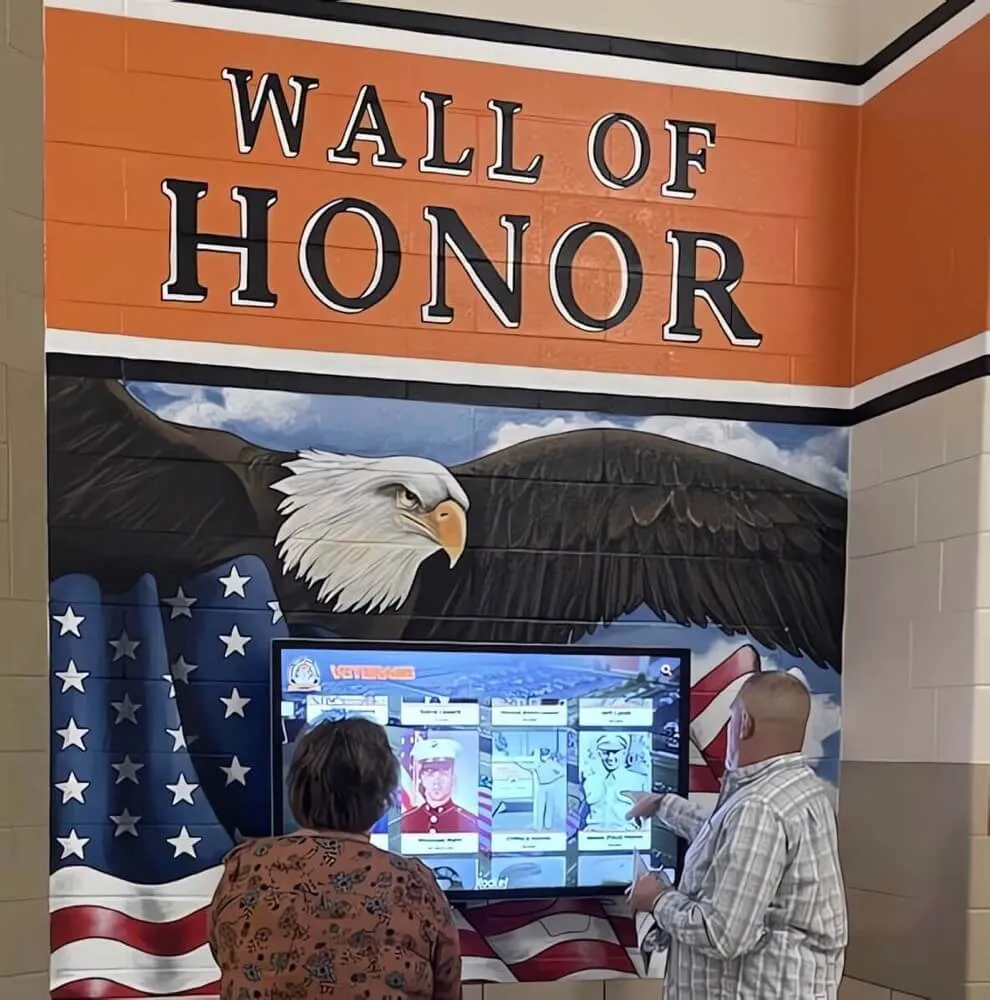
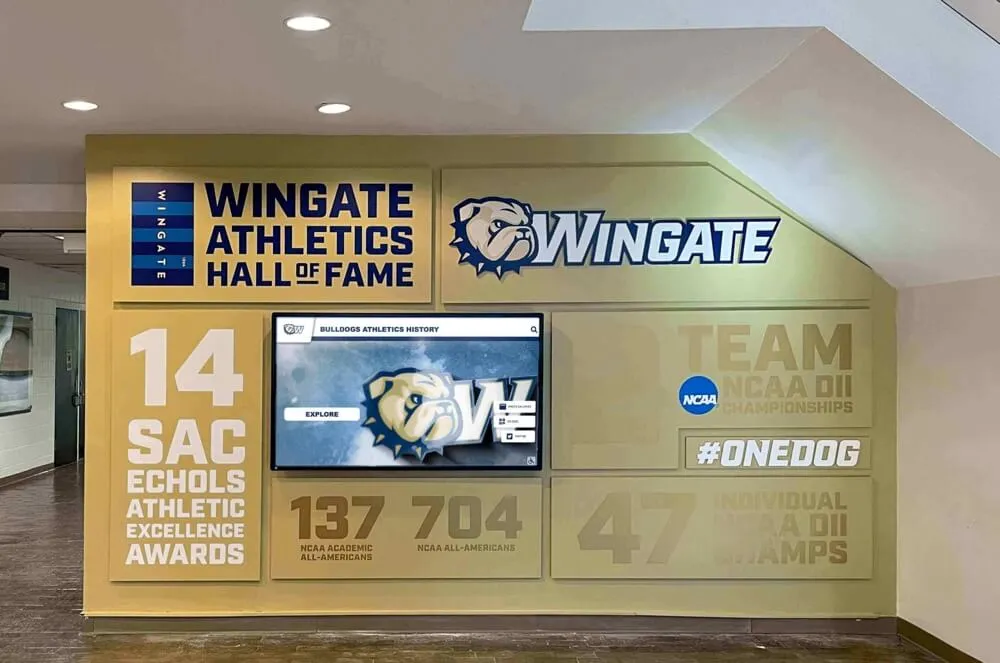
The records displayed in athletic hallways draw from multiple source types; social media content is increasingly one of them, making a preservation policy essential for archive completeness
What an Athletic Archive Social Media Preservation Policy Should Cover
A complete policy addresses five core questions. If your current documentation answers all five, you have a functional policy. If any are unanswered, you have a gap that will eventually cost you a record.
1. Which content qualifies for preservation? Not every post belongs in the archive. A policy identifies the categories — championships, award announcements, senior recognitions, milestone achievements, sponsorship credits — that carry long-term value, and distinguishes them from routine game-day promotion that needs no permanent record.
2. Who is responsible for capture? Preservation does not happen on its own. A named role — athletic director, administrative assistant, booster president, or an assigned volunteer — must be accountable for executing captures on a documented schedule. Athletic director roles carry broad administrative responsibility, and social media preservation is increasingly part of that scope, but the policy must name the specific person doing the hands-on work rather than leaving it to role assumption.
3. How will content be captured? A policy specifies the tools and methods: native platform export, third-party archiving software, manual screenshot workflows, or a combination. Each method has different fidelity — native exports preserve metadata while screenshots capture only the visual layer — and the policy should reflect that tradeoff.
4. Where will preserved files be stored? Cloud storage, on-premises servers, and institutional drive systems all have different access, redundancy, and longevity profiles. The policy names the designated repository and backup location, ensuring that preserved content survives a single point of failure.
5. How long must records be retained? Some records have legal or compliance dimensions; most school athletic records are governed by institutional policy rather than law. Regardless of the driver, the policy states a minimum retention period so staff are not guessing when it is permissible to delete files.
Why School Athletic Programs Lose Social Media Records
Understanding the failure modes makes the policy requirements more concrete. Social media records disappear through four common mechanisms:
Platform account changes. When a booster organization changes its name, an athletic department rebrands, or an individual coach or sponsor runs a program account under a personal login, account transitions can sever access to years of posts. Native platform exports are only available to authenticated account owners — once access is lost, so is the export option.
Platform policy and algorithm shifts. Platforms routinely alter their data retention, API access, and export functionality. Content that was exportable under one version of a platform’s policy may not be under the next. Preservation before policy changes close the window is the only reliable protection.
Staff turnover without knowledge transfer. The most common cause of loss at the school level is not technical — it is human. When an athletic director, communications staff member, or engaged booster volunteer leaves without documenting account credentials and content locations, institutional knowledge walks out the door. Recognition programs that depend on historical continuity are particularly vulnerable to this gap because the records needed for nominations may span multiple predecessor staff members’ tenures.
Informal account management. Athletic program social accounts are frequently created and maintained informally — a coach’s personal device, a student volunteer’s login, a parent’s phone with posting access. When those informal arrangements end, the account history may be inaccessible or deleted without any institutional awareness.
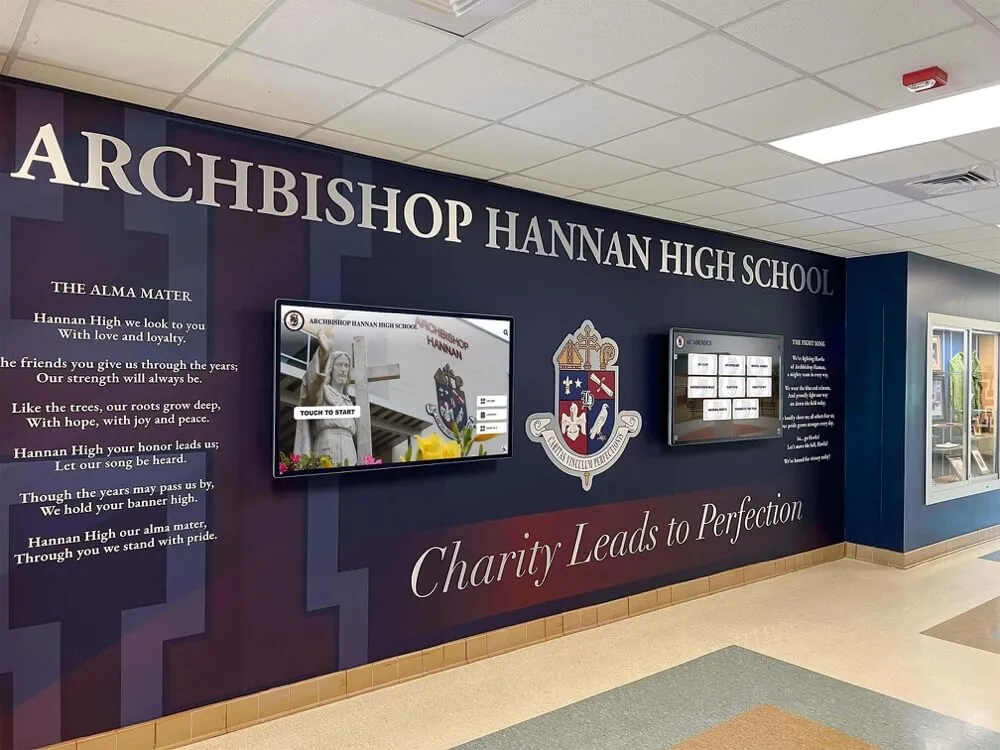
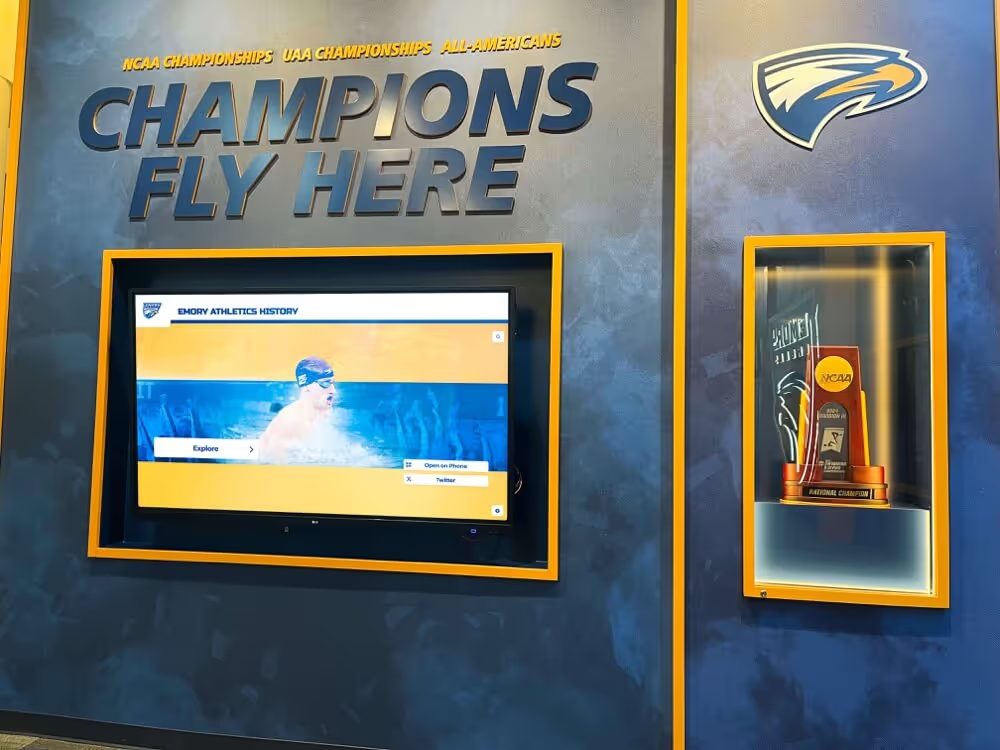
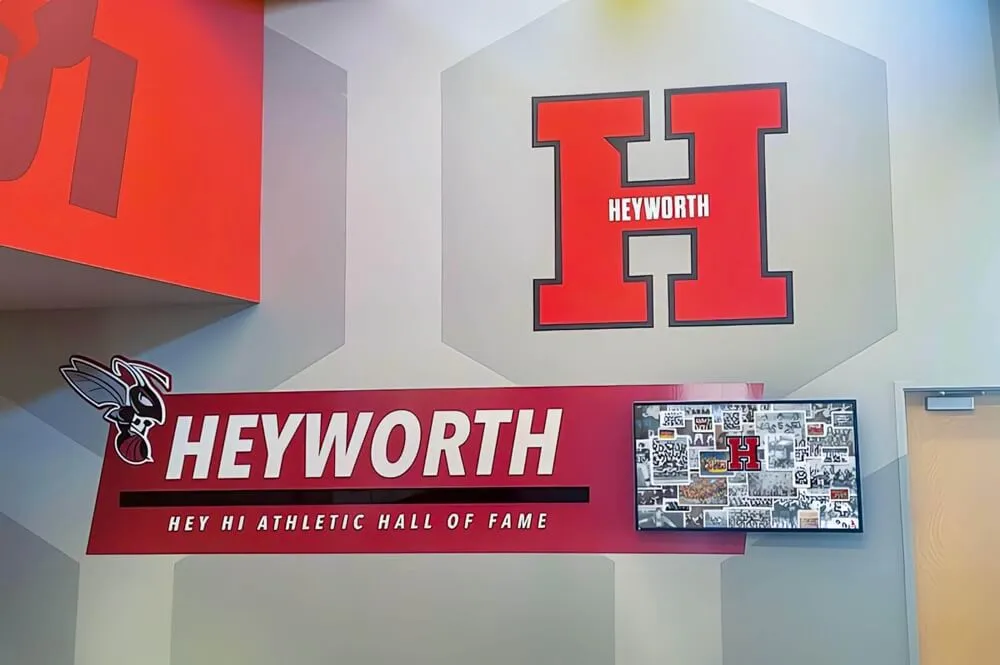
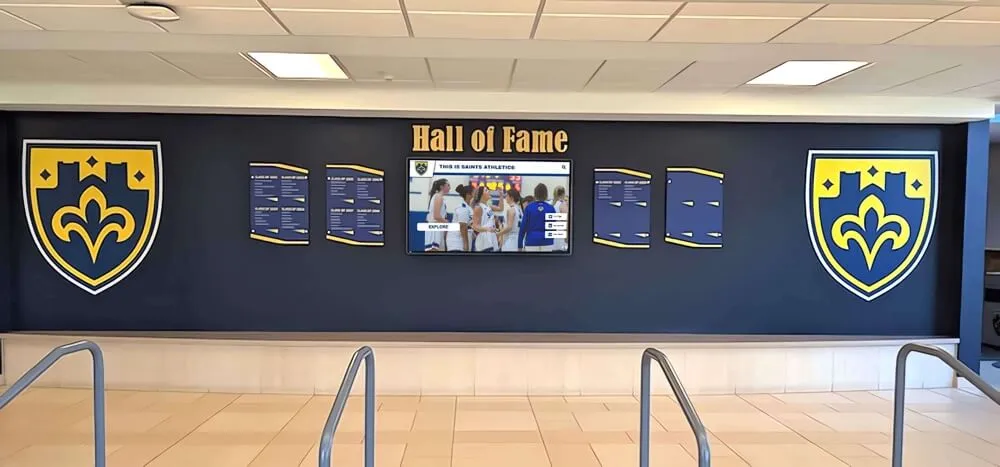
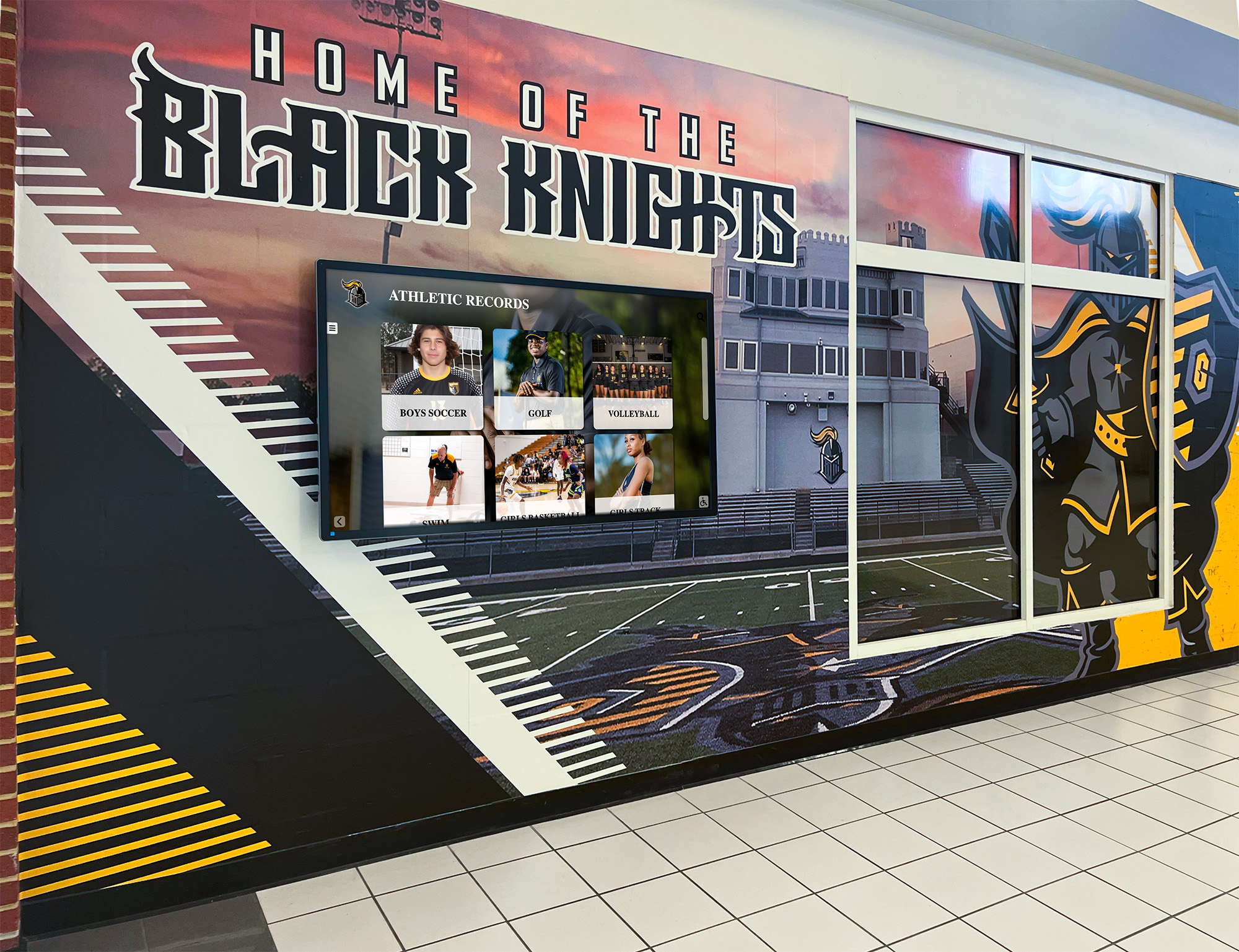
Social media content feeds digital displays and recognition programs; a preservation policy is what ensures that pipeline continues to work as platforms and staff change over time
Content Categories Worth Capturing
A functional policy does not attempt to preserve everything — that approach produces unmanageable archives. Instead, it identifies the content types with genuine long-term value.
Championship and Playoff Announcements
Posts announcing conference championships, district titles, state tournament berths, and final scores represent the competitive record of the program. They often include images, context, and community response that box scores alone do not convey. These are tier-one records that belong in the permanent archive.
Senior Tribute and Recognition Posts
End-of-season senior recognition content — tribute graphics, career summaries, thank-you posts — documents the program’s acknowledgment of individual athletes in a format that frequently contains information not duplicated in any other record. When a hall-of-fame committee reviews candidates a decade later, these posts can be primary sources. Dedicated recognition programs for both athletic and academic achievement increasingly rely on exactly this type of preserved social record to support nomination packets.
Award and Honor Announcements
All-conference, all-state, player-of-the-week, and coach-of-the-year announcements published on program social accounts often arrive before any formal written notification. The post itself — including the date, the graphic, and any quoted commentary — constitutes a contemporaneous record of an institutional recognition event.
Milestone Achievement Records
Records broken, career milestones reached, statistical achievements noted — if the program published it as an announcement, the archived post documents both the achievement and when the program formally acknowledged it. That documentation matters for display accuracy in recognition programs.
Sponsor and Donor Acknowledgments
Booster and sponsor recognition posts that appear on athletic accounts carry legal and relationship implications. They document commitments made, public acknowledgments given, and names associated with program support. For programs with formal physical recognition elements like dedication plaques, social media acknowledgment posts often serve as the primary record of the moment recognition was granted.
Program History and Anniversary Content
Anniversary tributes, retrospectives, and program milestone posts are among the most archivally valuable social content — they synthesize history, often include rare photographs, and document how the program understood and narrated its own past.
How to Build Your Policy: A Step-by-Step Framework
The following steps produce a working policy for a school athletic program. They are sequenced from institutional groundwork through operational execution.
Step 1: Conduct a social media account audit. Before writing policy, catalog every account associated with the athletic program — school-managed accounts, booster organization accounts, individual sport accounts, and any coach or volunteer accounts that publish on behalf of the program. Include the platform, account handle, login owner, and whether the school holds verified ownership. This audit is the foundation of everything that follows.
Step 2: Define the record types. Using the content categories above, draft a list of post types that qualify as institutional records. Be specific: “any post announcing a championship or playoff result” is more actionable than “important posts.” Include example language so staff can apply the definition without judgment calls.
Step 3: Assign a named custodian and a backup. Name a primary person responsible for executing captures — not just a role title — and a secondary person who performs captures if the primary is unavailable. Document both names in the policy and review the assignment annually or when staff changes occur.
Step 4: Select capture tools appropriate to each platform. Different platforms support different export methods. Instagram and Facebook offer native data export through account settings. X (formerly Twitter) offers archive downloads. TikTok has a data export option. For platforms without reliable native export, third-party web archiving tools (Archive.org’s Save Page Now, Conifer, or commercial social archiving software) provide alternatives. Specify the tool per platform so captures are consistent.
Step 5: Establish a capture schedule. Reactive capture — preserving posts only when someone thinks to do it — misses content between captures. Establish a minimum schedule: for tier-one content (championships, awards), capture within 48 hours of posting. For tier-two content (senior tributes, milestone acknowledgments), a weekly batch capture is often sufficient. For tier-three content (program history retrospectives), monthly review works.
Step 6: Define the file naming convention.
Captured content should follow the same naming convention used across the broader athletic archive. A format like YYYY-MM-DD_Platform_ContentType_Description (e.g., 2026-03-15_Instagram_Championship_BoysBasketball-District-Title) creates files that are immediately identifiable and sortable without opening them.
Step 7: Designate and document the storage location. Name the primary storage location, specify folder structure, and document the backup location. Ensure at least two independent copies exist — on different media or in different services — to protect against single-point-of-failure loss.
Step 8: Set retention periods. School athletic records typically warrant indefinite retention for tier-one content (championships, hall-of-fame-relevant records) and a minimum of ten years for tier-two and tier-three content. Align retention periods with your school district’s general records retention schedule if one exists.
Step 9: Document account access in a secure credential registry. Athletic program social accounts need institutional ownership, not individual ownership. Document usernames, linked email addresses, and recovery options in a secure, school-managed credential management system (not a spreadsheet or shared document). Include a transition protocol so that when a staff member or volunteer changes roles, account access transfers to the institution.
Step 10: Schedule annual policy review. Social media platforms change their export capabilities, data policies, and account management options regularly. A policy that was accurate in 2024 may be incomplete by 2026. Annual review — ideally at the start of the academic year — catches gaps before they result in loss.
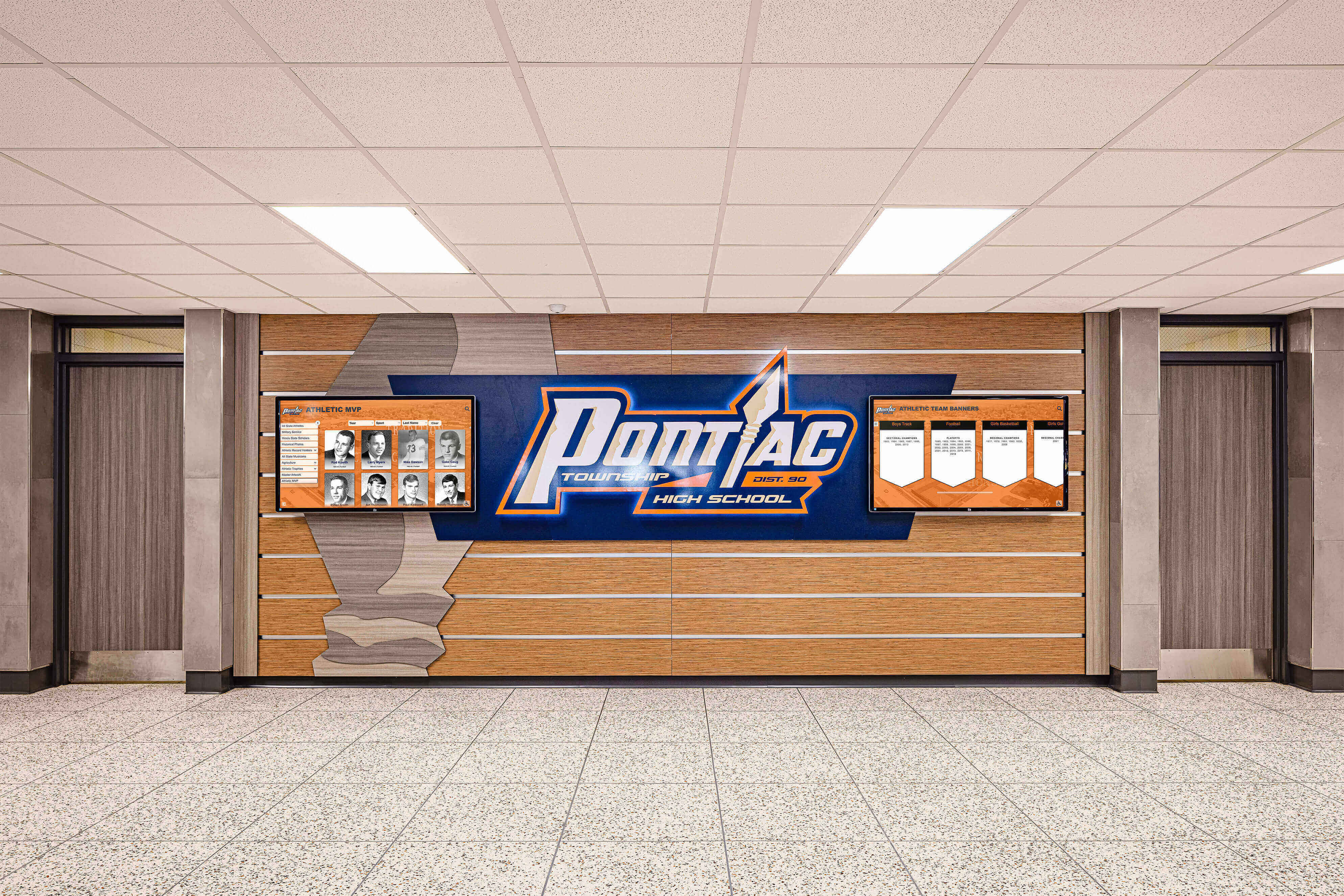
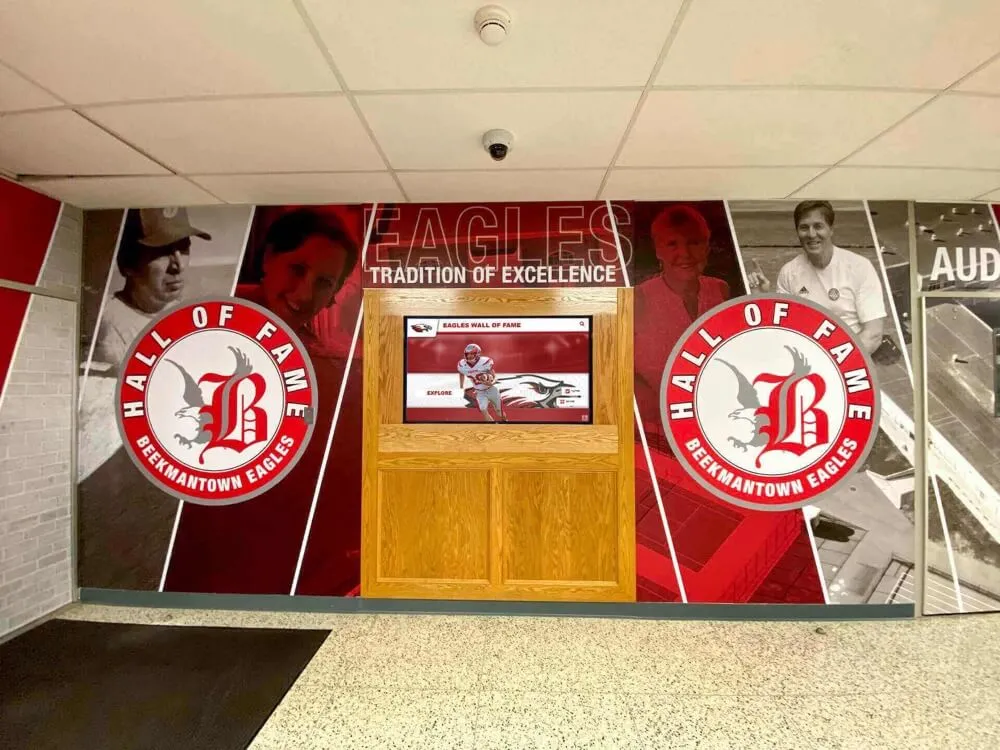
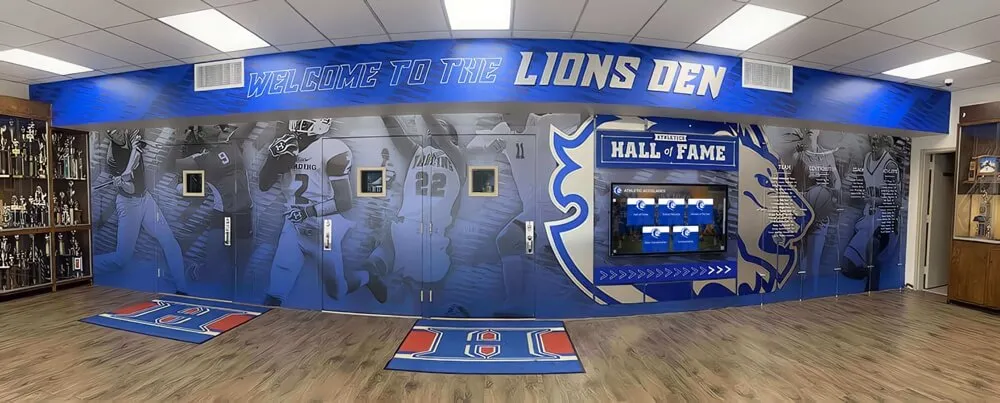
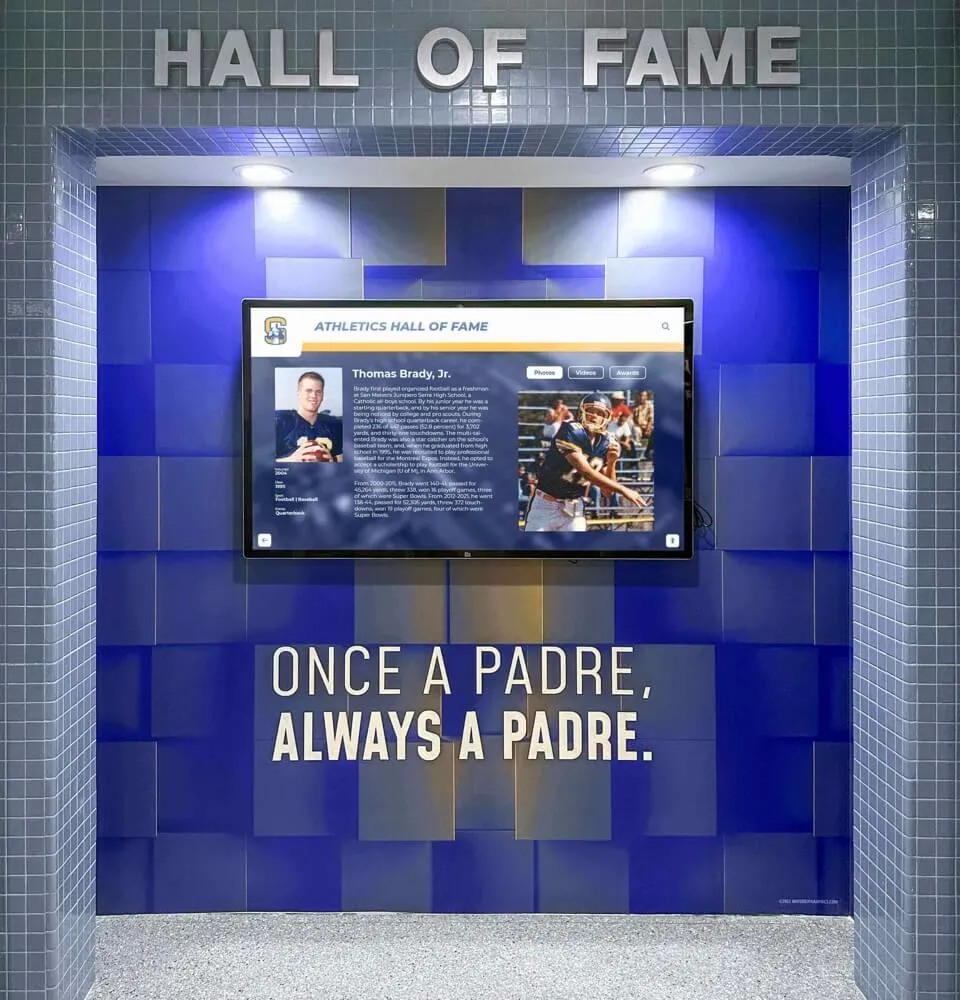
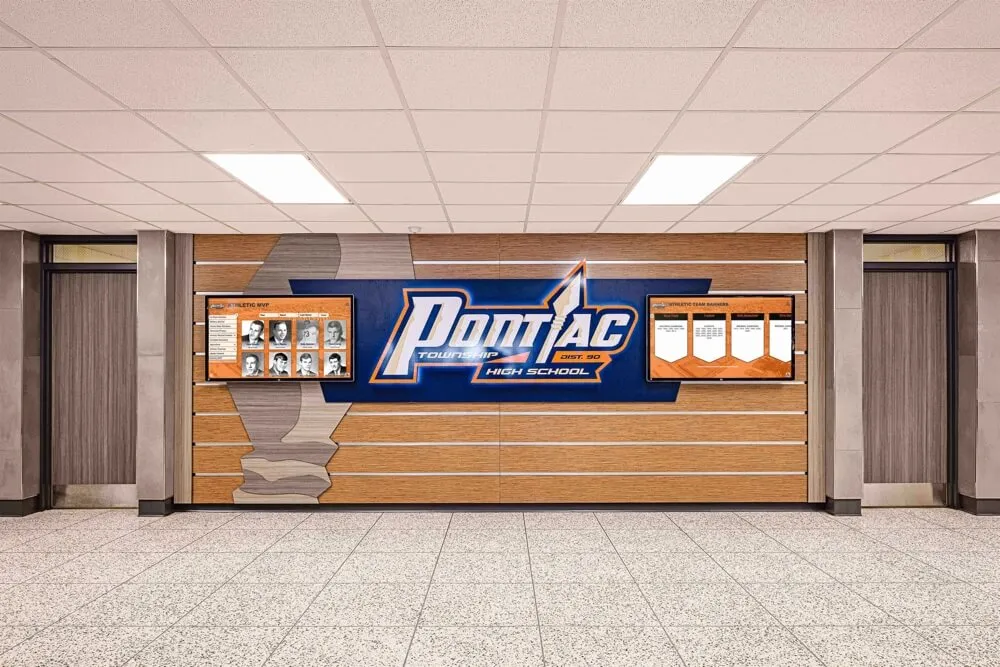
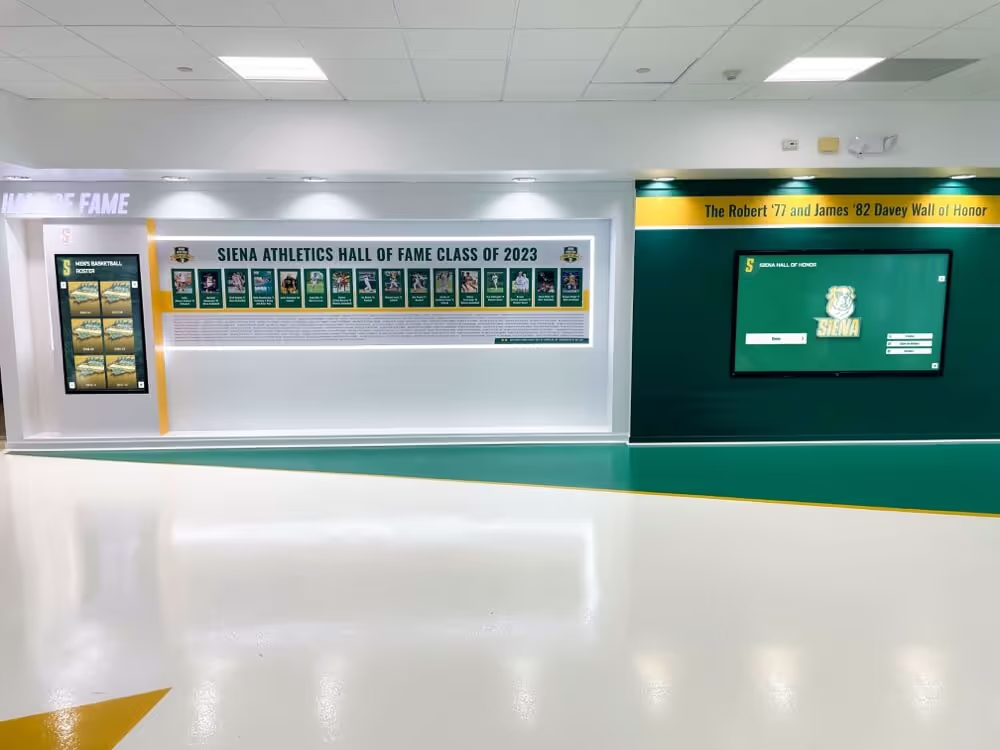
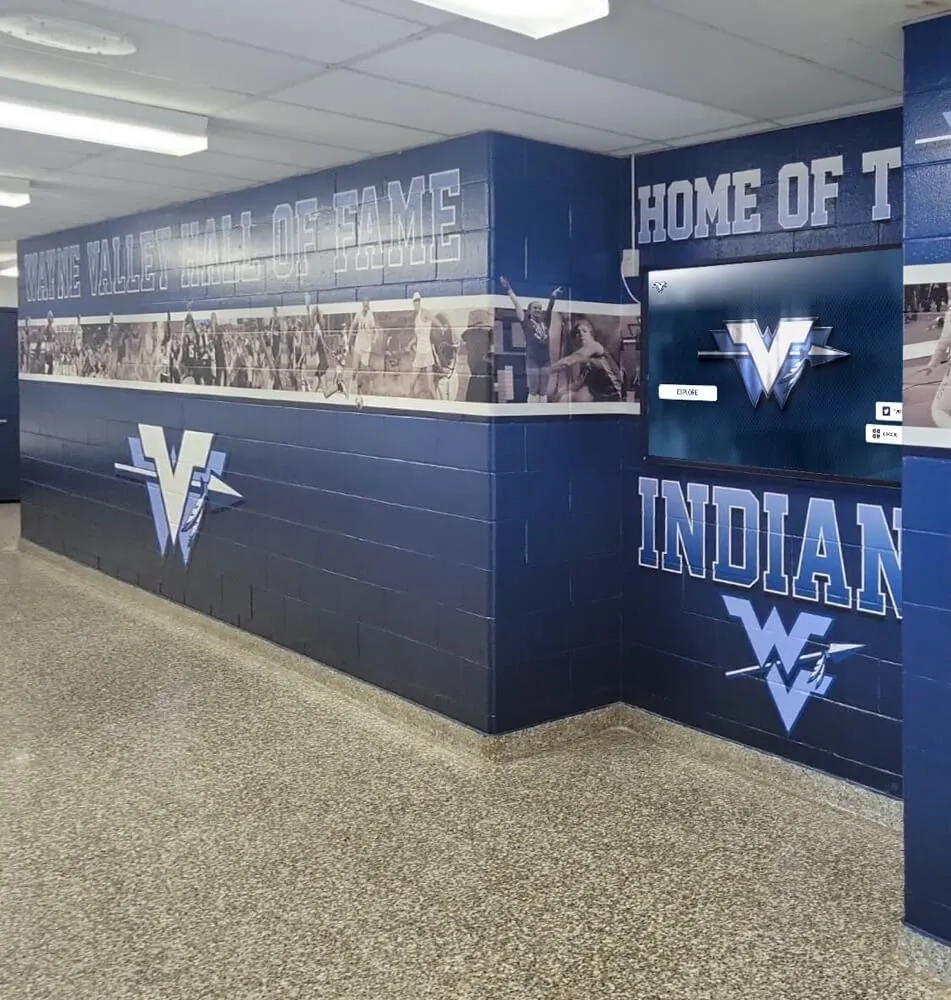
Athletic honor displays like these are only as complete as the records behind them; a social media preservation policy ensures that platform-published history remains available for future recognition programs
Reference Table: Social Media Content Types and Preservation Priorities
This table provides a quick-reference framework for triaging social media content against preservation priority, capture timing, and recommended retention period.
| Content Type | Priority Tier | Capture Timing | Recommended Retention |
|---|---|---|---|
| Championship / playoff announcement | Tier 1 — Permanent | Within 48 hours of posting | Indefinite |
| All-conference / all-state award | Tier 1 — Permanent | Within 48 hours of posting | Indefinite |
| Senior tribute / end-of-season recognition | Tier 1 — Permanent | Within 48 hours of posting | Indefinite |
| Individual milestone / record broken | Tier 1 — Permanent | Within 48 hours of posting | Indefinite |
| Hall-of-fame induction announcement | Tier 1 — Permanent | Within 48 hours of posting | Indefinite |
| Sponsor / donor acknowledgment | Tier 2 — Long-term | Weekly batch | 10 years minimum |
| Season schedule publication | Tier 2 — Long-term | Weekly batch | 10 years minimum |
| Game score / result post | Tier 2 — Long-term | Weekly batch | 10 years minimum |
| Program anniversary / retrospective | Tier 2 — Long-term | Monthly batch | 10 years minimum |
| Booster event promotion | Tier 3 — Operational | Monthly batch | 3–5 years |
| General program announcement | Tier 3 — Operational | Monthly batch | 3–5 years |
| Routine game-day promotion | Not archived | — | No retention required |
Use this table as a starting point, then adjust tiers based on your program’s specific recognition history and institutional requirements. Programs with active wall-of-fame nomination cycles may elevate tier-two content to tier-one; programs that publish detailed statistics only on social platforms should treat game result posts as permanent records.
How Preserved Social Media Feeds a Digital Recognition Program
An athletic archive social media preservation policy does more than protect records from loss — it actively expands what a recognition program can display, verify, and celebrate.
When a hall-of-fame nomination arrives for an athlete who competed before digital record boards and who left no newspaper clipping trail, a preserved Instagram tribute post from their senior season may be the most detailed contemporaneous record in the archive. When a display in the school hallway needs an accurate date for a championship, the captured Facebook post that announced the result serves as primary source documentation. When a donor recognition wall is being updated, archived sponsor acknowledgment posts verify who was recognized, when, and in what context.
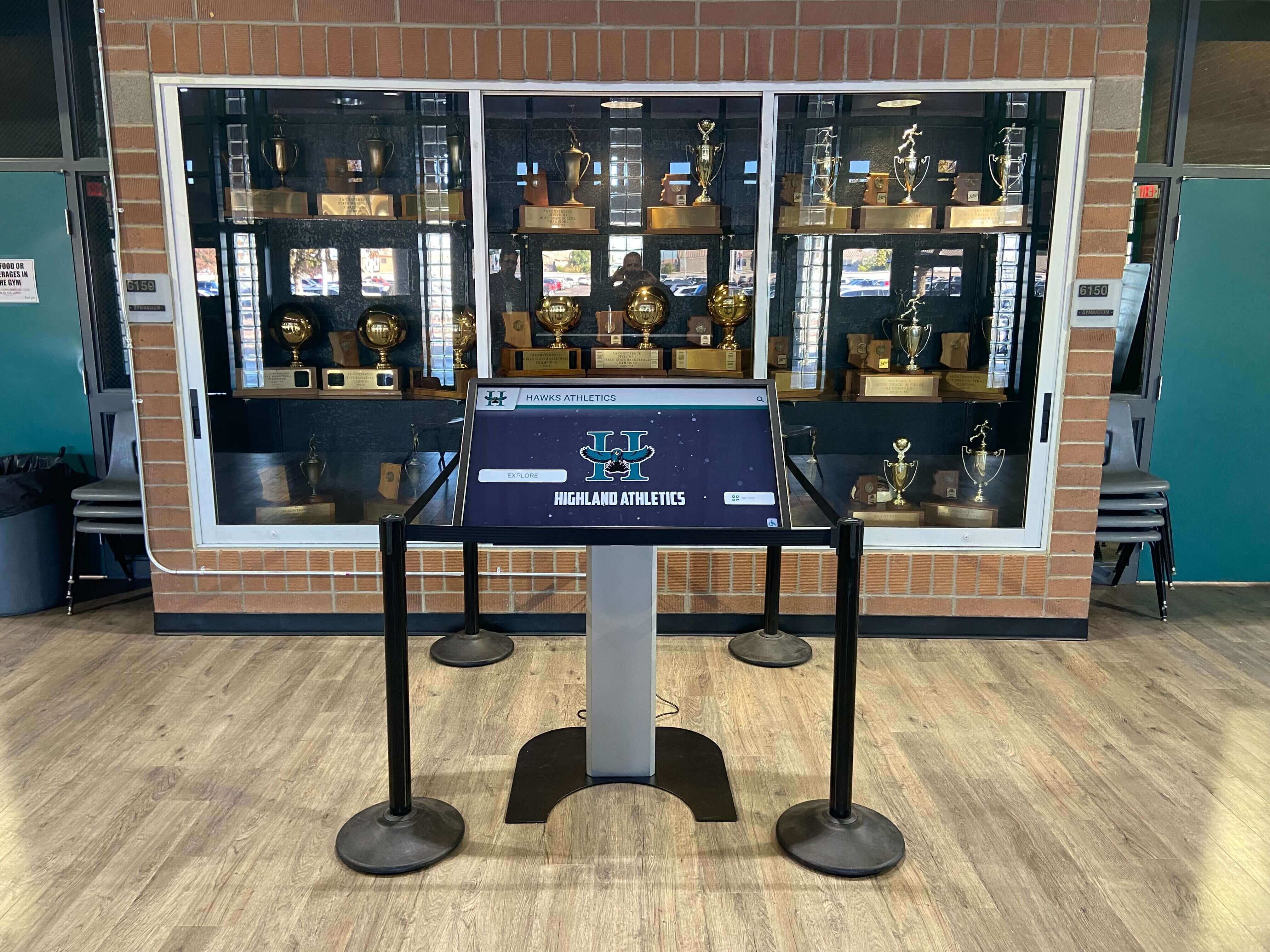
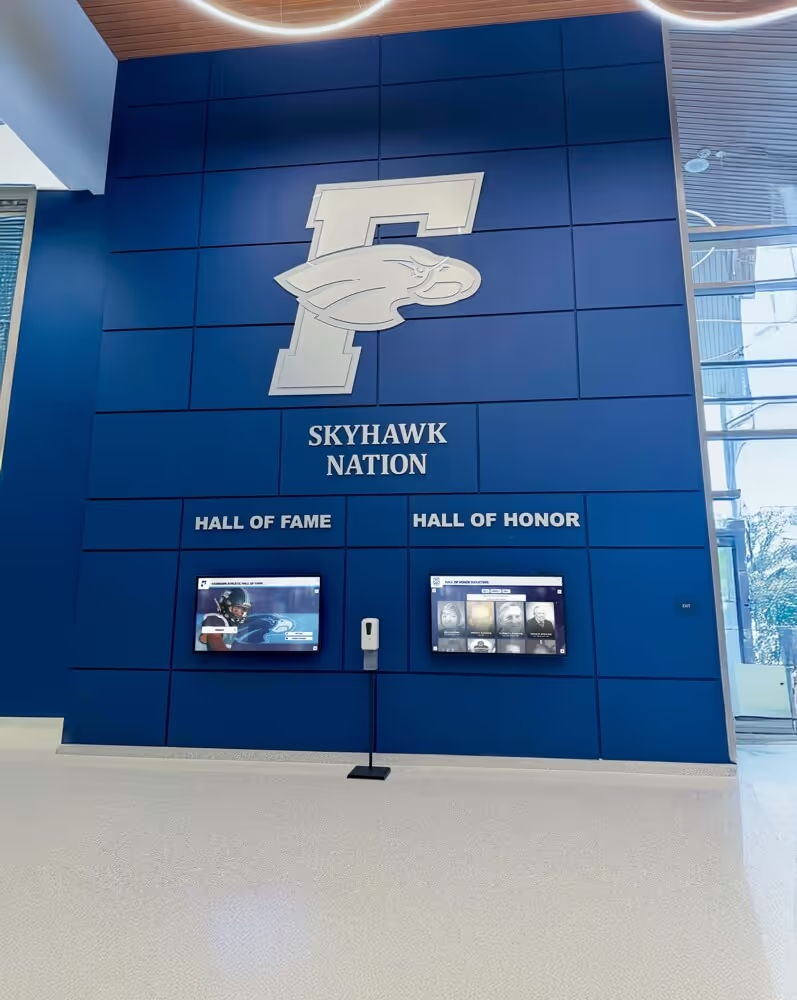
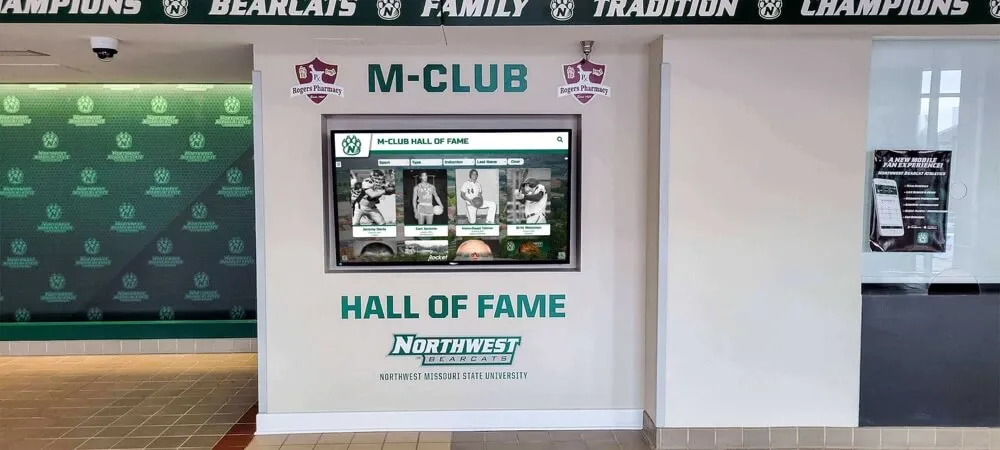
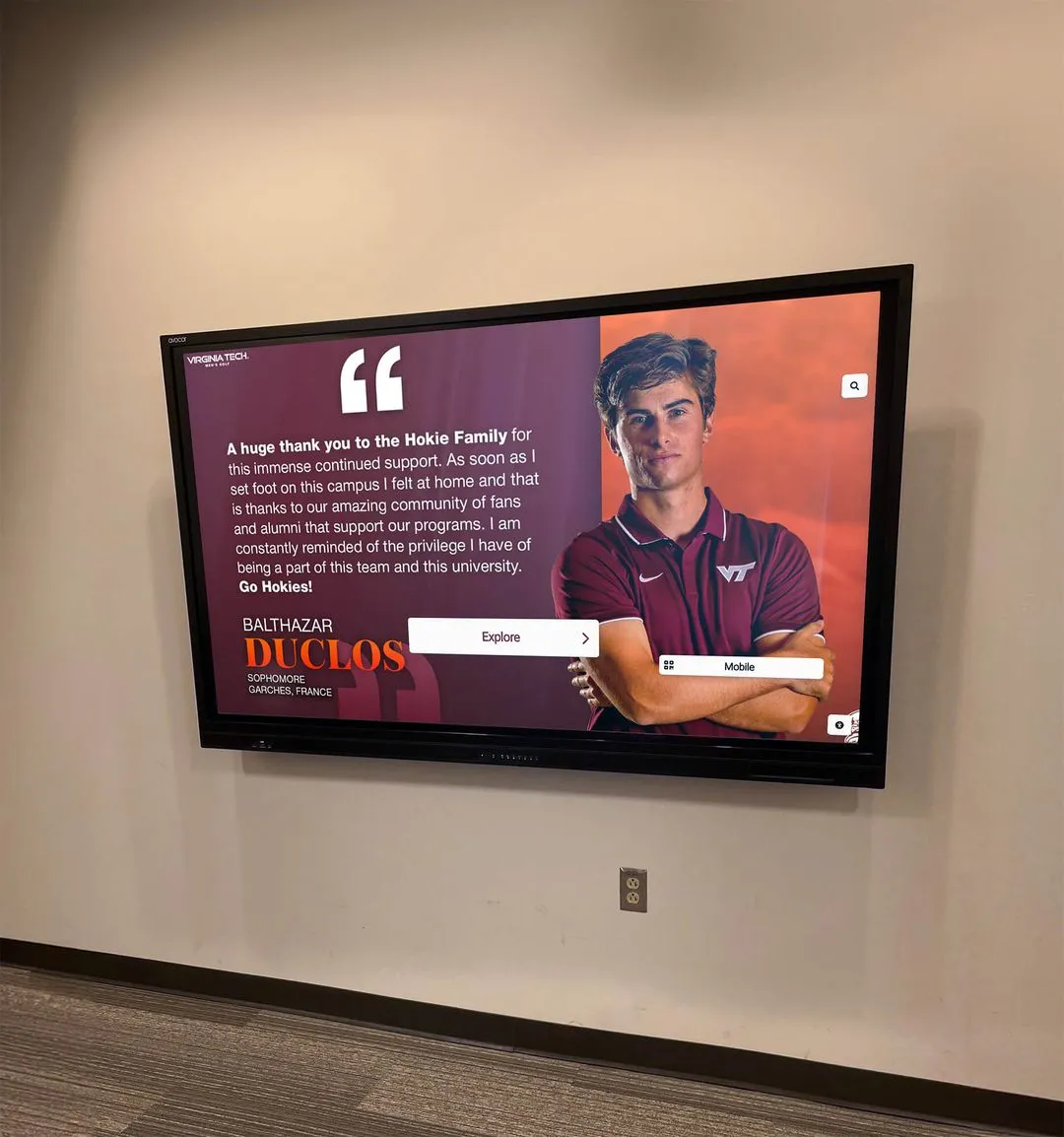
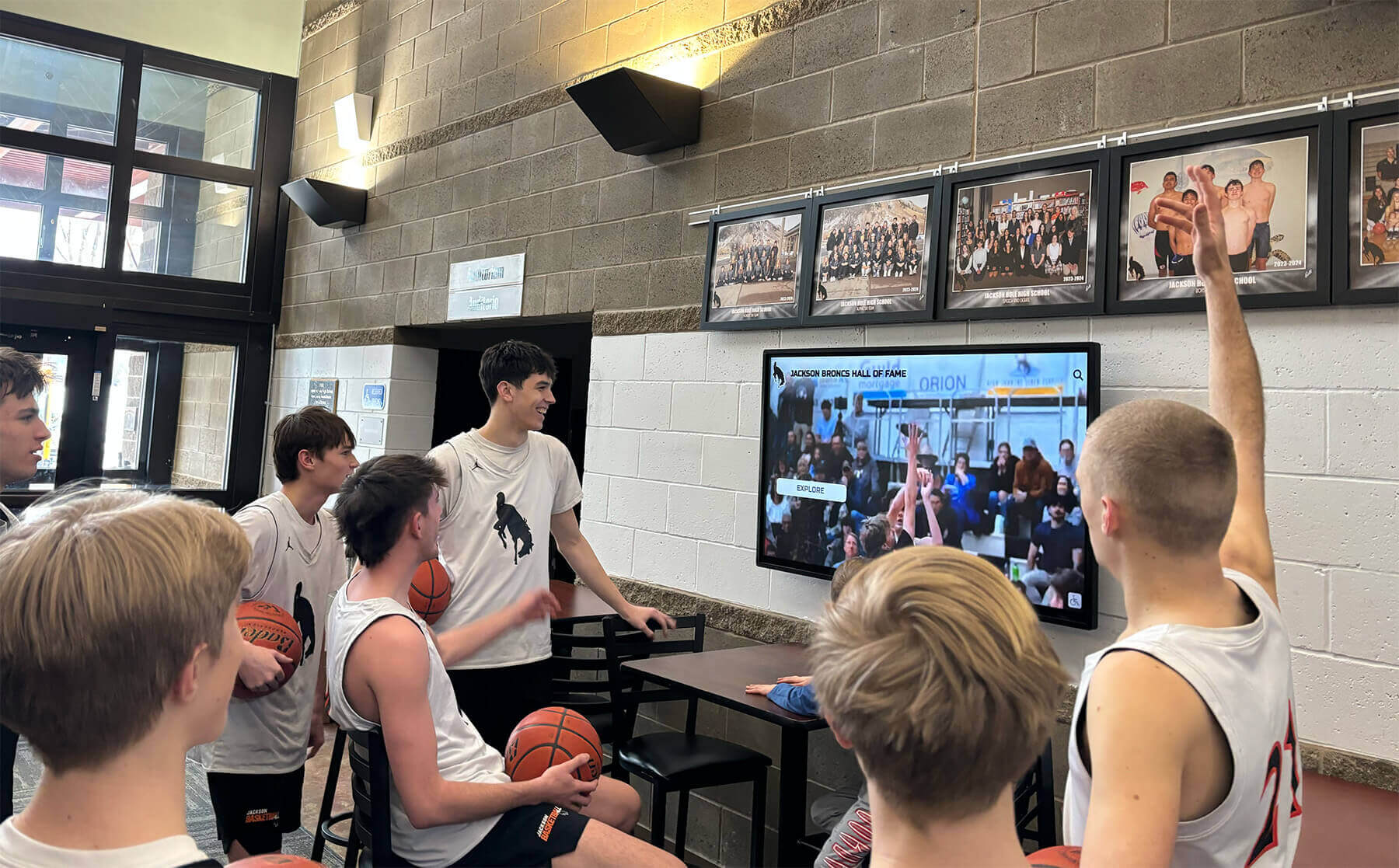
Interactive recognition systems like this touchscreen kiosk can draw on preserved social media content to enrich athlete profiles, championship timelines, and donor acknowledgments with sources that no traditional archive holds
This is where the preservation policy connects to the broader purpose of the athletic archive: not just compliance and risk management, but active generation of the institutional memory that recognition programs depend on. Digital wall-of-fame and scholar recognition programs increasingly look to social archives for the kind of informal, contemporaneous documentation — photographs, announcements, community response — that formal records never captured.
The practical integration point is the digital display system. When social media content is preserved in a named, consistently structured file library, it becomes available for import into interactive touchscreens and digital recognition boards. An athletic director or archivist can attach a preserved championship post to a hall-of-fame athlete’s profile, add a captured award announcement to a school records timeline, or link a senior tribute graphic to an individual athlete’s career display — because the file exists, is named legibly, and is stored where the display system’s administrator can find it.
Programs that operate without a preservation policy frequently discover this gap when they are building a new recognition display and realize that years of social media history are either inaccessible or stored in fragments across personal devices and informal shared drives. A policy eliminates that problem at the source.
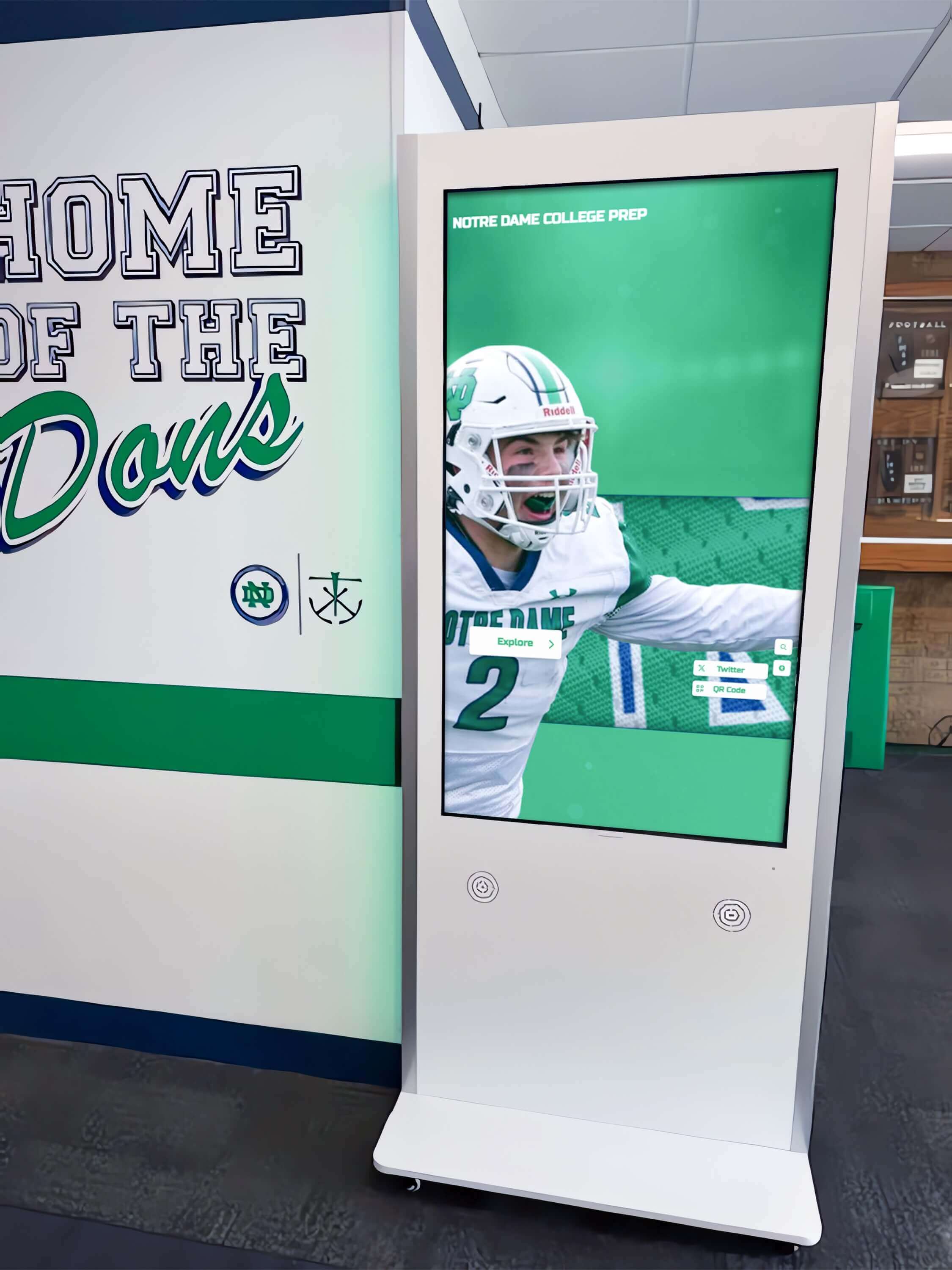
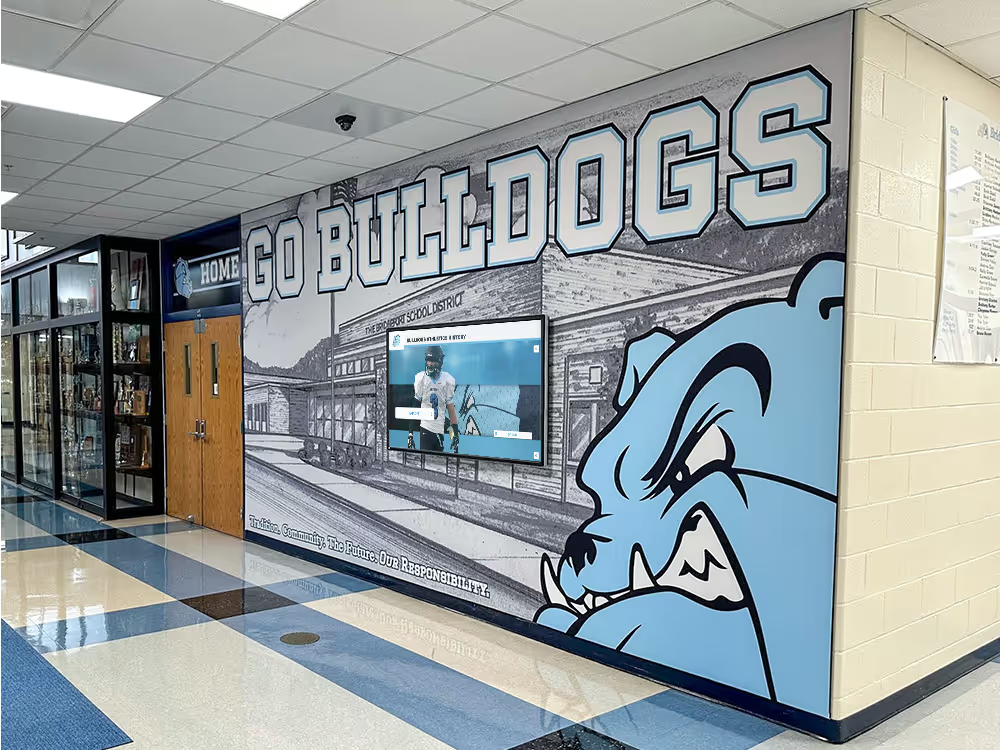
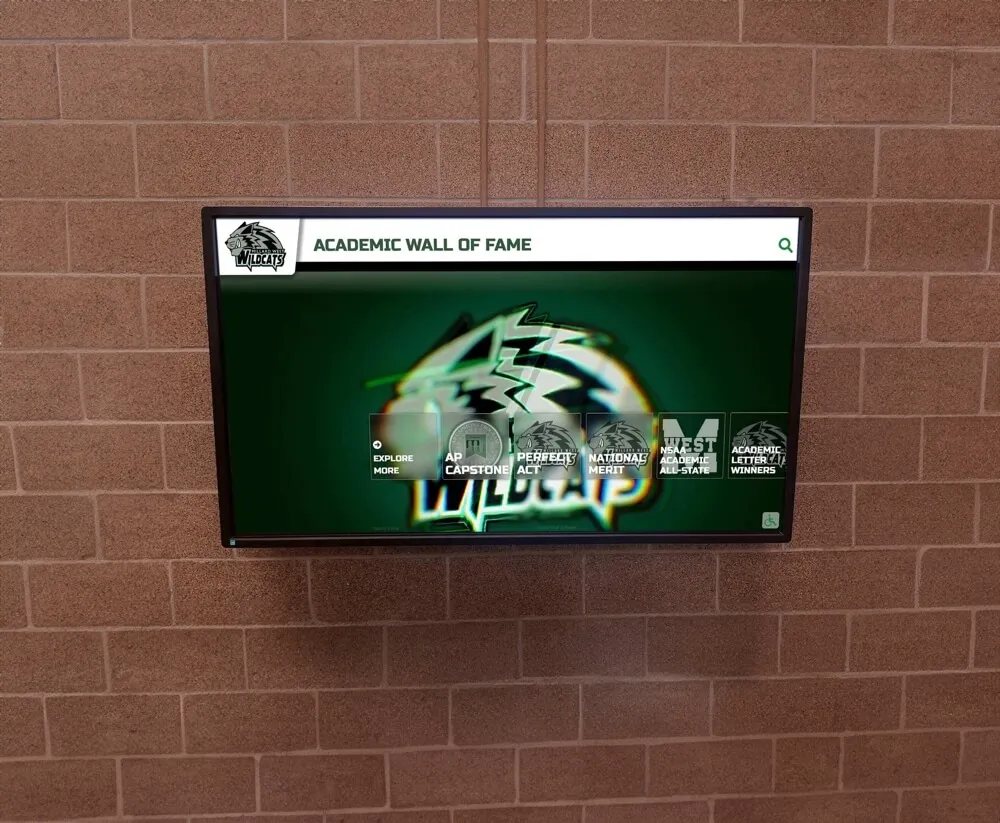
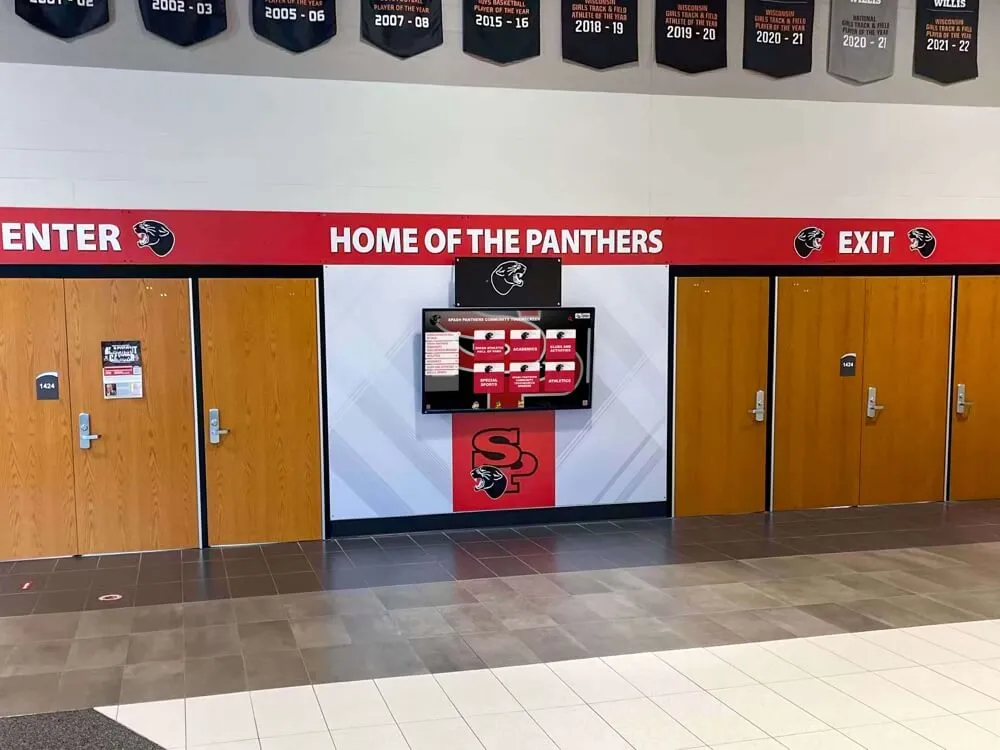
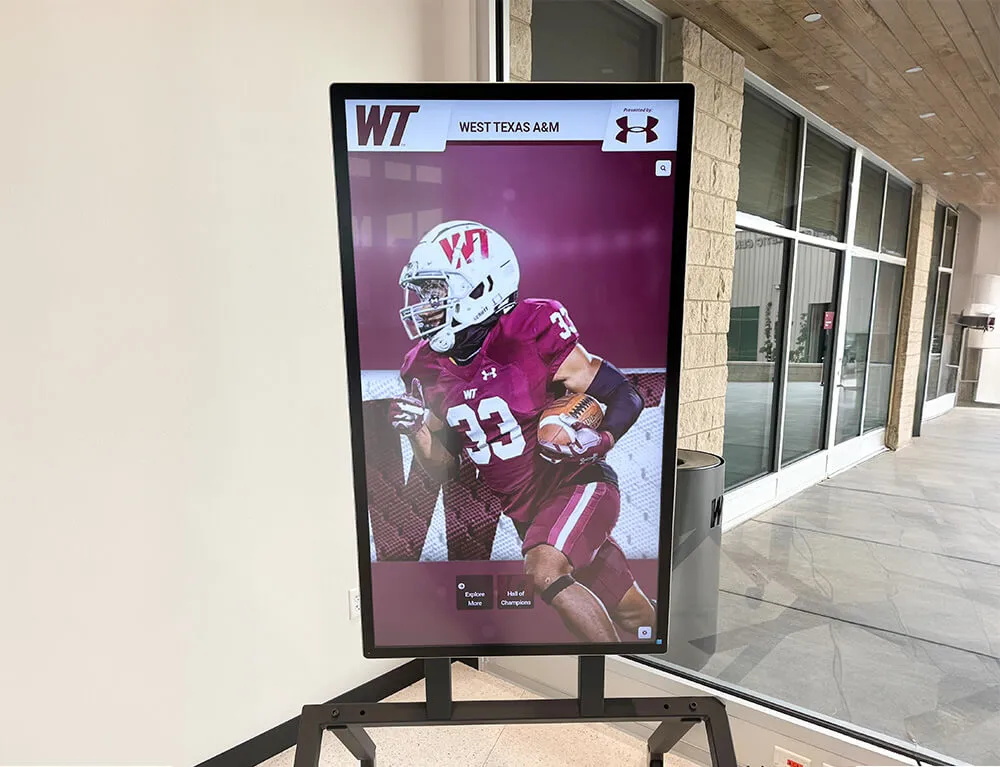
Hallway kiosks that display program history become more historically complete when the archive feeding them includes systematically preserved social media content alongside traditional records
Frequently Asked Questions
Do we need to preserve social media from booster accounts, or just official school accounts?
Both. Booster organizations often publish the most detailed recognition content — senior tributes, sponsor acknowledgments, championship celebrations — precisely because they operate with more flexibility than official school accounts. If that content documents institutional history (which championship tributes and award announcements clearly do), it belongs in the athletic archive regardless of which account published it. The preservation policy should name booster-affiliated accounts explicitly and assign a custodian responsible for capturing their records.
What if a platform does not offer data export?
Use web archiving tools. The Internet Archive’s Wayback Machine accepts manual saves for public pages. Tools like Conifer (webrecorder.net) can capture interactive page states. For platforms with no automated option at all, a disciplined screenshot workflow — full-page captures with the date, platform, and account visible — produces lower-fidelity but functionally useful records. Document which method was used for each capture so future staff understand the provenance of what they are working with.
How do we handle content from coaches who have since left the program?
Start by identifying whether the account still exists and whether the school can access it. If the account is still active and accessible, execute a full archive export before any access changes occur. If the account has already become inaccessible, use the Wayback Machine to check whether the page was crawled — publicly visible social pages are sometimes captured automatically. For content known to exist but no longer accessible, document the gap in the archive record so future researchers understand the provenance limitation.
How does social media preservation connect to hall-of-fame nomination packets?
Directly. Hall-of-fame nomination packets typically require documented evidence of achievements, recognition, and program contributions. Preserved social media posts — championship announcements, award graphics, tribute posts — are primary source documentation for the period they cover. Programs that preserve social content systematically produce more complete and defensible nomination packets than those relying solely on traditional print records, particularly for athletes whose competitive careers overlapped with the shift to social-first athletic communications.
How often should the platform list in our policy be updated?
At minimum annually, and immediately when a platform materially changes its export options or data policies. Assign the annual policy review to a specific date — the start of the academic year is a natural anchor — and include a step that checks whether each named platform’s export method still works as documented. Platform changes that break export workflows should trigger an immediate policy update, not a wait until the next annual review.
Should captured social media files be stored with the general athletic archive or separately?
Within the general athletic archive, using the same folder structure and naming conventions. Keeping social media files in a separate silo creates a retrieval problem: when a display manager, nomination committee, or researcher needs records for a specific athlete or season, they should find everything in one place, not divided across multiple repositories by source type. Treat preserved social content as a source type within the broader archive, not as a separate archive.
Build the recognition system your archive deserves.
A social media preservation policy closes the gap between what your program publishes and what your archive actually holds — but a complete athletic archive is only as powerful as the display system that makes it visible. See how schools are turning decades of preserved records, photographs, and recognition history into interactive touchscreen experiences that students, alumni, and visitors can explore in the hallway, lobby, or trophy room.
Live Example: Rocket Alumni Solutions Touchscreen Display
Interact with a live example (16:9 scaled 1920x1080 display). All content is automatically responsive to all screen sizes and orientations.