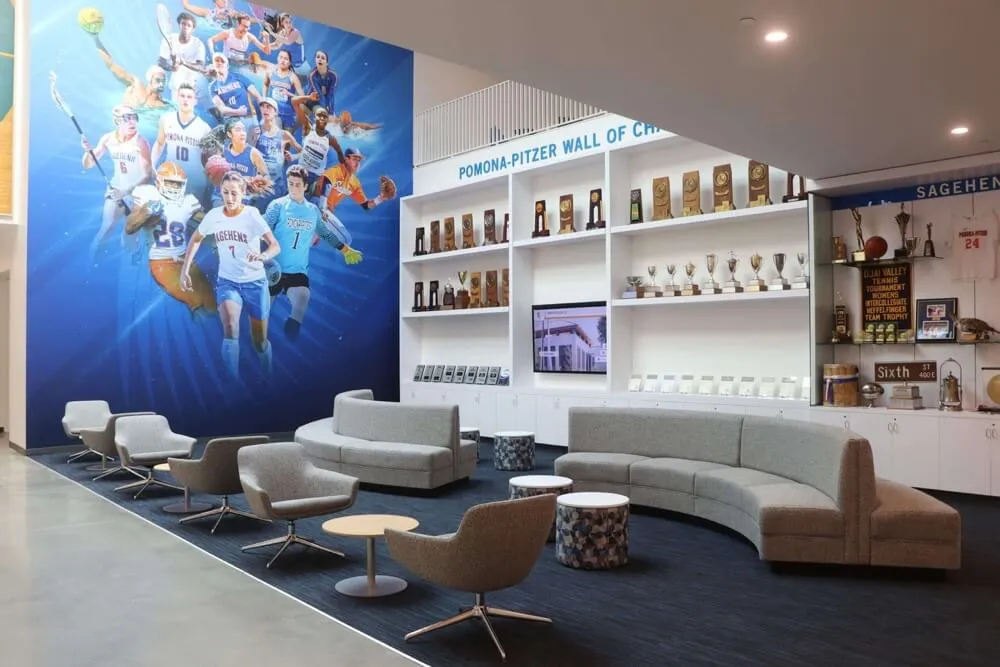




Athletic facility design shapes more than just physical spaces—it defines how programs honor tradition, inspire current athletes, and project institutional excellence to visiting teams and communities. Whether planning a complete gymnasium renovation, adding modern recognition displays to existing lobbies, or designing new athletic complexes from the ground up, thoughtful facility design creates environments where athletes train with pride and communities gather to celebrate achievement.
The challenge facing athletic directors, facilities managers, and institutional planners today involves balancing competing priorities: preserving championship traditions accumulated across decades, integrating modern technology that engages digital-native athletes, accommodating accessibility requirements, managing budget constraints, and creating flexible spaces that serve multiple sports and programs. Traditional trophy cases overflow with plaques while walls run out of room for championship banners, yet administrators recognize that athletic spaces must evolve to meet contemporary needs without erasing the history that defines program identity.
Modern athletic facility design addresses these challenges through strategic planning that prioritizes flexibility, technology integration, and sustainable recognition systems. Schools and universities implementing comprehensive facility design strategies report improved athlete recruitment, enhanced community engagement, more effective fundraising, and strengthened program cultures that connect current teams to decades of tradition.
This comprehensive guide examines athletic facility design from initial planning through implementation, exploring how educational institutions create sports spaces that honor the past while embracing innovations that serve programs for decades ahead.
Understanding Athletic Facility Design Priorities
Before addressing specific design elements, successful projects begin with clear priorities that guide decision-making throughout planning and construction.
Core Stakeholder Needs
Athletic facilities serve diverse users with different requirements:
Athlete Experience and Performance
Student-athletes benefit from facilities designed around their development:
- Training spaces optimized for sport-specific needs
- Locker rooms fostering team culture and preparation
- Recovery areas supporting athlete health and wellness
- Recognition displays acknowledging achievement and inspiring excellence
- Gathering spaces building community and program identity
- Technology integration supporting performance analysis
- Safe, well-maintained environments preventing injury
Athletic facility design that prioritizes athlete needs creates competitive advantages in recruitment while supporting existing team members throughout their careers.

Coaching and Administrative Functionality
Coaching staff require practical spaces supporting program operations:
- Offices facilitating planning, recruiting, and administration
- Film rooms for video analysis and team preparation
- Meeting spaces for team gatherings and presentations
- Storage accommodating equipment for multiple sports
- Training areas supporting practice efficiency
- Visibility enabling supervision and safety monitoring
Facilities designed with coaching workflows in mind improve program efficiency while reducing operational friction.
Community and Spectator Engagement
Athletic spaces often serve as community gathering venues:
- Seating configurations maximizing spectator experience
- Lobby areas welcoming visitors and showcasing tradition
- Concessions and restroom facilities serving events
- Parking and accessibility accommodating diverse visitors
- Recognition displays engaging community pride
- Multi-purpose spaces hosting banquets, ceremonies, and gatherings
Facilities that balance competitive needs with community engagement strengthen program support and institutional connections.
Balancing Tradition with Innovation
Athletic programs carry decades of history requiring respectful integration into modern facility design:
Historical Recognition and Archives
Traditional trophy cases and championship banners fill facilities with tangible reminders of program excellence. However, physical recognition faces inherent limitations—walls run out of space, trophies accumulate dust behind glass, and static displays fail to engage digital-native generations.
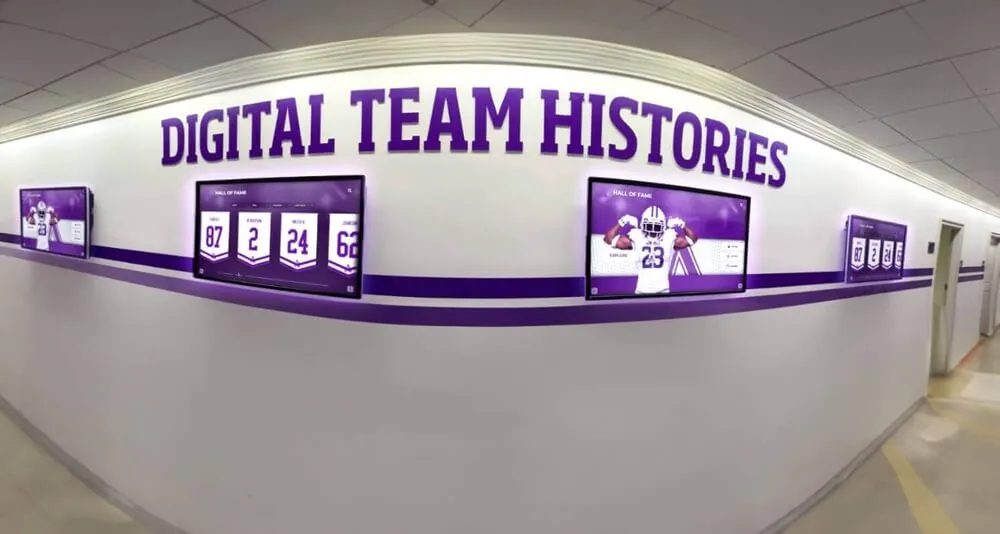
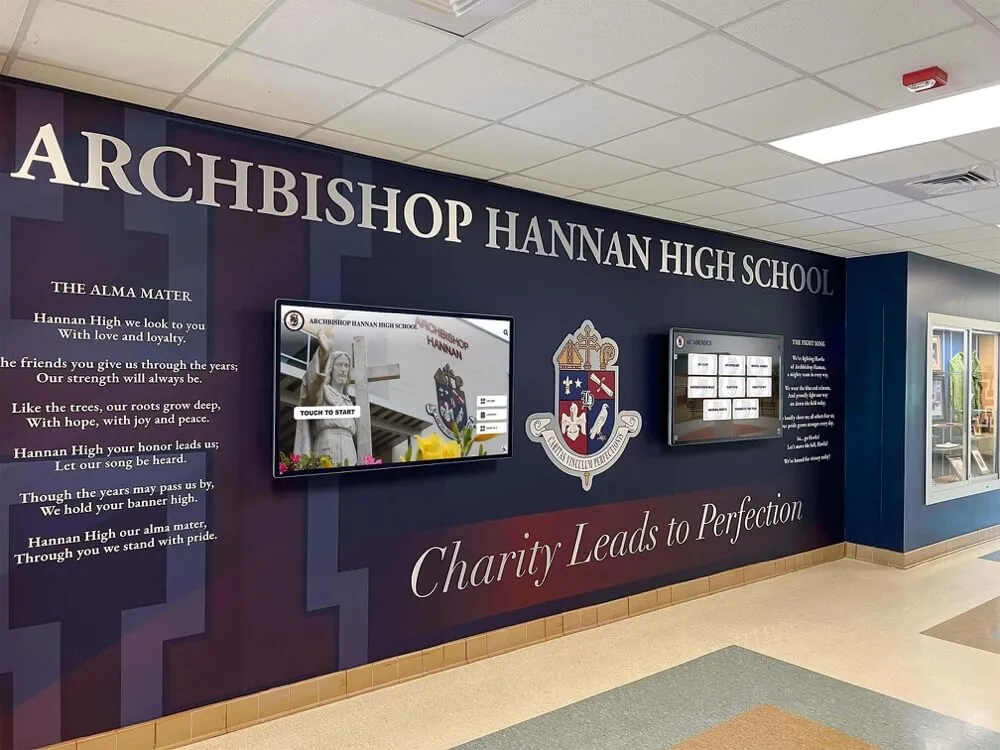
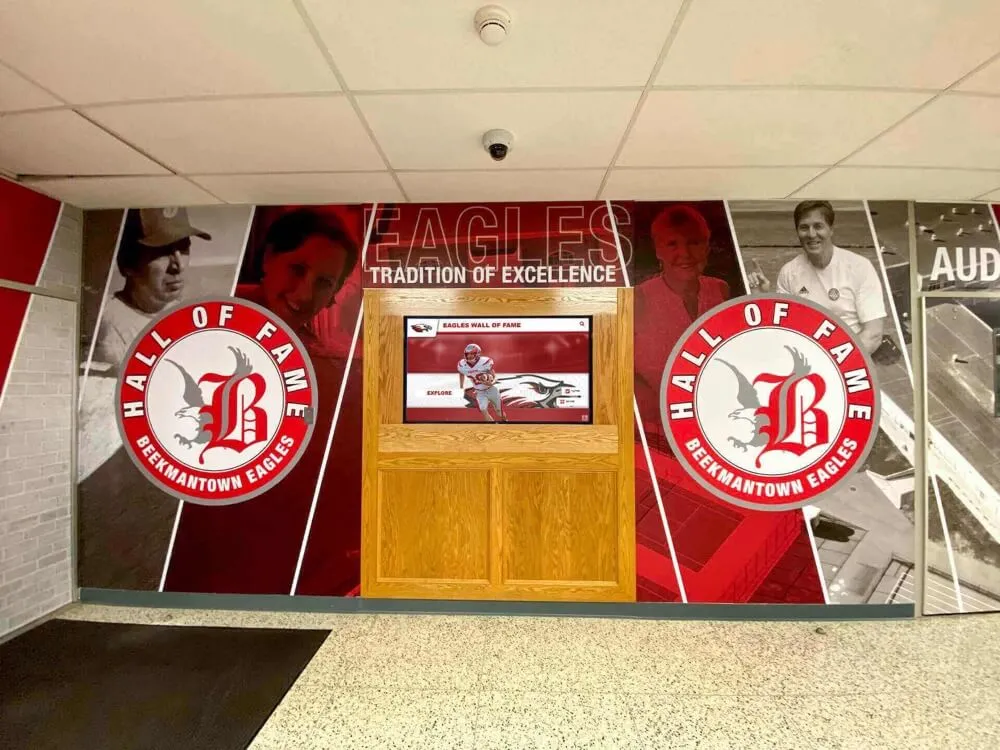
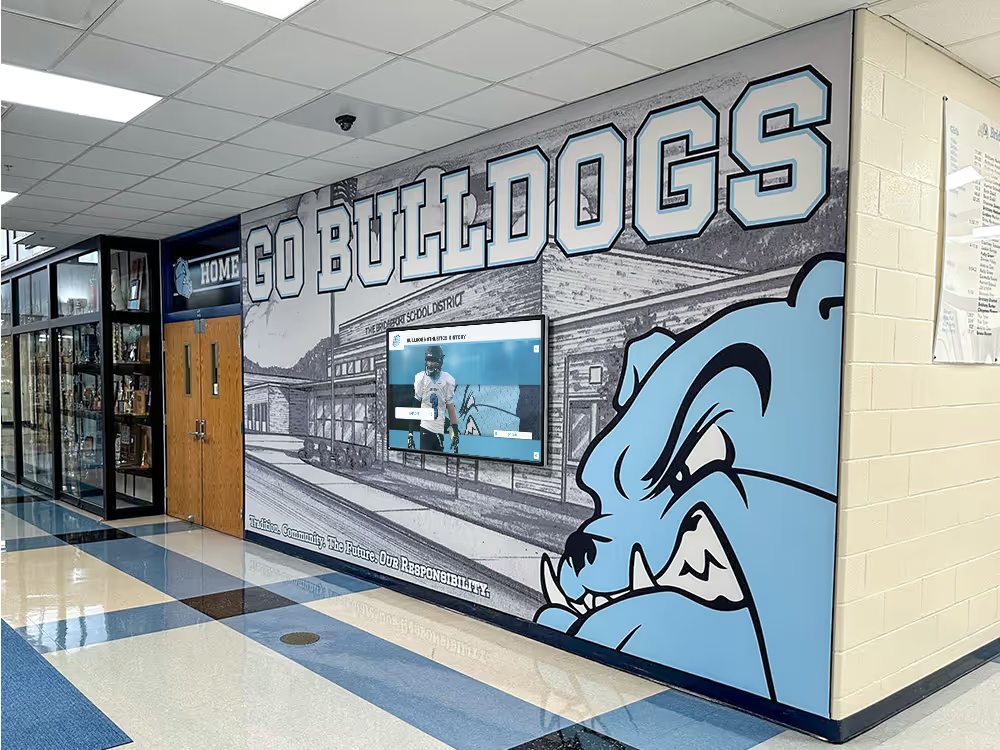
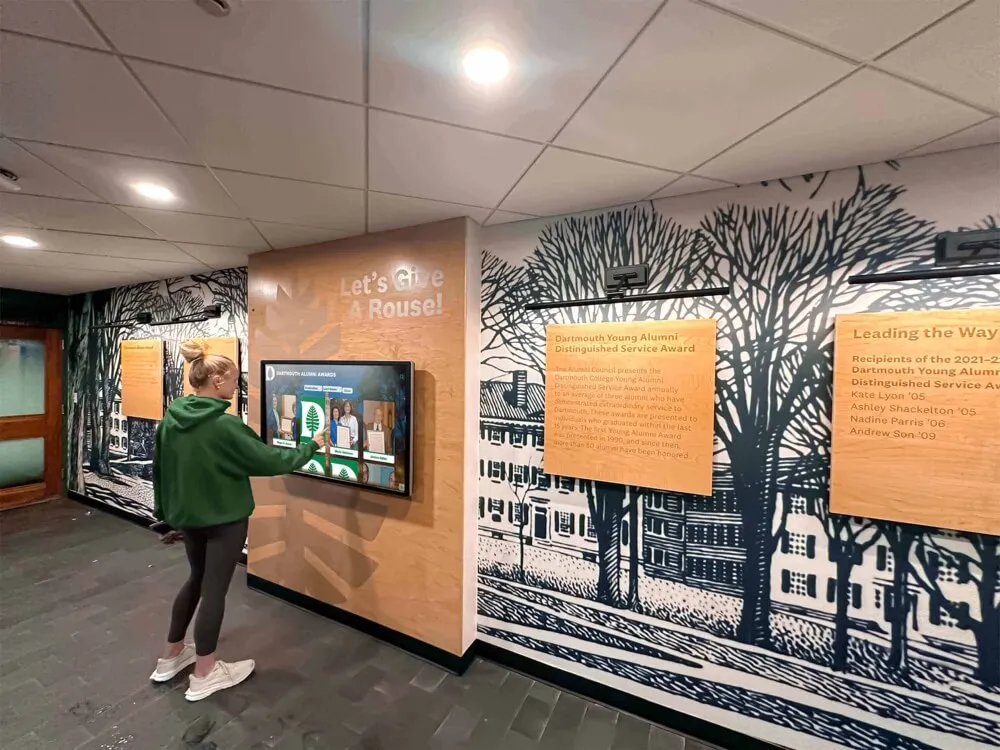
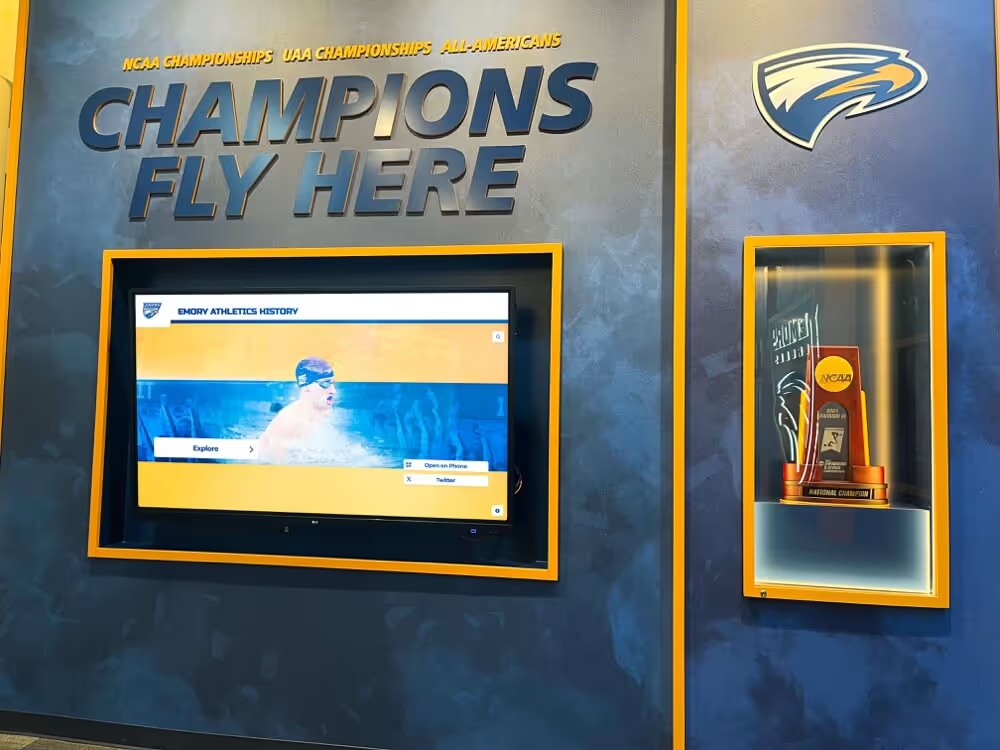
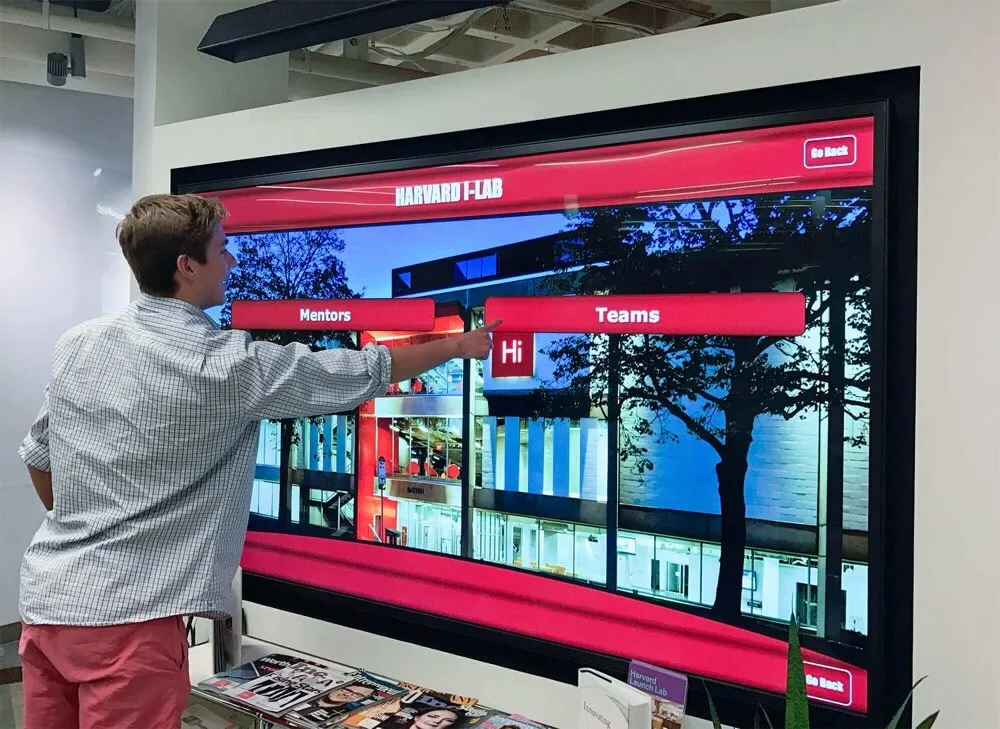
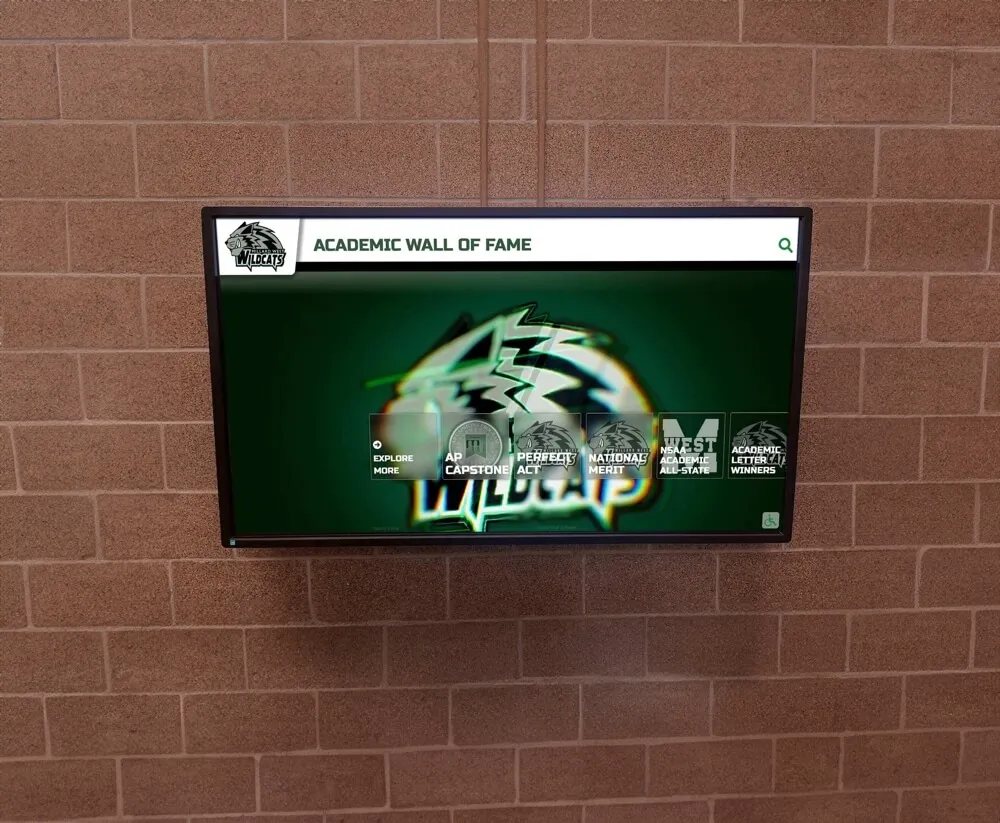
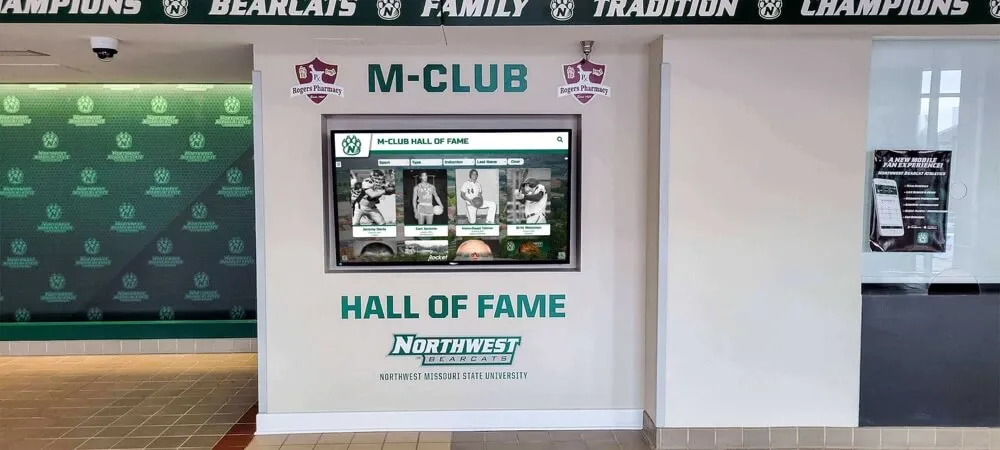
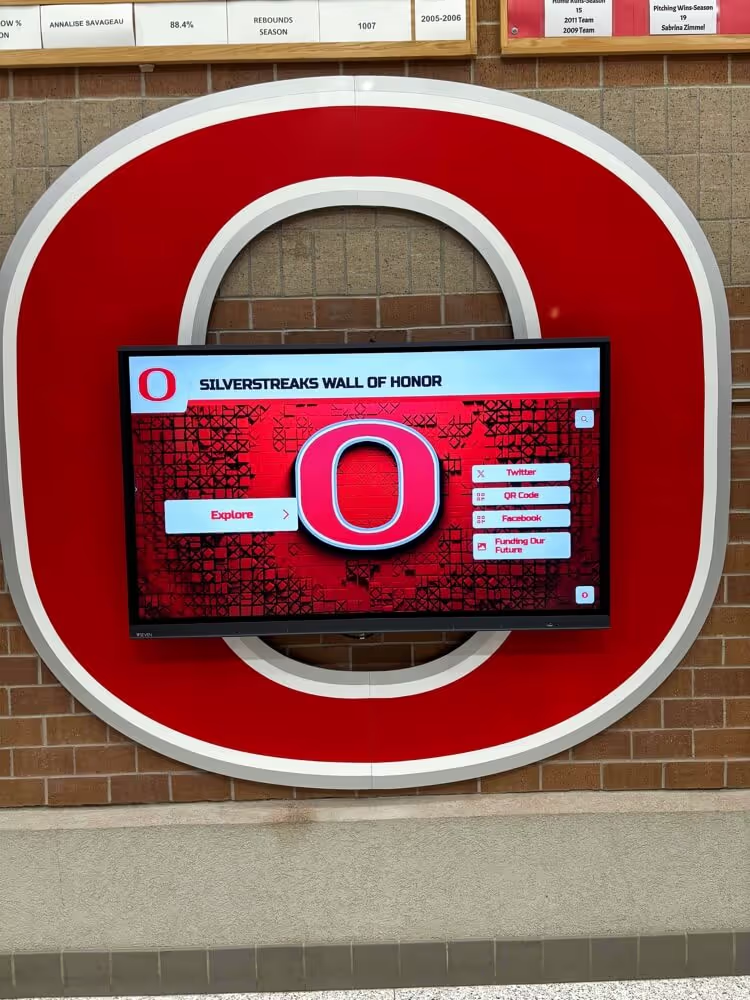
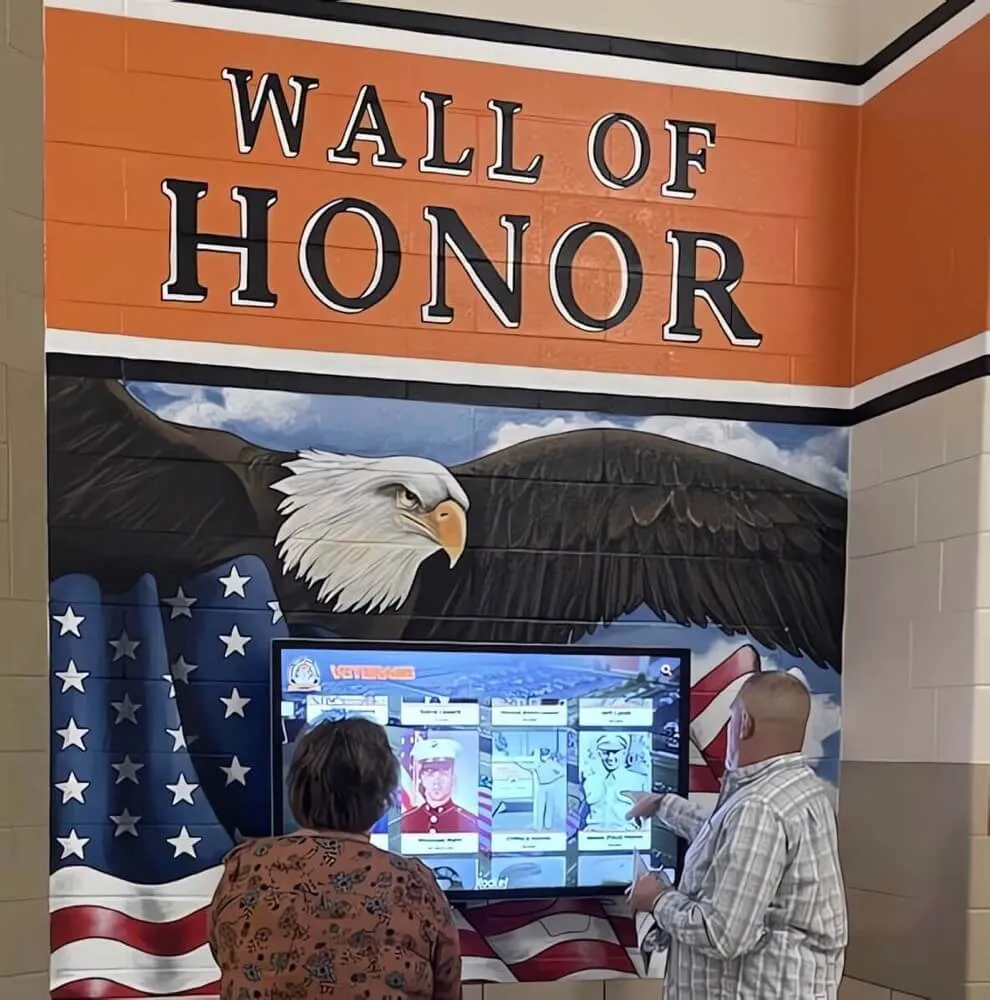
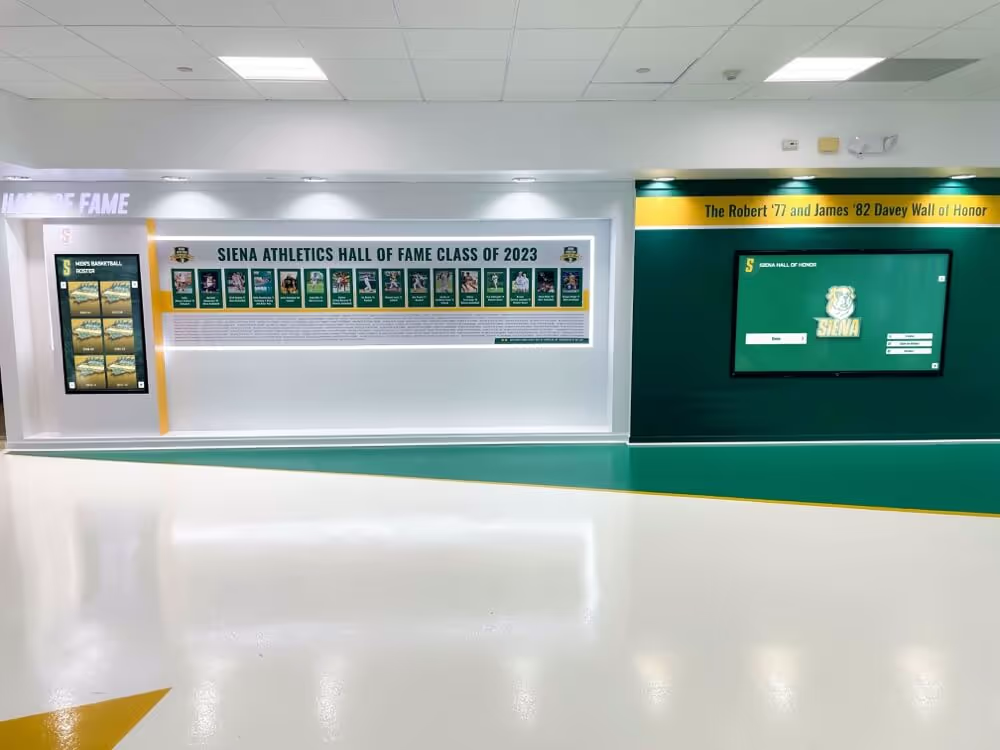
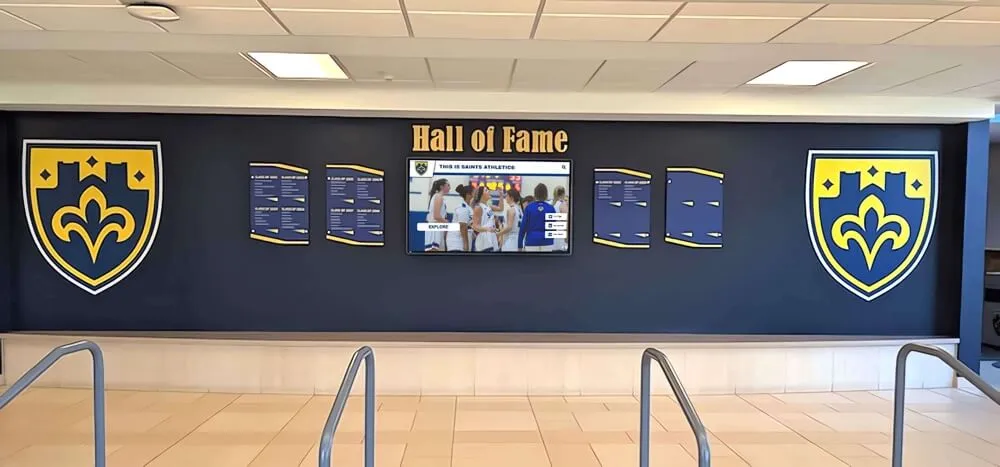
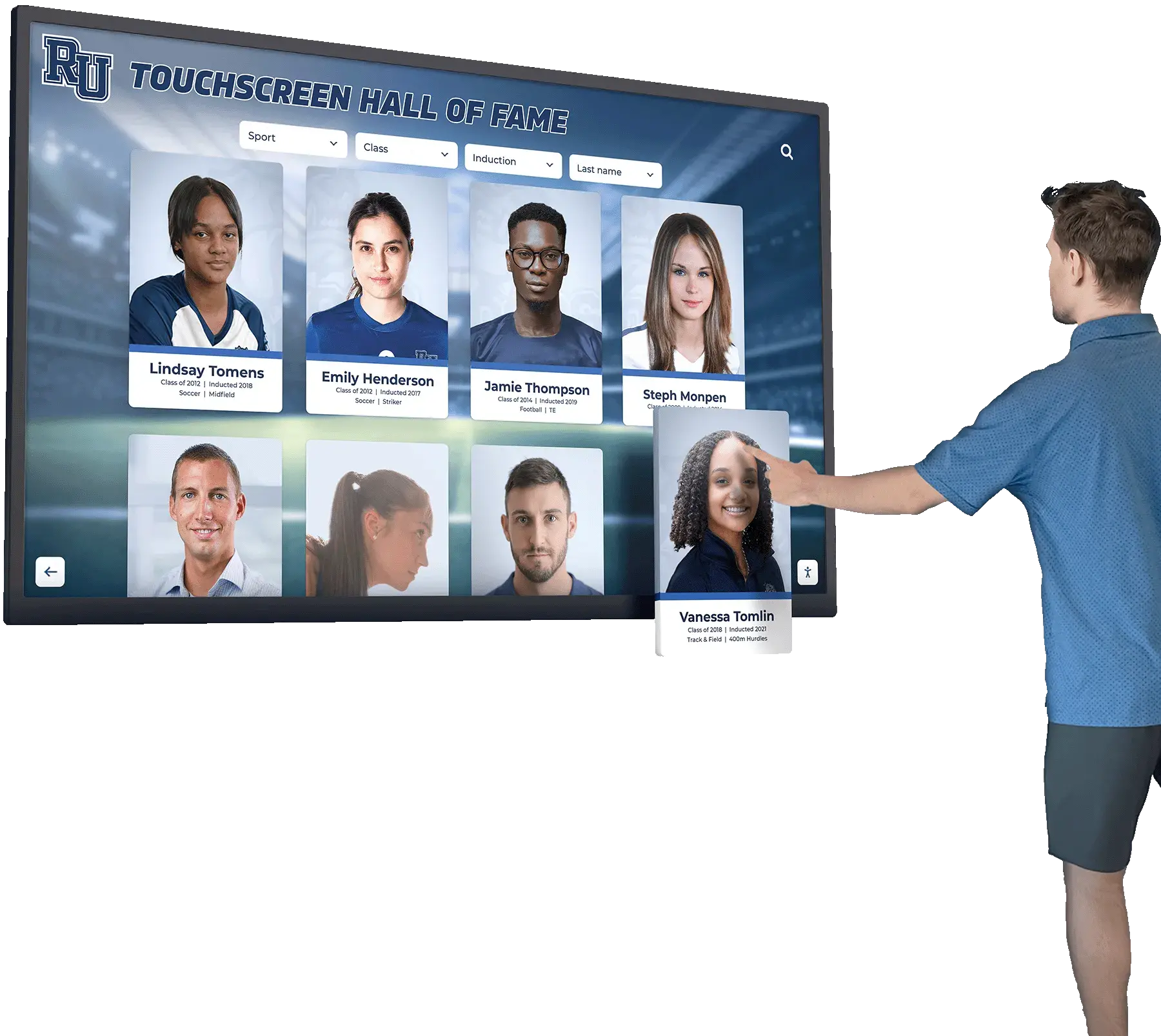
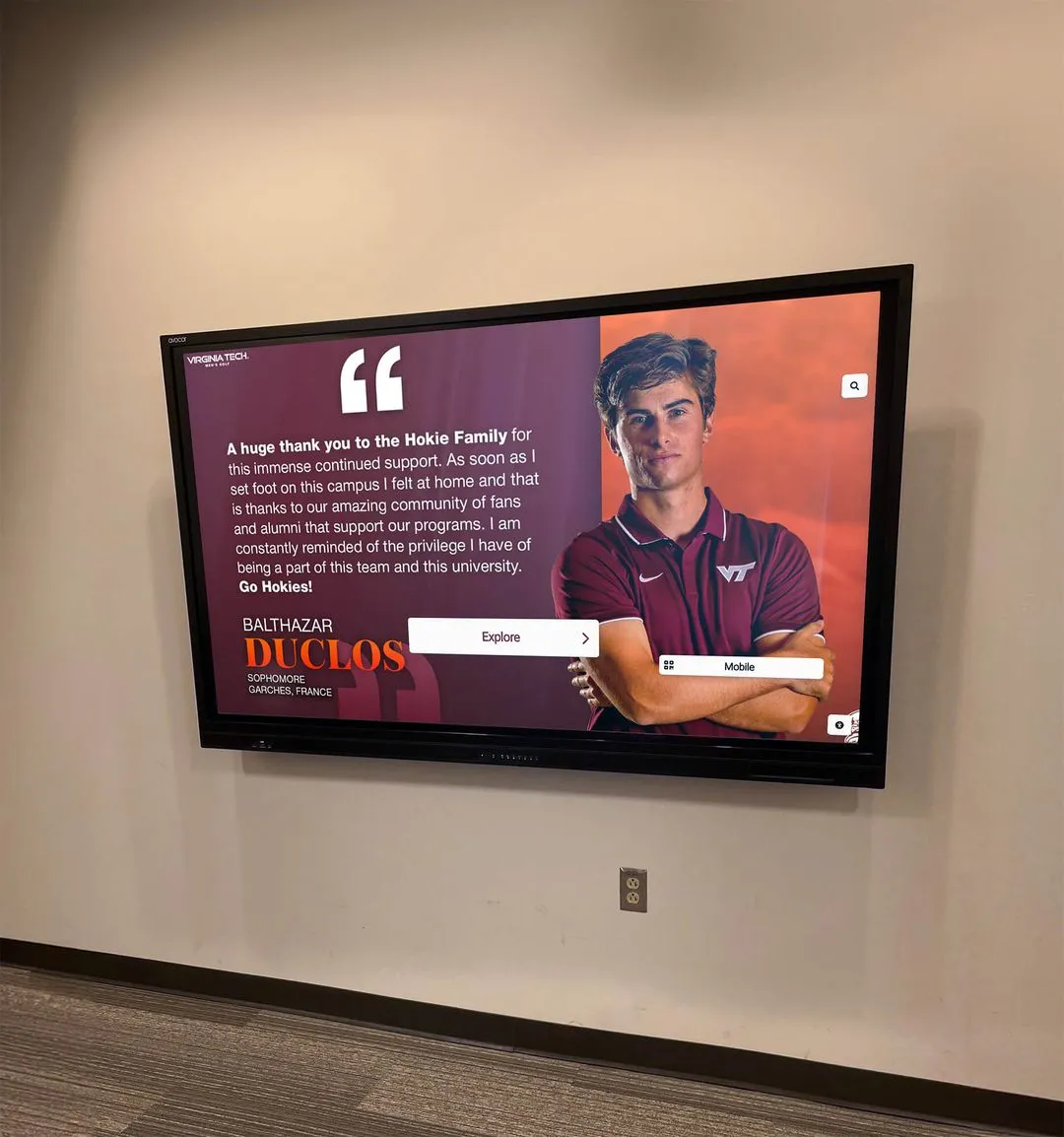
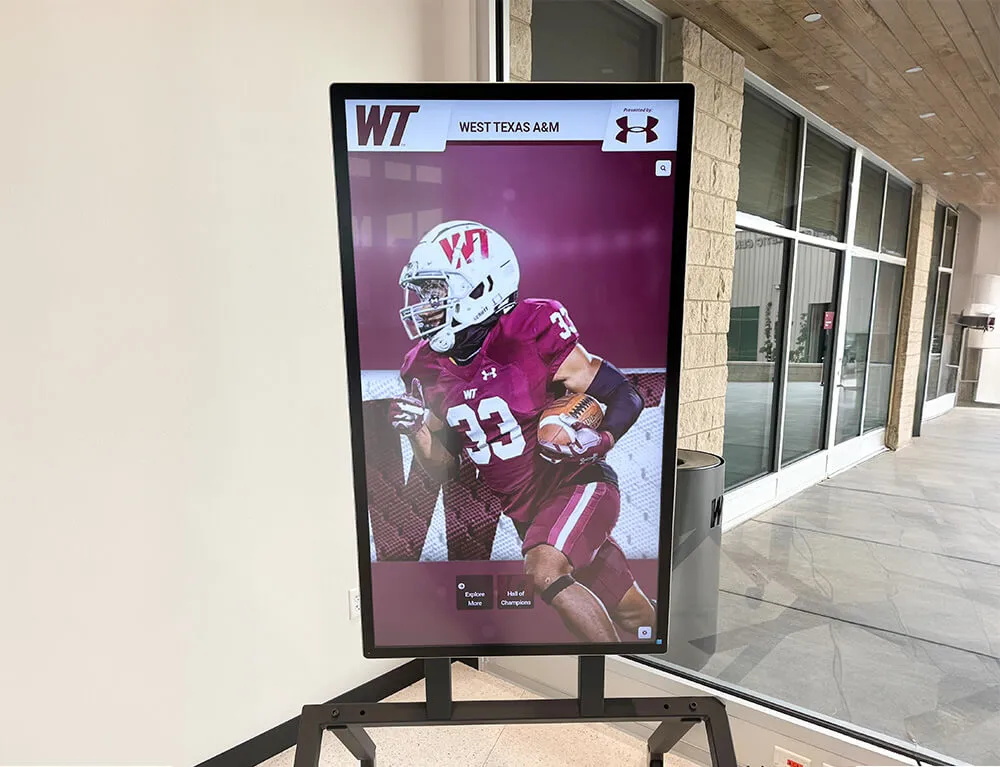
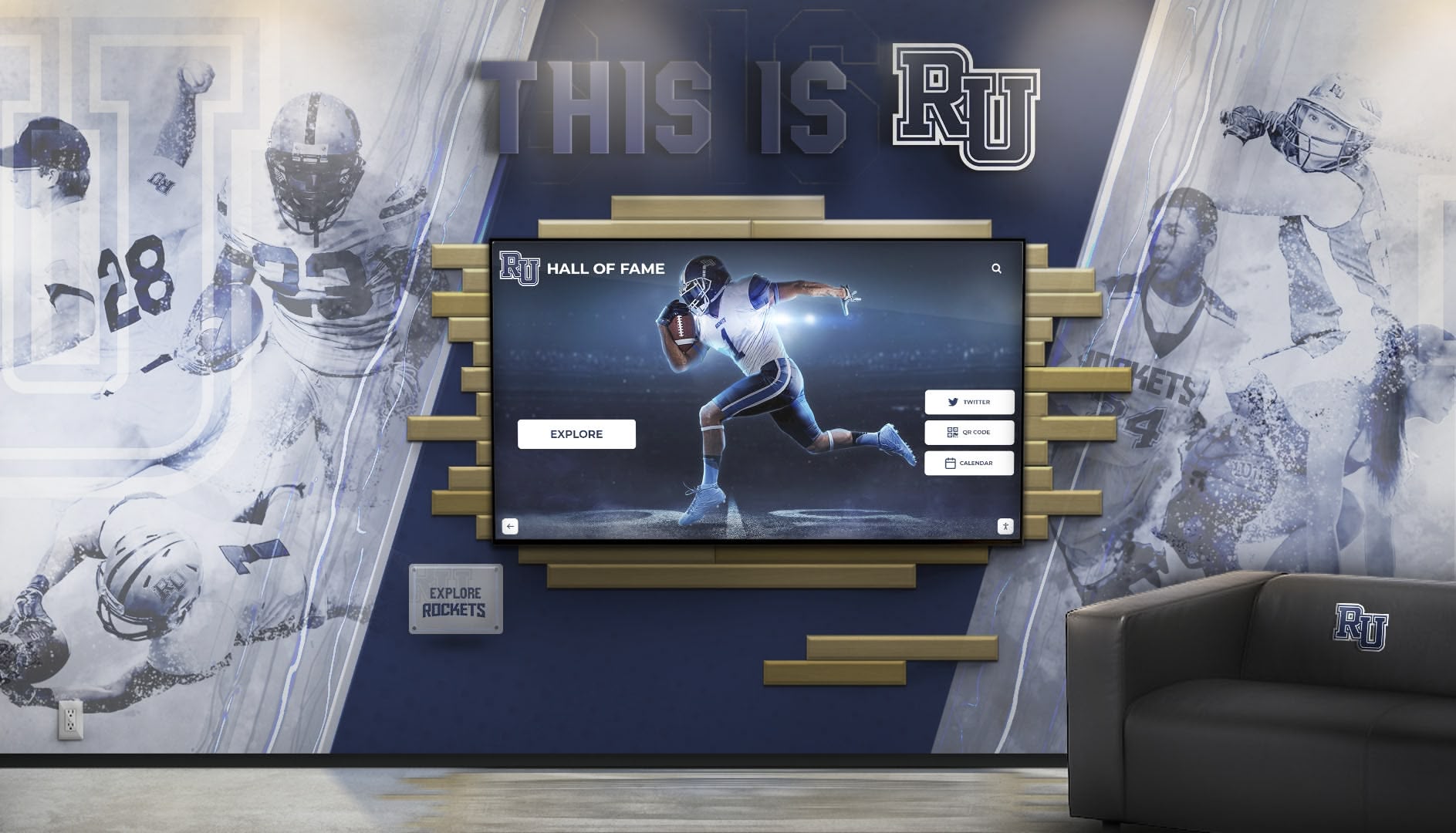
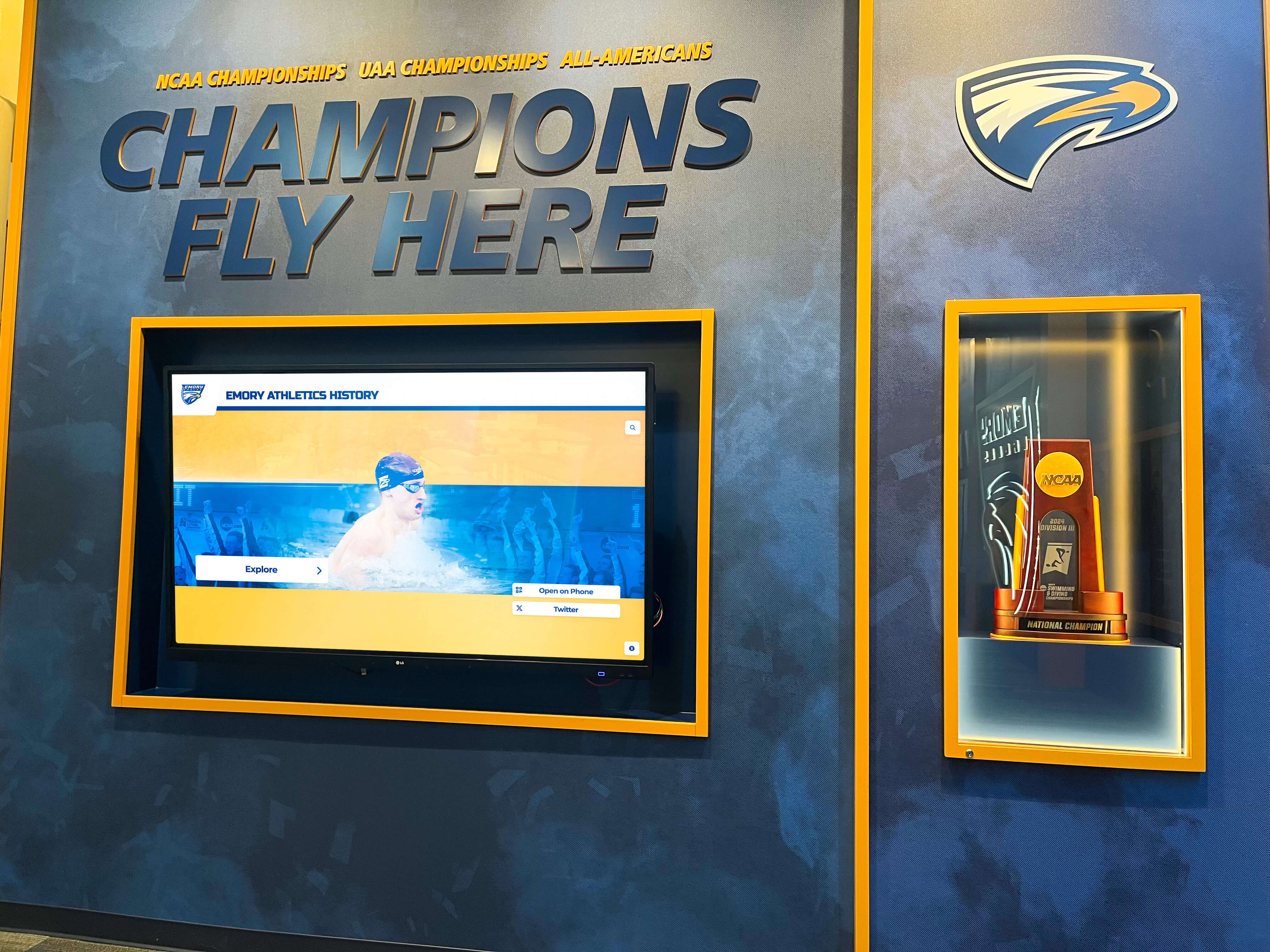
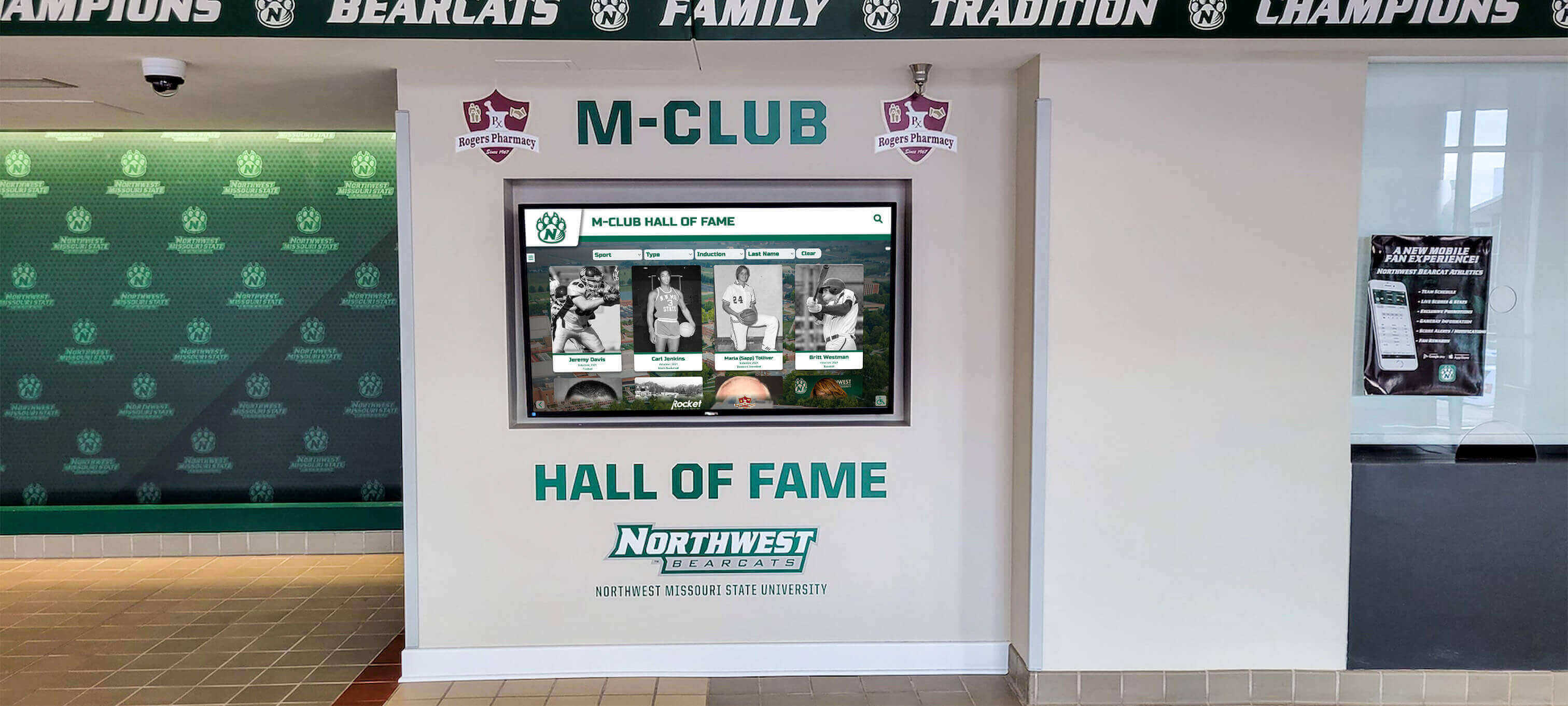
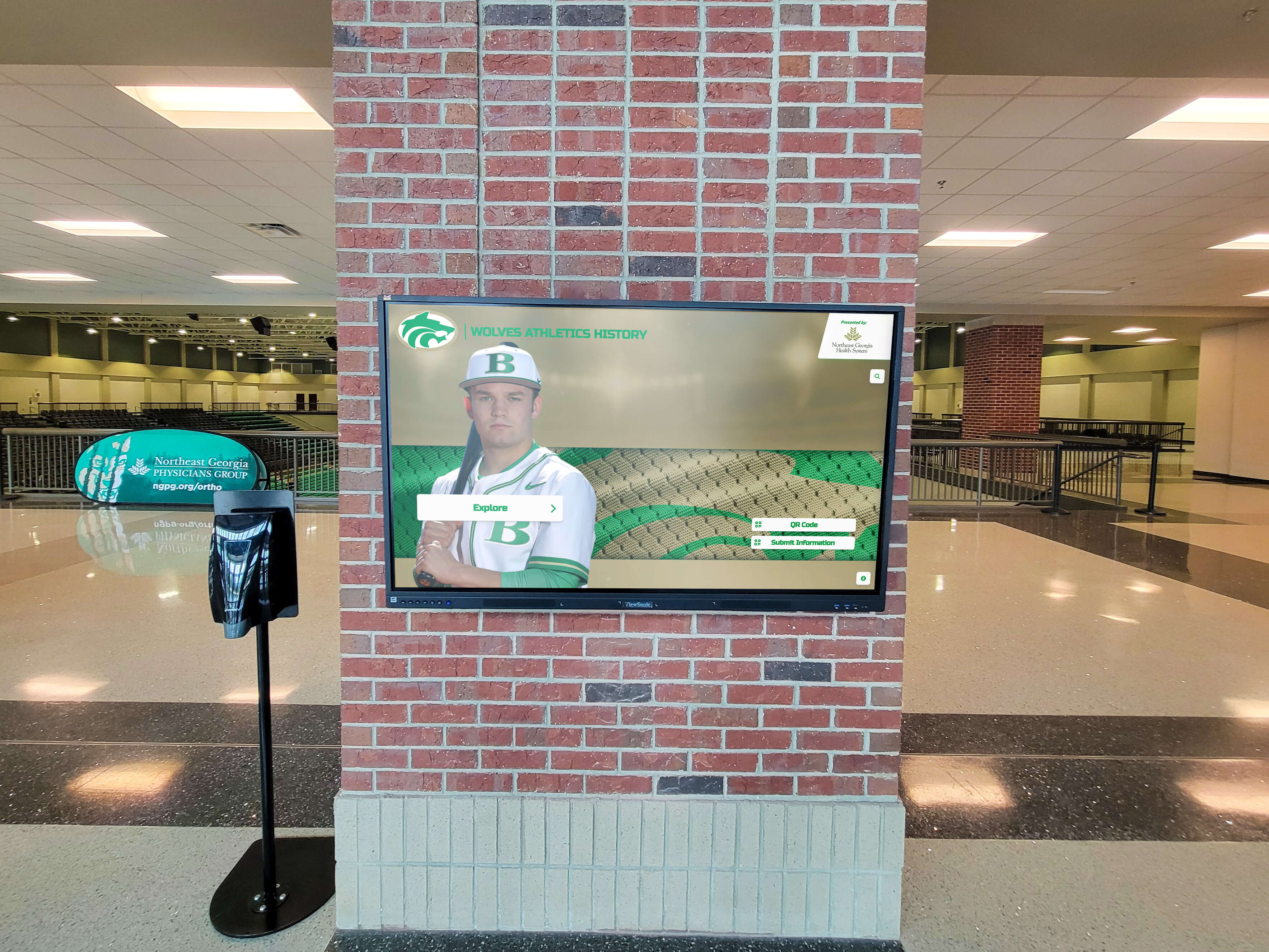
Modern recognition approaches using digital hall of fame displays preserve championship traditions while accommodating unlimited growth. Interactive touchscreen systems showcase decades of achievement through searchable databases featuring photos, videos, statistics, and stories that static plaques cannot convey.
Schools implementing digital recognition systems report that younger athletes engage more deeply with program history when they can explore achievements through familiar touchscreen interfaces. Visiting recruits spend significantly more time examining program accomplishments on interactive displays than they would scanning static trophy cases.
Technology Integration Without Obsolescence
Facility design increasingly incorporates technology supporting training, performance analysis, and engagement. The challenge involves selecting systems that remain relevant across facility lifespans of 20-30 years.
Infrastructure planning—robust network connectivity, flexible power distribution, and adaptable mounting systems—enables technology updates without major construction. Recognition displays, scoreboards, and information systems benefit from forward-looking infrastructure that accommodates evolution without requiring wall demolition or major electrical work.
Space Allocation and Functional Zones
Effective athletic facility design organizes spaces around distinct functional needs while creating natural flow between zones.
Competition and Training Spaces
Courts, fields, and training areas form facility cores requiring careful planning:
Multi-Sport Flexibility
Schools with diverse athletic programs benefit from flexible training spaces:
- Gymnasium floor configurations supporting multiple sports
- Retractable dividers enabling simultaneous activities
- Storage systems facilitating quick equipment transitions
- Flooring selections balancing durability across sport requirements
- Ceiling heights accommodating varied athletic activities
- Lighting systems supporting different sport needs
Universities often dedicate facilities to specific sports while high schools typically require maximum flexibility from limited spaces.
Practice and Training Areas
Beyond competition spaces, dedicated training areas support athlete development:
- Strength and conditioning facilities with appropriate equipment
- Cardio training zones for endurance development
- Agility and speed training areas
- Sport-specific skill development spaces
- Recovery zones with ice baths and treatment areas
- Athletic training rooms for injury evaluation and rehabilitation
Well-designed training facilities reduce conflicts over competition space usage while supporting comprehensive athlete development programs.
Locker Room and Team Spaces
Locker rooms create team culture and provide practical athlete support:
Functional Design Elements
Effective locker room design addresses numerous practical requirements:
- Adequate locker space for all team members
- Shower and restroom facilities meeting privacy and capacity needs
- Team meeting areas for pre-game preparation
- Coach’s office access for supervision and communication
- Equipment storage and organization systems
- Laundry facilities supporting uniform maintenance
- Ventilation preventing odor and moisture issues
- Durable materials withstanding heavy use
Many programs incorporate motivational elements into locker room design—team values displayed on walls, championship recognition celebrating program history, and inspirational messaging reinforcing culture.
Gender Equity and Inclusivity
Title IX compliance and equity principles require equal facilities regardless of gender:
- Comparable locker room quality and amenities
- Equivalent training and competition space access
- Equal visibility and recognition for all programs
- Accessible facilities meeting ADA requirements
- Gender-inclusive spaces accommodating diverse athletes
Schools planning renovations or new construction must ensure facility designs meet legal requirements while demonstrating commitment to equitable treatment across all athletic programs. This includes consideration for athletics equity in visibility and recognition spaces.
Recognition and Community Spaces
Lobbies and gathering areas serve important functions beyond circulation:
Hall of Fame and Trophy Displays
Recognition spaces celebrate program achievements while inspiring current athletes:
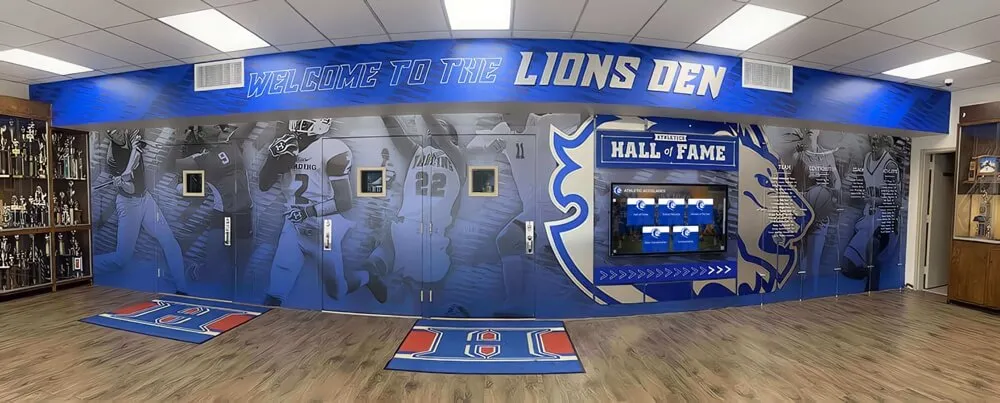
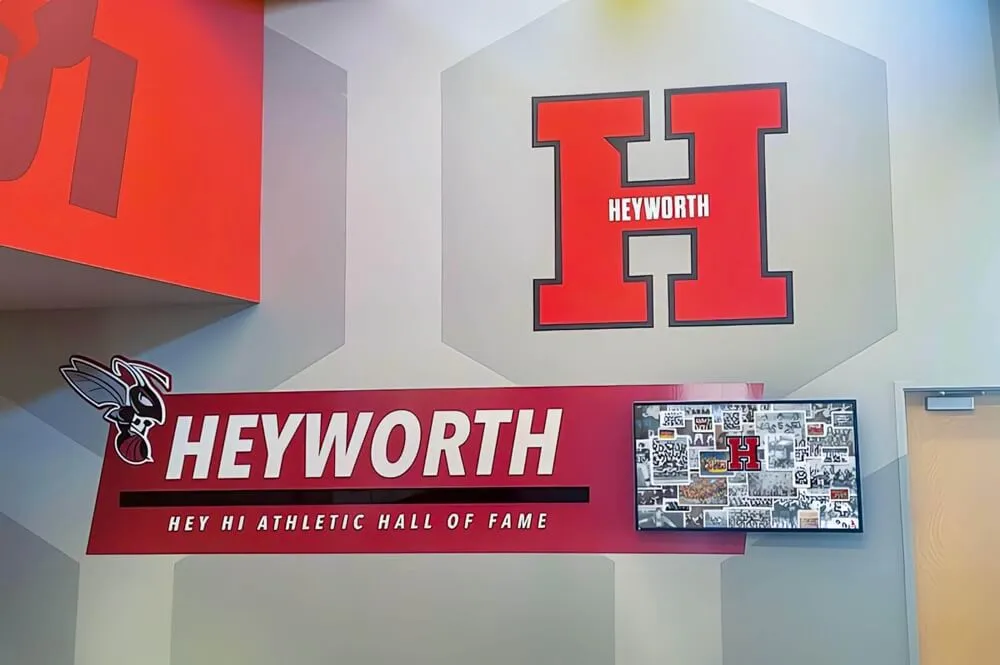
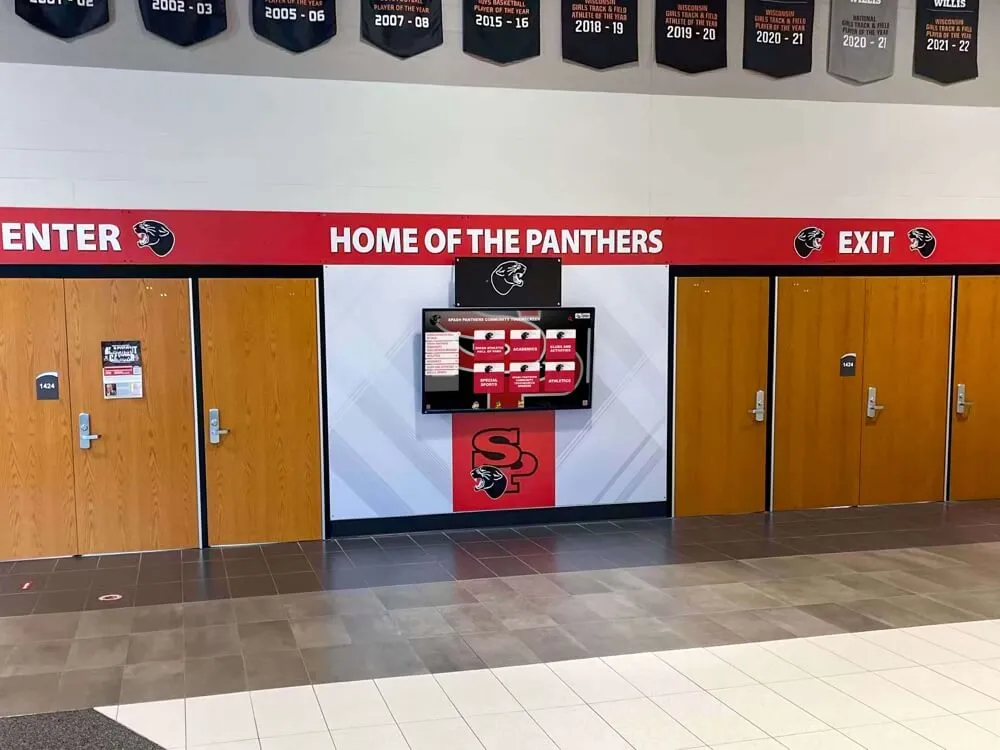
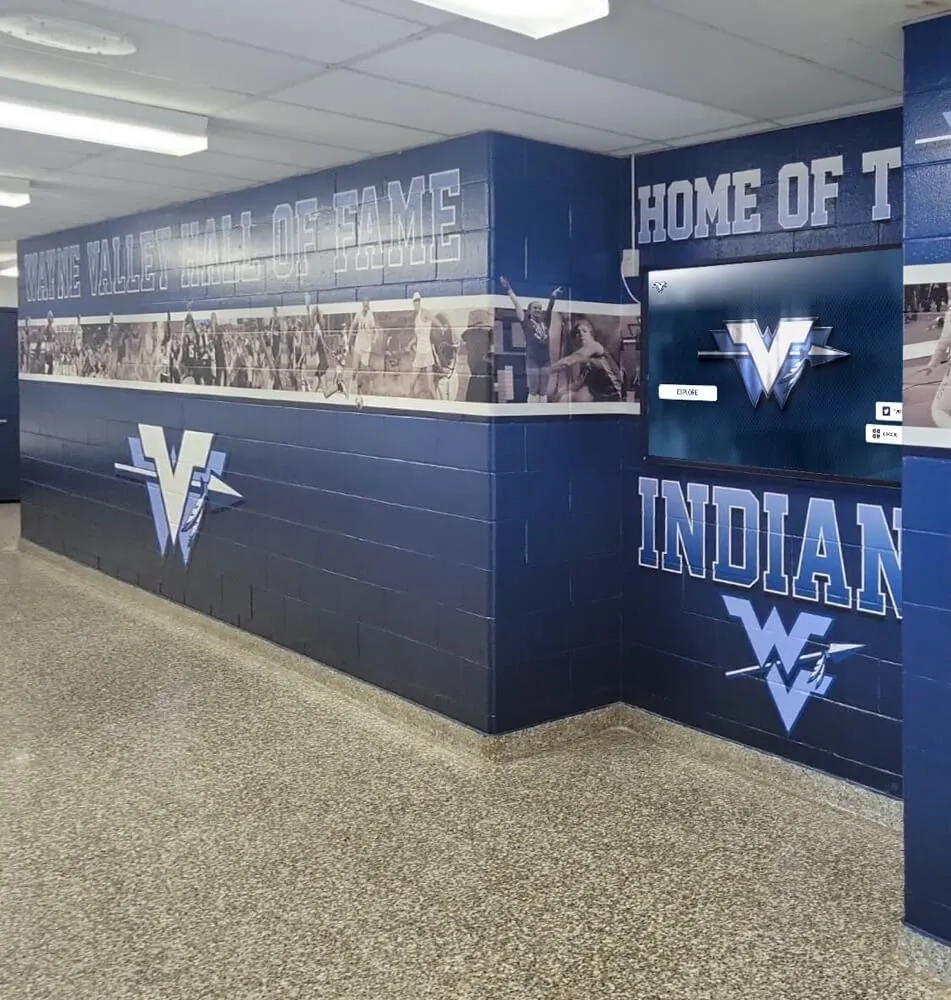
Traditional approaches fill lobbies with trophy cases and championship banners suspended from ceilings. These physical displays create visual impact but face space limitations as programs accumulate additional achievements. Schools with 50+ years of athletic history often struggle to accommodate decades of trophies, plaques, and memorabilia within fixed physical spaces.
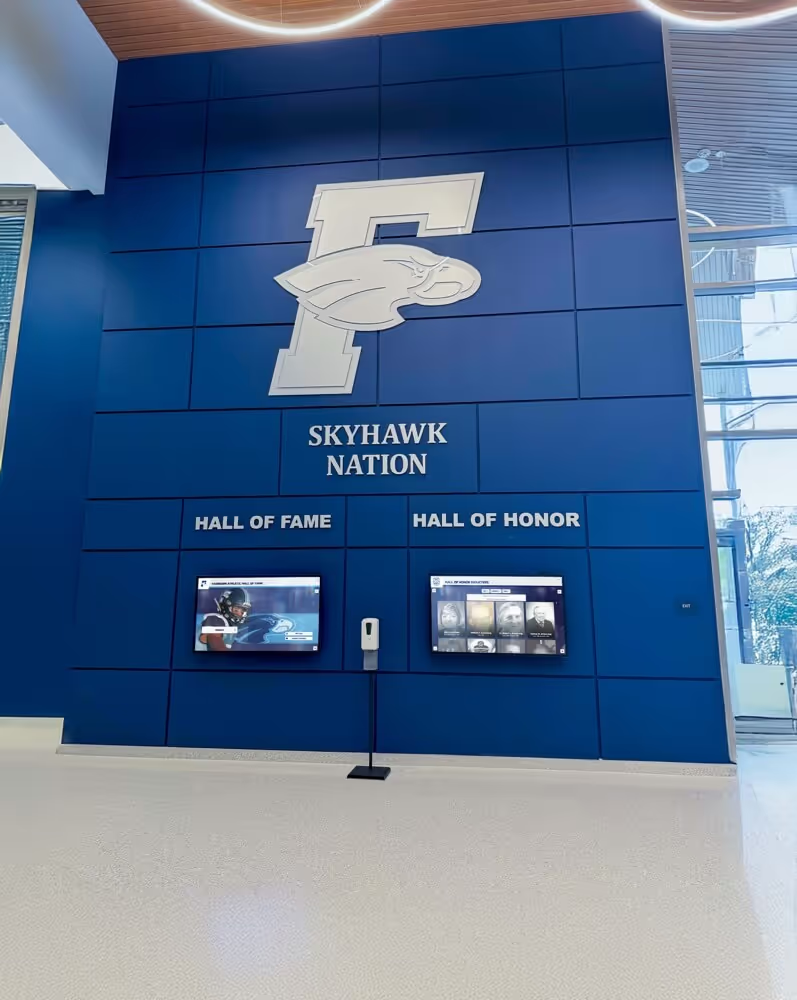
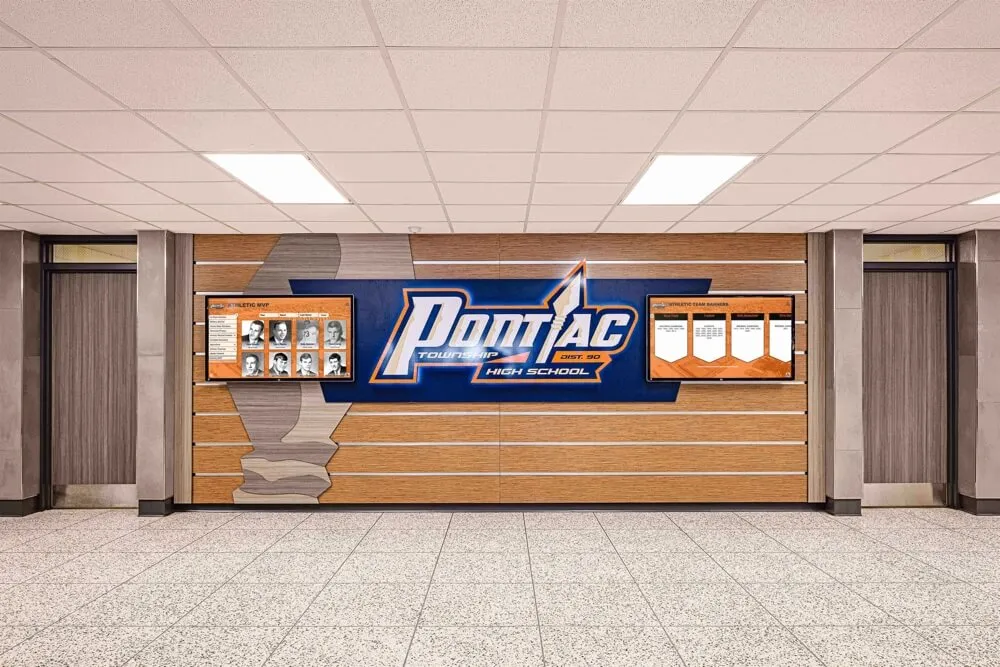
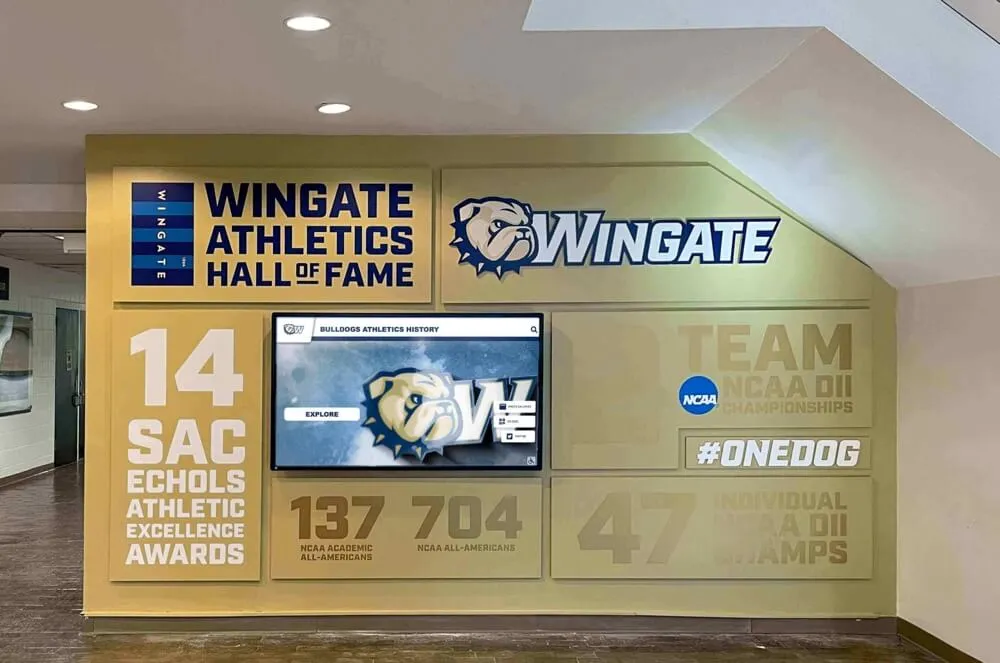
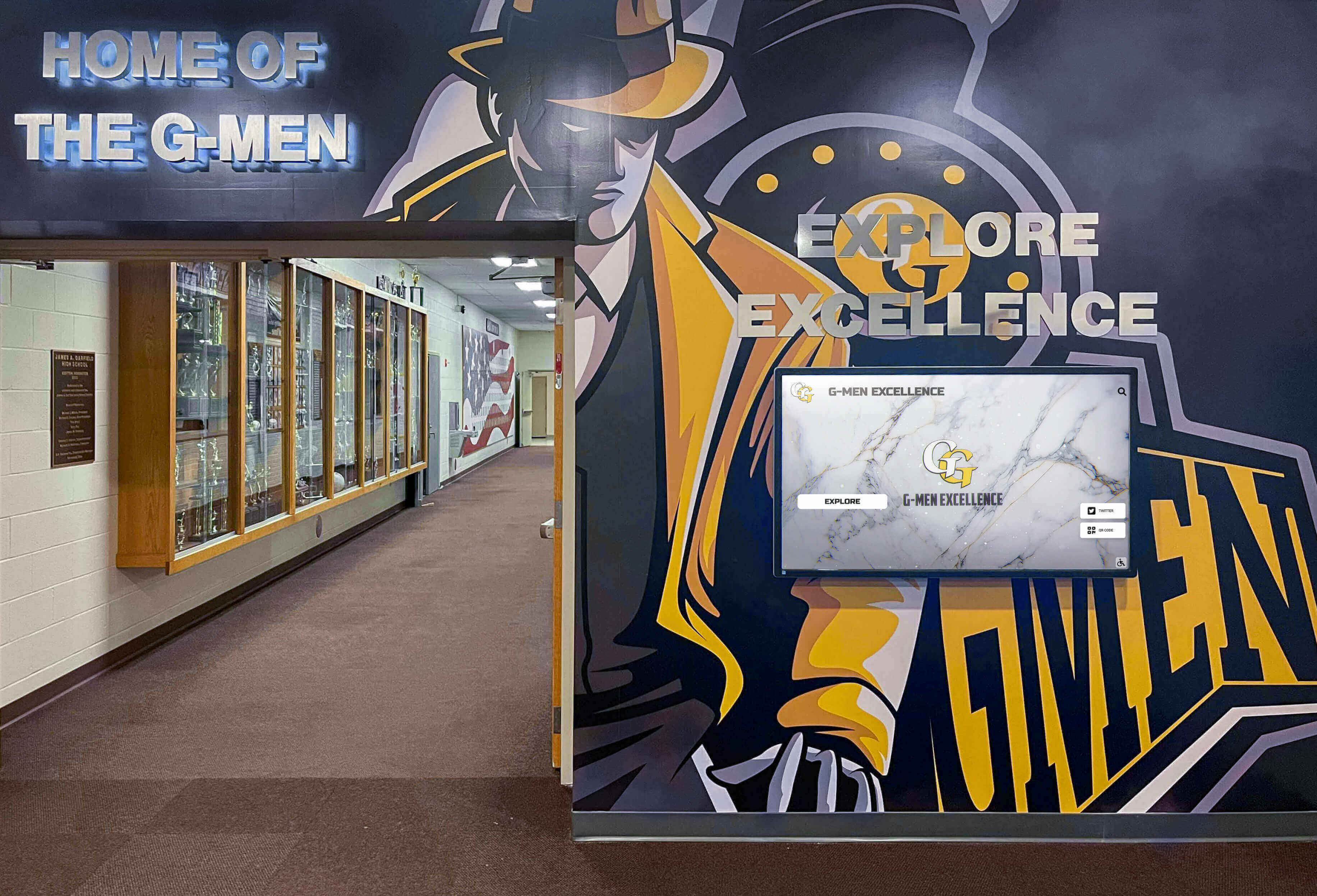
Digital recognition solutions like those from Rocket Alumni Solutions address these limitations by providing unlimited capacity for achievement recognition. A single interactive touchscreen can showcase thousands of athletes, hundreds of teams, and decades of championships through engaging interfaces that visitors can explore based on their interests. These systems complement rather than replace physical trophies, creating comprehensive recognition that honors tradition while embracing scalable modern approaches.
Universities implementing digital recognition report increased engagement—visitors spend 3-5 times longer exploring interactive displays compared to static trophy cases. The searchable nature of digital systems allows visiting recruits to find alumni from their hometowns, current athletes to explore program records they aspire to break, and community members to discover the breadth of program achievements.
Athletic Lounge and Gathering Spaces
Beyond competition and training, athletes benefit from spaces fostering community:
- Comfortable seating for team bonding and relaxation
- Study areas supporting student-athlete academic success
- Team history displays building connection to tradition
- Nutritional support zones with healthy snacks
- Social spaces facilitating relationship development
- Leadership development areas for captain meetings
These spaces communicate institutional investment in holistic athlete development beyond just competitive performance.
Spectator and Event Spaces
Facilities hosting competitions require careful attention to visitor experience:
Seating and Viewing
Spectator accommodations significantly impact event atmosphere:
- Capacity appropriate to program drawing power
- Sightline optimization ensuring quality viewing angles
- Accessibility seating meeting ADA requirements
- Student section locations maximizing home-court advantage
- Press box facilities for media coverage
- Scorer’s table and official areas supporting game operations
Support Amenities
Events require infrastructure beyond seating:
- Concession areas sized for expected attendance
- Restroom facilities with adequate capacity
- Entry and exit flow preventing congestion
- Ticket and admission areas managing attendance
- Parking sufficient for peak events
- Security and emergency access considerations
Schools planning facility design should consider peak usage scenarios—championship games, tournaments, and rivalry competitions—rather than designing only for typical regular-season needs.
Recognition Display Integration
Modern athletic facility design increasingly incorporates sophisticated recognition systems that honor achievements while supporting program goals.
Digital Recognition Technology
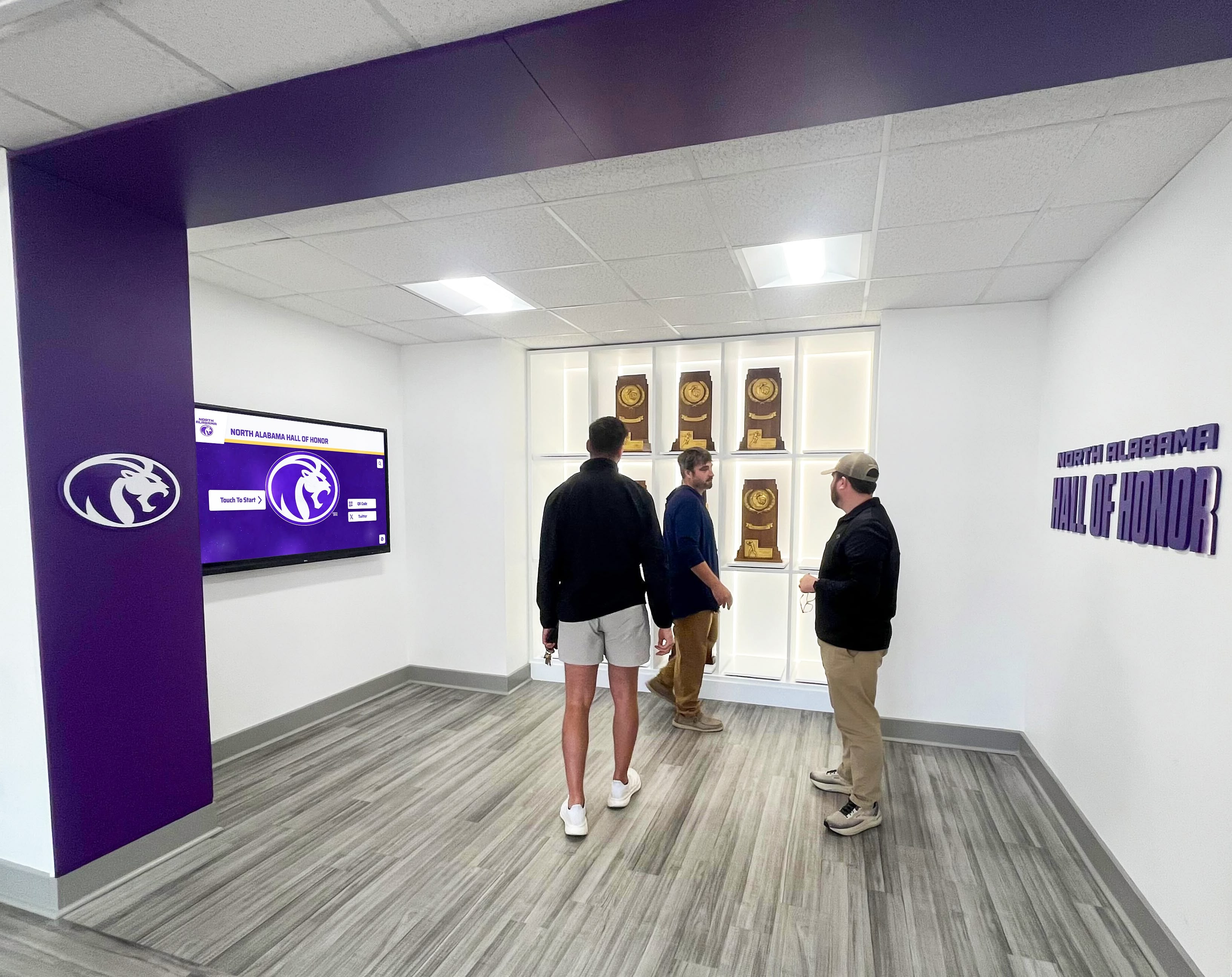
Interactive touchscreen displays transform how facilities showcase athletic excellence:
Unlimited Growth Capacity
Traditional trophy cases eventually fill, creating difficult decisions about which achievements warrant continued display. Digital systems eliminate these constraints—schools can recognize every letter winner, championship team, and record holder from program history without space limitations.
As programs accumulate additional achievements annually, digital displays accommodate growth through simple content additions rather than requiring new construction or trophy case removal. A facility designed in 2026 maintains recognition capacity in 2046 and beyond without physical expansion.
Engagement and Storytelling
Static plaques provide names and dates but limited context. Digital displays enable comprehensive storytelling through photos, videos, statistics, and biographical information that brings achievements to life.
A hall of fame inductee receives not just name recognition but a complete profile featuring career highlights, memorable game footage, post-graduation accomplishments, and personal reflections on their athletic experience. This depth of storytelling creates meaningful connections between viewers and achievements while preserving institutional memory more completely than traditional approaches allow.
Maintenance and Updates
Physical recognition requires ongoing fabrication costs—new plaques engraved, championship banners printed, trophy cases added. Digital systems reduce these recurring expenses through software-based updates.
Athletic directors can add new senior night honorees immediately following ceremonies, recognize all-conference selections as announcements occur, and update record boards when athletes achieve new milestones—all without ordering physical materials or waiting for installation.
Facility Placement Strategies
Recognition displays create maximum impact through strategic location:
High-Traffic Lobby Areas
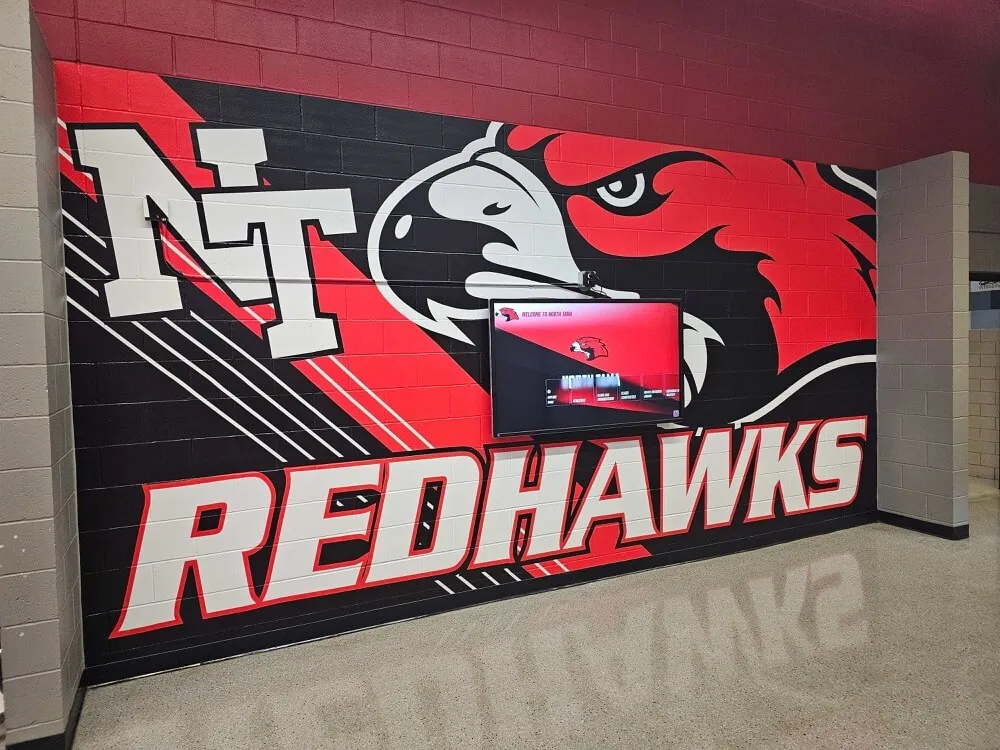
Main facility entrances provide natural recognition locations where athletes, visitors, and community members pass daily. Lobby placement ensures consistent visibility while creating impressive first impressions for visiting recruits and opposing teams.
Competition Space Integration
Recognition displays placed within gymnasiums, natatoriums, or fieldhouses connect directly to competitive environments where they inspire current athletes during practices and competitions. Championship recognition visible during training reinforces program standards and aspirational goals.
Locker Room Inspiration
Some programs incorporate smaller displays within team spaces, showcasing position-specific achievements, team records, or program values in locations where athletes prepare mentally and physically for competition.
Multi-Location Networks
Universities with multiple athletic facilities benefit from networked recognition systems displaying consistent content across venues. A basketball arena, football stadium, and central athletic complex can share unified program history while emphasizing sport-specific achievements relevant to each location.
Accessibility and Universal Design
Athletic facility design must accommodate all users regardless of physical ability.
ADA Compliance Requirements
Federal law mandates accessible facility design:
Physical Space Accessibility
- Ramps and elevators providing vertical circulation alternatives
- Doorway widths accommodating wheelchair passage
- Accessible restroom facilities in all public areas
- Designated accessible seating with clear sightlines
- Accessible routes connecting all public facility areas
- Accessible parking with appropriate proximity and quantities
Recognition Display Accessibility
Digital recognition systems should meet WCAG 2.1 AA standards ensuring usability for individuals with various disabilities:
- Touch targets sized appropriately for users with limited dexterity
- Sufficient color contrast for users with visual impairments
- Text sizing options accommodating vision differences
- Placement heights allowing wheelchair user interaction
- Alternative input methods when appropriate
Solutions like Rocket Alumni Solutions build accessibility into core platform design, ensuring all visitors can engage with athletic recognition regardless of ability. This inclusive approach demonstrates institutional values while meeting legal requirements.
Universal Design Principles
Beyond minimum compliance, universal design creates facilities usable by the broadest possible audience:
- Clear wayfinding helping all visitors navigate spaces
- Multiple communication modes (visual, auditory, tactile) conveying information
- Flexible spaces accommodating varied uses and users
- Simple, intuitive interfaces requiring minimal instruction
- Equitable access without stigmatizing accommodations
Athletic facilities designed with universal principles serve broader communities while meeting varied user needs more effectively than minimum-compliance approaches.
Renovation Versus New Construction
Schools and universities must decide whether to renovate existing facilities or build new athletic spaces.
Renovation Considerations
Existing facility updates offer advantages and challenges:
Cost Efficiency
Renovation typically costs 40-60% less than new construction, preserving funds for program operations, equipment, and scholarships. Schools with serviceable existing structures but outdated finishes, inadequate technology, or insufficient recognition capacity often find renovation meets needs without new construction expenses.
Preservation of Program Spaces
Athletic facilities carry significant emotional and historical value. Renovating gyms where championship teams competed preserves tangible connections to tradition that new buildings cannot replicate. Alumni often demonstrate stronger emotional attachment to renovated facilities they remember from their athletic careers compared to entirely new structures.
Phasing and Operational Continuity
Renovation enables phased approaches maintaining program operations throughout projects. Schools can upgrade lobbies and recognition areas during summer breaks, renovate locker rooms during off-seasons, and refresh training spaces during academic breaks without requiring teams to vacate facilities entirely.
Renovation Limitations
Existing structures impose constraints:
- Fixed footprints limiting expansion
- Structural systems restricting layout changes
- Building systems requiring replacement
- Asbestos or environmental remediation costs
- Code compliance upgrades
- Limited ceiling heights or floor-to-floor dimensions
New Construction Opportunities
Purpose-built athletic facilities provide maximum flexibility:
Optimized Design
New construction enables ideal space allocation, circulation patterns, and functional relationships unconstrained by existing conditions. Architects can design locker rooms with optimal layouts, create perfect sightlines for spectator seating, and incorporate infrastructure supporting current and future technology.
Modern Systems and Efficiency
New facilities incorporate energy-efficient mechanical systems, LED lighting, advanced controls, and sustainable materials reducing operational costs over building lifespans. Schools report 30-50% lower utility costs in new athletic facilities compared to older structures.
Community and Fundraising Impact
New athletic facilities often serve as catalysts for capital campaigns, engaging donors through visible projects with lasting community impact. Naming opportunities for facilities, courts, locker rooms, and recognition spaces provide fundraising incentives supporting broader program needs.
Construction Cost Reality
New athletic construction typically costs $250-400 per square foot depending on location, complexity, and finish quality. A 50,000 square foot athletic facility represents $12-20 million investment requiring careful financial planning and often multi-year fundraising campaigns.
Technology Infrastructure Planning
Athletic facilities require robust infrastructure supporting current and future technology needs.
Network Connectivity
Modern facilities depend on comprehensive network infrastructure:
Wired and Wireless Networks
- Gigabit ethernet supporting high-bandwidth applications
- Wireless access points providing comprehensive coverage
- Network redundancy preventing single points of failure
- Secure network segmentation separating public and administrative systems
- Adequate switching and routing capacity supporting growth
Performance analysis, digital recognition, scoreboard systems, sound reinforcement, and administrative operations all require reliable network connectivity that should be considered core infrastructure rather than afterthought additions.
Power Distribution
Technology requires appropriate electrical infrastructure:
Strategic Outlet Placement
- Display locations with adequate power and data connections
- Flexible power poles supporting floor equipment repositioning
- Charging stations for devices in athlete and spectator areas
- Emergency power systems supporting critical functions
- Capacity planning accommodating future technology additions
Facilities designed with abundant power distribution enable technology integration without expensive retrofits or visible surface-mounted conduit compromising aesthetics.
Display and Presentation Systems
Recognition displays, scoreboards, and information systems require specific infrastructure:
Mounting and Support
- Wall reinforcement supporting display weight
- Mounting heights appropriate for intended use
- Cable pathways concealing connections
- Service access for maintenance and updates
Content Management
- Centralized control systems managing multiple displays
- Remote access enabling off-site content updates
- Scheduled content rotation maintaining fresh presentations
- Analytics tracking engagement and usage patterns
Solutions like Rocket Alumni Solutions provide cloud-based content management enabling athletic directors to update recognition displays from any location, eliminating the need for on-site content administration.
Budget Planning and Cost Management
Athletic facility design requires realistic financial planning balancing aspirations with available resources.
Project Cost Categories
Comprehensive budgets address multiple expense categories:
Construction Hard Costs
- Site preparation and foundations
- Building structure and envelope
- Interior finishes and millwork
- Mechanical, electrical, and plumbing systems
- Technology and communications infrastructure
- Athletic equipment and furnishings
Soft Costs
- Architectural and engineering design fees (typically 8-12% of construction cost)
- Permit and inspection fees
- Testing and commissioning services
- Owner’s project management
- Financing costs if applicable
- Contingency reserves (typically 10-15% of total)
Funding Sources and Strategies
Schools pursue varied funding approaches:
Capital Campaigns and Major Gifts
Athletic facility projects often anchor fundraising campaigns with donor recognition opportunities providing meaningful incentives for major contributions. Naming rights for facilities, courts, locker rooms, and program spaces appeal to alumni athletes and community supporters.
Digital recognition systems support fundraising by showcasing donor generosity prominently through interactive displays that tell giving stories comprehensively. Unlike static donor plaques with limited information, digital profiles can feature donor biographies, photos, videos, and detailed descriptions of giving impact.
Institutional Resources
Universities allocate capital budgets toward facility improvements based on strategic priorities, enrollment growth, and program development needs. Public schools often rely on bond issues requiring voter approval.
Booster Clubs and Community Support
Booster organizations fundraise throughout years supporting incremental facility improvements that collectively transform spaces over time. Community fundraising particularly benefits projects with broad local impact like new gymnasiums serving both school and recreational programs.
Phased Implementation
Budget constraints often necessitate phased approaches completing projects over multiple years as funding becomes available:
- Phase 1: Critical repairs and safety upgrades
- Phase 2: Locker room and team space renovations
- Phase 3: Recognition and lobby improvements
- Phase 4: Spectator amenity enhancements
- Phase 5: Technology and equipment updates
Phased approaches enable progress within budget constraints while maintaining operational facilities throughout multi-year projects.
Sustainability and Operational Efficiency
Sustainable facility design reduces environmental impact while lowering operational costs.
Energy-Efficient Systems
Athletic facilities consume significant energy, making efficiency important:
Lighting
LED fixtures reduce athletic facility lighting costs by 50-70% compared to traditional metal halide or fluorescent systems. Modern LED sports lighting provides superior light quality, instant-on capability, and dimming control enabling flexible illumination levels during practices versus competitions.
HVAC Optimization
High-ceiling gymnasiums and large training spaces present heating and cooling challenges. Efficient system design incorporating destratification fans, occupancy-based controls, and high-efficiency equipment significantly reduces energy consumption without compromising athlete comfort.
Water Conservation
Low-flow plumbing fixtures, efficient irrigation systems for outdoor facilities, and water-cooled equipment optimization reduce facility water consumption and associated costs.
Durable Materials and Maintenance
Long-term facility performance depends on appropriate material selection:
High-Traffic Finishes
Athletic facility materials must withstand heavy use:
- Durable flooring systems resisting wear and impact
- Cleanable wall finishes surviving contact with equipment
- Moisture-resistant materials in locker rooms and natatoriums
- Vandal-resistant fixtures and hardware
- Low-maintenance landscaping for outdoor areas
Maintenance Access and Serviceability
Design that facilitates maintenance reduces lifecycle costs:
- Accessible mechanical equipment locations
- Removable ceiling panels for system access
- Cleanable surfaces throughout high-traffic areas
- Technology infrastructure supporting easy updates
- Adequate storage for maintenance equipment and supplies
Facilities designed for maintainability remain functional and attractive longer, protecting institutional investments while reducing operating expenses.
Future-Proofing Athletic Facilities
Facilities planned today must serve programs for 30+ years, requiring forward-thinking design.
Flexible Space Design
Athletic program needs evolve over decades:
Adaptable Spaces
- Removable partitions enabling space reconfigurations
- Modular furniture and equipment systems supporting varied uses
- Infrastructure supporting multiple sport configurations
- Multi-purpose rooms serving diverse program needs
- Expansion provisions in site planning and building design
Technology Adaptability
Digital systems evolve rapidly; infrastructure must accommodate change:
Robust Infrastructure
Well-designed facilities incorporate technology pathways, power distribution, and mounting provisions enabling updates without major construction. Display systems installed in 2026 will likely be replaced by 2036 and again by 2046—infrastructure should support these evolutions seamlessly.
Platform Longevity
Recognition systems like those from Rocket Alumni Solutions use cloud-based architectures separating content from display hardware. As display technology improves, schools can upgrade screens while preserving their complete achievement databases and content investments. This approach provides better long-term value compared to proprietary systems requiring complete replacement when hardware becomes outdated.
Demographic and Program Evolution
Athletic programs change over time:
Program Additions
Schools may add sports not currently offered. Facility design should accommodate potential program expansion through flexible training spaces, adequate locker room capacity, and recognition systems that scale easily. Digital recognition particularly benefits programs adding sports—a touchscreen system recognizing six sports today easily accommodates eight or ten sports in the future without physical expansion.
Participation Growth
Increasing program participation may require additional team space, training capacity, and recognition needs. Facilities designed with growth provisions avoid costly retrofits as programs expand.
Conclusion: Creating Athletic Spaces That Inspire Excellence
Athletic facility design represents strategic investment in program success that extends far beyond physical structures. Thoughtfully designed spaces honor championship traditions while providing modern environments where current athletes train and compete with pride. Comprehensive planning addressing athlete needs, community engagement, accessibility, technology integration, and sustainable operation creates facilities serving programs effectively for decades.
Schools and universities embarking on athletic facility projects benefit from systematic approaches examining stakeholder needs, space allocation, recognition strategies, budget realities, and future adaptability before making design decisions. The most successful projects balance tradition preservation with innovation adoption, creating spaces that respect program history while embracing tools and approaches that strengthen contemporary athletic culture.
Recognition displays increasingly represent focal points of athletic facility design—high-visibility spaces where programs showcase achievements, inspire current athletes, engage recruits, and connect communities to institutional excellence. Modern digital recognition solutions like Rocket Alumni Solutions provide scalable, engaging alternatives to traditional trophy cases that overflow with decades of achievement. Interactive touchscreen displays honor unlimited athletes through searchable databases featuring photos, videos, statistics, and stories that static plaques cannot convey while accommodating perpetual program growth without physical expansion.
The athletic facilities designed and constructed today will shape program cultures, define institutional identities, and serve student-athletes throughout their high school or university careers for generations ahead. Investment in comprehensive planning, quality design, and innovative recognition approaches creates lasting value that transcends any single season or championship, building traditions that inspire excellence across decades of athletic achievement.
Ready to explore how digital recognition displays can transform your athletic facility’s approach to honoring program achievements and tradition? Discover how Touch Archive helps schools and universities create engaging recognition systems that showcase unlimited athletes, preserve championship history, and inspire future generations through interactive touchscreen displays that complement facility design while providing sustainable long-term recognition solutions.