



An athletic memorabilia condition report is a structured document that records the physical state of a school artifact—a game-worn jersey, championship trophy, or historic team photograph—at a specific point in time. Completing one before a piece is displayed, digitized, loaned to a partner institution, or moved into long-term storage creates a verifiable baseline that protects both the institution and the artifact. Without it, questions about when damage occurred are impossible to answer, conservation decisions lack objective reference points, and the documentation that makes an item archive-ready is simply missing.
This guide provides a complete field-by-field condition report template organized by artifact type—textiles, hardware and trophies, and photographs and paper—alongside a standardized grading scale, condition-specific storage recommendations, and guidance on connecting condition records to digital archive workflows. Athletic directors, hall-of-fame committees, advancement staff, and facilities managers can adapt the template sections to match their existing catalog system or use them as a standalone report format.
Condition documentation is one of the least visible parts of an athletic archive program and one of the most consequential. A jersey cataloged only by athlete name and season is useful; a jersey cataloged with a complete condition record is display-ready, insurable, and eligible for conservation grant applications. The same ten minutes of careful assessment compounds in value every time the item is moved, exhibited, or digitized.

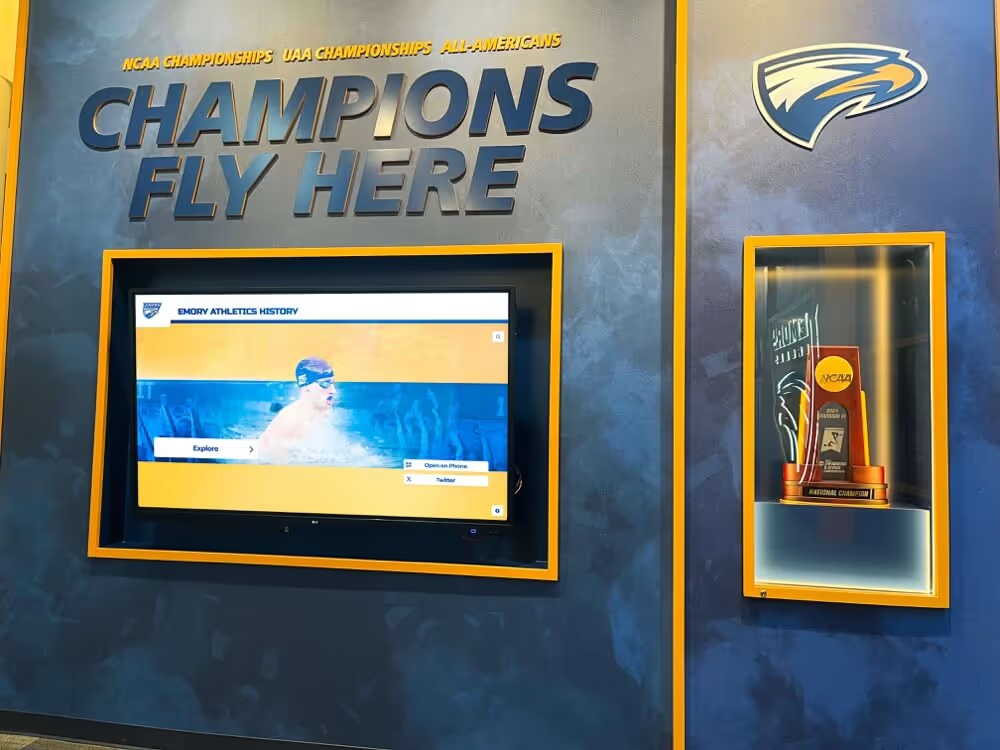
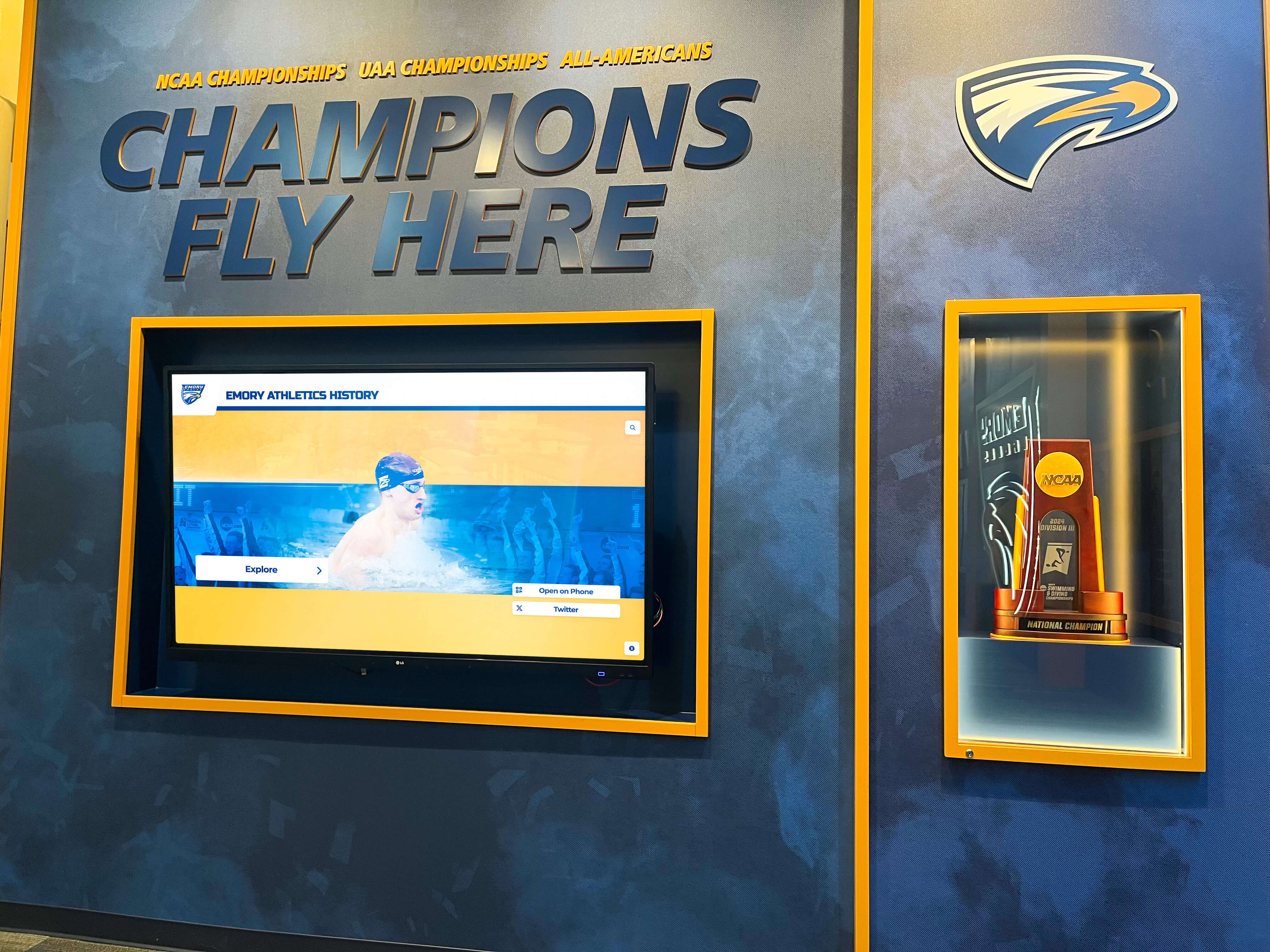
Championship trophies, plaques, and hardware represent a range of materials and condition challenges—a standardized report template ensures consistent documentation across every artifact type in your collection
What an Athletic Memorabilia Condition Report Accomplishes
A condition report serves four distinct functions that justify the time it takes to complete:
Establishes a documented baseline. The report captures the artifact’s physical state on a specific date, signed by a specific staff member. This baseline resolves questions about pre-existing damage, supports insurance claims, and provides the reference point for all future condition assessments.
Guides display and storage decisions. The report’s findings directly inform whether an item is ready for primary display, needs light cleaning, requires conservation review, or should be kept in archival storage with a note explaining its physical limitations. Without this information, display decisions are made by visual impression alone, which frequently places fragile items under conditions that accelerate their deterioration.
Supports digitization planning. High-resolution digitization of a deteriorating photograph or a faded jersey requires different capture settings, handling protocols, and metadata flags than digitization of an item in excellent condition. A condition report completed before the digitization appointment prevents surprises at the scanner or camera station.
Produces documentation for loan, exhibit, and grant applications. When a partner institution requests an item on loan, or when an archive applies for a preservation grant, condition reports are standard supporting documentation. Schools with established condition report workflows can respond to these opportunities; those without them often cannot.
The Condition Grading Scale
All three artifact-type templates in this guide use the same five-level grading scale. Using a consistent vocabulary across textile, hardware, and paper collections makes cross-type reporting and aggregate collection assessments straightforward.
| Grade | Label | Definition |
|---|---|---|
| 5 | Excellent | No visible damage, soiling, fading, or deterioration. All original components present. No repairs or alterations visible. |
| 4 | Good | Minor wear consistent with age and use. Slight fading, light soiling, or very minor surface scuffs. No structural damage. All major components intact. |
| 3 | Fair | Moderate wear, fading, or soiling. Some original components may be missing or replaced. No active deterioration, but item shows its history clearly. |
| 2 | Poor | Significant damage, staining, tears, corrosion, or deterioration. Structural integrity partially compromised. Item may be unsuitable for display without conservation review. |
| 1 | Conservation Needed | Active deterioration—mold, insect activity, brittleness, flaking, or fragility—that requires professional conservation assessment before any further handling or movement. |
For borderline cases, use half-grades (e.g., 3.5) and note the specific factors that placed the item between two levels. Precision in grading matters most for items at the 2–3 boundary, where the display suitability question is actively in play.
Template Section 1 — Report Header (All Artifact Types)
Complete the report header before moving to the artifact-specific fields. Header information applies to every item documented in a batch report session.
| Field | Notes |
|---|---|
| Report date | Date the assessment is performed, not the intake date |
| Report number | Sequential identifier linking this report to the catalog record |
| Assessor name | Staff member completing the report |
| Assessor title | Role of the person completing the assessment |
| Catalog number | Assigned catalog number for the artifact |
| Item title | Descriptive working title (e.g., “1994 State Championship Trophy — Boys Basketball”) |
| Item type | Textile / Hardware-Trophy / Photo-Paper / Mixed / Other |
| Location at assessment | Where the item was physically assessed (storage room, intake table, conservation workspace) |
| Assessment purpose | Display preparation / Digitization / Loan preparation / Routine inspection / Storage transition |
| Condition photographs taken | Yes / No — number of photographs and file reference numbers |
Template Section 2 — Jersey and Textile Condition Fields
Game-worn jerseys, warm-up suits, letter jackets, and other textiles present a specific set of condition variables. Complete each field for every textile item assessed.
| Field | Options / Notes |
|---|---|
| Overall condition grade | 1–5 using the scale above |
| Fabric type | Mesh / Woven / Knit / Flannel / Wool / Synthetic blend / Unknown |
| Primary color(s) | List all colors; note if any show differential fading |
| Fading — severity | None / Minimal / Moderate / Significant / Severe |
| Fading — location | Shoulders / Back number / Front lettering / Collar / Sleeves / Overall / None |
| Soiling — type | Grass / Mud / Sweat / Blood / Oil / General grime / None visible |
| Soiling — severity | None / Light / Moderate / Heavy |
| Soiling — location | Describe specific areas affected |
| Tears or holes | None / Present — if present, describe location and size |
| Seam integrity | All seams intact / Minor separation / Major separation — describe |
| Embroidery or lettering condition | Intact / Minor fraying / Moderate fraying / Significant loss |
| Applied numbers or graphics | Intact / Cracking / Peeling / Partially missing / Not applicable |
| Buttons, snaps, or closures | All present and functional / Some missing / Non-functional — describe |
| Label condition | Present and legible / Present but faded / Missing |
| Laundering status | Laundered after final use / Not laundered / Unknown |
| Odor | None / Faint / Moderate / Significant — note if biological in character |
| Previous repairs or alterations | None / Present — describe location, type, and apparent age |
| Storage recommendation | Primary display / Display with condition note / Archive storage / Conservation review required |
| Condition notes (free text) | Any additional observations not captured by the fields above |
Textile-Specific Handling Notes
Wool and wool-blend jerseys—common in items predating the 1980s—are particularly susceptible to insect damage. During assessment, examine seam allowances, collar undersides, and interior lining areas for evidence of moth larvae or carpet beetle activity. Any such findings should immediately escalate the item to a Grade 1 (Conservation Needed) rating regardless of external appearance.
Items with silk-screened or heat-applied graphics that show cracking or edge lifting are at active risk of further loss. Do not fold such items along the decorated surface; document the existing loss area and store flat or on a padded hanger in a climate-controlled space. For programs evaluating how condition-graded jerseys can eventually be displayed alongside digital recognition elements, display case ideas for trophies and jerseys provide useful context on enclosure types and mounting approaches that minimize ongoing stress to fragile textiles.
Template Section 3 — Trophy and Hardware Condition Fields
Trophies, plaques, medals, championship rings, game balls, and other three-dimensional hardware require a separate field set. Many trophy materials—plated metals, cast resin, painted wood—deteriorate in ways not captured by textile condition frameworks.
| Field | Options / Notes |
|---|---|
| Overall condition grade | 1–5 using the scale above |
| Primary material(s) | Metal / Plated metal / Cast resin / Wood / Glass / Crystal / Marble / Mixed |
| Plating or finish condition | Intact / Tarnished / Oxidized / Flaking / Pitting / Not applicable |
| Structural integrity | Solid — no movement / Minor wobble at base or joints / Significant instability / Broken — describe |
| Missing components | None / Present — list missing elements (figurine, base plate, column section, engraved panel) |
| Engraving legibility | Fully legible / Partially legible (describe affected areas) / Illegible |
| Surface corrosion | None / Surface patina only / Moderate corrosion / Active corrosion — describe location |
| Cracks or chips | None / Present — describe material, location, and size |
| Base condition | Intact / Cracked / Separated from body / Veneer lifting |
| Felt or pad on base | Present and intact / Worn / Missing |
| Plaque or nameplate | Attached and legible / Loose / Missing |
| Paint or enamel condition | Intact / Chipping / Fading / Significant loss / Not applicable |
| Glass or crystal elements | Intact / Chipped / Cracked / Broken — describe |
| Evidence of previous repair | None / Present — describe method and area |
| Surface soiling | None / Dust accumulation / Adhesive residue / Other — describe |
| Odor or biological indicators | None / Musty / Mold visible — describe |
| Storage recommendation | Primary display / Display with condition note / Archive storage / Conservation review required |
| Condition notes (free text) | Any additional observations |
Trophy-Specific Handling Notes
Cast resin figurines—the most common figurine material in trophies manufactured from the 1970s onward—become brittle with age and are vulnerable to impact damage during handling. Always support the full base during transport; never carry a trophy by its figurine or column. Document any pre-existing cracks in resin components even when they appear minor, as hairline fractures frequently propagate during handling.
Plated trophies stored in humid or fluctuating-humidity environments often develop active corrosion at solder points and seams. Surface tarnish cleaned with silver polish or brass polish may mask underlying corrosion; condition reports should note the presence of polishing products when evident. For programs planning to feature trophies in physical recognition spaces alongside digital elements, memorabilia display case options for school athletic programs and sports memorabilia display ideas for trophies and awards cover enclosure materials and UV-filtering options that slow ongoing deterioration.
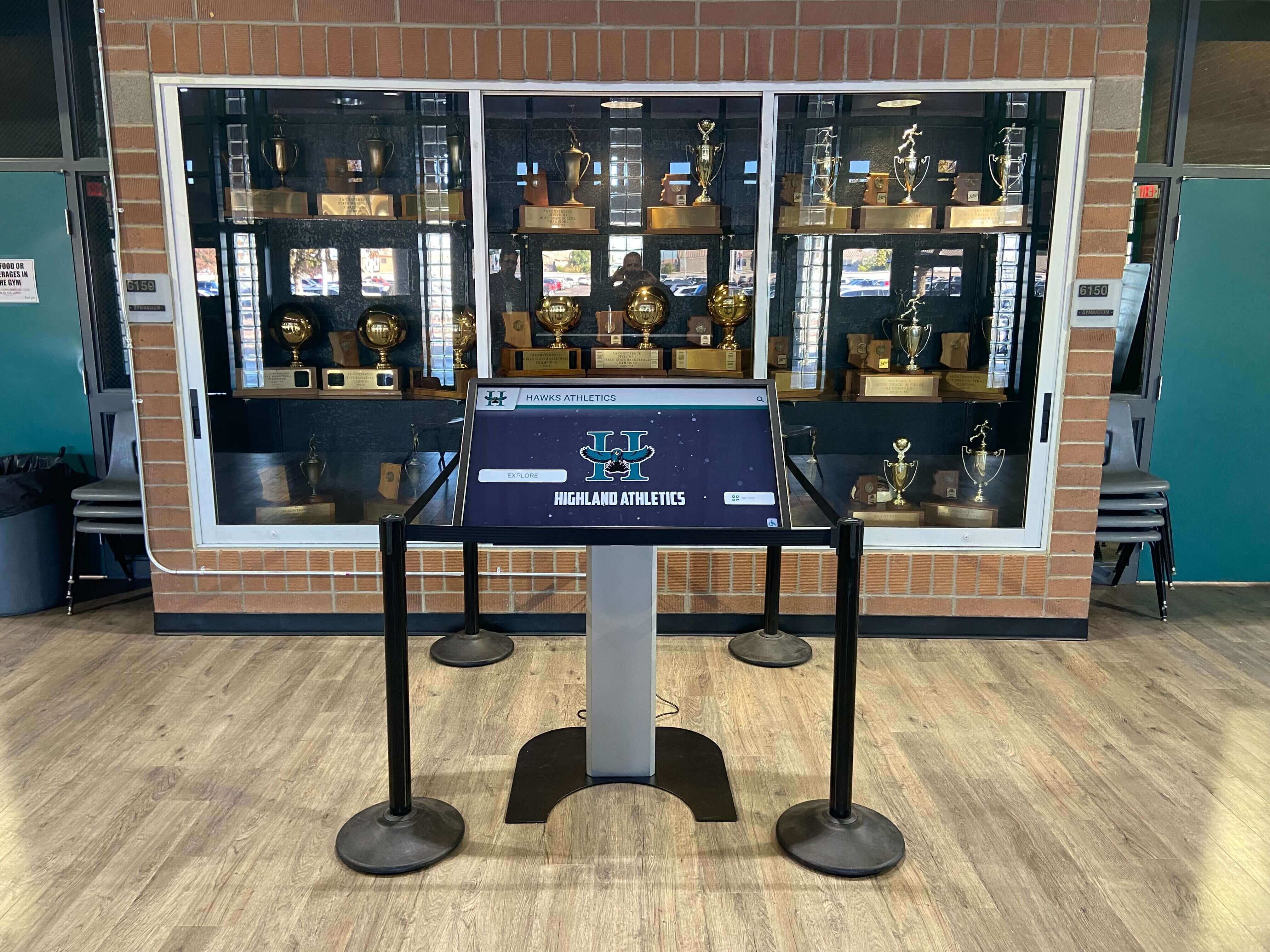
Physical trophy cases and digital recognition displays complement each other—condition reports that document an artifact's state provide the foundation for deciding how and where each piece is shown
Template Section 4 — Photograph and Paper Condition Fields
Photographs, team programs, newspaper clippings, signed letters, certificates, and other paper-based artifacts require condition assessment fields that address the specific deterioration patterns of photographic and cellulose materials.
| Field | Options / Notes |
|---|---|
| Overall condition grade | 1–5 using the scale above |
| Item type | Photograph / Document / Certificate / Program / Newspaper clipping / Poster / Map / Other |
| Photograph process (if applicable) | Silver gelatin print / Chromogenic (color) print / Albumen / Cyanotype / Inkjet / Unknown |
| Support material | Fiber-base paper / RC (resin-coated) paper / Card stock / Newsprint / Bond paper / Other |
| Format | Dimensions (height × width in inches or centimeters) |
| Overall image stability | Fully stable / Minor fading / Moderate fading / Significant fading / Severe image loss |
| Silver mirroring (B&W photos) | None / Localized / Overall — describes a blue-silver sheen in highlight areas |
| Color shift (color photos) | None / Minor yellowing or cyan loss / Moderate / Severe |
| Tears or losses | None / Present — describe location and size; note whether affecting image content |
| Folds or creases | None / Minor / Moderate (raised crease) / Severe (crack through emulsion) |
| Foxing or brown spots | None / Scattered / Concentrated — describe area |
| Staining — type | None / Water tide lines / Adhesive / Ink / Other — describe |
| Staining — location | Describe specific area; note whether affecting image content |
| Emulsion or ink flaking | None / Present — note location and extent |
| Brittleness | Flexible / Slightly brittle / Brittle / Extremely brittle (breaks on slight flex) |
| Insect or rodent damage | None / Present — describe evidence |
| Mold or mildew | None / Inactive (historical) / Active — describe |
| Annotations or writing | None / On verso only / On recto — describe content and media |
| Original housing present | Envelope / Folder / Frame / Album / Mount / None |
| Enclosure condition | Good / Fair / Poor / Not applicable |
| Previous repairs | None / Tape / Adhesive repair / Lamination / Other — describe |
| Storage recommendation | Primary display / Archive storage with enclosure / Digitize and store / Conservation review required |
| Condition notes (free text) | Any additional observations |
Photograph and Paper Handling Notes
Acetate-base negatives and early polyester film materials can emit an acidic “vinegar” odor as they deteriorate—a condition sometimes called vinegar syndrome. If any negatives or transparencies in a collection produce a noticeable acidic or vinegar smell, isolate them immediately from other collection materials and consult a conservator before further handling. The odor indicates active deterioration that accelerates rapidly in warm environments and can spread to adjacent materials.
Newsprint items are among the most fragile paper artifacts in school collections. Newsprint is inherently acidic and becomes brittle relatively quickly under normal storage conditions. Items of significant historical value should be photocopied onto acid-free paper and stored in a separate sleeve from the original; the copy serves as the working reference while the original is protected. For programs building systematic photo archive workflows, the guide to digitizing team photos covers capture settings, file format decisions, and metadata standards that integrate directly with condition-documented archive records.
Connecting Condition Reports to Storage Decisions
The storage recommendation field in each template section is the functional output that drives immediate action. Use the following matrix to translate condition grades into consistent storage protocols.
| Condition Grade | Typical Storage Protocol |
|---|---|
| 5 — Excellent | Standard display or archival enclosure; routine inspection every 2–3 years |
| 4 — Good | Display or archival enclosure; inspect annually; light surface cleaning as appropriate |
| 3 — Fair | Archival enclosure preferred; display acceptable with condition notation; inspect twice annually |
| 2 — Poor | Archival storage only; do not display until conservation review completed; flag for conservation priority queue |
| 1 — Conservation Needed | Isolate; do not handle without professional guidance; initiate conservation consultation immediately |
Climate targets for mixed-type collections are generally cited in the literature as approximately 60–70°F with relative humidity between 30–50%, away from UV light sources. Specific material types have narrower optimal ranges—photographic materials are particularly sensitive to humidity fluctuations—so collections containing significant photographic holdings benefit from more precise environmental monitoring. Consult a conservator or your state’s institutional archives guidance for material-specific storage standards; the targets here are general educational reference points, not professional conservation advice.
Integrating Condition Reports with Digital Archive Workflows
A condition report that lives only in a paper file—or an isolated spreadsheet—provides protection for the single artifact it covers. A condition report integrated with a digital catalog record extends that protection to every downstream use of the item: exhibit loans, conservation grant applications, digital display entries, and annual collection audits.
The most practical integration approach assigns each condition report a reference number that matches the catalog record for the same artifact. When a digitization technician pulls up the catalog entry for a 1982 volleyball championship trophy, the linked condition report tells them exactly what to expect before they begin capture: the engraving on Panel B is partially obscured by corrosion, the base has a hairline crack that requires support during repositioning, and the plating is intact but tarnished enough to require adjusted lighting. That information takes ten seconds to read and prevents both damage during handling and reshoots caused by unanticipated surface conditions.
Athletic department annual reporting frequently draws on collection audit data to demonstrate institutional stewardship and support budget requests for conservation or display resources. Condition reports that are integrated with catalog records—rather than filed separately—make aggregate reporting straightforward: a single query returns the current condition distribution of the full collection, which items have moved between grades since last assessment, and which are approaching conservation thresholds.
For programs managing growing collections that span multiple decades and artifact types, trophy and plaque display benchmarks and high school sports award categories and recognition ideas offer useful reference points for understanding what institutions of similar size and scope are documenting and displaying. A football helmet with documented condition and full provenance, for example, becomes an anchor element in an interactive display when its records are complete—as detailed in athletic memorabilia display case guidance for helmets and hardware.
From Condition Record to Digital Recognition Display
Condition documentation and digital recognition are often treated as separate workflows, but they share the same foundational goal: preserving institutional memory in a form that future generations can access and understand. A jersey graded Fair with partial lettering loss is not ideal for primary physical display, but it may be the only surviving artifact from a program’s inaugural season—making its digitization and digital display not just appropriate but essential.
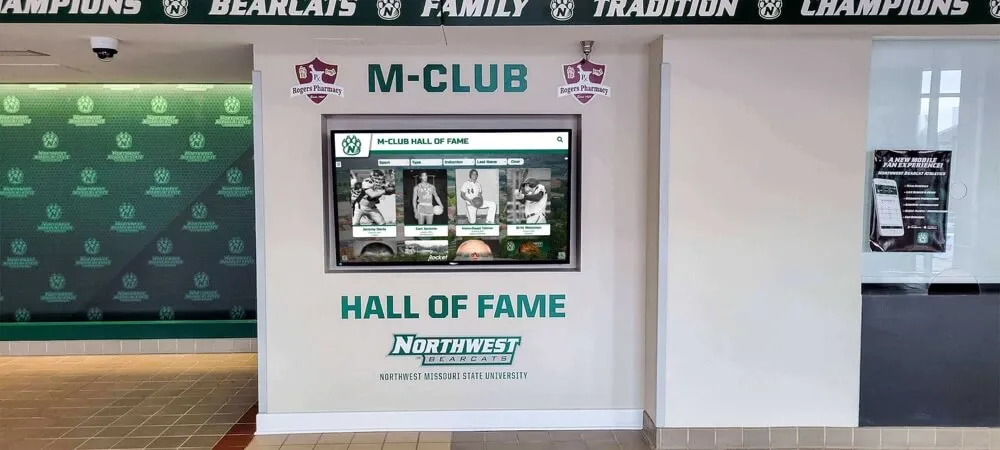
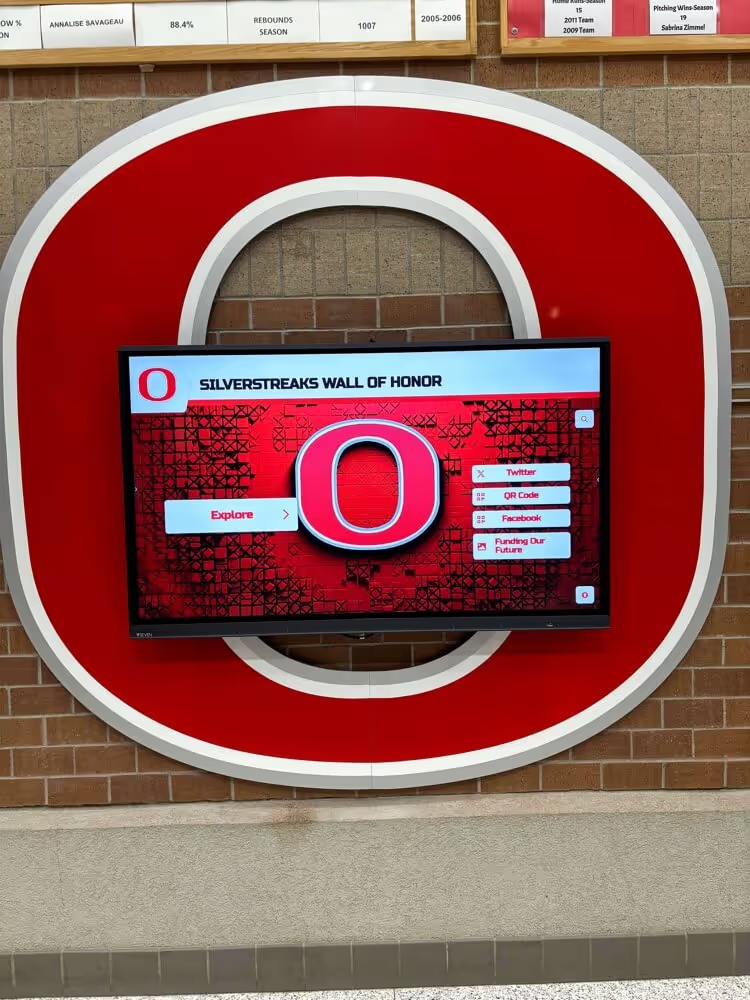
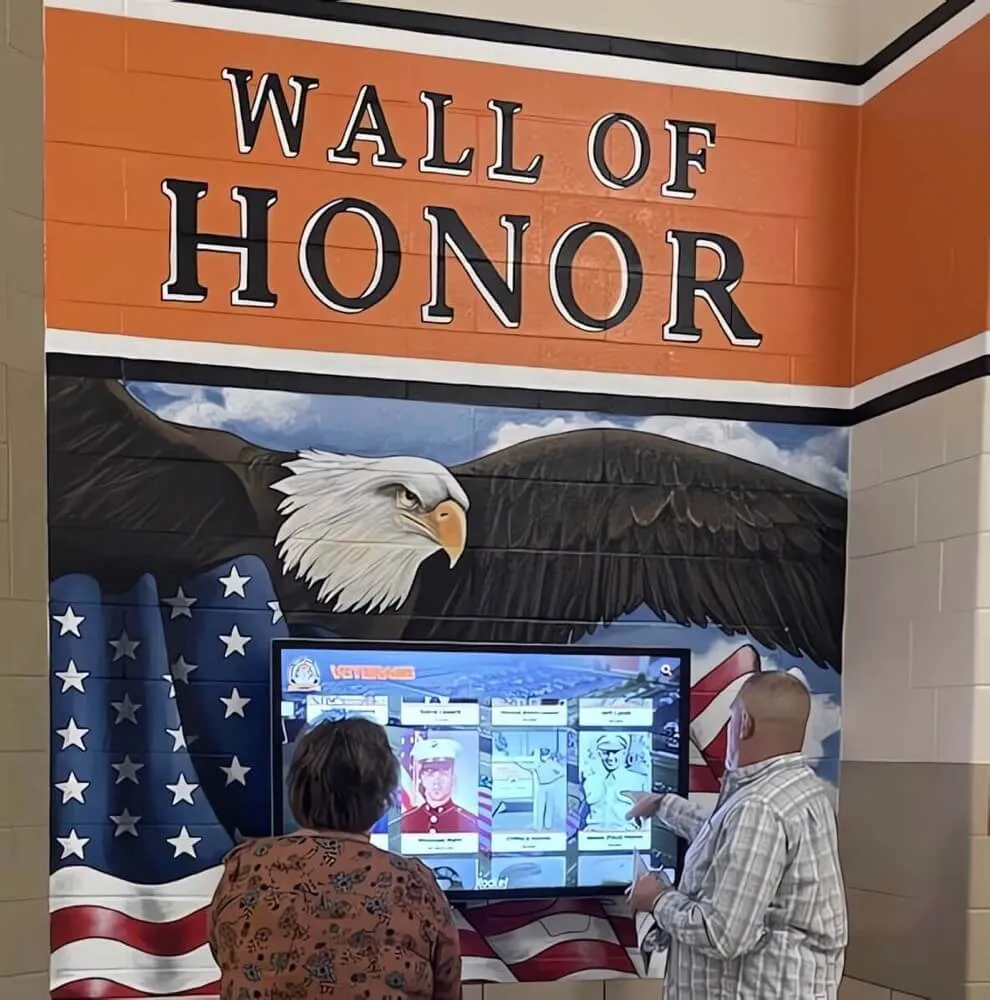
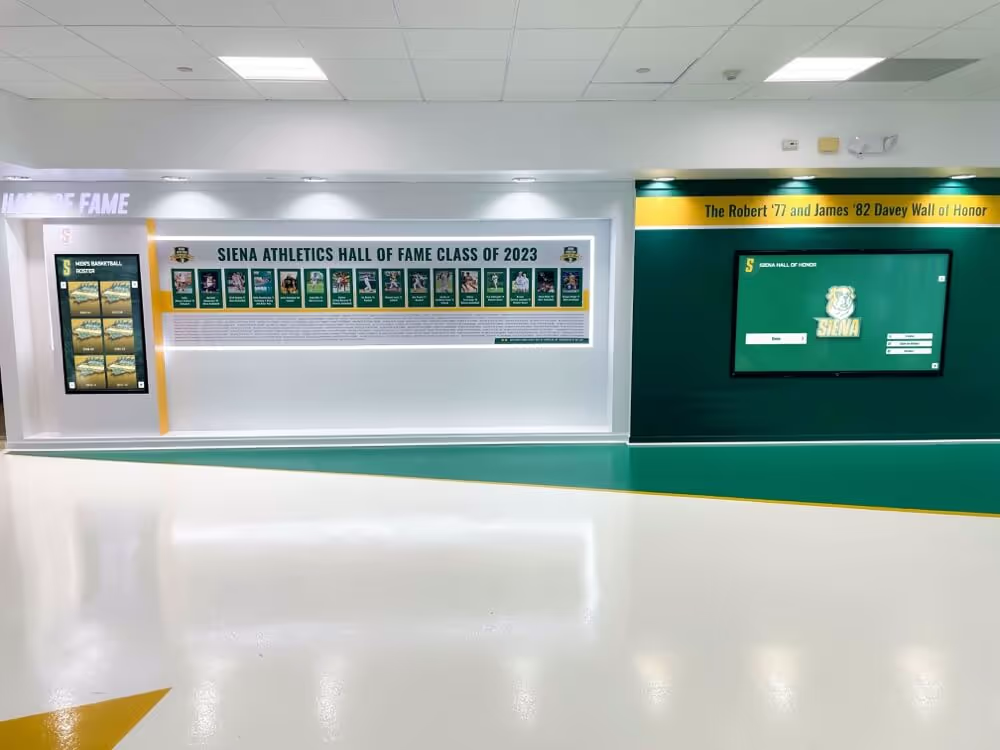
Modern recognition platforms designed for school athletic archives can receive structured catalog and condition records as the input that drives display content. An artifact flagged as “Digitize and store” in the condition report moves to the digitization queue; once captured, its high-resolution image enters the archive display system alongside the metadata collected at intake: athlete name, season, sport, achievement, donor attribution, and condition grade at digitization. The result is a searchable, story-rich archive entry that honors the artifact regardless of its physical display suitability.
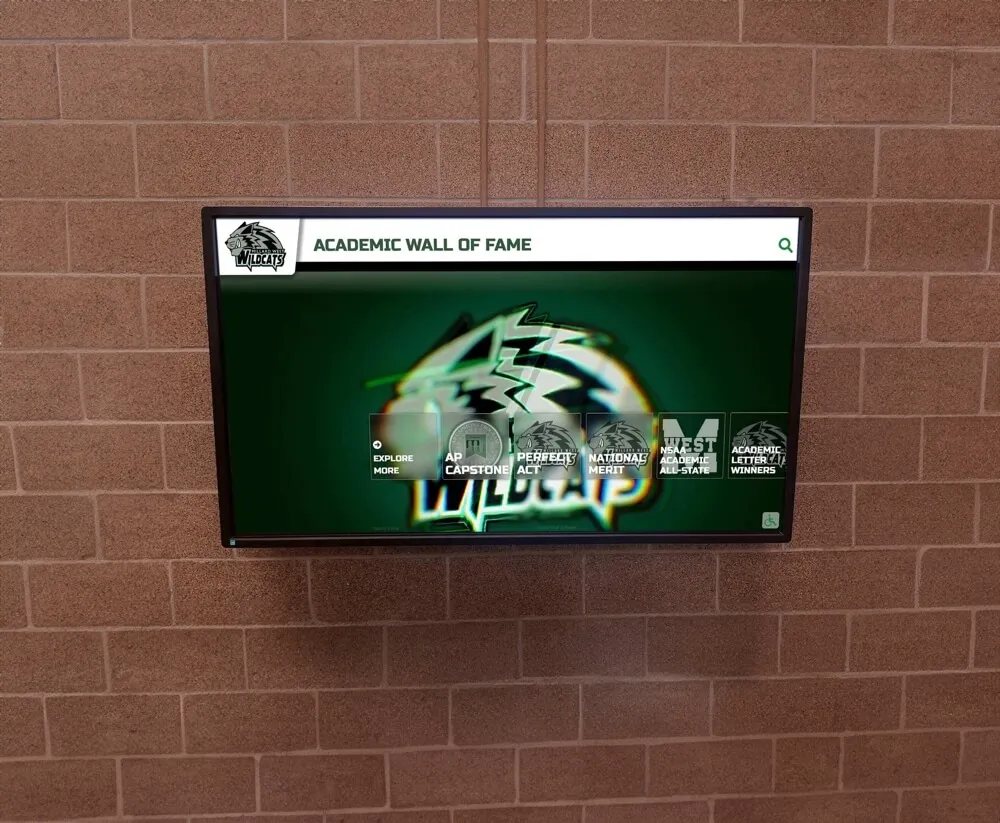
Archive displays built on this kind of structured documentation support unlimited historical records, searchable by athlete name, sport, year, or achievement. Timeline views surface the arc of a program’s history across decades, letting current students and alumni trace championship runs, individual records, and era-defining teams through a layered, interactive interface. ADA WCAG 2.1 AA-compliant display formats ensure that this institutional memory is accessible to every visitor, including those using assistive technologies.
See How Condition-Documented Archives Come to Life on Interactive Displays
Every jersey, trophy, and photograph you document with a condition report is a candidate for a searchable, story-rich digital archive entry. Rocket Alumni Solutions transforms physical collection records into interactive touchscreen recognition experiences that engage students, alumni, and community members every day.
Request a Demo
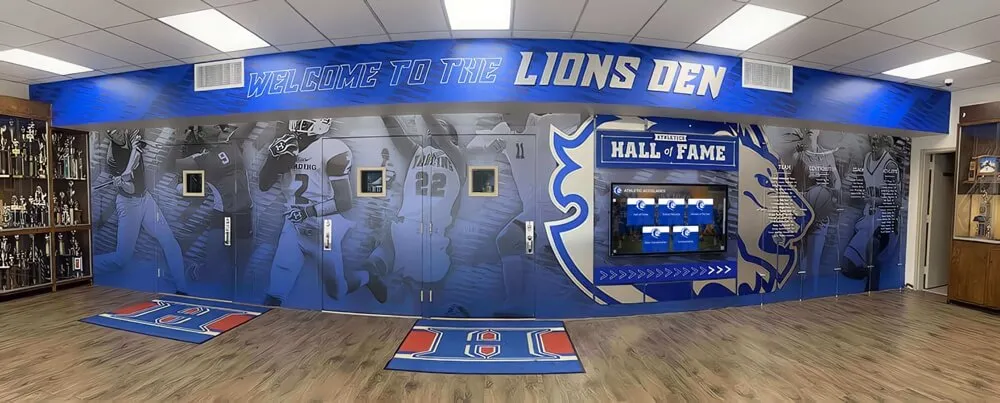
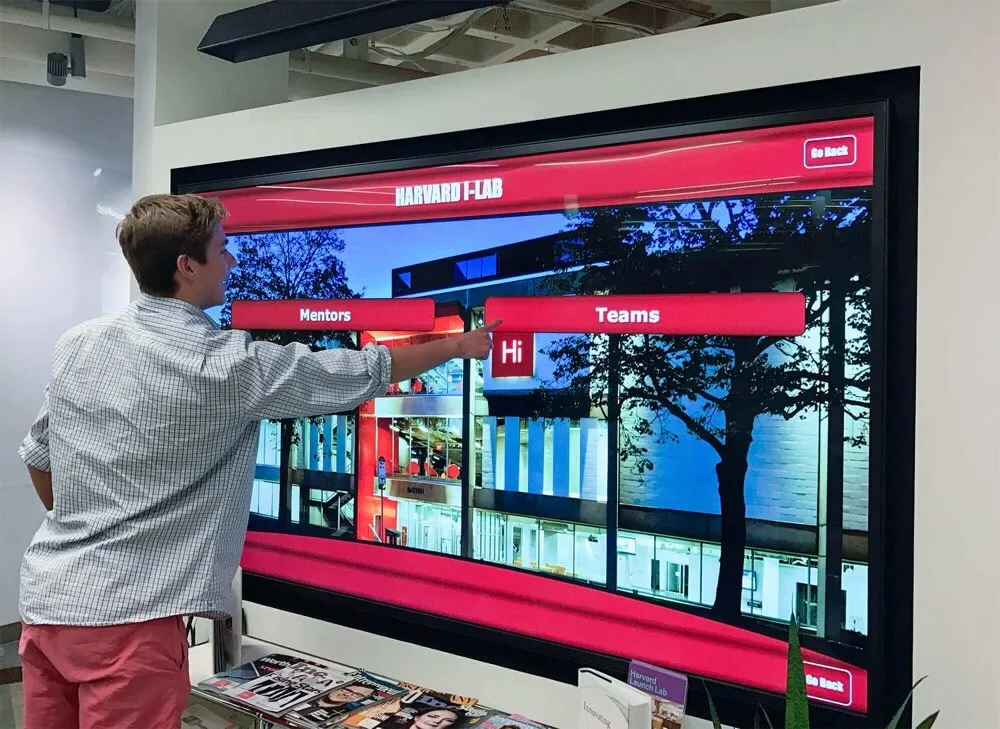
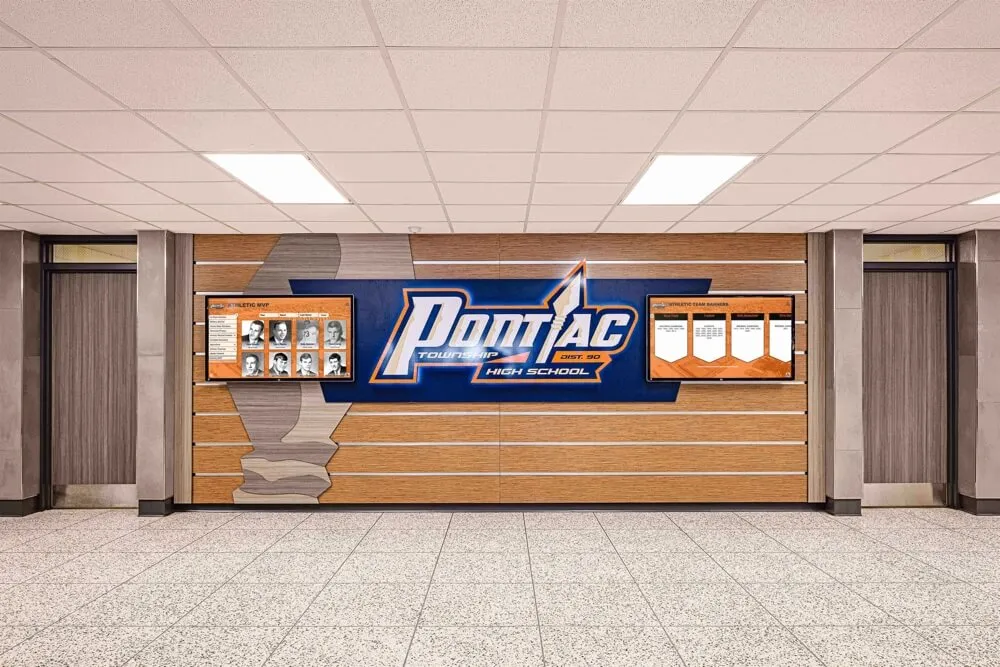
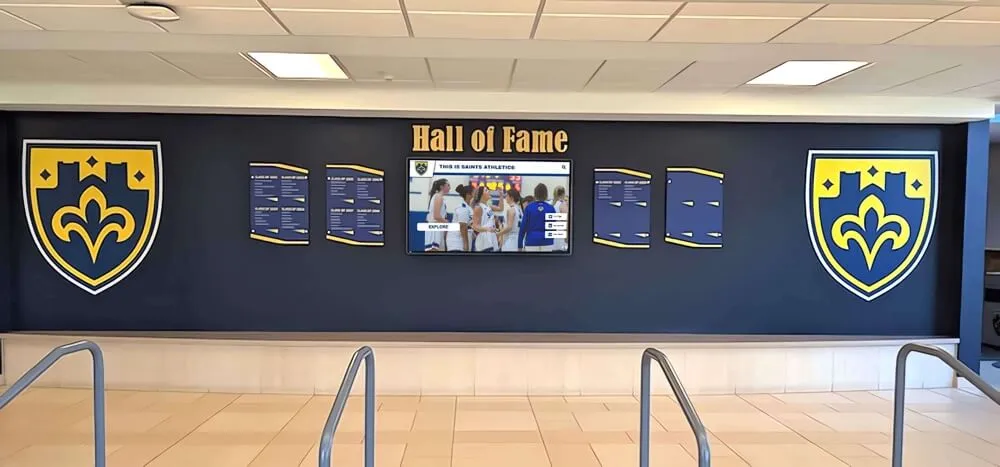
Condition-documented archive records feed directly into interactive recognition displays, giving every properly cataloged artifact a permanent, accessible home in the school's digital hall of fame
Frequently Asked Questions
How often should condition assessments be repeated? Items in primary display should be assessed annually, as UV exposure, temperature cycling, and handling during cleaning gradually affect condition. Items in archival storage with stable environmental controls can be assessed every two to three years. Any item that is moved, loaned, or handled for any reason should receive a brief condition check before and after the event, with both observations noted in the record.
Who should complete a condition report? Staff members who regularly handle collection items—athletic directors, archive coordinators, advancement officers, or designated facilities staff—can complete condition reports using this template with appropriate training. Reports for items that may require conservation should be reviewed by a conservator before conservation decisions are finalized. This guidance is general educational information, not professional conservation advice; consult a conservator for decisions affecting significant or fragile items.
Should condition reports be completed before or after cleaning? Always before cleaning. The pre-cleaning condition record documents the original state, captures what soiling or damage existed before any intervention, and provides the baseline against which post-cleaning results can be evaluated. Cleaning an item before documenting its pre-cleaned state eliminates the most important reference point in the condition record.
What if a donor disputes the condition grade assigned at intake? The condition report’s value is partly in providing an objective, dated baseline signed by a staff member. If a donor questions a condition grade at intake, walk through the grading criteria together while the item is on the assessment table, note any agreed-upon clarifications in the free-text field, and have the staff member and donor both sign the intake condition section. This protects both parties and resolves the disagreement at the point of intake rather than months later.
Can condition report data be used in grant applications for preservation funding? Aggregate condition data—such as “of 340 items in the athletic archive, 48 are rated Fair or below and 12 require conservation review”—is typically exactly what preservation grant applications request as evidence of documented institutional need. Schools with structured condition reporting workflows are substantially better positioned to apply for these opportunities than those without documented collection data.
How should condition reports be stored? Keep both a digital copy linked to the catalog record and a physical copy in an archival file associated with the item. If the digital system goes offline, the physical record serves as backup. If a physical item is moved to a different storage location, the physical condition report should move with it or a copy should accompany it.
Conclusion
An athletic memorabilia condition report is a short document with long consequences. Completed consistently at intake, before display or loan, and at regular intervals thereafter, condition reports transform a school’s physical collection from a set of objects with uncertain histories into a documented archive with verifiable provenance, defensible storage decisions, and clear pathways to digital recognition.
The three template sections in this guide—textiles, hardware and trophies, photographs and paper—cover the artifact types most commonly found in school athletic collections. Use them as a starting framework, adapting field labels and grading notes to match your institution’s existing catalog system. What matters most is consistency: a condition grading scale used the same way by every staff member, on every assessment, produces data that compounds in value as the collection grows.
When condition records are integrated with catalog metadata and connected to digital recognition platforms, every well-documented jersey, trophy, and photograph in your archive becomes a candidate for an interactive display entry—extending its reach from a storage shelf to a searchable touchscreen that any student, alumnus, or community member can explore. Request a demo to see how physical collection records translate into living, accessible recognition stories.