



Every athletic season tells a story worth preserving. From the opening practice to the final whistle, teams build records, develop athletes, and create memories that deserve permanent recognition beyond the scorebook. Yet too many schools let those achievements fade—tucked away in coaches’ files or buried in programs that current students never see. A well-designed athletic season recap display changes that dynamic entirely.
Whether you’re updating a physical board at the close of each semester, adding framed panels to a hallway wall, or deploying an interactive digital touchscreen that lets visitors browse decades of seasonal history, these displays serve both a practical and cultural purpose. They tell every athlete passing through your facility that what they accomplished this season will be remembered—and documented—long after graduation.
This guide covers the most effective athletic season recap display ideas for school programs at every scale, from straightforward physical installations to comprehensive digital archives that preserve seasonal achievements across generations.
Season recap displays work best when designed with intention from the start. Understanding the full range of formats—and what each accomplishes—helps athletic directors build systems that grow alongside their programs rather than producing one-off displays that become irrelevant within a few years.

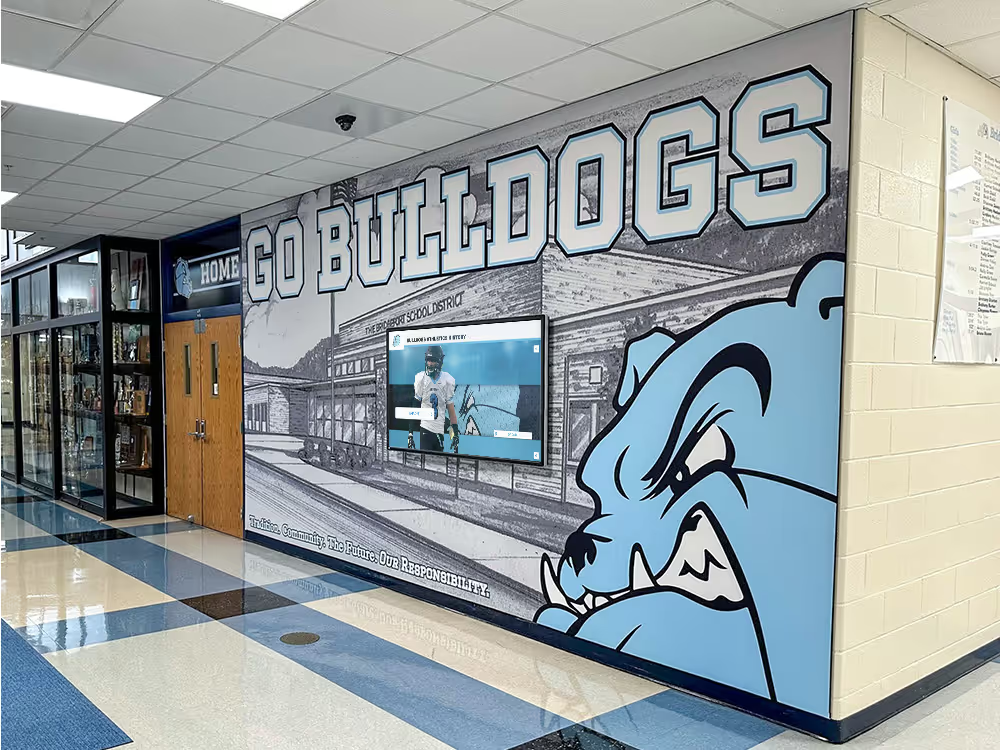
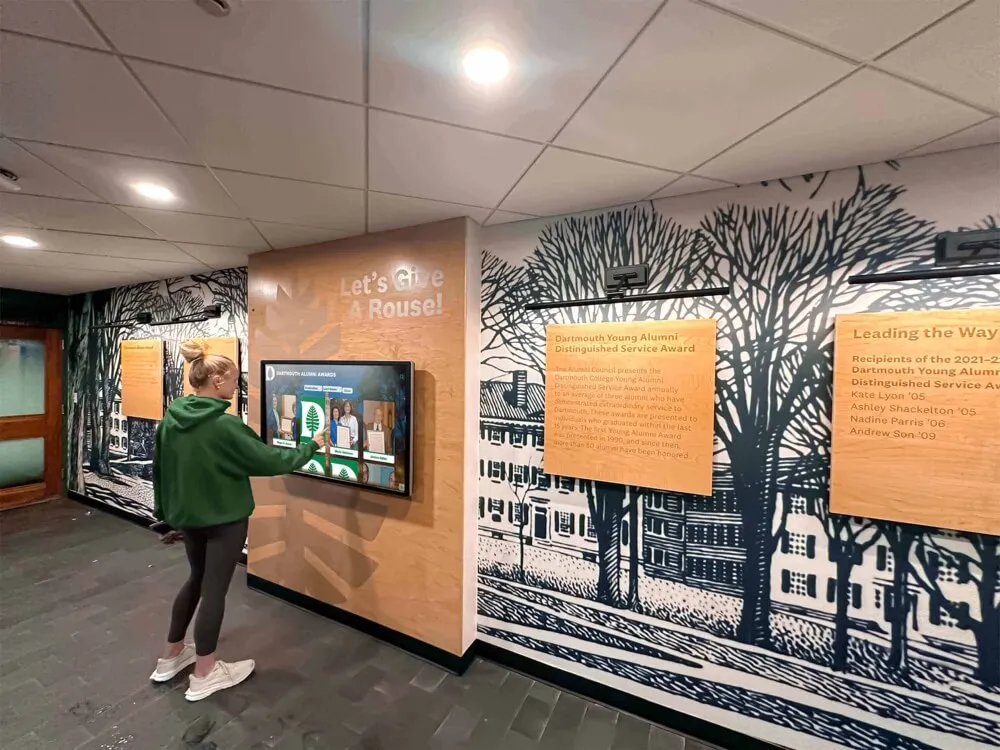
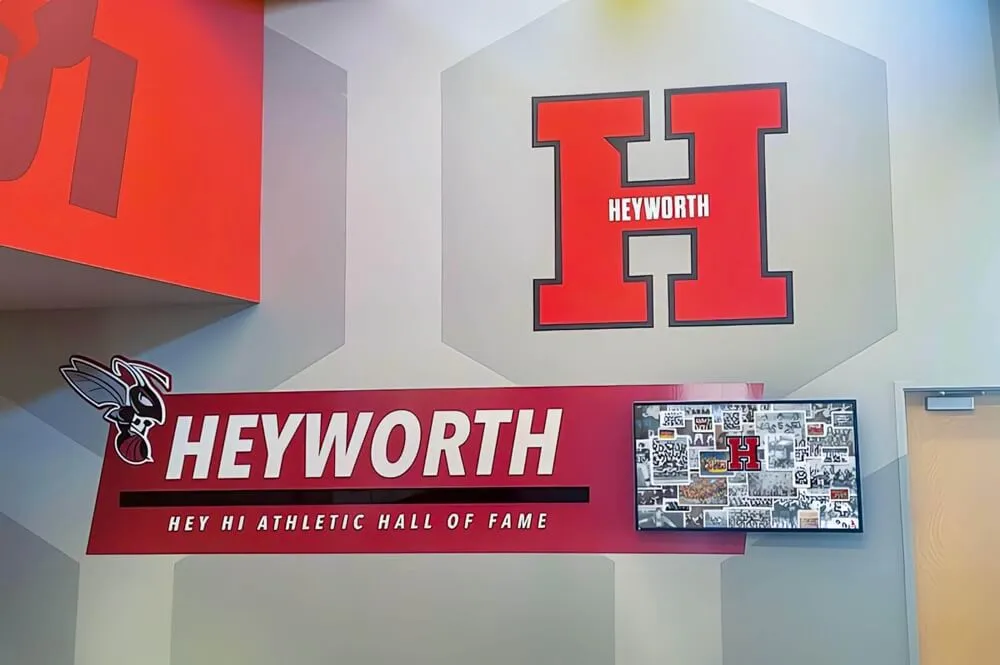
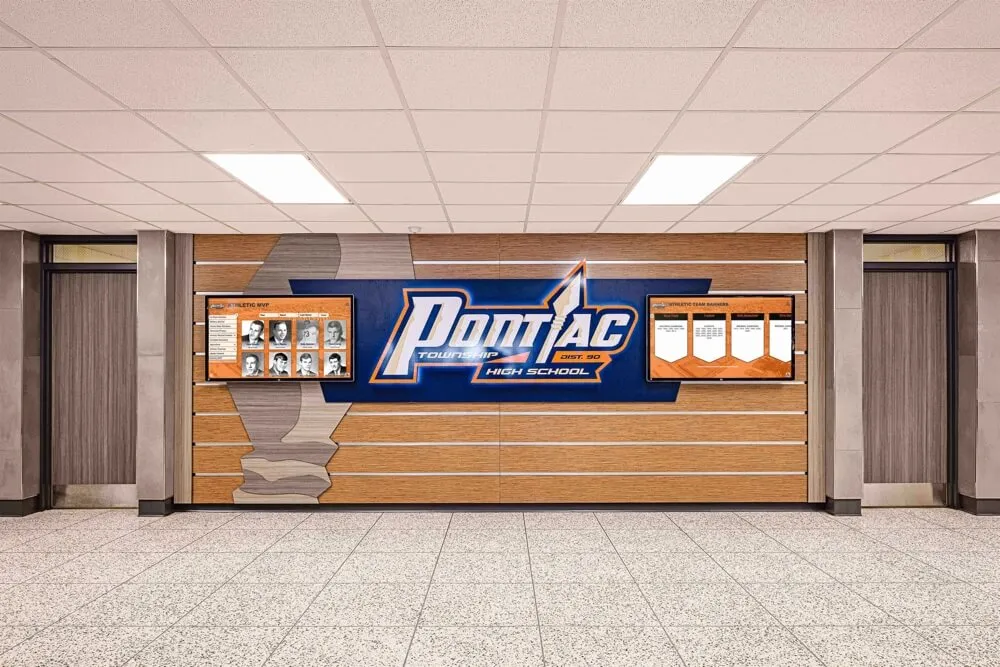
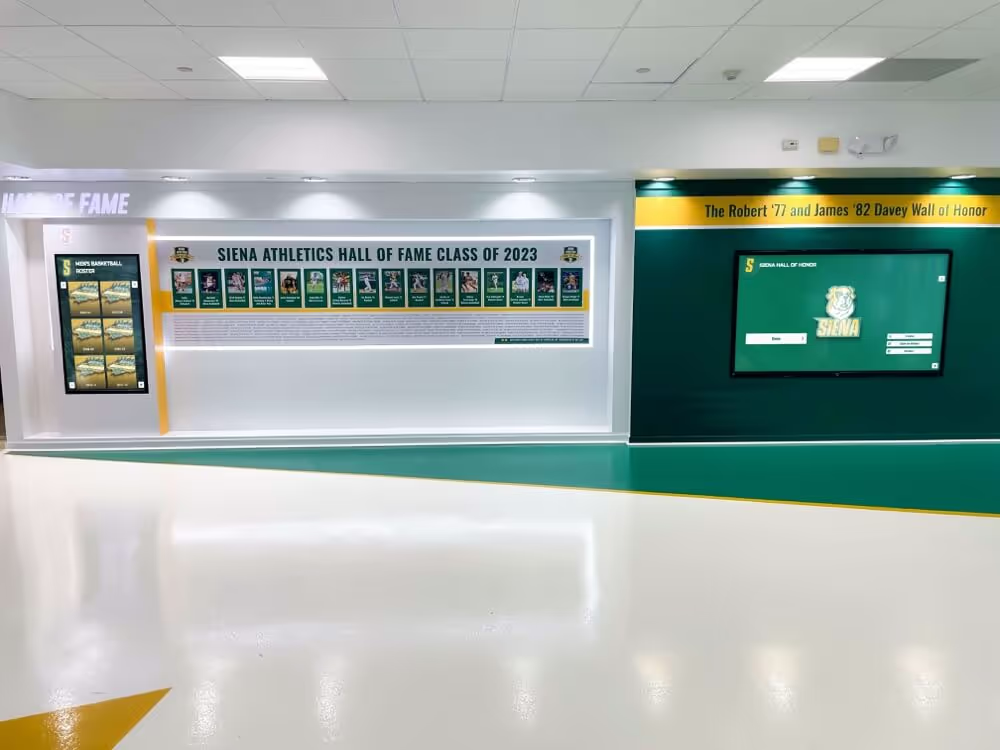
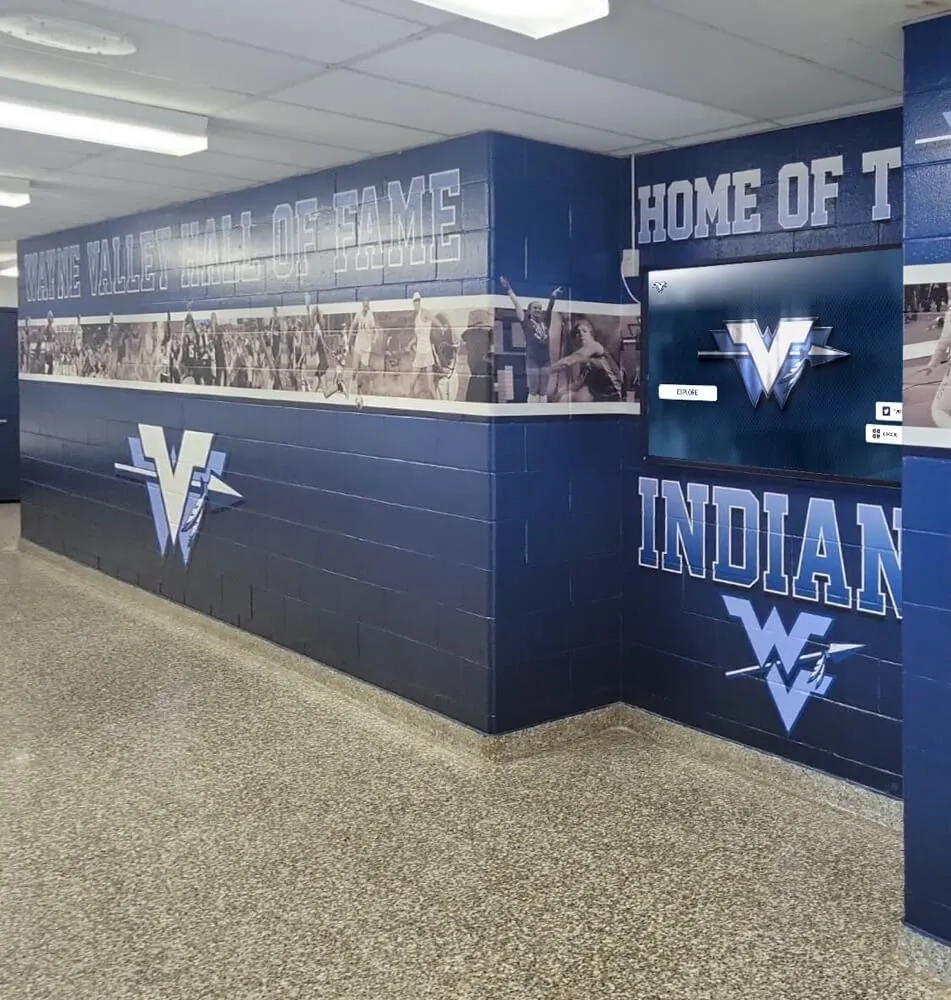
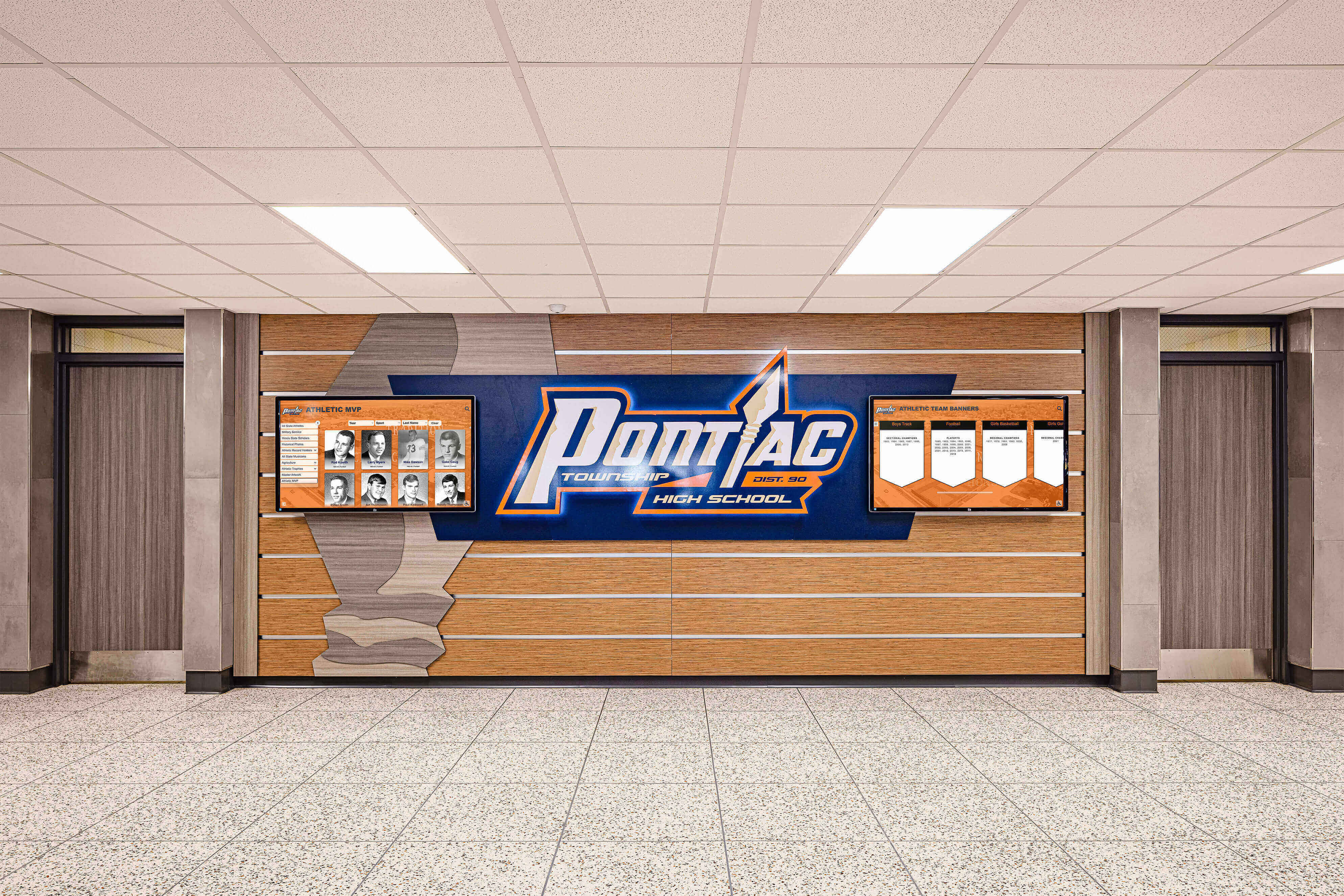
Dedicated athletic honor boards in school hallways create continuous recognition visible to athletes, students, and visitors throughout the academic year
Why Athletic Season Recap Displays Matter for School Programs
Athletic directors often focus recognition energy on championship banners and hall of fame inductions—elite milestones representing the top tier of achievement. But season recap displays address a broader recognition need: documenting every season for every team, regardless of competitive outcome.
Recognition That Extends Beyond Championships
Most teams never win a state championship. That doesn’t make their seasons less meaningful or their records less worth preserving. A volleyball program finishing 14-10 while developing three freshman starters and earning its first conference win in eight years has a story worth telling. A cross-country team that improves its average meet finishing position over four consecutive seasons demonstrates sustained progress deserving visible acknowledgment.
Season recap displays formalize this broader recognition philosophy. They communicate that seasons matter in their entirety—that effort, improvement, and competitive participation have value independent of trophy placement. Modernizing your recognition walls to include comprehensive seasonal documentation represents a meaningful shift in how programs communicate their institutional values to athletes, families, and the broader community.
Building Program Culture and Institutional Memory
Season recap displays accumulate value over time. A single framed panel summarizing the 2024–25 basketball season holds moderate interest for current students. That same panel alongside displays for a dozen previous seasons creates a living historical record revealing program trends, coaching eras, and long-term competitive arcs.
Students who discover older siblings or parents competed for the same program—and find those seasons documented—develop a fundamentally different relationship with their school’s athletic identity. Recruits touring facilities see evidence of sustained institutional commitment. Parents recognize their athlete’s current season will be permanently acknowledged. This institutional memory, built one season at a time, strengthens the cultural foundation that makes athletic programs meaningful beyond wins and losses.
Supporting Recruitment and Community Connection
Prospective athletes and their families evaluate programs partly through visible evidence of how schools treat athletes. A facility with comprehensive, well-maintained season recap displays communicates that the program takes its history seriously and that current athletes will eventually join documented program tradition. This signal—subtle but consistent—influences recruitment decisions and reinforces community investment in athletic programs.
Types of Athletic Season Recap Display Formats
Effective season recap displays exist across a wide range of formats, from simple physical installations to sophisticated digital systems. Understanding what each format accomplishes helps schools match their approach to available budget, space, and long-term goals.
Traditional Physical Display Options
Physical season recap displays remain common and effective, particularly for schools working within limited budgets or retrofitting existing hallway and gymnasium spaces.
Framed Season Summary Panels
Individual framed panels—typically 18×24 or 24×36 inches—present each season’s key information in a consistent format. A well-designed panel includes team photo, final record, conference standing, individual award recipients, and season highlights. Panels arranged chronologically along a hallway corridor create a timeline effect that tells the program’s full story at a glance. The ongoing challenge with physical panels is update cost: each new season requires design, printing, framing, and installation work that accumulates over time.
Rotating Bulletin Board Displays
High-traffic areas like gymnasium lobbies or athletic wing entrances accommodate rotating bulletin board displays that feature current-season updates during active periods and transition to recap summaries at season end. These flexible formats work well for programs with multiple sports competing in overlapping windows, allowing real-time recognition that converts naturally into permanent seasonal documentation.
Championship Banner Integration
For teams achieving significant competitive milestones, championship banners serve as one component within a broader season recap system rather than the sole form of recognition. Schools that pair championship banners with detailed season panels—documenting the full story behind the banner—create richer recognition than banners alone can convey. The banner marks the achievement; the season recap tells its context.
Digital Season Recap Display Solutions
Digital displays address the core limitations of physical formats: space constraints, ongoing update costs, and the inability to search or browse historical records interactively.
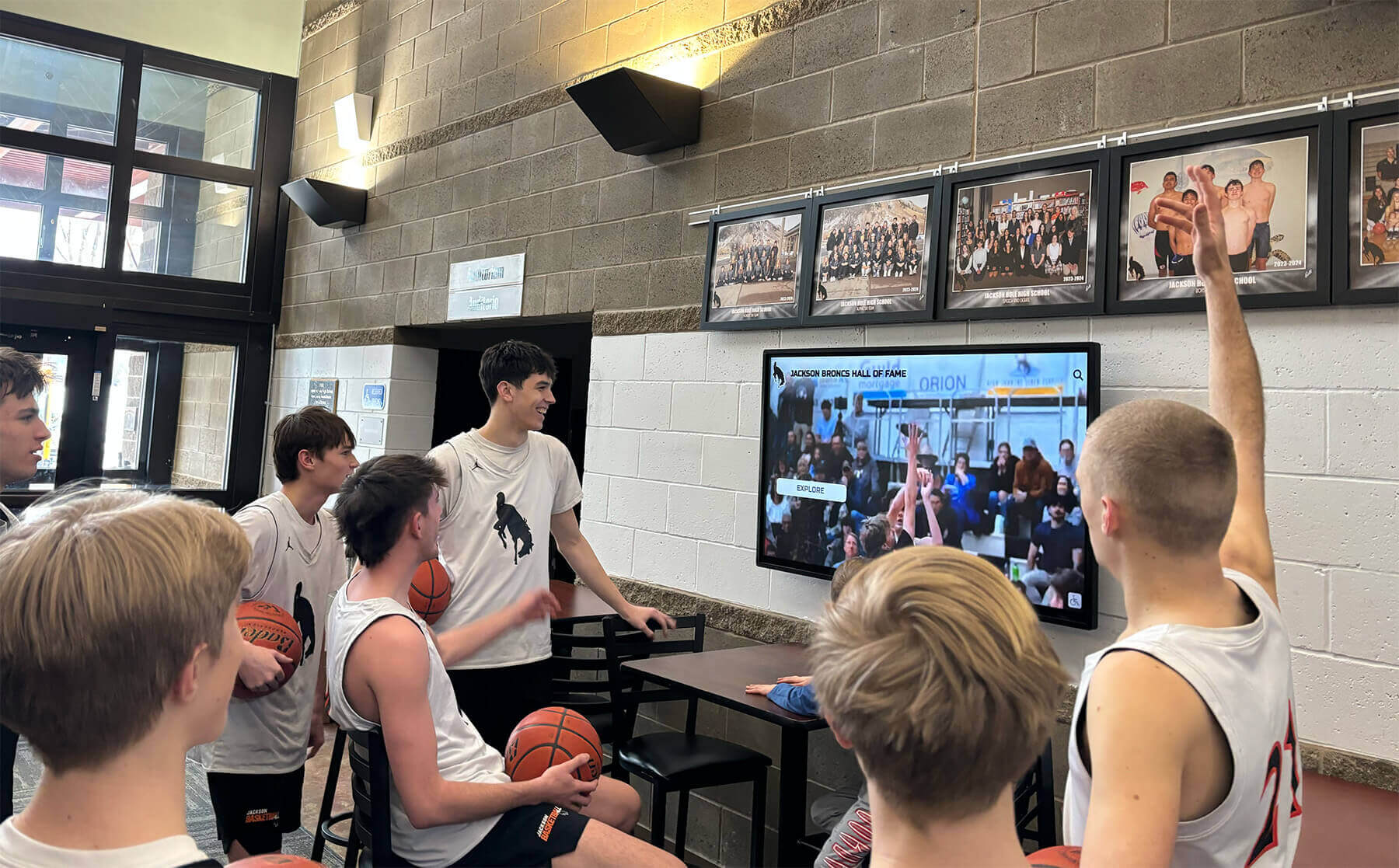
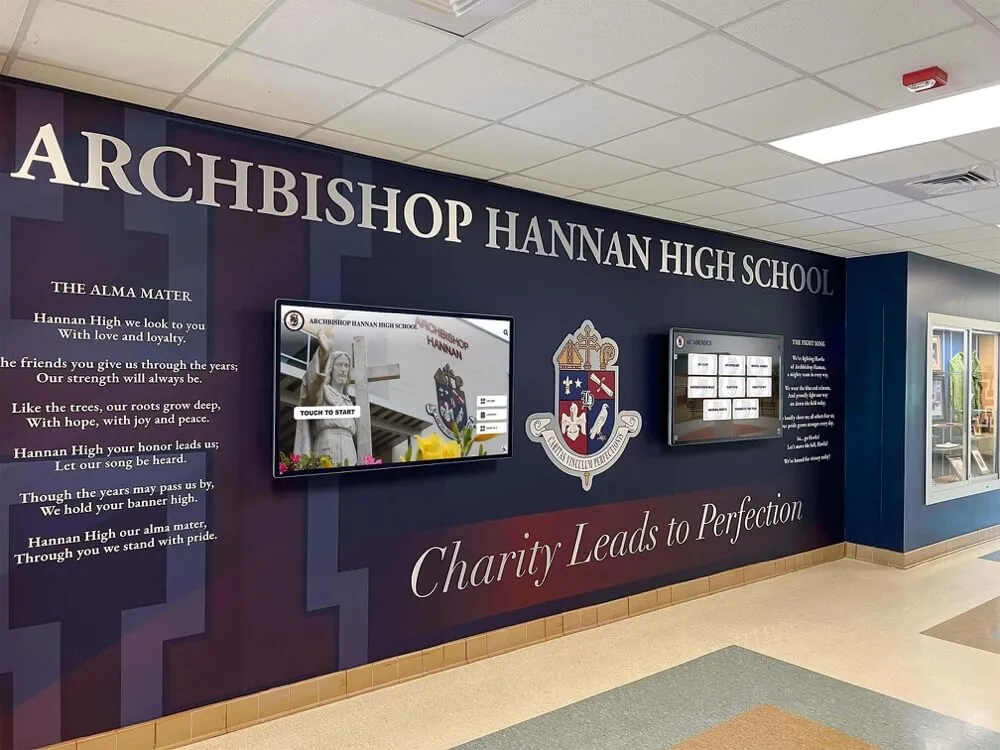
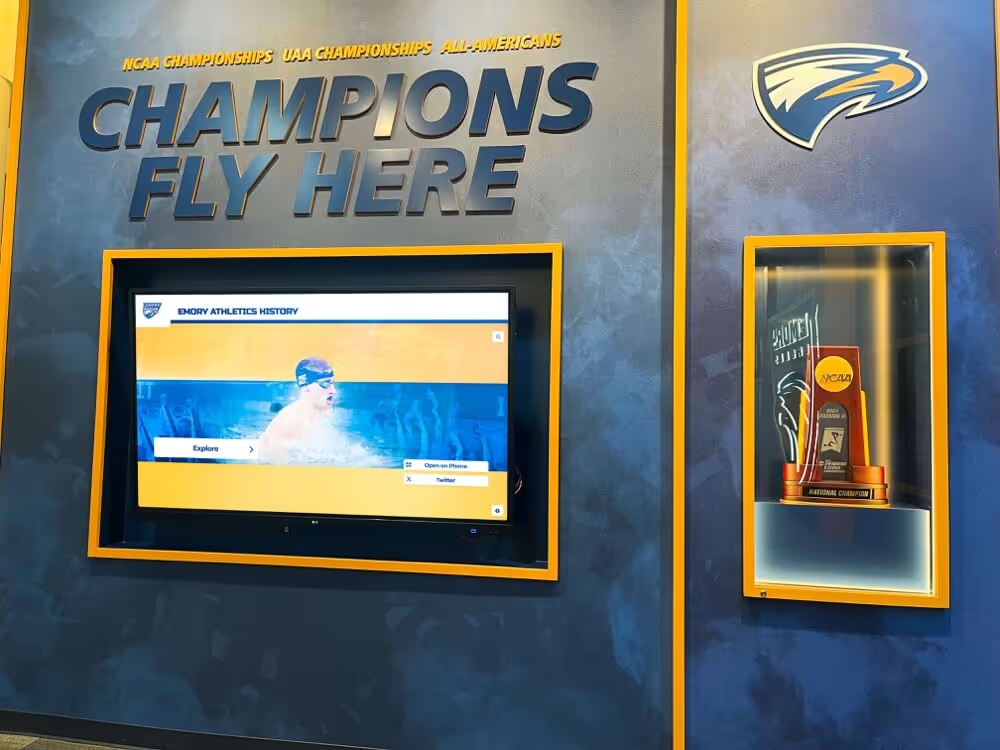
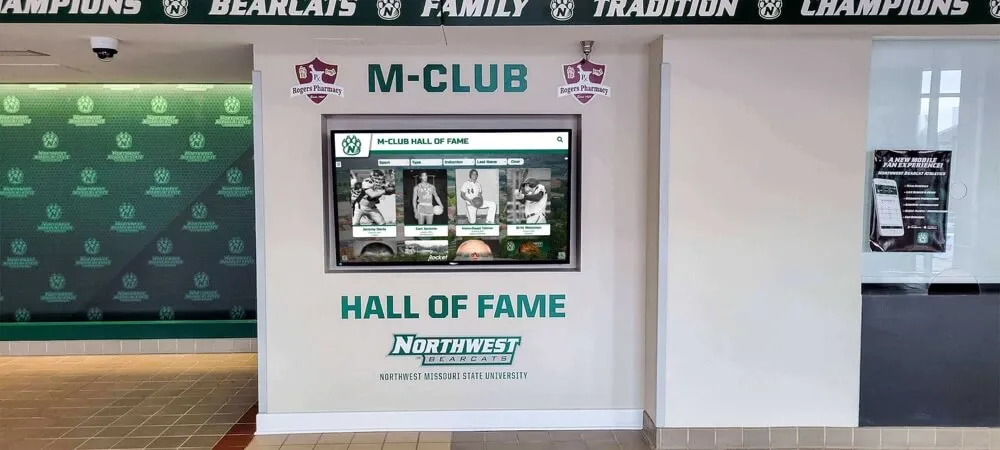
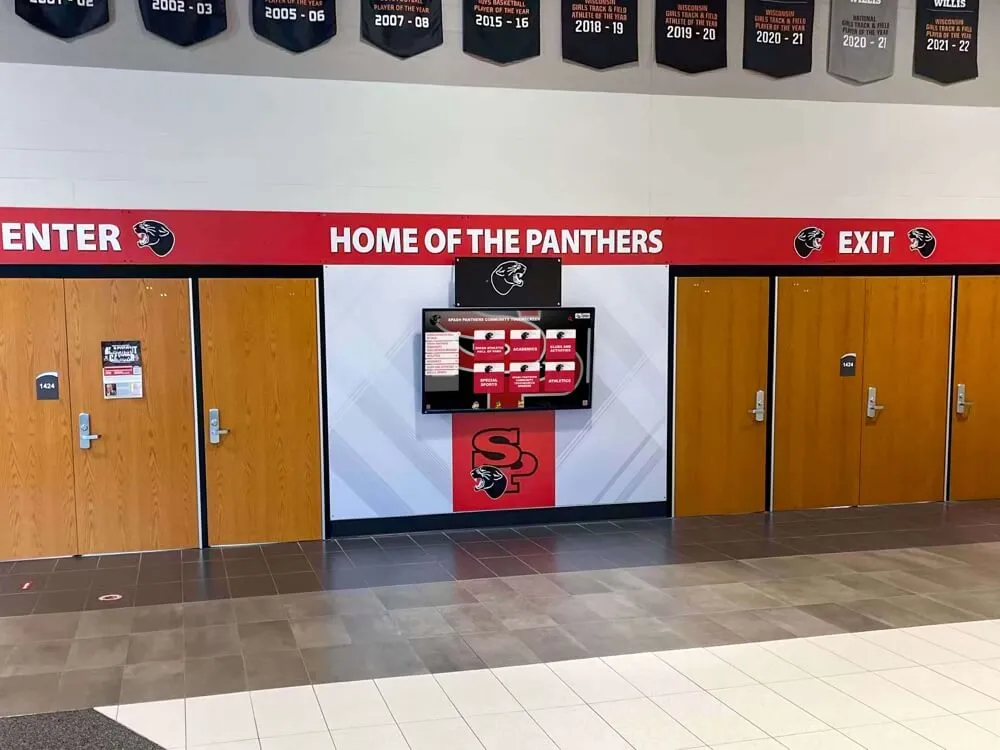
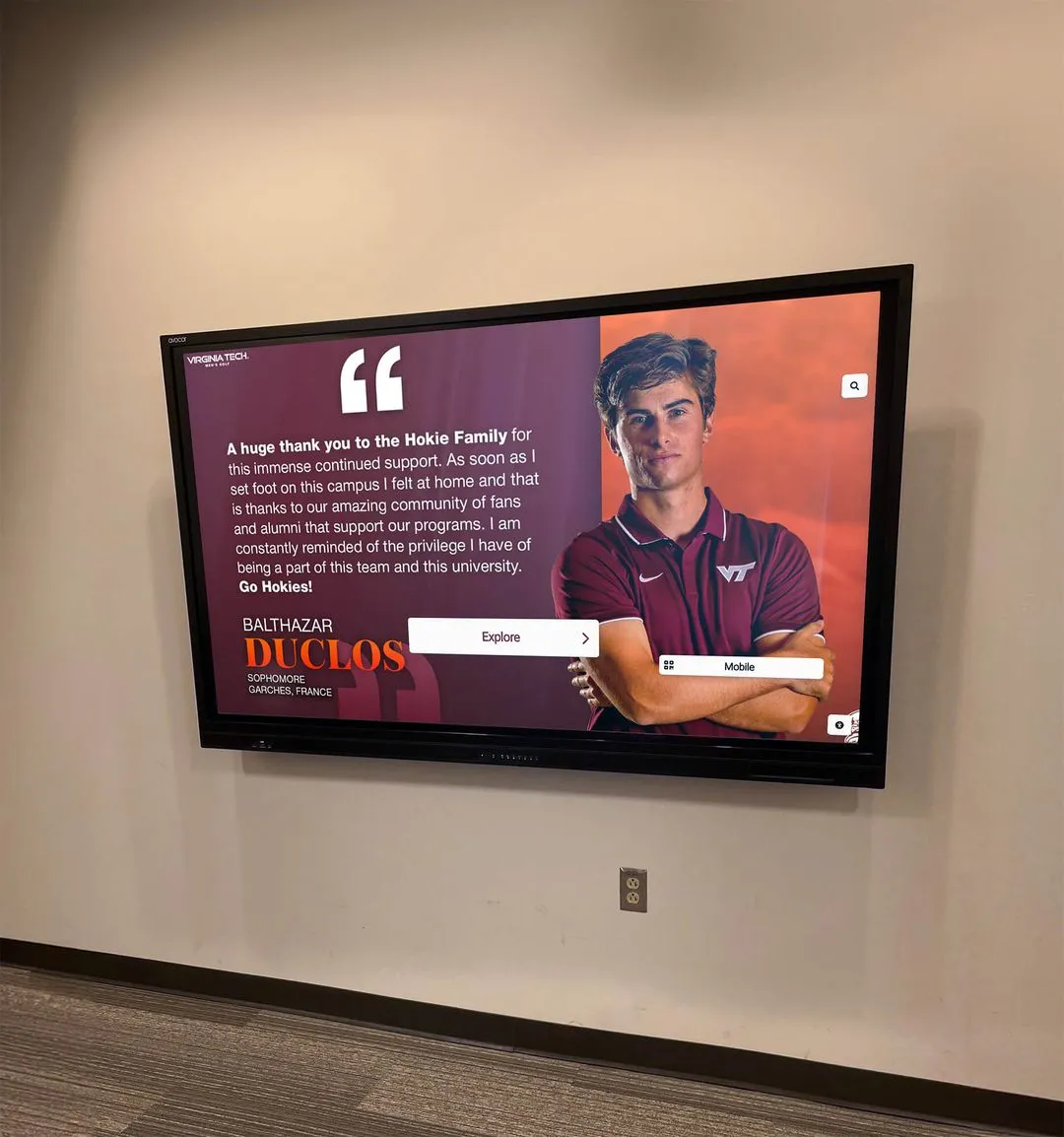
Digital lobby screens engage students with current and historical season content, creating natural gathering points around athletic achievement during passing periods and before events
Digital Signage Systems
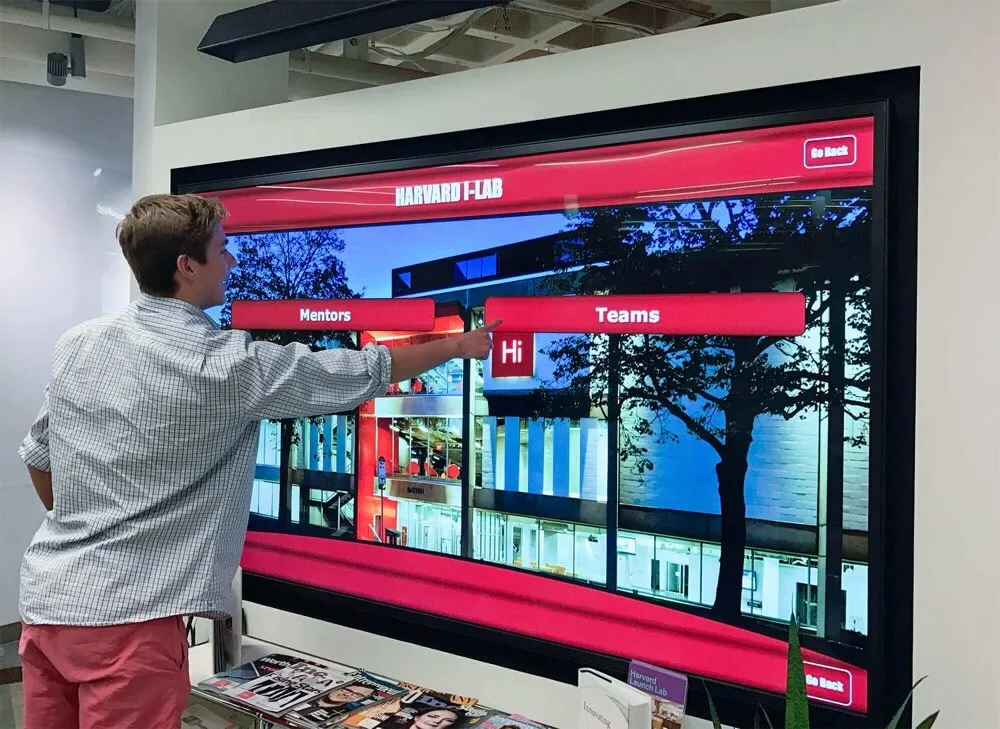
Basic digital signage systems display season recap content on mounted screens in athletic lobbies, hallways, and gymnasiums. These systems cycle through team photos, season records, award recipients, and schedule highlights in a rotating presentation format. While limited in interactivity, digital signage reaches broad audiences in high-traffic locations and eliminates per-season printing costs once installed. Touchscreen display installations in high school gym lobbies represent a step beyond passive signage, enabling visitors to actively navigate and explore content rather than waiting for it to cycle through.
Interactive Touchscreen Archives
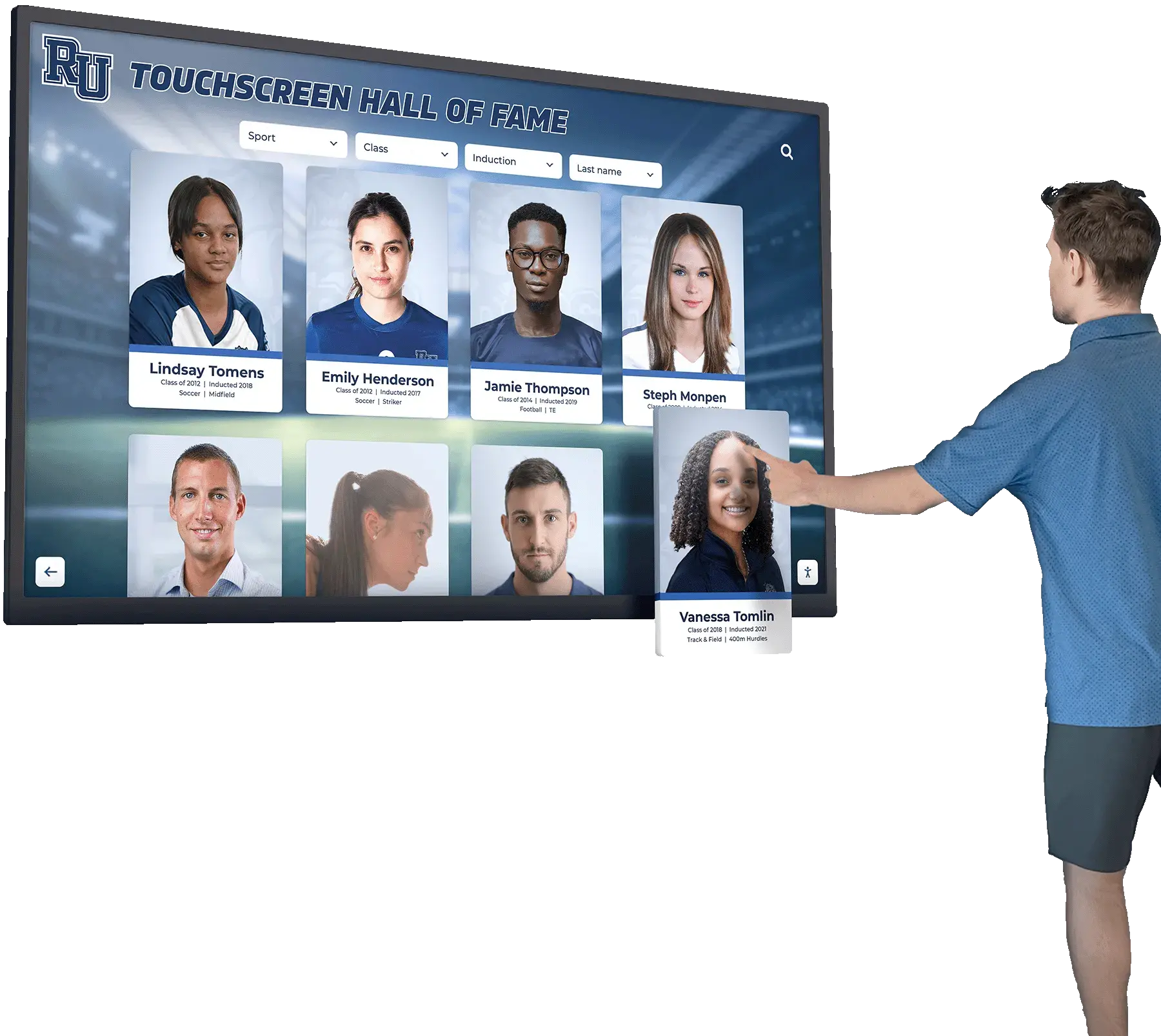
Interactive touchscreen systems represent the most comprehensive approach to athletic season recap displays. Visitors navigate through complete seasonal histories—browsing by sport, year, athlete, or achievement category. These systems accommodate unlimited seasonal entries, allowing schools to document every team’s every season without physical space constraints. When integrated with record board functionality, touchscreen systems automatically flag when current athletes break historical records, connecting present seasons to past achievements in real time.
Automated Record Board Integration
Swimming programs, track and field programs, and other measurable-performance sports benefit from record board displays that document individual bests and team season records alongside competitive results. A swimming record board that updates automatically when athletes achieve new personal bests creates a living season recap format that stays current without manual update cycles, ensuring records are always accurate and immediately visible to competitors and visitors alike.
What to Include in a Comprehensive Season Recap Display
The value of any athletic season recap display depends directly on the information it documents. Schools that develop consistent content standards across seasons create more cohesive archives and make the annual update process substantially easier.
Final Standings and Win-Loss Records
The foundational information in any season recap is the competitive record: wins, losses, and ties (or equivalent metrics for individual sports), along with final conference standings, tournament placement, and postseason results. This information provides the competitive context that gives all other recognition meaning—honors documented without record context tell only part of the story.
For individual sports like cross-country, swimming, or tennis, season records include meet and match results, individual performance rankings within the conference, and district or regional placement that reflects overall program standing among peers.
Individual Honors and Award Recognition
Individual recognition within season recaps documents athletes whose performance most significantly contributed to the season’s achievements:
- All-conference and all-state designations
- Team MVP and most improved athlete selections
- Academic-athletic honor roll inclusions
- Coaches’ awards and program-specific specialty recognition
- Senior achievement highlights for graduating athletes
All-state athlete recognition displays often serve as a distinct recognition layer within broader season recap systems, providing dedicated space for the highest individual achievement designations. Schools benefit from integrating these elite-level displays with their general seasonal documentation rather than treating them as entirely separate programs.
Key Moments and Milestone Documentation
Beyond final records and individual awards, season recaps gain depth from documenting specific milestones that defined the season’s arc:
- Program records broken or tied during the season
- Career milestones reached by individual athletes
- Winning streaks or notable competitive runs
- First-time program achievements (first conference title, first postseason appearance, first winning season in several years)
- Significant community involvement or fundraising achievements associated with the team
These details distinguish a meaningful season recap from a simple record summary, providing narrative context that makes historical documentation genuinely valuable to future athletes and administrators exploring program history.
Coaching Staff Recognition
Seasons reflect coaching as much as athlete performance. Season recaps that acknowledge head coaches and assistant coaches by name—particularly when documenting career wins milestones or multi-year achievement patterns—build more complete institutional records than athlete-only formats. As coaching staff transitions occur, documented associations between specific coaches and specific seasons become especially valuable for understanding program history.
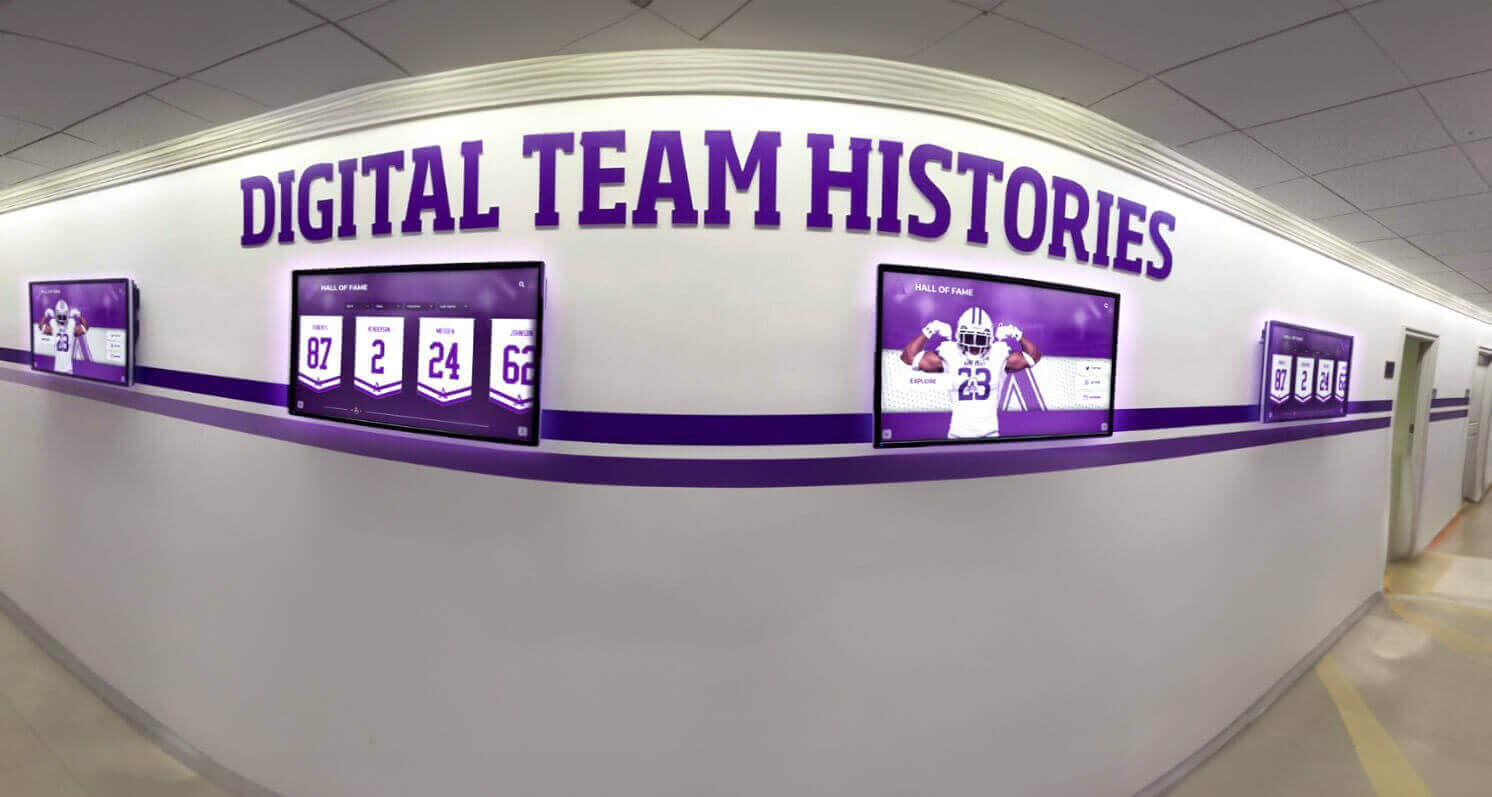
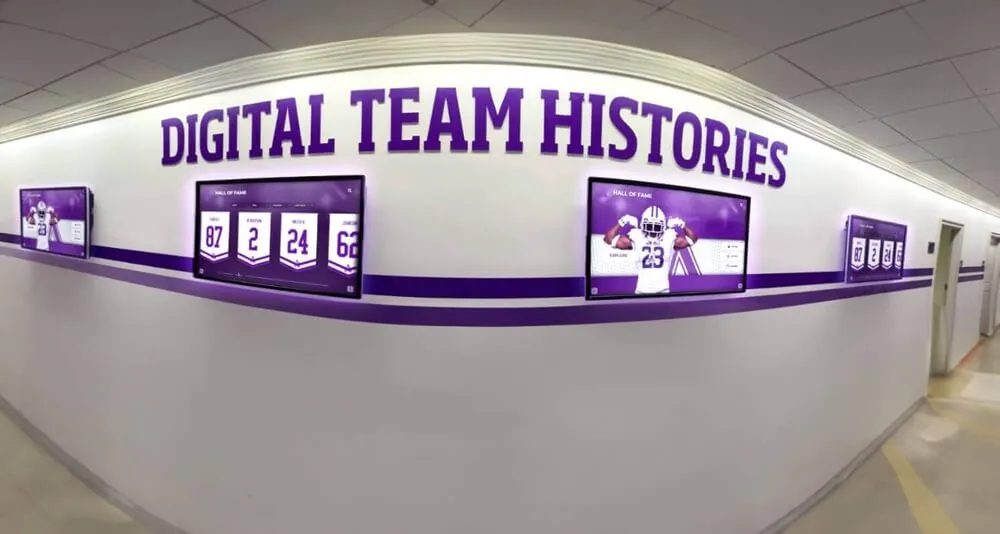
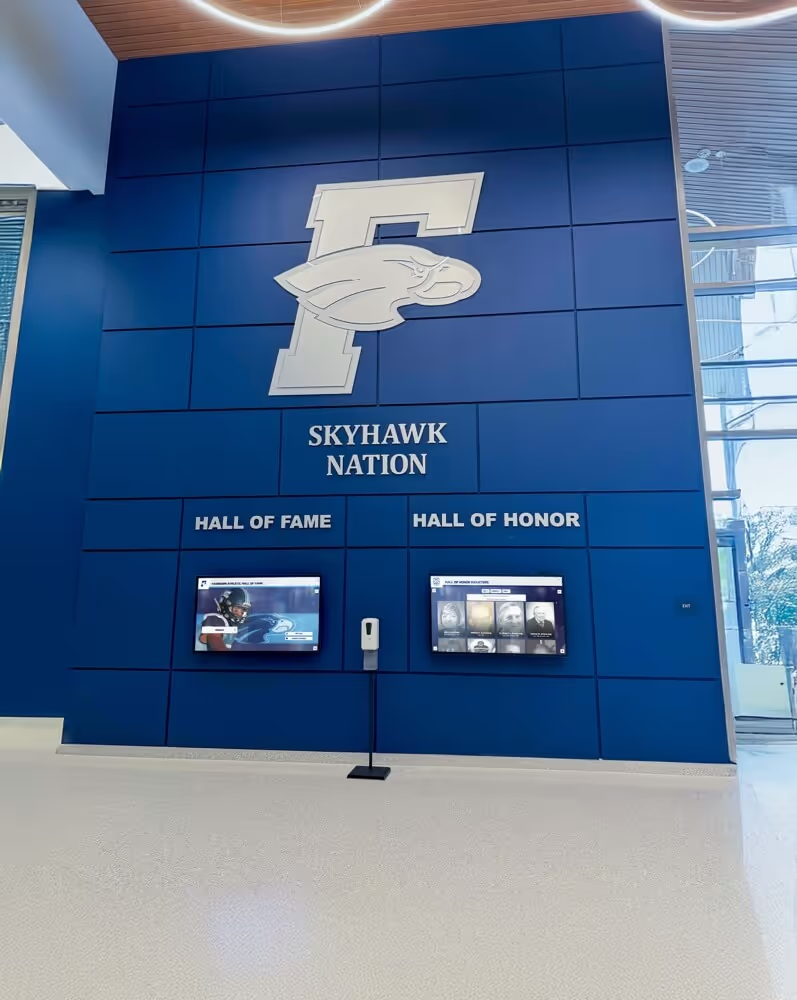
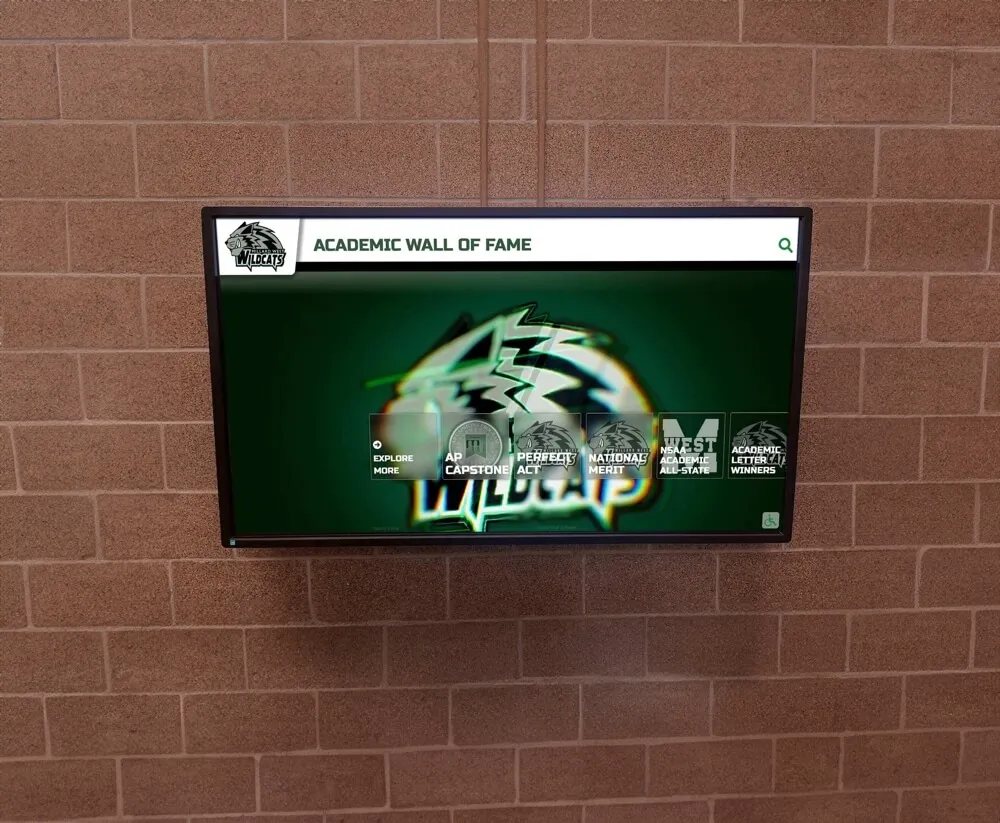
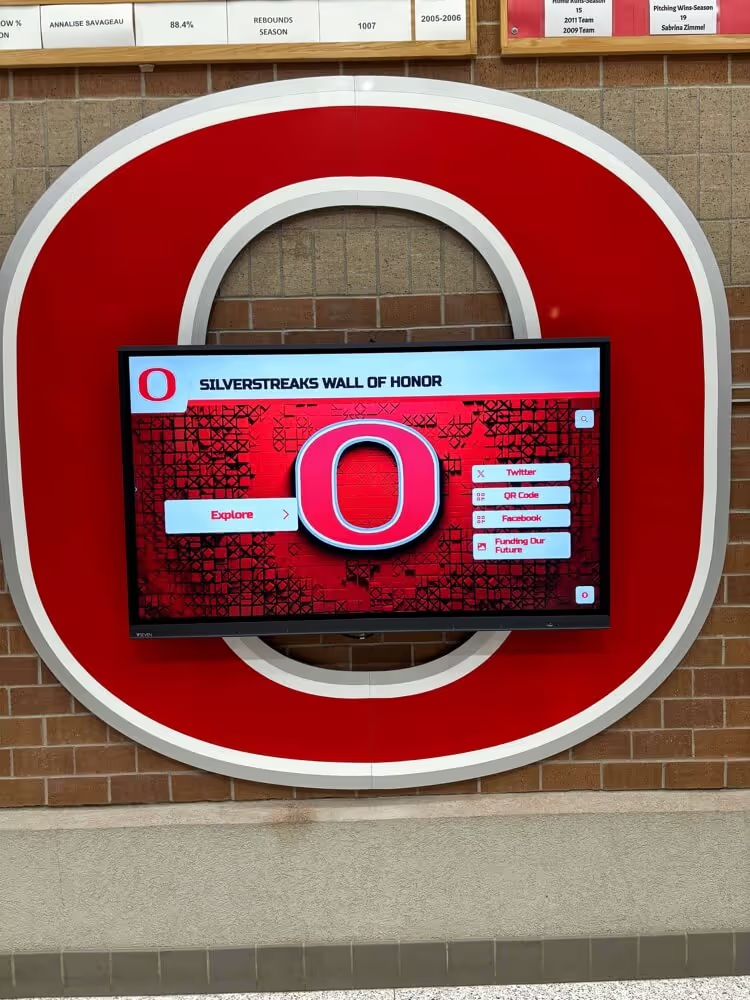
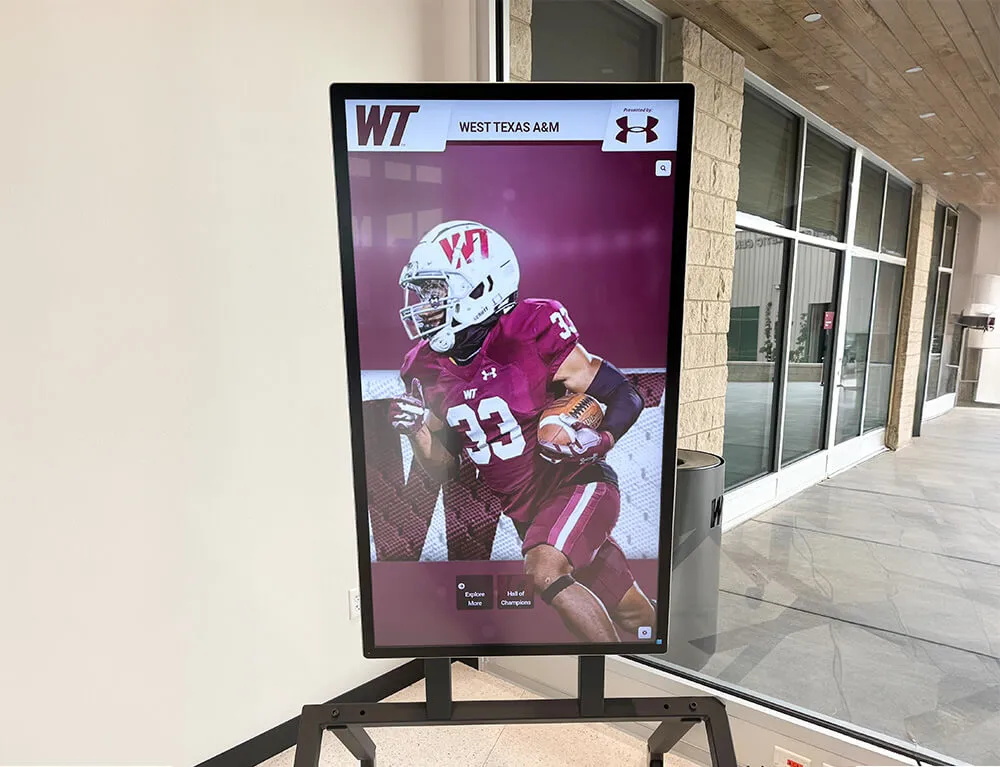
Digital hallway screens dedicated to team histories provide continuous access to multi-year seasonal records without requiring physical wall space for each season's individual documentation
Strategic Placement for Maximum Visibility
Where you install athletic season recap displays directly affects how much attention they receive and how effectively they serve recognition goals. Indoor sports facility design increasingly incorporates dedicated recognition zones as core facility features rather than afterthoughts applied to leftover wall space.
Athletic Lobby and Entrance Areas
Main entrances to gymnasiums and athletic complexes receive the highest visitor traffic—athletes, families, opposing teams, recruits, and community members all pass through these spaces. Season recap displays installed here achieve maximum exposure, creating immediate visual impact for anyone entering the facility. First impressions formed in lobby spaces powerfully influence how visitors perceive program culture and institutional values.
Athletic Office Corridors
Hallways connecting athletic offices to practice spaces or coaching areas see heavy daily foot traffic from athletes checking schedules, receiving gear, or meeting with coaches. Season recap displays in these corridors become part of the daily athletic experience for team members, keeping program history continuously visible to the athletes most directly invested in it.
Gymnasium Walls and Concourse Areas
Game-night crowds create significant secondary audience opportunities. Families attending competitions represent community stakeholders who benefit from understanding program history. Season recap displays positioned along gymnasium walls or concourse areas engage these audiences during events when school spirit and attention to athletic tradition run highest.
Team Meeting and Pre-Game Areas
Some programs install season recap displays in team meeting rooms or adjacent corridors specifically to motivate current athletes by connecting them to program history. Seeing documented records from previous seasons that remain achievable creates concrete performance targets that abstract motivational language cannot match.
Managing Multi-Sport Season Recap Programs
Schools fielding 15 to 25 or more athletic programs face organizational challenges that single-sport institutions don’t encounter. Managing season recap displays for cross-country, swimming, football, basketball, baseball, softball, soccer, tennis, wrestling, track, golf, lacrosse, and additional programs requires systematic approaches to maintain consistency and prevent recognition gaps between high-profile and lower-profile sports.
Sport-by-Sport Organization Systems
The most manageable multi-sport systems organize by sport first, then chronologically within each sport. This structure allows athletic directors to update one sport’s section at season end without disrupting the organization of other sports’ historical records. Digital systems handle this structure automatically; physical installations benefit from clearly delineated sections using consistent design language that makes each sport’s area immediately identifiable.
Fall sports state championship recognition often receives different display treatment than regular-season documentation, and establishing clear organizational frameworks from the start helps maintain these distinctions consistently across years and across administrative transitions.
Balancing Space and Coverage Across Sports
Physical display systems force difficult space allocation decisions: how many linear feet of wall space does each sport receive? Sports with longer histories and more frequent recognition-worthy achievements may warrant more space, but decisions that visibly favor high-profile programs over others can generate community friction and undermine the inclusive recognition mission that season recap displays are meant to serve.
Digital systems eliminate this tension entirely. Every sport receives equal access to the archive, with emphasis determined by browse behavior rather than pre-allocated wall space. Schools transitioning from physical to digital season recap systems frequently cite this equity factor alongside the practical benefits of unlimited capacity and searchability.
Building a Meaningful Multi-Year Archive
Season recap displays deliver their greatest value when maintained consistently over years and decades. The challenge is ensuring that documentation practices remain stable as athletic directors change, programs evolve, and technology platforms shift.
Establishing Consistent Documentation Standards
Programs that define consistent documentation standards—what information gets recorded for every season, in what format, with what timeline—create archives that remain coherent across staffing transitions. An athletic director inheriting a well-documented archive can immediately understand program history; one inheriting inconsistent records faces a significantly more difficult interpretation challenge.
Recommended minimum documentation per season:
- Sport name and season year
- Head coach and assistant coach names
- Final record and conference standing
- Postseason results and tournament finish
- All-conference and all-state individual honorees
- Program records broken during the season
- Team photo when available
Connecting Senior Recognition to Season Archives
Senior recognition events—signing day celebrations, senior nights, athletic banquet awards—generate documentation that integrates naturally into season recap displays. Senior night recognition already produces photos, biographical summaries, and achievement highlights that translate directly into season archive content with minimal additional work.
Similarly, athletic banquet planning naturally surfaces the awards, honors, and season highlights that belong in season documentation. Schools that build season archive updates into their banquet planning process—treating the archive update as a deliverable alongside event logistics—maintain more complete records than programs that treat documentation as a separate, lower-priority administrative task.
Physical trophy displays complement digital season archives by providing tangible artifacts for championship seasons, while digital documentation contextualizes those trophies within complete seasonal records that tell the full story behind each physical award.
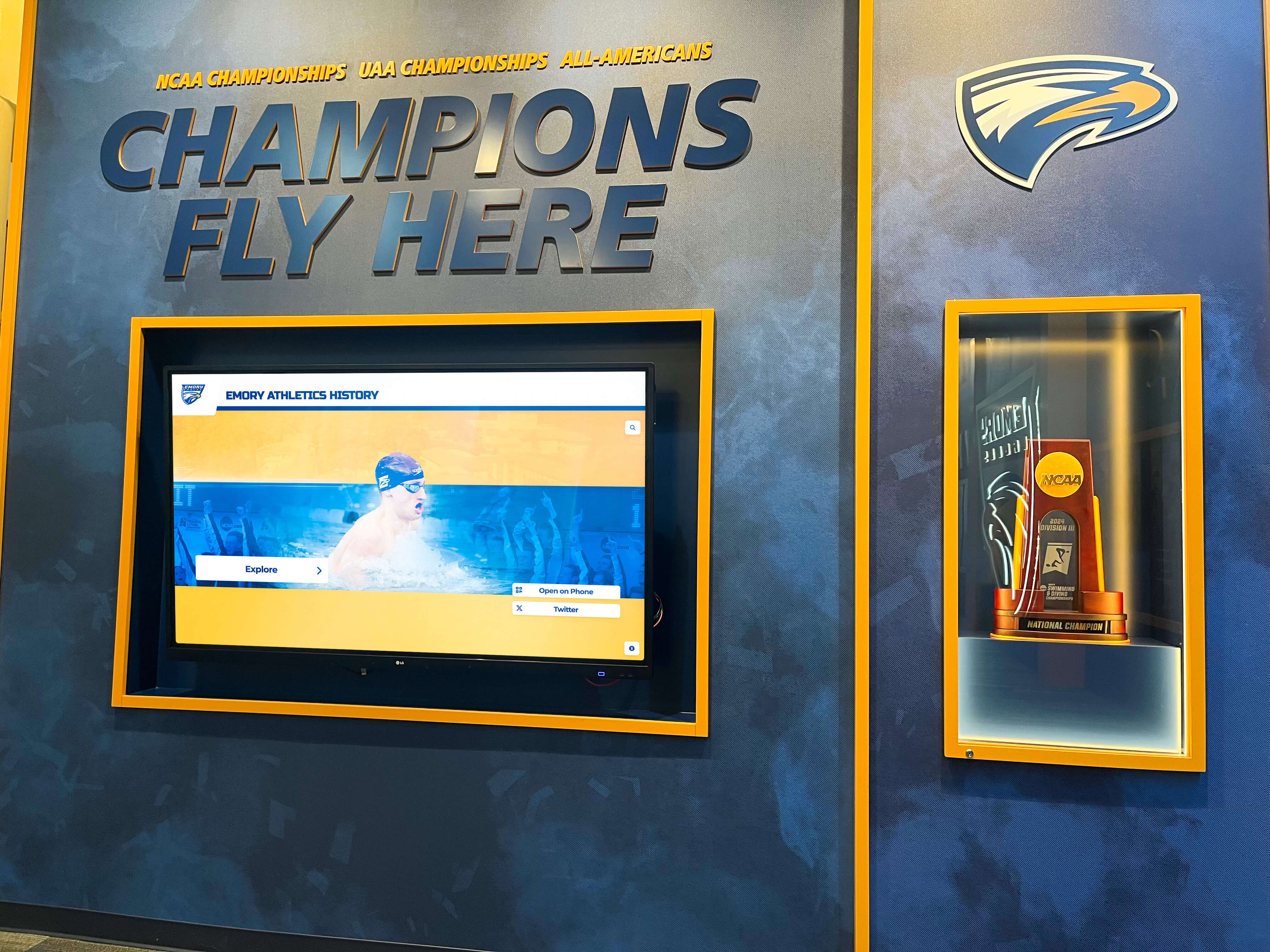
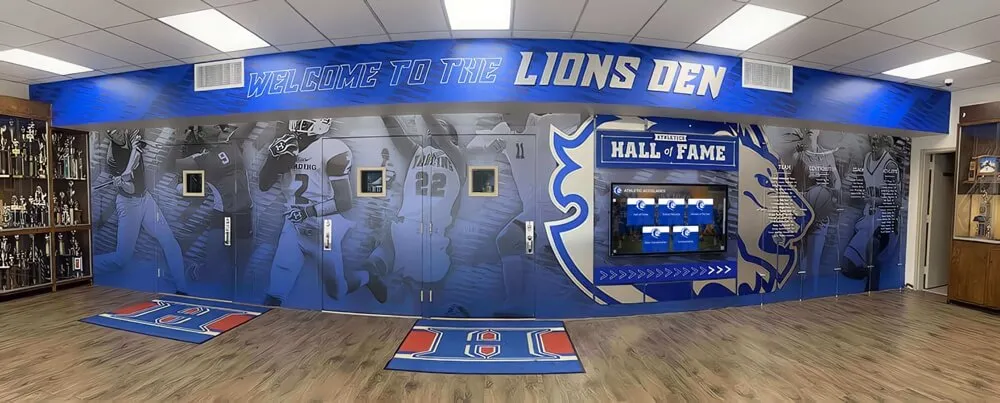
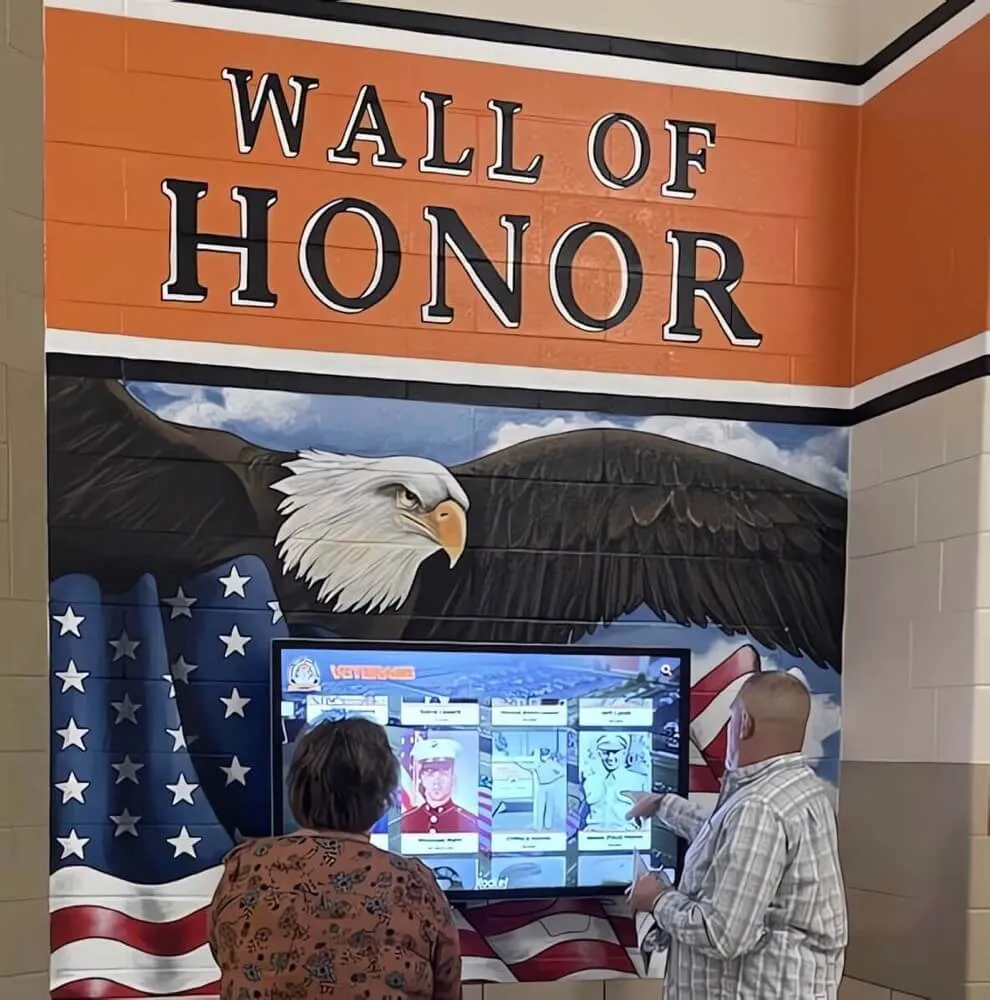
Comprehensive champions walls combine multiple sports' seasonal achievement records with physical trophy displays, creating complete historical archives that honor both team and individual accomplishments
Seasonal Update Workflows That Keep Displays Current
The most elegantly designed season recap display loses value quickly if it goes months or years without updates. Sustainable update workflows determine whether displays remain living recognition assets or become static installations that students stop noticing.
Post-Season Update Triggers
The most effective programs build season recap updates into existing end-of-season workflows rather than treating them as separate administrative tasks. When coaches complete season-end reports—submitting final statistics, nominating award recipients, evaluating program progress—season archive updates happen as a natural extension of that process rather than an additional requirement.
For swimming and aquatic programs, end-of-season documentation aligns naturally with swim meet hosting wrap-up procedures, which already generate the detailed individual performance records that season archives require.
Content Collection and Approval
Season recap content quality improves when collection involves coaches, team captains, and program stakeholders rather than relying solely on athletic office records. Coaches provide contextual understanding of individual athlete achievements and season highlights that raw statistics don’t capture. Student journalists or yearbook staff may have photo and narrative content that enriches documentation beyond what administrative records alone contain.
Building a simple content collection process—a standard form or brief debrief meeting at season end—creates richer documentation without demanding significant additional time from any individual stakeholder.
Photography and Media Documentation
Season recap displays with visual content create substantially stronger recognition impact than text-only formats. Programs that establish basic photography workflows—designating someone to capture team photos at season end, collecting action photos from regular coverage, maintaining organized digital libraries—produce documentation that remains meaningful decades later. Archiving team photos in consistent formats tied to season years enables straightforward integration with both physical display panels and digital touchscreen archives.
Digital Touchscreen Technology for Year-Round Season Documentation
Modern digital touchscreen systems designed for athletic recognition address every core limitation of physical season recap display formats: space constraints, update costs, searchability, and long-term accessibility.
How Touchscreen Systems Handle Season Recaps
Contemporary touchscreen platforms built for school athletics allow administrators to enter season data through web-based content management systems accessible from any device. New season entries appear on facility displays within minutes of submission—no printing, shipping, or installation required. Visitors explore seasonal records by browsing sport categories, selecting specific years, or searching for individual athletes, coaches, or achievements.
These systems accommodate photo libraries, video highlight reels, and linked biographical content for individual athletes, creating season archives that tell complete stories rather than summarizing outcomes alone. As seasons accumulate in the system, the archive becomes a comprehensive institutional record that grows more valuable each passing year.
Accessibility for Alumni and Community Members
Modern touchscreen systems include web-accessible versions that families, alumni, and community members can browse remotely from any device. Athletes who graduated years ago can explore their season records alongside those of current teams, deepening alumni connection to active program life. For schools evaluating the full scope of available options, a detailed athletic hall of fame display software buyer’s guide provides useful criteria for comparing platforms across functionality, cost, and implementation requirements.
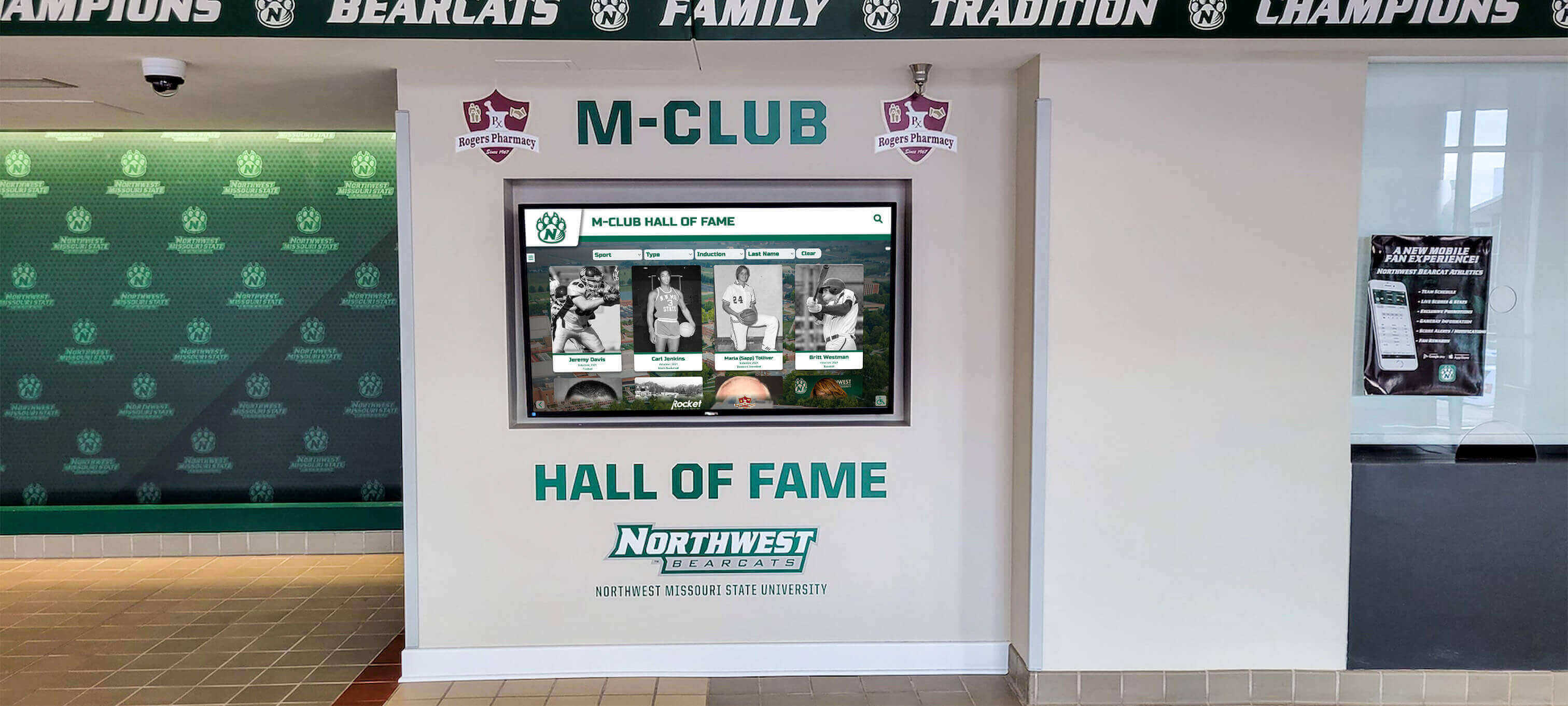
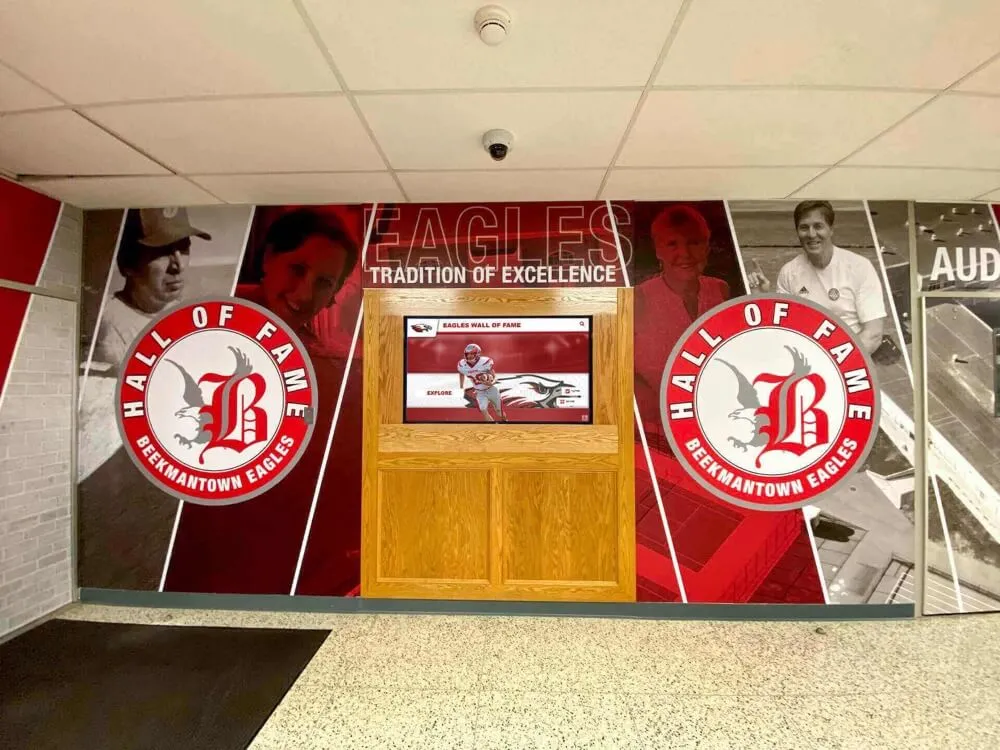
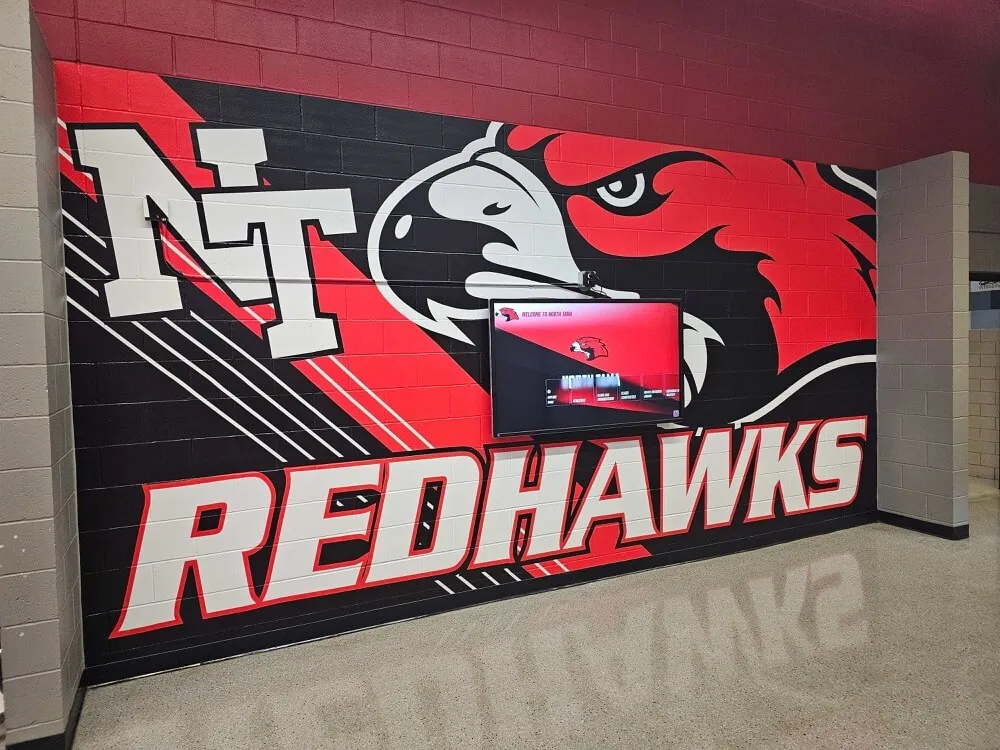
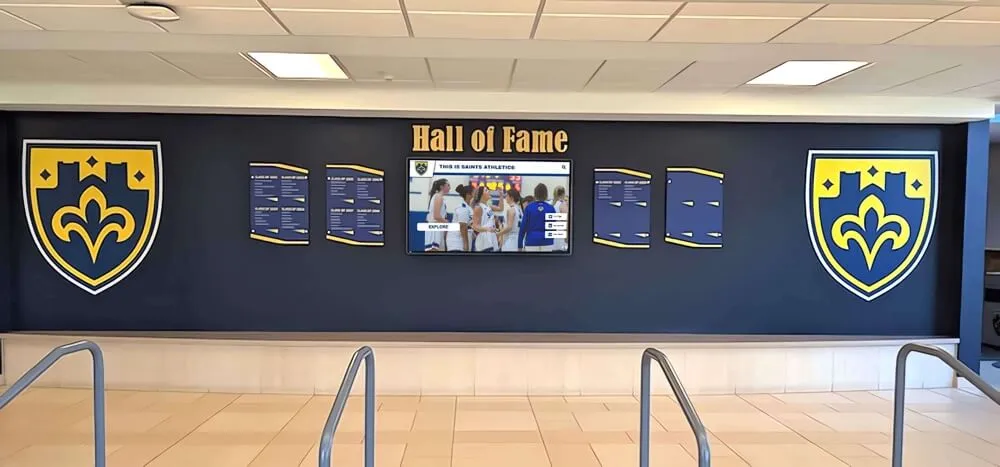
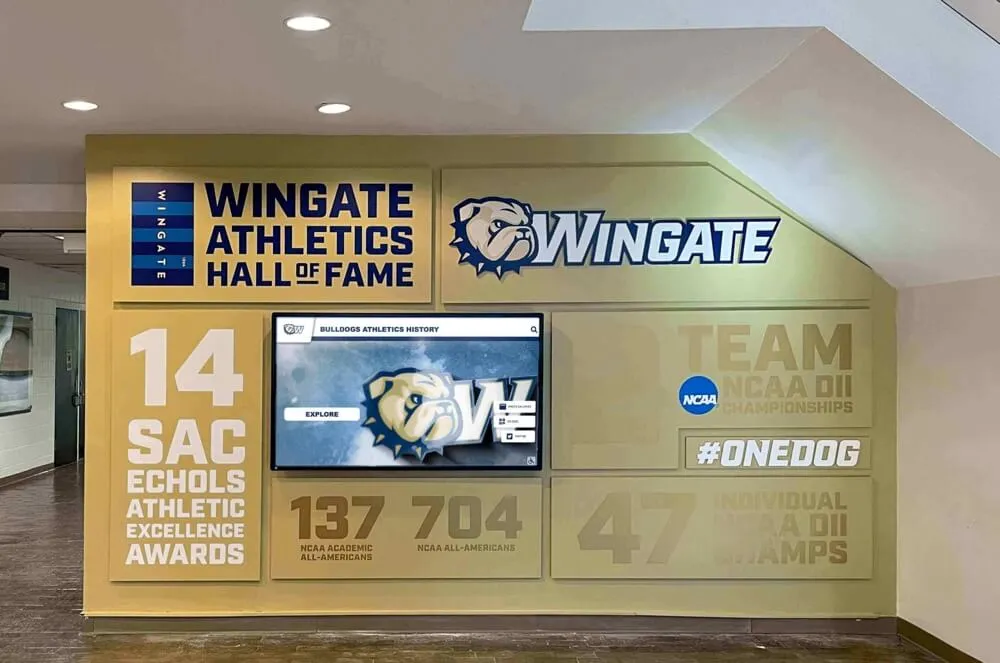
Comprehensive digital display systems integrate multi-sport hall of fame recognition with seasonal achievement archives, creating complete program documentation in a single interactive installation
Starting Your Athletic Season Recap Display
Athletic season recap displays succeed when they reflect a genuine institutional commitment to documenting program history—not only championship peaks, but the full competitive record of every team every season. Starting that commitment this year, with whatever format fits your current resources, creates a foundation that compounds in value over time.
Physical displays can begin immediately with framed panels, dedicated bulletin boards, or updated hallway installations. Digital systems allow programs to build searchable archives that accommodate decades of seasonal documentation without physical space limitations, automatically surfacing historical context for current athletes and visitors alike. The right starting point depends on budget, facility characteristics, and long-term goals—but any consistent seasonal documentation is more valuable than none.
Every season that passes without documentation is a season permanently lost from your program’s historical record. The athletes who competed that year, the coaches who led them, and the achievements they earned together all deserve better than fading memories in a scorebook no one reads.
Preserve Every Season's Legacy
Discover how interactive touchscreen archives from Rocket Alumni Solutions can transform your athletic season recaps into a searchable, permanent record that athletes, families, and alumni will explore for years to come.
Schedule a Free Demo