



Walk into any high school built before 2010, and you’ll likely find at least one traditional trophy case lining the hallway—glass-fronted cabinets filled with gleaming awards, championship plaques, and team photos arranged in careful rows. These physical displays have served schools for generations, providing tangible evidence of athletic achievement and institutional pride.
But visit that same school ten years later, and the trophy case tells a different story: decades of achievements crammed into limited space, older trophies relegated to storage, dust accumulating on forgotten awards, and no room for this season’s championships. Athletic directors face an impossible choice—which accomplishments deserve visibility, and which athletes’ achievements get hidden away?
This space crisis has prompted many schools to reconsider how they recognize and preserve athletic history. Digital hall of fame displays offer an alternative approach, using touchscreen technology to showcase unlimited achievements in the same physical footprint as a single trophy case. But is digital technology the right choice for your school hallway, or do traditional trophy cases still offer advantages worth preserving?
This comprehensive comparison examines both solutions across key decision factors—space capacity, cost over time, maintenance requirements, student engagement, accessibility, and long-term value—to help athletic directors, school administrators, and facilities managers make informed choices about recognition displays in school hallways.

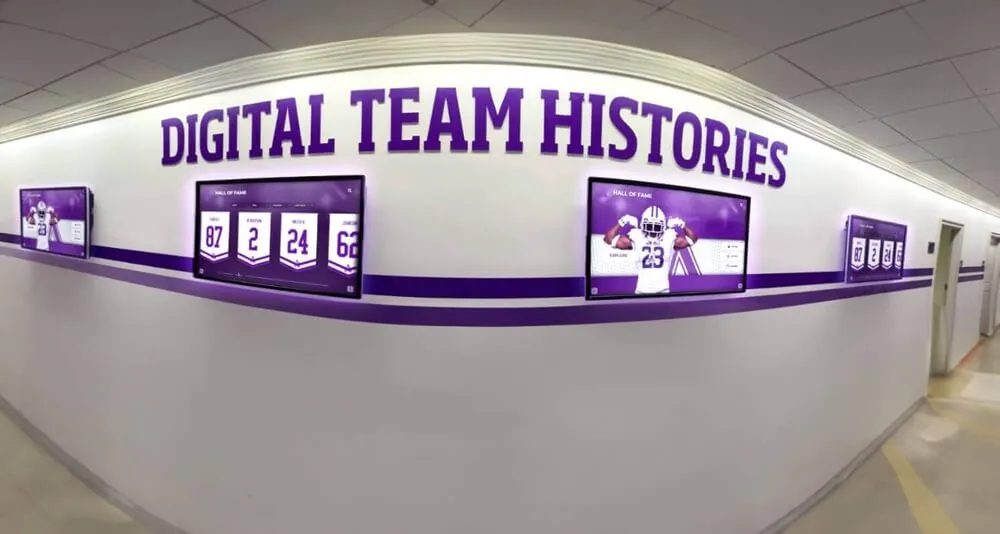
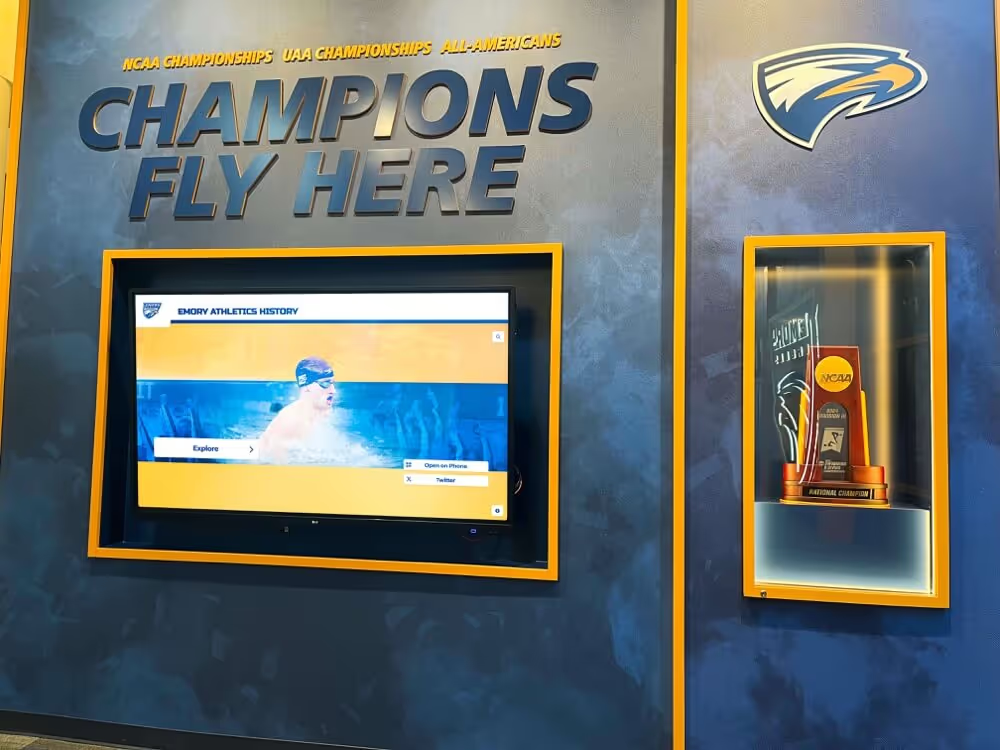
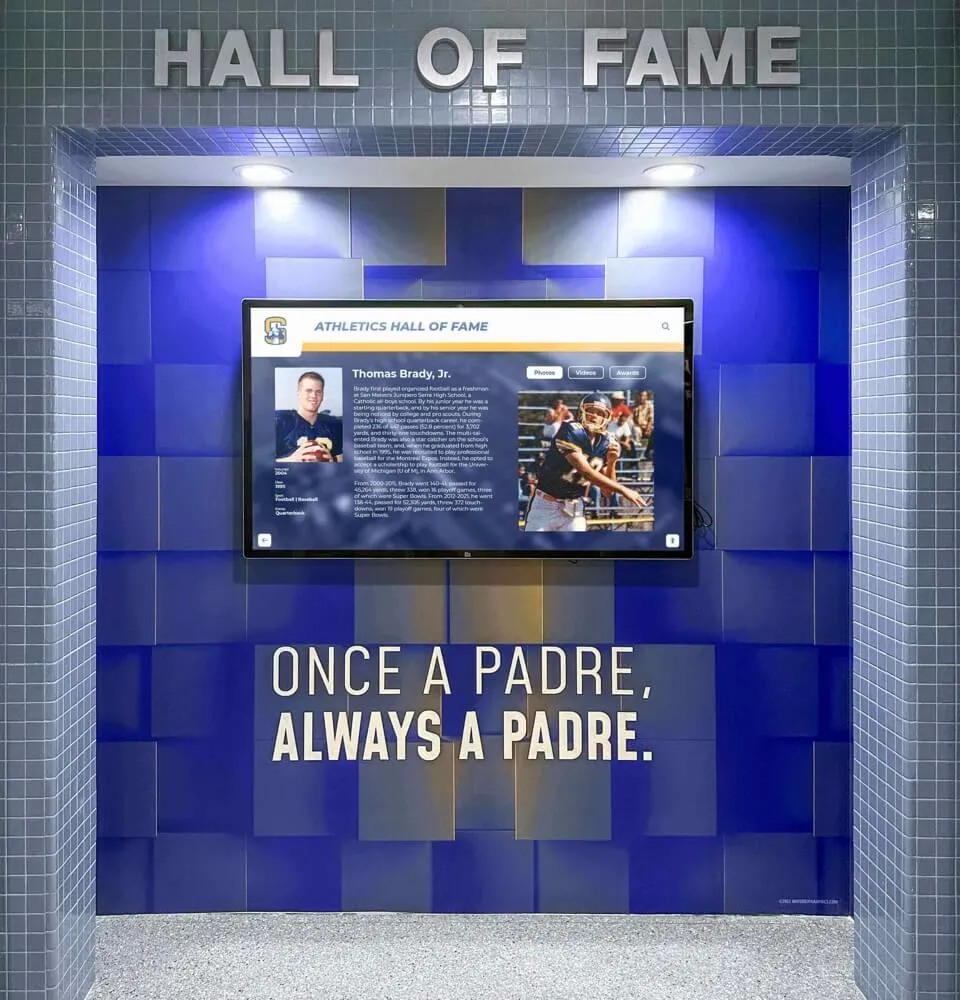
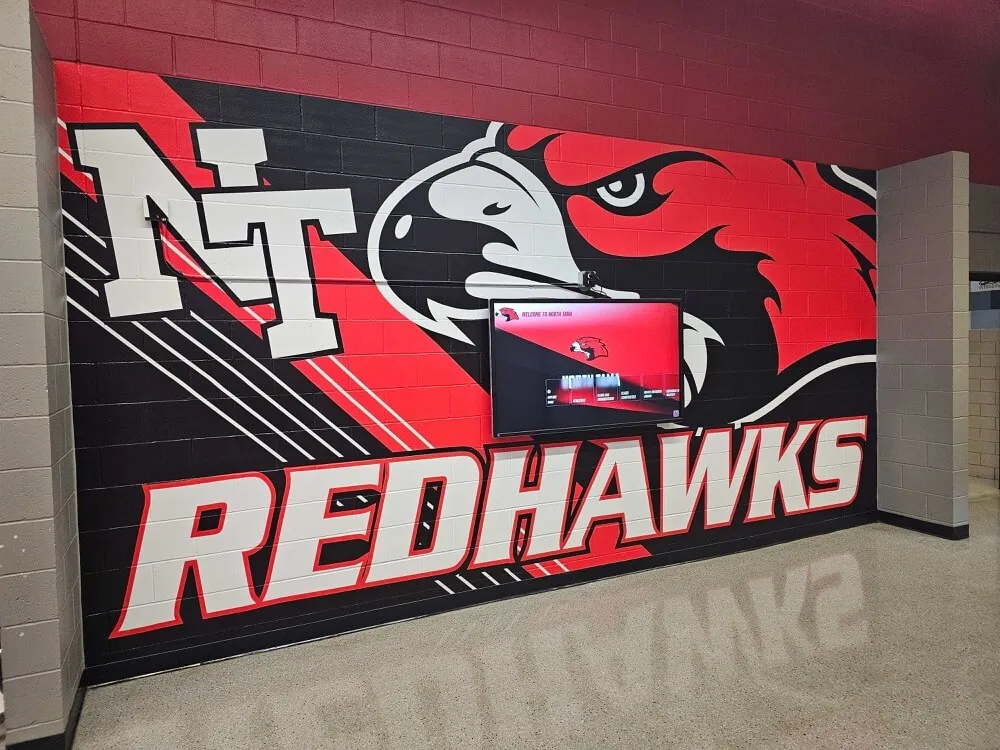
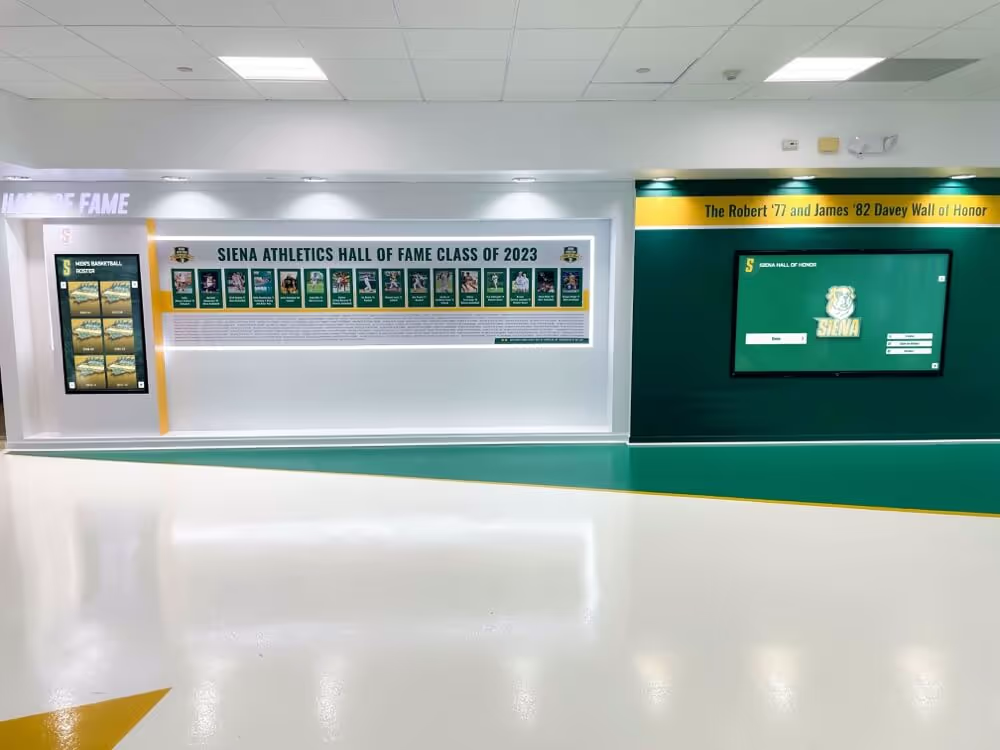
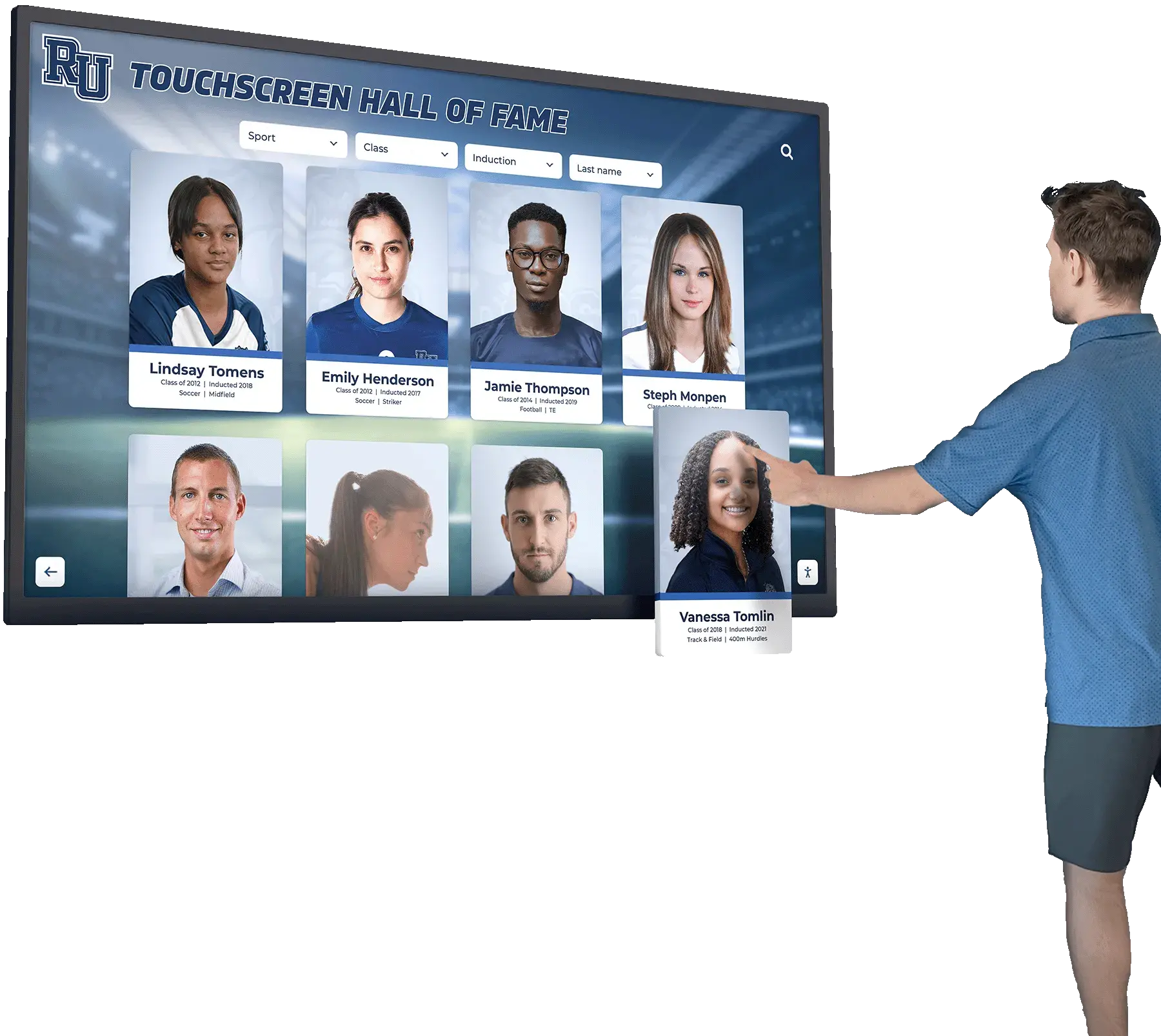
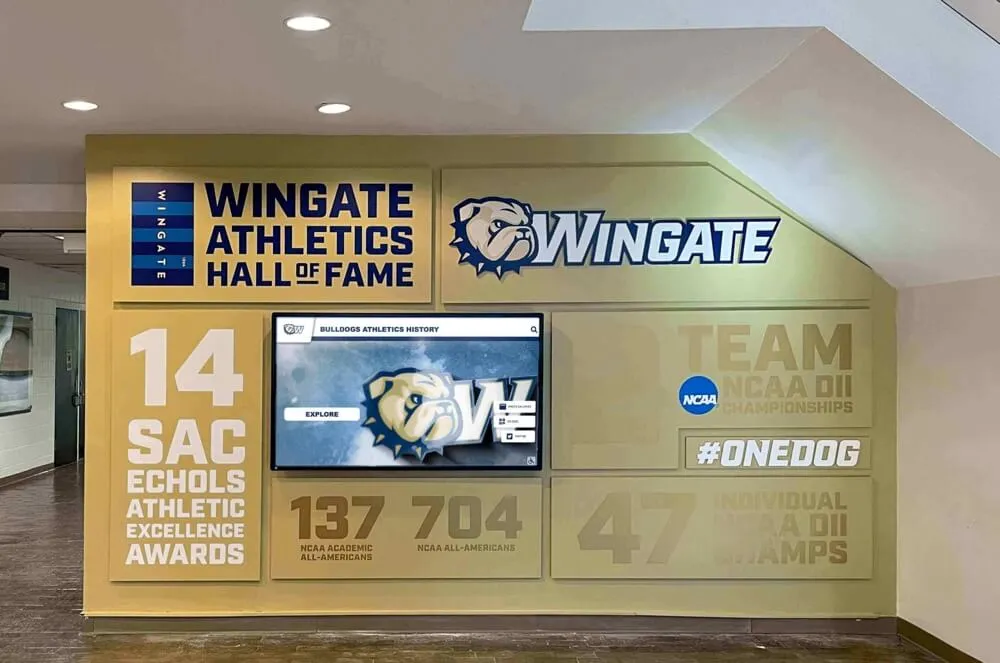
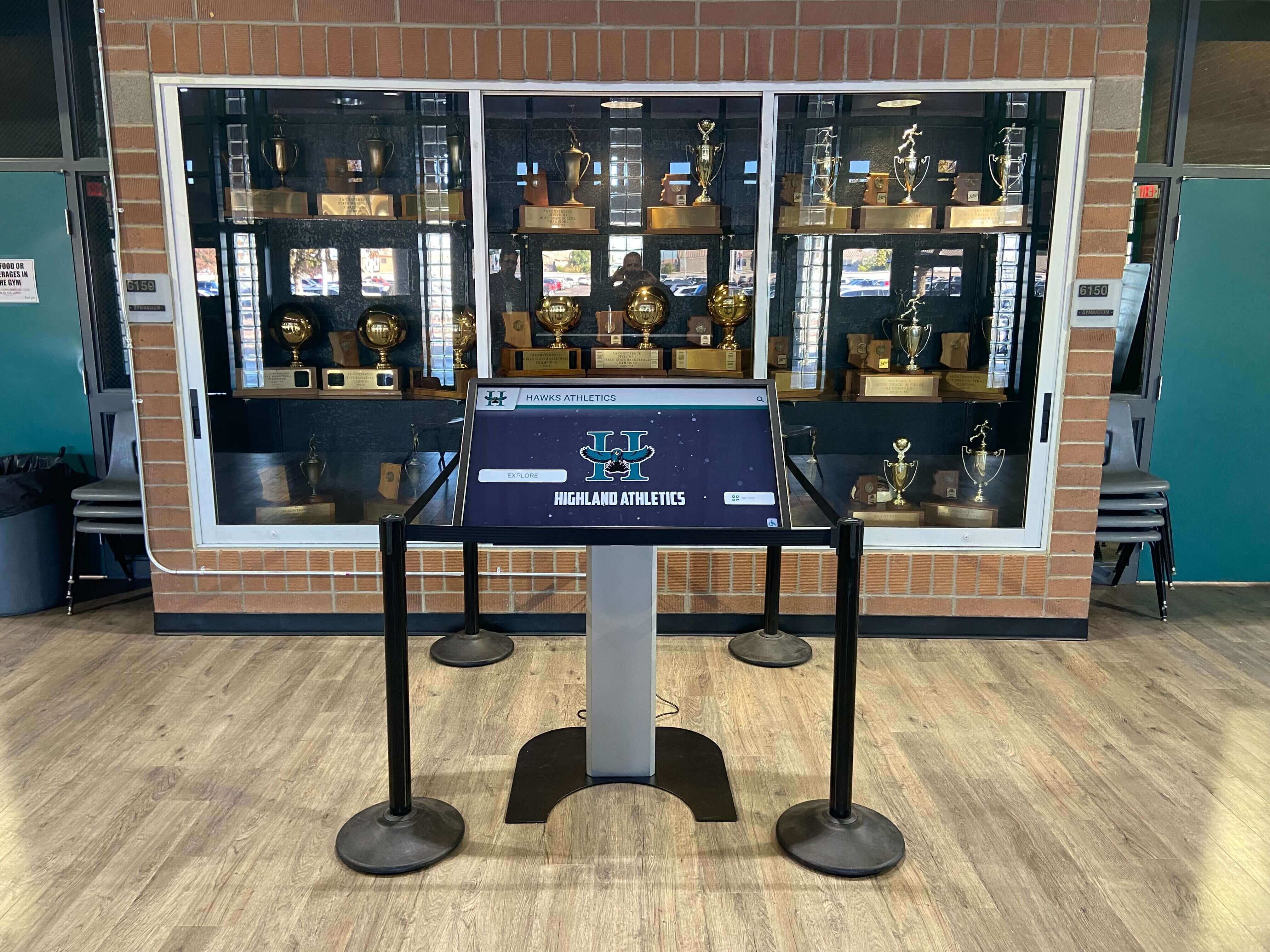
Modern touchscreen displays can be integrated into traditional trophy case areas, providing digital recognition alongside physical awards
The Space Limitations of Traditional Trophy Cases
Traditional trophy cases face fundamental physical constraints that create ongoing challenges for successful athletic programs.
Physical Capacity Reaches Its Limit
A standard 6-foot trophy case holds approximately 50-75 items depending on size and arrangement. For schools with multiple sports programs competing across fall, winter, and spring seasons, this capacity fills quickly:
Annual trophy accumulation for a typical high school athletic program:
- 12-15 sports teams generating 2-3 awards per season
- Individual athlete recognition awards (MVP, All-Conference, All-State)
- Championship trophies and runner-up plaques
- Team photos and commemorative items
- Academic achievement awards for student-athletes
At this rate, a single trophy case reaches capacity within 2-3 years. Schools with long athletic traditions may have accumulated hundreds or thousands of awards over decades, creating a storage crisis where 90% of achievements remain invisible in basement storage rooms.
The Difficult Decisions About What Stays Visible
When trophy cases fill up, administrators face uncomfortable choices. Do you remove older achievements to make room for recent ones, diminishing the recognition of past athletes? Do you display only championship trophies, ignoring important individual accomplishments? Do you rotate displays seasonally, requiring constant maintenance?
Each approach has drawbacks. Removing older trophies disrespects alumni and diminishes institutional history. Displaying only top achievements creates an exclusive culture that ignores the contributions of most athletes. Seasonal rotation requires significant labor and still leaves most achievements invisible most of the time.
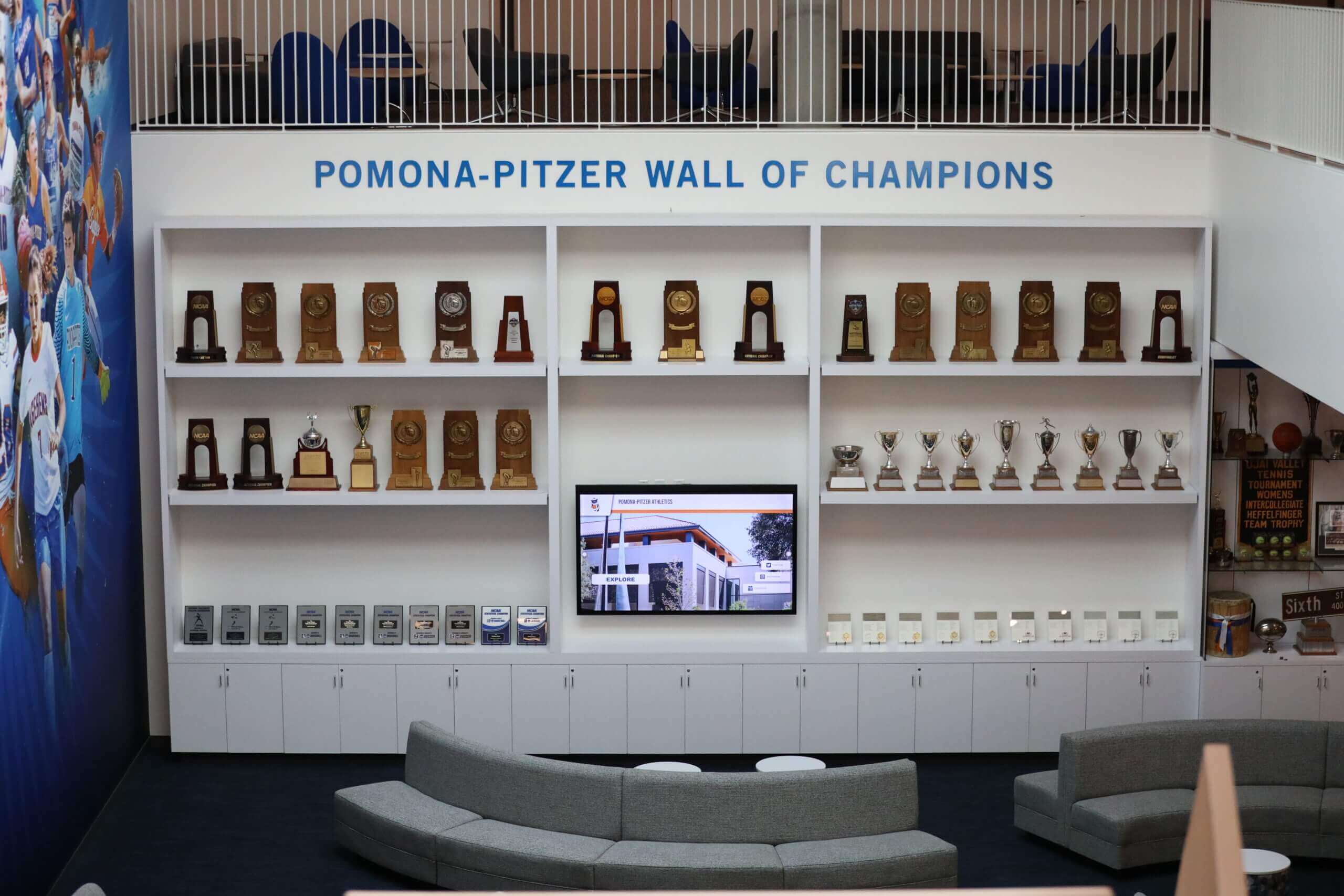
Traditional trophy displays require substantial floor and wall space, yet still face capacity limitations as programs accumulate achievements
Expansion Costs and Space Requirements
Adding more trophy cases seems like an obvious solution until you consider the costs and constraints:
Traditional trophy case expansion challenges:
- Initial cost: $1,500-$4,000 per 6-foot case depending on quality and features
- Installation: Professional installation required, especially for wall-mounted cases
- Space requirements: Cases consume valuable hallway space that may be needed for ADA compliance or traffic flow
- Maintenance: Each additional case requires regular cleaning, lock maintenance, and lighting repairs
- Diminishing returns: More cases don’t solve the fundamental capacity problem—they just delay it
Schools eventually run out of hallway space for additional cases, forcing the same difficult decisions about what deserves visibility.
How Digital Displays Solve the Space Problem
Digital hall of fame displays approach recognition from a fundamentally different perspective—unlimited digital storage combined with selective physical display.
Unlimited Achievement Storage
Digital platforms eliminate capacity constraints entirely. A single touchscreen display can showcase unlimited achievements because content exists in digital form rather than physical space:
Digital storage advantages:
- Store thousands of athlete profiles, photos, and achievement records
- Add new content instantly without physical space considerations
- Include detailed information beyond what fits on plaques (stats, game highlights, career summaries)
- Archive complete team histories spanning decades
- Preserve historical photos and documents that would otherwise deteriorate
This unlimited capacity fundamentally changes how schools think about recognition. Instead of choosing which athletes deserve visibility, digital systems allow every achievement to receive permanent documentation and accessibility.
Same Footprint, Exponentially More Content
A single 55-inch touchscreen display occupies roughly the same wall space as a traditional 6-foot trophy case but provides access to exponentially more content:
Content capacity comparison:
- Traditional trophy case: 50-75 physical items
- Digital touchscreen: Unlimited profiles, photos, and records accessible through search and navigation
Visitors can browse achievements by sport, year, athlete name, or achievement type, making specific information accessible in seconds rather than hoping it’s currently on display in a physical case.
Solutions like comprehensive digital trophy displays allow schools to maintain physical trophies for special championships while making complete athletic histories accessible through touchscreen interfaces.
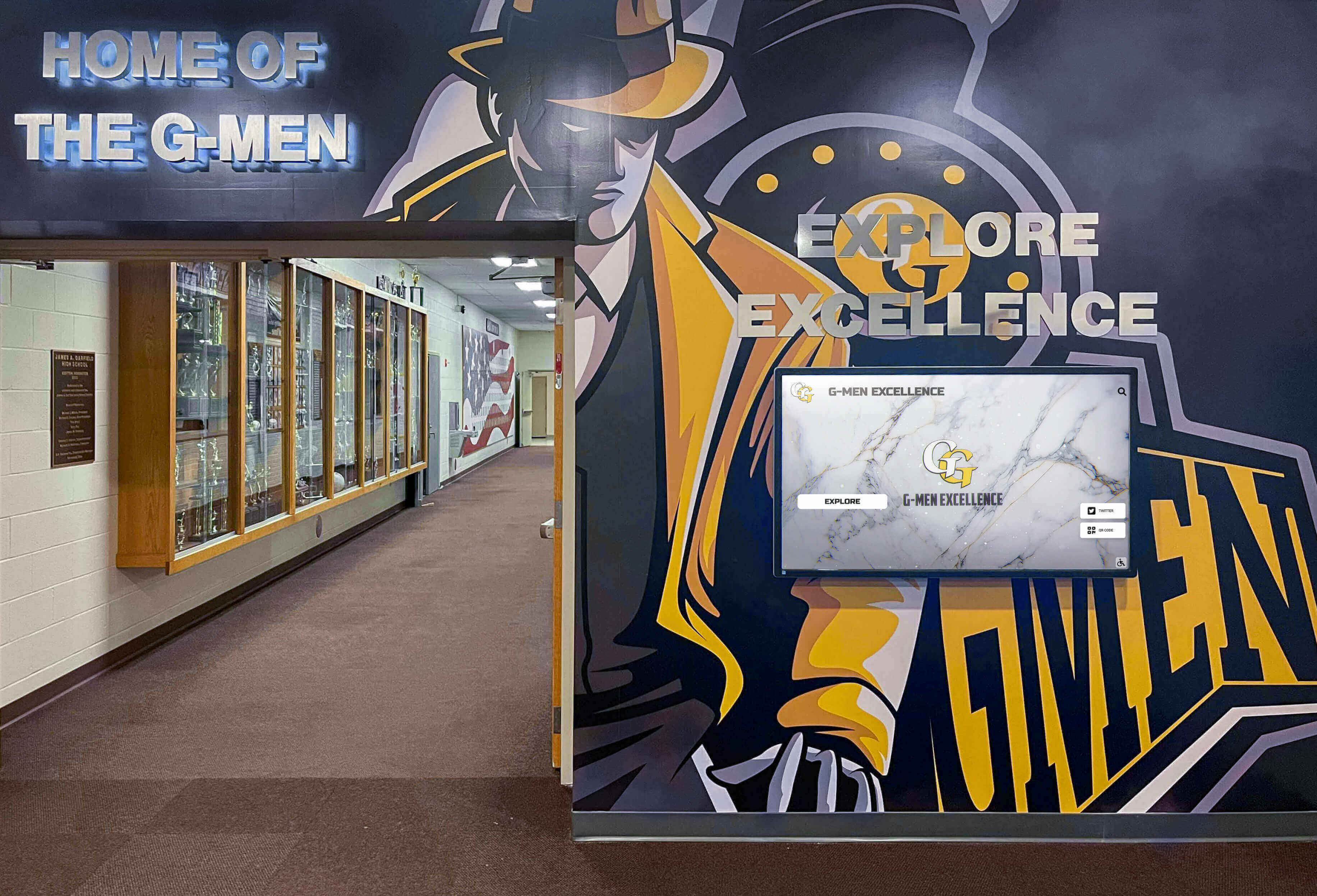
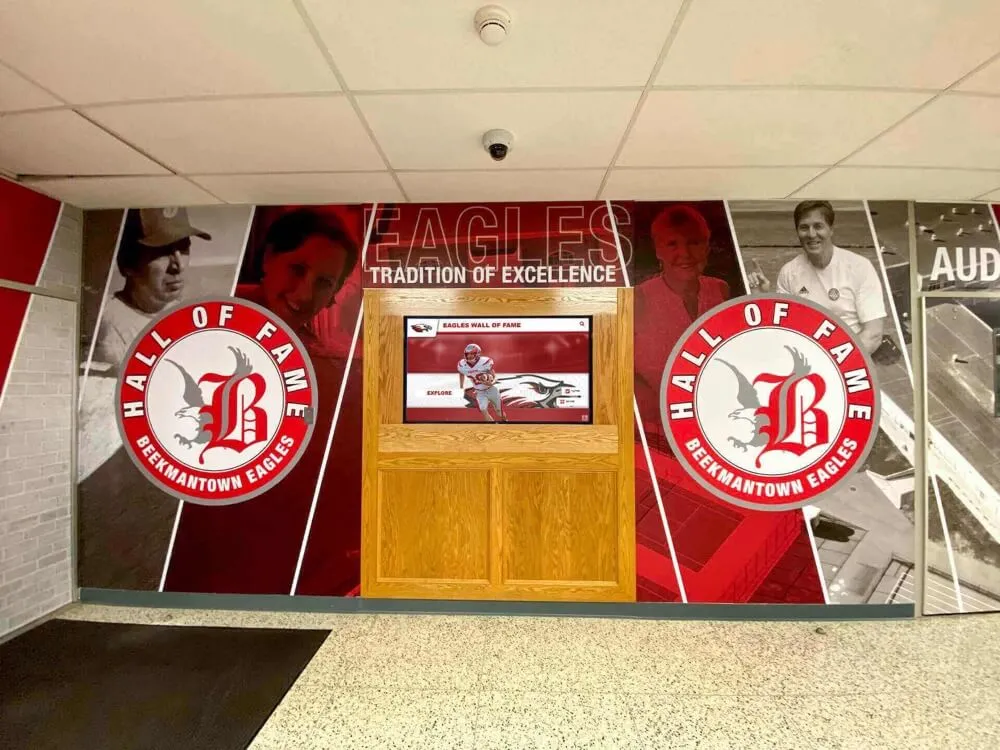
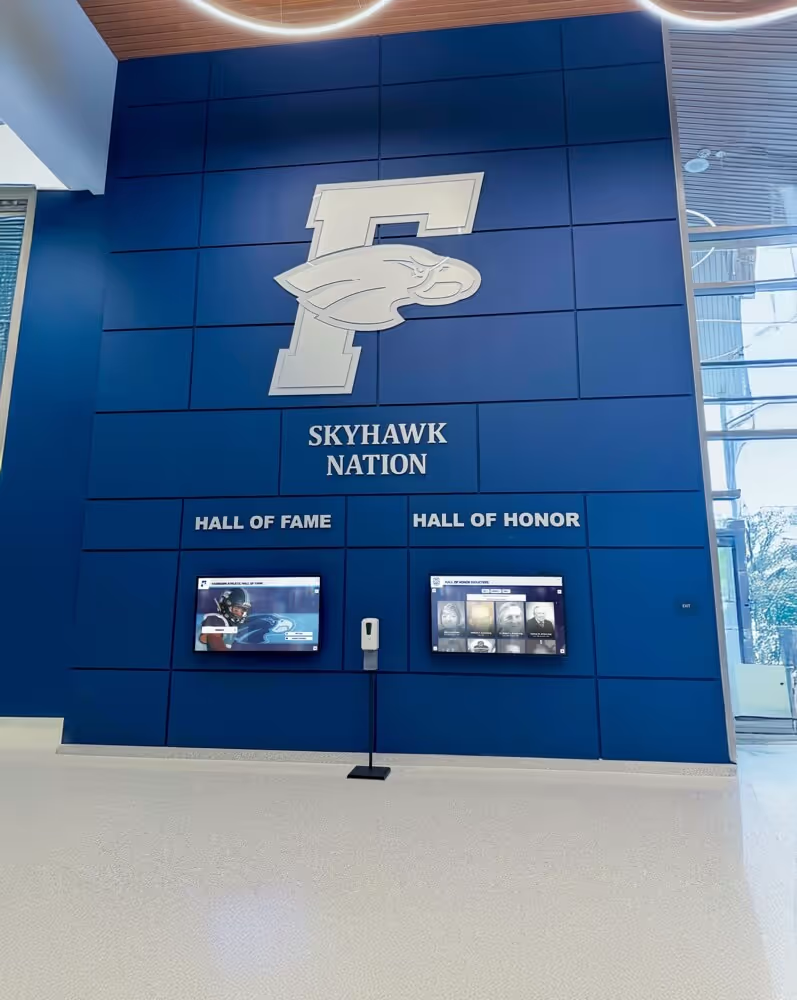
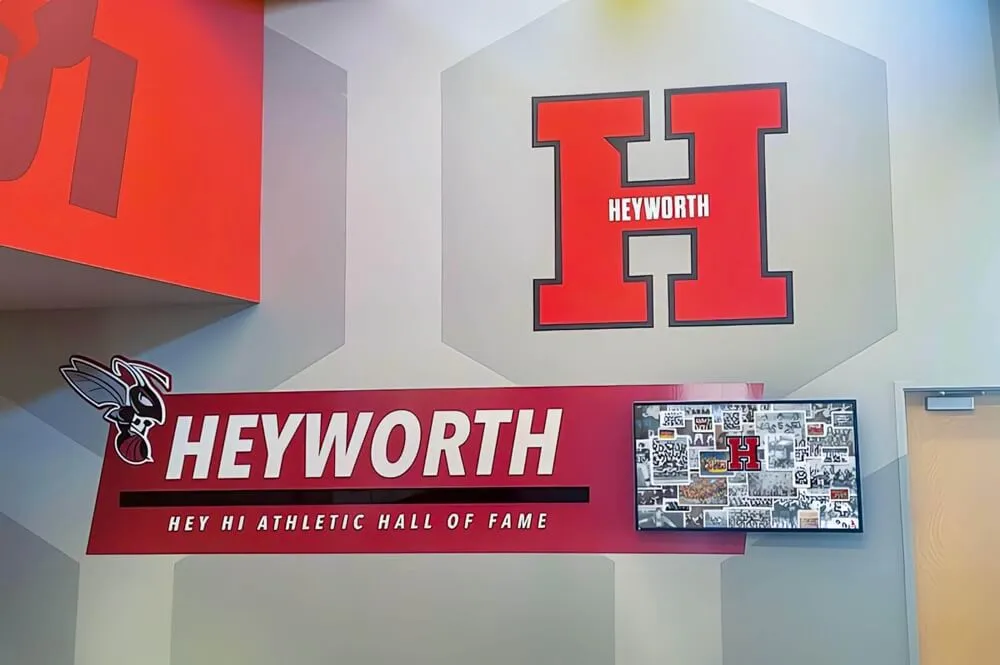
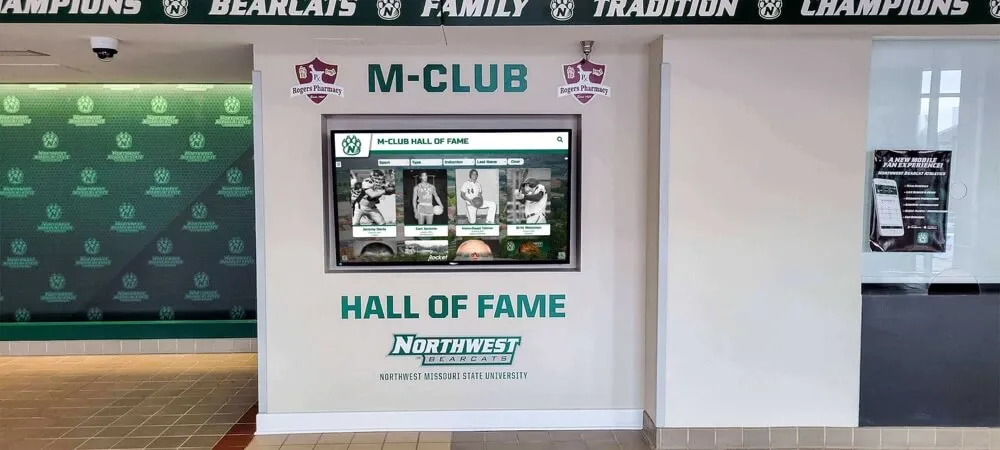
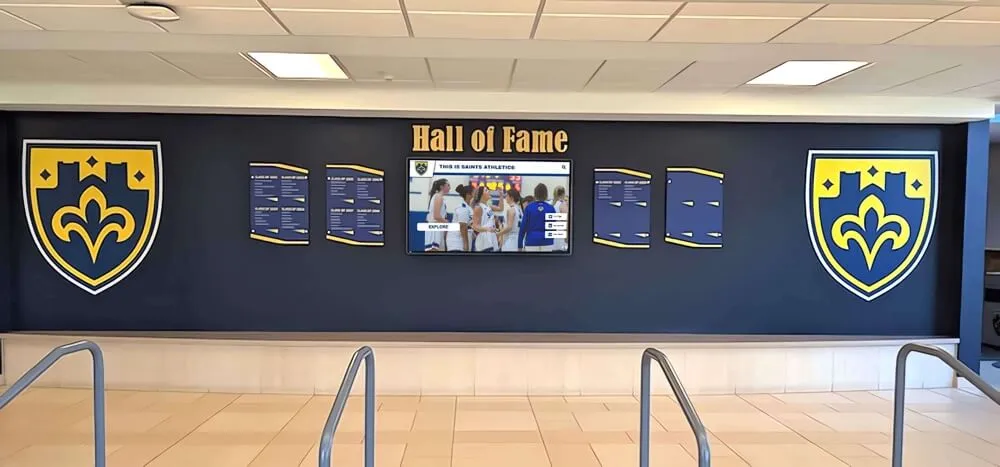
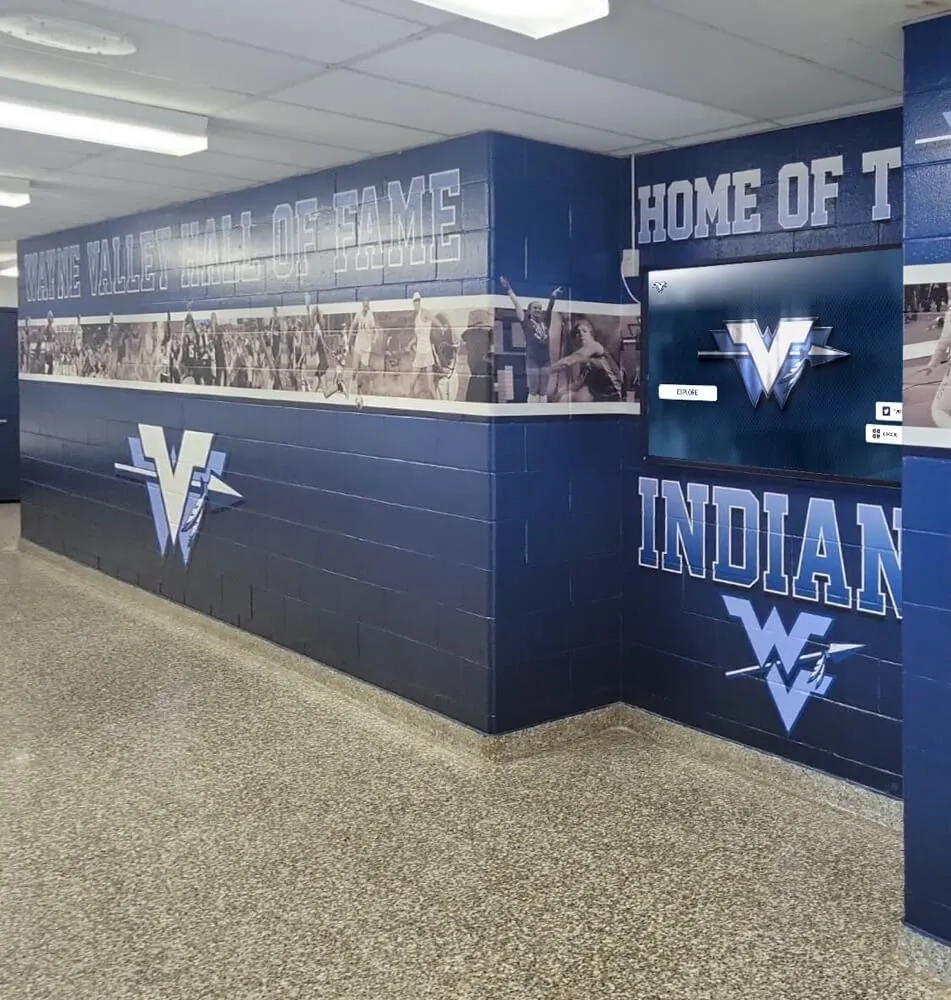
Some schools successfully integrate digital displays with existing trophy cases, combining traditional and modern recognition approaches
Cost Comparison Over Time
Initial investment represents just one component of total ownership cost. Long-term expenses often determine the better financial choice.
Traditional Trophy Case Expenses
Traditional cases appear straightforward—purchase once, use forever. But ongoing costs accumulate:
Initial investment:
- Quality trophy case: $1,500-$4,000
- Professional installation: $300-$800
- Total upfront: $1,800-$4,800 per case
Annual ongoing costs:
- Trophy purchases: $50-$300 per award × number of awards
- Engraving: $20-$75 per plaque
- Maintenance: Lock repairs, glass replacement, lighting fixes
- Cleaning supplies and labor
- Estimated annual: $1,000-$3,000+ depending on program size
Additional expansion costs:
- Each new case: $1,800-$4,800
- Over 10 years, successful programs may need 3-5 additional cases
- Total 10-year cost: $15,000-$35,000+ for growing programs
Digital Display Investment Structure
Digital displays require higher initial investment but different ongoing cost structures:
Initial investment:
- Commercial-grade touchscreen display: $3,000-$6,000
- Professional installation: $500-$1,500
- Content management platform: Varies by provider
- Initial content setup: $500-$2,000
- Total upfront: $5,000-$12,000
Annual ongoing costs:
- Platform subscription: $1,000-$3,000 per year
- Content updates: Minimal with self-service systems
- Electricity: ~$50-$100 per year
- Estimated annual: $1,050-$3,100
No expansion costs needed: Digital capacity grows without additional hardware
Over 10 years, programs requiring multiple trophy cases may spend similar or more than a single digital display that handles unlimited content.
Break-Even Analysis
For athletic programs generating 25+ awards annually, digital displays typically reach cost parity with traditional cases within 5-7 years when accounting for:
- Eliminated trophy purchase costs
- No expansion case purchases
- Reduced maintenance labor
- Space savings value
Programs with existing trophy cases don’t need to choose one approach exclusively. Many schools implement hybrid systems, maintaining physical displays for championship trophies while adding digital access to complete athletic archives.
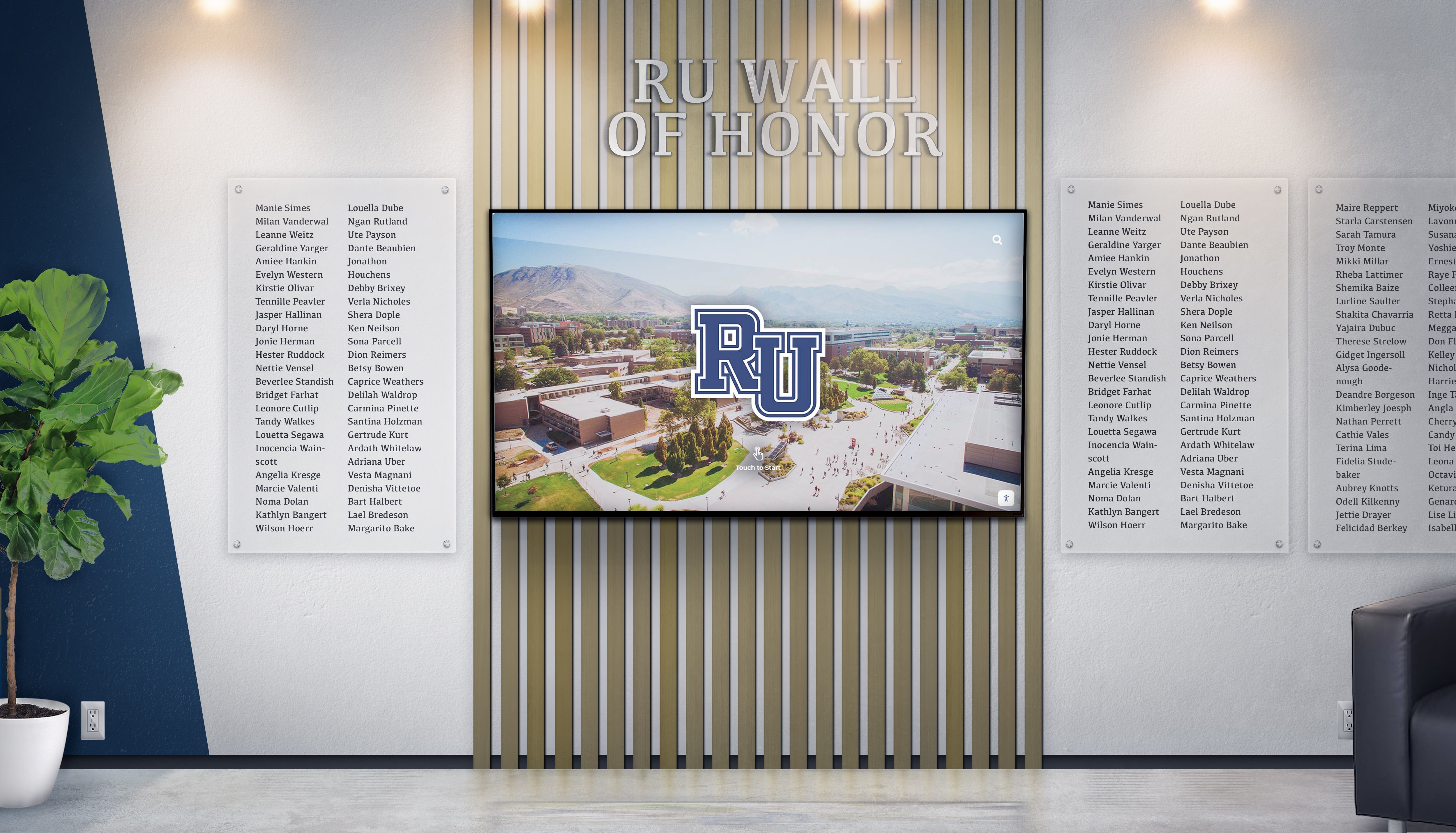
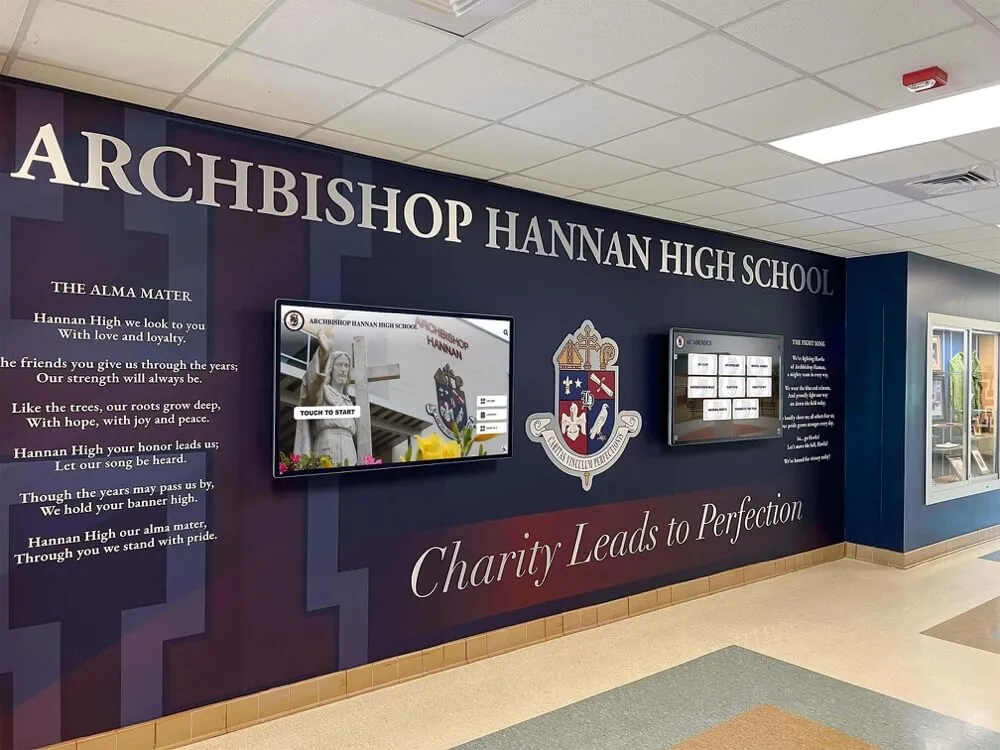
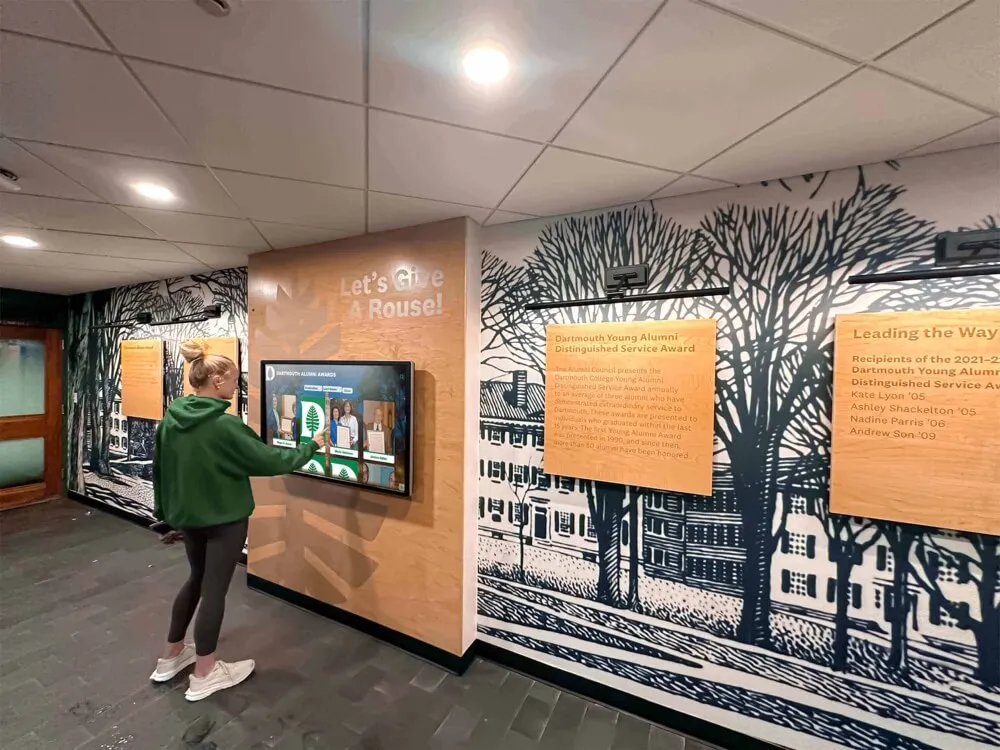
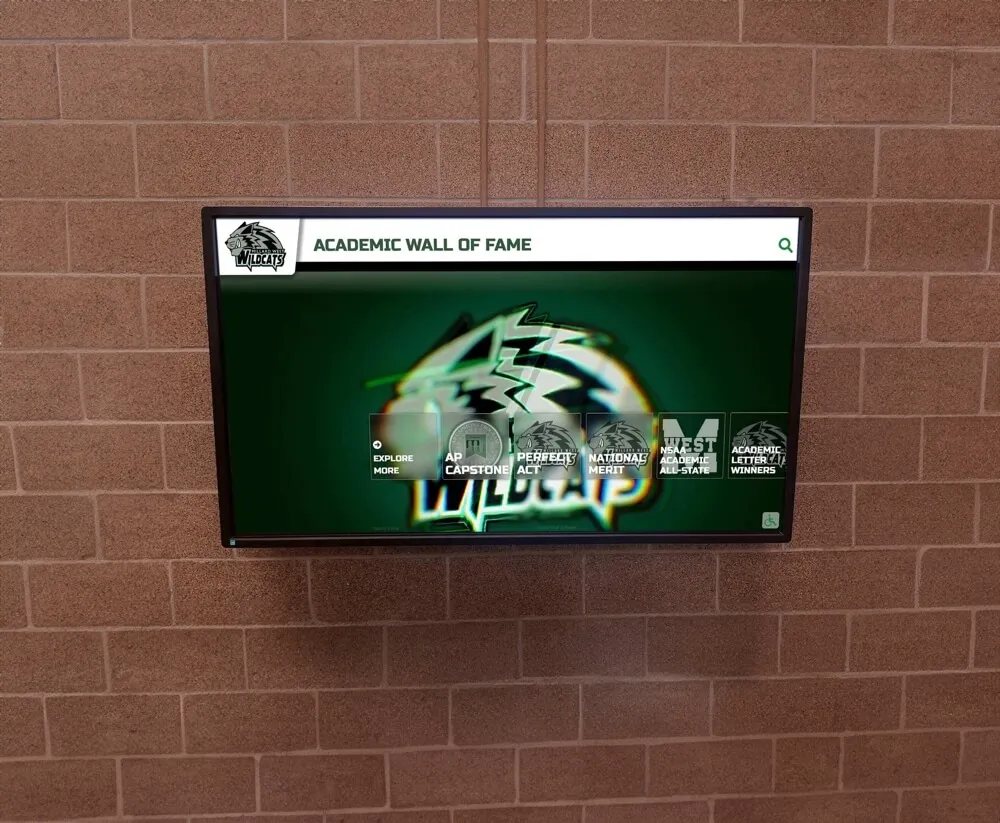
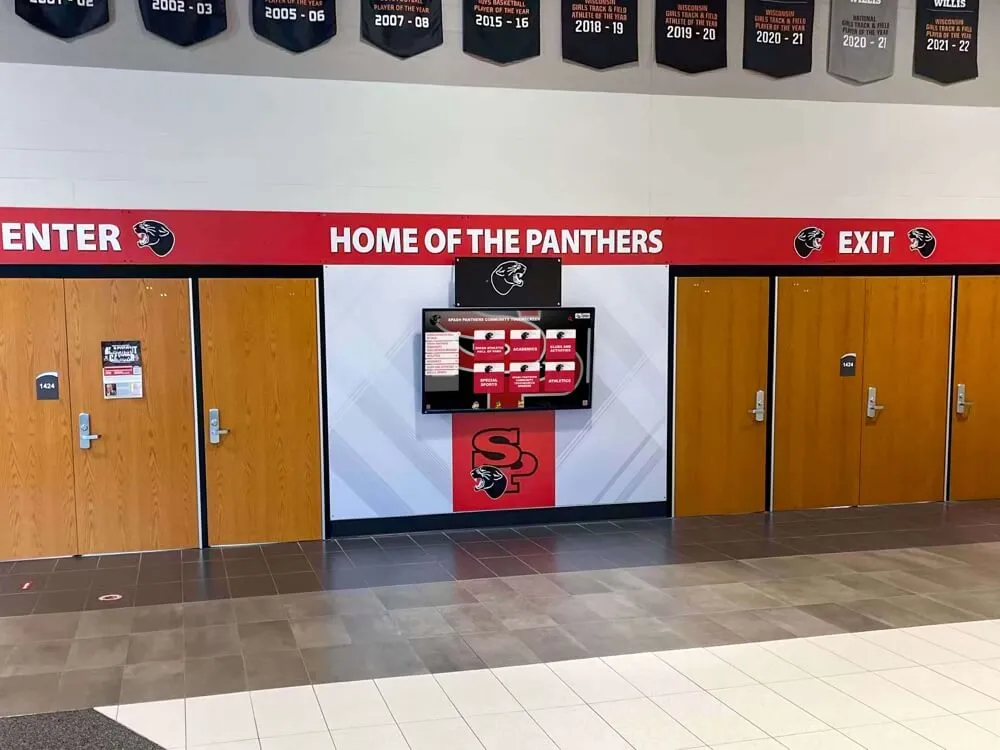
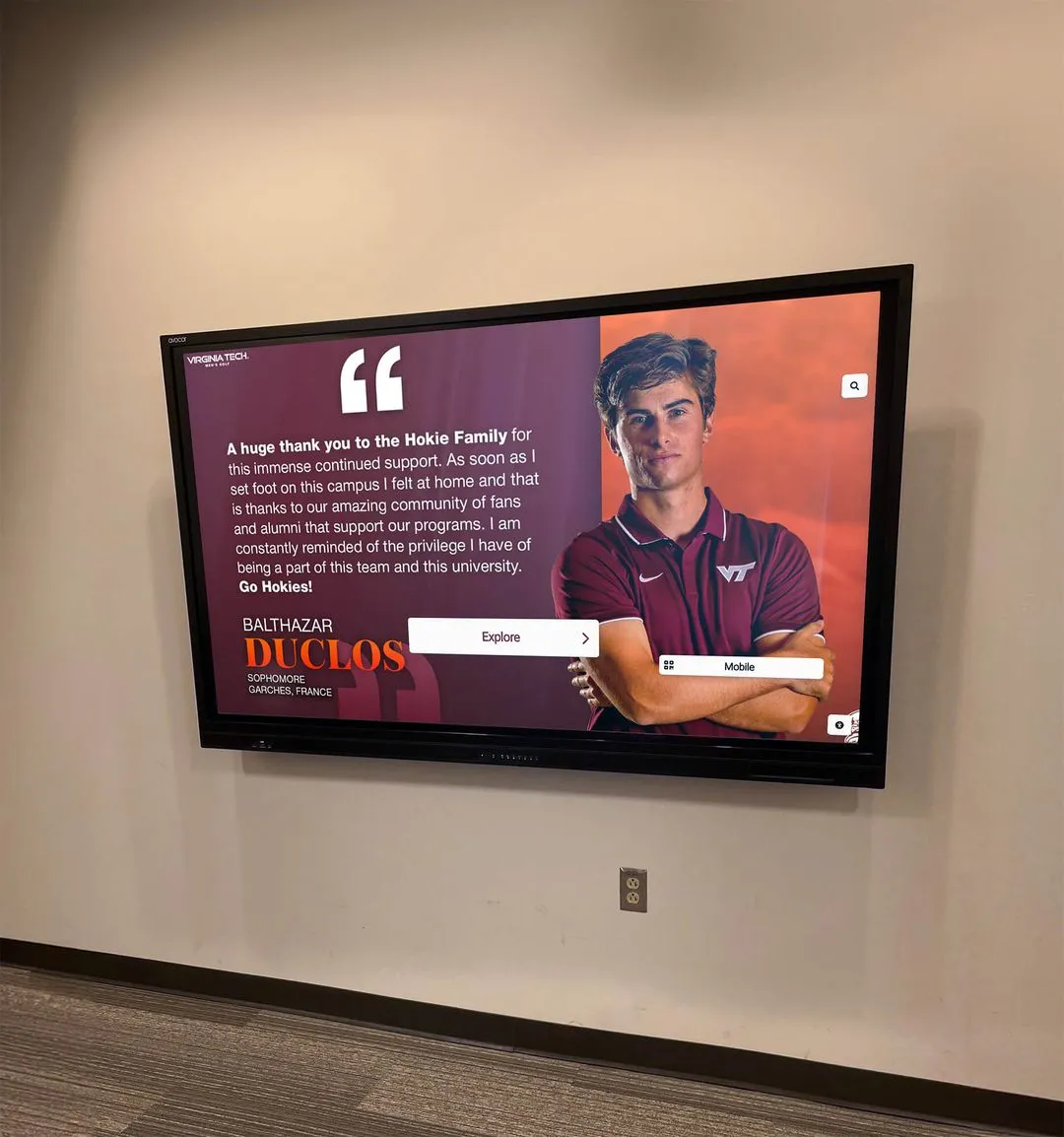
Digital displays can showcase contextual information like campus maps alongside individual achievement recognition
Maintenance and Update Requirements
How much ongoing work does each solution require to maintain professional appearance and current information?
Traditional Trophy Case Maintenance
Physical displays require consistent attention to remain presentable:
Regular maintenance tasks:
- Weekly: Dust removal from glass, frames, and displayed items
- Monthly: Interior deep cleaning, especially in high-traffic areas
- Quarterly: Lock inspection and lubrication
- Annually: Replace burned-out lighting, repair damaged glass, touch up finish
- As needed: Rearrange items when adding new trophies, update team photos, replace faded materials
Labor requirements: Maintenance typically falls to custodial staff or volunteer parents. Rearranging displays when adding new items can take 2-4 hours, particularly when trying to accommodate new awards in already-full cases.
Physical degradation: Trophy cases experience wear over time—glass scratches or breaks, locks fail, wood finishes deteriorate, and lighting fixtures burn out. Quality cases last 15-20 years with good maintenance, but eventually require replacement.
Digital Display Maintenance
Touchscreen systems require different maintenance focused on technology rather than physical cleaning:
Regular maintenance tasks:
- Weekly: Screen cleaning with appropriate materials
- Monthly: Software updates as released by manufacturer
- Quarterly: Content audits to ensure information accuracy
- Annually: Hardware inspection for any display issues
- As needed: Content updates adding new achievements (typically quick through web-based CMS)
Labor requirements: Physical maintenance is minimal—cleaning takes minutes rather than hours. Content updates depend on system design but modern platforms allow authorized staff to add new profiles, photos, and achievements through web interfaces in minutes without technical expertise.
Technology lifecycle: Commercial touchscreen displays typically last 7-10 years with proper care. Unlike trophy cases that gracefully age, digital displays eventually require replacement as technology advances. However, content transfers to new hardware, preserving all historical information.
Update Flexibility Matters
One significant difference emerges in how easily you can update information. Traditional plaques are permanent—any errors require expensive replacement engraving. Digital content updates instantly and costlessly:
Common updates that demonstrate digital advantages:
- Correcting misspelled names or incorrect stats
- Adding forgotten achievements discovered later
- Updating athlete information as careers progress
- Including additional context or stories
- Displaying reunion photos or “where are they now” updates
This flexibility proves valuable for preserving complete school history that evolves as alumni share memories and historical research uncovers forgotten achievements.
Engagement and Interactivity
How do students, alumni, and visitors actually interact with each type of display?
Traditional Trophy Case Engagement
Physical trophy cases create certain types of engagement experiences:
Positive engagement factors:
- Tangible connection: Physical trophies provide concrete evidence of achievement that feels “real”
- Always visible: Passive display means achievements remain visible 24/7 without requiring interaction
- Nostalgia appeal: Alumni often have strong emotional connections to physical trophies from their era
- Quick overview: Visitors can glance at displays while walking past
- Photo opportunities: Students often photograph themselves near relevant achievements
Engagement limitations:
- Limited information: Plaques typically show only basic details—names, year, achievement
- No searchability: Finding specific information requires reading every plaque until you locate it
- Static presentation: Same items visible regardless of visitor interest
- Accessibility challenges: Items in back rows or upper shelves are hard to read, especially for those with vision impairments
- No context: Trophies show what was won but not the stories behind achievements
Engagement tends to be brief—quick glances while passing through hallways rather than extended interaction.

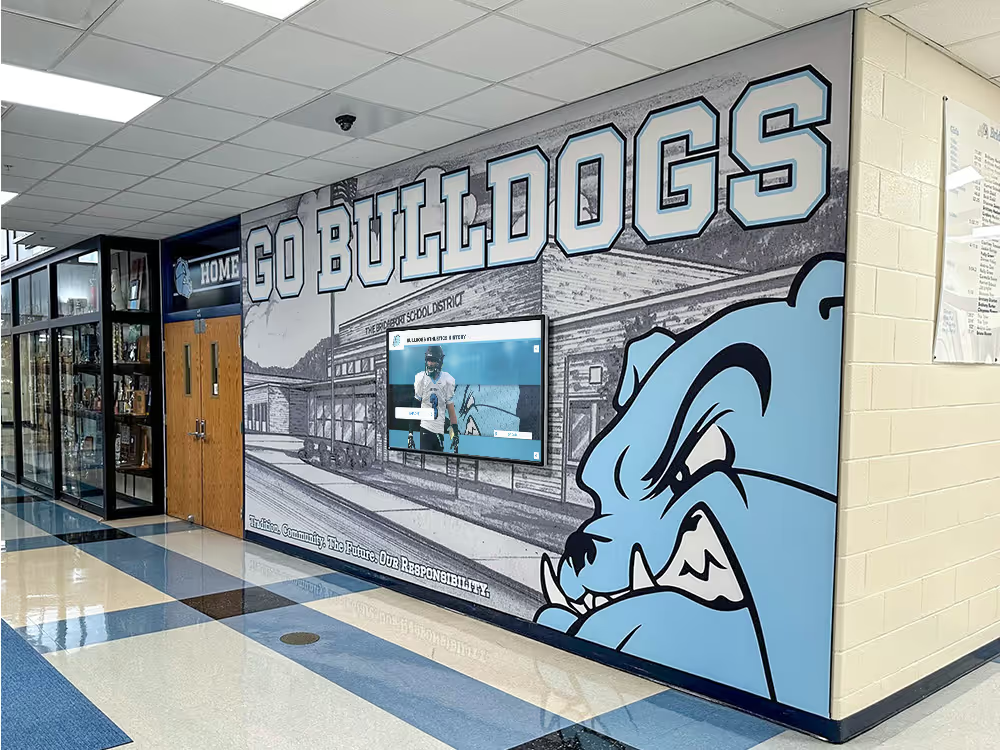
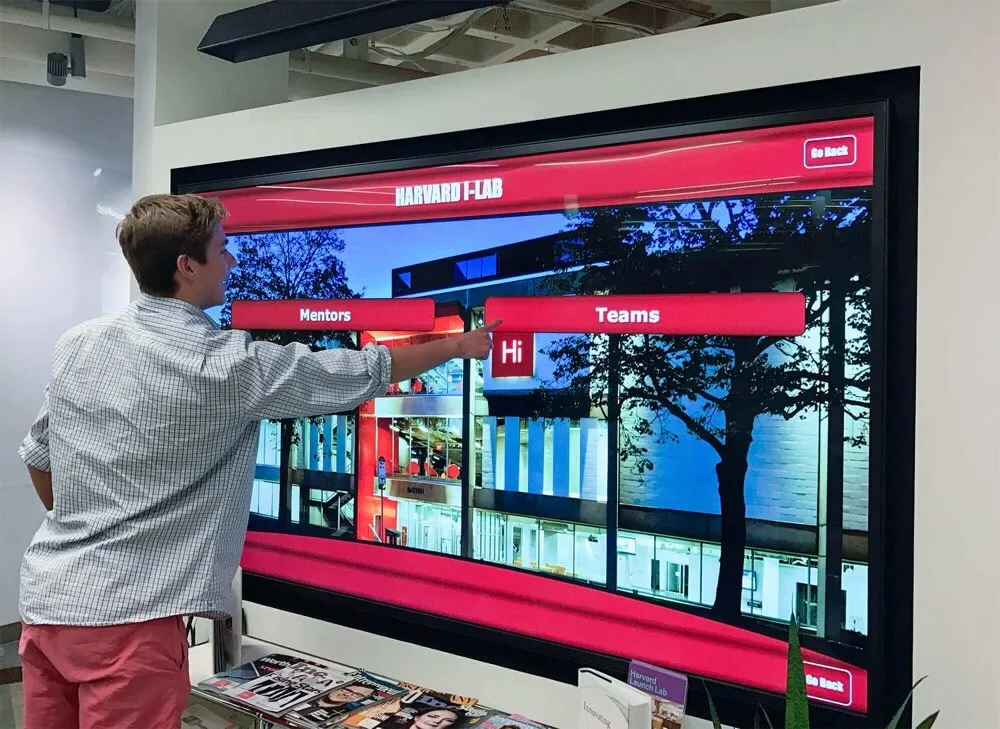
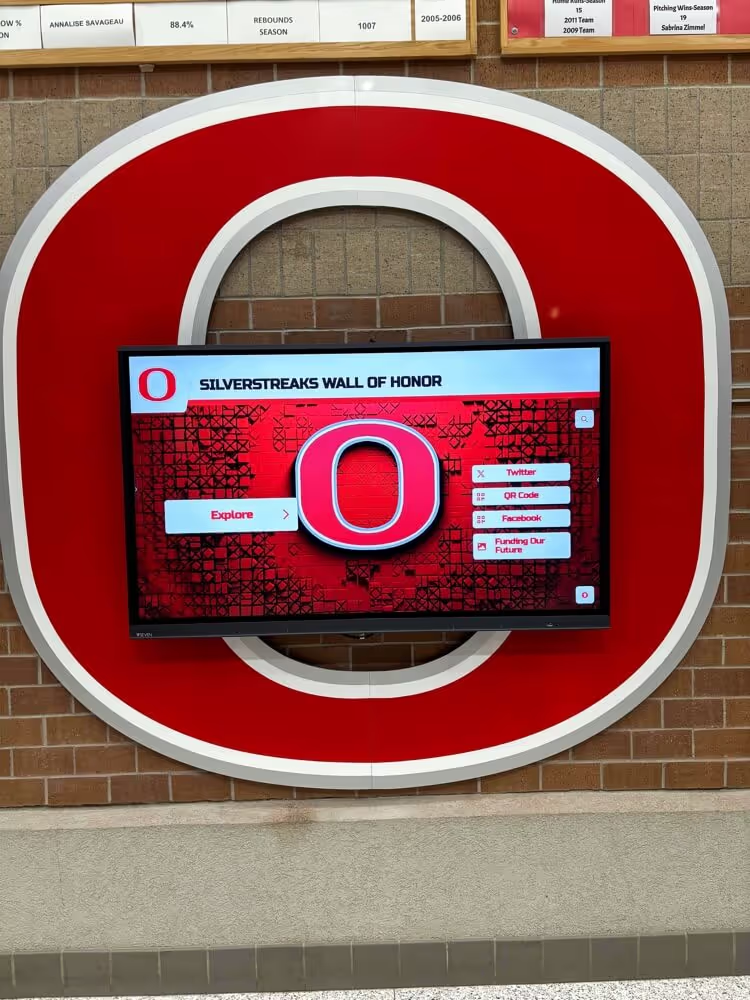
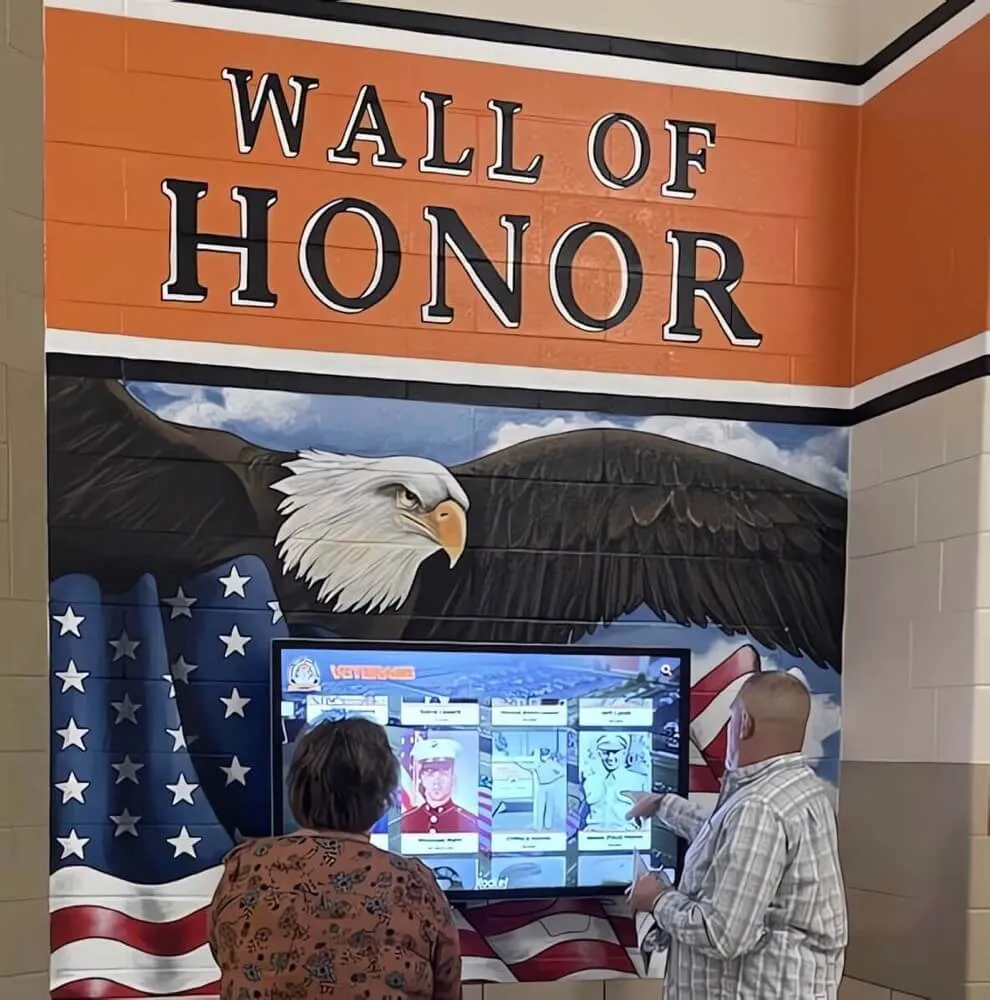
Interactive touchscreen displays invite deeper engagement as visitors actively explore athlete profiles, achievements, and historical content
Digital Display Engagement
Interactive touchscreens create fundamentally different engagement patterns:
Positive engagement factors:
- Active exploration: Users control what they view, encouraging longer interaction times
- Rich information: Each profile can include photos, statistics, career highlights, video clips, and personal stories
- Searchable content: Find specific athletes or achievements instantly by name, sport, or year
- Personalized experience: Different visitors explore different content based on their interests
- Social sharing: Many systems allow visitors to email or share profiles they find interesting
- Regular updates: New content provides reasons for repeat visits
Engagement limitations:
- Requires interaction: Unlike always-visible trophy cases, digital content requires active engagement to view
- Technology learning curve: Some older visitors may hesitate to use touchscreens
- Single user at a time: Physical screen size limits simultaneous viewers (though multiple people can watch together)
- Power dependency: Requires electricity and working technology
Research consistently shows that interactive displays increase engagement time significantly. While visitors might glance at a trophy case for 5-10 seconds, touchscreen users often spend 3-5 minutes exploring content when given rich information and easy navigation.
The Power of Storytelling
Digital displays excel at providing context that transforms simple achievement lists into compelling stories. Instead of just seeing “2018 State Champions,” visitors can explore:
- Individual athlete profiles with photos and career stats
- Game-by-game progression through the championship season
- Coach reflections on what made that team special
- Alumni updates showing where those athletes are today
- Historical context about how this championship compared to previous years
This storytelling capability particularly matters for engaging current students who didn’t witness historical achievements firsthand. Comprehensive profiles help today’s athletes understand the traditions they’re continuing.
Accessibility Considerations
How well does each solution serve all visitors, including those with disabilities?
Traditional Trophy Case Accessibility Limitations
Physical displays present several accessibility challenges that schools often overlook:
Vision accessibility:
- Small engraved text difficult to read from hallway distance
- Items placed in back rows or upper shelves impossible to see clearly
- No accommodation for visitors with low vision or blindness
- Glare on glass can make items harder to view
- Poor lighting in some hallways compounds readability issues
Physical accessibility:
- Wall-mounted cases may place upper items too high for wheelchair users to view comfortably
- Floor cases create potential hallway obstructions for mobility device users
- No alternative formats for accessing information
Cognitive accessibility:
- Information presented in fixed order without organizational aids
- No ability to filter or search for relevant content
- Overwhelming when cases contain many items without clear organization
Traditional trophy cases typically don’t meet ADA (Americans with Disabilities Act) requirements for accessible design because information isn’t available in formats usable by people with various disabilities.
Digital Display Accessibility Advantages
Well-designed digital displays can provide substantially better accessibility when built with inclusive design principles:
Vision accessibility:
- Text size adjustable or displayed large enough to read comfortably
- High contrast display options for better readability
- Screen reader compatibility for blind users (when properly implemented)
- No physical distance or angle limitations—information displayed clearly on screen
- Zoomable images and text for low-vision users
Physical accessibility:
- Screens mounted at wheelchair-accessible heights
- Touch targets sized appropriately for users with limited dexterity
- No reaching required to access information
- Optional voice commands in advanced systems
Cognitive accessibility:
- Clear navigation and search functions help users find specific information
- Consistent layout and organization reduces confusion
- Ability to browse by familiar categories (sport, year, name)
- Rich visual content supports different learning styles
For schools prioritizing accessibility, WCAG 2.2 AA compliant digital displays ensure recognition systems serve all students, alumni, and visitors equally—an increasingly important consideration as institutions work to create inclusive environments.
Flexibility for Different Recognition Programs
Athletic achievements represent just one category of recognition that schools may want to showcase. How does each solution adapt to diverse recognition needs?
Traditional Trophy Case Versatility
Physical cases work well for certain types of recognition:
Best suited for:
- Athletic trophies and championship hardware
- Large physical awards (plaques, bowls, commemorative items)
- Items with intrinsic value or historical significance
- Recognition requiring physical presence (retired jerseys, balls, equipment)
Limitations for:
- Academic achievement recognition (typically certificate-based rather than trophy-based)
- Arts and activities recognition (performances, art shows, club achievements)
- Individual student spotlight programs
- Historical archives (photos, documents, newspaper clippings)
- Alumni recognition beyond athletic achievements
Schools wanting comprehensive recognition across academics, arts, athletics, and activities would need multiple trophy cases—or find that trophy cases simply don’t work well for non-athletic recognition.
Digital Display Versatility
Digital platforms excel at displaying diverse achievement types within a unified system:
Recognition categories easily included:
- Athletic achievements across all sports
- Academic honors (National Merit Scholars, valedictorians, scholarship winners)
- Arts recognition (All-State musicians, drama awards, art competition winners)
- Activity achievements (debate championships, robotics competitions, service awards)
- Faculty and staff recognition
- Alumni spotlights across all fields
- Historical archives and institutional memory
- Donor recognition for contributors supporting various programs
This versatility proves valuable for comprehensive recognition programs that want to celebrate excellence across all aspects of school life, not just athletics. A single digital platform can serve multiple recognition purposes that would require entirely separate physical displays.
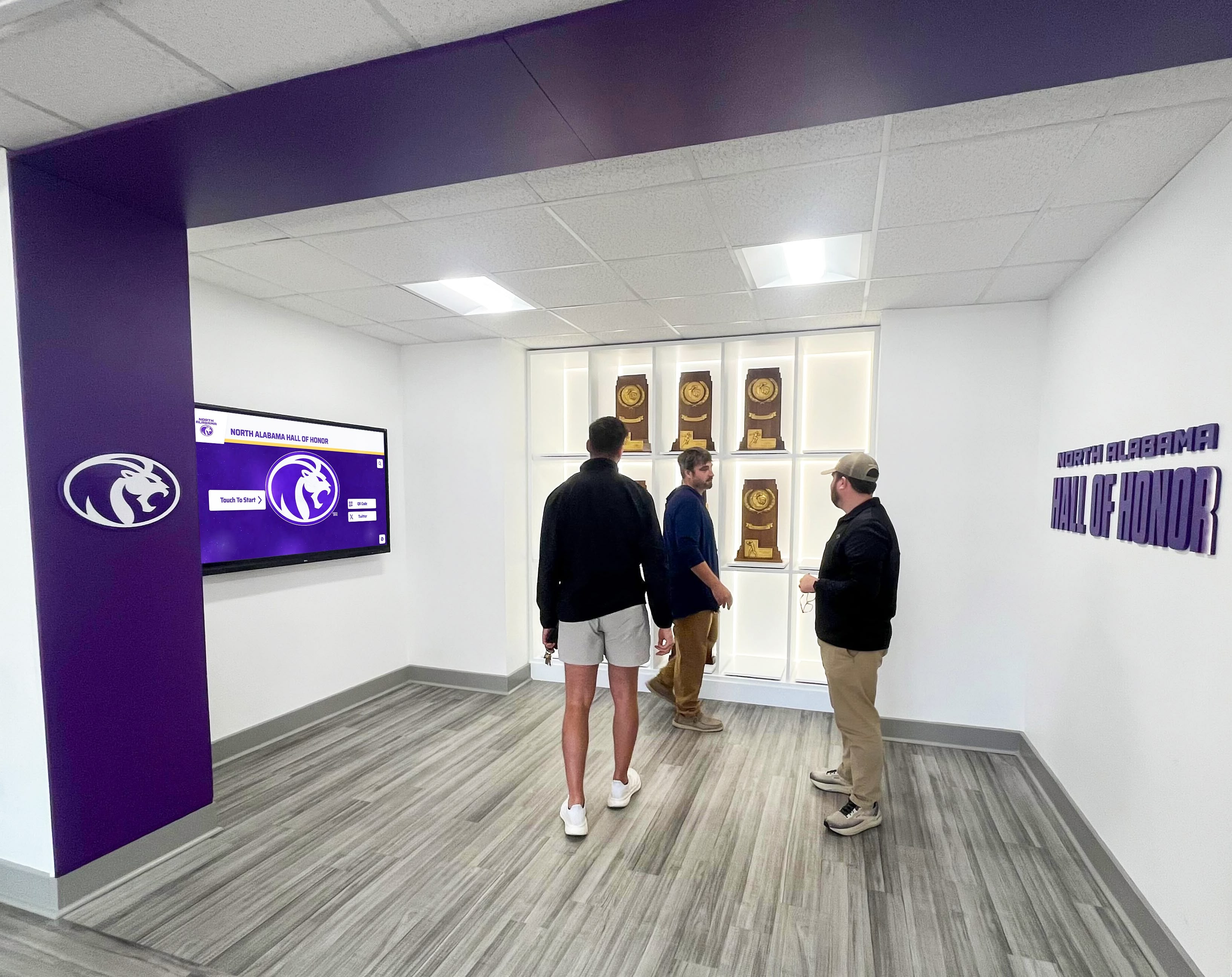
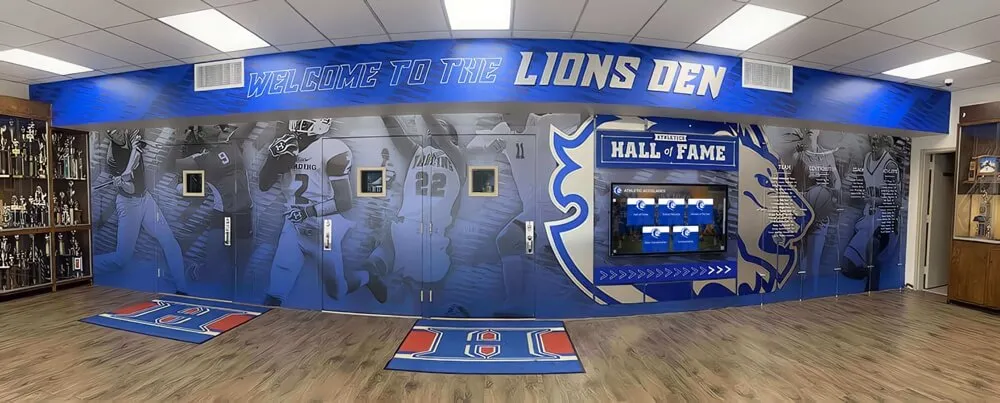
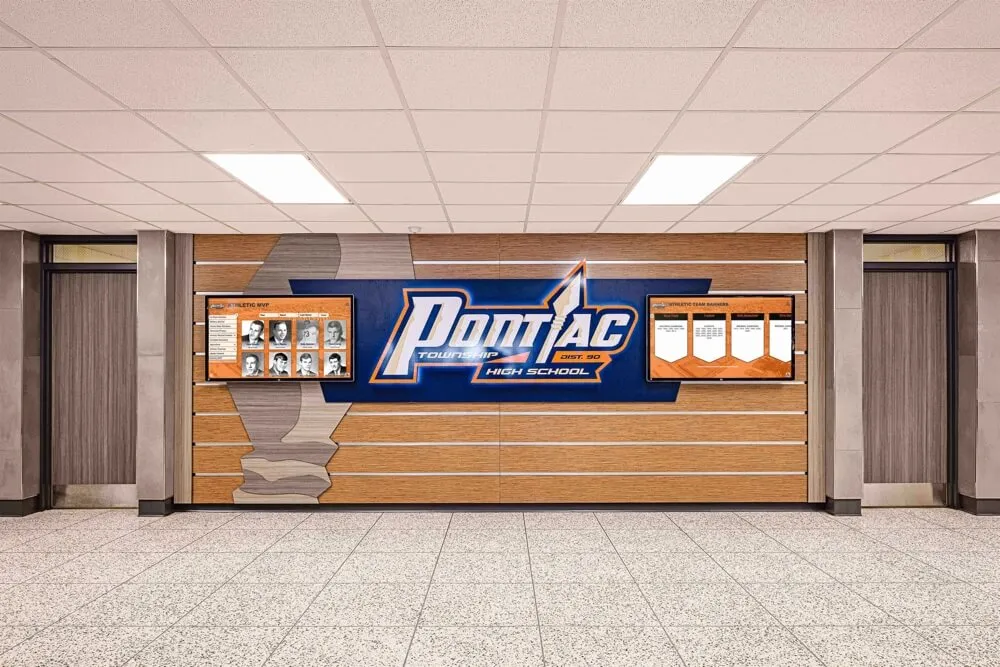
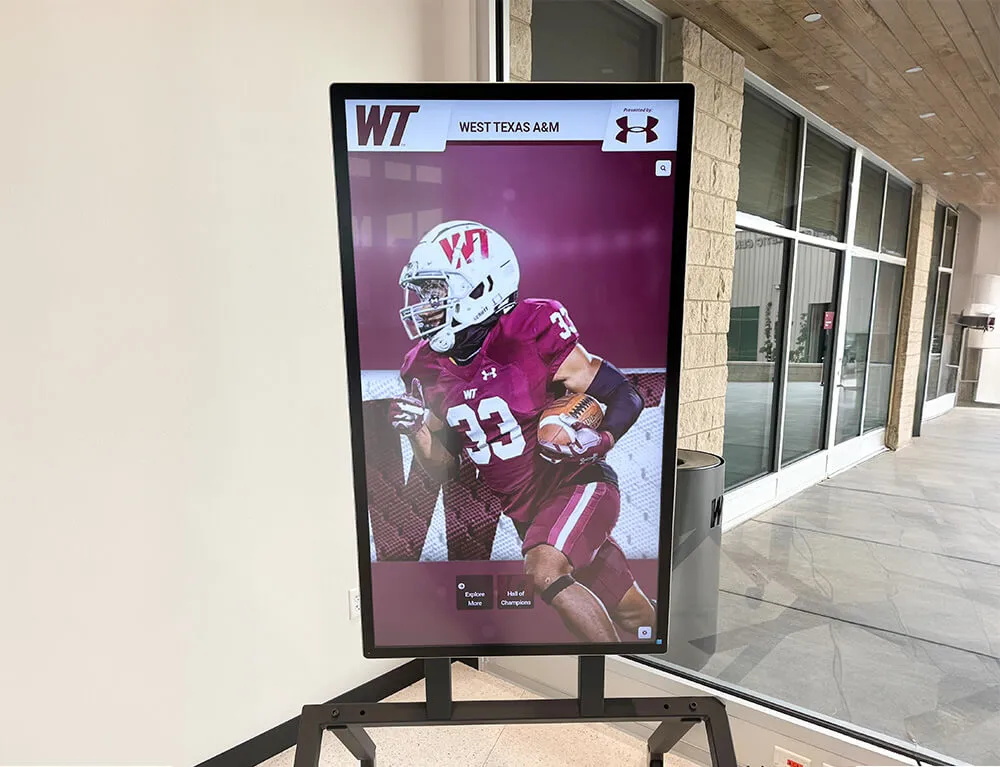
Digital displays create gathering points where multiple visitors can explore and discuss achievements together
Long-Term Value and Return on Investment
Which solution provides better value over a 10-20 year timeframe?
Traditional Trophy Case Long-Term Value
Physical trophy cases provide certain lasting benefits:
Enduring value factors:
- No subscription costs after initial purchase
- No technology obsolescence concerns
- Physical trophies retain value and meaning indefinitely
- Minimal ongoing costs if well-maintained
- Simple to use with no training required
Depreciation considerations:
- Cases require periodic replacement (15-20 year lifespan)
- Trophy purchases represent ongoing expenses that accumulate
- Space constraints force storage of most achievements
- Hidden achievements provide no recognition value
- Information remains static—can’t add context or corrections
For small programs with limited trophy accumulation, traditional cases can provide good long-term value. A single case may serve a small school adequately for many years without expansion needs.
Digital Display Long-Term Value
Digital solutions create different value propositions:
Enduring value factors:
- Unlimited storage means all achievements remain permanently accessible
- Content grows increasingly valuable as historical archives expand
- Easy updates allow continuous improvement and correction
- Engagement features provide ongoing interest rather than static displays
- Single investment serves growing needs without expansion purchases
Depreciation considerations:
- Hardware requires eventual replacement (7-10 year lifespan)
- Subscription costs accumulate over time
- Requires basic technology comfort from users
- Dependent on reliable electricity and network
- Content requires migration when upgrading hardware
The long-term value equation often favors digital displays for programs that:
- Generate significant annual achievements
- Value comprehensive historical documentation
- Want flexibility to showcase diverse recognition categories
- Prioritize accessibility and engagement
- Need space-efficient solutions
Making the Right Choice for Your School
The best solution depends on your specific situation, priorities, and resources.
When Traditional Trophy Cases Make Sense
Physical trophy cases remain excellent choices for certain programs:
Consider traditional cases if you:
- Have a small athletic program generating fewer than 10-15 trophies annually
- Value the tangible, physical presence of actual trophies
- Have substantial existing trophy case investment you want to continue using
- Prefer zero ongoing costs after initial purchase
- Have sufficient hallway space for adequate display
- Primarily recognize athletic achievements requiring physical trophy display
For schools in these categories, quality trophy cases can provide satisfactory recognition for years without creating the space and capacity issues larger programs face.
When Digital Displays Provide Better Solutions
Interactive touchscreen displays offer superior value for many programs:
Consider digital displays if you:
- Have active athletic programs generating 20+ annual achievements across multiple sports
- Face space constraints limiting additional trophy case installation
- Want to showcase achievements beyond just athletics (academics, arts, activities)
- Prioritize accessibility for all visitors
- Value detailed storytelling beyond basic plaque information
- Need flexibility to easily update and correct information
- Want comprehensive historical archives accessible long-term
- Have existing trophy storage rooms full of hidden achievements
For schools in these categories, digital solutions often provide better long-term value despite higher initial investment.
The Hybrid Approach
Many schools successfully implement combined strategies:
Effective hybrid implementations:
- Maintain existing trophy cases for major championships and special awards
- Add digital touchscreens providing access to complete athletic archives
- Create dedicated spaces featuring both physical trophies and interactive displays
- Use trophy cases for rotating seasonal displays while maintaining permanent digital access
- Display championship trophies physically while documenting full team rosters digitally
This approach provides benefits of both systems—the tangible impact of championship hardware combined with the comprehensive documentation and accessibility of digital platforms. Schools can make decisions about effective trophy display design that incorporate both traditional and modern elements.
Implementation Considerations
Regardless of which direction you choose, successful implementation requires planning.
Traditional Trophy Case Implementation
Key factors for successful trophy case installation:
Planning requirements:
- Measure available hallway space carefully accounting for ADA clearance requirements (typically 48 inches minimum)
- Determine whether wall-mounted or floor cases work better for your space
- Plan adequate lighting to showcase awards properly
- Consider security needs based on trophy value and school access patterns
- Develop ongoing maintenance responsibility assignments
- Create selection criteria for which achievements receive display space
Installation process:
- Professional installation recommended for wall-mounted cases to ensure proper anchoring
- Electrical work may be required for lighted cases
- Allow 2-4 weeks from order to installation depending on customization
- Budget $1,800-$4,800 per 6-foot case including installation
Digital Display Implementation
Key factors for successful touchscreen installation:
Planning requirements:
- Assess available wall space and determine optimal screen size (typically 43"-65" depending on hallway dimensions)
- Ensure electrical outlet availability or plan for installation
- Determine whether network connectivity is needed (many systems work offline after content sync)
- Consider mounting height for accessibility (typically 42-48 inches to screen center)
- Assign content management responsibilities and provide appropriate training
- Plan initial content creation timeline and process
Installation process:
- Professional installation strongly recommended for commercial displays
- Electrical and network work may be required
- Initial content setup typically takes 2-4 weeks after hardware installation
- Budget $5,000-$12,000 for complete system including display, mounting, installation, platform, and initial content
For schools considering digital options, comprehensive digital hall of fame guides provide detailed implementation planning resources.
The Future of School Recognition
Recognition technology continues to advance, creating new possibilities for engaging displays.
Emerging Trophy Case Enhancements
Even traditional displays can incorporate modern elements:
- LED lighting systems that highlight specific trophies
- Integrated small displays showing digital slideshows
- QR codes next to physical trophies linking to detailed online profiles
- Hybrid cases with physical trophy space plus integrated touchscreen sections
Digital Display Evolution
Interactive recognition platforms continue adding capabilities:
Current and emerging features:
- Mobile app integration allowing phone-based browsing
- Social media integration featuring recent achievements
- Video content including game highlights and athlete interviews
- Alumni update features keeping profiles current as careers progress
- Virtual reality experiences recreating championship moments
- Artificial intelligence enabling natural language questions (“Show me all state champions in basketball”)
The gap between physical and digital solutions will likely widen as technology advances, making digital platforms increasingly capable while physical cases remain fundamentally unchanged.
Planning for Long-Term Flexibility
Regardless of current choices, consider how your recognition strategy can adapt:
Build flexibility into decisions:
- Select trophy case locations that could later accommodate digital displays
- Choose digital platforms that allow content export if changing systems later
- Maintain digital archives of all achievements even if currently using physical displays
- Document selection criteria for what receives physical display space
- Create comprehensive digital records as backup for physical deterioration
This flexibility ensures that recognition investments serve your program effectively even as needs and technologies change.
Conclusion: Choosing Your Recognition Solution
Both traditional trophy cases and digital hall of fame displays can effectively recognize athletic achievement in school hallways. The right choice depends on your program size, space constraints, budget, recognition goals, and priorities.
Traditional trophy cases excel at providing tangible, physical displays of championship hardware with minimal technology requirements and no ongoing subscription costs. They work particularly well for smaller programs with limited trophy accumulation and sufficient hallway space for display needs.
Digital touchscreen displays shine when programs need unlimited capacity, comprehensive historical documentation, easy updates, better accessibility, and engaging interactive experiences. They provide superior long-term value for active programs generating substantial achievements across multiple sports and recognition categories.
Many schools find that hybrid approaches combining physical displays for championship trophies with digital access to complete athletic archives provide the benefits of both systems while addressing the limitations of each.
Whichever direction you choose, prioritize creating recognition systems that honor every athlete’s achievements, preserve your school’s athletic history, and create lasting connections between current students and institutional traditions.
Ready to explore how digital hall of fame technology can complement or replace traditional trophy cases in your school hallway? Schedule a demo to see how interactive touchscreen displays can preserve your athletic legacy while solving space constraints and creating engaging recognition experiences for your entire school community.