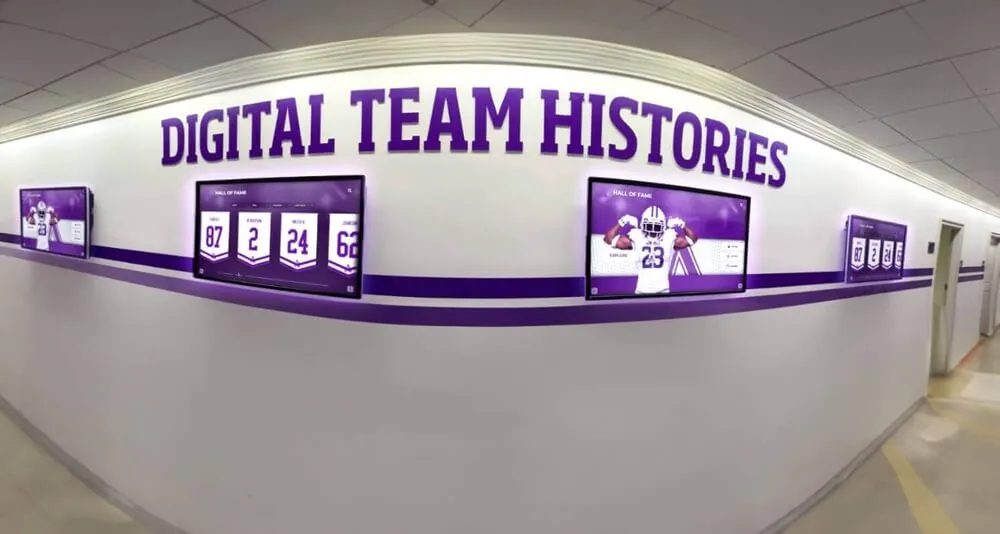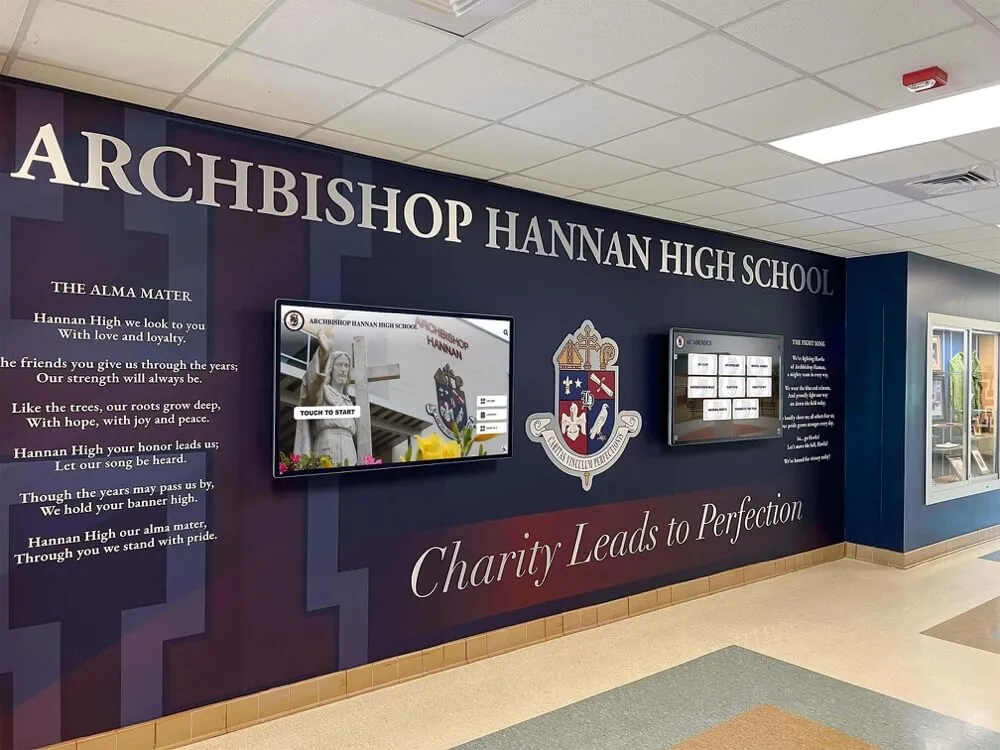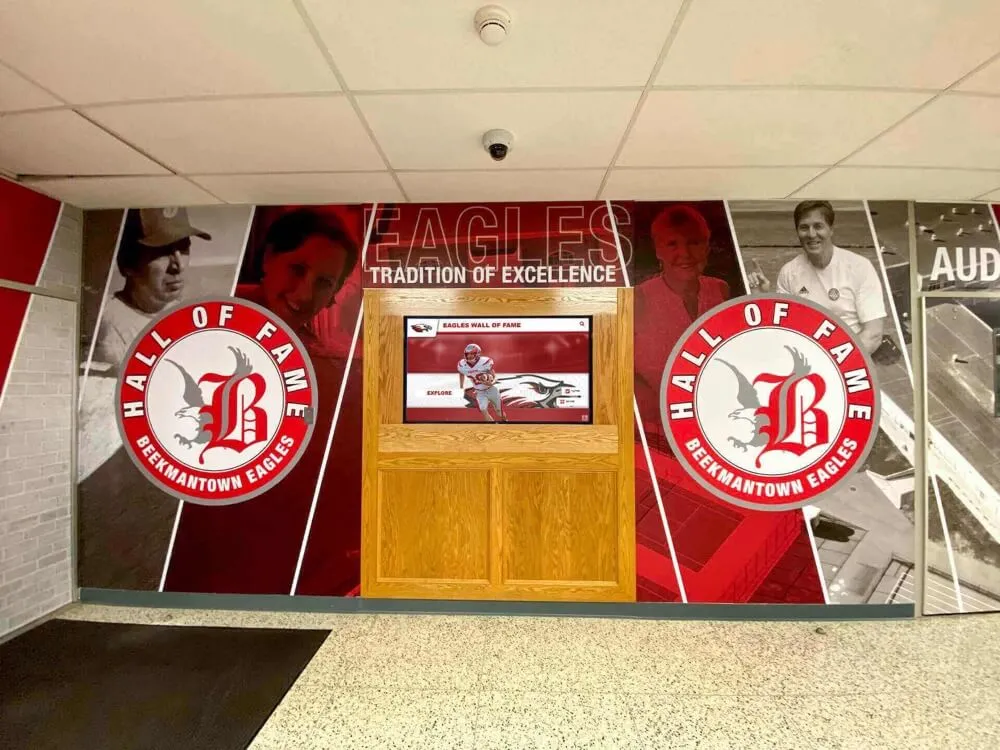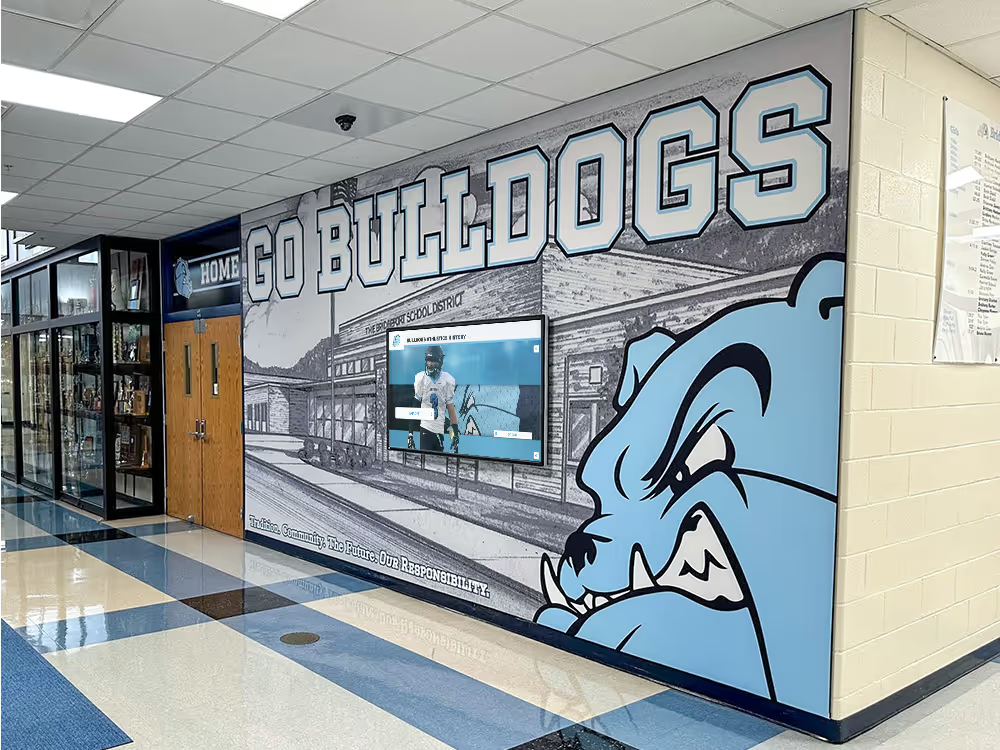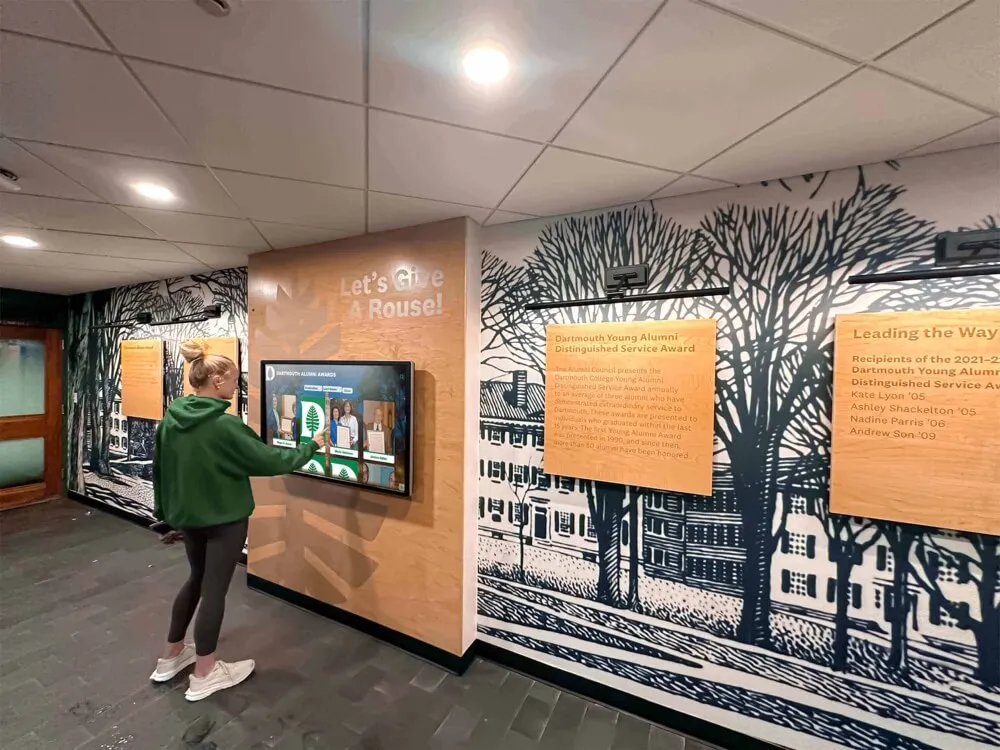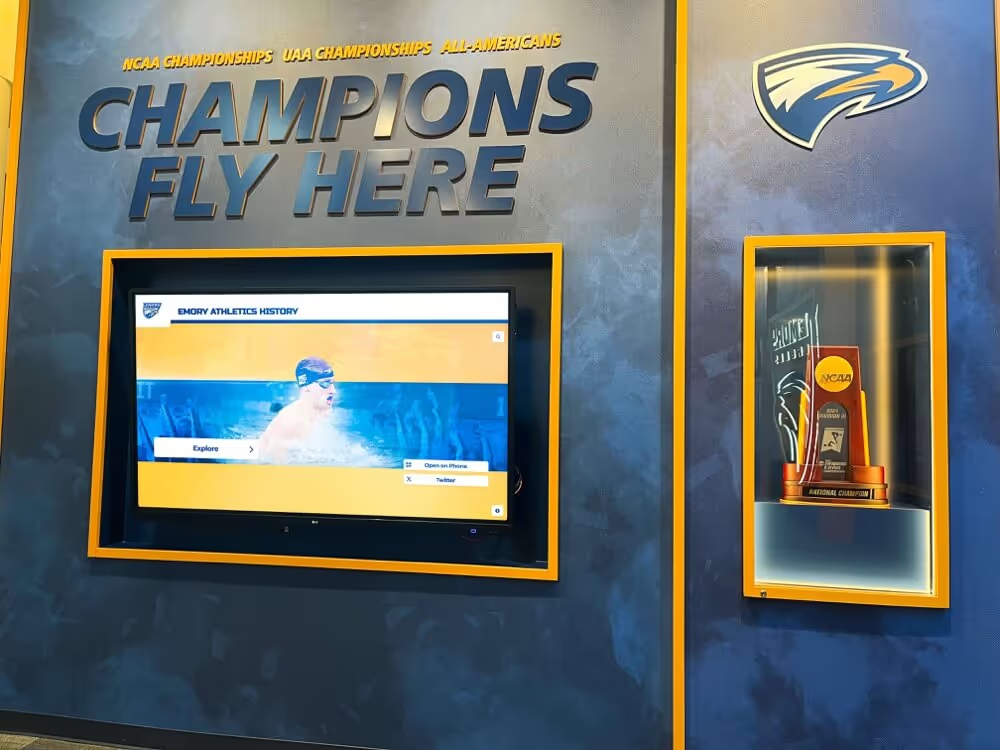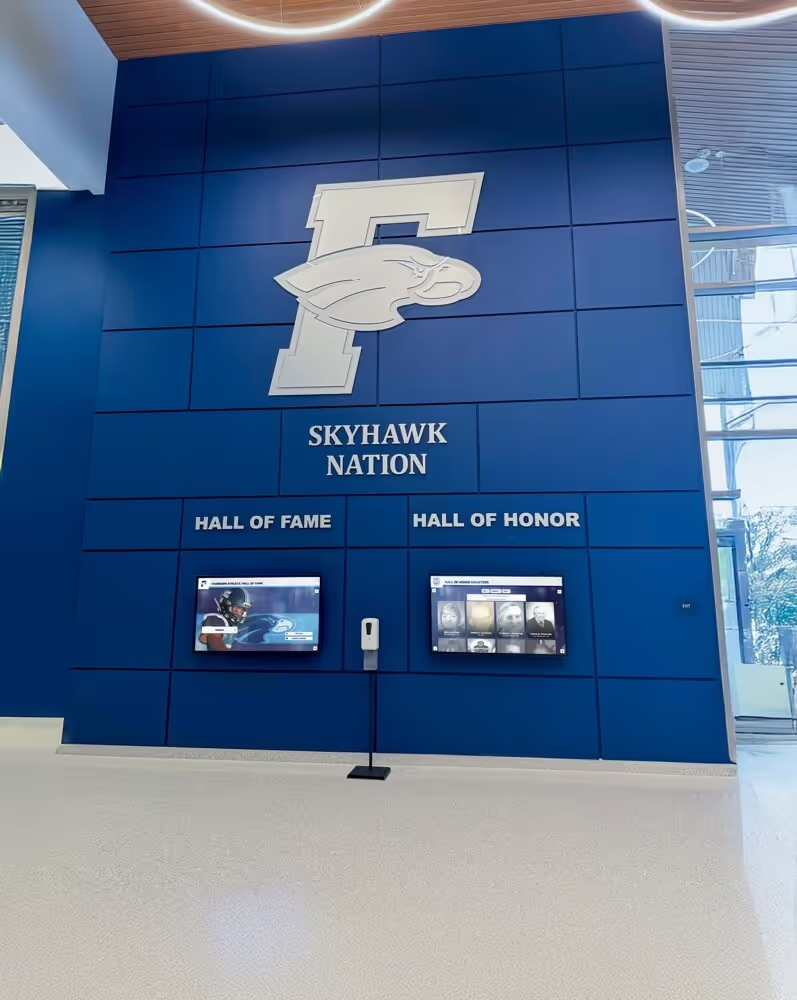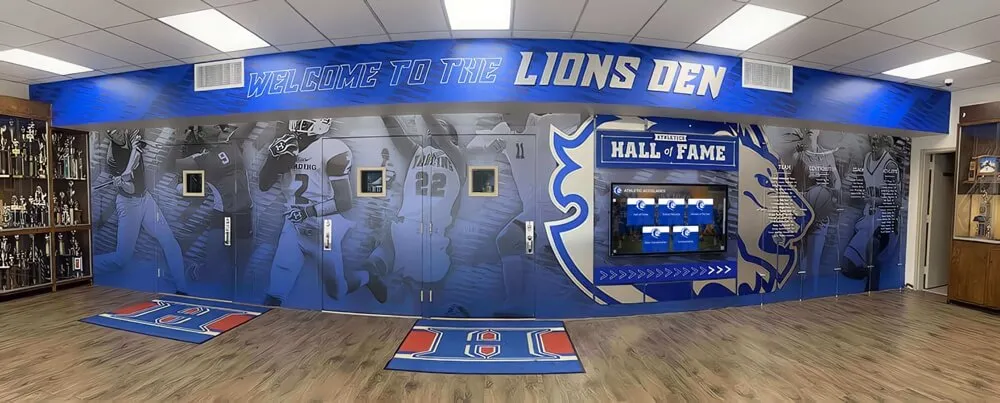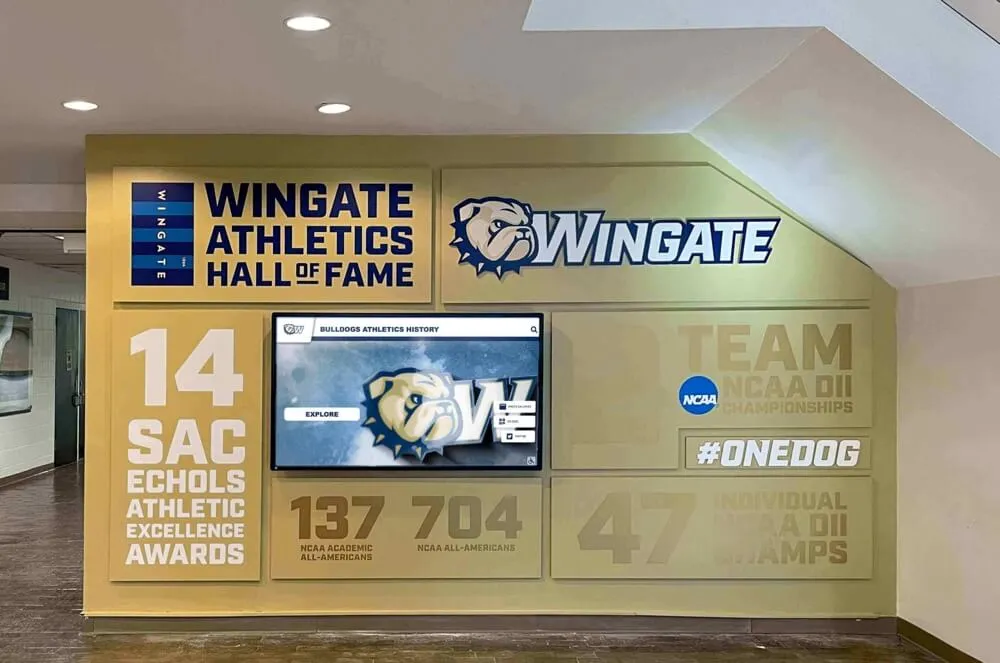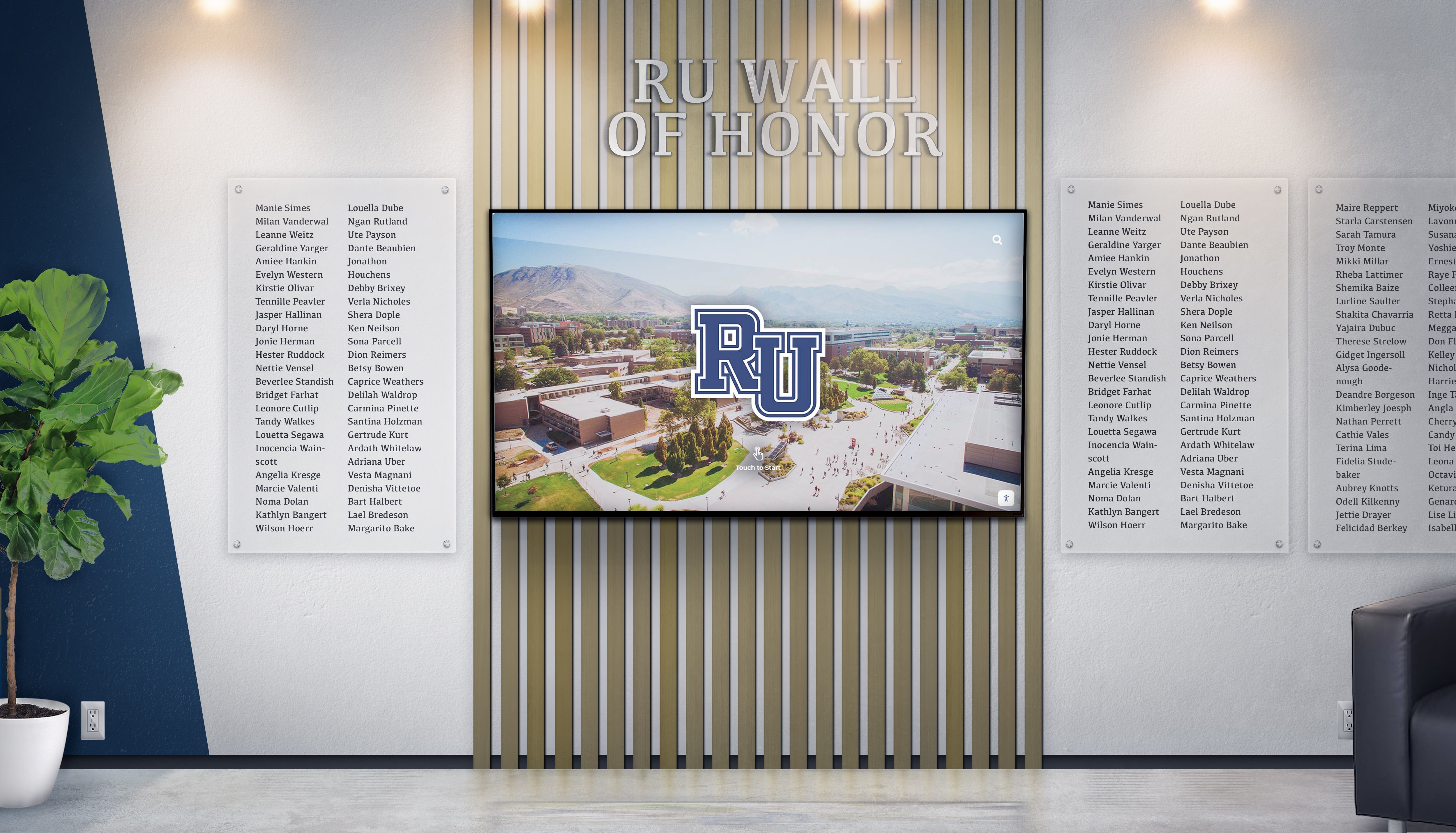




Schools, universities, and nonprofit organizations increasingly face a common challenge: limited wall space to recognize both donors who fund programs and individuals who achieve excellence within those programs. Athletic directors need space for championship teams and MVPs. Development officers need space for major gift donors and campaign contributors. Facility managers look at the same walls and wonder how to honor both groups without choosing one over the other.
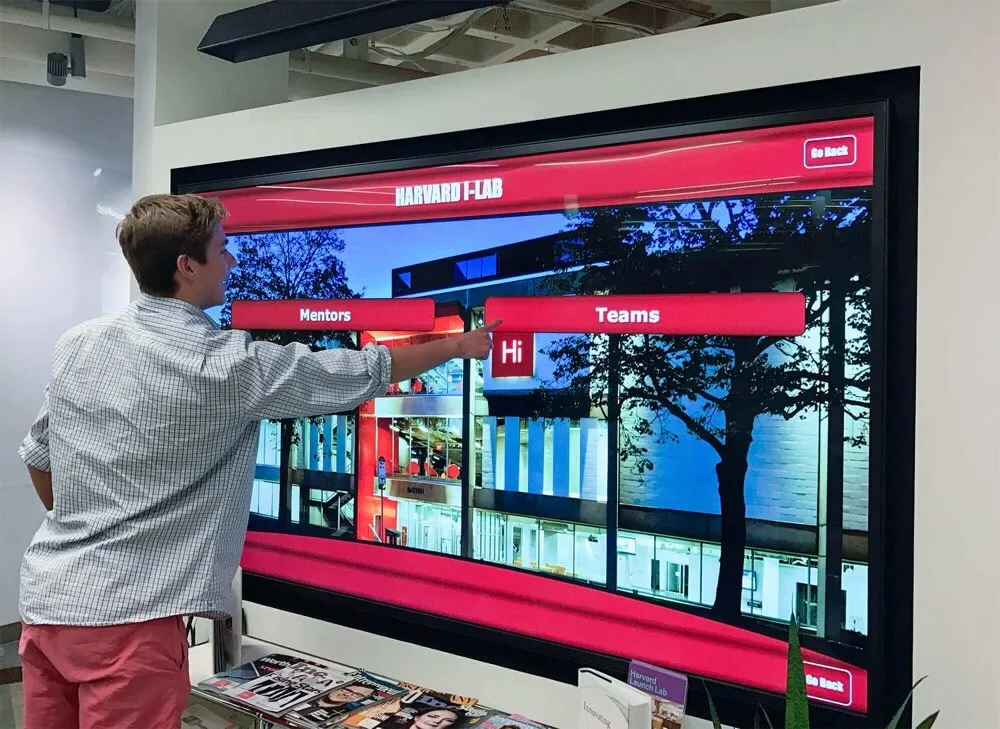
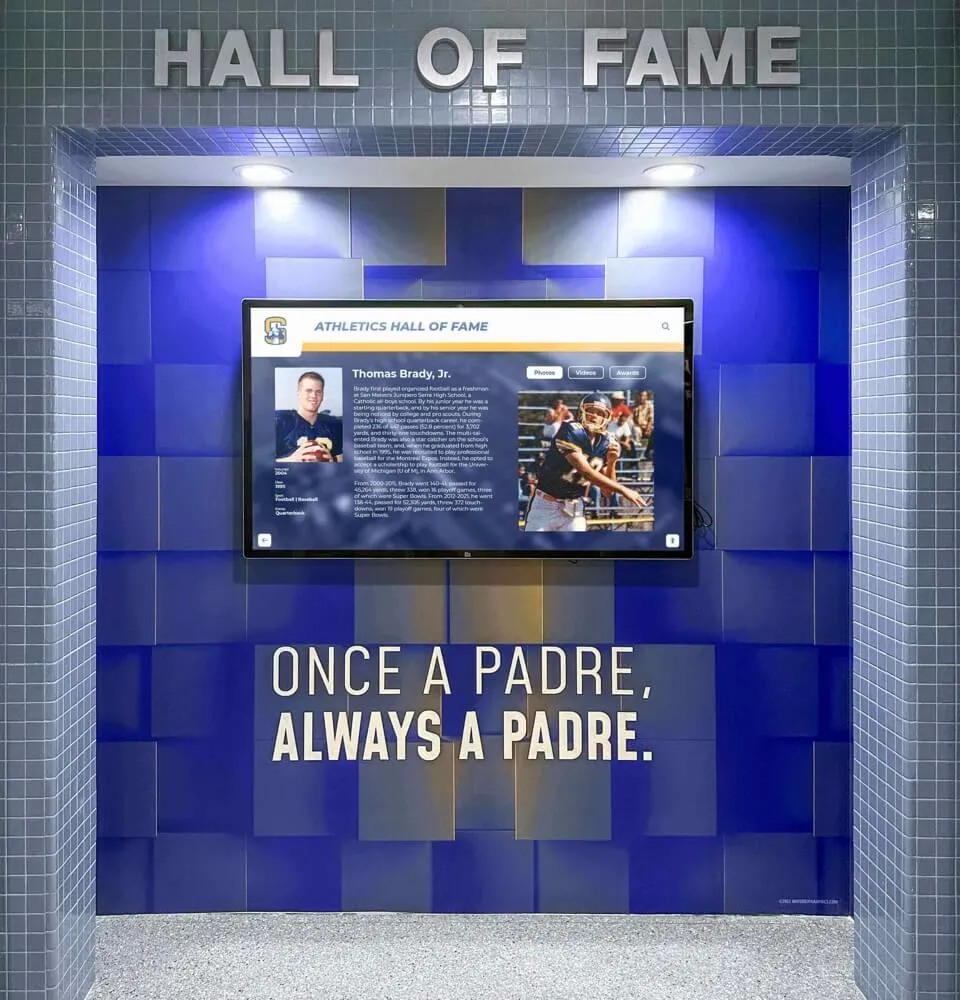
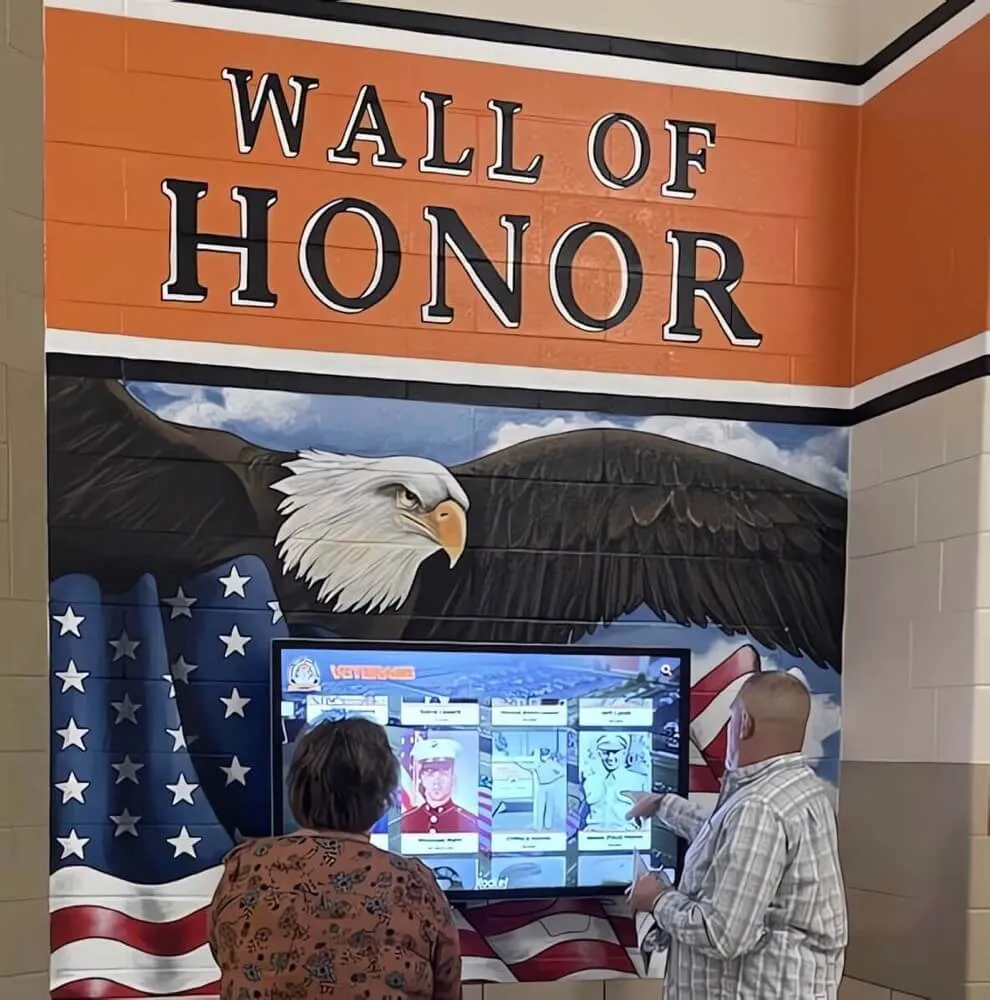
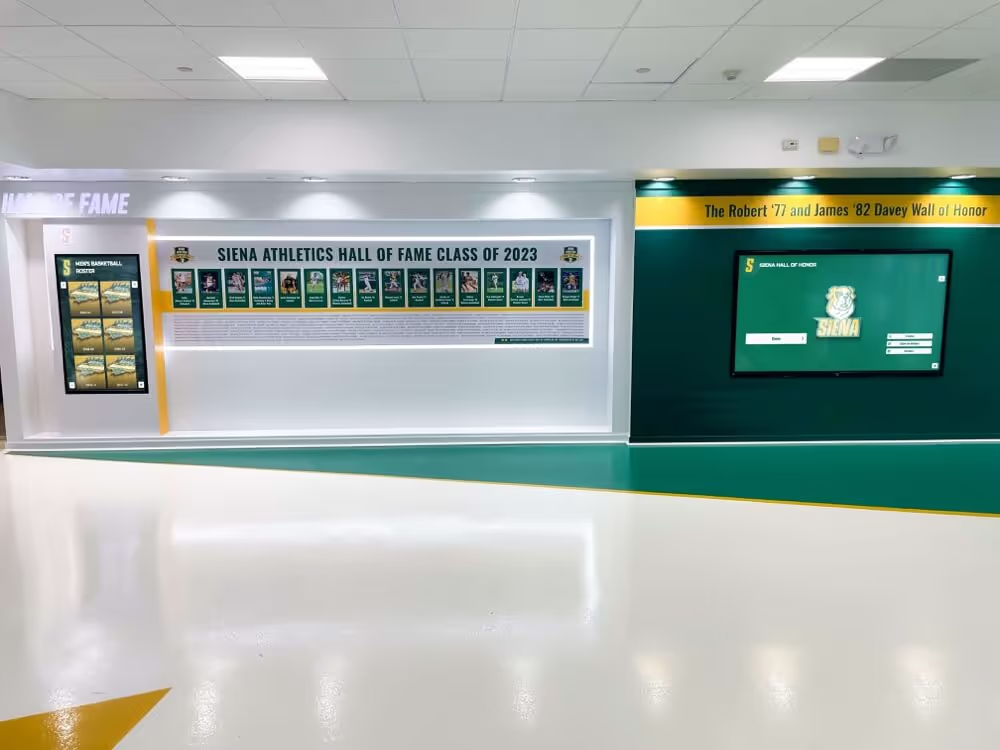
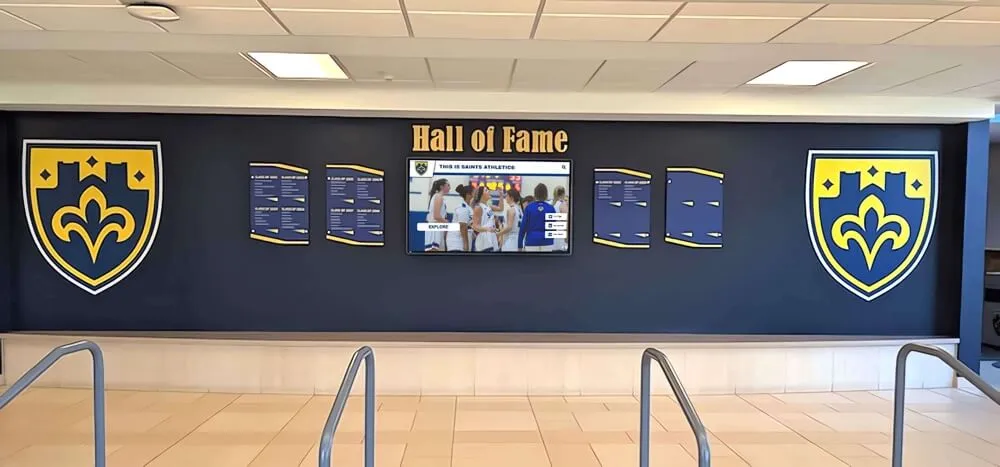
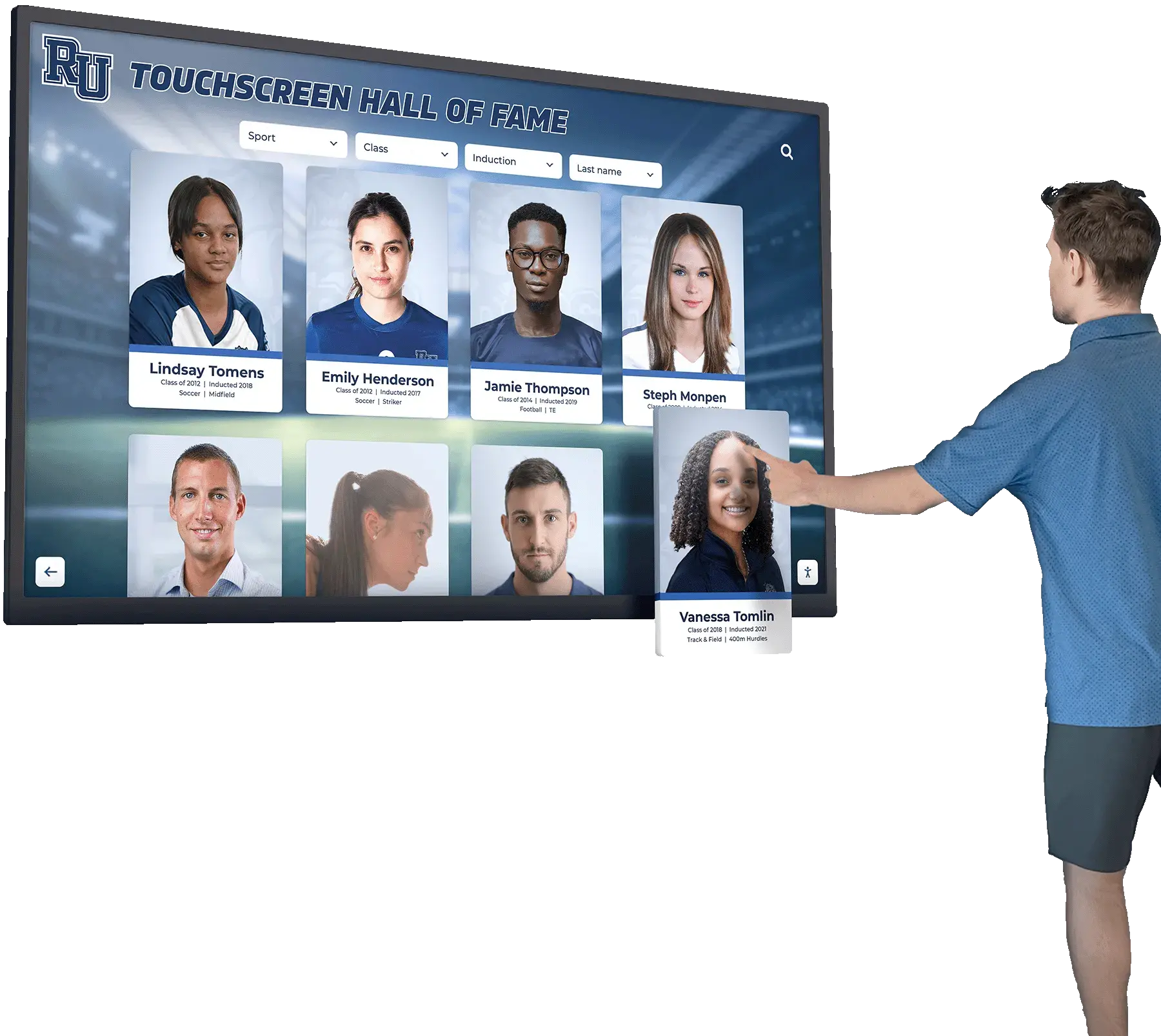
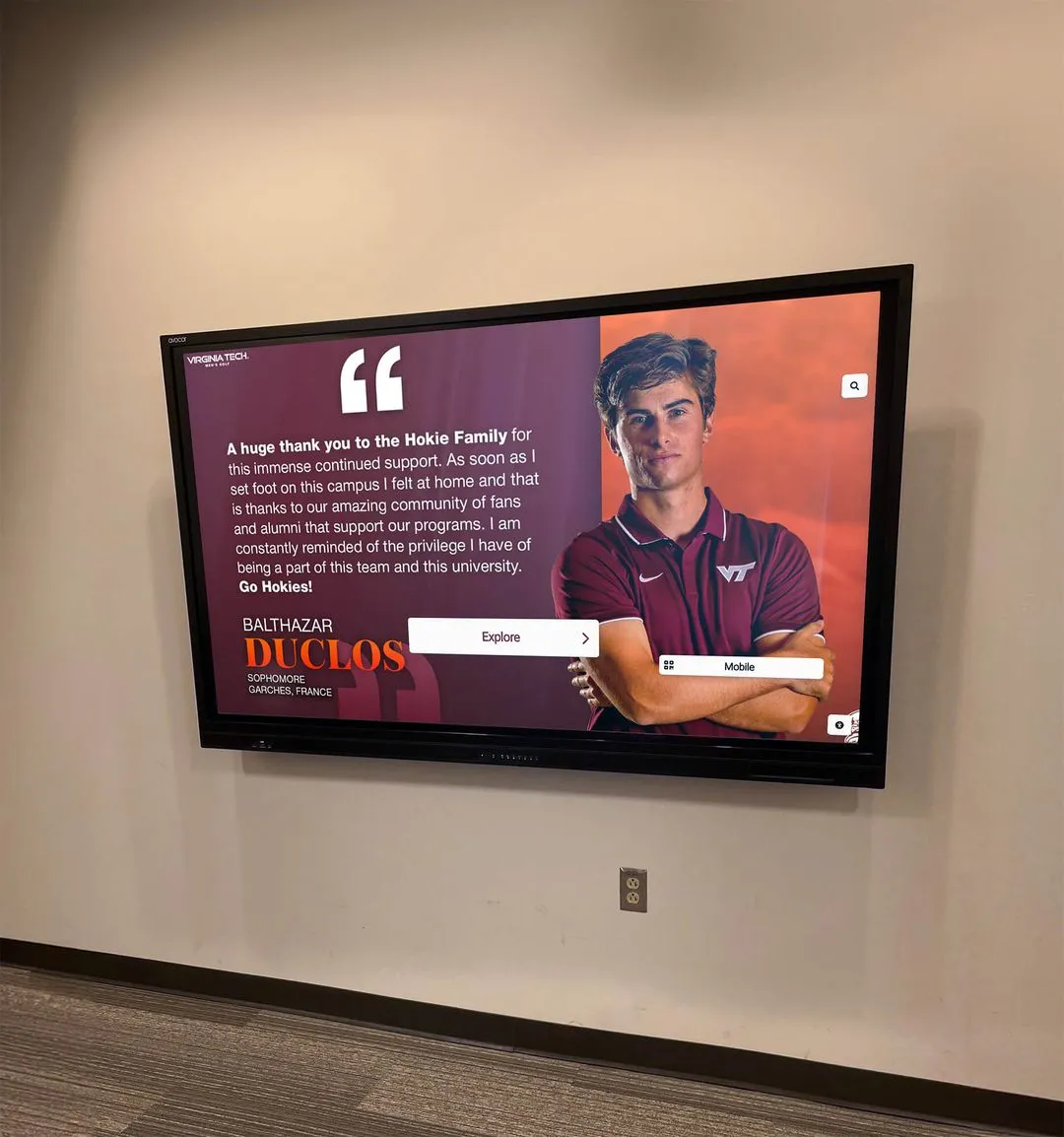
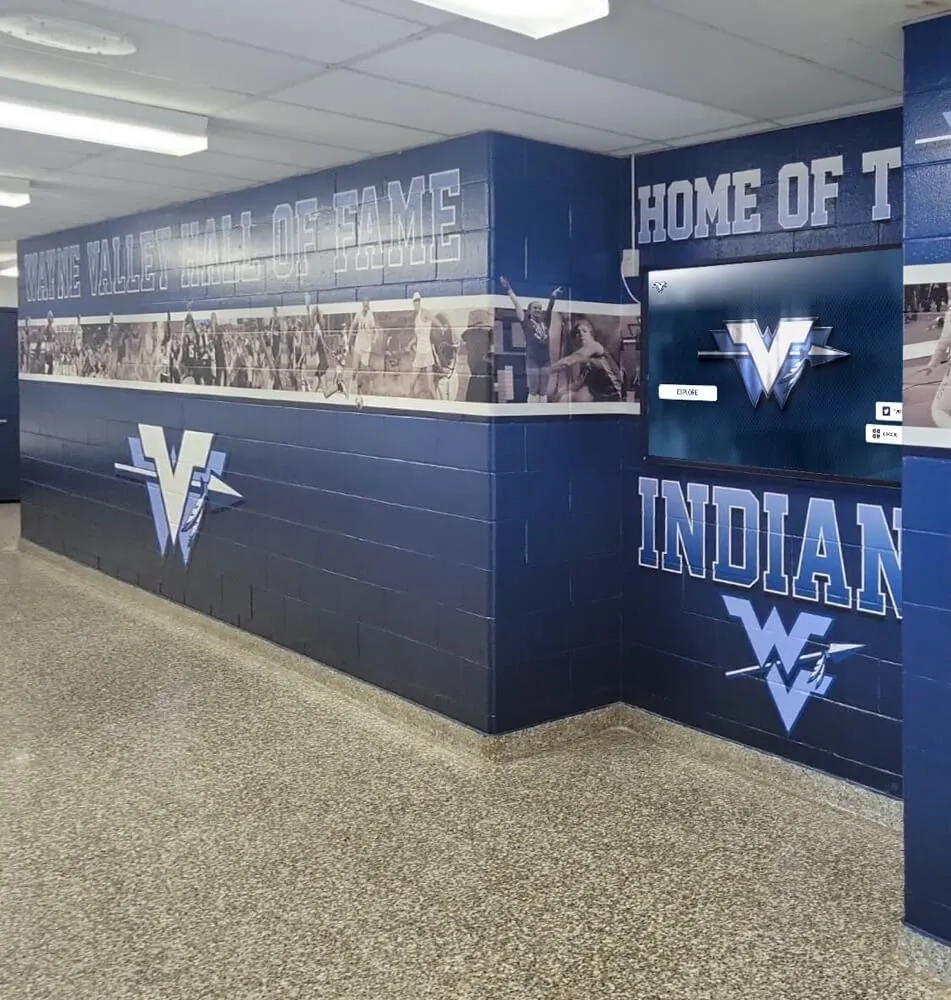
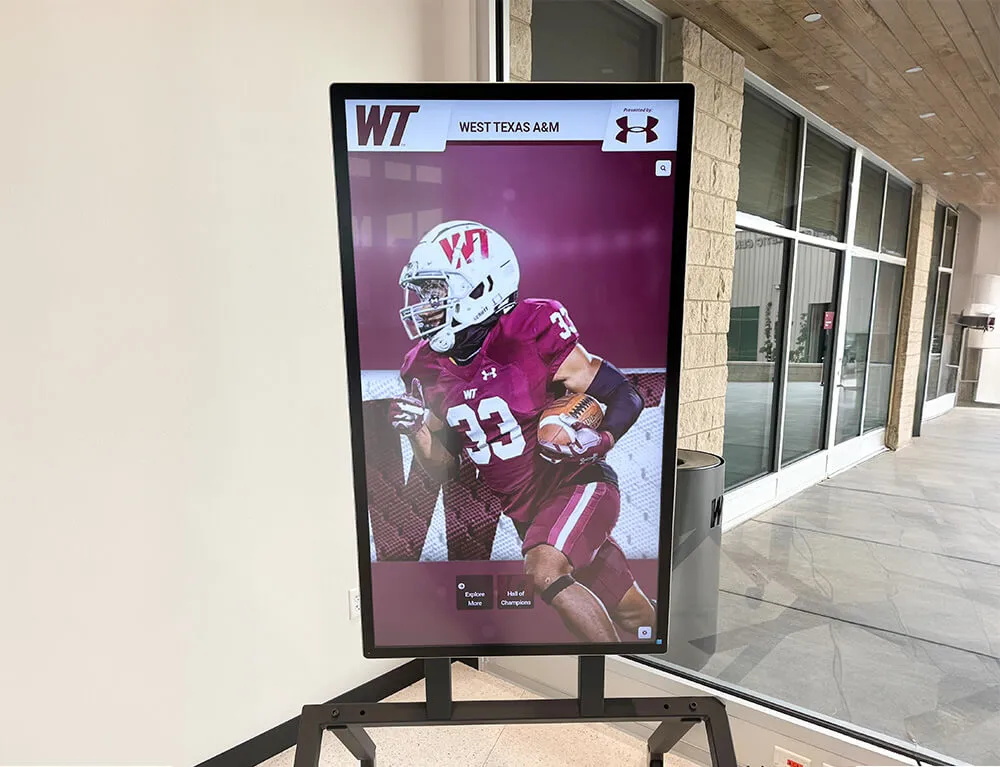
Digital hall of fame displays solve this challenge by serving dual purposes. A single interactive touchscreen can function as both a hall of fame celebrating athletic achievements, academic excellence, or artistic accomplishments while simultaneously recognizing donors, sponsors, and contributors who make those programs possible. Rather than forcing organizations to choose between honoring achievers or thanking supporters, digital technology accommodates both recognition needs within one engaging platform.
This dual-purpose approach addresses practical space constraints while creating meaningful connections between donors and the programs they fund. When a visitor explores championship teams on a digital display, they also see sponsor names associated with those achievements. When they browse donor recognition, they understand exactly which programs their contributions support. Digital displays create context that traditional separate plaques cannot provide—showing the direct relationship between generous giving and programmatic excellence.
Organizations considering recognition solutions commonly ask whether digital displays can truly serve both functions effectively. The answer involves understanding how modern touchscreen technology handles multiple recognition categories, manages sponsor visibility, accommodates various giving levels, and creates engaging experiences that honor both achievers and contributors appropriately.
Understanding Dual-Purpose Digital Recognition
Traditional recognition approaches typically separate donor walls from achievement displays. Bronze donor plaques occupy lobby walls while athletic trophies fill gymnasium cases. This physical separation makes practical sense when working with static displays, but it creates missed opportunities for storytelling and connection.
Digital recognition systems approach the challenge differently. A single touchscreen display can host unlimited categories of recognition, each with appropriate prominence and context. The digital hall of fame platform serves as a foundation that accommodates multiple recognition streams without physical space limitations.
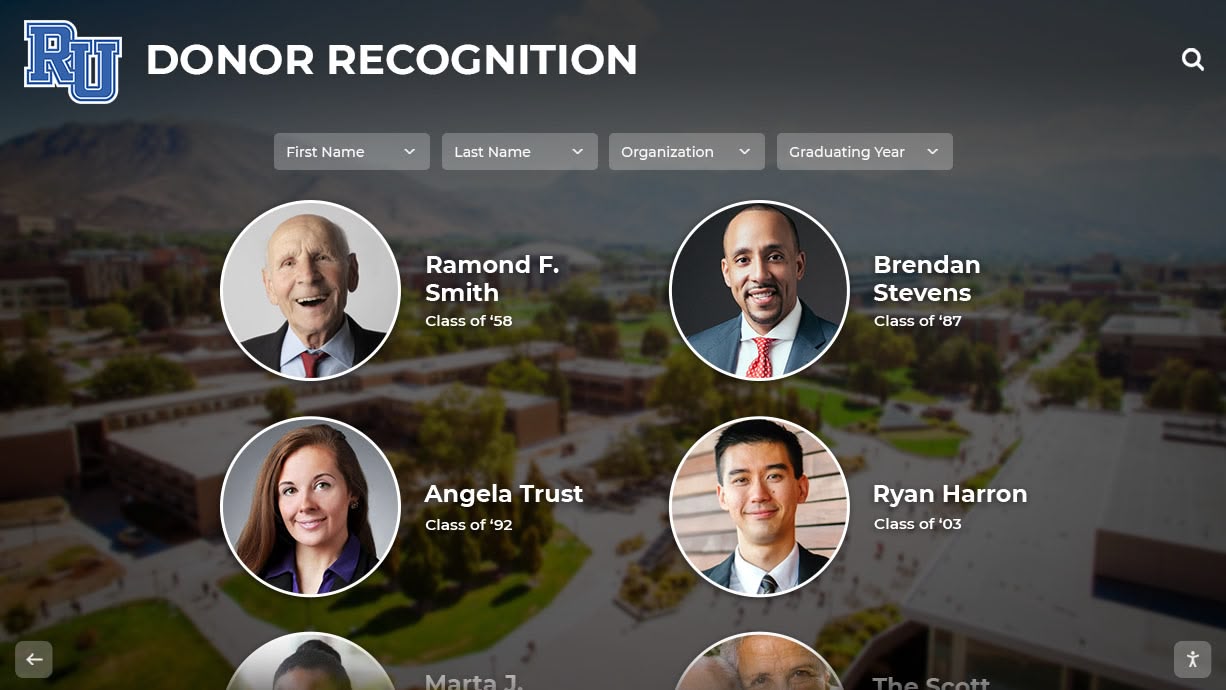
The practical benefits of dual-purpose displays extend beyond space savings. Organizations report several advantages when consolidating recognition into digital formats:
Contextual Storytelling: Digital systems connect donors with programs they support. A major gift donor’s profile can link to the athletic teams, academic programs, or facilities their contribution funded. Visitors see not just names and amounts, but the tangible impact of generosity.
Flexible Recognition Tiers: Traditional donor walls struggle with flexibility once installed. Bronze plaques create permanent hierarchies that become problematic when additional giving occurs. Digital displays accommodate unlimited recognition levels, allowing organizations to add new tiers or adjust existing ones as campaigns evolve.
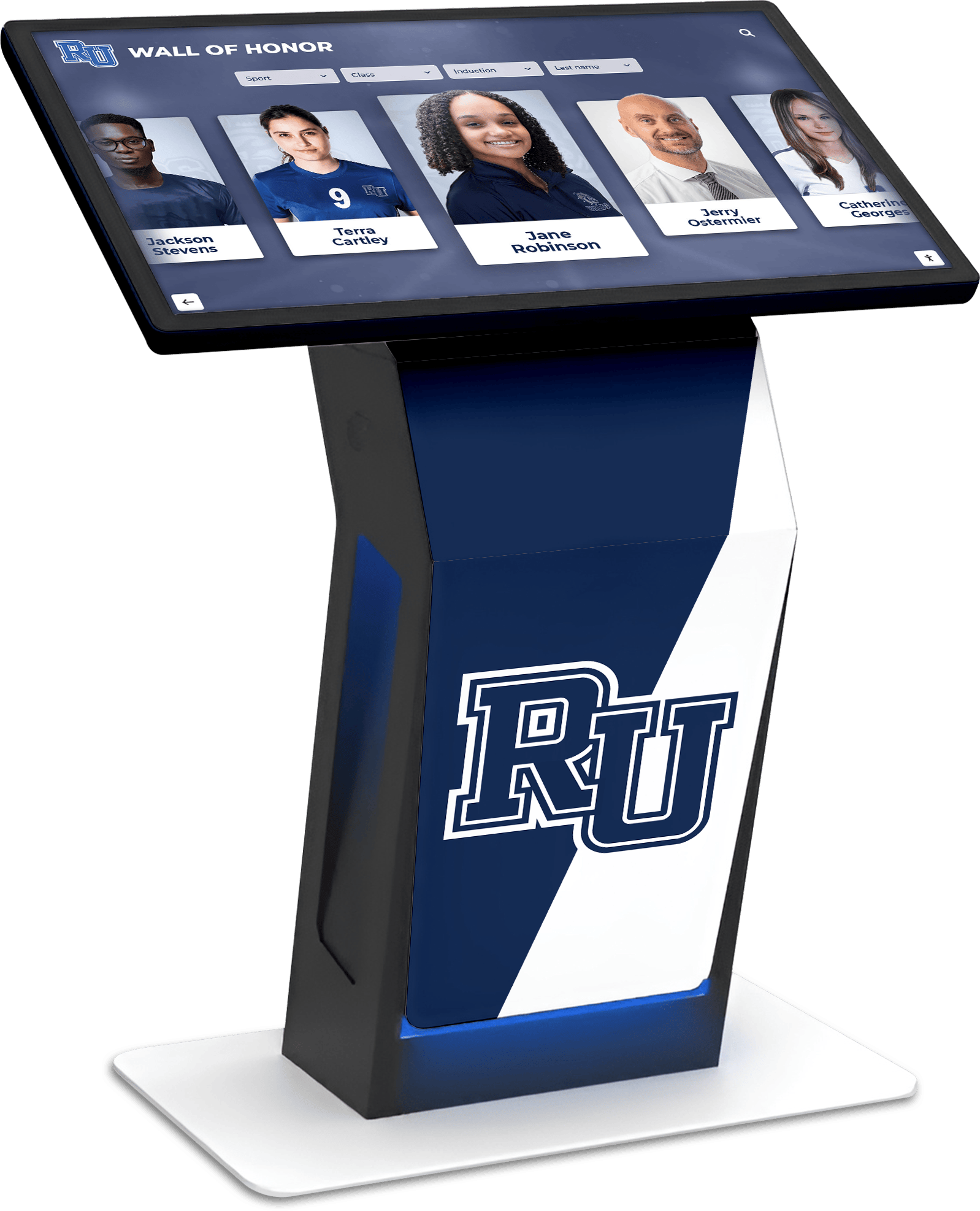
Program Association: Athletic hall of fame inductees can be associated with team sponsors. Academic award winners can connect with scholarship donors. This association creates meaningful context that traditional separate displays cannot provide.
Space Efficiency: A single 55-inch touchscreen mounted in a lobby can recognize hundreds of donors, thousands of students, decades of athletic achievements, and multiple sponsor categories—all within the same physical footprint as one traditional plaque wall.
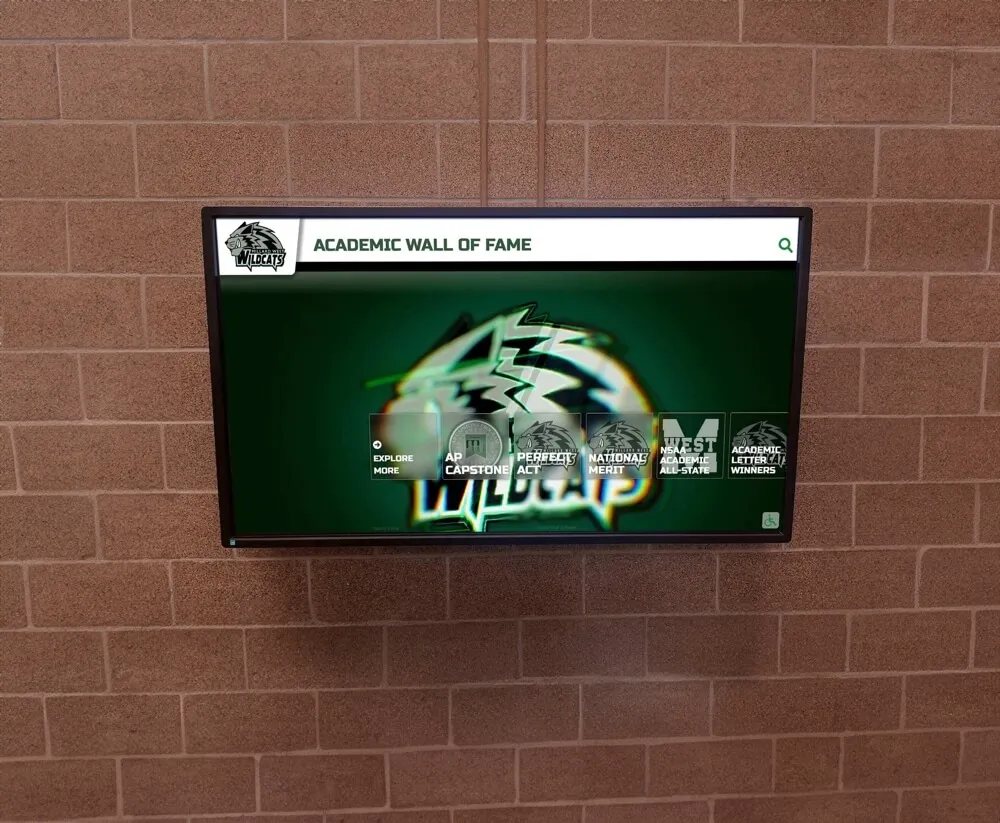
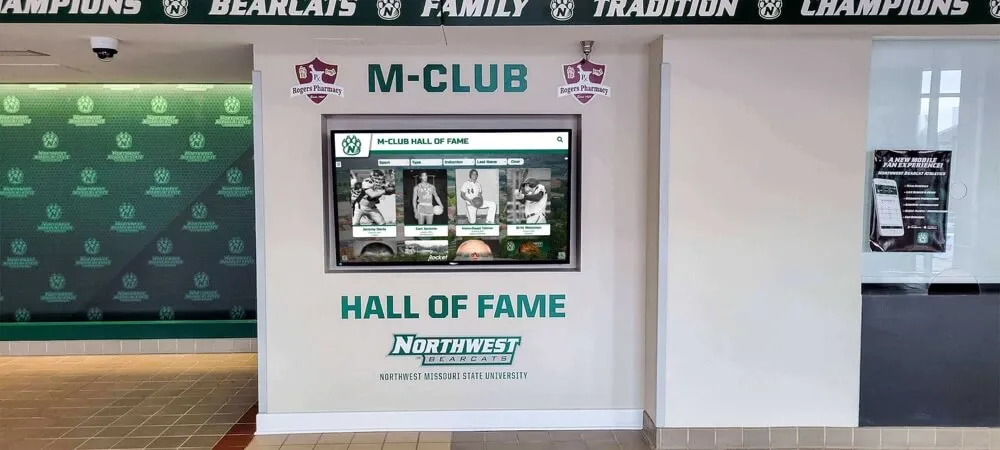
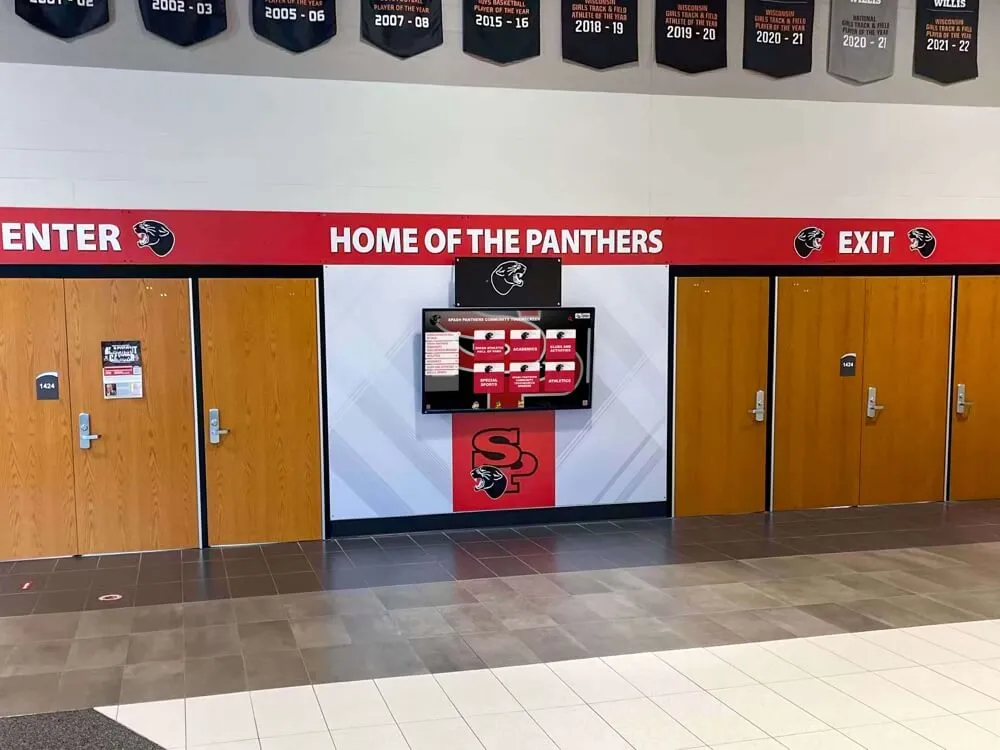
Organizations implementing dual-purpose displays typically structure their content into distinct sections accessed through intuitive navigation. A main menu might offer options like “Athletic Hall of Fame,” “Academic Achievement,” “Donor Recognition,” and “Program Sponsors,” allowing visitors to explore categories relevant to their interests while ensuring all recognition receives appropriate visibility.
How Digital Displays Handle Sponsor Recognition
Sponsor recognition requires careful balance. Organizations need to honor contributions prominently while maintaining appropriate context and ensuring sponsor visibility doesn’t overwhelm achievement recognition. Digital displays provide sophisticated tools for managing this balance effectively.
Recognition Levels and Visibility
Most digital recognition platforms support tiered sponsor categories with corresponding visibility levels. Common sponsor recognition tiers include:
Presenting Sponsors: These top-level supporters typically receive prominent placement on main menu screens, dedicated profile pages, logo display, and association with specific programs or facilities. A presenting sponsor for the athletic program might appear on the athletic hall of fame landing page with logo, description, and link to their detailed recognition page.
Program Sponsors: Mid-tier supporters receive recognition associated with specific teams, departments, or initiatives. A sponsor supporting the girls basketball program would be recognized on pages featuring that team’s achievements, with appropriate logo placement and acknowledgment text.
Event Sponsors: Organizations hosting tournaments, galas, or annual celebrations can recognize event-specific sponsors on relevant pages. A sponsor of the annual athletic banquet receives recognition on pages featuring banquet honorees and award recipients.
In-Kind Donors: Supporters who contribute goods or services rather than monetary gifts receive recognition profiles similar to financial donors, with descriptions of their contributions and impact on programs.
The donor wall solutions available through digital platforms provide flexible formatting options for each recognition tier, ensuring appropriate prominence while maintaining visual hierarchy.
Sponsor Logo Integration
Visual branding creates important recognition value for sponsors. Digital displays accommodate sponsor logos in several contexts:
Landing Page Placement: Major sponsors appear on category landing pages relevant to their support. An athletic program sponsor’s logo displays prominently when visitors select “Athletics” from the main menu.
Profile Pages: Each sponsor receives a dedicated profile page featuring their logo, mission statement, contribution description, and any additional content they wish to share about their support.
Footer Recognition: Lower-tier sponsors may be recognized through logo placement in footer areas of relevant sections, providing consistent visibility without dominating primary content.
Rotating Recognition: For programs with numerous sponsors, digital displays can rotate sponsor logos at set intervals, ensuring all contributors receive visibility over time rather than competing for limited static space.
Organizations maintain control over logo sizing, placement, and duration to ensure sponsor recognition complements rather than overwhelms the visitor experience. Professional donor recognition strategies balance honoring contributions with maintaining focus on mission-driven content.
Association with Specific Programs
The most meaningful sponsor recognition creates clear connections between contributions and impact. Digital displays excel at creating these associations through several mechanisms:
Program Pages: Sponsor recognition appears directly on pages featuring the programs they support. A visitor browsing women’s soccer achievements sees sponsor acknowledgment integrated into that content experience.
Individual Profiles: Student-athlete profiles, academic award recipients, or achievement records can include sponsor acknowledgment when appropriate, particularly for scholarship donors or specific award sponsors.
Timeline Integration: Historical displays showing program evolution over decades can incorporate sponsor recognition at relevant time periods, showing which supporters enabled specific era achievements or facility improvements.
Search Functionality: Visitors can search for specific sponsors and discover all programs, individuals, or achievements their contributions supported, creating comprehensive views of giving impact.
This contextual integration transforms sponsor recognition from simple name lists into storytelling opportunities that demonstrate giving impact tangibly.
Content Management for Dual-Purpose Displays
Managing content across multiple recognition categories requires powerful backend systems that maintain organization while enabling easy updates. Digital hall of fame platforms provide content management features specifically designed for dual-purpose recognition needs.
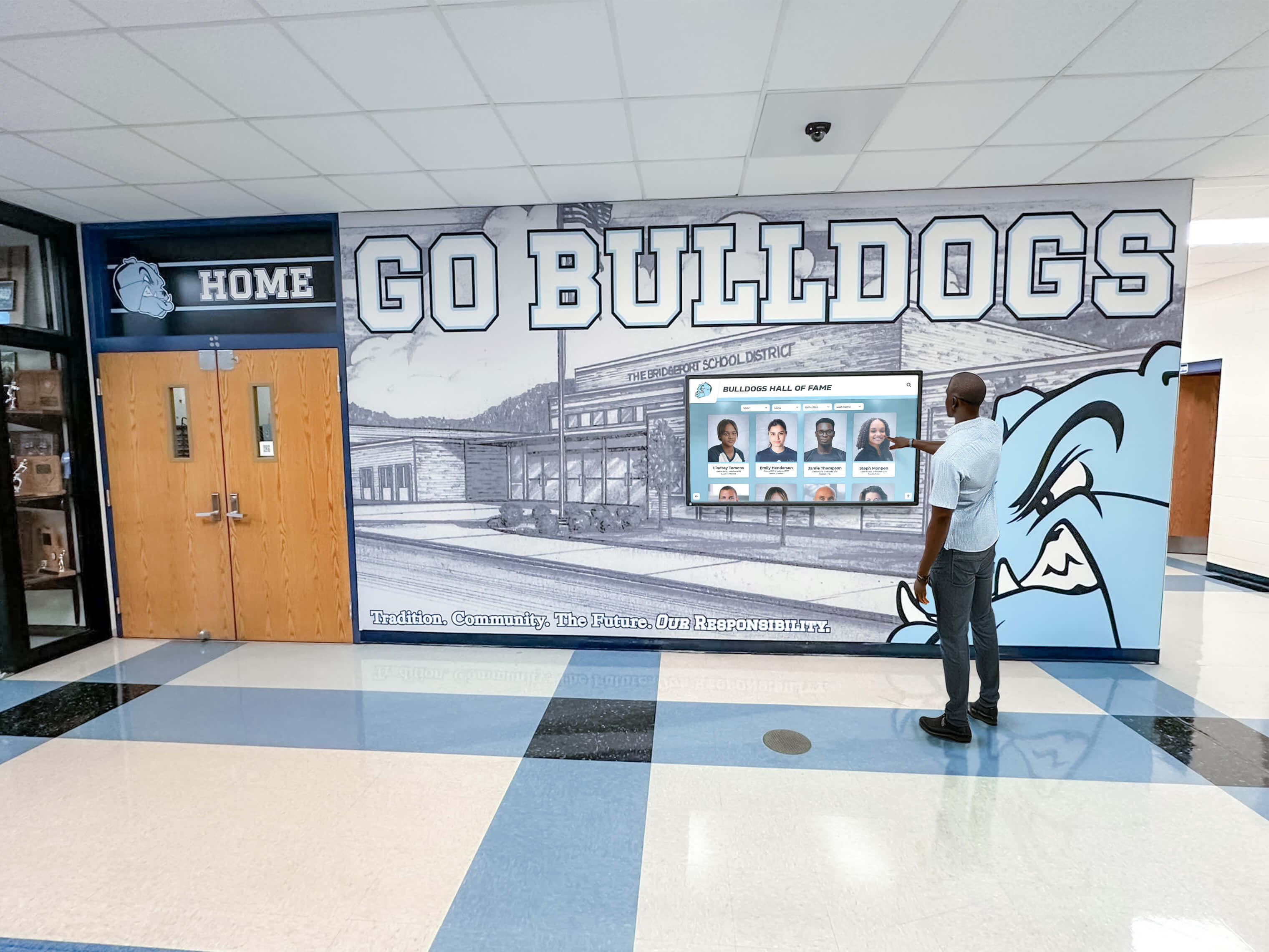
Database Organization
Professional digital recognition systems organize content into relational databases that support complex associations while maintaining clean user experiences. Database structures typically include:
Individual Profiles: People entries containing biographical information, achievements, photos, and relationships to other database entities. An athletic hall of fame inductee might be linked to teams, coaches, records, and scholarship donors.
Organization Profiles: Sponsor companies, donor families, or supporting organizations with their own profile pages containing logos, mission statements, contribution histories, and associations with supported programs.
Program Categories: Teams, departments, academic programs, or initiatives that can be associated with both achievers and sponsors, creating contextual connections throughout the system.
Recognition Tiers: Defined levels for both achievement recognition (hall of fame inductees, academic award recipients, service honorees) and donor recognition (major gifts, annual fund, legacy society) with appropriate visibility settings.
This structured approach allows organizations to maintain clear records while creating flexible front-end displays that present information in engaging, accessible formats. The interactive touchscreen kiosk solutions that institutions implement provide intuitive interfaces for managing these complex relationships.
Update Workflows
Dual-purpose recognition requires regular content updates as new achievements occur, campaigns progress, and sponsor relationships evolve. Effective digital platforms provide streamlined workflows for various update needs:
Achievement Updates: Athletic directors add new championship teams, season records, or individual awards immediately after seasons conclude. Academic departments submit honor roll lists, scholarship recipients, or award winners following ceremonies. Arts programs upload performance highlights or competition results. These updates follow consistent templates that maintain visual consistency while accommodating varied content types.
Donor Updates: Development staff add new major gift donors as contributions are received and approved for recognition. Annual fund supporters who reach cumulative giving milestones move to new recognition tiers. Legacy society members provide updated biographical information or photos for their profiles.
Sponsor Updates: Advancement teams modify sponsor recognition when agreements renew, update sponsor logos when companies rebrand, or adjust sponsor associations when funding priorities shift.
Content Review: Organizations typically implement approval workflows ensuring recognition accuracy and appropriateness before content goes live. A development director might review all new donor profiles, while an athletic director approves achievement updates.
Remote content management capabilities allow authorized staff to update recognition from any location, eliminating the delays inherent in physical plaque ordering and installation. Schools implementing digital signage solutions report that update times decrease from weeks or months to minutes or hours.
Access Control and Permissions
Organizations managing dual-purpose displays typically need multiple staff members with different editing permissions:
System Administrators: Full access to all content categories, display settings, and system configuration.
Development Staff: Permission to manage donor profiles, sponsor recognition, campaign pages, and giving level settings.
Athletic Directors: Access to athletic achievement content, team pages, record boards, and related historical information.
Academic Administrators: Authority to update academic awards, honor roll displays, scholarship recipient information, and program achievements.
Department Coordinators: Limited access to manage content within their specific areas—a theater director updates drama achievements, a band director manages music program recognition.
Role-based permissions ensure appropriate staff can maintain current, accurate recognition without risking unintended changes to other system areas. This distributed management approach keeps content fresh without creating bottlenecks where one person controls all updates.
Design Considerations for Dual-Purpose Recognition
Visual design plays important roles in dual-purpose displays. Recognition must feel cohesive while distinguishing between achievement categories and donor recognition. Professional installations balance several design elements:
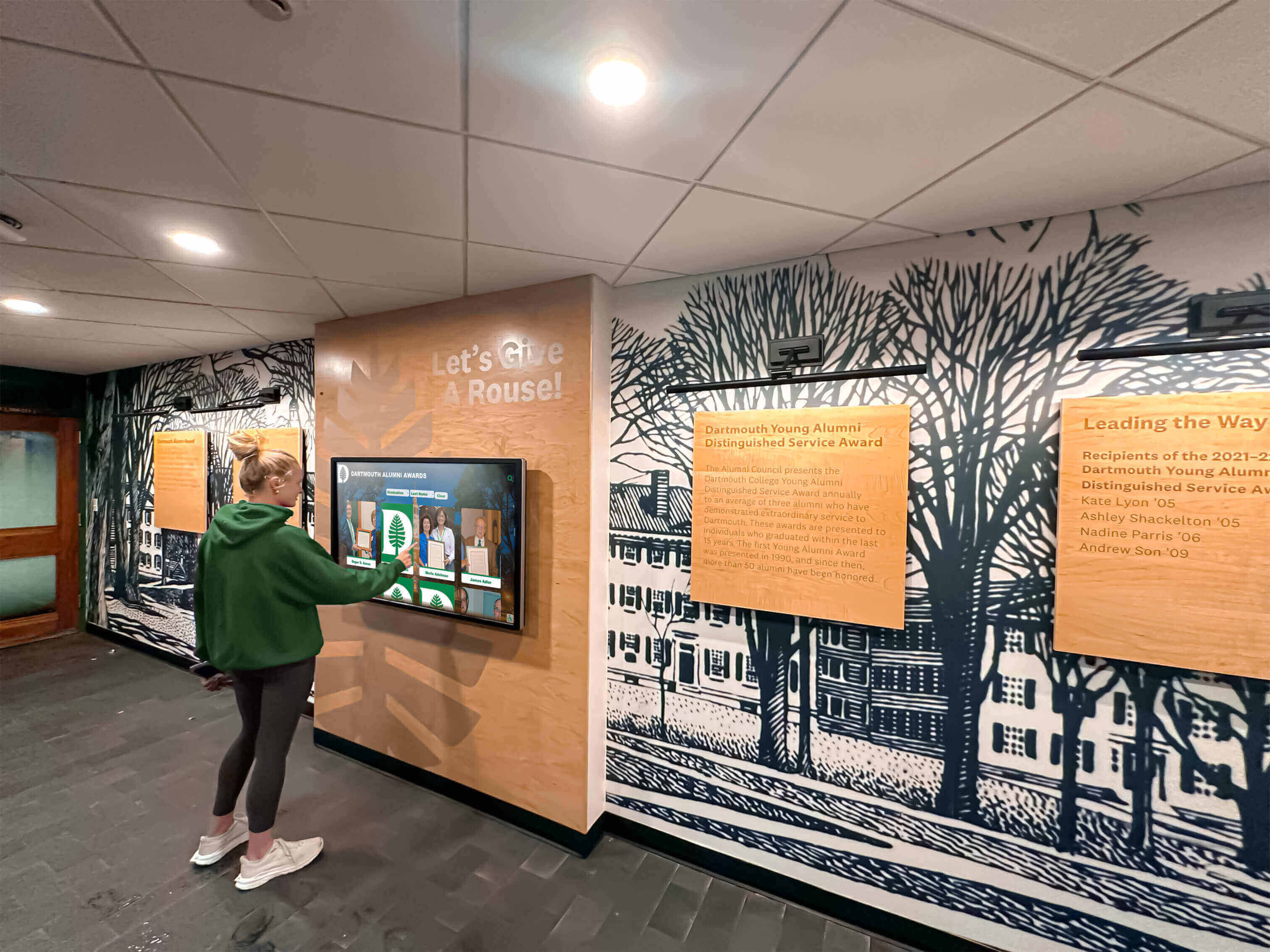
Visual Hierarchy and Navigation
Main menu design establishes clear pathways to both recognition types. Effective approaches include:
Equal Prominence: Hall of fame and donor recognition receive similar visual weight on main menus, signaling that both serve important organizational purposes.
Category Organization: Recognition groups logically by program area (Athletics, Academics, Arts) with both achievements and donor recognition available within each category.
Search Functionality: Prominent search options allow visitors to find specific individuals whether they’re achievement honorees or donor contributors, reducing navigation barriers.
Featured Content: Rotating highlights on home screens feature both recent achievements and donor recognition, maintaining balanced visibility over time.
Consistent Branding with Category Distinction
Recognition displays maintain overall institutional branding while creating subtle visual distinctions between content types:
Color Coding: Some organizations use color variations to distinguish categories—athletic achievements might feature school athletic colors while donor recognition uses institutional primary colors, creating visual differentiation within cohesive design.
Template Variations: Achievement profiles might focus on photos and statistics, while donor profiles concentrate on biographical narrative and giving impact, with templates designed to serve each content type effectively.
Icon Systems: Navigation icons help visitors quickly identify content types—trophy icons for achievements, heart icons for donors, handshake icons for sponsors—creating intuitive wayfinding.
Organizations working with touchscreen display solutions benefit from professional design services that create cohesive visual experiences across diverse content types.
Accessibility for All Recognition Types
Both achievement recognition and donor acknowledgment must remain accessible to all visitors regardless of ability. Digital displays support accessibility through:
Text Sizing Options: Visitors can increase text size for easier reading of donor names, achievement descriptions, or biographical content.
High Contrast Modes: Visual options accommodate visitors with visual impairments, ensuring all recognition remains readable.
Audio Description: Some systems provide audio narration of profile content, allowing visitors with visual disabilities to access both achievement and donor information.
Touch Target Sizing: Buttons and interactive elements meet accessibility standards for visitors with limited dexterity or mobility challenges.
The WCAG 2.2 AA accessibility standards that professional digital recognition platforms meet ensure that all visitors can engage with both achievement and donor content regardless of ability.
Real-World Applications Across Institutional Contexts
Different organizations implement dual-purpose recognition to address specific needs and contexts:
High School Athletic Programs
High schools face particular space constraints in gymnasiums and athletic lobbies. A single digital display can recognize:
- Athletic hall of fame inductees with photos, statistics, and career highlights
- Championship teams with roster information and season records
- Individual record holders across sports and events
- Booster club donors who fund uniforms, equipment, and facilities
- Local business sponsors of specific teams or sports
- Memorial recognition for alumni athletes and supporters
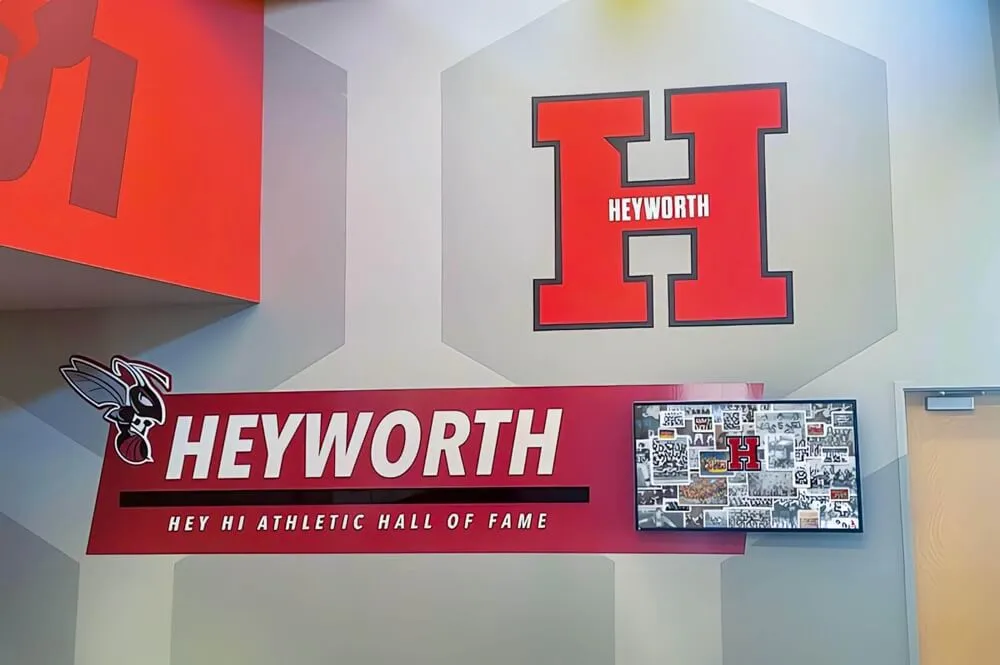
This consolidation transforms overcrowded trophy cases and scattered donor plaques into organized, searchable recognition accessible to students, parents, and community members. Schools implementing these solutions report improved athletic facility spaces that feel modern and welcoming.
University Development Programs

Universities managing major capital campaigns need flexible recognition that grows with giving programs. Digital systems accommodate:
- Major gift donors at various recognition levels
- Endowed scholarship funds with donor stories and student recipient connections
- Named buildings and facilities with historical context
- Alumni achievement recognition linked to their support of current students
- Corporate partners and research sponsors
- Legacy society members and planned giving donors
The flexibility allows development teams to add new recognition tiers as campaigns progress without physical space constraints or expensive fabrication costs.
Nonprofit Organizations
Nonprofits serving communities through various programs benefit from recognition that connects donors to program impact:
- Program beneficiaries and success stories
- Individual donors at all giving levels
- Corporate sponsors of specific initiatives
- Volunteer recognition for contributed time and talent
- Board members and organizational leadership
- Community partners and collaborative supporters
This integrated approach helps visitors understand organizational impact while honoring the supporters who make programs possible.
Cost Considerations: Dual-Purpose Value
Organizations evaluating recognition options typically compare costs across different approaches. Dual-purpose digital displays provide value in several areas:
Initial Investment Comparison
Traditional separate recognition—bronze donor walls plus physical trophy cases or achievement plaques—often costs more than comprehensive digital solutions:
- Bronze donor walls: $15,000-$50,000+ depending on size and engraving
- Custom trophy cases: $5,000-$20,000 per case
- Individual plaques: $200-$500 each
- Installation labor: $2,000-$5,000 for physical installations
A professional digital recognition system including 55-inch touchscreen, mounting, software licensing, and initial content setup typically ranges from $8,000-$15,000 for a complete dual-purpose installation.
Ongoing Update Costs
The cost advantage expands over time as organizations add new recognition:
Traditional Approach Updates:
- New bronze plaques: $100-$300 each
- Engraving modifications: $50-$150 per change
- Additional trophy case space: $5,000-$20,000 when existing cases fill
- Labor for physical installation: $200-$500 per update
Digital System Updates:
- New profiles: No additional cost beyond staff time to enter content
- Recognition tier changes: Administrative updates through content management system
- Additional content categories: Unlimited additions without hardware costs
- Immediate updates: Changes go live within minutes rather than weeks
Organizations implementing donor recognition programs report total cost savings of 60-80% over ten-year periods when comparing digital solutions to traditional approaches requiring regular expansion and updates.
Implementation Planning for Dual-Purpose Systems
Organizations planning dual-purpose digital recognition benefit from structured implementation approaches:
Content Inventory and Planning
Before installation, conduct comprehensive inventories of recognition needs:
Achievement Categories: List all current achievement recognition—hall of fame members, championship teams, award recipients, record holders—noting what information exists and what requires research.
Donor Categories: Document all donor recognition tiers, current donor lists at each level, and any special recognition commitments made to major contributors.
Sponsor Relationships: Catalog active sponsor agreements, recognition terms, logo requirements, and contract renewal dates.
Priority Sequencing: Determine which content categories launch at installation versus phased additions following initial deployment.
Content Collection: Gather photos, biographical information, achievement statistics, and donor stories before launch to ensure comprehensive initial content.
Staff Training and Responsibilities
Successful dual-purpose displays require clear ownership and trained personnel:
- Assign specific staff members to manage achievement updates versus donor recognition
- Provide content management training for all authorized users
- Establish approval workflows for new recognition before publication
- Create update schedules ensuring regular content freshness
- Develop protocols for handling sensitive situations like recognition removal requests
Launch and Promotion
New recognition displays deserve visibility to ensure community awareness:
- Announcement events inviting donors, honorees, and community members to experience new displays
- Social media promotion showing display features and recognition categories
- Email communications to alumni, donors, and supporters highlighting their recognition
- Student assemblies or staff meetings demonstrating navigation and search features
- Ongoing promotion as new achievements and donors are added

Organizations that invest in thorough planning and community engagement create recognition programs that serve as ongoing sources of pride and connection rather than static installations that lose relevance over time.
The Future of Integrated Recognition Technology
Digital recognition technology continues advancing in ways that benefit dual-purpose applications:
Enhanced Analytics: Systems increasingly track visitor engagement, showing organizations which recognition categories attract most attention, which profiles visitors explore most frequently, and how long visitors interact with different content types. This data informs content strategy and helps organizations understand recognition impact.
Mobile Integration: QR codes displayed near digital installations allow visitors to continue exploring recognition on personal devices, sharing profiles via social media, or accessing additional content not featured on touchscreens due to space considerations.
Video Content: Richer multimedia options enable organizations to include video testimonials from donors discussing why they give, video highlights of athletic achievements, or recorded interviews with hall of fame inductees sharing career stories.
Social Media Connections: Direct integration with organizational social media allows recognition displays to feature real-time updates, recent posts about achievements or donors, and community engagement with recognition content.
Cloud-Based Management: Remote content management continues improving, allowing multiple authorized staff members to update recognition simultaneously from any location while maintaining version control and content approval workflows.
Organizations implementing digital recognition today position themselves to benefit from ongoing platform improvements without replacing hardware or starting over with new systems.
Conclusion: Honoring Achievers and Supporters Together
Digital hall of fame displays serving dual purposes as donor walls answer a practical question—can one installation handle both recognition needs effectively?—with a clear affirmative while delivering benefits beyond simple consolidation. These systems create meaningful connections between supporters and the programs they fund, provide flexible recognition that grows with organizational needs, save significant costs over time, and create engaging visitor experiences that honor both achievement excellence and generous giving.
Organizations facing limited space, growing recognition needs, or outdated physical displays find that modern touchscreen recognition solutions address multiple challenges simultaneously. Rather than choosing between honoring donors or celebrating achievers, institutions can embrace integrated approaches that give appropriate prominence to both groups whose contributions create organizational success.
The question isn’t whether digital displays can serve both functions, but rather why organizations would continue separating recognition when technology enables meaningful integration. Schools, universities, nonprofits, and institutions implementing these solutions consistently report that dual-purpose recognition strengthens connections between their communities and their missions while creating sustainable, flexible systems that serve recognition needs for decades.
Ready to explore how dual-purpose digital recognition can transform your organization’s approach to honoring both achievers and supporters? Talk to our team to discuss your specific recognition needs and discover how interactive touchscreen displays create engaging experiences that celebrate your community’s excellence and generosity.