



Selecting a donor recognition wall company represents one of the most visible, long-lasting decisions your organization will make. Unlike typical vendor relationships that last months or years, your recognition display partner shapes how you honor supporters for decades. The wrong choice leads to capacity constraints when campaigns succeed, expensive updates that drain fundraising budgets, outdated technology requiring premature replacement, or recognition systems your staff cannot manage effectively.
Yet most organizations approach vendor selection with limited experience. You might install donor recognition once every 10-20 years, while specialized companies complete hundreds of installations annually. This expertise gap creates information asymmetry that makes comparison difficult—particularly when evaluating emerging digital technologies against traditional approaches your board members recognize.
This comprehensive buying guide examines what distinguishes exceptional donor recognition wall companies from adequate ones, which questions reveal vendor capabilities before you commit, and how to match company strengths to your specific institutional needs. Whether you’re installing your first donor recognition system or replacing an aging traditional wall that has exhausted its capacity, this guide provides frameworks for decisions that honor supporters appropriately while delivering sustainable long-term value.
The donor recognition wall industry spans dramatically different approaches: traditional fabricators creating engraved bronze, stone, or glass installations versus digital technology companies providing interactive touchscreen systems. Understanding which type of company matches your organizational requirements represents the essential first decision shaping all subsequent vendor evaluation.

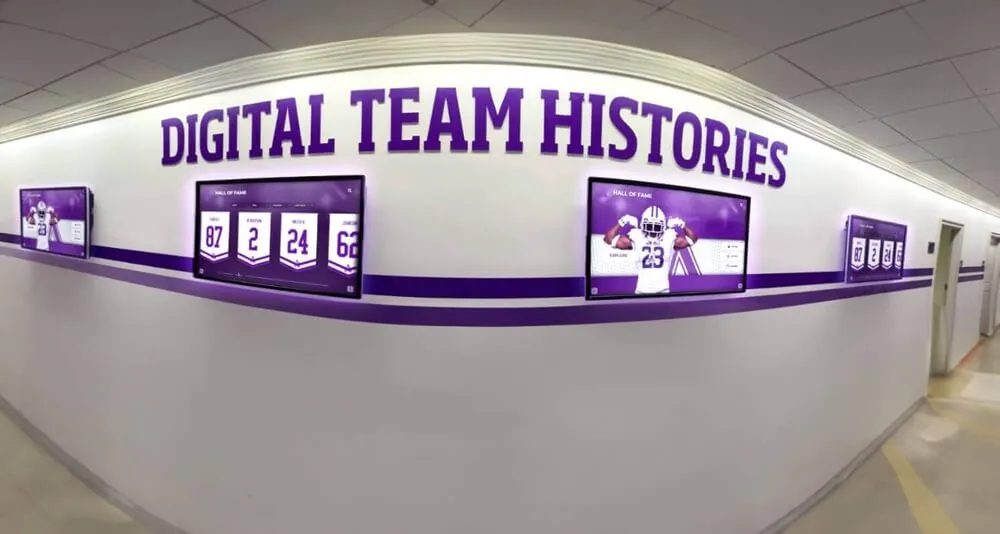
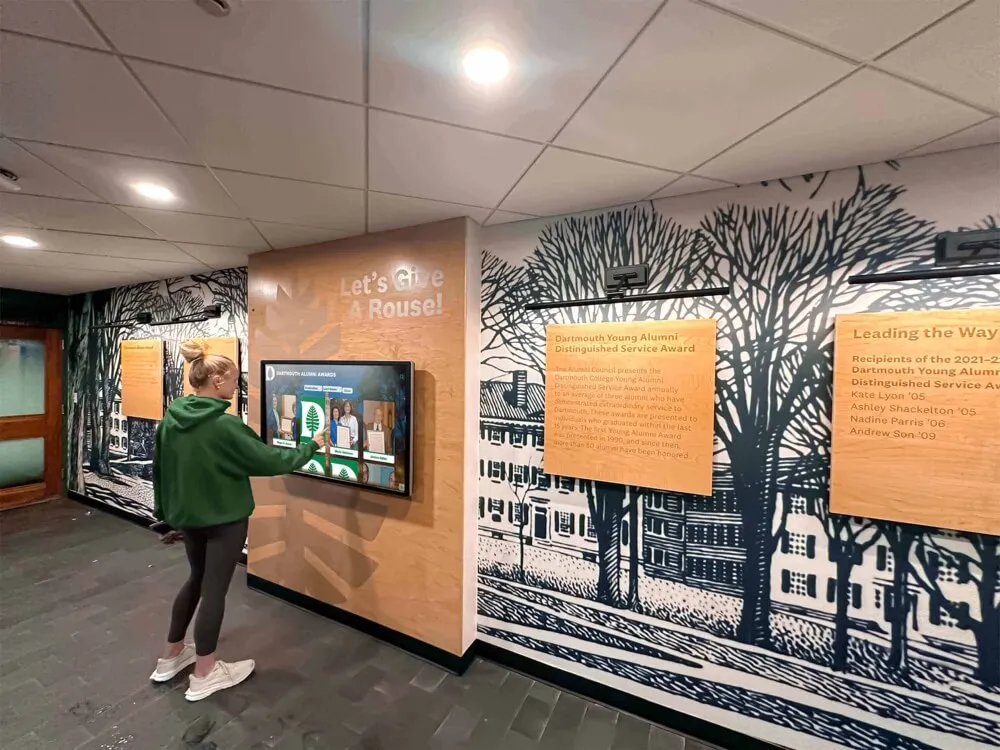
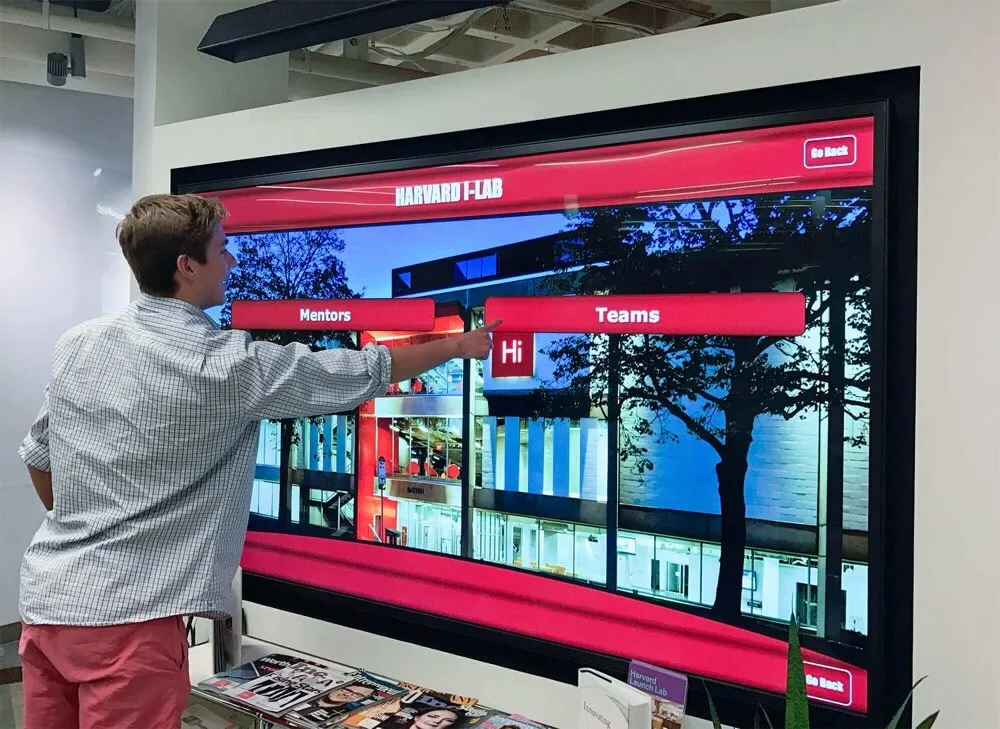
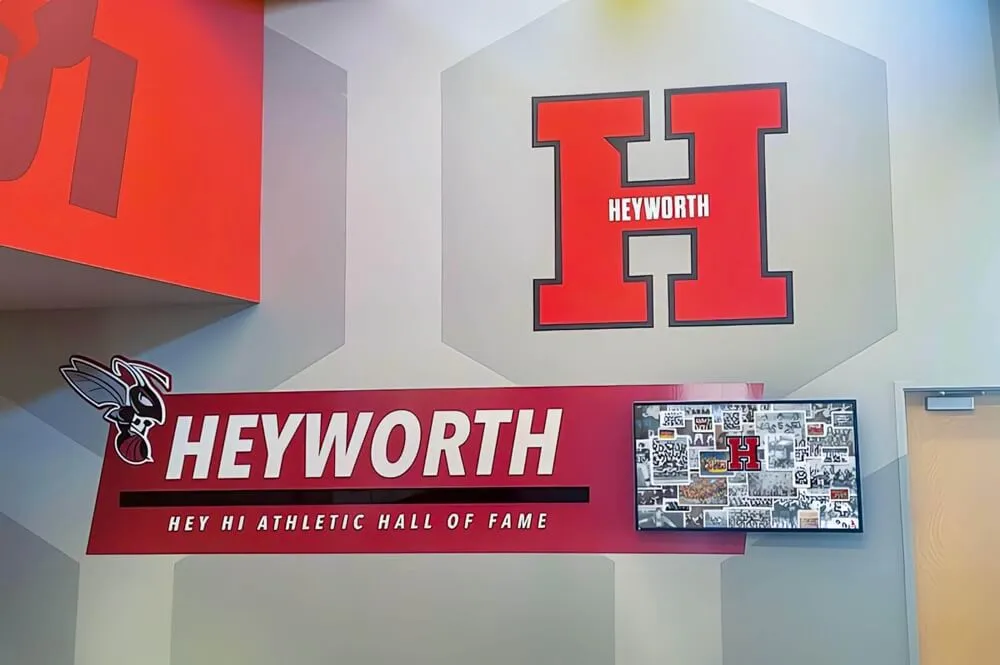
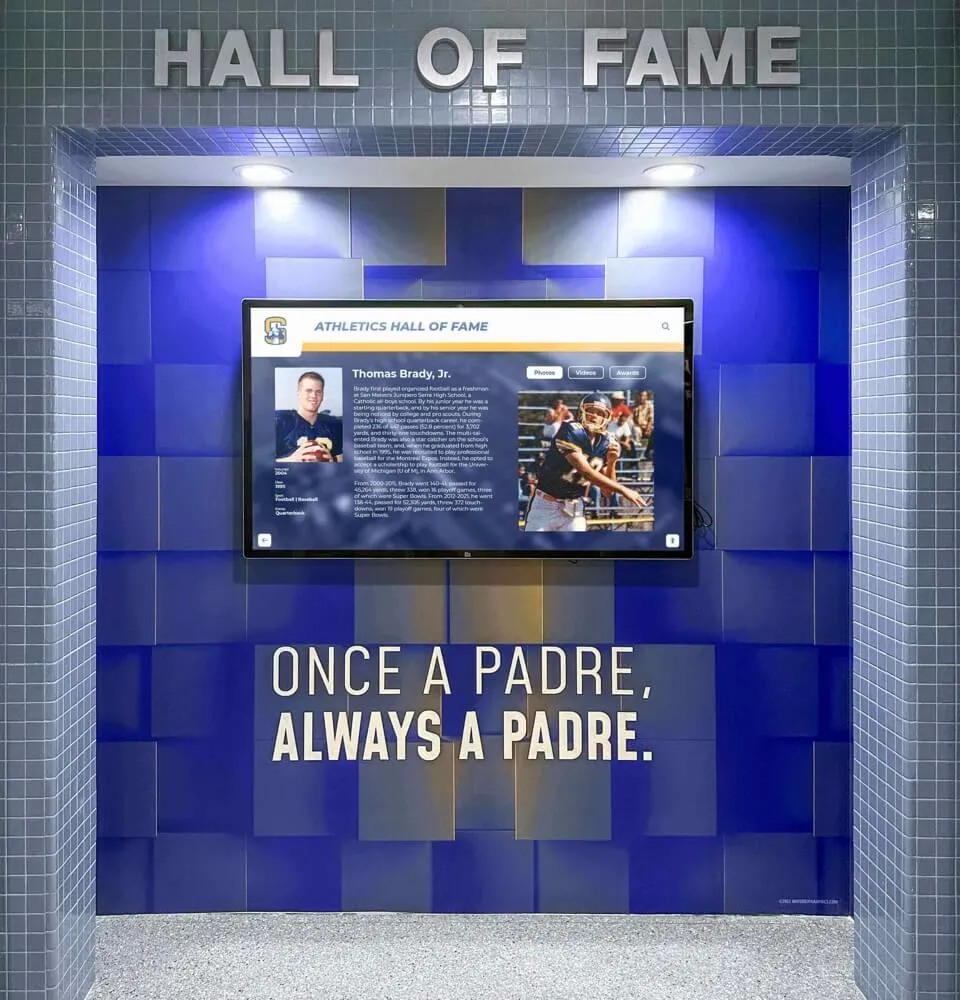
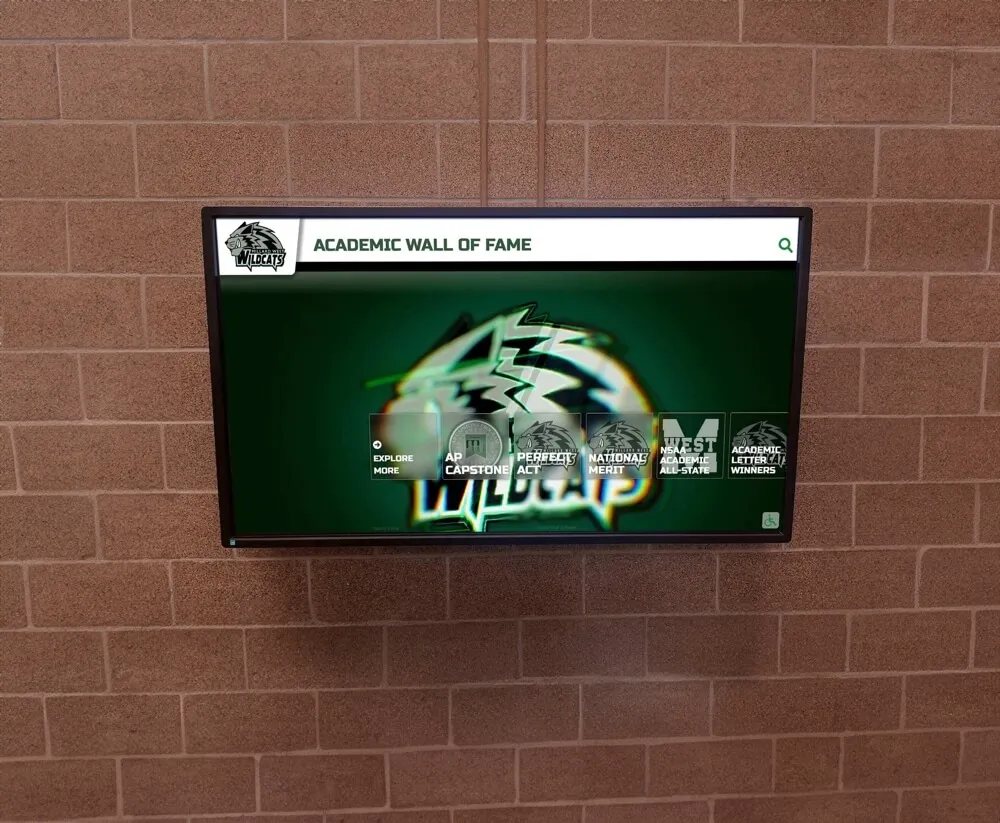
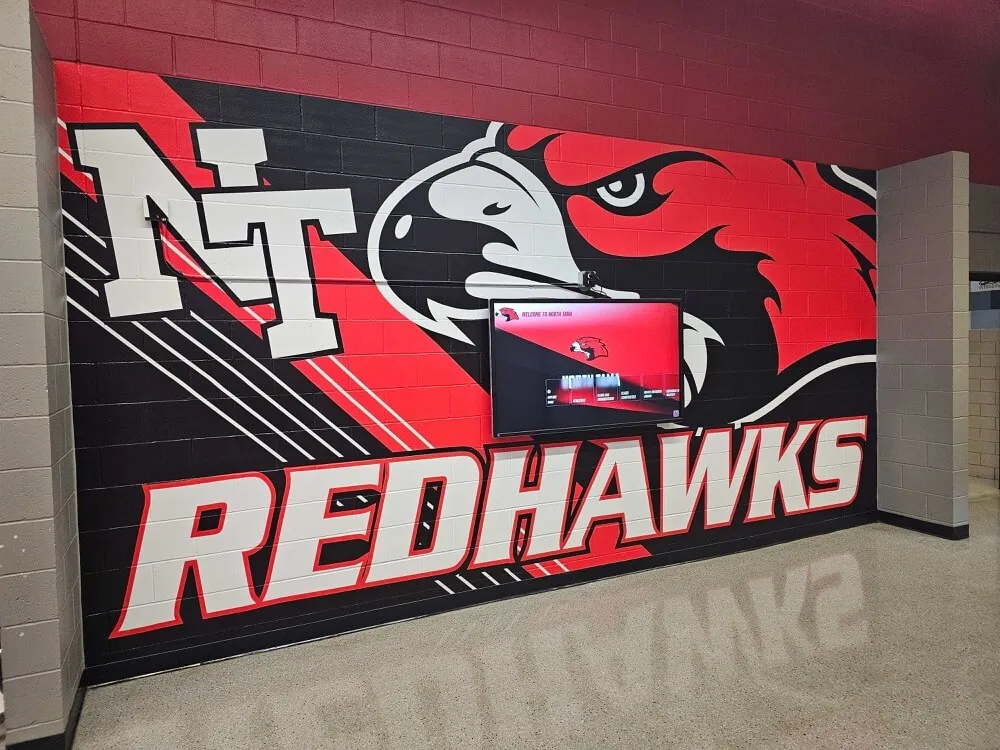
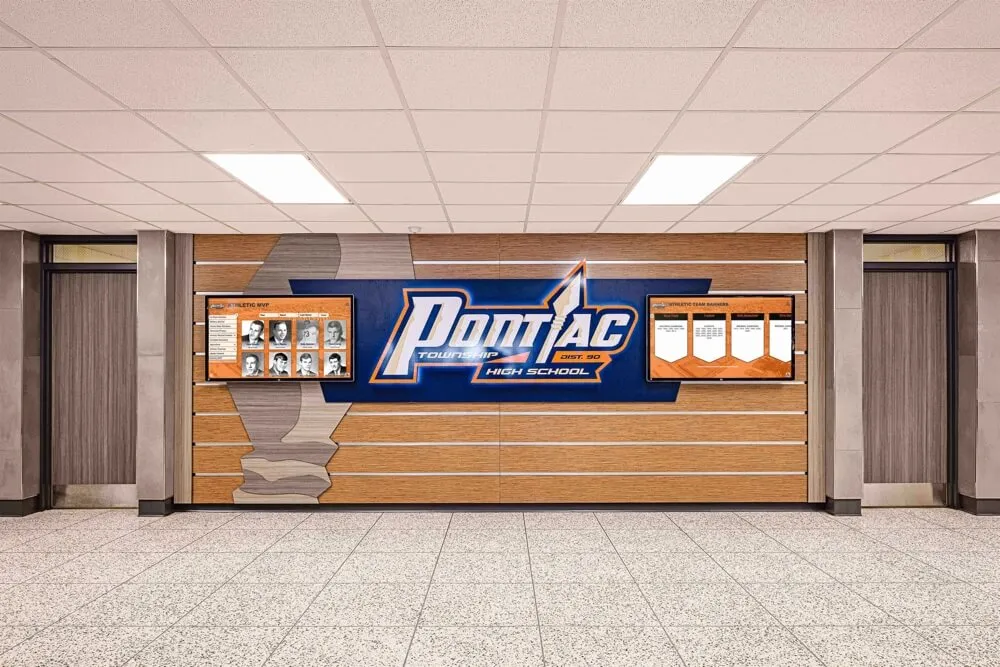
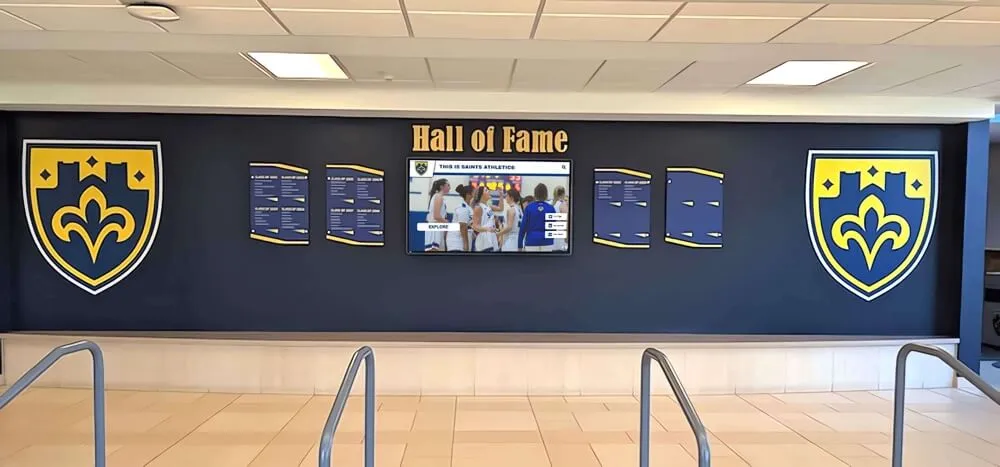
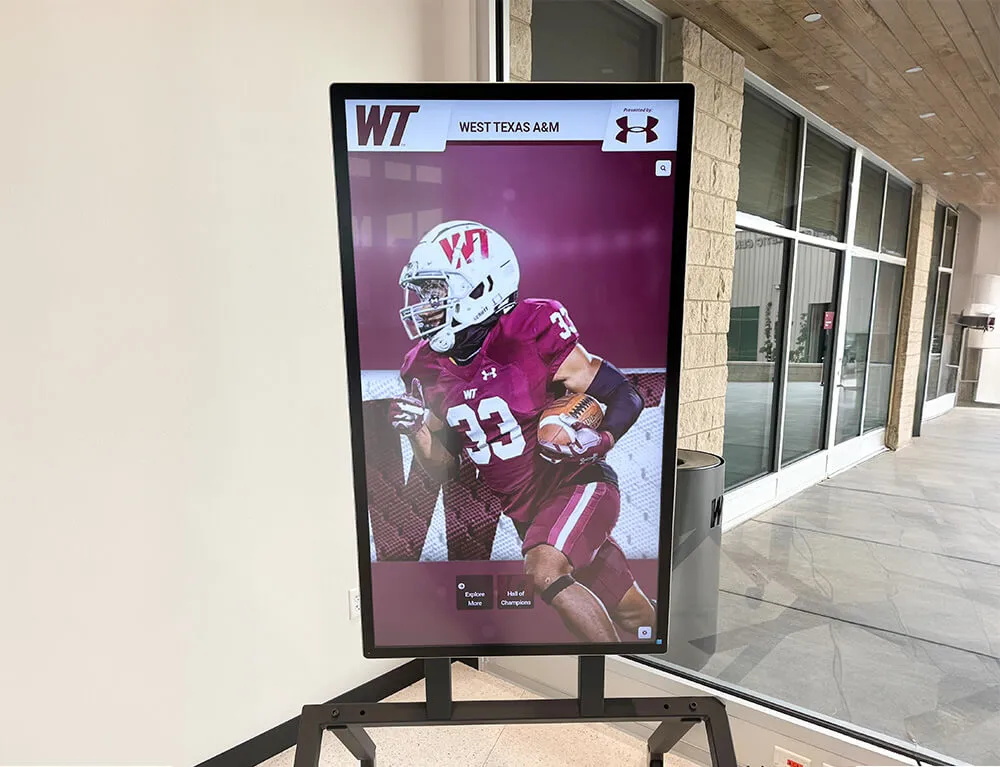
Professional donor recognition installations create lasting impressions that honor supporters while inspiring future giving across generations
Understanding the Donor Recognition Wall Company Landscape
The recognition display industry has bifurcated into two distinct company categories serving different institutional needs and strategic priorities.
Traditional Fabrication Companies: Physical Recognition Specialists
Traditional donor wall companies manufacture permanent installations using conventional materials and time-honored fabrication techniques.
What These Companies Provide
Traditional fabricators typically specialize in:
- Bronze Plaques and Castings: Custom-engraved bronze plates, medallions, and sculptural elements
- Stone and Marble Work: Engraved granite, marble, limestone, and other natural stone installations
- Glass and Acrylic Displays: Etched, engraved, or printed glass and acrylic panel systems
- Wooden Recognition Elements: Custom millwork, engraved wood panels, and architectural woodworking
- Metal Fabrication: Stainless steel, aluminum, and mixed-metal recognition installations
- Rail Systems: Modular mounting systems enabling phased donor additions
Traditional Company Strengths
Established physical fabrication companies excel when:
- Your organization values tangible permanence and traditional materials
- Your donor demographics prefer conventional recognition approaches
- Your architectural setting demands premium materials matching existing finishes
- Your donor community grows slowly and predictably
- You possess adequate wall space in suitable locations
- Your budget accommodates ongoing per-donor update costs
- You need weather-resistant outdoor recognition installations
Organizations like universities with century-old traditions, historic buildings requiring architectural compatibility, or donor communities with strong preferences for traditional recognition often find conventional fabricators appropriate for their needs.
Traditional Approach Limitations
Physical recognition inherently constrains:
- Fixed Capacity: Wall space eventually fills, forcing difficult exclusion decisions
- Update Costs: Each new donor requires plaque fabrication ($150-500) plus professional installation
- Limited Information: Engraved surfaces accommodate only names, maybe giving levels and years
- Update Timelines: Weeks or months between ordering plaques and visible recognition
- Correction Difficulty: Errors require physical replacement rather than simple updates
- Space Inefficiency: Mounting hardware and spacing requirements consume substantial wall area
For organizations managing extensive donor recognition programs, these constraints create mounting challenges as campaigns succeed and donor communities expand.
Digital Recognition Technology Companies: Interactive Display Specialists
Digital donor wall companies provide touchscreen-based interactive recognition systems managed through cloud-based software platforms.
Digital Company Capabilities
Technology-focused recognition companies typically offer:
- Interactive Touchscreen Displays: Commercial-grade displays with responsive touch interfaces
- Content Management Systems: Cloud-based platforms enabling remote recognition updates
- Unlimited Recognition Capacity: Digital databases accommodating any donor community size
- Multimedia Integration: Photo, video, and rich text donor profile capabilities
- Search and Navigation: Alphabetical directories, filters, and full-text search features
- Analytics and Insights: Engagement tracking revealing visitor interaction patterns
- Multi-Location Management: Centralized systems controlling distributed displays
- Accessibility Features: Screen readers, contrast modes, font scaling, multilingual support
Digital Approach Advantages
Interactive technology companies solve limitations traditional approaches cannot address:
- Unlimited Scalability: Recognition capacity never fills regardless of donor community growth
- Instant Updates: Real-time recognition appearing minutes after staff create profiles
- Zero Incremental Costs: No per-donor expenses for recognition additions
- Rich Storytelling: Photos, biographical details, giving motivation, and impact narratives
- Easy Corrections: Immediate error fixes without physical replacement
- Visitor Engagement: Interactive exploration averaging 6-8 minutes versus 30 seconds for static plaques
- Long-Term Economics: Lower total ownership costs over 5-10 years despite higher initial investment
Schools and nonprofits implementing digital recognition alongside other institutional displays create comprehensive systems showcasing donors, achievements, and institutional history through unified platforms.
Digital Technology Considerations
Interactive recognition requires organizations to address:
- Staff Capability: Content management systems require basic computer skills
- Technical Infrastructure: Electrical power and network connectivity at installation sites
- Ongoing Software Costs: Annual licensing or subscription fees (typically $1,500-5,000)
- Hardware Lifecycle: Display replacement on 7-10 year cycles as technology advances
- Donor Perceptions: Ensuring supporters understand digital recognition offers permanence
Organizations selecting digital companies should verify long-term vendor viability—you need partners remaining available for support across many years, not companies pursuing short-term opportunities before exiting the market.
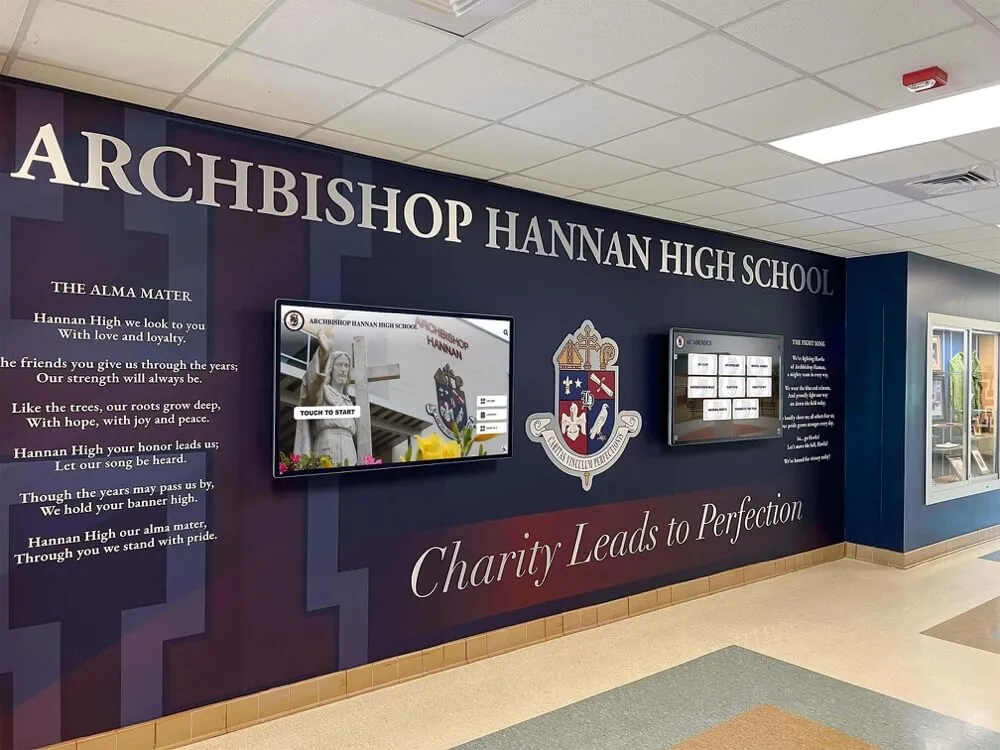
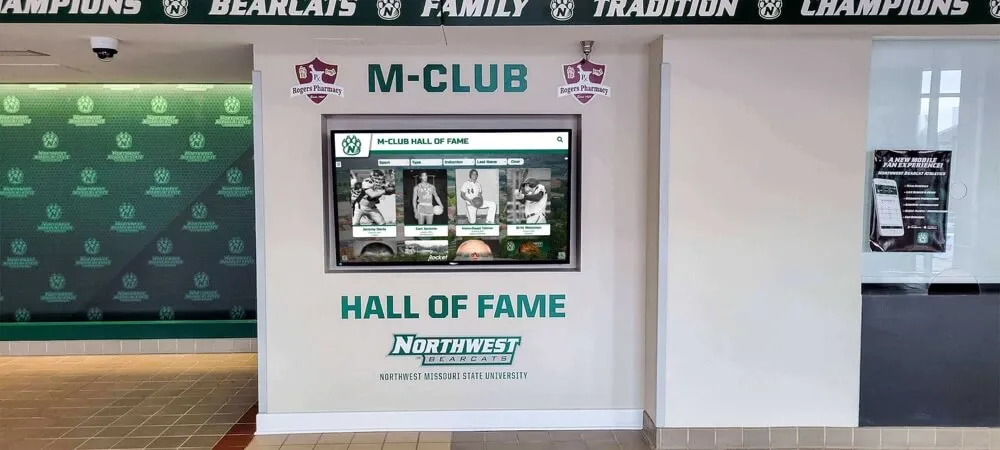
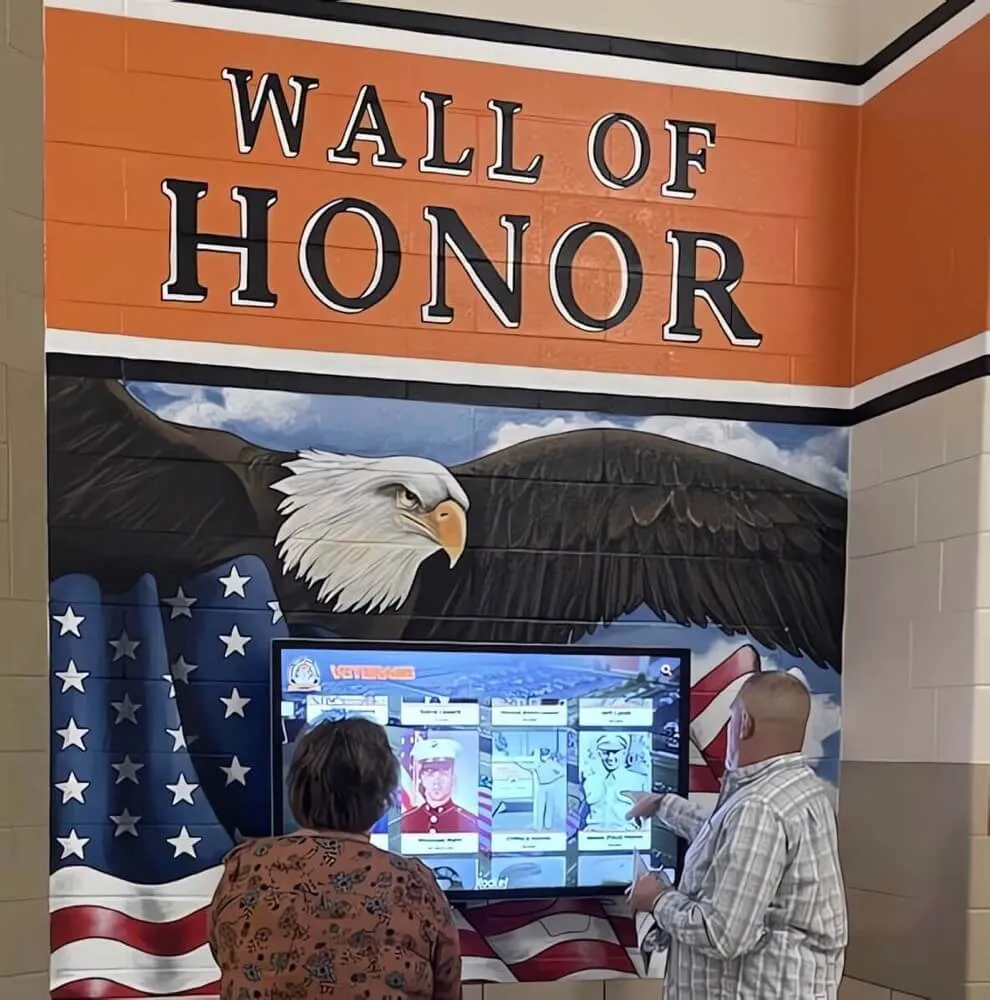
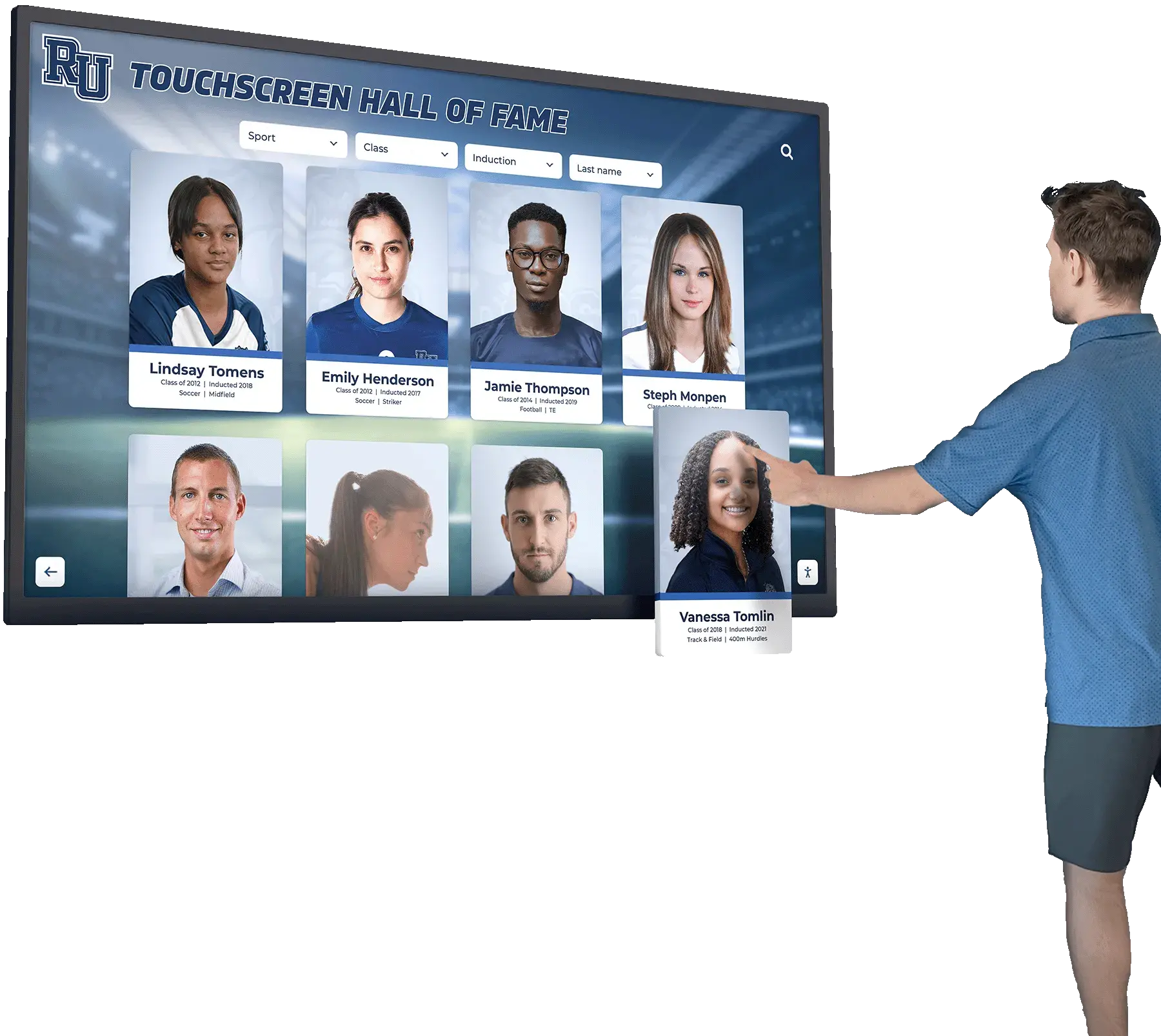
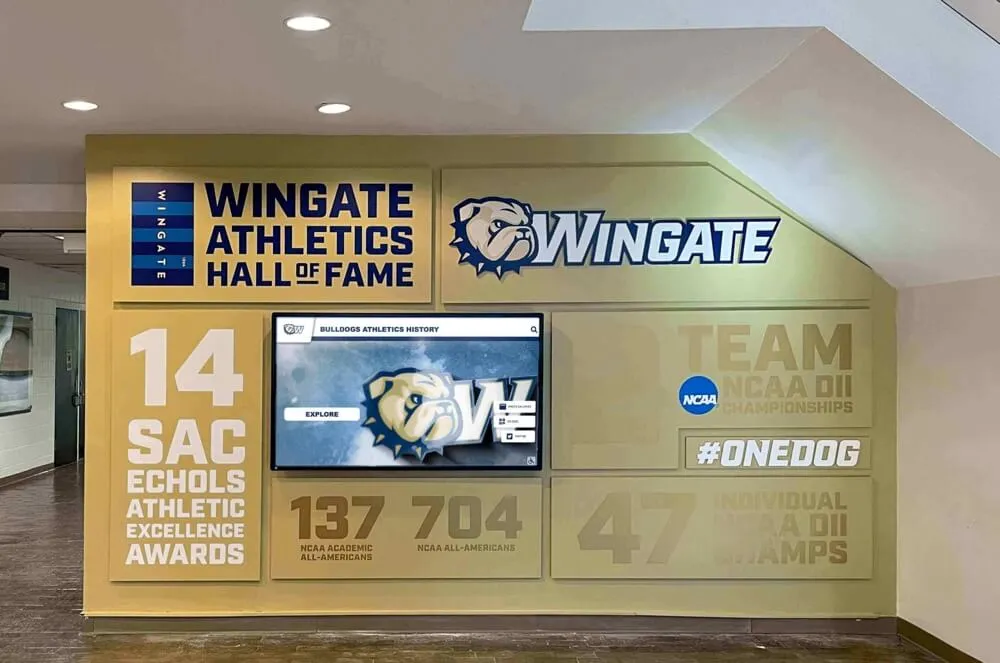
Modern digital donor recognition systems provide unlimited capacity while enabling rich storytelling impossible with traditional plaques
Essential Questions When Evaluating Donor Recognition Wall Companies
Thorough vendor assessment requires asking specific questions revealing capabilities, limitations, and compatibility with your organizational needs.
Company Experience and Portfolio Assessment
Understanding vendor background and track record provides essential context for capability evaluation.
Critical Experience Questions
- How many donor recognition installations have you completed for organizations similar to ours in size, sector, and scope?
- Can you provide references from at least three comparable institutions we can contact directly?
- What is your typical project timeline from initial consultation through final installation and training?
- How long has your company operated in the donor recognition space specifically?
- What percentage of your business focuses on donor recognition versus other signage or display types?
Portfolio Evaluation Criteria
Request portfolio examples demonstrating:
- Scale Match: Installations accommodating donor communities similar to yours
- Aesthetic Range: Design capabilities spanning traditional to contemporary styles
- Technical Sophistication: Features matching your functional requirements
- Industry Experience: Projects for educational institutions, healthcare organizations, nonprofits, or religious communities like yours
- Longevity Examples: Installations 5-10+ years old still functioning well
Quality companies provide extensive portfolios, detailed case studies, and willing client references. Hesitation about providing references raises significant concerns about customer satisfaction or installation quality.
Organizations implementing volunteer recognition alongside donor acknowledgment should verify vendors can accommodate diverse recognition program needs through flexible systems.
Capacity and Scalability Planning
Recognition systems must accommodate not just current donor communities but substantial future growth.
Essential Capacity Questions for Traditional Vendors
- Based on our current donor count and projected growth, what capacity should we plan for initially?
- What does future expansion look like when our initial installation fills?
- How much does adding new donor plaques cost per entry, including fabrication and installation?
- Can you show examples of successful expansion implementations maintaining aesthetic consistency?
- What happens if our donor community exceeds planned capacity?
Essential Capacity Questions for Digital Vendors
- Is there any practical limit to how many donor profiles your system accommodates?
- Do pricing structures penalize us for adding donors beyond certain thresholds?
- How does system performance scale as our donor database grows into thousands of entries?
- Can you demonstrate search speed and responsiveness with large databases?
- How do content management workflows handle bulk imports of hundreds or thousands of donor records?
Growth Scenario Planning
Share realistic growth projections with vendors:
- Current donor count requiring recognition
- Anticipated annual additions for next 5-10 years
- Potential campaign expansions or special initiatives
- Historical growth patterns from past fundraising programs
Quality vendors help you plan appropriate capacity rather than under-specifying to minimize initial costs then charging premium rates for inevitable expansions.
Content Management and Update Procedures
Understanding how recognition updates occur reveals long-term operational realities.
Traditional Wall Update Questions
- What is the complete process for adding new donor recognition—from order to visible installation?
- What are all costs involved in adding a single donor plaque?
- How long does the typical update cycle take from ordering to completion?
- Who handles installation—your company or local contractors we coordinate?
- How do you ensure new additions maintain visual consistency with original installation?
- What happens when errors occur in engraved plaques?
Digital System Management Questions
- Who can update recognition content—only your company or our staff directly?
- What training do you provide ensuring our staff can manage the system confidently?
- How intuitive is the content management interface for non-technical users?
- Can we see a live demonstration of the update process from start to published recognition?
- What support resources exist when we encounter questions or issues?
- How do bulk updates work when we need to add many donors simultaneously?
Staffing Reality Check
Consider your actual internal capacity:
- How much staff time can you dedicate to recognition management monthly?
- What technical comfort level do your development and communications staff possess?
- Do you need fully managed services or prefer direct control?
Match vendor update processes to your realistic staff capabilities rather than idealizing how much time you’ll dedicate to recognition maintenance.
Design Customization and Aesthetic Control
Recognition displays must align with institutional branding and architectural contexts.
Design Flexibility Questions
- How much customization do you offer in recognition design and appearance?
- Can we incorporate our existing institutional branding, colors, and graphic elements?
- What design consultation do you provide during planning phases?
- Can you show examples of installations customized to client specifications?
- What design revisions are included before we commit to final specifications?
- How do you handle architectural integration with existing spaces?
Digital Interface Customization Questions
- Can we customize the visual design and user interface to match our brand?
- How much control do we have over layout, colors, fonts, and visual elements?
- Can we see examples of customized interfaces for different organizations?
- Is there additional cost for design customization versus standard templates?
- Can we update visual design ourselves or must your company handle changes?
Design Input Process
Clarify how design decisions occur:
- Will we see mockups before installation commitments?
- How many design iterations are included in base pricing?
- What stakeholder review and approval processes does the timeline accommodate?
- Can we request changes during installation if something doesn’t meet expectations?
Organizations with strong brand identities or specific aesthetic requirements need vendors offering substantial customization rather than forcing compromises to standardized products.

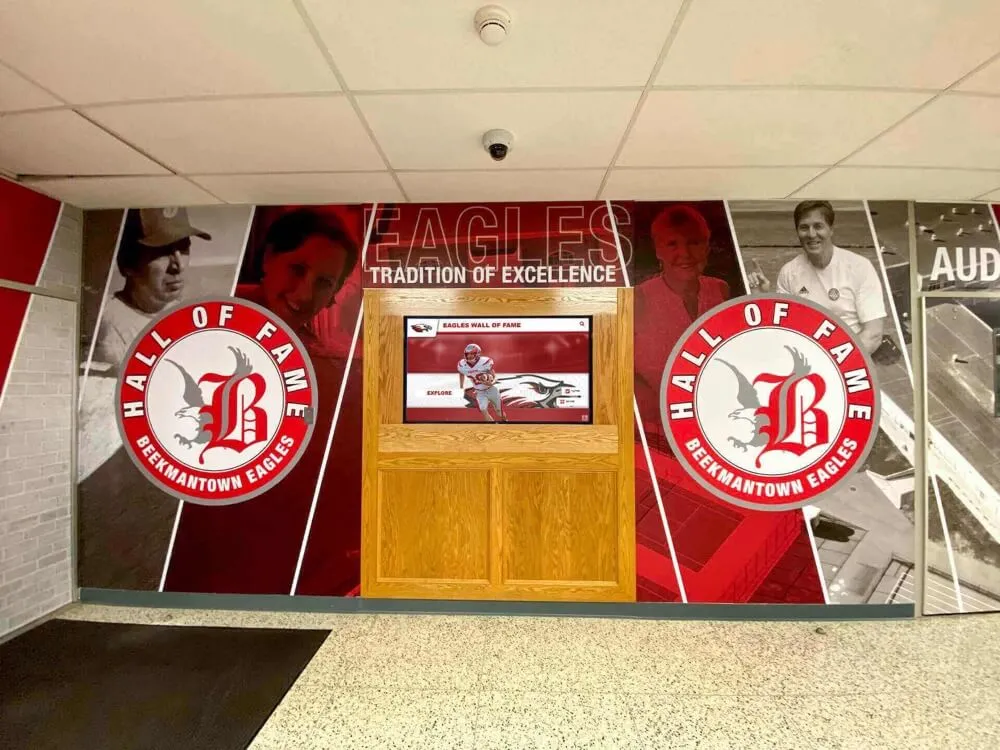
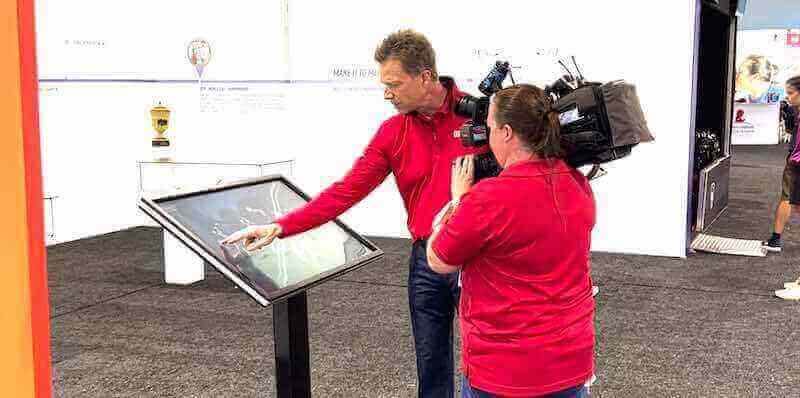
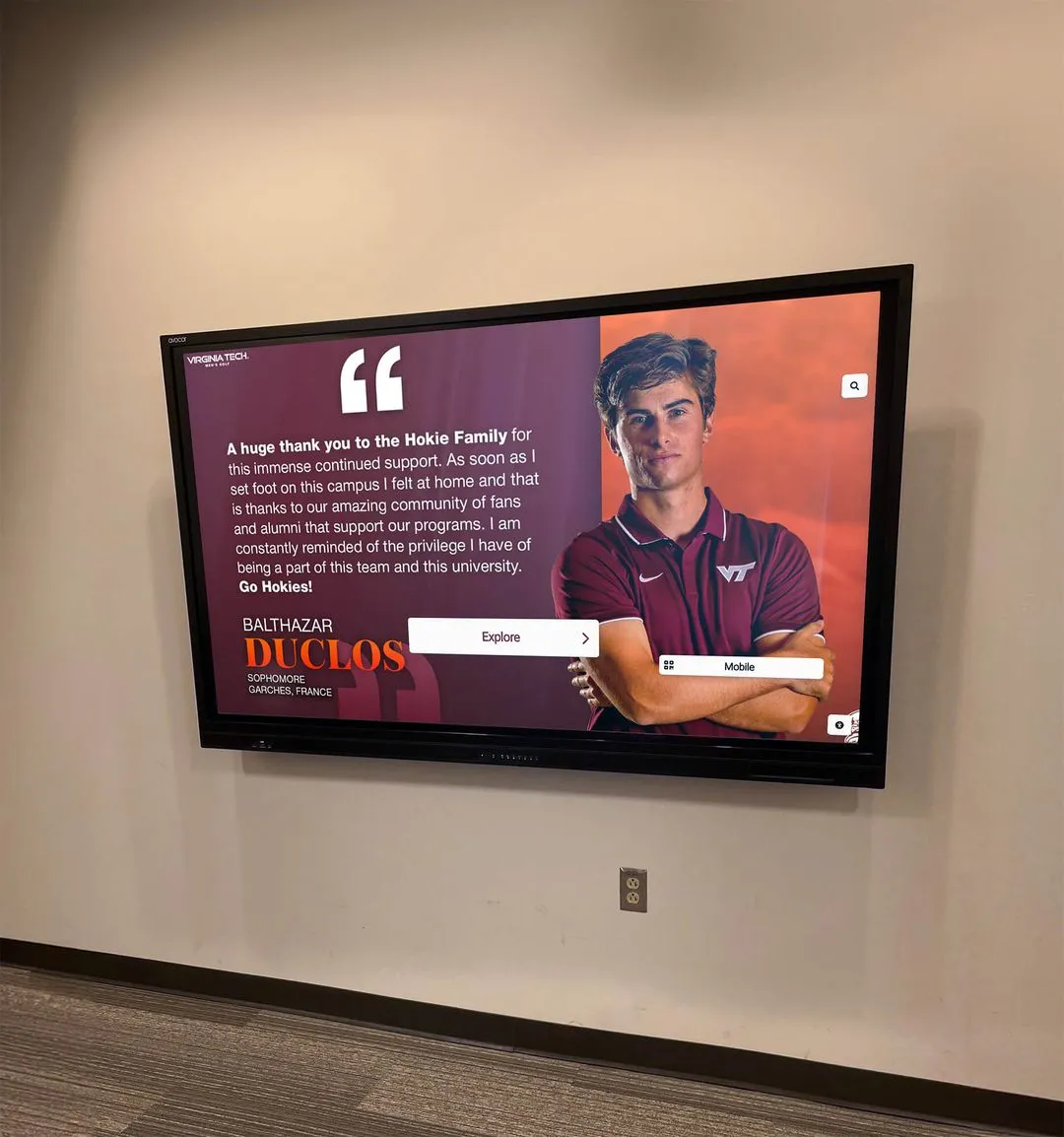
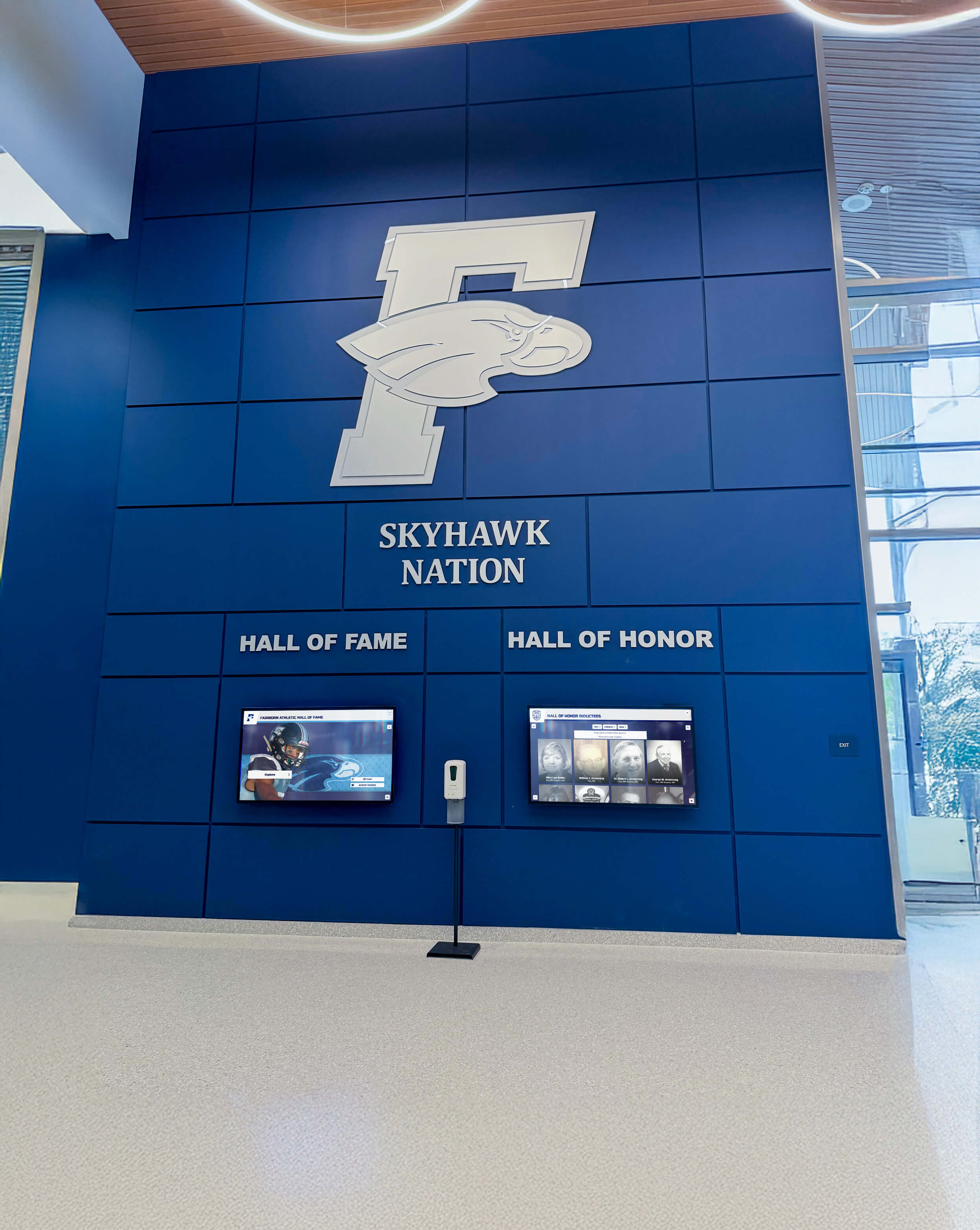
Intuitive touchscreen interfaces enable visitors to explore comprehensive donor stories and organizational impact at their own pace
Critical Technical Specifications for Digital Recognition Systems
Organizations selecting digital donor wall companies must evaluate specific technical capabilities ensuring long-term success.
Display Hardware Quality and Specifications
Commercial-grade displays differ dramatically from consumer televisions in durability, features, and expected lifespan.
Essential Hardware Specifications
Display Size and Resolution: Minimum 1080p resolution for text-heavy donor recognition; 4K preferred for larger displays where visitors view from various distances. Screen sizes typically range 43-55 inches for individual kiosks, 65-75 inches for small group viewing, and 75+ inches or video walls for large venues.
Touchscreen Technology: Capacitive touchscreens offer smartphone-like responsiveness but cost more. Infrared touchscreens provide excellent accuracy at lower price points. Both work well for donor recognition; verify touch sensitivity matches your mounting orientation and typical user interaction patterns.
Brightness Specifications: Commercial displays rated 500-700 nits handle well-lit lobbies and spaces with natural light. Standard 300-400 nit displays work in controlled lighting environments. Insufficient brightness creates washed-out, illegible screens.
Operating Hours Rating: Commercial displays rated for continuous operation (24/7) or extended daily use (16/7) versus consumer displays designed for 4-6 hours daily. Donor recognition in high-traffic facilities requires commercial durability ratings.
Warranty Coverage: Comprehensive commercial warranties spanning 3-5 years with advance replacement provisions versus limited consumer warranties requiring depot repair. Understand what warranty actually covers and response time commitments.
Hardware Questions for Vendors
- What specific display models and manufacturers do you use?
- Are these commercial-rated displays or consumer televisions?
- What is the expected operational lifespan for display hardware?
- What warranty coverage is included and what does it actually cover?
- How do you handle hardware failures during and after warranty periods?
- What is the replacement process if displays fail?
Quality vendors specify commercial displays from reputable manufacturers (Samsung, LG, NEC, Sharp) with transparent warranty terms and clear replacement procedures.
Software Platform Capabilities and Limitations
Content management systems vary dramatically in functionality, ease of use, and long-term supportability.
Essential Software Features
User-Friendly Interfaces: WYSIWYG editors showing exactly how content appears without technical expertise. Non-technical development staff should be able to add donors, upload photos, and publish updates confidently after brief training.
Multimedia Support: Photo uploads with sizing and cropping tools. Video embedding from files or streaming platforms. Rich text formatting for biographical information and impact stories. PDF attachment capabilities for supporting documents.
Search and Organization: Alphabetical donor directories. Filtering by giving level, campaign, year, or custom categories. Full-text search across all donor profile content. Multiple organizational hierarchies presenting donors through various frameworks simultaneously.
Analytics and Reporting: Interaction tracking revealing usage patterns. Popular content identification. Session duration metrics. Search query logs. Engagement trends over time. Exportable reports for stakeholder communication.
Security and Access Control: Role-based permissions controlling who can edit what content. Audit trails logging all changes and editor actions. Secure authentication preventing unauthorized access. Regular automated backups protecting against data loss.
Software Platform Questions
- Can we access a demo environment to actually use the content management system?
- What training and documentation do you provide for staff managing content?
- How frequent are software updates and are they included in licensing fees?
- What technical support is available when we encounter questions or problems?
- Can we export our donor data if we ever need to migrate to different systems?
- What security measures protect our donor information?
Inadequate software platforms create perpetual frustration. Insist on hands-on demonstrations before committing—you’ll manage this system for years.
Network Requirements and Offline Functionality
Reliable recognition requires thoughtful infrastructure planning and failure recovery.
Network Infrastructure Questions
- What internet bandwidth and network requirements does your system need?
- Can displays function during internet outages or do they go dark?
- How does content synchronization work between cloud servers and local displays?
- What happens during extended network disruptions?
- Do you provide cellular backup connectivity options for critical installations?
Offline Operation Expectations
Quality digital recognition systems cache complete donor databases locally on display devices, enabling full functionality during internet disruptions. Visitors experience seamless recognition access regardless of network status, with automatic synchronization when connectivity restores.
Inferior systems require constant internet connectivity, creating embarrassing dark screens during network problems—particularly problematic during important events when recognition visibility matters most.
Organizations implementing recognition systems across multiple campus locations need robust offline capabilities ensuring consistent donor acknowledgment regardless of connectivity challenges.
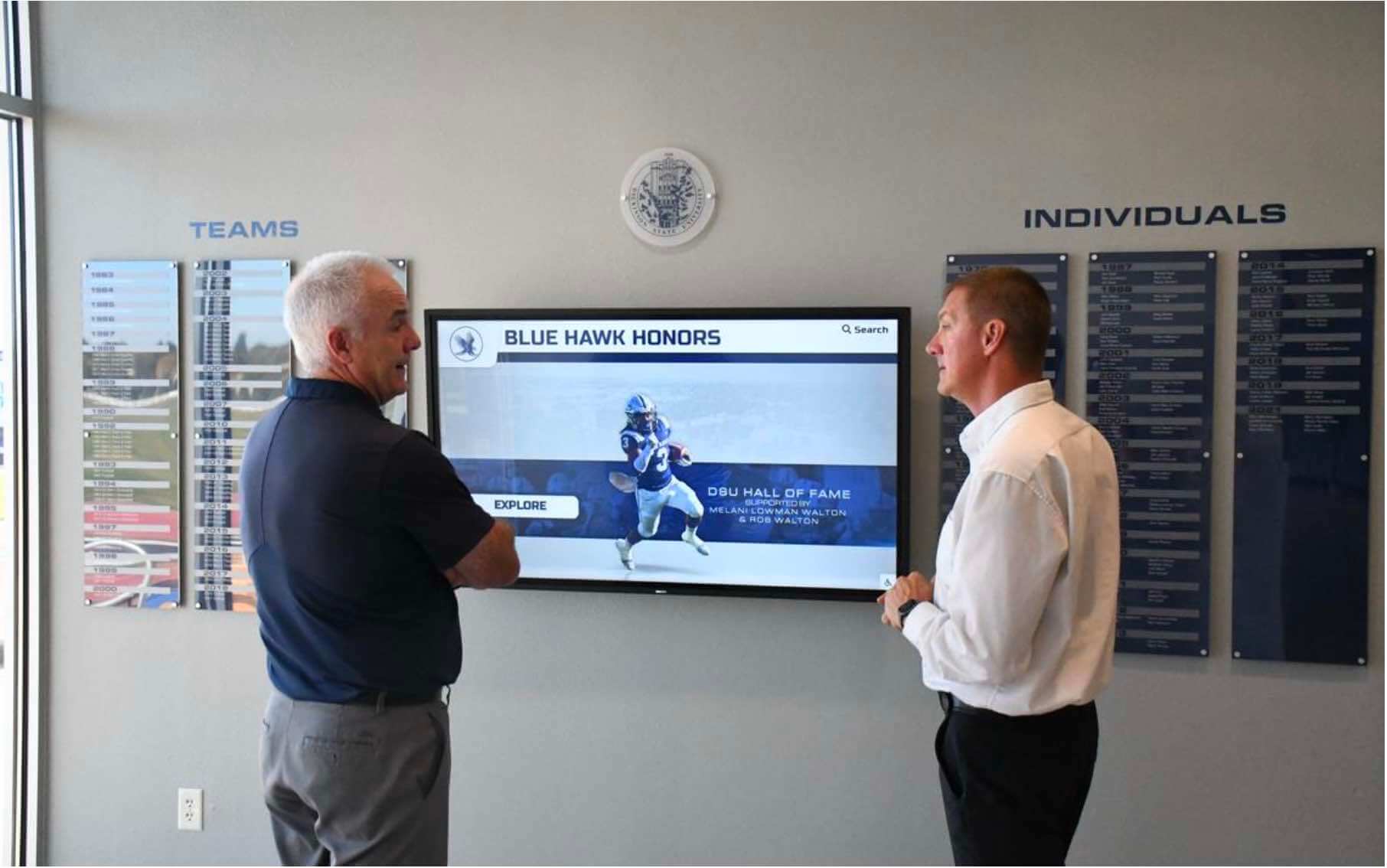
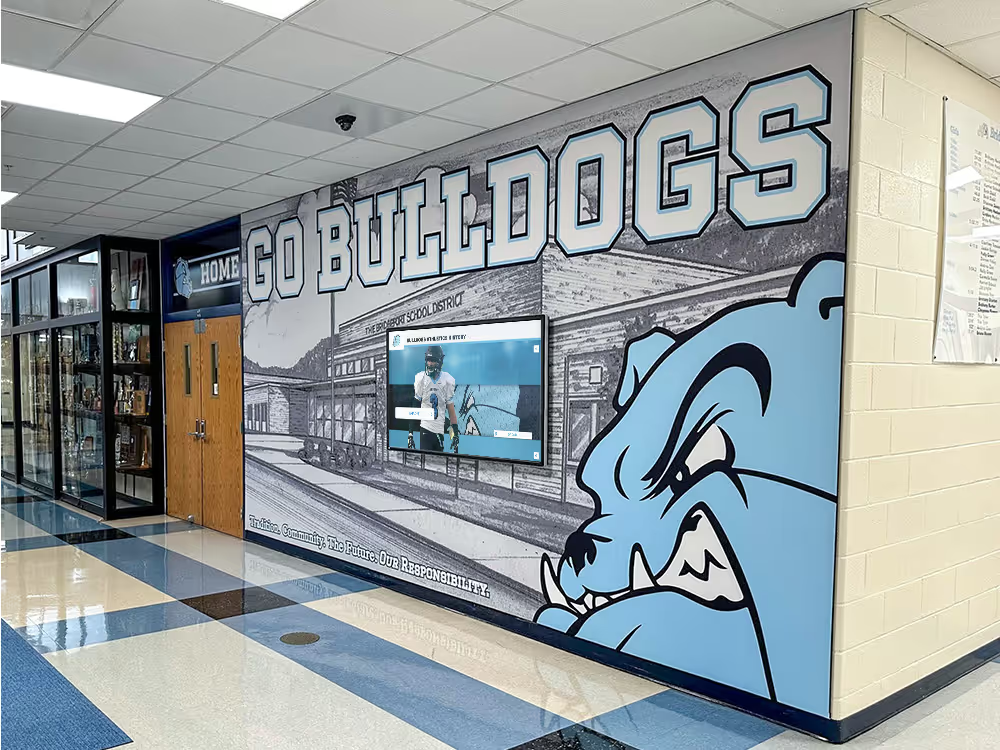
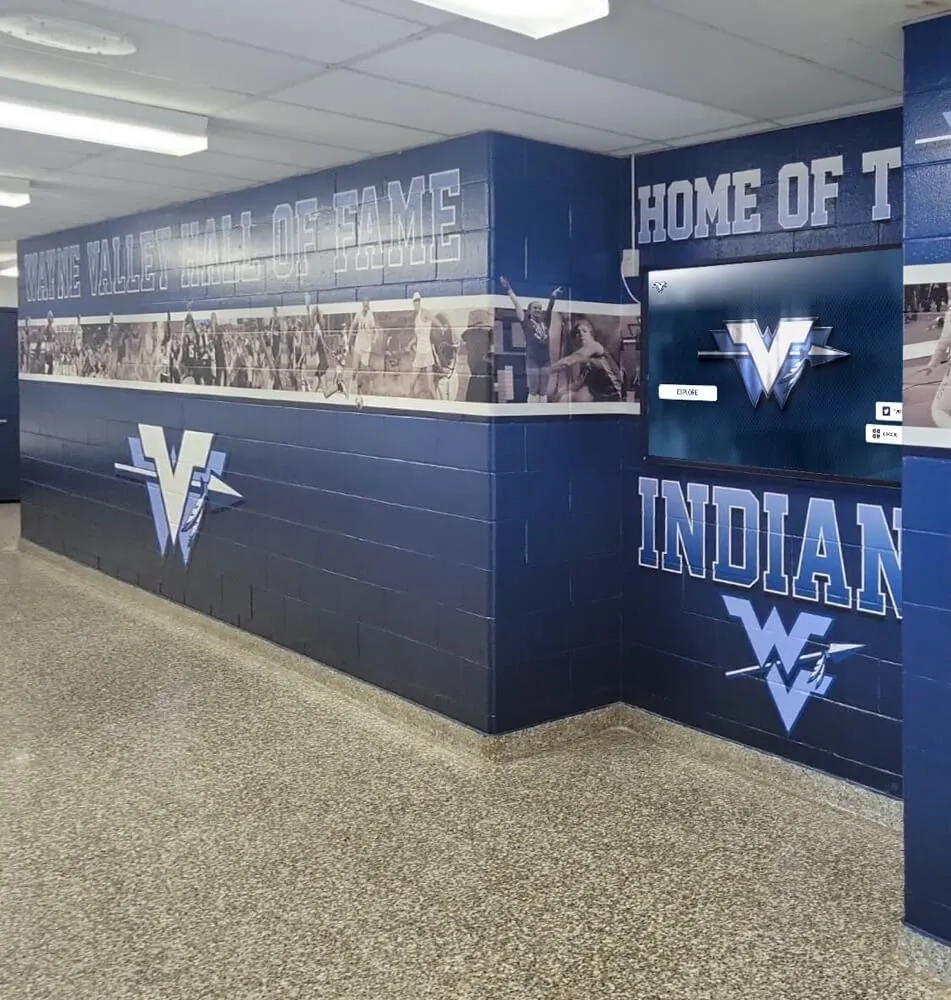
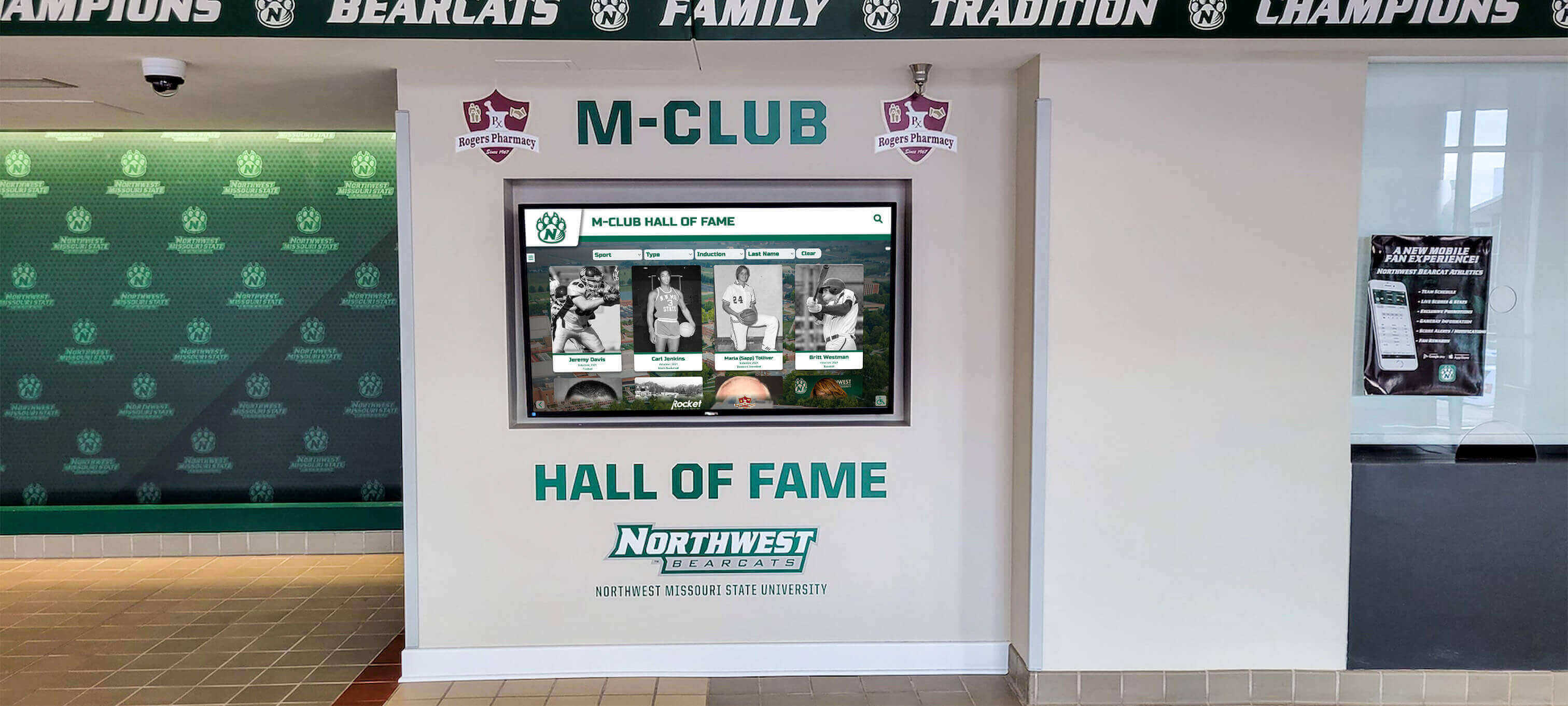
Professional digital donor recognition creates engaging experiences that multiple visitors can explore simultaneously
Cost Structures and Total Ownership Comparison
Understanding comprehensive costs across recognition system lifecycles enables accurate vendor comparison and budget planning.
Traditional Donor Wall Cost Components
Physical recognition involves both initial installation and ongoing update expenses.
Initial Installation Costs
Traditional donor walls typically include:
- Design and Planning: Layout design, material selection, mockup creation, approvals ($2,000-$8,000)
- Material Fabrication: Plaques, mounting systems, architectural elements ($5,000-$50,000+ depending on donor count and materials)
- Installation Labor: Wall preparation, mounting, finishing ($2,000-$10,000)
- Project Management: Coordination, quality control, punch list completion (typically bundled)
Complete traditional walls for 100-200 donors generally cost $15,000-$75,000 depending on materials, complexity, and installation challenges.
Ongoing Update Costs
Each future donor addition requires:
- Plaque fabrication: $150-$500 per donor depending on size and material
- Installation labor: $50-$150 per plaque
- Potential layout redesign when sections fill: $2,000-$5,000
- Shipping and coordination overhead
Organizations adding 50 donors annually face $10,000-$30,000+ yearly update expenses—costs continuing indefinitely as fundraising succeeds.
10-Year Traditional Wall Economics Example
Consider 200 initial donors with 40 new additions annually:
- Initial installation: $45,000
- Annual updates (400 donors × $300 average): $120,000
- Layout redesigns (2 expansions): $8,000
- Total 10-year cost: $173,000
- Per-donor recognition cost: $288
Digital Recognition System Cost Components
Interactive technology involves higher initial investment but dramatically lower ongoing expenses.
Initial System Costs
Digital donor recognition installations typically include:
- Display Hardware: Commercial touchscreen displays, mounting systems, cables ($4,000-$12,000 per display)
- Installation Services: Electrical work, network connectivity, mounting, calibration ($1,500-$4,000)
- Software Licensing: Platform access, features, support (often bundled in first year, $1,500-$5,000 annually thereafter)
- Initial Content Development: Database setup, template customization, staff training ($2,000-$8,000)
- Project Management: Planning, coordination, testing (typically bundled)
Professional digital donor recognition systems generally cost $15,000-$35,000 initially for single-display installations, with additional displays often available at reduced incremental costs.
Ongoing Operating Costs
Digital recognition annual expenses typically include:
- Software licensing and support: $1,500-$5,000
- Minor maintenance and cleaning supplies: $200-$500
- Electricity (minimal at ~$150-$250 annually)
- Staff time for content updates (typically 40-60 hours yearly)
No incremental per-donor costs exist—adding the 100th or 1,000th donor requires identical minimal effort.
10-Year Digital System Economics Example
Comparable scenario (200 initial donors, 40 annual additions, reaching 600 total):
- Initial installation: $25,000
- Annual software/support (10 years × $3,000): $30,000
- Hardware refresh (year 8 display replacement): $8,000
- Total 10-year cost: $63,000
- Per-donor recognition cost: $105
Cost Comparison Analysis
Digital approaches typically achieve cost parity with traditional walls within 3-4 years, with substantial long-term savings for organizations with:
- Growing donor communities exceeding 200+ supporters
- Long-term fundraising programs spanning decades
- Limited budgets for ongoing recognition updates
- Desire for comprehensive recognition regardless of giving level
Traditional approaches may cost less short-term for:
- Small, stable donor communities (under 100 donors)
- One-time capital campaigns with defined completion
- Organizations with substantial update budgets
- Strong institutional preferences for physical materials
Organizations managing comprehensive donor recognition alongside employee appreciation programs find digital platforms deliver cost-effective solutions accommodating diverse recognition needs through unified systems.
Hidden Costs and Unexpected Expenses
Beyond obvious pricing, consider potential additional expenses:
Traditional Wall Hidden Costs
- Space constraints forcing layout redesign: $3,000-$8,000
- Plaque corrections after engraving errors: $150-$500 per error
- Expansion to secondary locations when primary fills: $10,000-$30,000
- Periodic refinishing or restoration: $2,000-$5,000 per occurrence
- Removal and disposal when replacement needed: $2,000-$5,000
Digital System Hidden Costs
- Network infrastructure if not existing: $500-$3,000
- Extended warranty or hardware protection plans: $500-$1,500 annually
- Premium support packages: $1,000-$3,000 annually above base
- Custom feature development: $5,000-$20,000 for specialized requirements
- Staff training time and learning curve during implementation
Request detailed pricing documentation specifying exactly what is and isn’t included, forcing vendors to disclose potential additional expenses before you commit.
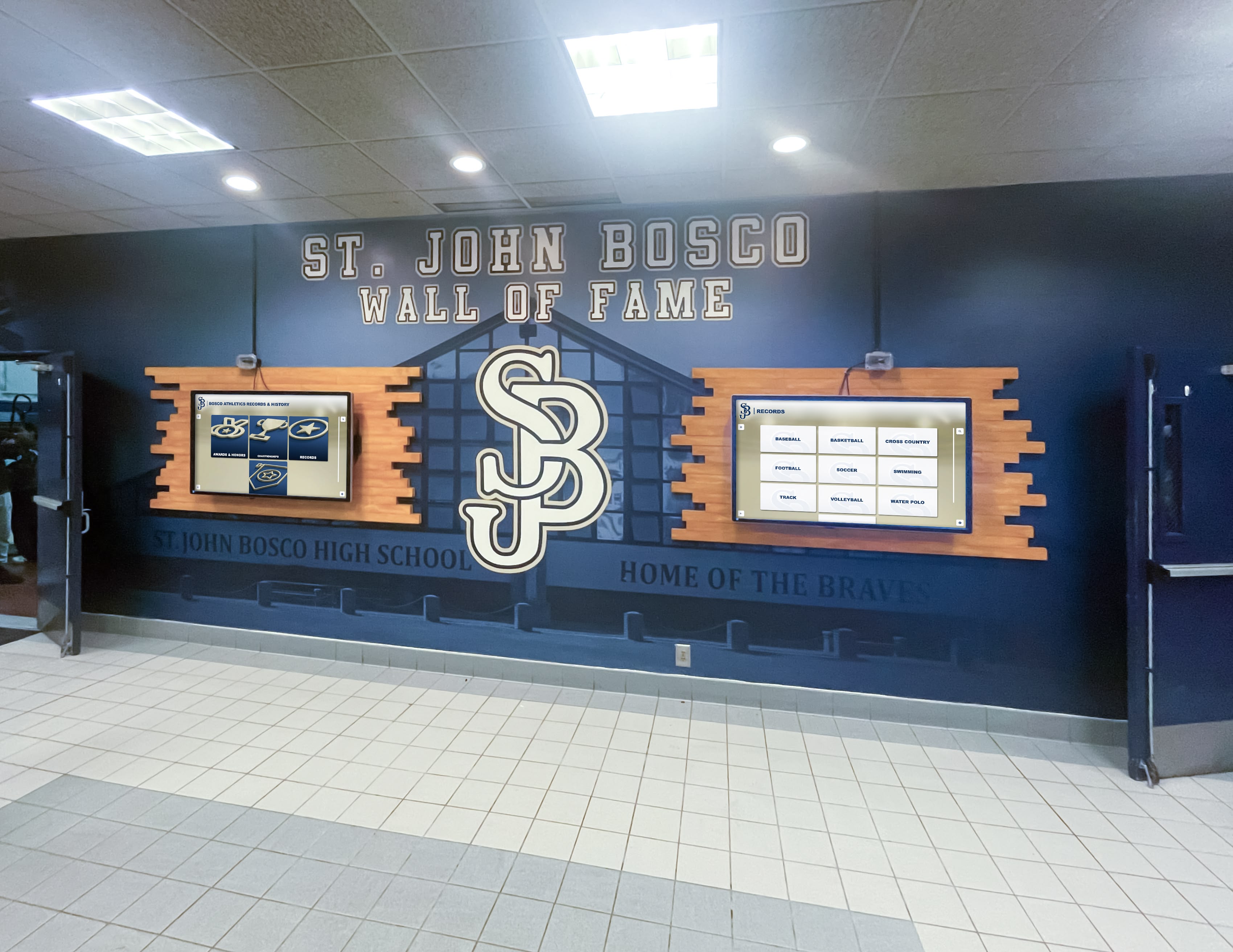
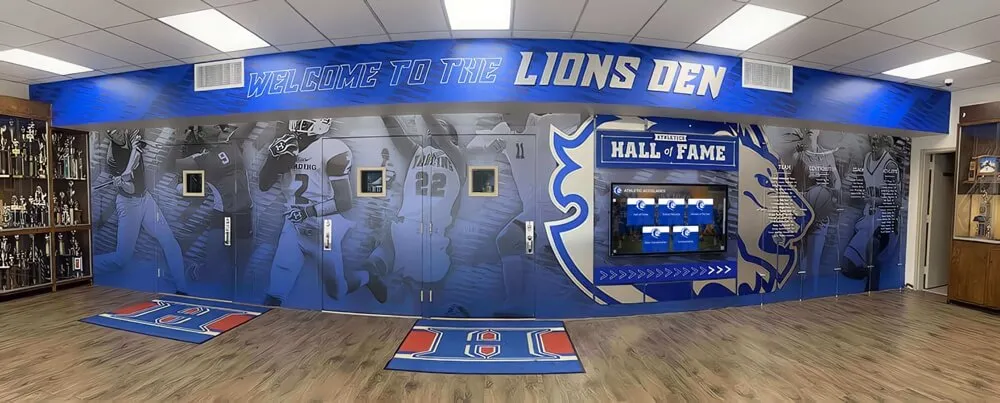
Multi-display installations provide expanded recognition capacity while maintaining centralized content management
Vendor Service and Support Evaluation
Technical capabilities matter little without reliable service ensuring your recognition functions properly across years.
Implementation Support and Project Management
Quality installation experiences require vendor coordination and professional project management.
Implementation Process Questions
- What is your complete implementation process from contract to final handoff?
- Who serves as our primary point of contact throughout the project?
- What site assessment do you conduct before finalizing specifications?
- How do you coordinate with our facilities team and any required contractors?
- What is your typical project timeline and what factors might extend it?
- What testing and quality assurance occurs before you consider installation complete?
- What training do you provide ensuring our staff can manage the system?
Project Management Red Flags
Concerning vendor responses include:
- Inability to provide clear timeline estimates
- Vague project process descriptions without defined milestones
- No dedicated project manager assigned to your installation
- Limited site visit commitment or remote-only coordination
- Inadequate training provisions or assumptions staff will “figure it out”
- Poor communication responsiveness during sales process (predicting future support quality)
Quality companies provide detailed implementation plans, committed timelines, dedicated project managers, comprehensive training, and proactive communication throughout installation.
Ongoing Technical Support and Maintenance
Long-term success requires accessible, responsive support when you encounter questions or problems.
Support Infrastructure Questions
- What technical support do you provide after installation completion?
- What are support channel options (phone, email, chat, ticketing system)?
- What are support hours and typical response times?
- Is ongoing support included in base pricing or additional cost?
- Can we see your support documentation and knowledge base resources?
- What happens during hardware failures—who handles troubleshooting and replacement?
Support Quality Assessment
Request support references from existing clients:
- How responsive is vendor support when you need assistance?
- How knowledgeable are support representatives about system details?
- What percentage of issues do they resolve on first contact?
- Have you experienced any prolonged support problems?
- Would you describe support quality as a strength or weakness of this vendor?
Support quality often distinguishes vendors more than initial capabilities. Systems requiring frequent support with poor vendor responsiveness create endless frustration.
Software Updates and Long-Term Platform Evolution
Technology platforms must evolve, adding features and maintaining security over many years.
Platform Development Questions
- How frequently do you release software updates?
- Are updates included in annual licensing or charged separately?
- How do you communicate upcoming changes and new features?
- Can we see your development roadmap and planned enhancements?
- How do you gather customer input about needed features?
- What is your security update and vulnerability response process?
Long-Term Viability Assessment
Evaluate vendor sustainability:
- How long has the company operated and what is ownership structure?
- What is current client count and growth trajectory?
- Are they venture-funded (creating exit pressure) or sustainably profitable?
- Do they focus exclusively on this market or is it a side offering?
- What happens to our system if the company were acquired or ceased operations?
You need vendors committed to this space long-term, not companies experimenting with recognition as a side business or seeking quick exits through acquisition.
Organizations implementing academic recognition alongside donor acknowledgment benefit from comprehensive platforms serving multiple institutional recognition needs through integrated systems.
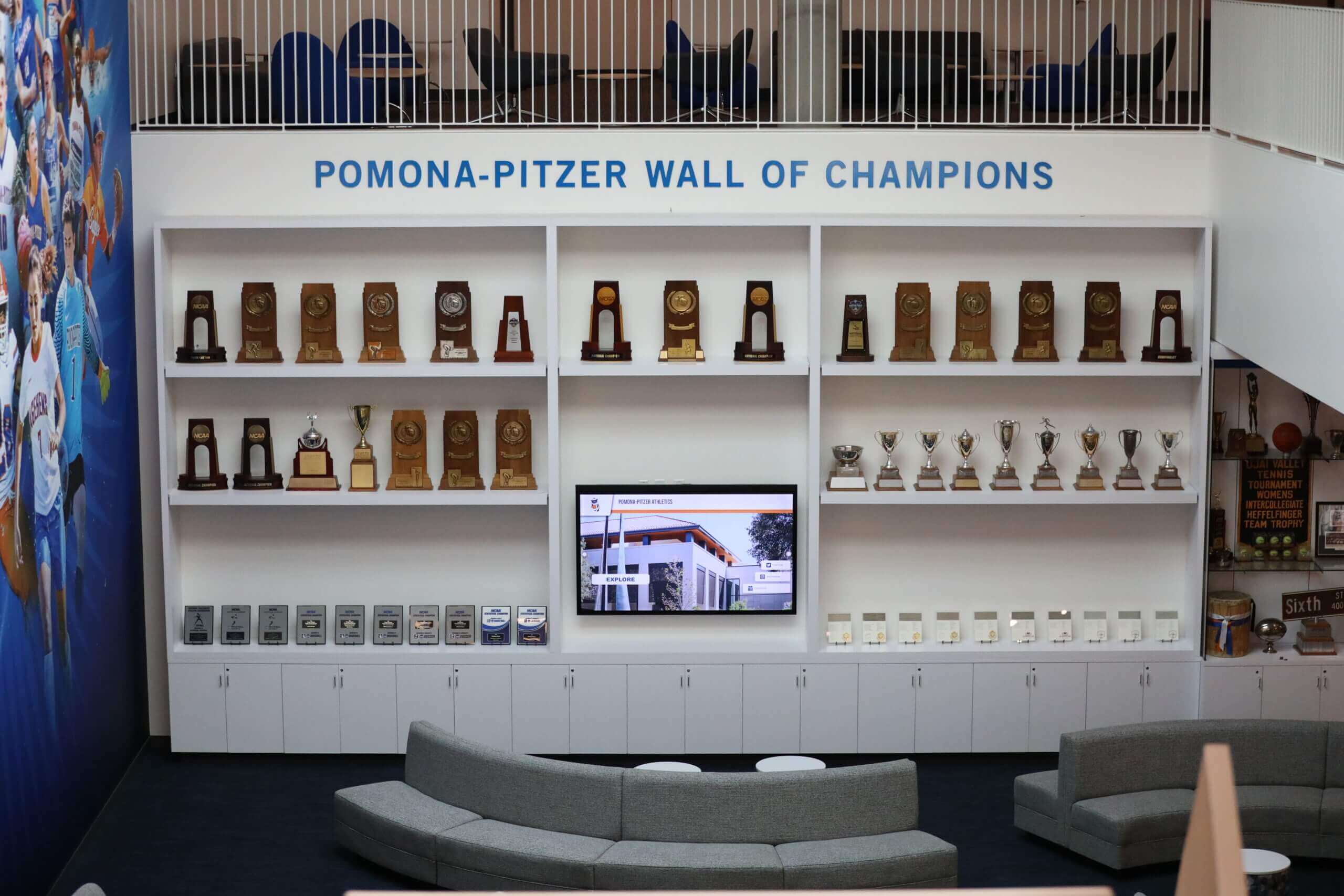
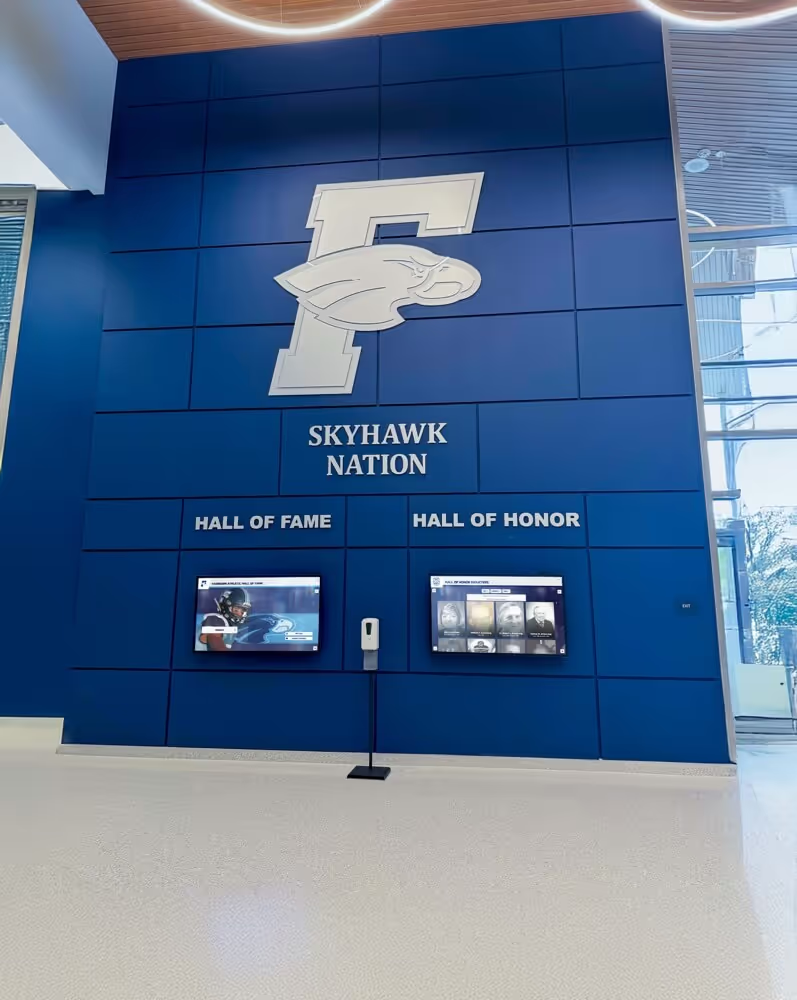
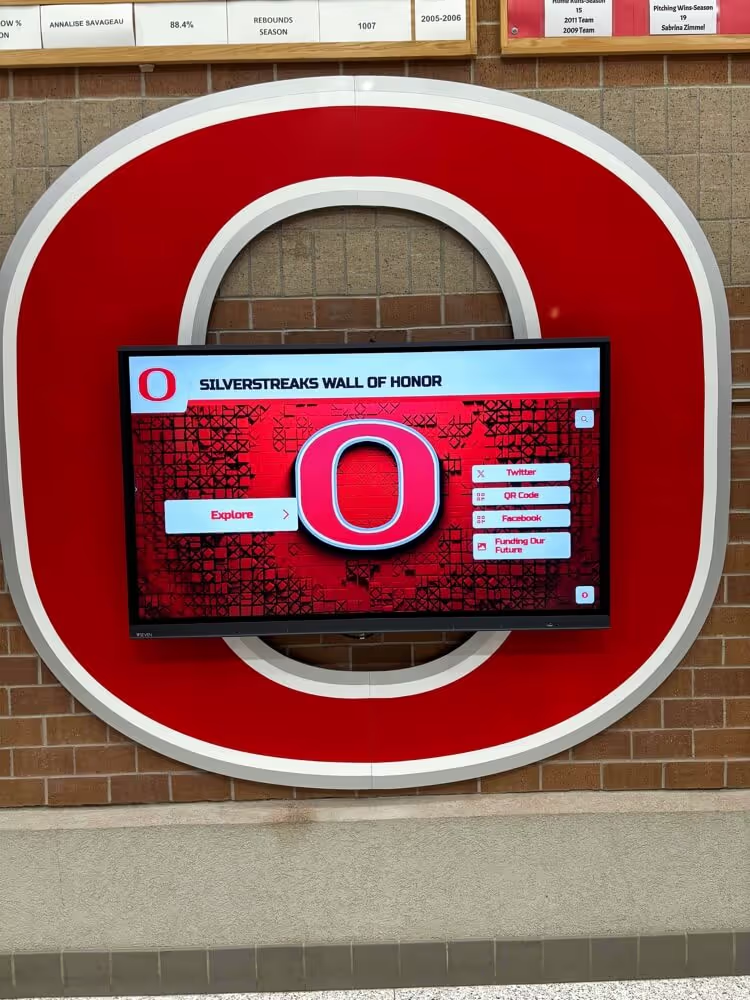
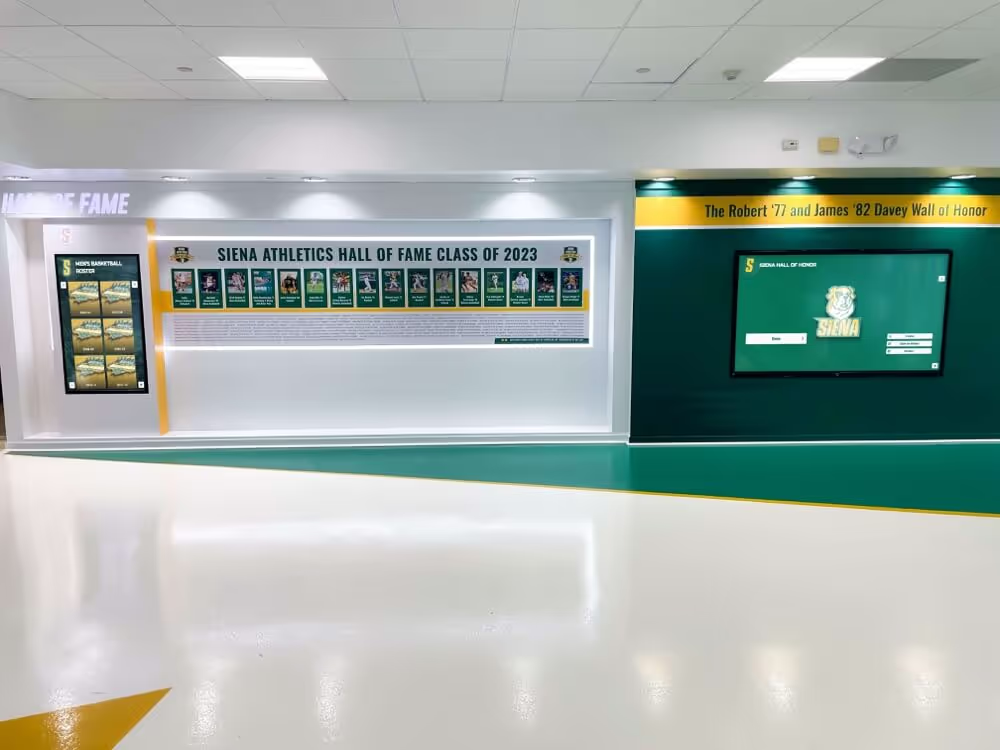
Premium donor recognition installations integrate seamlessly with institutional aesthetics while providing sophisticated functionality
Leading Donor Recognition Wall Companies and Platforms
Understanding representative vendors across traditional and digital categories provides starting points for evaluation.
Notable Traditional Donor Wall Fabricators
Several established companies specialize in physical recognition installations.
Recognition Art focuses on custom bronze, glass, and mixed-media recognition walls serving educational, healthcare, and nonprofit sectors. Strengths include premium materials and artistic design capabilities. Typical projects range $30,000-$150,000+ for comprehensive installations.
Donor Works provides traditional and modular recognition systems with emphasis on expandability. Rail-system specialty enables easier future additions. Projects typically start $15,000-$75,000 depending on initial scale.
Gemini Incorporated manufactures dimensional letters, plaques, and recognition elements serving signage industry broadly. Recognition represents one offering among comprehensive architectural signage capabilities. Mid-range pricing serving budget-conscious institutions.
Matthews Bronze offers traditional bronze plaques and casting for institutions valuing established prestige and time-honored materials. Higher-end positioning with projects commonly exceeding $50,000 for comprehensive installations.
ASI Signage manufactures modular systems and architectural signage including donor recognition components. Strength in scalable, professional installations for commercial and institutional clients. Mid-range pricing with strong service capabilities.
These traditional vendors serve organizations with preferences for physical materials, adequate wall space, and budgets supporting ongoing per-donor update costs.
Leading Digital Donor Recognition Technology Companies
Digital recognition represents newer category with fewer established long-term players.
Rocket Alumni Solutions provides comprehensive touchscreen recognition platforms specifically designed for schools, universities, nonprofits, and community organizations. Their digital donor wall solution integrates with alumni achievement displays and institutional history showcases, enabling organizations to manage donor recognition, athletic accomplishments, academic excellence, and historical preservation through unified cloud-based systems.
Distinguishing capabilities include:
- Intuitive content management requiring no technical expertise
- Unlimited donor recognition capacity with zero incremental costs
- Comprehensive search, filtering, and browsing features
- Rich multimedia support for photos, videos, and detailed narratives
- Accessible design meeting ADA WCAG 2.1 AA compliance standards
- Multi-location management from centralized platforms
- Engagement analytics revealing visitor interaction patterns
- Professional installation services and ongoing training
- Transparent pricing with comprehensive support included
Rocket serves 1,500+ institutions with implementations spanning small community organizations to major universities. Their focus exclusively on institutional recognition—rather than broader digital signage—provides specialized expertise addressing specific donor acknowledgment needs.
AllSeated Recognition and similar digital signage platforms repurposed for donor recognition offer touchscreen capabilities alongside broader event and facility management features. Strengths include existing technology infrastructure though recognition represents one application among broader platform purposes.
ViewStation Interactive provides custom interactive touchscreen installations for various purposes including donor recognition. Strengths in fully custom development though costs typically exceed standardized platforms and require longer implementation timelines.
Local AV Integration Companies sometimes offer donor recognition capabilities using commercial digital signage platforms like Yodeck, Raydiant, or ScreenCloud. Varying quality and recognition-specific features; evaluate carefully whether general signage tools adequately serve donor acknowledgment versus purpose-built recognition platforms.
Hybrid Companies Offering Both Traditional and Digital
Some vendors provide both physical and interactive recognition, enabling hybrid approaches.
Impact Displays manufactures traditional walls while partnering with technology providers for digital components. Can coordinate integrated installations combining engraved elements with interactive displays.
Identity by Design offers traditional fabrication alongside digital signage capabilities. Flexibility in providing either approach or combinations though digital offerings sometimes involve third-party platform partnerships versus proprietary development.
Organizations pursuing hybrid recognition combining digital displays with traditional elements may find value in vendors coordinating both components versus managing separate contracts with traditional and digital specialists.
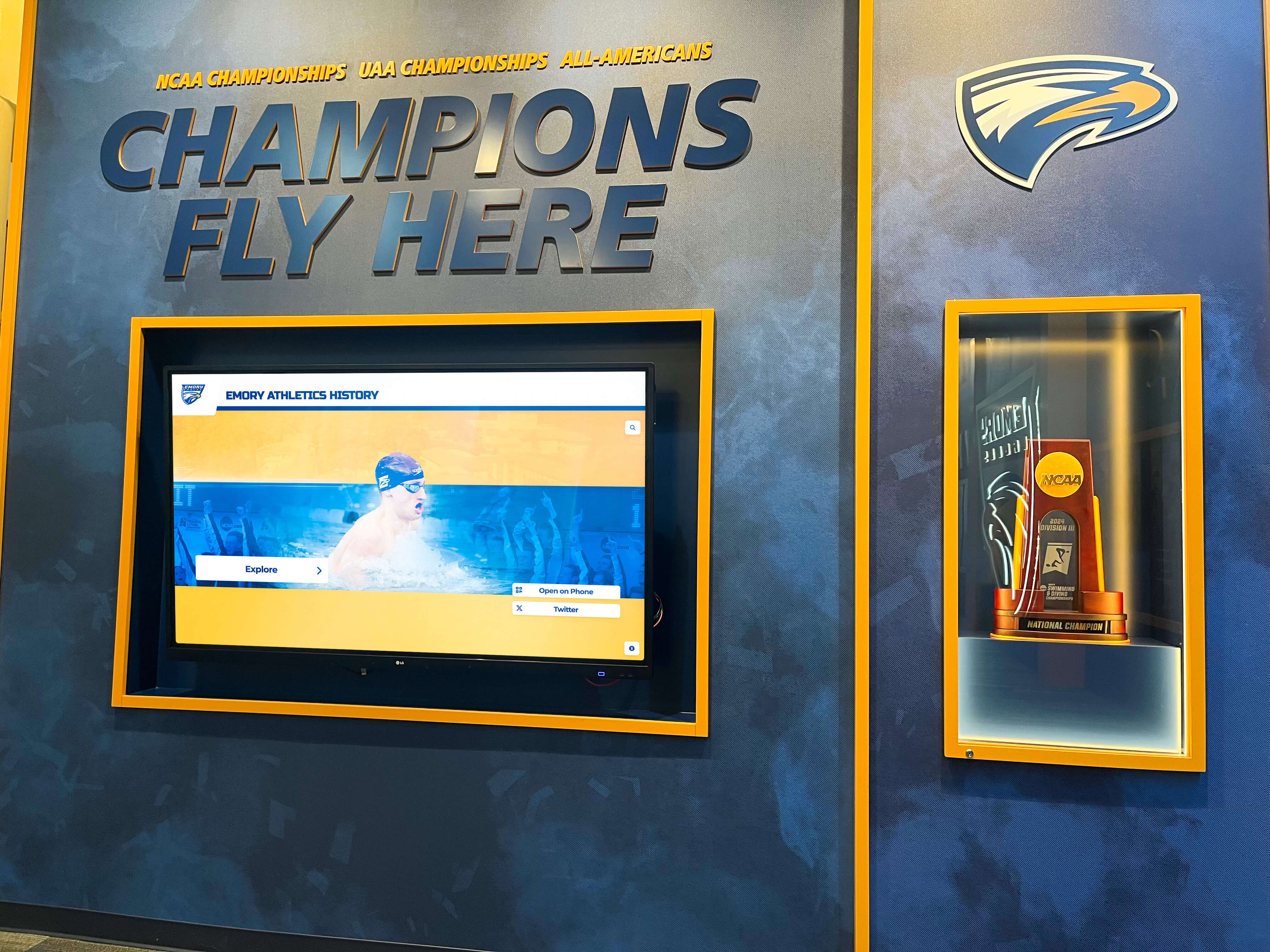
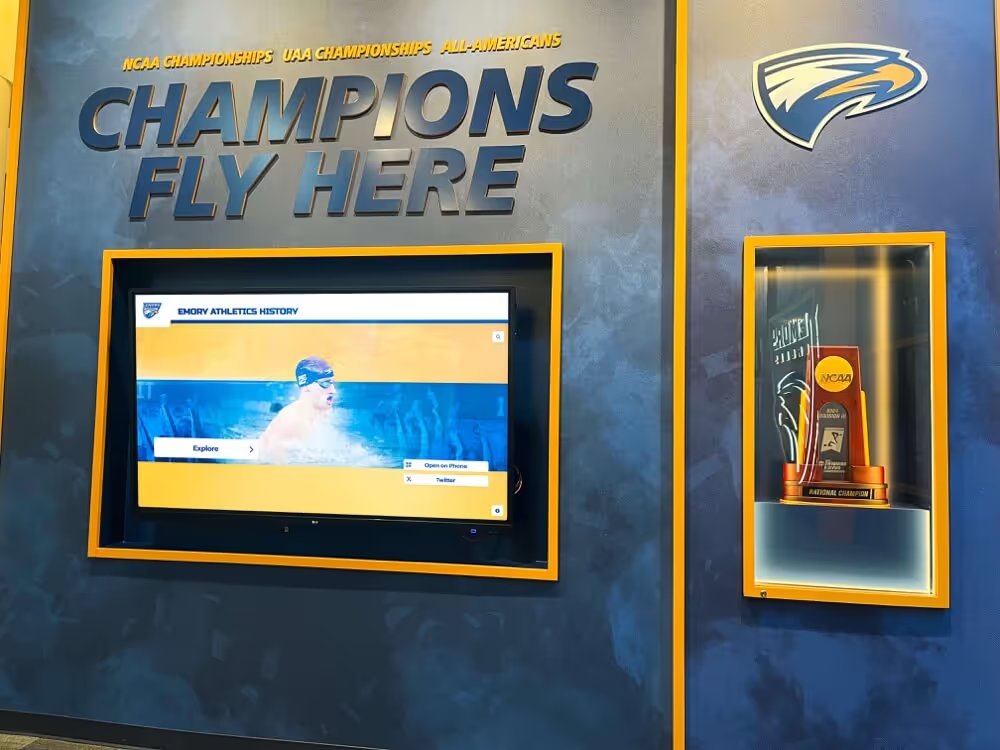
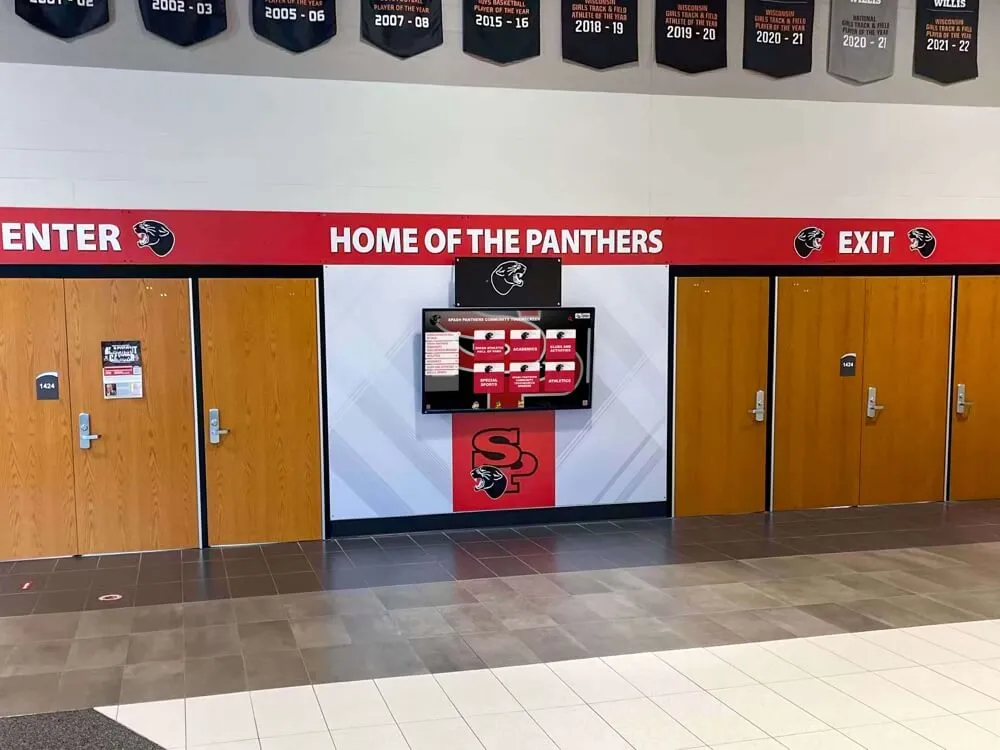
Athletic facility donor recognition connects supporter generosity to competitive success and championship achievements
Making the Final Decision: Selection Framework
Systematic vendor comparison ensures decisions align with institutional priorities and stakeholder needs.
Create Weighted Evaluation Criteria
Not all vendor characteristics matter equally—prioritize factors matching your specific situation.
Sample Evaluation Framework
Develop scoring criteria reflecting your priorities:
Capacity and Scalability (20%): How well does the solution accommodate current needs plus realistic growth projections?
Cost and Value (20%): What is total cost of ownership across 10 years? How does it align with available budget?
Ease of Management (15%): Can your staff realistically maintain and update recognition without constant vendor dependency?
Design and Aesthetics (15%): Does the solution align with institutional branding and facility aesthetics?
Vendor Support and Service (15%): What confidence do references and interactions provide about long-term partnership quality?
Implementation Timeline (10%): Does the installation timeline match your schedule and milestone deadlines?
Technical Capabilities (5%): For digital systems, do features match functional requirements?
Weight categories differently based on your situation. Organizations with urgent timelines prioritize implementation speed. Institutions with strong brand identities emphasize design flexibility. Budget-constrained nonprofits focus heavily on total ownership costs.
Conduct Reference Interviews With Existing Clients
Direct conversations with current customers reveal vendor realities better than marketing materials.
Essential Reference Questions
- What made you select this vendor originally and would you make the same decision again?
- How did the implementation process compare to your expectations and initial commitments?
- What surprised you—positively or negatively—about working with this company?
- How would you characterize vendor responsiveness when you need support or have questions?
- If you could change one thing about your recognition system or vendor, what would it be?
- Have you encountered any significant problems and how did the vendor respond?
- What advice would you give us as we evaluate this vendor?
References vendors provide naturally skew positive—they won’t direct you to unhappy clients. Still, even positive references reveal vendor characteristics through what they emphasize and how they describe experiences.
Search beyond provided references by finding comparable institutions using vendor products. LinkedIn, conference connections, and professional networks help identify additional perspective sources offering more balanced assessments.
Negotiate Contract Terms Protecting Your Interests
Contract details significantly impact long-term satisfaction and total costs.
Critical Contract Components
Scope of Work: Detailed specifications of exactly what vendor will provide, using precise language avoiding ambiguity. “Professional installation” means little; “installation including electrical connection to existing panel, wall mounting with concealed cabling, network configuration, content loading, and two hours of staff training” provides clarity.
Timeline and Milestones: Committed dates for design delivery, approvals, installation, and final acceptance. Include vendor remedies if they miss timelines without valid cause.
Payment Schedule: Align payments with milestone completion rather than vendor cash flow needs. Typical structures reserve 10-25% final payment pending successful installation and acceptance.
Warranty Coverage: Explicit terms covering hardware, software, installation quality, and support. Specify what is and isn’t covered, response time commitments, and how warranty claims work.
Ongoing Costs: Complete documentation of all annual, monthly, or per-usage fees. Lock in pricing for multiple years when possible or specify maximum annual increases.
Termination and Data Rights: What happens if vendor relationship ends? Can you export donor data? Who owns content and intellectual property? What happens to displays if you stop paying software subscriptions?
Support Specifications: Guaranteed response times, support channel availability, training provisions, and remedies for inadequate support.
Quality vendors welcome clear contracts protecting both parties. Resistance to reasonable terms raises serious concerns about vendor confidence in their ability to deliver satisfactory solutions.
Organizations implementing recognition systems as part of broader institutional display programs may negotiate multi-purpose platform contracts addressing donor recognition, alumni engagement, and historical preservation through comprehensive agreements.
Plan for Long-Term Partnership Success
Vendor selection begins relationships spanning many years—structure them for success.
Implementation Collaboration
Assign internal project champion coordinating with vendors, gathering stakeholder input, making timely decisions, and keeping implementation progressing. Vendor excellence cannot overcome client dysfunction when organizations fail to provide needed information, make decisions, or coordinate facility access.
Ongoing Communication
Establish regular check-ins beyond crisis-driven support requests. Quarterly reviews assessing recognition performance, discussing potential improvements, and maintaining relationship continuity prevent problems from festering until they become significant.
Mutual Success Orientation
Quality vendor relationships transcend transactional interactions. Vendors succeeding when clients succeed invest in your long-term satisfaction—providing proactive suggestions, accommodating reasonable requests, and demonstrating flexibility when situations change.
Frame vendor selection as partnership choice, not just product purchase. Your recognition system represents one of the most visible, enduring institutional decisions you’ll make. The right partner helps you honor donors appropriately while building philanthropic cultures that sustain missions across generations.
Conclusion: Selecting Recognition Partners That Honor Your Donors and Mission
Choosing donor recognition wall companies represents decisions with decades-long implications for how you acknowledge supporters, inspire future giving, and build cultures celebrating philanthropy. Unlike typical vendor relationships concluding after project completion, recognition partnerships continue throughout your organization’s advancement programs—requiring vendors who remain responsive, technically capable, and committed to your success across many years.
The most critical decision involves recognizing that donor recognition wall companies fall into fundamentally different categories: traditional fabricators creating physical installations versus digital technology providers enabling interactive touchscreen experiences. Neither approach is universally superior—appropriateness depends on your specific donor community size, growth projections, budget realities, aesthetic preferences, and long-term recognition strategy.
Traditional companies excel when you value tangible permanence, possess adequate wall space, manage stable donor populations, and can budget for ongoing per-donor update costs. Digital technology companies solve different problems: unlimited capacity eliminating space constraints, instant updates without fabrication timelines, rich multimedia storytelling impossible with engraved plaques, and long-term cost advantages for organizations with growing supporter communities.
Thorough vendor evaluation requires asking detailed questions revealing true capabilities, examining portfolios demonstrating relevant experience, interviewing references about implementation and support quality, comparing total ownership costs across realistic timelines, and negotiating contract terms protecting your institutional interests. Organizations conducting systematic assessments—rather than accepting initial vendor representations at face value—make informed decisions matching recognition approaches to genuine needs.
Discover Modern Donor Recognition Solutions
Explore how comprehensive digital recognition platforms help schools, nonprofits, and institutions honor supporters with unlimited capacity, compelling storytelling, and sustainable long-term economics. See real installations, understand complete pricing, and discover why 1,500+ organizations trust modern recognition technology.
Request Demo & PricingUltimately, the best donor recognition wall companies share common characteristics regardless of traditional or digital specialization: they demonstrate relevant experience through compelling portfolios, they provide transparent pricing documenting all costs, they offer responsive support ensuring long-term success, they deliver professional implementations meeting timeline and quality commitments, and they operate as genuine partners invested in your satisfaction and institutional advancement.
Your donors enabled your mission through their generosity. They deserve recognition that honors their contributions appropriately while inspiring others to join their legacy of support. Whether you select traditional fabrication companies creating permanent physical installations or digital technology providers offering unlimited interactive recognition, choose partners who understand that donor walls represent far more than vendor opportunities—they stand as visible manifestations of philanthropic culture defining institutional character for decades.
Take time to evaluate thoroughly. Request detailed proposals from multiple vendors spanning both traditional and digital approaches. Visit existing installations meeting your needs and quality standards. Interview references extensively about implementation experiences and ongoing satisfaction. Compare total ownership costs across realistic timelines reflecting actual growth projections. Negotiate contracts protecting your interests while establishing foundations for productive long-term partnerships.
The recognition wall company you select today will likely serve your institution for 10-20+ years. Make that choice wisely, knowing that exceptional donor recognition strengthens supporter relationships, inspires continued generosity, and builds cultures where philanthropy is celebrated across generations.