



Organizations conducting capital campaigns or annual giving programs face a common challenge: how to recognize donors in ways that honor their generosity, inspire continued giving, and create lasting tributes that remain relevant for decades. A donor wall represents far more than a list of names—it stands as visible proof of community support, a motivator for future contributions, and a permanent reminder that collective generosity creates meaningful impact.
Traditional donor walls built from bronze plaques, engraved marble, or wooden panels have served institutions well for generations, providing dignified recognition that donors value. However, these traditional approaches face inherent limitations: finite physical space that fills quickly, expensive updates requiring new fabrication when campaigns continue, inability to share donor stories beyond basic names and giving levels, and static displays that fail to engage modern visitors accustomed to interactive digital experiences.
This complete 2026 guide examines both traditional and digital donor wall options, exploring design considerations, recognition strategies, cost factors, and emerging best practices that help organizations create donor recognition programs inspiring continued philanthropy while honoring supporters appropriately. Whether planning your first donor wall or evaluating whether to replace an existing installation, this guide provides frameworks for decisions aligning recognition with organizational values, donor expectations, and long-term sustainability.
Donor recognition has evolved considerably over the past decade as digital technology transformed what organizations can accomplish within recognition programs. Understanding available options and their respective benefits enables informed decisions matching your institution’s specific needs, aesthetic preferences, and budget realities.

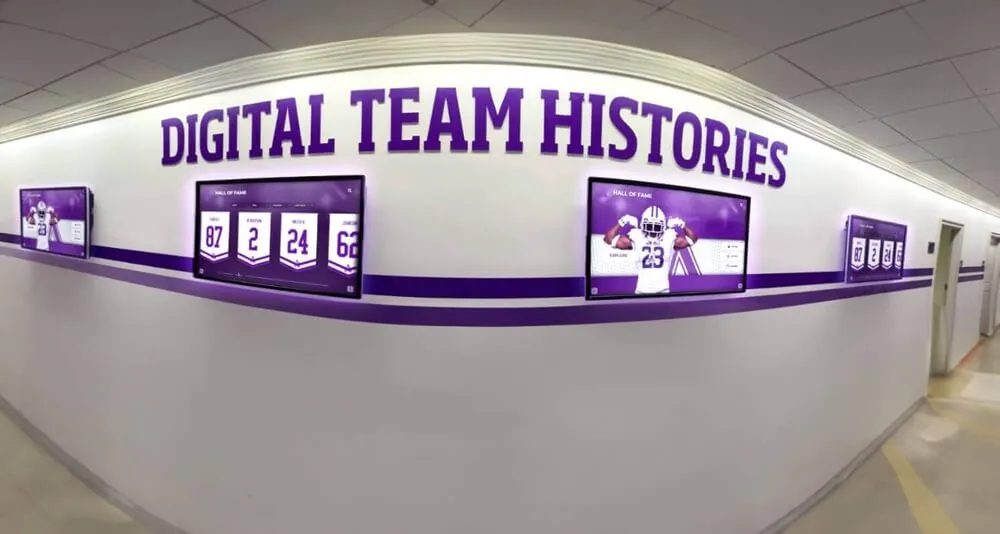
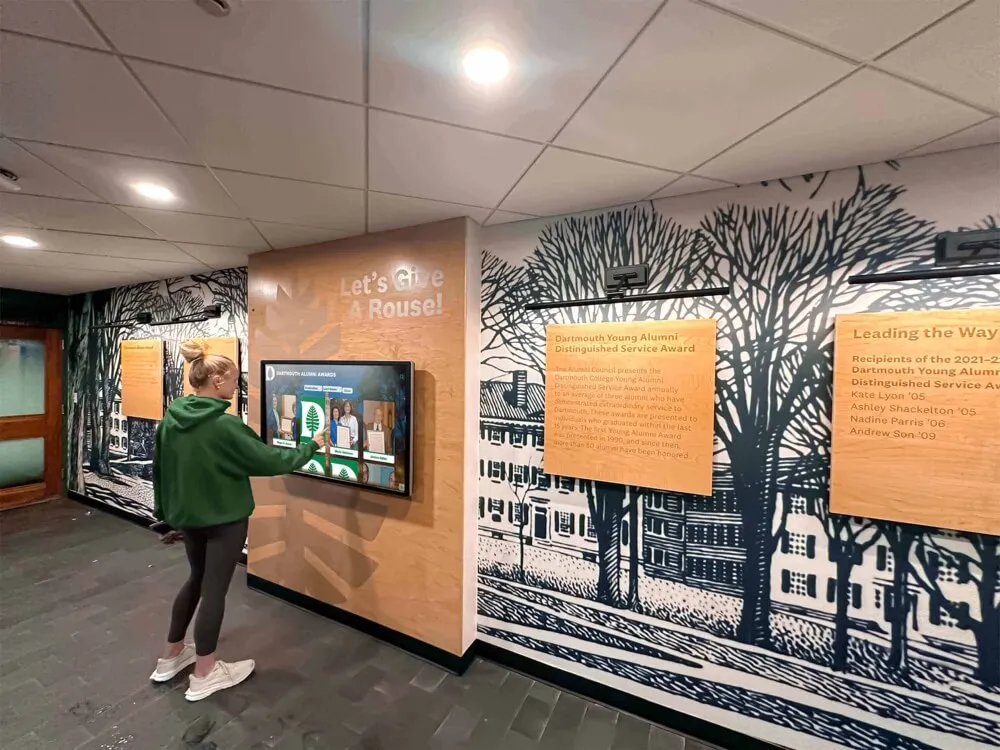
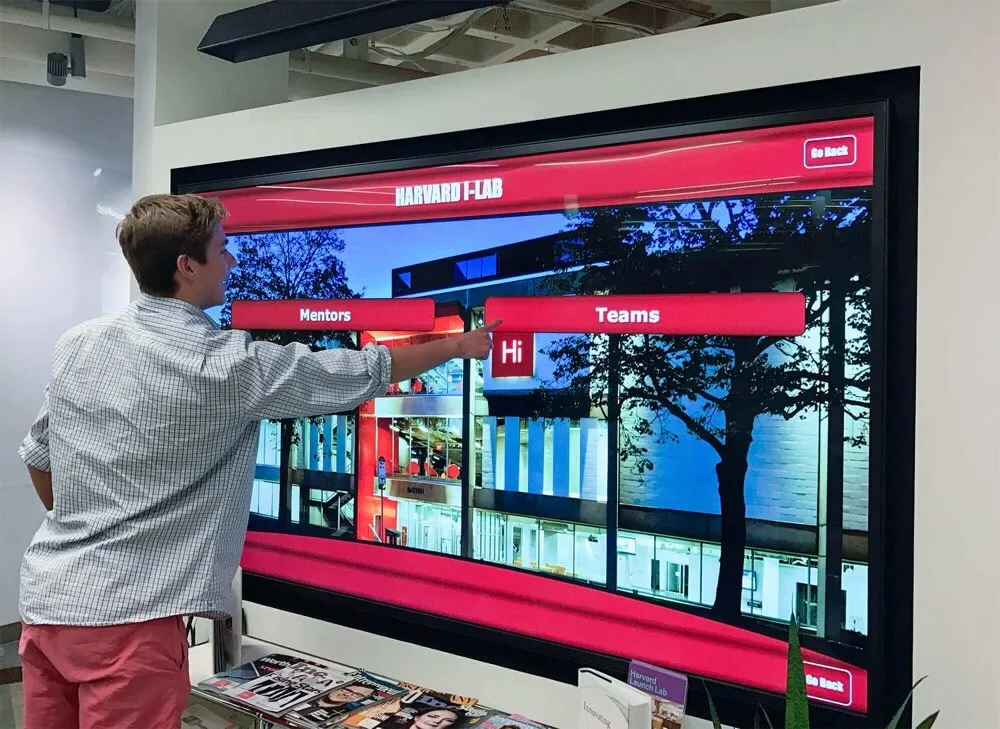
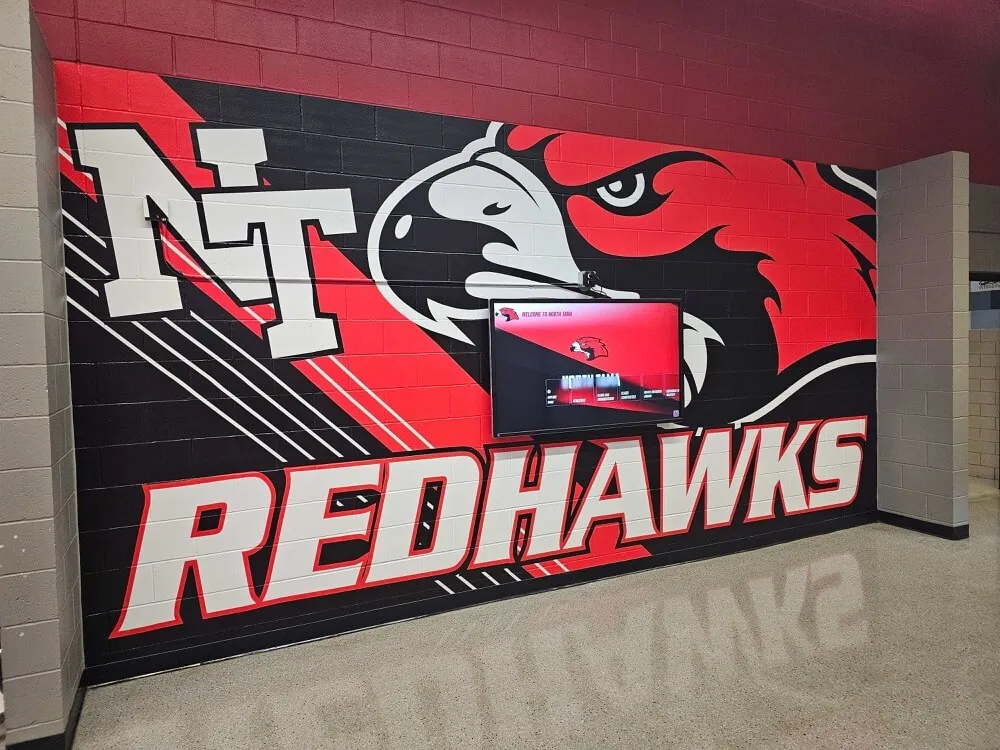
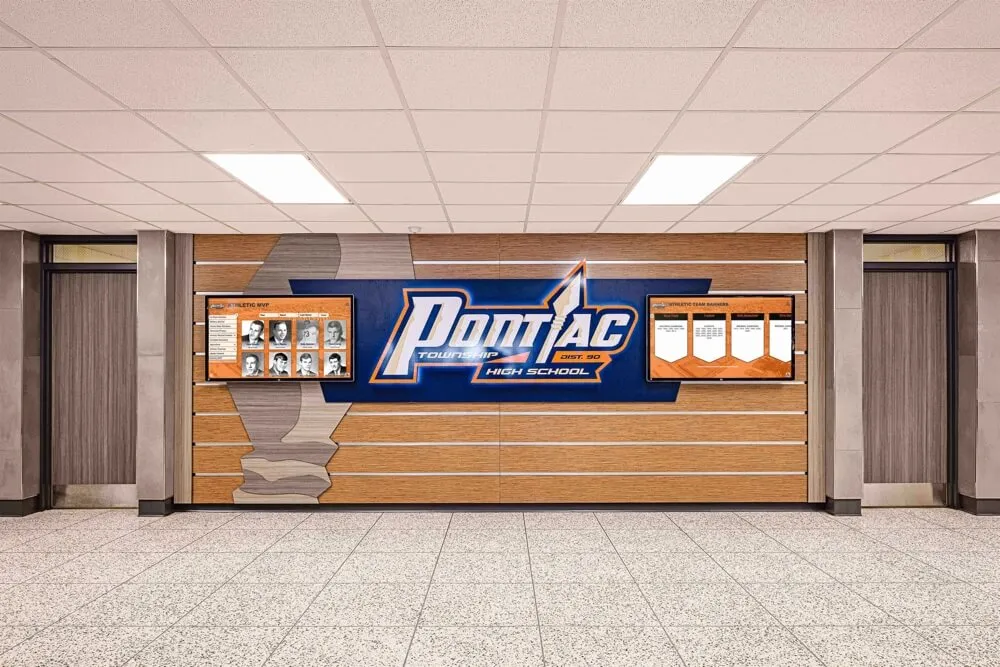
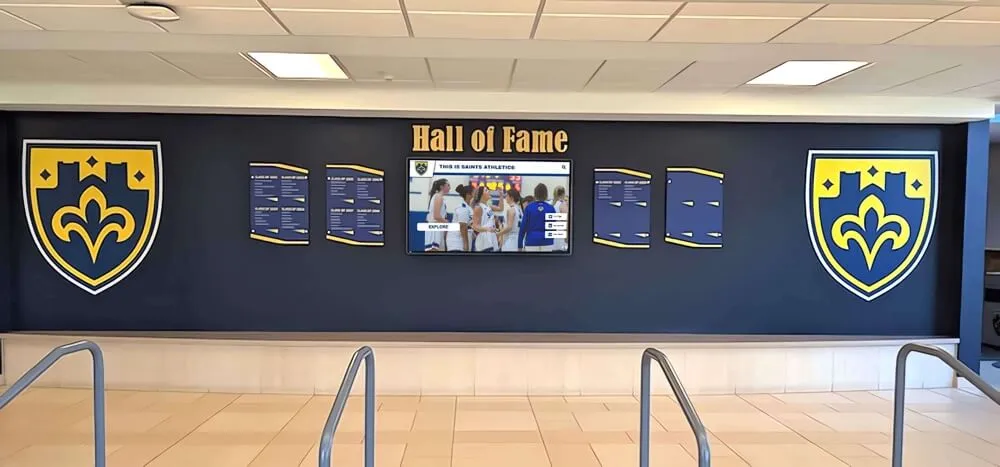
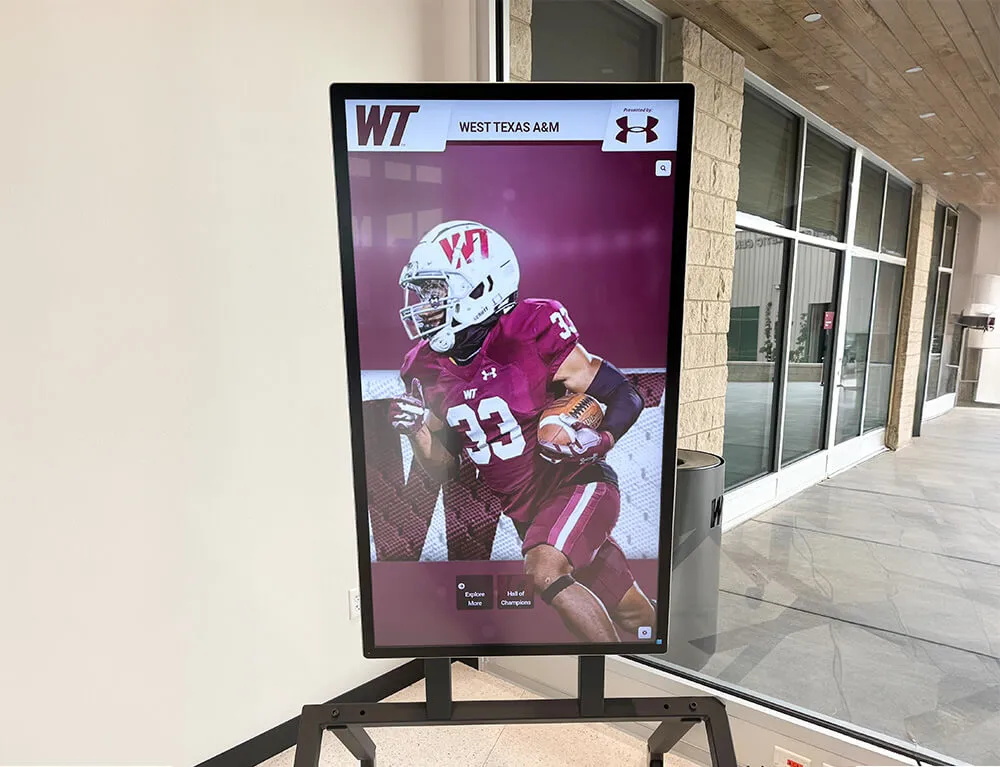
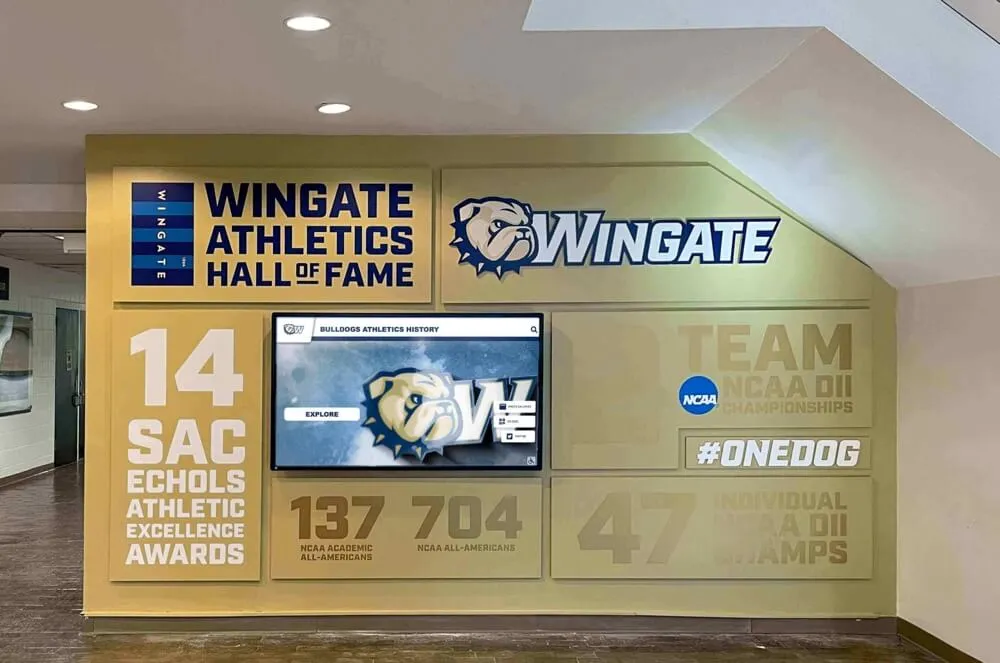
Modern donor walls combine visual impact with recognition capacity, honoring supporters while creating compelling displays for facility visitors
Understanding Donor Wall Purpose and Impact
Effective donor walls serve multiple simultaneous functions within advancement programs, making them strategic investments rather than simple recognition displays.
Recognition That Validates Philanthropy
At their core, donor walls publicly acknowledge supporters who invested in your mission. This recognition validates donor decisions to contribute, providing tangible evidence that their generosity matters to your organization. Donors scanning walls to find their names experience pride in supporting something larger than themselves, reinforcing positive feelings about their giving decisions.
Recognition becomes particularly meaningful when donors bring family members, friends, or colleagues to see their names displayed prominently. These moments transform private giving decisions into public statements about values and priorities, strengthening donors’ identities as philanthropists committed to your cause.
Inspiration for Future Giving
Well-designed donor walls motivate prospective donors by demonstrating broad community support. Visitors seeing hundreds or thousands of recognized supporters understand that giving to your organization represents participation in established tradition rather than isolated individual actions.
Donor recognition displays for nonprofit organizations create fundraising momentum by making philanthropy visible and socially valued. Prospects touring facilities and encountering prominent donor recognition receive implicit encouragement that others in their community contribute—establishing giving as expected community participation rather than exceptional behavior.
Storytelling About Organizational Impact
The most compelling donor walls transcend simple name lists to tell stories about why donors give and what their contributions accomplish. These narratives connect individual donors to collective impact, demonstrating how aggregated philanthropy creates transformation impossible through individual action alone.
Digital donor walls enable rich storytelling through video testimonials from donors explaining their motivations, photography showing projects funded through campaigns, impact metrics demonstrating outcomes achieved, and historical timelines revealing how cumulative giving built current capabilities over decades.
Building Fundraising Culture
Organizations with prominent, well-maintained donor recognition create cultures where philanthropy becomes normalized and celebrated. Students walking past donor walls daily absorb messages that community members invest in institutional success. Staff working in donor-funded buildings understand that private support enables their work. Alumni visiting campus and seeing classmates recognized for giving receive encouragement to contribute themselves.
This cultural impact compounds over time as donor recognition becomes woven into institutional identity, transforming organizational culture from one where development staff beg for donations to one where community members expect to support missions they value.
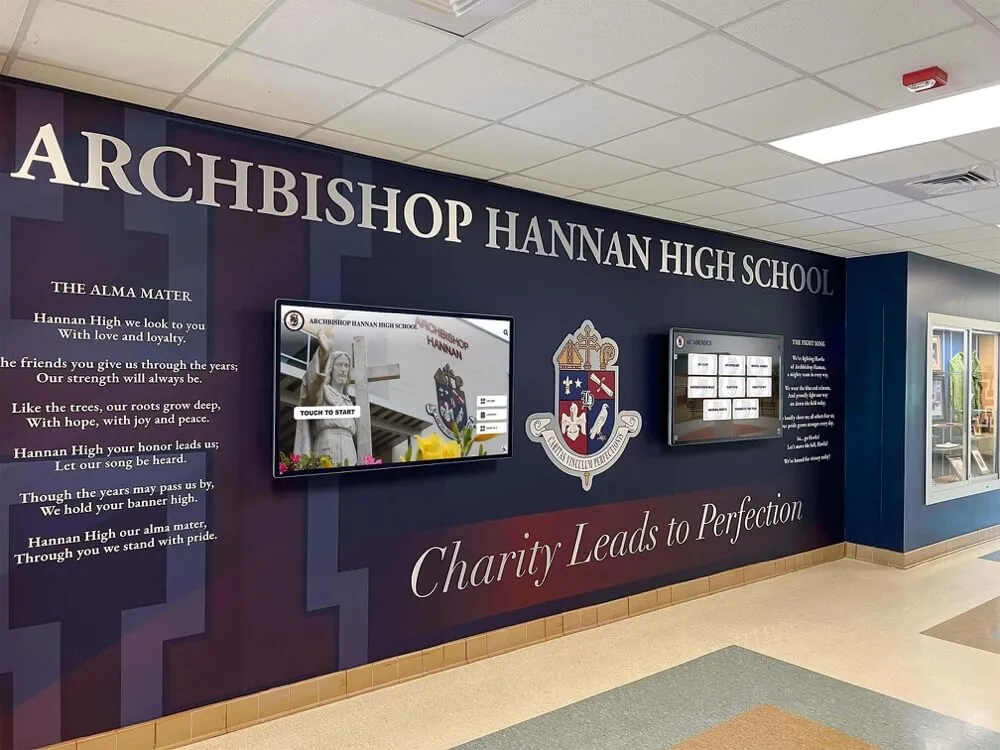
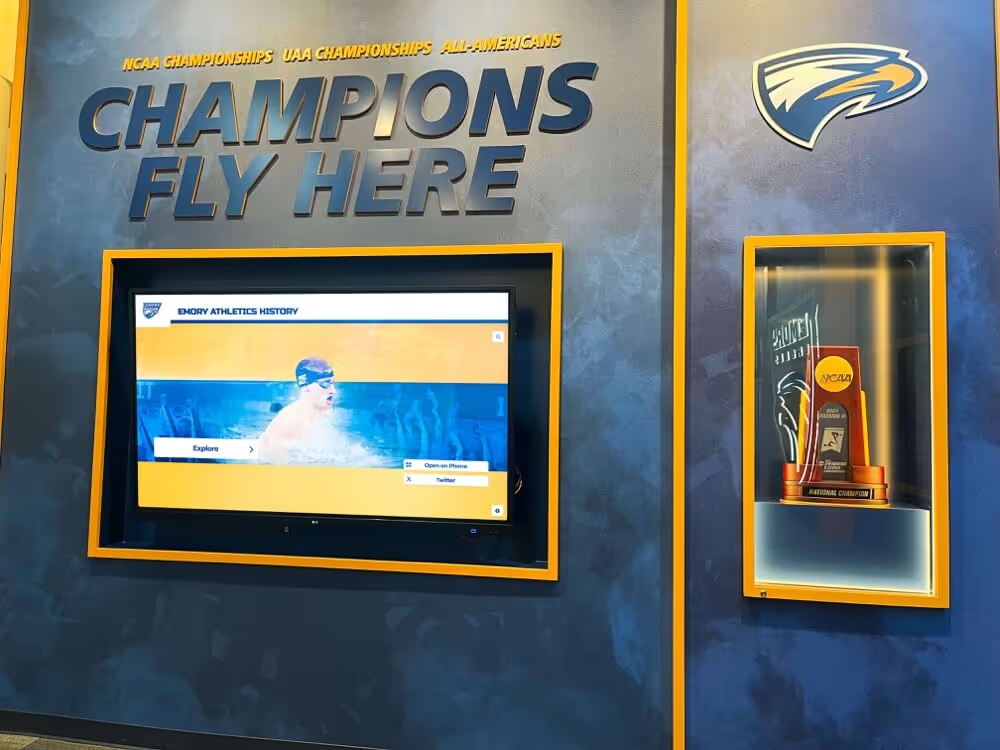
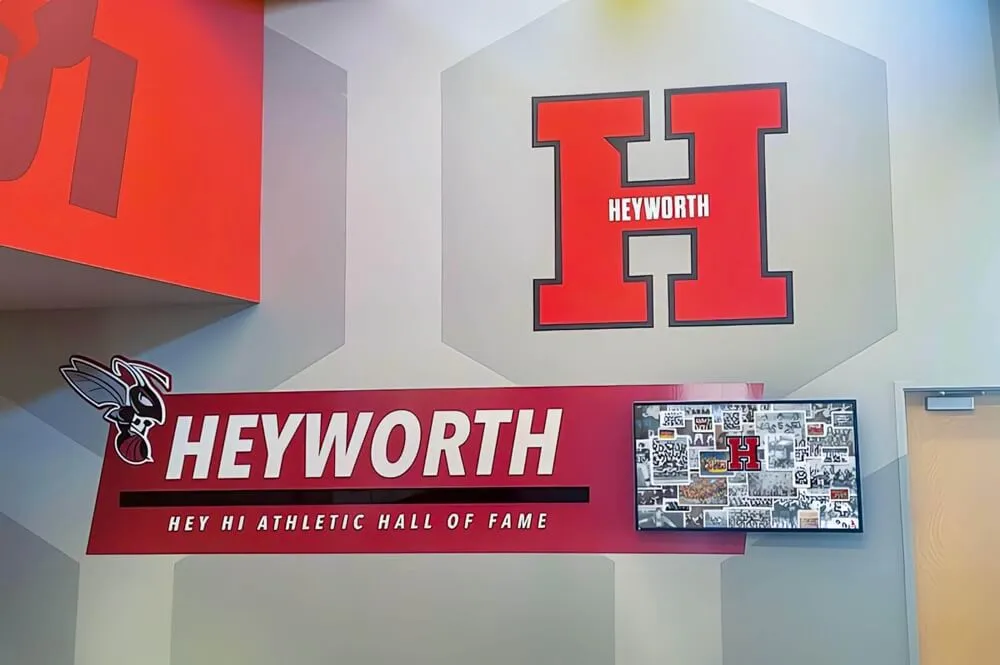
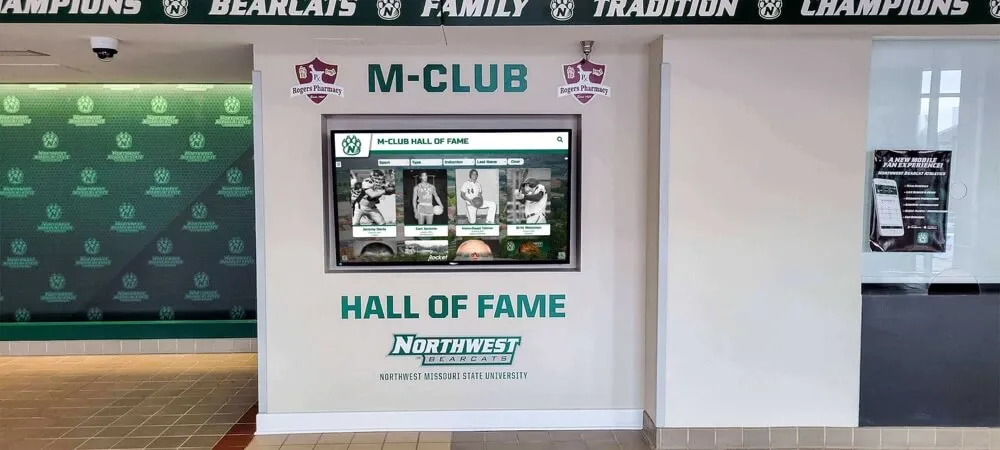
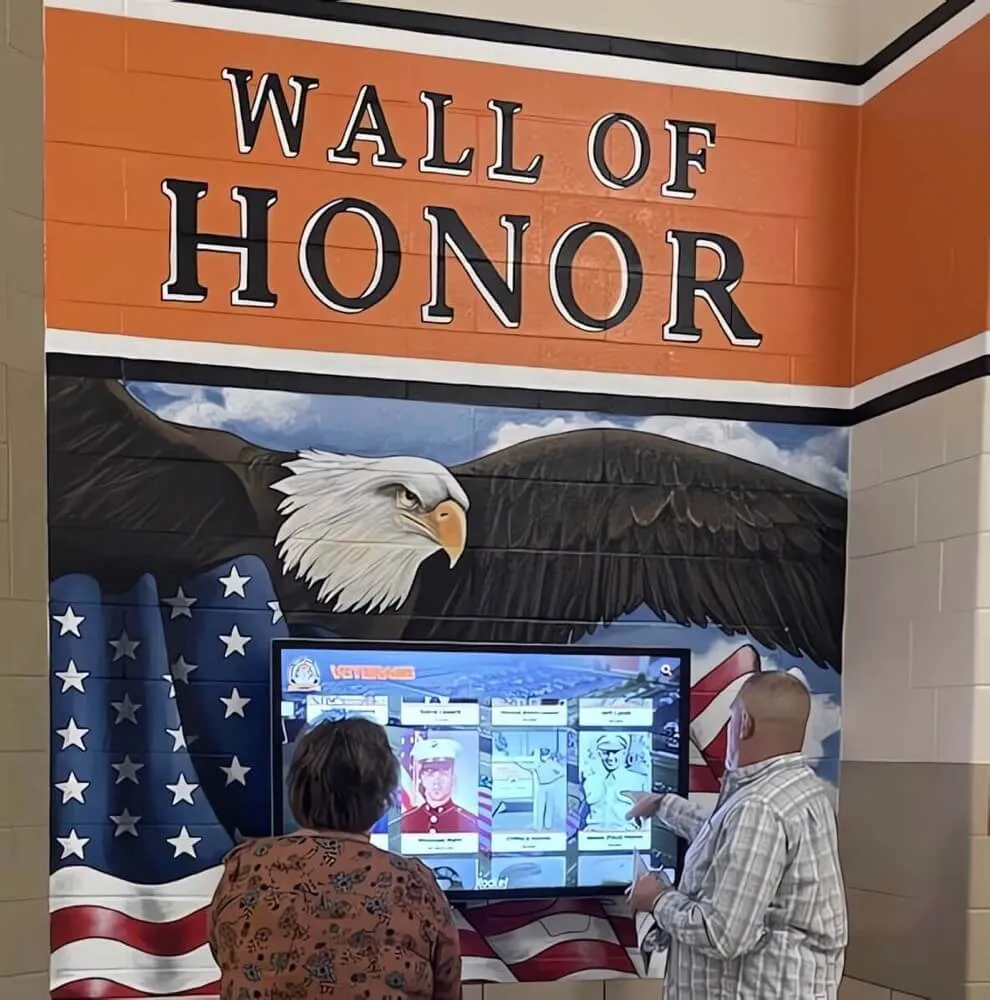
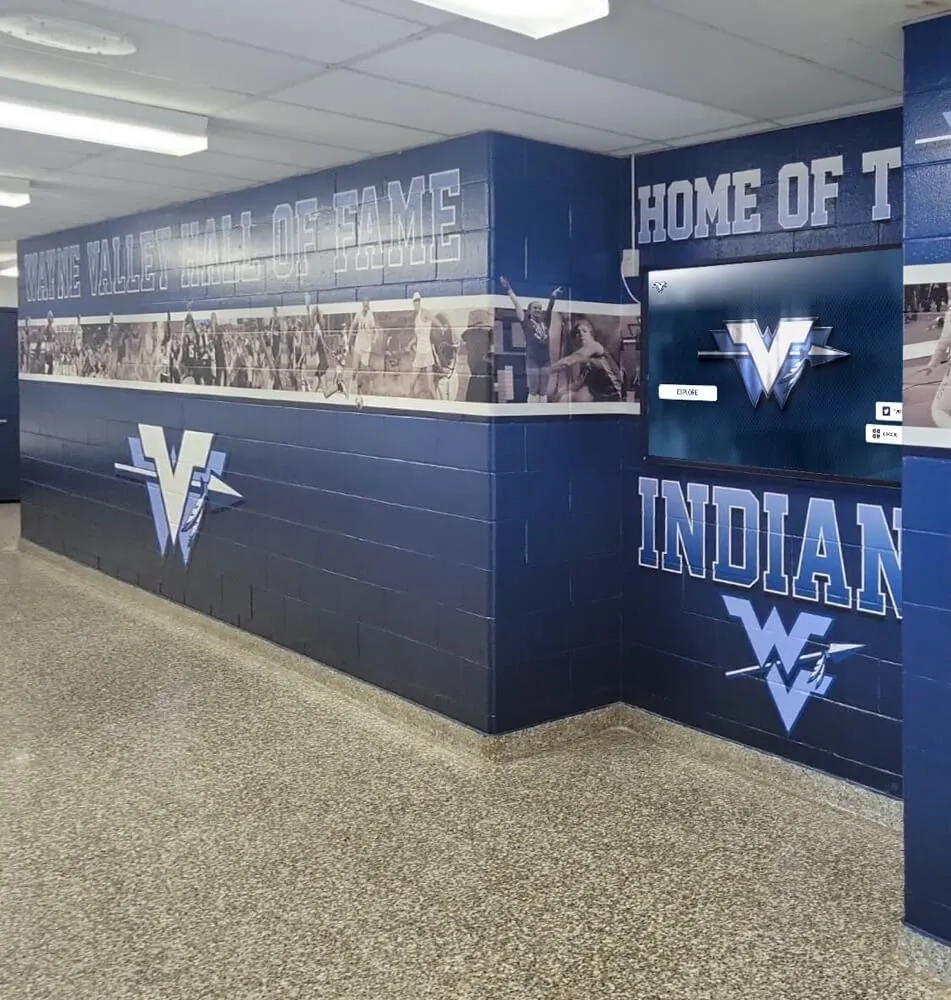
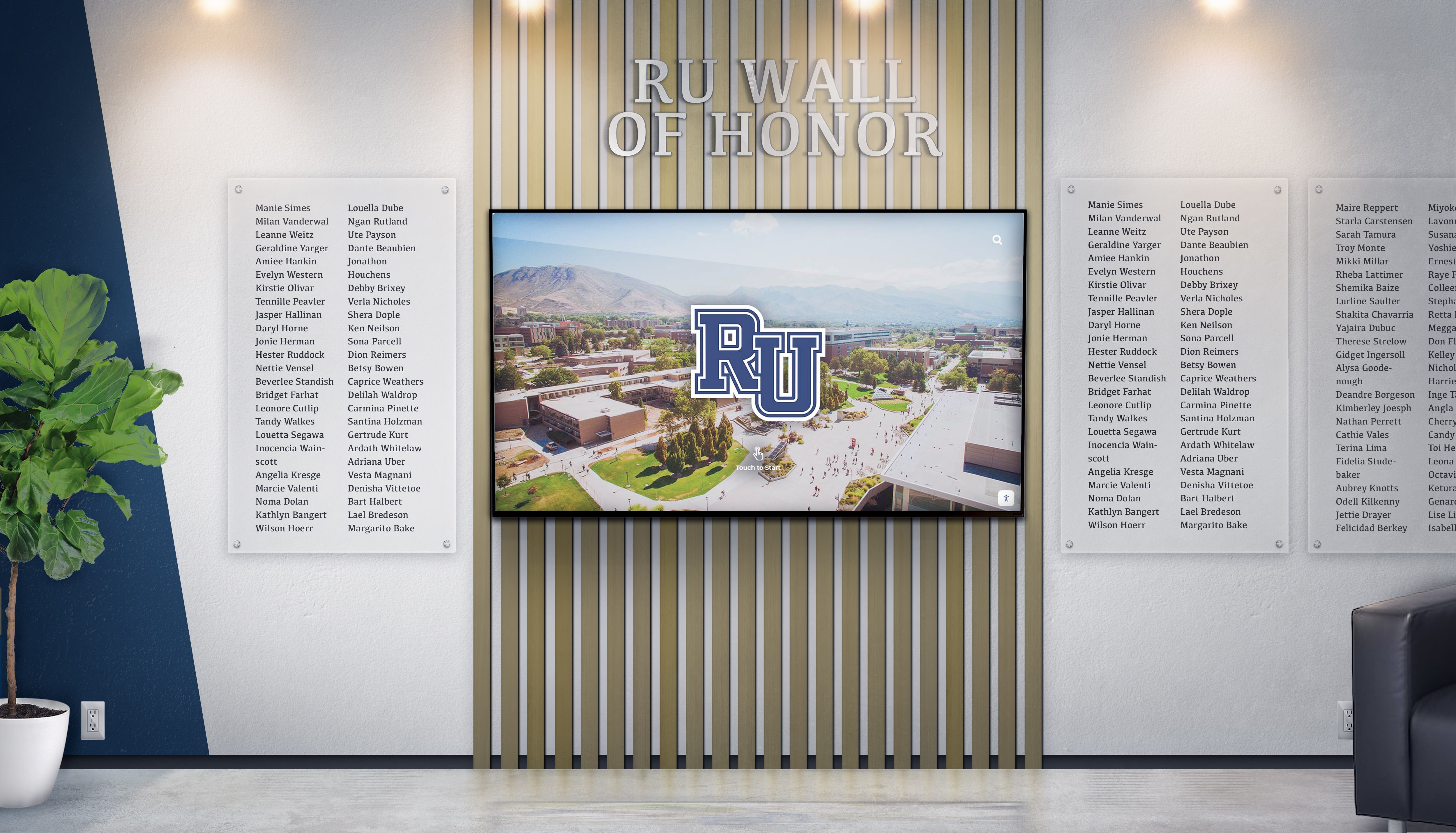
Donor walls create lasting institutional culture by publicly celebrating philanthropic support across generations
Traditional Donor Wall Options
Traditional donor walls remain popular choices for organizations valuing permanent, tangible recognition displays requiring no technology management.
Engraved Bronze Plaques
Bronze plaques represent the classic donor wall approach, offering prestige and permanence that donors appreciate.
Advantages of Bronze Recognition:
- Perceived permanence creating gravitas and importance
- Material quality signaling that donor recognition matters
- No electrical requirements or technology management
- Traditional aesthetic appealing to older donor demographics
- Simple maintenance requiring only occasional cleaning
- Weather resistance enabling outdoor installation
- Established prestige associations from historical use
Bronze Plaque Limitations:
- Fixed capacity determined by wall size and plaque density
- Expensive additions requiring fabrication and installation ($150-300 per donor)
- No ability to share donor stories beyond names and levels
- Challenging updates when organizational branding changes
- Limited visual variety creating monotonous appearance
- Space inefficiency due to mounting hardware requirements
- Filling challenges as available space depletes
Organizations installing bronze walls should plan for 50-75% more capacity than initial campaign goals, as campaigns typically continue and walls fill faster than anticipated.
Engraved Glass and Acrylic Panels
Glass and acrylic donor walls provide contemporary aesthetics while maintaining traditional recognition approaches.
Glass Recognition Benefits:
- Clean, modern appearance appealing to younger donors
- Backlighting options creating dramatic visual impact
- Transparency enabling creative background treatments
- Premium appearance at lower costs than bronze
- Easier replacement if damage occurs
- Architectural integration with contemporary buildings
- Flexibility in shape and configuration
Glass and Acrylic Considerations:
- Fragility requiring careful handling during installation
- Susceptibility to scratching without proper cleaning procedures
- Limited outdoor use due to weathering and thermal stress
- Transparency sometimes causing legibility challenges
- Installation complexity requiring specialized mounting
- Similar capacity limitations as other traditional walls
Marble and Stone Donor Walls
Natural stone donor walls convey timeless elegance and permanence appropriate for formal institutional settings.
Stone Recognition Advantages:
- Extremely long lifespan spanning centuries
- Luxurious appearance reflecting donor importance
- Natural material variations creating unique character
- Weight and solidity signaling permanence
- Architectural integration with historic buildings
- Weather resistance for exterior applications
- Minimal maintenance beyond periodic cleaning
Stone Wall Limitations:
- High material and installation costs
- Heavy weight requiring structural support assessment
- Fixed capacity without expansion options
- Expensive modifications if layouts need changes
- Limited font and design flexibility
- Long fabrication timelines for engraving work
- Difficult corrections if errors occur during installation
Rail Wall Systems
Rail wall systems offer traditional appearance with built-in flexibility for ongoing additions as campaigns continue.
Rail walls feature horizontal rails mounted to walls, accepting interchangeable donor panels that slide into place without new mounting hardware. This modularity enables easy additions while maintaining organized, professional appearance.
Rail System Benefits:
- Easy additions without wall penetration or remounting
- Consistent appearance despite multiple installation phases
- Lower incremental costs for ongoing recognition
- Simple reorganization when giving level changes occur
- Professional appearance maintained throughout campaign
- Flexible layouts accommodating various space configurations
- Future expansion capability built into initial design
Rail walls work particularly well for annual giving programs where new donors join yearly and multi-year capital campaigns where recognition occurs in phases as pledges are fulfilled.
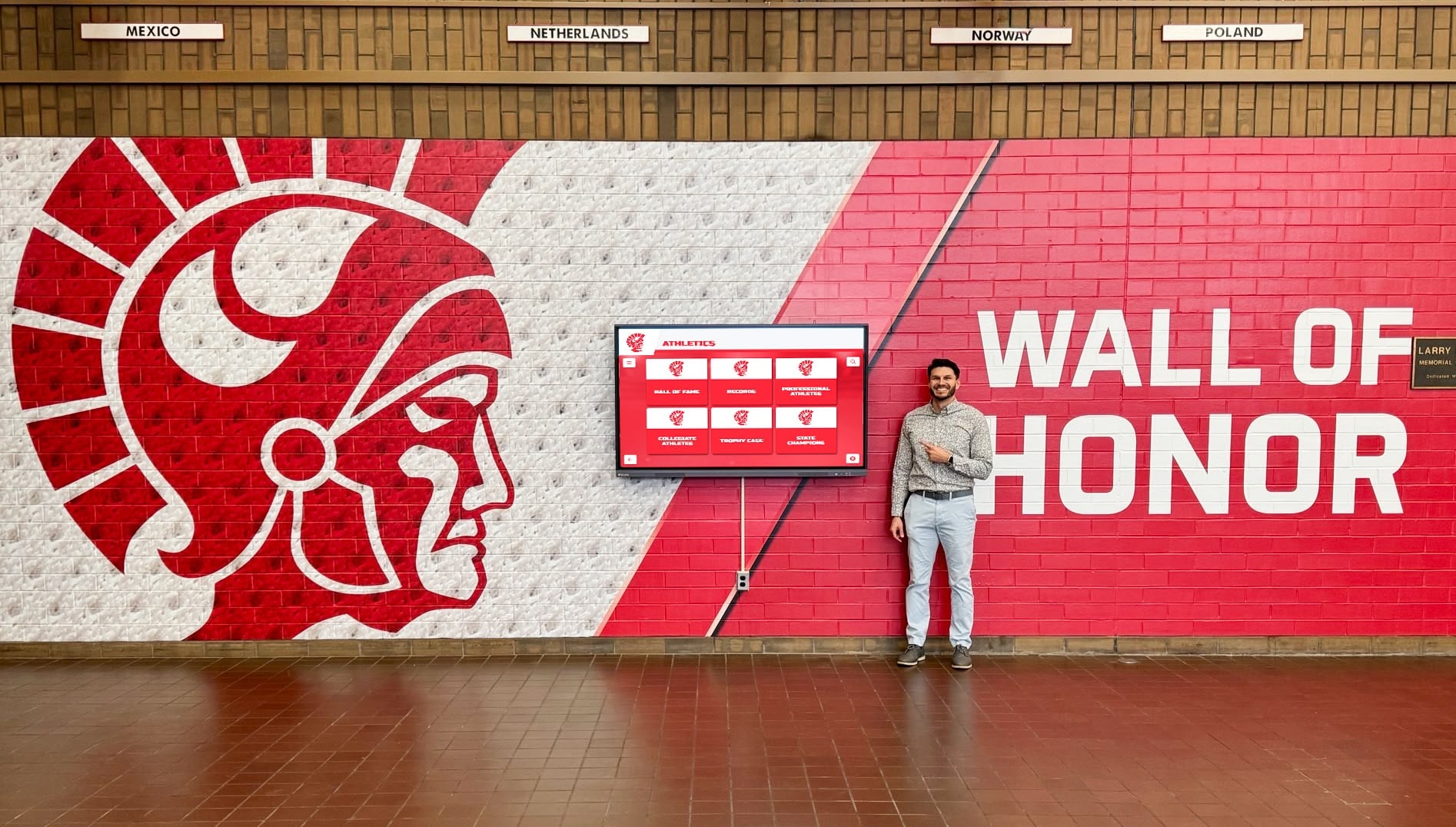
Traditional donor walls provide tangible, permanent recognition that donors value for its physical presence and established prestige
Digital Donor Wall Solutions
Digital donor walls represent transformative alternatives to traditional recognition, addressing inherent limitations while creating engagement impossible with static displays.
Interactive Touchscreen Donor Displays
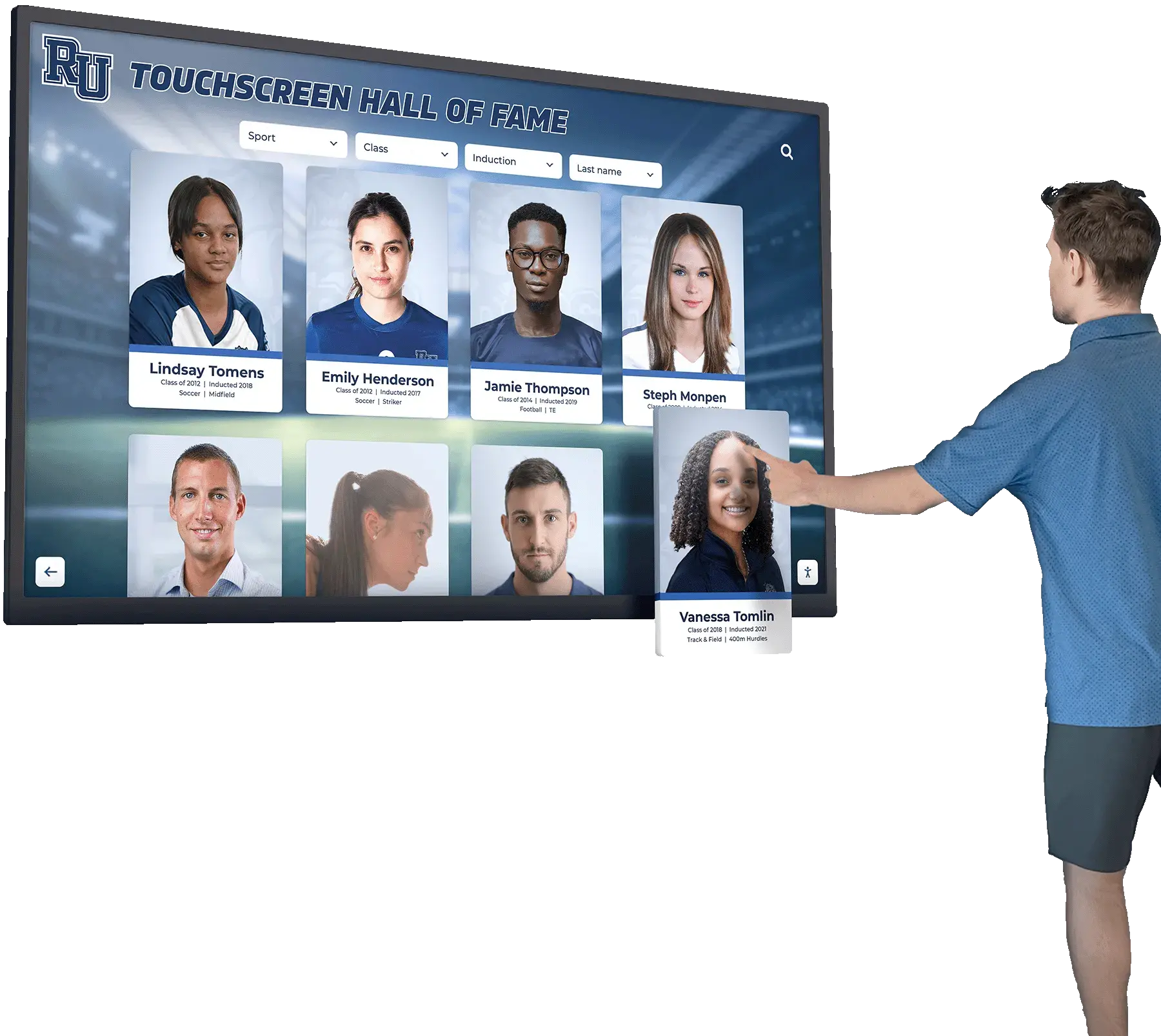
Interactive touchscreen donor walls enable visitors to explore donor recognition through intuitive interfaces, discovering individual donor stories while navigating comprehensive recognition databases.
Touchscreen Donor Wall Capabilities:
Unlimited recognition capacity through digital databases removes physical space constraints that plague traditional walls. A single touchscreen display can recognize thousands of donors across multiple campaigns and giving levels, with searchable interfaces enabling visitors to locate specific supporters quickly.
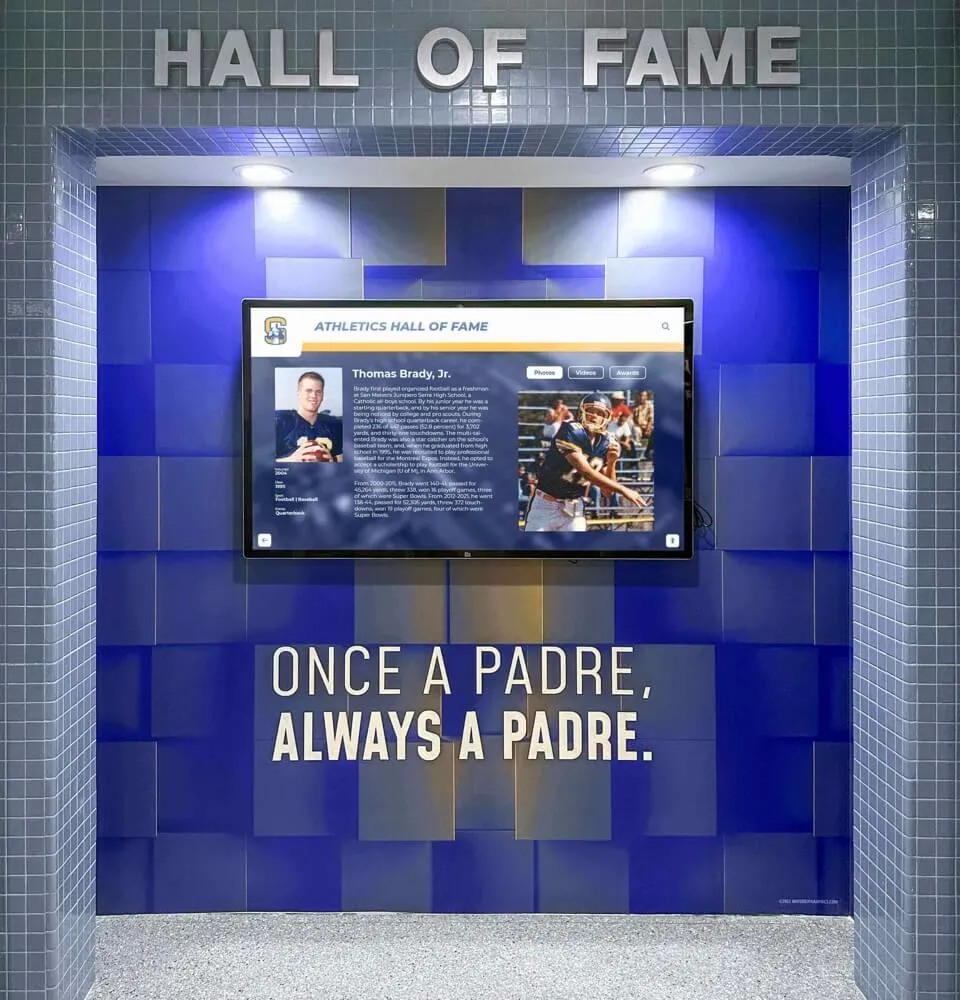
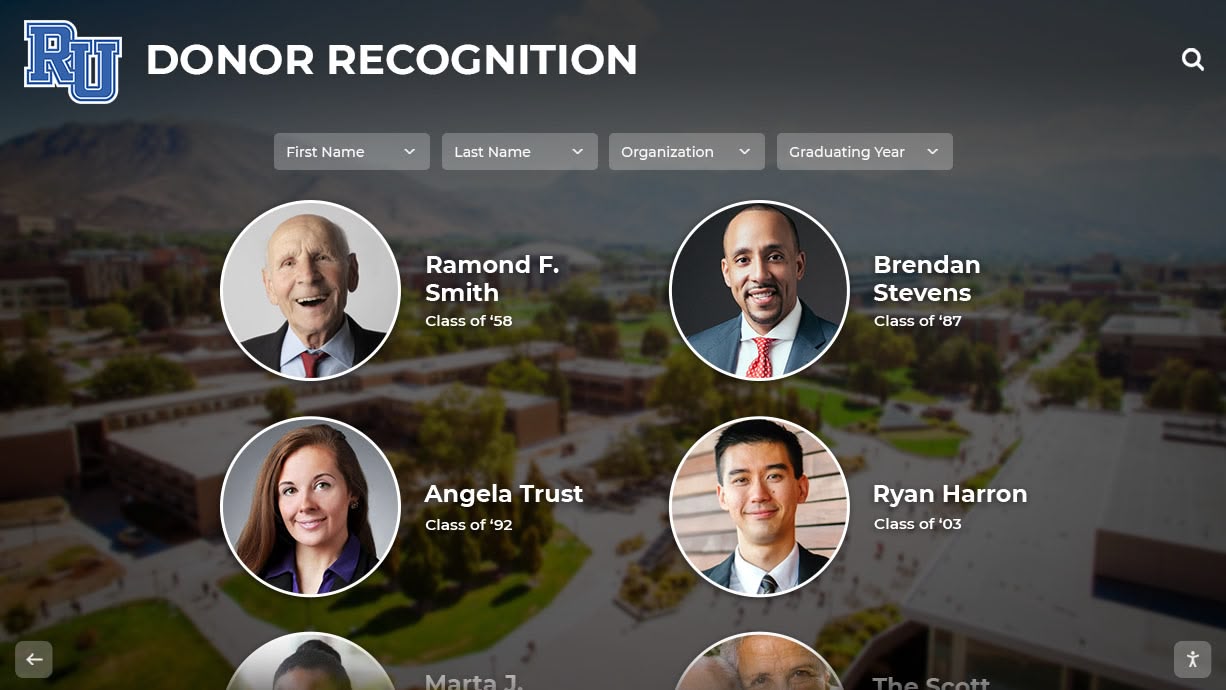
Rich multimedia integration supports donor profile pages featuring photos, biographical information, video testimonials explaining giving motivations, impact stories demonstrating what contributions accomplish, and recognition of cumulative lifetime giving across multiple campaigns.
Easy content updates through cloud-based management systems enable development staff to add new donors, update giving levels, correct information, and refresh displays remotely without facility visits or physical fabrication work. Updates occur in minutes rather than the weeks or months required for traditional wall modifications.
Strategic recognition organization presents donors through multiple frameworks simultaneously: alphabetical directories for location searches, giving level societies grouping supporters by contribution amounts, campaign-specific recognition listing supporters for particular initiatives, chronological listings showing giving progression over time, and memorial recognition honoring deceased supporters.
Touchscreen Display Advantages:
Organizations implementing interactive digital donor walls report engagement times averaging 6-8 minutes compared to 30-60 seconds for traditional static walls—representing 8-12x increased visitor interaction. This extended engagement creates deeper emotional connections between viewers and recognized donors.
Cost efficiency improves over time as digital systems eliminate recurring plaque costs. While initial investments exceed traditional installations, organizations avoid $150-300 per donor expenses for ongoing recognition additions. Most organizations achieve cost parity within 3-4 years, with subsequent years delivering substantial savings.
Storytelling capabilities transform donor recognition from name lists to compelling narratives. Video testimonials enable donors to explain in their own words why they give, creating emotional resonance impossible through text alone. Project photography demonstrates tangible impact of contributions, helping visitors understand how philanthropy creates change.
Digital Signage Donor Walls
Non-interactive digital signage displays offer simpler alternatives to touchscreens while providing significant advantages over traditional static walls.
Digital Signage Recognition Features:
Rotating displays present donor recognition through automated sequences, cycling through giving societies, individual donor spotlights, impact stories, campaign progress updates, and historical giving timelines without requiring visitor interaction.
Dynamic content combines donor names with visual interest through photography, video backgrounds, animated transitions, impact metrics showing outcomes achieved, and campaign themes reinforced through branded design elements.
Multiple location deployment enables identical recognition content displayed simultaneously across various facility locations, ensuring comprehensive donor visibility regardless of visitor traffic patterns.
Remote content management allows development staff to update displays across multiple screens simultaneously, maintaining consistent messaging while eliminating travel time and site visit logistics.
Digital Signage Applications:
Non-interactive displays work particularly well in high-traffic corridors where visitors walk past without stopping, donor recognition lounges where displays provide ambient content, event spaces where recognition creates backdrop during programs, and reception areas where displays occupy visitor attention during wait times.
Cost considerations favor digital signage for budget-conscious organizations, as non-interactive displays typically cost 40-60% less than touchscreen installations while providing most digital recognition benefits.
Hybrid Recognition Approaches
Many organizations adopt hybrid strategies combining traditional and digital recognition elements, leveraging strengths of both approaches.
Effective Hybrid Models:
Major donor bronze plaques provide tangible permanent recognition for highest-level supporters, while digital displays recognize all other donors with full profile information and regular updates. This approach honors major donor preferences for traditional recognition while providing cost-effective scalability for broader donor bases.
Physical giving society walls list cumulative donors within each recognition tier, while adjacent digital displays feature rotating spotlight profiles sharing individual donor stories and demonstrating collective impact achieved through aggregate giving at each level.
QR codes integrated into traditional plaques bridge physical and digital recognition, enabling visitors to scan codes accessing extended online profiles, video testimonials, impact reports, and additional giving opportunities. This simple addition transforms static recognition into gateway for deeper engagement.
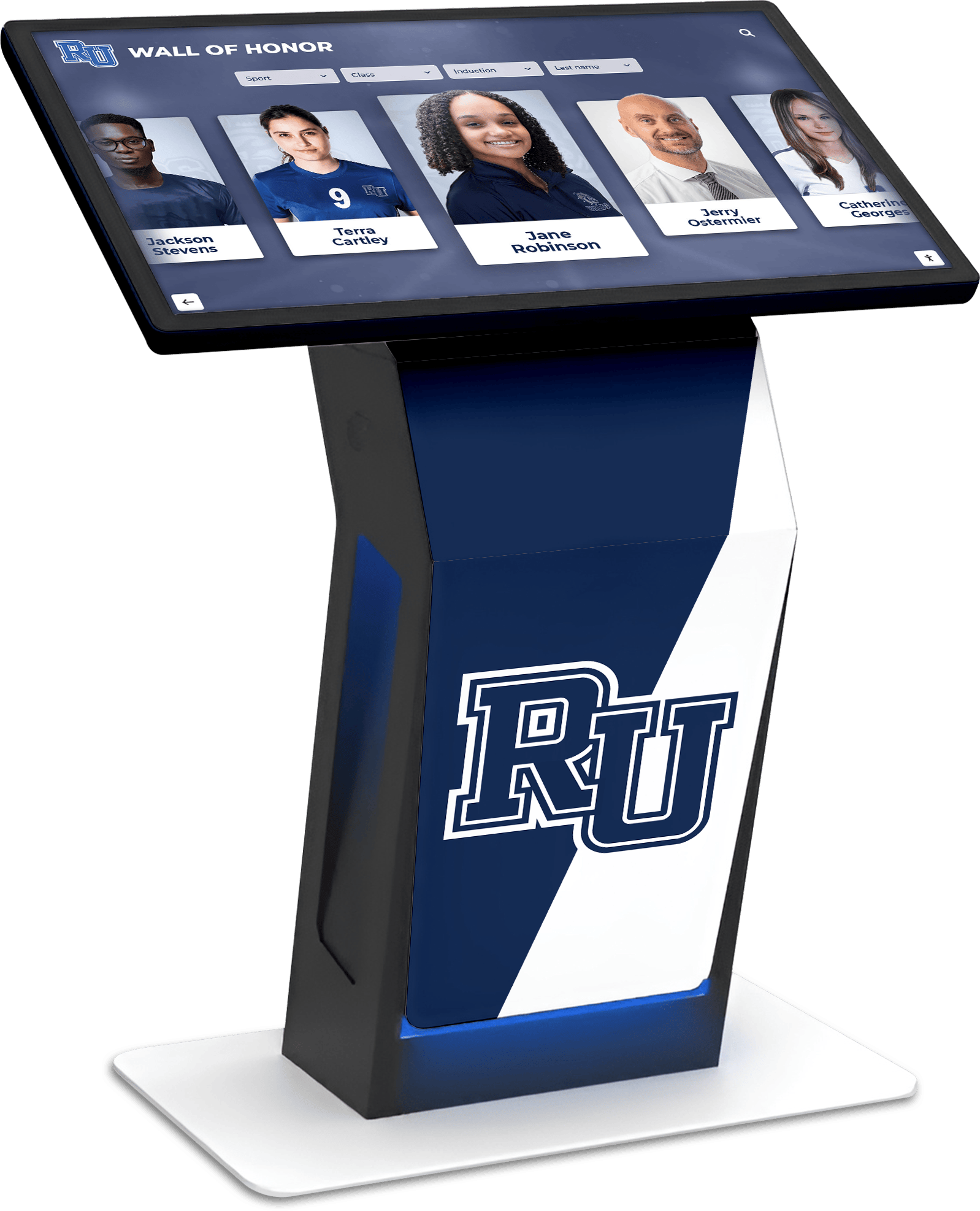
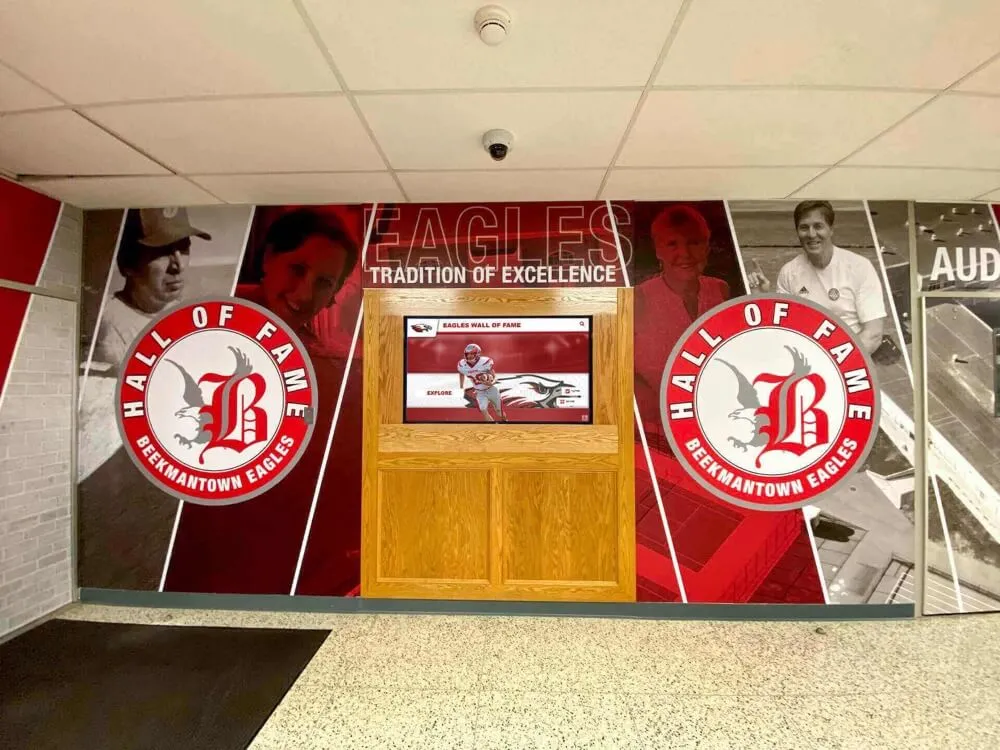
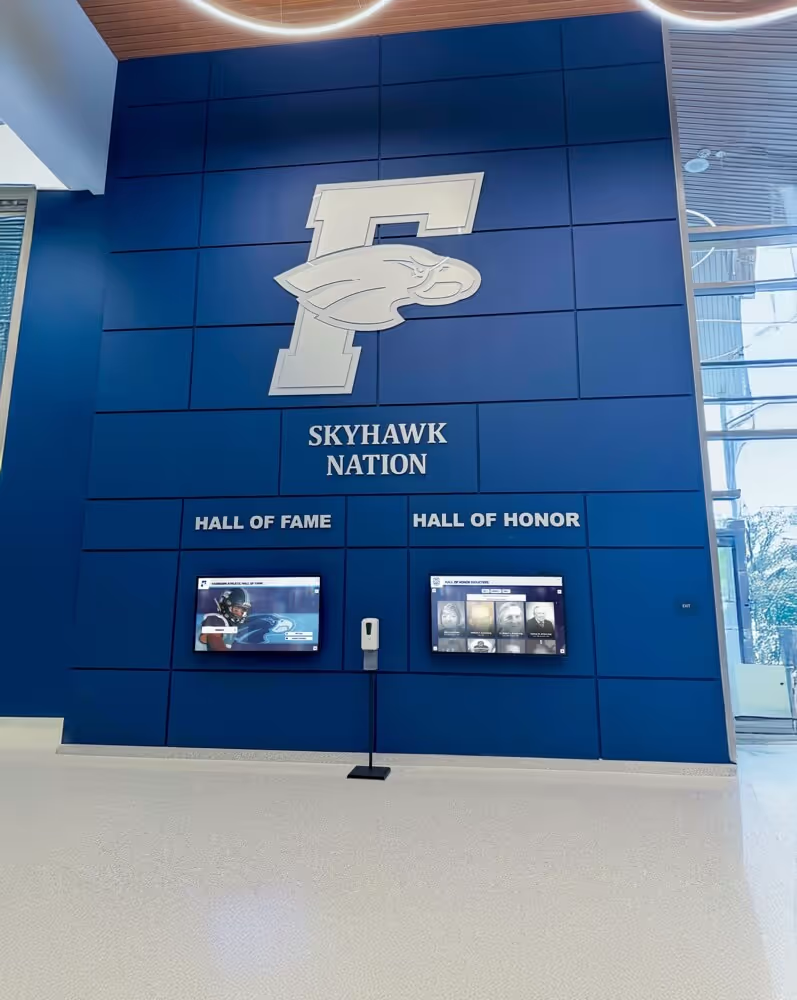
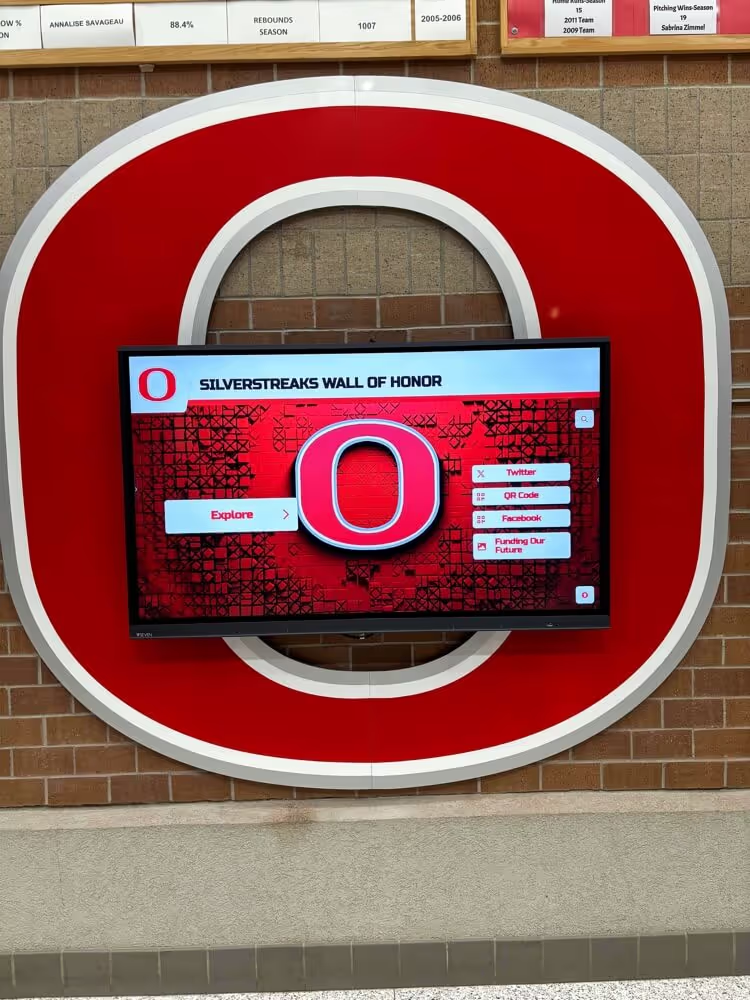
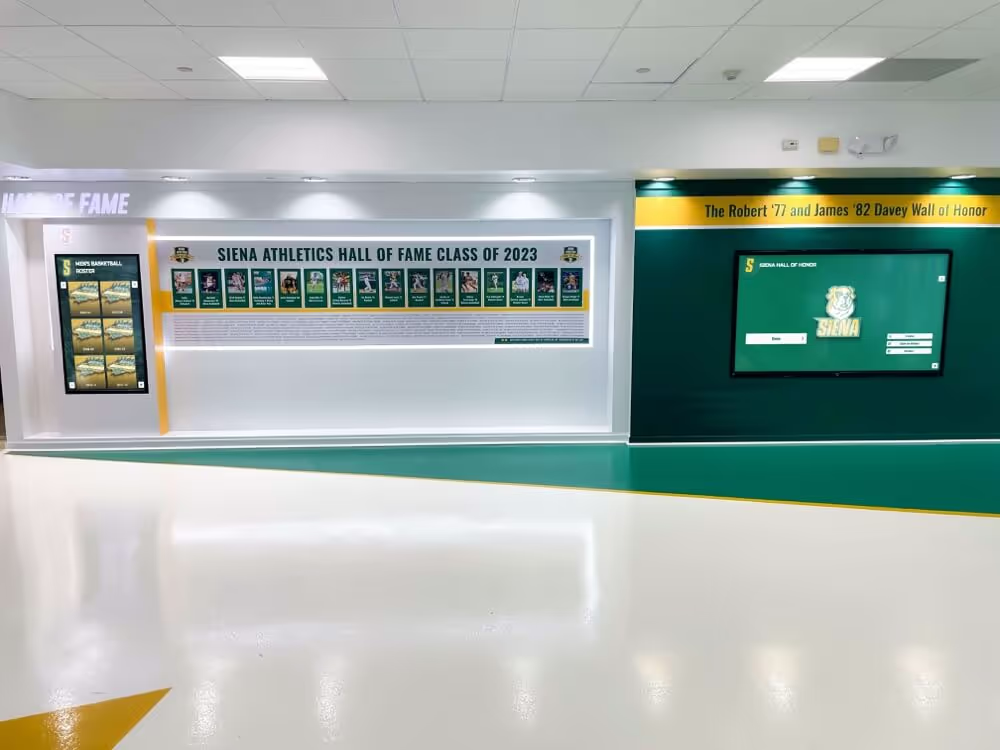
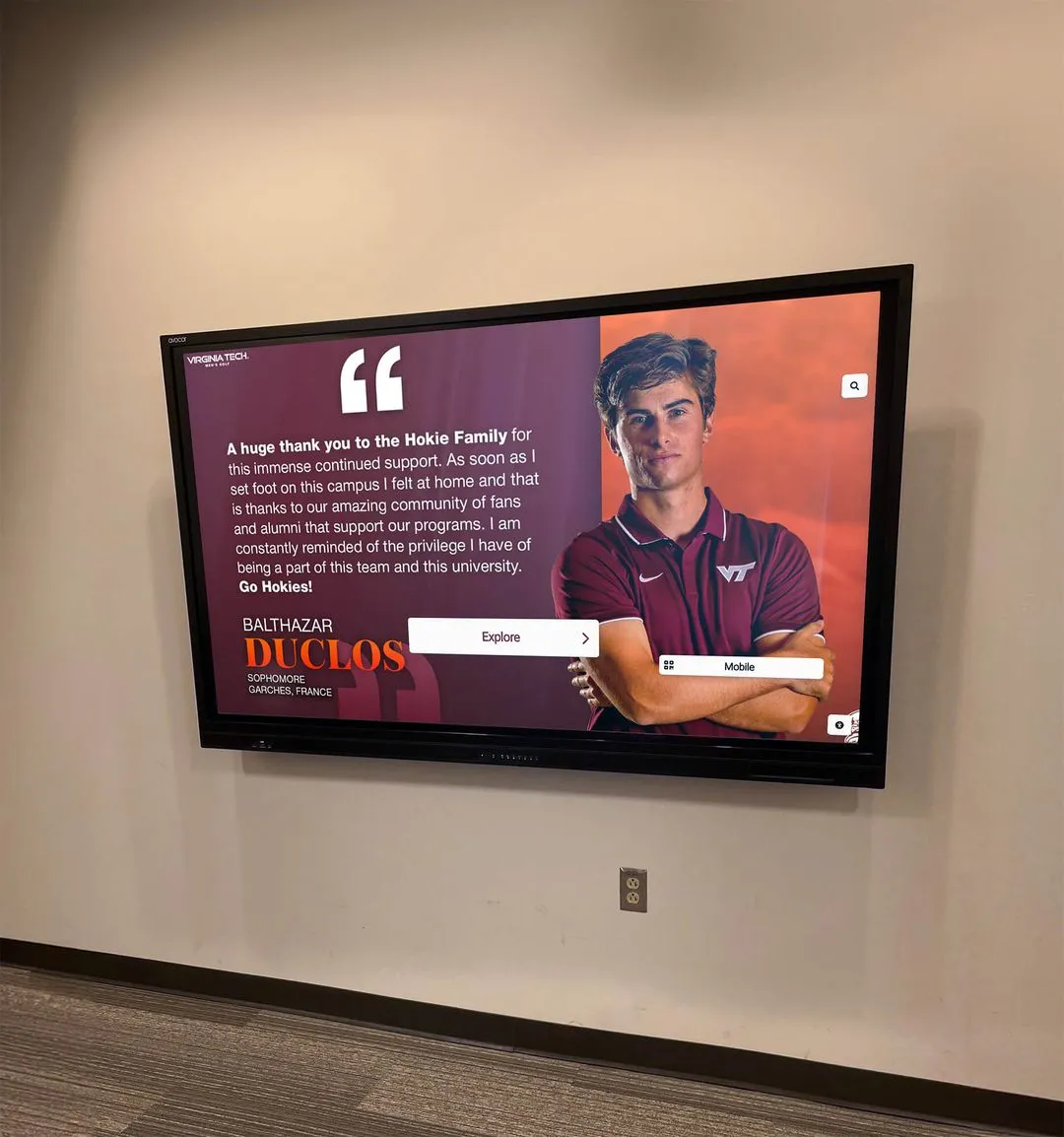
Interactive digital donor walls enable unlimited recognition capacity while providing engaging storytelling impossible with traditional displays
Recognition Structure and Giving Levels
Thoughtful recognition structure ensures donors feel appropriately honored while creating aspirational giving tiers encouraging increased support.
Establishing Giving Societies
Named giving societies create distinct recognition tiers corresponding to contribution levels, building donor community while providing advancement pathways encouraging increased support over time.
Effective Giving Society Design:
Society names should reflect organizational mission and values rather than generic labels. Universities might name societies after founding figures, landmark campus locations, or institutional milestones. Healthcare organizations could reference medical pioneers, founding physicians, or service values. Schools often honor founding families, historic campus buildings, or mascot-related themes.
Recognition differentiation ensures higher giving levels receive appropriately enhanced recognition without creating uncomfortable disparities. Size variations, prominent placement, exclusive benefits, special events, and enhanced profiles distinguish major donors while ensuring all supporters feel valued.
Society membership benefits extend beyond name display to create meaningful engagement. Annual recognition events, private campus tours, exclusive communications, advisory committee participation, and naming opportunities create value justifying increased contributions.
Common Giving Society Structures:
Most organizations establish 4-7 distinct giving societies corresponding to contribution thresholds. Representative structures might include:
Education Institution Example:
- Founder’s Circle: $100,000+
- President’s Society: $50,000 - $99,999
- Legacy Society: $25,000 - $49,999
- Heritage Society: $10,000 - $24,999
- Benefactor Society: $5,000 - $9,999
- Supporter Society: $1,000 - $4,999
- Friend Society: $500 - $999
Healthcare Organization Example:
- Visionary Circle: $250,000+
- Guardian Society: $100,000 - $249,999
- Healing Circle: $50,000 - $99,999
- Caregiver Society: $25,000 - $49,999
- Wellness Society: $10,000 - $24,999
- Friend of Healthcare: $5,000 - $9,999
- Community Supporter: $1,000 - $4,999
Threshold amounts should reflect organizational size, fundraising capacity, donor base wealth, and campaign goals. Smaller organizations might reduce minimums while larger institutions with wealthy constituencies establish higher tiers.
Lifetime vs. Annual Recognition
Organizations must decide whether donor walls recognize lifetime cumulative giving or annual contributions within specific periods.
Lifetime Giving Recognition:
Lifetime approaches honor cumulative support across all campaigns and years, encouraging sustained multi-year giving while recognizing donors who demonstrate long-term commitment. This model particularly suits capital campaigns where organizations seek large one-time contributions and major gift programs where donors make periodic significant gifts over decades.
Lifetime recognition creates clear advancement pathways as donors see their cumulative giving approaching next society thresholds, motivating additional contributions to reach higher recognition tiers. It also simplifies administration by requiring updates only when donors give again rather than annual recalculations.
Annual Giving Recognition:
Annual approaches recognize contributors during specific timeframes, typically fiscal or calendar years. This model works well for annual funds where organizations seek renewable yearly support and membership programs where donors commit to recurring contributions.
Annual recognition creates urgency by establishing renewal deadlines and enables broader participation by recognizing donors at lower annual thresholds than would qualify for lifetime recognition. It also maintains active engagement by requiring donors to renew annually for continued recognition.
Hybrid Timeline Approaches:
Some organizations separate campaign recognition (lifetime giving to specific initiatives) from annual fund recognition (yearly renewable support), using different display areas for each program while occasionally recognizing donors in both categories simultaneously when they participate in multiple giving programs.
Special Recognition Categories
Beyond giving level societies, thoughtful donor walls acknowledge special relationship categories deserving distinct recognition.
Memorial and Tribute Giving:
Recognition honoring deceased loved ones or celebrating living individuals through tribute gifts requires sensitive handling. Memorial sections within donor walls provide dedicated space for these emotionally significant contributions, often including relationships (In Memory of, In Honor of, In Celebration of) alongside donor names and honorees.
Digital platforms enable memorial recognition to include photos, biographical information, life achievements, and family messages impossible with traditional plaques limited to names and dates.
Legacy and Planned Giving Recognition:
Donors including organizations in estate plans or establishing planned gifts deserve recognition acknowledging these extraordinary commitments. Legacy society recognition often separates from annual or campaign giving since bequest commitments don’t provide immediate funds but represent significant future support.
Some organizations provide legacy recognition regardless of estate gift size, valuing the commitment itself rather than anticipated amount. Others establish minimum bequest thresholds, though verification challenges complicate enforcement.
Volunteer and In-Kind Recognition:
Comprehensive recognition programs acknowledge non-monetary contributions including volunteer time, professional services, equipment donations, and material gifts valued at giving society thresholds. This inclusive approach honors diverse contribution forms while encouraging supporters unable to provide cash gifts to contribute in other valuable ways.
Organizations pursuing this approach must establish clear valuation methodologies and documentation requirements ensuring consistent, appropriate recognition decisions.
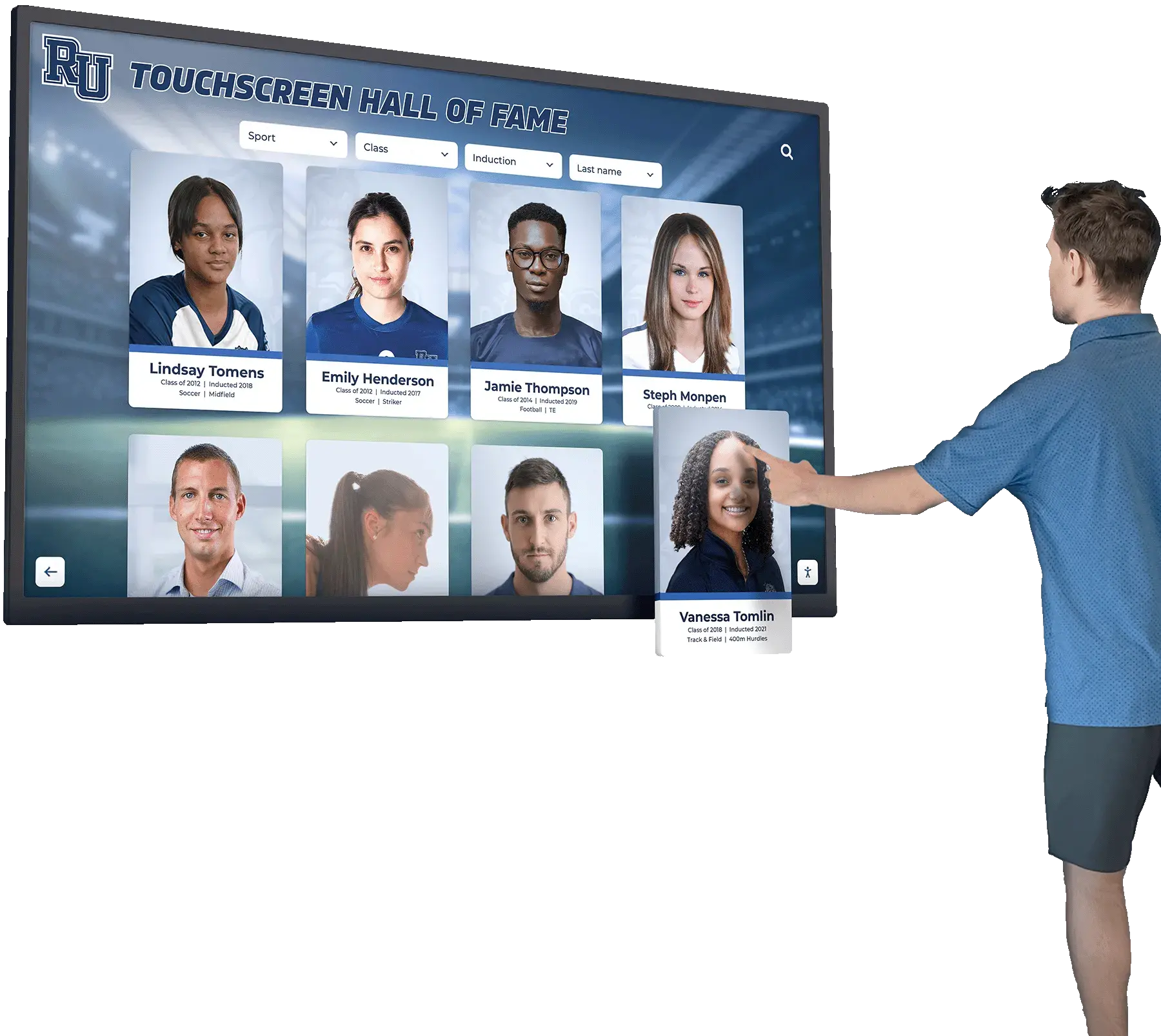
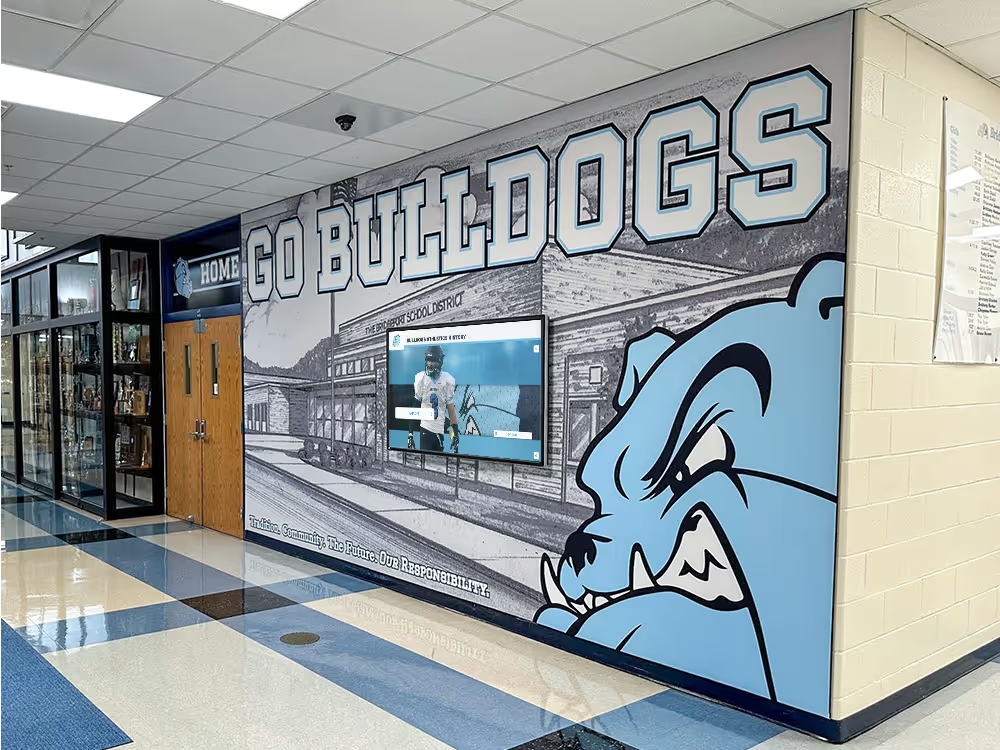
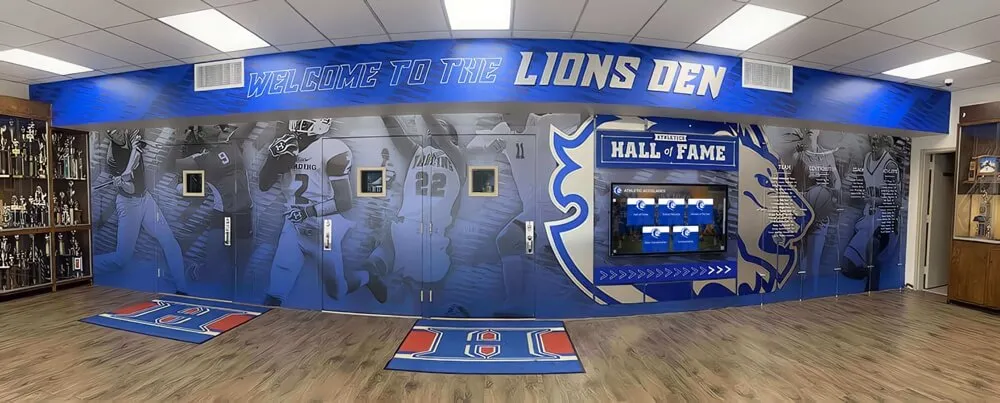
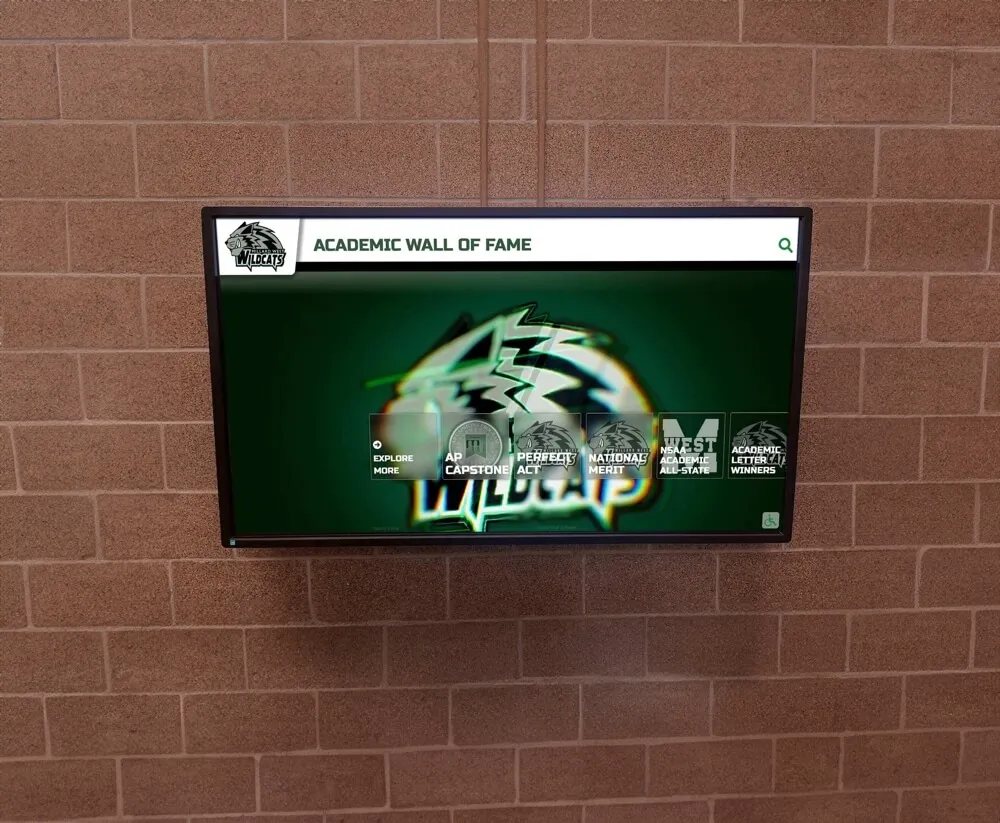
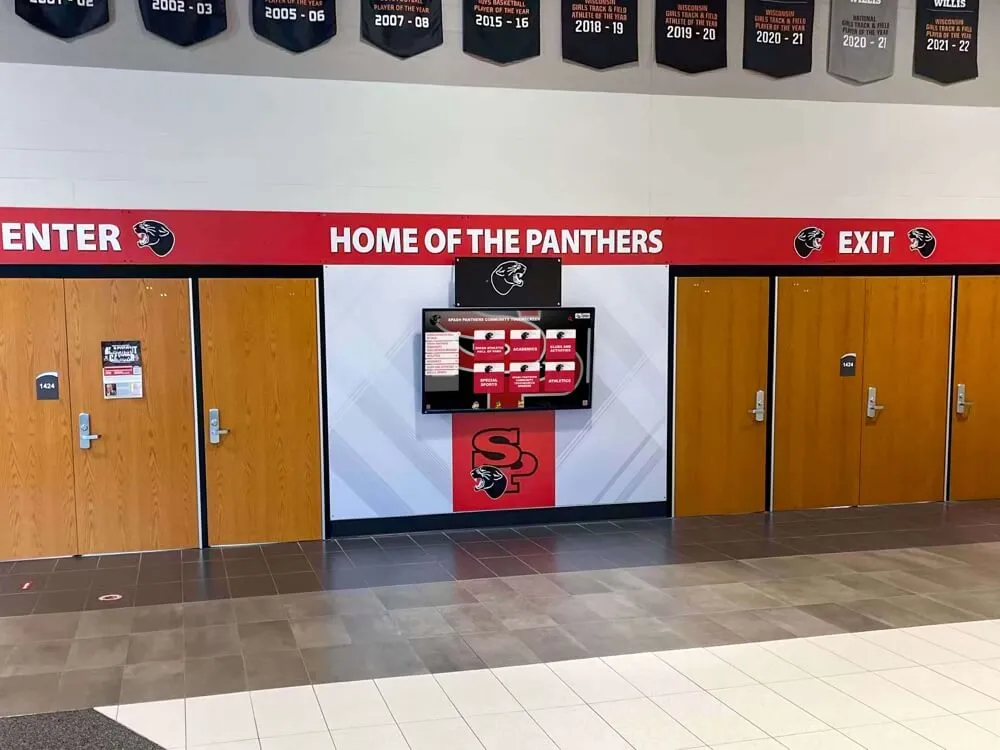
Digital displays enable comprehensive recognition honoring diverse contribution types while sharing donor stories that inspire others
Design Considerations and Best Practices
Effective donor wall design balances aesthetic appeal, functional clarity, appropriate gravitas, and long-term flexibility.
Location and Placement Strategy
Donor wall location dramatically impacts recognition effectiveness and donor satisfaction. Strategic placement considers multiple factors beyond available wall space.
Optimal Donor Wall Locations:
High-traffic areas where people naturally congregate or pass through maximize recognition visibility. Main building lobbies, primary circulation corridors, athletic facility concourses, performing arts center atriums, and reception areas ensure broad audience exposure.
Dignified settings appropriate to recognition purpose create gravitas matching donor contribution significance. Locations near restrooms, maintenance areas, or utilitarian spaces diminish recognition value regardless of traffic volume.
Architectural integration ensures donor walls complement surrounding spaces rather than appearing as afterthoughts. Purpose-built alcoves, integrated wall designs, complementary lighting, and coordinated finishes demonstrate that organizations valued recognition sufficiently to thoughtfully plan installations.
Accessibility considerations ensure all community members can view and interact with donor recognition. Appropriate mounting heights, clear sightlines, adequate lighting, wheelchair accommodation, and ADA-compliant interactive features enable universal access.
Multiple Location Strategies:
Large institutions often deploy recognition across multiple locations rather than concentrating in single displays. This distributed approach provides visibility across facility areas while accommodating different recognition types—major donor prominence in prime locations, comprehensive recognition in secondary areas, and program-specific recognition near relevant facilities.
Visual Design and Aesthetic Considerations
Donor wall appearance communicates organizational values and respect for philanthropic support, making design decisions strategically important beyond pure aesthetics.
Design Elements Requiring Careful Planning:
Typography selections impact readability and tone. Traditional serif fonts convey formality and timelessness while contemporary sans-serif options feel modern and accessible. Fonts must remain legible at viewing distances while accommodating various name lengths without awkward spacing.
Color palette choices should align with organizational branding while creating sufficient contrast for easy reading. Dark text on light backgrounds or light text on dark backgrounds work best, avoiding low-contrast combinations that strain vision.
Hierarchical visual organization helps visitors navigate complex information. Clear section headers, size variations distinguishing giving levels, logical grouping by society or campaign, and visual dividers between categories create scannable layouts enabling quick location of specific donors.
Background treatments provide context without overwhelming primary content. Subtle institutional photography, branded graphic elements, inspirational quotes, mission statements, and impact imagery create visual interest while reinforcing organizational identity.
Consistency Across Recognition Elements:
Organizations with multiple donor displays should maintain consistent design language ensuring cohesive brand presentation. Unified color palettes, repeated graphic elements, consistent typography, and aligned layout approaches create professional appearance demonstrating organizational attention to detail.
Content Development and Storytelling
The most compelling donor walls transcend name lists to share stories connecting individual generosity to collective impact.
Effective Donor Storytelling Elements:
Donor testimonials in their own words explaining why they give create emotional resonance. Short video interviews, written statements, or quoted reflections help prospective donors understand varied motivations driving philanthropy—from gratitude for past experiences to desire to create future opportunities.
Impact documentation demonstrates what donor contributions accomplish. Project photography showing completed facilities, program statistics revealing outcomes achieved, student testimonials explaining how scholarships changed lives, and research breakthroughs enabled through funding connect giving to tangible results.
Historical context places current campaigns within longer institutional narratives. Timeline displays showing decades of philanthropic support, founding donor recognition honoring earliest supporters, and campaign milestones marking major fundraising achievements demonstrate sustained community commitment.
Recognition of donor motivation diversity acknowledges different giving reasons. Some support specific programs meaningful to personal experience, others respond to leadership example from respected peers, some give from institutional loyalty spanning generations, and others contribute from values alignment with organizational mission. Acknowledging this diversity validates varied philanthropic motivations.
Technical Specifications for Digital Walls
Organizations implementing digital donor walls must address multiple technical considerations ensuring long-term success.
Display Hardware Selection:
Screen size should match viewing distances and space constraints. Smaller displays (32-55 inches) work for individual alcoves and close viewing, medium displays (55-75 inches) suit standard recognition areas, and large displays (75+ inches or video walls) serve expansive lobbies and high-ceiling spaces.
Resolution quality matters for text-heavy content. 4K displays provide sharp text rendering essential for comfortable reading of donor names, while lower resolutions create fuzzy text diminishing professional appearance.
Touchscreen technology choice impacts user experience. Capacitive touchscreens offer smartphone-like responsiveness but cost more, while infrared touchscreens provide excellent accuracy at lower prices. Display height and reach considerations affect technology selection—vertical installations require lighter touch sensitivity than horizontal tables.
Brightness specifications must overcome ambient lighting. High-brightness commercial displays (500-700 nits) handle well-lit lobbies and spaces with natural light, while standard brightness (300-400 nits) suffices for controlled lighting environments.
Software and Content Management:
Cloud-based content management systems enable remote updates from any internet-connected device, essential for distributed development teams and multi-location deployments. Modern donor recognition platforms provide intuitive interfaces requiring minimal training.
Database integration capabilities connect donor recognition to existing advancement databases, enabling automated updates when new gifts arrive or donor information changes in primary systems.
Security and backup procedures protect donor data and recognition content. Regular automated backups, secure access controls, and data encryption ensure information protection while enabling disaster recovery if hardware failures occur.
Scheduled content features enable automatic seasonal updates, campaign milestone celebrations, and anniversary recognition without requiring manual intervention for every change.
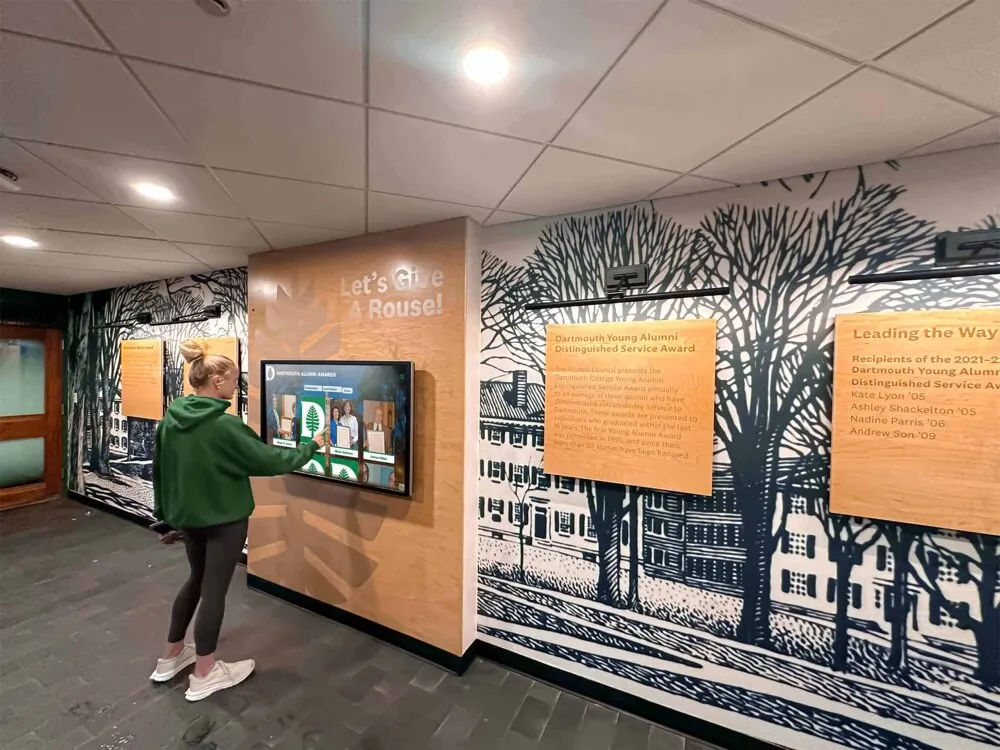
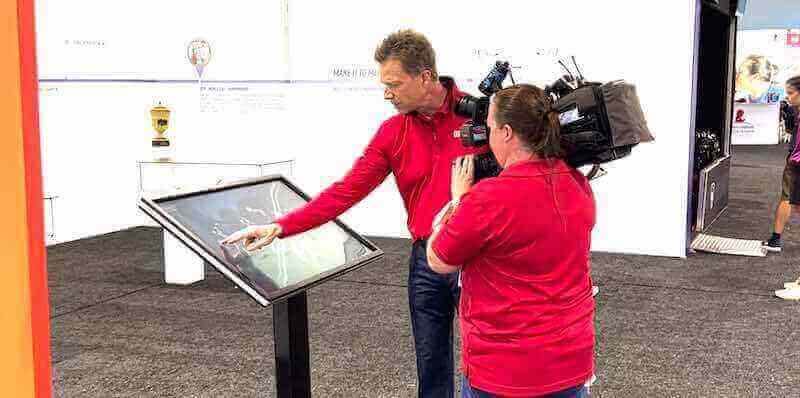
Modern content management systems enable development staff to update digital donor walls remotely, maintaining current recognition without facility visits
Cost Considerations and Budget Planning
Understanding comprehensive costs associated with various donor wall options enables realistic budget planning and appropriate option selection.
Traditional Donor Wall Costs
Traditional recognition costs vary widely based on materials, complexity, donor capacity, and installation requirements.
Bronze Plaque Cost Factors:
Individual bronze plaques typically cost $150-400 depending on size, text volume, and finish selections. Standard 3x5 inch plaques at basic pricing accommodate names and giving levels, while larger plaques with additional text or decorative elements increase costs.
Mounting and installation add $50-150 per plaque including wall preparation, layout planning, drilling, mounting hardware, and labor. Complex installations on difficult surfaces or requiring structural modifications increase these costs substantially.
Design and setup fees cover initial wall layout planning, template development, and coordination, typically running $2,000-8,000 depending on wall scale and complexity.
Cumulative costs for 100-donor bronze walls commonly reach $25,000-50,000 including all elements, with 500-donor installations ranging $100,000-200,000 depending on material selections and installation complexity.
Ongoing Traditional Wall Costs:
Addition costs for new donor plaques include plaque fabrication ($150-400), installation labor ($50-150), potential wall modification if original capacity is exhausted, and project management coordinating updates.
Maintenance requirements generally remain minimal, limited to periodic cleaning and occasional repair if damage occurs. However, traditional walls offer no mechanism for correcting errors without replacement, making accuracy during initial fabrication critical.
Digital Donor Wall Investment
Digital donor wall costs differ structurally from traditional options, with higher initial investments offset by lower ongoing expenses.
Digital Installation Costs:
Display hardware ranges from $3,000-8,000 for quality touchscreen displays suitable for donor recognition, varying by screen size, touchscreen technology, brightness specifications, and commercial durability ratings.
Mounting and installation include wall mounting systems, electrical work, network connectivity, and professional calibration, typically adding $1,500-4,000 depending on location challenges and infrastructure requirements.
Software licensing varies by provider. Some platforms charge annual subscription fees ($1,500-5,000 yearly), others offer perpetual licenses with optional support contracts, and some bundle software with hardware purchases.
Content development including initial donor database setup, profile creation, design templates, and system configuration typically costs $3,000-10,000 depending on donor volume and customization requirements.
Total initial investments for professional digital donor walls typically range $15,000-35,000 depending on specifications, with high-end installations featuring large displays, extensive custom development, and premium features potentially exceeding $50,000.
Digital Wall Operating Costs:
Annual software subscriptions (if applicable) range $1,500-5,000 depending on features, support levels, and number of displays managed.
Update labor costs remain minimal since staff perform remote updates without site visits or physical fabrication. Organizations report 80-90% time savings for recognition updates compared to traditional wall administration.
Hardware maintenance includes occasional cleaning and eventual display replacement after 7-10 years as technology ages, though modern commercial displays offer reliable long-term operation with minimal service requirements.
Energy consumption costs stay relatively low, with modern displays drawing 150-250 watts during operation, resulting in $100-200 annual electricity costs for displays running continuously.
Cost Comparison and Break-Even Analysis
Organizations evaluating traditional versus digital options should conduct break-even analysis considering total cost of ownership across expected recognition timelines.
Comparative Cost Analysis:
Traditional walls with 200 initial donors requiring 50 new donor additions yearly for ten years face these costs: initial installation $60,000, ongoing additions (500 donors × $250 average) $125,000, total ten-year cost $185,000.
Digital walls serving the same donor population show different economics: initial installation $25,000, annual software/maintenance ($3,000 × 10 years) $30,000, total ten-year cost $55,000.
This example demonstrates typical break-even timelines of 3-4 years, after which digital solutions provide substantial cost advantages. Organizations with large donor bases, long campaign timelines, or ongoing annual giving programs realize even greater digital benefits.
Cost Per Donor Recognition:
Traditional approaches cost $250-400 per donor across installation lifecycle when considering initial fabrication, mounting, and potential reorganization as walls fill.
Digital recognition costs $50-100 per donor including initial profile creation and database entry, with no incremental costs for updates or display modifications over subsequent years.
These per-donor economics favor digital solutions particularly for programs anticipating thousands of donors across multiple campaigns and giving years.
Funding Donor Wall Projects
Many organizations incorporate donor wall funding into campaign budgets rather than using unrestricted operating funds, viewing recognition as fundraising infrastructure that enables future giving.
Recognition Funding Approaches:
Campaign budget allocations typically reserve 1-3% of campaign goals for recognition and stewardship expenses including donor walls. A $5 million campaign might allocate $50,000-150,000 for comprehensive recognition programs.
Major donor naming opportunities enable recognition wall funding through dedicated gifts from supporters who value prominently branded recognition spaces. Organizations might offer donor wall naming for contributions of $100,000-500,000 depending on campaign scale.
In-kind contributions from vendors sometimes reduce cash costs, particularly when organizations work with suppliers seeking portfolio examples or community visibility. However, quality considerations should override cost savings when evaluating such arrangements.
Phased implementation spreads costs across time by installing initial donor wall infrastructure while planning capacity for future phases activated as campaigns continue and additional funding becomes available.
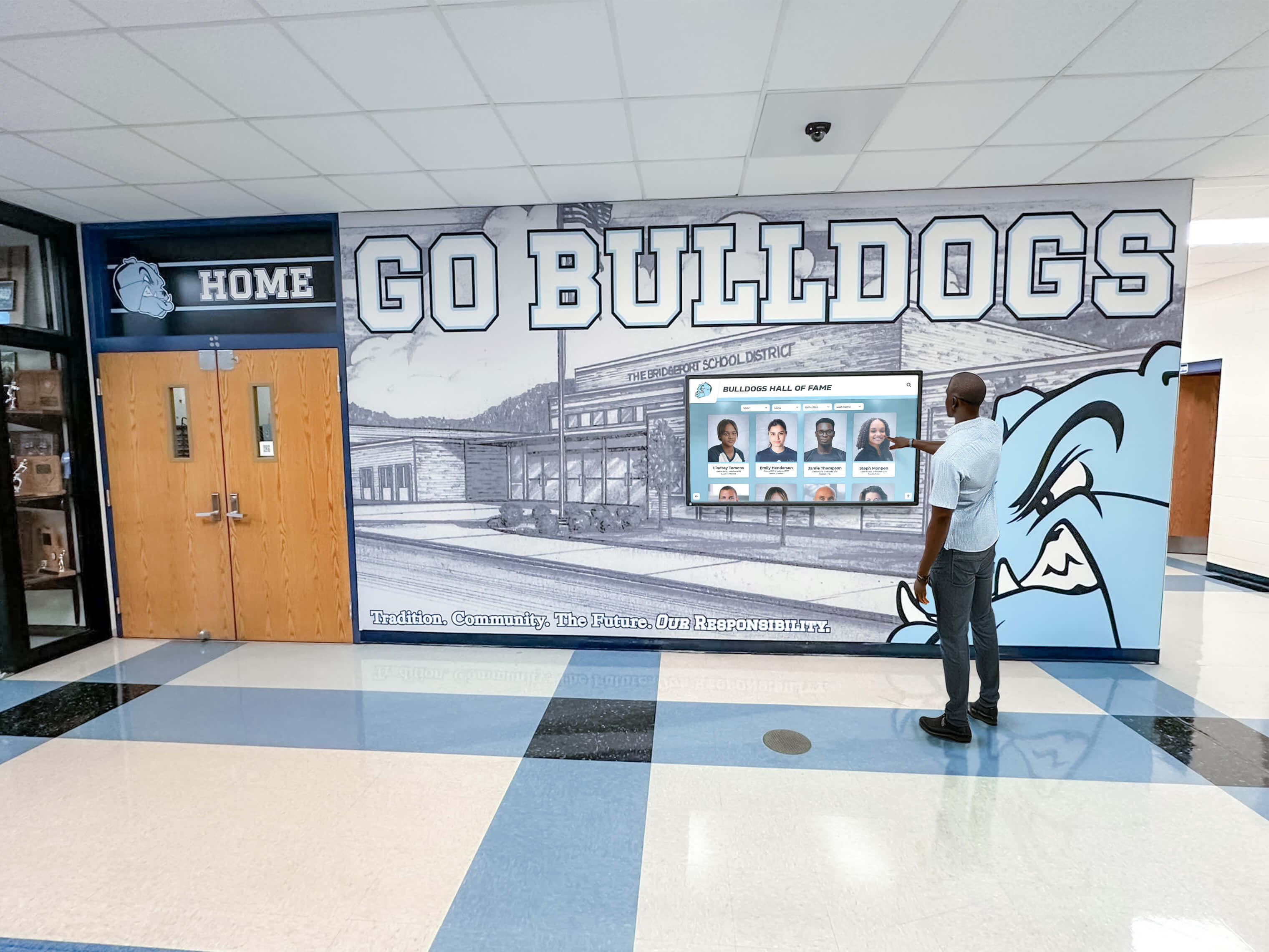
Budget planning should consider total ownership costs including ongoing maintenance and updates rather than focusing solely on initial installation expenses
Implementation Planning and Project Management
Successful donor wall projects require careful planning addressing design decisions, donor consultation, timeline management, and installation coordination.
Project Planning Timeline
Donor wall implementation typically spans 4-8 months from initial planning through installation, though timelines vary based on project complexity and decision-making processes.
Typical Project Phases:
Planning and needs assessment (4-6 weeks) establishes project scope, budget parameters, location options, traditional versus digital decisions, and stakeholder input processes.
Design development (6-8 weeks) creates conceptual designs, refines layouts, selects materials or technology, develops content strategies, and presents options to decision-makers for approval.
Donor consultation (2-4 weeks) reviews recognition plans with major donors, confirms society names and giving levels, validates personal information accuracy, and secures testimonials or stories for inclusion.
Fabrication or development (6-10 weeks for traditional, 4-6 weeks for digital) covers plaque manufacture or software configuration, content creation, quality assurance, and preparation for installation.
Installation (1-2 weeks) includes site preparation, physical mounting, electrical and network connections, system testing, and final adjustments before public unveiling.
Organizations should add buffer time for approval delays, revision requests, and unforeseen complications. Beginning planning 6-12 months before desired completion dates ensures adequate time for thoughtful decision-making.
Stakeholder Engagement and Approval
Multiple constituencies hold interests in donor wall decisions, requiring inclusive processes balancing varied perspectives.
Key Stakeholder Groups:
Major donors often expect consultation regarding recognition approaches, society names, and display prominence. While organizations maintain final decision authority, gathering donor input demonstrates respect for their support and increases satisfaction with eventual implementation.
Development staff bring operational expertise regarding donor preferences, recognition best practices, database management capabilities, and long-term maintenance realities. Their input proves essential for practical, sustainable solutions.
Facilities and operations teams understand site constraints, maintenance implications, electrical and network infrastructure capabilities, and installation logistics affecting feasibility and costs.
Executive leadership makes final decisions balancing donor satisfaction, cost considerations, aesthetic alignment with institutional identity, and long-term strategic implications.
Design committees representing diverse stakeholder perspectives often provide governance for donor wall projects, reviewing options at key decision points while enabling efficient progress between formal approvals.
Vendor Selection Criteria
Organizations evaluating donor wall vendors should assess capabilities across multiple dimensions beyond basic pricing.
Critical Vendor Selection Factors:
Portfolio and experience review reveals whether vendors successfully completed similar projects for comparable organizations. References from recent clients provide insight into customer service, responsiveness, problem-solving, and satisfaction levels.
Design capabilities demonstrated through portfolio samples and conceptual mockups indicate whether vendors can create compelling solutions matching organizational aesthetic standards.
Technical competency for digital projects includes software reliability, content management ease, training and support quality, system scalability, and long-term viability ensuring vendors remain available for future needs.
Project management demonstrated through clear timelines, proactive communication, coordinated installation, and responsive problem resolution often matters more than basic capabilities since implementation quality dramatically impacts final outcomes.
Post-installation support including training, documentation, technical assistance, and update services ensures long-term success beyond initial installation. For organizations considering comprehensive digital recognition solutions, vendor evaluation should emphasize sustainable relationships rather than transactional installations.
Donor Wall Maintenance and Long-Term Management
Effective donor walls require ongoing attention ensuring recognition remains current, accurate, and impactful across years and decades.
Traditional Wall Maintenance
Traditional donor walls require relatively minimal ongoing maintenance beyond periodic updates adding new donors as campaigns continue.
Routine Maintenance Requirements:
Regular cleaning maintains professional appearance and readability. Bronze plaques benefit from gentle cleaning with appropriate metal care products, while glass and acrylic require non-abrasive cleaners preventing scratching. Stone surfaces need periodic cleaning removing dust and environmental buildup.
Damage inspection and repair addresses issues as they arise. Loose plaques require remounting, damaged elements need replacement, and environmental wear may necessitate refinishing or protective treatments.
Space management becomes critical as traditional walls approach capacity. Organizations must plan expansion strategies, potentially reconfiguring layouts to accommodate additional donors or establishing secondary display locations when primary walls fill completely.
Digital Donor Wall Updates
Digital walls require regular content updates maintaining current recognition while optimizing engagement through fresh presentations.
Digital Update Workflows:
New donor additions should occur promptly after gifts arrive and pledge payments complete. Monthly or quarterly update cycles balance timely recognition with efficient workflow management, though major gifts often warrant immediate recognition updates.
Information corrections addressing name misspellings, updated contact information, or revised giving level calculations occur quickly with digital systems, unlike traditional walls requiring physical replacement for error corrections.
Content refreshes updating photography, impact stories, campaign messaging, and visual designs maintain visitor engagement by preventing stale presentations that community members see repeatedly without change.
Software and security updates ensure systems remain current with latest features, security patches, and compatibility with evolving technology ecosystems. Regular updates prevent technical debt and security vulnerabilities.
Staffing and Responsibility Assignment:
Clear responsibility assignment prevents neglect through ambiguous ownership. Development staff typically manage donor data accuracy and recognition eligibility, marketing teams often create visual content and storytelling elements, and IT departments handle technical maintenance and security.
Documented procedures ensure consistent quality and enable continuity during staff transitions. Written guidelines covering update frequencies, approval processes, quality standards, and technical procedures prevent knowledge loss when personnel changes occur.
Performance Monitoring and Optimization
Organizations should assess donor wall effectiveness and adjust strategies based on data and stakeholder feedback.
Metrics Worth Tracking:
For digital walls, user analytics reveal engagement patterns including interaction frequency, session duration, popular content, search queries, and peak usage times. These metrics identify what content resonates while revealing opportunities for improvement.
Donor satisfaction measured through surveys, interviews, or informal feedback indicates whether recognition approaches meet supporter expectations and create desired emotional responses.
Fundraising correlation examines whether prominent donor recognition correlates with increased giving from displayed donors, higher renewal rates, or improved campaign results among recognized supporters.
Staff efficiency tracking time required for recognition updates, error correction, and donor inquiry responses helps quantify operational benefits of different approaches.
Continuous Improvement Practices:
Annual reviews examine performance data, gather stakeholder feedback, identify improvement opportunities, and plan content refreshes or feature enhancements maintaining relevance.
Benchmark comparisons against peer institutions reveal effective practices worth adopting and help organizations assess whether their donor recognition approaches match or exceed sector standards.
Technology upgrades periodically refresh digital displays and software capabilities, preventing obsolescence while incorporating beneficial innovations that enhance donor recognition and visitor engagement.
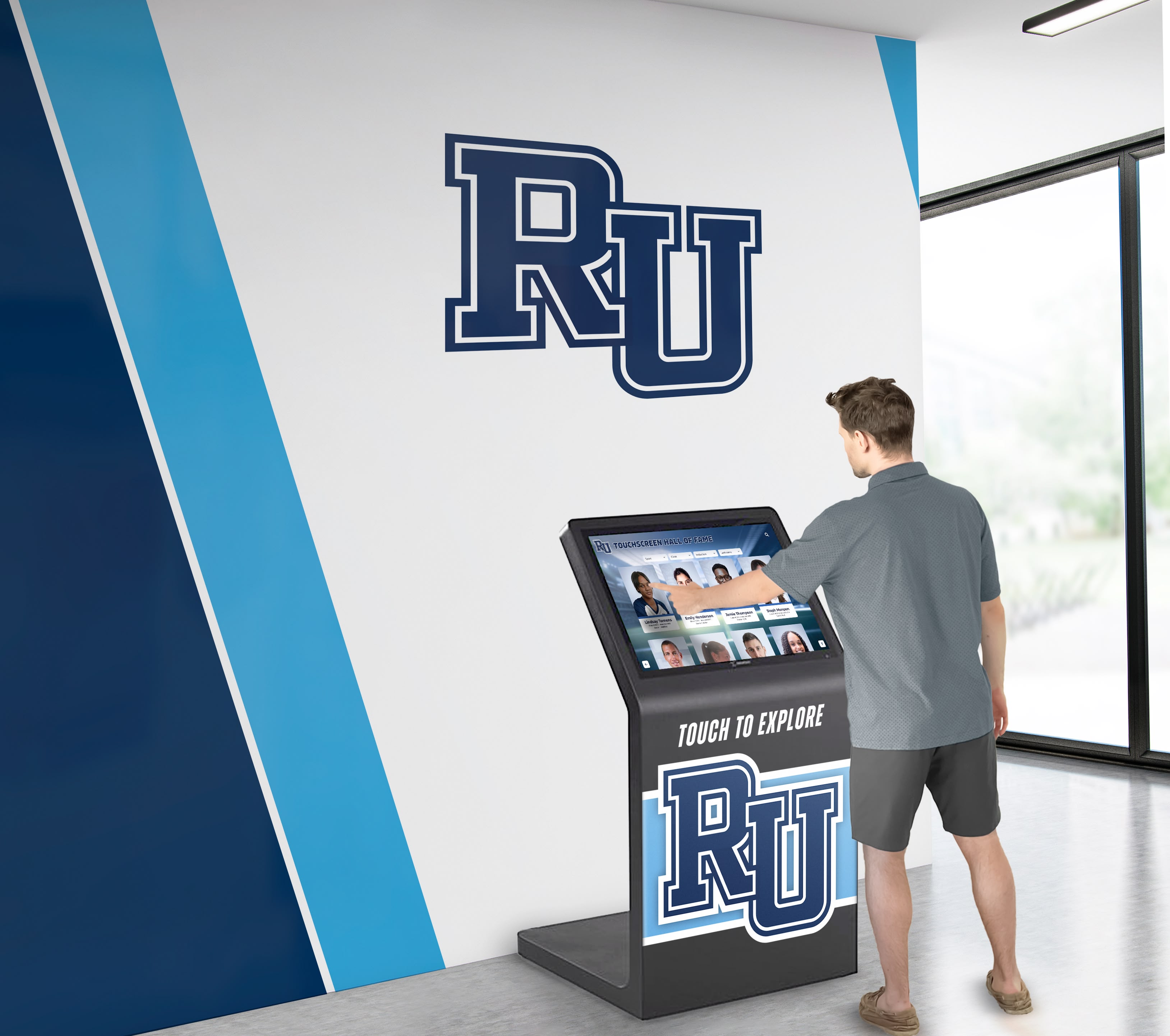
Effective donor wall management requires sustained attention to updates, maintenance, and optimization ensuring recognition remains compelling across years
Emerging Trends in Donor Recognition
Donor recognition continues evolving as technology advances and donor expectations shift, with several notable trends shaping future approaches.
Virtual and Hybrid Recognition Models
Organizations increasingly complement physical donor walls with virtual recognition accessible online, creating hybrid models that extend reach beyond facility visitors.
Virtual donor walls published on institutional websites provide 24/7 recognition access for donors, families, and supporters unable to visit physical locations. These online displays offer similar features as physical interactive walls—searchable directories, donor profiles, impact stories, and multimedia content—while reaching global audiences.
QR code bridges connecting physical and digital recognition enable smartphone-equipped visitors to scan codes accessing extended online content, video testimonials, giving opportunities, and sharing capabilities impossible within physical space constraints.
Social media recognition extends donor appreciation beyond walls and websites to platforms where donors actively engage. Strategic social recognition campaigns celebrate major gifts, milestone giving anniversaries, and campaign progress while making philanthropy visible to broad networks.
Personalized and Dynamic Recognition
Advanced donor recognition platforms enable increasingly personalized experiences responding to individual visitor interests and donor preferences.
Customized giving societies allow donors to self-identify with affinity groups or interest areas, receiving recognition within communities meaningful to personal identity beyond simple contribution amounts. Alumni might join class-based societies, athletic program supporters could affiliate with sport-specific groups, and medical donors might align with disease-focused giving circles.
Responsive content presentation adjusts recognition displays based on viewer proximity, interaction history, or identified preferences. Touch interactions trigger relevant content, returning visitors see fresh material rather than repeated presentations, and displays emphasize content matching current organizational priorities.
Real-time campaign integration connects donor walls directly to advancement databases, enabling live fundraising thermometers, milestone celebrations appearing automatically when goals reach certain thresholds, and immediate recognition for major gifts arriving during campaigns.
Sustainability and Social Responsibility
Organizations increasingly consider environmental impact and social values when selecting donor recognition approaches.
Digital recognition environmental benefits include elimination of metal mining and manufacturing for plaques, reduced shipping emissions from fabricated materials, minimal waste from error corrections and updates, and lower long-term resource consumption through virtual rather than physical additions.
Recycled and sustainable materials for traditional walls include reclaimed wood, recycled metals, sustainably sourced stone, and low-emission manufacturing processes appealing to environmentally conscious donors.
Values alignment in recognition design communicates institutional priorities through inclusive language, accessibility emphasis, diverse donor representation, and recognition systems honoring varied contribution types beyond large monetary gifts.
Measuring Return on Investment
Sophisticated organizations develop frameworks assessing donor recognition ROI beyond simple satisfaction metrics.
Donor retention analysis compares renewal rates for recognized versus unrecognized donors, measuring whether wall inclusion correlates with sustained giving across subsequent years.
Giving increase correlation examines whether donors increase contributions after recognition, potentially motivated by social visibility or advancing toward higher recognition tiers.
Fundraising velocity measures campaign timeline acceleration when prominent recognition provides social proof encouraging prospect participation during active campaigns rather than waiting for conclusion.
Operational efficiency gains quantify time savings from streamlined recognition processes, error reduction through digital accuracy, and scalability enabling larger donor bases without proportional administrative growth.
Conclusion: Creating Recognition That Inspires Continued Generosity
Donor walls represent far more than lists of names mounted in lobbies—they stand as visible manifestations of community support, permanent reminders that collective generosity creates institutional capacity, and strategic advancement tools that inspire future philanthropy while honoring past contributions. The difference between donor walls that merely list supporters and those that truly inspire lies in thoughtful planning addressing recognition purpose, appropriate design, sustainable implementation, and long-term commitment to maintenance and relevance.
The choice between traditional and digital donor walls depends on multiple factors including organizational culture, donor demographics, budget realities, facility constraints, and long-term campaign plans. Traditional approaches offer permanence and prestige valued by donors accustomed to time-honored recognition methods. Digital solutions provide flexibility, unlimited capacity, rich storytelling, and long-term cost advantages that benefit organizations with growing donor bases and ongoing fundraising programs.
Transform How Your Organization Honors Donors
Discover how interactive digital donor recognition can help you celebrate supporters with unlimited capacity, compelling storytelling, and lasting tributes that inspire continued generosity across generations.
Request a DemoMost importantly, effective donor recognition transcends displaying names to telling stories about why people give, what their contributions accomplish, and how aggregate philanthropy creates transformation impossible through individual action alone. Whether implementing traditional bronze plaques or interactive touchscreen displays, organizations succeed when they view donor walls as strategic investments in fundraising culture rather than obligatory thank-you gestures.
Technology platforms like Touch Archive enable even modest-sized organizations to provide comprehensive donor recognition that larger institutions required significant infrastructure to achieve in previous generations. Digital systems eliminate forced choices about which donors receive visibility, the inevitable capacity constraints that exclude later campaign contributors, and the high ongoing costs that make sustained recognition programs financially challenging.
Begin your donor wall planning by clarifying recognition purpose, assessing donor preferences, establishing realistic budgets, and committing to long-term maintenance regardless of approach selected. Every donor who receives heartfelt, lasting recognition becomes more likely to give again, encourage others to contribute, and maintain lifelong connection to your mission. That sustained engagement ultimately matters far more than whether recognition appears on bronze plaques or digital screens.
Ready to create donor recognition that inspires continued generosity? Explore Touch Archive solutions for comprehensive donor recognition and interactive recognition displays, or book a demo to see how your supporters can receive recognition that truly honors their commitment to your mission.