Employee recognition remains one of the most powerful yet underutilized tools for building thriving workplace cultures. Organizations that systematically celebrate outstanding performance see measurably higher employee engagement, retention, and productivity. Yet many companies struggle to move beyond token employee of the month programs that feel perfunctory rather than meaningful.
The difference between recognition that transforms culture and programs that employees dismiss as hollow lies in thoughtful design and authentic implementation. When organizations create employee of the month award programs with clear criteria, genuine celebration, and visible acknowledgment, they build environments where excellence becomes aspirational and employees feel genuinely valued for their contributions.
This comprehensive guide explores proven best practices for designing and implementing employee of the month programs that drive real results—from establishing fair selection processes to creating lasting recognition that honors contributions throughout careers.
Research consistently demonstrates that employee recognition directly impacts organizational success. According to Gallup workplace studies, employees who receive regular recognition show 73% lower turnover rates and demonstrate significantly higher productivity than those who feel their contributions go unnoticed. The most effective organizations don’t view recognition as optional HR programming—they treat it as strategic investment in human capital that delivers measurable returns.

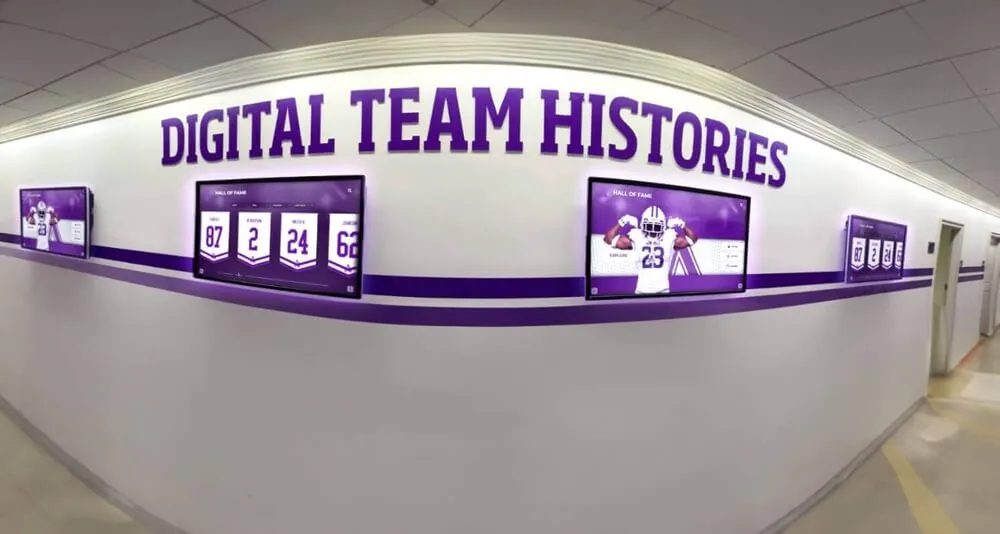
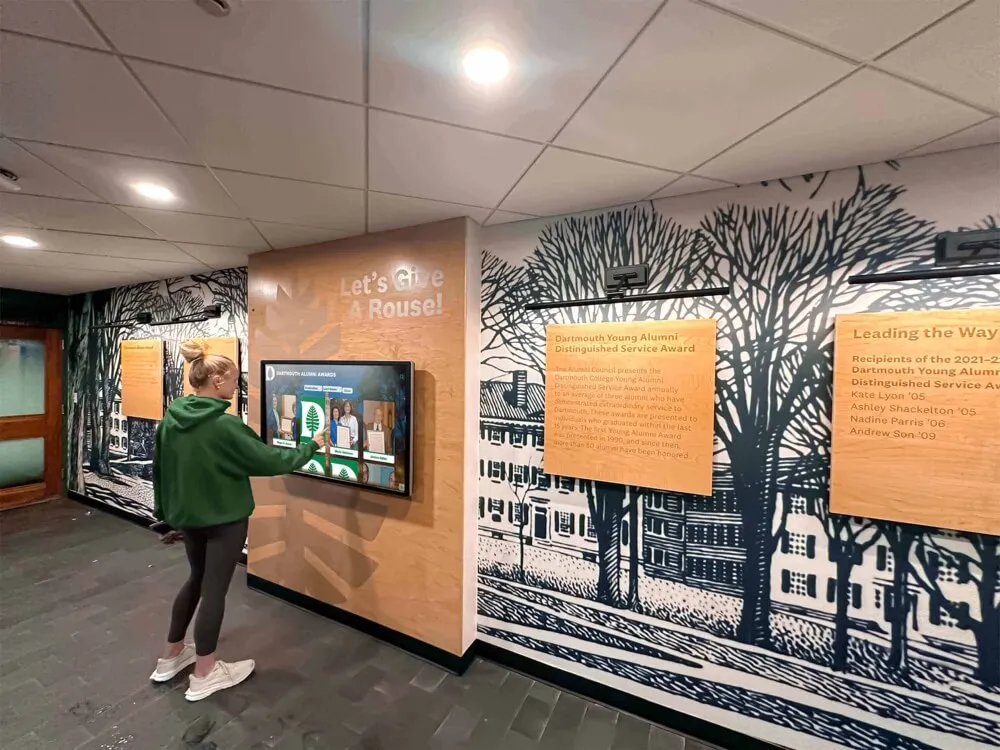
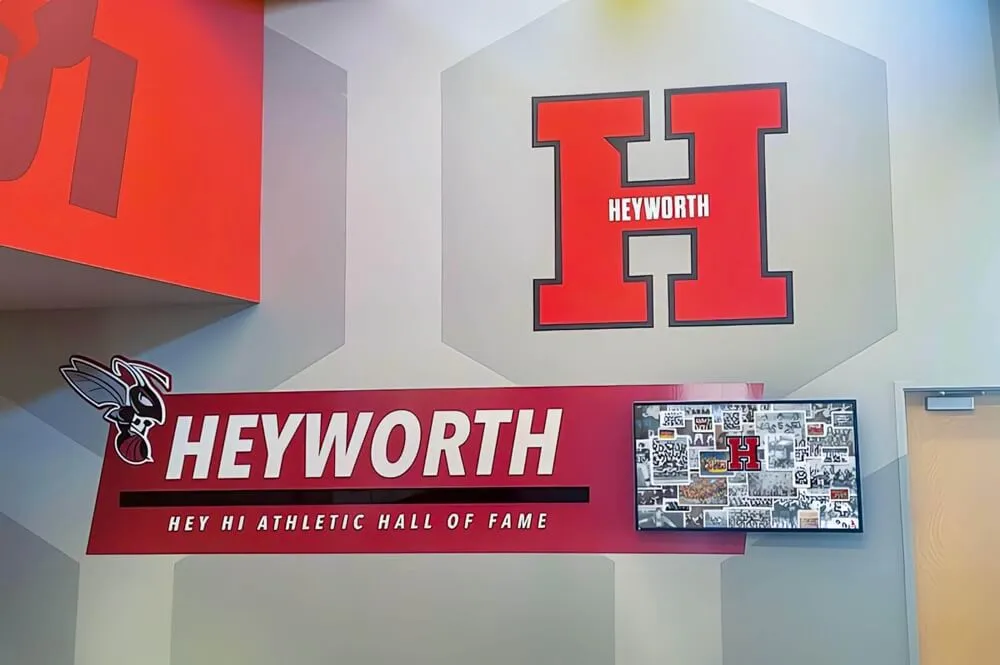
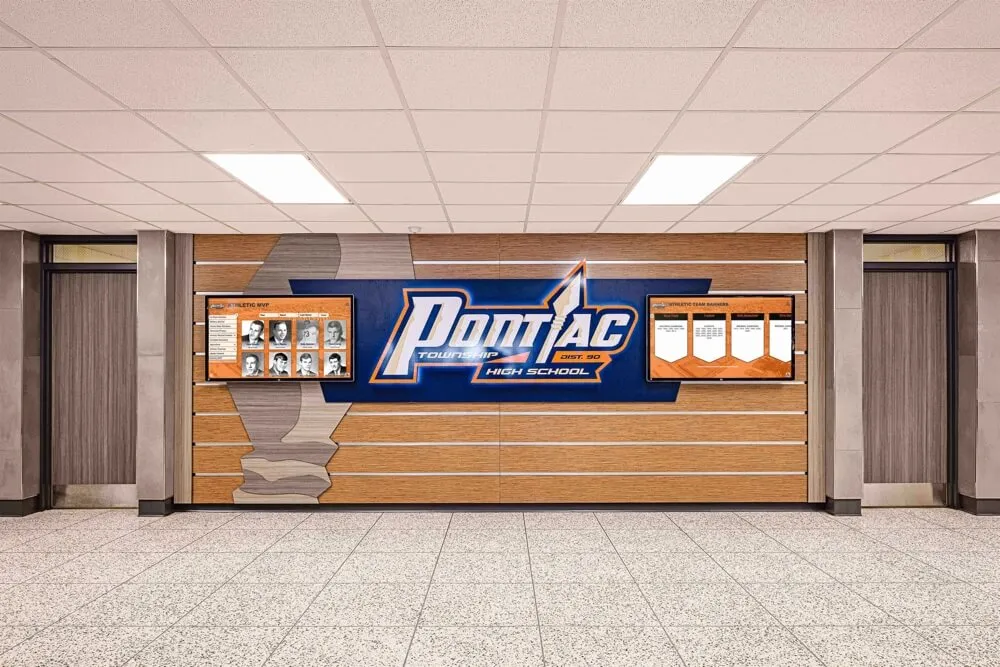
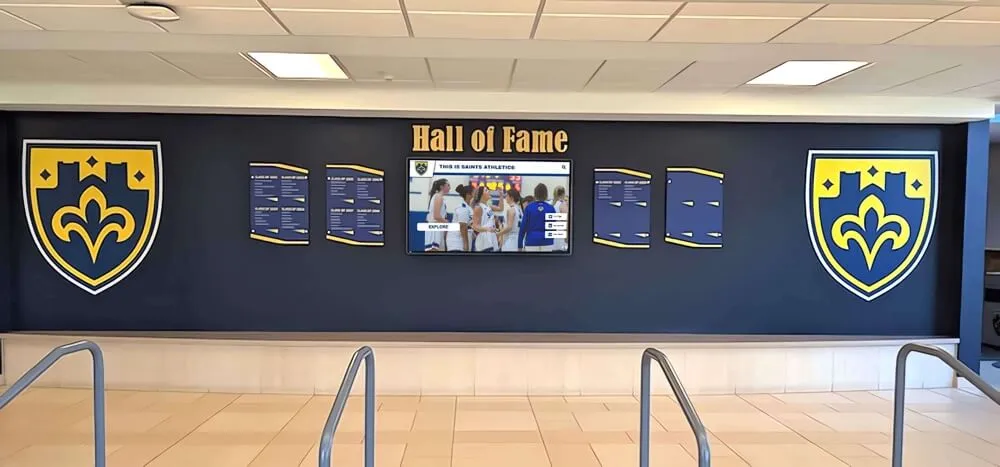
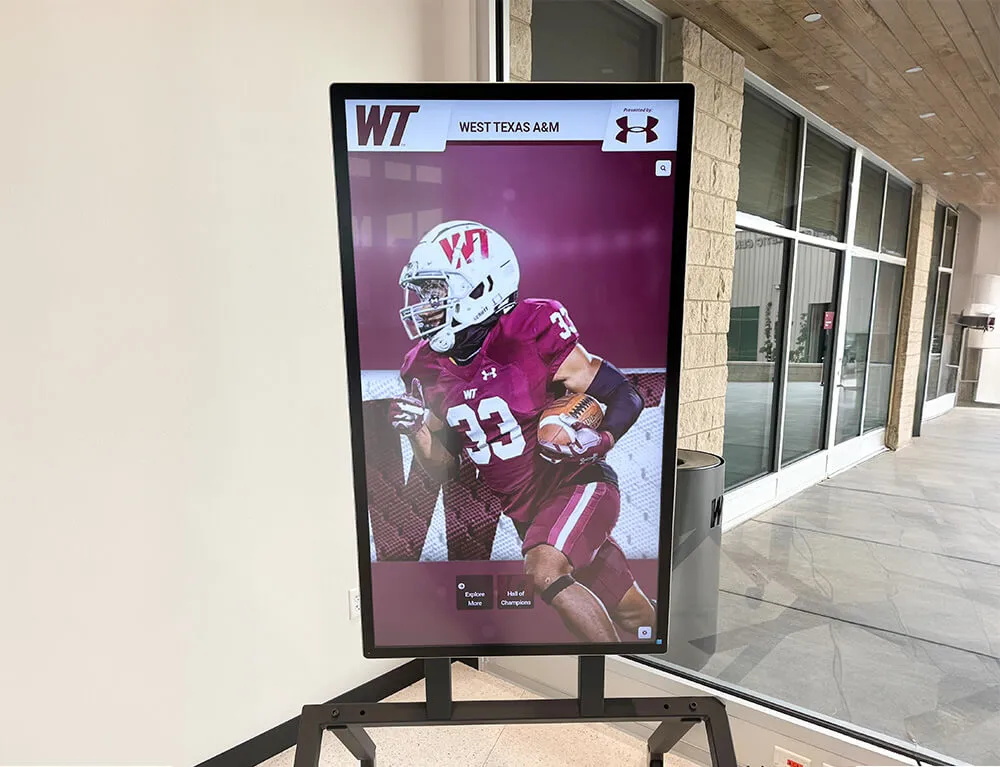
Modern recognition systems make employee achievements visible and celebrated throughout organizations, creating cultures where excellence is systematically honored
The Business Case for Employee of the Month Programs
Before designing recognition programs, understand the measurable impact they deliver when implemented effectively.
Research-Backed Benefits of Employee Recognition
Organizations with strong recognition programs consistently outperform competitors across key metrics:
Employee Retention and Satisfaction
- 82% of employees report that recognition is a significant factor in job satisfaction
- Organizations with recognition programs see 31% lower voluntary turnover
- Recognized employees demonstrate 2.7x higher engagement scores
- Companies with effective recognition save substantial costs avoiding replacement and training expenses
- Recognition programs correlate with reduced absenteeism and improved attendance
Performance and Productivity Impact
- Employees receiving regular recognition show 14% higher productivity than those without acknowledgment
- Recognition creates positive peer pressure encouraging excellence throughout teams
- Visible acknowledgment of exceptional work normalizes high performance standards
- Well-designed programs reinforce specific behaviors organizations want replicated
- Recognition builds momentum, with acknowledged employees often sustaining elevated performance
Organizational Culture Development
- Recognition programs signal organizational values and priorities
- Systematic acknowledgment creates positive workplace cultures where people feel valued
- Visible recognition reduces competition-driven toxicity by celebrating diverse contributions
- Programs demonstrating fairness improve trust in leadership and organizational processes
- Recognition strengthens employee connection to mission and organizational identity
These benefits materialize only when programs demonstrate genuine appreciation rather than checking boxes with perfunctory gestures. Employees quickly distinguish authentic recognition from obligatory programs lacking real meaning.
Common Recognition Program Failures
Understanding why many employee of the month programs fail helps avoid typical pitfalls:
Perception of Favoritism
- Vague selection criteria enabling bias and politics
- Same individuals receiving repeated recognition
- Lack of transparency in nomination and selection processes
- Management-only selection without peer input
- Recognition patterns suggesting predetermined outcomes
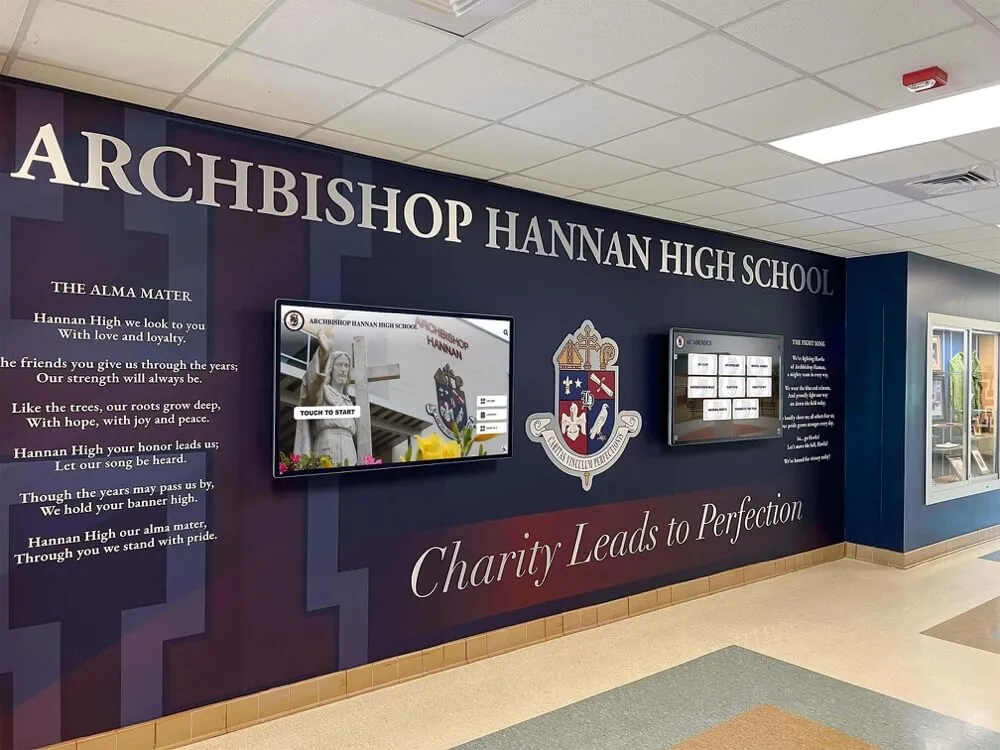
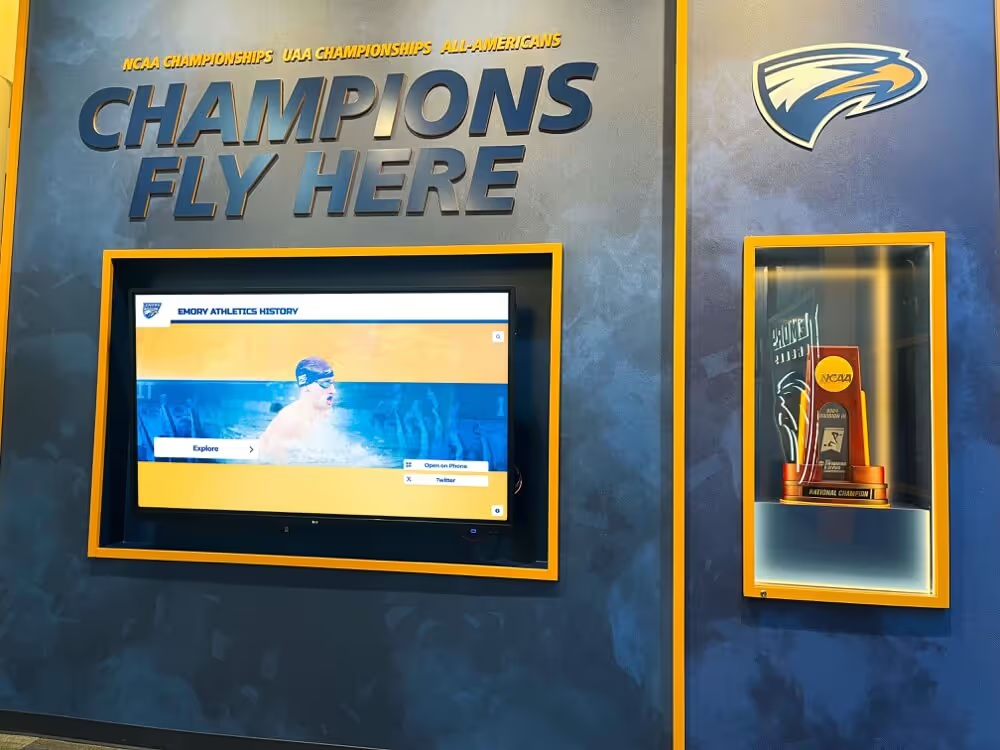
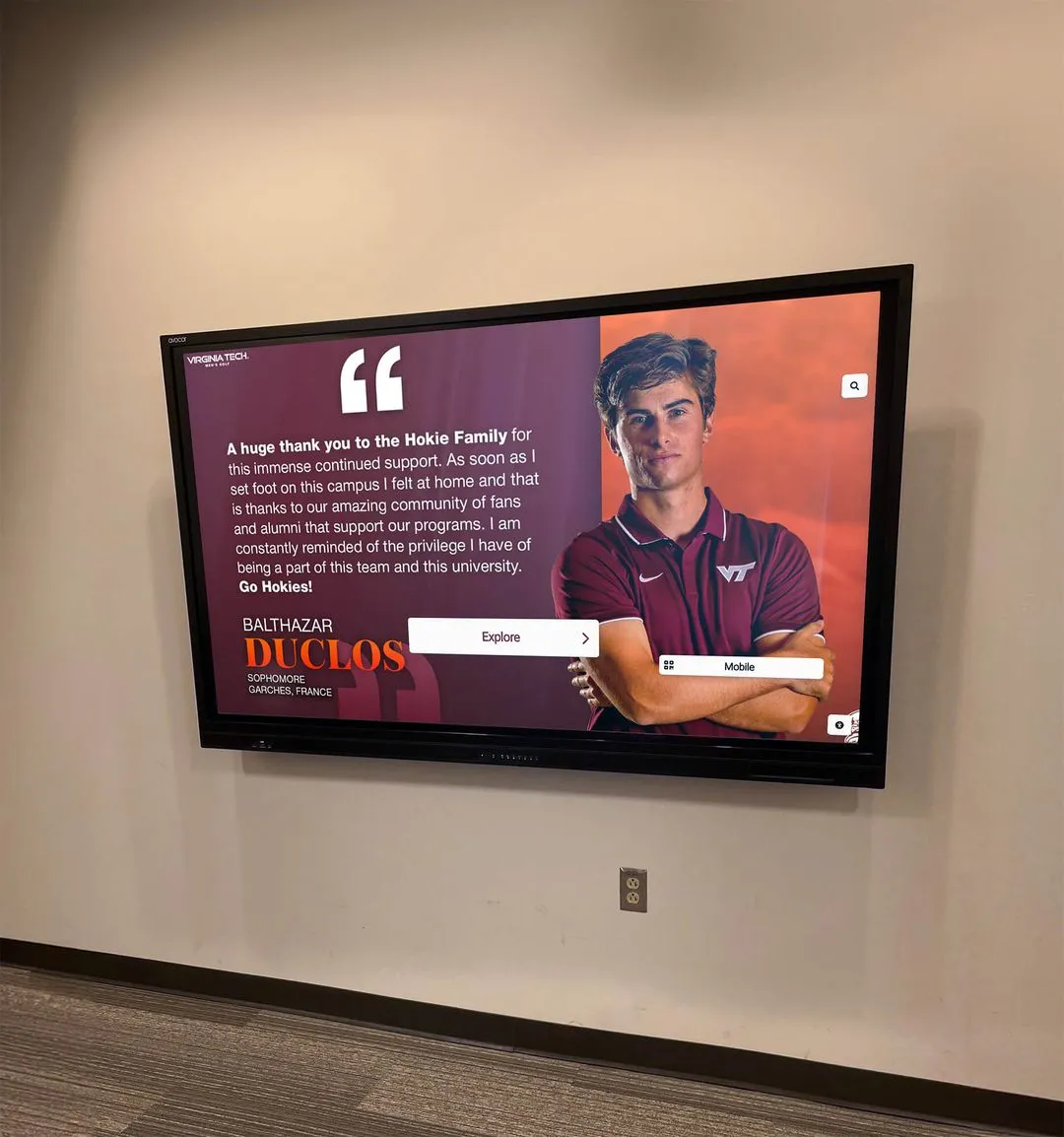
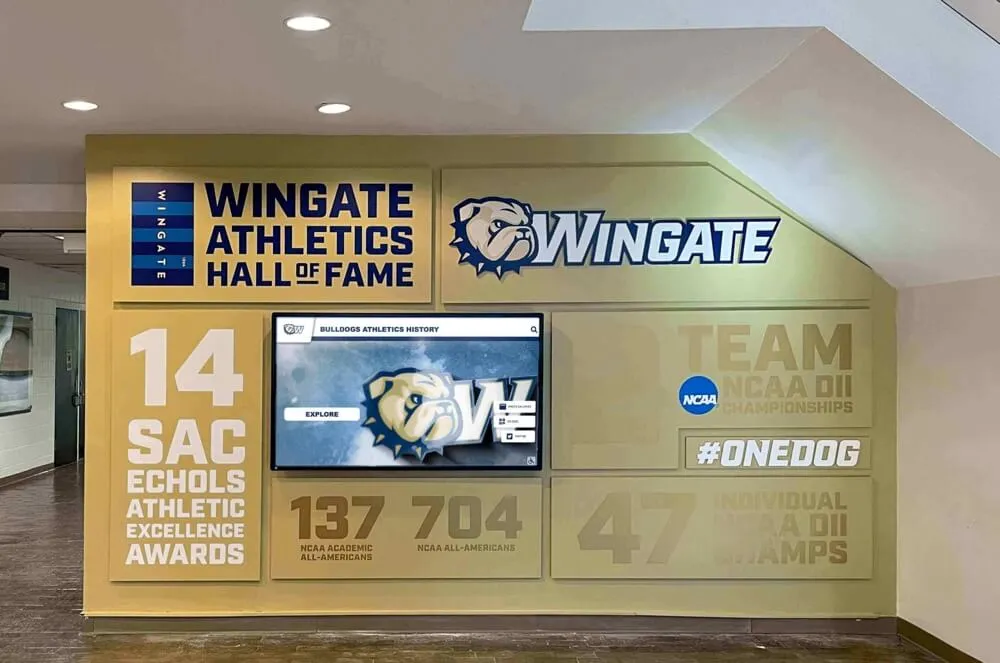
Professional recognition displays create engaging platforms for celebrating employee achievements and organizational excellence
Insufficient Recognition Value
- Token gifts feeling more obligatory than meaningful
- Brief announcements providing minimal visibility
- No lasting acknowledgment beyond immediate announcement
- Generic praise lacking specificity about actual contributions
- Recognition that feels disconnected from real appreciation
Inconsistent Implementation
- Programs starting enthusiastically but fading over time
- Irregular selection schedules creating confusion
- Forgotten announcements or delayed recognition
- Different standards across departments or locations
- Leadership failing to prioritize recognition consistently
Avoiding these failures requires intentional design addressing each potential weakness systematically.
Designing Effective Selection Criteria
The foundation of credible employee of the month programs lies in transparent, objective criteria that employees perceive as fair.
Multi-Dimensional Recognition Framework
Moving beyond single metrics ensures comprehensive recognition of diverse contributions:
Quantifiable Performance Metrics
- Sales results, production numbers, or measurable outputs
- Quality scores, error rates, or accuracy metrics
- Customer satisfaction ratings and feedback scores
- Project completion rates and timeline adherence
- Efficiency improvements or process optimization results
Qualitative Contribution Measures
- Innovation and creative problem-solving demonstrations
- Collaboration quality and team support
- Mentoring and peer development activities
- Initiative in identifying and addressing challenges
- Adaptability during organizational change or challenges
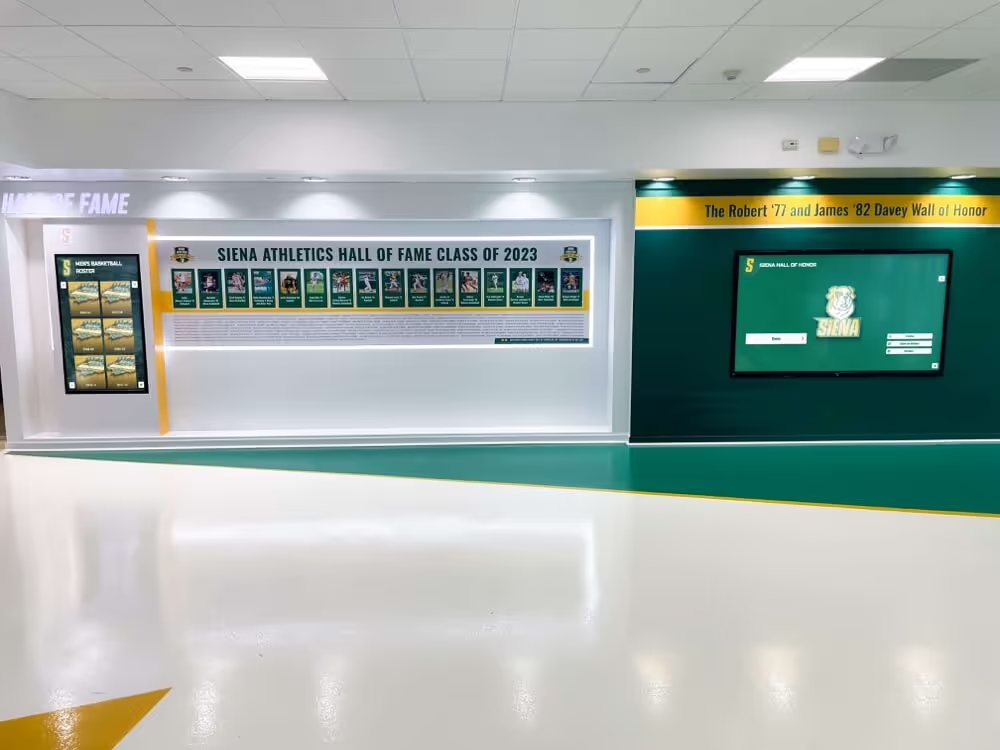
Organizations serving educational or institutional contexts often integrate employee recognition with broader achievement displays. For example, schools implementing comprehensive recognition systems showcase staff excellence alongside student achievement, creating cultures celebrating success across all community members.
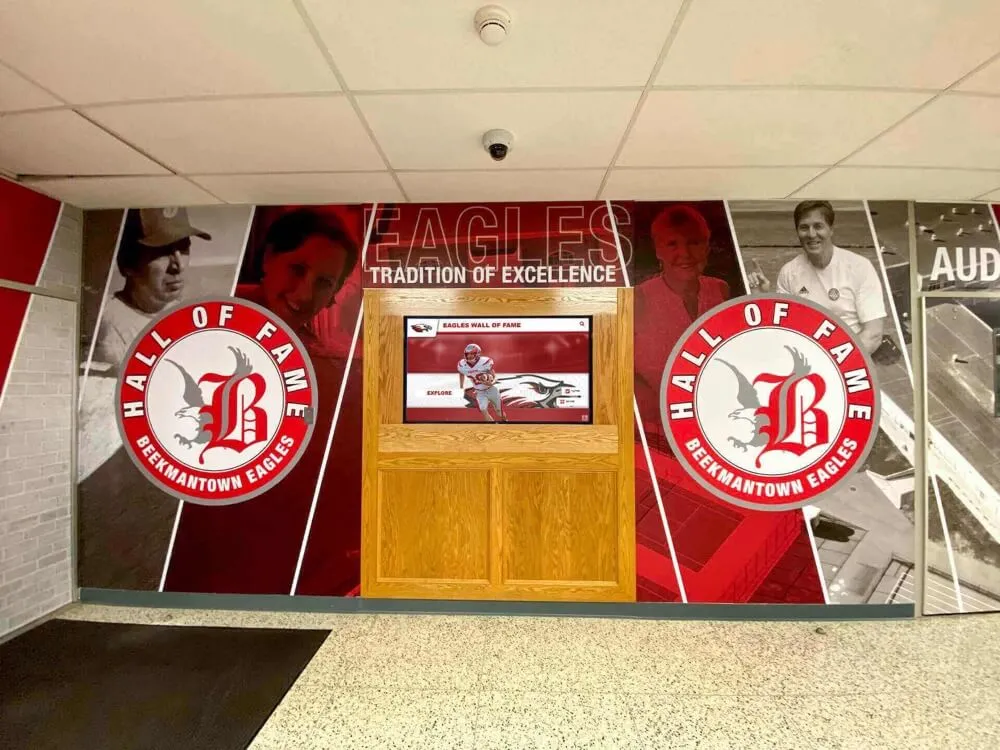
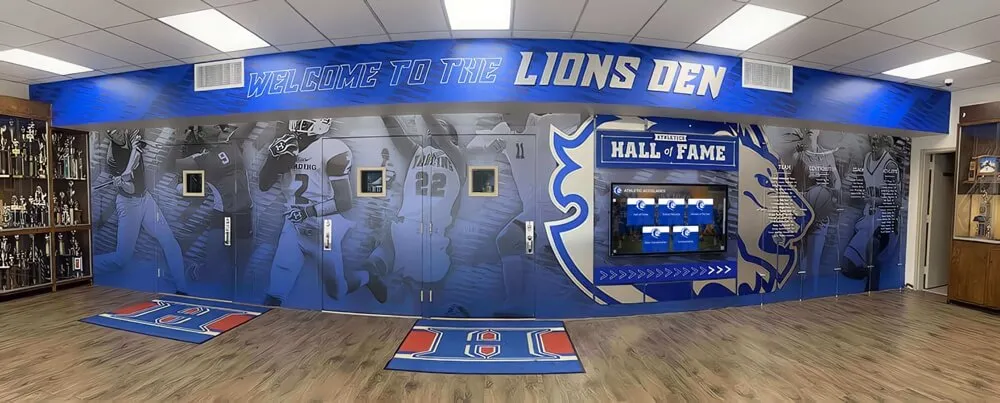
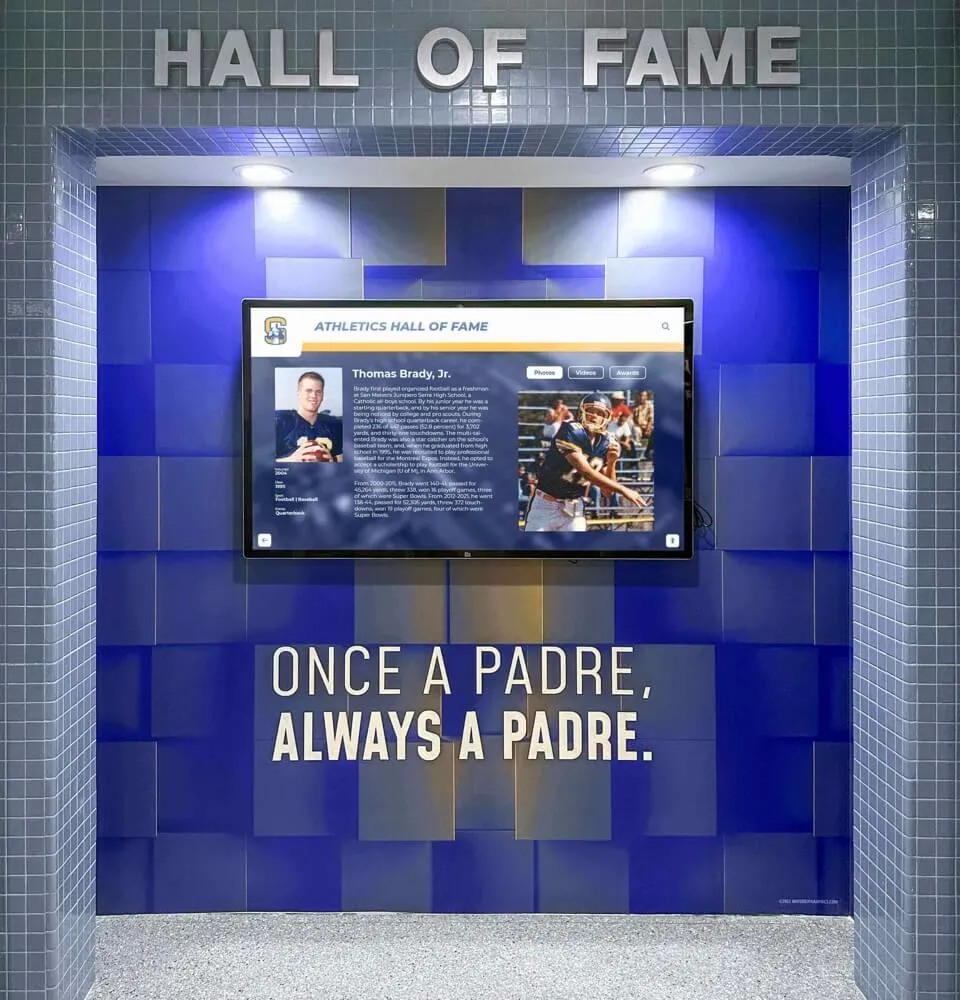
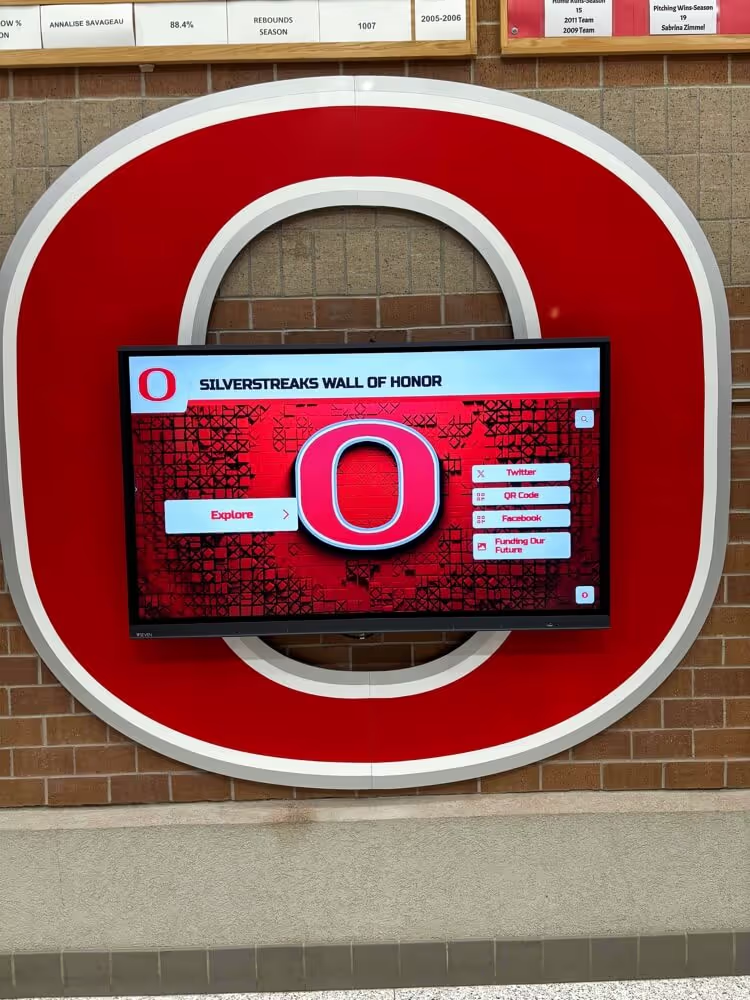
Integrated recognition systems combine employee acknowledgment with organizational achievements, creating comprehensive celebration spaces
Values and Culture Alignment
- Demonstrations of organizational core values
- Customer service excellence and relationship building
- Safety consciousness and protocol adherence
- Inclusion efforts and team culture building
- Representation of organizational mission in daily work
Growth and Development Recognition
- Skill acquisition and professional development
- Performance improvement from previous periods
- Leadership development and increased responsibility
- Cross-training and capability expansion
- Overcoming challenges or obstacles
This multi-dimensional approach ensures recognition opportunities exist for diverse roles and contribution types rather than favoring only easily quantifiable positions.
Nomination and Selection Process
Transparent processes build program credibility and employee trust:
Nomination Methods
- Peer nomination: Colleagues nominate deserving team members
- Manager nomination: Supervisors identify exceptional performers
- Self-nomination: Employees can highlight their own contributions
- Cross-departmental nomination: Teams recognize excellent collaboration partners
- Customer/client nomination: External stakeholders acknowledge outstanding service
Selection Committee Structure
- Cross-functional representation ensuring diverse perspectives
- Rotating membership preventing entrenched bias
- Mix of management and peer representatives
- Clear voting or scoring systems for objective evaluation
- Documentation of decision rationale for transparency
Eligibility Parameters
- Minimum tenure requirements (typically 90 days to 6 months)
- Previous winner waiting periods preventing repeated selection
- Part-time and full-time inclusion considerations
- Contractor and temporary employee eligibility decisions
- Department rotation requirements ensuring broad recognition
Companies managing recognition across multiple locations often implement distributed selection processes ensuring all facilities receive appropriate acknowledgment while maintaining consistent standards.
Recognition Components and Awards
Meaningful employee of the month programs combine tangible rewards with visible acknowledgment creating lasting impact.
Tangible Award Elements
Monetary and Gift Recognition
- Cash bonuses or gift cards with meaningful value
- Additional paid time off or flex scheduling
- Premium parking spots or facility privileges
- Professional development funding or conference attendance
- Experience gifts (dinner certificates, entertainment tickets, etc.)
Award value should reflect genuine appreciation without creating perverse incentives. Most organizations find $100-500 range appropriate for monthly recognition, scaling based on company size and resources.
Practical Recognition Benefits
- Flexible schedule privileges for the recognition month
- First choice for vacation time or shift preferences
- Access to executive dining or special amenities
- Professional development opportunities or training
- Home office upgrades or equipment improvements
Visibility and Public Recognition
The most impactful recognition creates visibility throughout organizations:
Internal Communication Channels
- Company-wide email announcements with achievement details
- Intranet features highlighting specific contributions
- Team meeting acknowledgment with context-rich descriptions
- Digital signage displays showing current recipients
- Newsletter profiles telling recognition stories
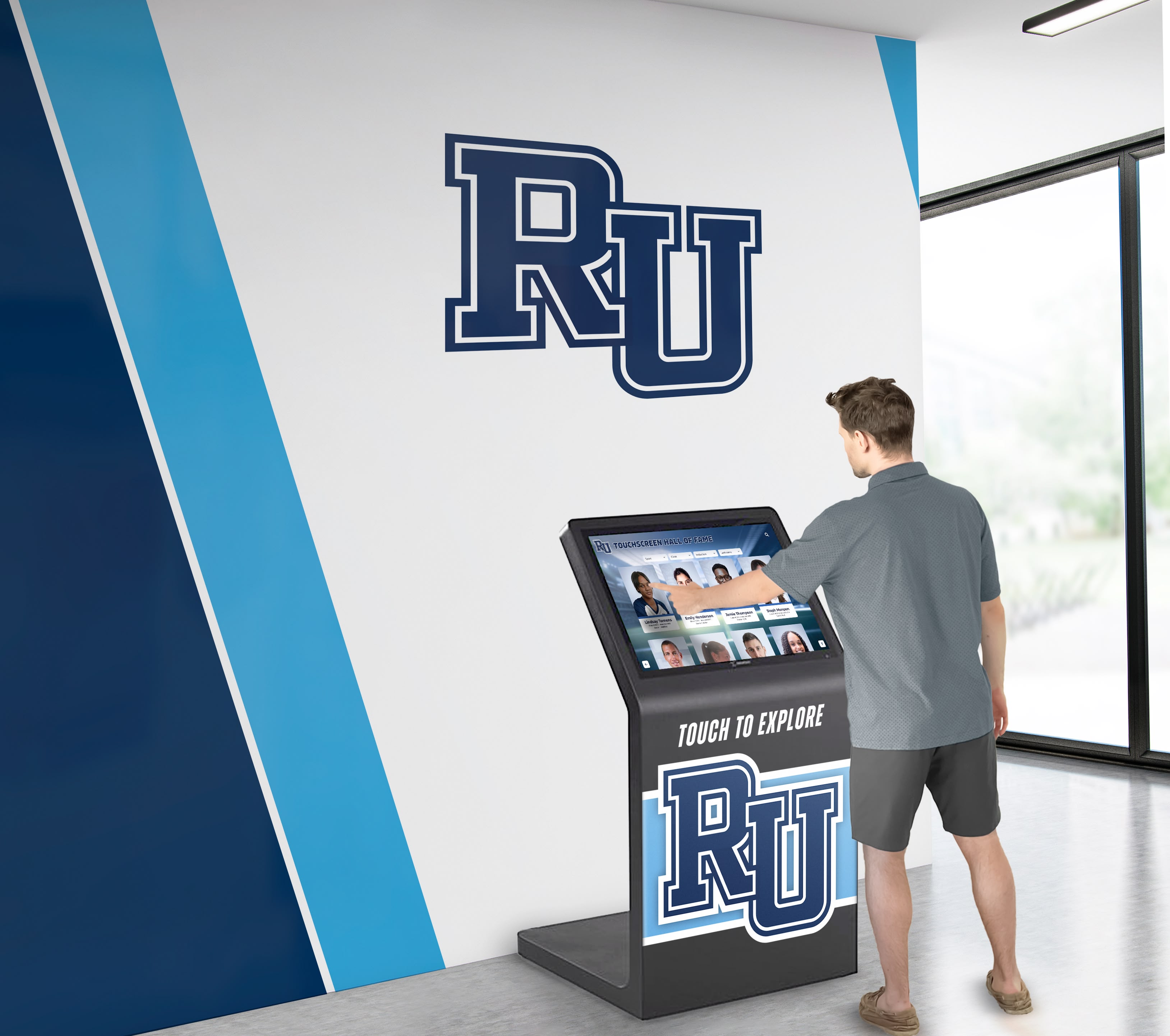
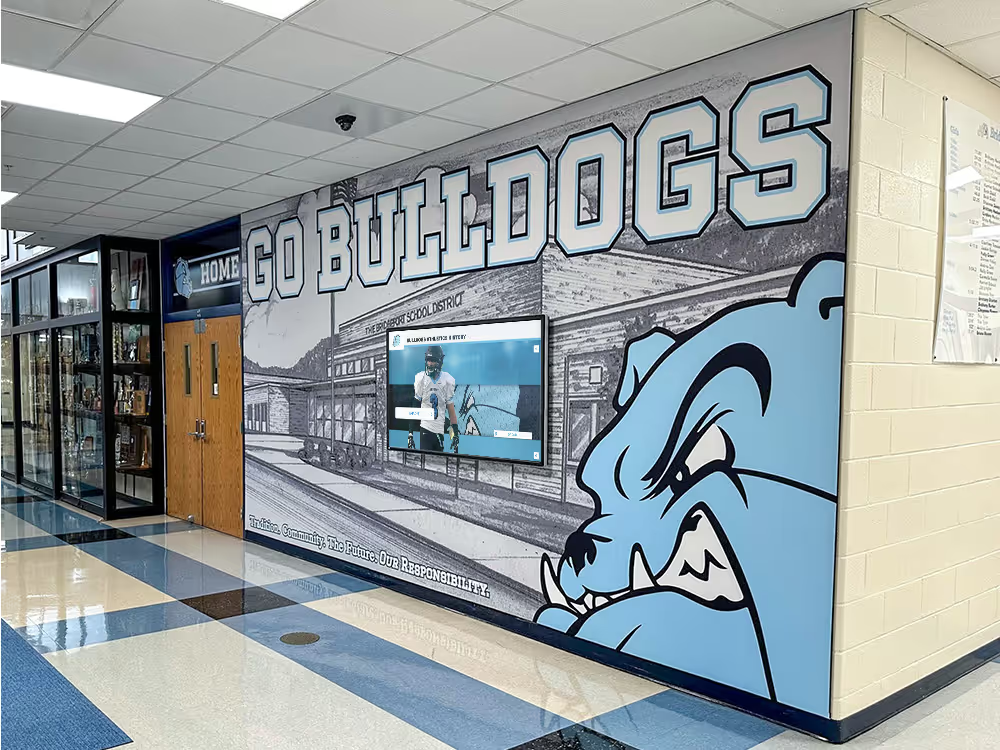
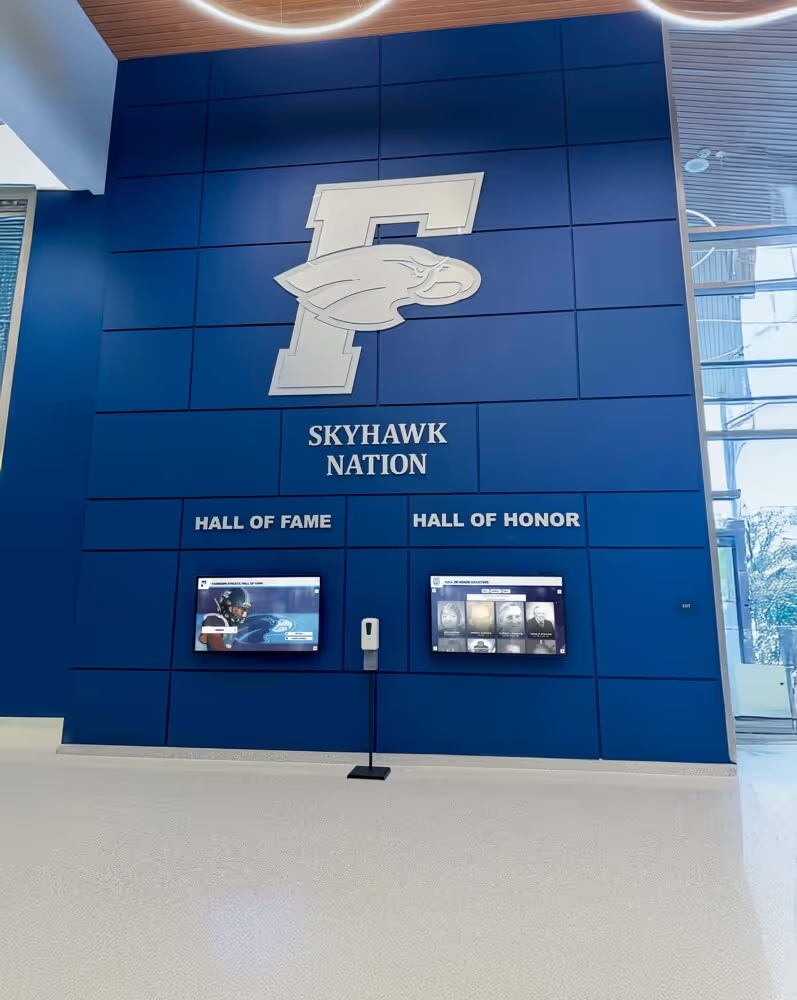
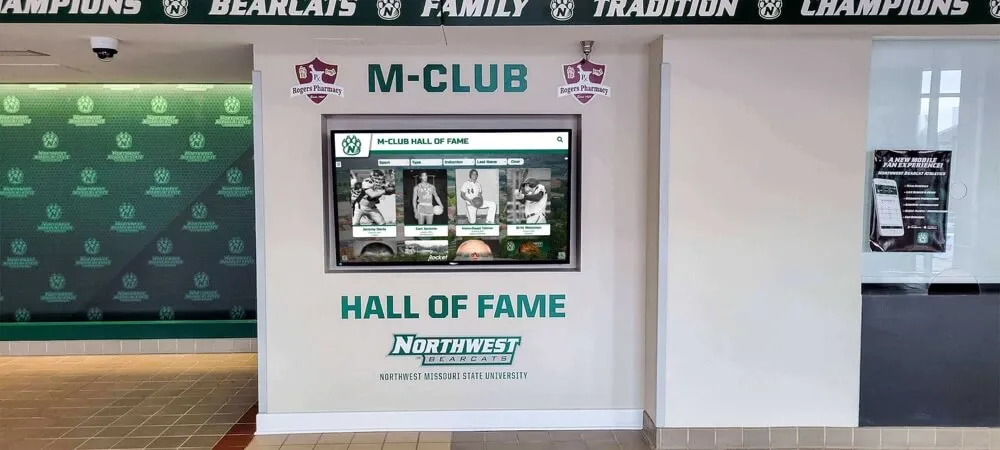
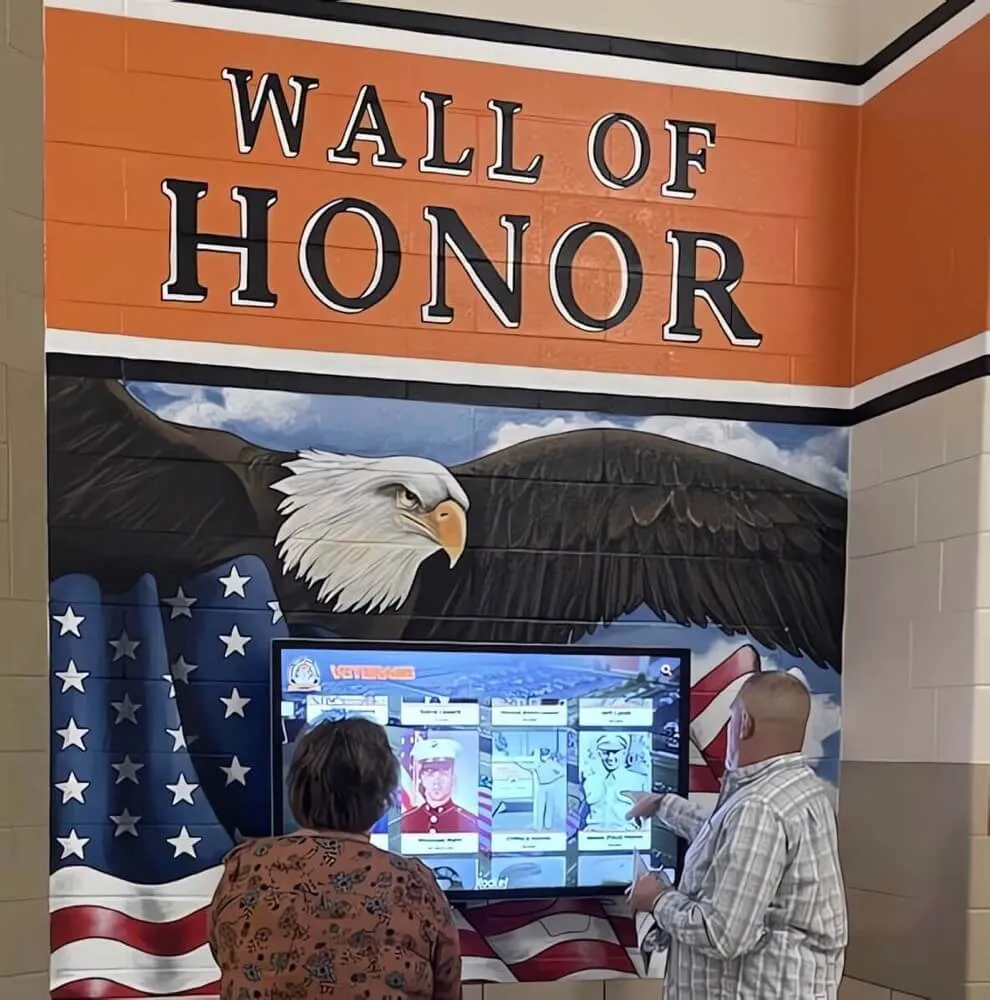
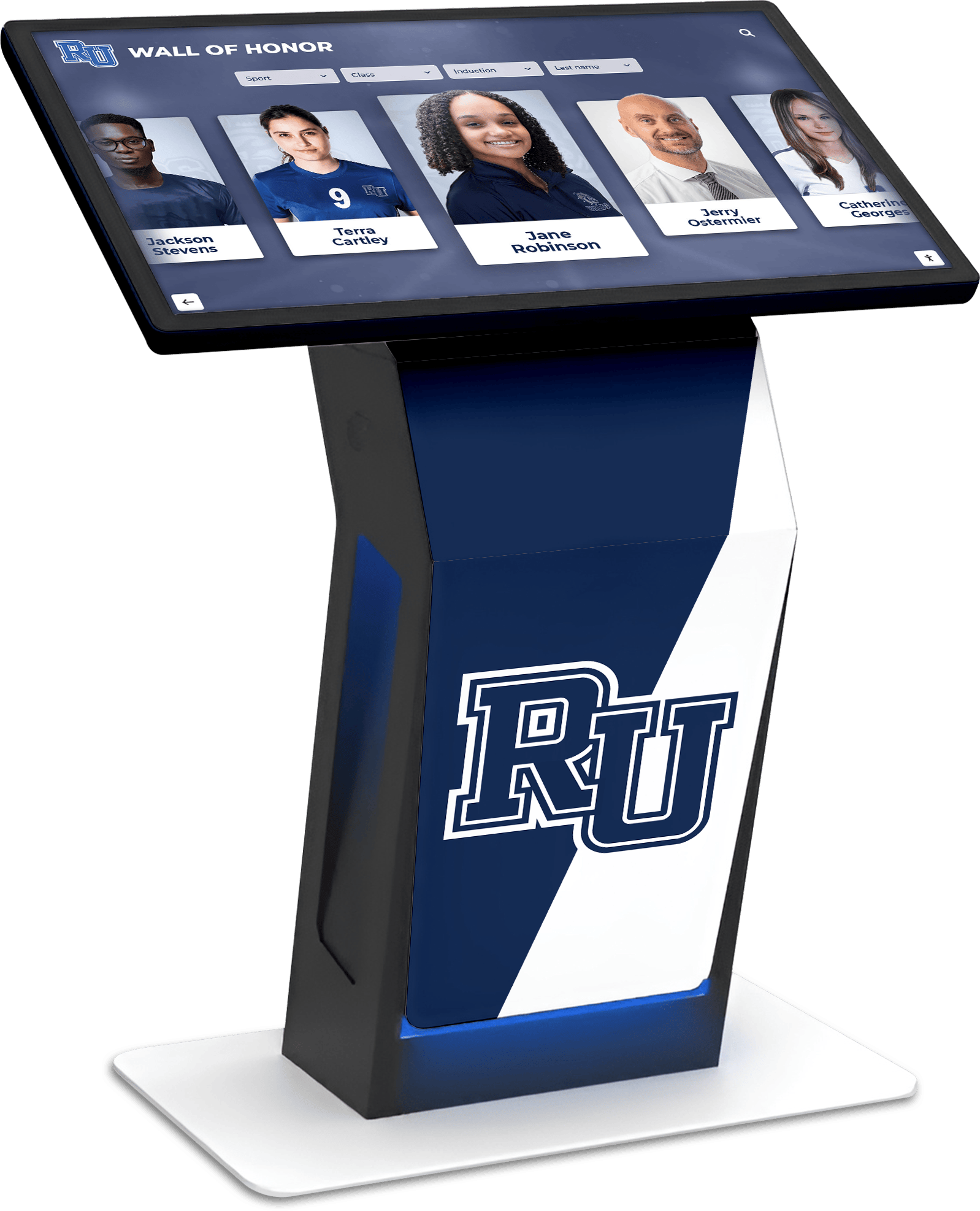
Interactive displays enable colleagues and visitors to explore employee achievements and organizational excellence
Physical Recognition Displays
- Lobby or entrance displays featuring current recipients
- Department-specific recognition boards
- Trophy or plaque displays in common areas
- Photo walls documenting all past recipients
- Digital recognition systems providing searchable achievement archives
External Recognition Opportunities
- Social media posts celebrating employee excellence (with permission)
- Customer communication highlighting outstanding service providers
- Industry publication submissions for exceptional achievements
- Community media recognition for notable contributions
- Organizational website features telling employee success stories
Organizations serving educational environments often integrate employee recognition with student achievement displays. Schools implementing comprehensive recognition platforms create unified systems celebrating excellence across all organizational members.
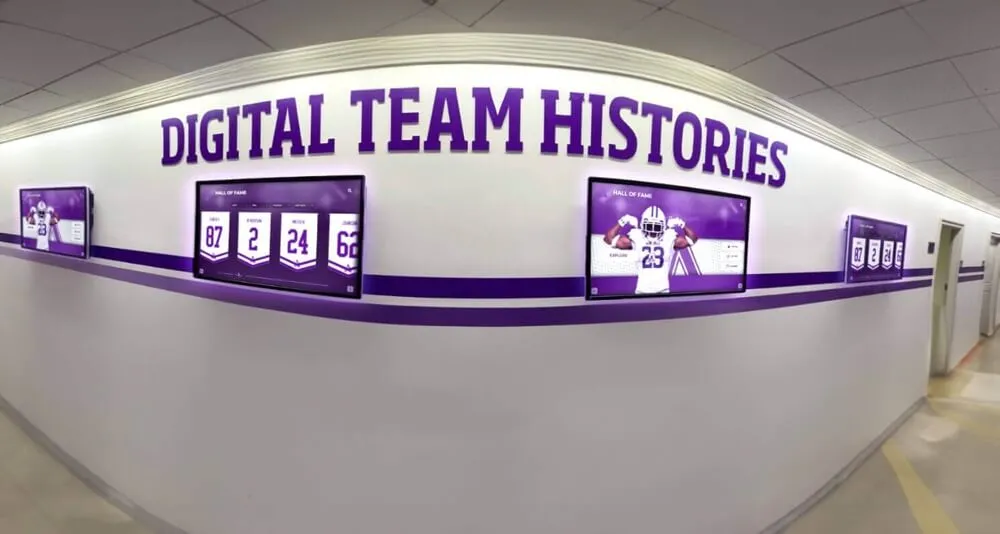
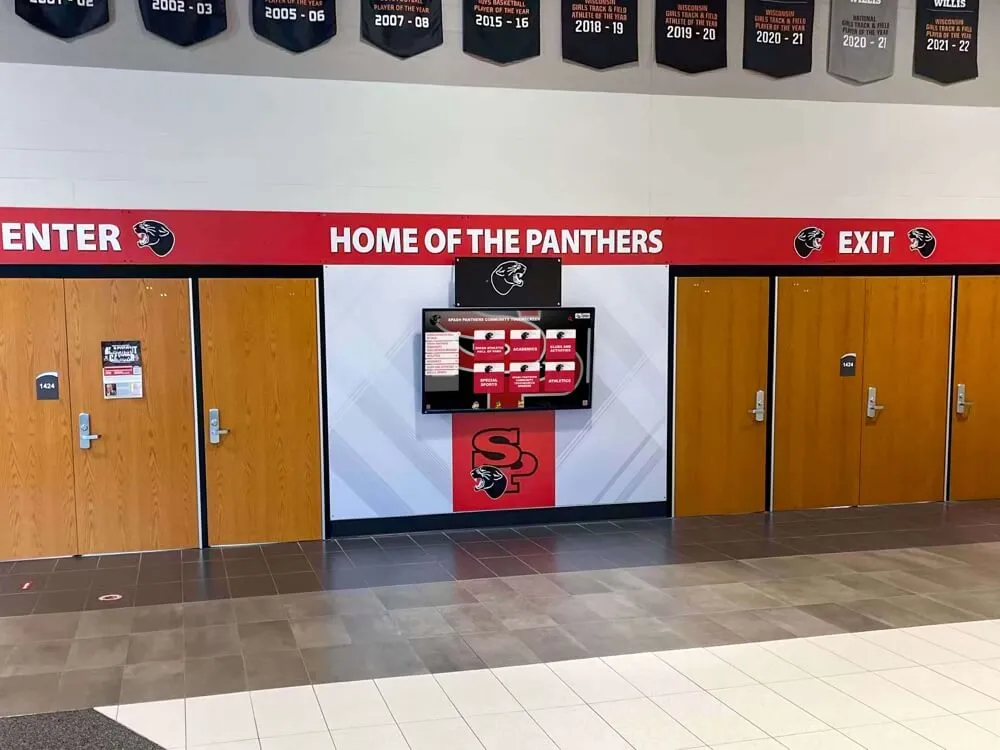
Networked recognition displays provide consistent employee acknowledgment across multiple locations while enabling centralized content management
Ceremony and Celebration
Formal recognition moments amplify program impact:
Recognition Events
- Monthly all-hands meetings featuring award presentations
- Department-specific celebrations honoring team members
- Quarterly recognition gatherings for multiple award recipients
- Annual recognition banquets celebrating year-long achievement
- Surprise recognition presentations creating memorable moments
Recognition Presentation Best Practices
- Specific descriptions of contributions and accomplishments
- Context explaining why achievements matter to organization
- Colleague or manager testimonials providing personal perspective
- Photo opportunities creating lasting memory documentation
- Meaningful time allocation demonstrating genuine importance
Strong recognition moments transform awards from transactions to experiences employees genuinely value and remember.
Industry-Specific Recognition Approaches
Different organizational contexts require adapted recognition strategies aligned with specific environments and cultures.
Corporate Office Environments
Professional services and corporate settings benefit from structured recognition frameworks:
Recognition Categories
- Outstanding customer service and client relationship management
- Innovation and process improvement initiatives
- Team collaboration and cross-functional support
- Project excellence and deadline achievement
- Leadership development and mentoring contributions
Organizations managing corporate recognition programs increasingly implement digital systems showcasing achievement archives accessible to employees across distributed locations and remote work environments.
Educational Institution Staff Recognition
Schools, colleges, and universities implement recognition programs acknowledging diverse staff contributions:
School Staff Categories
- Teacher excellence and innovative instruction
- Administrative support and operational excellence
- Custodial and maintenance exemplary service
- Food service quality and student relationship building
- Safety and transportation reliability and care
Educational institutions benefit from recognition systems that honor both staff excellence and student achievement through integrated platforms. Schools implementing comprehensive recognition displays create cultures celebrating success across entire communities.
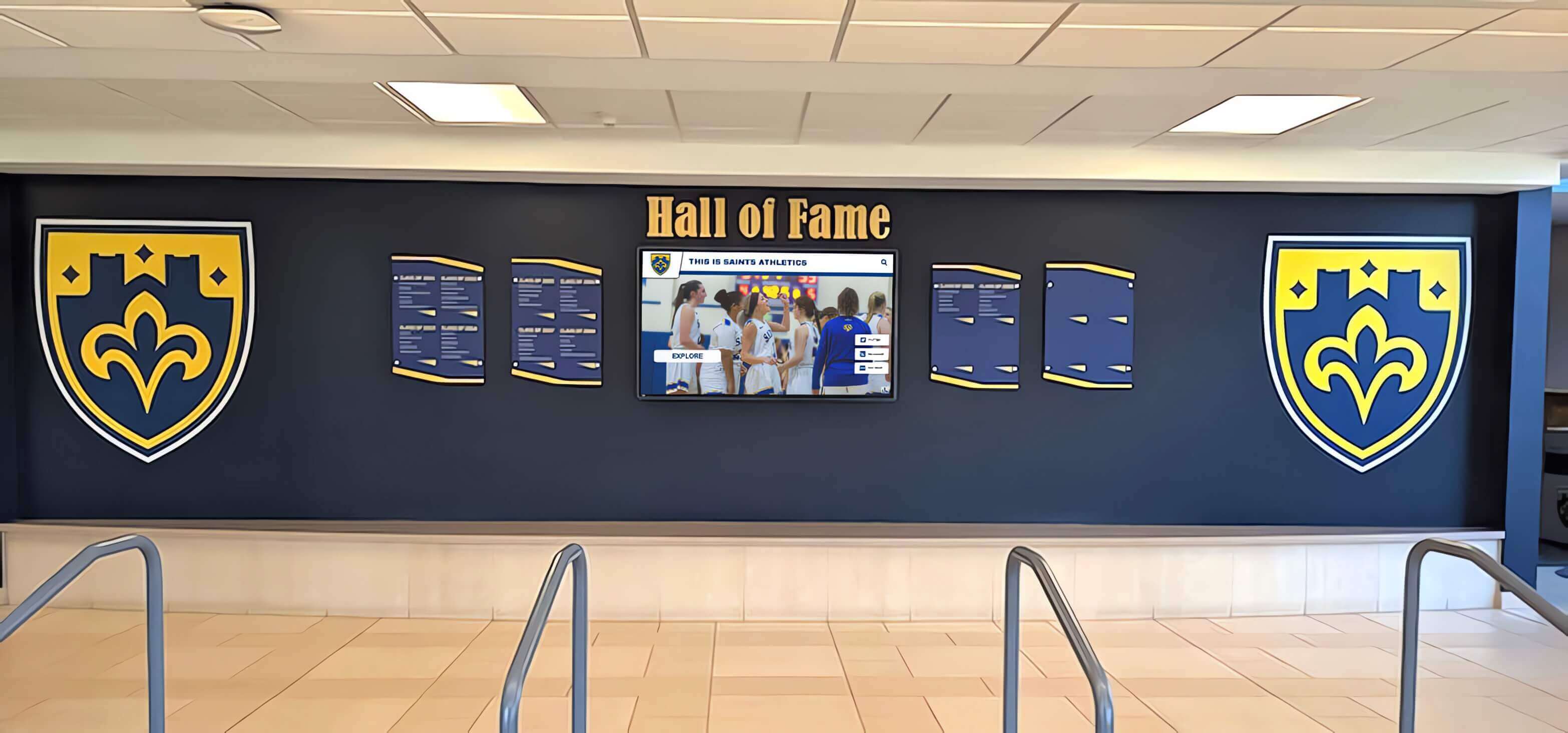
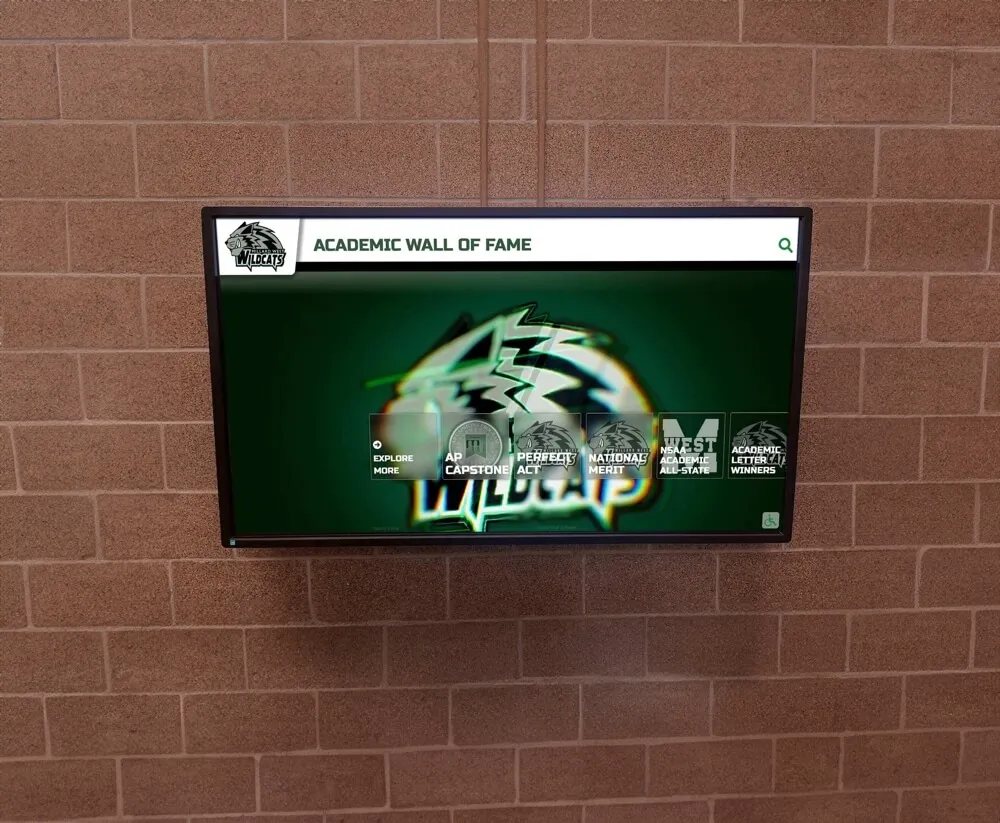
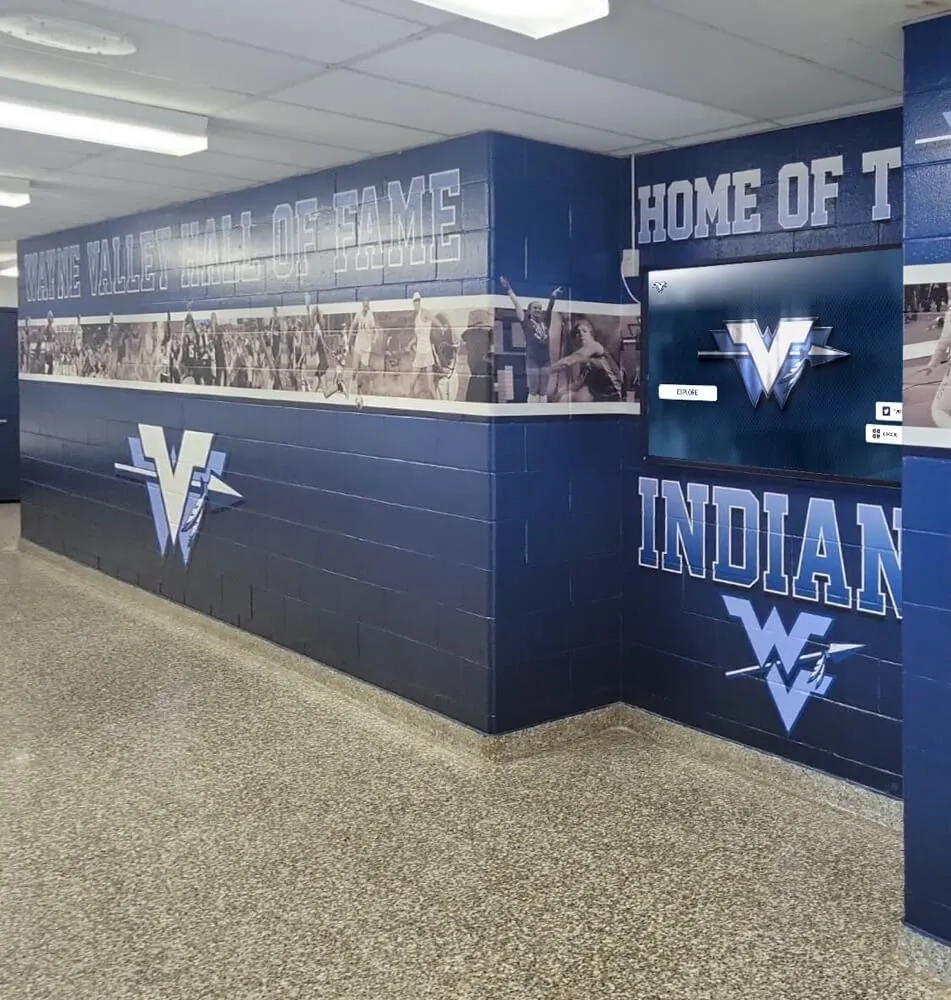
Educational environments integrate staff recognition with student achievement displays, creating comprehensive celebration systems honoring all community members
Healthcare and Service Industries
Patient-facing and service-intensive organizations prioritize recognition reflecting mission-critical values:
Healthcare Recognition Focus
- Exceptional patient care and compassion demonstrations
- Safety protocol excellence and error prevention
- Team collaboration during high-stress situations
- Innovation improving patient outcomes or experiences
- Reliability and dependability during challenging shifts
Service Industry Recognition
- Customer satisfaction excellence and relationship building
- Problem-solving during challenging situations
- Consistent quality and reliability
- Team support and positive culture contribution
- Flexibility and adaptability to changing needs
Healthcare organizations implementing recognition systems across multiple facilities benefit from networked displays ensuring consistent acknowledgment while accommodating distributed workforces.
Manufacturing and Operations Environments
Production-focused organizations emphasize recognition supporting operational excellence:
Manufacturing Recognition Categories
- Safety performance and incident prevention
- Quality consistency and defect reduction
- Production efficiency and output achievement
- Equipment care and maintenance excellence
- Process improvement suggestions and implementation
Operations Excellence Recognition
- Workflow optimization and bottleneck resolution
- Cross-training and skill development
- Reliability and attendance consistency
- Team collaboration and mutual support
- Adaptation to production changes or challenges
Manufacturing environments benefit from recognition displays positioned in break rooms, production floors, and common areas where all shifts see acknowledgment regardless of work schedules.
Creating Lasting Recognition Systems
While monthly recognition provides regular acknowledgment, the most impactful programs create permanent records honoring employees throughout careers.
Digital Recognition Display Solutions
Modern technology enables organizations to create sophisticated recognition systems that overcome traditional limitations:
Advantages of Digital Employee Recognition
- Unlimited capacity: Showcase all deserving employees without physical space constraints of traditional plaques
- Rich multimedia content: Include photos, achievement descriptions, and career narratives beyond simple names
- Easy updates: Add new recipients and update information remotely without physical installation costs
- Searchable archives: Enable employees and visitors to easily find specific individuals and achievements
- Analytics and engagement: Track which recognition generates most interest and interaction
- Cost efficiency: Eliminate recurring costs of ordering and installing new plaques for each recipient
Organizations implementing comprehensive digital recognition platforms create professional systems that honor current achievers while preserving historical recognition accessible for years.
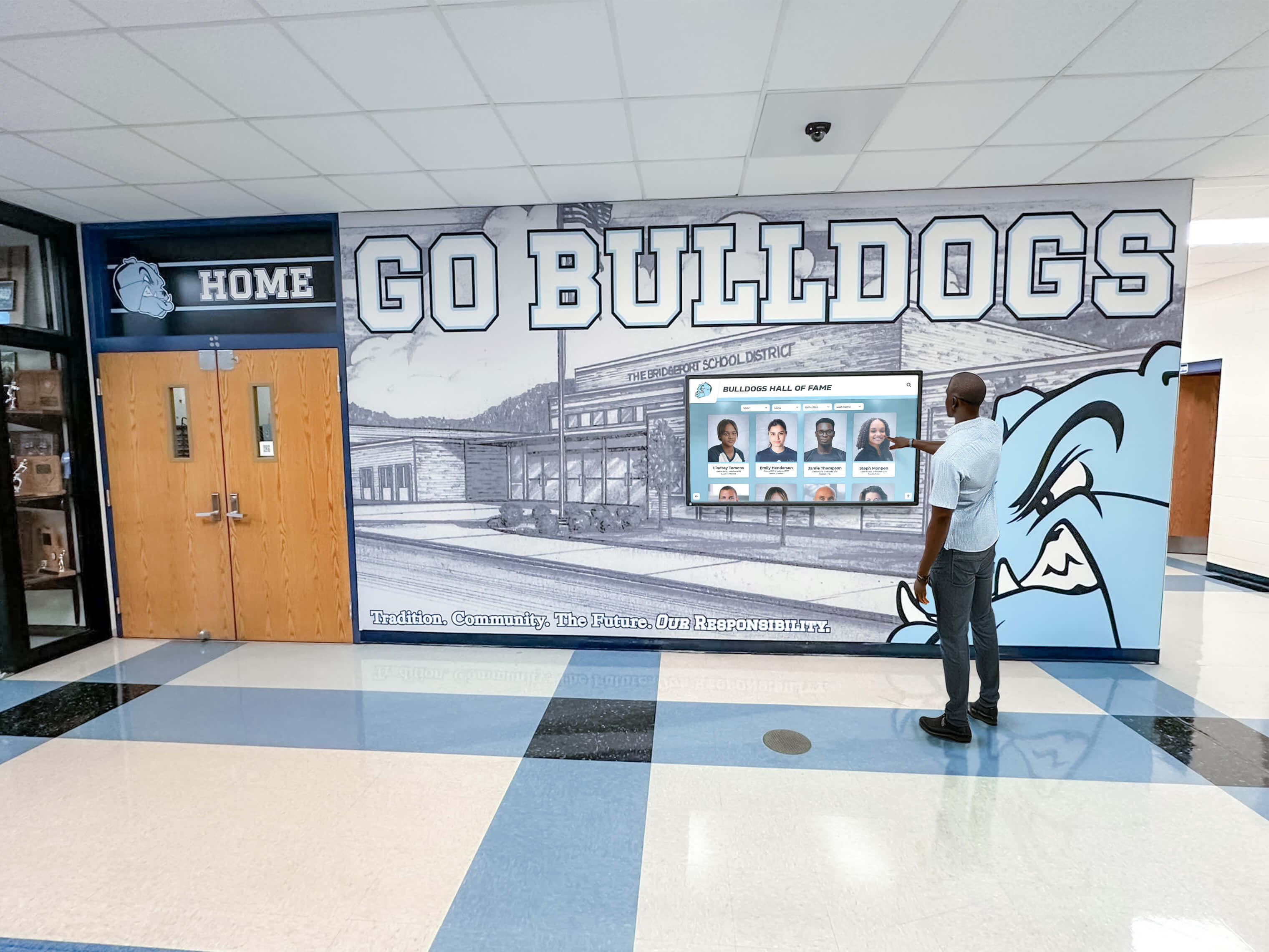
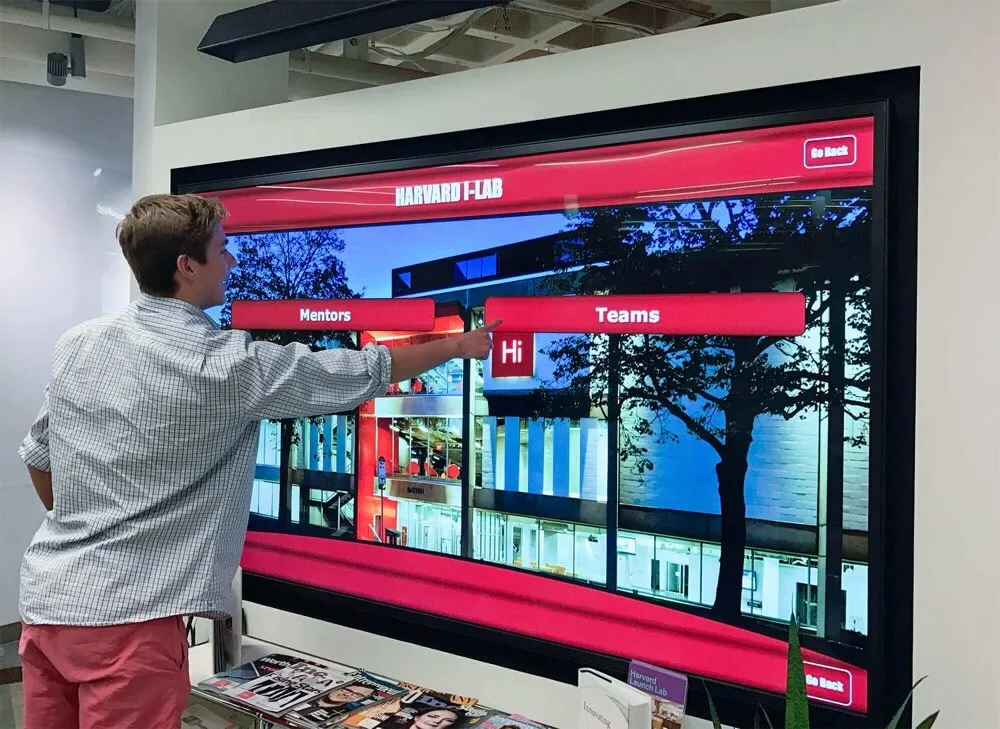
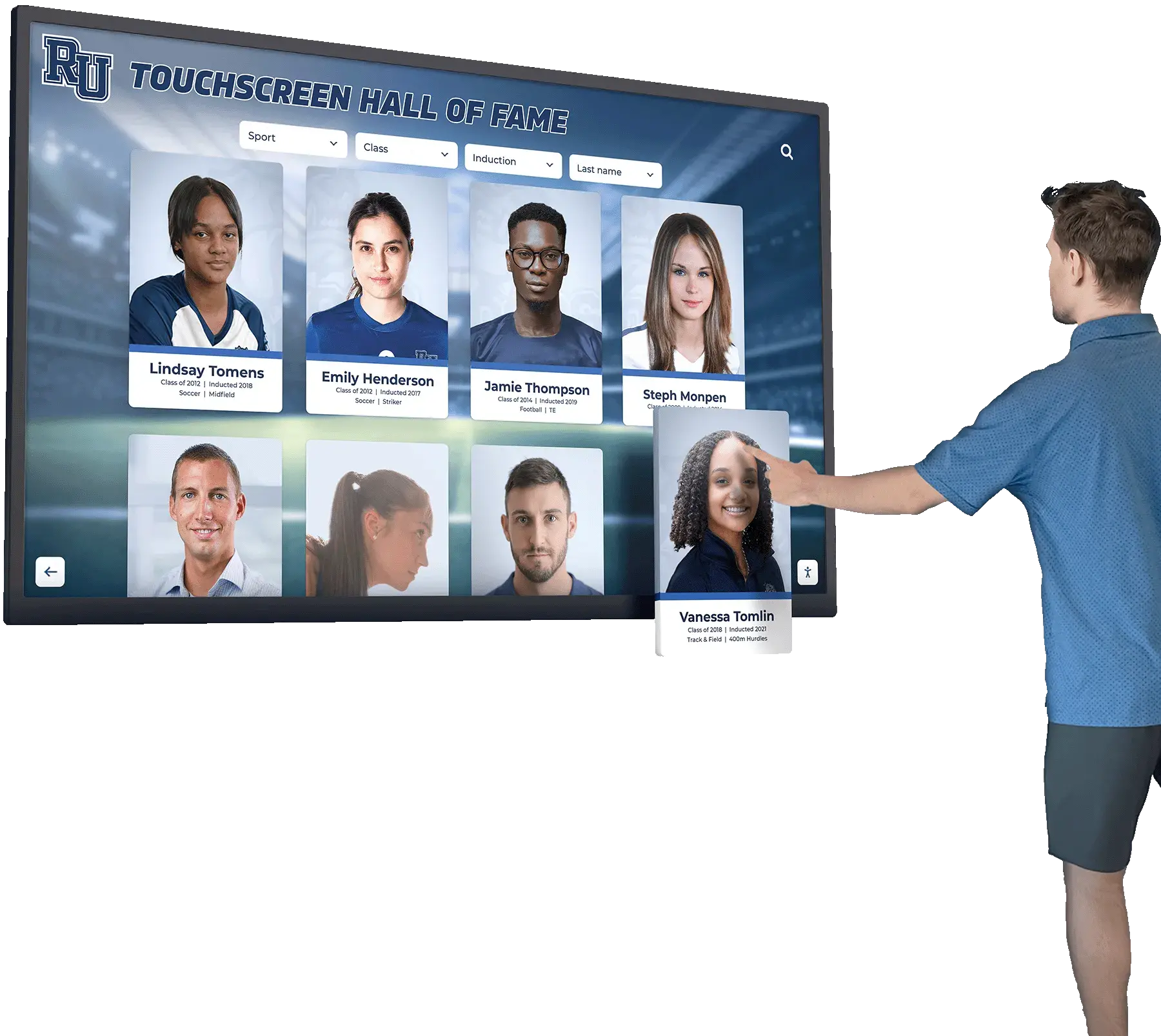
Touchscreen recognition systems enable organizations to create engaging employee achievement displays that remain current and professionally maintained over time
Implementation Considerations
- Lobby or entrance placements ensuring high visibility
- Department-specific displays creating localized recognition
- Break room and common area installations reaching all employees
- Web-accessible platforms extending recognition beyond physical locations
- Integration with internal communication systems
Solutions like Rocket Alumni Solutions provide turnkey recognition platforms designed specifically for organizations seeking professional employee acknowledgment systems that remain easily manageable as staff evolve and achieve new milestones.
Career Milestone Recognition
Employee of the month programs should complement broader recognition systems acknowledging long-term contributions:
Service Anniversary Recognition
- 1-year anniversary celebrating successful onboarding and initial contributions
- 5-year milestones acknowledging established value and expertise development
- 10-year recognition honoring sustained commitment and institutional knowledge
- 15, 20, 25+ year celebrations of career-long dedication
- Retirement recognition honoring complete career contributions
Career Achievement Recognition
- Promotion acknowledgment as employees advance
- Special project completion and exceptional initiative
- Professional certification and skill development
- Leadership and mentoring contributions
- Innovation and process improvement achievements
Organizations implementing comprehensive recognition systems create platforms where monthly awards and career milestone recognition coexist, providing acknowledgment at multiple meaningful moments throughout employment.
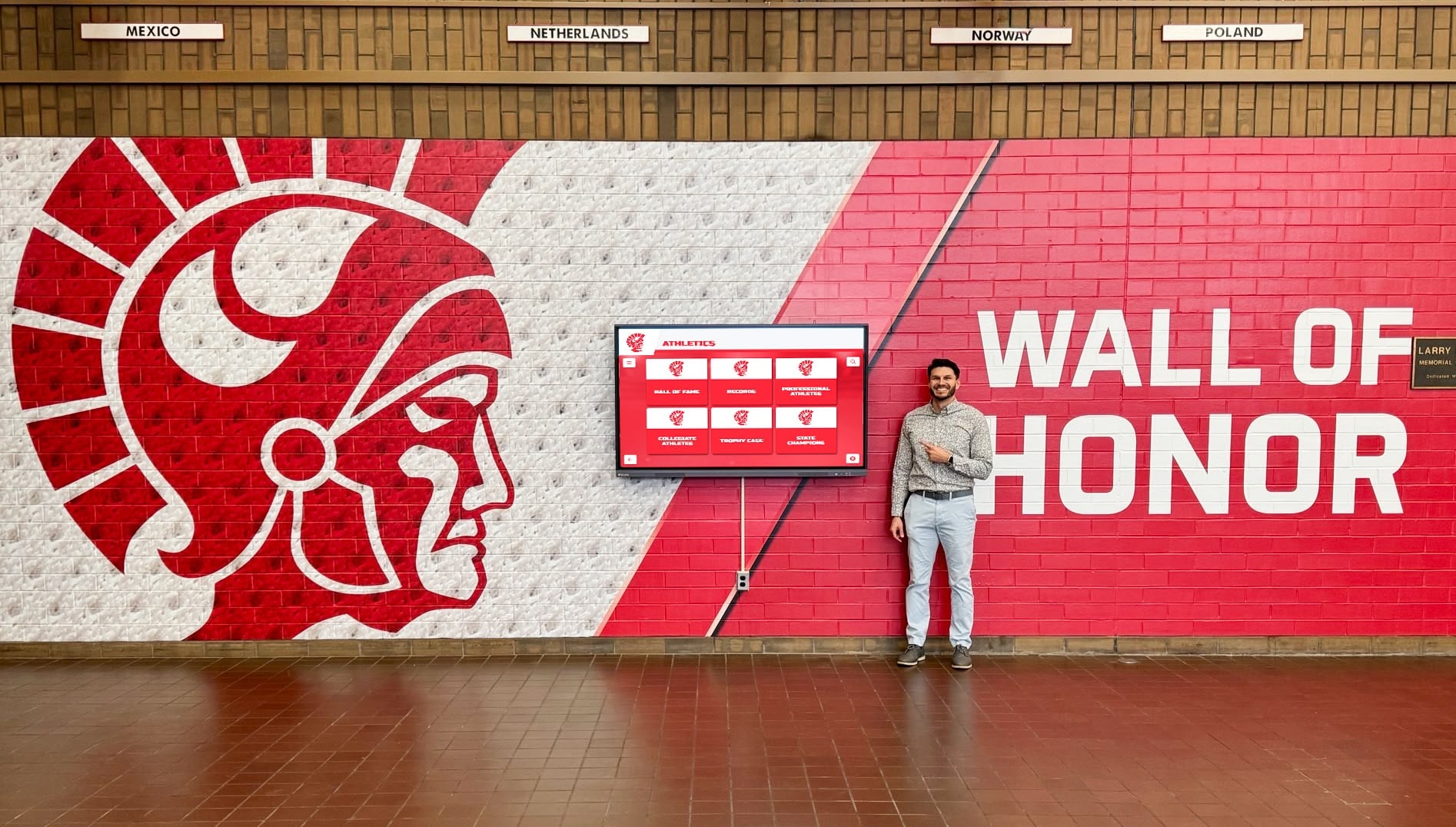
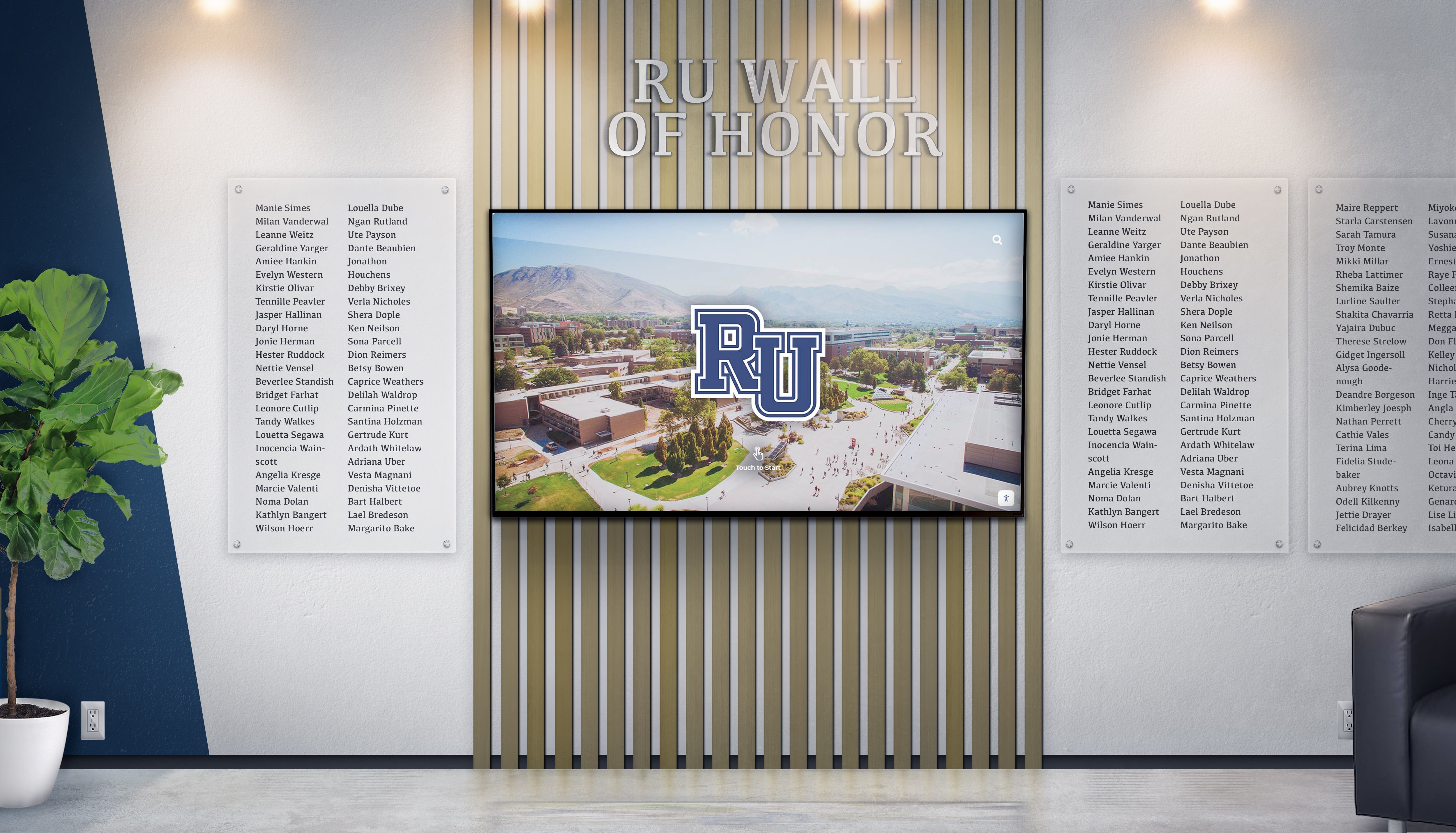
Permanent recognition walls create lasting tributes honoring employees who define organizational excellence throughout careers
Hall of Excellence Programs
Organizations with substantial history benefit from formal employee halls of excellence honoring exceptional long-term contributors:
Eligibility and Selection
- Sustained excellence over multiple years or decades
- Significant organizational impact and contribution
- Innovation or leadership advancing company success
- Mentoring and development of other employees
- Embodiment of organizational values and culture
Implementation Strategies
- Annual induction ceremonies celebrating new honorees
- Permanent displays featuring all hall of excellence members
- Detailed profiles documenting career achievements and contributions
- Video testimonials from colleagues and leadership
- Integration with monthly recognition creating comprehensive systems
These programs transform employee recognition from periodic acknowledgment to permanent celebration of those who built organizational success, creating inspiration for current and future team members.
Program Implementation and Management
Successful recognition programs require systematic planning and sustainable management processes.
Launch Planning
Implementation Timeline
8-12 Weeks Before Launch
- Form recognition program committee with cross-functional representation
- Define recognition criteria and selection processes
- Establish budget for awards, display systems, and ceremonies
- Select or develop recognition display solutions
- Create communication materials explaining program
4-8 Weeks Before Launch
- Train selection committee members on processes and criteria
- Design nomination forms and submission processes
- Prepare physical or digital recognition displays
- Develop communication campaign building awareness
- Create first-month selection timeline and processes
2-4 Weeks Before Launch
- Launch internal communication campaign explaining program details
- Begin accepting nominations for first recognition period
- Finalize award elements and recognition components
- Test digital systems and ensure functionality
- Prepare launch ceremony or announcement event
Launch Week
- Announce program officially with full explanation and enthusiasm
- Recognize first employee of the month recipient with full ceremony
- Document recognition moment with photos and communications
- Solicit feedback about program reception and initial perceptions
- Ensure all staff understand nomination and selection processes
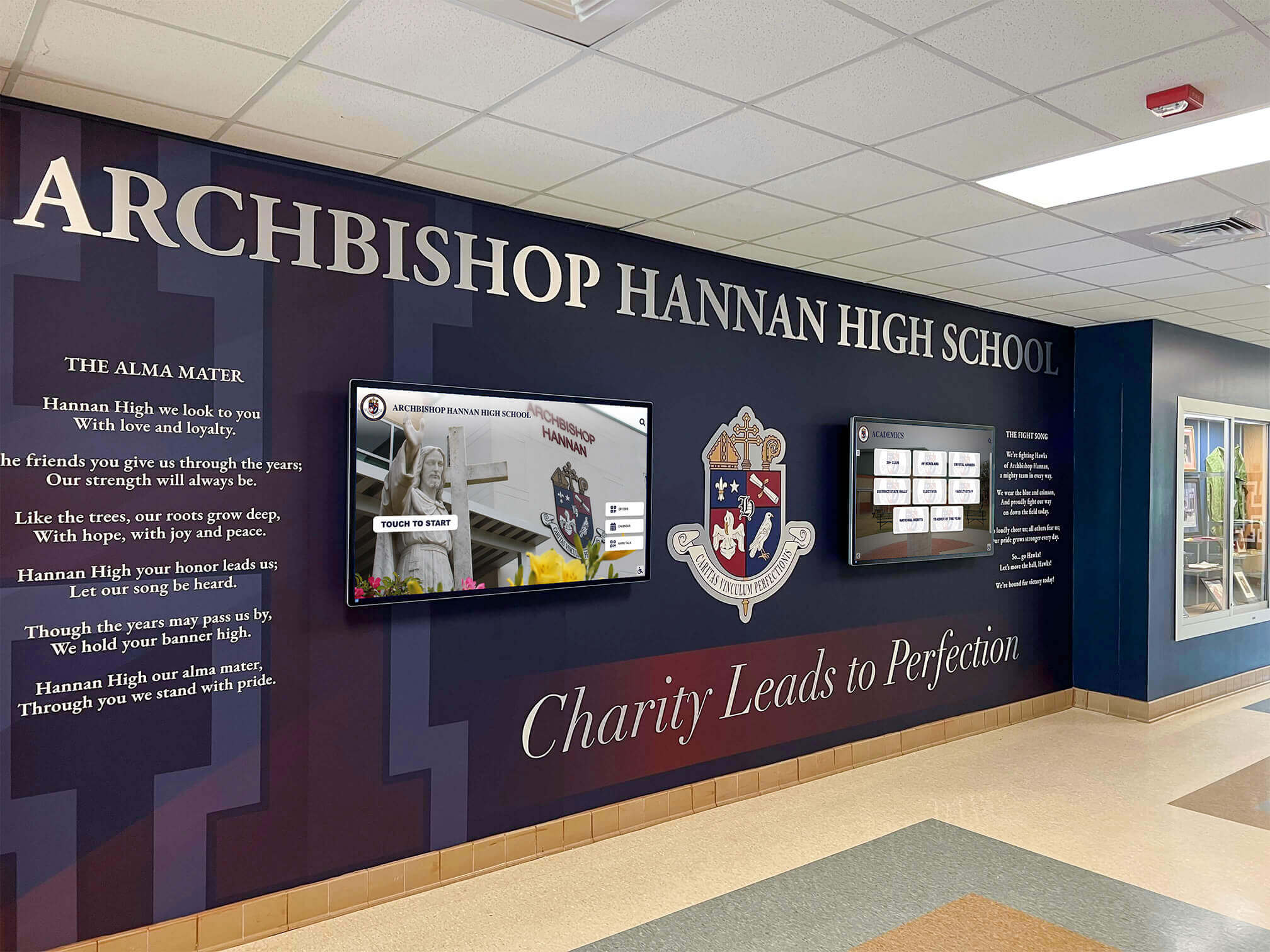
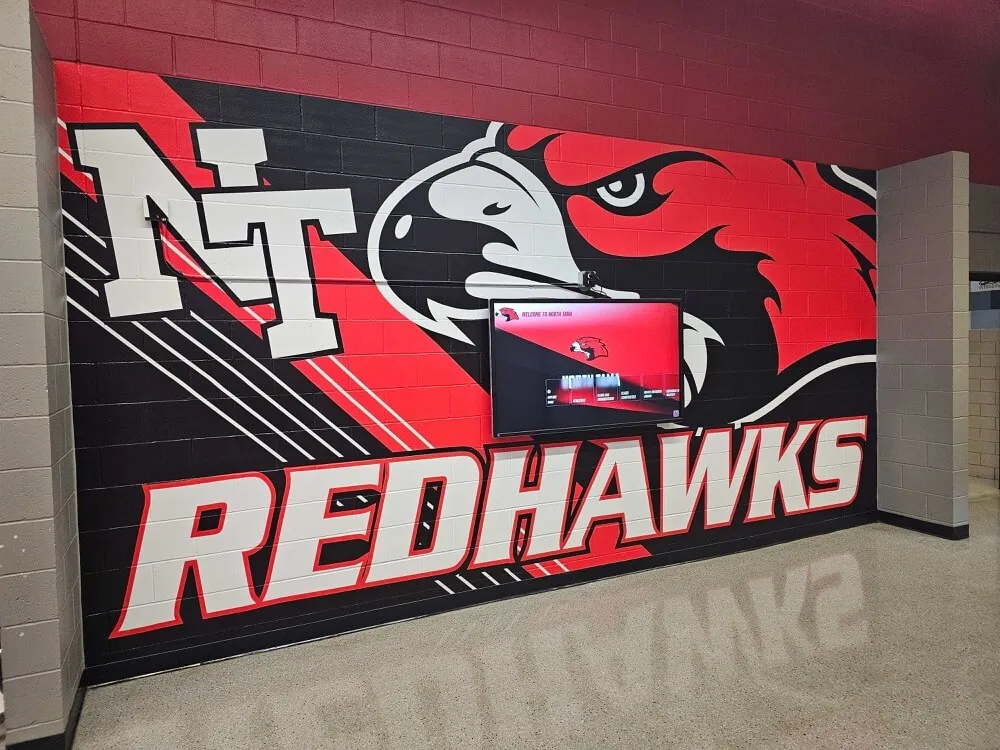
Entrance recognition displays create impressive first impressions while celebrating the employees who define organizational excellence
Ongoing Program Management
Monthly Process Requirements
- Open nomination period with reminders and encouragement
- Selection committee meeting reviewing nominations against criteria
- Winner notification and coordination for recognition ceremony
- Award preparation and presentation planning
- Communication campaign announcing recipient with achievement details
- Display updates adding new recipient to recognition systems
- Documentation of recognition moment and employee reaction
Quarterly Program Assessment
- Review nomination patterns identifying participation gaps
- Analyze demographic distribution ensuring fair recognition
- Gather employee feedback about program effectiveness
- Assess selection committee functioning and bias prevention
- Evaluate award value and recognition component meaningfulness
- Adjust processes based on feedback and observed challenges
Annual Program Evaluation
- Comprehensive review of year’s recognition patterns
- Employee satisfaction survey regarding recognition program
- Correlation analysis between recognition and retention metrics
- Budget review and value assessment
- Selection criteria refinement based on organizational evolution
- Major program enhancements or modifications as needed
Addressing Common Management Challenges
Challenge: Declining Nomination Rates
- Simplify nomination process reducing submission friction
- Increase communication frequency reminding about opportunities
- Create nomination assistance helping employees articulate contributions
- Implement peer nomination campaigns encouraging participation
- Celebrate nominators alongside recipients recognizing thoughtful acknowledgment
Challenge: Perception of Favoritism
- Increase transparency in selection criteria and processes
- Publish committee composition and rotation schedules
- Share sanitized selection rationale demonstrating objective evaluation
- Track recognition distribution across departments and demographics
- Solicit anonymous feedback about perceived fairness
Challenge: Program Fatigue
- Refresh recognition components maintaining excitement
- Vary ceremony formats preventing predictable routines
- Add special recognition categories for variety
- Enhance award elements increasing perceived value
- Share recipient stories maintaining program visibility
Organizations implementing comprehensive recognition platforms report that digital systems reduce administrative burden while increasing program sustainability through automated reminders, easy updates, and engaging visibility.
Measuring Program Success
Regular assessment ensures recognition programs deliver intended value and justify organizational investment.
Quantitative Success Metrics
Employee Engagement Indicators
- Participation rates in nomination process
- Recognition program awareness (measured through surveys)
- Employee satisfaction scores related to appreciation
- Recognition mention frequency in employee feedback
- Digital display interaction rates and engagement duration
Retention and Performance Metrics
- Turnover rates among recognized versus non-recognized employees
- Retention rates in departments with higher recognition frequency
- Performance metric changes following recognition
- Internal promotion rates among recognition recipients
- Application rates from external candidates attracted by culture
Program Operational Metrics
- Nomination submission rates and trends
- Selection process timeliness and consistency
- Recognition distribution across departments and demographics
- Program cost per recognized employee
- Communication reach and engagement rates
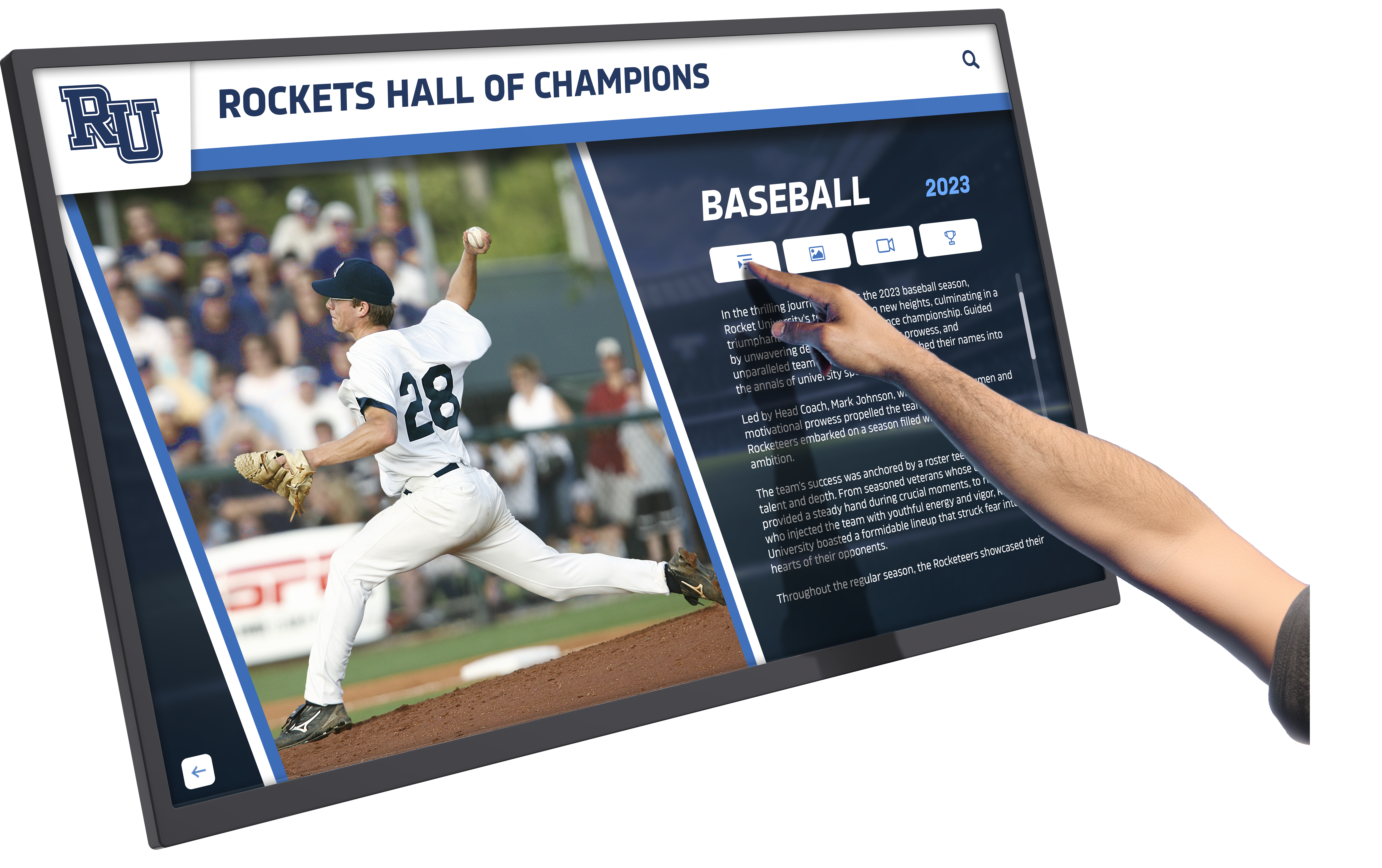
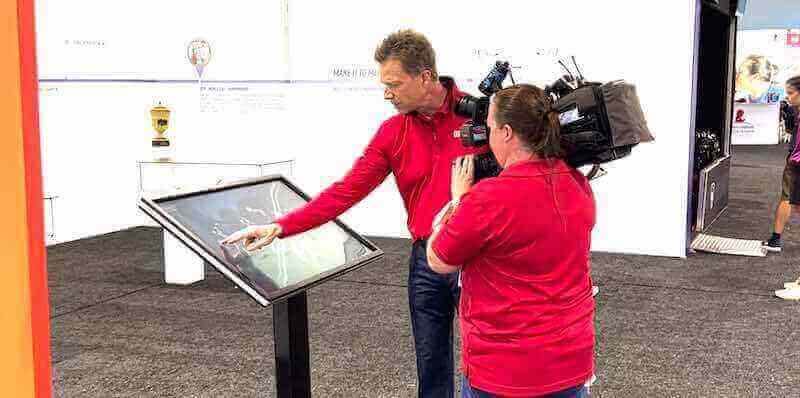
Modern touchscreen recognition displays create intuitive interfaces enabling employees to explore achievements and organizational excellence
Qualitative Assessment
Employee Perception Research
- Focus groups discussing recognition program effectiveness
- Anonymous surveys assessing perceived fairness and meaningfulness
- Exit interviews exploring recognition’s role in retention decisions
- New hire feedback about recognition as attraction factor
- Recognition recipient interviews about experience and impact
Cultural Impact Observation
- Changes in workplace atmosphere and collegiality
- Employee discussions about recognition and aspirations
- Peer support and celebration of colleagues’ achievements
- Leadership modeling of appreciation and recognition
- Organizational pride and identification strengthening
Stakeholder Feedback
- Management assessment of program value and effectiveness
- Selection committee experience and process quality
- Customer or client perception of employee engagement
- Board or ownership understanding of recognition ROI
- External reputation as employer of choice
Regular assessment enables continuous improvement, ensuring recognition programs remain meaningful and aligned with organizational evolution.
Best Practices for Sustained Success
Organizations maintaining effective employee of the month programs over years implement these key practices:
Authenticity and Consistency
Genuine Appreciation Recognition must feel authentic rather than perfunctory. Leaders should invest time understanding contributions and expressing specific, sincere appreciation. Generic praise undermines program credibility.
Reliable Implementation Consistent scheduling and dependable processes build program credibility. Skipped months, delayed recognition, or inconsistent selection damages employee trust. Treat recognition as non-negotiable organizational priority.
Leadership Modeling Executives and managers must visibly value recognition, participate in ceremonies, and demonstrate appreciation throughout organizations. Recognition programs succeed only with sustained leadership commitment.
Fairness and Transparency
Clear Criteria Published, objective selection criteria enable employees to understand what organizations value and see pathways to recognition. Vague or changing standards breed cynicism.
Diverse Recognition Tracking ensures recognition reaches all departments, roles, and demographic groups. Programs perceived as favoring specific groups lose credibility with broader workforces.
Process Visibility While specific nomination content remains confidential, selection processes should be transparent. Employees should understand who selects recipients, what evaluation considerations matter, and how decisions are made.
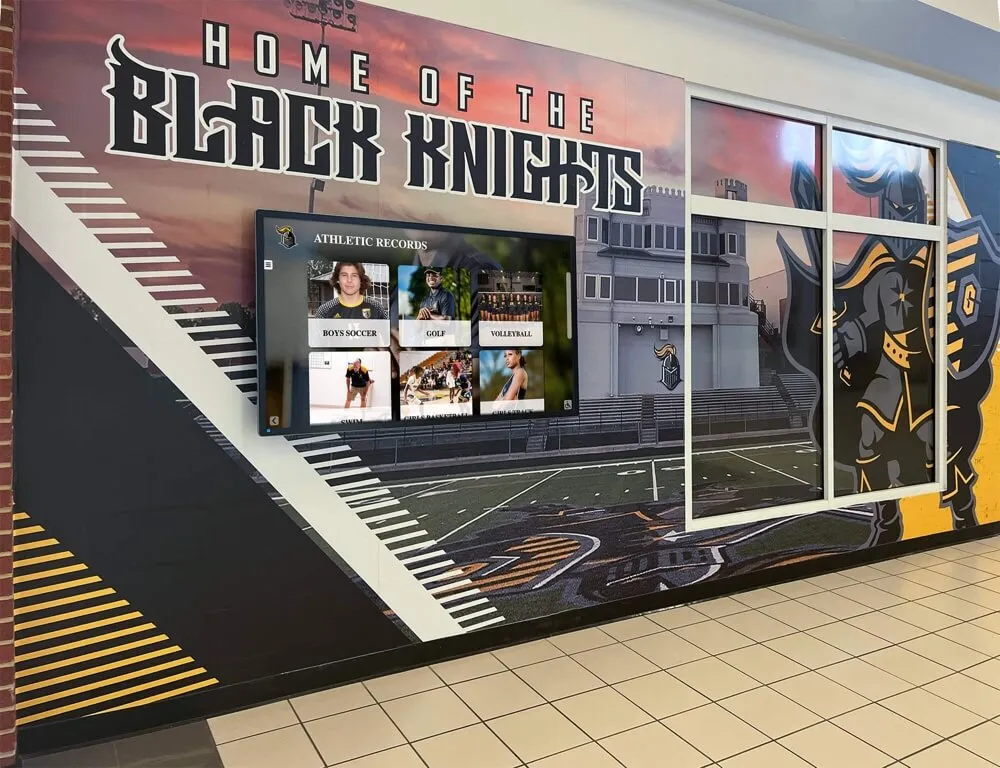
Recognition integrated throughout workplace environments creates cultures where excellence is systematically celebrated and valued
Meaningful Recognition
Substantial Awards Token gifts feel insulting rather than appreciative. Award value should reflect genuine organizational gratitude and recognition importance.
Personal Acknowledgment Generic certificates pale compared to specific descriptions of contributions and impact. Recognition should demonstrate understanding of individual achievements.
Lasting Visibility Brief announcements provide minimal impact compared to sustained recognition through displays, communications, and organizational memory. Create permanent records honoring contributions.
Organizations ready to implement comprehensive, professional recognition systems benefit from digital platforms that provide turnkey solutions for employee acknowledgment while remaining easily manageable as workforces evolve.
Conclusion: Building Recognition-Rich Cultures
Employee of the month programs represent visible manifestations of organizational appreciation, but their true value extends far beyond individual awards. When designed thoughtfully and implemented authentically, recognition programs create cultures where excellence is expected, contributions are valued, and employees feel genuine connection to organizational success.
The strategies explored in this guide provide comprehensive frameworks for building recognition systems that honor diverse achievements while remaining sustainable, fair, and aligned with organizational values. From establishing objective selection criteria to implementing modern digital displays that preserve employee legacies, these approaches transform recognition from occasional gestures to systematic celebration woven throughout workplace culture.
Transform Your Employee Recognition Program
Discover how modern digital recognition solutions can help you celebrate every employee achievement and build a thriving culture of excellence. Interactive touchscreen systems provide professional platforms for acknowledging outstanding performance while preserving recognition throughout careers.
Request a DemoTechnology increasingly enables even resource-constrained organizations to provide comprehensive, lasting recognition that previous generations could achieve only with significant investment. Solutions like digital recognition displays transform employee appreciation from temporary announcements to permanent tributes, ensuring exceptional performers feel valued throughout careers while their achievements inspire colleagues and future employees.
Most importantly, effective employee recognition programs demonstrate that people matter, that contributions are noticed, and that excellence receives appropriate celebration. When organizations systematically acknowledge those who drive success—through employee of the month programs and broader recognition systems—they create environments where outstanding employees choose to build careers, where innovation flourishes, and where organizational cultures become sustainable competitive advantages.
Start building your enhanced recognition program today, beginning with achievable improvements while working toward the comprehensive acknowledgment your employees deserve. Every employee who receives genuine recognition for their contributions reinforces your organizational culture and inspires colleagues to pursue the excellence that drives collective success.
Ready to create professional recognition honoring your employee excellence? Explore comprehensive employee recognition solutions designed specifically for organizations seeking to celebrate achievements and build thriving workplace cultures through modern digital recognition displays that engage employees and strengthen organizational identity.