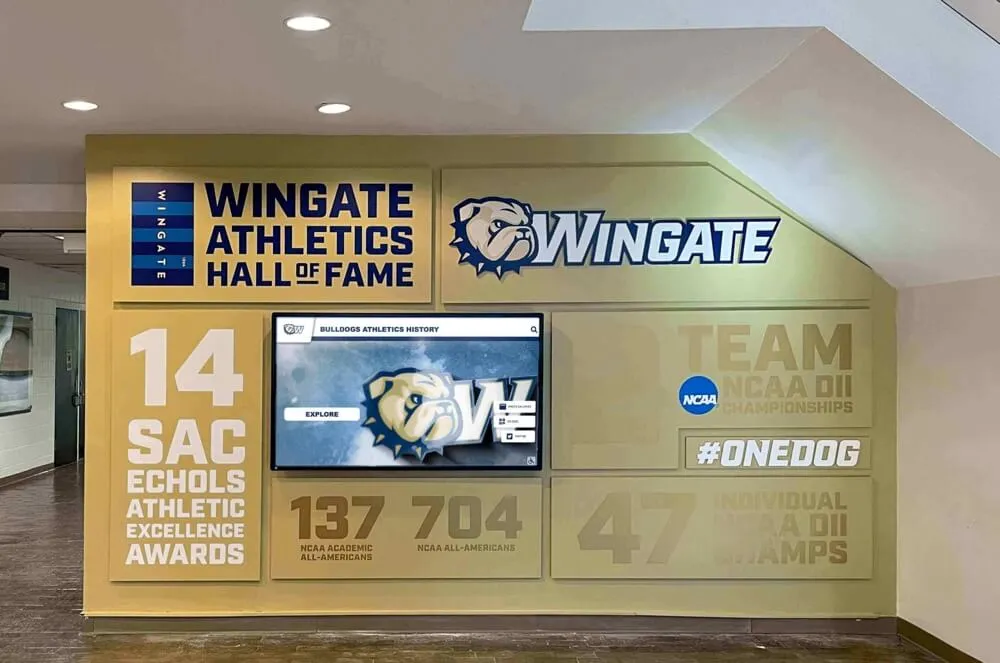




Recognizing a former athlete without accurate information is a risk most schools discover too late. A name misspelled on a hall of fame plaque, a graduation year that turns out to be wrong, or a championship photo that shows up three sizes too small — these errors damage the credibility of recognition programs and frustrate the alumni you are trying to honor. A well-designed former athlete information form prevents every one of those problems before they occur.
This guide covers what fields belong on a former athlete information form, how to handle photo submissions, what honors and post-school updates to capture, and how the data flows into recognition profiles, digital displays, and hall of fame installations. Whether your program is preparing for an annual induction, a building renovation, or an ongoing alumni outreach initiative, the form you use to collect information determines the quality of everything that follows.
Why Schools Need a Dedicated Former Athlete Information Form
Athletic departments collect alumni data from scattered sources: old press guides, coach recollections, yearbook archives, social media profiles, and whatever a volunteer committee can track down before a deadline. The result is recognition content that varies in accuracy, completeness, and format — and staff time absorbed by chasing down corrections after materials have already been printed or installed.
A standardized former athlete information form creates a single, verified source of record for each recognized athlete. It shifts the burden of accuracy to the person who knows the details best — the athlete — and creates a documented trail that future staff can rely on long after the current committee has turned over.
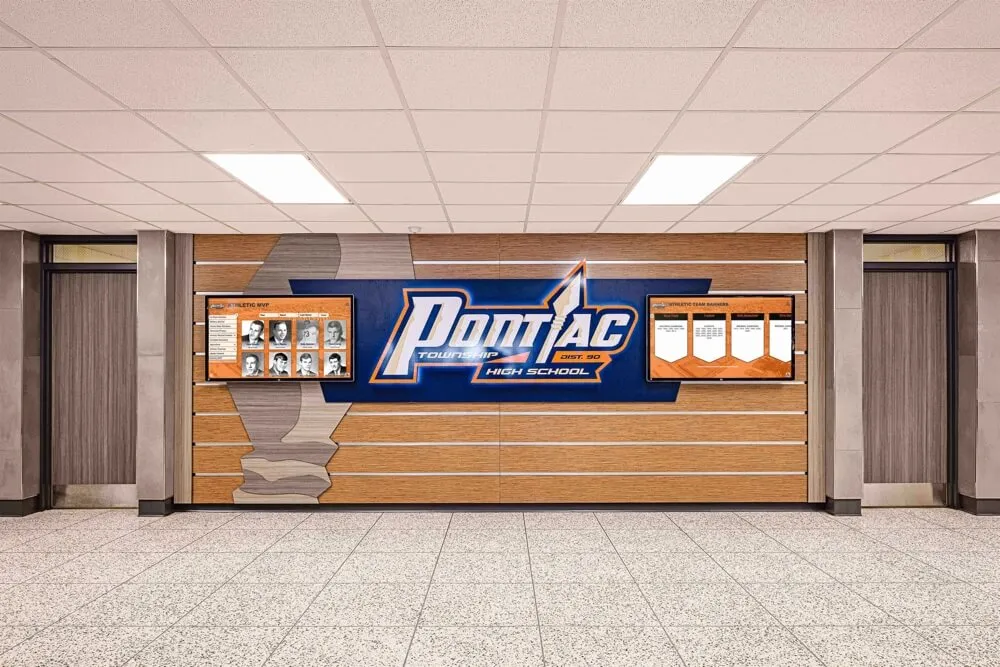
For programs planning hall of fame installations, digital record boards, or touchscreen alumni displays, that verified data is the foundation that makes the project work. A review of the best hall of fame tools for athletics programs consistently identifies accurate data collection as the step that separates smooth installations from expensive revision cycles.

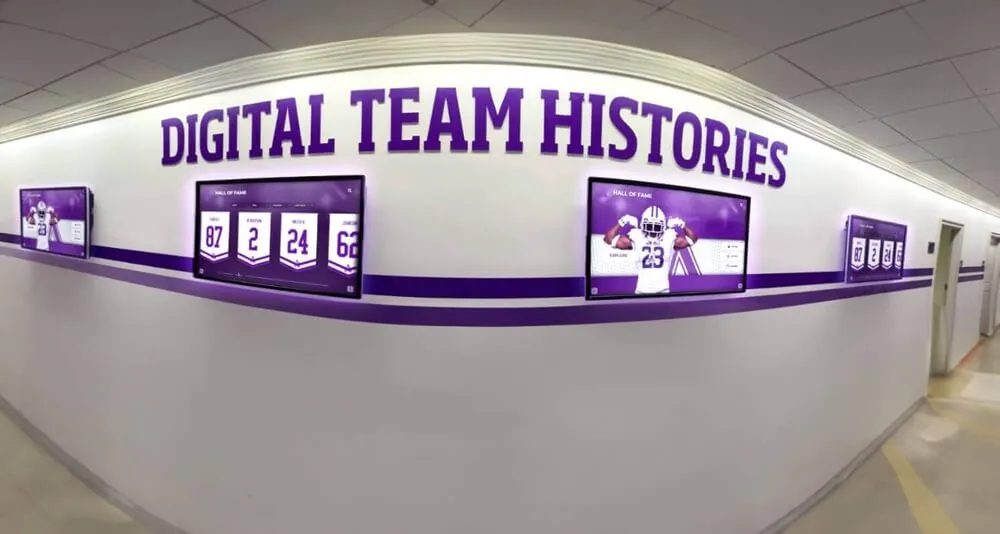
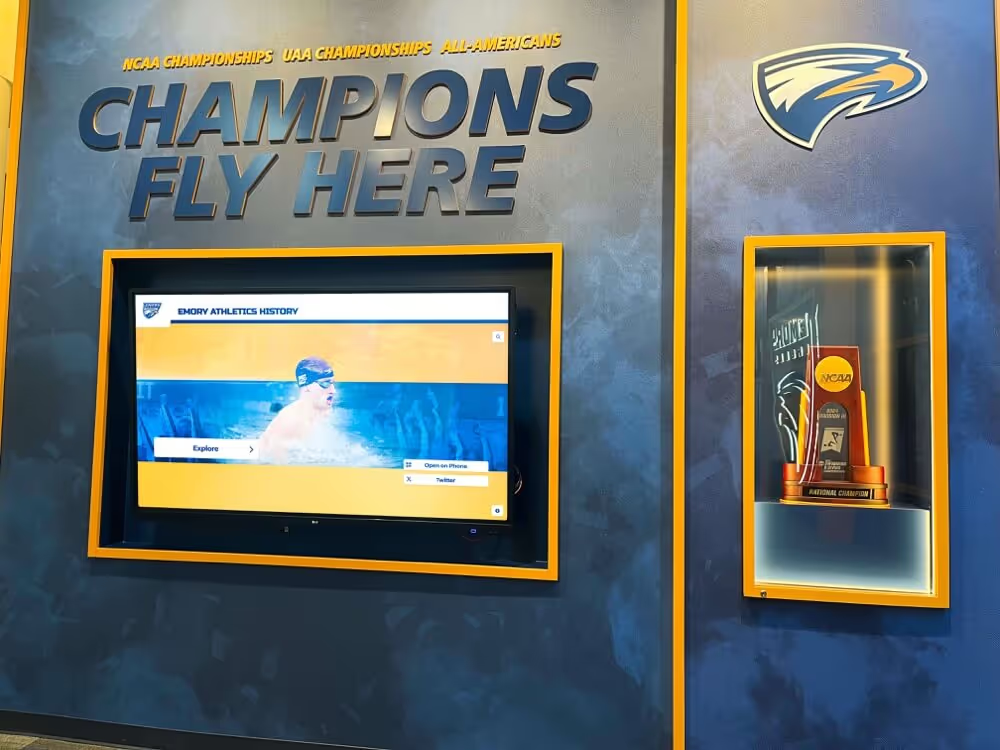
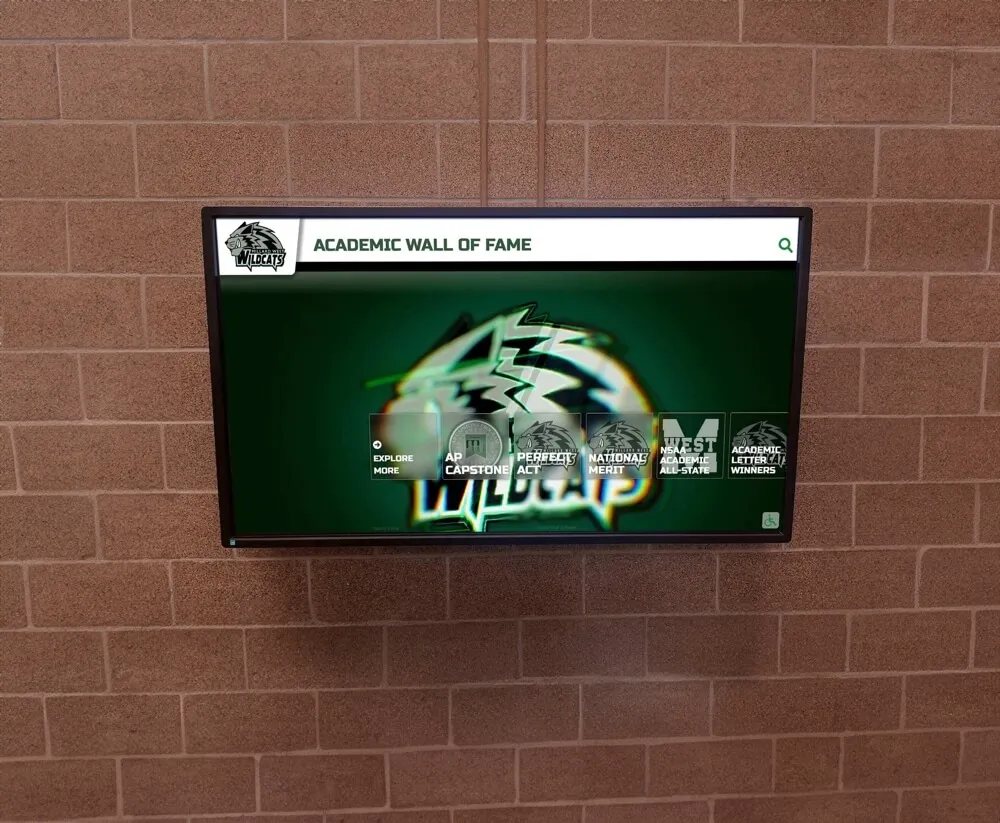
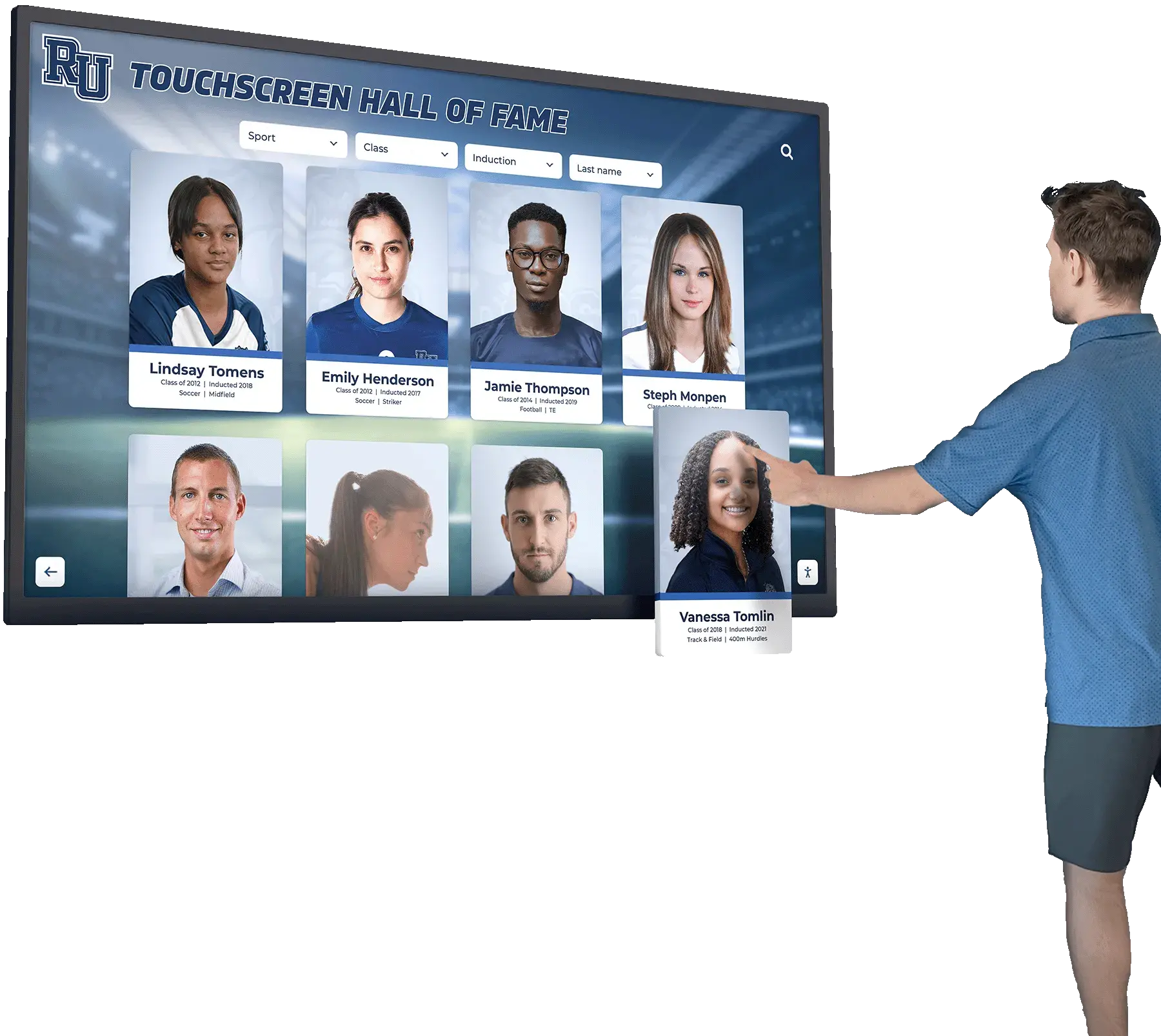
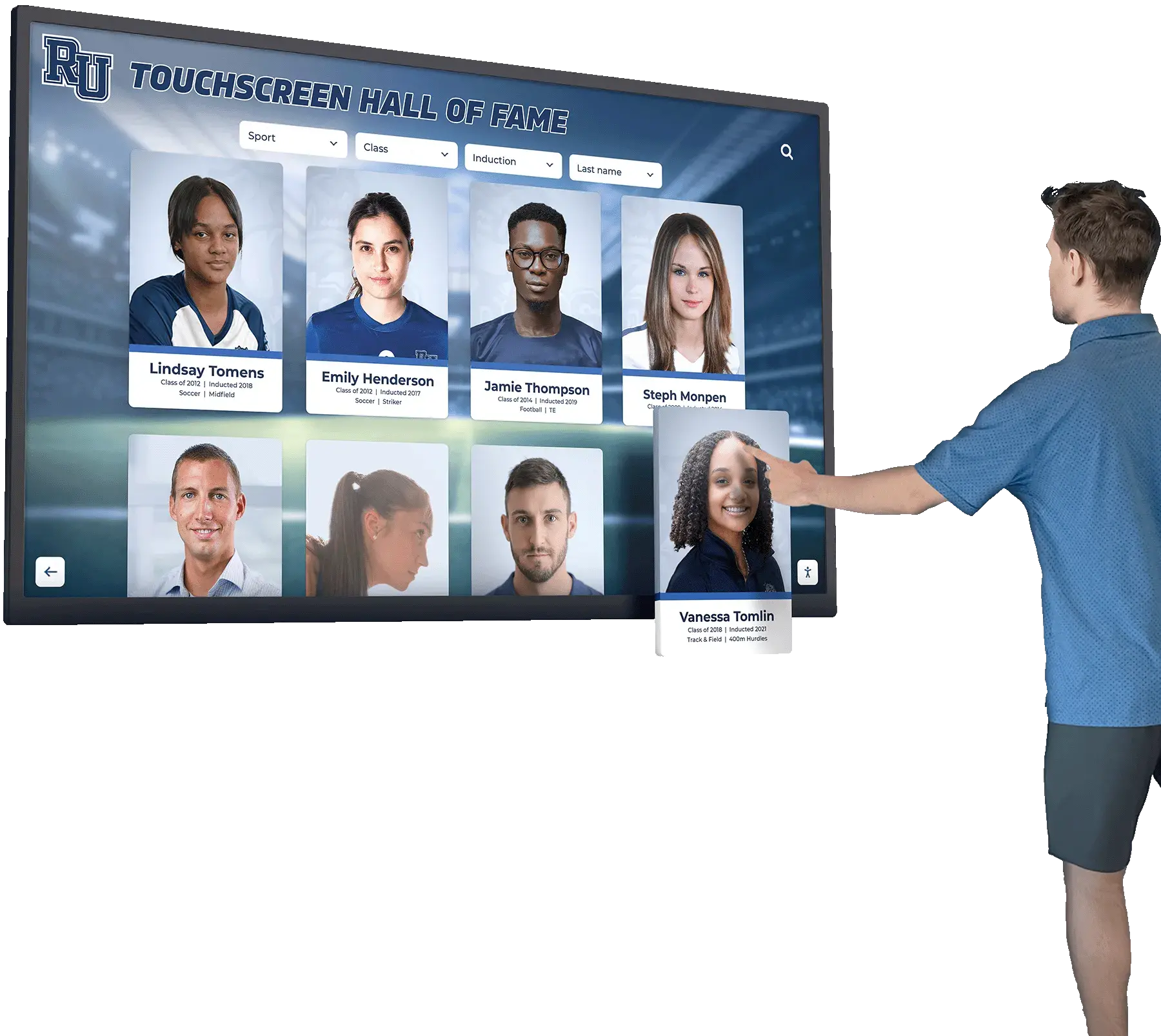
Touchscreen hall of fame displays draw directly from verified athlete data — the accuracy of the display reflects the quality of the information collected upfront.
Core Fields Every Former Athlete Information Form Should Include
Personal Identification
The identification section establishes who the submission belongs to and how to reach them. At minimum, include:
- Full legal name — the name as it should appear on recognition materials
- Name at time of attendance — maiden name or previous name if different
- Graduation year — year completed, not year entered
- Primary sport(s) — with space for multiple sports if the athlete lettered in more than one
- Years of participation — start and end years for each sport listed
- Contact email — for follow-up questions and delivery of proofs
- Preferred phone number — optional, but useful when photo quality requires a callback
This section should also ask whether the athlete is submitting on their own behalf or whether a family member, coach, or colleague is submitting on their behalf. Secondhand submissions are common for deceased inductees or for alumni who are difficult to reach directly, and the form should accommodate that without creating ambiguity about the source of the information.
Academic and Athletic History
The second section builds the factual record that will appear in recognition copy:
- Varsity letters earned — by sport, with total count
- Positions or events — the primary position or event within each sport
- Team accomplishments — conference championships, regional titles, state placements, national honors
- Individual awards received — all-conference, all-state, MVP honors, records broken, and similar distinctions
- Academic recognitions tied to athletic participation — scholar-athlete designations, academic all-conference, athletic department GPA awards
The team accomplishments field benefits from a structured prompt rather than an open text box. Asking “Please list championships won, including year and level (conference / regional / state / national)” produces more consistent data than asking “Describe your team’s accomplishments.” Consistent data reduces the editing time required before content goes to layout.
Programs that award a wide range of honors each year can find guidance on structuring the awards taxonomy in a resource covering youth and high school sports awards categories — the category structure used for current athletes often maps directly onto the fields that belong in a former athlete information form.
Photo Submission Guidelines
Photo quality is the detail that derails more recognition projects than any other. A photograph that arrives too small, too dark, or in the wrong format creates significant work for whoever is building the display or publication. The form should communicate requirements clearly enough that submitters understand what is actually usable before they upload.
Minimum resolution: 300 DPI at final print size, or at least 1,200 pixels on the shortest side for digital use. Many programs request 2 MB or larger as a practical minimum file size proxy.
Preferred subjects for athletic recognition:
- Action photograph from competition (most visually compelling for displays)
- Team photograph showing the athlete in uniform
- Award or recognition ceremony photograph
- Professional or current headshot (for post-school section)
Acceptable formats: JPEG and PNG for digital submissions. Scanned prints at 600 DPI for physical photographs.
What to include with each photo: Year taken, sport, event or occasion, names of any other people pictured. This metadata is just as important as the image file itself — a photograph without context becomes harder to use accurately as staff turn over.
The form should also ask whether the school has rights to use submitted photographs in perpetuity for recognition purposes and request a checkbox confirmation. This is a simple step that protects the program from later disputes when photos appear in published materials or public-facing digital displays.

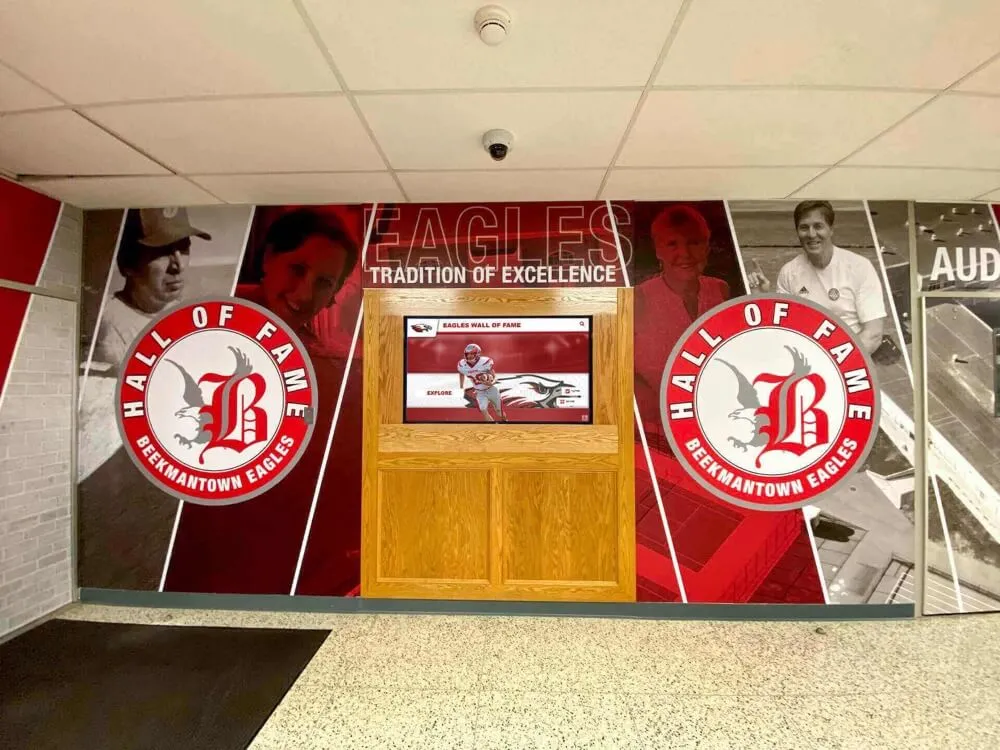
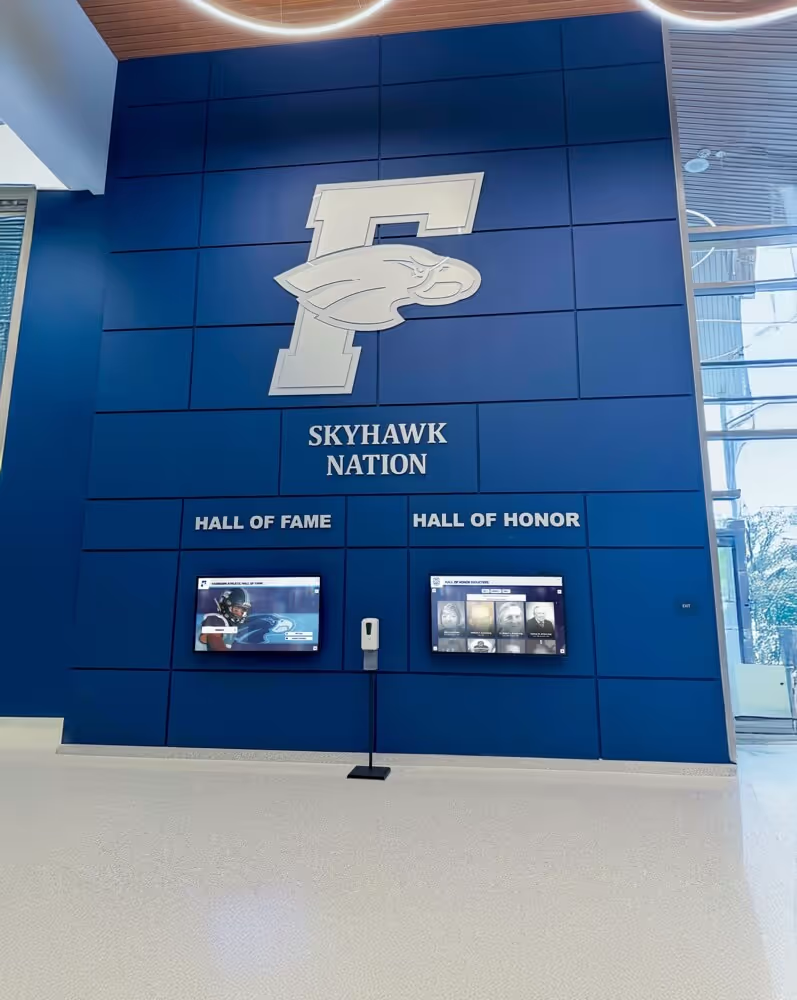
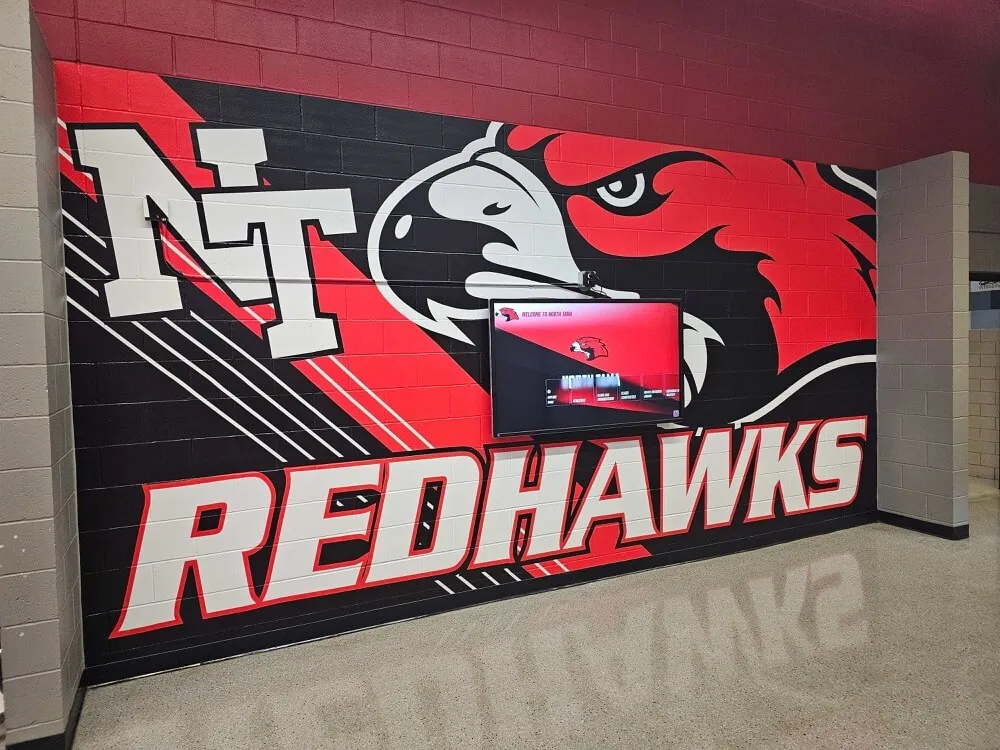
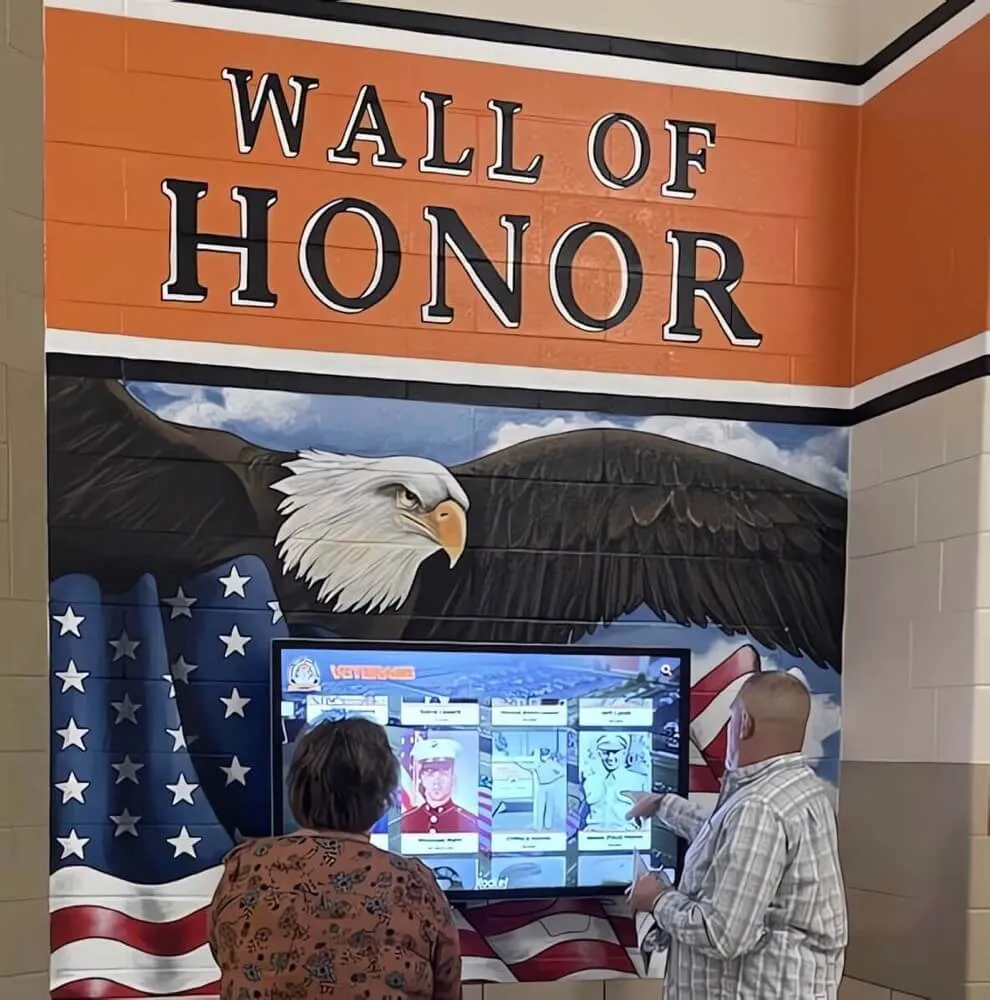
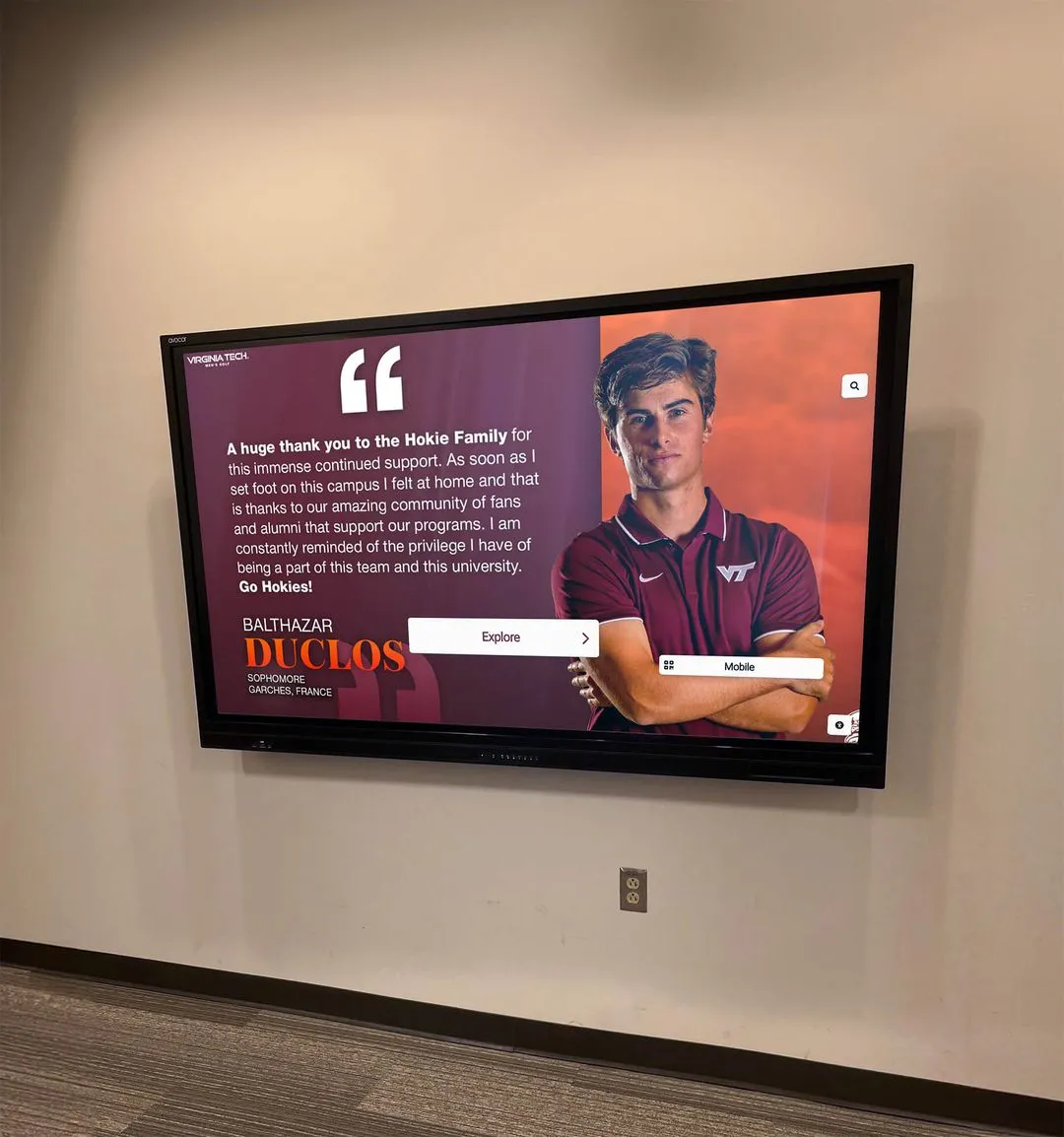
Individual athlete profile cards on a touchscreen display are only as detailed and accurate as the information collected through the former athlete information form.
Capturing Post-School Updates and Career Information
Hall of fame recognitions and alumni profiles gain significant depth when they include what the athlete did after leaving school. Post-school information is optional for most athletes but should always be offered because the career accomplishments and life outcomes of former athletes are often a program’s most compelling story.
Fields to include in the post-school section:
- College attended — institution name, years attended, degree earned
- College athletic participation — sport, years, conference, any notable honors
- Professional or semi-professional athletic career — if applicable, with team names and years
- Career field or profession — current occupation or industry
- Notable professional accomplishments — awards, leadership roles, community recognition
- Current city and state — for geographic representation mapping in alumni programs
- Social media or professional profile URL — optional, for programs that link digital profiles to social accounts
This last section also serves an important function for alumni outreach. Schools hosting reunions, hall of fame inductions, or alumni events benefit from current contact data even when the immediate purpose is recognition. A reunion planning resource for high school athletic programs often cites outdated contact information as the primary reason alumni events fail to reach the people they are designed to honor.
Form Design: What Makes Data Collection Actually Work
Length and Format
A former athlete information form with more than 25 fields will see dramatically reduced completion rates. Group related questions, use conditional logic where possible (show college athletic fields only if the submitter indicates they played in college), and allow partial saves so athletes can return to complete a form over multiple sessions.
Online forms built in Google Forms, Typeform, or a similar tool are preferable to PDF-based forms because responses arrive structured and ready to import. PDF forms require manual data entry, introduce transcription errors, and produce no searchable database of submissions.
Validation and Prompts
Required fields should be clearly marked. Every open-text field should include an example response to show submitters the expected format. A field labeled “Team Championships” that shows the example “2019 Conference Championship; 2021 State Runner-Up” will return usable data far more consistently than the same field with no example.
Build in a final review screen that summarizes what the submitter entered before they submit. This step catches obvious errors — transposed years, name misspellings, forgotten fields — before the form reaches the reviewing staff.
Acknowledgment and Timeline Communication
After submission, send an automated confirmation that includes:
- What information was received
- The expected timeline for follow-up (proofing, corrections, publication)
- A contact name and email for questions
Athletes who receive no acknowledgment after submitting often resubmit, creating duplicate records. Those who receive a vague “we’ll be in touch” message may respond poorly when contacted weeks later with correction requests. Clear timeline communication reduces both problems.
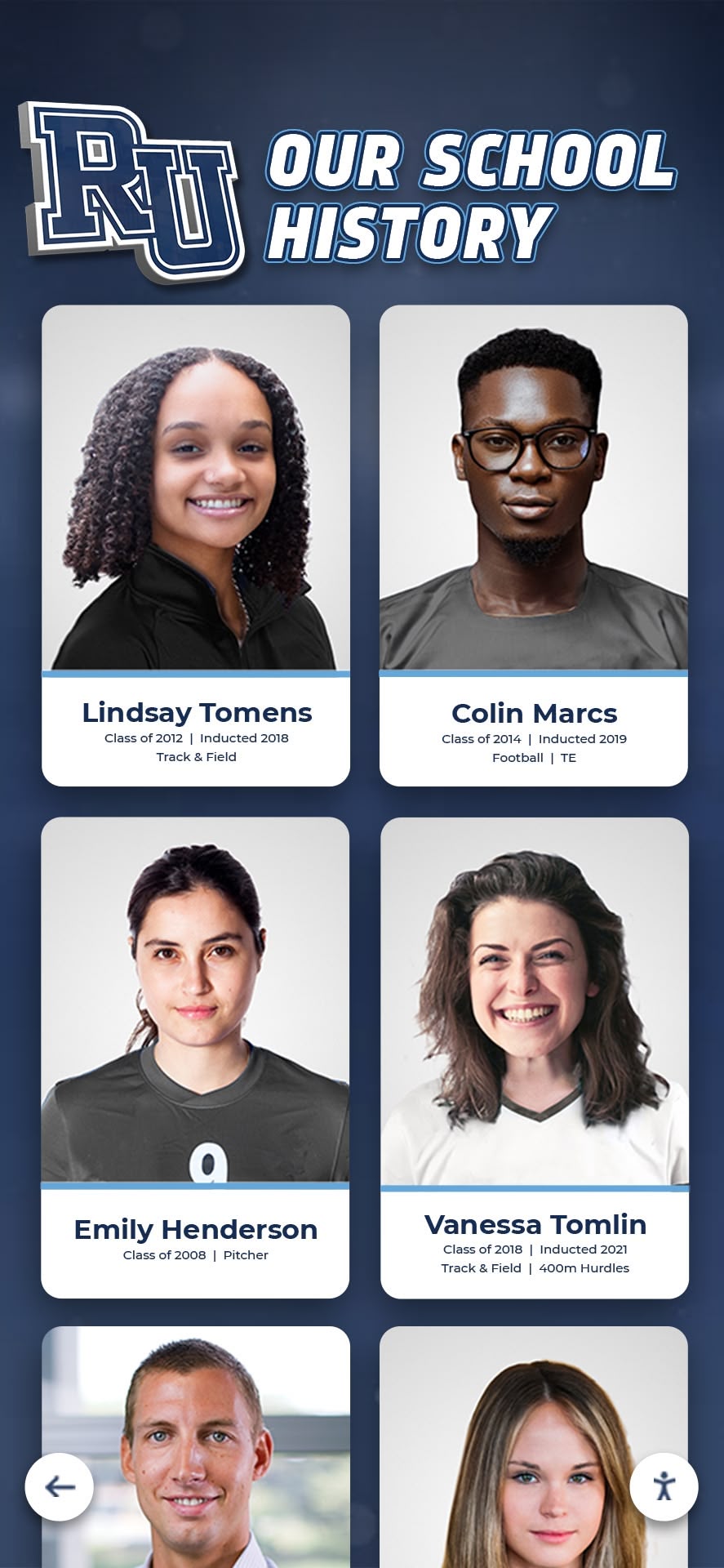
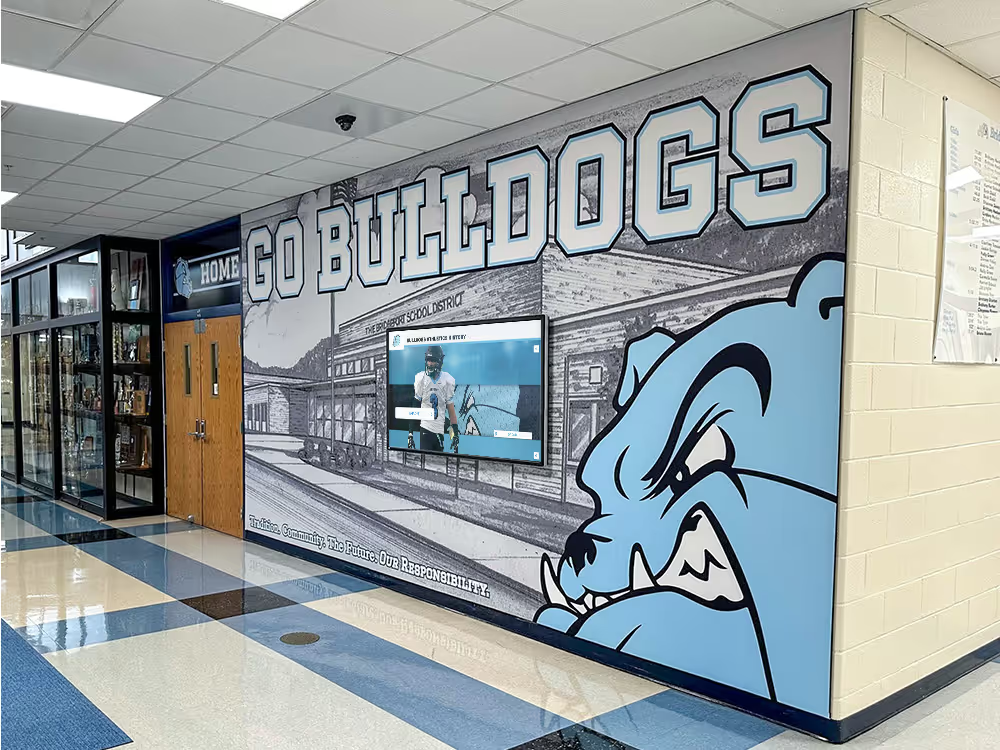
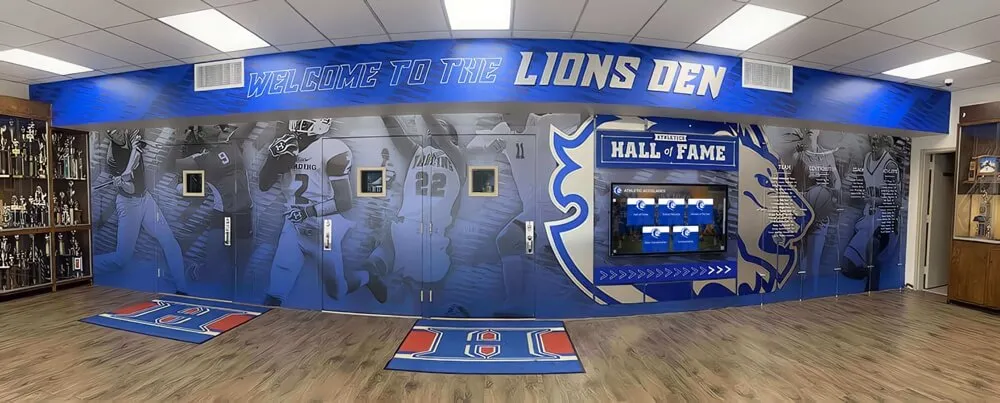
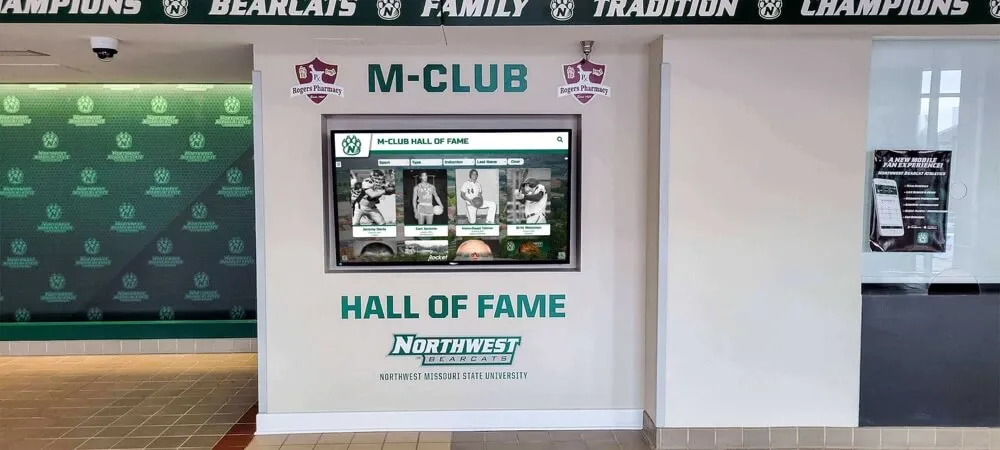
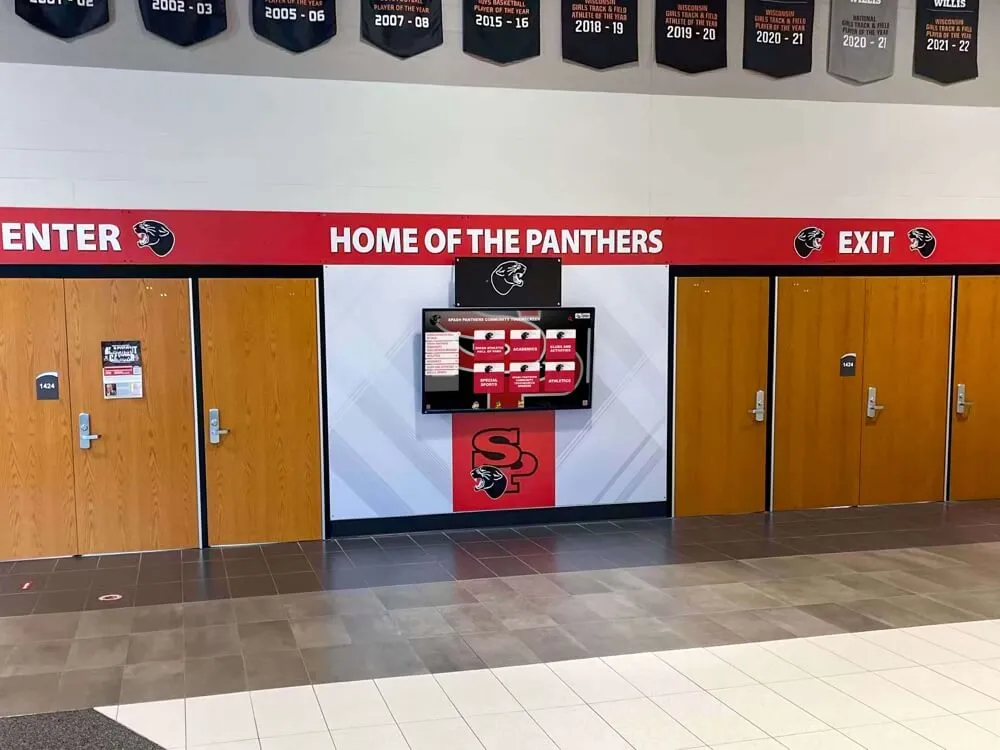
Organized portrait card archives begin with the data submitted through a former athlete information form — the structure of the form determines the quality of the final display.
Distributing the Form to Former Athletes
Email and Direct Outreach
The highest-response distribution method is personal outreach from a coach, athletic director, or fellow alumnus the recipient knows. A form request from an unknown school staff member typically performs far worse than the same form request forwarded by a teammate or sent from a coach the athlete remembers.
Where personal connections exist, ask coaches, team captains, or booster club members to serve as outreach intermediaries. Provide them with a short email template and a direct form link. Track which outreach cohort each submission came from to assess what distribution methods are actually working.
Reunion and Event Integration
Athletic alumni events, hall of fame inductions, and class reunions are natural collection points for former athlete information forms. A QR code displayed at check-in, printed on the event program, or projected on a screen during the event gives attendees an immediate way to submit. In-person settings also allow staff to answer questions about what information is needed and why — which consistently improves data quality compared to cold outreach.
Alumni event programming ideas for athletic programs can be structured around recognition touchpoints that simultaneously gather data — a “Where Are They Now” booth, a photo submission station, or a coach interview series all create natural contexts for collecting information that feeds the former athlete information form.
Social Media and Program Channels
Athletic department social media channels, booster club newsletters, and alumni association communications are useful amplification channels once the core outreach has been completed. Social posts work best as reminders and as a way to reach alumni who were missed in direct outreach, not as the primary distribution method.
Frame social outreach around the recognition opportunity, not the data collection process. “We’re building a digital hall of fame and want to include your story” will outperform “Please complete our alumni information form” every time.
Processing Submissions and Preparing Recognition Content
Once submissions arrive, a consistent review workflow prevents incomplete or inaccurate data from advancing to production:
Step 1: Completeness check. Flag any submission missing required fields and send a targeted follow-up request. A specific, field-level request (“We’re missing your graduation year and need a photo at least 1 MB in size”) performs better than a generic “your submission is incomplete” message.
Step 2: Photo technical review. Check resolution, orientation, and format for every submitted photograph before it moves to design. Photos that fail the technical review should be flagged for resubmission with specific guidance.
Step 3: Fact verification. Where team records, championships, and individual awards can be verified against institutional records, do so before publishing. Conference and state championship records are typically documentable; individual award history may require reaching out to the athlete for supporting documentation.
Step 4: Draft and proof cycle. Send each athlete a draft of their recognition copy and photo selection before finalizing. A proof cycle catches errors that survived earlier review and gives athletes an opportunity to correct the record on details that only they would know.
Programs managing large volumes of submissions benefit from tools built specifically for this workflow. A comparison of hall of fame management tools can help programs select platforms that support the full intake-to-publication process rather than requiring manual handoffs between disconnected systems.
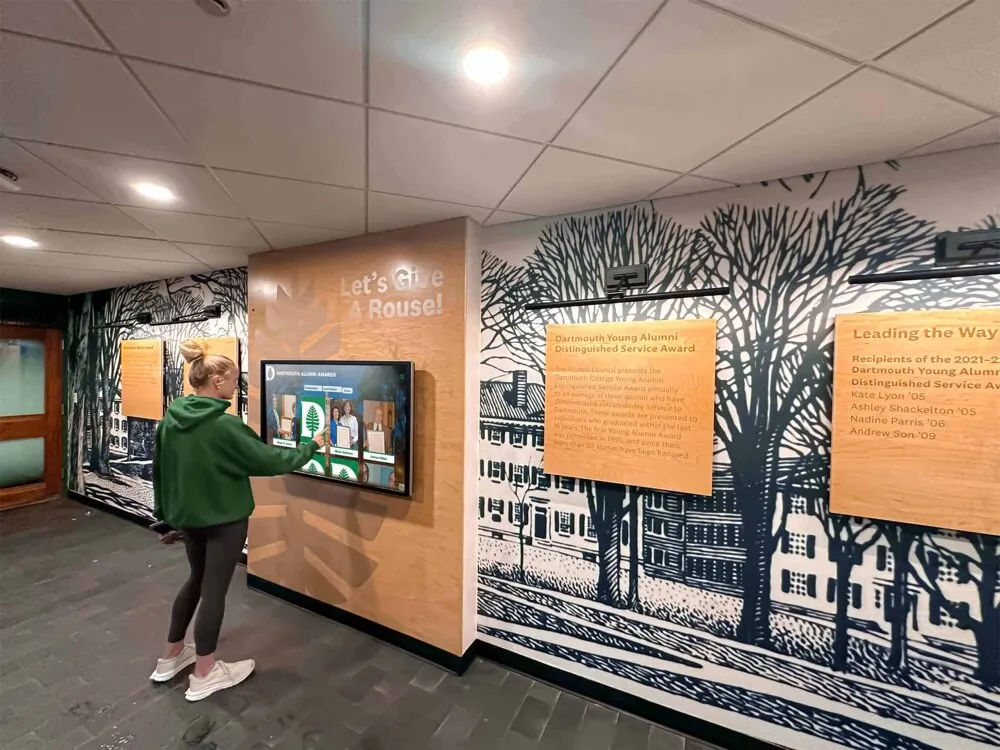
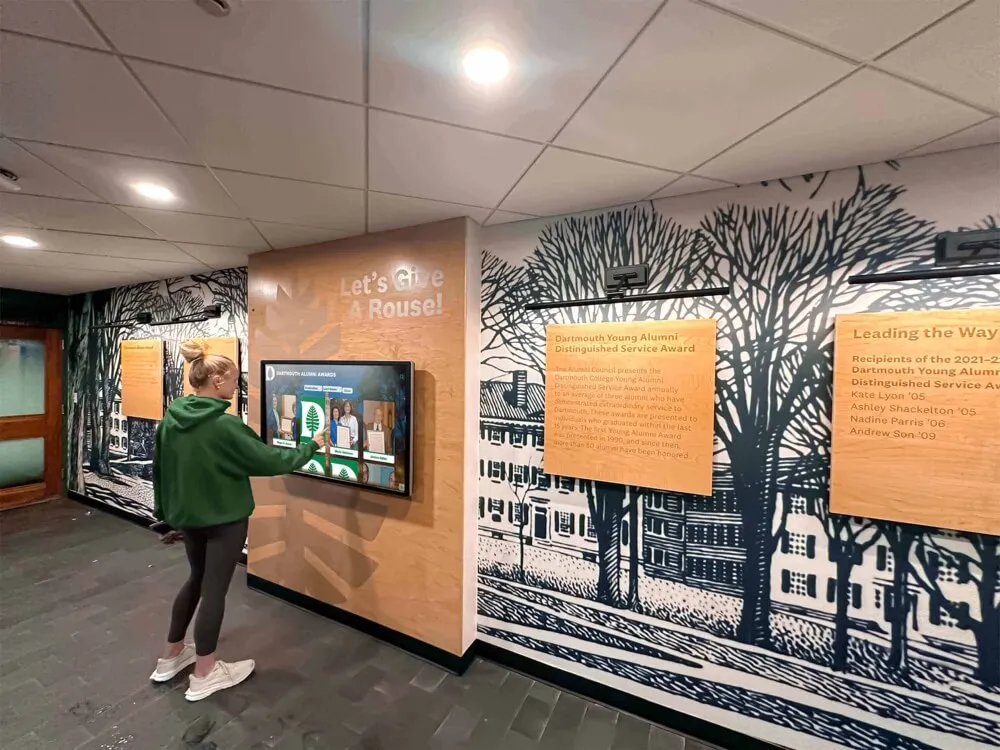
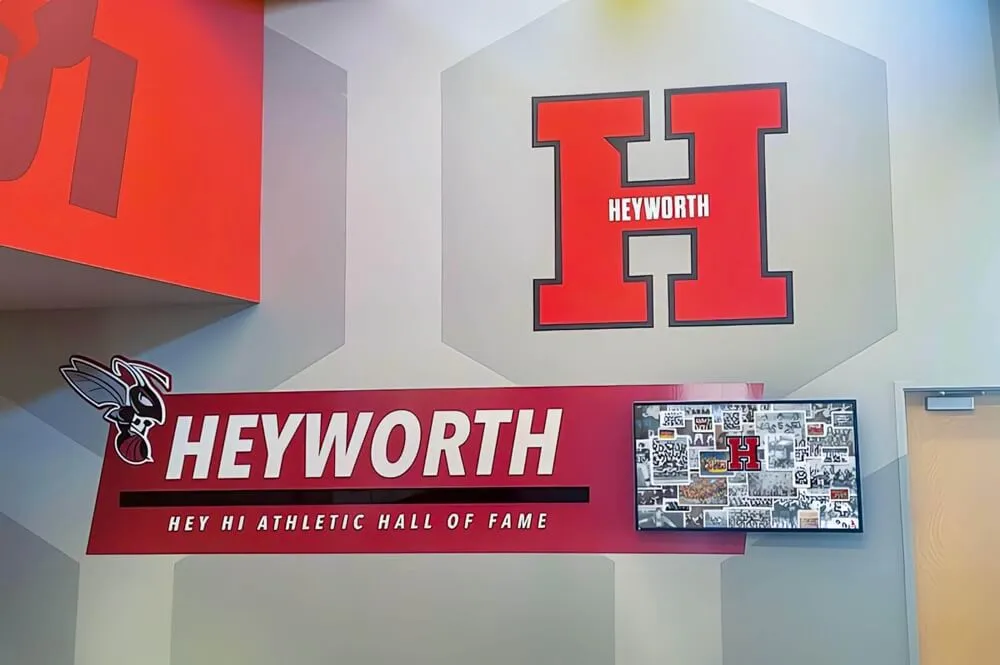
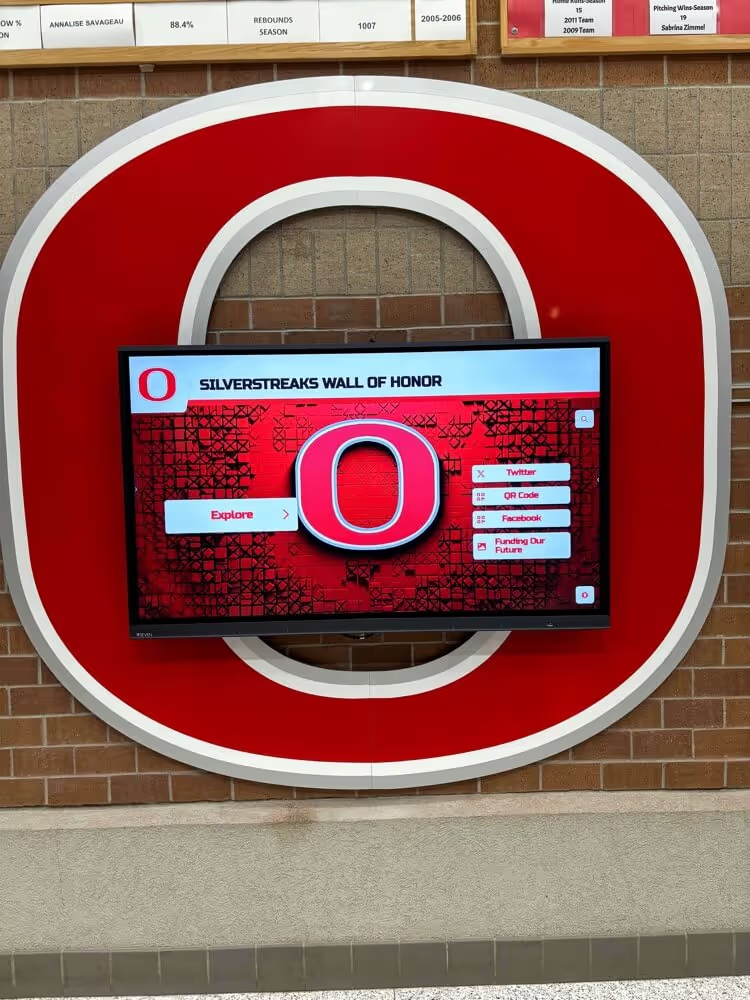
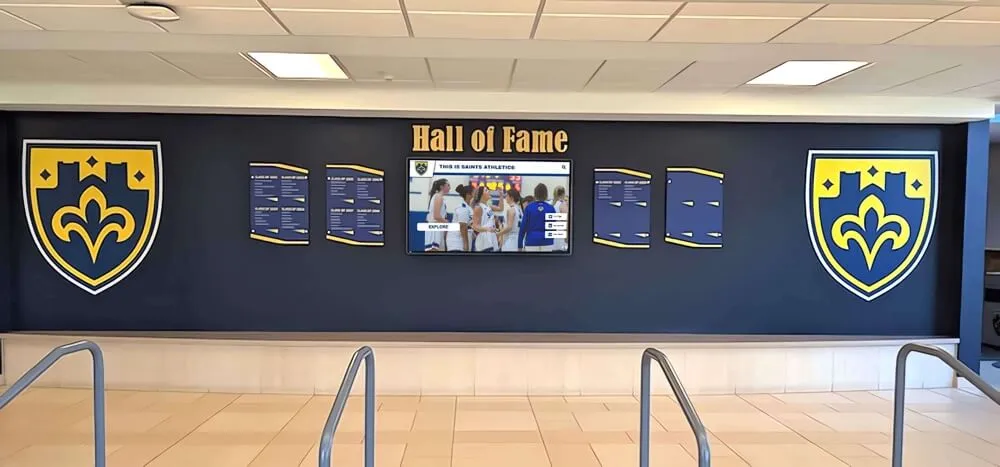
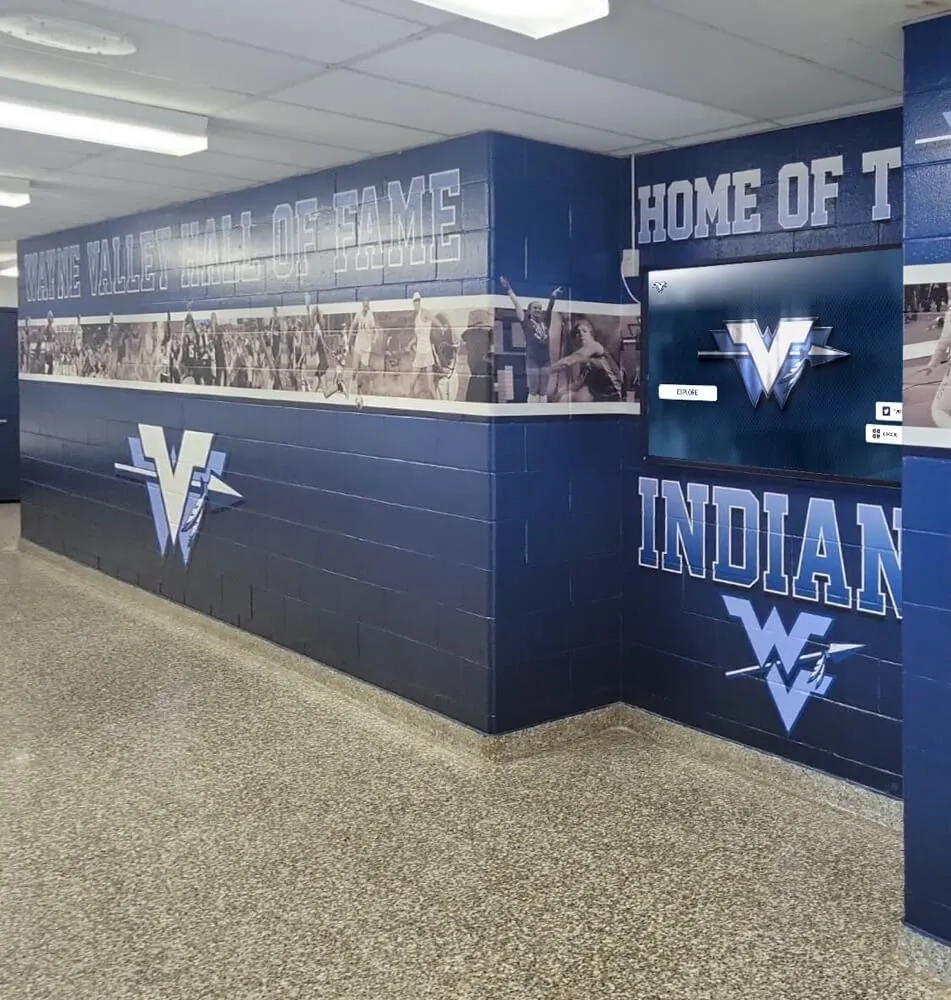
Interactive alumni hallway displays give visitors self-directed access to verified recognition profiles — the depth of each profile depends on the quality of the original data collection.
From Information Form to Digital Recognition Display
The former athlete information form is the starting point of a content pipeline that ends in a published recognition profile — whether that profile appears in a printed induction program, a wall-mounted plaque, a digital record board, or an interactive touchscreen display.
Digital recognition formats have changed the stakes for data quality. A physical plaque, once installed, is rarely updated. A touchscreen display or digital hall of fame profile can be updated indefinitely — which means the initial data collection shapes not just the launch installation but every future update.
Schools investing in touchscreen alumni displays increasingly treat the former athlete information form as a permanent intake mechanism rather than a one-time project document. New inductees, milestone anniversaries, and post-school updates can all be captured through the same form structure and pushed to the display system without requiring a full redesign cycle.
Programs at the beginning stages of building this infrastructure can review hall of fame tool options for athletics programs to understand how digital recognition platforms handle ongoing data intake and profile management alongside the initial installation.
Ready to turn your verified athlete data into an interactive display your community can experience?
Rocket Alumni Solutions builds touchscreen hall of fame installations, digital record boards, and interactive alumni displays that connect directly to the information your former athletes submit. See how schools bring recognition to life in hallways, lobbies, and athletic facilities.
Frequently Asked Questions
What is the most important field on a former athlete information form? Graduation year is the field that causes the most errors in recognition programs when it is wrong or missing. Teams with long history often have multiple athletes with similar names, and graduation year is the primary disambiguating field. Make it required, and verify it against institutional records where possible.
How should schools handle submissions for deceased former athletes? The form should include an option for a family member, colleague, or program representative to submit on behalf of someone who is deceased. Collect the submitter’s relationship to the athlete and contact information for follow-up. Photo rights and usage authorization should be obtained from the submitting family member in writing.
How long should schools retain former athlete information form submissions? Retain submissions permanently as part of the institutional athletic record. Even if a particular athlete is not recognized in the current cycle, the data may be needed for future inductions, anniversary programs, or facility renovations. Cloud-based form tools with export functions make long-term retention practical.
What photo format should schools request? JPEG is the most practical format for most submitters. Request a minimum file size of 2 MB as a proxy for resolution rather than specifying DPI, which many submitters will not know how to check. For action photographs from older eras, accept scanned prints and specify 600 DPI scanning at the original print size.
How do you handle a former athlete who submits incorrect information? Build a correction path into your process explicitly. Include a statement in the form confirmation that submitters can email a designated contact to update information before a specified deadline. After that deadline, create a documented amendment process so corrections are tracked rather than made informally.
Can the same form be used for multiple sports and multiple induction cycles? Yes — a well-designed form includes sport selection and induction year as fields, making it reusable across programs and cycles. Storing submissions in a searchable database rather than as individual form responses allows staff to filter by sport, year, or induction status across multiple cycles.

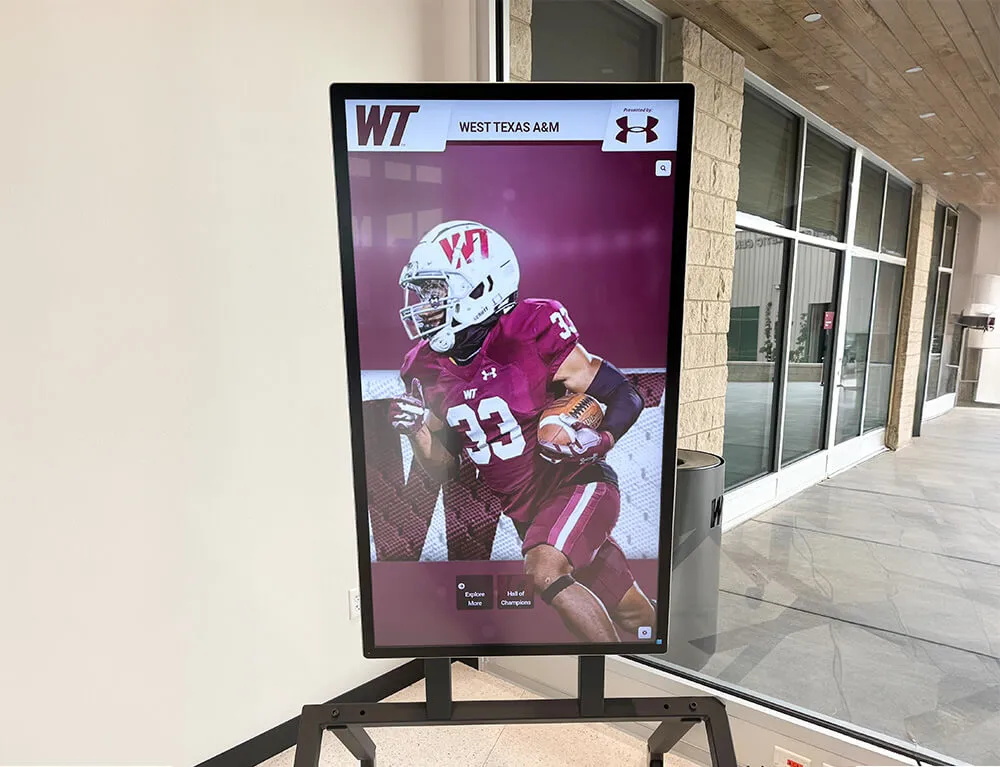
A responsive recognition platform extends verified athlete profile access beyond on-campus displays to alumni, families, and community members on any device.
Building a Former Athlete Information Form That Works
A former athlete information form is a relatively simple document with outsized consequences. The fields you include — and how carefully you design them — determine whether your recognition program runs on accurate, complete data or spends its production schedule chasing corrections.
Start with the core identification and academic/athletic history fields. Add a photo submission section with explicit technical requirements. Include a post-school update section as optional but clearly offered. Design the form for online completion, include example responses for every open-text field, and build a confirmation and proof cycle that gives athletes visibility into how their information will be used.
The athletes your program is recognizing have earned the quality of the recognition you give them. A well-structured information form is the step that makes that quality possible.
Turn Your Former Athlete Data Into a Recognition Display That Lasts
Rocket Alumni Solutions helps schools and universities transform verified alumni information into interactive touchscreen hall of fame displays, digital record boards, and lobby installations. Your athletes’ stories deserve a platform built to last.