



Graduation ceremonies present school administrators with critical decisions about student recognition, and few elements carry more visible significance than graduation stoles. These colored sashes draped over academic robes instantly communicate student achievements to ceremony attendees, creating powerful visual markers that distinguish honor recipients from general graduates. Understanding graduation stole colors meaning enables administrators to design coherent recognition programs that celebrate diverse achievements while maintaining ceremonial clarity.
School administrators routinely field questions from parents, students, and faculty about stole eligibility, color assignments, and recognition protocols. Without clear frameworks, stole programs can devolve into confusing arrays of conflicting colors where audience members struggle to understand what various hues represent. Worse, poorly designed systems may inadvertently exclude deserving students or create equity concerns when recognition appears inconsistent across departments or programs.
This comprehensive guide provides school administrators with authoritative information about standard stole color meanings, common organizational assignments, implementation best practices, and strategies for preserving honor recipient recognition beyond ceremony day. Whether you’re launching a new stole program or refining existing practices, understanding these conventions helps create graduation experiences that appropriately celebrate student excellence.
Graduation stoles serve as visual achievement indicators during commencement ceremonies, with specific colors carrying established meanings rooted in academic traditions. For school administrators managing recognition programs across diverse student populations, understanding these color conventions creates foundation for effective stole implementation that honors both tradition and institutional priorities.

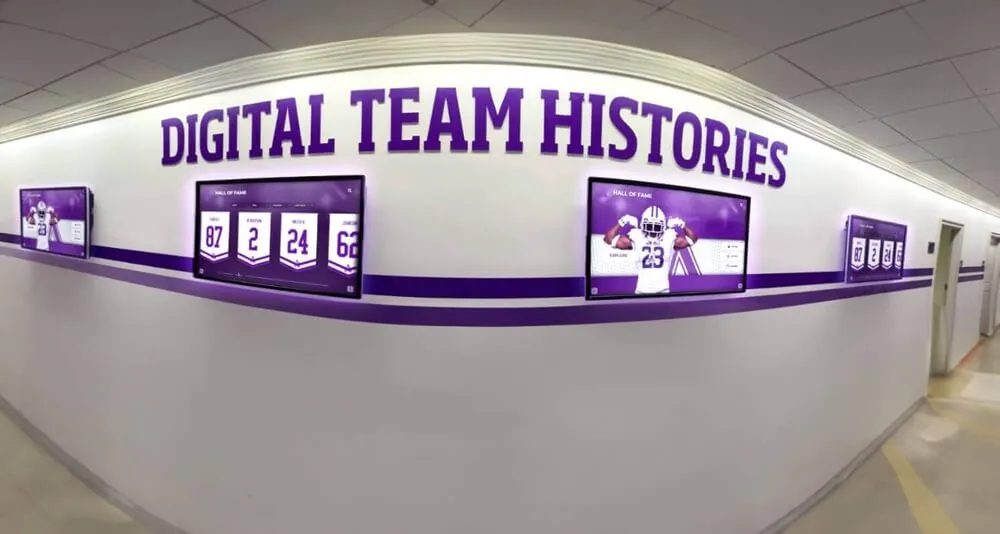
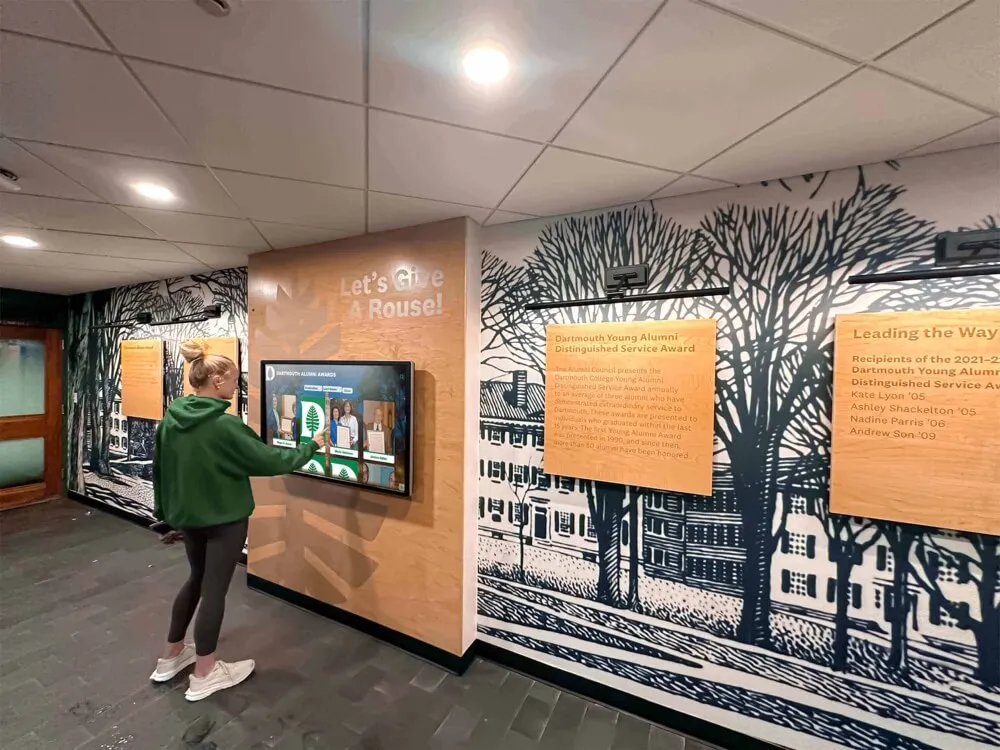
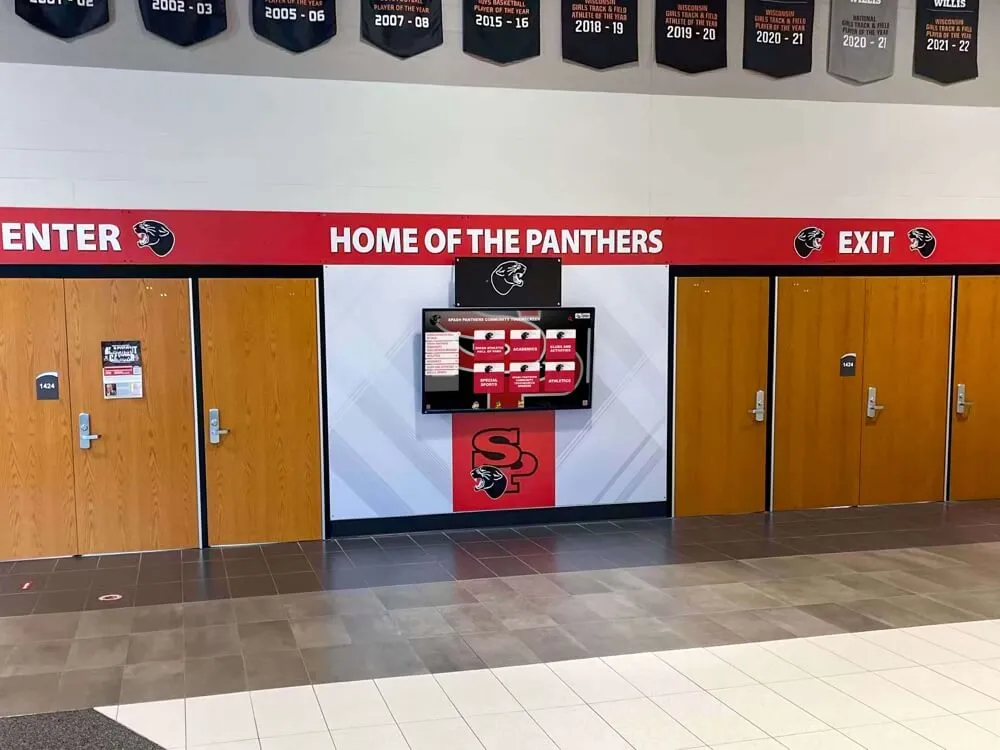
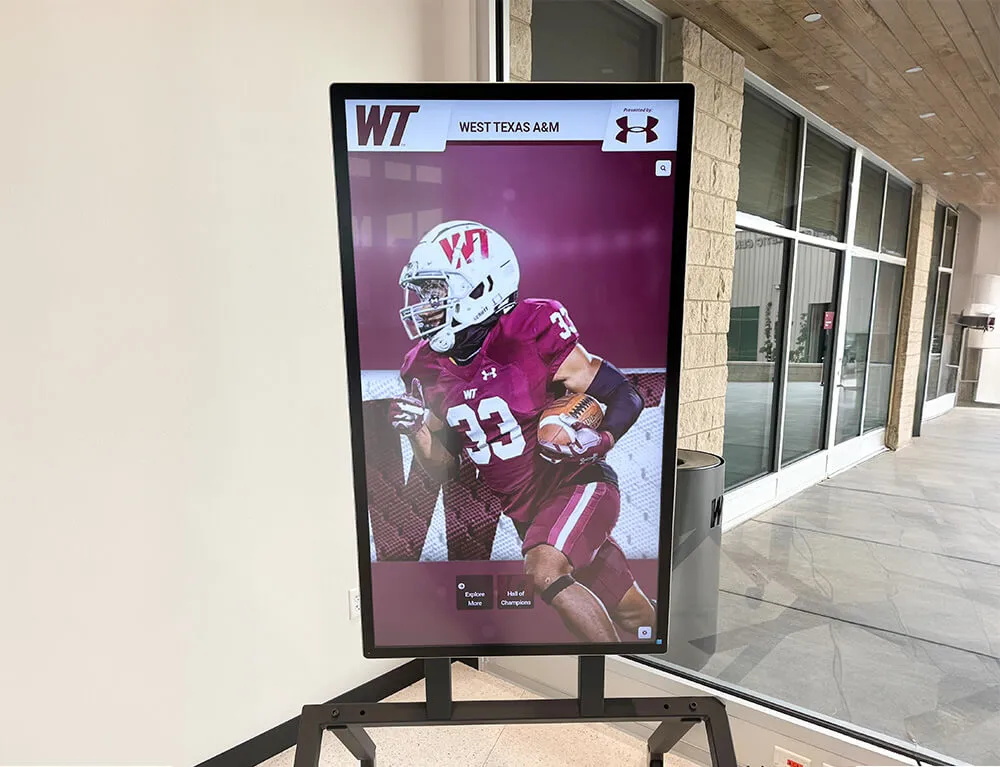
Digital recognition systems can showcase honor stole recipients alongside their academic achievements
Understanding the Traditional Academic Color System
Academic color traditions evolved over centuries within higher education, creating conventional associations between specific colors and achievement levels, academic disciplines, or organizational affiliations. High schools adapting these traditions benefit from understanding established conventions even when customizing programs to reflect institutional identities.
Origins of Academic Regalia Color Meanings
Academic regalia traditions trace roots to medieval European universities where colored hoods, stoles, and robes identified scholars’ fields of study and institutional affiliations. These visual markers enabled quick recognition of expertise areas and academic credentials in eras before standardized credentialing systems existed.
Modern American academic traditions derive primarily from European conventions adapted during the 19th century as formal graduation ceremonies became standard practice. The Intercollegiate Code of Academic Costume, established in 1895 and updated periodically, standardizes academic regalia including color associations for various disciplines and achievement levels.
While this code primarily governs collegiate regalia, high schools often reference these established conventions when designing graduation recognition programs, creating continuity between secondary and post-secondary academic traditions.
Primary Achievement Level Color Meanings
Certain colors carry consistent meanings across most academic contexts, making them reliable choices for recognition programs:
Gold Gold represents the highest achievement level across nearly all academic settings. Schools awarding gold stoles typically reserve them for summa cum laude graduates (usually 3.9-4.0 GPA), valedictorians, or top-tier honor society members. The metallic sheen photographs beautifully and remains visible from ceremony audience seating, making gold an effective highest-honors designation.
Silver Silver traditionally signifies secondary achievement levels—magna cum laude graduates (typically 3.7-3.89 GPA) or second-tier honors. Silver provides clear visual distinction from gold while maintaining obvious prestige. Some schools use silver for salutatorians or runner-up achievement categories.
White White stoles often recognize cum laude achievement (typically 3.5-3.69 GPA) or general honors below top tiers. White represents purity and accomplishment while providing neutral color that photographs well and coordinates with most school color schemes. White stoles work particularly well for broad honors categories that include larger student percentages.
Blue Royal or navy blue commonly represents academic excellence, loyalty, and scholarly achievement. Many schools use blue for honor society recognition or departmental excellence in academic areas. Blue’s versatility makes it popular for programs creating multiple stole categories.
Purple Purple traditionally signifies distinction, royalty, and specialized achievement. Schools often assign purple to leadership recognition, specialized program completion, or unique institutional honors. Purple’s rich color photographs beautifully while standing out visually during ceremonies.
Red Red typically represents courage, sacrifice, or service-oriented achievements. Many schools assign red stoles to community service recognition, student government officers, or leadership positions requiring particular dedication.
Green Green commonly associates with growth, renewal, and environmental or scientific achievement. Schools may assign green to STEM program graduates, environmental club leaders, or agriculture/horticulture programs.
Understanding these baseline associations helps administrators make informed color assignment decisions that communicate clearly to ceremony audiences while honoring academic traditions. For schools managing comprehensive recognition across multiple achievement categories, digital display systems can showcase all honor recipients regardless of stole color limitations.
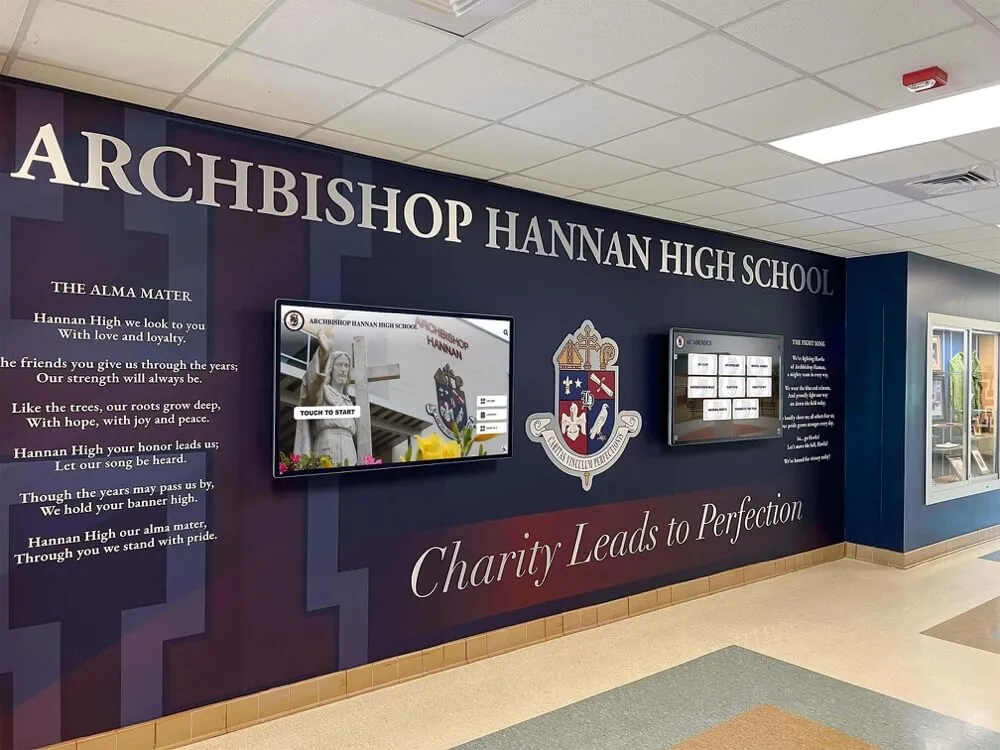
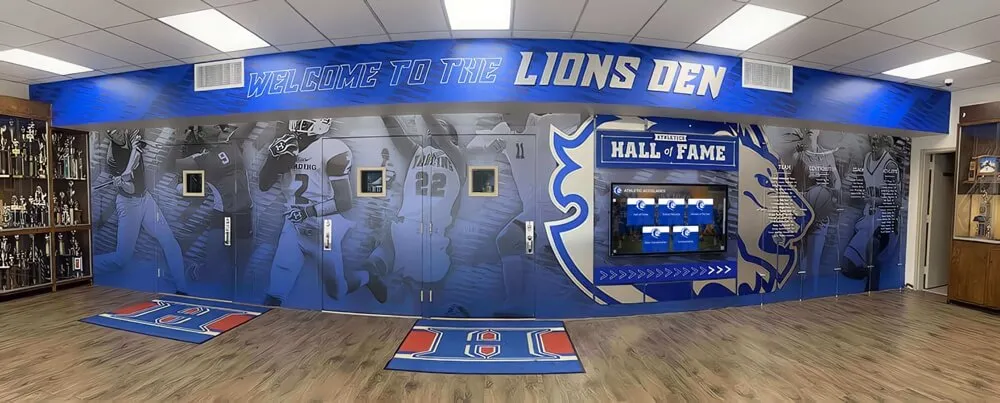
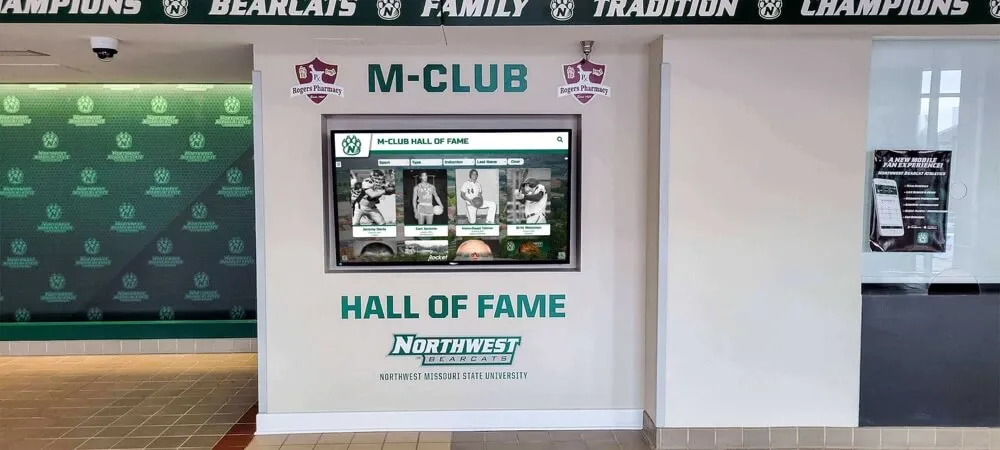
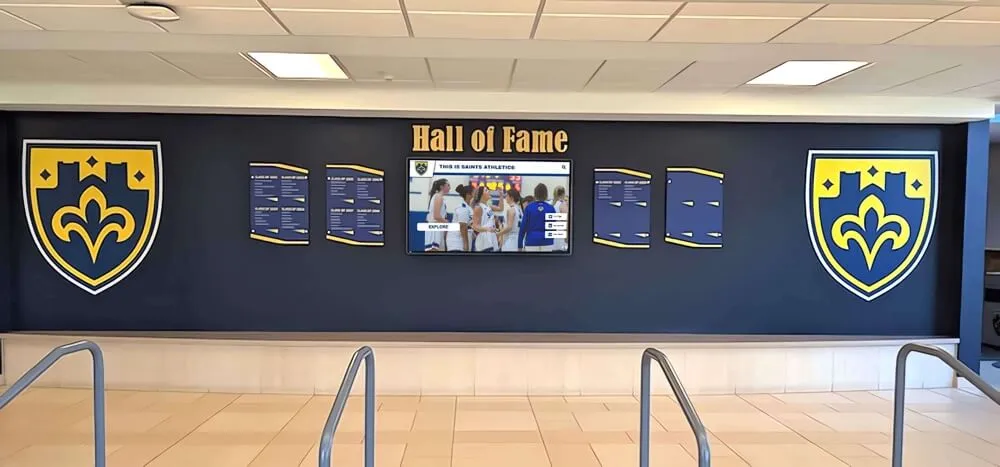
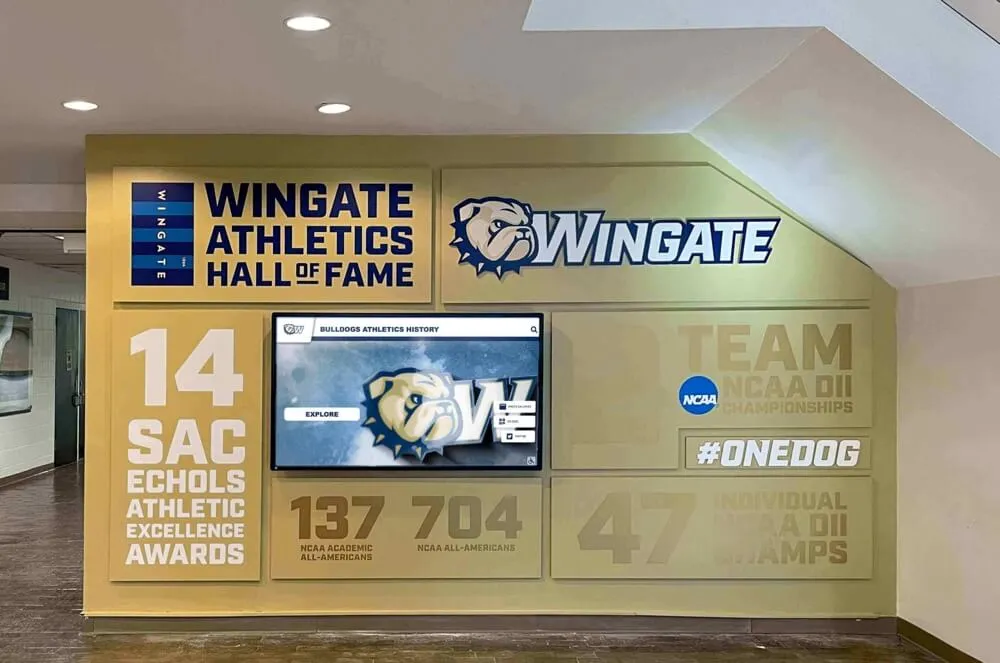
Permanent digital displays ensure academic honors including stole recipients remain visible year-round
Common High School Honor Society Stole Colors
National honor societies provide standardized stole colors to graduating members, creating recognizable visual markers that communicate specific organizational affiliations. School administrators benefit from understanding these established color assignments when coordinating overall graduation stole programs.
National Honor Society (NHS) Stole Colors
The National Honor Society, representing the most widespread high school honor organization, issues distinctive stoles to graduating seniors who maintain membership in good standing through graduation.
Standard NHS Stole Design:
- Color: Gold or metallic gold satin
- Embellishments: NHS emblem embroidered or printed on stole
- Text: Often includes “National Honor Society” text
- Cords: Some chapters provide gold honor cords instead of or in addition to stoles
NHS gold stoles create immediate visual recognition of selective academic achievement combined with leadership, service, and character. Schools implementing separate gold stoles for highest GPA honors should coordinate with NHS advisors to avoid confusion or determine protocols when students earn both recognitions.
National Technical Honor Society (NTHS) Stole Colors
Schools with career and technical education (CTE) programs often have National Technical Honor Society chapters recognizing excellence in technical and vocational programs.
Standard NTHS Stole Design:
- Color: Red, white, and blue tri-color or predominantly red
- Embellishments: NTHS logo featuring torch symbol
- Significance: Represents technical/vocational academic excellence parallel to NHS
NTHS stoles provide important recognition for students excelling in non-traditional academic pathways, demonstrating that schools value diverse forms of achievement. Administrators can use NTHS stoles to communicate broader definitions of excellence during graduation ceremonies.
Sociedad Honoraria Hispánica Stole Colors
Spanish honor societies recognize students demonstrating excellence in Spanish language studies and commitment to Hispanic culture.
Standard SHH Stole Design:
- Color: Red and gold (reflecting Spanish flag colors) or predominantly gold
- Embellishments: Society emblem, Spanish cultural symbols
- Text: May include “Sociedad Honoraria Hispánica” lettering
Schools with significant Spanish language programs often have SHH chapters that provide meaningful recognition for students demonstrating multicultural competency—an increasingly valued achievement in globalized contexts.
Science National Honor Society Stole Colors
Science-focused honor societies recognize students excelling in STEM disciplines and demonstrating commitment to scientific inquiry.
Standard Science NHS Stole Design:
- Color: Royal blue or science-themed colors
- Embellishments: Scientific symbols, organizational emblems
- Significance: Recognizes STEM academic excellence and research involvement
Science NHS stoles help schools visibly celebrate STEM achievement during ceremonies, supporting efforts to elevate science and technology education visibility.
Mu Alpha Theta Mathematics Honor Society Stole Colors
Mathematics honor societies provide recognition specifically for students excelling in mathematical disciplines.
Standard Mu Alpha Theta Stole Design:
- Color: Purple or violet
- Embellishments: Greek letters, mathematical symbols
- Significance: Celebrates mathematical achievement and problem-solving excellence
Mathematics stoles offer deserved recognition for students whose achievements may receive less attention than other academic areas during general graduation celebrations.
Rho Kappa Social Studies Honor Society Stole Colors
Social studies honor societies recognize excellence in history, government, geography, and related disciplines.
Standard Rho Kappa Stole Design:
- Color: Burgundy or deep red
- Embellishments: Society symbols, historical imagery
- Significance: Honors social science academic excellence
These specialized honor society stoles enable students passionate about specific disciplines to receive visible recognition for focused excellence. School administrators coordinating multiple honor societies should maintain comprehensive lists of stole colors preventing assignment conflicts. Schools seeking to preserve these honors beyond ceremony day can explore comprehensive recognition approaches that document diverse achievement categories.
Athletic Organization Honor Stole Colors
Athletic honor societies and varsity letter organizations often provide distinctive stoles recognizing athletic achievement combined with academic excellence.
Common Athletic Stole Characteristics:
- Scholar-Athlete Recognition: Typically require minimum GPA (3.0-3.5) combined with varsity participation
- Color Schemes: Often match school athletic colors or use distinctive sport-specific colors
- Embellishments: Athletic department logos, sport symbols, achievement markers
- Conference Recognition: Some conferences provide standardized stoles for all-conference academic honors
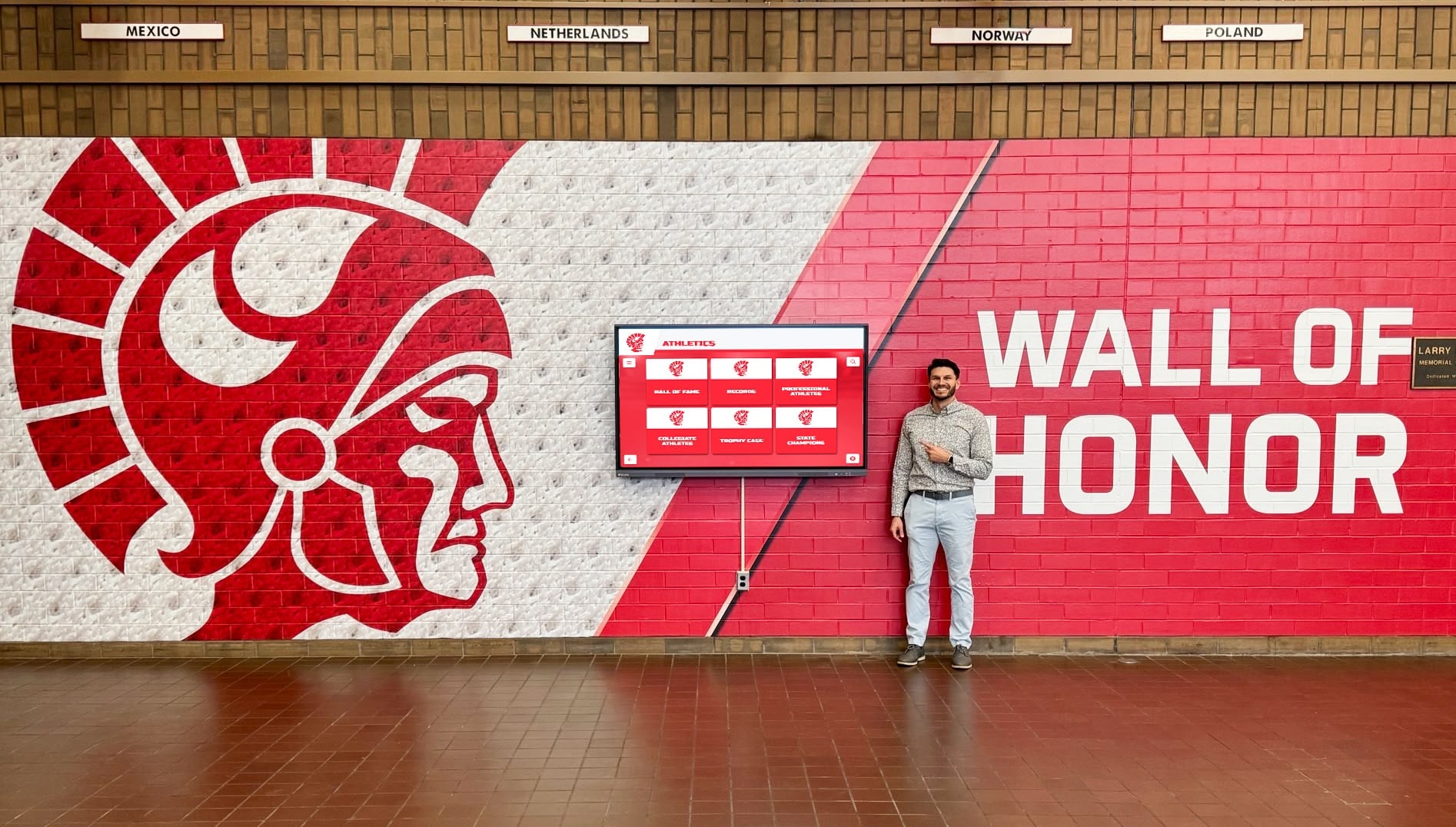
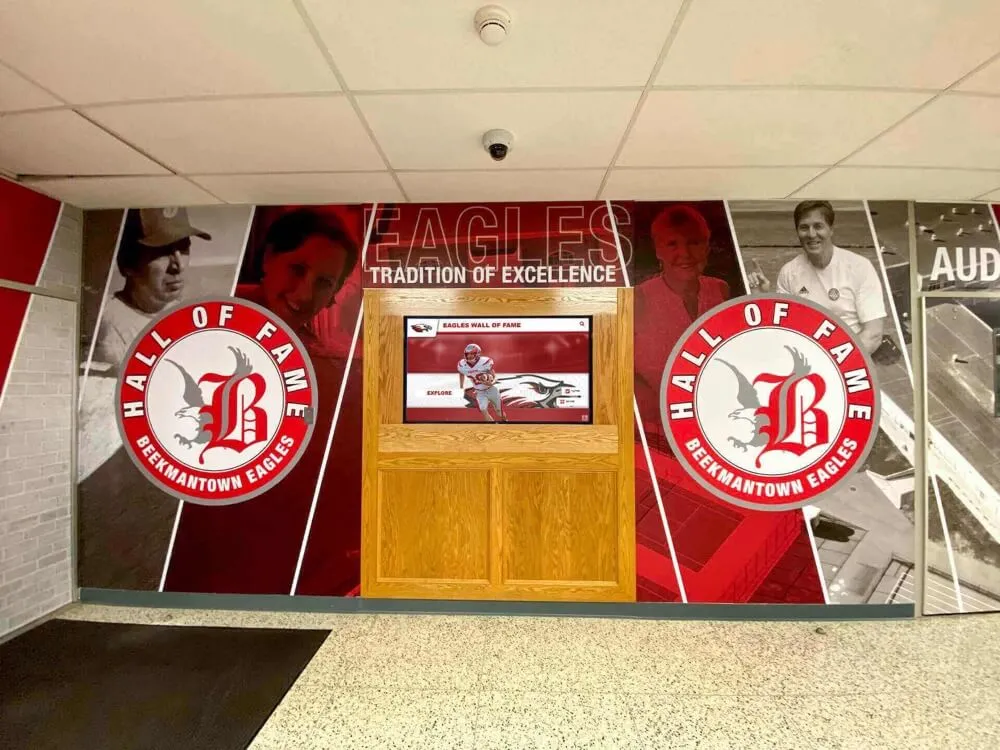
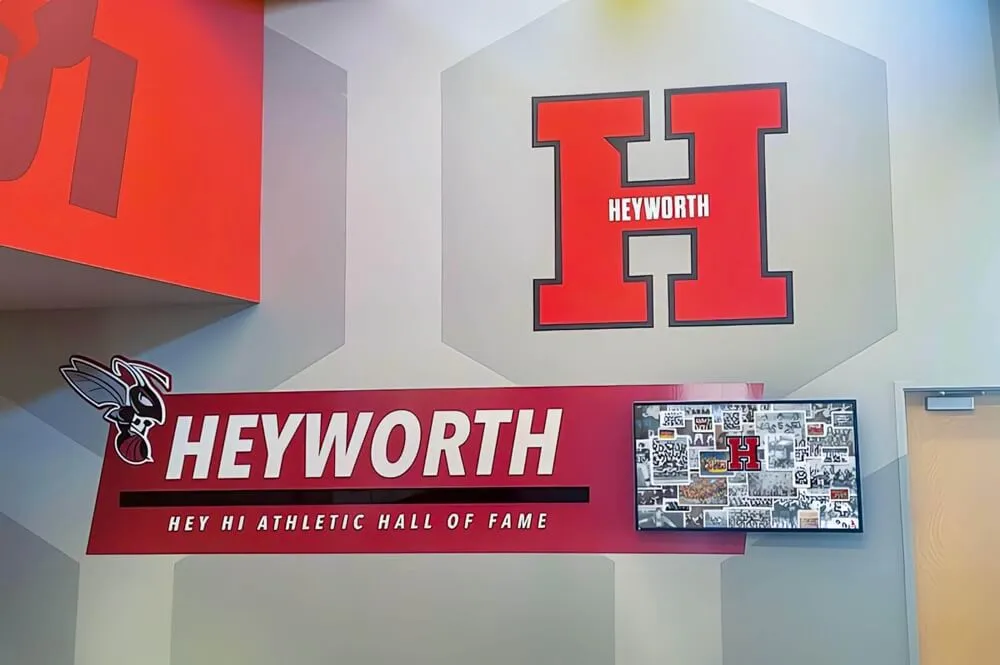
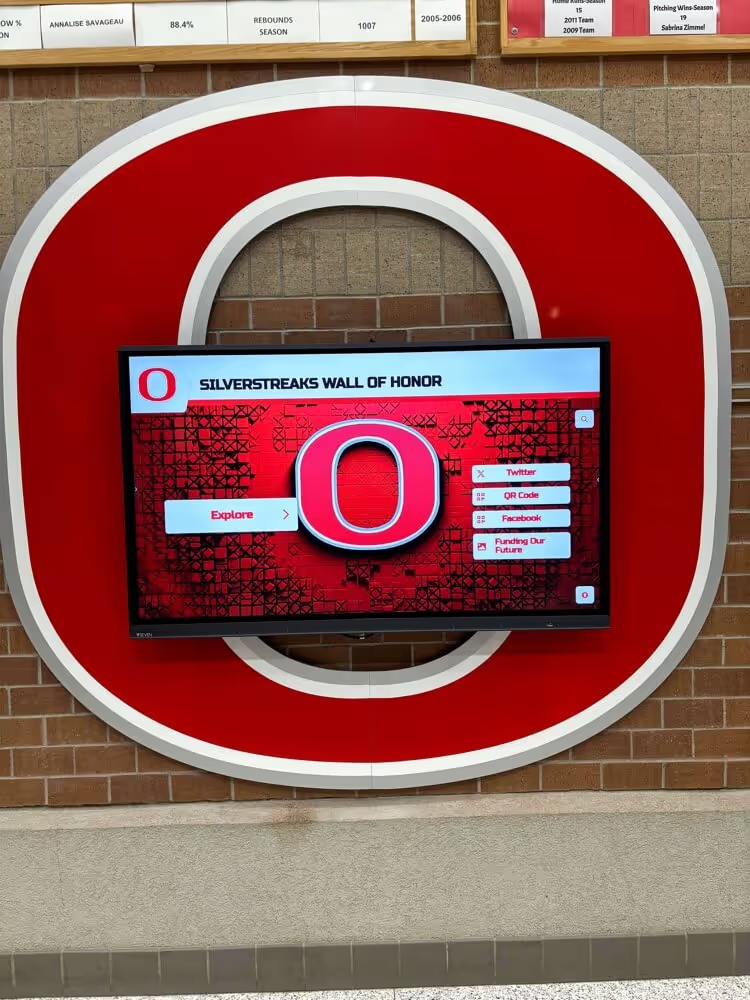
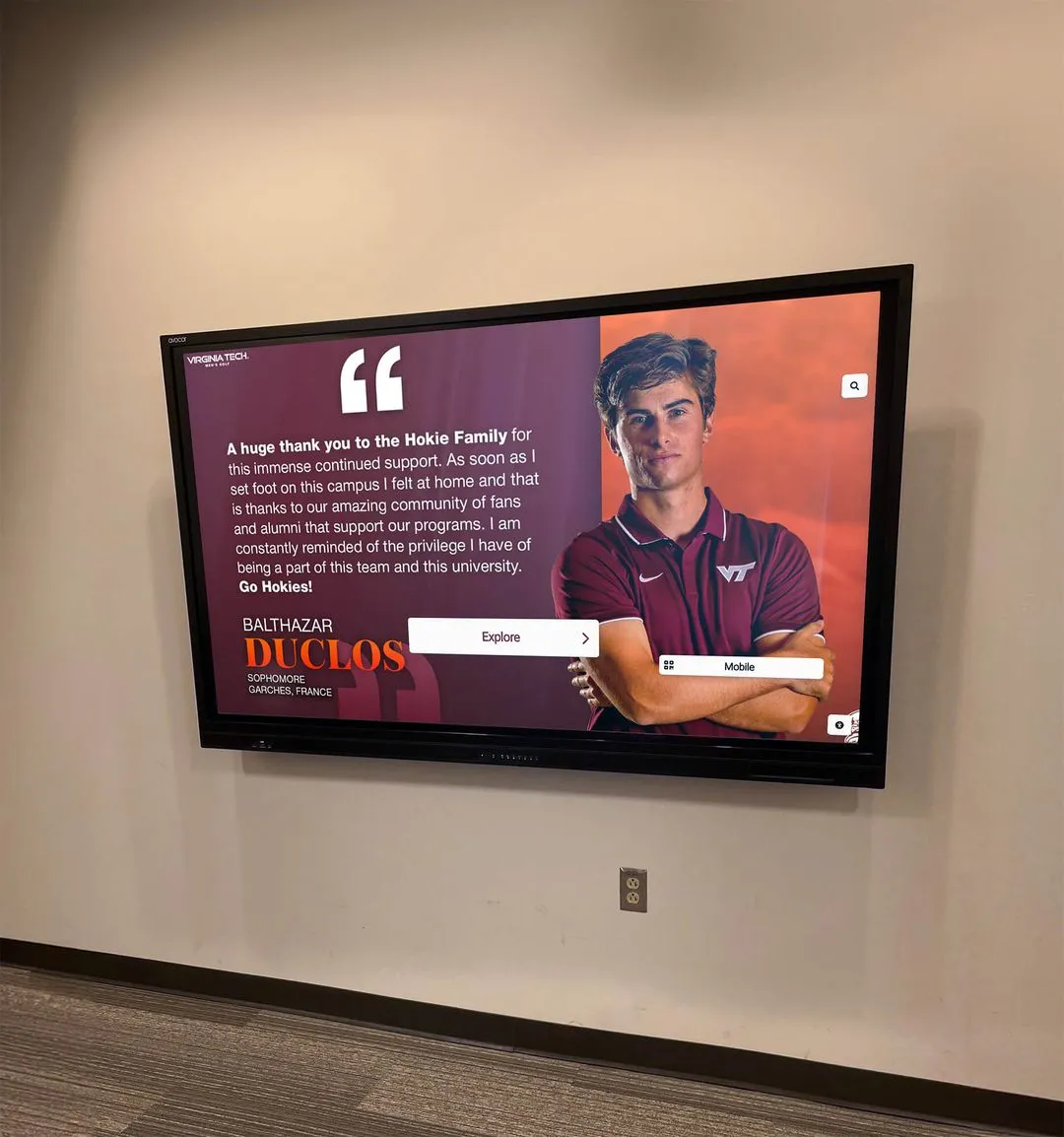
Interactive displays showcase diverse recognition categories including athletic and academic honors
Athletic stoles validate that schools value balanced excellence across academic and co-curricular domains, sending important messages about student-athlete expectations. Schools can integrate athletic recognition into broader comprehensive celebration systems honoring diverse achievements.
School-Specific Stole Color Assignments
Beyond national honor societies, schools create custom stole programs recognizing institutional priorities, unique programs, and locally-defined achievement categories. Understanding best practices for these custom assignments helps administrators design coherent systems.
Academic Achievement Level Stole Colors
Most schools implement GPA-based stole systems recognizing cumulative academic excellence across high school careers.
Common GPA Threshold Color Assignments:
Summa Cum Laude (3.9-4.0 GPA or weighted equivalent):
- Gold stoles (most common)
- School primary colors with gold accents
- Metallic gold with institutional emblems
Magna Cum Laude (3.7-3.89 GPA):
- Silver stoles
- School secondary colors
- White with silver accents
Cum Laude (3.5-3.69 GPA):
- White or bronze stoles
- School colors with honors designation
- Blue or purple for general honors
Honors (3.3-3.49 GPA):
- White or school-color stoles
- Lighter shades distinguishing from higher tiers
- Simple designs differentiating from top honors
These tiered systems create visual achievement hierarchies that audiences readily understand when ceremony programs explain color meanings. Clear GPA thresholds prevent eligibility disputes while published standards motivate student academic effort throughout high school.
Schools should establish whether thresholds apply to weighted or unweighted GPAs and communicate calculation methods clearly to students and families from freshman year forward. Transparency prevents end-of-senior-year disappointment when students discover they narrowly missed honors due to calculation misunderstandings.
Leadership and Service Stole Colors
Leadership and community service stoles recognize non-academic achievements that demonstrate character, commitment, and civic engagement.
Service Hour Recognition Stoles:
- 100-199 hours: White or light blue
- 200-299 hours: Blue or purple
- 300+ hours: Red or gold (depending on academic stole assignments)
- Presidential Service Award recipients: Red, white, and blue or distinctive presidential colors
Leadership Position Stoles:
- Student government officers: Red or institutional primary colors
- Class officers: School colors with class year designation
- School ambassadors: Purple or distinctive leadership colors
- Peer mentorship leaders: Blue or service-oriented colors
Service and leadership stoles communicate that schools value contributions beyond individual academic achievement, recognizing students who strengthen school communities and serve broader populations. These stoles often mean more to recipients than academic recognitions, as they represent chosen commitments rather than grade outcomes.
Administrators implementing service recognition should establish clear documentation requirements early in students’ high school careers, requiring ongoing verification rather than accepting unverified senior-year hour claims. Documented service builds authentic recognition value while preventing disputes.
Departmental Excellence Stole Colors
Academic departments often create specialized stoles recognizing outstanding achievement within specific disciplines, particularly for students who may not reach highest overall GPA honors but demonstrate exceptional excellence in focused areas.
STEM Department Stoles:
- Science excellence: Green or blue with scientific symbols
- Mathematics excellence: Purple or gold with mathematical imagery
- Engineering programs: Orange (traditional engineering color)
- Computer science: Binary-themed designs or technology-inspired colors
Humanities and Social Sciences:
- English/Literature: White or cream (traditional liberal arts color)
- History/Social Studies: Burgundy or historical colors
- World Languages: Colors representing studied language cultures
- Philosophy/Ethics: Dark blue (traditional philosophy color)
Arts Programs:
- Visual Arts: Pink or art-themed multicolor designs
- Performing Arts: Pink or purple with theatrical symbols
- Music: Pink or musical note imagery
- Media Arts: Contemporary design-focused colors
Departmental stoles enable students to express academic passions and receive recognition within areas of deepest interest and achievement. Students whose overall GPAs don’t reach top honors tiers but who excel remarkably in specific departments gain deserved ceremony recognition.
Schools with specialized academies or career pathways (medical academy, business academy, environmental science program) can create distinctive stole colors that build program identity and pride. These recognition markers help strengthen specialized learning communities within larger comprehensive schools.
For schools managing recognition across numerous departments and programs, digital recognition platforms enable unlimited achievement categories without physical space constraints limiting traditional displays.
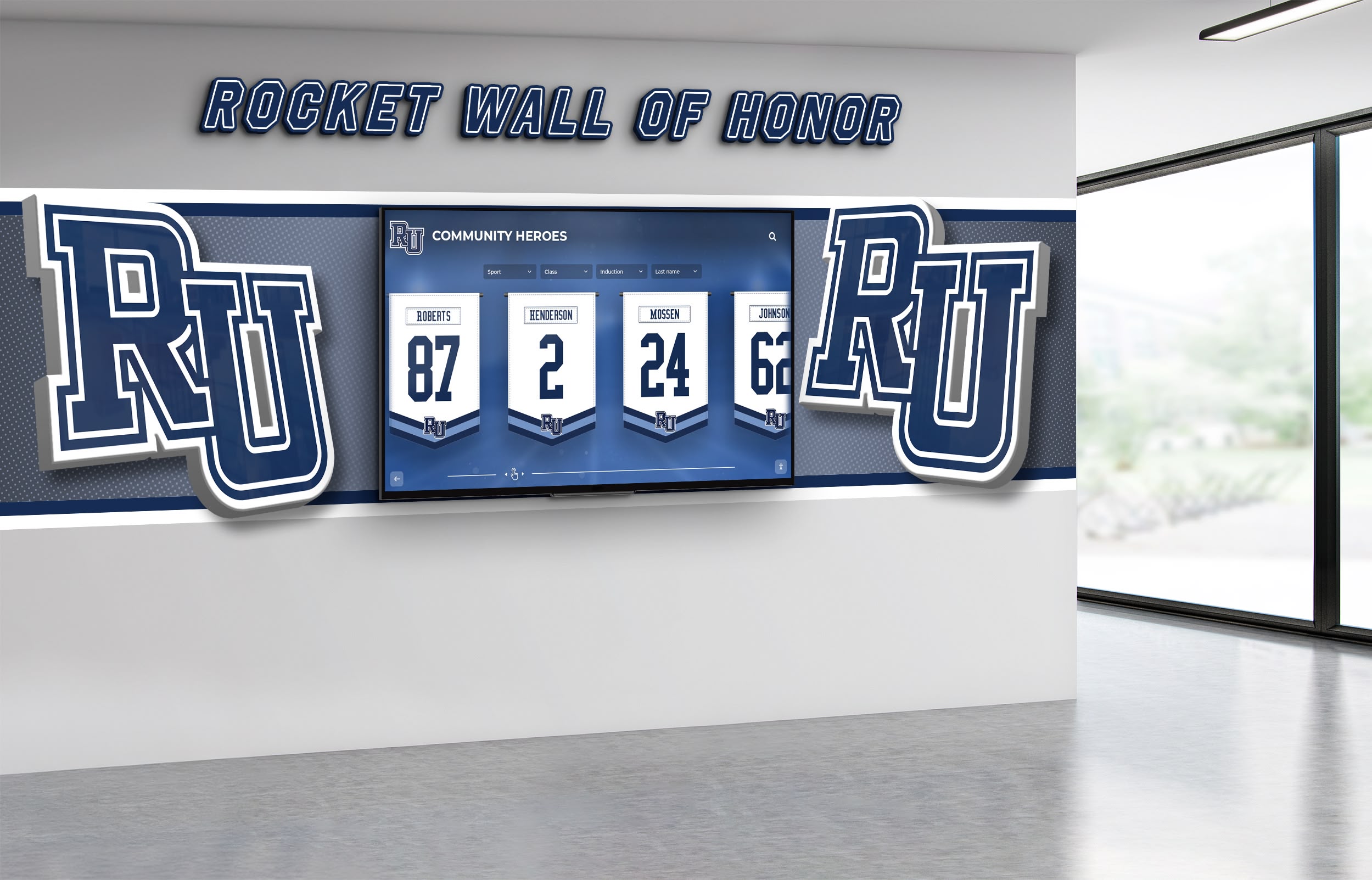
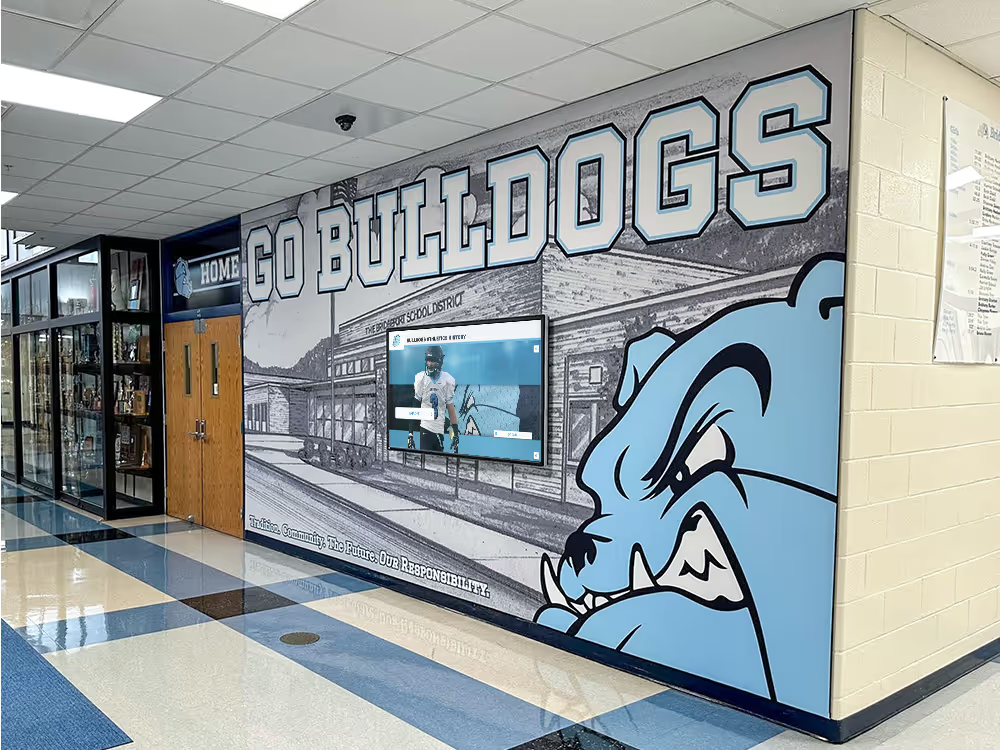
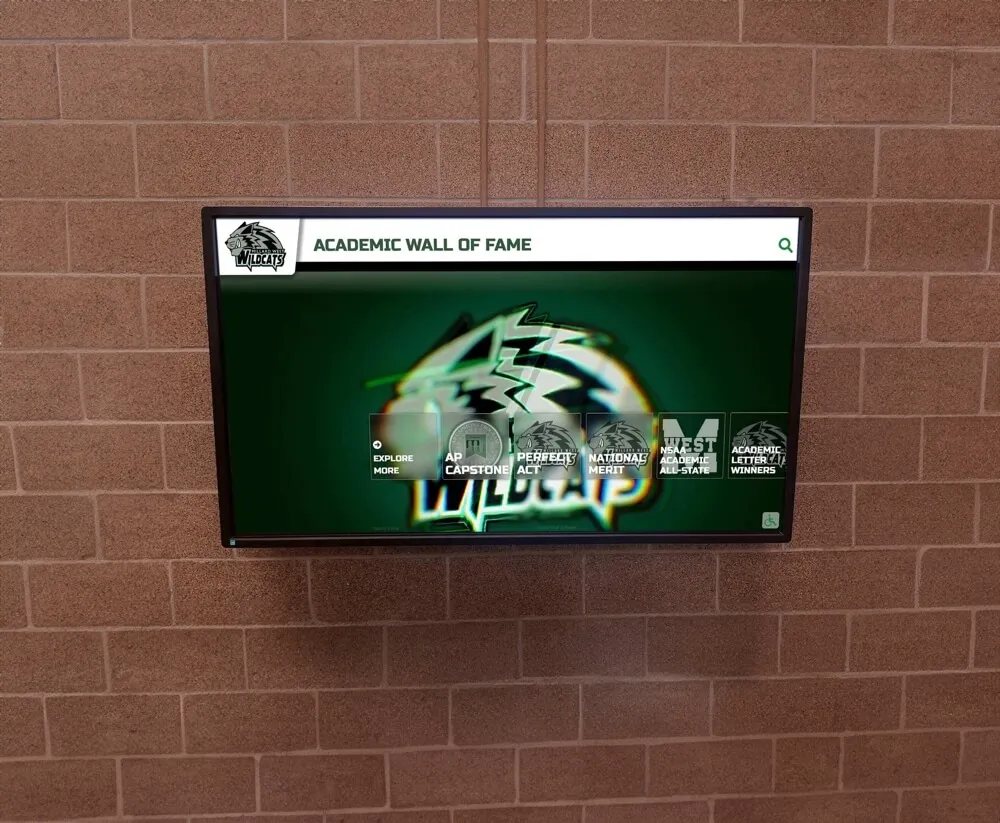
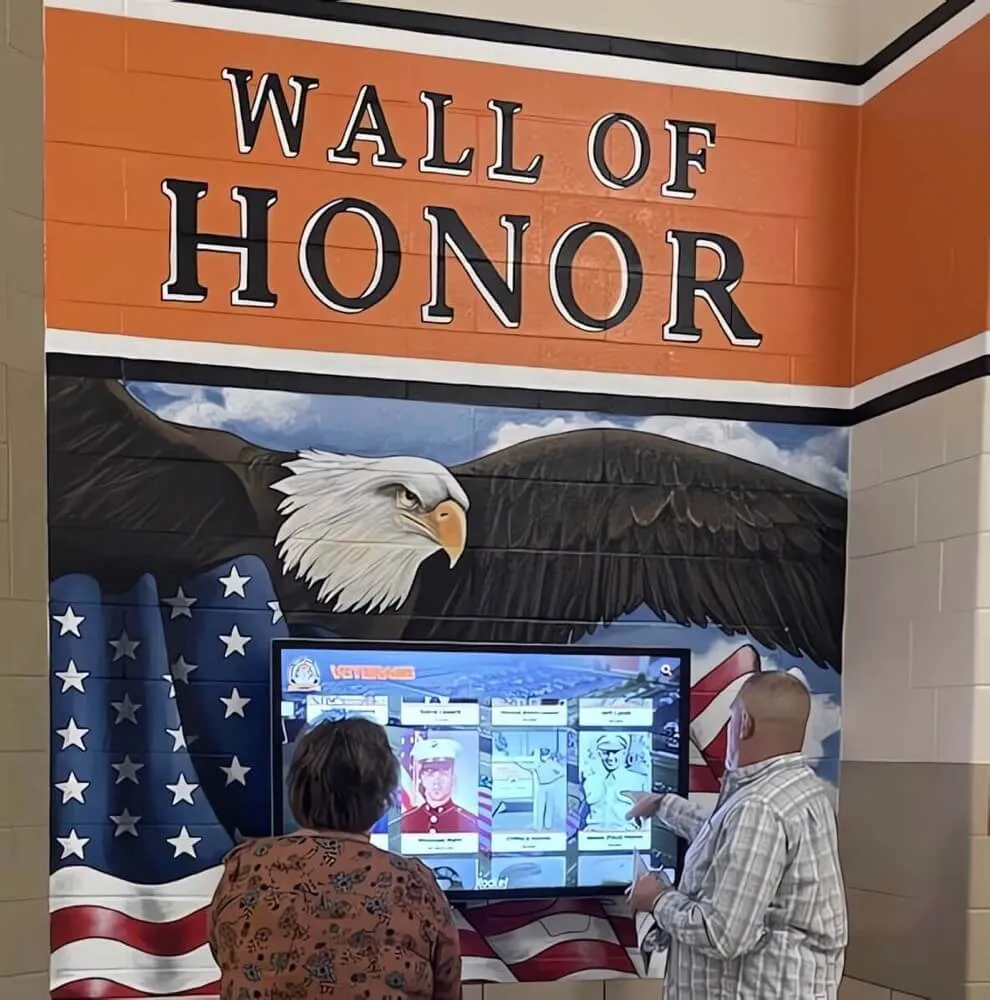
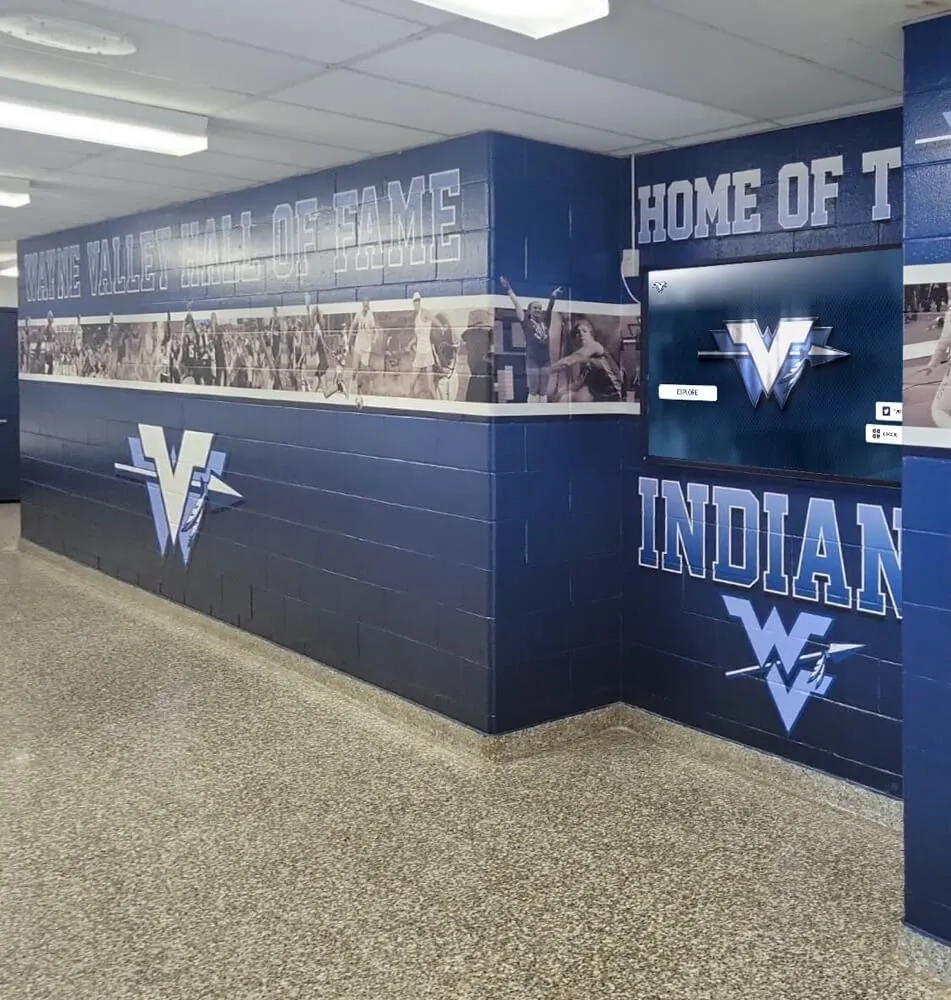
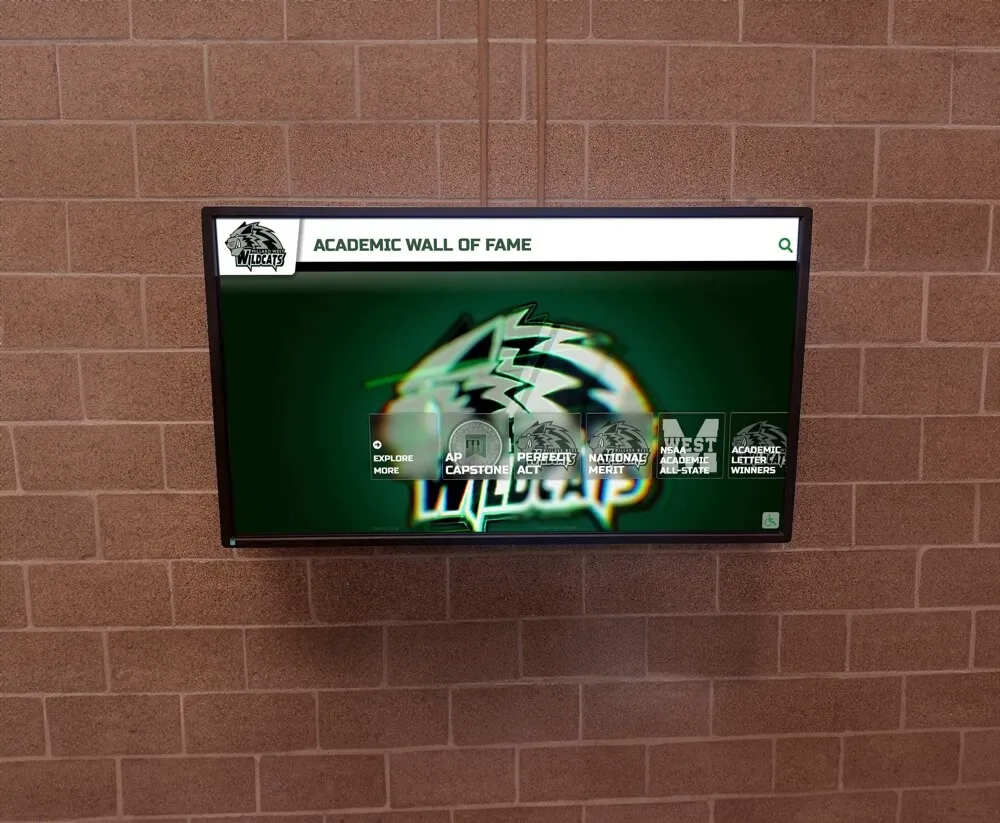
Modern recognition walls showcase diverse achievements including graduation honors across all departments
Coordinating Multiple Stole Colors: Best Practices for Administrators
Schools implementing comprehensive recognition programs often find students earning multiple stoles—academic honors plus honor society plus departmental excellence. Managing these overlapping achievements requires clear policies preventing visual confusion during ceremonies.
Establishing Stole Wearing Policies
Single Stole Approach: Some schools limit graduates to wearing one stole representing their highest or most significant achievement. This approach maintains clean ceremonial aesthetics and prevents excessive decoration that might distract from collective graduation significance.
When implementing single-stole policies, allow students to choose which earned honor they display, respecting that significance varies individually. The NHS member who also earned academic honors might value honor society recognition more highly than GPA distinction, reflecting personal priorities schools should honor.
Multiple Stole Allowance: Other schools permit wearing all earned stoles, fully celebrating achievement breadth. Students may wear 2-4 stoles simultaneously, creating more complex visual presentations but honoring multiple forms of excellence.
Multiple-stole policies require clear wearing protocols—proper draping techniques, maximum numbers, and guidance about balancing recognition with ceremonial dignity. Ceremony rehearsals should include stole arrangement instruction ensuring students understand appropriate wearing methods.
Tiered Priority Systems: Some schools establish hierarchies determining which stoles take precedence when conflicts arise:
- National honor society stoles (externally awarded, standardized recognition)
- Academic achievement stoles (core institutional recognition)
- Departmental or program stoles (specialized recognition)
- Service or leadership stoles (character-based recognition)
Tiered approaches provide guidance while allowing exceptions when students feel lower-tier achievements carry greater personal significance.
Creating Stole Coordination Guidelines
Clear visual coordination prevents color conflicts and maintains ceremony cohesiveness:
Color Palette Planning: Map all possible stole colors school might award, identifying potential conflicts or excessive similarity. If NHS gold stoles conflict with academic summa cum laude gold, consider silver or white for academic honors or establish clear protocols for students earning both.
Ceremony Program Explanations: Comprehensive ceremony program descriptions help audiences understand stole meanings:
“Graduating students wear colored stoles representing exceptional achievement. Gold stoles signify National Honor Society membership or summa cum laude academic honors (3.9+ GPA). Silver represents magna cum laude (3.7-3.89 GPA). Purple honors students completing 200+ community service hours. Red identifies student government officers. Blue recognizes departmental academic excellence. Each stole celebrates dedication to scholarship, leadership, service, and specialized achievement.”
Clear explanations transform stoles from mysterious decorations into meaningful achievement markers that audiences appreciate and understand.
Photography Considerations: Coordinate with ceremony photographers about stole documentation priorities. Ensure honor graduates receive appropriate photography time during processionals, diploma presentations, and post-ceremony sessions. These photographs preserve recognition long after ceremonies conclude.
Managing Equity and Inclusion in Stole Programs
Thoughtful administrators recognize that stole programs can inadvertently create equity concerns requiring proactive attention.
Financial Access: If students must purchase earned stoles, cost barriers may prevent deserving graduates from displaying recognition. Establish hardship waiver processes, create stole scholarship funds, or absorb costs within general graduation budgets ensuring achievement visibility doesn’t depend on family financial circumstances.
Achievement Pathway Diversity: Traditional academic-only stole systems may exclude students excelling through non-traditional pathways—technical programs, arts achievement, leadership development, or work-based learning. Comprehensive stole programs offering multiple achievement categories enable more students to earn recognition through varied excellence demonstrations.
Cultural and Linguistic Recognition: Honor stoles recognizing multilingual competency, cultural heritage celebration, or immigrant/refugee achievement validate diverse student experiences and accomplishments beyond traditional academic metrics. These stoles communicate institutional values about inclusion and global citizenship.
Documentation Support: Service hour or leadership verification requirements may disadvantage students without adults readily available to document activities or students whose family responsibilities (caregiving siblings, working to support family) prevent participation in school-sponsored programs with built-in verification. Consider broader recognition categories and flexible documentation approaches ensuring deserving students can demonstrate achievement.
Schools committed to equitable recognition can explore comprehensive approaches that celebrate diverse forms of student excellence.
Implementing Graduation Stole Programs: Administrative Steps
Launching or refining stole programs requires systematic planning addressing timeline management, vendor coordination, student communication, and ceremony integration.
Timeline for Stole Program Implementation
6-12 Months Before Graduation:
- Review or establish stole categories and color assignments
- Set achievement thresholds and eligibility criteria
- Identify honor society standardized stoles versus custom school stoles
- Budget planning for stole purchases or student fees
- Vendor research and sample requests
4-6 Months Before Graduation:
- Finalize stole designs and place orders (custom stoles require 8-12 week production)
- Communicate stole program details to students, families, and faculty
- Establish documentation requirements for service hours, leadership positions
- Create tracking systems monitoring student progress toward eligibility
2-3 Months Before Graduation:
- Calculate preliminary GPA standings identifying likely academic stole recipients
- Verify honor society membership rosters
- Collect service hour documentation and leadership position confirmations
- Prepare for eligibility appeals or verification questions
4-6 Weeks Before Graduation:
- Finalize stole recipient lists across all categories
- Notify students of eligibility and distribution logistics
- Prepare ceremony program descriptions explaining stole meanings
- Coordinate with photographers about stole documentation priorities
- Brief ceremony staff on stole protocols
1-2 Weeks Before Graduation:
- Distribute stoles to eligible students with wearing instruction
- Conduct ceremony rehearsal including proper stole arrangement
- Prepare backup stoles for last-minute needs or replacements
- Finalize ceremony scripts including stole recognition elements
This systematic timeline ensures adequate planning while preventing last-minute chaos that creates stress for students, families, and administrators.
Vendor Selection and Stole Ordering
Quality stole suppliers provide reliable products delivered on schedule with accurate customization. Poor vendor selection creates crisis situations when orders arrive late, incorrectly produced, or with quality problems.
Vendor Evaluation Criteria:
- Production timelines and rush order capabilities
- Customization options (embroidery, text, logos, custom colors)
- Minimum order quantities and pricing tiers
- Sample availability for quality evaluation
- References from other schools regarding reliability
- Return/exchange policies for defective items
- Customer service responsiveness
Quality Considerations:
- Fabric weight and drape (appropriate for photography and ceremony length)
- Color accuracy and consistency across order
- Embroidery density and design clarity
- Length standardization (typically 60-72 inches)
- Hem finishing and overall construction quality
- Packaging protecting stoles until distribution
Budget Planning: Stole costs range from $5-10 for basic polyester to $25-50+ for premium custom embroidered stoles. Calculate total program costs by estimating student numbers in each category based on historical achievement data.
Determine funding sources—absorbed in general graduation budgets, charged as student fees, covered by booster clubs or parent organizations, or funded through community donations. If charging students, communicate costs early allowing families to plan financially.
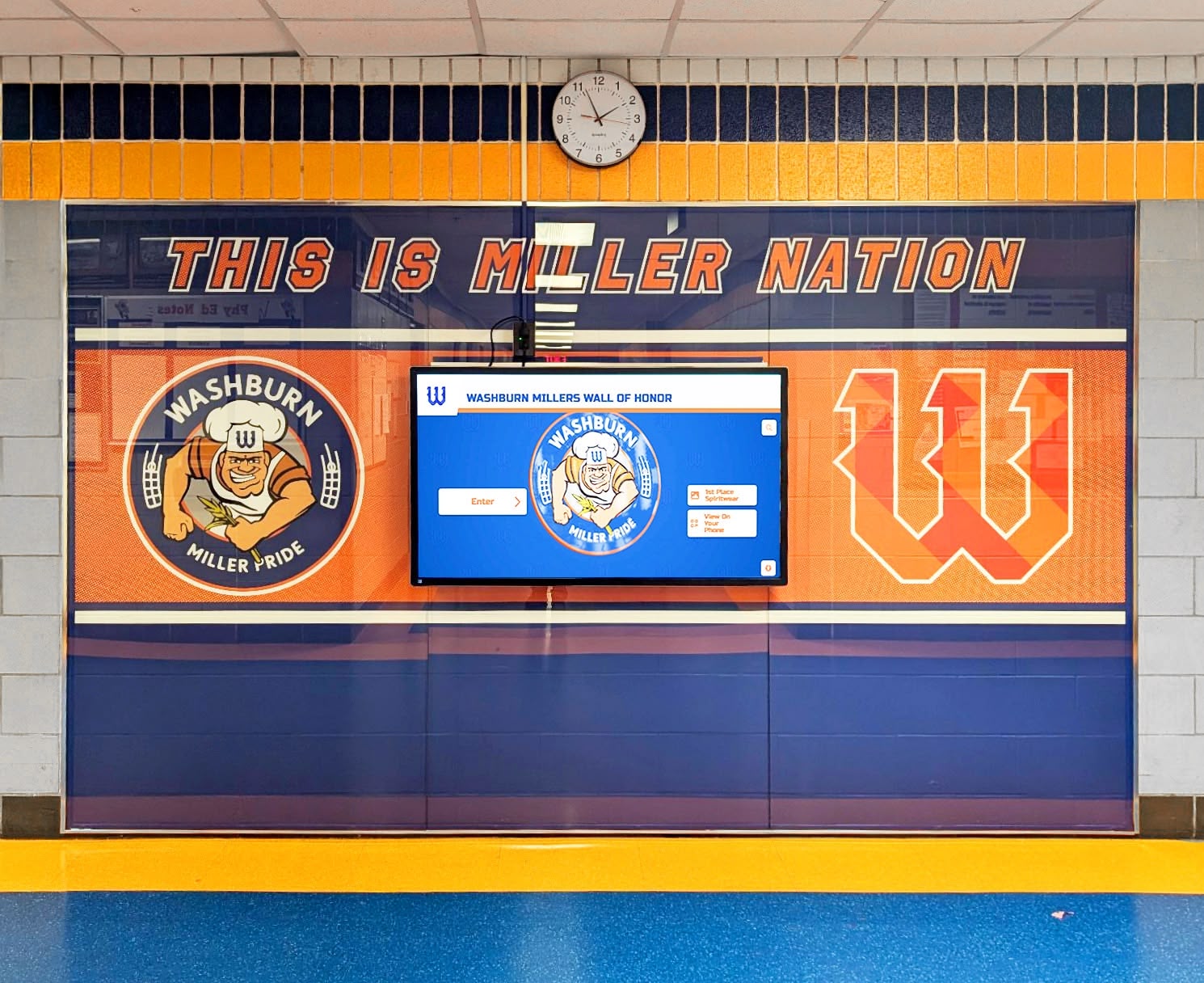
Permanent recognition displays preserve stole recipient honors beyond ceremony day
Communicating Stole Information to School Communities
Clear communication prevents confusion about stole eligibility, color meanings, and recognition significance. School administrators should develop comprehensive communication plans reaching all stakeholders.
Student and Family Communication
Freshman Year Introduction: Introduce stole programs during freshman orientation or welcome events, explaining achievement categories and eligibility requirements. Early awareness enables students to plan involvement and coursework with stole recognition in mind.
Provide written materials summarizing:
- All available stole categories
- Specific eligibility thresholds (GPA requirements, service hour levels, etc.)
- Documentation requirements and processes
- Timeline for eligibility determination
- Significance of each recognition category
Ongoing Progress Visibility: Help students track achievement progress throughout high school. Academic counselors can reference GPA proximity to honors thresholds during advising. Activity sponsors can remind participants about documentation requirements for service or leadership recognition.
Regular progress updates motivate continued effort while preventing senior-year surprises when students discover they narrowly missed eligibility without awareness they could have adjusted earlier.
Senior Year Eligibility Notification: Notify eligible students 4-6 weeks before graduation, providing:
- Specific stoles earned with explanations of what each represents
- Distribution logistics and timeline
- Ceremony wearing guidelines
- Return requirements if stoles must be collected afterward
- Appeals process for students questioning eligibility determinations
For students not earning stoles, consider private notification rather than public lists that could embarrass non-recipients. Frame communications positively, emphasizing that graduation itself represents significant achievement regardless of additional honors.
Faculty and Staff Coordination
Department Chair Involvement: Coordinate with department chairs managing specialized stoles. Establish clear processes for identifying departmental excellence recipients, set nomination deadlines, and define criteria ensuring consistent application across departments.
Counselor Training: Brief counselors on GPA calculation methods, threshold requirements, and appeals processes. Counselors field most student questions about stole eligibility and need accurate information to provide reliable guidance.
Ceremony Staff Briefing: Ensure ceremony coordinators, rehearsal leaders, and platform assistants understand stole protocols. Staff should know proper wearing techniques to guide students during rehearsal and recognize when adjustments needed during ceremony.
Public Communication and Ceremony Integration
Ceremony Program Content: Develop clear, concise ceremony program explanations helping audiences understand stole significance. Balance brevity (programs shouldn’t overwhelm with detail) with sufficient description for meaningful recognition.
Social Media Recognition: Share stole recipient recognition through school social media channels in weeks before graduation. Highlight diverse achievement categories, feature student stories explaining what honors mean personally, and celebrate excellence breadth.
Social media content also serves informational purposes, helping families understand stole meanings when seeing ceremony photos afterward.
Local Media Engagement: Pitch stories to local newspapers about honor graduates, particularly focusing on unique recognition categories or students overcoming challenges to achieve excellence. Media coverage celebrates students while building positive school reputation within communities.
Schools can extend recognition visibility through comprehensive digital systems that showcase achievements year-round beyond ceremony-day focus.
Preserving Stole Recognition Beyond Ceremony Day
Graduation ceremonies last hours, but the achievements stoles represent deserve lasting recognition. Modern schools increasingly implement permanent systems preserving honor recipient visibility long after ceremonies conclude.
Traditional Recognition Approaches and Limitations
Printed Honor Roll Lists: Schools traditionally publish honor graduate lists in ceremony programs, yearbooks, or hallway displays. While valuable, printed lists provide limited information—names without context, achievements, or photographs connecting honors to actual students.
Printed lists also lack searchability. Finding specific graduates in comprehensive lists requires scanning entire documents, and historical lists filed in cabinets become essentially inaccessible over time.
Physical Plaques and Trophy Cases: Engraved plaques mounted in hallways or trophy cases provide permanent recognition with greater visibility than printed lists. However, physical space constraints limit how many students can receive plaque recognition, often forcing difficult decisions about whose achievements merit limited display space.
Maintenance challenges compound over time. Plaques tarnish, engraving becomes difficult to read, and trophy cases fill completely, requiring removal of older recognition to accommodate new graduates.
Yearbook Documentation: Yearbooks provide permanent photographic documentation of stole-wearing graduates, preserving visual evidence of ceremony recognition. Yearbook spreads often highlight honor graduates with dedicated pages.
Yearbook limitations include single-copy access (families must purchase books to own documentation), limited search capability, and focus only on single graduation year without connecting to broader institutional achievement history.
Digital Recognition Systems: Modern Preservation Solutions
Contemporary technology overcomes traditional limitations while creating engaging recognition experiences serving multiple institutional purposes.
Comprehensive Graduate Profiles: Digital archive platforms create detailed profiles for every graduate, documenting:
- All stoles earned with specific achievement explanations
- GPA, class rank, and academic honors context
- Honor society memberships and leadership positions
- Service hour totals and volunteer organization involvement
- Co-curricular achievements (athletics, arts, competitions)
- Post-graduation plans and eventual career information
These rich profiles transform stoles from ceremony decorations into entry points for exploring complete achievement narratives explaining why students earned specific honors.
Searchable Archives: Digital systems enable searching by graduation year, achievement category, stole color, or student name. Families can easily locate graduates in archives spanning decades, and advancement offices identify accomplished alumni for recognition events, mentorship recruitment, or fundraising cultivation.
Interactive Touchscreen Displays: Schools install prominent touchscreen displays in hallways, lobbies, or common areas where students, visitors, and returning alumni browse achievement archives. Interactive exploration creates engagement impossible with static plaques or printed lists.
Students walking past displays daily absorb messages about valued achievements, normalize academic excellence, and discover role models worth emulating. Current underclassmen see themselves reflected in honor graduates from similar backgrounds or programs, understanding that achievement remains accessible.
Unlimited Recognition Capacity: Digital platforms showcase every stole recipient across all years without space constraints. No achievement gets excluded due to wall space limitations, ensuring equitable recognition for all deserving graduates regardless of when they earned honors.
Mobile Accessibility: QR codes linked to digital recognition platforms allow ceremony attendees to access detailed graduate profiles during commencement. Family members scan codes in programs to read full achievement descriptions and explore honor category explanations from their seats.
Mobile accessibility extends archives beyond school physical locations, allowing alumni, prospective families, and community members to explore achievement records anywhere.
Schools implementing comprehensive digital recognition often see significantly higher engagement with achievement archives compared to traditional approaches. The systems serve recruitment during prospective family campus visits, strengthen alumni connections when graduates return and find themselves in permanent displays, and reinforce achievement culture for current students who interact with displays regularly.
Administrators seeking to preserve graduation honors permanently can explore how digital recognition solutions transform static ceremony recognition into dynamic, accessible archives.
Integrating Stole Recognition With Broader Achievement Systems
The most effective recognition programs connect graduation stoles to comprehensive year-round systems celebrating achievement development rather than only final outcomes.
Freshman to Senior Achievement Narratives: Help students understand connections between current involvement and eventual graduation recognition. When freshmen join honor societies or service organizations, explain how sustained participation builds toward stole eligibility, creating four-year achievement storylines.
Interim Milestone Celebrations: Recognize progress before graduation—honor roll achievements, service hour milestones, leadership position appointments. These interim celebrations maintain motivation while providing recognition for students progressing toward but perhaps not reaching highest graduation honors.
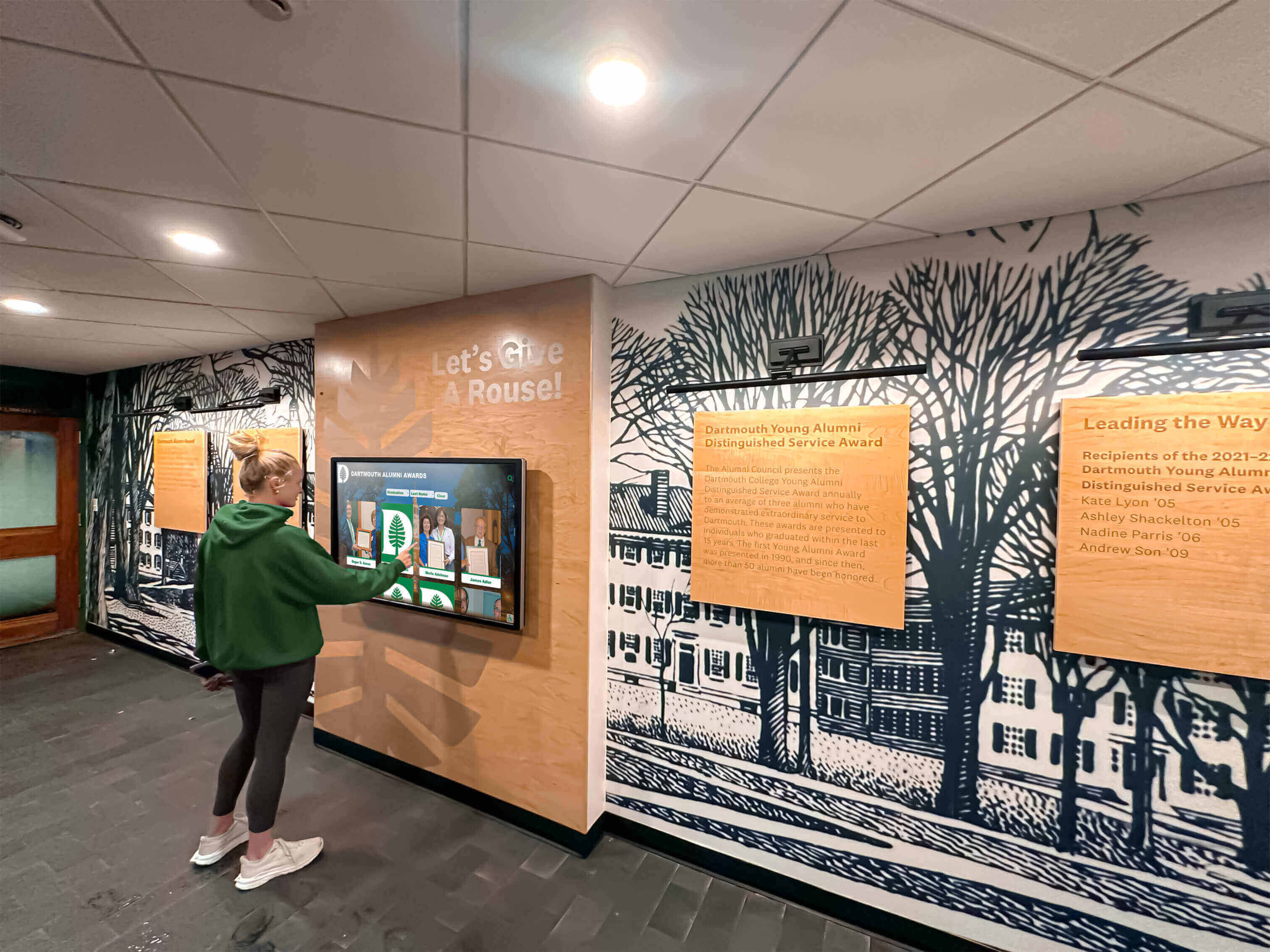
Interactive displays enable students to explore achievement archives and discover role models
Post-Graduation Achievement Updates: Modern digital platforms allow updating graduate profiles with post-secondary accomplishments. Alumni can add college graduations, career milestones, community contributions, and professional achievements, creating continuous achievement narratives extending beyond high school.
These ongoing connections demonstrate that graduation stole recognition marks beginnings rather than endpoints, positioning honor students as lifelong achievers worthy of sustained celebration.
Special Considerations for Stole Program Implementation
Thoughtful administrators anticipate challenges and edge cases requiring clear policies established before questions arise during high-pressure graduation preparation periods.
Addressing Transfer Students
Students transferring mid-high-school present eligibility questions for GPA-based stole recognition:
Policy Considerations:
- Require minimum enrollment duration (typically 2 years) for institutional honor eligibility
- Calculate GPA using only courses completed at current school versus accepting transfer GPAs
- Create separate “transfer student academic excellence” recognition if institutional honors exclude transfers
- Clearly communicate transfer student policies during enrollment processes
Transfer policies should balance maintaining recognition integrity with avoiding arbitrary exclusion of deserving students who arrived later in high school careers.
Managing Homeschool and Alternative Program Graduates
Students completing portions of education through homeschooling, online programs, or alternative schools may participate in graduation ceremonies:
Eligibility Approaches:
- Establish clear criteria about which courses count toward GPA calculations
- Require external verification for non-institutional coursework
- Create separate recognition categories acknowledging alternative pathway excellence
- Coordinate with homeschool cooperatives or online program providers about honor society eligibility
Clear policies prevent disputes while respecting diverse educational paths leading to graduation.
Handling Students With Disabilities and Accommodations
Achievement recognition should remain accessible to students with disabilities, potentially requiring accommodation:
Accommodation Considerations:
- Modified GPA calculations accounting for adjusted curriculum when appropriate
- Alternative achievement demonstration for students whose disabilities affect traditional measures
- Physical assistance during ceremonies for students with mobility limitations affecting stole wearing
- Communication accommodations explaining stole significance to deaf/hard-of-hearing attendees
Inclusive recognition ensures all students can earn and display honors reflecting genuine achievement regardless of disability status.
Addressing Grade Disputes and Appeals
Students occasionally challenge GPA calculations when narrowly missing stole eligibility:
Appeals Process Elements:
- Clear deadline for appeals (typically 2-3 weeks before graduation)
- Documented process requiring written explanation of claimed error
- Defined review authority (typically counselors and administration)
- Grade verification with teachers of record
- Final determination timeline ensuring resolution before stole orders finalize
Most disputes arise from misunderstanding weighted GPA calculations or which terms factor into final determinations. Clear communication prevents most confusion, while fair appeals processes address genuine calculation errors or extenuating circumstances.
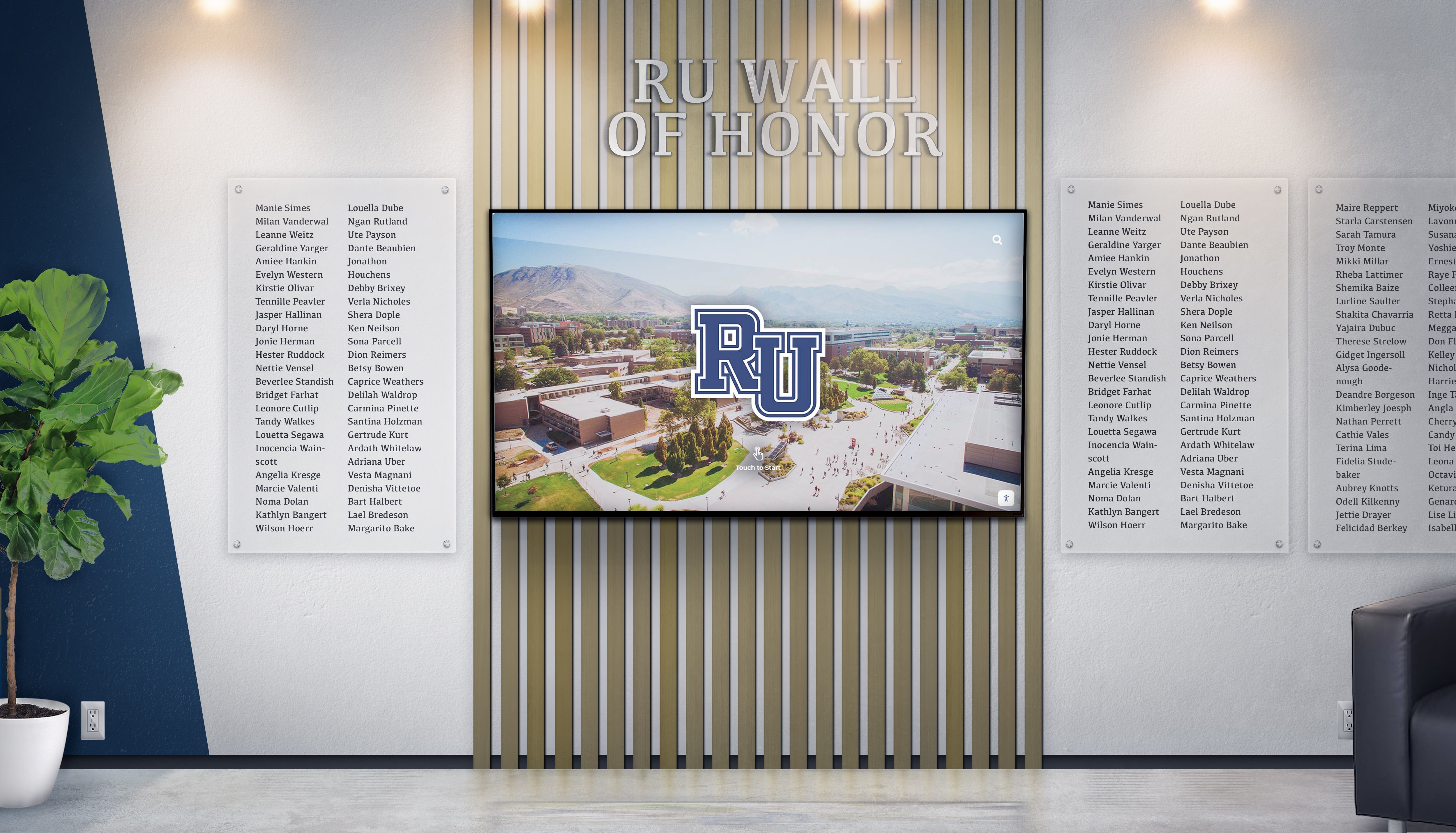
Comprehensive recognition walls showcase institutional pride while celebrating individual achievements
Evaluating and Refining Stole Programs
Effective administrators regularly assess stole program effectiveness and make refinements based on evaluation findings, stakeholder feedback, and changing institutional priorities.
Gathering Stakeholder Feedback
Graduate and Family Surveys: Survey recent graduates and families about stole program experiences. Questions should address:
- Clarity of eligibility requirements and communication
- Fairness of achievement thresholds and category availability
- Ceremony recognition meaningfulness
- Suggestions for program improvements
Faculty Input: Solicit teacher and counselor feedback about:
- Administrative workload managing documentation
- Student motivation impacts from stole program existence
- Observed equity concerns or student exclusion patterns
- Departmental stole coordination effectiveness
Comparative Analysis: Research peer institution stole programs, noting innovative practices or different approaches worth considering. Conference attendance and professional networks provide valuable comparative information.
Program Assessment Metrics
Participation Rates: Track what percentage of graduates earn stoles across different categories. If significantly more than 30-40% earn recognition, thresholds may need adjustment to maintain achievement significance. If fewer than 10-15% qualify, overly restrictive standards may limit recognition value.
Category Distribution: Monitor which stole categories students earn most frequently. Uneven distribution might indicate communication gaps about lesser-known categories or practical barriers preventing participation in certain recognition pathways.
Equity Analysis: Examine stole recipient demographics compared to overall graduate population. Significant disparities by race, income level, or other factors may indicate equity concerns requiring attention—not necessarily through lowering standards but through examining structural barriers limiting achievement access.
Making Evidence-Based Refinements
Regular program reviews (every 2-3 years) allow adjustments based on assessment findings:
Threshold Adjustments: Modify GPA requirements or service hour levels if achievement distributions suggest standards need recalibration. Transparent communication about changes helps students understand adjustments represent program evolution rather than arbitrary standard manipulation.
Category Additions: Introduce new recognition categories reflecting emerging institutional priorities or student achievement areas previously overlooked. Recent additions in many schools include:
- Mental health advocacy and peer support recognition
- Environmental sustainability leadership
- Social justice and equity work
- Career technical certification achievement
- Bilingual/multilingual competency
Color Reassignments: Adjust color assignments if ceremony observations reveal visual confusion, insufficient distinction between similar shades, or poor photographic results with certain color choices.
Process Improvements: Streamline documentation requirements, simplify verification processes, or enhance communication strategies based on identified pain points in current implementation.
Schools committed to continuous improvement create recognition programs that remain relevant, equitable, and meaningful across changing educational contexts. For administrators seeking comprehensive recognition frameworks, exploring school recognition best practices provides valuable guidance.
Conclusion: Creating Meaningful Recognition Through Graduation Stoles
Graduation stoles transform ceremonies from undifferentiated processionals into celebrations of diverse excellence, providing visible markers that honor student achievement across academic, leadership, service, and specialized program domains. For school administrators, understanding graduation stole colors meaning creates foundation for designing recognition programs that balance tradition with innovation, maintain achievement standards while expanding excellence definitions, and celebrate individual accomplishment within collective graduation milestones.
Effective stole programs require systematic planning addressing color selection, eligibility criteria, vendor coordination, stakeholder communication, and ceremony integration. Clear frameworks prevent confusion while enabling recognition that genuinely honors deserving students. Thoughtful administrators consider equity implications, anticipate edge cases, and establish fair processes ensuring recognition accessibility regardless of student background or circumstance.
Beyond ceremony day, modern digital recognition systems overcome traditional limitations of physical space and static displays, creating searchable archives that preserve stole recipient honors indefinitely. These platforms serve multiple institutional purposes—inspiring current students, engaging returning alumni, impressing prospective families, and supporting advancement efforts—while ensuring every honor graduate receives permanent recognition regardless of when they earned achievements.
Whether you’re launching initial stole programs or refining long-established practices, the frameworks and best practices outlined in this guide support creation of recognition systems that meaningfully celebrate student excellence while strengthening institutional culture around achievement. Graduation stoles represent more than ceremonial decorations—they embody years of dedication, mark significant milestones, and connect individual graduates to institutional traditions of honoring excellence.
Preserve Your Honor Graduates' Achievements Permanently
Discover how interactive touchscreen displays can help you showcase every stole recipient across all achievement categories, creating lasting recognition that extends far beyond ceremony day.
Explore Recognition SolutionsAs you plan graduation ceremonies and design recognition programs, remember that stole color selections communicate institutional values about what achievement forms deserve celebration. Thoughtful programs honor traditional academic excellence while expanding recognition to include diverse talents, commitments, and accomplishments that define well-rounded educational communities. Every student wearing an earned stole represents not only personal achievement but also validation that your institution recognizes and celebrates their specific form of excellence—a powerful message that resonates throughout educational experiences and beyond.