



Every Friday night during football season, thousands of fans flip open a printed game program. Between the rosters and the schedule, they pass through pages of ads from local businesses, alumni, and community partners. Those ads fund printing, offset booster club budgets, and publicly thank the people who invest in student athletes. They are one of the most durable forms of community-facing sponsor recognition in high school sports.
Yet most programs are forgotten by Monday. The hardware store that renewed its ad for the tenth straight year, the orthodontist who bought a full page for every home game—their recognition lasts roughly 48 hours before that program ends up under a seat cushion or in a recycling bin. Schools capture real value from these ads in the short term, but the long-term recognition story rarely survives the season.
This guide covers the most common high school sports program ad formats with practical examples, what makes each format work, and why schools serious about their history are finding ways to preserve and extend that sponsor recognition long after the final whistle.
Quick answer: High school sports program ads typically come in four formats—full-page, half-page, quarter-page, and business-card spots. The most effective ads combine a high-resolution logo, a brief message connecting the sponsor to the school or team, and clear contact information. Schools that archive past programs and extend sponsor recognition to digital displays create lasting records of the community relationships that have supported their programs for years.
Why Sponsor Ads in Sports Programs Still Matter
Printed game programs have survived every wave of digital disruption because they do something no app fully replaces: they put a credible, tangible document directly into the hands of parents, grandparents, alumni, and community members who are already emotionally invested in the school. That is a precise and valuable audience.
Booster clubs typically charge between $75 and $600 per ad depending on program length and ad dimensions. For many schools, program ad revenue covers the full printing cost and contributes directly to equipment, travel, or awards budgets. For local businesses, it is a low-cost, high-trust way to reach a loyal local audience while visibly backing youth athletics.
The practical value is clear. The gap—and the opportunity—lies in what happens to that recognition after game day.
High School Sports Program Ads Examples: Four Core Formats
Understanding the standard formats helps athletic directors, booster clubs, and sponsors produce ads that actually work—and helps program chairs structure their ad inventory consistently from year to year.
Full-Page Sponsor Ads
Full-page ads (typically 5.5" × 8.5" in a standard program booklet) are the highest-visibility placement in any game program. Schools reserve these for their largest contributors: season title sponsors, regional businesses, healthcare networks, or major alumni donors. The inside front cover, back cover, and inside back cover are the three premium positions program chairs should designate in writing before selling.
What works in a full-page ad:
- Business name and logo at high resolution (300 DPI minimum for print)
- A congratulatory or loyalty message tied to the school (“Proud to support the Eagles for 15 years”)
- Full contact details: address, phone, website
- Optional: a branded graphic or mascot tie-in image
Full-page ads signal serious investment. When a sponsor’s logo dominates a page that every fan handles during the game, the recognition feels proportionate to that investment. These are also the most likely candidates for recognition that extends beyond the printed program—a school’s largest supporters deserve visibility that outlasts the season.
Half-Page Sponsor Ads
Half-page horizontal or vertical placements strike the best balance between visibility and cost. These are the most common format for mid-tier sponsors: medical practices, insurance agencies, restaurants, and family-owned businesses that renew year after year.
Effective half-page layout principles:
- Name and logo centered or left-aligned, visually dominant
- One clear call to action (“Stop by 123 Main St.” or “Call for a free estimate”)
- Optional recognition line (“Congratulations to this year’s seniors”)
- Consistent branding using the sponsor’s actual colors and fonts
Half-page ads live or die on contrast and simplicity. Program readers are scanning, not reading. An ad that lands its message in under three seconds works. An ad that requires study does not.
Quarter-Page Sponsor Ads
Quarter-page spots are the entry point for most community sponsors. At $75–$150, they are accessible to a local diner, a real estate agent, or a parent-owned small business. The format is unforgiving—roughly 2.75" × 4.25"—so restraint matters.
Quarter-page best practices:
- Business name in large, bold type as the dominant element
- One phone number or website, nothing more
- A single-line sponsor message (“Go Raiders! Your neighbors since 1998”)
- Logo only if it fits cleanly; drop it when space becomes crowded
Schools that provide pre-built design templates for each ad size reduce back-and-forth with small sponsors and ensure the finished program looks polished rather than patchwork.
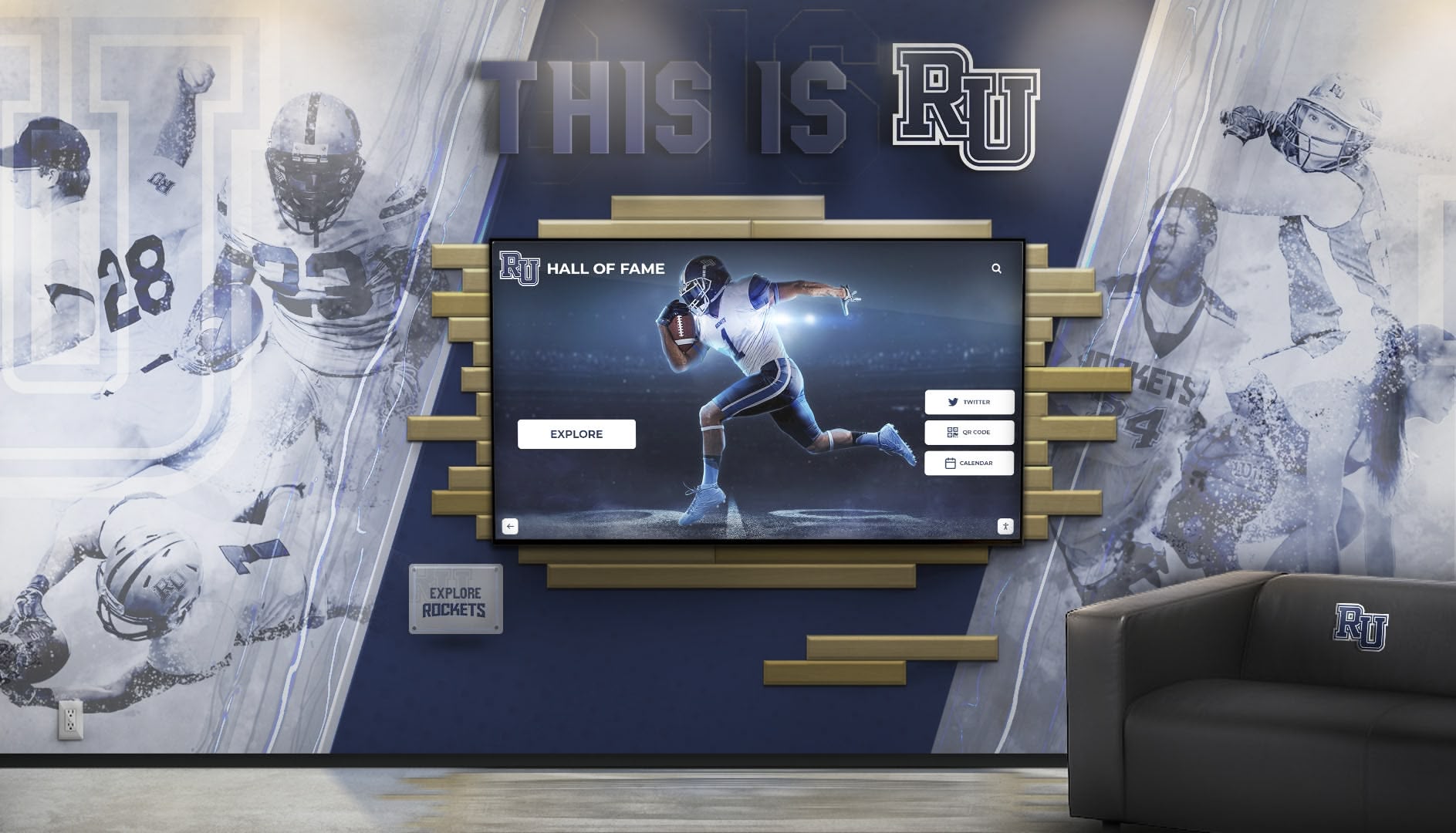
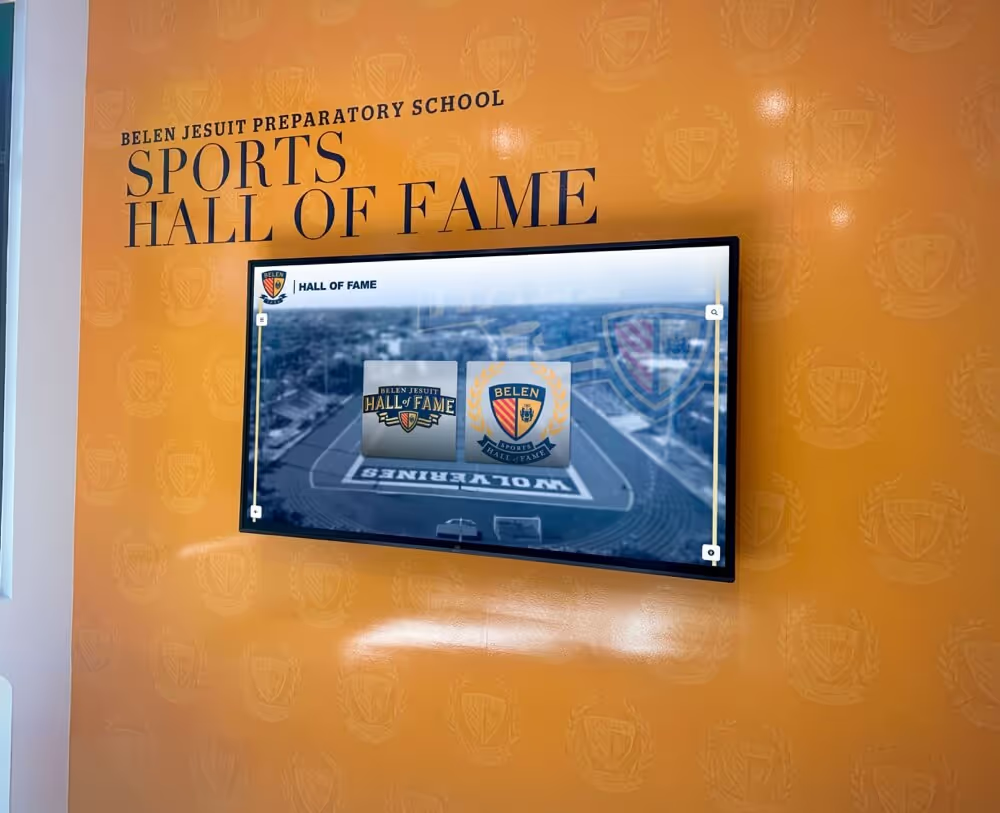
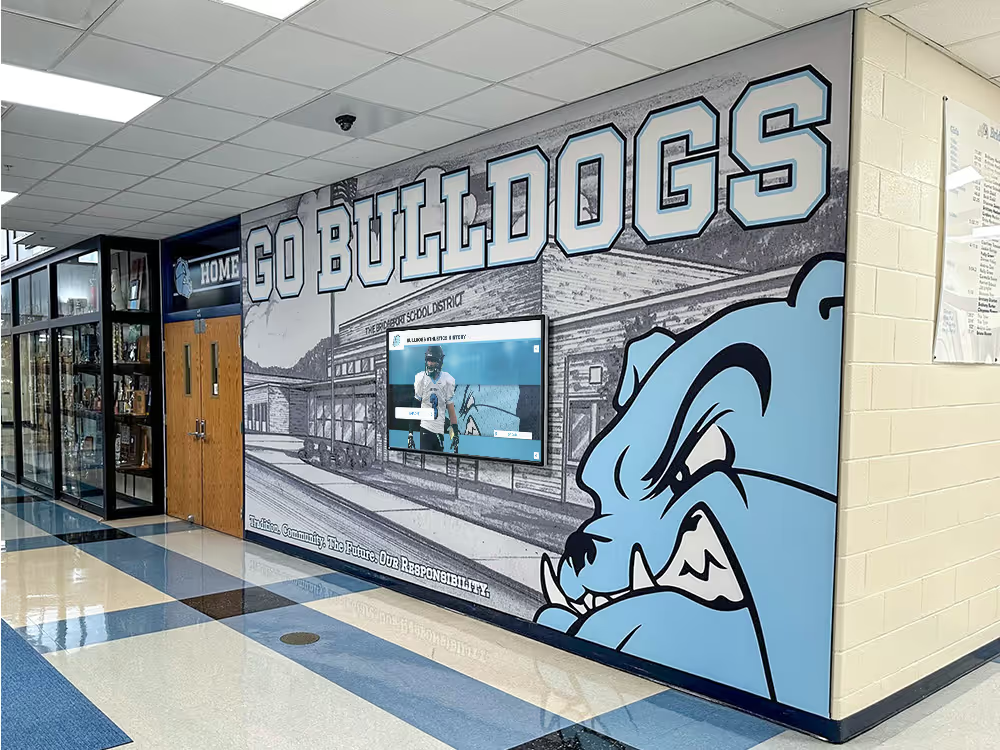
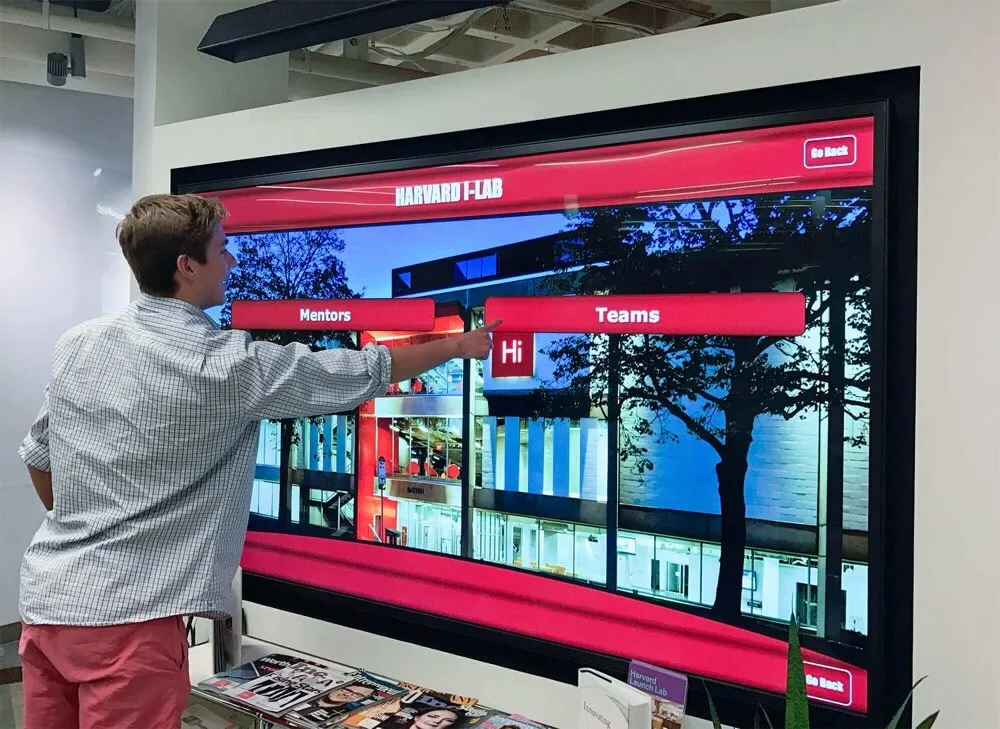
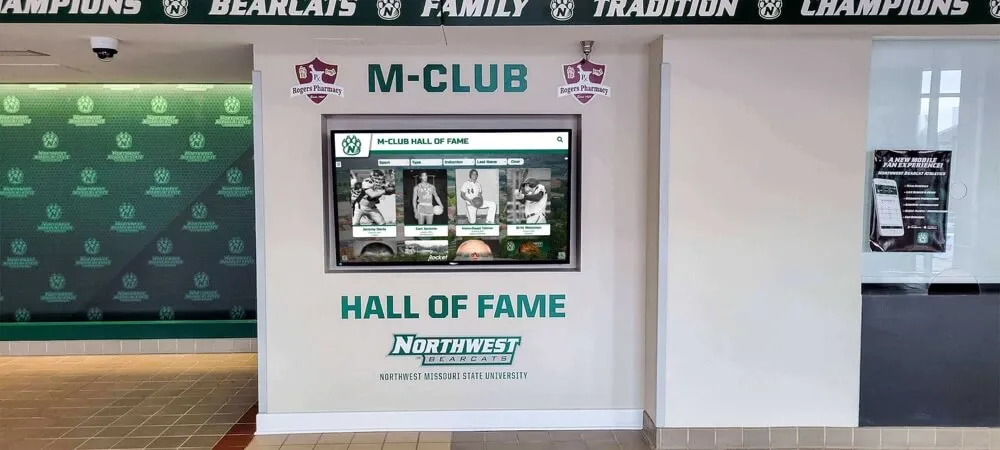
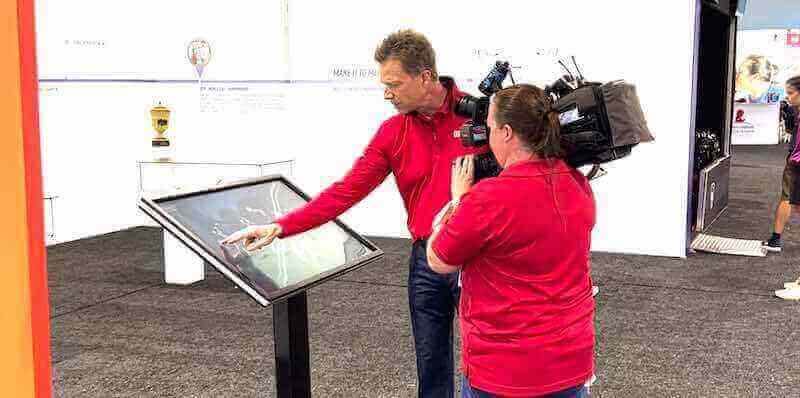
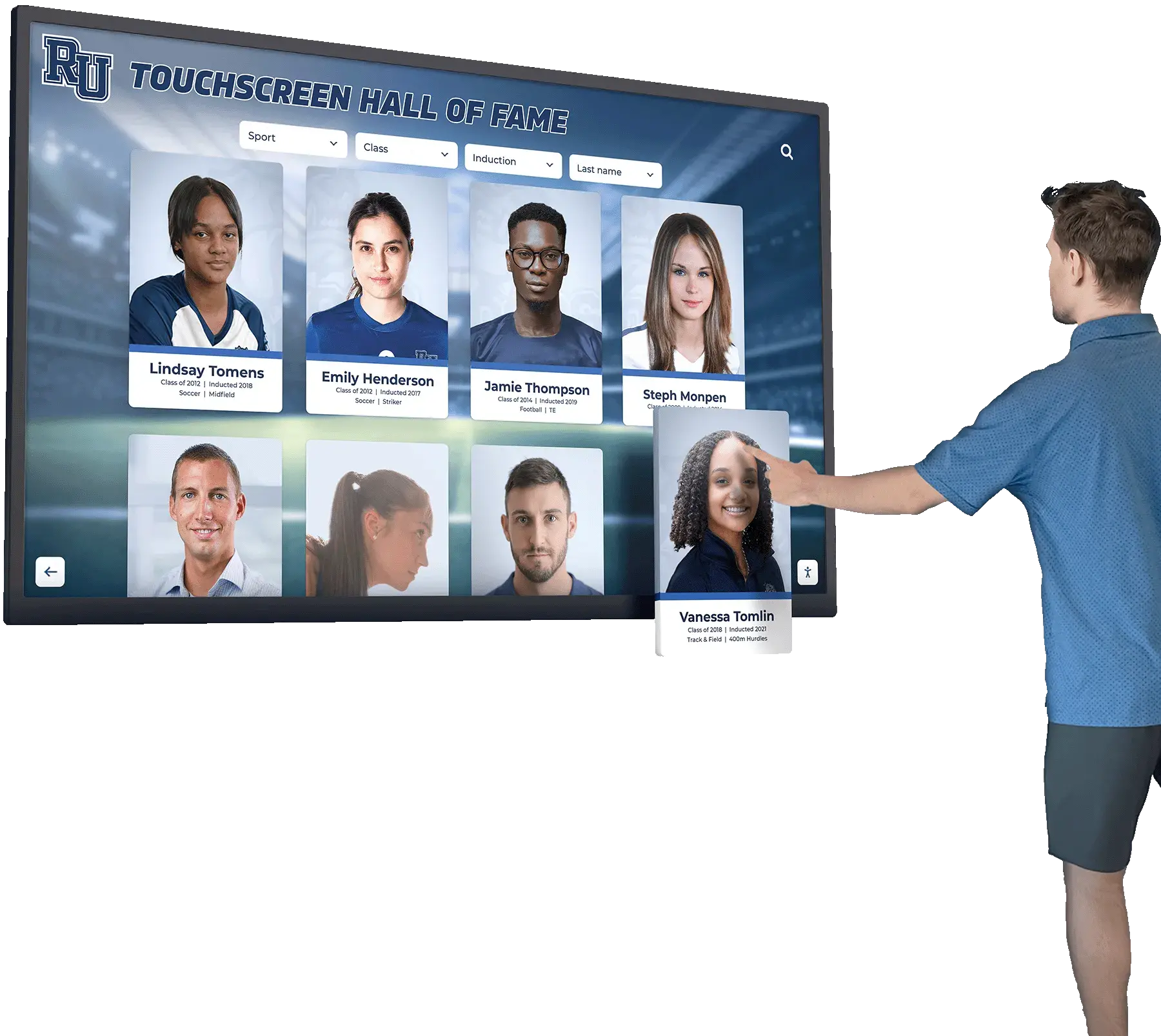
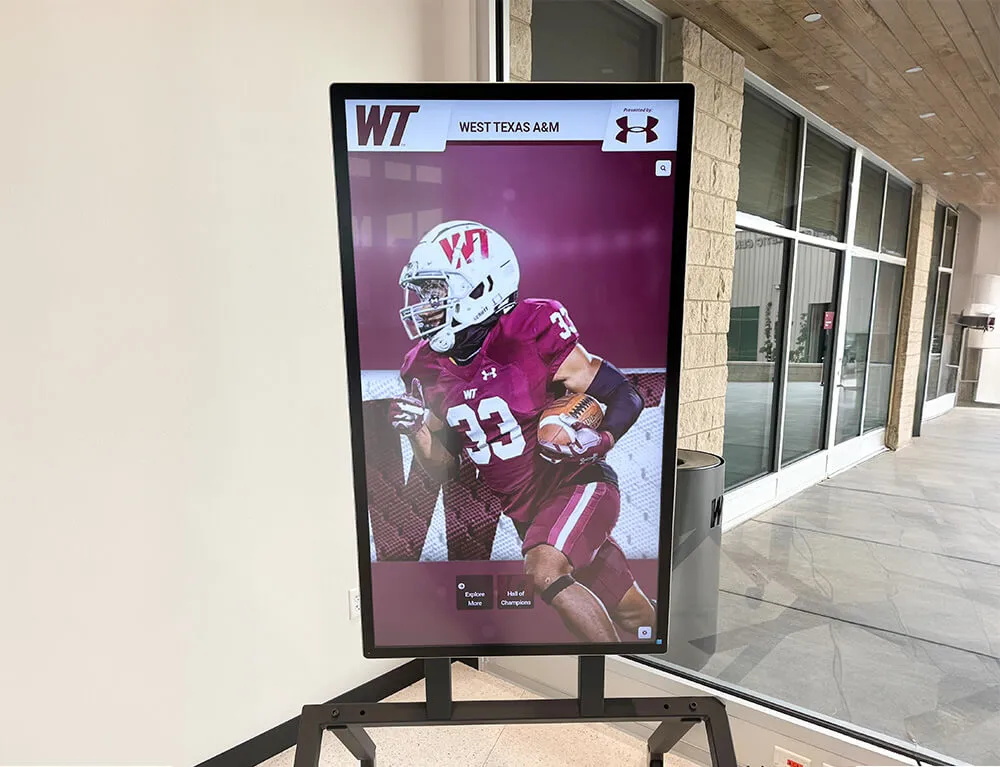
A touchscreen archive in the athletic lobby extends sponsor and program recognition year-round—reaching every student and visitor, not just game-night attendees.
Business Card Ads and Shoutout Listings
The smallest paid placement—usually $25–$50—opens the door to individuals, families, and micro-businesses who want to appear in print without commissioning a designed ad. A business card image dropped into a consistent grid works cleanly, as does a text listing: “Good luck, Tigers! — The Martinez Family.”
These affordable spots expand program revenue by reaching a broader base of supporters. When printed in a clean, consistent grid, they add community warmth to a program without looking disorganized.
What Makes a Sponsor Ad Renew Year After Year
Format matters, but the ads sponsors remember—and renew—share qualities that go beyond layout.
Authenticity over generic messaging. “Proud sponsor of Jefferson High School Athletics for twelve years” lands more warmly than a standard corporate tagline. Sponsors who feel genuinely connected to the school renew. Sponsors who feel like vendors do not.
Recognition of tenure and loyalty. A local orthodontist who has advertised in your football program for a decade deserves something beyond another identical ad slot. Some schools add a “Loyal Sponsor” callout near multi-year contributors’ ads. Others acknowledge them in the program’s editorial section. Either approach strengthens the renewal relationship by making tenure visible.
Legibility and print quality. Dark logos on dark backgrounds, low-resolution images, and fonts below 8pt undermine the sponsor’s investment. Program chairs should establish minimum design specs—300 DPI for images, readable font sizes, and a defined color guide—and communicate them to sponsors before submission deadlines.
For schools building out a broader recognition structure, the academic recognition programs guide provides a useful framework for thinking about recognition tiers, criteria, and what makes acknowledgment feel meaningful rather than transactional. The same principles that apply to academic awards apply directly to sponsor recognition.
The Problem With Print-Only Sponsor Recognition
A printed game program is a snapshot. It captures who supported the program in a given year, but it has no memory and no reach beyond the people who held it during that specific game.
Consider what is lost when programs are not preserved:
- The record of which local businesses have supported the program the longest becomes impossible to reconstruct without physically reviewing every archived booklet.
- Alumni returning for a reunion have no way to see which businesses were in their game programs—because those programs are gone.
- Athletic directors who inherit a program start the sponsor relationship list from scratch. The athletic director transition plan guide identifies this institutional knowledge gap as one of the most common continuity failures in school athletics.
- Long-term sponsors who have renewed for ten or fifteen years never see any recognition for that loyalty, which makes the relationship feel transactional rather than relational.
Schools recognize sponsors effectively in the moment. The gap is that recognition begins and ends with a single printed document that most people discard within days.
Sponsor Recognition Checklist for Athletic Programs
Use this checklist to evaluate where your current approach is strong and where there is room to improve:
| Recognition Element | In Place? | Why It Matters |
|---|---|---|
| Ad format templates provided to sponsors | ✓ / ✗ | Reduces errors, keeps program quality consistent |
| Ad tiers documented in writing with pricing | ✓ / ✗ | Prevents disputes, supports structured renewal conversations |
| Multi-year sponsors acknowledged editorially | ✓ / ✗ | Builds loyalty, increases renewal rates |
| Past programs archived (physical or scanned) | ✓ / ✗ | Supports hall of fame research, AD transitions, reunion events |
| Sponsor logos included in year-end recognition | ✓ / ✗ | Extends visibility beyond game night |
| Digital recognition available for top-tier sponsors | ✓ / ✗ | Justifies premium investment, creates permanent visibility |
| Sponsor tenure honored at banquets or ceremonies | ✓ / ✗ | Connects giving to program legacy |
For programs managing sponsor and volunteer recognition across multiple sports and seasons, 100 youth sports awards ideas includes useful approaches for acknowledging contributors at scale.
Extending Sponsor Recognition Beyond the Printed Program
Forward-thinking athletic departments address the print-only gap in two complementary ways: archiving physical programs and extending sponsor recognition to digital platforms.
Archiving Physical Programs
A dedicated binder or labeled archival box for game-day programs costs almost nothing. This simple practice means that when an athletic director wants to acknowledge a sponsor’s 20-year relationship, the evidence exists. When the school hosts a milestone event, someone can actually pull the program from 1998 and show which community businesses were there.
Reunion planning resources consistently note that historical artifacts—including game programs—become centerpieces of alumni gatherings. An archived program collection becomes a visible demonstration of community investment across generations.
Digital Sponsor Recognition Displays
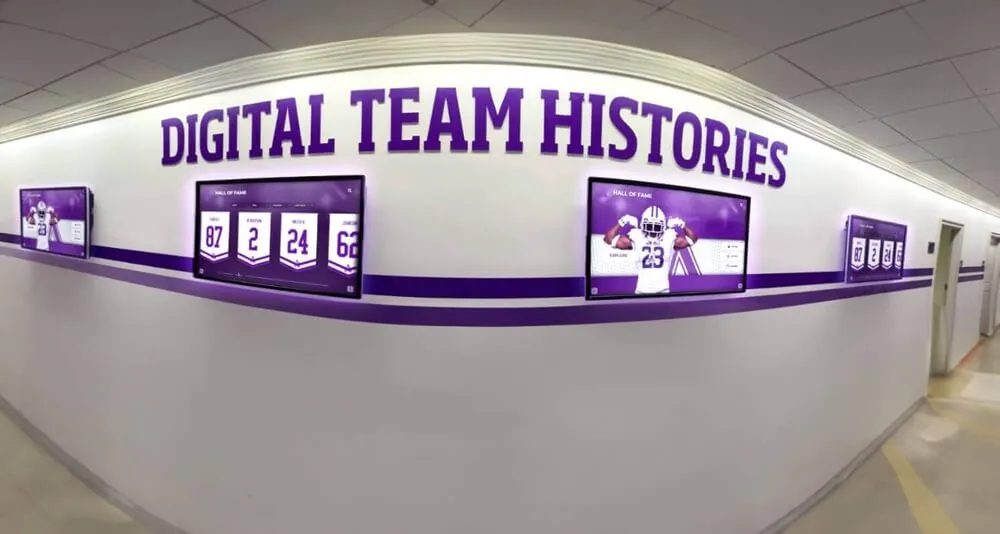
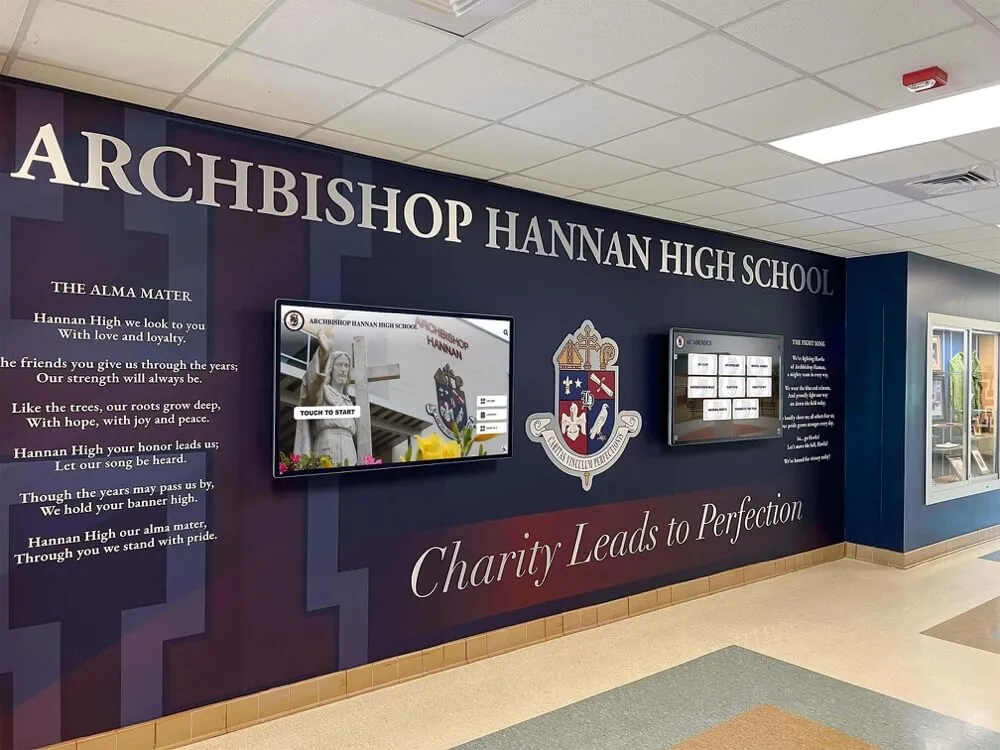
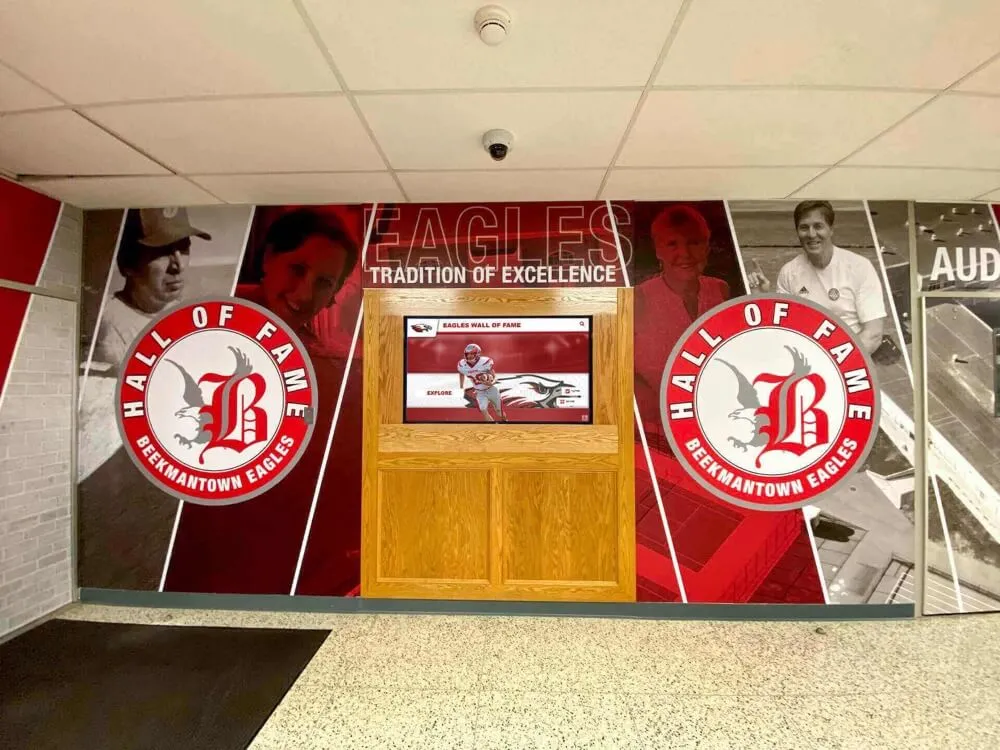
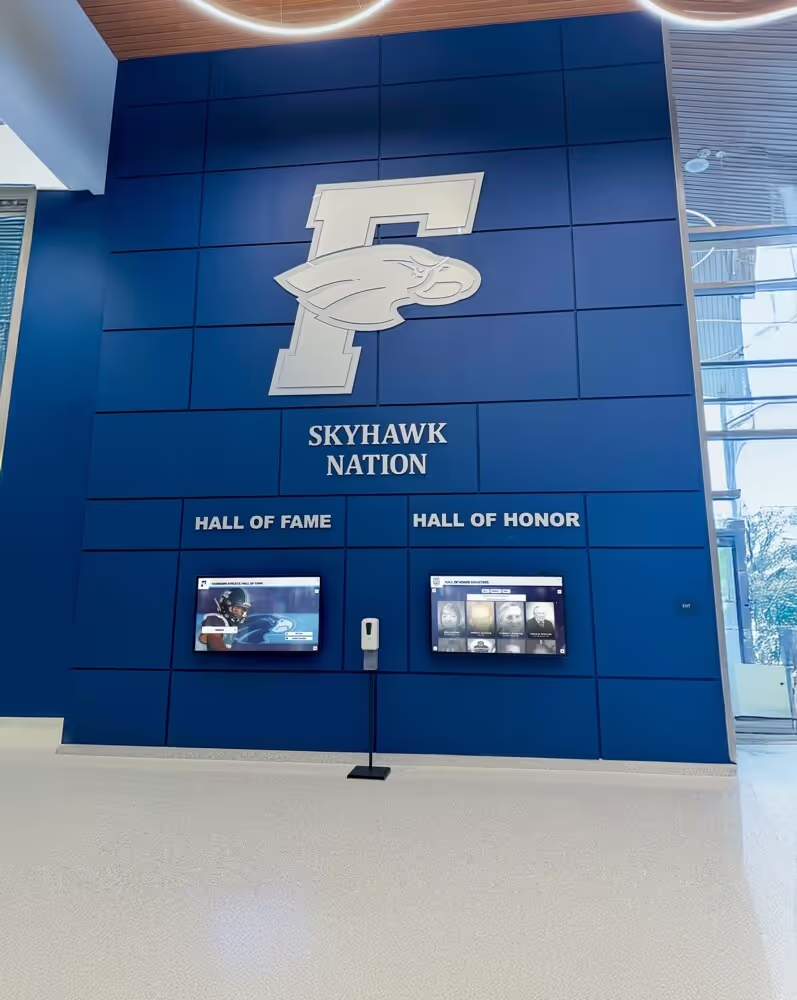
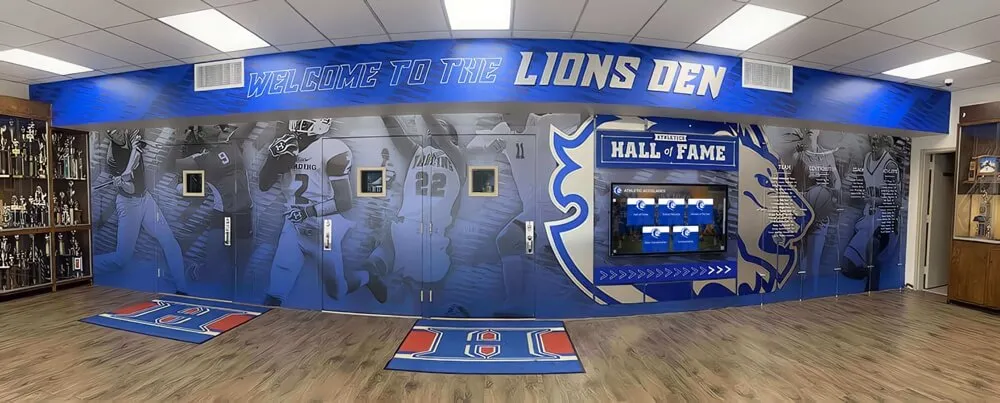
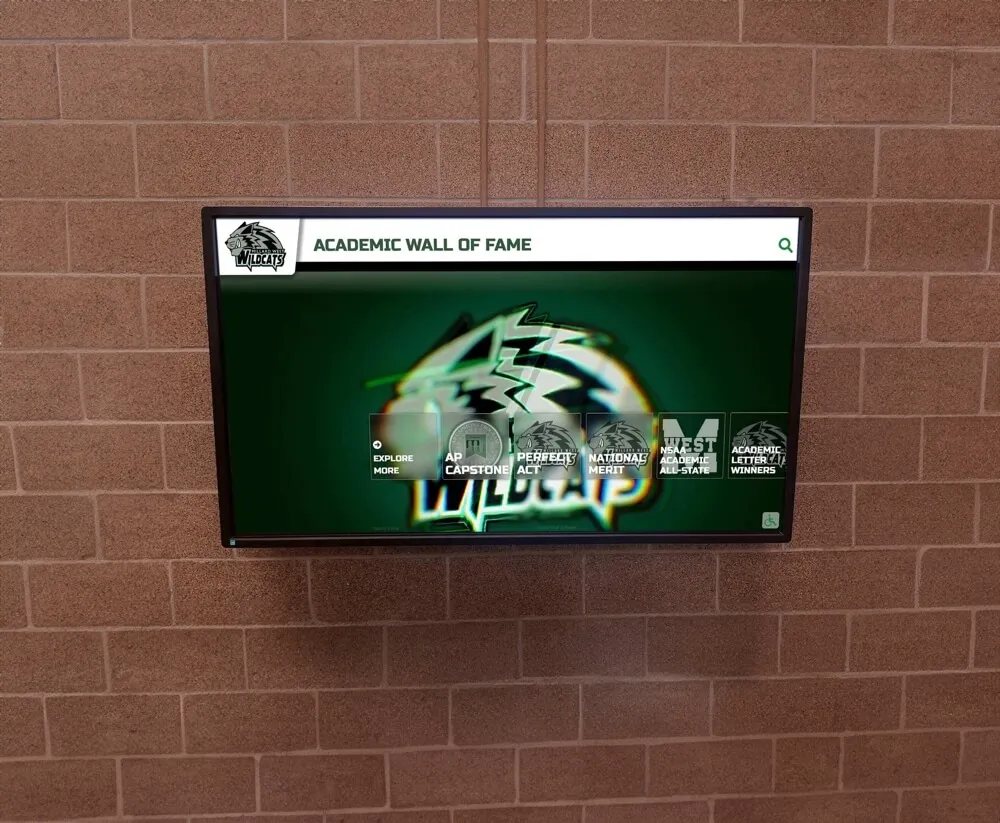
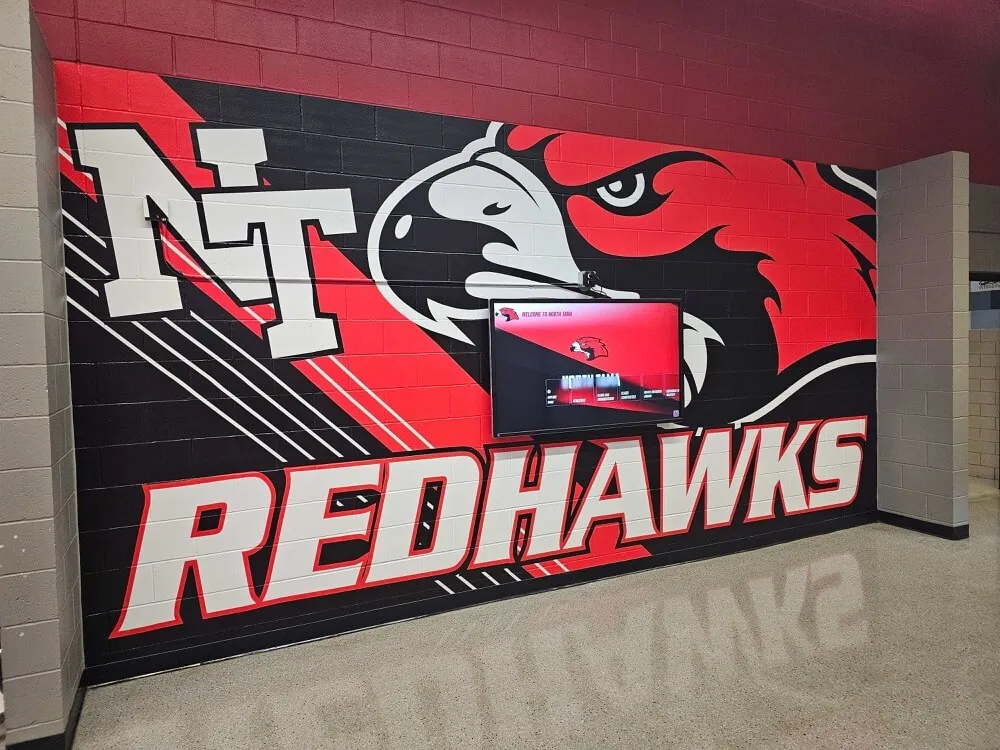
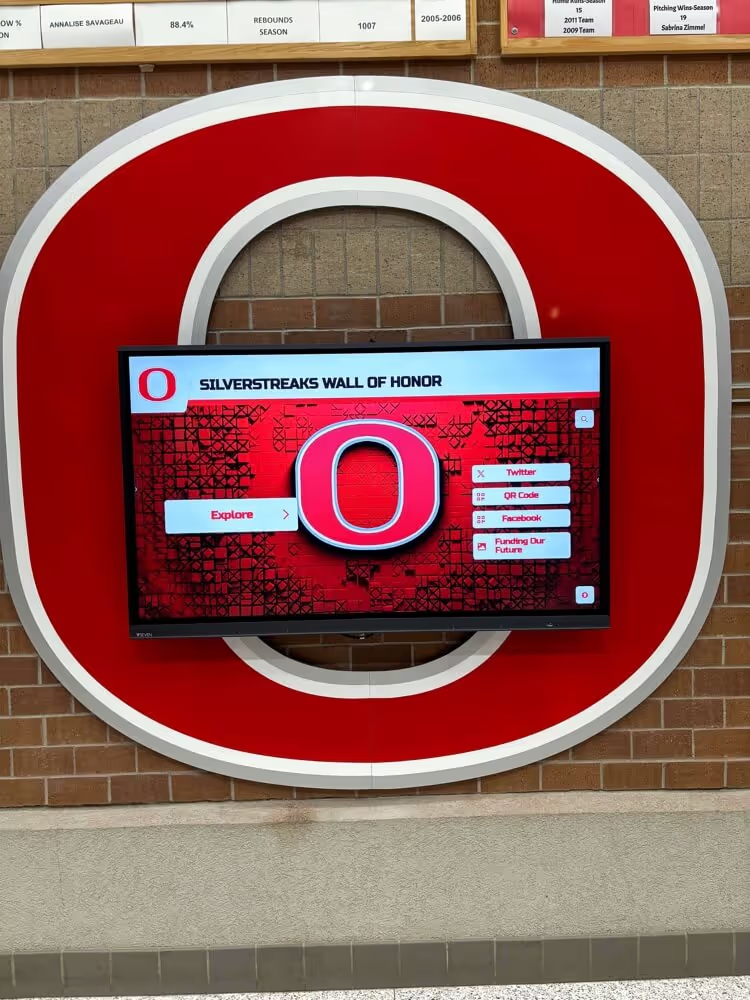
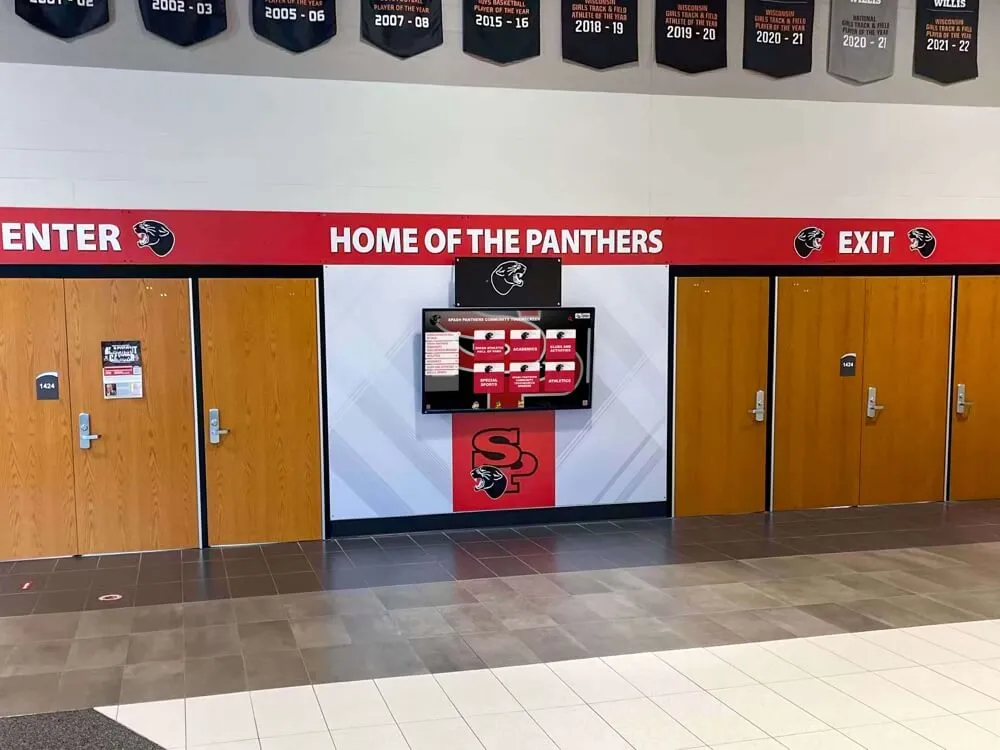
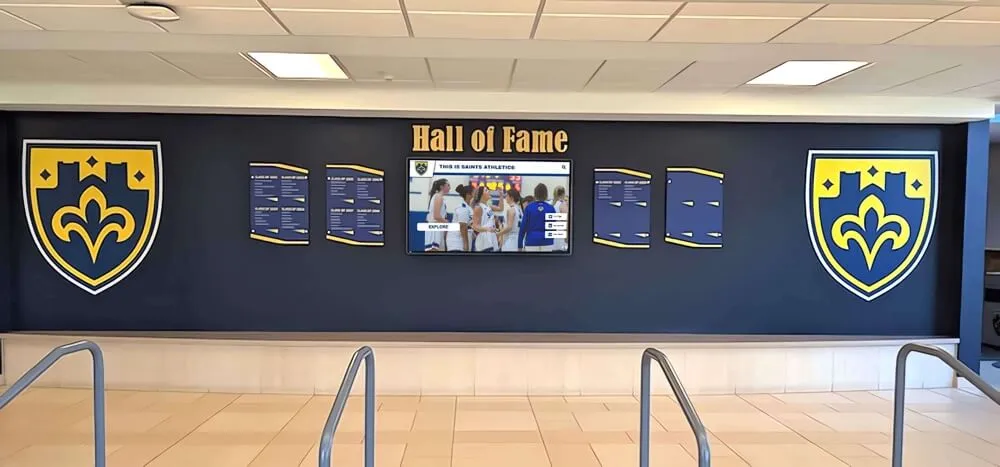
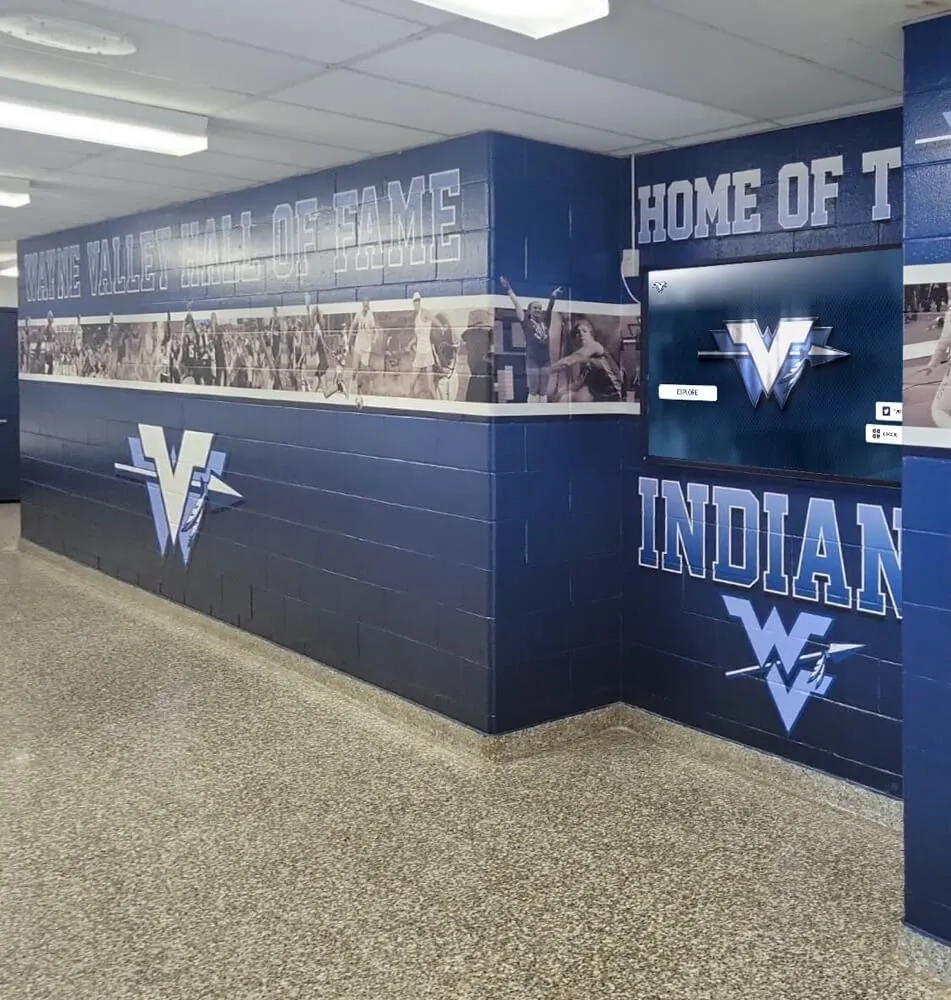
The more impactful shift is moving sponsor recognition from a once-a-season printed page to a year-round, interactive format. A touchscreen display mounted in a school lobby or gymnasium hallway can show sponsor logos alongside athletic achievements, team records, and hall of fame inductees—creating a context that a flat ad grid never could.
Want to give sponsors recognition that outlasts a game program?
Rocket Alumni Solutions builds touchscreen archive displays that recognize sponsors, athletes, and program history in one permanent, interactive platform. See how it works.
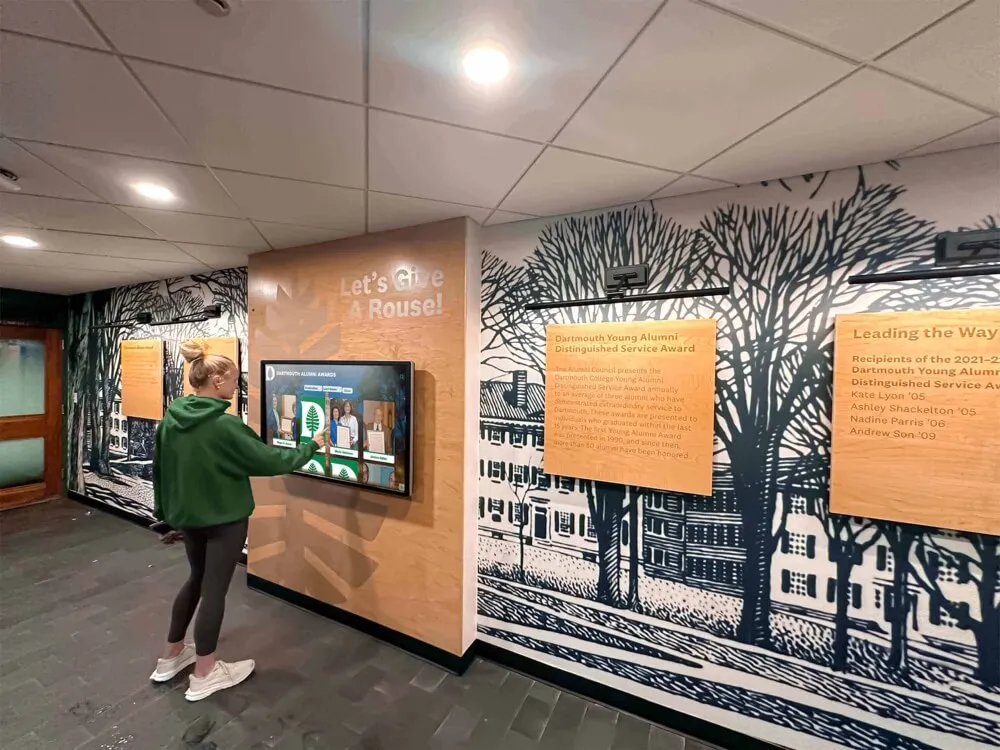
Schools implementing digital display systems report that sponsors perceive digital recognition as meaningfully more valuable than a program ad placement, because it signals permanence rather than a transactional exchange. A sponsor whose logo appears on a touchscreen in the main athletic hallway receives visibility every school day of the year, not just on home game nights.
For schools evaluating which tools best support this kind of integrated recognition, the 10 best hall of fame tools for athletics, donors, and history provides a practical comparison of options ranging from static plaques to fully interactive touchscreen systems.
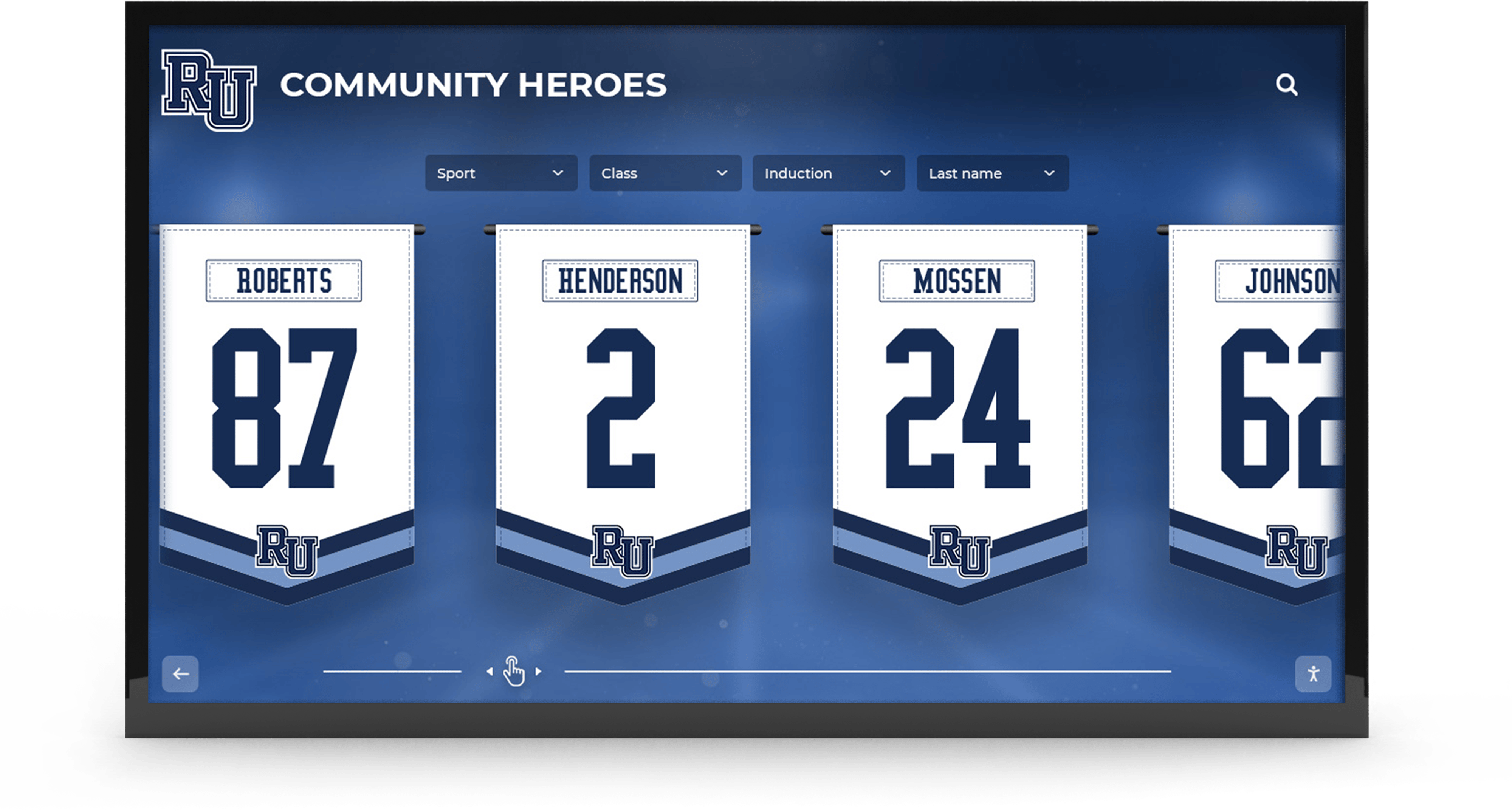
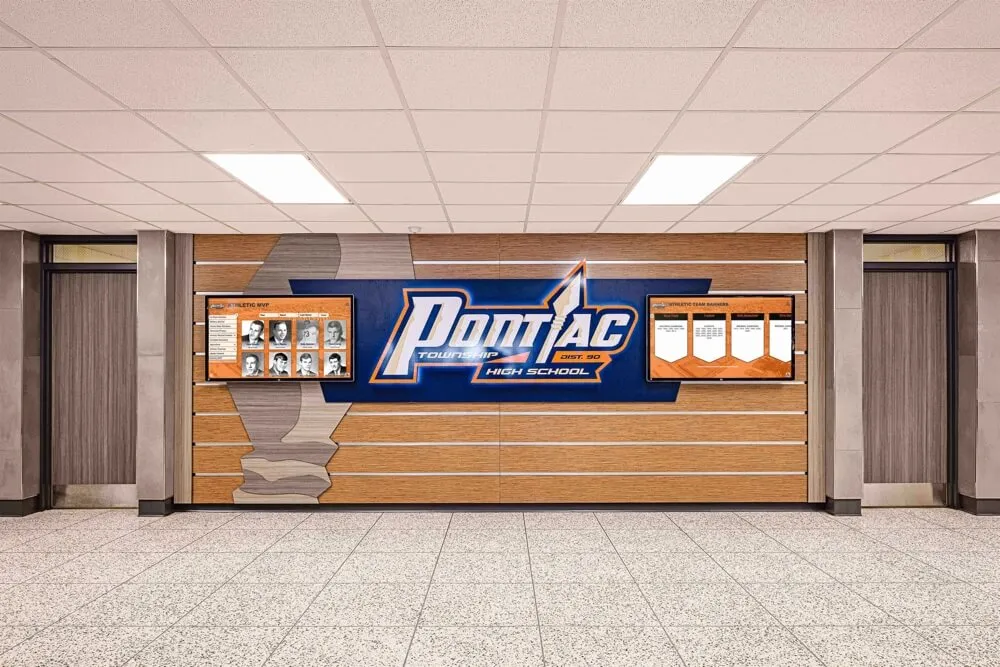
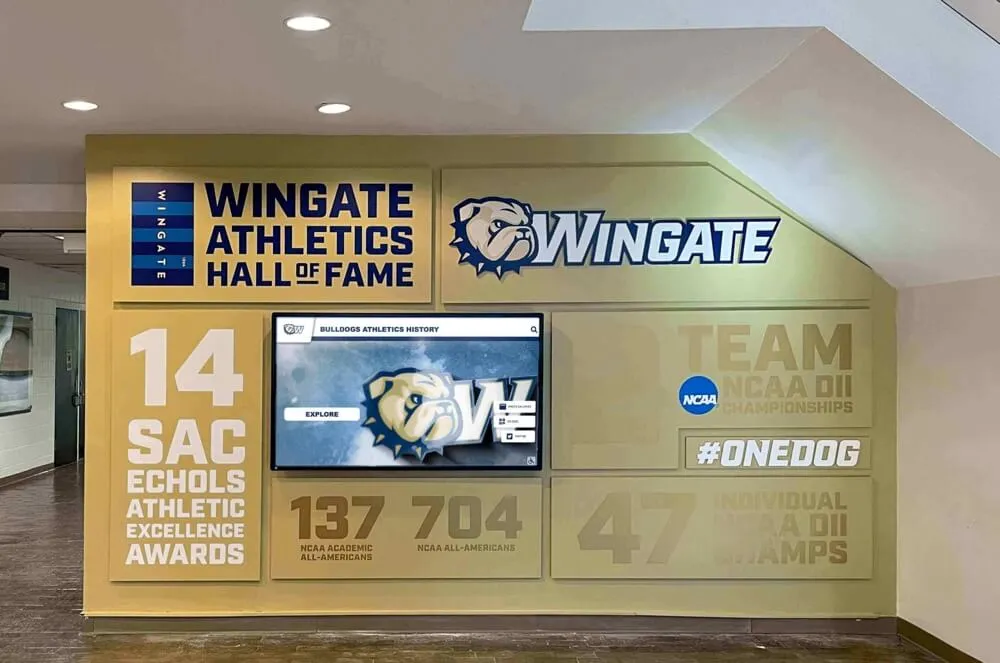
Digital recognition displays give sponsors permanent, daily visibility alongside athlete achievements—not just on game nights.
Connecting Program Ads to Long-Term Program History
The schools that build the strongest sponsor relationships treat program ad purchasers not as advertisers but as stakeholders in the school’s legacy. When a local business has supported your football program for fifteen or twenty consecutive years, that relationship is part of your program’s history—as meaningful as any championship banner or hall of fame inductee.
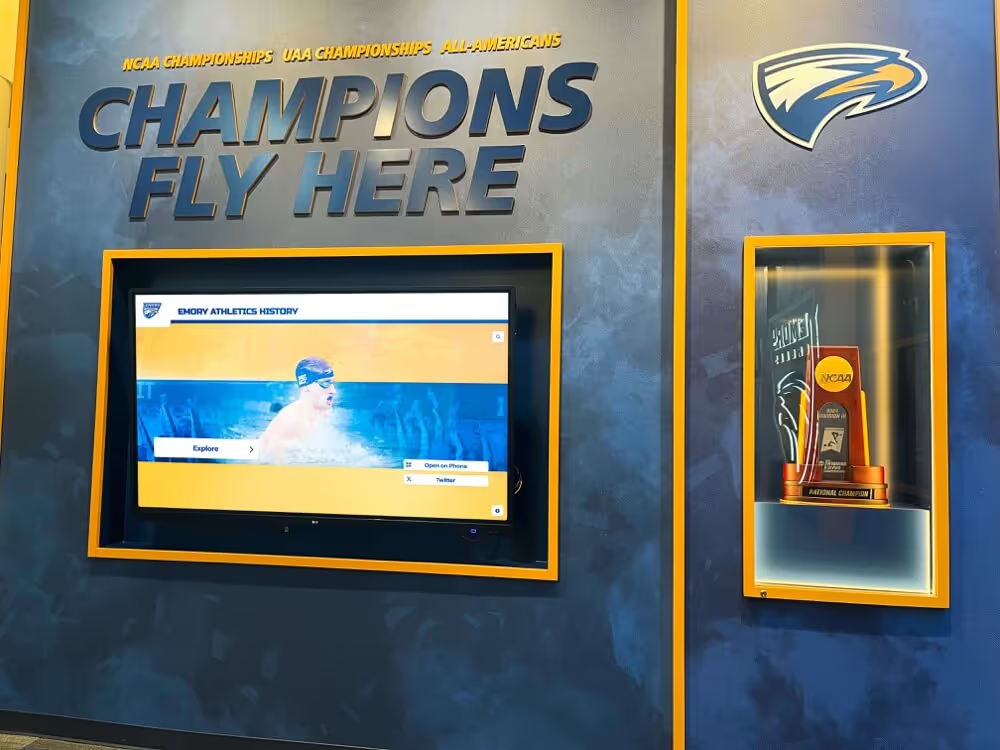
When schools build digital archives that include athletic achievement records, award histories, and sponsor recognition in the same platform, they create institutional memory that survives staff transitions, facility renovations, and the passage of decades.
Milestone events and reunion programming both benefit directly from this archive. 50th high school reunion planning guides and reunion programming resources consistently show that recognition displays become the focal points of alumni gatherings—and a timeline of past program sponsors embedded in those displays reinforces how community investment has been woven into the school’s story for generations.
The same integration strengthens academic recognition. Schools that bring academic achievement awards and athletic honors into the same recognition platform create a more complete picture of what it takes to build a strong school: athletic excellence, academic achievement, and community investment working together.

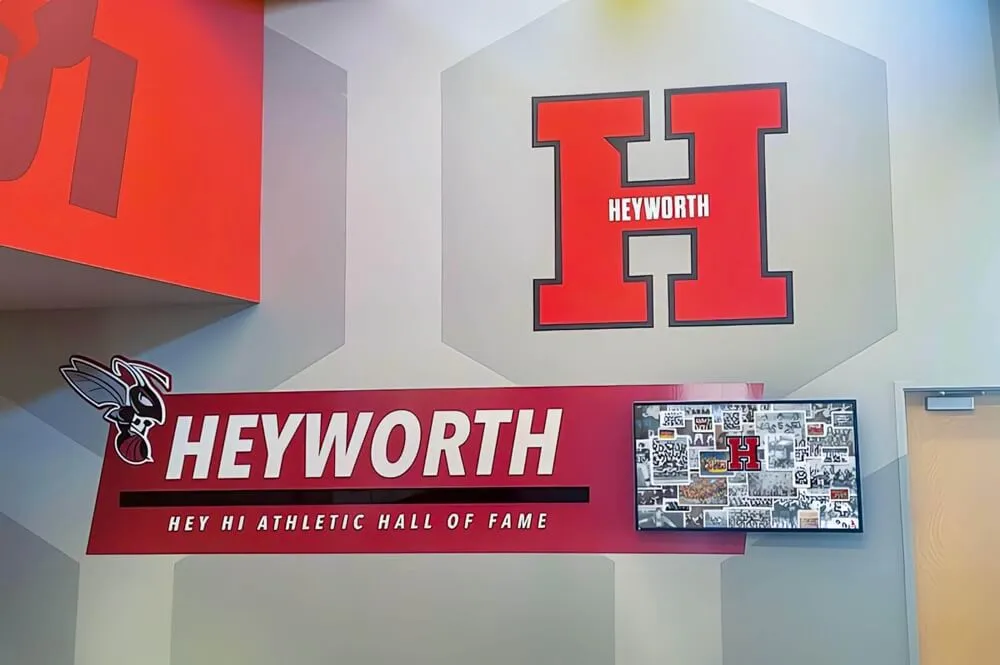
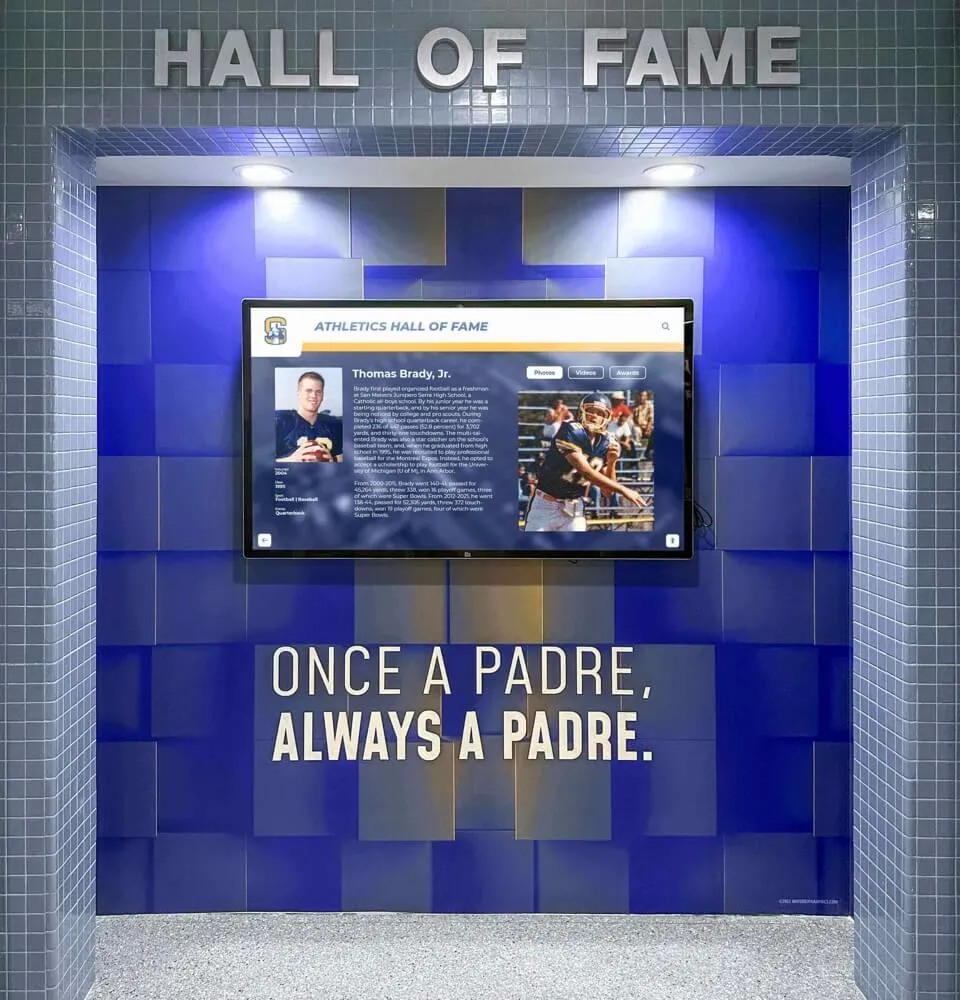
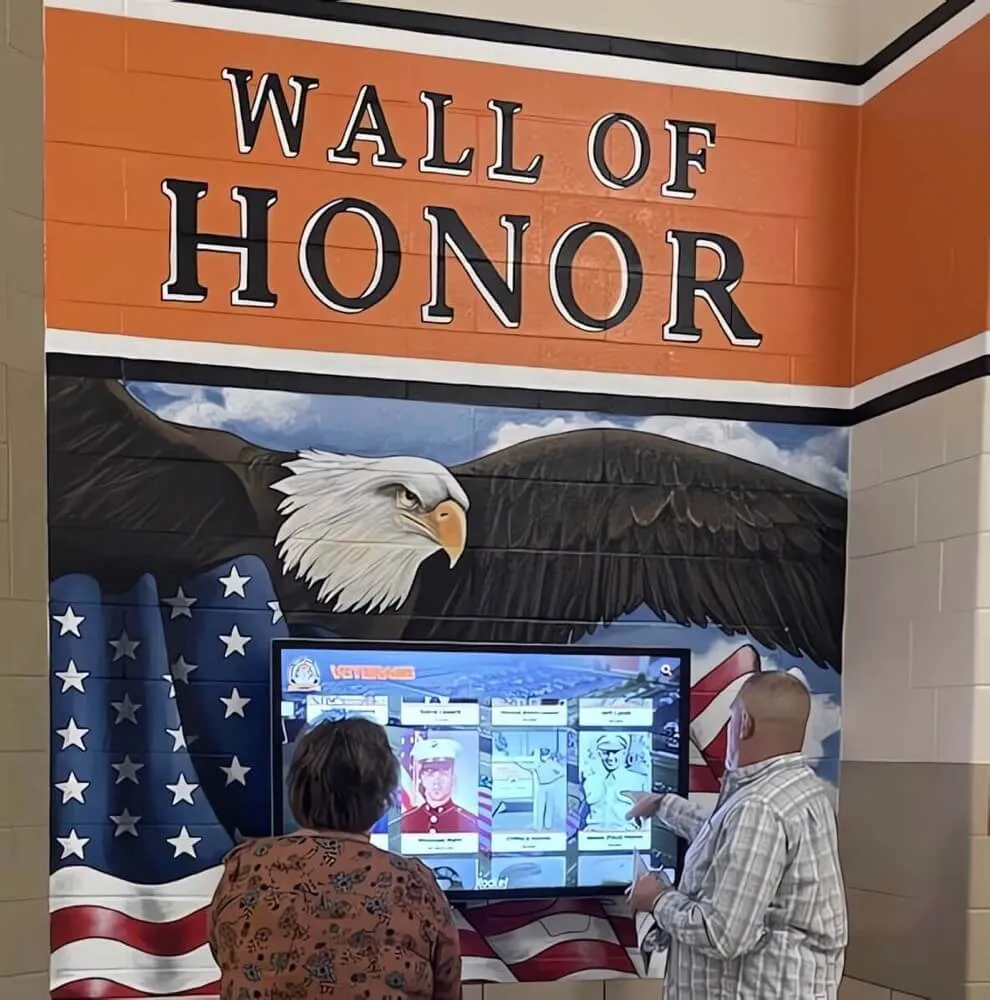
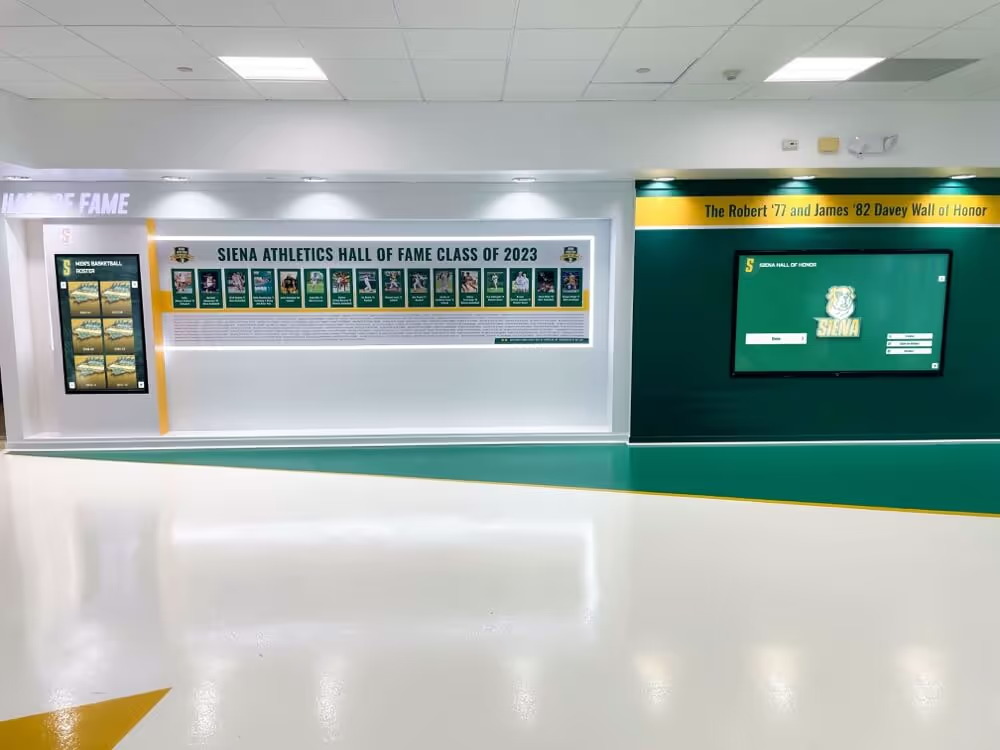
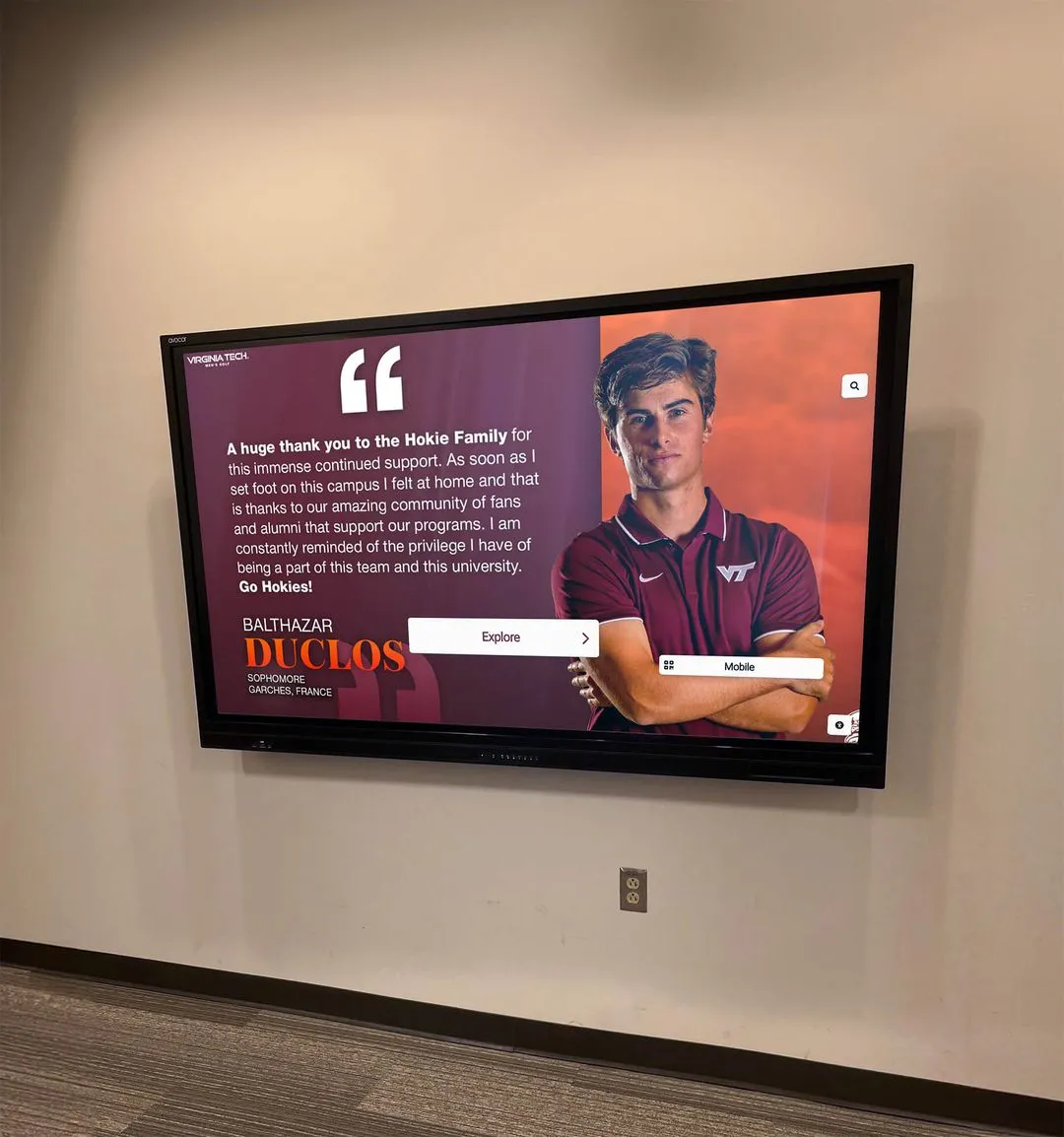
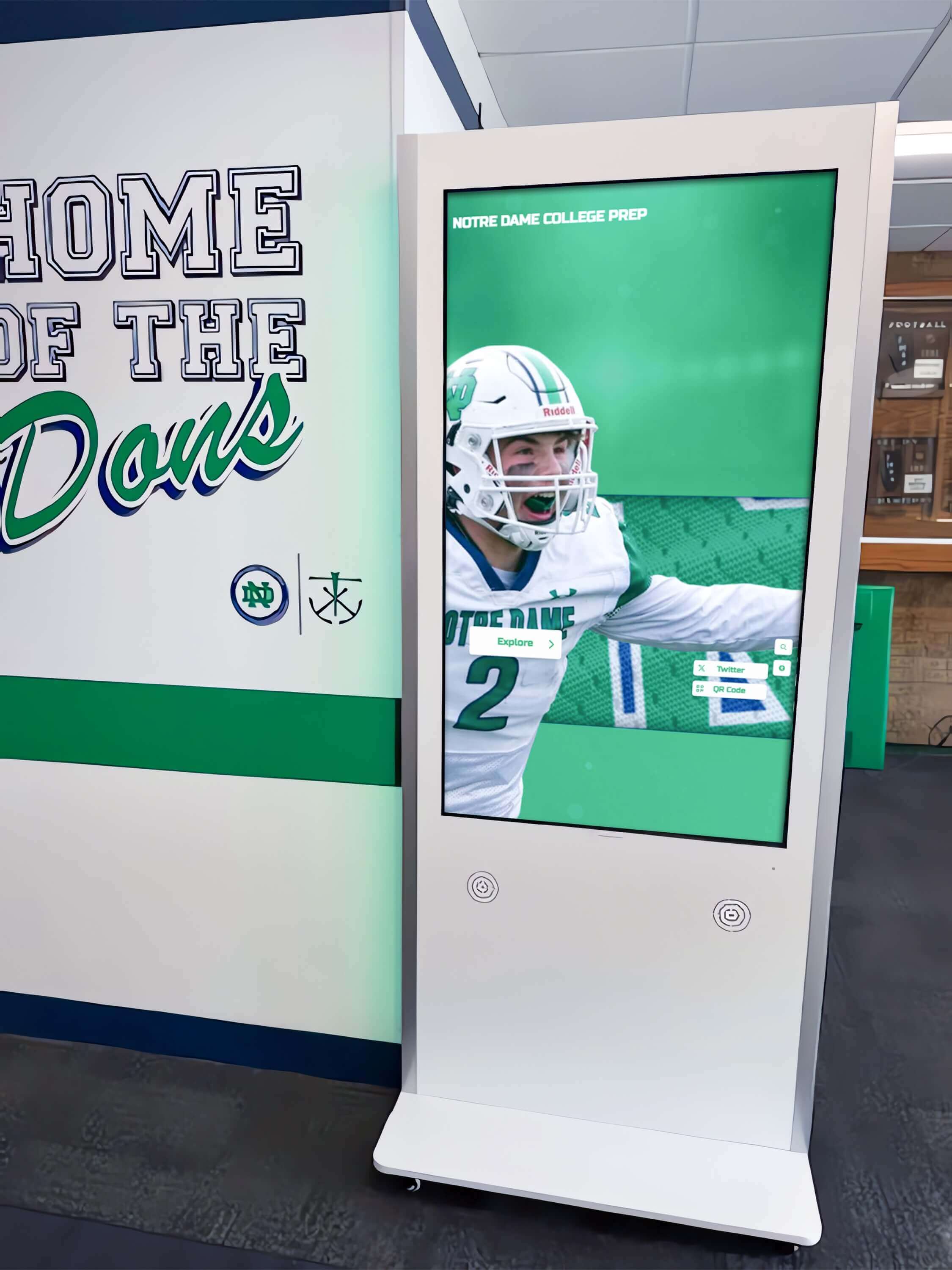
A touchscreen archive brings sponsor recognition into the same space as athletic achievements—creating a complete, permanent record of program history.
Frequently Asked Questions
What are standard ad sizes for a high school sports program?
Most high school game programs use a 5.5" × 8.5" booklet format. Standard ad sizes are: full-page (5.5" × 8.5"), half-page horizontal (5.5" × 4.25") or vertical (2.75" × 8.5"), quarter-page (2.75" × 4.25"), and business-card (3.5" × 2"). Providing sponsors with digital design templates at 300 DPI for each size reduces production errors and improves overall program quality.
How much do high school sports program ads typically cost?
Pricing varies by school size and program length. Common ranges are: business card $25–$75, quarter-page $75–$150, half-page $150–$350, full-page $300–$600. Title or presenting sponsorships that bundle a program ad with additional recognition—banquet acknowledgment, digital display placement, social media mentions—can range from $500 to $1,500 or more depending on the school.
How can schools recognize long-term program sponsors beyond a single ad placement?
The most effective approaches include: a “Loyal Sponsor” designation in the program for contributors at three or more consecutive years, verbal acknowledgment at athletic banquets, digital recognition on lobby or hallway displays, and inclusion in anniversary or reunion event materials. Recognition that builds over time produces stronger renewal rates than flat, transactional year-to-year placement.
What should a booster club sponsor packet include?
A complete sponsor packet should cover: available ad tiers and pricing, design specifications and submission deadlines, examples of past program ads, and a clear description of any additional recognition included at each tier (social media features, banquet recognition, digital display visibility). Clear documentation reduces back-and-forth and supports consistent, professional execution.
Can past sports programs be digitally archived for school records?
Yes. Scanning past programs to PDF preserves them indefinitely and makes them searchable. Schools that go further—extracting sponsor names and years into a digital recognition platform—create searchable records of every business that has supported the program across decades. This data proves valuable for anniversary events, hall of fame research, and long-term sponsor stewardship.
Conclusion
High school sports program ads are practical, community-facing tools that do real work: they fund programs, publicly recognize sponsors, and connect local businesses to student athletes in a meaningful setting. Getting the format, tier structure, and design right improves both revenue and sponsor satisfaction in the near term.
But the schools that build the most durable sponsor relationships treat each year’s program as a historical document worth preserving—and find ways to extend that recognition beyond a single game night into a lasting institutional record. Whether that means an archive of past programs, sponsor logos on a digital lobby display, or a touchscreen system that connects business names to decades of championships and award recipients, the principle is consistent: recognition that lasts honors both the sponsors and the programs they have made possible.
Give Your Sponsors Recognition That Lasts Beyond Game Night
Rocket Alumni Solutions builds touchscreen archive displays that recognize sponsors, athletes, and program history in one permanent, interactive platform. See how schools are transforming program sponsor acknowledgment into lasting institutional recognition.
Request a Demo