



Every sports program includes athletes who arrive with raw potential but limited skills, players who struggle through challenging seasons, and competitors who work tirelessly to overcome weaknesses. The most improved player award honors these growth journeys—celebrating athletes whose dedication transformed their abilities and whose development demonstrates that effort and commitment matter as much as natural talent.
While championship trophies recognize peak performance and MVP awards acknowledge top contributors, most improved player recognition tells a different but equally important story. These awards validate the unsexy work: extra practice sessions, skill development repetitions, mental toughness building, and persistent effort despite initial setbacks. When presented thoughtfully, most improved awards inspire entire teams by demonstrating that growth is possible, valued, and celebrated.
This comprehensive guide explores how to create meaningful most improved player awards that motivate continuous development while honoring athletes whose commitment produced measurable transformation.
Athletic programs face constant pressure to recognize star performers—those athletes whose natural abilities and peak performances dominate game statistics and highlight reels. Yet sustainable team success depends equally on players willing to grow, develop, and expand their capabilities regardless of starting points. Most improved awards shift focus from where athletes begin to how far they travel, celebrating the journey rather than just the destination.

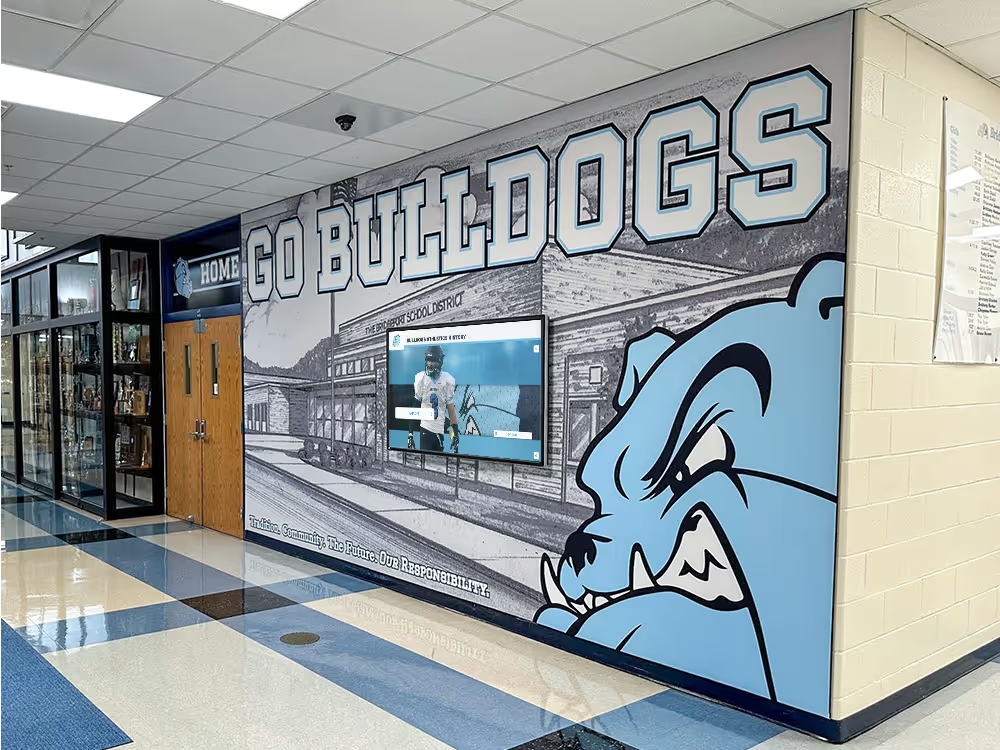
Recognition systems that celebrate improvement alongside achievement create cultures valuing growth and development
Understanding Most Improved Player Recognition
Effective most improved awards begin with understanding what makes this recognition category unique and valuable.
The Philosophy Behind Improvement Awards
Most improved player recognition operates on different principles than performance-based awards:
Growth Mindset Reinforcement
Improvement awards communicate that current ability doesn’t determine potential:
- Athletes can develop skills through dedication and practice
- Starting point matters less than commitment to growth
- Effort and persistence produce measurable results
- Transformation is possible regardless of initial skill level
- Development journeys deserve celebration equal to peak performances
Process Over Outcome Emphasis
While most awards celebrate results, improvement recognition values the process:
- Consistent practice and training commitment
- Willingness to accept coaching and make adjustments
- Persistence through frustration and setbacks
- Incremental progress accumulation over time
- Mental toughness development alongside physical skill growth
These philosophical foundations make improvement awards particularly powerful for developing team culture and individual motivation.
Why Most Improved Awards Matter
Recognition programs that include improvement categories benefit athletes and programs:
Individual Athlete Impact
Most improved recognition creates unique motivational effects:
- Validates effort for athletes who may never become stars
- Provides recognition pathway for late developers
- Acknowledges work ethic independent of natural talent
- Builds confidence in players previously lacking recognition
- Demonstrates that coaches notice and value individual growth
For many athletes, most improved recognition represents their first significant award—a moment that can transform self-perception and commitment to continued development.
Team Culture Benefits
Improvement awards strengthen overall program culture:
- Normalizes continuous development as team expectation
- Reduces resentment toward naturally talented athletes by celebrating different paths
- Creates recognition opportunities across entire roster
- Demonstrates coaching staff values all players, not just starters
- Inspires underclassmen seeing that growth trajectories receive acknowledgment
Programs that consistently honor improvement create cultures where every athlete feels valued and motivated to develop.

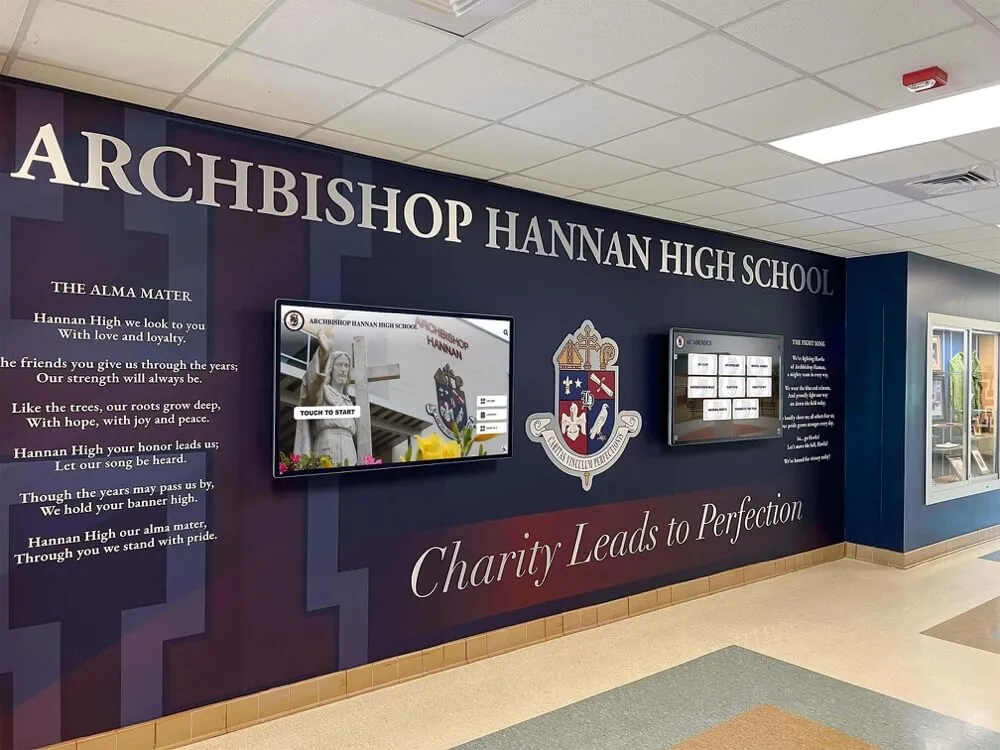
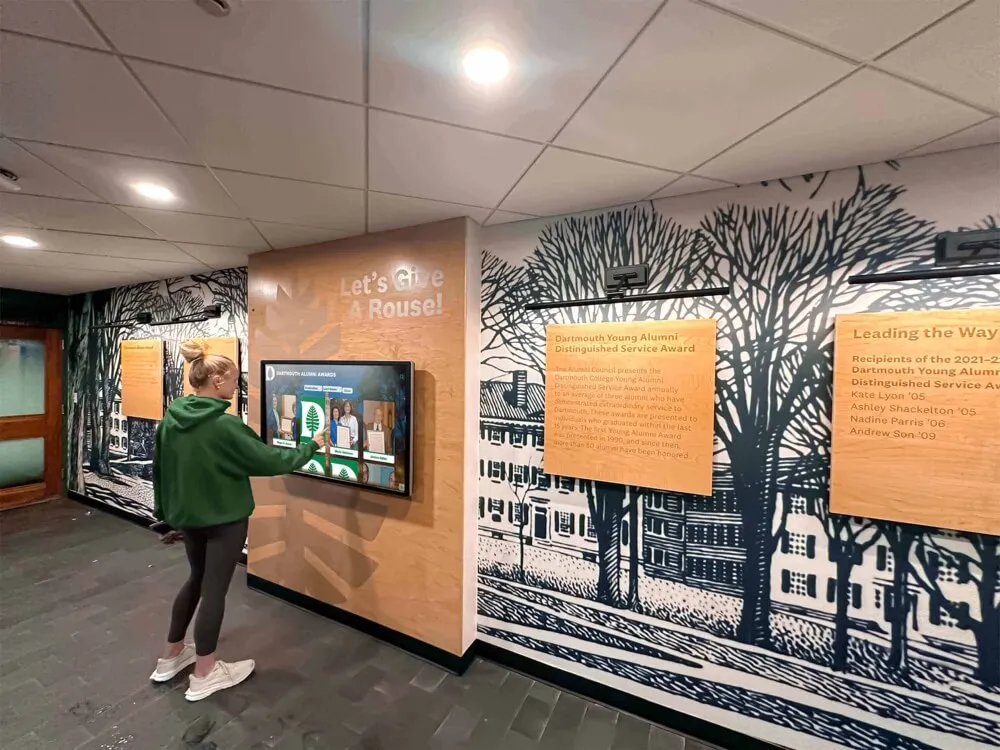
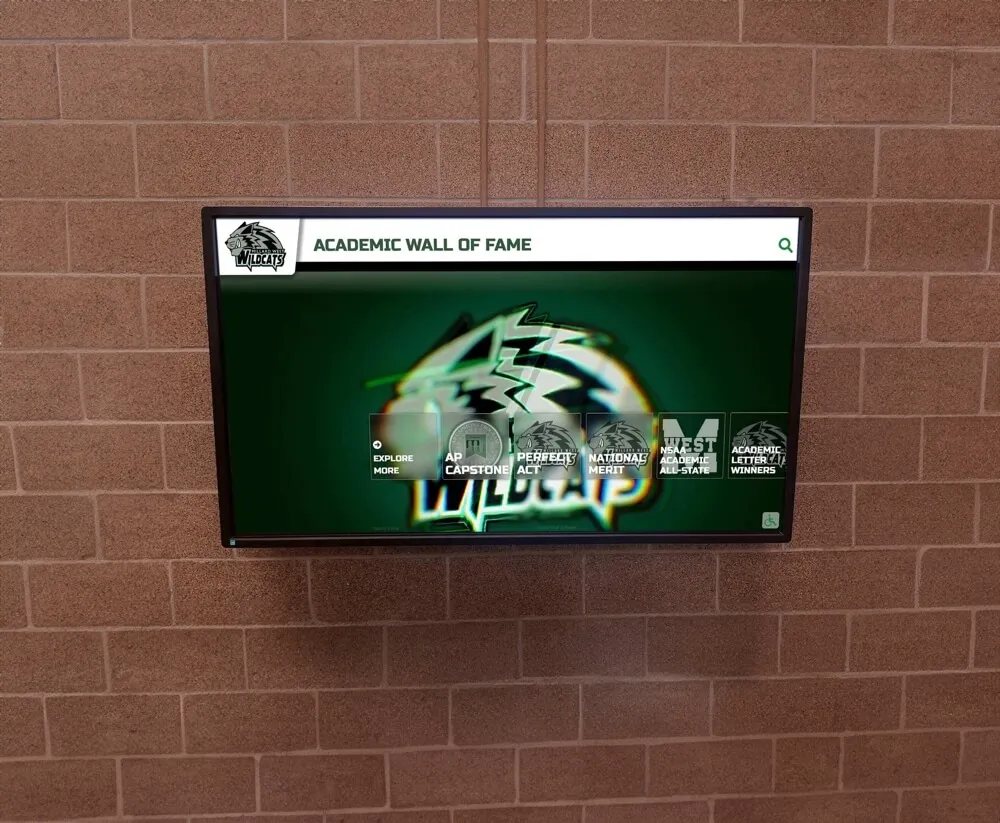
Permanent recognition displays preserve improvement stories that inspire future athletes
Common Most Improved Award Challenges
Despite benefits, improvement recognition faces implementation challenges:
Measurement Difficulties
Quantifying improvement presents inherent problems:
- Baseline skill assessment requires systematic documentation
- Different starting points make comparisons problematic
- Statistical improvement may not reflect actual development
- Subjective skill areas lack clear measurement metrics
- Short evaluation periods may miss longer development arcs
Perception Management Issues
Most improved awards sometimes face credibility challenges:
- Risk of being perceived as “consolation prize” for less talented athletes
- Potential to inadvertently highlight previous struggles
- Challenge of maintaining prestige compared to performance awards
- Balancing recognition without diminishing achievement-based honors
- Avoiding implicit criticism of past performance while celebrating growth
Thoughtful implementation addressing these challenges ensures improvement awards maintain meaning and motivational power.
Defining Most Improved Player Criteria
Clear, objective criteria prevent arbitrary selection while ensuring awards recognize genuine development.
Establishing Baseline Measurements
Effective improvement recognition requires documented starting points:
Statistical Baseline Documentation
For sports with quantifiable metrics, establish clear baseline measures:
- Pre-season skills assessments and benchmarks
- Previous season performance statistics
- Early season performance levels
- Strength and conditioning baseline measurements
- Position-specific skill evaluation results
Qualitative Baseline Descriptions
Skills that resist easy quantification require descriptive baselines:
- Coaches’ early-season evaluations and observations
- Position understanding and tactical knowledge assessments
- Leadership and communication capability descriptions
- Mental toughness and competitive resilience evaluations
- Team contribution and practice intensity observations
Documentation should occur early enough to avoid bias from season-end knowledge of improvement trajectories.
Measuring Meaningful Improvement
Not all development carries equal weight—criteria should prioritize significant growth:
Quantitative Improvement Metrics
Statistical improvement provides clear evidence:
- Points, goals, or scoring output increases
- Defensive statistics improvements
- Playing time earned through development
- Strength and conditioning benchmark improvements
- Position-specific performance metric growth
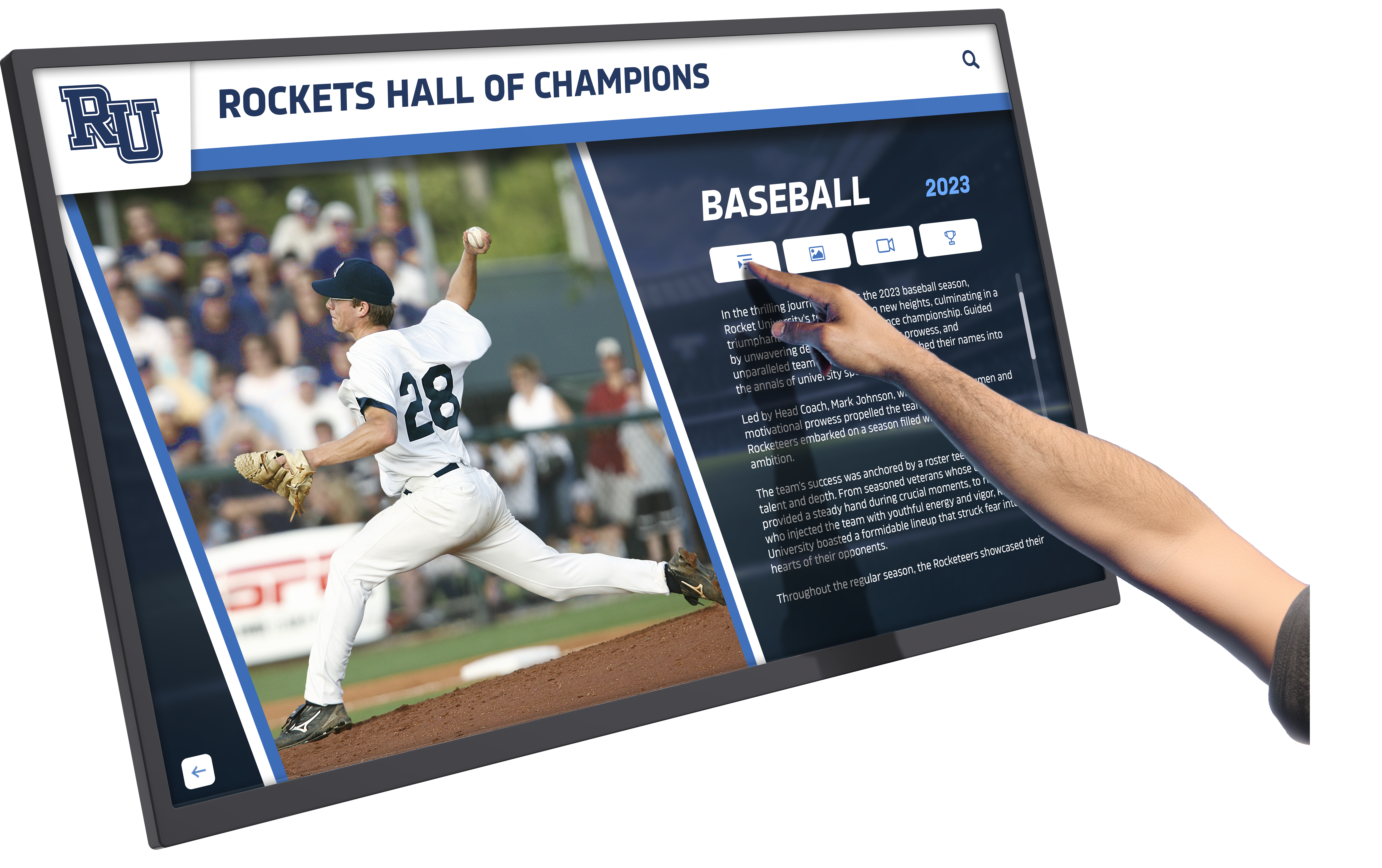
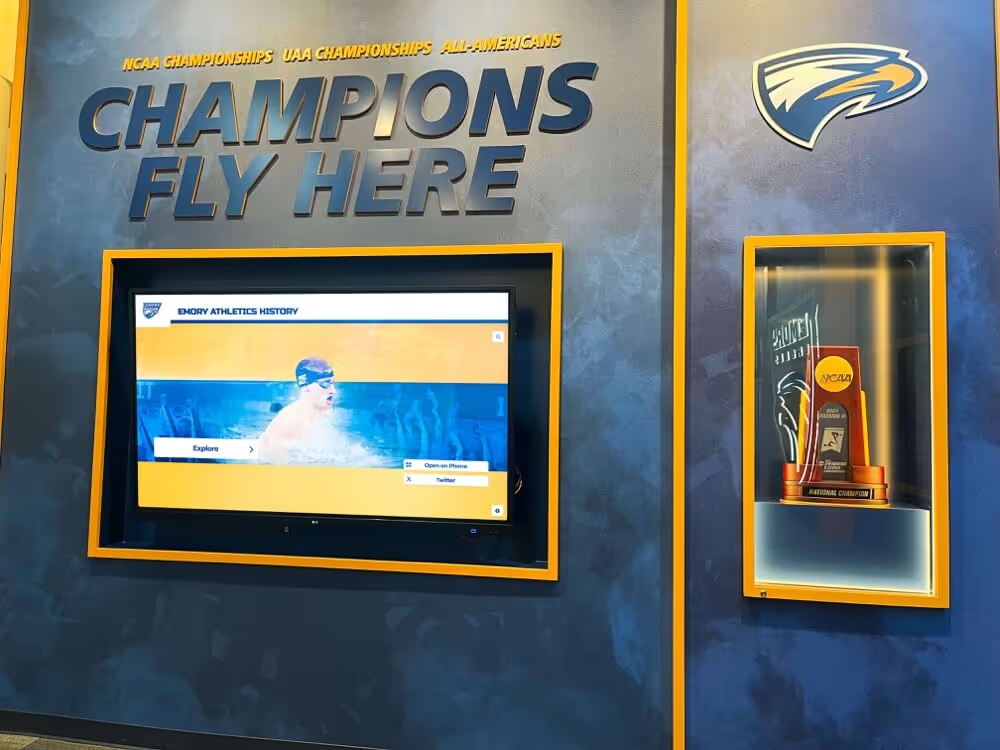
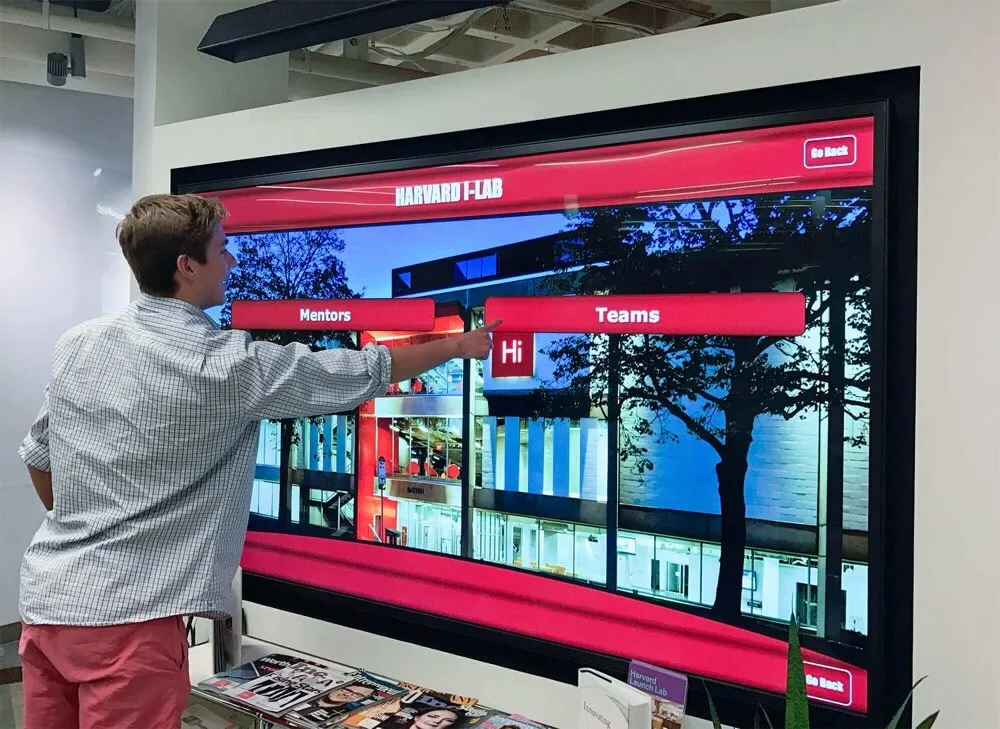
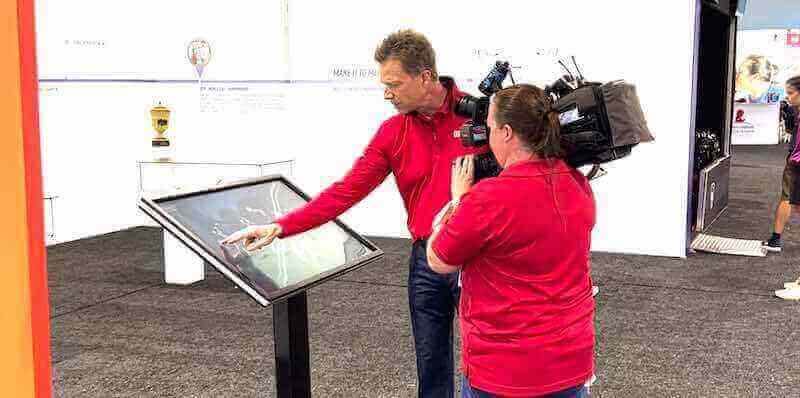
Digital systems enable comprehensive documentation of athlete development across seasons
Qualitative Improvement Indicators
Subjective but meaningful growth areas:
- Tactical understanding and game intelligence advancement
- Leadership and communication skill development
- Mental toughness and competitive maturity growth
- Practice intensity and work ethic improvement
- Coachability and receptiveness to instruction enhancement
Role Expansion Recognition
Improvement often manifests through expanded responsibilities:
- Movement from bench to rotation to starter
- Additional position versatility development
- Special teams or situational role expansion
- Leadership responsibility assumption
- Mentor role development for younger players
Combining multiple improvement dimensions creates comprehensive recognition criteria resistant to gaming or narrow optimization.
Setting Improvement Thresholds
Clear thresholds prevent subjective favoritism while ensuring awards recognize substantial growth:
Minimum Improvement Standards
Establish measurable minimums for consideration:
- Specific percentage improvements in key statistics
- Defined skill level advancements
- Participation threshold requirements ensuring adequate sample size
- Baseline-to-endpoint comparison minimums
- Season-long consistency requirements preventing short-term flukes
Relative Improvement Considerations
Account for different starting points:
- Improvement magnitude relative to initial skill level
- Difficulty factors for athletes overcoming specific challenges
- Contextual considerations for position or role changes
- Injury recovery trajectories requiring acknowledgment
- Off-season development work producing in-season results
These thresholds should challenge athletes while remaining achievable through dedicated effort, not requiring extraordinary circumstances.
For programs interested in comprehensive recognition including improvement alongside achievement, explore athletic award programs offering multiple recognition categories.
Selection Process and Methodology
Systematic selection processes ensure most improved awards maintain credibility and fairness.
Coach-Led Selection Approaches
Coaching staff involvement provides informed perspective:
Single Head Coach Selection
Head coaches possess comprehensive team knowledge:
- Direct observation of all athletes across season
- Baseline understanding from early practices and evaluations
- Awareness of behind-the-scenes development work
- Ability to contextualize improvement within team dynamics
- Final accountability for recognition decisions
This centralized approach works best in smaller programs or with strong coaching leadership.
Coaching Staff Collaborative Selection
Multi-coach evaluation prevents individual bias:
- Assistant coaches provide position-specific expertise
- Discussion reveals improvement areas individual coaches might miss
- Collaborative process builds staff consensus
- Multiple perspectives reduce favoritism concerns
- Shared decision increases award credibility
Structured discussion protocols prevent dominant personalities from unduly influencing outcomes.
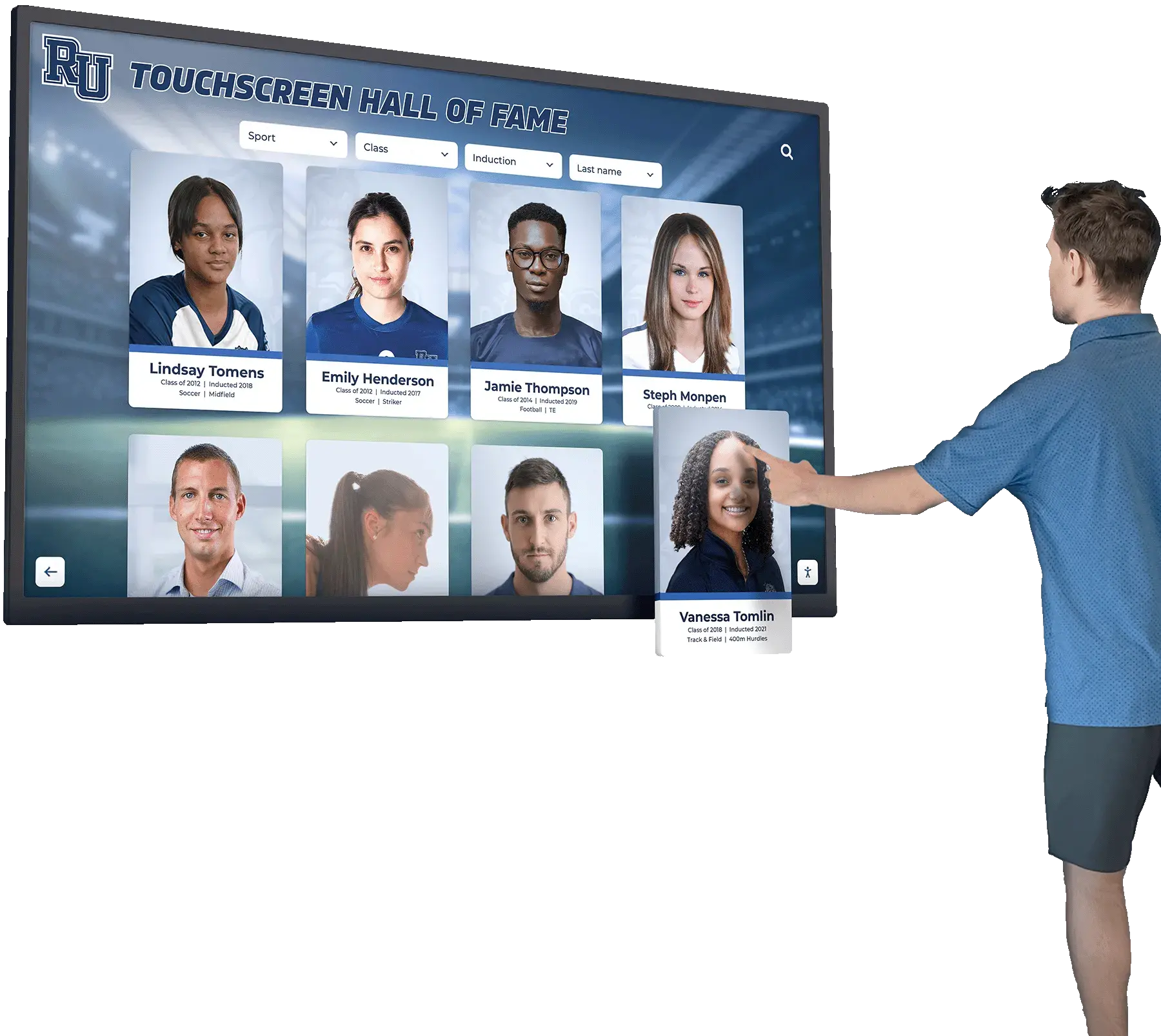
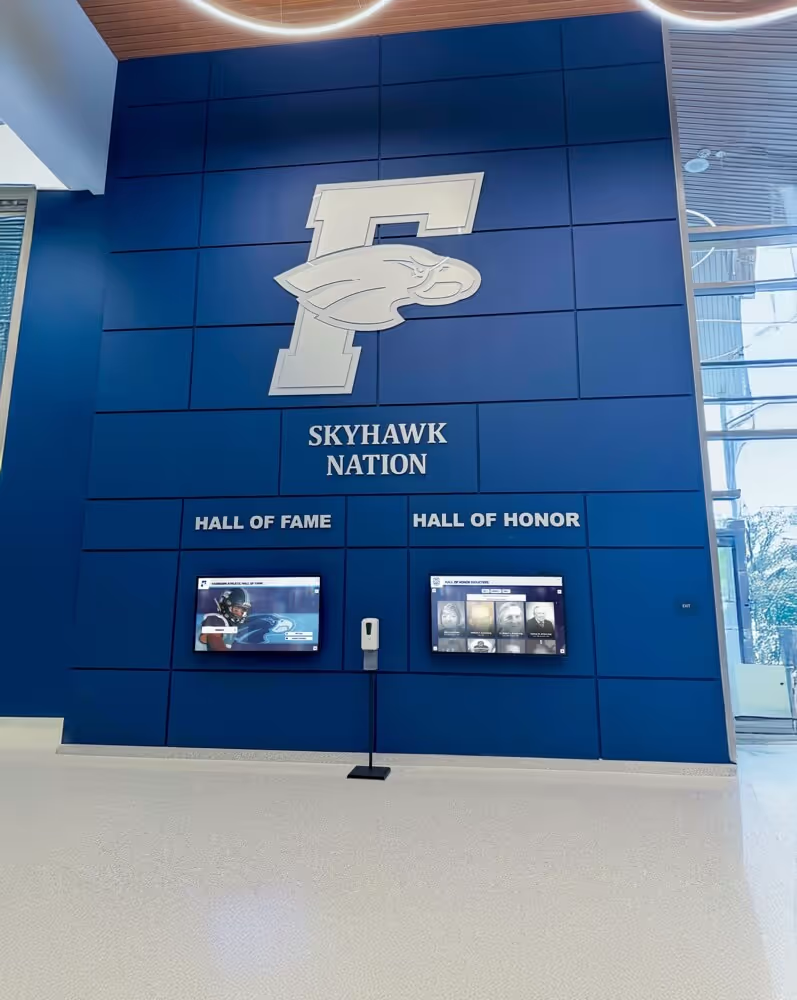
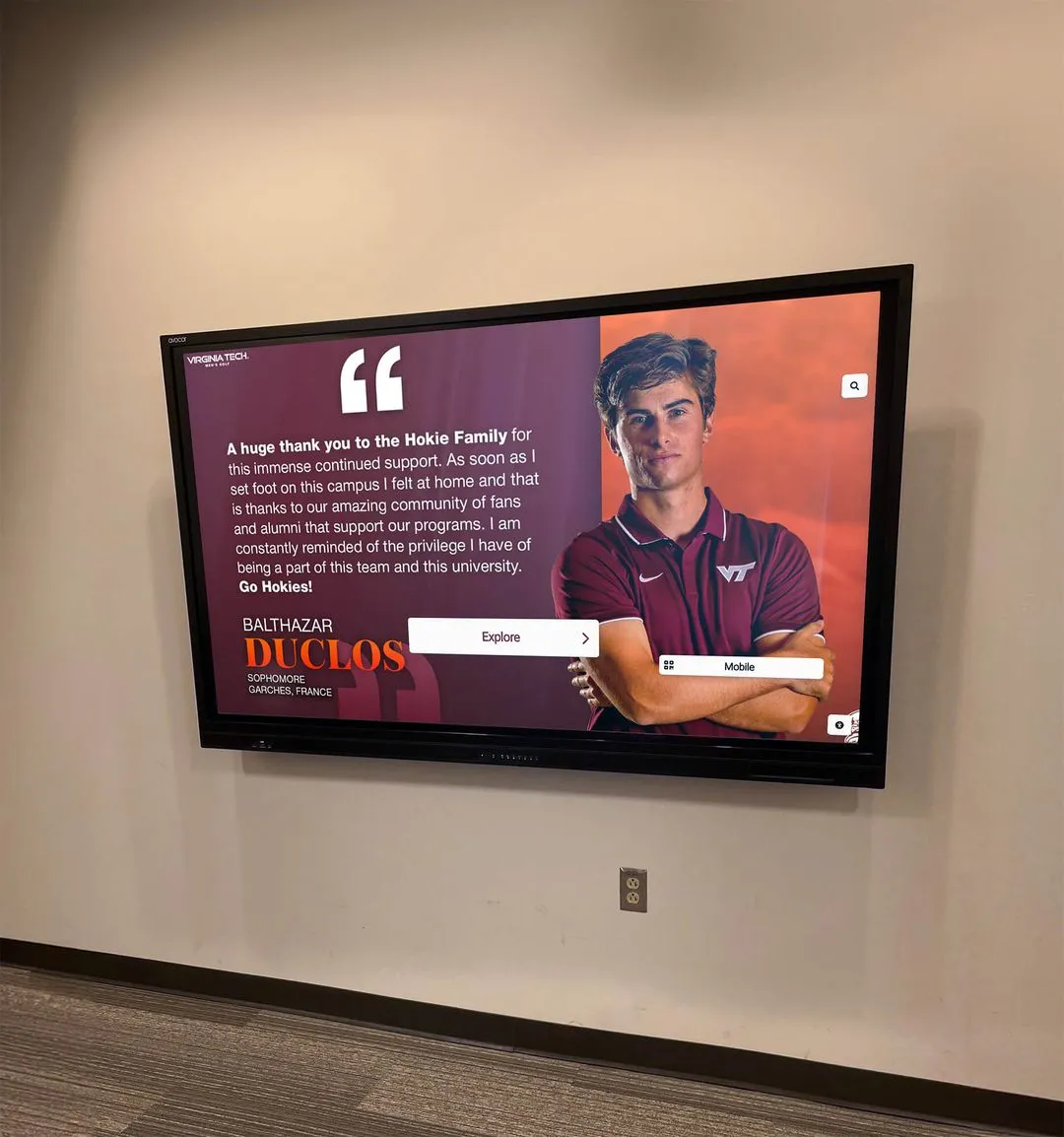
Modern recognition systems enable coaches to document and showcase player development journeys
Player-Involved Selection Methods
Team member participation can enhance credibility and engagement:
Peer Voting Approaches
Teammates witness daily development:
- Players observe practice effort coaches might not fully see
- Peer recognition carries unique motivational weight
- Democratic process increases team buy-in
- Reduces perception of coach favoritism
- Acknowledges improvement teammates directly observe
Peer voting works best as input to coaches rather than sole determinant, preventing popularity contests.
Blended Coach-Player Selection
Combining perspectives balances strengths:
- Coaches provide objective statistical data and baselines
- Players contribute peer observations and practice insights
- Weighted combination prevents either group dominating
- Discussion between coaches and team leaders
- Final decision incorporating both quantitative and qualitative input
Nomination and Evaluation Process
Structured nomination prevents oversight:
- Open nomination period where anyone can suggest candidates
- Coaching staff review of all nominations
- Presentation of evidence supporting each nominee
- Deliberation using established criteria
- Final selection with clear rationale
Transparent processes build trust even among athletes not selected.
Timeline Considerations
Selection timing impacts award meaning and fairness:
End-of-Season Selection
Traditional approach evaluating complete season:
- Full season data provides comprehensive improvement picture
- All competitive opportunities concluded
- Playoff performance included in evaluation
- Senior recognition integrated with banquet timing
- Complete development arc visible
Mid-Season Recognition Options
Some programs offer interim improvement acknowledgment:
- Quarterly or monthly improvement recognition
- Multiple winners across season preventing single award limitation
- Ongoing motivation throughout season
- Recognition of improvement even if later regression occurs
- Additional opportunities for different athletes
Multi-Year Improvement Recognition
Longer evaluation periods capture deeper transformations:
- Freshman-to-senior development journeys
- Sophomore-to-senior three-year arcs
- Career-long improvement trajectories
- Sustained development versus single-season spikes
- Legacy improvement stories inspiring underclassmen
Each timeline approach serves different purposes—many programs benefit from multiple improvement recognition cycles.
For ideas about comprehensive end-of-season recognition including improvement awards, explore sports banquet planning approaches that celebrate diverse achievements.
Sport-Specific Most Improved Recognition
Different sports require tailored improvement criteria reflecting their unique demands.
Team Sport Improvement Awards
Team sports offer multiple improvement dimensions:
Basketball Most Improved Recognition
Basketball improvement manifests across multiple areas:
- Shooting percentage improvements (field goal, free throw, three-point)
- Defensive statistics enhancement (rebounds, steals, blocks)
- Assist-to-turnover ratio improvement
- Minutes played increase through earned development
- Plus-minus rating improvements showing team impact
- Off-season skill development producing in-season results
For basketball-specific recognition ideas, see basketball awards incorporating improvement alongside performance.
Football Most Improved Recognition
Football’s positional specialization requires position-specific evaluation:
- Position technique improvement (blocking, route running, tackling)
- Strength and conditioning development producing on-field results
- Special teams contribution expansion
- Film study understanding translating to game execution
- Leadership development particularly for offensive and defensive units
- Penalty reduction and mental mistake elimination
Soccer Most Improved Recognition
Soccer improvement crosses technical, tactical, and physical domains:
- Technical skill enhancement (dribbling, passing accuracy, shooting)
- Tactical understanding and positioning improvement
- Fitness and endurance development
- Defensive and offensive contribution balance
- Set piece effectiveness improvements
- Assist and goal production increases
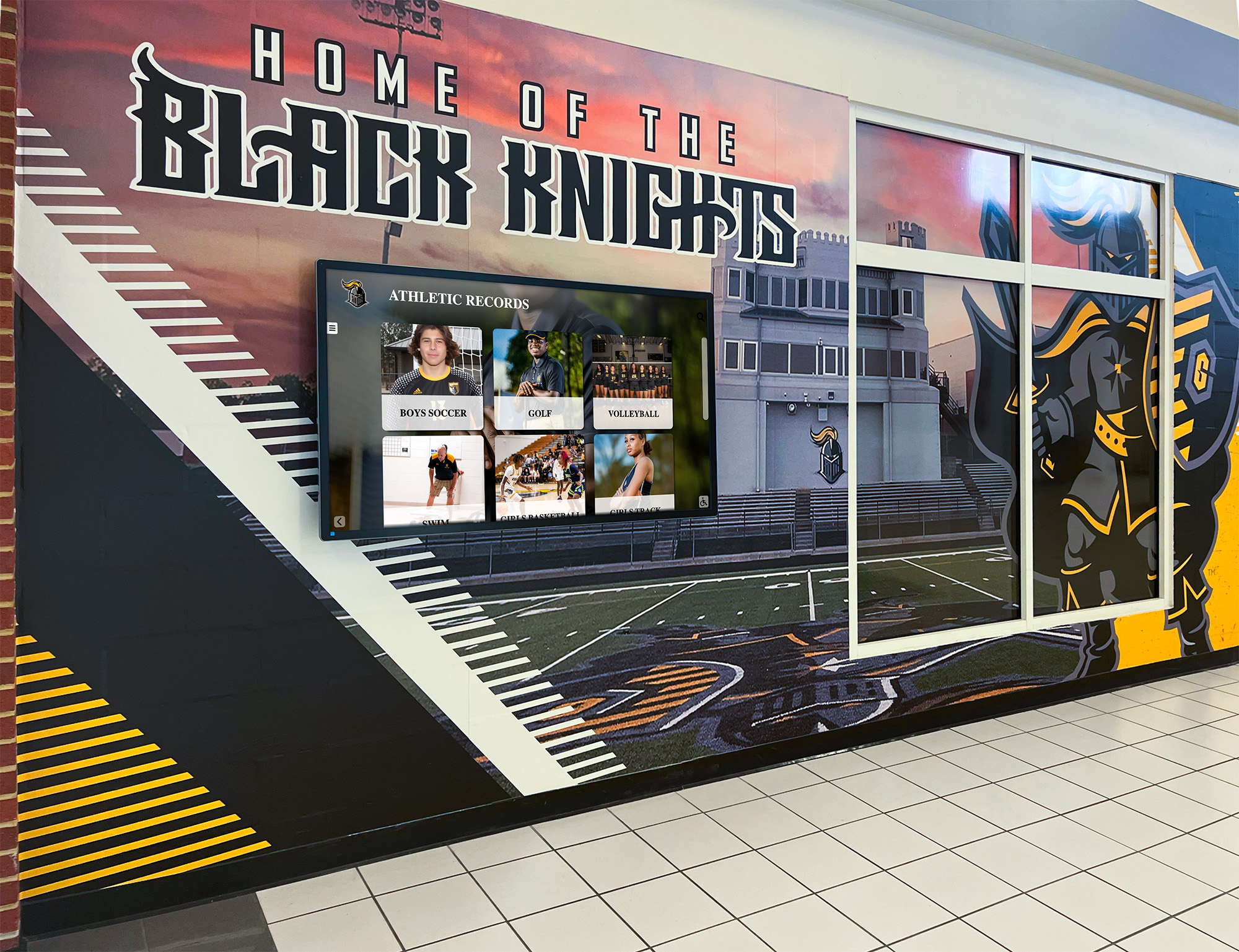
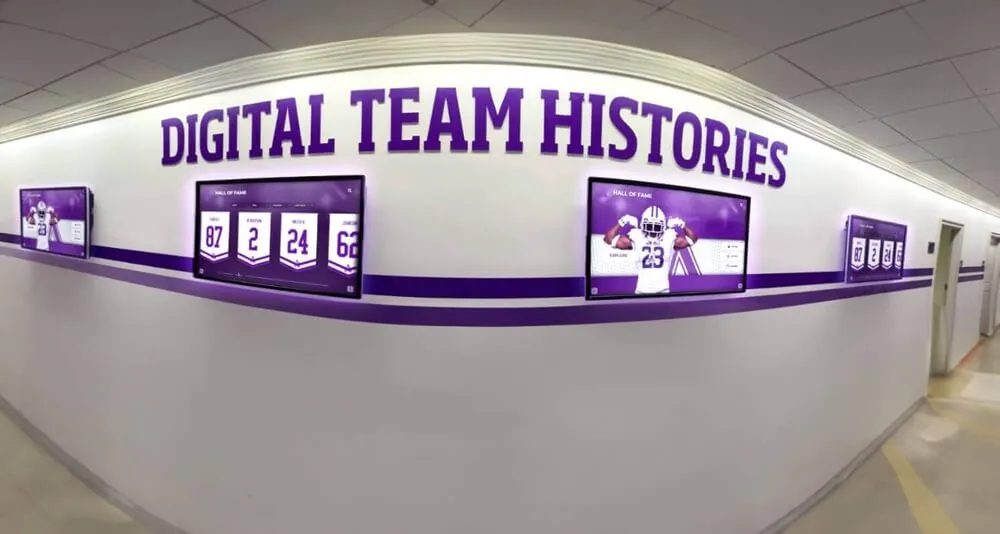
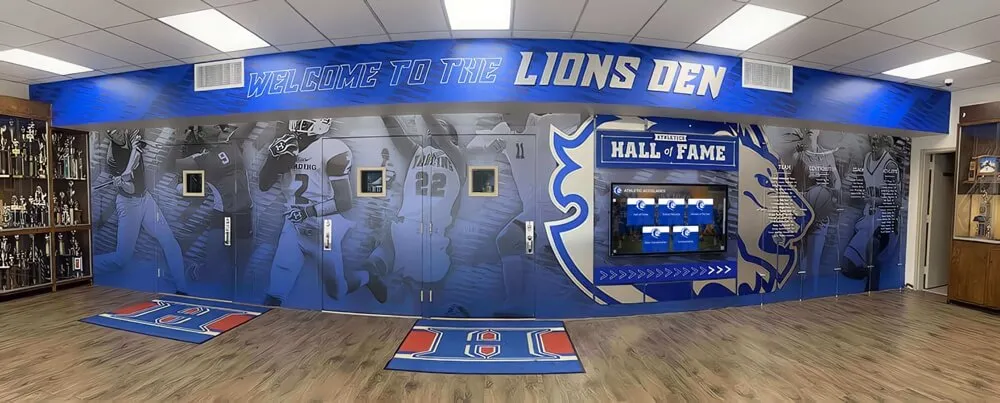
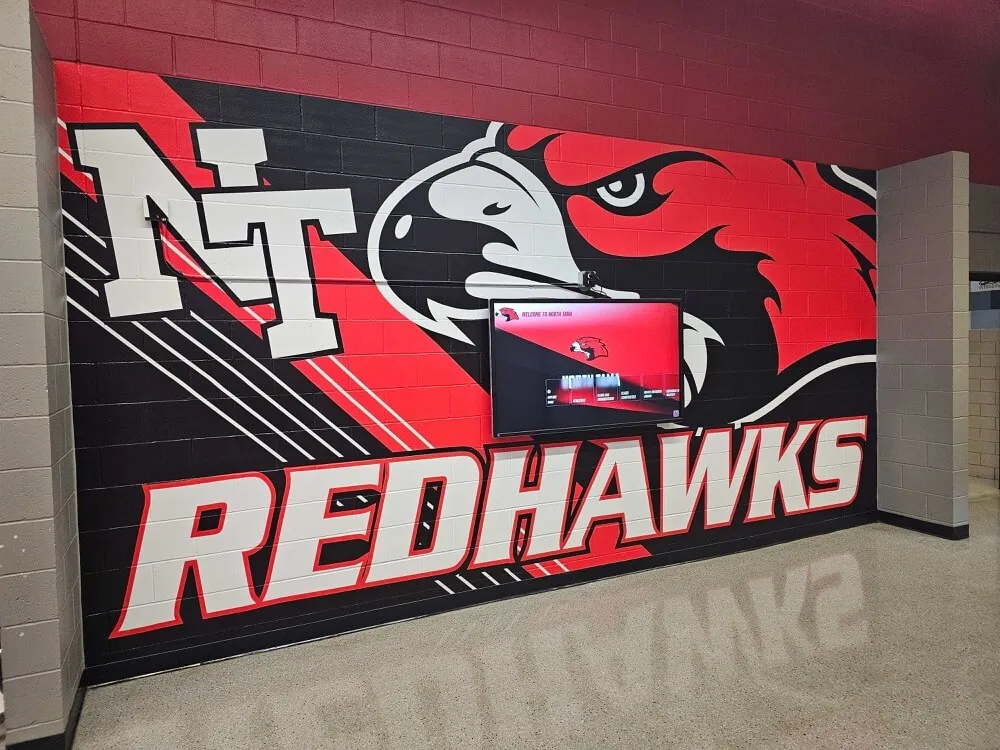
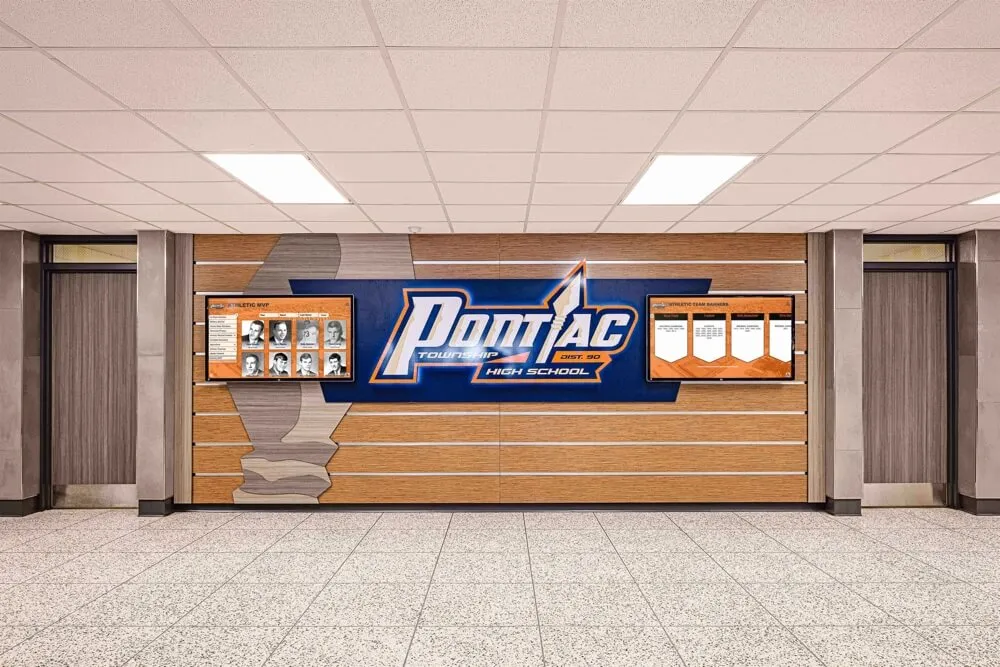
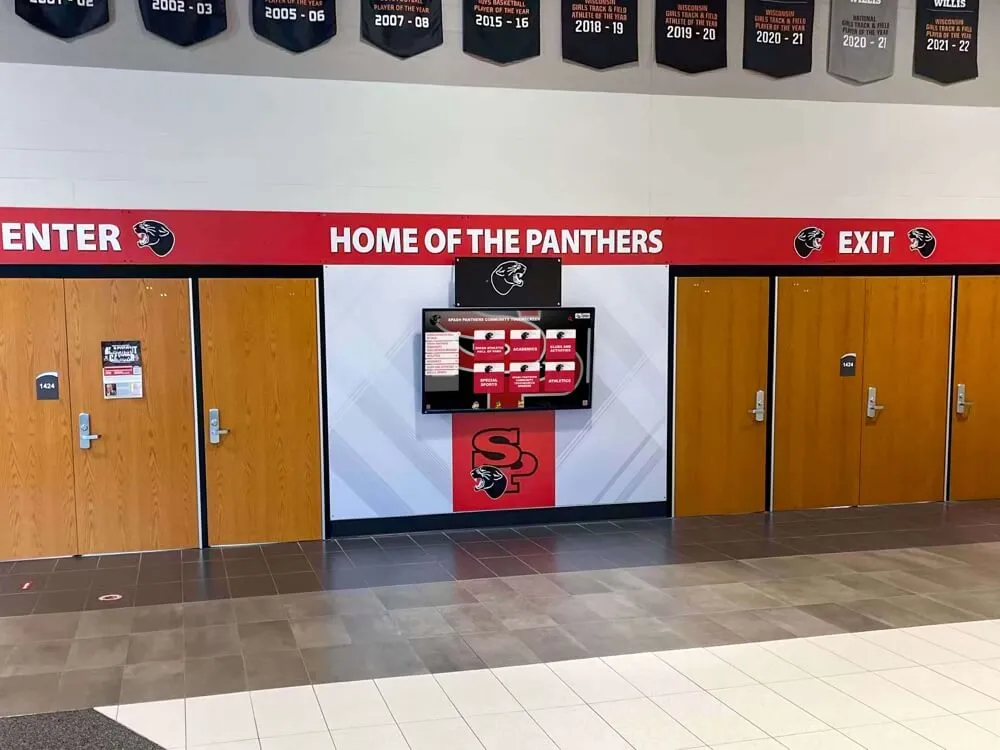
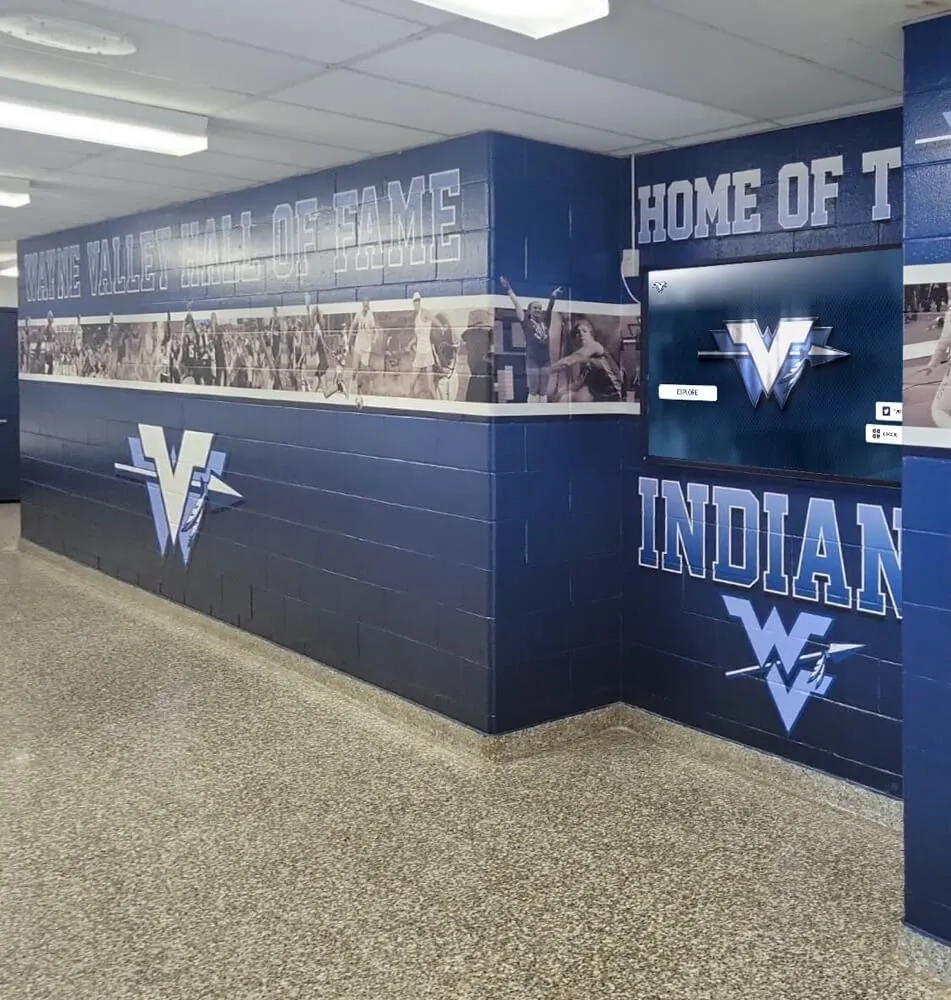
Hallway displays ensure improvement stories remain visible throughout athletic facilities
Individual Sport Improvement Awards
Individual sports provide clearer improvement measurement:
Track and Field Most Improved
Track improvement offers quantifiable metrics:
- Personal record improvements by event
- Place finish improvement in competitive meets
- Technique refinement producing performance gains
- Event versatility expansion
- Consistency improvement across season
- Championship meet qualification earned through development
Swimming Most Improved
Swimming provides precise improvement tracking:
- Time improvements by event and distance
- Stroke technique development
- Start and turn efficiency gains
- Endurance development across season
- Event diversification and specialization
- Cut time achievement and state qualification
Wrestling Most Improved
Wrestling combines technical and competitive improvement:
- Win-loss record improvement season over season
- Pinning and dominant victory percentage increases
- Tournament placement advancement
- Weight class management and conditioning improvement
- Technique expansion and move diversity
- Mental toughness development through tough matches
Tennis Most Improved
Tennis improvement spans technical and strategic dimensions:
- Singles and doubles ranking improvements
- Match win percentage advancement
- Serve and return effectiveness statistics
- Point construction and strategy sophistication
- Mental toughness in tight matches
- Tournament result improvements
Measuring Intangible Improvement
Not all meaningful growth appears in statistics:
Leadership Development
Improvement in leading teammates:
- Communication quality and frequency improvement
- Vocal leadership during practice and competition
- Example-setting through work ethic and attitude
- Mentorship of younger players development
- Captain or leadership role assumption
- Team culture positive contribution increase
Mental Toughness Growth
Psychological development producing competitive improvement:
- Composure under pressure advancement
- Response to adversity and setbacks improvement
- Competitive focus and concentration enhancement
- Pre-competition preparation and routine development
- Confidence growth producing aggressive play
- Clutch performance improvement in key moments
Work Ethic and Practice Quality
Behind-the-scenes improvement driving results:
- Practice intensity and focus improvement
- Extra training and skill work initiation
- Strength and conditioning commitment enhancement
- Film study and preparation thoroughness
- Receptiveness to coaching and feedback
- Injury prevention and body maintenance commitment
Recognizing these intangible improvements alongside statistical development creates comprehensive acknowledgment of athlete transformation.
Presenting Most Improved Player Awards
Award presentation significantly impacts recognition meaning and motivational value.
Award Timing and Setting
Strategic timing and venue selection maximize impact:
End-of-Season Banquet Presentation
Traditional banquet setting provides formal recognition:
- Comprehensive audience including families and community
- Context within full season awards program
- Equal prestige with other major awards
- Opportunity for detailed improvement story presentation
- Photo opportunities and formal commemoration
- Integration with senior recognition and program celebration
Team Meeting Recognition
Intimate team setting creates different dynamics:
- Focus on team-internal meaning rather than external audience
- Peer recognition and celebration emphasis
- Coaching staff personal remarks opportunity
- Team culture reinforcement through improvement acknowledgment
- More comfortable setting for athletes uncomfortable with public attention
- Immediate feedback and response opportunity
Combined Public and Private Recognition
Dual recognition approaches maximize different benefits:
- Initial private team recognition
- Subsequent public celebration at banquet or ceremony
- Social media and school communication amplification
- Display in athletic facility recognition systems
- Newsletter and local media features
- Permanent recognition in program archives
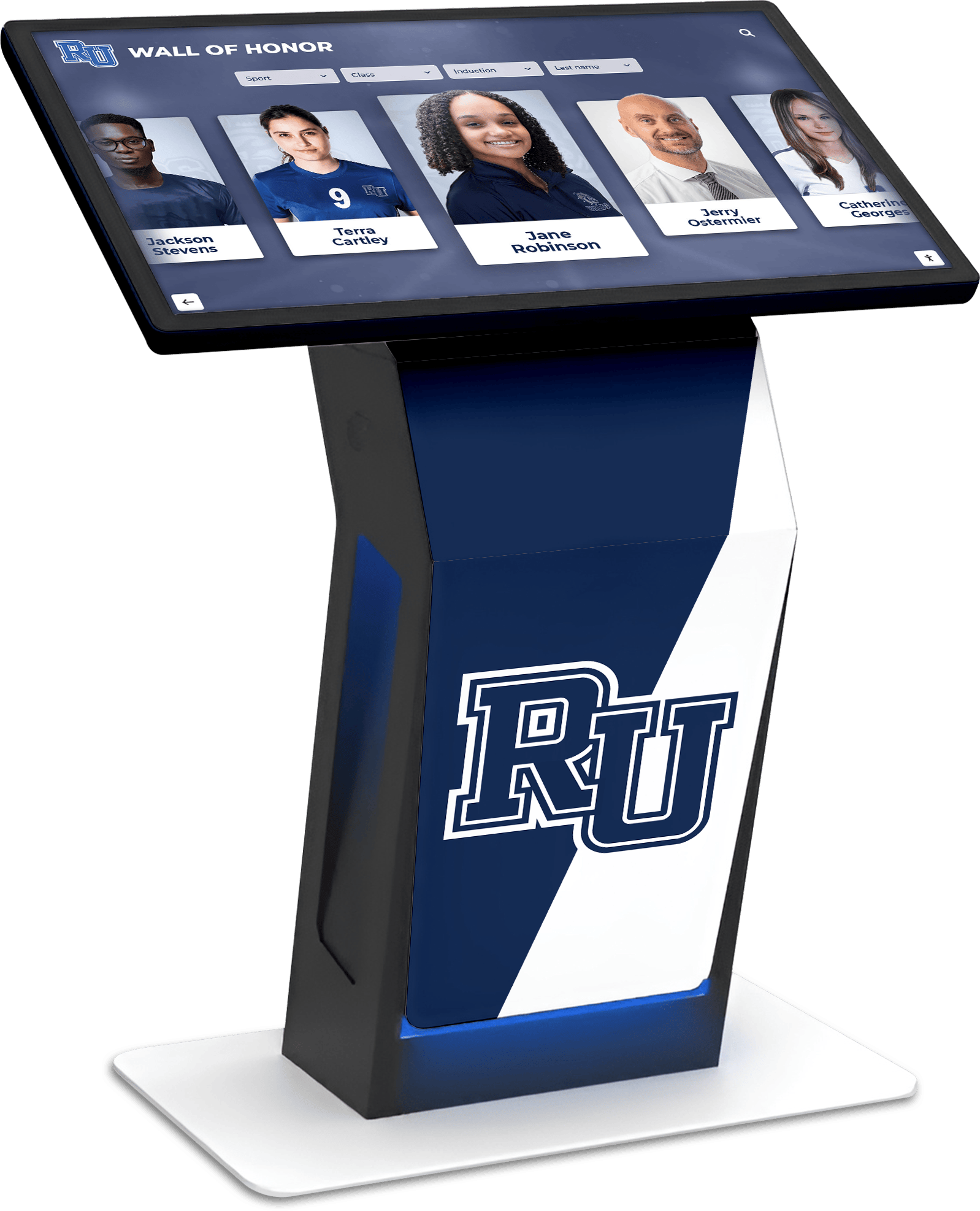
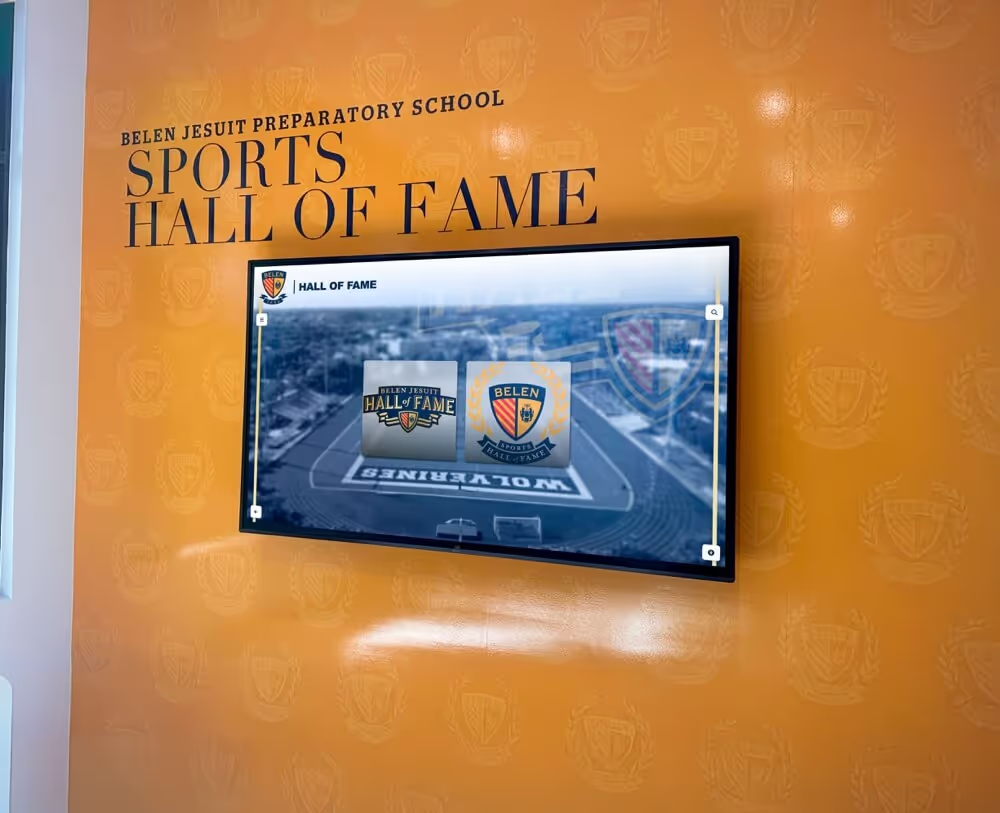
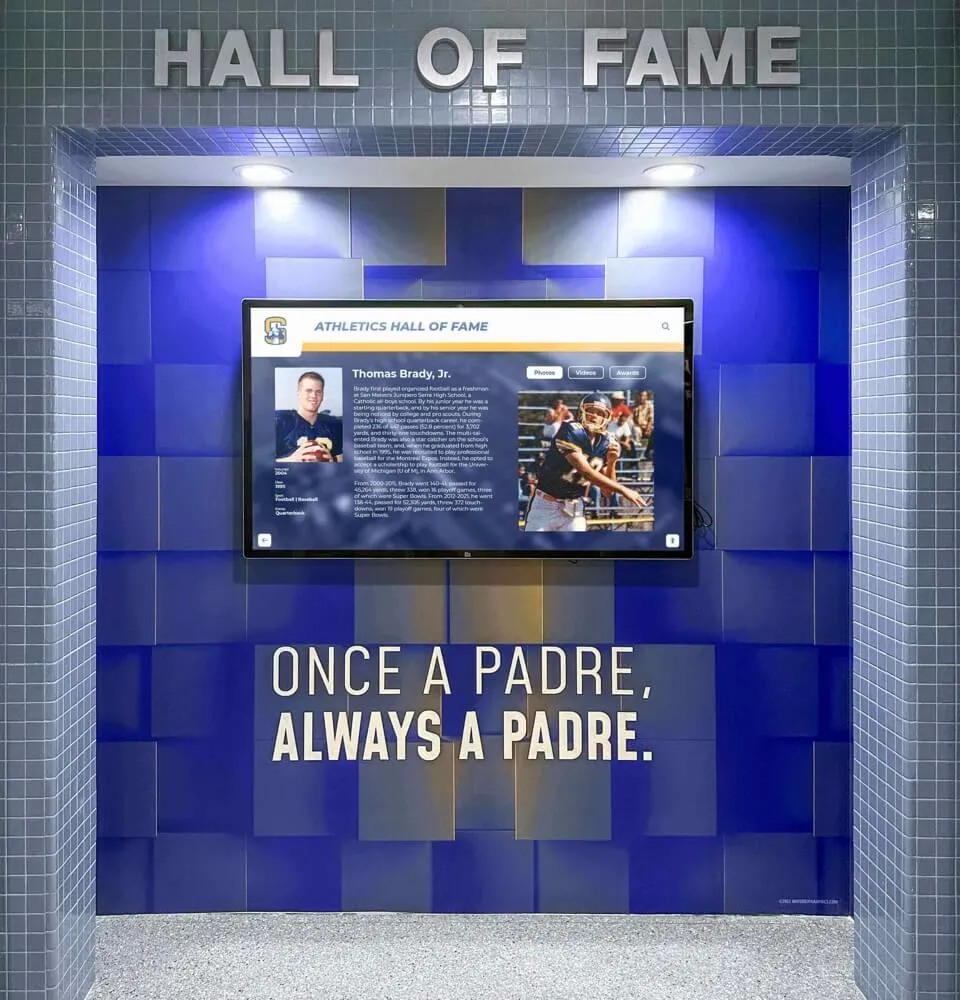
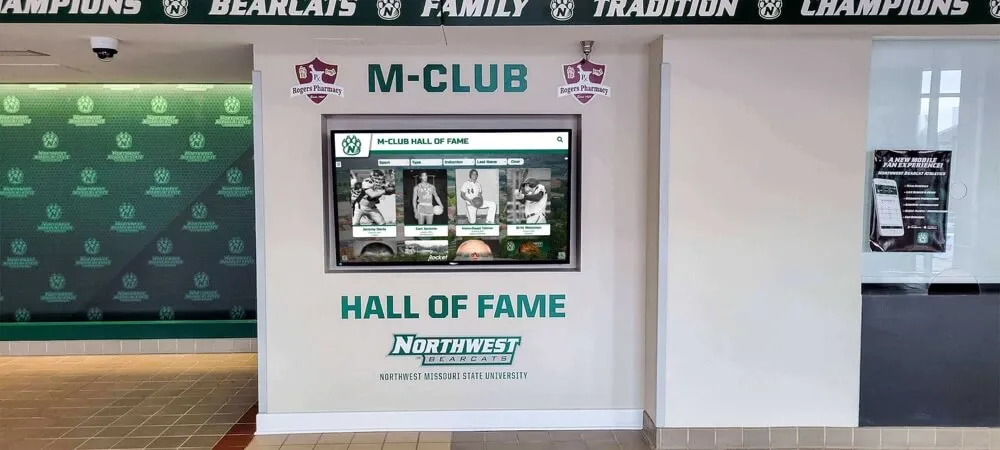
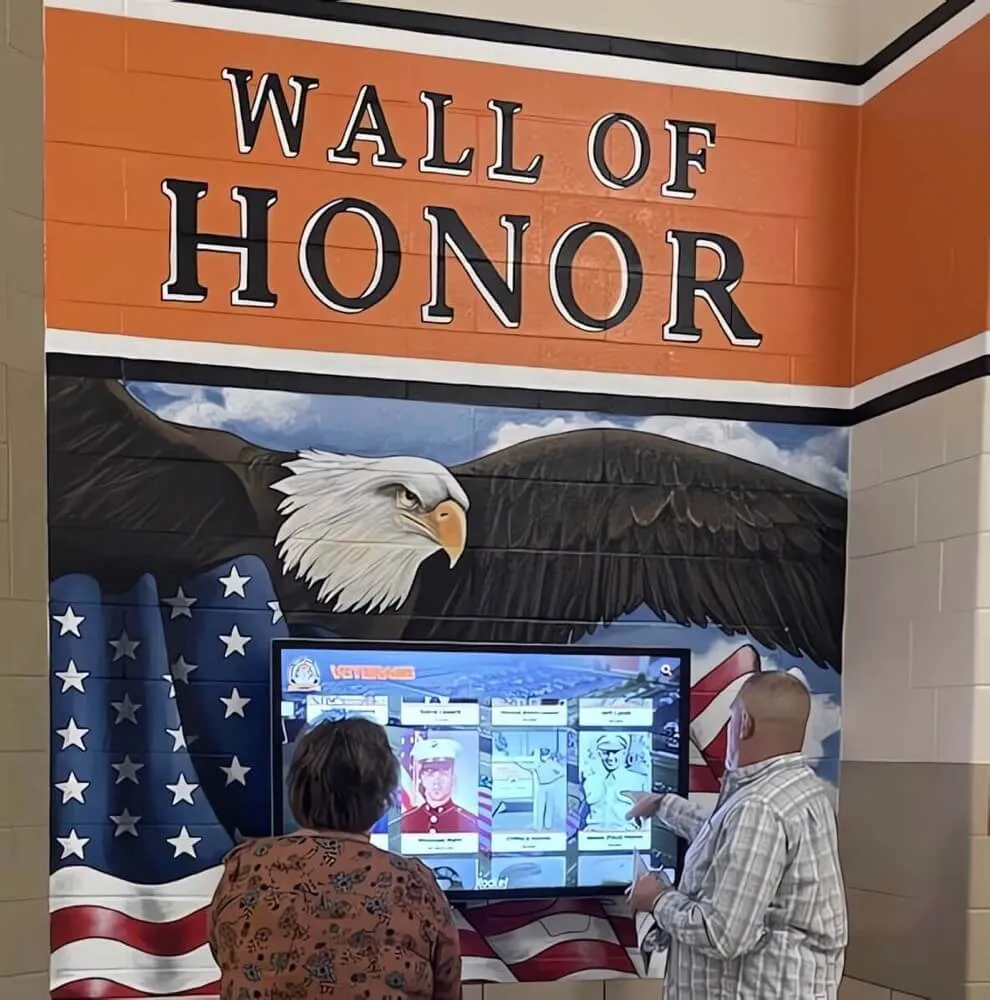
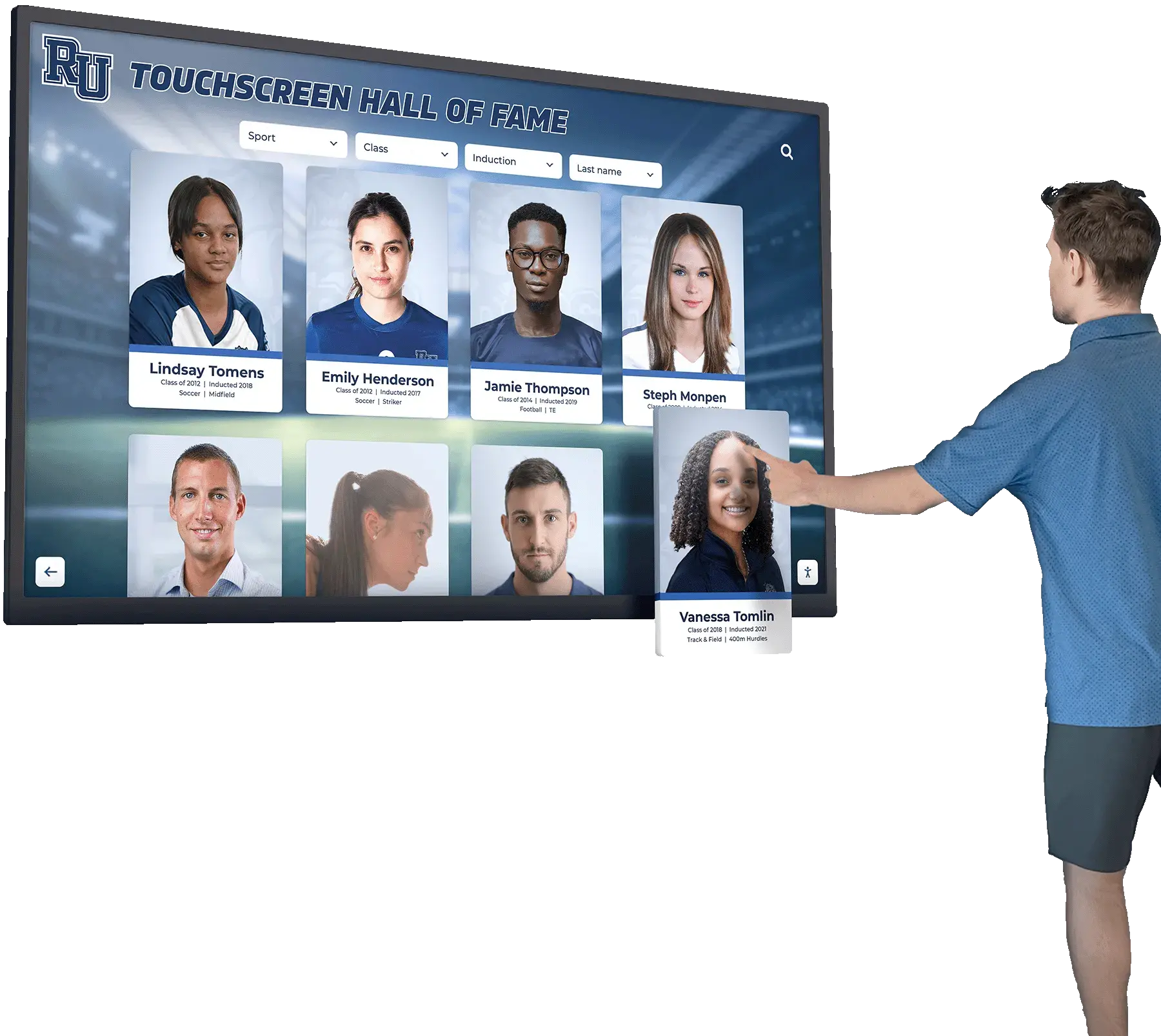
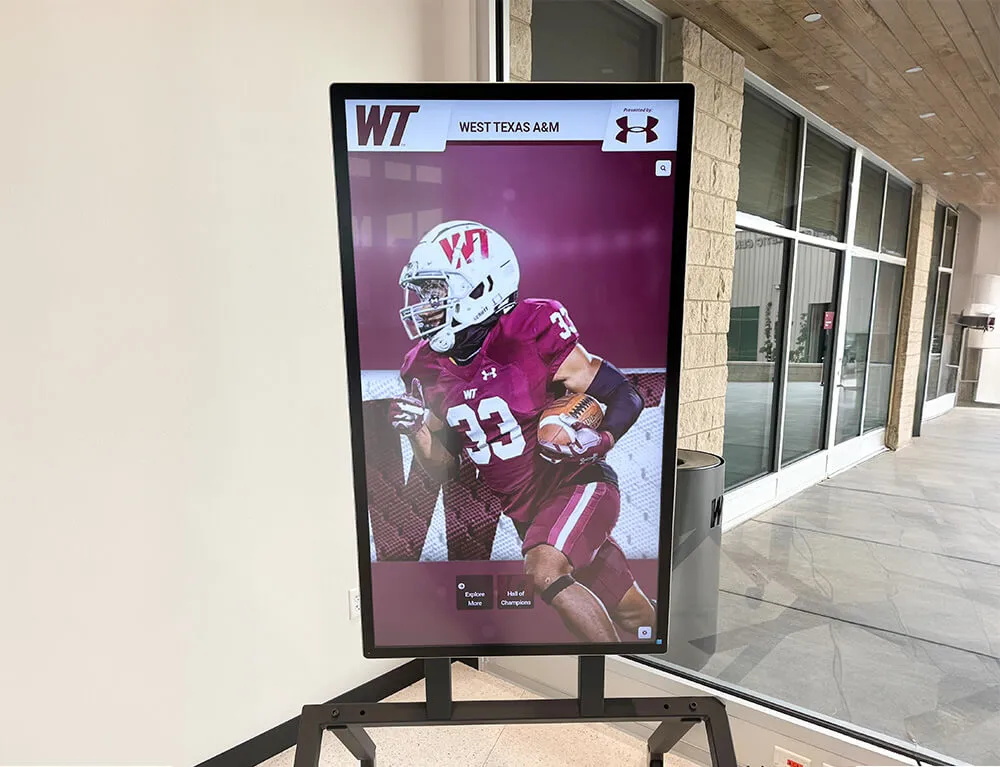
Modern recognition kiosks provide permanent platforms celebrating improvement alongside achievement
Crafting Meaningful Presentation Remarks
How coaches present improvement awards impacts recipient experience:
Telling the Improvement Story
Effective presentations contextualize transformation:
- Specific description of baseline abilities and starting point
- Concrete examples of development work and effort
- Documentation of incremental progress throughout season
- Statistical or performance evidence of improvement magnitude
- Character and attitude qualities enabling growth
- Future potential unlocked through demonstrated development
Balancing Honesty and Celebration
Presentation must acknowledge growth without dwelling on previous limitations:
- Frame baseline honestly without excessive negativity
- Emphasize growth trajectory not initial struggles
- Celebrate destination while honoring journey
- Highlight specific breakthrough moments
- Acknowledge challenges overcome during development
- Project optimism about continued growth potential
Connecting to Team Impact
Link individual improvement to team benefit:
- How player development helped team success
- Roles player filled through expanded capabilities
- Inspiration provided to other athletes
- Team culture contribution through work ethic example
- Specific games or moments where improvement proved valuable
- Future team potential enhanced by player growth
Physical Award Selection
Tangible recognition reinforces improvement acknowledgment:
Traditional Trophy Options
Classic trophy awards remain popular:
- Quality trophy proportional to award significance
- Personalization with player name, year, sport
- Improvement-specific engraving or design elements
- Display-worthy size and appearance
- Consistent design within program award family
- Durable construction for long-term keepsake value
Creative Recognition Alternatives
Non-traditional awards can increase meaning:
- Personalized gear (equipment, apparel, bag)
- Custom plaque featuring improvement statistics and story
- Photo collage documenting development journey
- Framed “before and after” comparison highlighting transformation
- Personalized letter from coaches describing growth
- Special practice jersey or award designation for following season
Digital Recognition Integration
Modern platforms provide permanent acknowledgment:
- Profile in digital athletic recognition system
- Interactive displays telling improvement story
- Video montage documenting season-long development
- Statistical dashboard showing improvement metrics
- Social media spotlight and celebration
- Program website feature and permanent archive
Combining physical keepsake with digital permanent recognition maximizes impact.
For comprehensive recognition approaches, explore athletic hall of fame systems preserving improvement stories alongside championships.
Documenting and Preserving Improvement Stories
Recording improvement journeys creates lasting inspiration for future athletes.
Creating Improvement Documentation
Systematic documentation captures transformation:
Visual Documentation Methods
Images powerfully illustrate development:
- Early-season versus late-season photos showing technique evolution
- Video comparison of skill execution before and after development
- Statistical graphics demonstrating improvement magnitude
- Timeline photos documenting season-long progression
- Practice footage showing development work and effort
- Game performance clips highlighting improvement application
Written Improvement Narratives
Detailed stories preserve context numbers miss:
- Coaching staff written observations about development
- Player reflections on their improvement journey
- Specific practice sessions or moments producing breakthroughs
- Challenges overcome during development process
- Outside training or preparation supporting improvement
- Goals set and achieved throughout season
Statistical Improvement Records
Numbers provide objective evidence:
- Baseline versus endpoint comparison charts
- Game-by-game improvement trajectory graphs
- Season-long development trendlines
- Position-specific metrics advancement
- Team contribution statistics growth
- Comparative analysis against team and historical benchmarks
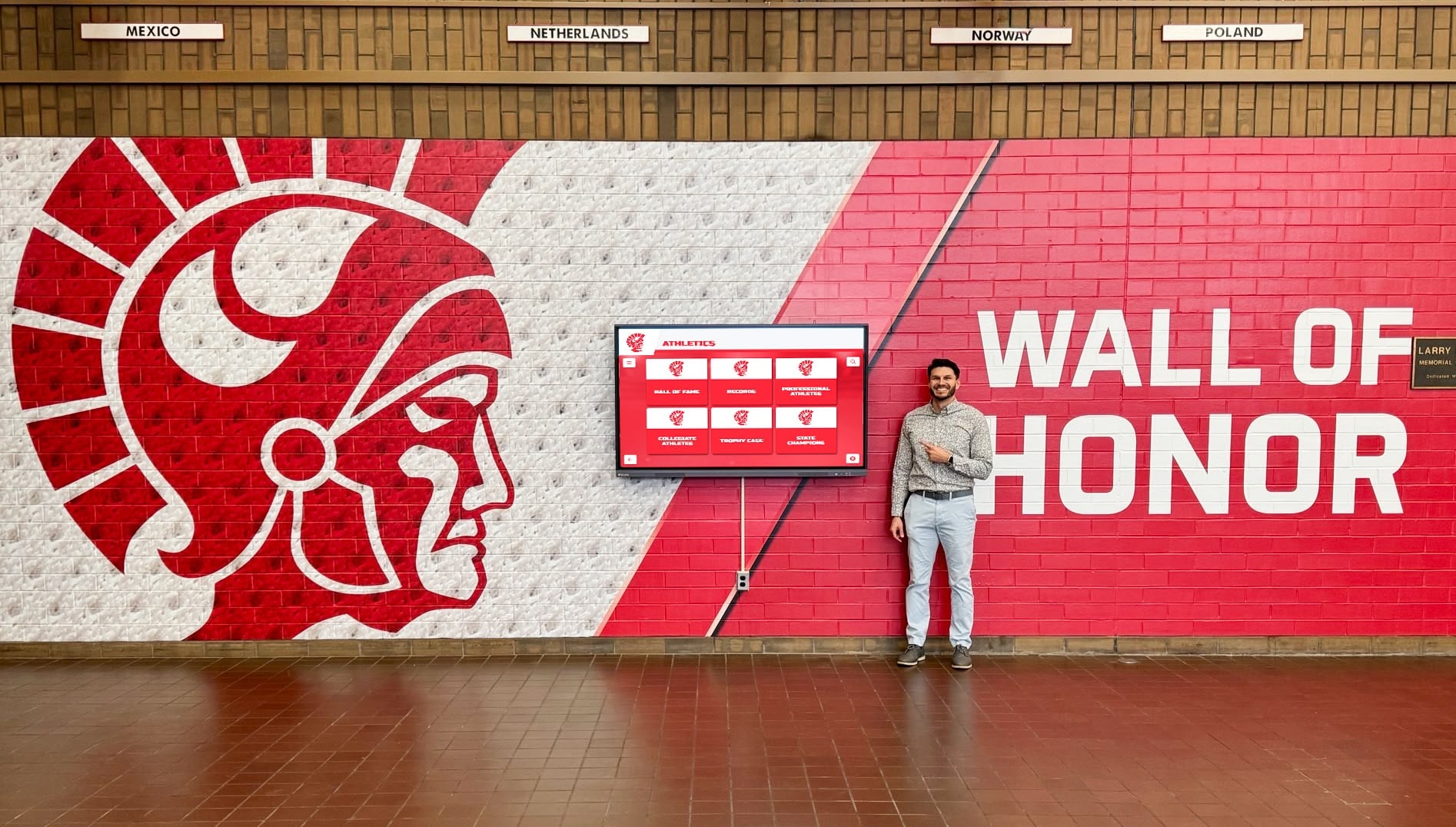
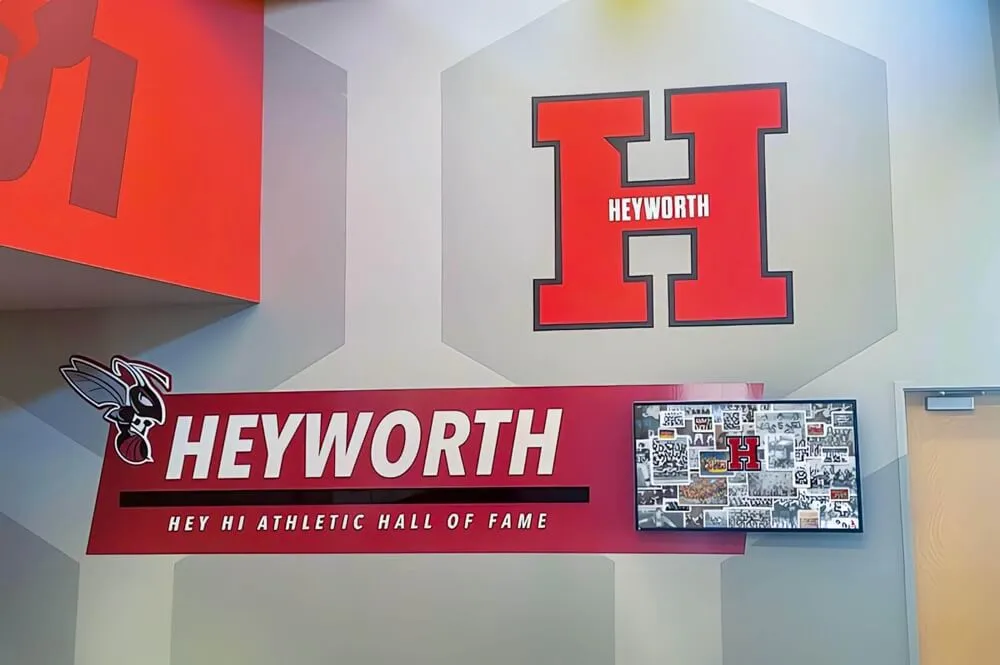
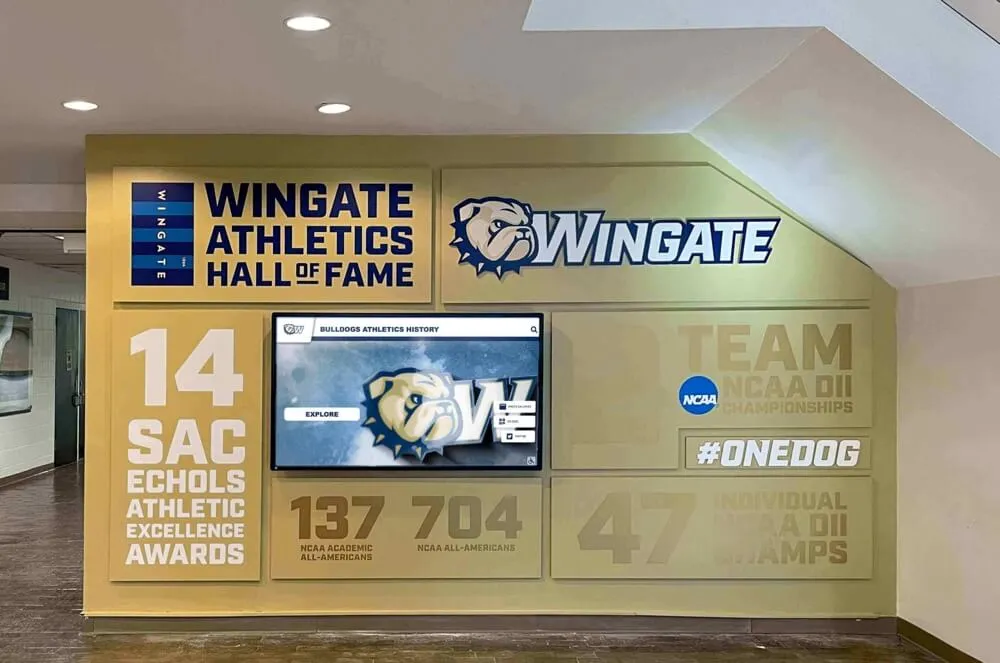
Permanent displays ensure improvement stories inspire current and future athletes
Building Historical Improvement Archives
Preserving improvement recognition creates program tradition:
Maintaining Improvement Winner Records
Systematic record-keeping preserves program history:
- Complete list of improvement award winners by year and sport
- Detailed improvement stories and statistics
- Photos of each winner receiving award
- Career trajectory information showing post-improvement success
- Connection to broader program achievements and championships
- Alumni updates about continued development beyond high school
Creating Accessible Archives
Modern technology makes history accessible:
- Digital archive displays showcasing all improvement winners
- Searchable databases enabling quick winner reference
- Web-accessible platforms for alumni and community exploration
- Mobile-friendly viewing for families and recruits
- Social media throwback features celebrating historical winners
- Integration with overall athletic program recognition systems
Leveraging Improvement Stories for Motivation
Historical archives inspire current athletes:
- Sharing previous winners’ stories during preseason
- Connecting current players with alumni improvement award winners
- Highlighting how improvement led to later success
- Using improvement examples during individual player meetings
- Team meeting presentations featuring improvement journeys
- Recruiting tool demonstrating program’s development commitment
Connecting Improvement to Long-Term Success
Documenting post-award trajectories reinforces improvement value:
Tracking Post-Improvement Achievement
Follow improvement award winners’ continued development:
- Subsequent season performance after improvement recognition
- College recruitment and athletic opportunities created by development
- Leadership roles assumed following improvement breakthrough
- Additional awards earned building on improvement foundation
- Career statistical achievement built on improvement platform
- Alumni success stories traced to improvement award seasons
Building Improvement Culture Through History
Historical patterns demonstrate improvement program value:
- Statistical analysis of improvement winners’ later success
- Team success correlation with strong improvement recognition
- Alumni testimonials about improvement award meaning
- Program reputation for player development
- Recruiting advantage emphasizing development commitment
- Community and family appreciation for growth recognition
This historical perspective transforms improvement from annual award to fundamental program identity element.
For ideas about comprehensive sports recognition including improvement documentation, see youth sports awards incorporating development alongside achievement.
Special Improvement Award Considerations
Certain situations require adapted improvement recognition approaches.
Recognizing Different Improvement Types
Not all improvement follows identical patterns:
Skill Development Improvement
Technical skill advancement:
- Position-specific technique refinement
- New skill acquisition expanding capabilities
- Fundamental improvement producing performance gains
- Versatility development enabling multiple role filling
- Advanced skill progression beyond basic competency
Physical Development Improvement
Athletic capability advancement:
- Strength and power development producing results
- Speed and quickness improvement
- Endurance and conditioning enhancement
- Injury recovery and capability restoration
- Physical maturity translation to performance improvement
Mental and Leadership Improvement
Intangible advancement:
- Mental toughness and competitive maturity development
- Leadership capability growth
- Tactical understanding and game intelligence advancement
- Confidence and self-belief building
- Communication and team contribution enhancement
Programs may create multiple improvement award categories acknowledging these different dimensions rather than forcing single winner selection.
Improvement Recognition Across Developmental Levels
Different competition levels require adapted approaches:
Youth Sports Improvement Awards
Elementary and middle school recognition:
- Emphasis on skill development and participation
- Broad recognition ensuring many athletes honored
- Focus on improvement over outcomes
- Age-appropriate criteria and expectations
- Celebration of effort as much as results
- Building lifelong sport participation foundation
High School Improvement Recognition
Secondary school competitive environment:
- Balance between participation and competitive excellence
- Meaningful criteria maintaining award prestige
- Connection to college recruitment opportunities
- Senior recognition within broader improvement program
- Multiple improvement recognition opportunities across classes
- Team culture development through improvement emphasis
College and Elite Level Improvement
Advanced competitive improvement:
- Highly competitive selection criteria
- Significant improvement magnitude requirements
- Statistical validation of development
- Professional potential advancement through improvement
- Positional depth chart advancement
- NIL and branding opportunities for recognized improvers
Handling Improvement Award Challenges
Specific situations require thoughtful management:
Multiple Deserving Candidates
When several athletes demonstrate significant improvement:
- Consider multiple improvement award categories
- Runner-up or honorable mention recognition
- Rotating monthly improvement spotlights
- Different improvement dimension winners
- Special recognition during team meetings
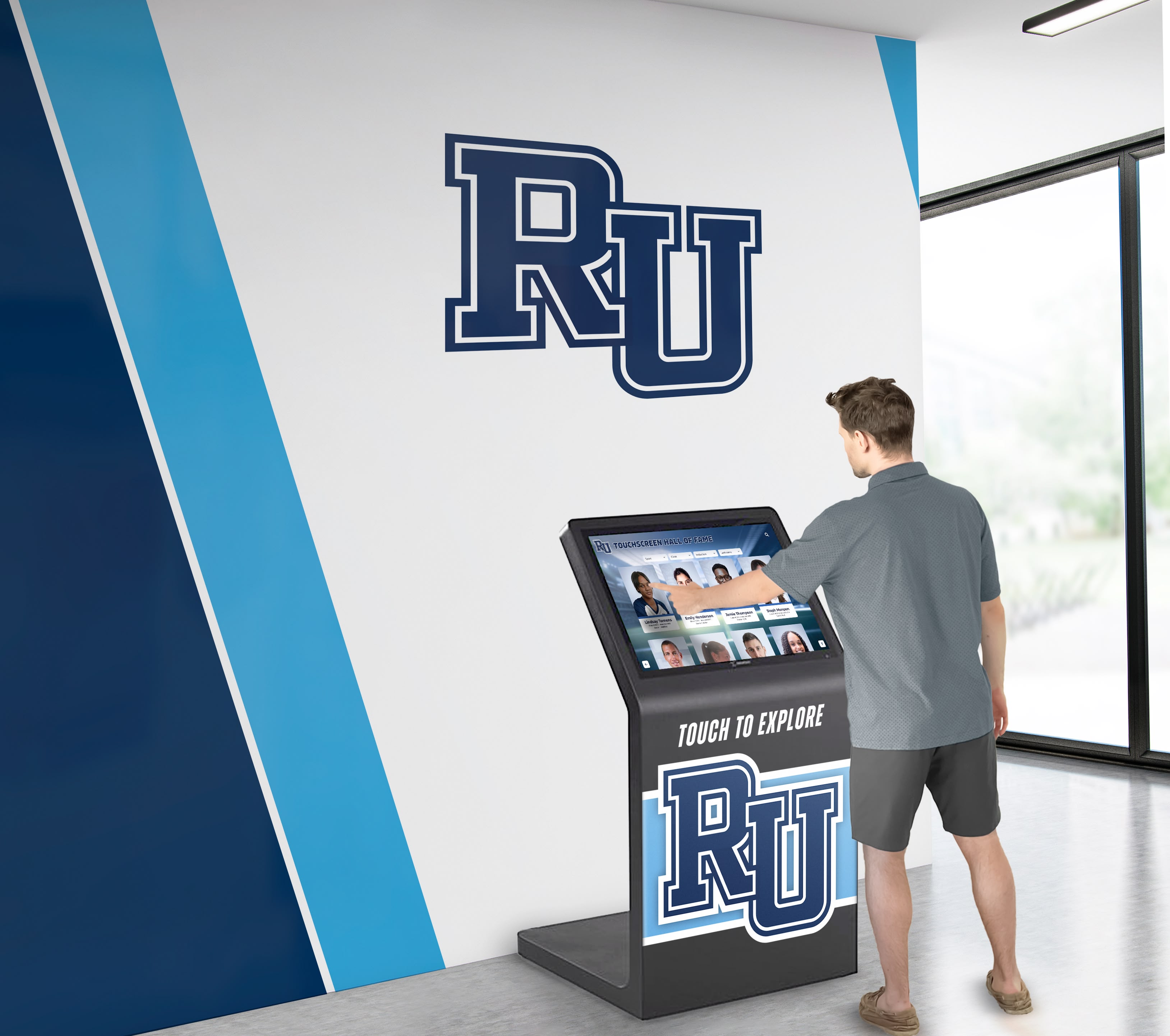
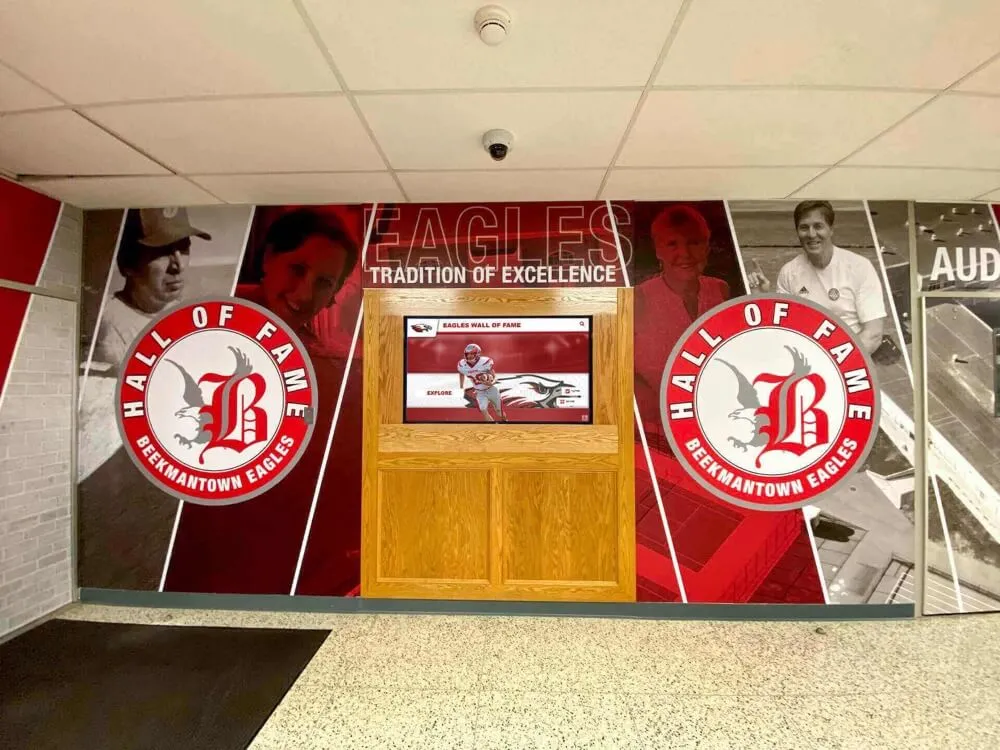
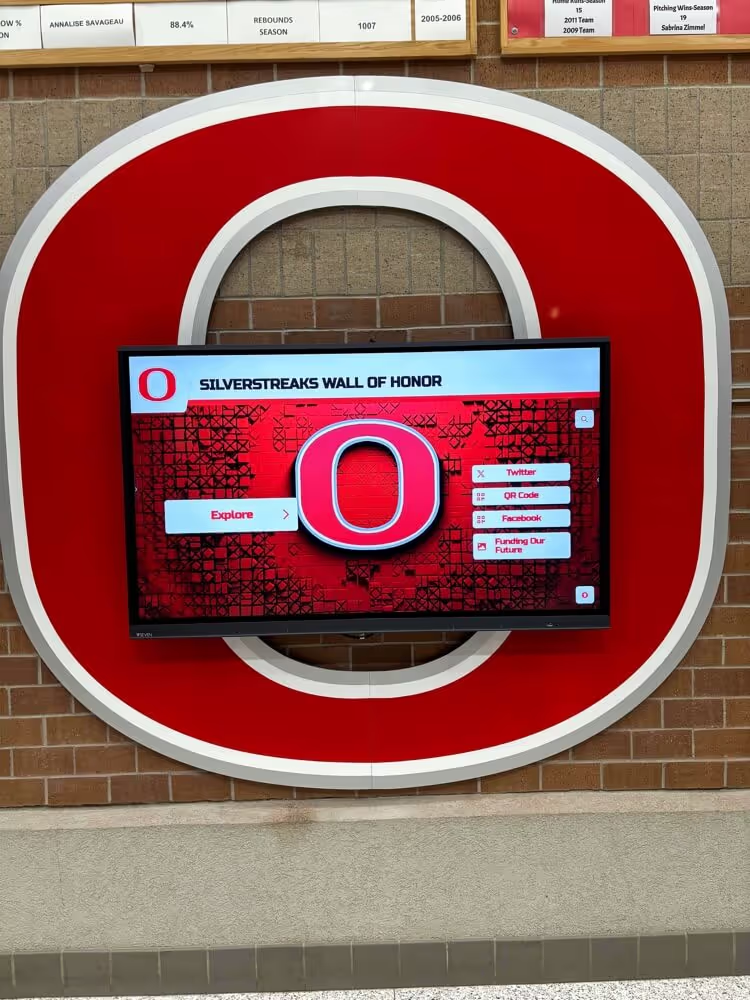
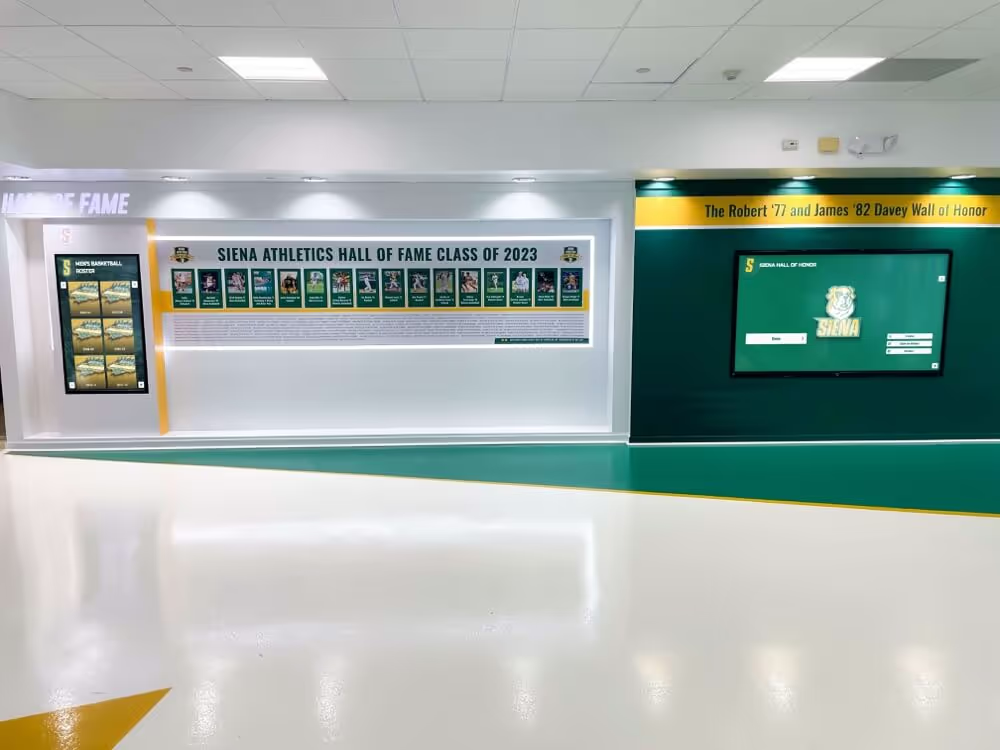
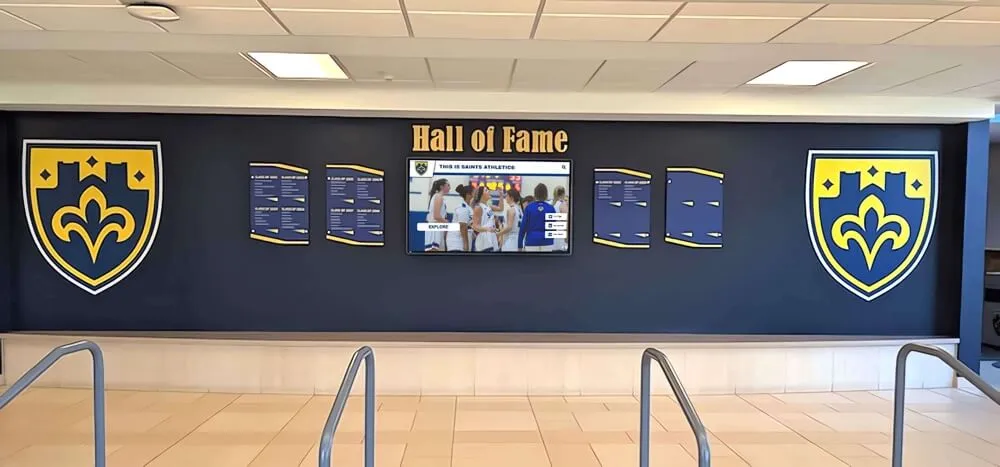
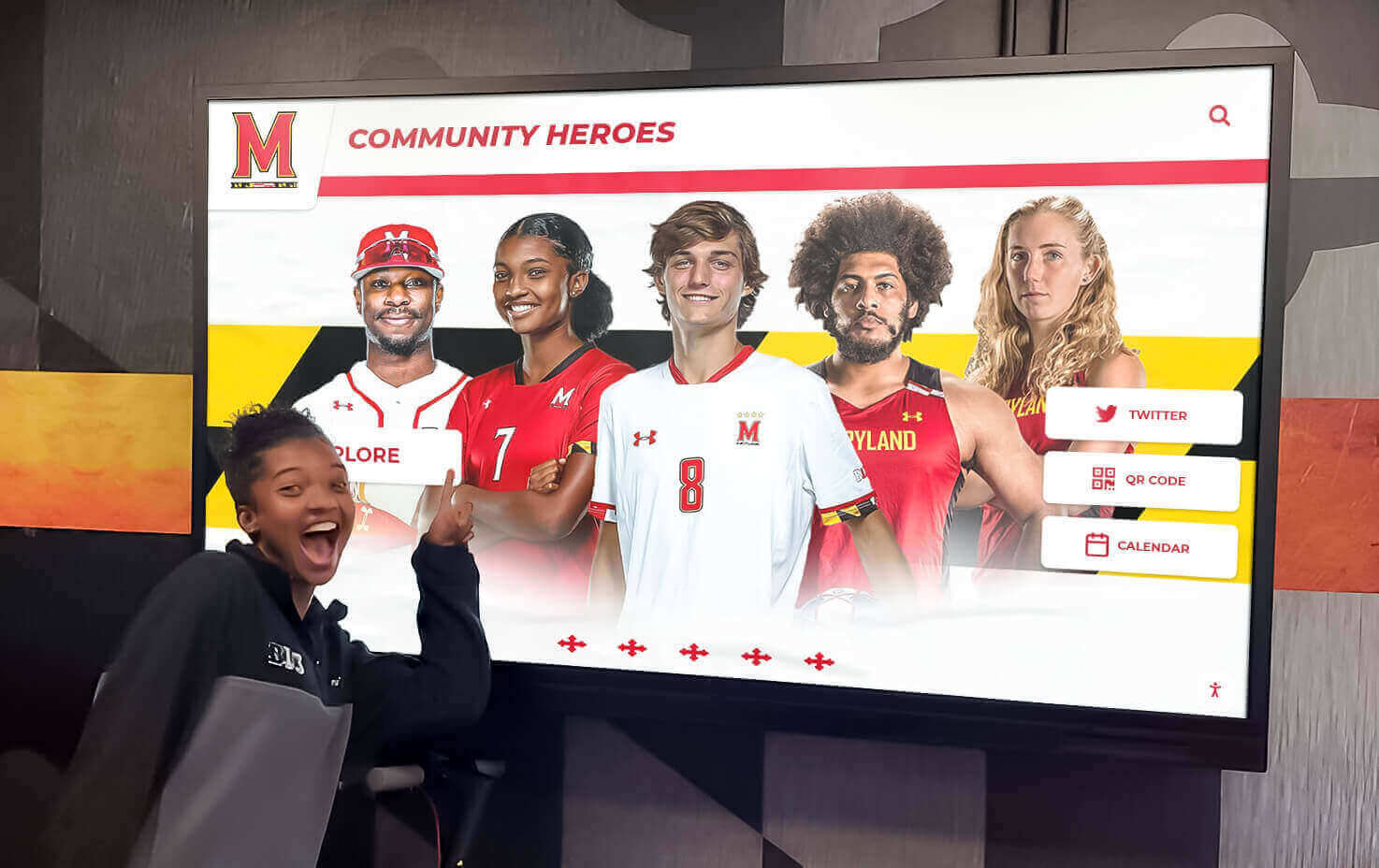
Accessible lobby displays enable continuous recognition of diverse athletic achievements
Perennial Improvement Candidates
Athletes who improve multiple seasons:
- Multi-year improvement awards acknowledging sustained growth
- Different improvement categories for repeat recognition
- Transition to other award categories as players excel
- Special recognition of sustained development commitment
- Senior legacy awards incorporating multi-year improvement
Late-Season Improvement vs. Consistent Development
Balancing dramatic late improvement against steady growth:
- Clear criteria favoring one approach or the other
- Season-long consistency requirements preventing recency bias
- Acknowledgment of when improvement occurred
- Context for late-season improvement circumstances
- Documentation of improvement sustainability beyond season
Injured Athletes’ Improvement Challenges
Injury can complicate improvement measurement:
- Baseline adjustment for post-injury evaluation
- Recognition of rehabilitation commitment and process
- Statistical normalization accounting for limited playing time
- Character and perseverance acknowledgment
- Future improvement potential recognition
- Comeback-specific award categories
Addressing these special cases maintains program integrity while ensuring appropriate recognition.
Integrating Improvement Recognition with Program Culture
Most improved awards work best as part of comprehensive development culture.
Building Development-Focused Team Culture
Improvement recognition should reinforce broader cultural values:
Growth Mindset Communication
Consistent messaging about development:
- Coach rhetoric emphasizing improvement over fixed ability
- Practice structure rewarding skill development effort
- Individual development plan creation for all athletes
- Film sessions highlighting improvement opportunities
- Strength and conditioning program design for progressive development
- Off-season programming focused on individual growth
Celebrating Process Not Just Results
Recognition extending beyond win-loss outcomes:
- Practice performance acknowledgment and feedback
- Skill development milestone celebration
- Effort and attitude recognition independent of results
- Individual goal achievement celebration
- Team meeting highlights of improvement observations
- Daily recognition creating cumulative effect
Creating Safe Environment for Development
Culture permitting mistakes necessary for growth:
- Experimentation encouraged during practice
- Mistakes viewed as learning opportunities
- Supportive feedback emphasizing next step forward
- Peer encouragement of development attempts
- Coach patience with development timeline variance
- Public defense of developing players
Connecting Improvement to Team Success
Link individual development to collective achievement:
Improvement Impact Storytelling
Demonstrate how player development helped team:
- Specific games where improvement proved decisive
- Depth creation through multiple players’ development
- Competitive advantage from opponent surprise at improvement
- Season narrative arc featuring development stories
- Championship or success attribution to improvement culture
- Alumni examples of how improvement launched success
Team Development Recognition
Collective improvement alongside individual awards:
- Team improvement statistics and metrics
- Collective skill development milestones
- Team ranking or standing improvements
- Win-loss record advancement season over season
- Championship progression built on development
- Team depth and competition intensity increases
Recruitment and Program Reputation
Development culture creates competitive advantage:
- Recruiting pitch emphasizing player development commitment
- Parent and athlete appeals based on improvement track record
- Alumni testimonials about development experience
- Facility tours highlighting improvement recognition
- Media coverage of development-focused culture
- Community reputation for maximizing player potential
This integrated approach makes improvement central to program identity rather than isolated award category.
For comprehensive program recognition integrating improvement with achievement, explore interactive display technology creating permanent acknowledgment.
Conclusion: Creating Meaningful Most Improved Recognition
Most improved player awards represent far more than consolation prizes for athletes who didn’t win performance-based recognition. When designed thoughtfully with clear criteria, systematic selection, and meaningful presentation, improvement awards communicate powerful messages about what programs value—messages that resonate throughout teams and create cultures where development is expected, supported, and celebrated.
The recognition strategies explored in this guide provide frameworks for implementing improvement awards that motivate continuous development while honoring athletes whose dedication produced measurable transformation. From establishing objective baseline measurements to creating permanent digital recognition displays, these approaches ensure improvement receives acknowledgment equal to peak performance.
Preserve Your Athletes' Growth Stories
Discover how interactive touchscreen displays can help you permanently celebrate improvement journeys alongside championships, creating lasting inspiration for current and future athletes.
Request a DemoMost importantly, effective improvement recognition creates environments where athletes at all skill levels feel valued and motivated to develop. These programs demonstrate that being part of your program means more than winning championships; it means committing to personal growth, supporting teammates’ development, and contributing to culture where continuous improvement defines excellence.
Whether your program operates with abundant resources or modest budgets, the core elements of meaningful improvement recognition remain constant: clear criteria, fair selection, thoughtful presentation, and permanent preservation ensuring growth stories inspire future athletes. Technology like Touch Archive now enables even resource-constrained programs to provide comprehensive documentation of improvement journeys that previous generations could only achieve through extensive manual record-keeping.
Start building your improvement recognition program today with confidence that systematic attention to criteria definition, selection processes, and celebration approaches will create systems your athletes never forget. Every player who receives heartfelt recognition for their development reinforces your program’s culture and inspires teammates to commit themselves fully to continuous growth.
Ready to transform how your program honors athlete development? Explore Touch Archive solutions for comprehensive athletic recognition and team history preservation, or request a demo to see how improvement stories can be preserved and celebrated permanently through interactive displays that engage current teams and inspire future athletes alike.