National High School Football Hall of Fame: History, Inductees, and How to Nominate
- Home /
- Touch Archive Blog /
- National High School Football Hall of Fame: History, Inductees, and How to Nominate

The Easiest Touchscreen Solution




Live Example: Rocket Alumni Solutions Touchscreen Display
Interact with a live example (16:9 scaled 1920x1080 display). All content is automatically responsive to all screen sizes and orientations.
High school football represents more than Friday night games—it shapes communities, builds character, and launches countless athletes toward collegiate and professional success. The National High School Football Hall of Fame stands as the sport’s ultimate recognition, honoring exceptional coaches, players, and contributors who elevated high school football to its current prominence across American culture.
Established to preserve the legacy of high school football’s greatest figures, this institution celebrates individuals whose impact transcended wins and losses to fundamentally shape how the sport is played, coached, and experienced at the scholastic level. From legendary coaches who built dynasty programs to innovative players who redefined positions, the hall preserves stories that inspire current generations while documenting the sport’s rich history.
Understanding the hall of fame’s history, notable inductees, and nomination process helps schools, communities, and families recognize deserving individuals while appreciating how modern digital display technology ensures these legacies remain accessible to future generations who will carry high school football forward.
The National High School Football Hall of Fame honors individuals whose contributions to scholastic football merit permanent recognition, preserving their achievements through comprehensive historical records and engaging displays that connect past excellence with present aspiration.

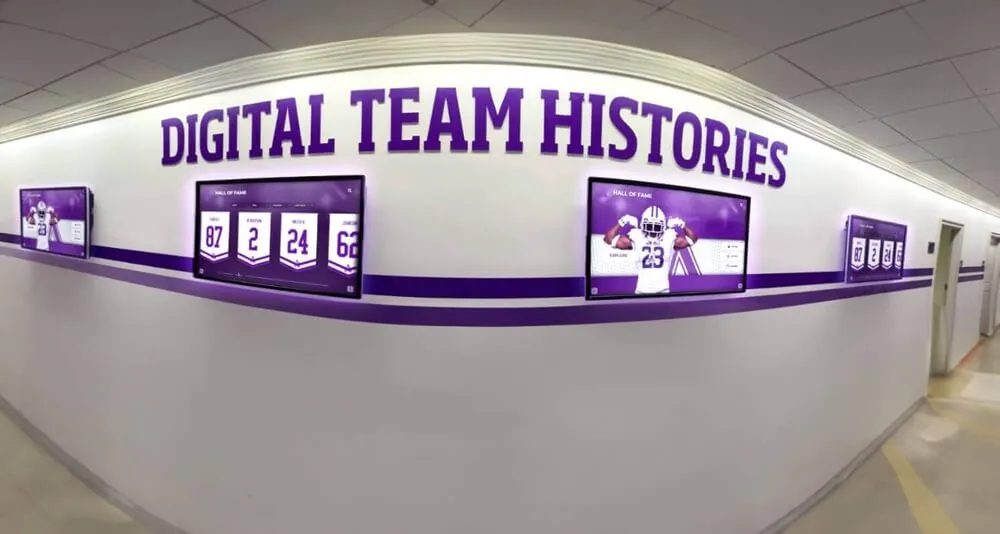
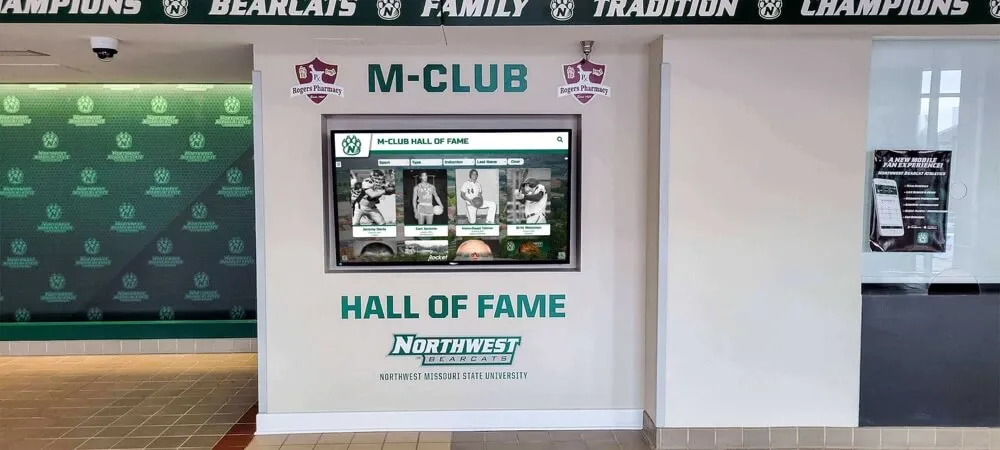
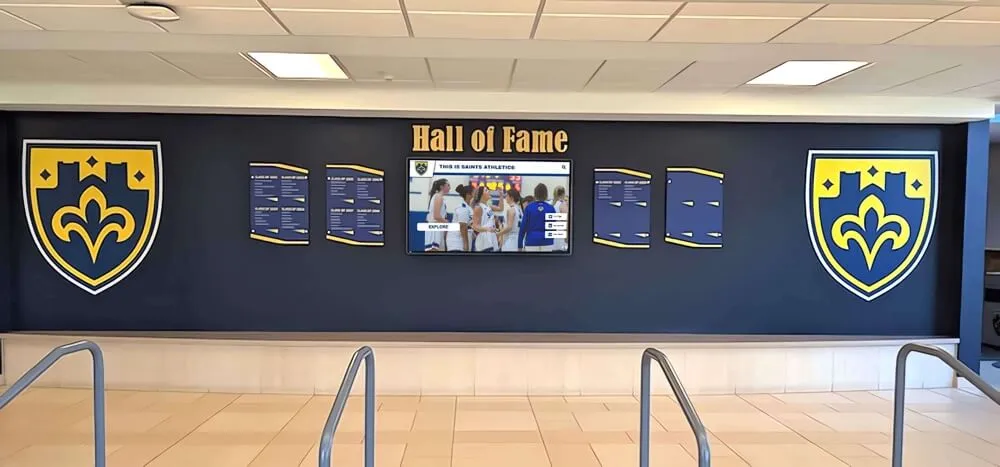
Modern digital displays preserve football hall of fame legacies while making achievements accessible to students, visitors, and alumni
History of the National High School Football Hall of Fame
Understanding the hall’s origins provides context for its mission and significance within scholastic athletics.
Founding and Mission
The National High School Football Hall of Fame was established to recognize and preserve the history of outstanding high school football coaches, players, and contributors who demonstrated exceptional achievement and character while advancing the sport at the scholastic level. Unlike professional or collegiate halls of fame that celebrate success at higher competitive tiers, this institution specifically honors excellence achieved during high school careers.
The hall’s mission centers on three core objectives:
Preservation of History
- Document the evolution of high school football across different eras
- Maintain comprehensive records of significant achievements and innovations
- Preserve stories that might otherwise be lost as generations pass
- Create accessible archives for researchers, journalists, and historians
- Ensure regional diversity in recognition across all areas of the country
Recognition of Excellence
- Honor coaches who built successful programs and mentored thousands of young athletes
- Celebrate players whose high school achievements demonstrated exceptional ability
- Acknowledge contributors who supported high school football through various roles
- Maintain rigorous standards ensuring inductees represent the sport’s highest ideals
- Balance athletic achievement with character and sportsmanship requirements
Inspiration for Future Generations
- Provide role models demonstrating excellence both on and off the field
- Showcase the positive impact high school football has on communities
- Encourage current players and coaches to pursue their own excellence
- Demonstrate how high school experiences shape lifelong success
- Connect historical achievement with contemporary programs
Evolution and Growth
Since its founding, the hall has expanded its scope, refined selection criteria, and enhanced how it preserves and presents inductee legacies to broader audiences.
The institution initially focused primarily on coaches who achieved extraordinary career success measured through championship victories and career longevity. Over time, recognition expanded to include players whose high school careers demonstrated exceptional achievement, as well as contributors in various supporting roles who advanced the sport through innovation, advocacy, or service.
Geographic representation evolved to ensure the hall reflects high school football’s national scope rather than favoring particular regions. Early inductee classes sometimes overrepresented traditional football powerhouse states, but conscious efforts toward balance now ensure deserving individuals from all areas receive consideration based purely on merit.
Similar to how schools develop comprehensive hall of fame selection criteria for their own programs, the national hall regularly reviews and refines standards to maintain relevance and fairness across changing eras of the sport.
Impact on High School Football Culture
The hall’s existence elevates high school football’s significance within American sports culture. Recognition at this level validates that scholastic achievement merits celebration independent of whether athletes advance to college or professional levels.
Cultural Significance:
- Legitimizes high school football as worthy of serious historical study
- Provides national recognition platform for regional excellence
- Creates shared identity among high school football communities nationwide
- Establishes benchmarks for exceptional achievement at scholastic level
- Encourages comprehensive record-keeping at individual schools

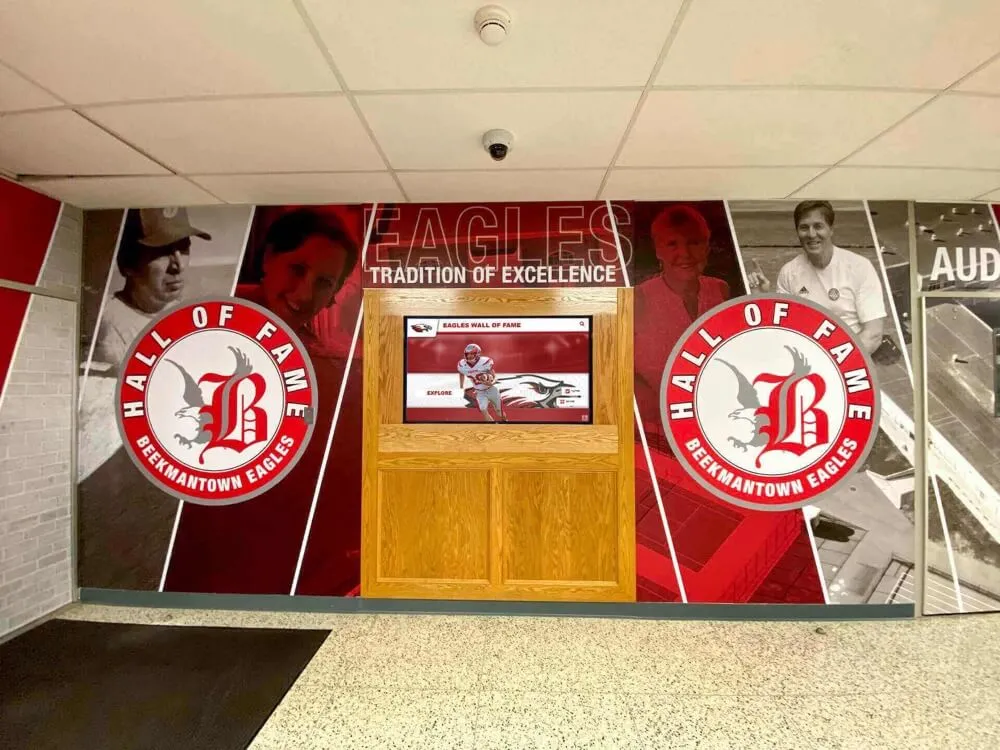
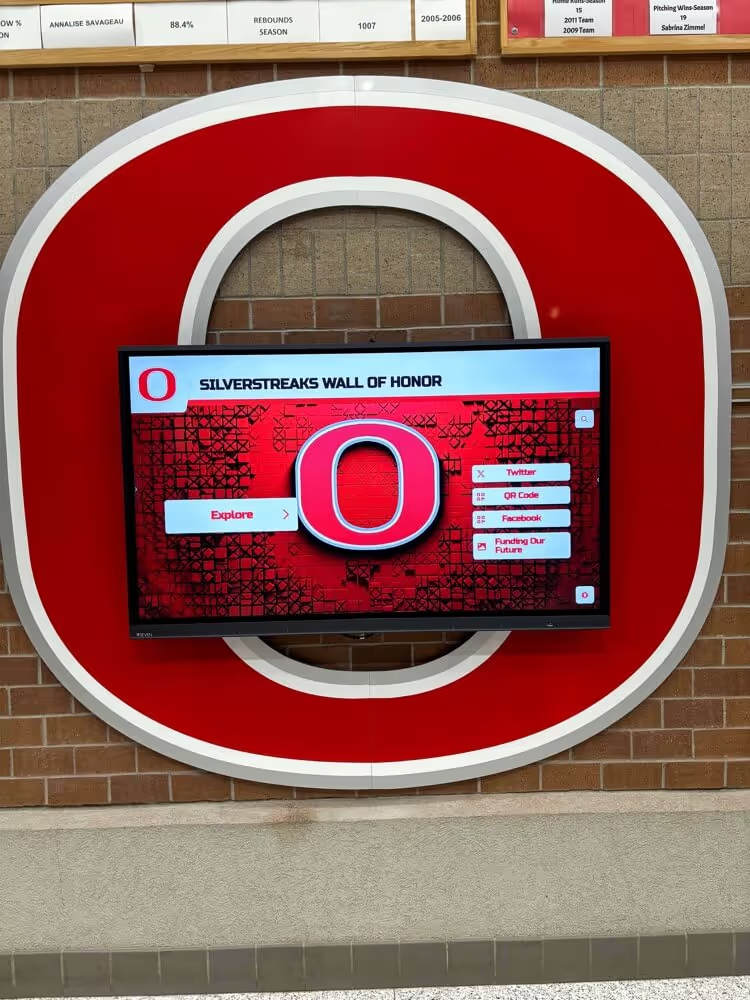
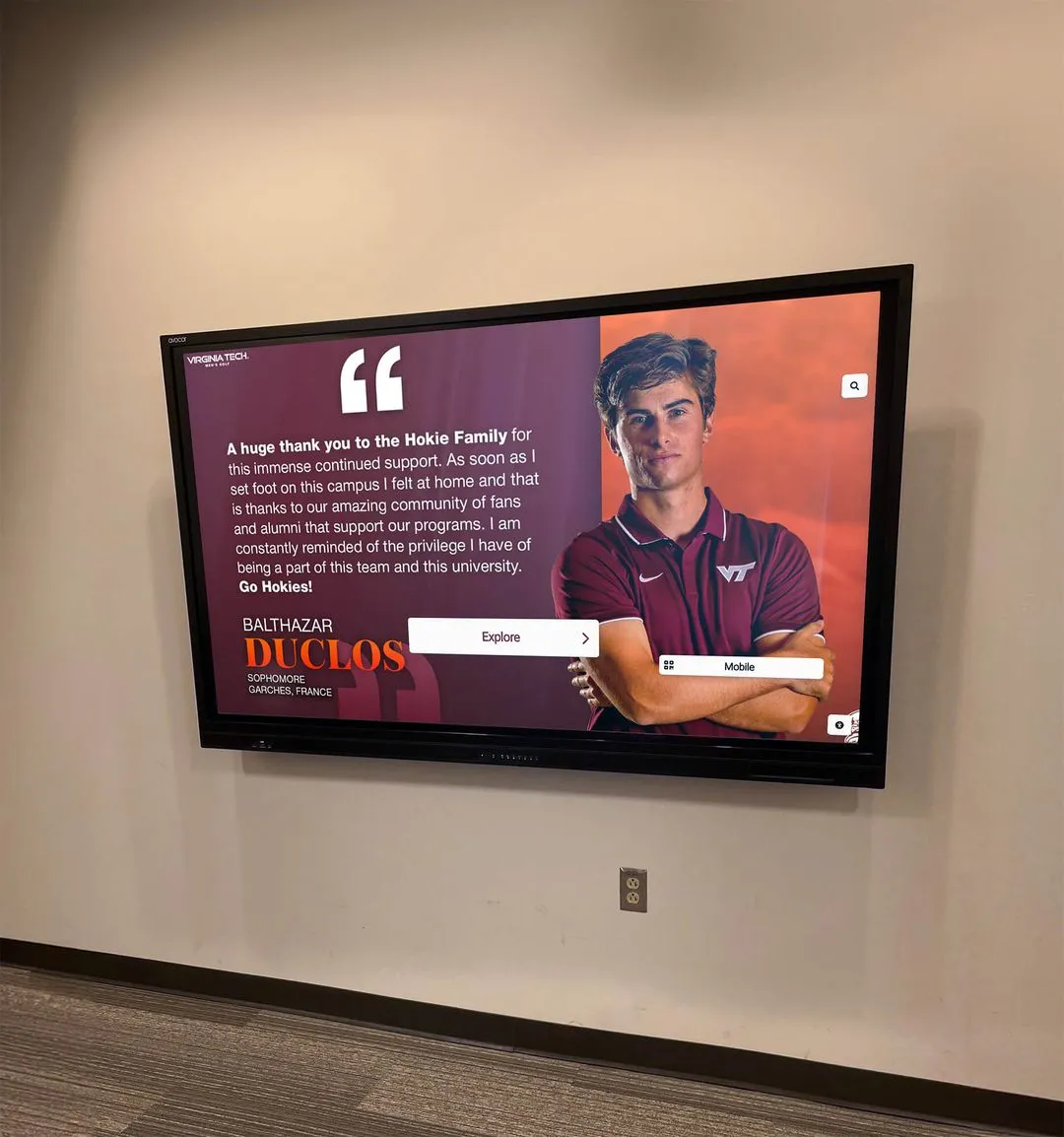
Interactive displays enable visitors to explore hall of fame inductees and their achievements in depth
Notable Inductee Categories
The hall recognizes excellence across multiple categories, each with specific criteria reflecting different forms of contribution to high school football.
Legendary Coaches
Coaching inductees represent individuals who built exceptional programs, mentored countless athletes, and advanced coaching methodology at the high school level.
Coaching Achievement Criteria:
- Extended career longevity demonstrating sustained excellence
- Championship success at state or national levels
- Significant winning percentage over complete career
- Development of athletes who achieved success at higher levels
- Innovation in coaching techniques, strategies, or program development
- Positive influence on players’ character development and life success
- Contributions to coaching education or professional development
The most successful high school football coaches combined tactical expertise with mentorship abilities that shaped young men beyond athletic achievement. Many inductees coached for three, four, or even five decades at the same institution, building programs that became community institutions while maintaining consistency across generations of players.
Program Building Legacy: Coaching inductees often transformed struggling programs into powerhouses through systematic development of culture, facilities, feeder programs, and community support. Their legacies extend beyond personal coaching records to institutional foundations that sustained success long after their retirements.
Exceptional Players
Player inductees demonstrated extraordinary athletic ability and achievement during their high school careers, regardless of subsequent collegiate or professional success.
Player Achievement Standards:
- Exceptional statistical achievement in measurable performance categories
- All-American or national recognition during high school career
- State championship contributions or individual state titles
- Record-setting performances at state or national levels
- Dominance within their conference, region, or classification
- Position innovation or exceptional versatility
- Character and sportsmanship throughout high school career
The hall specifically evaluates players based on high school achievement rather than professional success. A player who dominated at the scholastic level but never played beyond high school merits equal consideration to one who eventually reached the NFL, provided their high school achievements meet induction standards.
Positional Excellence: Recognition spans all positions from quarterbacks and running backs to linemen and defensive specialists. The hall ensures positional diversity, acknowledging that excellence manifests differently across various roles on the field.

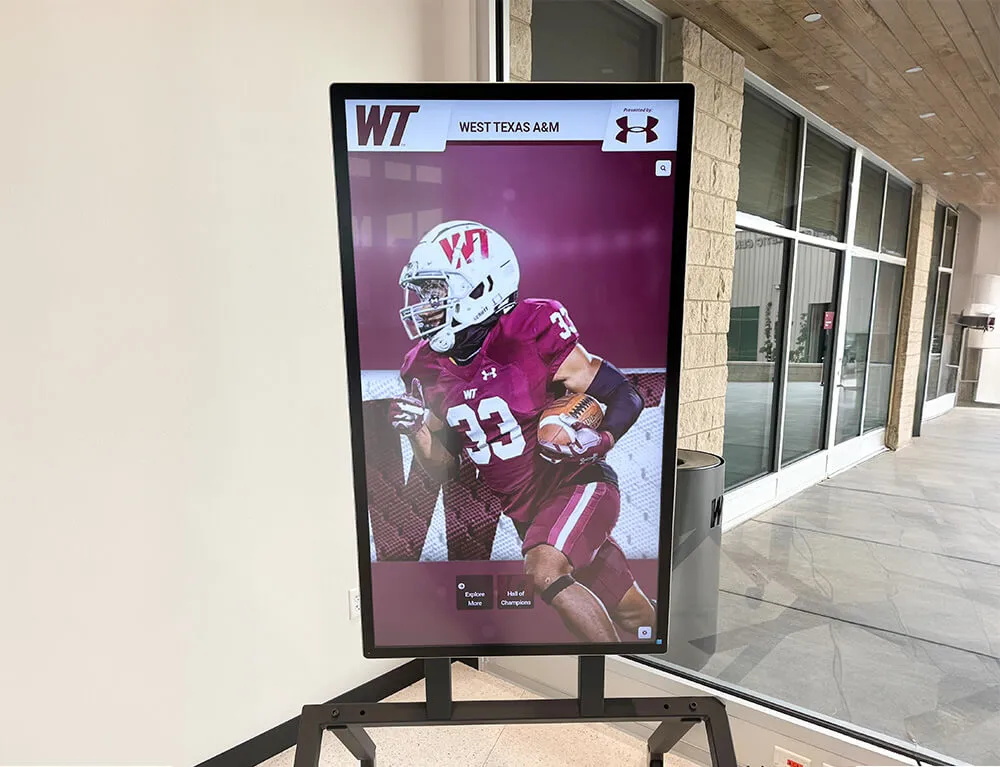
Digital platforms showcase comprehensive player profiles with statistics, photos, and career narratives
Contributors and Innovators
Beyond coaches and players, the hall recognizes individuals whose contributions advanced high school football through other roles.
Contributor Categories:
- Athletic directors who built exceptional football programs and facilities
- Officials who advanced rule interpretation and game administration
- Medical professionals who improved player safety and care
- Journalists who documented and promoted high school football
- Administrators who advocated for scholastic athletics
- Equipment innovators who enhanced safety or performance
- Benefactors who funded programs, facilities, or opportunities
These inductees often worked behind the scenes, yet their contributions proved essential to high school football’s development and success. Recognition in this category acknowledges that exceptional programs require support systems extending far beyond coaching and playing.
The Nomination Process
Understanding how to nominate deserving individuals ensures worthy candidates receive consideration for this prestigious recognition.
Eligibility Requirements
Before submitting nominations, confirm candidates meet basic eligibility criteria:
General Requirements:
- Candidates must have been involved in high school football at some point in their career
- Sufficient time must have passed since their high school involvement (specific waiting periods vary by category)
- Candidates must have demonstrated character and integrity consistent with hall values
- Achievements must be documented and verifiable through records
- Candidates must not be under disciplinary sanctions or involved in serious controversies
Category-Specific Criteria:
Coaches:
- Typically require minimum coaching tenure (often 20+ years at high school level)
- Must demonstrate significant career winning percentage
- Should have championship or playoff success
- Need documented impact on athletes’ development
Players:
- Usually require 5-10 year waiting period after high school graduation
- Must have achieved significant recognition during high school career
- Should have statistical or achievement records documenting excellence
- Character requirements throughout and after high school career
Contributors:
- Must have made significant, sustained contributions to high school football
- Impact should extend beyond single program or season
- Contributions should be innovative or exceptional in scope
- Typically require extended period of service or support
Schools developing their own recognition systems can learn from these standards when establishing hall of fame selection criteria for their programs.
Submitting Nominations
The nomination process requires thoughtful preparation and comprehensive documentation:
Nomination Materials:
- Completed official nomination form with candidate biographical information
- Detailed career summary highlighting achievements and qualifications
- Statistical records documenting performance or success
- Supporting letters from individuals with direct knowledge of candidate’s achievements
- Contemporary news articles, programs, or other documentation
- Photographs from candidate’s era
- Explanation of candidate’s impact and legacy
Documentation Standards: Strong nominations provide specific, verifiable details rather than general claims. Include precise statistics, dates, championships, records, and measurable achievements. Contemporary documentation from the candidate’s era carries more weight than retrospective assessments.
Submission Process:
- Nominations typically follow annual cycles with specific deadlines
- Submit materials through official channels (physical mail or online portals)
- Ensure all required components are included to avoid disqualification
- Maintain copies of all submission materials for reference
- Follow up to confirm receipt if not acknowledged within reasonable timeframe
Who Can Nominate: Most hall of fame programs accept nominations from various sources:
- Former players or coaching colleagues who witnessed achievements firsthand
- Family members of deserving candidates
- School administrators or athletic directors
- Alumni associations or booster organizations
- Community members familiar with candidate’s contributions
- Media members who covered candidate’s era
- Historical societies or researchers
Selection Committee Review
Understanding the evaluation process helps nominators provide relevant information:
Committee Composition: Selection committees typically include diverse representatives:
- Former coaches with high school football experience
- Athletic administrators from various regions
- Media members covering scholastic athletics
- Current or former hall of fame inductees
- Historians or researchers specializing in high school sports
Evaluation Criteria: Committees assess candidates against published standards, compare achievements to previous inductees, consider era-specific context, evaluate character and integrity, and review supporting documentation quality.

Digital systems organize inductee information in searchable, accessible formats
Voting Process: Most selection processes involve multiple voting rounds:
- Initial screening eliminates candidates clearly not meeting minimum criteria
- Detailed evaluation of qualified candidates with committee discussion
- Preliminary voting to identify top candidates
- Final voting determining induction class
- Typical class sizes range from 5-12 inductees annually
Timeline:
- Nomination period closes (varies, often late fall or winter)
- Committee review and evaluation period (2-4 months)
- Selection announcement (typically spring)
- Induction ceremony (often summer or fall)
Similar to how schools manage athletic recognition programs and award presentations, the national hall maintains systematic processes ensuring fair, consistent evaluation of all candidates.
Preserving Hall of Fame Legacies Through Digital Displays
Modern technology transforms how hall of fame inductees are recognized and their stories preserved for future generations.
Limitations of Traditional Physical Recognition
Physical plaques and trophy cases present significant constraints for hall of fame programs:
Space Exhaustion: Programs inducting 5-10 individuals annually quickly exhaust available wall space. Within 15-20 years, physical displays fill completely, forcing difficult decisions about which inductees receive prime visibility versus secondary locations.
Limited Information Capacity: Traditional plaques typically accommodate 50-100 words maximum—barely sufficient for names, dates, and brief achievement summaries. This brevity fails to tell complete stories or provide context that helps visitors understand inductees’ significance.
Maintenance Challenges: Physical displays require ongoing polishing, repair, and reorganization. Plaques fade, tarnish, or suffer damage over time. Updating information when errors are discovered proves difficult or expensive.
Accessibility Barriers: Static displays offer no search functionality. Finding specific inductees among hundreds of plaques requires walking entire displays. Visitors cannot easily explore connections between inductees or filter by position, era, or achievement type.
Cost Escalation: Quality plaques cost $150-400 each. Programs inducting eight individuals annually spend $1,200-3,200 yearly on physical recognition alone, accumulating substantial costs over decades while still facing inevitable space limitations.
Digital Display Solutions Transform Recognition
Interactive touchscreen displays eliminate traditional constraints while enhancing how inductee legacies are preserved and presented:
Unlimited Capacity: Digital systems accommodate infinite inductees without physical space constraints. Programs can induct deserving individuals annually for decades without worrying about display capacity. Solutions like those from Rocket Alumni Solutions support unlimited profiles, ensuring programs never face space limitations.
Comprehensive Storytelling: Digital platforms showcase complete inductee narratives:
- Full biographical information and career timelines
- Detailed statistics and achievement records across entire careers
- Multiple photographs from playing/coaching days through present
- Video highlights, game footage, or acceptance speeches
- Quotes from colleagues, players, or media members
- Career statistics compared to other inductees or historical benchmarks
- Post-high school accomplishments and life achievements
- Family background and personal stories
Advanced Discovery Features: Visitors can search by name, year, position, team, or keyword. Filter inductees by decade, achievement category, or championship teams. Explore related inductees through shared teams or eras. Timeline views show career progressions and historical context.
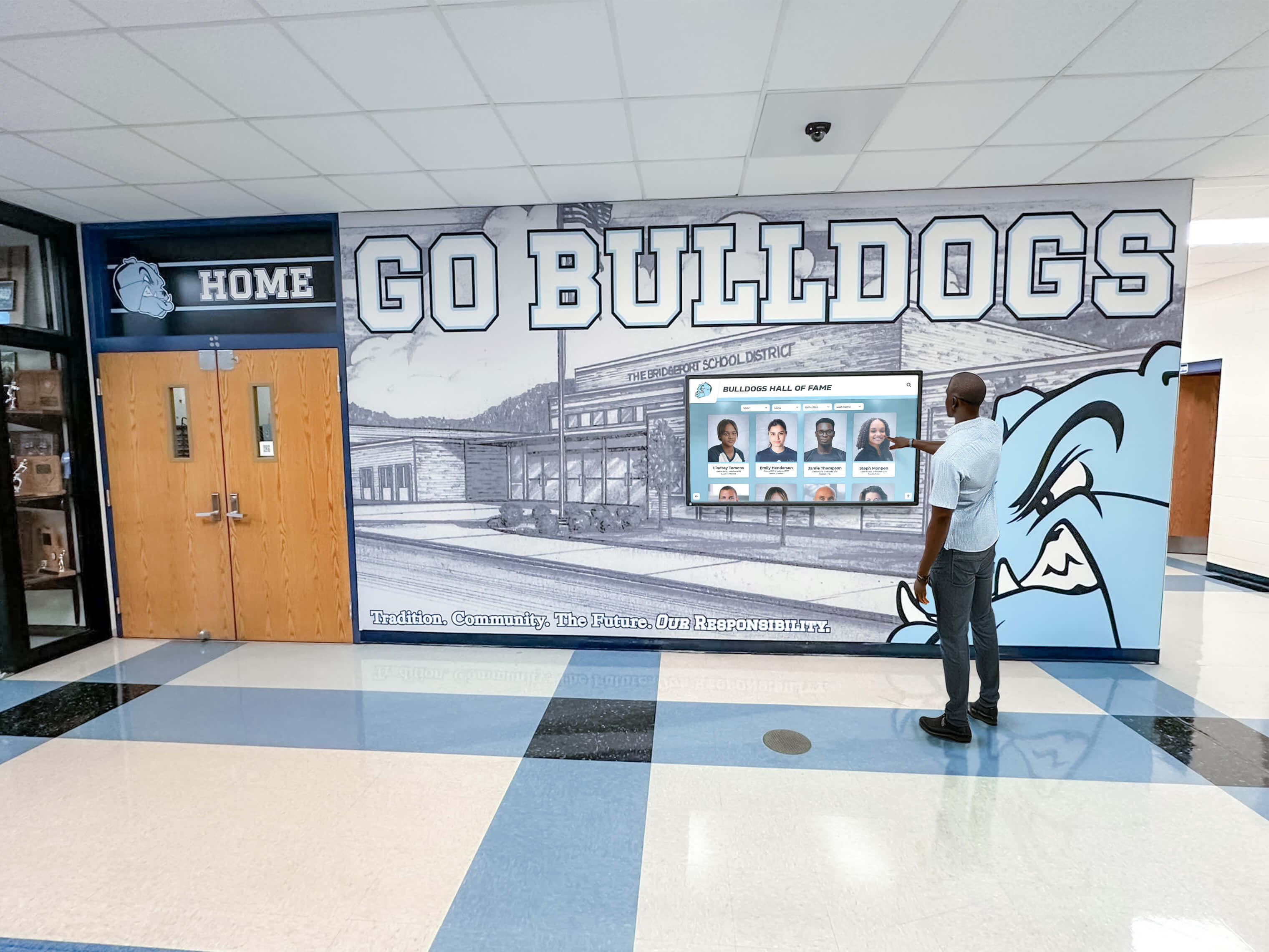
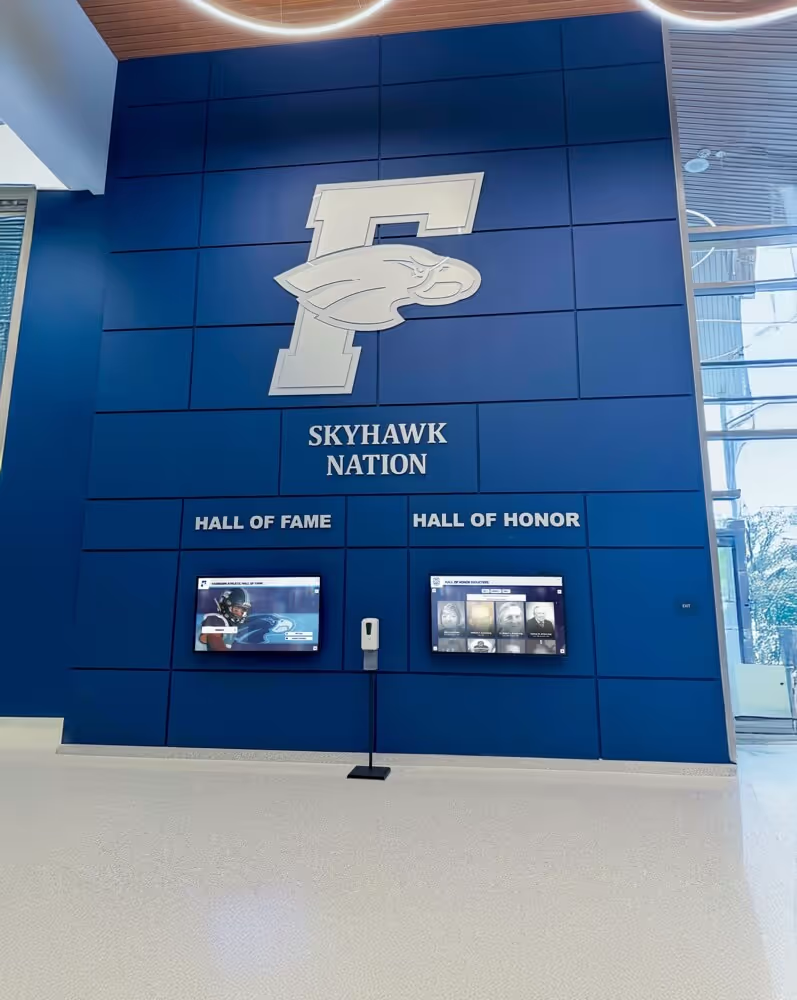
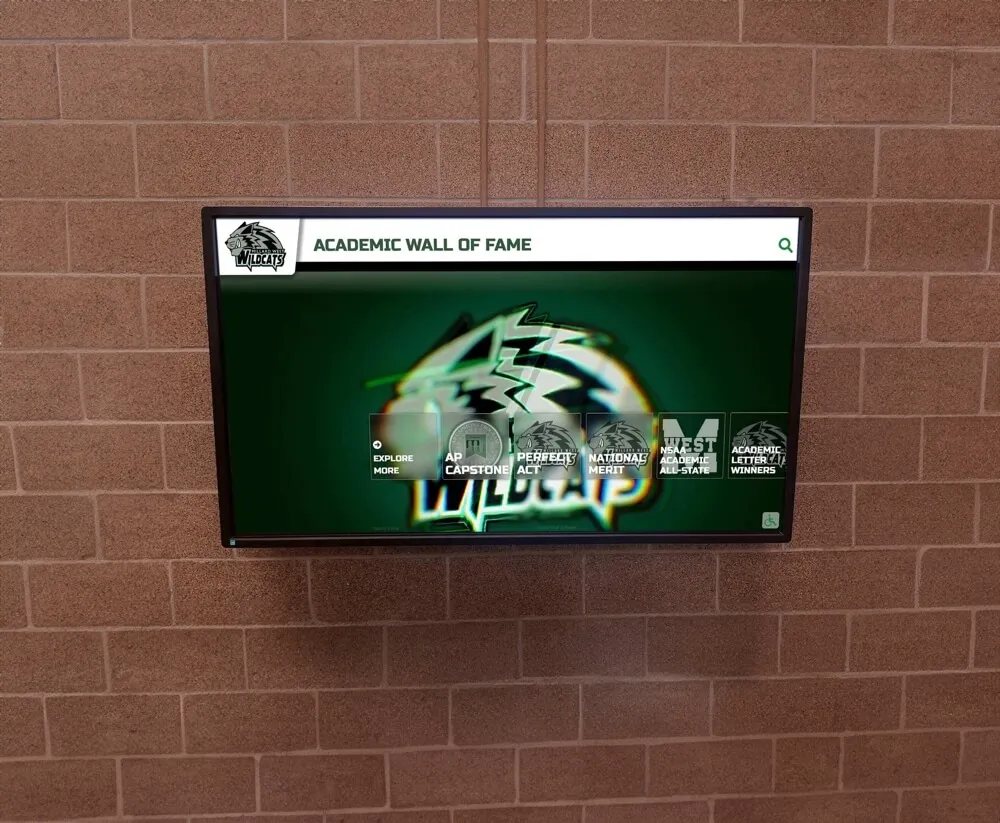
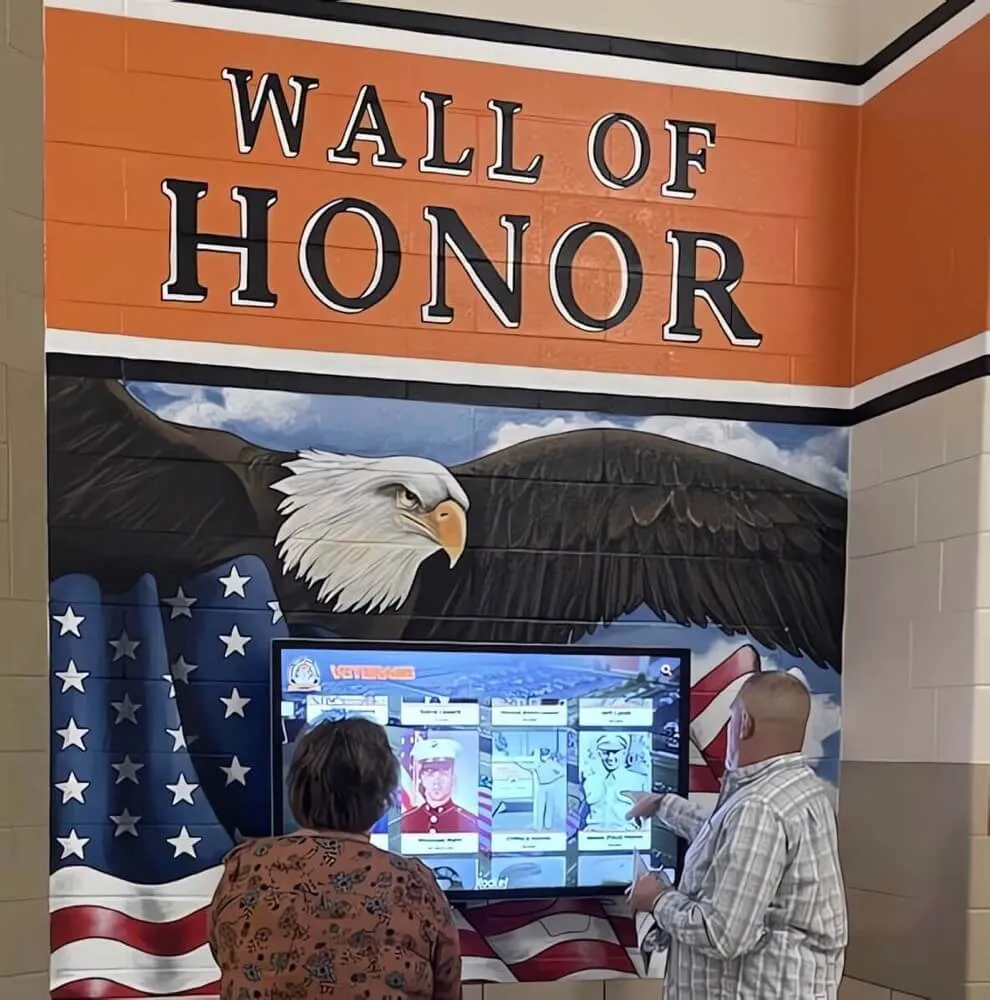
Digital displays engage students with athletic history while preserving legacies permanently
Dynamic Content Management: Digital platforms enable ongoing updates:
- Correct errors or add newly discovered information
- Include recent accomplishments of living inductees
- Add photographs or videos obtained after initial induction
- Update biographical details as inductees’ careers progress
- Feature special tributes or anniversary recognitions
Multi-Platform Access: Digital content extends beyond physical displays to web-based platforms accessible globally. Alumni can explore hall of fame inductees from anywhere. Social media integration enables sharing inductee stories. Mobile apps provide on-demand access to complete archives.
Much like how schools consider comprehensive recognition display solutions for various programs, national and school-level football halls benefit from technology designed specifically for honoring athletic achievement.
Implementing Digital Hall of Fame Displays
Schools and organizations transitioning to digital recognition should consider several factors:
Content Development:
- Gather historical information, statistics, and photographs for existing inductees
- Establish content templates ensuring consistency across profiles
- Assign responsibility for ongoing content creation and updates
- Create workflows for adding new inductees annually
- Develop quality standards for images, videos, and written content
Display Placement:
- Install in high-traffic locations where visitors naturally congregate
- Consider multiple displays throughout athletic facilities
- Ensure adequate lighting and viewing angles
- Provide comfortable viewing experiences for various heights
- Integrate with existing recognition displays or trophy cases
Technical Considerations:
- Select appropriate screen sizes (typically 43"-75" for hall of fame applications)
- Ensure reliable network connectivity for content updates
- Plan for power requirements and mounting infrastructure
- Consider touchscreen versus non-interactive displays
- Evaluate weather resistance if outdoor installation planned
Long-Term Sustainability:
- Establish budget for ongoing subscriptions or maintenance
- Train multiple staff members on content management systems
- Plan for periodic hardware refreshes as technology evolves
- Maintain backup copies of all digital assets
- Document processes for seamless transitions when personnel change
Schools exploring digital recognition technology can review creative award and recognition program ideas that demonstrate how various organizations leverage modern displays.
School-Level Football Hall of Fame Programs
While the National High School Football Hall of Fame recognizes exceptional individuals nationwide, many schools maintain their own institutional halls celebrating local football excellence.
Developing School Hall of Fame Programs
Schools establishing football-specific or broader athletic halls of fame benefit from clear frameworks:
Program Structure:
- Define whether football receives dedicated hall or integrates with all-sport athletic recognition
- Establish separate categories for players, coaches, teams, and contributors
- Determine annual induction class sizes based on school history and candidate pool
- Create nomination and selection processes appropriate to school size
- Plan recognition displays and induction ceremonies
Selection Criteria Aligned with School Scale: Large schools with extensive football histories may require state championship appearances or all-state honors for player eligibility. Smaller schools might recognize conference championships or all-conference selections as equivalent achievements given more limited competitive contexts.
The key lies in establishing standards that identify truly exceptional achievement within each school’s specific competitive environment. Similar principles apply as schools develop criteria for various recognition programs and awards.
Connecting School and National Recognition
Schools with inductees in the national hall can create powerful connections:
Highlighting National Inductees:
- Feature national hall of fame inductees prominently in school displays
- Create dedicated sections celebrating nationally recognized individuals
- Use national recognition as inspiration for current players
- Document path from school program to national recognition
- Maintain updated information about alumni achieving national honors
Building Pipeline for Future National Recognition: Schools that produced national hall of fame inductees can position themselves as destinations for athletes aspiring to similar recognition. Highlighting this legacy during recruiting and program promotion demonstrates program excellence and tradition.

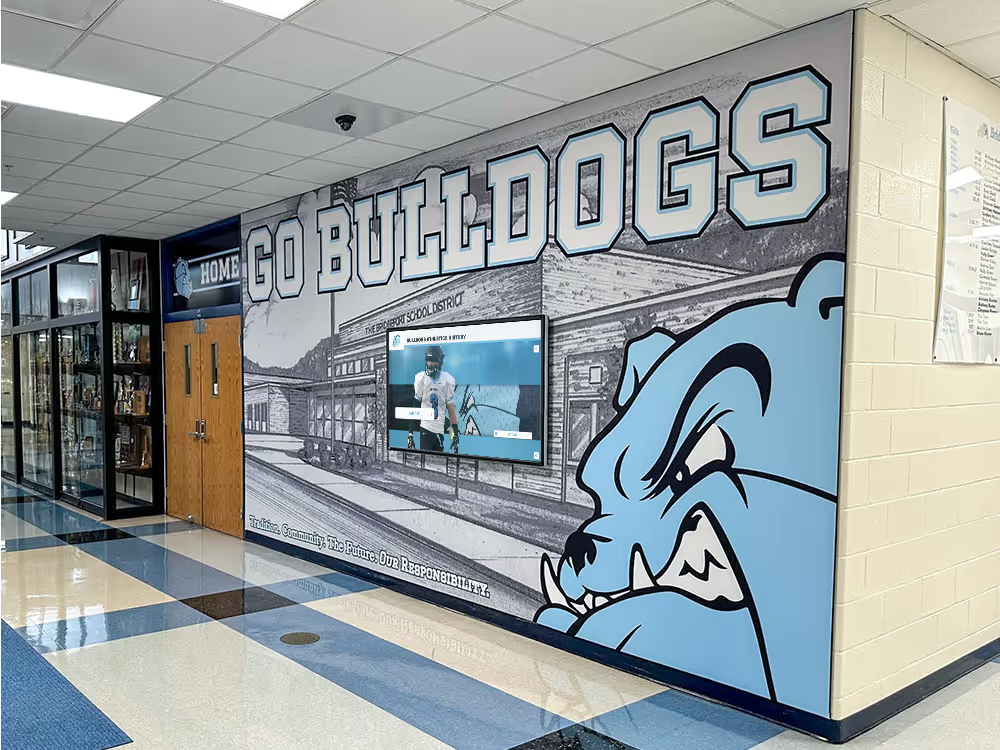
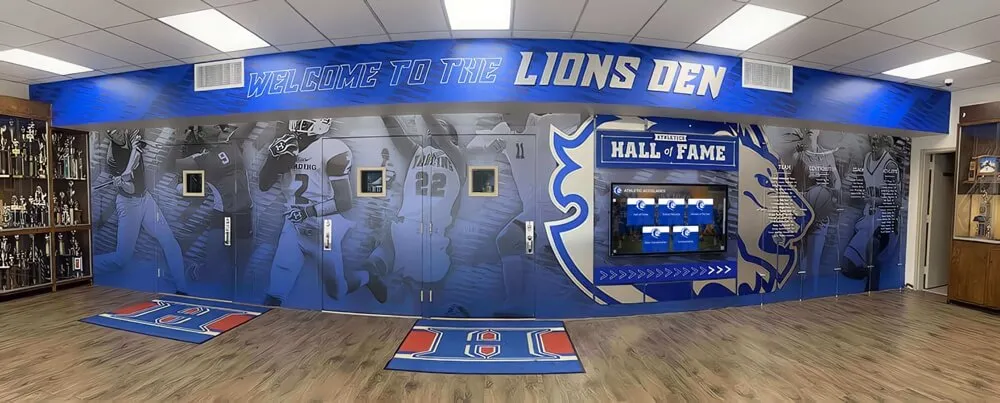
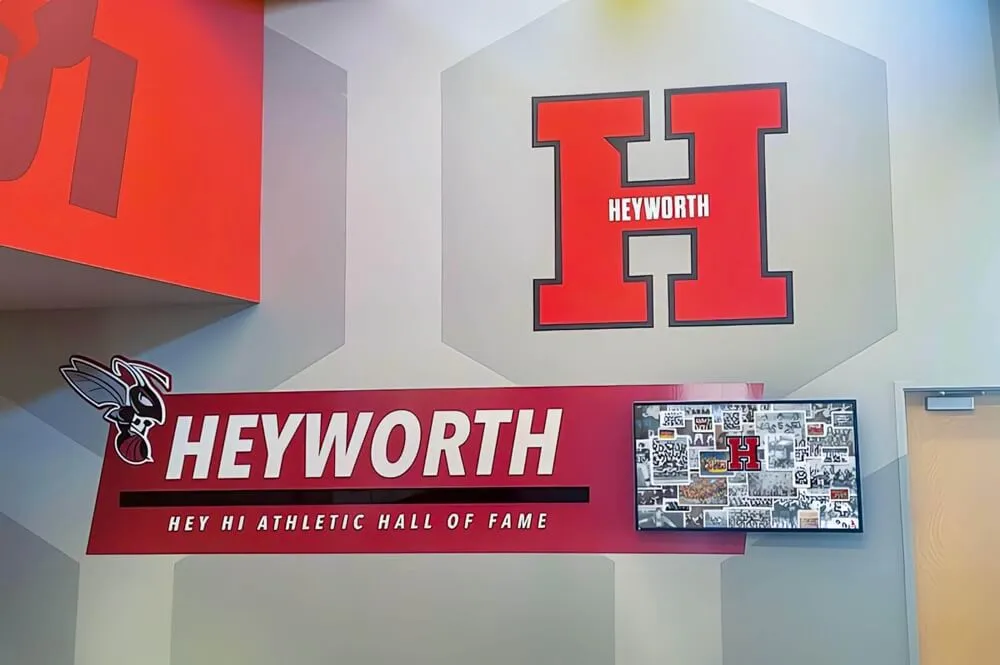
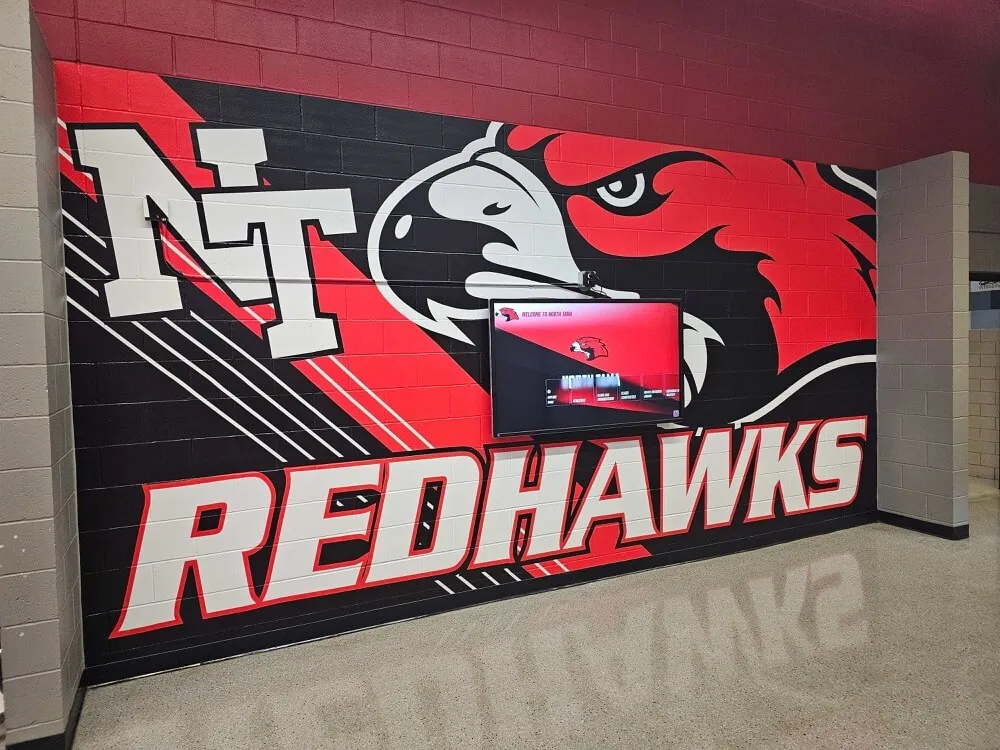
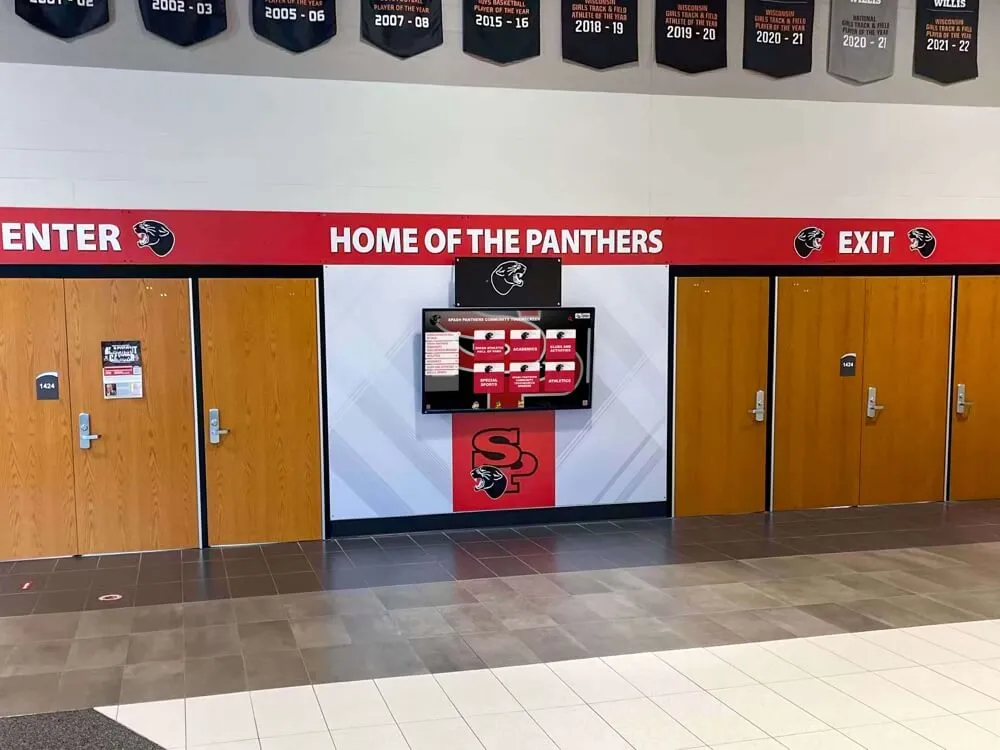
School hallways become powerful recognition spaces combining traditional murals with digital content systems
The Future of Hall of Fame Recognition
Hall of fame programs continue evolving as technology, cultural values, and athletic competition develop.
Expanding Recognition Categories
Modern hall of fame programs increasingly recognize diverse contributions:
Broader Achievement Recognition:
- Women’s contributions to football programs (coaches, administrators, contributors)
- Support staff roles essential to program success
- Student managers and team support personnel
- Medical professionals ensuring player safety
- Media members documenting program history
- Community members enabling program success
Achievement Beyond Wins:
- Innovation in coaching, training, or strategy
- Impact on player development and life success
- Advancement of player safety or welfare
- Promotion of sportsmanship and character
- Contributions to football’s positive community role
Technology Integration
Digital platforms continue enhancing how halls preserve and present inductee legacies:
Emerging Capabilities:
- Augmented reality experiences bringing historical figures to life
- Interactive timelines showing career progressions and historical context
- Video interview archives capturing inductees’ stories in their own words
- Social media integration enabling community engagement
- Data visualization showing statistical achievements in context
- Mobile apps providing on-demand access to complete hall of fame content
Organizations can explore how digital signage and interactive display software enables advanced recognition capabilities beyond traditional static displays.
Accessibility and Inclusion
Future hall of fame programs will prioritize ensuring all community members can engage with recognition content:
Universal Design Principles:
- WCAG accessibility standards ensuring displays work for visitors with disabilities
- Multiple language support serving diverse communities
- Content available in various formats (text, audio, video)
- Touchscreen interfaces accommodating various motor abilities
- Placement ensuring physical accessibility for wheelchair users
Geographic and Demographic Inclusion: Conscious evaluation of whether recognition truly represents diverse achievement across:
- All geographic regions rather than traditional powerhouse areas
- Various competitive classifications and school sizes
- Urban, suburban, and rural programs
- Different eras of the sport’s evolution
- Diverse racial, ethnic, and cultural backgrounds
Celebrating High School Football Excellence
The National High School Football Hall of Fame serves vital purposes beyond simple recognition. It preserves the sport’s rich history, documents evolution across eras, inspires current players and coaches through examples of excellence, connects communities through shared football heritage, and validates that scholastic achievement merits serious celebration regardless of whether athletes advance to higher levels.
For schools developing their own football hall of fame programs, the national model provides frameworks worth emulating: establish clear, objective criteria ensuring consistent evaluation; implement transparent processes building community trust; maintain high standards that preserve program credibility; and leverage modern technology to preserve and present inductee legacies comprehensively.
Whether recognizing legendary coaches who shaped thousands of young lives, exceptional players whose high school achievements demonstrated rare talent, or dedicated contributors who enabled program success through supporting roles, hall of fame recognition honors individuals who elevated high school football while inspiring future generations to pursue their own excellence.
The transition from physical plaques to digital recognition platforms represents more than technological advancement—it fundamentally transforms how football legacies are preserved, accessed, and celebrated. Discover how interactive touchscreen displays can transform your school’s athletic hall of fame, preserving football legends with unlimited capacity, comprehensive profiles, and engaging experiences that inspire current athletes while honoring past excellence.
Live Example: Rocket Alumni Solutions Touchscreen Display
Interact with a live example (16:9 scaled 1920x1080 display). All content is automatically responsive to all screen sizes and orientations.