



Every summer, thousands of high-achieving high school students attend the National Student Leadership Conference (NSLC), gaining exposure to college-level academics, career exploration, and leadership training. For schools, these student attendees represent a remarkable achievement—demonstrating initiative, academic excellence, and commitment to personal growth. Yet many schools miss opportunities to properly support these students before they attend, celebrate their participation afterward, and leverage their experience for the benefit of the broader school community.
The National Student Leadership Conference offers students intensive educational experiences across medicine, law, business, engineering, and dozens of other fields at prestigious university campuses nationwide. Students who attend gain competitive advantages in college admissions, develop professional networks, and return with enhanced leadership skills that benefit their schools. Schools that actively support NSLC attendees create cultures of excellence, inspire other students to pursue similar opportunities, and strengthen their academic reputation.
This comprehensive guide helps school administrators, counselors, and teachers understand what NSLC offers, how to identify and support potential attendees, ways to celebrate participants, and strategies for integrating their experiences into school leadership development programs.
The National Student Leadership Conference represents one of the most valuable pre-college enrichment programs available to high school students. Understanding its structure and benefits allows schools to better support students throughout the application and attendance process.

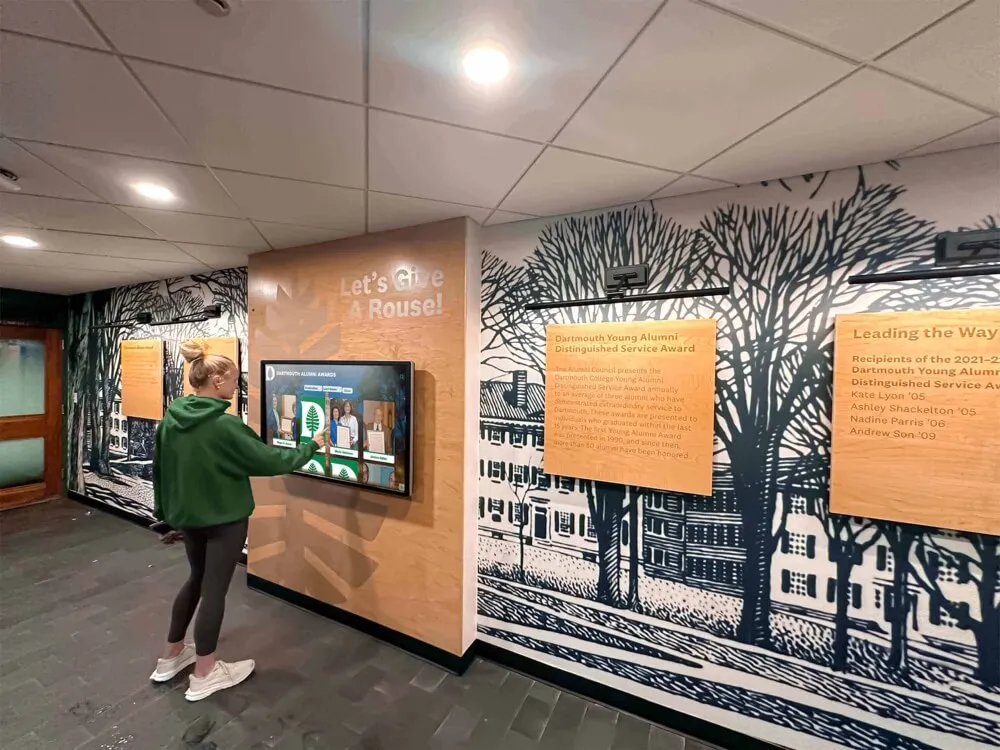
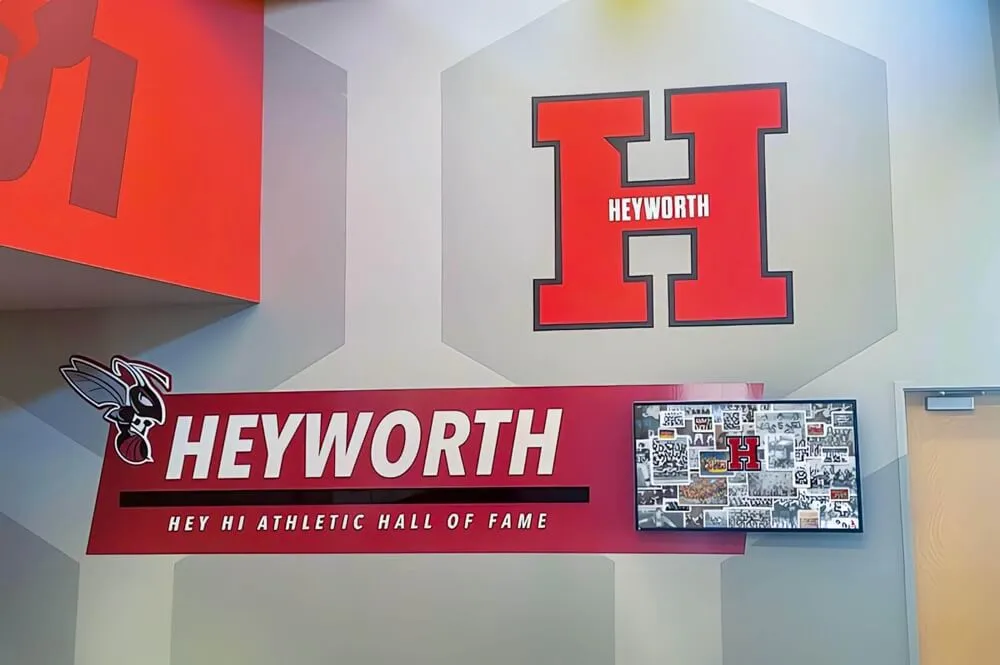
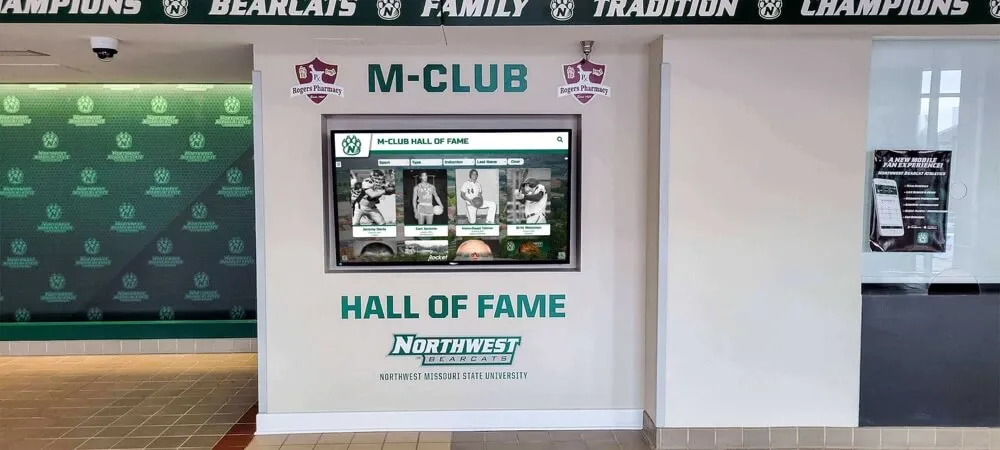
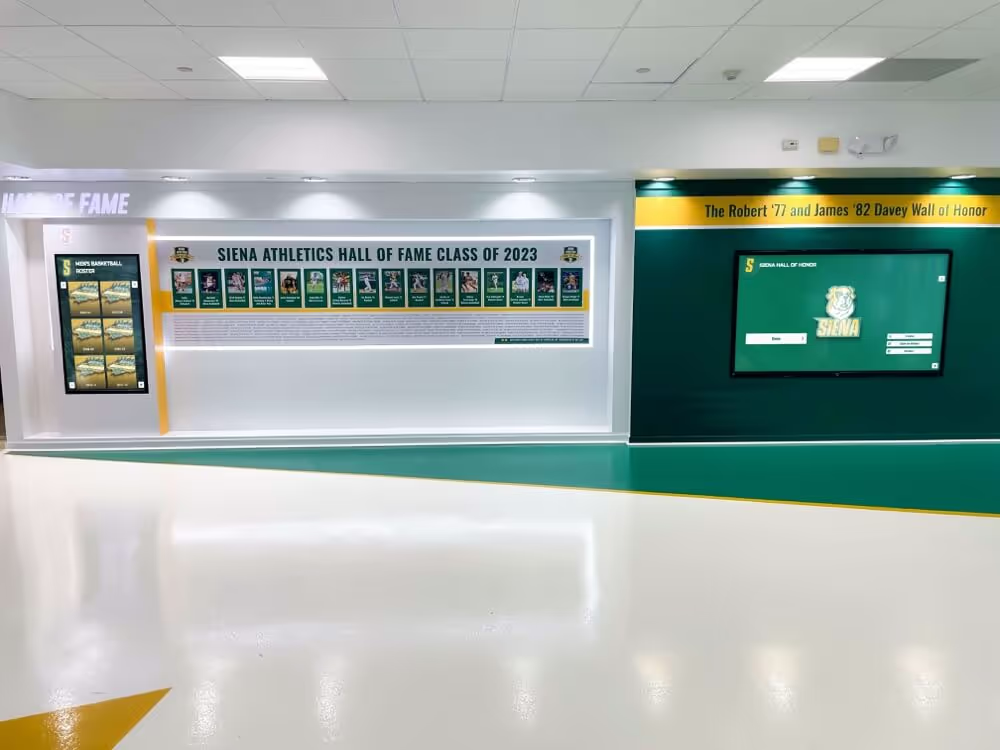
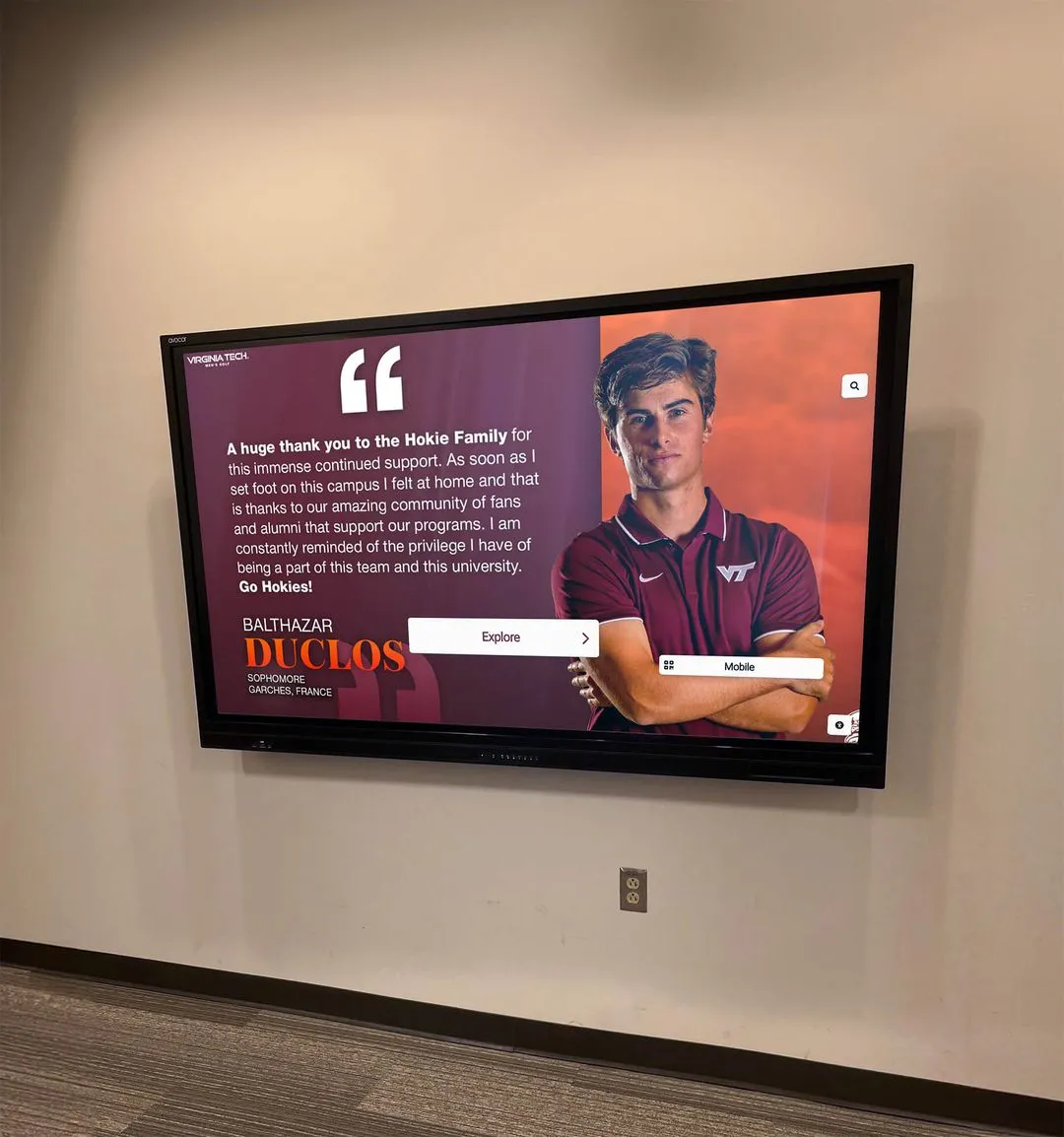
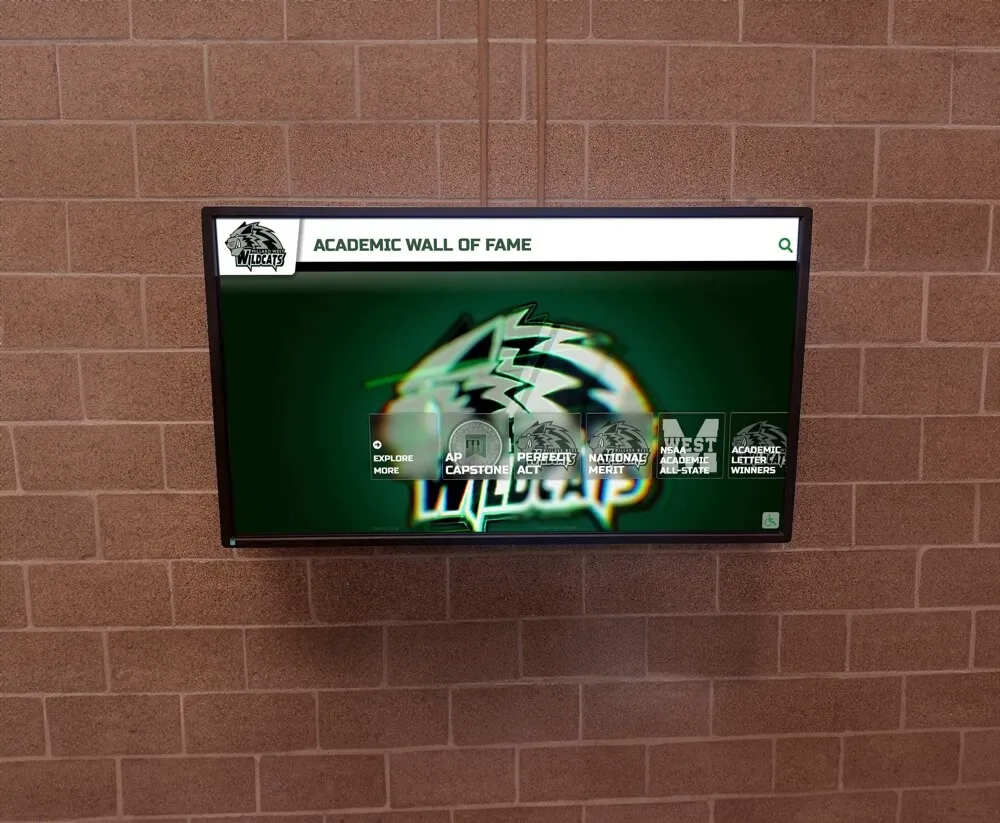
Schools that prominently celebrate academic achievements like NSLC attendance inspire other students to pursue excellence
Understanding the National Student Leadership Conference
Before schools can effectively support NSLC attendees, administrators and counselors need a clear understanding of what the program offers and how it differs from other summer enrichment opportunities.
What Is NSLC?
The National Student Leadership Conference provides immersive academic and leadership experiences for high school students:
Program Structure
NSLC offers multiple formats designed to fit different schedules and interests:
- Residential programs on university campuses (9-18 days)
- Virtual leadership programs (flexible scheduling)
- International programs at global locations
- Specialized pathways in 30+ career fields
- College credit options through partner universities
- Small group learning environments (typically 20-30 students)
Students don’t simply attend lectures—they participate in hands-on simulations, case studies, site visits to professional environments, and collaborative projects that mirror real-world challenges in their chosen fields.
Academic Focus Areas
NSLC offers pathways across diverse disciplines:
- Medicine & Healthcare (including pre-med, nursing, biomedical science)
- Law & Legal Studies (constitutional law, trial advocacy, criminal justice)
- Business & Entrepreneurship (investment banking, marketing, entrepreneurship)
- Engineering & Technology (bioengineering, computer science, robotics)
- International Relations & Diplomacy
- Psychology & Neuroscience
- Journalism & Media Studies
- Architecture & Design
- Environmental Science & Sustainability
- Sports Management & Athletic Training
This breadth allows students to explore specific career interests before committing to college majors, helping them make more informed educational decisions.
Why NSLC Participation Matters for Schools
Schools benefit when students attend prestigious leadership programs:
Enhanced School Reputation
NSLC attendance reflects positively on your school’s academic environment:
- Demonstrates that your students compete successfully for selective programs
- Shows your school culture encourages advanced learning opportunities
- Signals strong college counseling and academic support systems
- Attracts families seeking schools that support high-achieving students
- Creates momentum for other students to pursue similar opportunities
Schools that publicly recognize academic honor roll recipients and leadership program participants create cultures where excellence becomes the expectation rather than the exception.
Returning Student Leadership
Students who attend NSLC return with enhanced capabilities:
- Advanced leadership skills applicable to school activities
- Greater confidence in academic and social settings
- Professional communication abilities
- Network connections with students from across the country
- Exposure to college-level expectations and rigor
- Clarified career interests and academic goals
These students often assume leadership roles in clubs, student government, and academic competitions, elevating the quality of school programs.
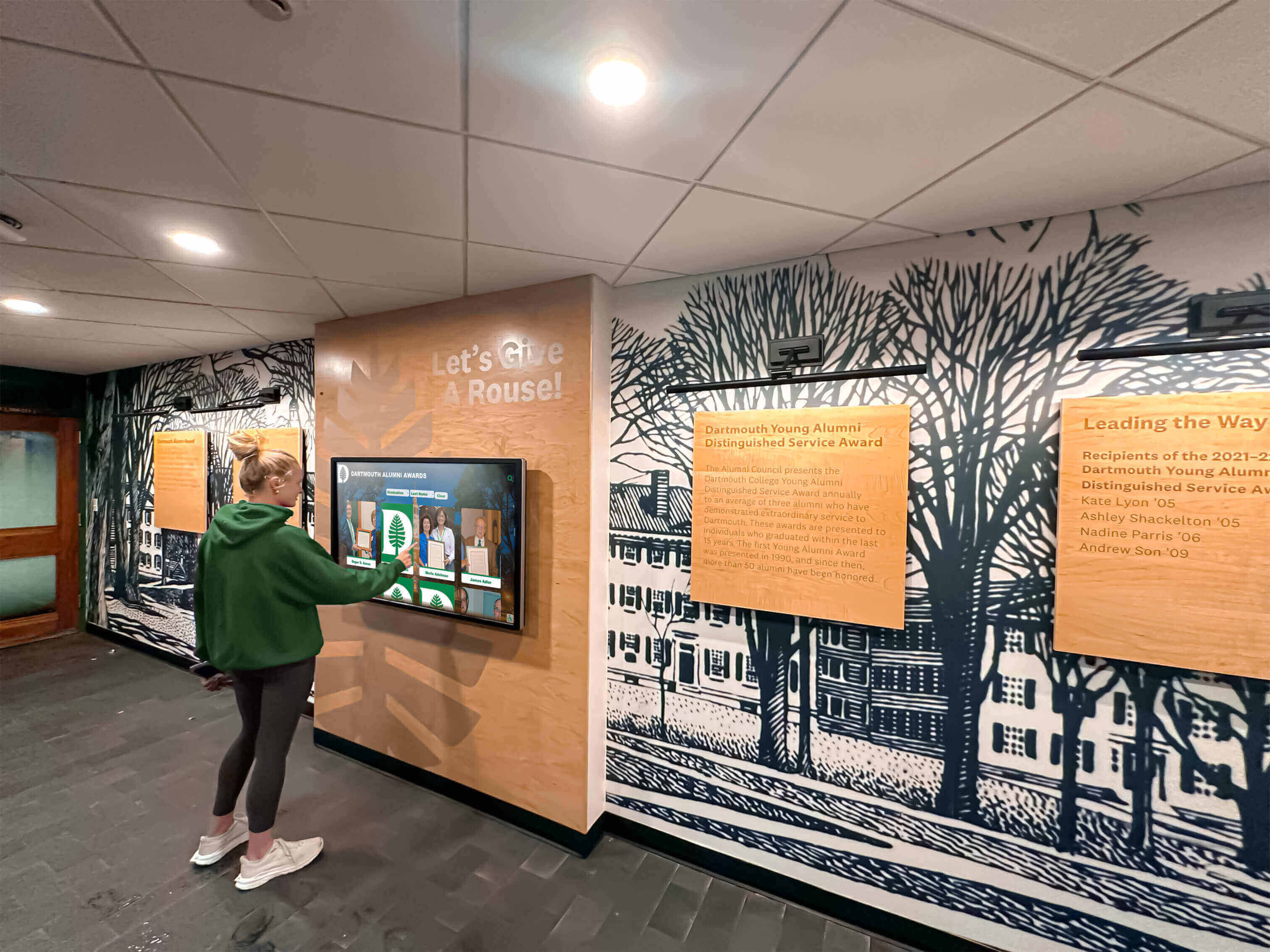
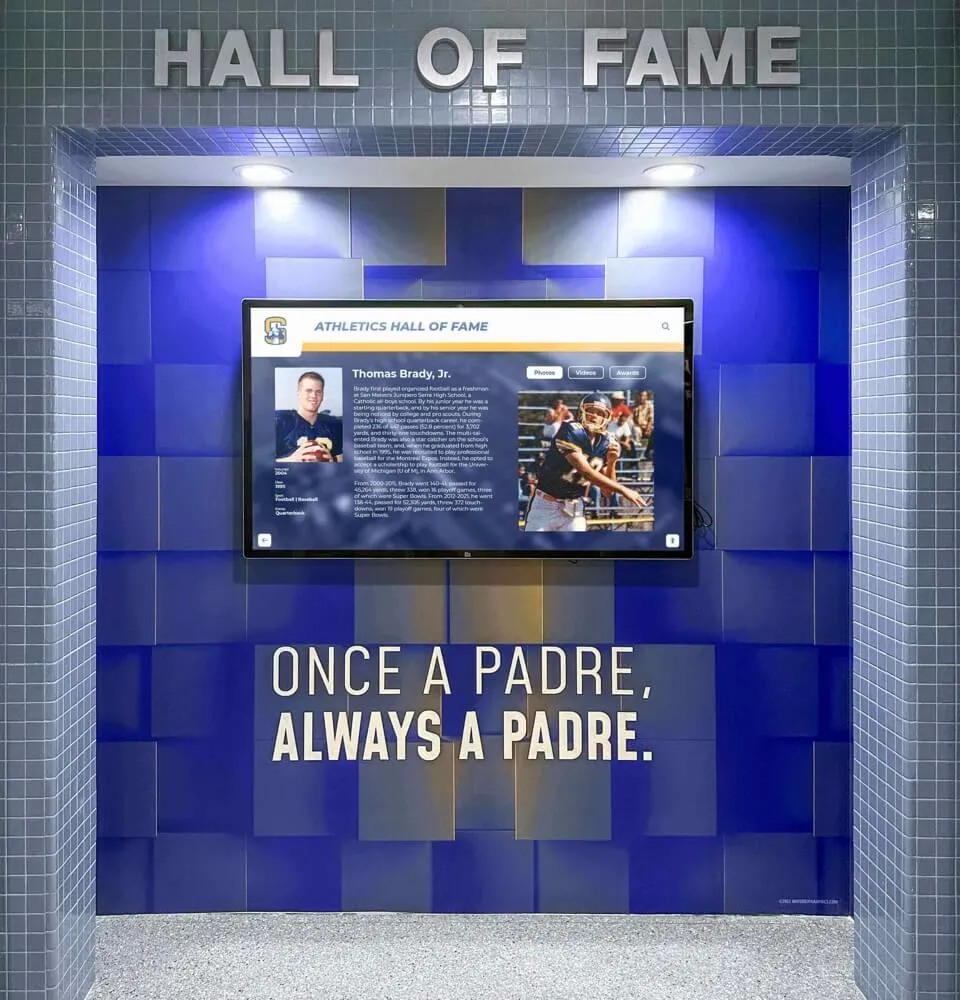
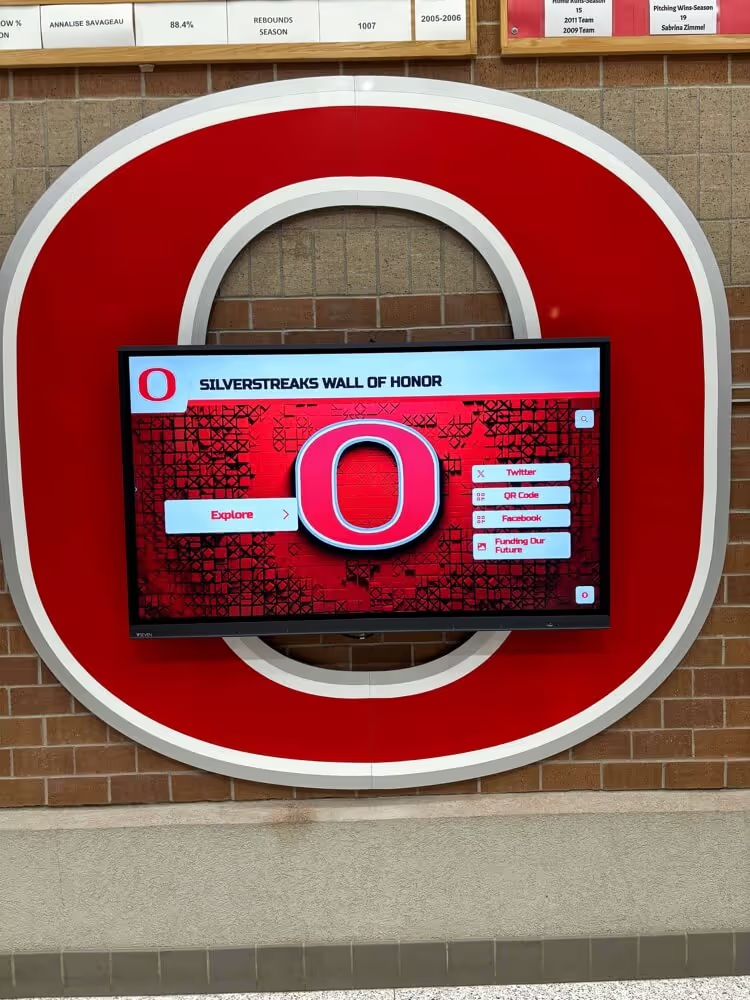
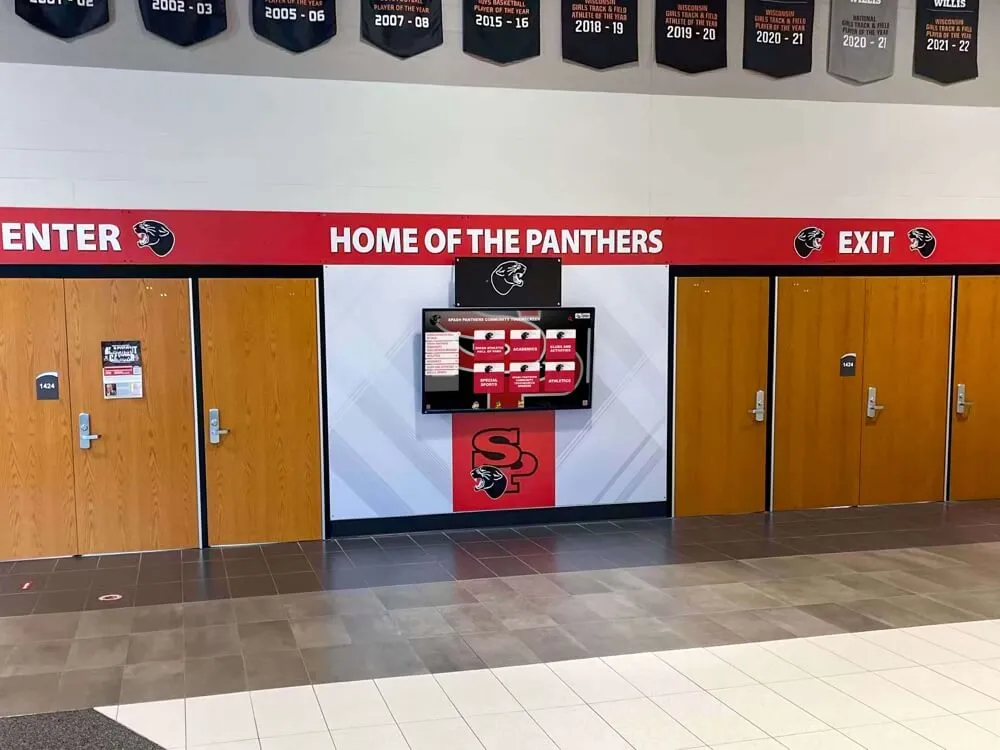
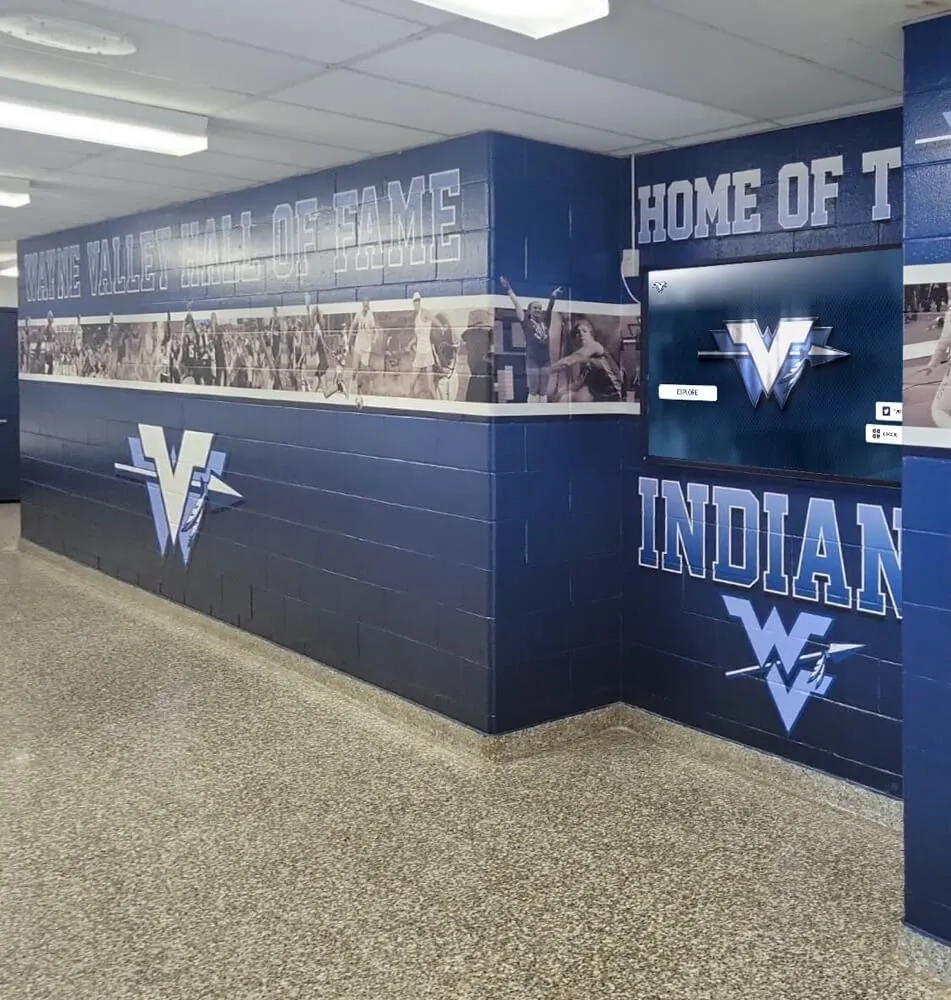
Modern schools use interactive displays to showcase student achievements and inspire peers to pursue leadership opportunities
Identifying and Supporting Potential NSLC Candidates
Schools that proactively identify promising candidates and provide application support increase the number of students who successfully attend NSLC and similar programs.
Student Selection Criteria
NSLC seeks academically strong students with demonstrated leadership potential:
Academic Requirements
While NSLC doesn’t publish rigid cutoffs, successful applicants typically demonstrate:
- Strong GPA (generally 3.0 or higher, though this varies by program)
- Challenging course load relative to school offerings
- Positive teacher recommendations
- Clear interest in the chosen program field
- Writing samples demonstrating communication skills
- Engagement in extracurricular activities
Schools should identify students who meet these criteria early—ideally during sophomore year—allowing time for students to strengthen applications if needed.
Beyond Grades: Leadership Indicators
NSLC values demonstrated leadership potential:
- Initiative in starting or leading school clubs or organizations
- Community service involvement and impact
- Athletic team captain or leadership roles
- Student government participation
- Peer mentoring or tutoring experience
- Advocacy for causes or issues
- Creative or entrepreneurial projects
Students don’t need perfect resumes—NSLC seeks potential rather than completed achievements. A sophomore with strong initiative may be a better candidate than a senior with impressive but passive participation.
School Support During Application Process
Schools can significantly increase application success rates through structured support:
Information Sessions and Promotion
Create awareness about NSLC opportunities:
- Host information sessions for students and families (junior and sophomore years)
- Invite NSLC alumni to share experiences
- Integrate NSLC information into college counseling curriculum
- Include NSLC deadlines in academic calendars
- Send targeted communications to eligible students
- Feature successful student achievements prominently
Many qualified students never apply simply because they’re unaware of opportunities. Proactive outreach ensures students know these programs exist.
Application Guidance
Provide practical support throughout the application process:
- Help students select appropriate program pathways aligned with interests
- Review personal statements and essays
- Connect students with teachers for strong recommendation letters
- Assist with resume development highlighting relevant experiences
- Explain program differences (residential vs. virtual, domestic vs. international)
- Clarify financial aid and scholarship options
Counselors can schedule “NSLC application workshops” where interested students work on applications together with guidance, creating accountability and peer support.
Financial Planning Support
Address cost concerns transparently:
- Explain total program costs (tuition, travel, incidentals)
- Identify NSLC scholarship opportunities and deadlines
- Connect families with school-based scholarship resources
- Share fundraising strategies successful families have used
- Explain payment plans and financing options
- Consider establishing school scholarships for summer enrichment programs
Cost should never be the reason a qualified student doesn’t attend. Schools that help families navigate financial aspects increase participation from students across all economic backgrounds.
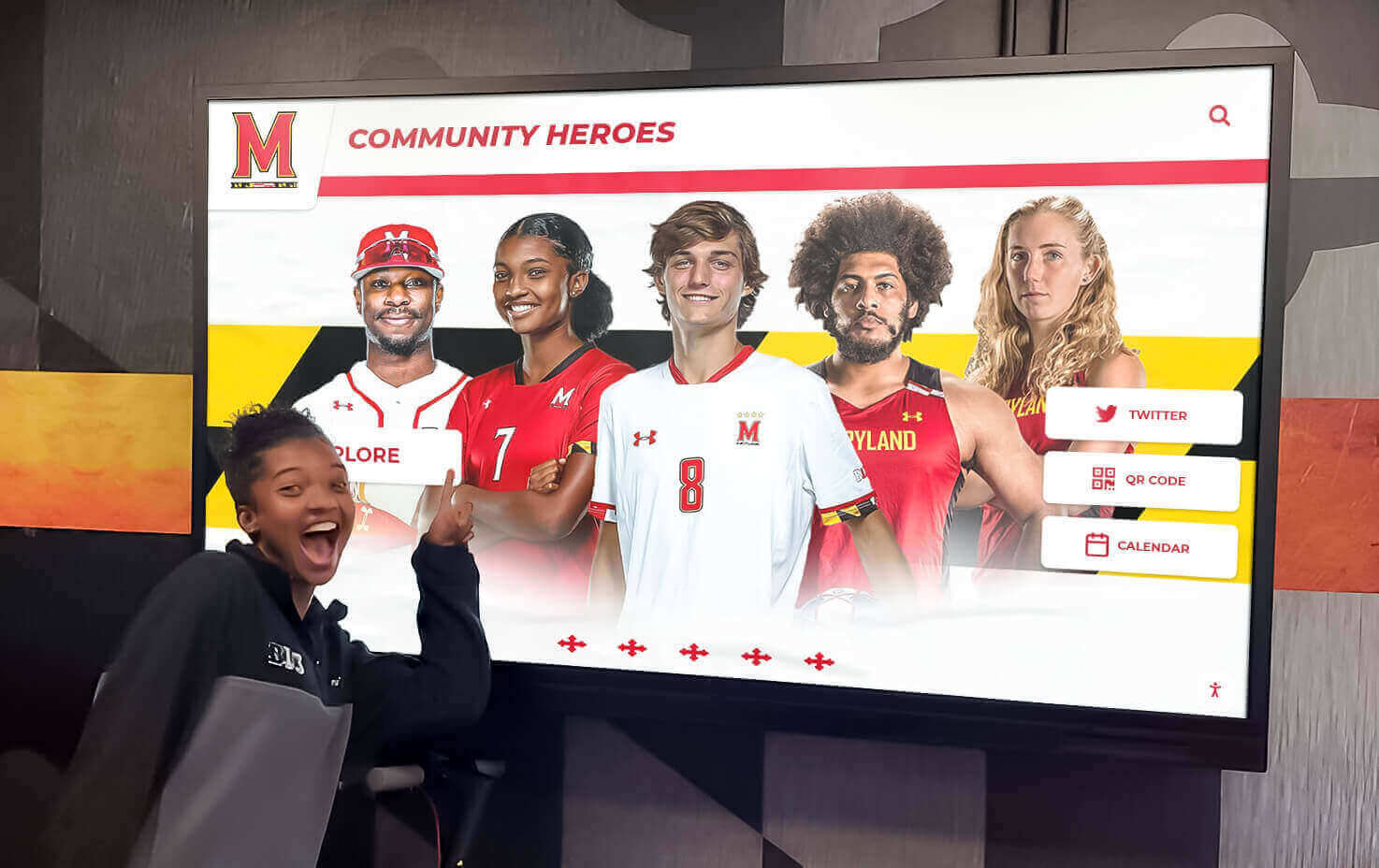
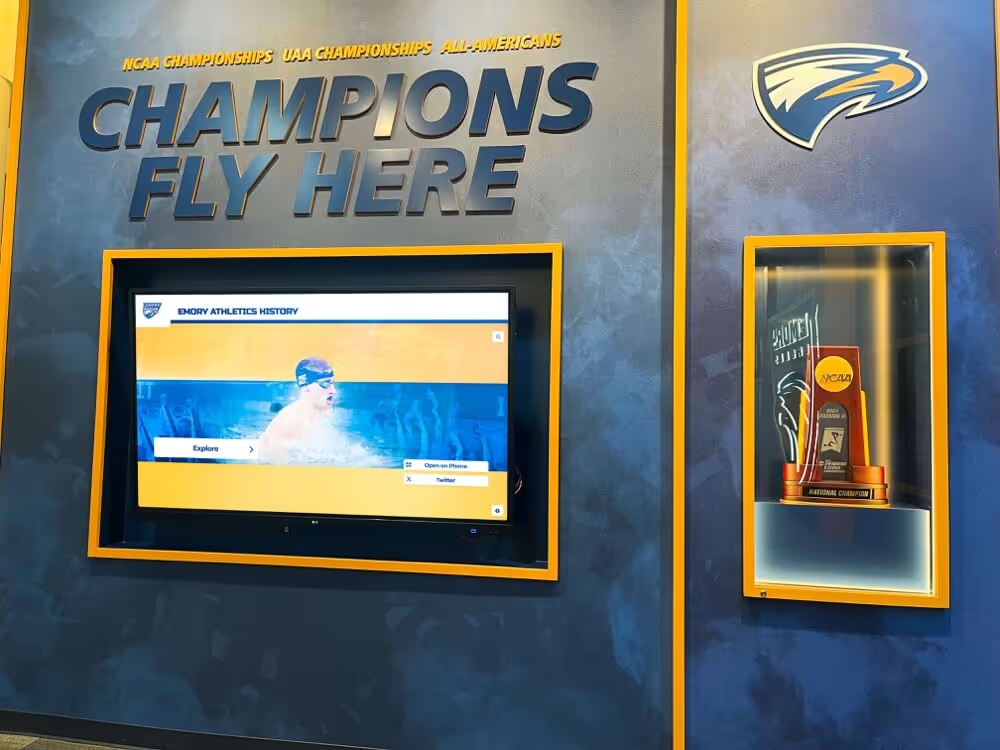
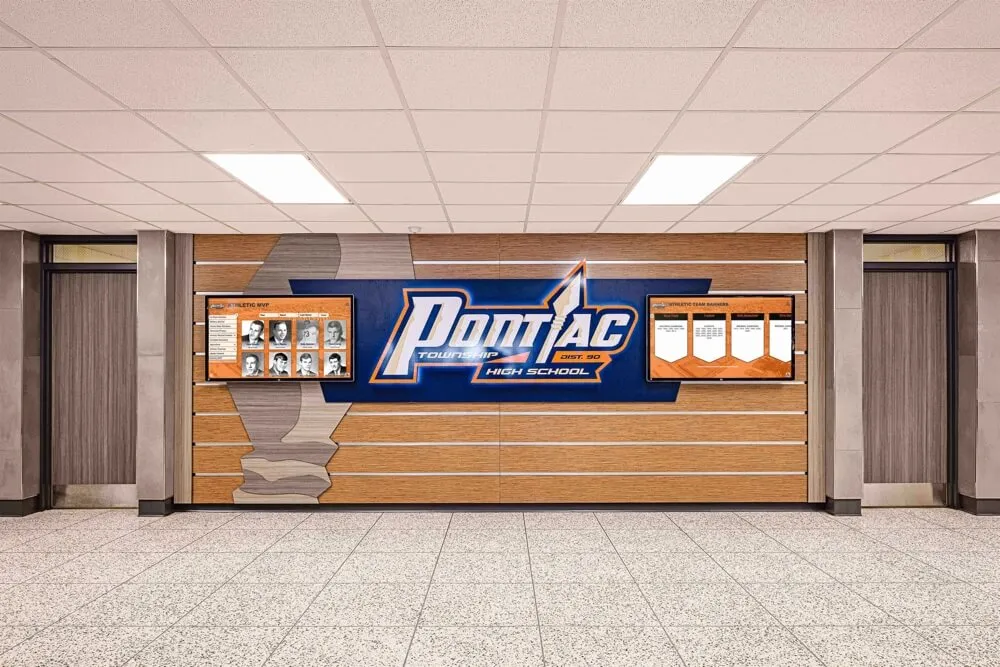
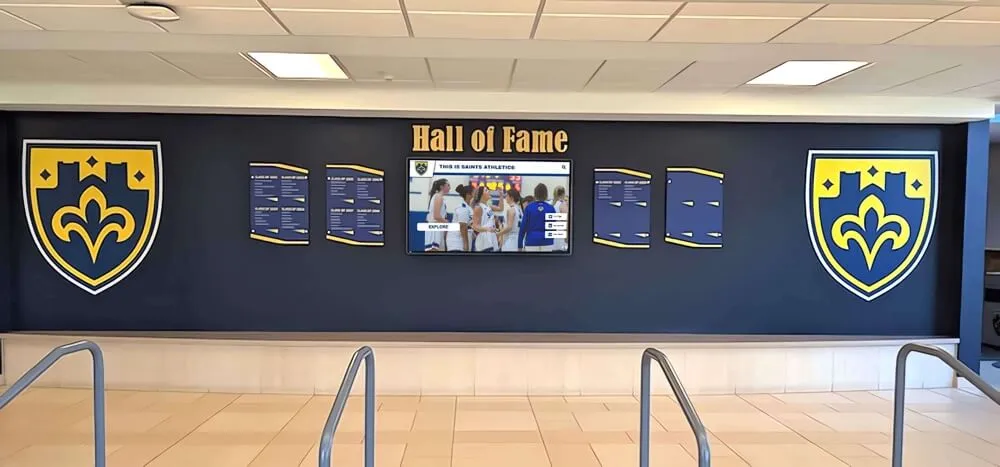
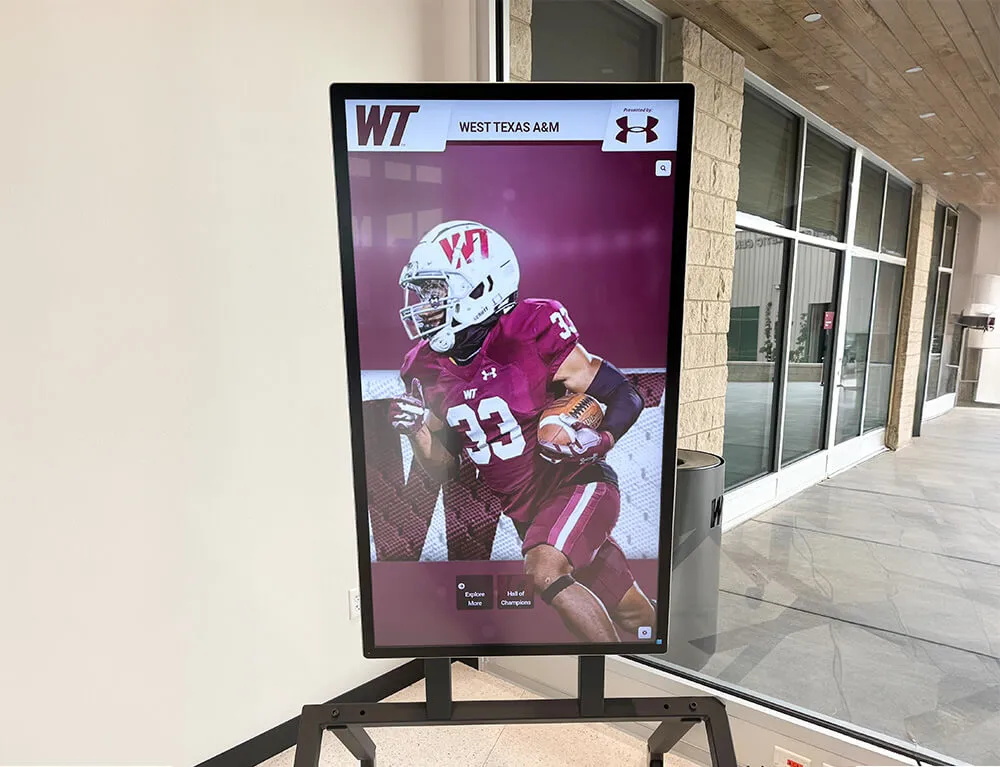
Recognition displays celebrating student leaders inspire younger students to pursue their own leadership development
Celebrating and Recognizing NSLC Attendees
Schools that publicly celebrate students who attend NSLC multiply the program’s impact by inspiring other students and reinforcing excellence as a core value.
Pre-Attendance Recognition
Celebrate students before they depart for NSLC:
School Announcements and Communications
Create positive visibility for attending students:
- Feature NSLC attendees in school newsletters and announcements
- Include students in school board meeting recognition presentations
- Highlight attendees on school social media channels
- Display names and photos in school entrance areas
- Create “NSLC Bound” bulletin boards or display areas
- Include recognition at senior class awards ceremonies or academic banquets
This recognition serves multiple purposes: validating the student’s achievement, informing the school community about the opportunity, and inspiring younger students to pursue similar programs.
Send-Off Events
Consider organizing brief send-off gatherings:
- Light refreshments with administrators and teachers
- Opportunity for attendees to share excitement and goals
- Distribution of school gear to wear during program
- Photos for school archives and publications
- Connection with NSLC alumni from your school
- Principal or superintendent remarks emphasizing school pride
These events require minimal resources but create memorable moments that strengthen students’ connection to your school.
Post-Attendance Recognition and Integration
Students return from NSLC with valuable experiences that benefit your entire school community:
Welcome Back Recognition
Celebrate returning students and capture their experiences:
- Schedule individual meetings with counselors to discuss experience
- Invite students to share highlights with relevant classes
- Feature student reflections in school publications
- Update permanent recognition displays with NSLC participation
- Include returning students in fall assembly presentations
- Create photo displays showing program activities
Schools using digital recognition displays can easily update content to highlight current achievements while maintaining historical records of past participants.
Leveraging Student Experience
Help returning students share their learning with the school community:
- Pair NSLC alumni with younger students interested in similar fields
- Invite students to present to classes related to their program focus
- Include returnees in college planning presentations for juniors
- Feature students in guidance department resources about summer programs
- Ask students to contribute to school college counseling materials
- Create NSLC alumni network within your school
These activities reinforce students’ learning, provide valuable peer mentoring, and increase awareness of enrichment opportunities among younger students.
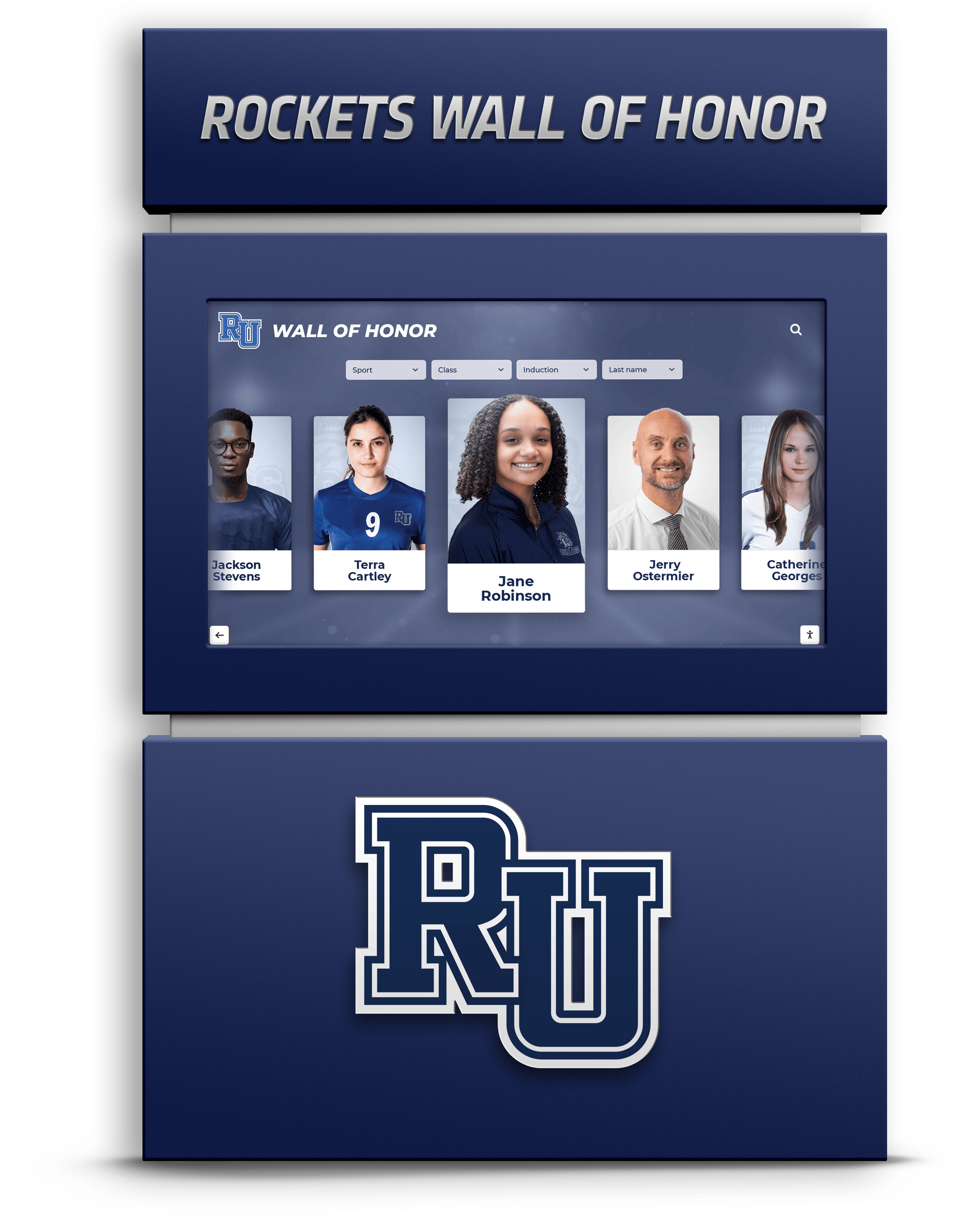
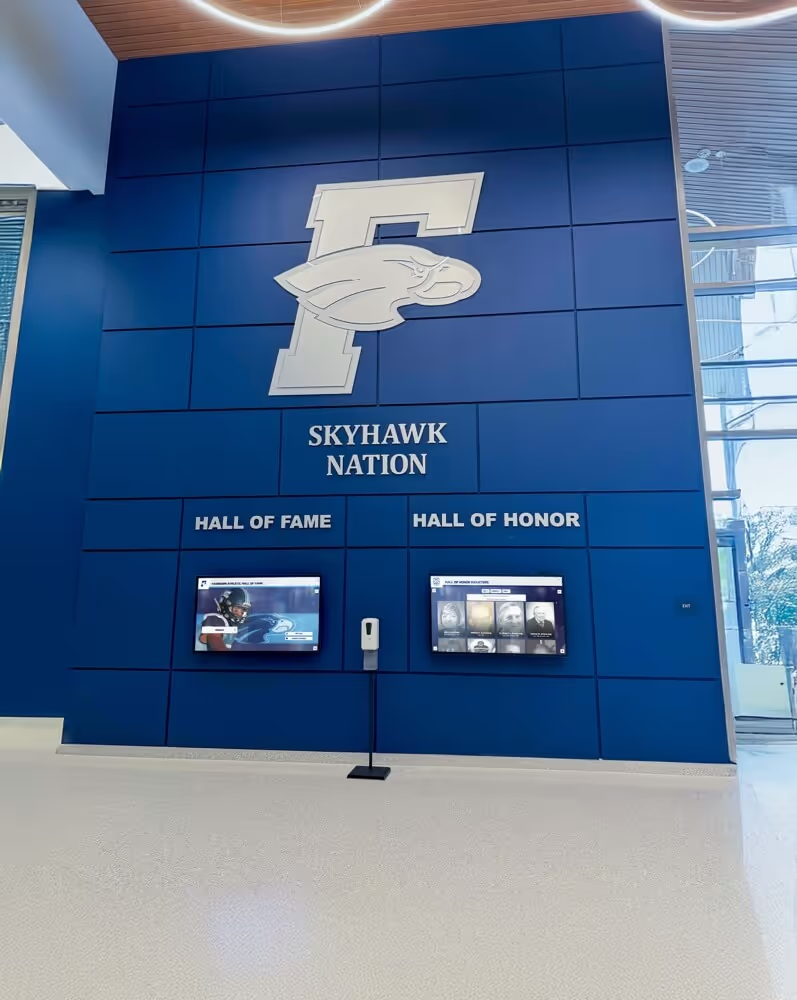
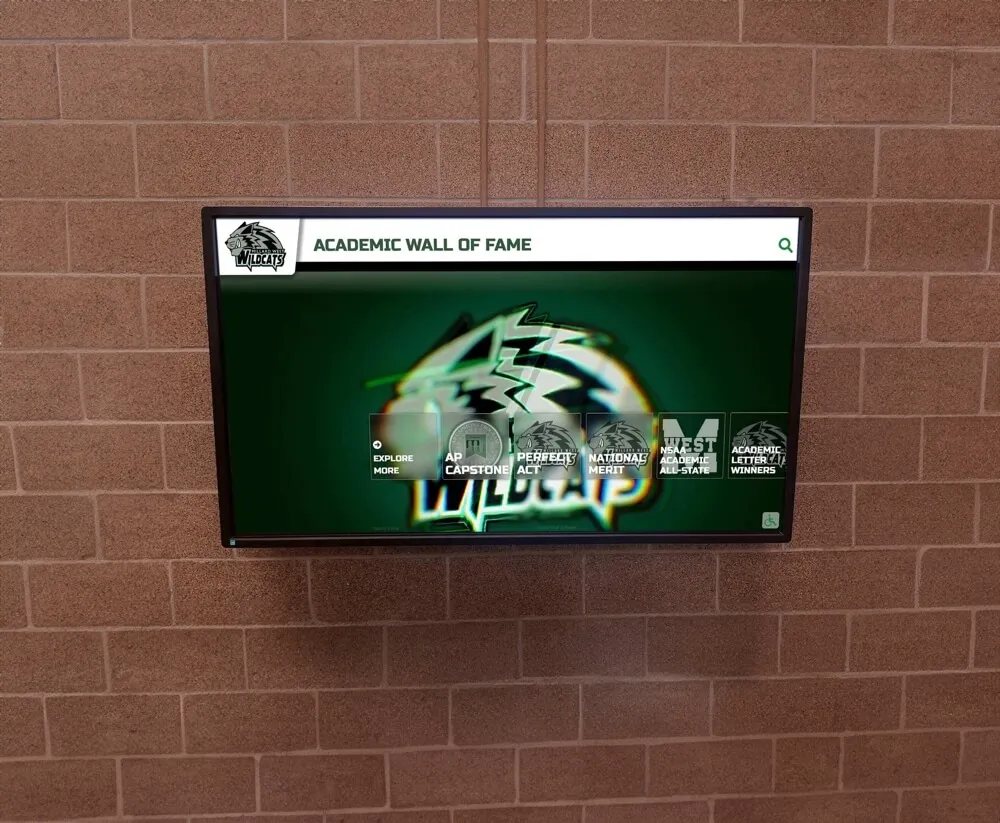
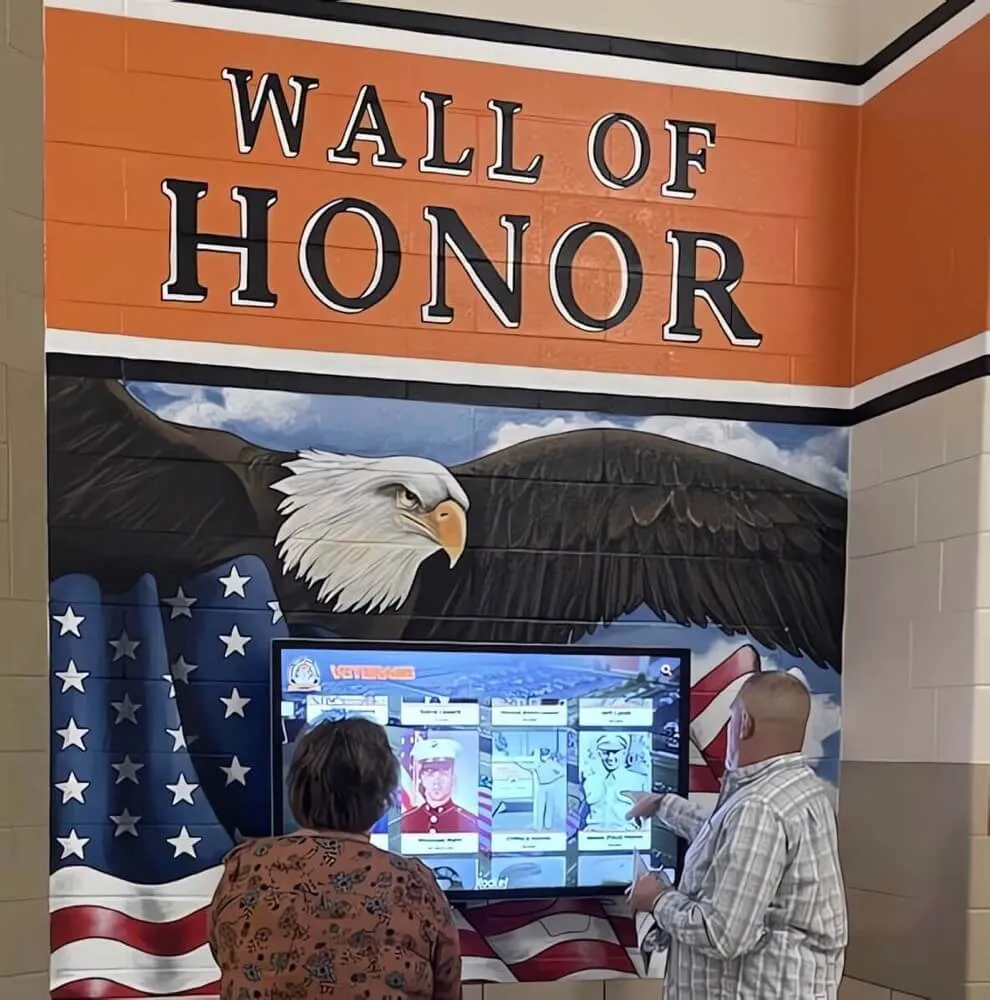
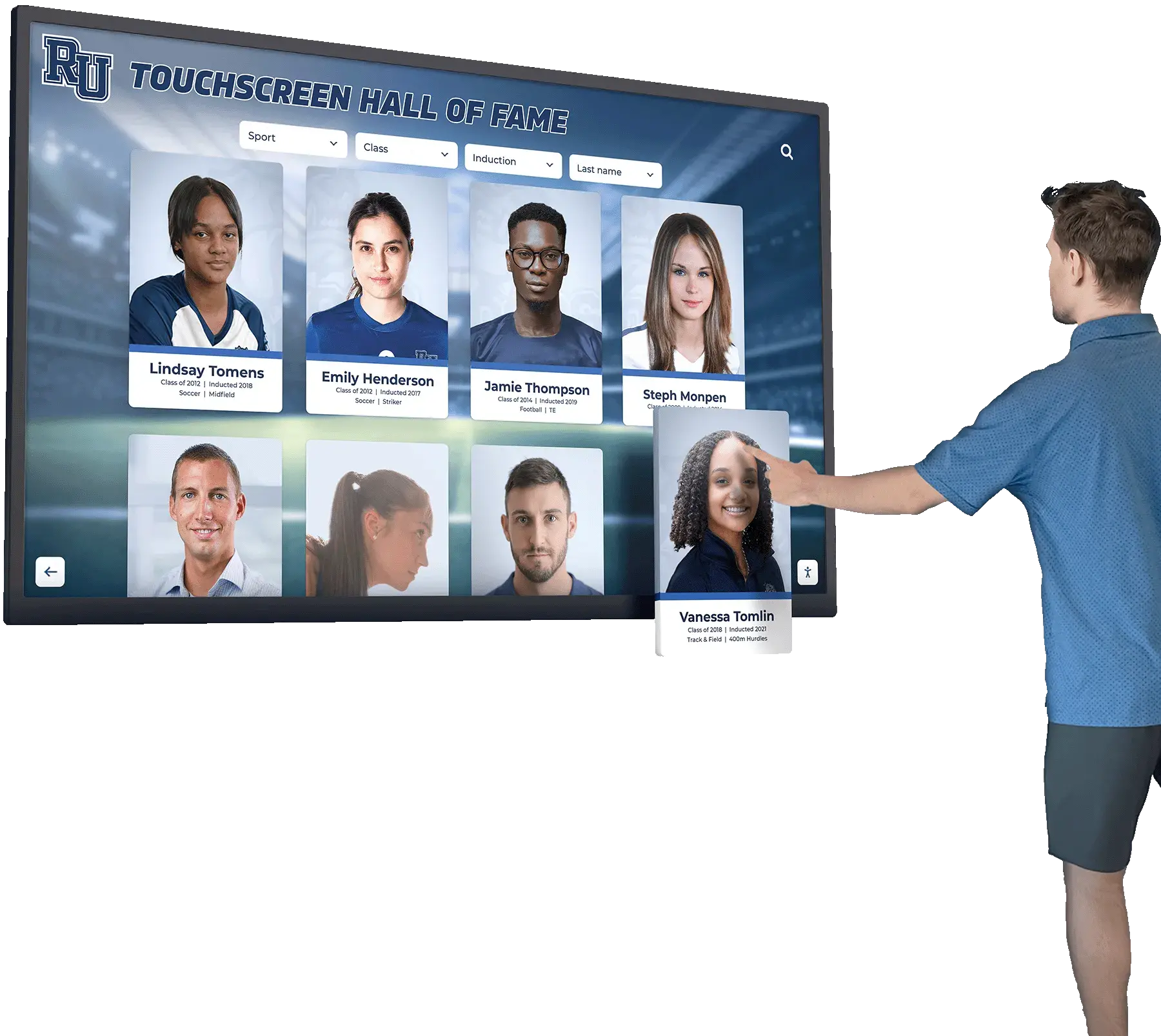
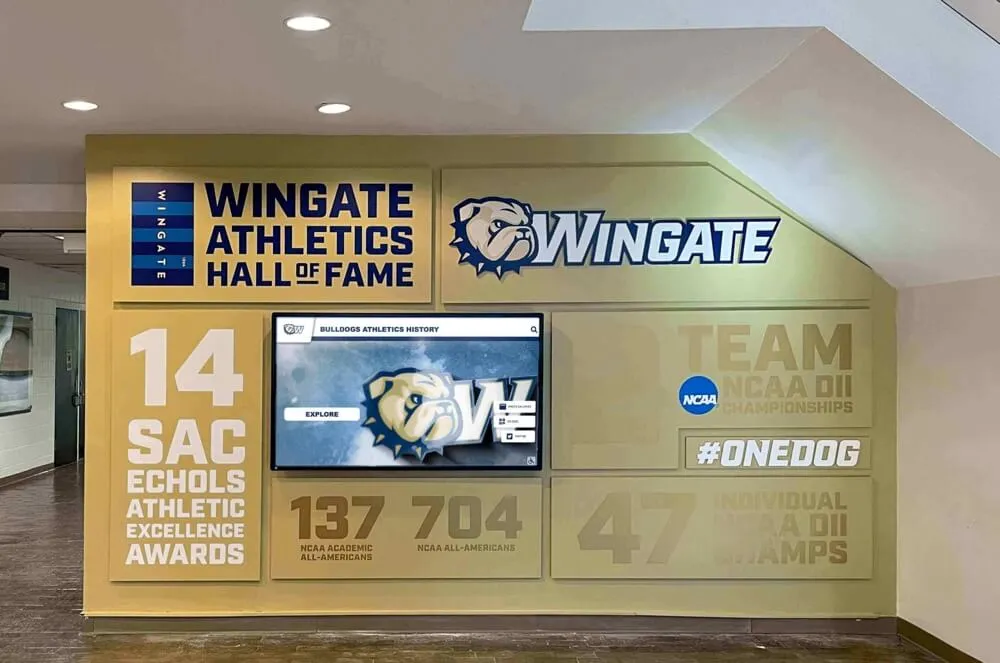
Digital walls of honor allow schools to showcase leadership achievements with detailed profiles and searchable content
Creating Lasting Recognition: Digital Displays for Academic Excellence
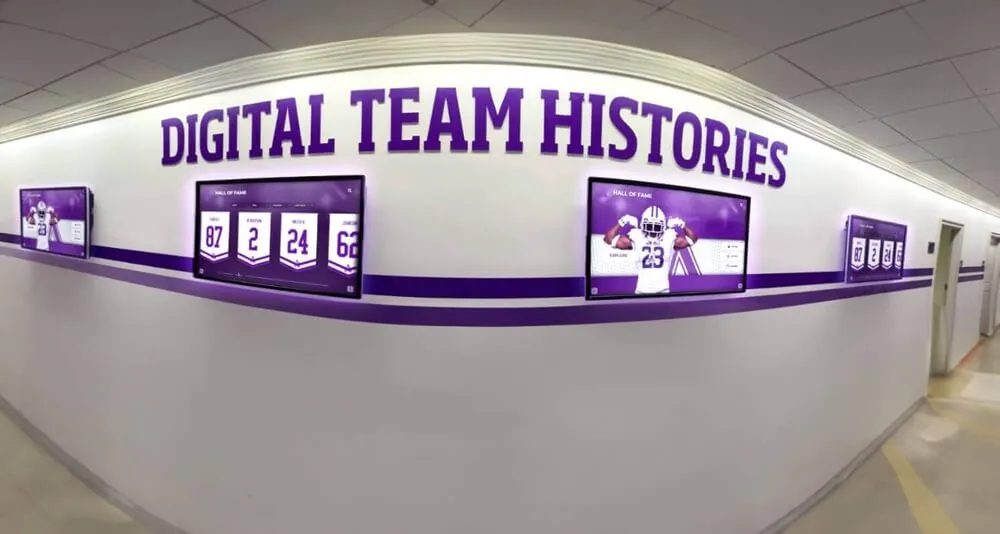
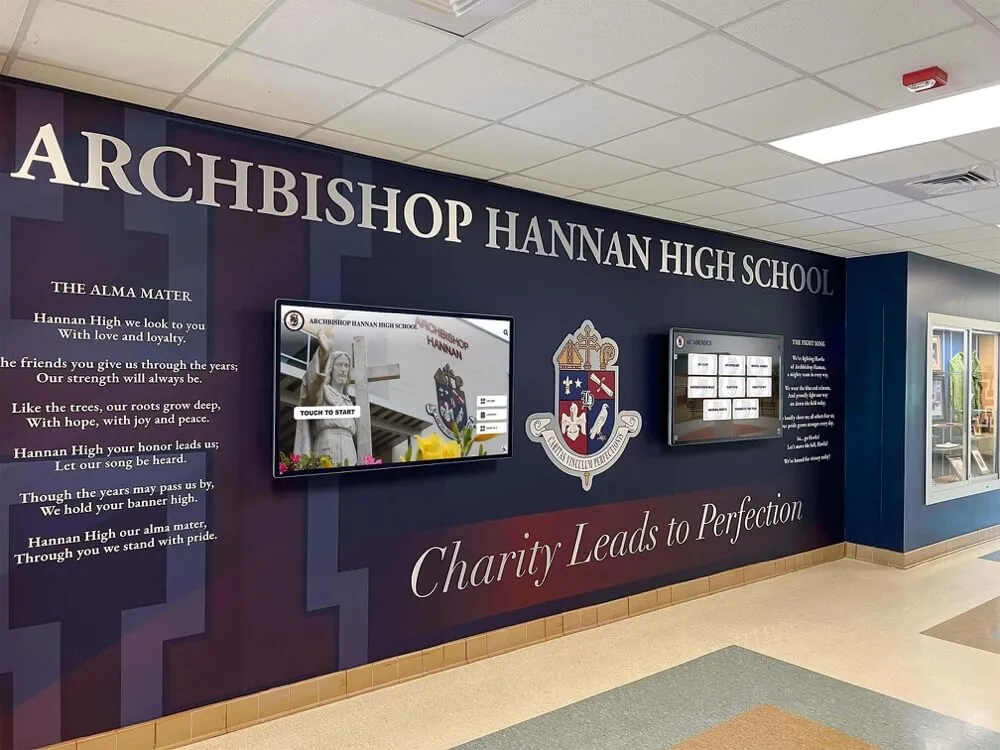
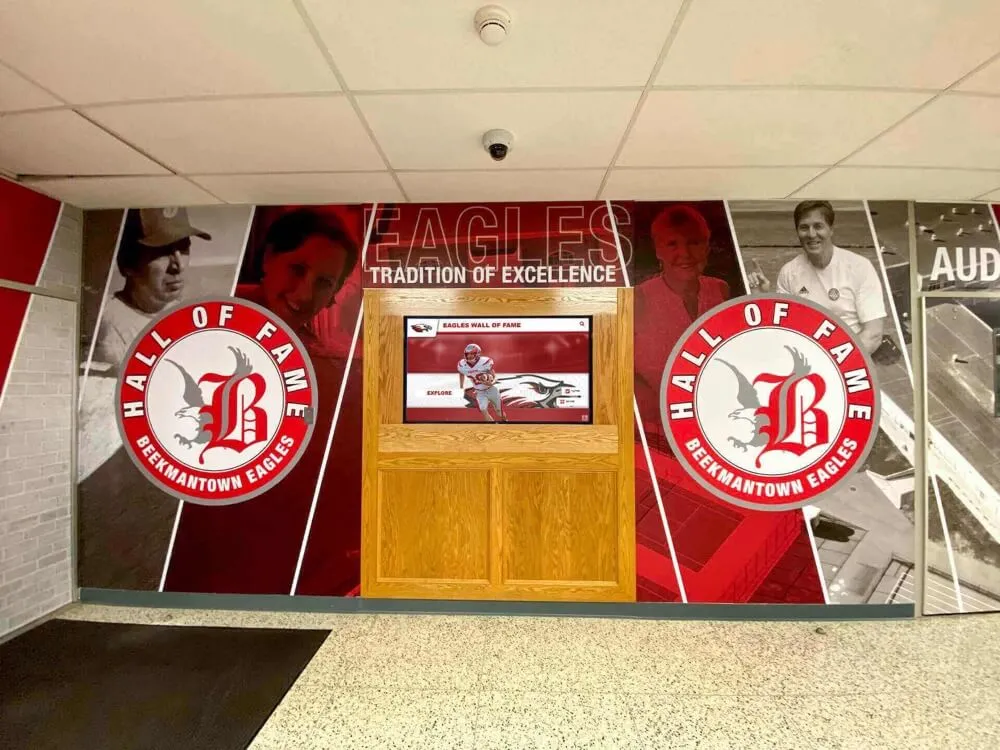
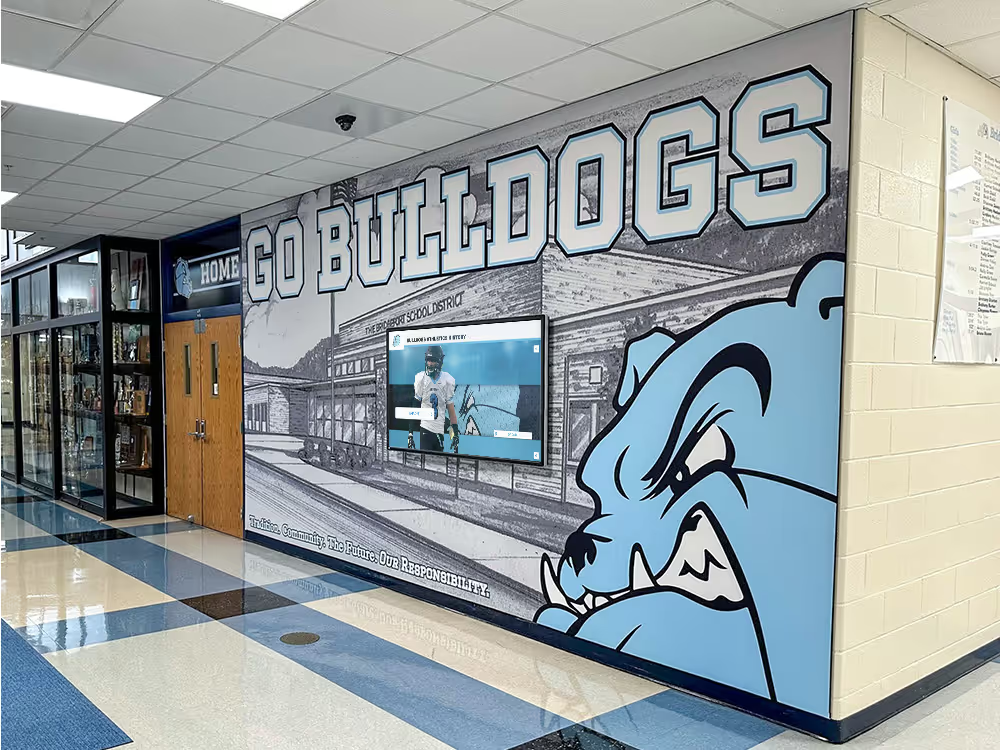
Schools increasingly recognize that traditional static plaques and bulletin boards limit how effectively they can celebrate student achievements like NSLC attendance. Modern digital recognition systems offer dynamic, updatable solutions that grow with your school’s culture of excellence.
Modern Recognition Solutions
Digital displays transform how schools celebrate academic achievement:
Advantages of Digital Recognition Systems
Schools that implement interactive displays for student recognition gain multiple benefits:
- Unlimited Capacity: Add new NSLC attendees each year without space constraints
- Rich Content: Include photos, program details, student reflections, and future achievements
- Easy Updates: Modify content remotely without physical plaque replacements
- Search Functionality: Visitors can search by year, program type, or student name
- Timeline Views: Show progression of student achievements throughout their school career
- Social Sharing: Generate QR codes for family and community engagement
- Multiple Display Purposes: Same system showcases National Honor Society inductees, athletic achievements, and academic awards
Unlike traditional displays that become outdated or require expensive updates, digital systems grow with your school’s achievements while maintaining complete historical archives.
Integration with Broader Recognition Programs
Effective recognition systems connect various achievement types:
Schools can create comprehensive student achievement recognition programs that include:
- Summer enrichment program participation (NSLC, NYLF, HOBY)
- Academic awards and honors
- Leadership positions and service achievements
- Athletic accomplishments and varsity letters
- Arts and performance recognition
- Competition results and research achievements
Digital platforms allow schools to organize content by student (showing complete achievement profiles) or by award type (showing all NSLC attendees across years), providing flexibility that static displays cannot match.
Implementation Considerations
Schools planning recognition display upgrades should consider:
Strategic Placement
Location determines impact:
- Main entrance areas where visitors, prospective families, and students pass daily
- Guidance or college counseling office areas
- Library or academic centers
- Senior composite display areas
- Athletic facilities (for multi-purpose recognition)
High-visibility placement reinforces that your school values academic excellence and leadership development.
Content Strategy
Effective displays require thoughtful content planning:
- Standardized information for all NSLC attendees (name, year, program attended)
- Optional enhanced content (student photos, program reflections, post-NSLC achievements)
- Integration with college acceptance data (many NSLC students attend top universities)
- Historical records showing NSLC participation trends over time
- Connections to alumni achievements (tracking leadership trajectories)
Schools benefit from systems that allow both quick updates for current achievements and long-term archival preservation.
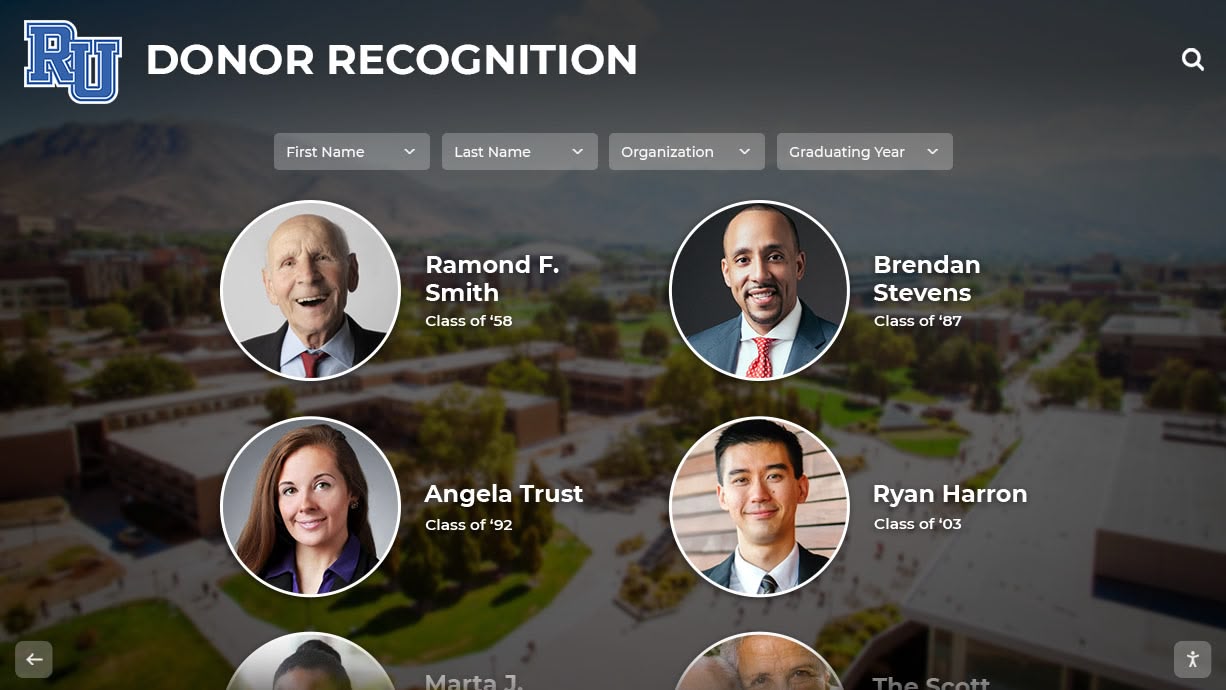
Tracking student achievements from high school through alumni success demonstrates the long-term impact of leadership development
Supporting Student Development After NSLC
The National Student Leadership Conference should mark the beginning, not the end, of a student’s leadership development journey at your school.
Integrating NSLC Alumni into School Leadership
Create structured pathways for returning students to apply their enhanced skills:
Leadership Position Opportunities
Actively recruit NSLC alumni for roles such as:
- Peer mentoring programs pairing them with underclassmen
- Student government leadership positions
- Academic competition team captains
- Club officer roles aligned with NSLC program focus
- School event planning committees
- Tour guides for prospective families
- Student ambassador programs
When counselors and teachers intentionally connect NSLC returnees with leadership opportunities, students gain practical applications for their new skills while strengthening school programs.
Academic and Career Exploration Support
Help students build on career interests developed at NSLC:
- Connect medical program attendees with local healthcare shadowing opportunities
- Link law program students with mock trial or debate teams
- Match business program participants with entrepreneurship clubs
- Pair engineering students with robotics or STEM competition teams
- Connect journalism students with school publications
- Facilitate internship searches aligned with NSLC pathway interests
This continuity transforms a single summer experience into an ongoing development trajectory.
Building an NSLC Pipeline at Your School
Schools that send students to NSLC consistently create self-reinforcing cycles of excellence:
Establishing NSLC Tradition
Make NSLC participation a recognized pathway at your school:
- Create visible displays of all NSLC alumni with photos and program details
- Establish informational traditions (annual NSLC info sessions each fall)
- Develop application support processes (workshop schedules, deadline reminders)
- Build financial support systems (dedicated scholarship funds if possible)
- Create peer mentoring where NSLC alumni guide prospective applicants
- Track and publish college acceptance data for NSLC participants
When NSLC becomes part of your school’s culture, participation grows organically as students see older peers benefit from the experience.
Expanding to Other Programs
Use NSLC success to promote additional enrichment opportunities:
- National Youth Leadership Forum (NYLF)
- Hugh O’Brian Youth Leadership (HOBY)
- American Legion Boys/Girls State
- Governor’s School programs
- University summer research programs
- Leadership and service organizations like National Honor Society
Schools that actively promote diverse leadership opportunities develop deeper benches of accomplished students who elevate academic culture.
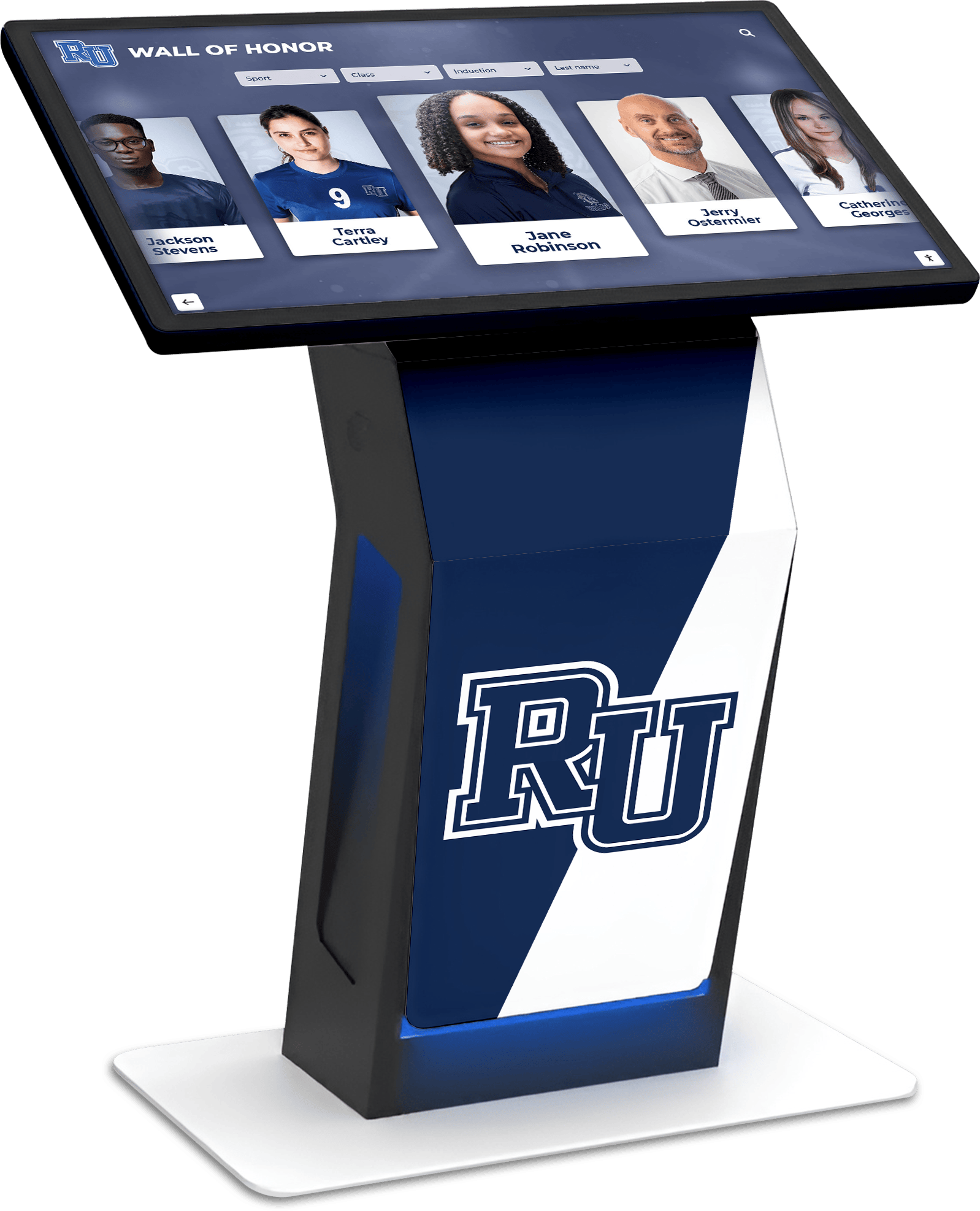
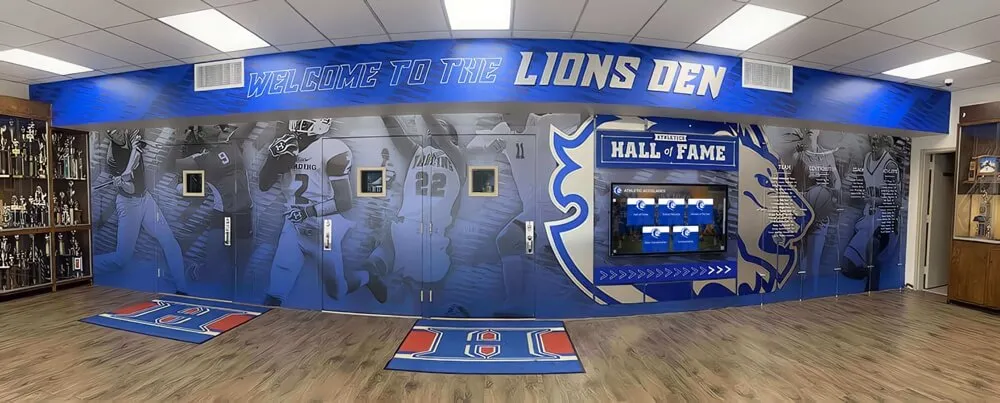
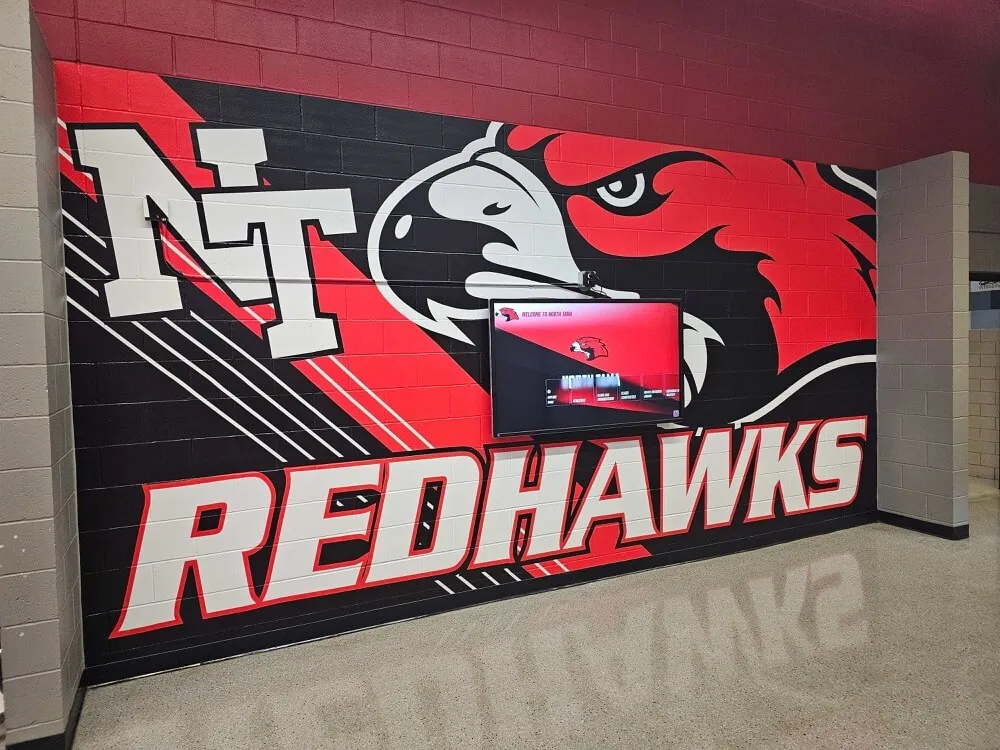
Interactive recognition kiosks allow students to explore detailed achievement information and inspire their own goal-setting
Measuring Impact and Tracking Outcomes
Schools that systematically track NSLC participation and outcomes can better advocate for program support and demonstrate return on investment.
Data Collection and Analysis
Implement simple tracking systems to measure program impact:
Participation Tracking
Monitor key metrics:
- Number of NSLC applicants annually
- Acceptance rates for your students
- Program pathways students select (medical, law, business, etc.)
- Demographic representation of attendees
- Financial aid awarded to your students
- Year-over-year participation trends
This data helps identify whether you’re reaching all qualified students or if certain populations need additional encouragement and support.
Outcome Measurement
Track longer-term impacts:
- College acceptance patterns for NSLC attendees vs. non-attendees
- Leadership positions NSLC alumni assume at your school
- Scholarship awards earned by NSLC participants
- Major selections in college aligned with NSLC programs
- Alumni career trajectories showing leadership development
- Student self-reported confidence and skill development
Schools that document these outcomes build compelling cases for expanding support resources for enrichment programs.
Communicating Impact to Stakeholders
Share success data with relevant audiences:
Internal Communication
Keep faculty and staff informed:
- Include NSLC success stories in staff meetings and newsletters
- Share college acceptance outcomes for program participants
- Highlight returning student contributions to school programs
- Recognize teachers whose recommendations supported acceptances
- Present annual reports on participation trends and impacts
When faculty understand program benefits, they provide stronger support and recommendations for future applicants.
External Communication
Showcase achievements to broader community:
- Feature NSLC participants in school board presentations and community newsletters
- Include program information in admissions materials for prospective families
- Share success stories on school website and social media
- Display participation data in school entrance areas
- Include NSLC information in annual reports and development materials
- Create content for local media highlighting student achievements
Effective communication reinforces your school’s academic reputation while inspiring community support for student enrichment programs.
Addressing Common Challenges and Questions
School administrators and counselors frequently encounter similar concerns when supporting NSLC candidates.
Financial Accessibility Questions
“Is NSLC worth the cost?”
NSLC programs range from approximately $2,500-$8,000 depending on program length, location, and format. While significant, this investment provides:
- College-level coursework and experiences
- Potential college credit (reducing future tuition costs)
- Competitive advantage in college admissions
- Career clarity preventing costly major changes
- Leadership skill development applicable throughout life
- Professional and peer networking
For students seriously exploring specific career paths, NSLC often proves cost-effective compared to entering college undecided or changing majors multiple times.
“What if families can’t afford NSLC?”
Schools can help address financial barriers:
- NSLC offers merit-based scholarships and financial aid—ensure students apply
- Help families identify external scholarship opportunities
- Consider establishing school-based enrichment program scholarships
- Explore PTA/PTO funding for student academic opportunities
- Connect families with community service organizations that support student development
- Investigate corporate sponsorship from local businesses
- Suggest payment plan options NSLC offers
Many families assume programs are out of reach without exploring all financial assistance options. Counselor guidance significantly increases accessibility.
Selection and Equity Concerns
“How do we ensure equitable access to NSLC information and support?”
Proactive strategies promote equity:
- Share NSLC information with ALL students meeting basic criteria, not just those who seek it
- Host information sessions multiple times and record for families who cannot attend live
- Provide application support during school hours (not just after school when some students have jobs/responsibilities)
- Offer workshops in multiple languages for non-native English speaking families
- Partner with community organizations serving underrepresented populations
- Actively recruit diverse students rather than waiting for self-selection
- Address financial concerns upfront and transparently
Schools committed to equity make enrichment program information and support accessible to all qualified students regardless of family sophistication about college planning.
“Should we limit the number of students we recommend?”
No. NSLC acceptance is not a zero-sum competition between students from the same school. Every qualified student should receive encouragement and support to apply. Multiple acceptances from one school reflect well on your academic programs and culture.
Academic Scheduling and Credit Questions
“Do students receive school credit for NSLC attendance?”
This varies by school policy. Some schools award elective credit for summer enrichment programs that include substantial academic content. Others do not grant credit but include participation on transcripts in activities or honors sections. Clarify your school’s policy and communicate it clearly to students and families during the decision-making process.
“How should NSLC appear on transcripts and college applications?”
Students should list NSLC participation in the activities section of college applications, typically under “Summer Activities” or “Academic Enrichment Programs.” Include:
- Full program name (National Student Leadership Conference)
- Specific pathway attended (Medicine and Healthcare, Law and Trial Advocacy, etc.)
- Location and dates
- Any college credit earned
- Brief description of projects or learning experiences
Schools should reference NSLC attendance in counselor recommendations when relevant to the student’s academic narrative.
Creating a Comprehensive Student Recognition Culture
Supporting NSLC attendees represents just one element of a broader approach to celebrating student achievement and fostering excellence.
Developing Recognition Systems That Inspire
Effective schools don’t simply recognize past achievements—they create recognition cultures that inspire future ones:
Multiple Recognition Pathways
Celebrate diverse forms of excellence:
- Academic achievements (honor roll recognition, academic awards, scholarship recipients)
- Leadership development (NSLC, student government, club leadership)
- Service and character (community service hours, peer mentoring, character awards)
- Athletic excellence (varsity letters, championships, individual records)
- Arts accomplishments (performances, exhibitions, competitions)
- Special recognitions (valedictorian and highest academic honors)
When students see multiple pathways to recognition, more students find opportunities to excel in their areas of strength.
Accessible Recognition Infrastructure
Modern recognition systems should be:
- Visible: Located in high-traffic areas where achievements are seen daily
- Current: Updated regularly to include recent accomplishments
- Inclusive: Celebrating achievements across all student populations
- Permanent: Preserving historical records while showcasing current students
- Searchable: Allowing families and community members to find specific students
- Shareable: Enabling digital connections to broader audiences
Schools implementing comprehensive digital recognition systems find that recognition infrastructure becomes a catalyst for increased student achievement across all areas.
Long-Term Benefits of Recognition Investment
Schools that invest in robust recognition systems realize multiple benefits:
Recruitment and Retention
Prospective families notice recognition culture:
- Visible celebration of student achievement signals school priorities
- Recognition displays demonstrate commitment to individual student success
- Evidence of diverse achievement pathways attracts varied student interests
- Documentation of alumni success shows long-term impact
Schools with strong recognition cultures differentiate themselves in competitive enrollment environments.
Alumni Engagement and Giving
Recognition systems extend beyond current students:
- Alumni appreciate seeing their achievements preserved
- Recognition infrastructure creates natural alumni visit destinations
- Documented success stories strengthen development and fundraising appeals
- Alumni networks form around shared achievement traditions
Many schools find that recognition investments pay long-term dividends through enhanced alumni relationships and support.
Conclusion: Building Leadership Development Into School Culture
The National Student Leadership Conference offers tremendous value to participating students, but its impact multiplies when schools actively support attendees before, during, and after the program. Schools that identify promising candidates early, provide application support, celebrate participation publicly, and create pathways for returning students to apply their enhanced skills transform individual achievements into catalysts for broader cultural change.
Effective NSLC support requires coordination across multiple areas: counseling departments communicating opportunities, administrators budgeting for support resources, teachers writing recommendations and integrating returnees into curriculum, and facilities showcasing achievements through modern recognition systems. When these elements align, schools create environments where pursuing excellence becomes the norm rather than the exception.
As you develop your school’s approach to supporting leadership development opportunities like NSLC, remember that recognition infrastructure matters. Static plaques and crowded bulletin boards limit how effectively you can celebrate growing achievement. Modern digital recognition systems provide the flexibility, capacity, and visibility needed to properly honor students who pursue excellence through programs like the National Student Leadership Conference.
By implementing comprehensive support systems and recognition approaches, your school doesn’t just celebrate individual students—you create a culture of achievement that benefits every student who walks through your doors.
Ready to transform how your school recognizes student leadership and academic excellence? Discover how modern digital recognition displays can showcase NSLC participants, honor roll students, athletic achievements, and more in dynamic, updatable formats that grow with your school community. Request a demo today to see how leading schools are celebrating student achievement with interactive touchscreen technology.