School Heritage Display: How to Showcase Traditions, Artifacts, Photos, and Alumni Stories
- Home /
- Touch Archive Blog /
- School Heritage Display: How to Showcase Traditions, Artifacts, Photos, and Alumni Stories
The Easiest Touchscreen Solution




Live Example: Rocket Alumni Solutions Touchscreen Display
Interact with a live example (16:9 scaled 1920x1080 display). All content is automatically responsive to all screen sizes and orientations.
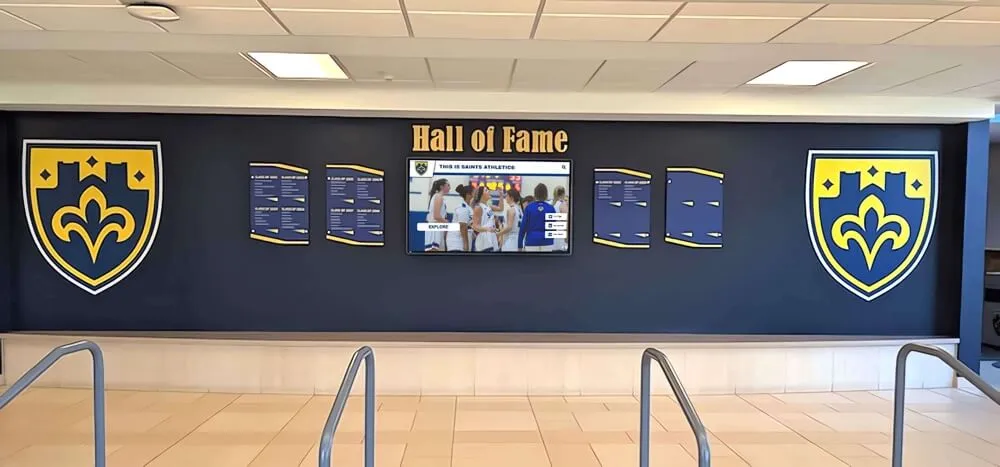
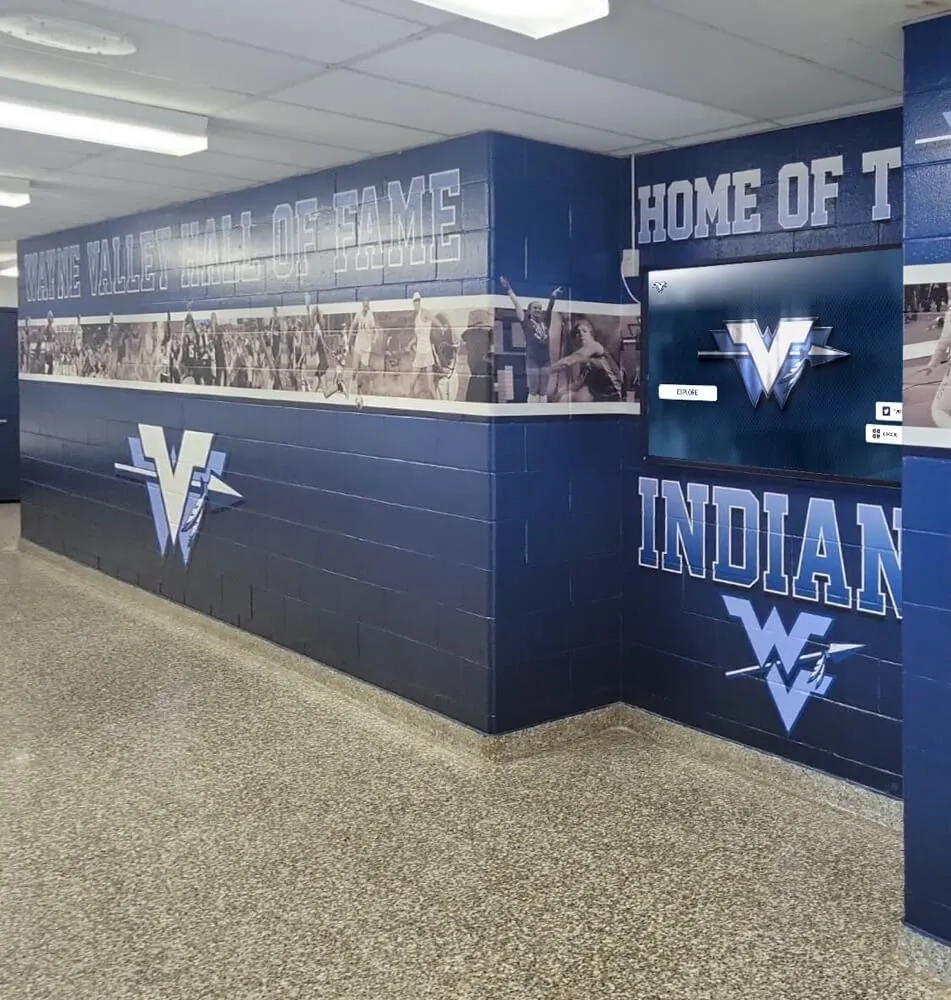
A school heritage display is a curated, permanent or semi-permanent presentation of an institution’s history—combining physical artifacts, historical photographs, alumni stories, and documented traditions in a way that is both visually engaging and educationally meaningful. Done well, it transforms a hallway, lobby, or dedicated gallery into a living record that connects current students to the decades of achievement that came before them.
Yet many schools approach heritage displays reactively: a donated jersey pinned to a corkboard here, a trophy case crammed with overlapping plaques there, and a stack of undated team photos leaning against a baseboards. The result looks like storage, not celebration. Visitors glance and move on; alumni see their era missing entirely; administrators scramble each reunion cycle to find anything displayable.
This guide gives school administrators, advancement teams, archive coordinators, and athletic directors a structured approach to planning, building, and maintaining a school heritage display that people actually stop to read—and that honors every era fairly.
A school heritage display works when it tells a story rather than cataloging objects. The best installations follow a clear chronological or thematic spine, use preservation-safe materials that protect artifacts for future generations, and include human-scale details—captions that name individuals, quotes from alumni, and context that makes the significance of each item legible to someone who wasn’t there.

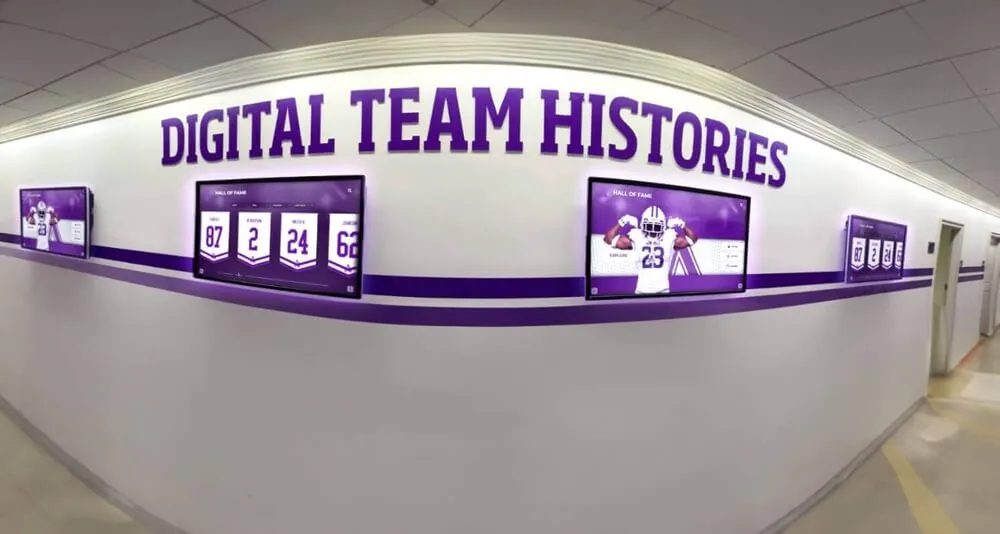
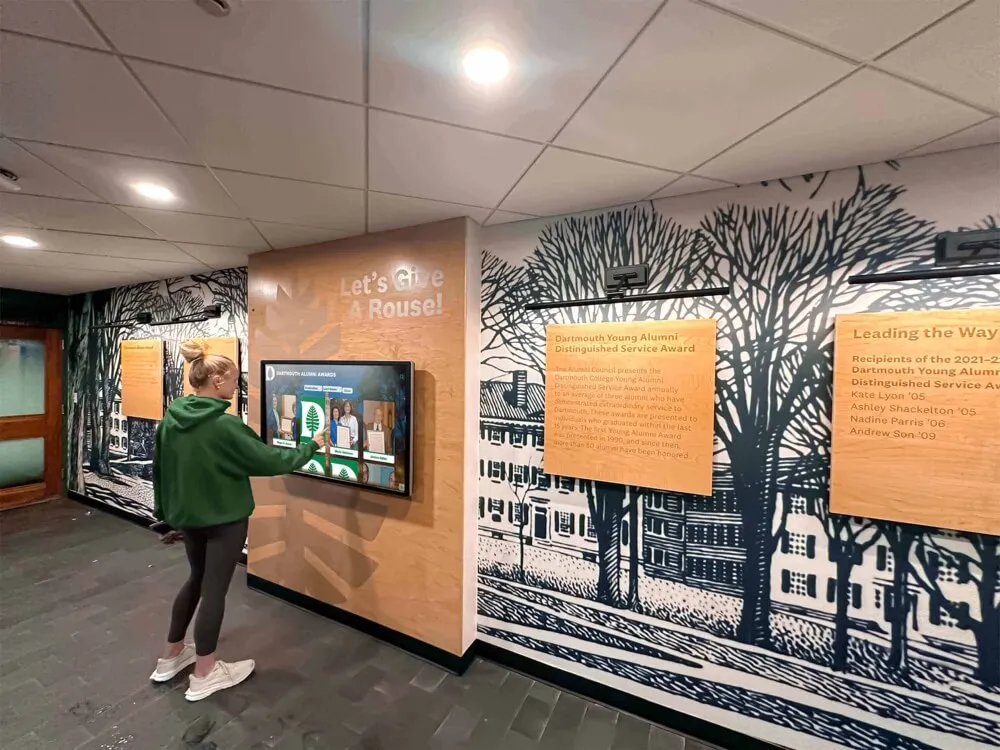
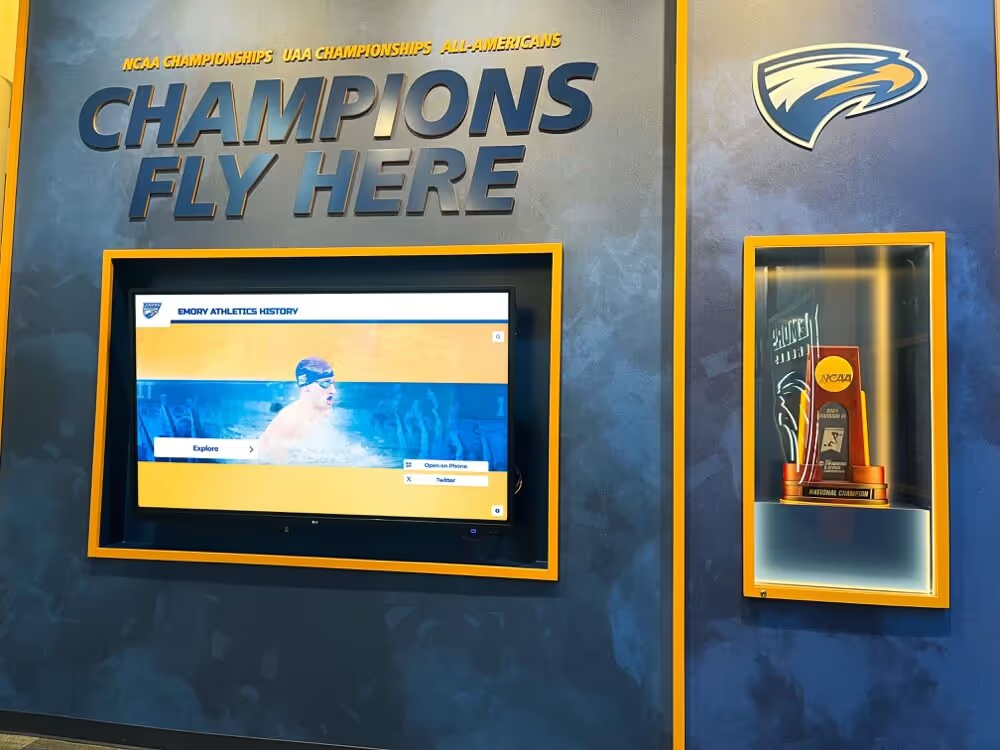
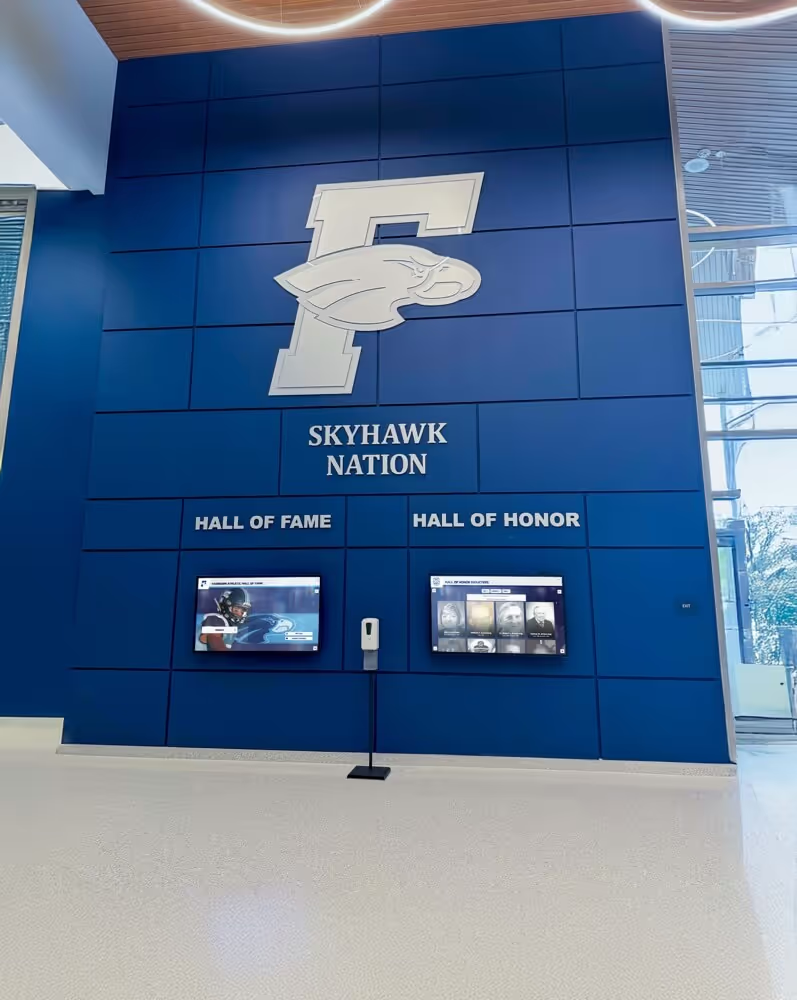
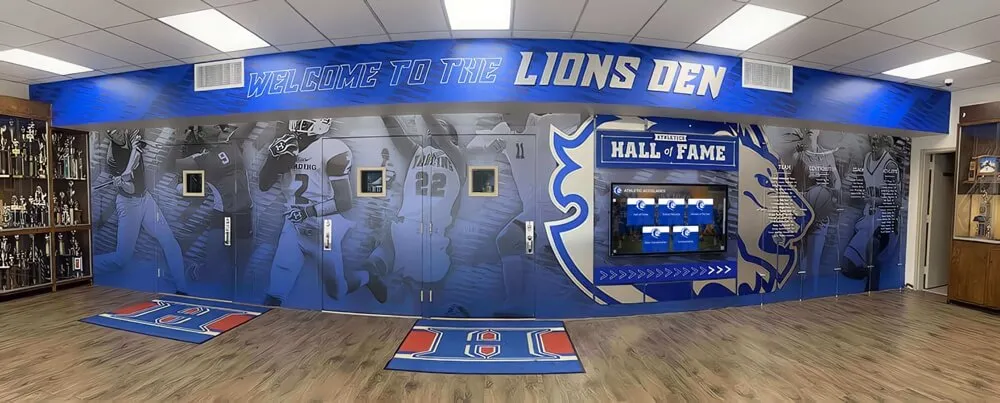
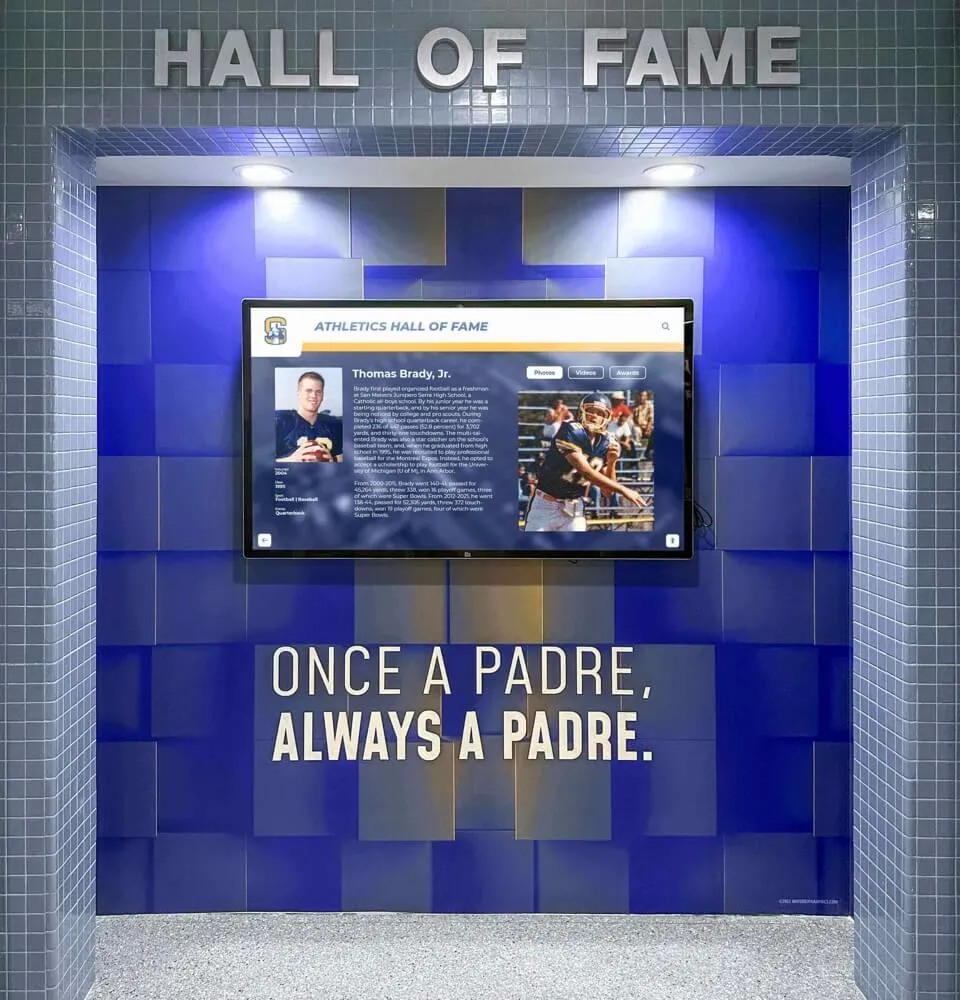
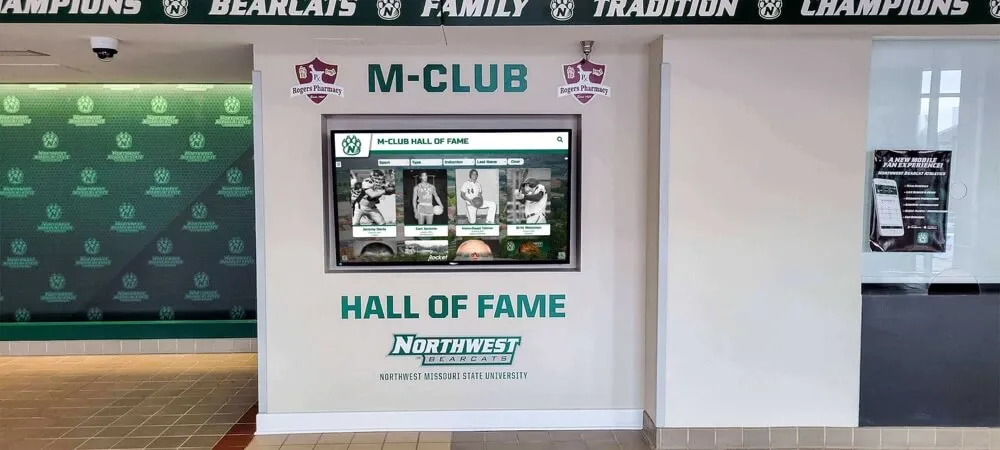
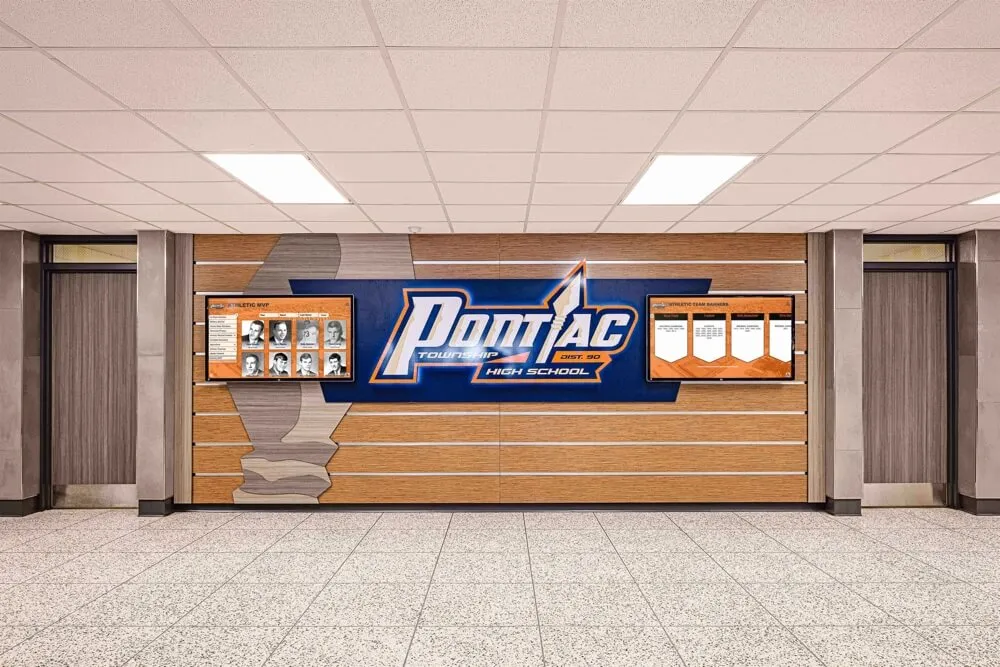
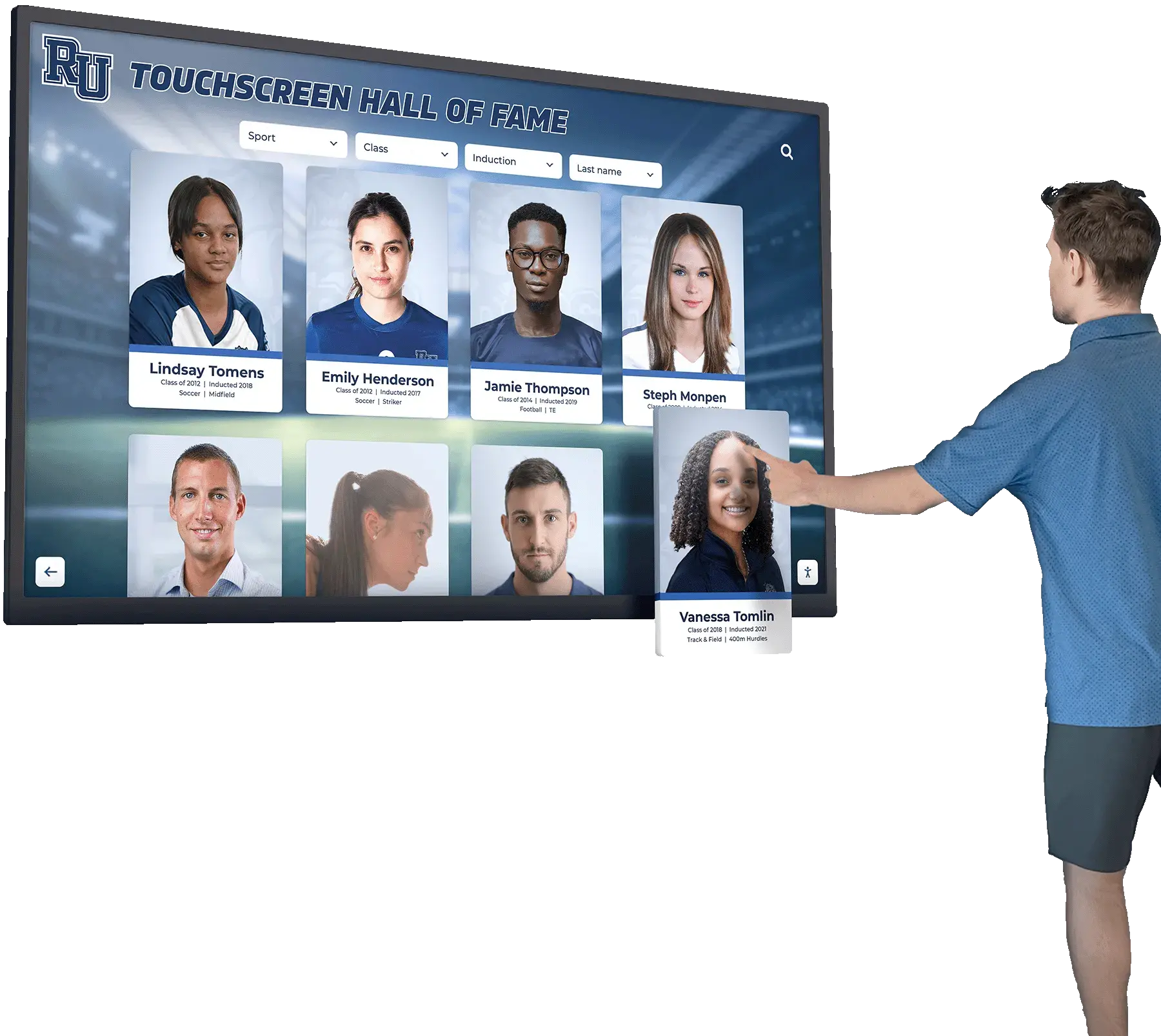
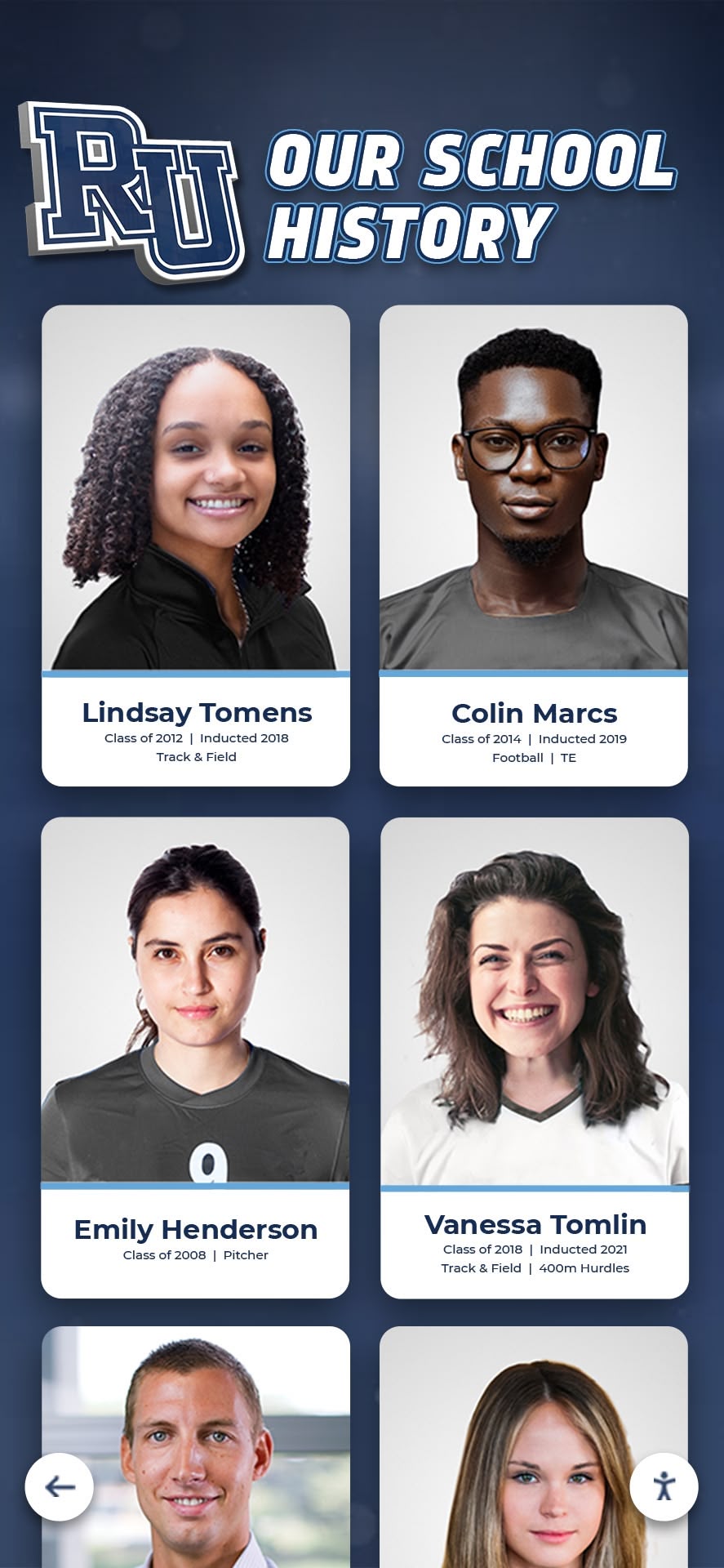
Portrait cards, achievement records, and historical photographs form the core of a well-organized school heritage display
What Makes a School Heritage Display Effective
Before selecting a single artifact, it helps to understand the characteristics that separate a memorable heritage display from a cluttered showcase.
A clear organizational logic. Visitors need an intuitive way to navigate the display. Chronological order (decade by decade) works well for lobbies and hallways. Thematic order (athletics, academics, arts, service, alumni distinction) works better for multi-wall gallery spaces. Either approach is valid—inconsistency between the two is not.
Named individuals at the center. Heritage displays that list teams, departments, or eras without naming individuals feel abstract. Displays that name the pitcher who threw the no-hitter, the student council president who led the building campaign, or the teacher who taught for 38 years become personal. Names create the emotional connection that keeps visitors engaged.
Contextual captions, not just labels. A label reads “1987 State Champions.” A caption reads “The 1987 squad went 24-2, capping the season with a 3-1 win over Westfield in the program’s first state title. Thirteen players from that roster went on to play college sports.” One tells you what; the other makes you care.
Preservation-safe materials throughout. Physical artifacts displayed in non-archival conditions—UV-exposed photographs, items stored in PVC sleeves, trophies wrapped in acidic tissue—deteriorate while on display. The display itself should not be the source of damage.
A path for ongoing additions. Heritage is not finished. A display system that requires tearing everything down to add new inductees, new championship records, or new alumni accomplishments will fall behind within two years. Build with expansion in mind.
Step-by-Step: Building a School Heritage Display
The following six steps apply whether you are creating a heritage display from scratch or reorganizing an existing installation.
Step 1: Audit and Catalog What You Have
Start in the storage rooms, not the hallway. Conduct a physical inventory of everything the school has accumulated: trophies, plaques, photographs (loose and framed), yearbooks, programs, jerseys, letters of recognition, donor records, and anything else with institutional significance. Create a simple spreadsheet logging each item’s approximate date, condition, category, and physical dimensions.
At this stage, condition assessment matters more than selection. Items that are deteriorating, fragile, or unique need stabilization before display. Items that are duplicates or lack any identifying information can be set aside for later decisions. Archival storage materials for schools cover the acid-free boxes, sleeves, and folders you need to protect items during this audit phase.
Step 2: Identify the Display’s Scope and Audience
Define what the heritage display will cover before selecting individual items. Answer these questions:
- What years does the display span? (Full institutional history, or a defined era?)
- What categories of achievement will it include? (Athletics only, or also academics, arts, and service?)
- Who is the primary audience? (Current students, prospective families, alumni, community visitors?)
- Where will it be installed, and how much linear footage is available?
Scope decisions drive everything downstream. A lobby display serving prospective families and casual visitors benefits from a high-level, visually driven presentation with short captions. A dedicated heritage room for alumni events can support deeper text, more artifacts, and specialized categories.
Step 3: Select and Prioritize Artifacts
With your inventory complete and scope defined, select items for inclusion. Prioritize by three criteria:
Significance: Does this item represent a meaningful milestone, first, or record? Does it involve notable individuals or mark turning points in the school’s story?
Displayability: Is the item in good enough condition to display, and does it have visual interest? A typed letter framed behind UV glass can be compelling; a water-damaged plaque cannot.
Coverage: Does your selection represent all eras of the school’s history proportionally? Watch for gaps—a display dominated by one decade or one sport creates a misleading portrait of institutional history.
Physical memorabilia like championship trophies and game balls benefit from proper display case selection to prevent UV damage and physical deterioration while maintaining visibility.
Step 4: Organize by Era or Theme and Build a Layout
Map the selected artifacts onto a physical layout before touching a single wall. Use paper templates or printouts scaled to represent item sizes. Arrange them according to your chosen organizational logic (chronological or thematic), leaving deliberate open space for future additions.
For chronological displays, group items by decade and use visual dividers—a printed year range, a painted horizontal band, a change in frame style—to signal transitions between eras. For thematic displays, create clear category zones, each with its own visual identity that still coheres with the overall system.
Step 5: Write Captions That Tell the Story
Caption writing is where most school heritage displays fall short. Good captions follow a consistent structure:
- Who is being recognized (names, not just titles)
- What the achievement or artifact represents
- Why it matters in the context of the school’s larger story
- When it occurred (specific date or season, not just year where possible)
Keep captions under 75 words for individual items; reserve longer text blocks for section introductions. Use the same font, size, and background color system throughout for visual consistency. If you are archiving school newspaper front pages as part of the display, caption each cover with the headline that ran and two sentences of context.
Step 6: Layer in a Digital Component
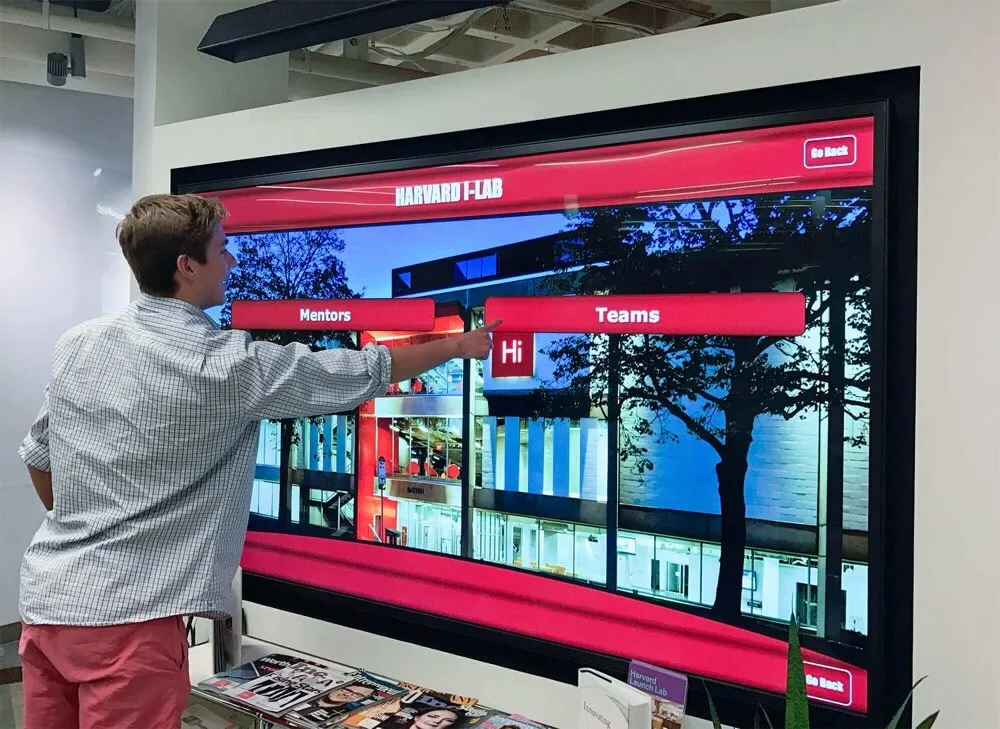
Physical heritage displays have a fixed capacity. Every linear foot of wall can only hold so many frames, cases, and plaques before the display becomes unreadable. A digital touchscreen integrated into the installation unlocks unlimited depth: expanded biographies, video interviews, photo galleries, statistical records, and searchable alumni directories that no physical display can match.
Schools weighing whether to complement their physical display with a digital system will find a detailed comparison in Digital Hall of Fame Display vs. Traditional Trophy Case. For new construction or renovation projects, timing the installation of a gymnasium touchscreen display covers how to sequence the digital component alongside physical construction.
Selecting Artifacts for a School Heritage Display
Every school accumulates more potential display material than any single installation can hold. The following categories represent the richest source material across institutional types.
Championship and Competition Records
Championship trophies and plaques anchor most heritage displays, but the surrounding artifacts carry equal weight:
- Game-used equipment from record-setting seasons (signed balls, game jerseys, programs from championship events)
- Bracket and schedule documents showing the path to a title
- Team photographs from championship years, labeled with every individual
- Scoreboard photographs or newspaper clippings capturing the final result
State and regional titles deserve featured placement. District and conference titles, especially when they represent streaks or firsts, belong on the display too.
Academic and Service Recognition
Heritage displays that focus exclusively on athletics create an incomplete picture of institutional history. Academic achievements worth featuring include:
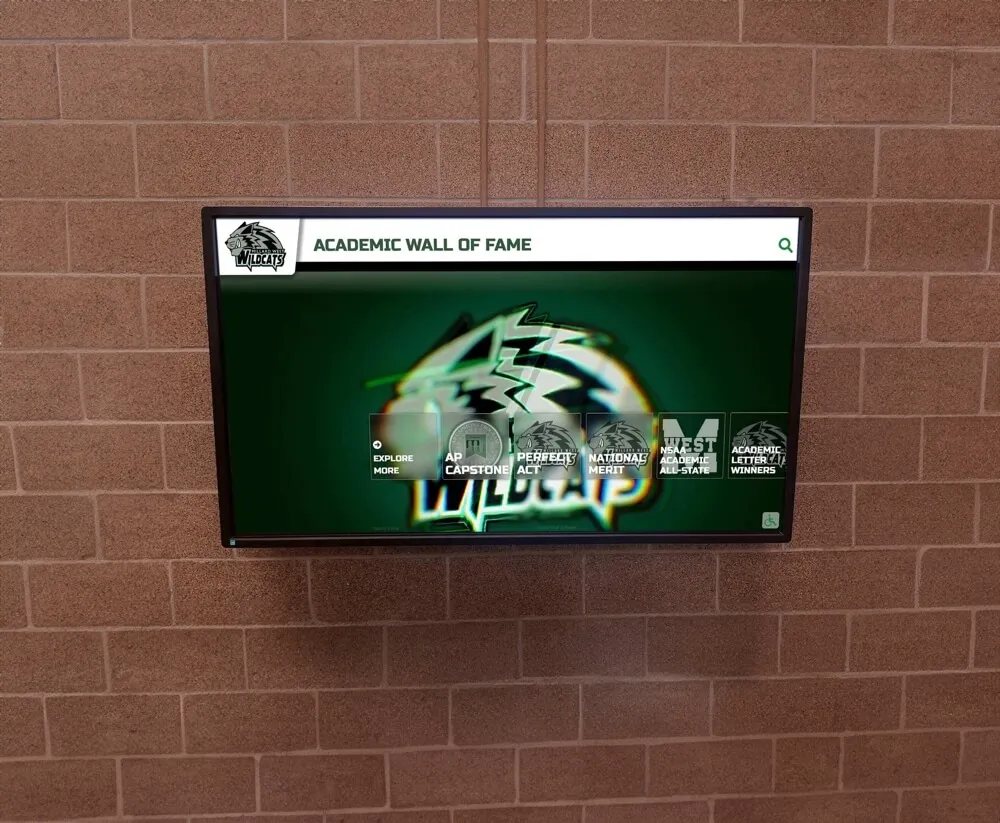
- National Merit, AP Scholar, and Presidential Scholar recognitions by year
- Academic team and quiz bowl state finishes
- Notable alumni who pursued careers in medicine, law, education, science, or public service
- Faculty recognitions: Teacher of the Year awards, advanced degree completions, professional publications
Service milestones—decades of community partnerships, philanthropic campaigns led by students, notable community crisis responses—round out a display that represents the full range of institutional values.
Mascot and Tradition History
School mascots carry decades of symbolic weight that most current students accept without knowing the origin. Documenting and displaying mascot history alongside other heritage elements connects students to the story behind the symbols they wear. Consider including:
- The original mascot design, if documentation exists, alongside current versions
- Photographs of notable mascot costumes from different eras
- Brief text explaining when and why the mascot was adopted or changed
- Images from milestone pep rallies, championships, or community events where the mascot played a central role
Traditions beyond the mascot—class rings, senior activities, homecoming rituals, signature chants—also deserve documentation. Written descriptions with supporting photographs preserve traditions that could otherwise disappear when a key staff member retires.
Historical Photos: Getting Maximum Impact from Visual Records
Photographs are the most emotionally powerful element in any school heritage display. They are also among the most vulnerable to improper display conditions.
Photo Selection Principles
Prefer images with identifiable individuals over crowd shots or building exteriors. A photo labeled “basketball team, 1974” with every player named creates a connection that a generic gymnasium shot cannot.
Mix posed and candid images. Official team photographs establish the record; candid images from practices, hallways, and community events show the human texture of school life.
Represent every decade proportionally. Early eras often have fewer surviving photographs—source aggressively through alumni outreach, yearbook scans, and local newspaper archives to fill gaps.
Photo Preservation for Display
All photographs displayed under ambient light—even interior lighting—are subject to fading over time. Use these practices to slow deterioration:
| Condition | Recommendation |
|---|---|
| Frame glazing | UV-filtering acrylic or museum glass, not standard glass |
| Print surface contact | Acid-free mat board; never mount directly to backing |
| Reproduction vs. original | Display high-quality reproductions; store originals in archival sleeves |
| Lighting | LED sources rated below 50 lux for sensitive materials |
| Temperature and humidity | Stable interior conditions; avoid exterior walls in climates with wide seasonal swings |
For photographs in questionable condition, scan at 600 DPI before displaying the physical print. The digital copy ensures the image survives even if the original deteriorates further.
Alumni Stories: Bringing Voices from the Past into the Present
Alumni profiles are among the most engaging elements in a school heritage display—and the most consistently underdeveloped. Most schools recognize distinguished alumni with a plaque and a name; the most effective displays go further.
What to Include in an Alumni Profile
A compelling heritage display profile includes:
- A current or recent photograph alongside a yearbook or school-era photograph
- Years of attendance and graduation year
- A brief career or service narrative (3-5 sentences) that connects their school experience to their post-graduation path
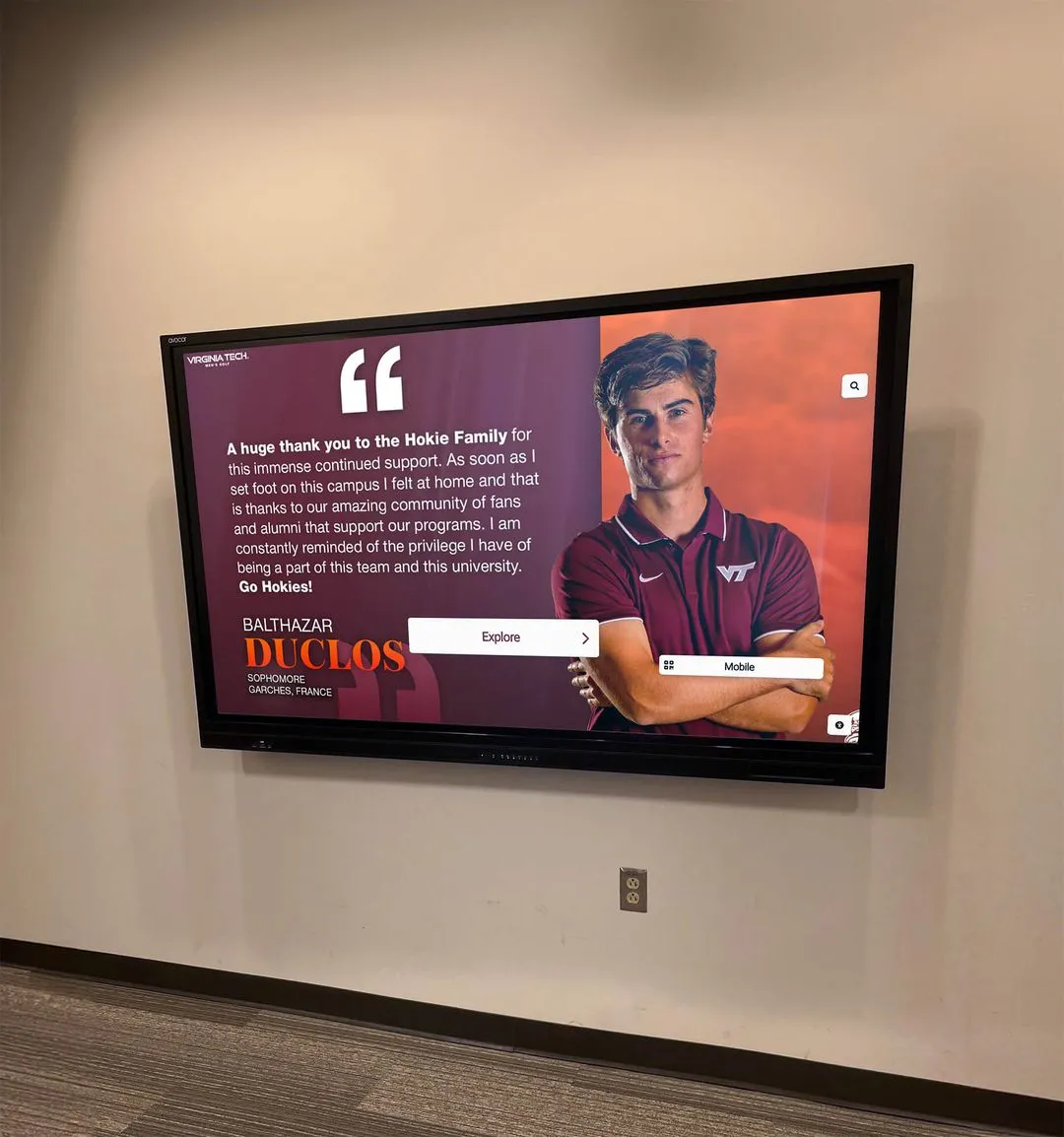
- A direct quote from the alumnus about their time at the school, ideally gathered through an outreach interview
- A specific, named achievement rather than vague recognition (“founded a hospital in rural Guatemala in 2004” rather than “distinguished humanitarian”)
If your school has an active alumni association or advancement office, coordinate with them to gather updated information and photographs. Alumni who know their story has been researched and displayed accurately become significantly more engaged with future outreach efforts.
Gathering Alumni Stories at Scale
Retroactive outreach for alumni who graduated decades ago requires a systematic approach:
- Start with yearbook rosters to build a raw list of graduates by decade
- Cross-reference with social media and LinkedIn to locate current contact information
- Send a structured questionnaire asking for a current photograph, a 100-word career summary, and a school memory
- Invite submissions at alumni events—reunions, athletic award nights, and homecoming are high-yield moments when graduates are already thinking about their school years
- Publish an online submission form so alumni can contribute asynchronously
Alumni recognition event planning covers how to structure the recognition event itself to complement a heritage display launch or expansion.
A digital touchscreen component dramatically expands how many alumni stories you can showcase. Rather than choosing 20 profiles for the physical wall, you can maintain a searchable database of hundreds, with the physical display surfacing a rotating or curated selection.
Honoring School Traditions and Rituals
Traditions are the hardest heritage element to display because they are inherently experiential—they exist in the doing, not the artifact. Yet documenting traditions through photographs, written descriptions, and collected accounts creates a record that connects current students to the living history they are participating in.
Documentation Strategies for School Traditions
Photograph traditions in action every year. A homecoming parade, a senior class prank, a pre-game locker room ritual photographed annually across three decades becomes a compelling chronological display in its own right.
Collect first-person accounts. Ask retiring teachers, long-serving coaches, and returning alumni to record brief written or video accounts of traditions they participated in. These firsthand voices make traditions real in a way that institutional descriptions cannot.
Document origin stories when they are known. Many school traditions began with a specific person, a specific year, or a specific circumstance. If that origin story is documented—even imperfectly—include it. “The tradition began when coach Martinez challenged the team to run the stairs after the 1991 regional loss, and every team since has done it before each playoff game” is far more engaging than “a long-standing tradition.”
Acknowledge traditions that ended. Schools change. Traditions that no longer exist—because they were discontinued, became impractical, or were reconsidered—are still part of the school’s history. A brief, factual acknowledgment of past traditions that did not survive is honest and often appreciated by alumni who remember them.
Preservation-Safe Display Materials: A Quick Reference
| Material Category | Safe Choice | Avoid |
|---|---|---|
| Frame glazing | UV-filtering acrylic or museum glass | Standard glass, polystyrene |
| Matting | 100% cotton rag or acid-free mat board | Standard cardboard mat board |
| Mounting adhesive | Acid-free PVA, reversible mounting tissue | Rubber cement, pressure-sensitive tape |
| Photo sleeves (for stored originals) | Polyester (Mylar), polypropylene, polyethylene | PVC “non-glare” sleeves |
| Display boxes for 3D artifacts | Acid-free foam interior, UV acrylic front | Cardboard-lined cases, standard plastic |
| Labels and caption cards | Printed on acid-free card stock | Self-adhesive labels applied directly to artifacts |
| Fabric display (jerseys, banners) | Conservation-grade display hangers, UV filtering | Direct pinning through fabric, wire hangers |
Physical vs. Digital Heritage Displays: A Practical Comparison
| Feature | Physical-Only Display | Physical + Digital |
|---|---|---|
| Artifact capacity | Limited by wall and case space | Unlimited digital archive alongside physical anchors |
| Content depth | Caption text only | Full biographies, video, audio, statistics |
| Searchability | Sequential browsing only | Keyword, name, year, and category search |
| Accessibility | Requires in-person visit | Remote access via web portal for alumni |
| Update process | Physical reinstallation | Content management system update |
| Cost to expand | High (construction, materials) | Low (add records to database) |
| Alumni engagement | Passive viewing | Active browsing, self-submission |
| Maintenance | Periodic physical upkeep | Software updates, content moderation |
For schools in the planning phase, the physical vs. digital hall of fame comparison provides a detailed cost and space analysis across both approaches.
Common Questions About School Heritage Displays
How do we handle eras for which we have almost no documentation? Start with alumni outreach. Graduates from underdocumented decades often have personal collections of photographs, programs, and newspaper clippings they are willing to donate or loan for scanning. Local newspaper archives and public library photo collections are secondary sources that frequently hold school-event coverage going back to the mid-twentieth century.
What should we do with artifacts donated by alumni families that are not display-worthy? Accept gratefully and store properly. Many items that are not suitable for the current display are still appropriate for a searchable archive, and some may become display-worthy as the collection grows or the display is expanded. Document the provenance of every donation—who gave it, what it is, and when the school received it—so the connection to the donor family is maintained.
How do we manage the politics of deciding whose story gets featured? Establish and publish explicit selection criteria before making individual decisions. Criteria grounded in verifiable achievement (first state title, longest-serving faculty member, highest alumni distinction) are defensible. Criteria that feel subjective invite objection. A formal Heritage Display Committee that includes alumni representation, faculty, and administration distributes the decision-making and reduces the perception of favoritism.
How often should a school heritage display be updated? At a minimum, annually—adding new inductees and current-year achievements to keep the display current. Many schools build in a larger refresh every three to five years to reconsider the overall layout, address gaps in coverage, and incorporate major new acquisitions. The annual update cycle is easiest to maintain when at least one staff member has dedicated time and ownership over the heritage display as a standing responsibility.
Can a heritage display include living faculty and staff alongside historical alumni? Yes, and it often strengthens the display. Long-serving teachers and coaches represent institutional continuity in ways that rotating student and alumni profiles cannot. Feature them with the same biographical depth applied to alumni—named achievements, career milestones, and a current photograph alongside an image from their early years at the school.
Bring Your School's Heritage Display to Life
The physical artifacts, historical photographs, and alumni stories your school has collected deserve more than a crowded trophy case. Rocket Alumni Solutions helps schools build interactive digital heritage displays that showcase unlimited history alongside physical installations—searchable by name, year, or category, and accessible to alumni anywhere in the world.
Request a DemoConclusion
A school heritage display is one of the most durable investments an institution can make in its own identity. Properly built, it outlasts every administrator who contributed to it, continues to grow with each graduating class, and gives every alumnus—from the first class to the most recent—a visible place in the institution’s story.
The six-step process outlined here—audit, scope, select, organize, caption, and extend digitally—applies regardless of your school’s size, budget, or the state of your existing archive. Start with what you have, document it properly, and build a system that makes future additions straightforward rather than a recurring crisis.
For schools ready to connect their physical heritage display to a modern digital recognition system, explore school and team history archives and donor recognition displays at Touch Archive, or request a demo to see how Rocket Alumni Solutions can help your institution build a heritage display that does justice to every era in your school’s history.
Live Example: Rocket Alumni Solutions Touchscreen Display
Interact with a live example (16:9 scaled 1920x1080 display). All content is automatically responsive to all screen sizes and orientations.