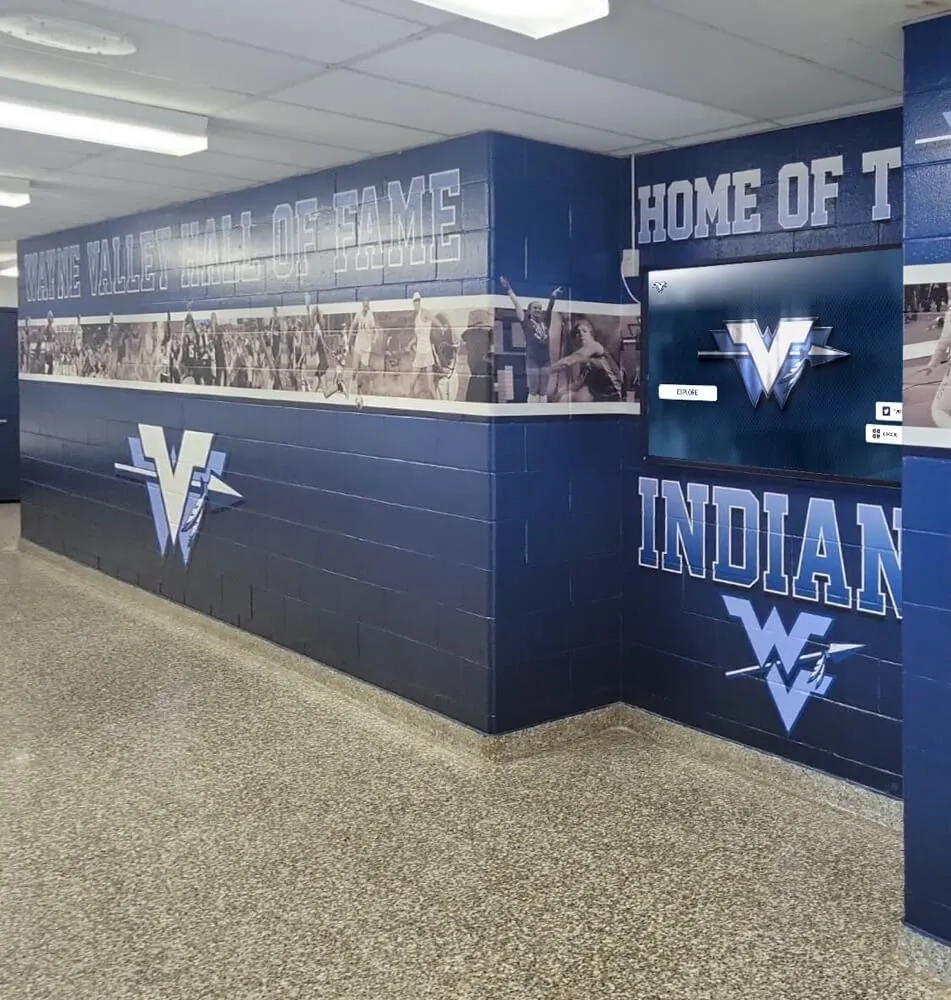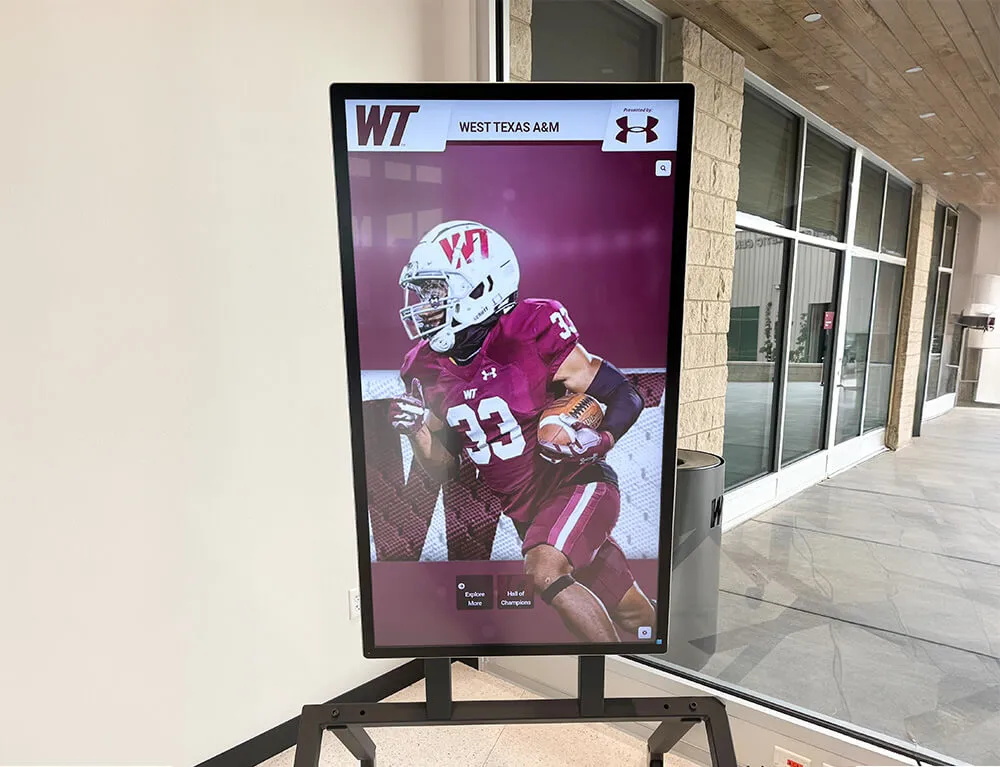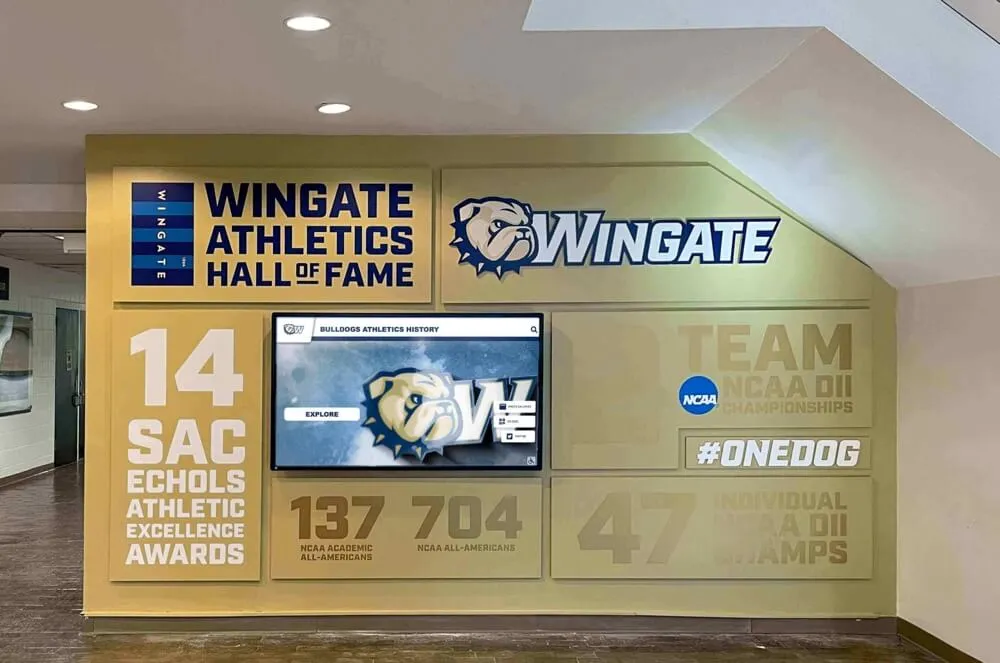




Walk into any high school gym across America and you’ll immediately sense the power of school mascots. Eagles soar across gymnasium walls, bulldogs guard trophy cases, and panthers prowl through hallways—each mascot representing decades of tradition, championship moments, and school pride. These symbols unite students, alumni, and communities around shared identity, creating connections that endure long after graduation.
School mascots represent far more than cartoon characters on spirit wear. They embody institutional values, commemorate founding histories, and serve as rallying points during athletic competitions and school events. The most memorable mascots tell stories—whether honoring local wildlife, celebrating regional heritage, or embodying characteristics the school community aspires to demonstrate.
This comprehensive guide showcases 25 of the most iconic school mascots across America and explores how modern schools preserve and display their mascot legacy through digital archives, interactive recognition systems, and creative visual storytelling that keeps traditions alive for current and future generations.
School mascots create immediate visual identity—the difference between “that school on Main Street” and “the Wildcats.” These symbols appear on everything from uniforms to diplomas, creating consistent branding that strengthens school culture and alumni connections across decades.

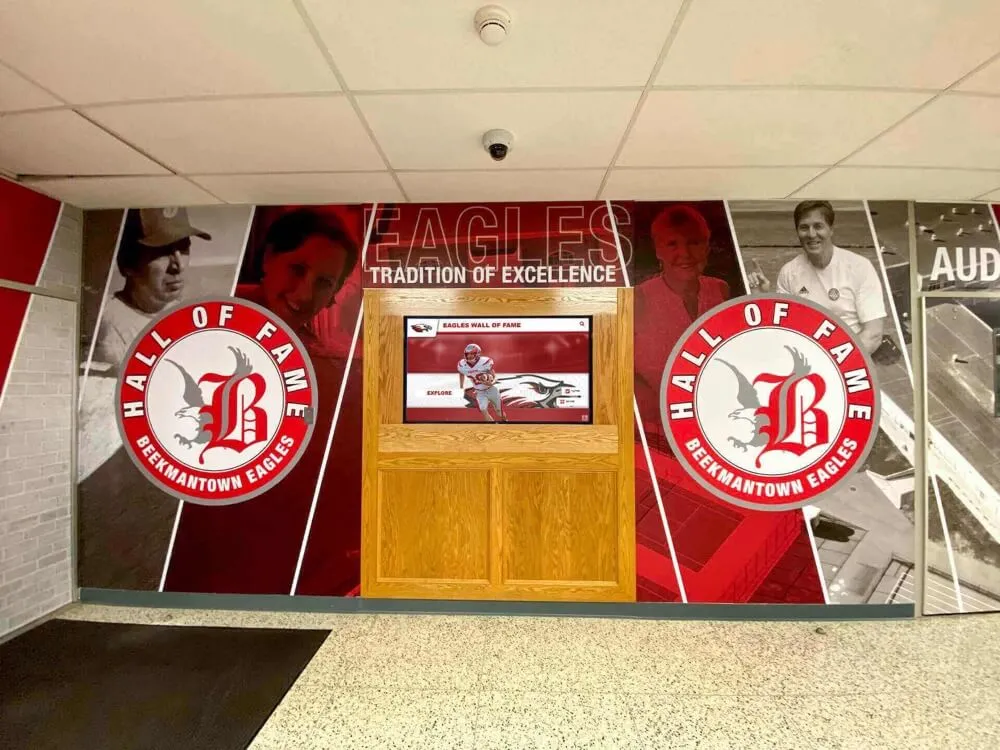
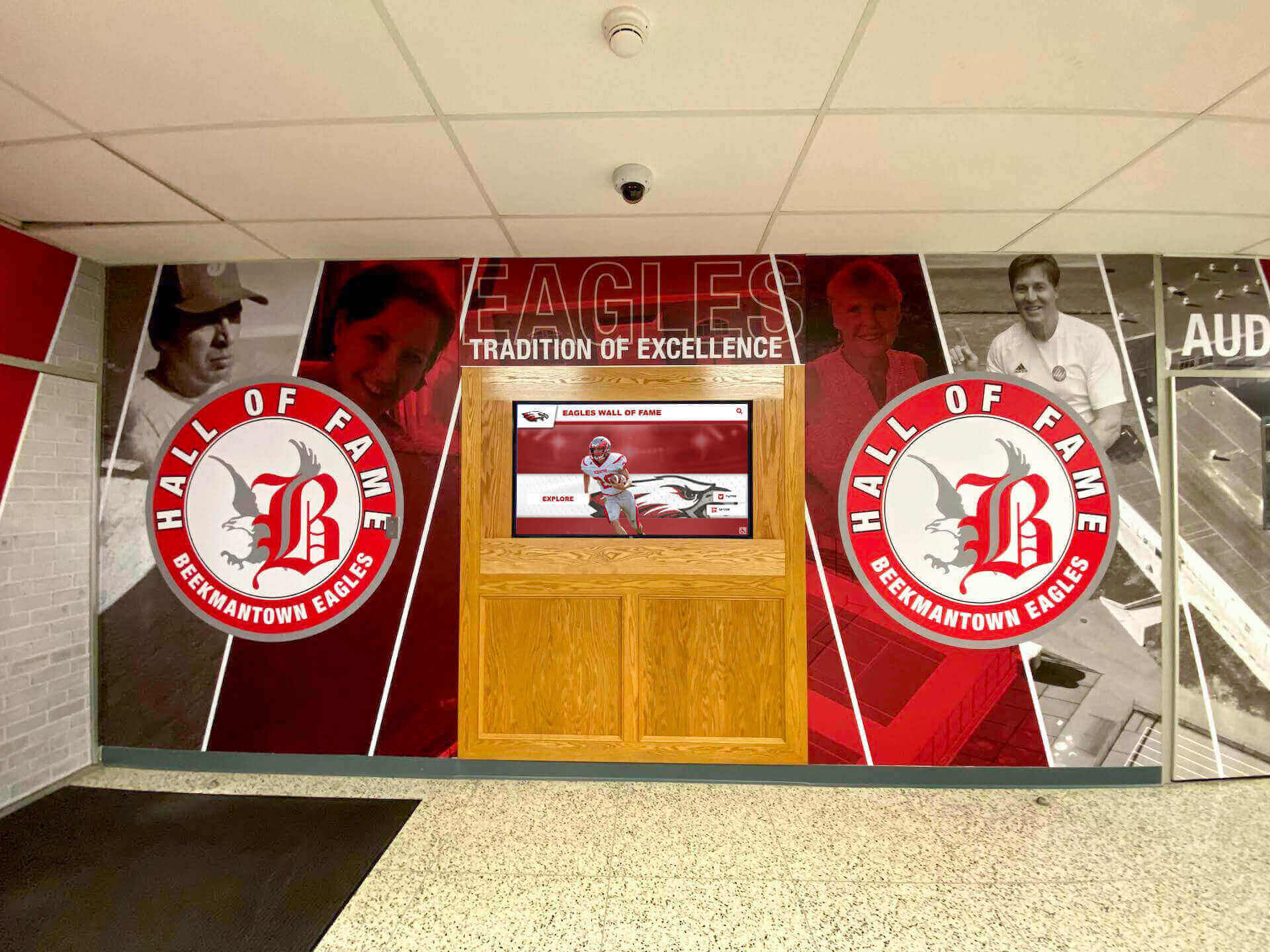
The Beekmantown Eagles Hall of Fame demonstrates how schools prominently feature their mascot identity in recognition displays
The Most Popular School Mascot Categories
School mascots generally fall into distinct categories, each carrying specific symbolic meanings that resonate with school communities.
Birds of Prey: Eagles, Hawks, and Falcons
Birds of prey dominate school mascot choices across America, with Eagles leading as one of the most popular selections nationwide.
Why Schools Choose Bird Mascots
- Represent vision, freedom, and soaring achievement
- Embody predatory excellence and competitive spirit
- Connect to American national symbols and patriotic values
- Offer dramatic visual opportunities for artwork and logos
- Provide strong athletic associations with speed and precision
Eagles appear as mascots at thousands of high schools and colleges, from Boston College’s Baldwin the Eagle to Auburn University’s War Eagle tradition. The mascot’s versatility works across all sports—from basketball teams “soaring” to victory to track athletes reaching new “heights.”
Hawks and Falcons follow similar symbolic paths, representing focus, agility, and hunting prowess that translate naturally to athletic competition. Schools with these mascots often emphasize the predatory focus athletes need to succeed.
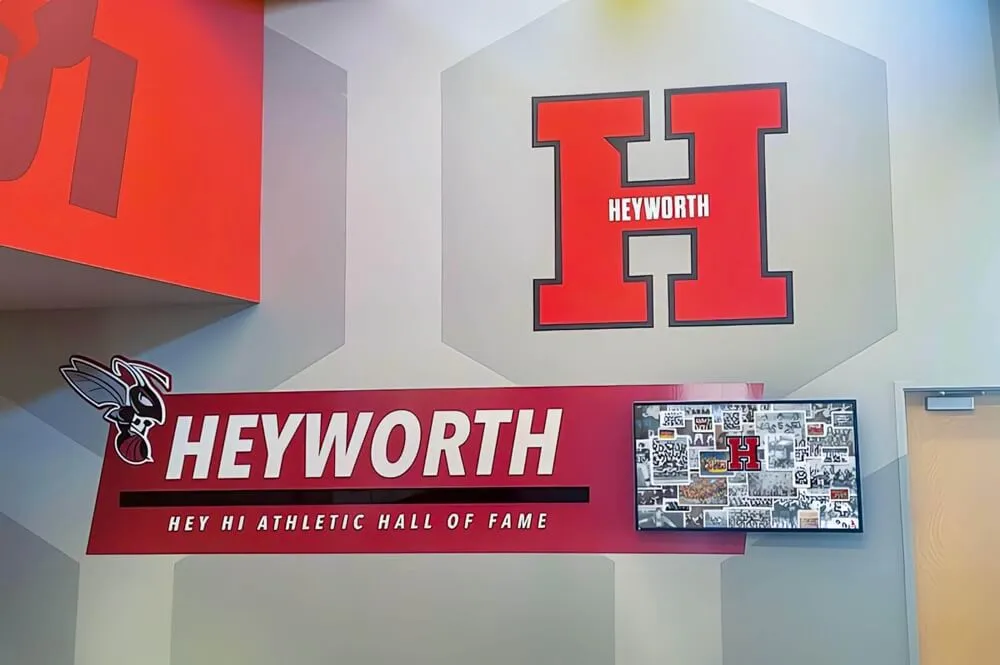
Powerful Land Animals: Bulldogs, Panthers, and Tigers
Large predatory mammals represent strength, courage, and dominance—qualities every athletic program wants to project.
Bulldogs
Bulldogs rank among the top five most popular mascots nationwide, chosen for their tenacious, never-quit attitude. The University of Georgia’s Uga represents perhaps America’s most famous bulldog mascot, but thousands of high schools embrace the stocky, determined image. Bulldogs symbolize:
- Unwavering determination and persistence
- Defensive toughness and territoriality
- Loyalty to team and school
- Working-class values and blue-collar work ethic
Panthers and Tigers
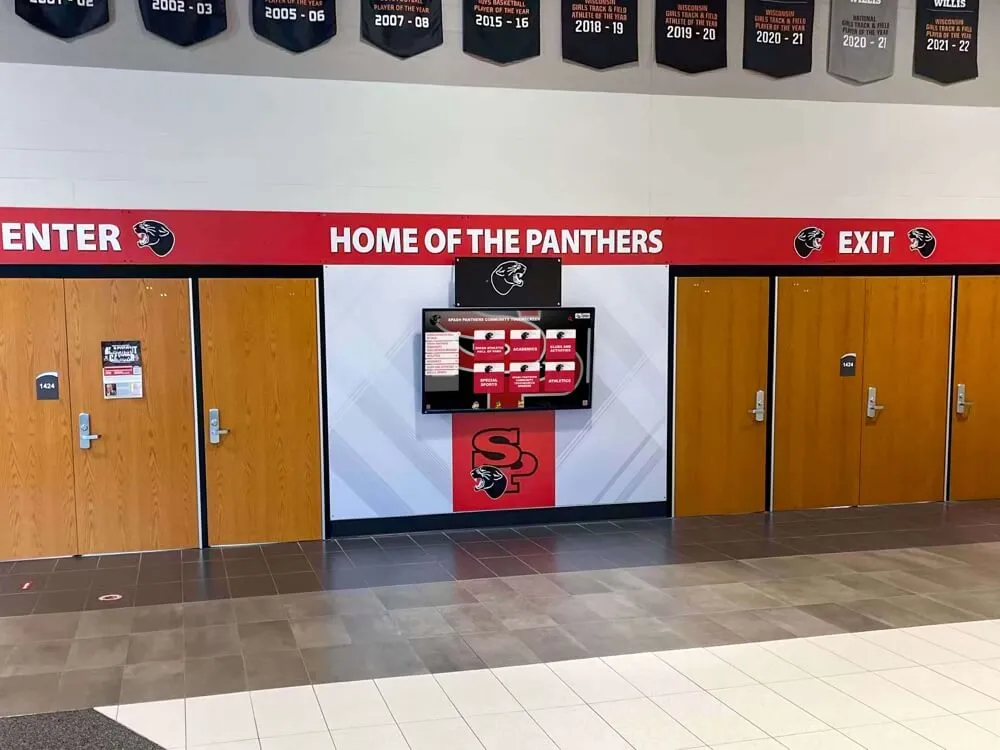
These big cats represent sleek power, explosive athleticism, and predatory instincts. Panthers work particularly well for schools emphasizing stealth and strategic thinking, while Tigers carry associations with both power and grace. Many schools with these mascots feature dramatic artistic representations throughout their facilities.
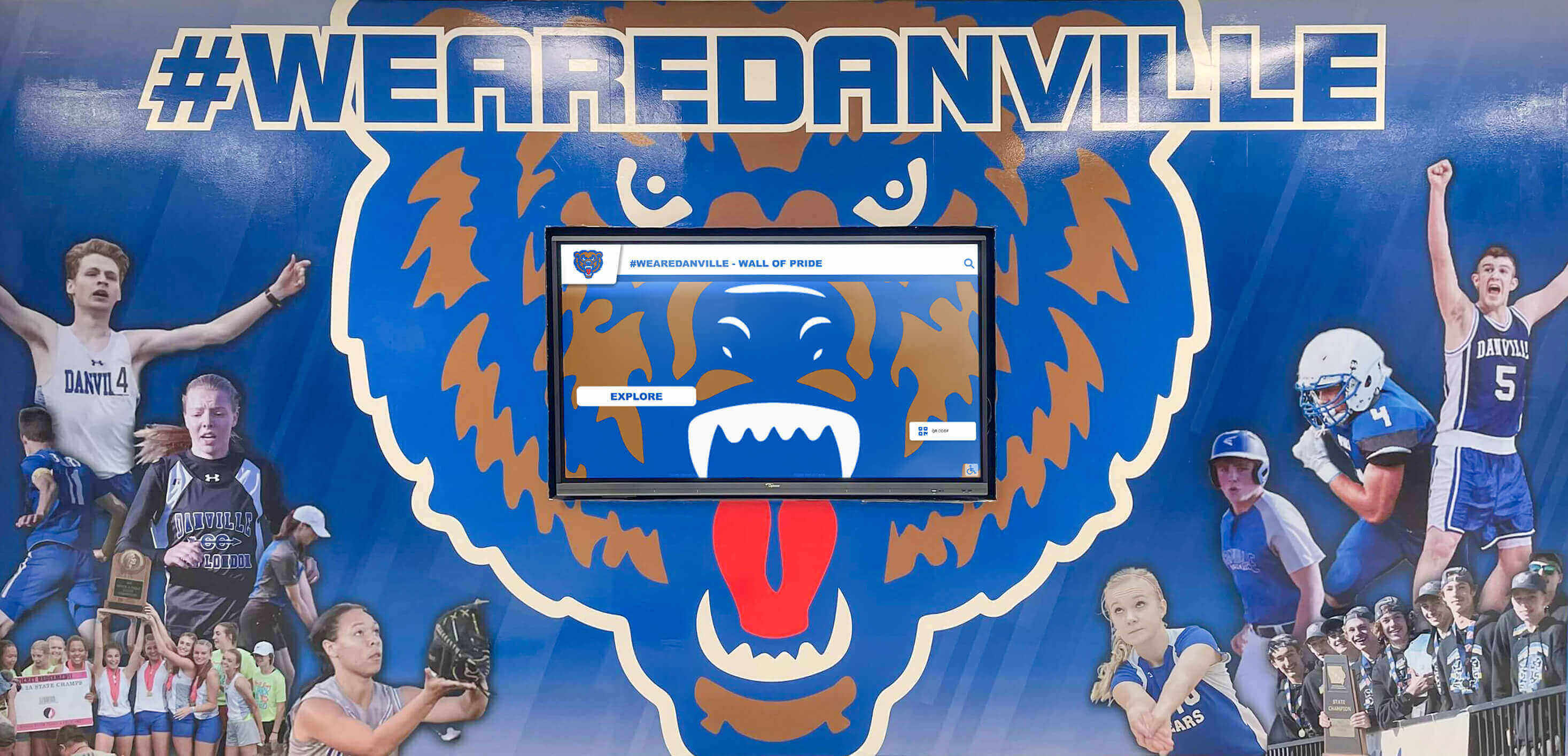
Schools like Danville integrate their bear mascot prominently into athletic murals and digital recognition displays
Warriors and Historical Figures: Knights, Trojans, and Spartans
Warrior mascots connect schools to classical history and values of courage, honor, and tactical excellence.
Knights
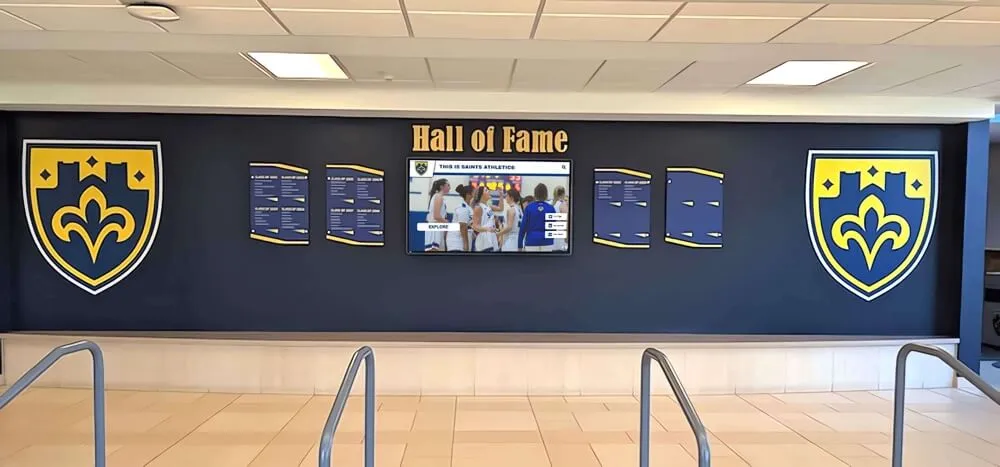
Medieval knights represent chivalry, protection, and noble combat. Schools choosing Knight mascots often emphasize honor codes, defending the school’s reputation, and fighting honorably for victory. The visual imagery—shields, armor, swords—creates rich opportunities for logos, uniforms, and facility decorations. Many schools feature elaborate knight murals in their athletic hall of fame displays.
Trojans
Trojan mascots reference the legendary warriors of ancient Troy, emphasizing strategic thinking, courage in adversity, and unwavering loyalty to community. The University of Southern California’s Trojans provide the most visible example, but countless high schools embrace this classical warrior tradition.
Spartans
Spartan mascots invoke the legendary Greek warriors known for discipline, sacrifice, and tactical brilliance. Schools selecting Spartan mascots often emphasize mental toughness, team discipline, and the willingness to endure difficult training for competitive excellence.
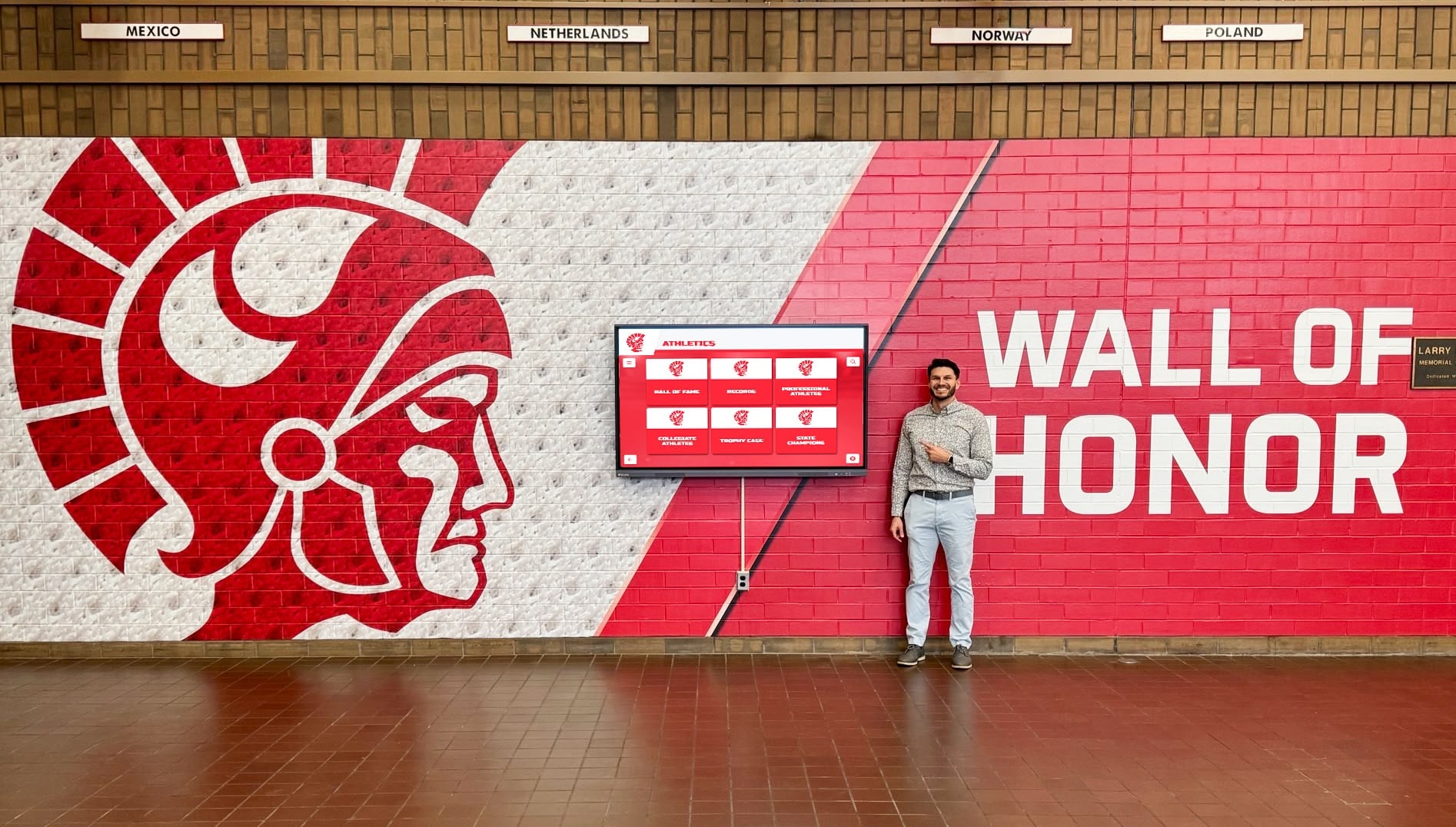
Trojan mascots lend themselves to dramatic visual displays celebrating school athletic achievements
Regional and Local Identity Mascots
Some of the most meaningful mascots reflect local geography, industries, or regional characteristics.
Miners, Lumberjacks, and Cowboys
Schools in mining regions often embrace Miner mascots honoring local industrial heritage. Lumberjack mascots appear in Pacific Northwest communities with forestry traditions, while Cowboy mascots dominate in Western and Southwestern states celebrating ranching culture.
These mascots create powerful connections between school and community identity, reminding students their school reflects local values and history.
Native Wildlife
Many schools choose mascots representing local wildlife—Gators in Florida, Grizzlies in Montana, Lobsters in Maine coastal communities. These choices connect students to their environment while celebrating regional uniqueness.
25 Iconic School Mascots Across America
Let’s explore 25 memorable school mascots that exemplify creativity, tradition, and school pride.
1. The Eagles
Symbolism: Vision, freedom, national pride, soaring achievement
Why It Works: Eagles provide timeless symbolism connecting patriotism with athletic excellence. The visual flexibility allows for dramatic artistic interpretations across all school materials.
2. The Bulldogs
Symbolism: Tenacity, determination, defensive toughness, loyalty
Why It Works: Bulldogs represent the grinding, never-quit attitude that resonates across all sports and academic pursuits.
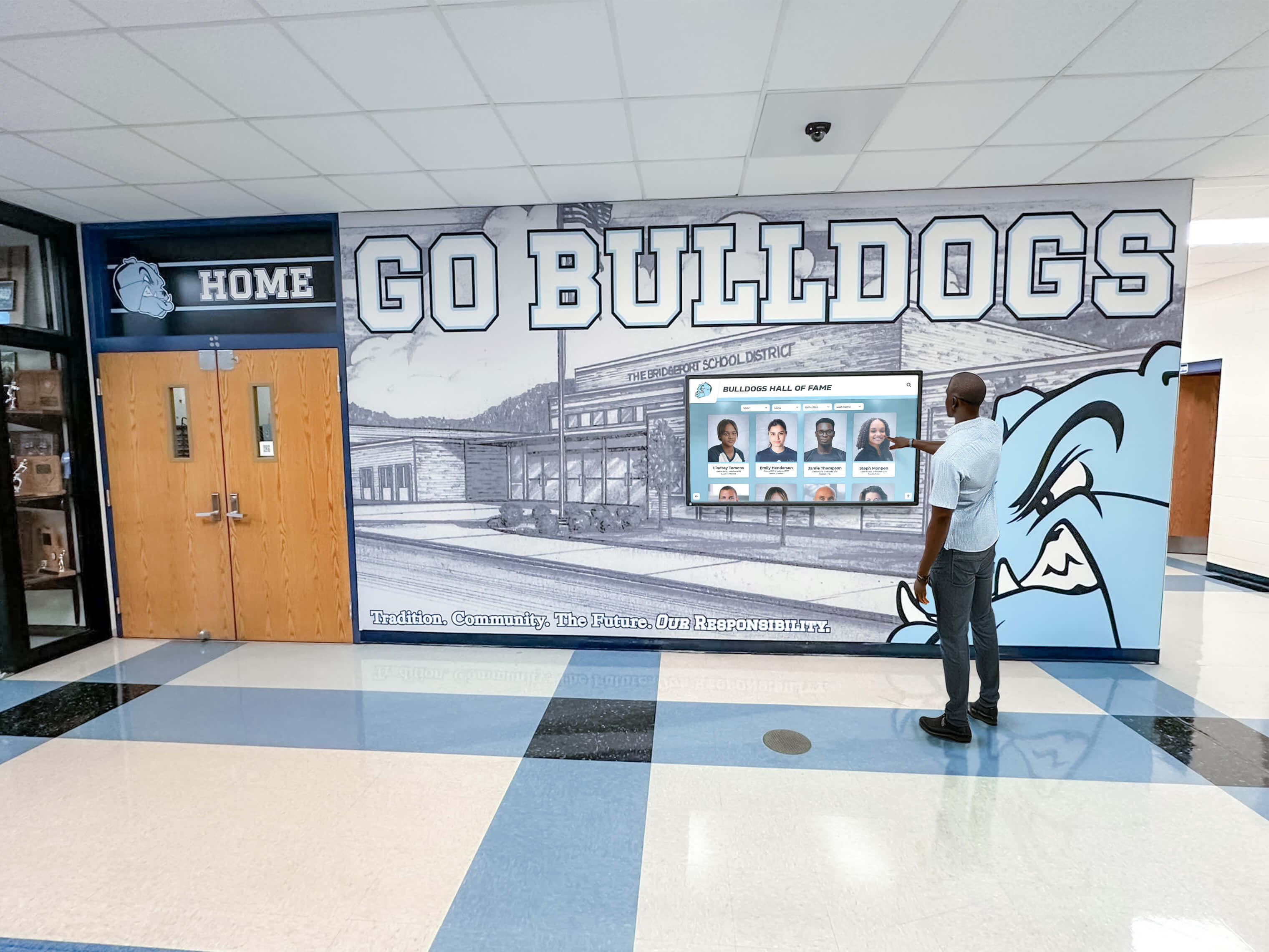
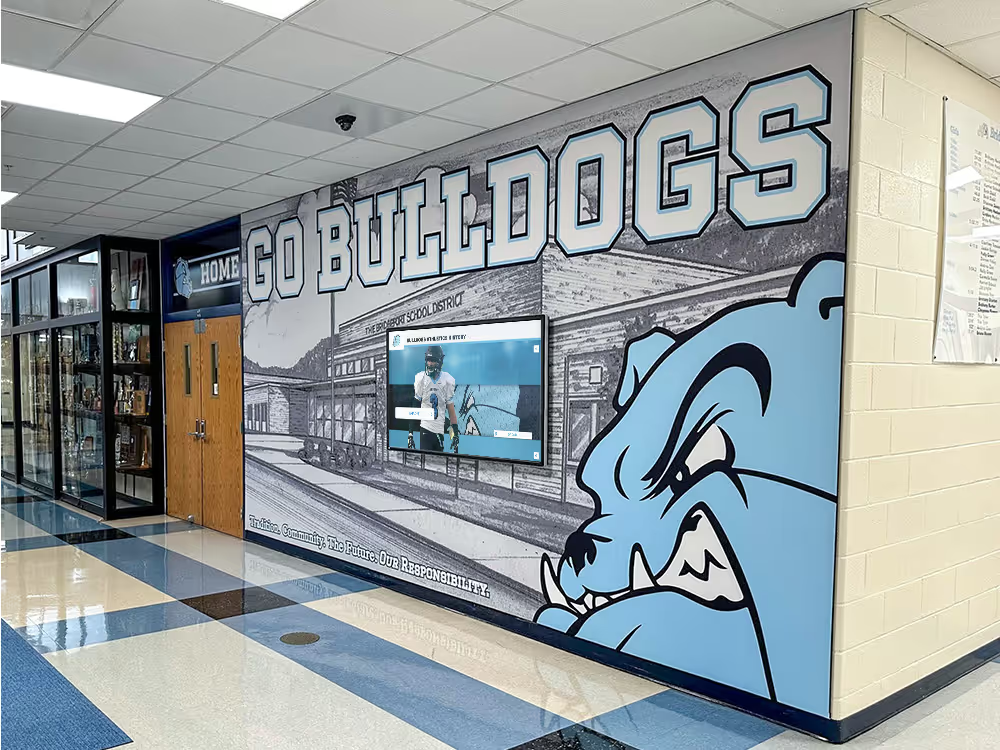
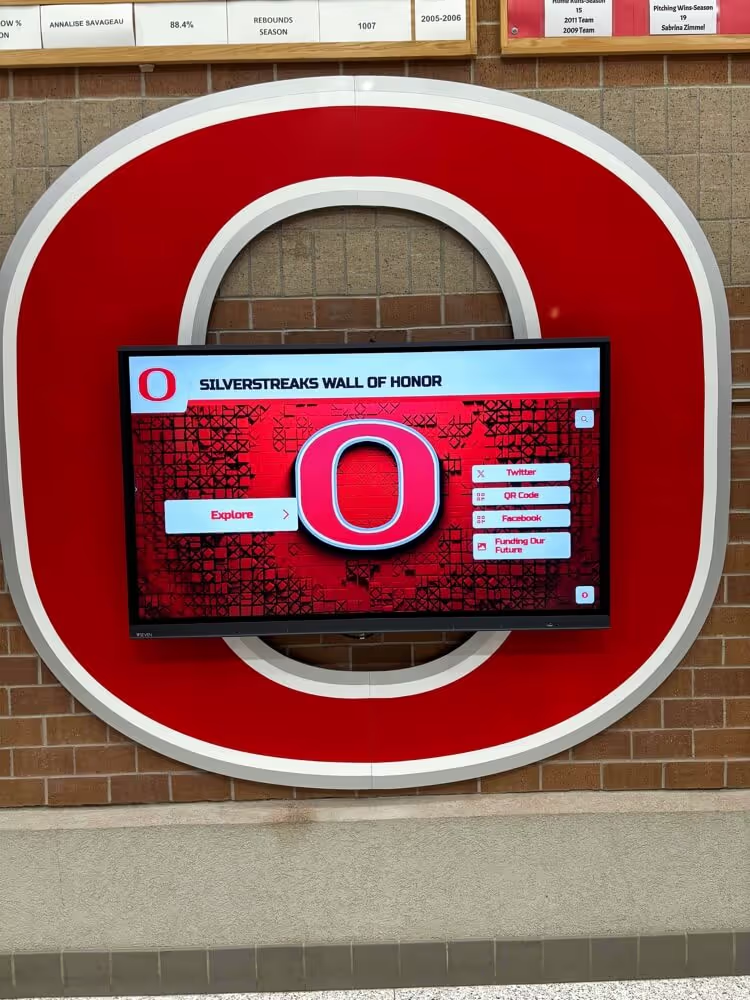
Modern schools integrate their bulldog mascot identity into interactive recognition systems celebrating program history
3. The Panthers
Symbolism: Stealth, power, explosive athleticism, strategic hunting
Why It Works: Panthers combine grace with power, working equally well for both physical sports and strategic competitions.
4. The Tigers
Symbolism: Courage, strength, competitive ferocity, grace under pressure
Why It Works: Tigers represent apex predators, creating immediate associations with championship-level competition.
5. The Knights
Symbolism: Honor, chivalry, protective courage, noble combat
Why It Works: Medieval imagery provides rich visual opportunities while emphasizing character values beyond athletic success.
6. The Wildcats
Symbolism: Fierce independence, territorial pride, scrappy competitiveness
Why It Works: Wildcats suggest untamed energy and fighting spirit, particularly resonant for smaller schools punching above their weight class.
7. The Warriors
Symbolism: Courage in battle, team loyalty, tactical excellence
Why It Works: Generic enough to avoid cultural appropriation concerns while maintaining strong competitive associations.
8. The Bears
Symbolism: Strength, protective instincts, powerful presence, regional pride
Why It Works: Bears combine intimidating size with positive associations—particularly in regions where bears represent local wildlife.
9. The Lions
Symbolism: Pride, royal authority, pack leadership, dominance
Why It Works: Lions emphasize both individual excellence and pack coordination, perfect metaphors for team sports.
10. The Trojans
Symbolism: Classical warrior tradition, strategic thinking, legendary courage
Why It Works: Connects to timeless stories of courage and sacrifice while offering sophisticated visual branding opportunities.
11. The Spartans
Symbolism: Discipline, sacrifice, tactical brilliance, mental toughness
Why It Works: Spartan mascots emphasize the training and discipline required for sustained excellence.
12. The Hawks
Symbolism: Focus, hunting precision, aerial superiority, keen vision
Why It Works: Hawks represent specialized skills and strategic patience, perfect for schools emphasizing smart competition.
13. The Falcons
Symbolism: Speed, precision strikes, aerodynamic excellence
Why It Works: Falcons combine grace with lethal effectiveness, creating associations with technical excellence.
14. The Rams
Symbolism: Head-on power, unwavering forward momentum, territorial defense
Why It Works: Rams suggest direct, powerful approaches—perfect for programs known for physical, aggressive play.
15. The Cougars
Symbolism: Solitary excellence, ambush tactics, territorial dominance
Why It Works: Cougars represent patient stalking and explosive strikes, resonating with programs emphasizing strategic gameplay.
16. The Mustangs
Symbolism: Untamed spirit, speed, freedom, Western heritage
Why It Works: Mustangs connect to American Western mythology while emphasizing speed and independent spirit.
17. The Hornets
Symbolism: Collective defense, painful retaliation, swarm coordination
Why It Works: Hornets emphasize team coordination and the dangerous nature of unified group action.
18. The Pirates
Symbolism: Adventure, treasure pursuit, tactical raids, rebellious spirit
Why It Works: Pirates offer fun, memorable imagery while suggesting strategic thinking and bold action.
19. The Vikings
Symbolism: Exploration, courage, seafaring skill, warrior culture
Why It Works: Vikings combine adventure with warrior traditions, offering rich visual opportunities for Scandinavian-heritage communities.
20. The Wolverines
Symbolism: Disproportionate toughness, fearless aggression, pound-for-pound power
Why It Works: Wolverines represent the smaller competitor who refuses to back down, perfect for underdog programs.
21. The Bearcats
Symbolism: Hybrid vigor, versatile abilities, unexpected power
Why It Works: The imaginary bearcat combines strengths of multiple animals, suggesting comprehensive athletic excellence.
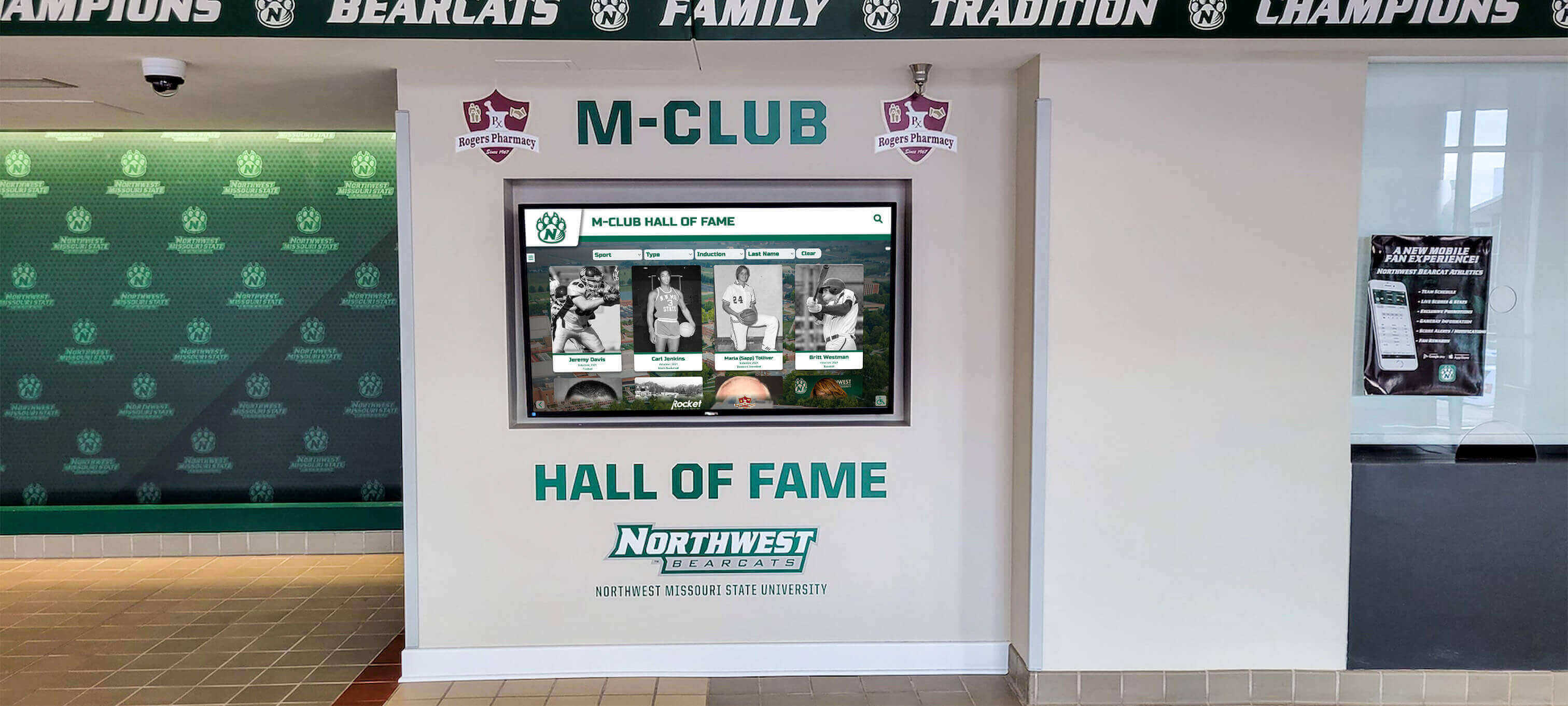
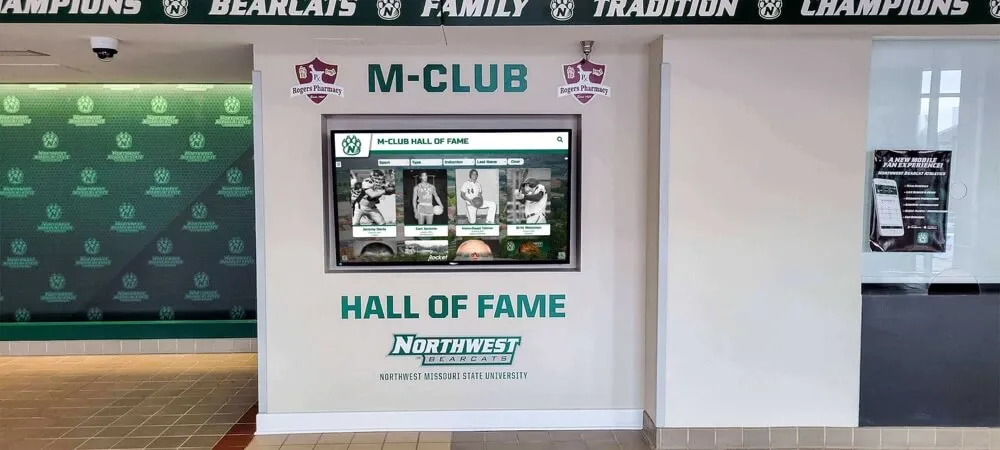
The Northwest Bearcats prominently feature their unique mascot identity in their M Club Hall of Fame
22. The Rockets
Symbolism: Speed, explosive power, upward trajectory, technological progress
Why It Works: Rockets suggest limitless potential and rapidly accelerating success—perfect for forward-thinking programs.
23. The Cardinals
Symbolism: Vibrant visibility, year-round presence, territorial song, community recognition
Why It Works: Cardinals offer brilliant red branding opportunities while representing familiar, beloved birds present across America.
24. The Demons or Blue Devils
Symbolism: Fearsome opposition, supernatural abilities, intimidation
Why It Works: Devil mascots (in blue, red, or other colors) create immediately intimidating imagery while offering dramatic visual possibilities.
25. The Titans
Symbolism: Mythological power, giant strength, divine heritage
Why It Works: Titans reference Greek mythology’s most powerful beings, suggesting strength that transcends normal limitations.
How Schools Display Their Mascot Legacy
Selecting a mascot represents just the beginning—schools must then integrate this identity throughout their facilities and recognition systems to maximize impact.
Traditional Mascot Display Methods
Schools have historically showcased mascot identity through several approaches:
Painted Murals and Wall Graphics
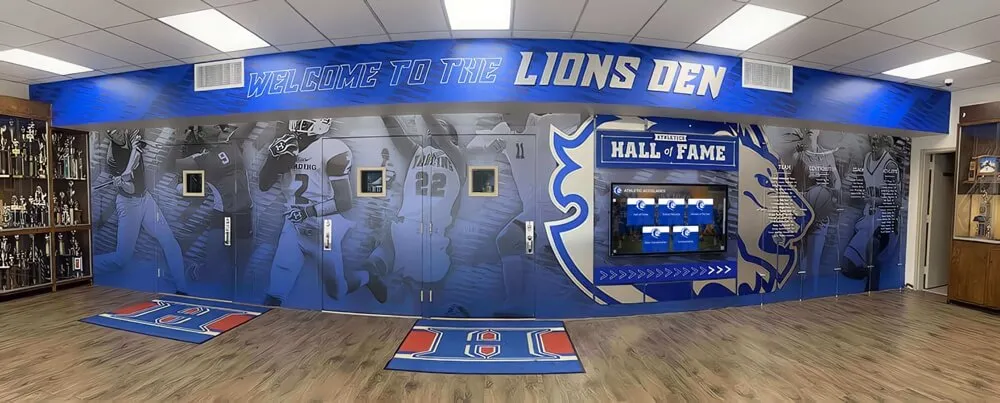
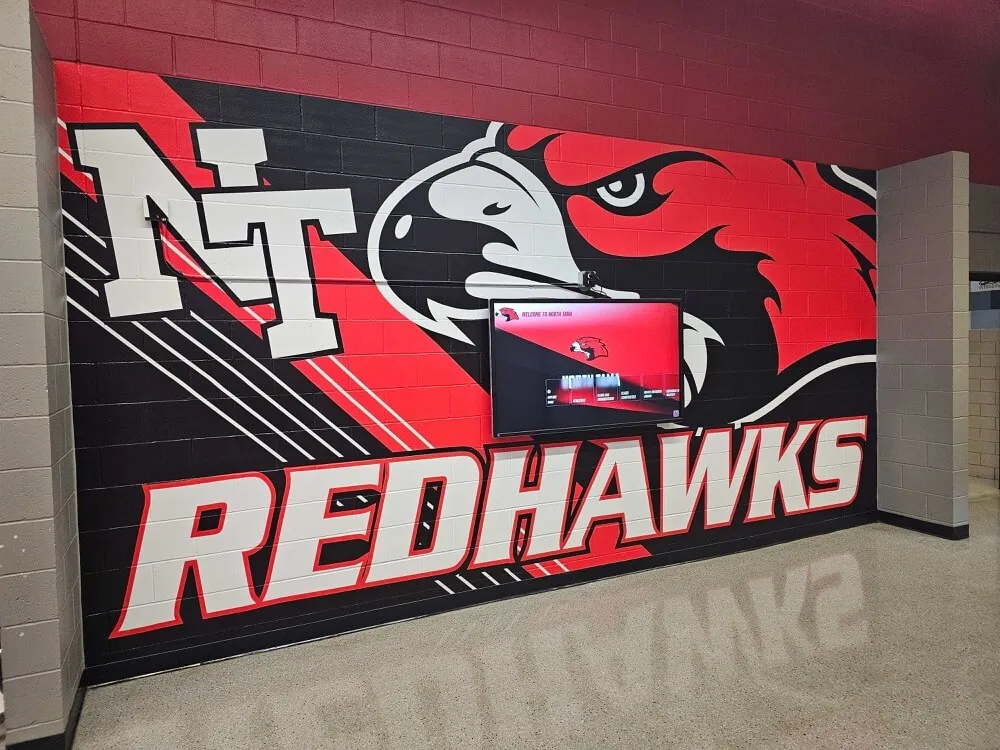
Large-scale mascot murals in gymnasiums, cafeterias, and main hallways create immediate visual impact. These hand-painted or vinyl graphics establish territorial identity—students and visitors immediately know whose building they’ve entered. Many schools commission local artists to create elaborate mascot scenes incorporating school colors, championship years, and inspirational messages. Schools planning major renovations often explore creative wall display ideas that showcase both mascot imagery and achievement recognition.
Gymnasium Floor Logos
The center court or gymnasium floor logo represents perhaps the most prestigious mascot location in any school facility. These professionally painted designs become backdrops for thousands of photographs, appearing in yearbooks, game broadcasts, and social media posts throughout the facility’s life.
Trophy Cases and Display Cabinets
Traditional glass trophy cases feature mascot imagery alongside championship trophies, allowing schools to connect their identity with their achievements. Many schools engrave mascot logos on trophy bases or include mascot statues within display cases.
Entryway Signage
School entrance signs prominently feature mascot imagery, announcing identity to everyone entering the campus. These signs range from carved wooden displays to modern LED-backlit designs.
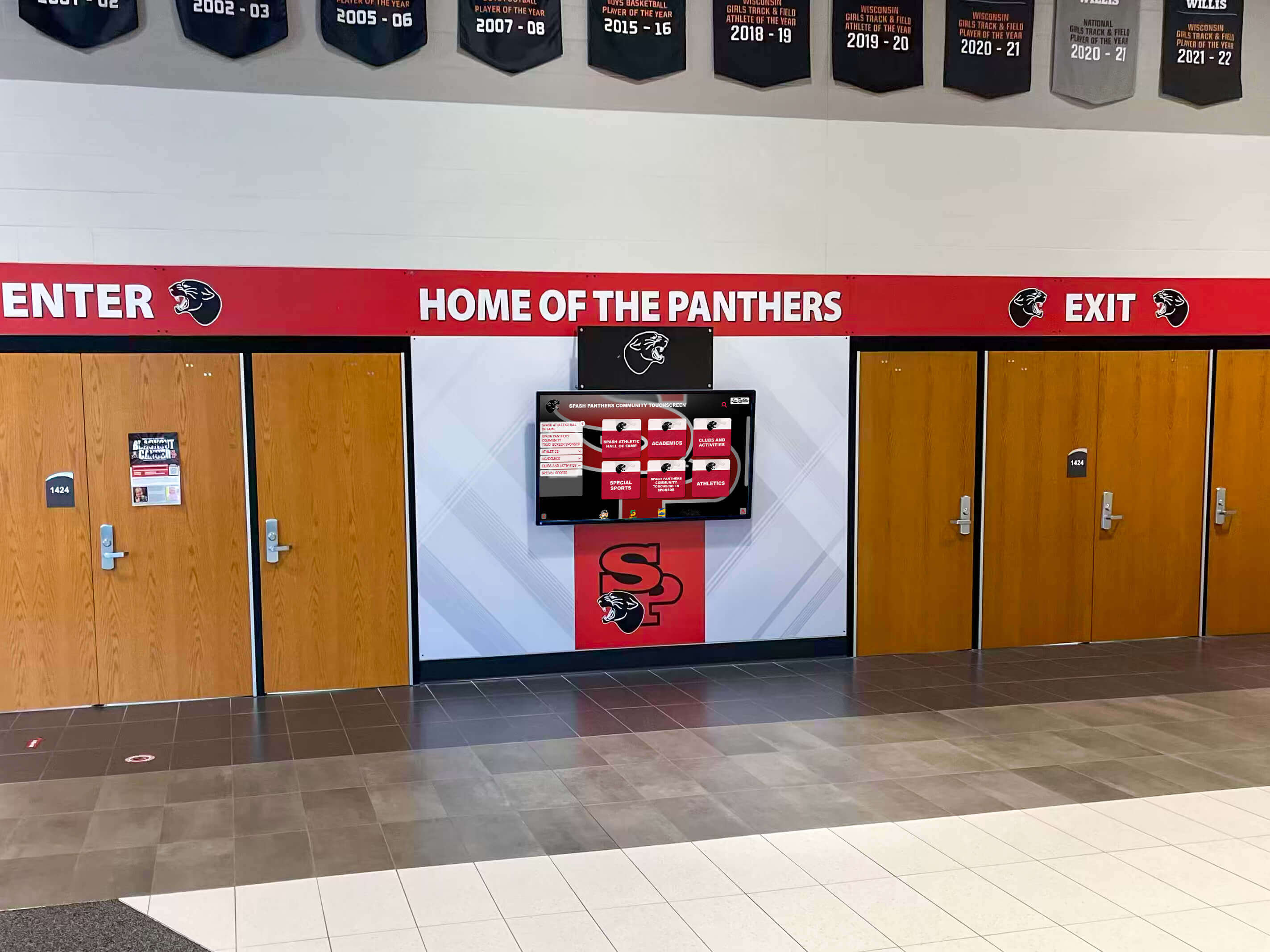
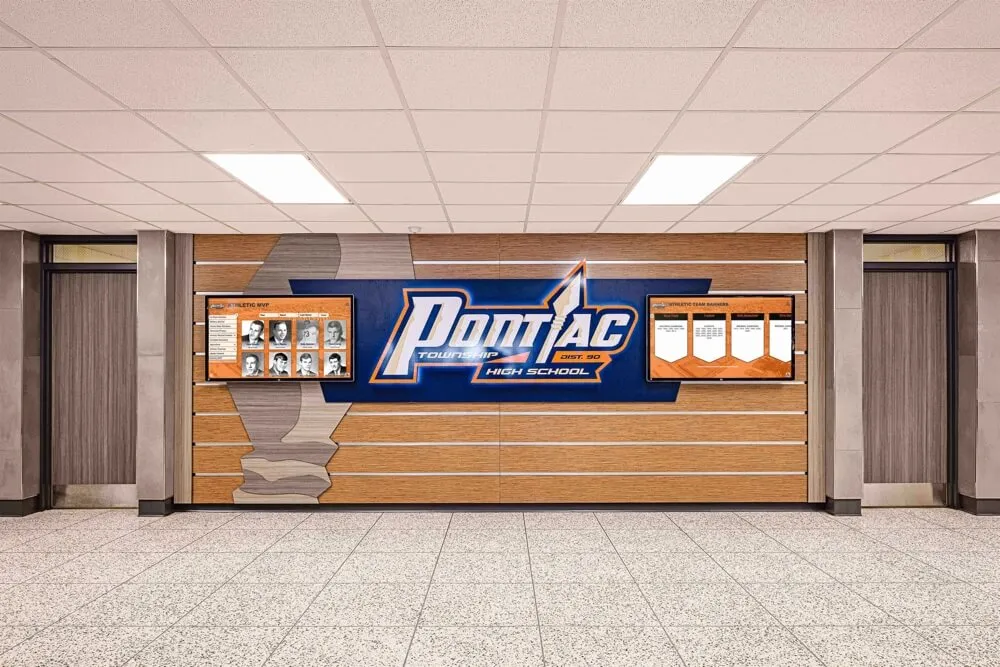
Modern schools integrate mascot identity into entrance displays featuring both traditional graphics and digital recognition systems
Modern Digital Mascot Display Integration
Contemporary schools increasingly integrate mascot imagery into digital recognition systems, creating dynamic displays that celebrate both identity and achievement.
Interactive Touchscreen Displays
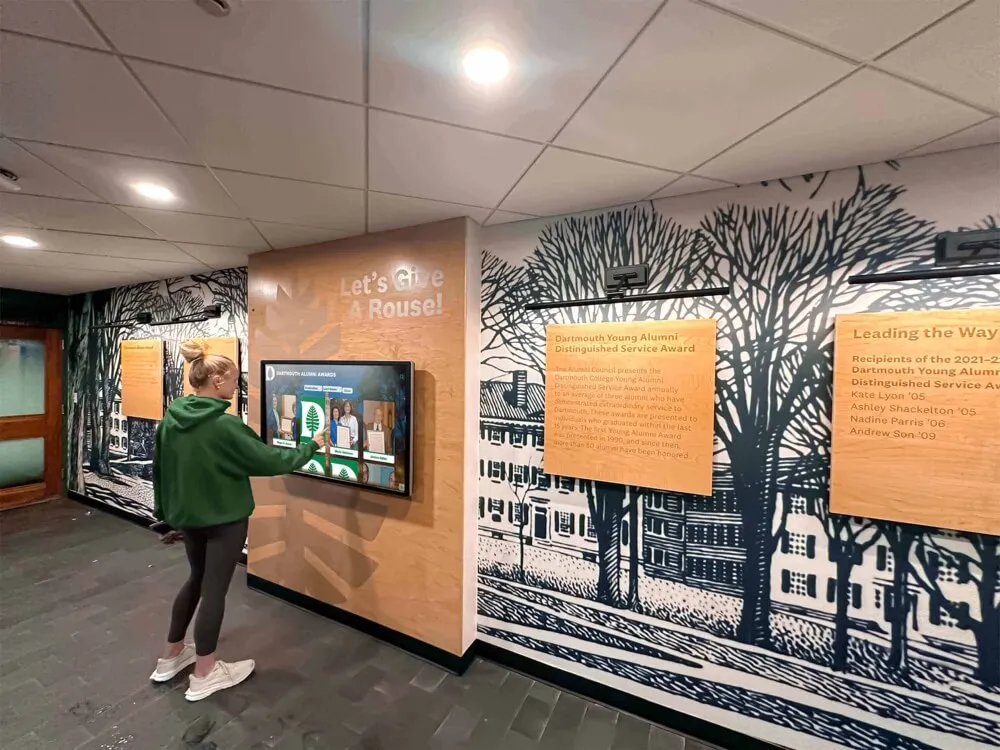
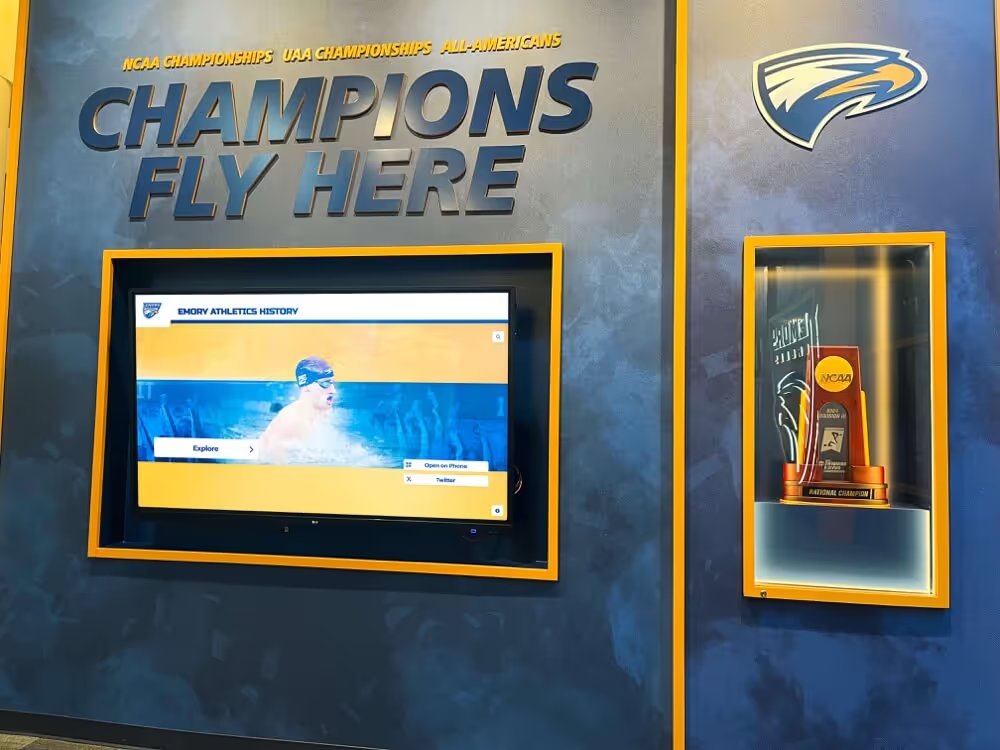
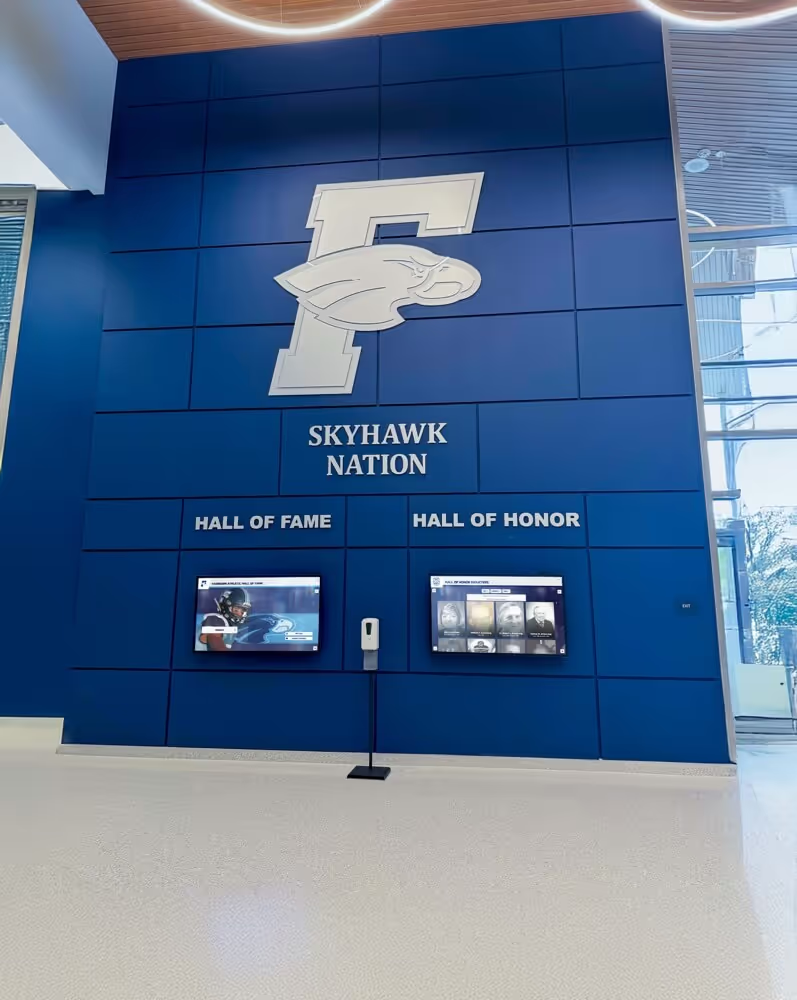
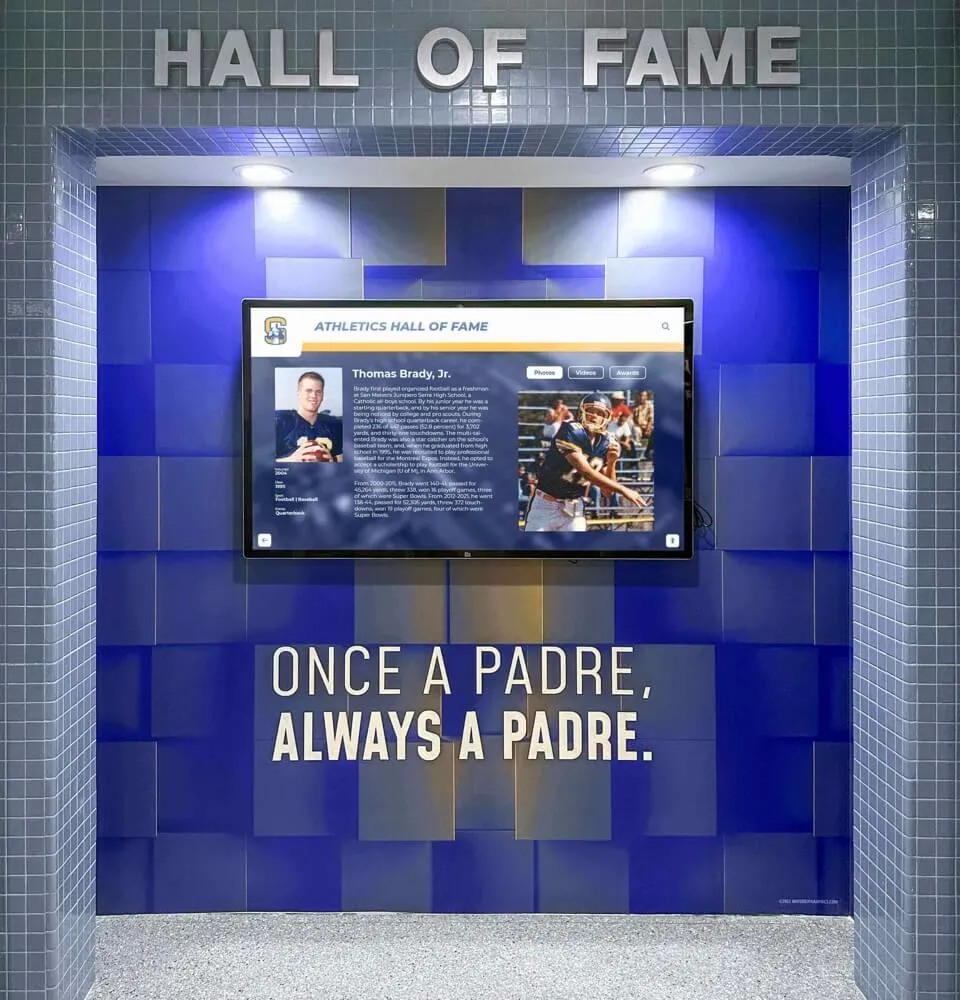
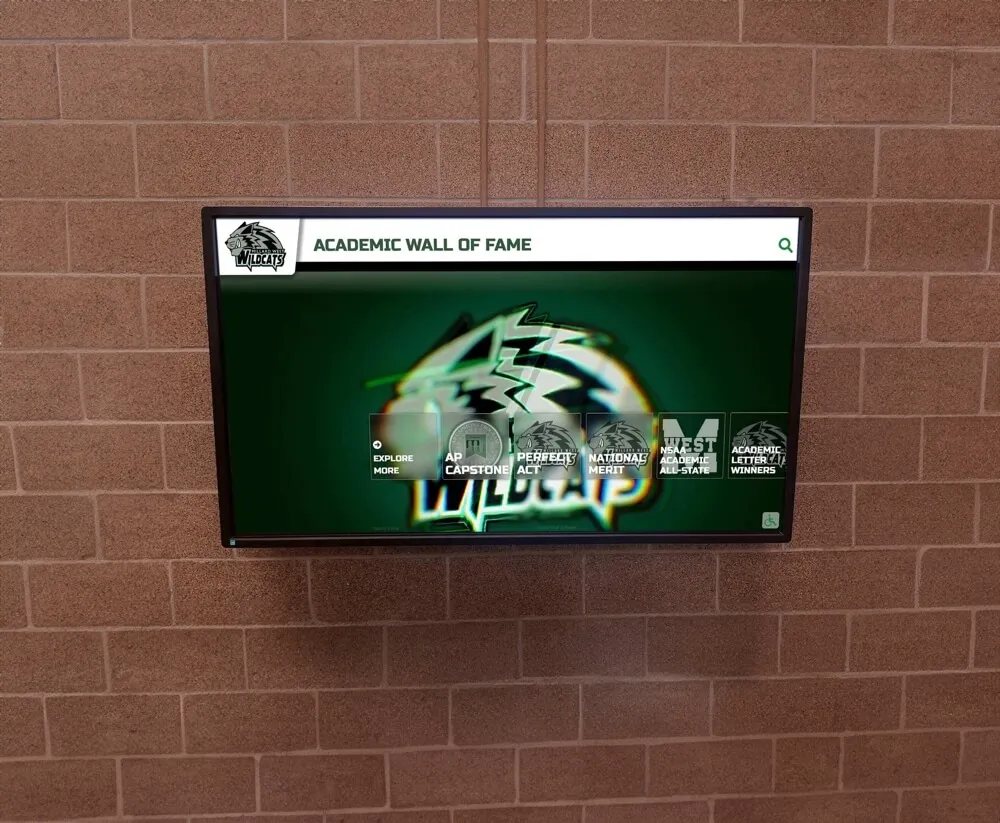
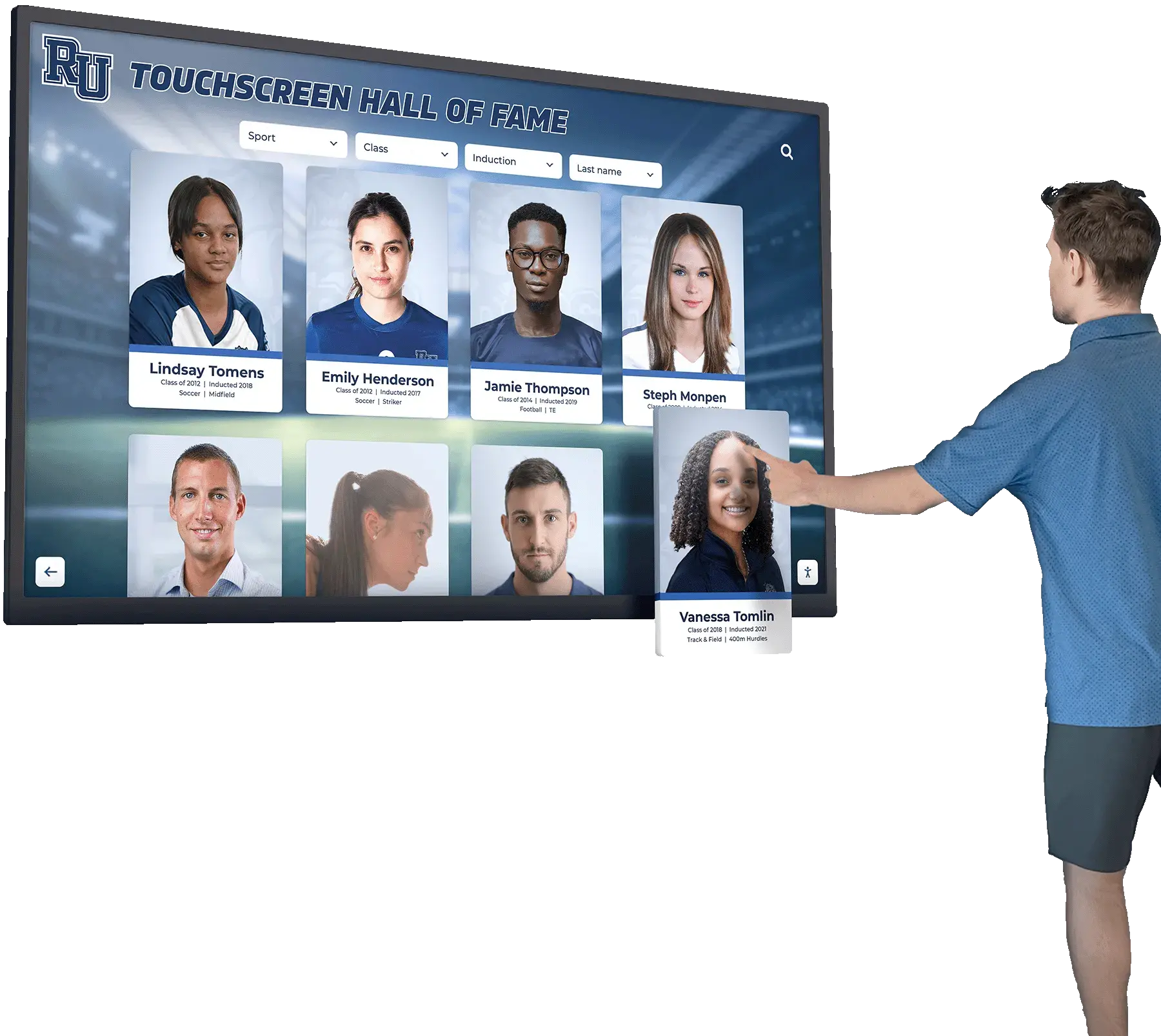
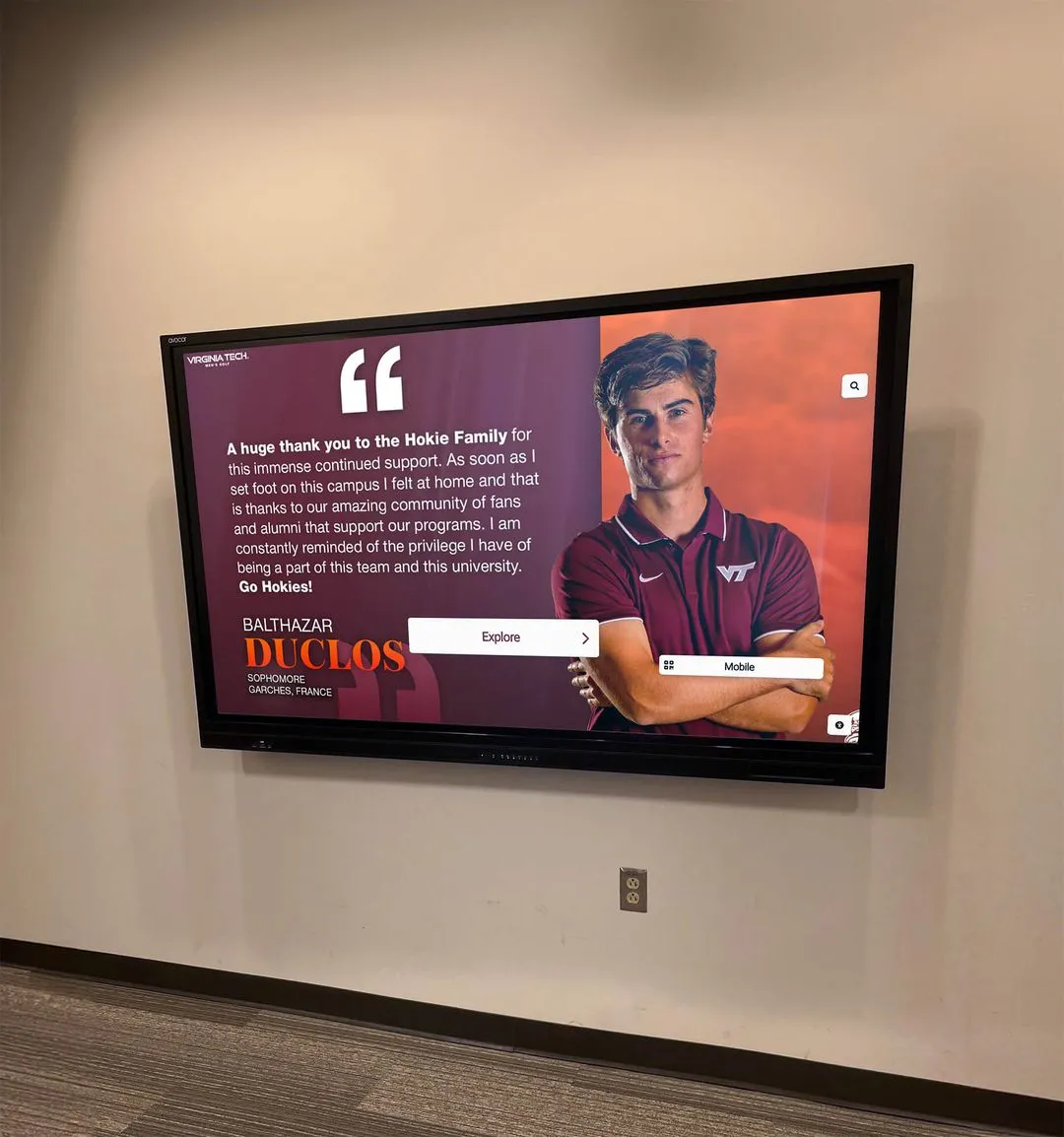
Modern digital recognition displays allow schools to feature mascot branding within interactive systems showcasing athletic records, honor roll students, and historical achievements. These touchscreens display animated mascot graphics alongside athlete profiles, creating connections between school identity and individual accomplishments.
Digital displays offer several advantages over traditional mascot showcases:
- Updatable Content: Schools can refresh mascot graphics seasonally (championship celebrations, homecoming themes, playoff appearances) without physical renovations
- Animated Mascots: Movement brings mascot characters to life in ways static murals cannot achieve
- Integration with Achievements: Mascot imagery frames athlete profiles, record boards, and hall of fame inductees, connecting identity with accomplishment
- Space Efficiency: Digital screens display both mascot branding and extensive recognition content in spaces where traditional displays would require separate dedicated areas
Many athletic directors now prioritize modern touchscreen recognition systems that incorporate mascot branding throughout the interface design, ensuring school identity appears prominently in every interaction.
Digital Signage Networks
Schools install networks of digital displays throughout hallways, cafeterias, and athletic facilities. These screens can rotate between mascot graphics, daily announcements, achievement celebrations, and upcoming events—maintaining constant visual reinforcement of school identity.
Digital signage systems allow mascot imagery to appear contextually appropriate:
- Game day displays featuring animated mascots in athletic poses
- Academic recognition screens with mascots holding books or graduation caps
- Performing arts displays with mascots in theatrical contexts
- Spirit week themes with mascots in creative costumes
This flexibility ensures mascot identity remains relevant across all school activities, not just athletics.
Social Media and Digital Platforms
Schools extend mascot branding across digital platforms, creating consistent identity online and offline. Mascot avatars appear on school social media accounts, email signatures, and website headers, ensuring graduates maintain visual connections to school identity long after leaving campus.
Preserving Mascot History Through Archives
The most thoughtful schools don’t just display current mascot imagery—they preserve mascot evolution throughout school history.
Historical Mascot Documentation
Many schools have changed mascots over decades, either due to cultural sensitivity concerns, rebranding efforts, or mergers with other schools. Documenting these transitions preserves important institutional history while explaining current identity choices.
Digital archives allow schools to showcase:
- Original mascot designs from founding years
- Logo evolution across decades
- Photographs of mascot costumes throughout history
- Stories behind mascot name selections
- Memorable mascot traditions and legends
- Community reactions to mascot changes or updates
This historical context helps students understand they’re part of ongoing traditions, not simply inheriting static symbols.
Mascot Costume Archives
Physical mascot costumes tell fascinating stories about school history, budget realities, and changing cultural norms. Some schools preserve retired costumes in display cases with explanatory text describing when each costume served and memorable moments associated with specific costume versions.
Schools exploring ways to honor their performance traditions often look at comprehensive recognition approaches that celebrate all aspects of school spirit, including mascot legacy.
Student Mascot Performer Recognition
Students who perform as mascots contribute significantly to school spirit but rarely receive formal recognition. Progressive schools now honor mascot performers in their recognition systems, preserving names and photographs of students who represented the school at games, rallies, and community events. This documentation validates the athletic demands and entertainment skills required for effective mascot performance.
Mascot Legacy and Alumni Connections
School mascots create lasting emotional connections that alumni carry throughout their lives.
Merchandising and Fundraising
Alumni relationships with school mascots drive significant revenue through merchandise sales. Graduates purchase mascot-branded apparel, home décor, and accessories decades after leaving school—visual reminders of formative identity. Athletic directors and development offices increasingly recognize mascot branding as fundraising infrastructure, with strong mascot attachment correlating to donor participation.
Schools with successful alumni engagement programs emphasize mascot branding in reunion events, recognition displays, and digital communications, leveraging shared identity to maintain connections.
Championship and Historical Celebrations
Significant athletic achievements become permanently associated with mascot identity. When teams win championships, the mascot shares credit—evident in championship banners reading “Eagles State Champions 2024” rather than simply listing the school name. This shared identity strengthens mascot emotional resonance, particularly when schools display historical achievements alongside mascot imagery.
Many programs maintain digital record boards featuring mascot branding that contextualizes athletic records within the broader identity story.
Mascot Traditions and Rituals
Unique mascot-related traditions strengthen school culture:
- Mascot reveals: Unveiling new costume designs before homecoming games
- Mascot challenges: Push-up contests or athletic challenges after scoring
- Mascot legends: Stories about mascot performers’ pranks or heroic moments
- Alumni mascot returns: Former mascot performers returning for milestone games
- Mascot naming contests: Allowing student body to name or rename mascots
These traditions transform mascots from logos into characters with histories, personalities, and roles in school mythology.
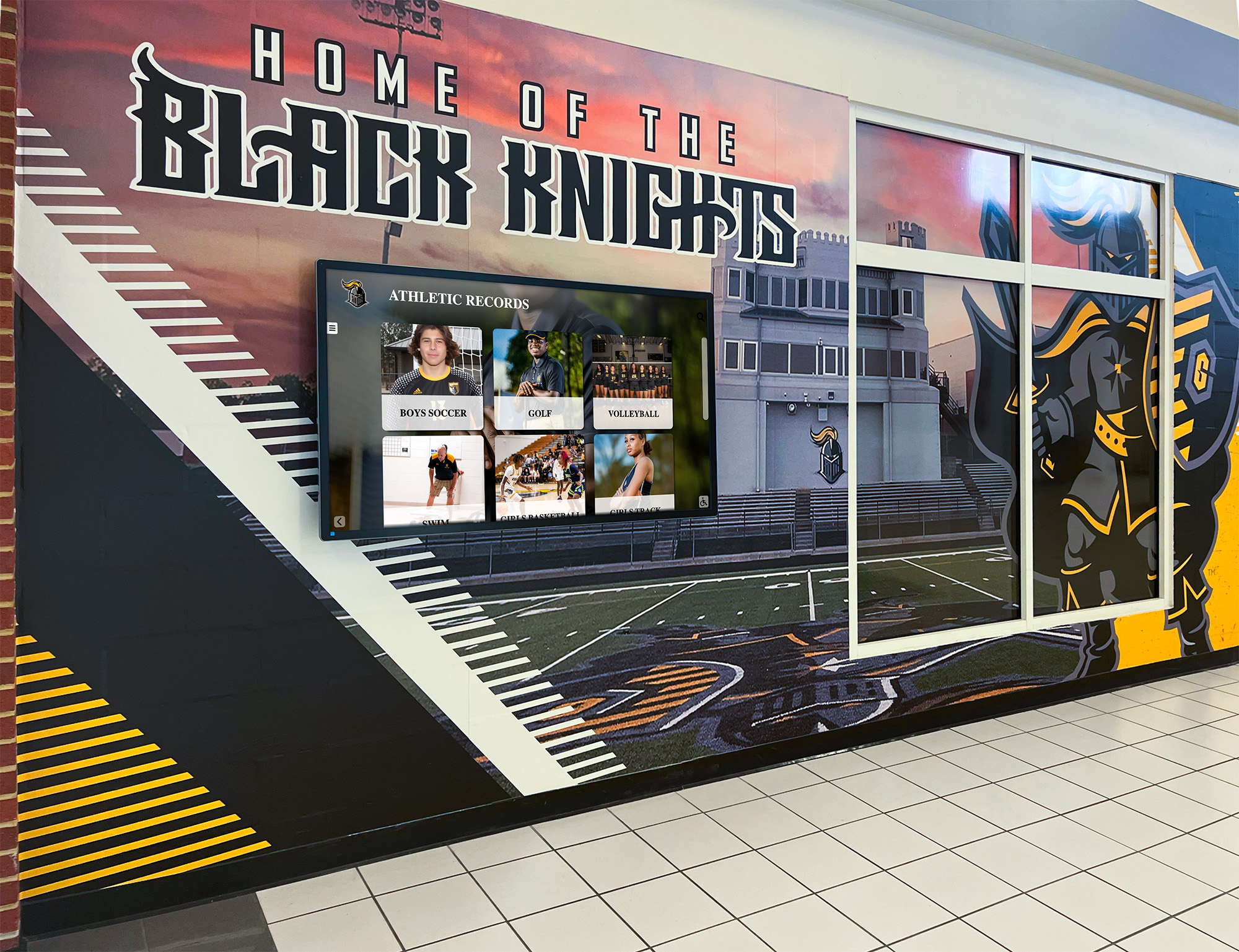
Schools like the Black Knights combine dramatic mascot murals with digital systems displaying comprehensive athletic records
Choosing and Updating School Mascots
While many schools maintain mascot identities for generations, others face decisions about updating or changing mascots entirely.
When Schools Consider Mascot Changes
Several situations prompt mascot reconsideration:
Cultural Sensitivity Concerns
The most common driver of mascot changes involves Native American imagery, team names, or characterizations deemed disrespectful to indigenous peoples. Schools across America have transitioned away from “Indians,” “Redskins,” “Chiefs,” and similar mascots, working with communities to select alternatives that maintain tradition while demonstrating cultural respect.
School Mergers and Consolidations
When schools merge due to declining enrollment or district reorganization, selecting a unified mascot becomes necessary. These transitions require delicate community engagement, as passionate alumni from both institutions advocate for preserving their historical identities.
Rebranding for Modern Appeal
Some schools update mascot designs to appear more contemporary, competitive, or professionally polished. These changes typically maintain the core mascot identity (remaining “Tigers,” for example) while modernizing visual execution to match current design aesthetics.
The Mascot Selection Process
Schools approaching mascot selection or updates should consider:
Community Input
Successful mascot transitions involve extensive stakeholder input:
- Student surveys and voting processes
- Alumni feedback through newsletters and social media
- Parent and booster organization consultations
- Faculty and staff discussions
- School board approval processes
- Community town halls for publicly funded institutions
Mascot changes without community buy-in face ongoing resistance, undermining the unifying purpose mascots serve.
Visual Identity Considerations
Effective mascots work across multiple applications:
- Simplified enough for small embroidery on uniforms
- Dramatic enough for large-scale gymnasium murals
- Distinctive enough to avoid generic appearance
- Versatile enough for athletic, academic, and community contexts
- Age-appropriate for elementary through high school use (for K-12 districts)
- Culturally sensitive and respectful
Professional designers can create mascot variations optimized for different applications—detailed full-body illustrations for posters, simplified head logos for uniforms, and bold text treatments for signage.
Trademark Availability
Schools should verify mascot names and designs don’t infringe existing trademarks, particularly when selecting uncommon mascots. Legal clearance prevents future complications with merchandise or branding.
Creating a Comprehensive Mascot Legacy Program
The most impactful mascot programs extend beyond logos, integrating identity throughout school culture and facilities.
Visual Integration Throughout Facilities
Effective mascot programs ensure identity appears throughout school spaces:
Athletic Facilities
- Gymnasium floor logos
- Locker room murals and motivational messaging
- Weight room branding
- Stadium signage and field markings
- Concession stand graphics
Academic Spaces
- Library murals (mascots reading or studying)
- Main hallway displays
- Cafeteria theming
- Classroom door decorations
- Media center branding
Administrative Areas
- Main office signage
- Reception area displays
- Conference room artwork
- Counseling office welcoming graphics
This comprehensive integration creates immersive identity experiences, reinforcing belonging and pride throughout students’ daily experiences.
Digital and Physical Integration
Modern mascot programs work across both physical and digital spaces:
Physical spaces feature traditional murals, painted logos, and dimensional signage. Digital systems showcase mascot branding within interactive touchscreen displays celebrating student and alumni achievements. This integration ensures mascot identity remains central to recognition experiences while leveraging modern technology’s advantages.
Schools creating modern recognition walls typically incorporate mascot branding throughout the design, ensuring the display reinforces institutional identity while celebrating individual accomplishments.
Maintaining Brand Consistency
As schools expand mascot applications, maintaining visual consistency becomes critical:
Brand Guidelines
- Official color specifications (Pantone, RGB, CMYK, HEX codes)
- Mascot logo usage rules
- Minimum size requirements
- Clear space specifications
- Approved variations for different contexts
- Prohibited alterations or combinations
These guidelines ensure mascot representations remain consistent across decades, preventing gradual drift that dilutes identity impact.
Digital Asset Management
Schools should maintain organized digital libraries containing:
- High-resolution mascot logos in multiple formats
- Color and black-and-white versions
- Historical logo variations for archival reference
- Usage guidelines and templates
- Approved vendor contact information
- License documentation for purchased designs
Organized asset management ensures staff, coaches, students, and external vendors access correct mascot files, maintaining consistency across all applications.
Celebrating Mascot Milestones and Anniversaries
Significant dates in mascot history deserve celebration and documentation.
Mascot Anniversary Recognition
Schools marking 25th, 50th, or 75th anniversaries of mascot adoption can create special celebrations:
- Commissioned anniversary logo variations
- Historical displays documenting mascot evolution
- Alumni events featuring former mascot performers
- Commemorative merchandise with anniversary branding
- Documentary videos exploring mascot origin stories
- Special edition championship banners incorporating anniversary recognition
These celebrations reinforce continuity, helping current students understand they’re part of traditions spanning generations.
Documenting Mascot Legacy
Schools should systematically document mascot history before institutional knowledge disappears:
- Interview longtime staff about mascot traditions and stories
- Collect photographs spanning mascot history
- Research school board minutes and yearbooks documenting mascot selection
- Record oral histories from memorable mascot performers
- Preserve costume examples from different eras
- Document significant moments in mascot tradition
This documentation becomes invaluable for anniversary celebrations, historical displays, and maintaining institutional memory as staff and faculty turn over.
The Future of School Mascot Displays
Technology continues expanding possibilities for mascot identity integration and preservation.
Augmented Reality and Interactive Experiences
Emerging schools experiment with augmented reality applications that bring mascot characters to life through smartphone apps. Students point devices at mascot logos throughout school, triggering animated AR mascots that deliver messages, celebrate achievements, or provide information.
These technologies create memorable experiences while maintaining constant mascot presence in student lives—extending beyond static displays into interactive entertainment.
Comprehensive Digital Archives
Digital asset management systems allow schools to preserve comprehensive mascot histories accessible to students, alumni, and researchers. These archives include:
- Every mascot logo variation throughout history
- Photographs of mascot performers from each decade
- Video of memorable mascot moments at games and events
- Documentation of mascot tradition evolution
- Searchable databases of mascot-related achievements and stories
This preservation ensures future generations understand the full richness of mascot tradition, maintaining connections to institutional history.
Dynamic Recognition Integration
Advanced recognition systems allow schools to feature mascot branding that responds to context—displaying different mascot poses based on the sport, achievement, or event being celebrated. Basketball records might feature mascots in shooting poses, while academic honors show mascots in graduation regalia.
This contextual variation maintains fresh visual interest while reinforcing that mascot identity extends across all school activities, not just athletics.
Preserving Your School’s Mascot Legacy
School mascots represent living traditions that deserve thoughtful preservation and celebration. From selection through decades of refinement, these symbols carry institutional identity and unite communities across generations.
Modern schools balance traditional mascot display methods—painted murals, gymnasium logos, trophy case integration—with digital systems that expand recognition possibilities while maintaining identity consistency. Interactive touchscreen displays, digital signage networks, and comprehensive archives ensure mascot legacy remains accessible, engaging, and relevant for current students while preserving history for future generations.
Whether your school features Eagles, Bulldogs, Panthers, Knights, or any of thousands of unique mascots across America, the key to lasting impact lies in comprehensive integration—ensuring mascot identity appears consistently throughout physical facilities, digital systems, recognition programs, and institutional communications. When students, families, alumni, and community members encounter consistent, meaningful mascot representation, they develop stronger connections to institutional identity and tradition.
Showcase Your Mascot Legacy with Modern Recognition Displays
Transform how your school preserves and displays mascot history with interactive touchscreen systems that celebrate tradition while engaging current students. Rocket Alumni Solutions helps schools create comprehensive recognition displays featuring prominent mascot branding alongside athletic records, hall of fame inductees, and historical achievements—maintaining institutional identity while honoring individual accomplishments.
School mascots embody decades of tradition, countless championship moments, and the pride of everyone who ever wore school colors. By thoughtfully integrating mascot identity throughout your recognition systems and facilities, you ensure these powerful symbols continue inspiring students and connecting alumni for generations to come.