



Every school newspaper cover tells a story that no other document can replicate. The bold headlines that announced championship victories, election upsets, and community crises represent student journalists at their most focused—distilling months of campus life into a single, arresting front page. Yet most of these covers quietly disappear into recycling bins, damp storage closets, or forgotten file boxes, slowly erasing decades of student journalism from institutional memory.
A well-executed school newspaper covers display changes that entirely. When front pages spanning thirty or forty years line a hallway wall or appear on an interactive touchscreen, they transform a static corridor into a living timeline of school history. Visitors pause. Alumni search for their own era. Current students suddenly grasp that the institution they attend has a story far older and richer than their own enrollment.
This guide walks through every aspect of building a meaningful newspaper covers display—from cataloging your physical archive and designing physical wall installations to deploying digital systems that make decades of journalism browsable and searchable for anyone who walks through your doors.
School newspaper front pages occupy a unique position in institutional archives. Unlike official school records, they capture how students actually saw and narrated their own experience—with all the urgency, humor, and imperfection that official communications tend to smooth away.

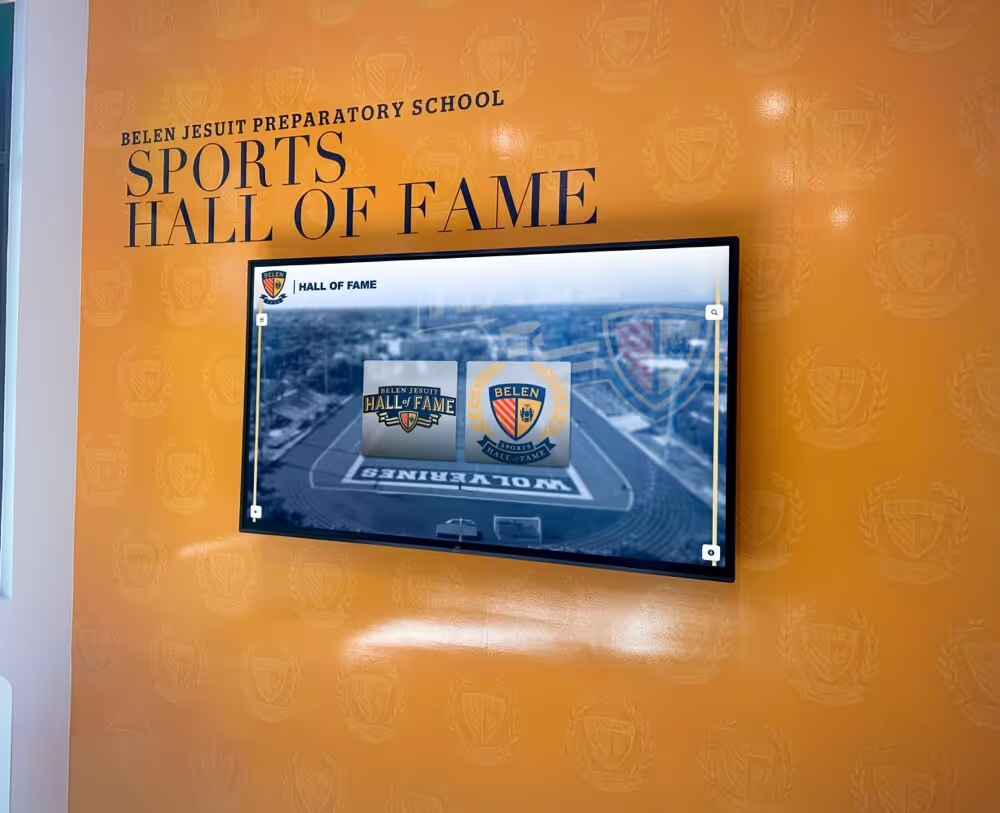
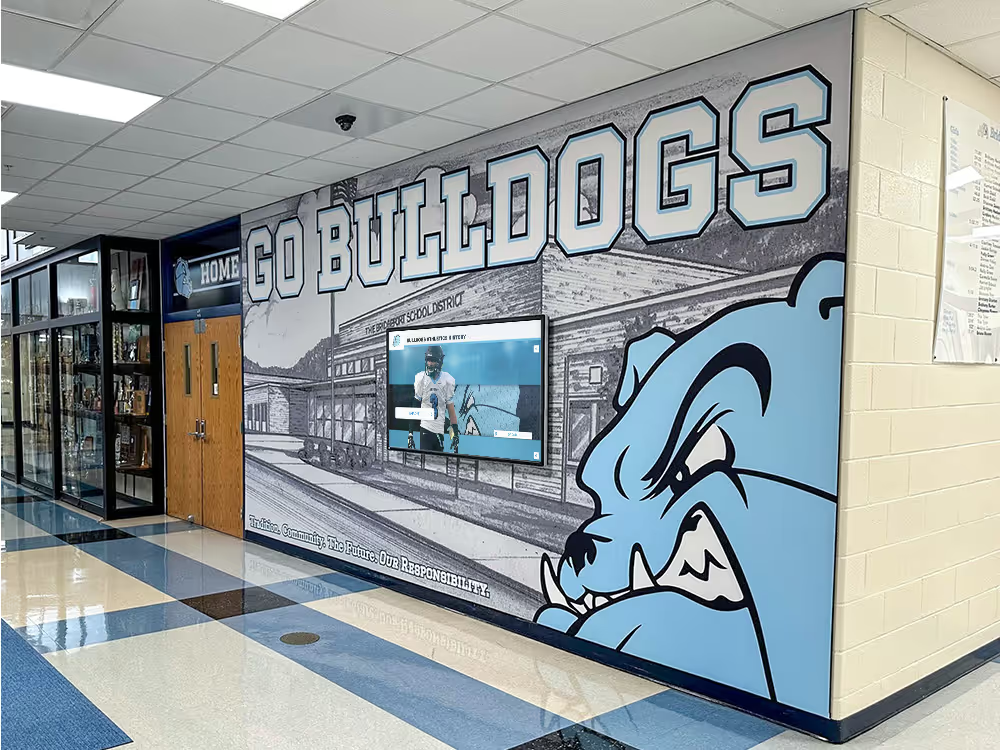
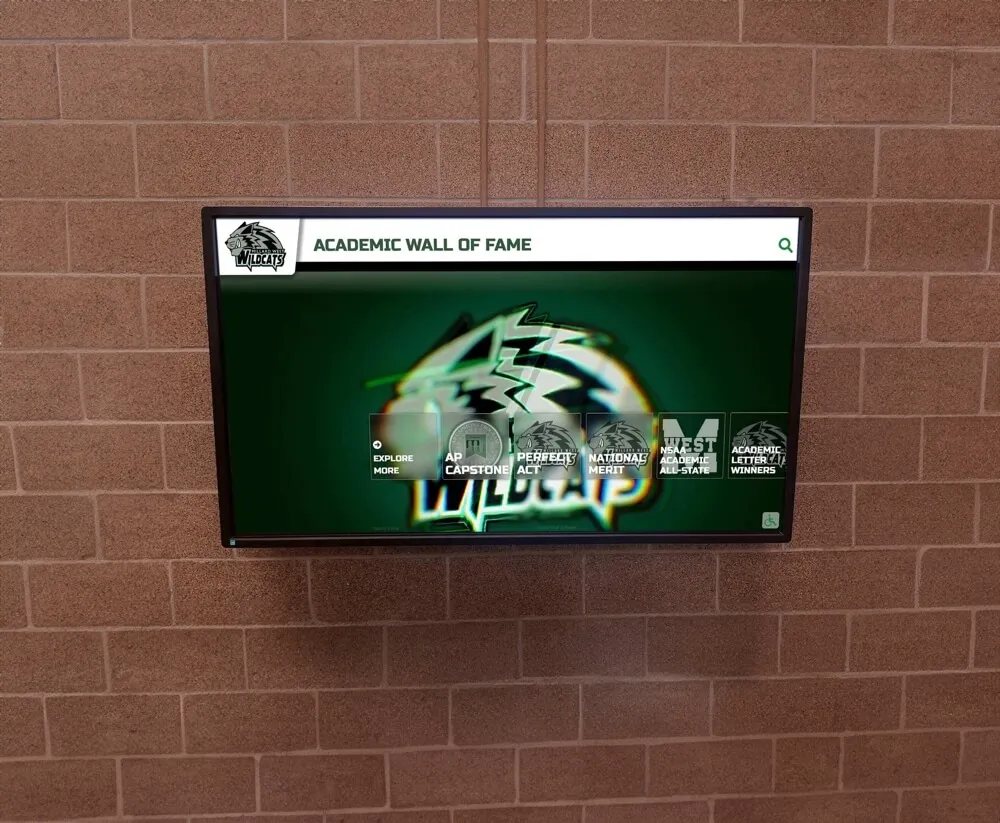
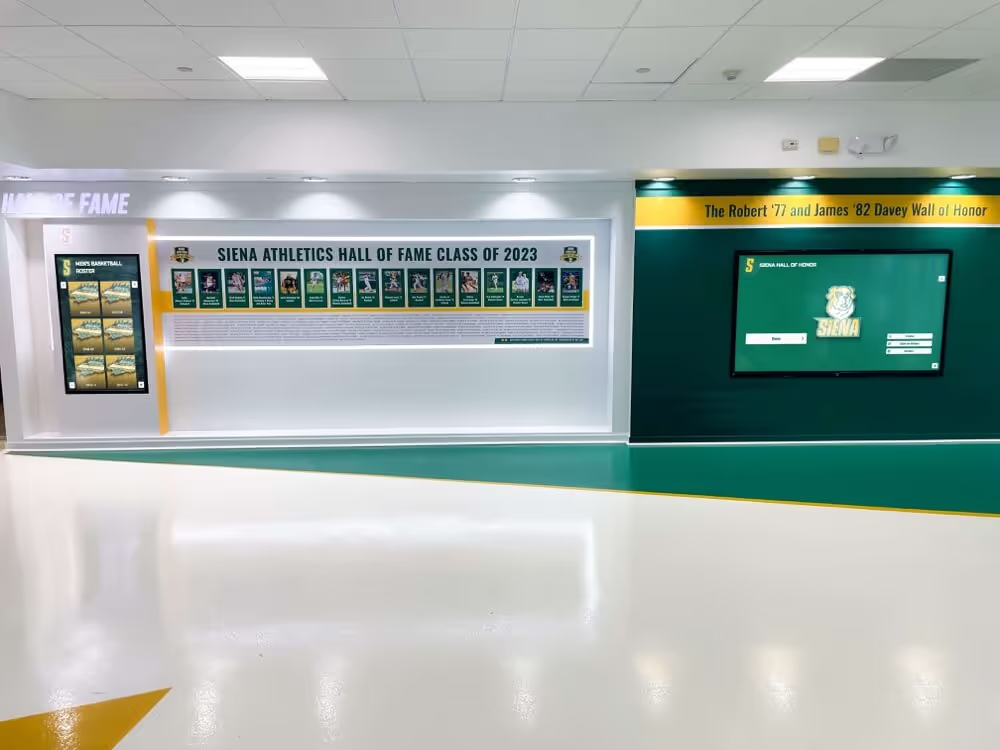
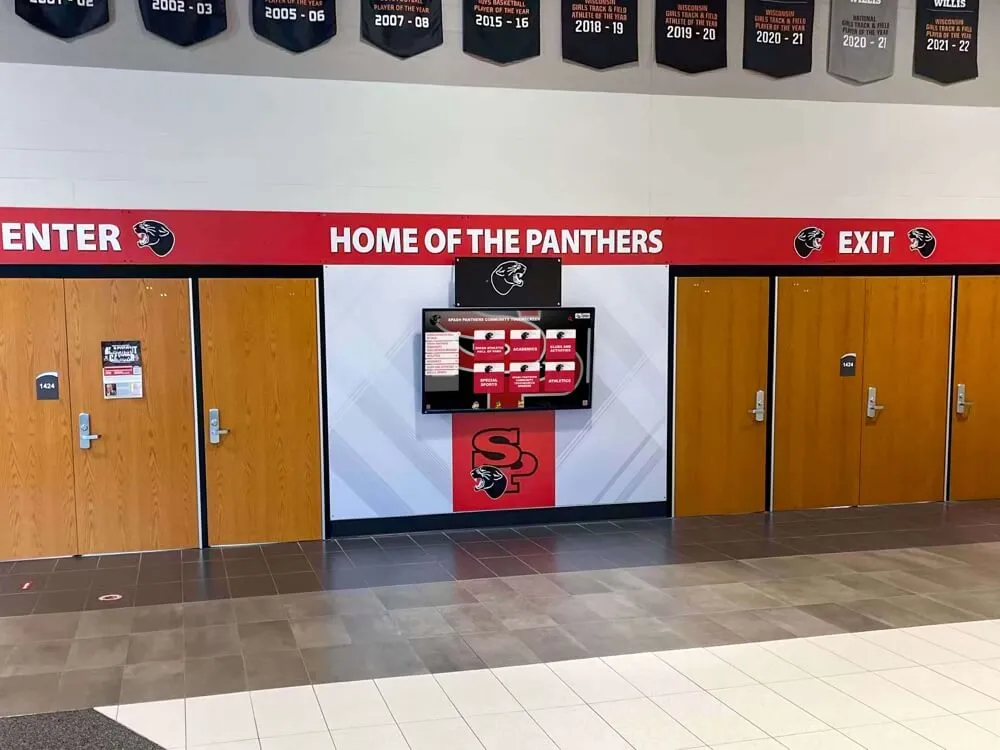
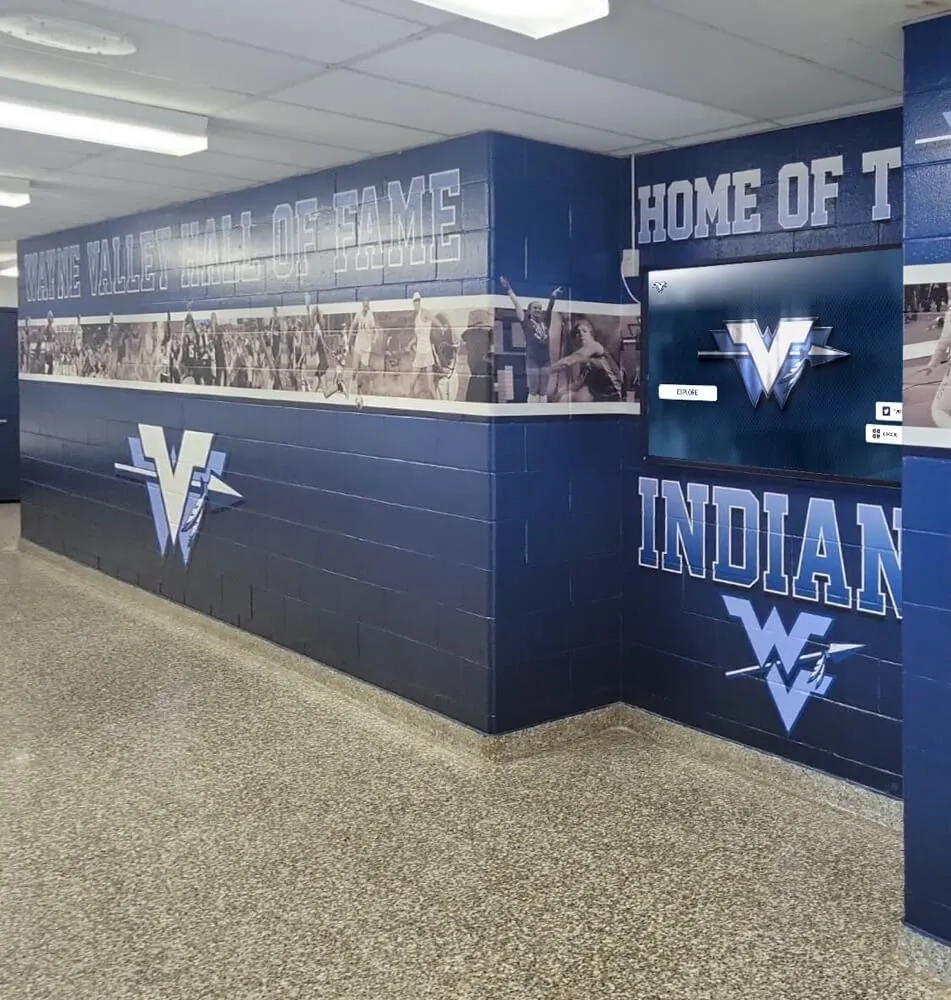
A well-placed display in a high-traffic hallway transforms archival newspaper covers into daily conversation starters for students, staff, and visitors
Why School Newspaper Front Pages Deserve a Permanent Display
Before committing resources to a school newspaper covers display, it helps to articulate why these artifacts matter beyond simple nostalgia.
A Record That Official Sources Miss
Athletic record boards and honor rolls track measurable achievements. Yearbooks offer posed portraits and curated highlights. Newspaper covers record what students considered genuinely newsworthy in the moment—budget cuts, controversial hires, community tensions, and unexpected triumphs that never made it into official communications. That unfiltered quality makes them irreplaceable as historical documents.
Journalism as an Achievement Worth Honoring
Schools regularly celebrate athletes and academic award recipients. Student journalists rarely receive equivalent recognition, despite producing work that demands interviewing, fact-checking, deadline management, and editorial judgment. A newspaper covers display makes the journalism program’s output visible in the same physical spaces where trophies and plaques honor other accomplishments.
Strengthening Alumni Connection
Alumni who contributed to the school paper carry a particularly strong attachment to the publication. Seeing their era represented in a permanent display—whether they wrote headlines, shot photos, or laid out pages—validates the significance of their contribution in a way that no ceremony fully can. Digital archives designed for schools consistently show that journalism alumni rank among the most engaged donor segments when their contributions are recognized visibly.
Auditing and Organizing Your Newspaper Cover Collection
Before any display goes up, you need a clear picture of what you actually have.
Taking Stock of Physical Holdings
Start with whatever physical copies exist—in the journalism classroom, the library archive, the principal’s office, or donated by long-term faculty. Common discovery sources include:
- School library: Many libraries bound annual runs of the school paper or maintained file folders by semester
- Journalism advisors past and present: Advisors often kept personal copies spanning their tenure
- Alumni donations: A single appeal through an alumni newsletter frequently surfaces boxes of copies that graduates kept for decades
- Local public library: Branch collections sometimes preserved community high school papers as local history documents
- Microfilm archives: Papers that ran through the 1960s–1990s were sometimes microfilmed by regional library consortia
Document each issue you find: volume number, publication date, headline, and condition. A simple spreadsheet organized by academic year is enough to reveal which decades are well represented and where gaps exist.
Scanning for Quality
Physical condition varies enormously across decades. Newsprint from the 1960s and 1970s tends toward brittleness and yellowing, while offset-printed covers from the 1990s onward are usually more stable. Regardless of condition, scanning creates a preservation copy that will outlast any physical original.
For display and reproduction purposes, scan covers at a minimum of 300 DPI. Choosing the right resolution for archival scanning matters significantly—600 DPI allows comfortable enlargement to poster size without losing legibility on fine print and photo detail.
Organizing by Theme and Era
Once digitized, organize covers in ways that will serve both archivists and casual browsers:
- Chronological: The simplest and most intuitive structure; group by academic year or decade
- Thematic: Championship coverage, election issues, milestone anniversaries, and crisis reporting each merit their own category
- Format milestones: The shift from mimeograph to offset printing, from black-and-white to color, and from broadsheet to tabloid format mark genuine editorial eras worth highlighting
- Award-winning editions: Issues that received state or national journalism recognition deserve separate callouts
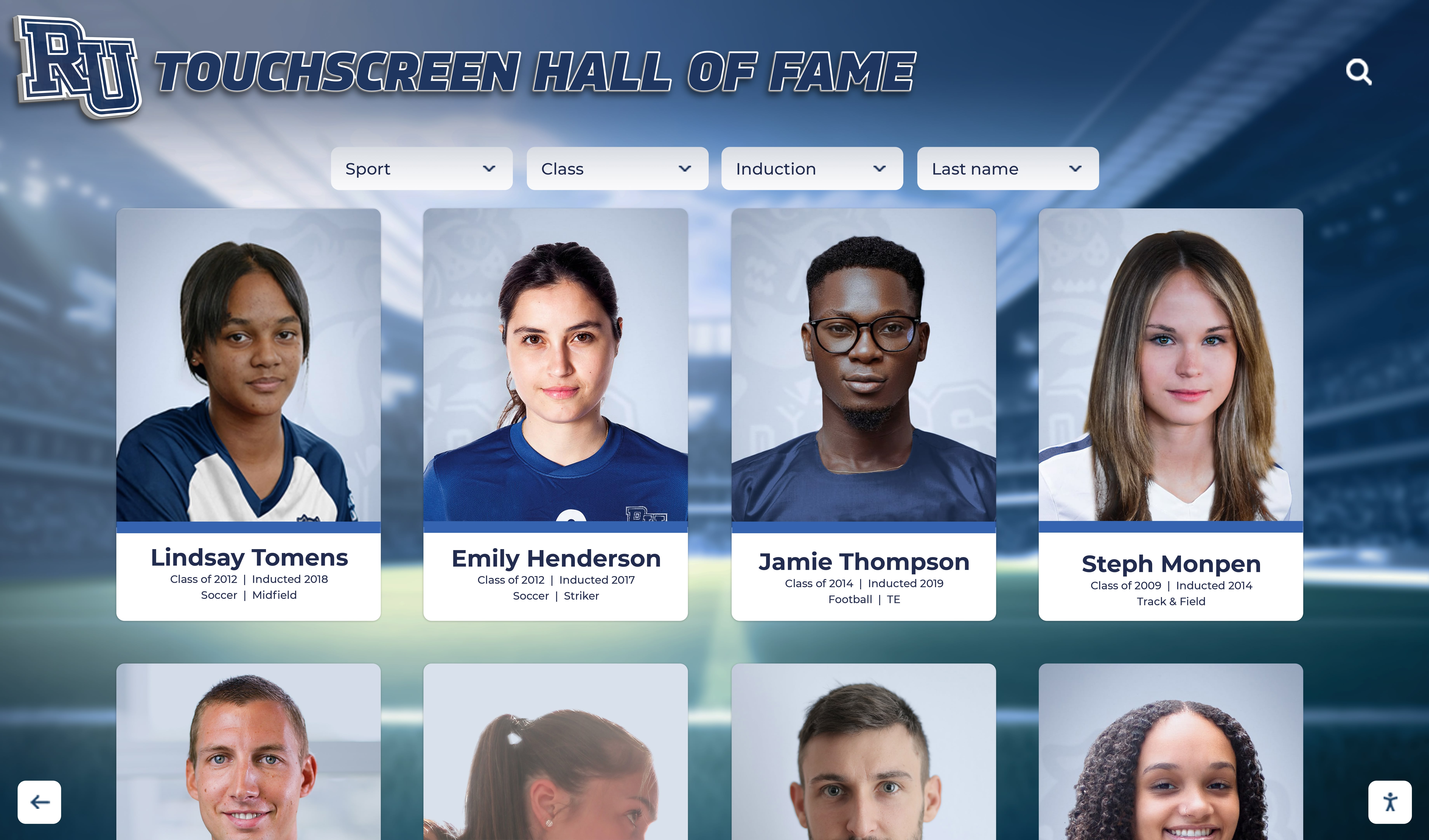
Organizing newspaper covers into browsable categories—by decade, theme, or landmark coverage—makes the archive immediately usable rather than simply decorative
Physical Display Approaches for School Newspaper Covers
Physical installations remain powerful for high-visibility spaces. The newspaper cover carries strong visual appeal—bold typography, dramatic photos, and urgent headlines translate naturally to wall displays.
Framed Front-Page Gallery Wall
The simplest entry point is a curated gallery of framed covers, selected to represent distinct eras and landmark issues. Choose frames with UV-protective glazing to slow the yellowing of newsprint reproductions. Arrange chronologically left to right, or organize around themes that anchor separate clusters.
Design considerations:
- Consistent frame sizes create a unified visual field; mixed sizes work if variation is intentional
- Print reproductions at 11×17 or 13×19 inches—large enough to read headlines from a few feet away
- Include small caption plates identifying the date, the lead story, and any relevant context
- Leave breathing room between frames rather than packing covers wall to wall
Wall wrap treatments that incorporate graphic elements from the newspaper’s history can surround and amplify a framed display. Wall wraps for schools offer guidance on integrating printed graphics with display cases and framed content for a cohesive installation.
Display Cases with Original Copies
For schools with well-preserved originals, glass display cases allow visitors to see the actual artifacts rather than reproductions. Rotate cases quarterly to protect paper from prolonged light exposure while giving more of the collection its moment in the light.
Case display best practices:
- Use archival-quality mounting materials; never use tape or adhesive directly on original papers
- Keep light levels low; UV-filtering film on nearby windows reduces fading
- Include conservation-standard backing boards to support fragile pages
- Display one or two issues with their original folded tabloid or broadsheet format to convey scale
For guidance on the full range of case and wall installation options, wall display case ideas for schools covers materials, mounting strategies, and placement considerations in detail.
Lobby Timeline Wall
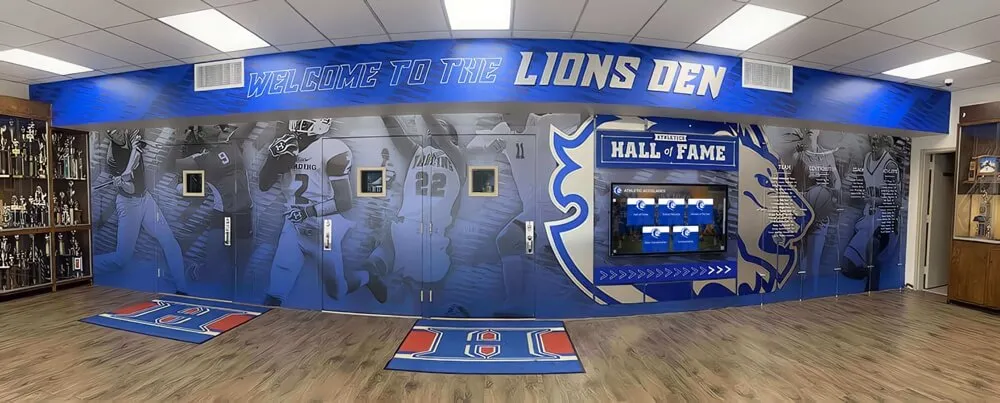
A dedicated timeline installation along a lobby or main corridor creates the most dramatic effect. A continuous display—sometimes spanning 20 to 40 feet—presents covers at roughly equal intervals across decades, giving visitors the visceral sense of walking through school history.
Lobby digital signage for schools pairs naturally with a physical timeline: a digital screen at the center or end of the wall can show high-resolution rotating covers, pull quotes, and context that static prints can’t provide.

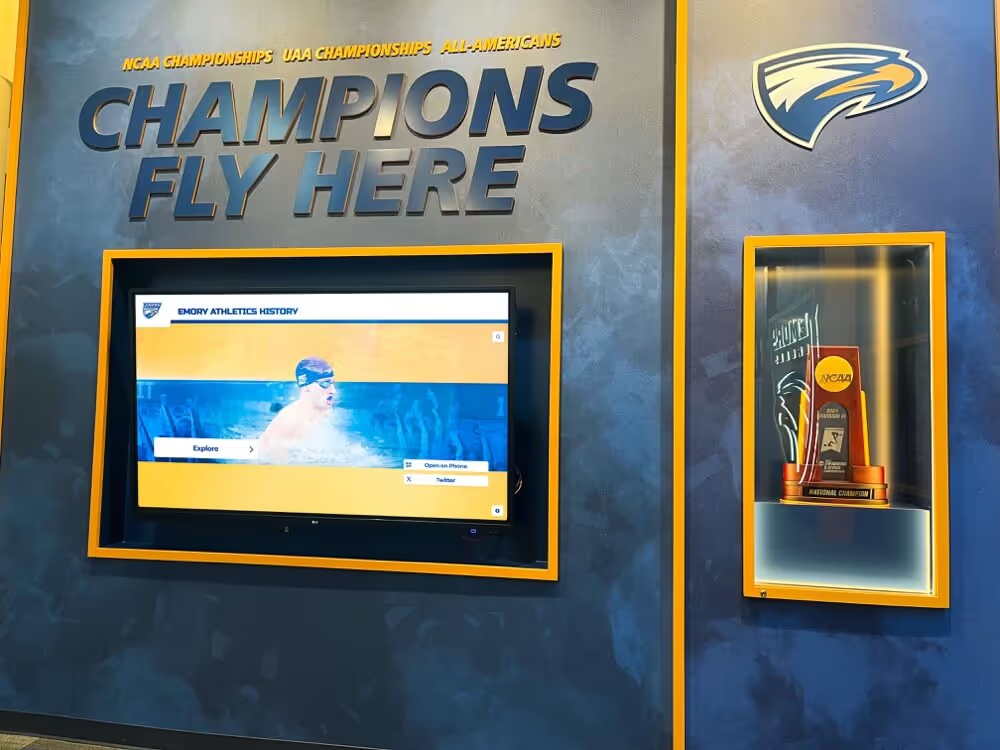
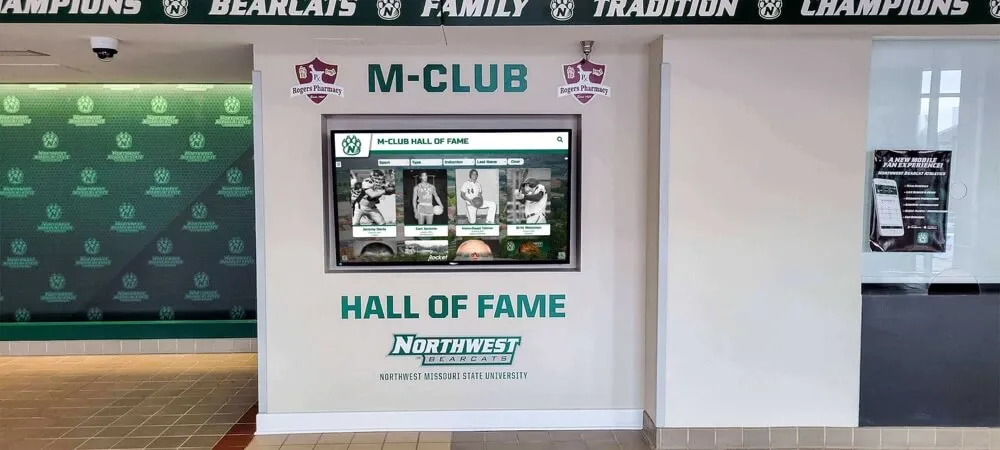
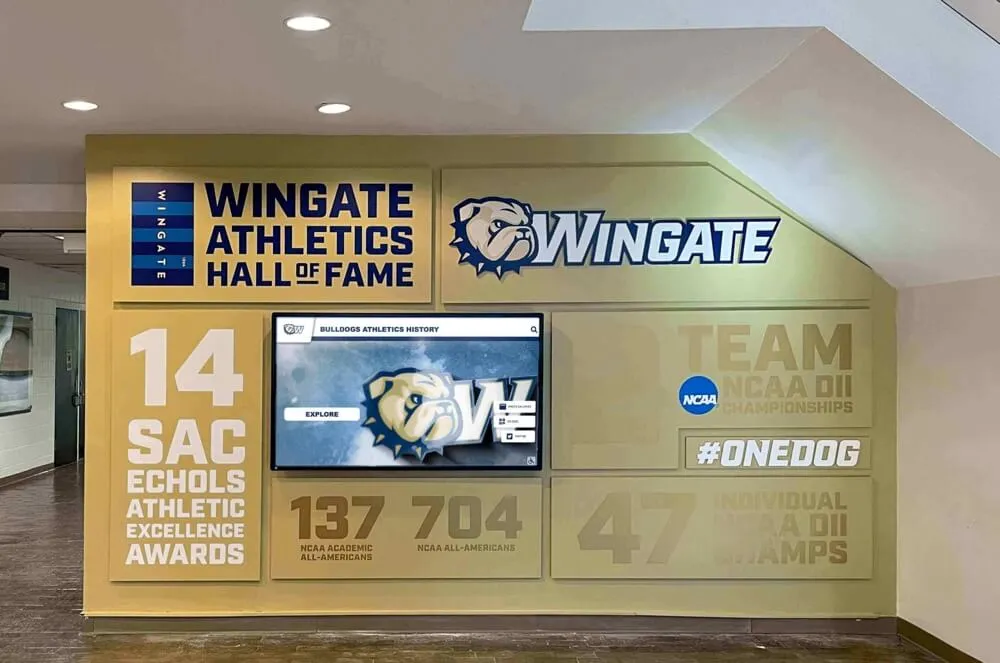
Lobby installations invite spontaneous engagement—visitors who stop for thirty seconds often spend several minutes exploring when the display is interactive and well-organized
Digital Archiving Strategies for Newspaper Covers
Physical displays can showcase a curated selection. A digital archive holds everything—and makes the full collection searchable and accessible to anyone, anywhere.
Building a Searchable Digital Library
A structured digital library transforms a folder of scanned PDFs into a genuinely useful resource. Core metadata to capture for each cover:
- Date of publication (full date, not just year)
- Volume and issue number
- Lead headline and subheadline
- Key people named on the cover (for name-based searches)
- Primary topic or beat (sports, politics, arts, community)
- Format (broadsheet, tabloid, magazine-style)
- Condition of original (excellent, fair, poor, reproduction only)
Cloud-based document management platforms used by libraries and museums—many offering education pricing—handle this metadata structure well. Even a well-organized Google Drive with a consistent naming convention and a linked spreadsheet serves as a functional starting archive.
Interactive Digital Flipbooks for Full Issues
While cover displays celebrate front pages, alumni and researchers often want to read entire issues. Converting scanned papers into digital flipbooks allows anyone to page through complete editions in a browser. Interactive flipbook displays for schools provide the same magazine-style browsing experience for newspaper archives that they do for yearbooks—preserving the designed layout rather than reducing content to plain text.
What effective flipbook archives include:
- High-resolution page scans with zoom capability
- Text recognition (OCR) for in-document search
- Shareable page links so alumni can send specific articles
- Accessible reading modes for screen-reader users
- Metadata headers identifying each issue clearly
Connecting Newspaper Archives to Broader School History
Newspaper covers gain additional context when linked to parallel records. A cover from the year the gymnasium was renovated connects to facility records. A championship-era front page links to athletic records. School newspaper templates and recognition stories demonstrate how newspaper coverage and formal recognition displays reinforce each other when integrated into a single archive.
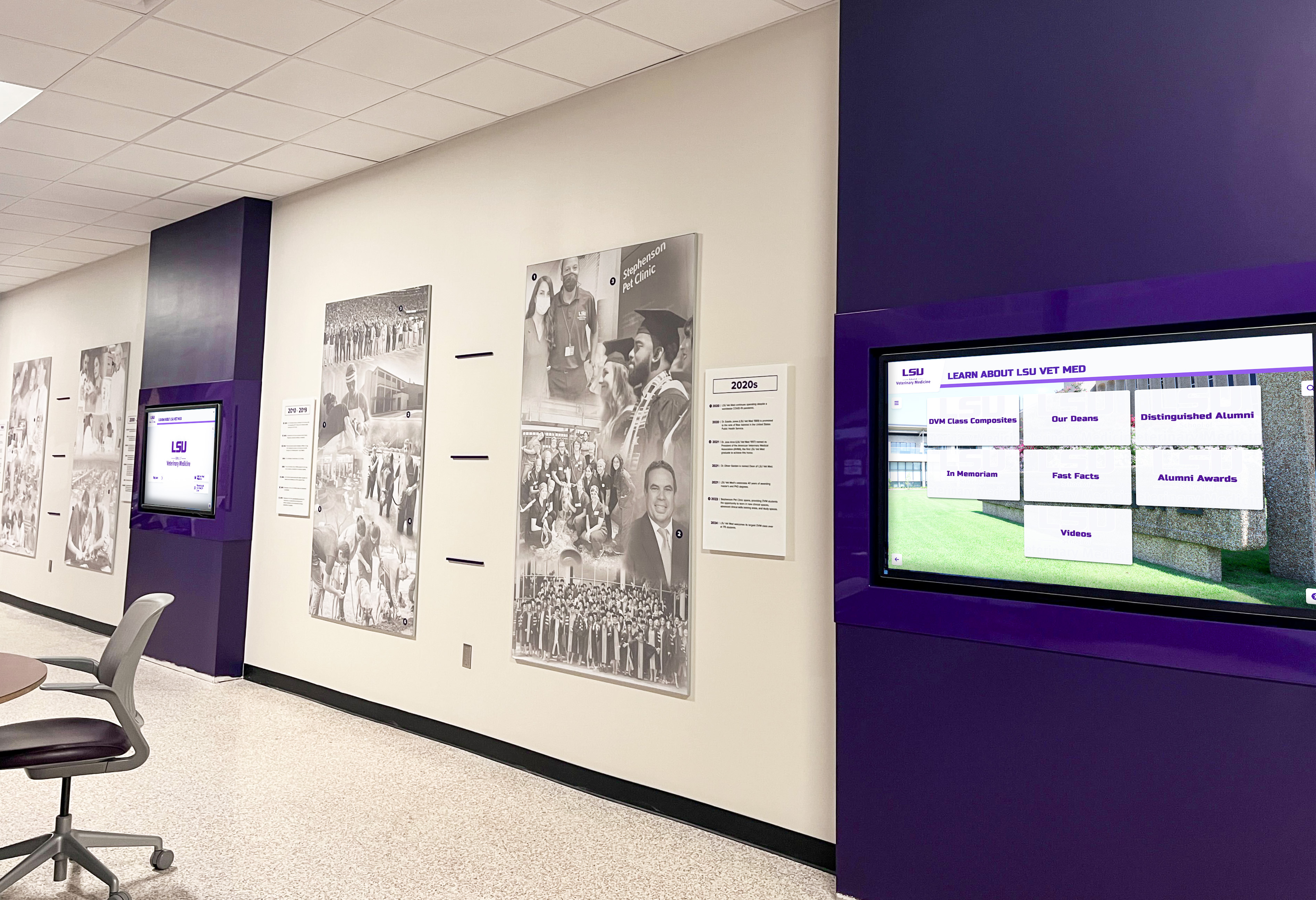
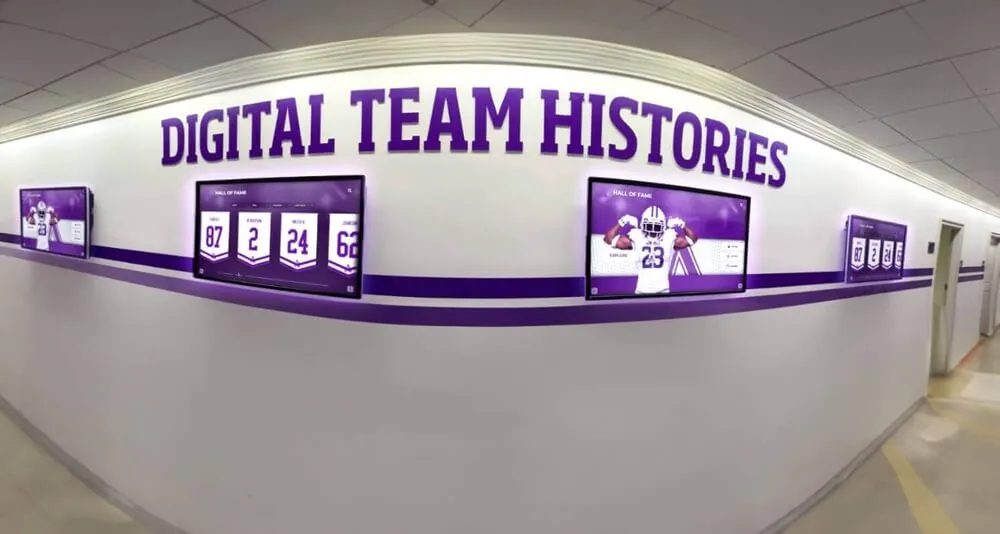
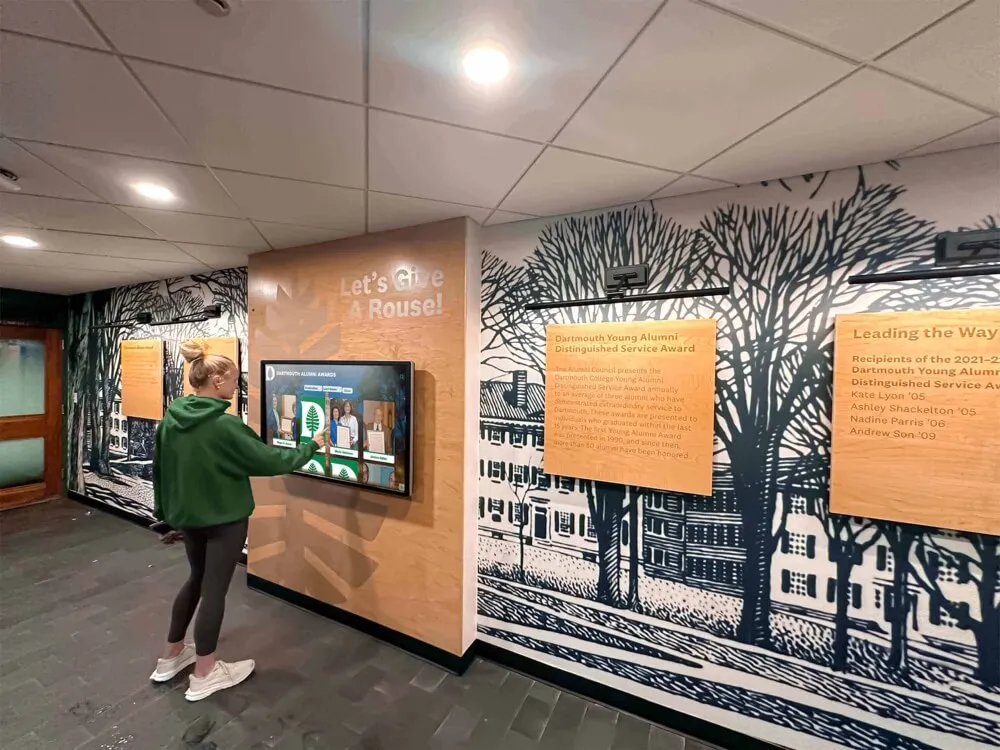
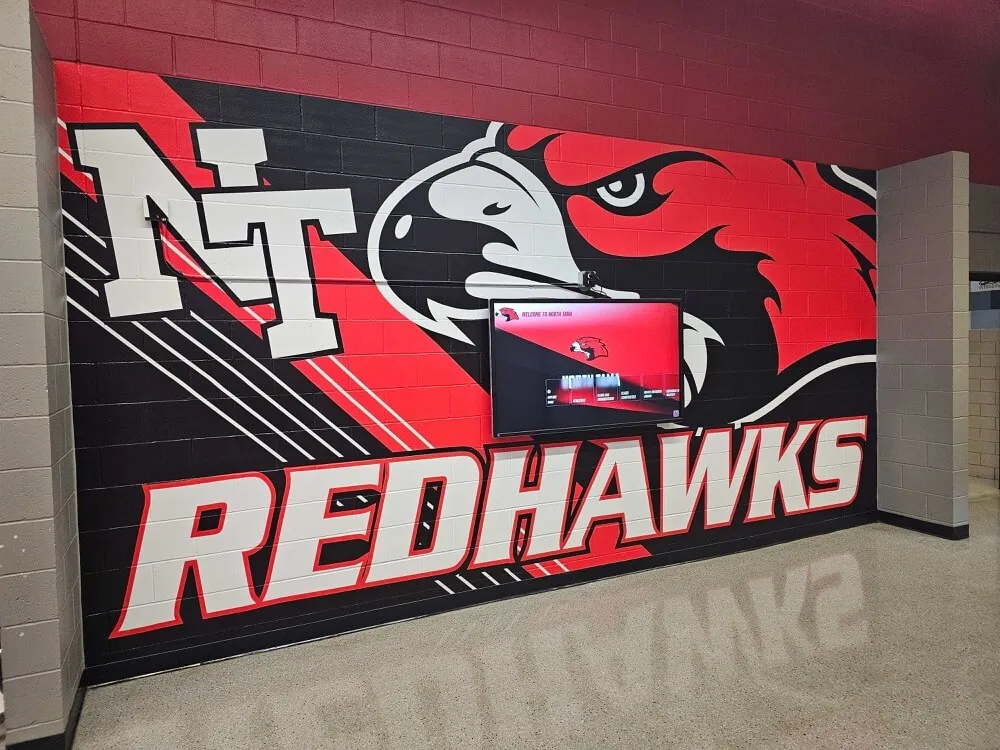
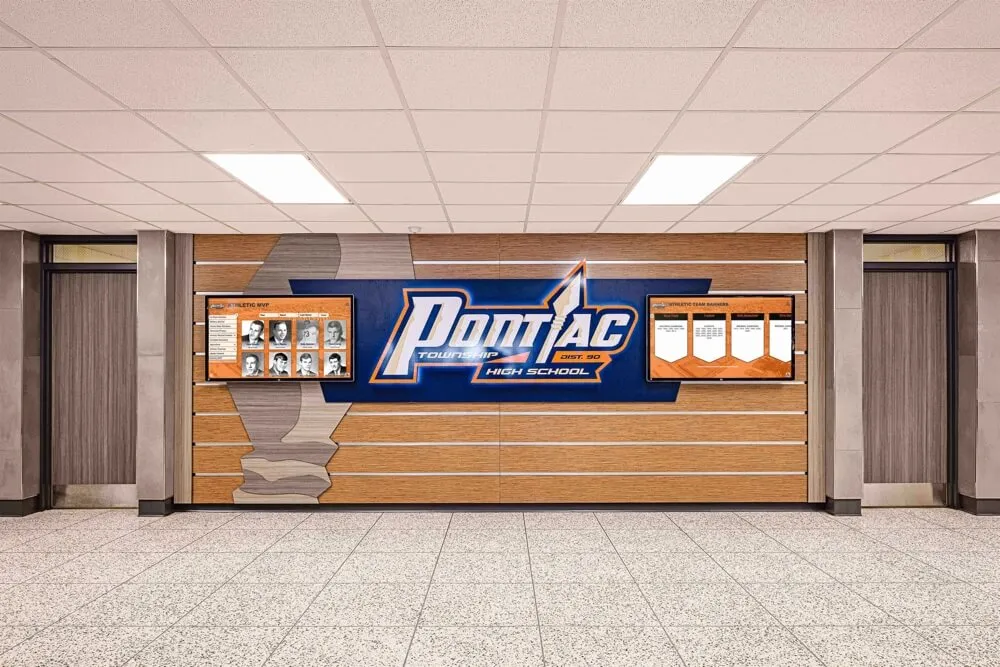
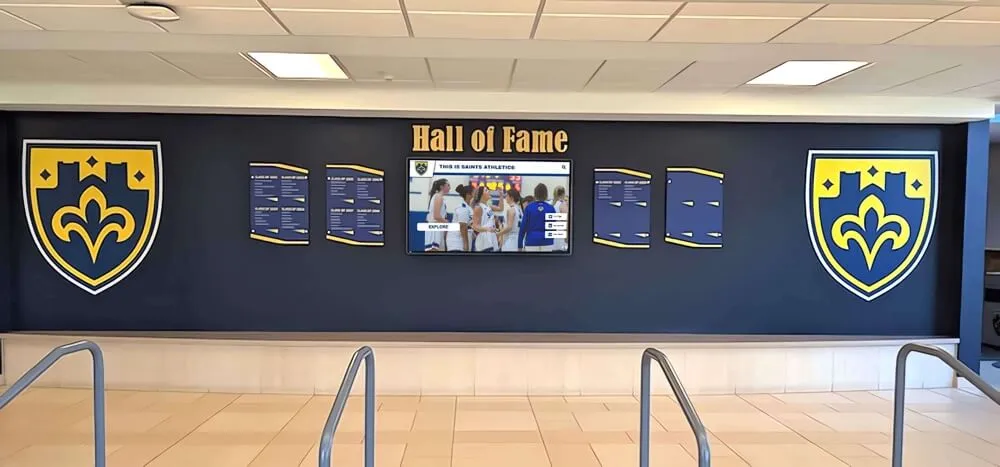
Multiple display screens along a hallway can present different eras or themes simultaneously, creating an immersive archive experience for students and visitors
Interactive Touchscreen Displays: Making Newspaper Covers Come Alive
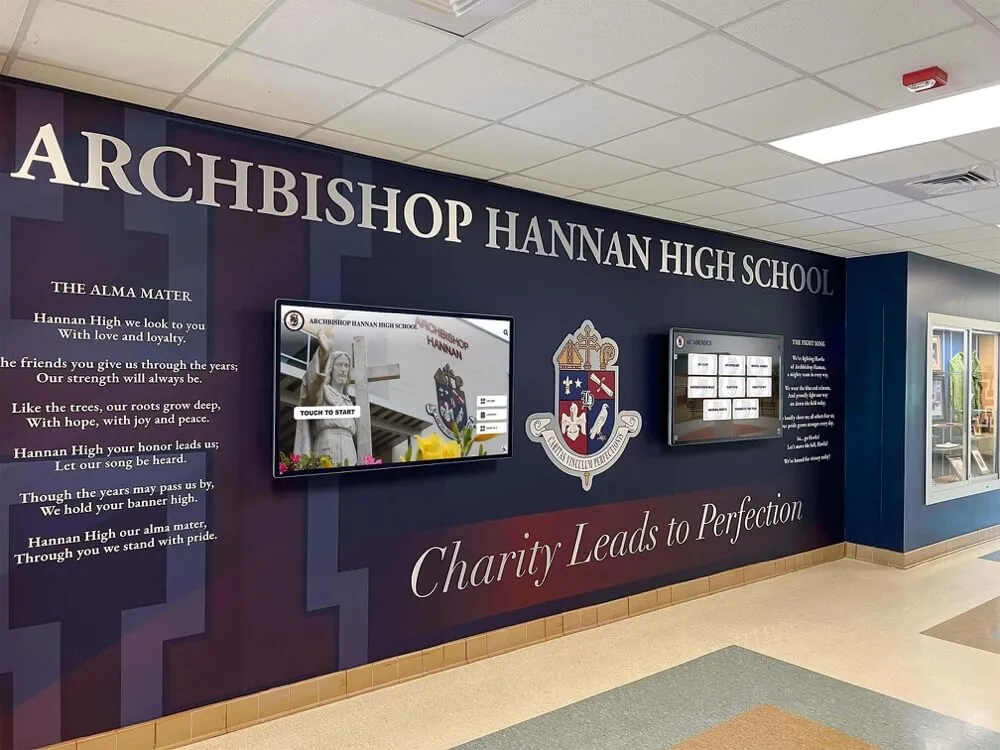
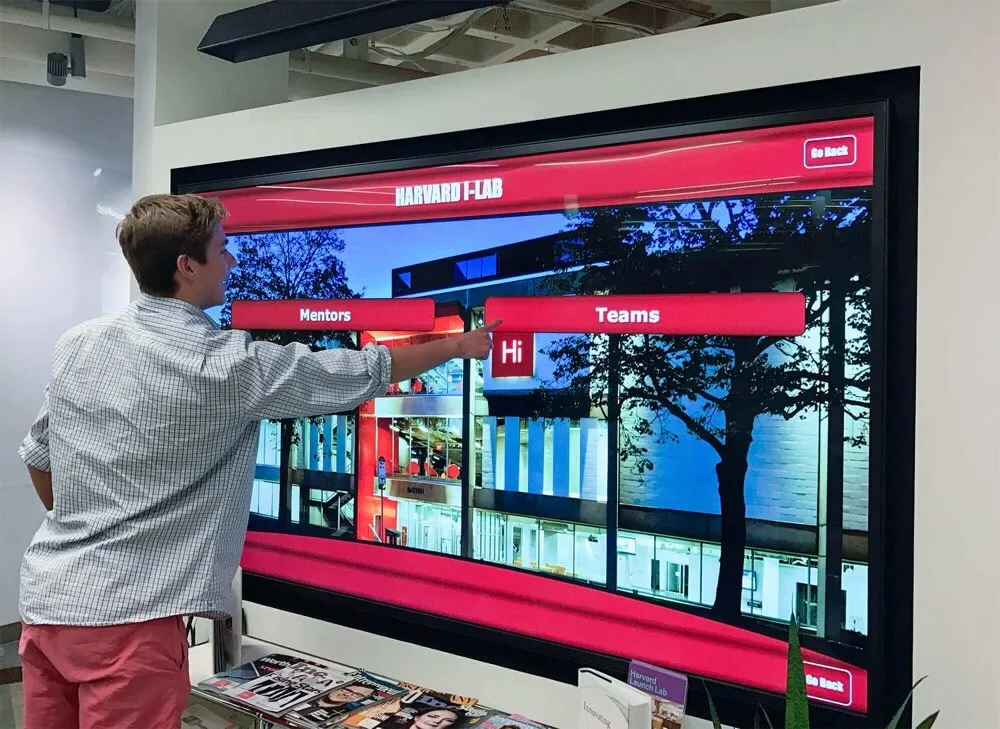
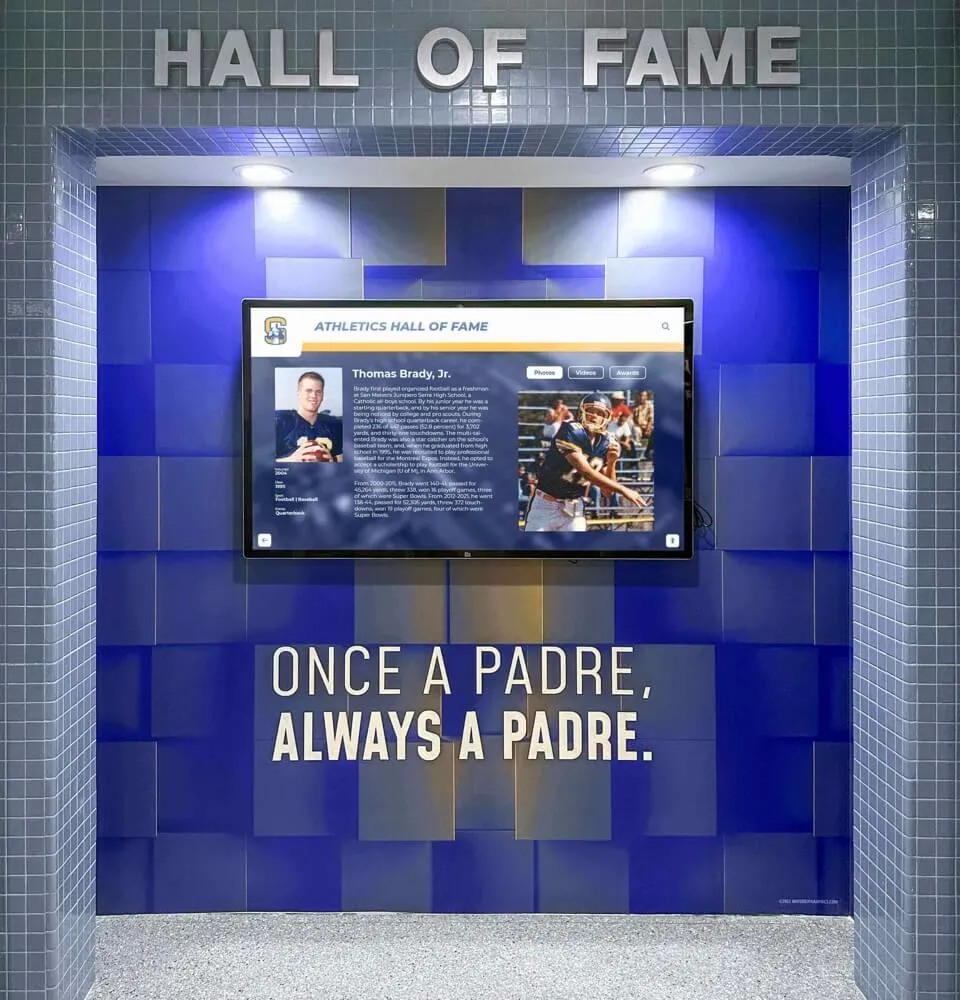
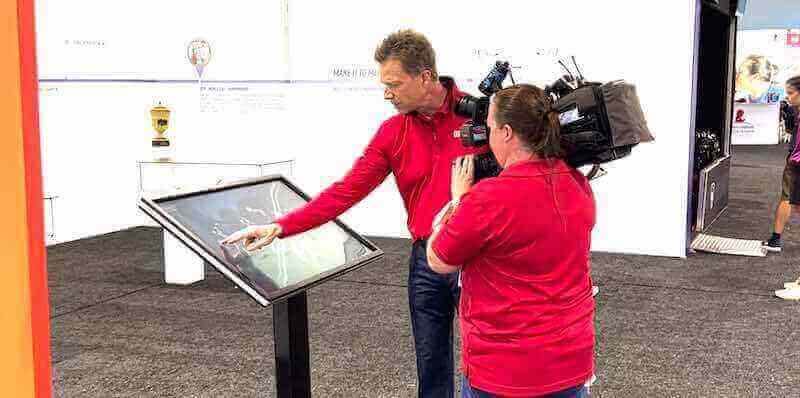
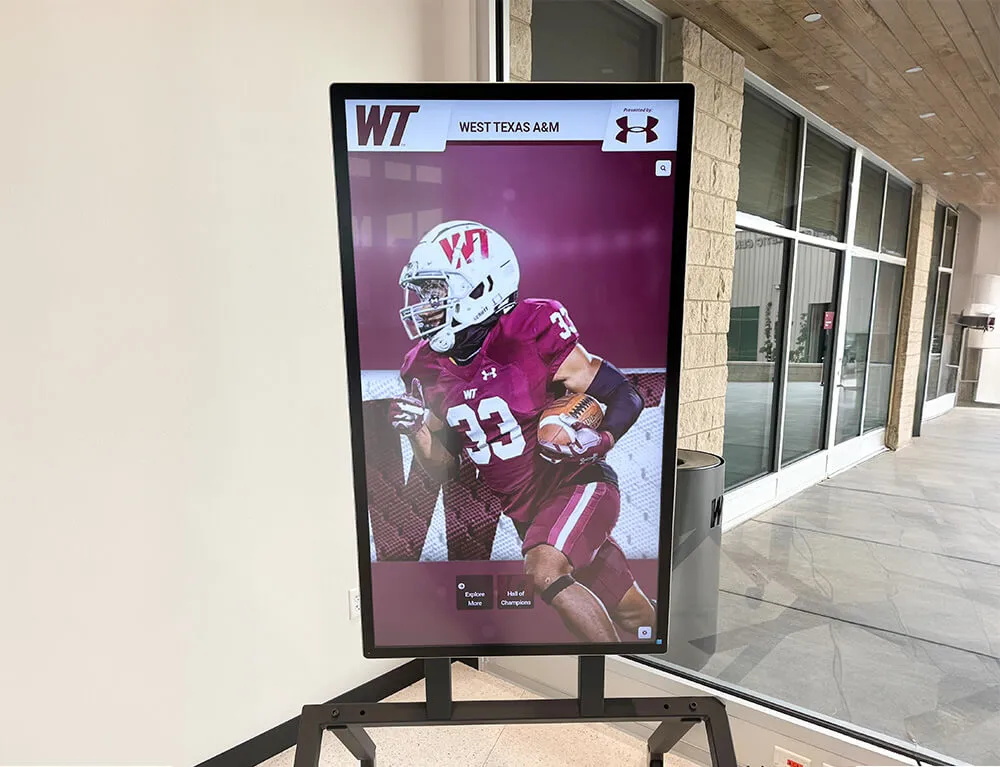
Static displays and online archives each serve important purposes. Interactive touchscreen installations in physical spaces combine the best of both—they bring digital depth to the physical environment where community members already gather.
What a Touchscreen Newspaper Archive Can Do
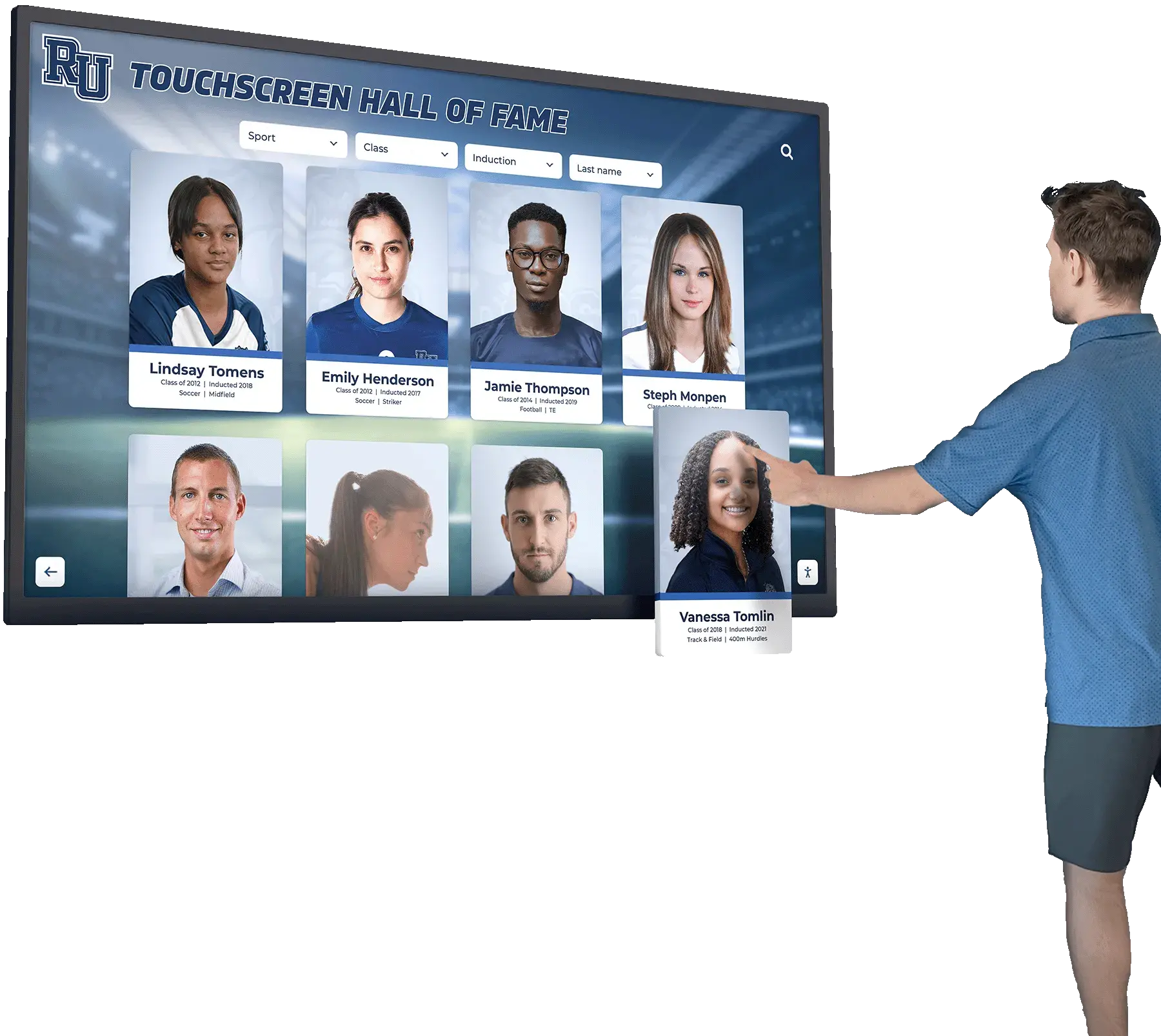
A well-designed touchscreen newspaper covers display allows users to:
- Browse by decade or era: Swipe through a visual timeline of covers, stopping at issues that catch their eye
- Search by keyword or name: Retrieve every cover that mentioned a particular person, team, or event
- Zoom into cover details: Read headlines, photo captions, and bylines that are illegible at thumbnail size
- Access full issues: Tap a cover to open the complete issue in flipbook format
- Explore related content: See athletic records or yearbook entries from the same period alongside newspaper coverage
- Share favorites: Email or QR-link specific covers to their phone
For schools considering touchscreen installations, what to look for in an interactive school display covers hardware specifications, software requirements, and questions to ask vendors.
Placement Strategies That Maximize Engagement
A touchscreen newspaper display earns its budget when it gets consistent use. Placement determines everything:
High-engagement locations:
- Main entrance lobby: Captures every visitor, including prospective families and alumni returning for events
- Outside the journalism classroom or media center: Contextualizes the curriculum and motivates current students
- Library entrance: Positions the newspaper archive alongside other research resources
- Athletic wing hallway: Connects sports coverage from the paper to trophy displays and records boards
- Alumni center or reunion space: Creates a focal point for celebratory gatherings
Digital tools that bring school history to life offer case studies and placement rationale for a range of institutional contexts.
Keeping the Archive Current
A newspaper covers display should not feel like a closed chapter. Integrating current-year covers into the display—either automatically through a digital publishing workflow or through periodic manual updates—signals that the journalism program remains vital.
Sustaining an active archive:
- Add new covers at the end of each publication cycle
- Feature recent award-winning editions prominently
- Rotate “this week in school newspaper history” spotlights
- Allow journalism students to contribute context notes or video interviews attached to specific issues
Yearbook picture archives that honor every class use the same continuous-update model to keep archival displays relevant to current students—the same principle applies directly to newspaper cover collections.
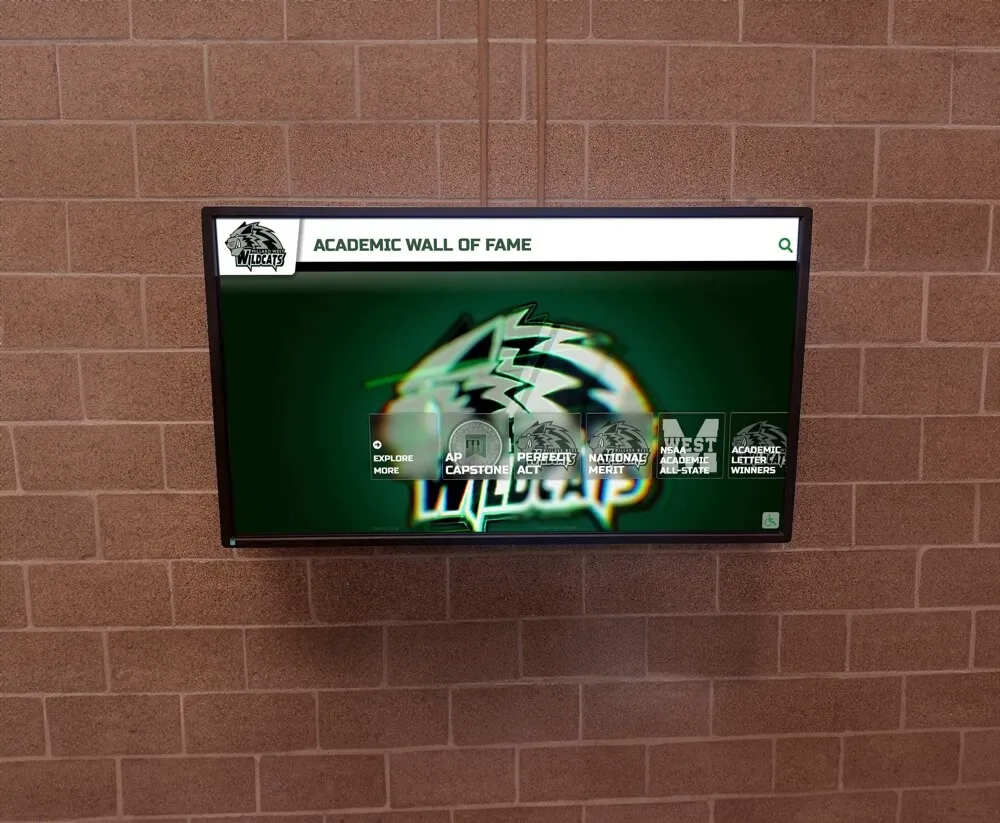
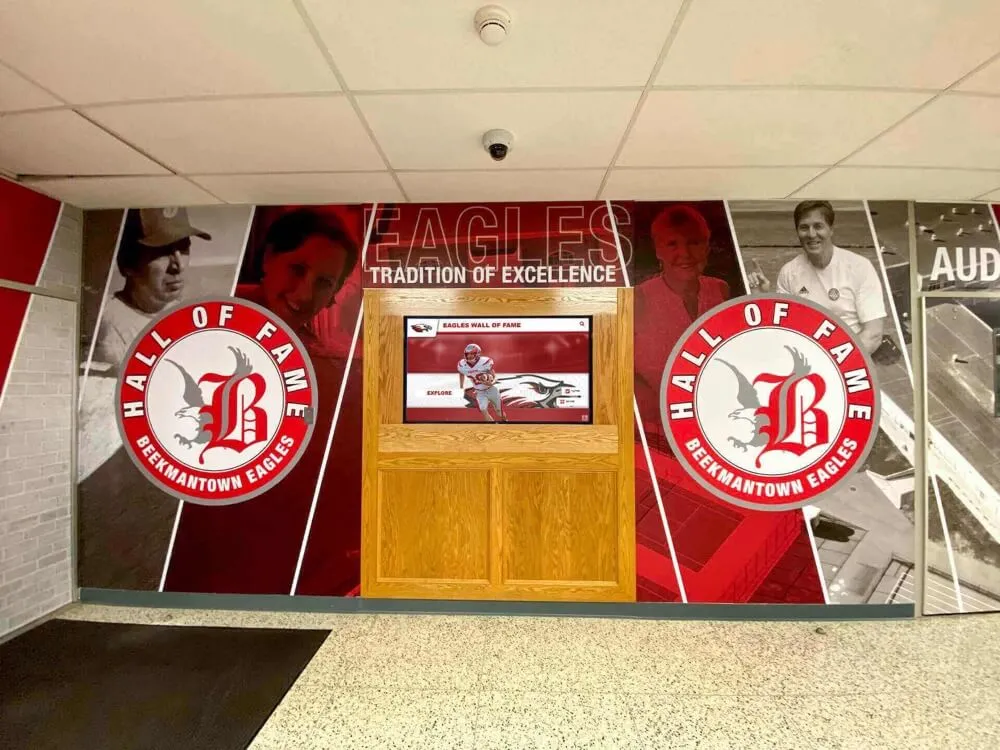
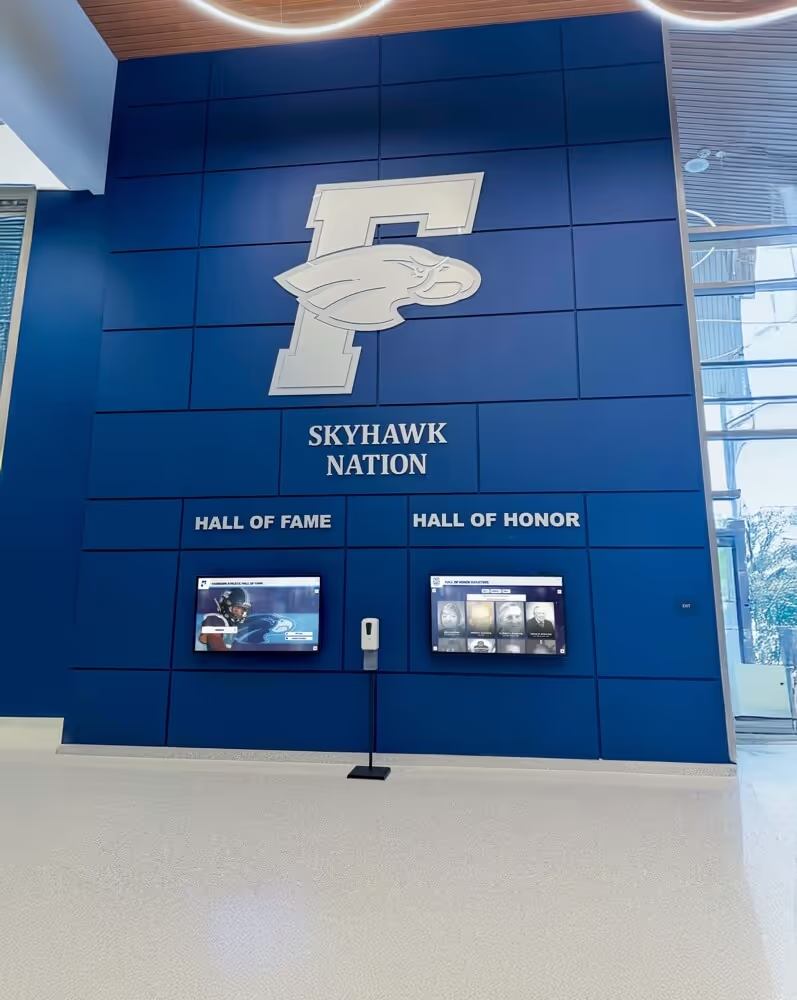
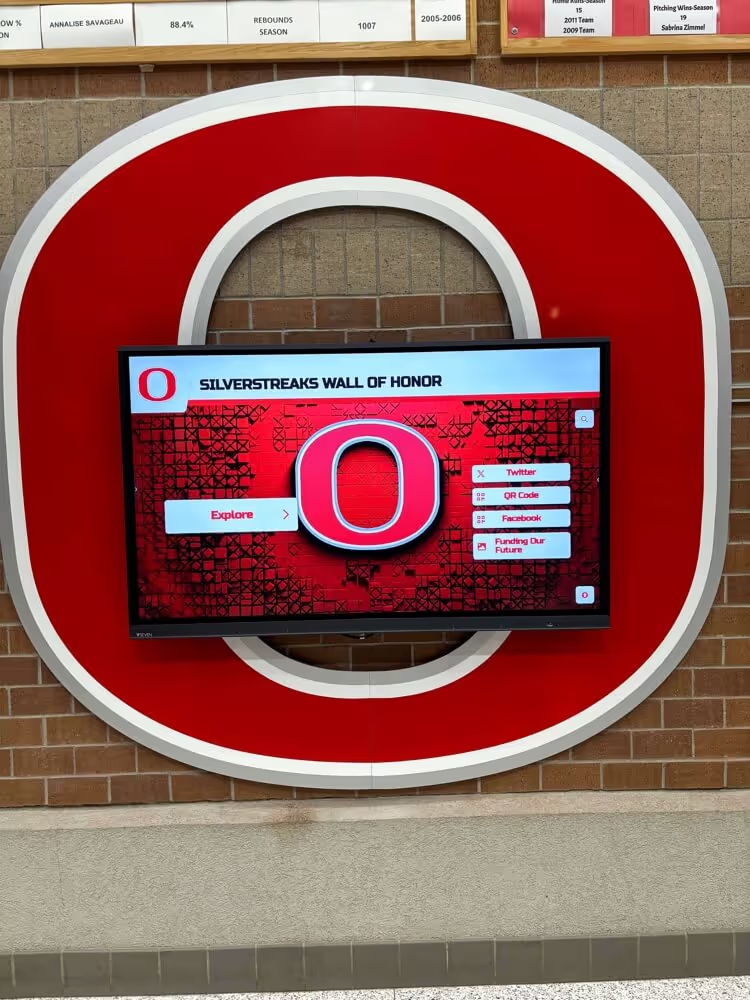
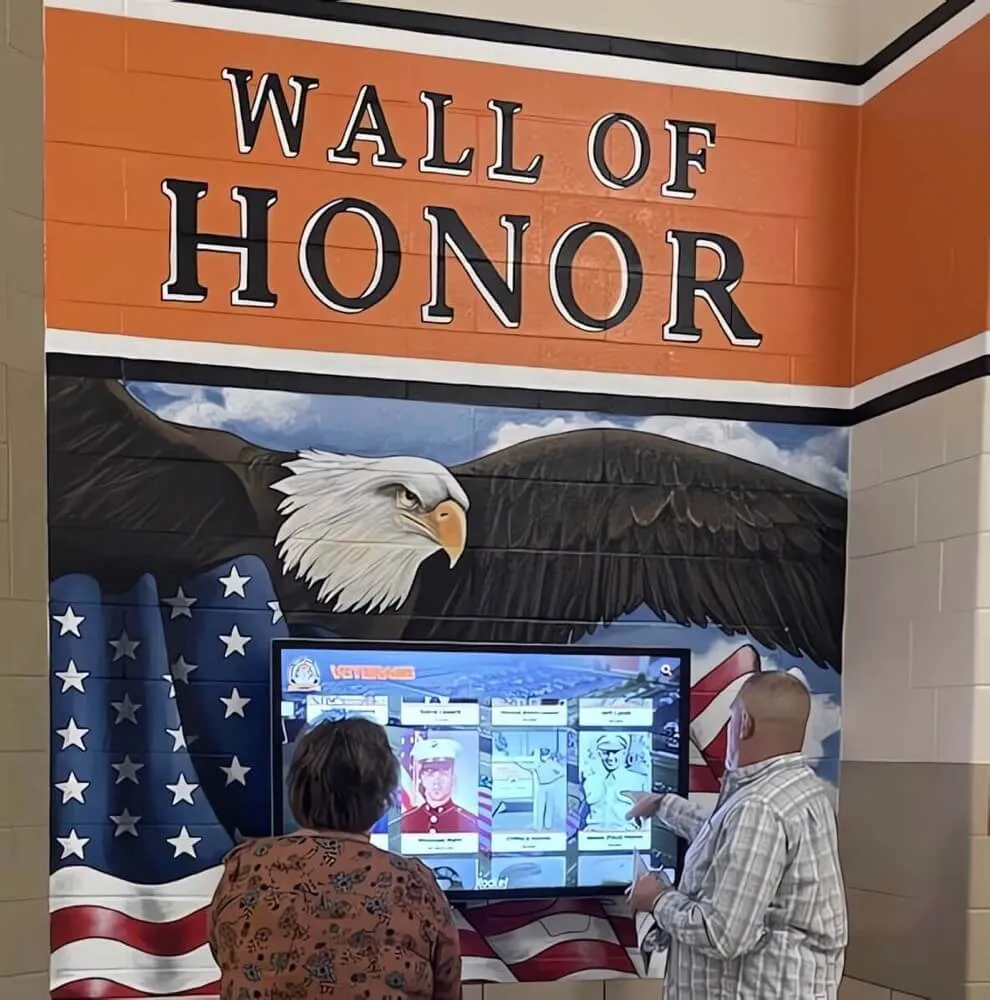
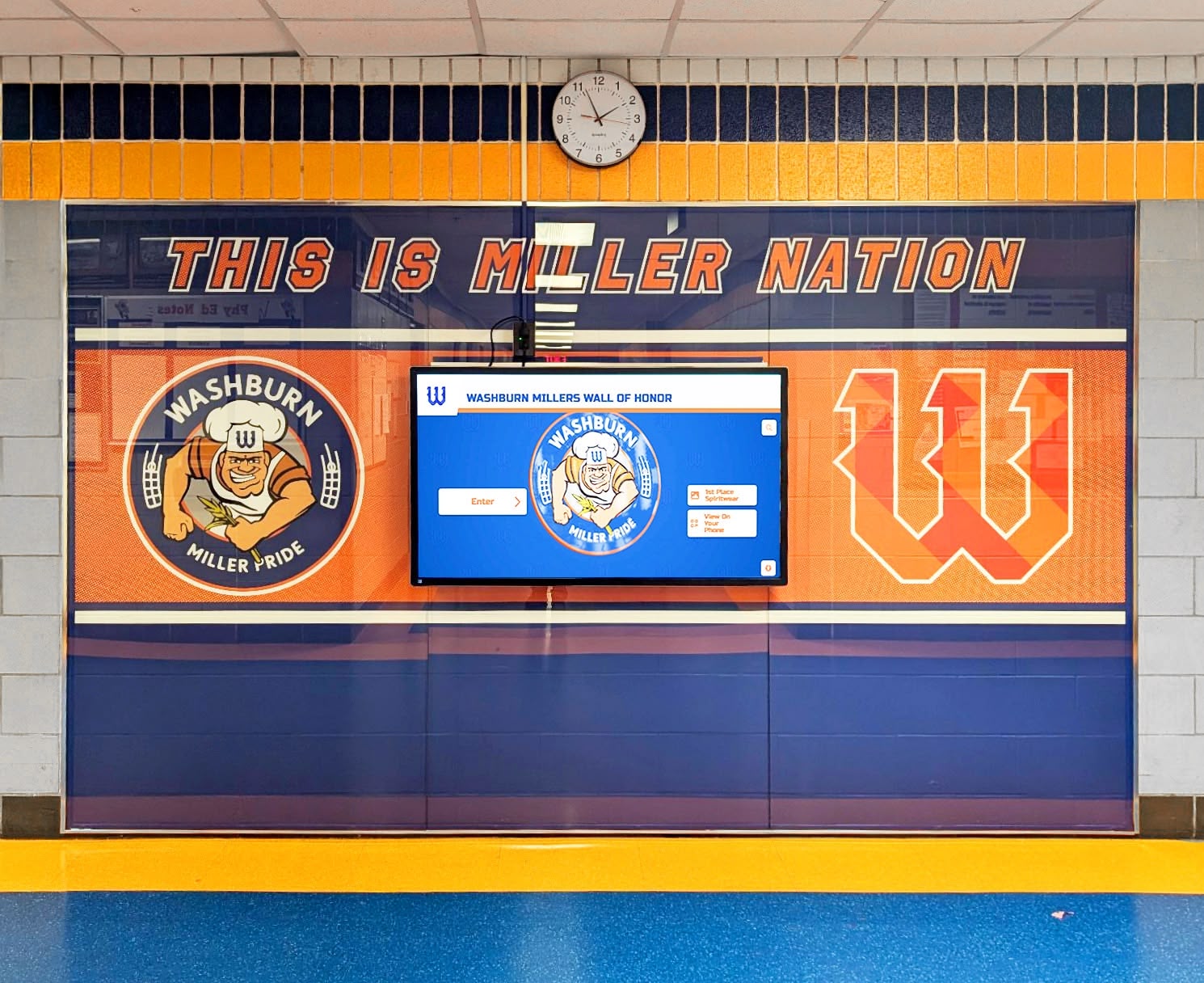
Mounting a display against existing architectural features like brick walls integrates the archive naturally into the school environment rather than treating it as an afterthought
Making Newspaper Cover Archives Accessible to Alumni and the Community
A newspaper covers display that only exists inside the school building serves only people who can physically visit. Extending access expands the archive’s impact significantly.
Online Companion Archives
A password-free public-facing website or microsite hosting digitized covers costs little to maintain and reaches alumni globally. Key features worth including:
- Chronological browse by decade or volume
- Keyword search across headlines and caption text
- Download options for alumni who want personal copies of specific covers
- Submission form for alumni to donate physical copies or share additional context
Alumni Engagement Through Newspaper History
School newspapers connect generations through shared publications. An alumna who wrote a front-page story in 1987 shares something genuine with a student who contributed to a 2024 cover story—the same deadline pressure, editorial decisions, and pride of byline. That connection makes the newspaper archive a natural fundraising and engagement asset.
Annual “first issue” retrospectives, staff alumni reunions centered around browsing the digital archive, and “front page of the year” recognition programs all leverage the covers display for alumni relations purposes.
Practical Steps for Starting Your School Newspaper Covers Display
Whether your archive spans five years or fifty, getting started follows the same sequence.
Step 1: Inventory What You Have
Spend two to four weeks collecting physical copies from all available sources—library, journalism room, faculty offices, alumni networks. Document every issue found; note gaps.
Step 2: Scan and Digitize
Scan all covers at 300–600 DPI. Save in PDF and high-resolution JPEG formats. Name files consistently: YYYY-MM-DD_volume-number_issue-number.pdf.
Step 3: Build Your Metadata Spreadsheet
Enter basic metadata for each digitized cover: date, headline, key topics, people named. This becomes the foundation for any searchable digital display.
Step 4: Curate a Physical Display Selection
Choose 20–50 covers that represent distinct eras, landmark stories, and design evolution. These become the core of your framed gallery or timeline wall.
Step 5: Select Your Display Format
Decide whether to start with a physical installation, a digital archive, or both. Budget, available wall space, and technical resources all factor in. Many schools begin with a framed gallery wall and add a touchscreen component in a subsequent year as they secure additional funding.
Step 6: Plan for Ongoing Maintenance
Assign a responsible party—the journalism advisor, the librarian, or an archivist—to add new issues each year and update metadata. An archive that stops in 2022 gradually loses relevance.
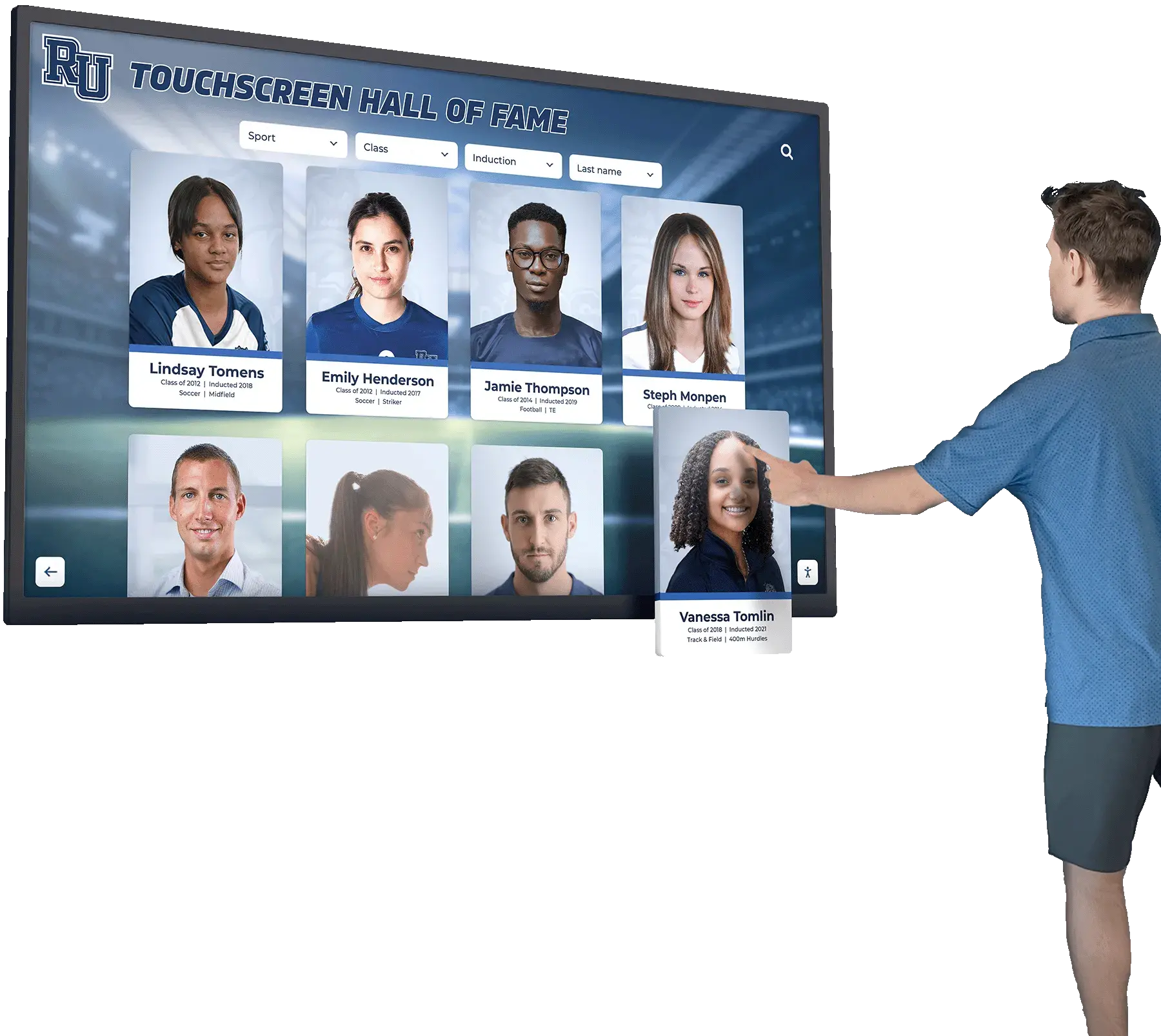
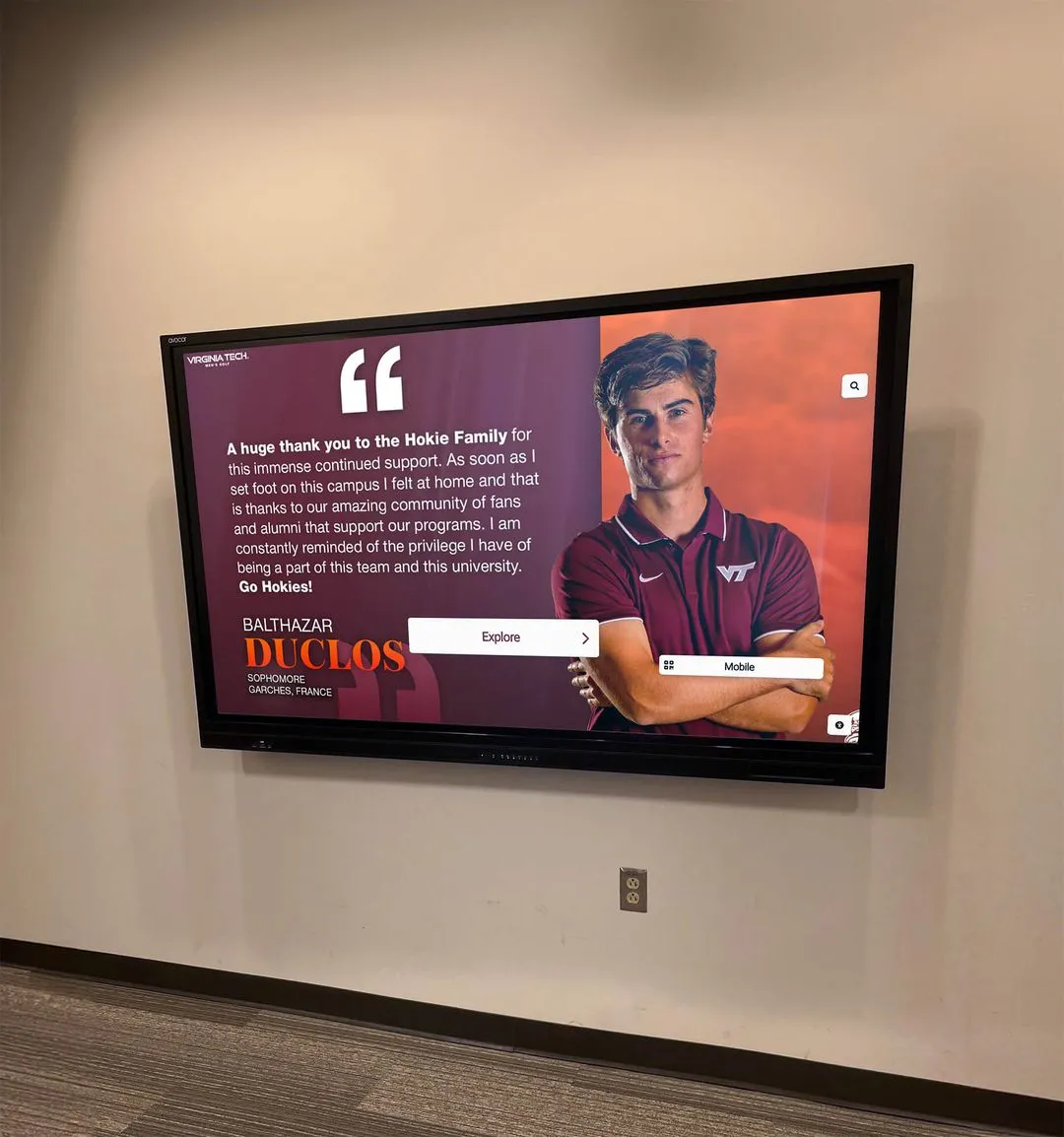
Interactive displays require minimal training—the intuitive swipe-and-tap interface lets visitors explore decades of school history without any instruction
Honoring the Students Who Made These Covers
Behind every front page is a group of students who made decisions under pressure: what story led, what image anchored the page, what headline captured the moment in six words or fewer. A school newspaper covers display honors not just the journalism itself but the students who produced it.
That recognition matters. It signals that student work has lasting value—that the edition rushed to print before first period on a Thursday in 1994 still exists, still informs, and still reflects well on everyone who contributed to it. For current students in the journalism program, seeing decades of predecessors represented on the wall communicates something that no classroom conversation quite conveys: this work endures.
Combining physical and digital approaches gives a newspaper covers display both immediate visual impact and long-term accessibility. A framed gallery creates the first impression. A touchscreen archive sustains exploration. An online companion extends reach to alumni who may never set foot in the building again but will spend a quiet evening clicking through covers from the year they graduated.
The front pages have always been there. Building a display around them is simply the long-overdue decision to let them be seen.
Ready to Build an Interactive School Newspaper Archive Display?
Rocket Alumni Solutions designs and installs touchscreen archive displays that make decades of school history browsable, searchable, and continuously updated. From newspaper cover collections to athletic records and yearbook archives, we help schools create displays that honor the past and engage the present community.
Explore Interactive Archive Displays