



Walk into nearly any high school gymnasium, fieldhouse, or athletic facility and you’ll find sports banners hanging proudly from the rafters—colorful testaments to championship seasons, retired jerseys, conference titles, and individual athletic excellence. These visual markers of achievement serve dual purposes: celebrating past success while inspiring current athletes to add their own accomplishments to the program’s legacy.
Yet many athletic directors and coaches struggle with sports banner decisions that seem straightforward but become increasingly complex. Space limitations force difficult choices about which achievements warrant banner recognition. Production costs accumulate quickly when multiple teams achieve banner-worthy success. Physical banners fade, tear, and require replacement. Meanwhile, changing display priorities—from traditional championship focus to more inclusive athlete recognition—challenge established banner traditions.
This comprehensive guide explores sports banner design ideas for high school athletic programs, examining traditional approaches alongside modern alternatives that preserve program history while adapting to current recognition philosophies and practical constraints.
Sports banners have decorated athletic facilities for generations, creating visual records of program achievement that connect current athletes to institutional tradition. Understanding various banner types, design considerations, and emerging alternatives helps schools develop recognition systems that honor achievement while remaining sustainable and inclusive.

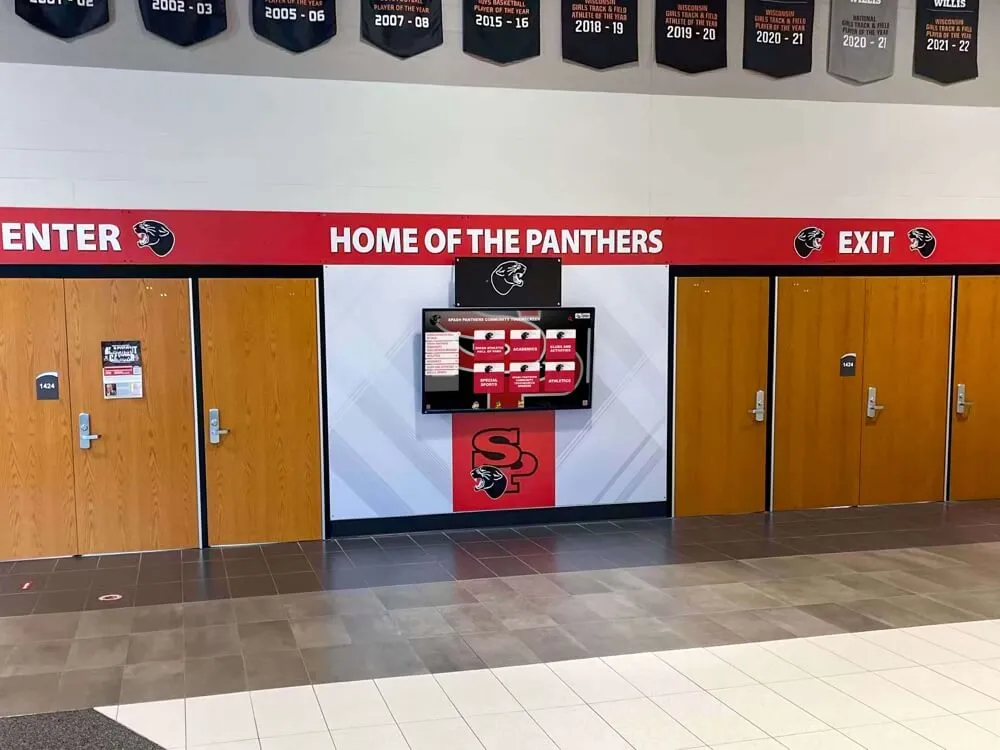
Traditional hanging banners create visual impact in gymnasiums while celebrating athletic achievement and program history
Types of Sports Banners for High School Athletics
High school athletic programs utilize diverse banner types serving different recognition purposes and program priorities.
Championship and Conference Title Banners
The most traditional banner category celebrates team competitive success:
State Championship Banners
Elite achievement warranting prominent recognition:
- Sport name, championship level, and year clearly displayed
- School colors and mascot branding reinforcing identity
- Conference or state association logos where appropriate
- Season records or tournament results providing context
- Coach names honoring leadership behind championship success
- Prominent placement reflecting ultimate achievement status
State championship banners typically receive prime display positions in gymnasiums and facilities, serving as aspirational goals inspiring current teams.
Conference and League Championship Banners
Regular season and conference tournament success:
- Conference name and championship designation
- Shared championships acknowledged appropriately
- Regular season versus tournament titles distinguished
- Consecutive championships highlighted where applicable
- Historical context showing championship frequency
- Sport-specific formatting reflecting unique traditions
Many programs designate separate areas for conference versus state championships, creating visual hierarchy reflecting achievement levels.
Regional and Sectional Title Banners
Postseason advancement recognition:
- Regional or sectional tournament champions
- Playoff qualifier acknowledgment for competitive classifications
- District championship recognition
- Stepping-stone achievements toward state competition
- Historical documentation of tournament success
- Balance between celebrating achievement and maintaining hierarchy
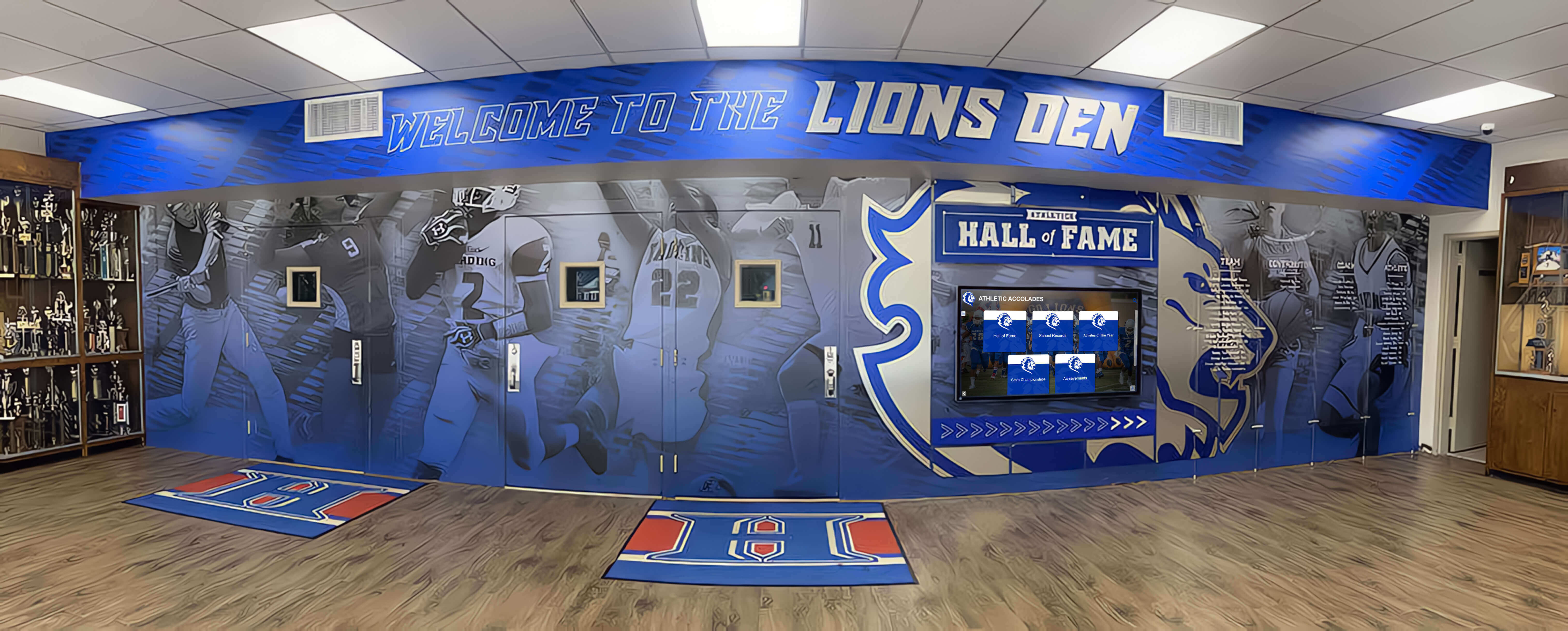
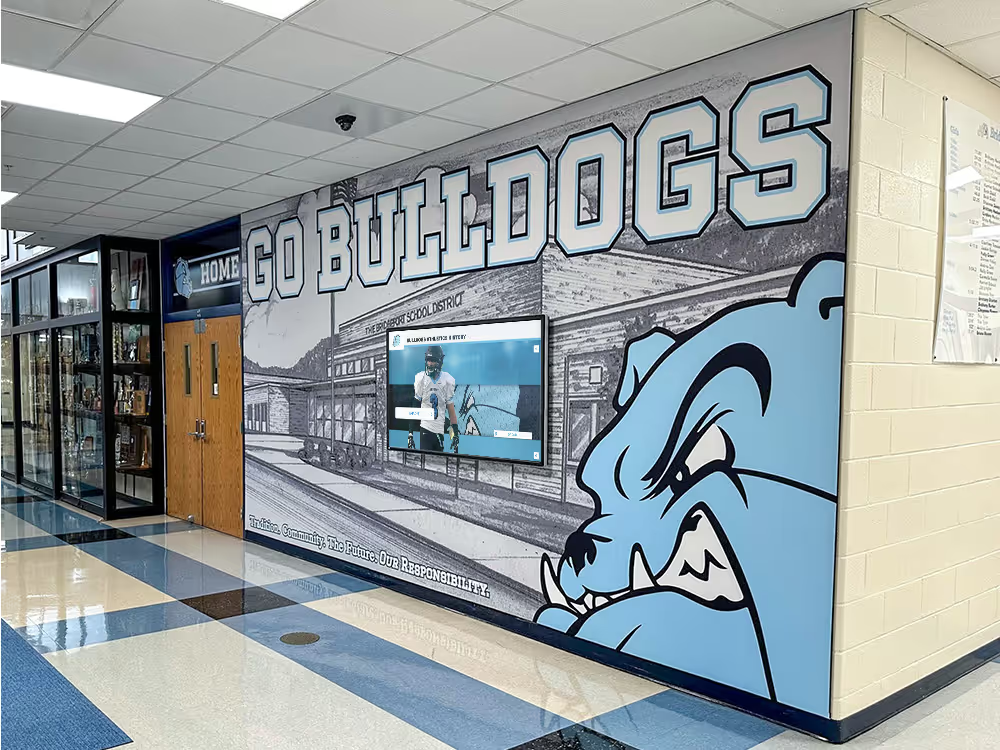
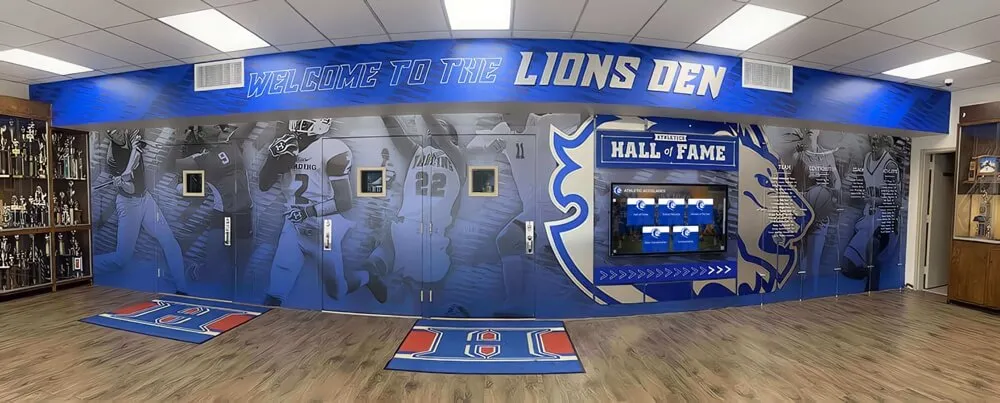
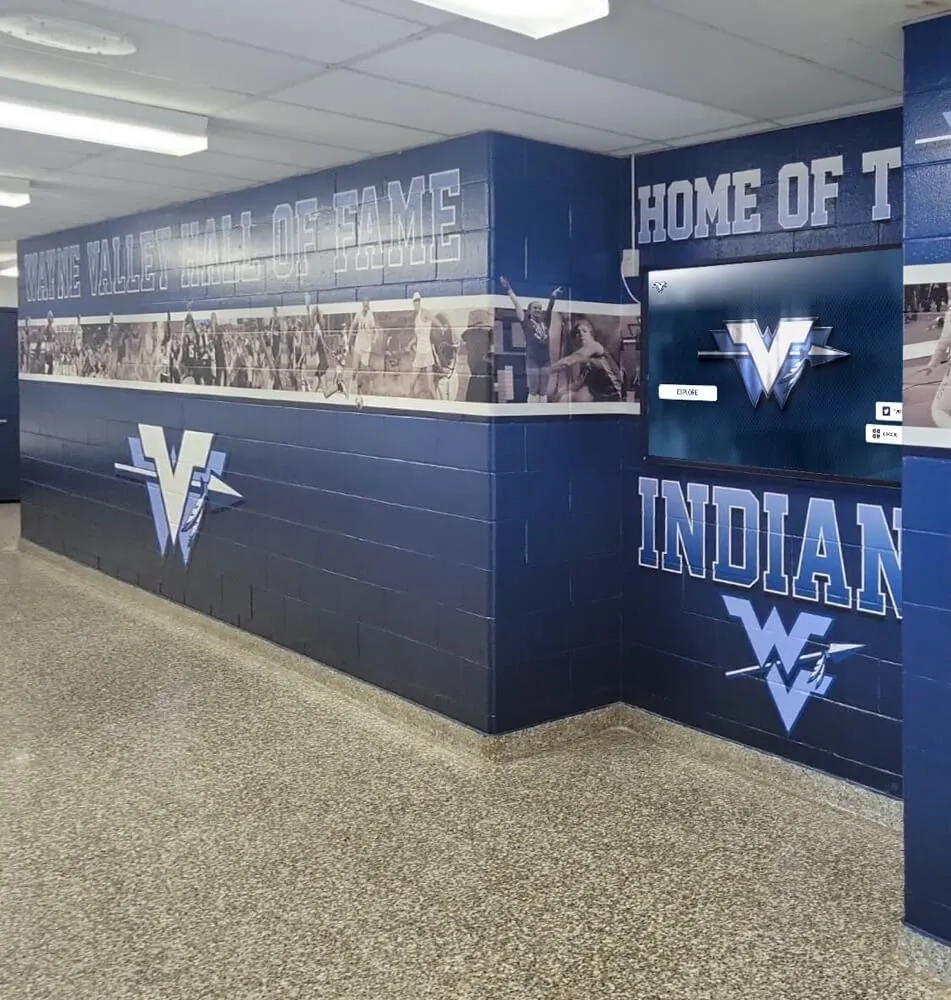
Comprehensive facility displays integrate banners with murals and trophy cases creating cohesive athletic recognition environments
Retired Jersey and Individual Athlete Banners
Honoring exceptional individual achievement:
Jersey Retirement Banners
Elite recognition reserved for legendary athletes:
- Large-scale jersey number display
- Athlete name and years of participation
- Key achievements and records
- Sport identification
- Permanent retirement designation
- Selection criteria transparency preventing controversy
Jersey retirement represents highest individual honor many programs bestow, requiring clear policies about qualification standards to maintain prestige and avoid difficult decisions.
Individual Achievement Banners
Athlete-specific recognition beyond jersey retirement:
- State champion individual competitors
- Record holders in measurable sports
- All-American and national honor selections
- Significant individual award recipients
- College scholarship athletes from programs emphasizing college pipeline
- Student-athlete academic excellence combined with athletic success
Individual athlete banners create recognition opportunities in sports lacking traditional team championship structure, particularly track and field, swimming, wrestling, and tennis.
Team Photo and Roster Banners
Championship team documentation:
- Full team photographs from championship seasons
- Complete rosters listing all team members
- Coaching staff recognition
- Season records and notable victories
- Larger format allowing detailed information
- Combination of visual and textual elements
These expanded banners provide more comprehensive championship documentation than simple title banners, recognizing every contributor rather than just star athletes.
For programs seeking comprehensive athlete recognition beyond championship focus, end-of-year award strategies provide frameworks for broader celebration.
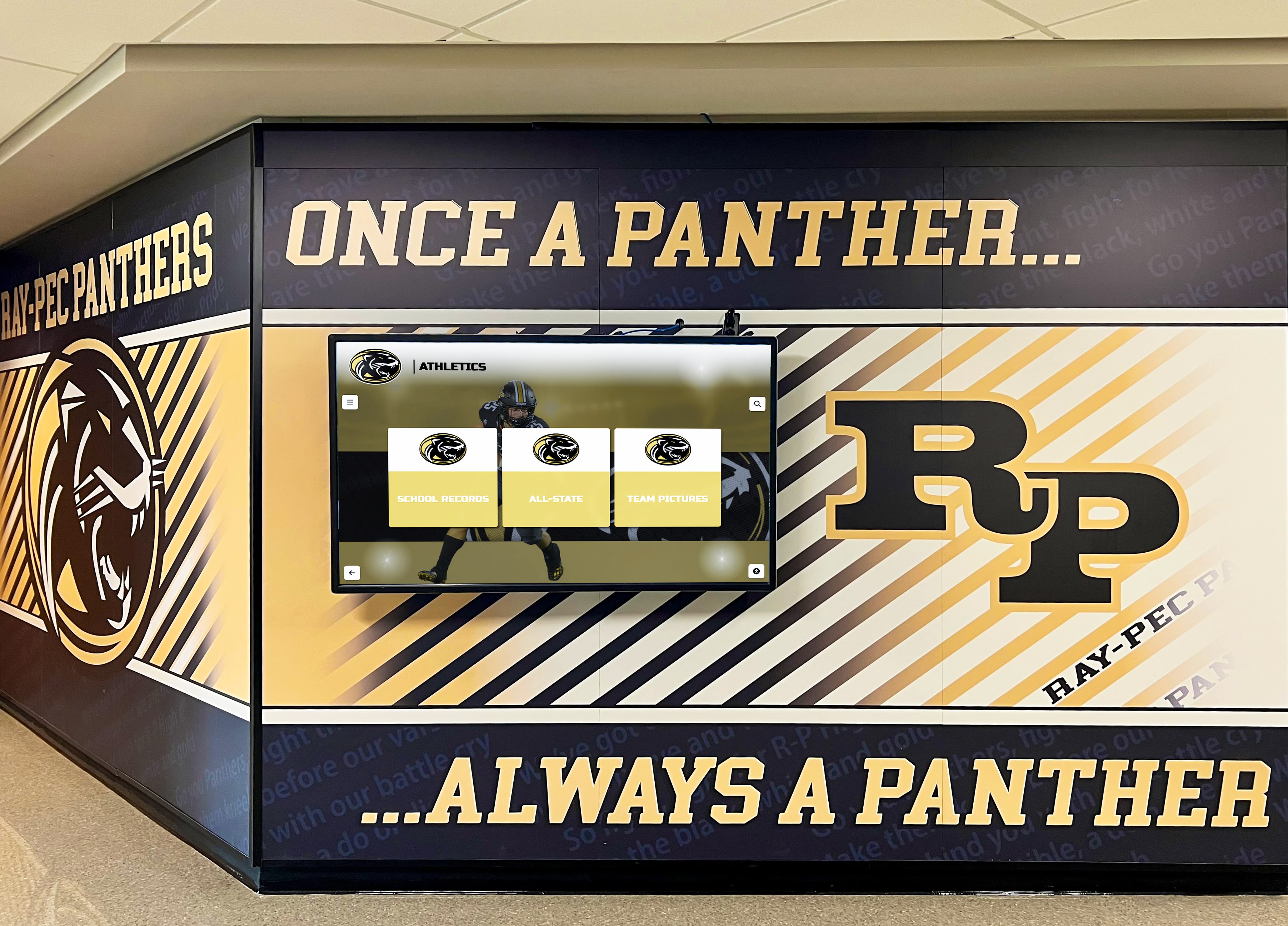
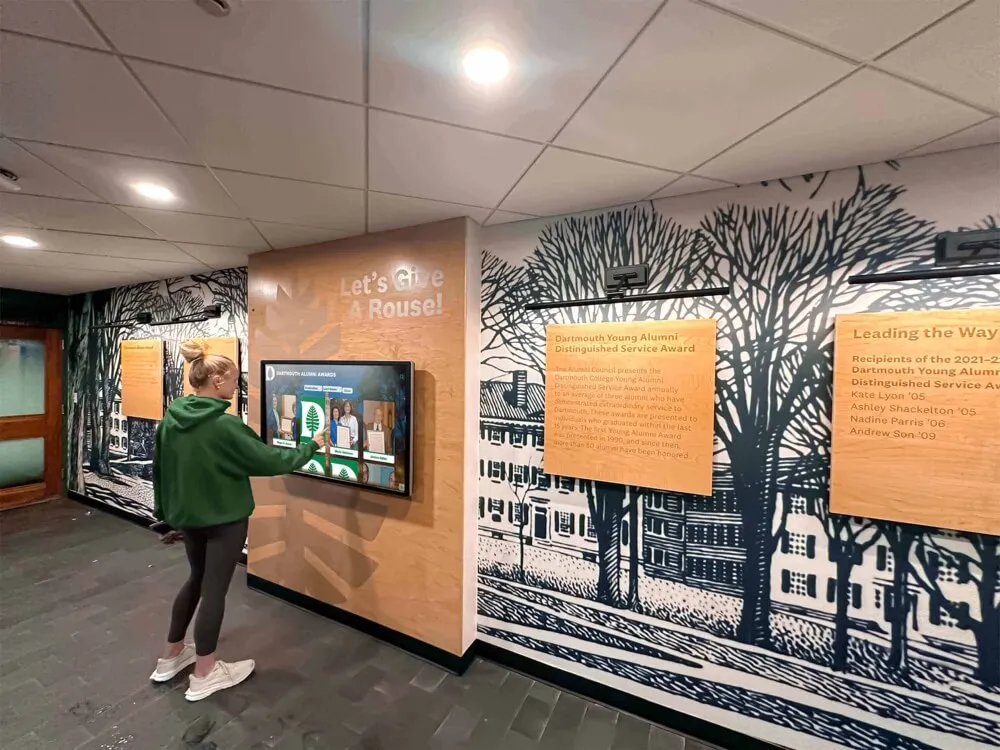
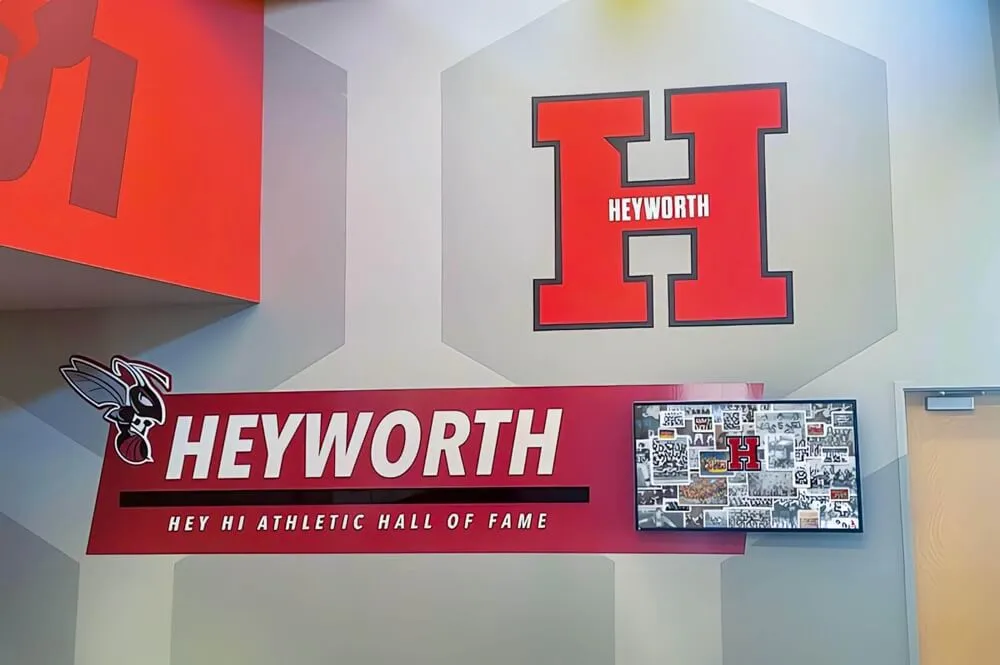
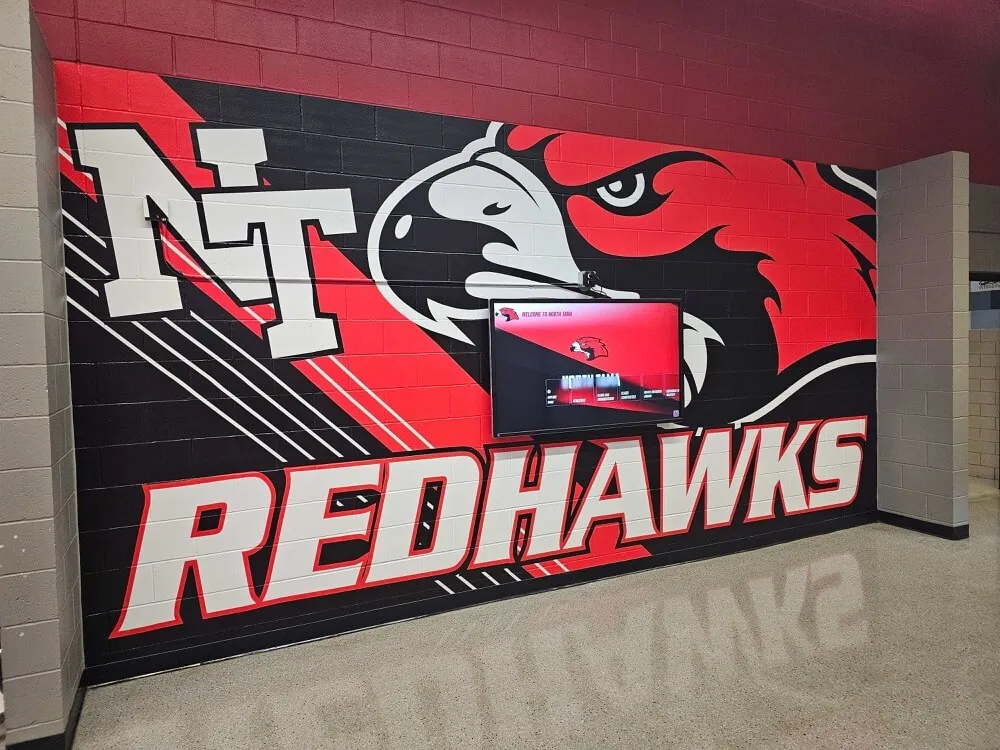
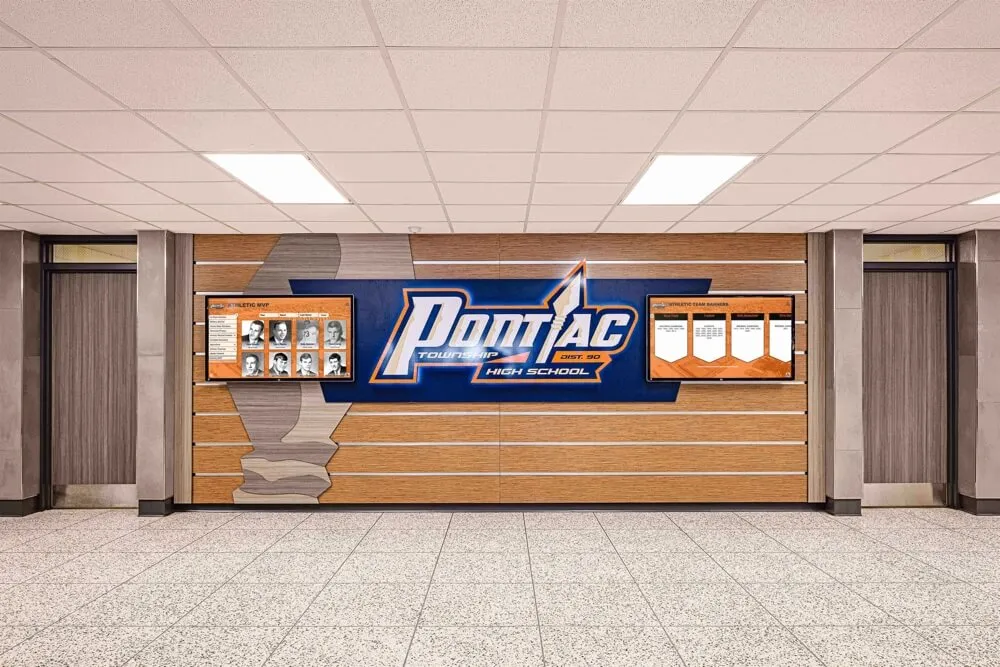
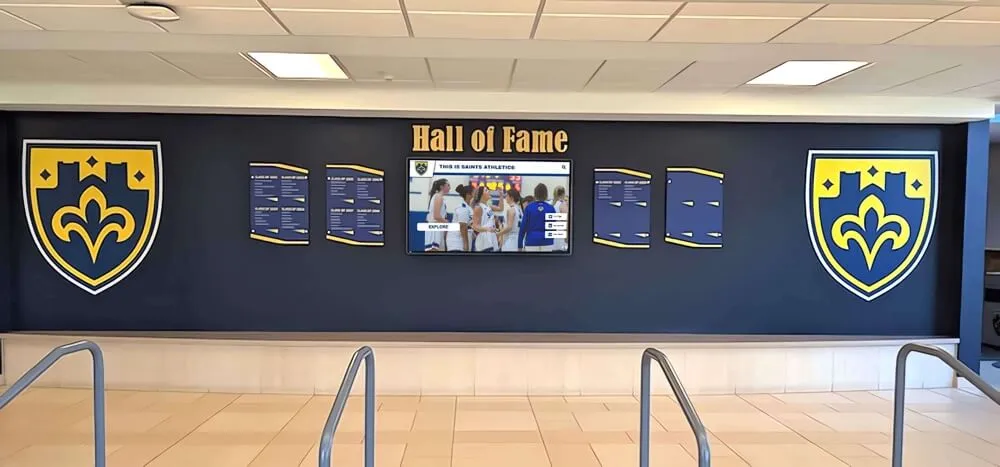
Modern facilities combine traditional murals with digital displays, creating flexible recognition systems accommodating diverse achievements
Program Tradition and History Banners
Recognition extending beyond specific achievements:
Hall of Fame Inductee Banners
Formal program recognition:
- Annual or periodic hall of fame inductions
- Multiple inductees listed on single banner or individual recognition
- Induction year clearly displayed
- Brief achievement summary or career highlights
- Integration with physical hall of fame displays
- Community and alumni engagement through formal selection process
Hall of fame banner programs work particularly well for schools with established athletic traditions seeking to formalize historical athlete recognition.
League Affiliation and Tradition Banners
Institutional identity elements:
- Conference or league membership banners
- Historical league affiliations showing program evolution
- Mascot and school identity banners
- Facility dedication and renovation commemorations
- Coaching milestone recognition (wins, tenure)
- Program founding and anniversary markers
These banners create context and atmosphere beyond pure achievement recognition, building facility character and program identity.
Inspirational and Motivational Banners
Values and culture reinforcement:
- Sportsmanship and character themes
- School mottos and athletic program philosophies
- Inspirational quotes from coaches or famous athletes
- Core values (respect, integrity, teamwork, excellence)
- Seasonal themes and current team motivational messages
- Temporary banners supporting current season goals
Unlike permanent achievement banners, motivational banners may rotate seasonally or change as program priorities evolve.
Design Considerations for Effective Sports Banners
Thoughtful design ensures banners effectively communicate achievement while maintaining visual appeal and longevity.
Visual Hierarchy and Information Architecture
Organizing banner content for clear communication:
Primary Information Emphasis
Essential elements requiring immediate visibility:
- Achievement type (State Champion, Conference Champion, etc.)
- Year or season clearly displayed
- Sport identification
- School name and mascot
- Championship level or classification
These core elements should dominate banner design, readable from significant distances in large facilities.
Secondary Information Balance
Supporting details adding context:
- Coach names and recognition
- Season records or tournament results
- Conference or organizational affiliations
- Location information (city, state)
- Specific achievement details (undefeated season, tournament results)
Secondary information should enhance without cluttering, maintaining clean visual presentation.
Readability from Distance
Practical legibility considerations:
- Text size appropriate for viewing distance (minimum 4-6 inches for primary text in typical gymnasium)
- High contrast between text and background colors
- Clean, bold fonts avoiding ornate styles difficult to read
- Adequate spacing between text elements
- Consistent sizing hierarchy throughout banner
Testing visibility from various seating areas prevents creating banners unreadable from key viewing locations.
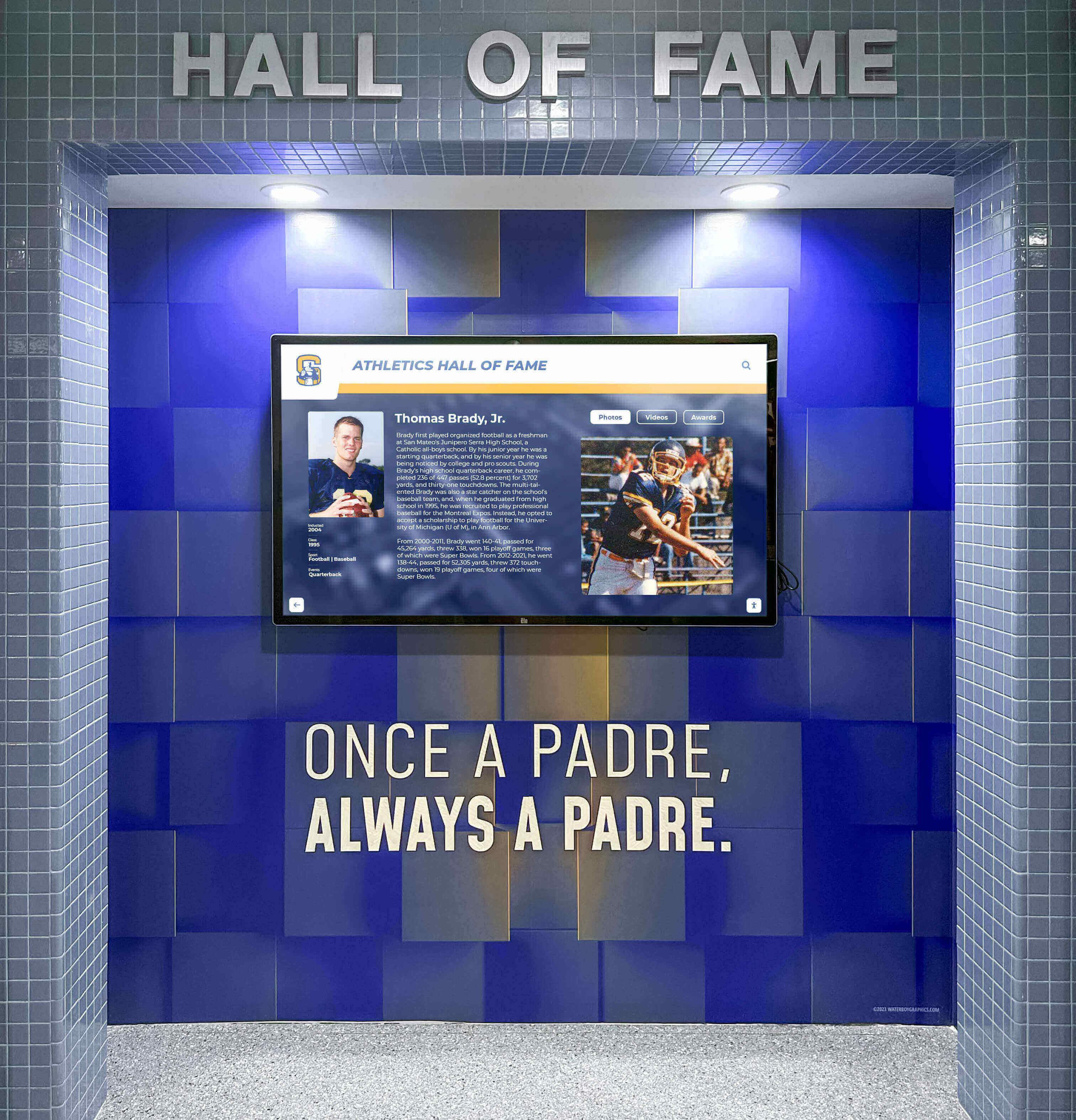
Strategic display placement in high-traffic areas ensures recognition reaches athletes, students, and facility visitors
Color Schemes and School Branding
Visual consistency with institutional identity:
School Color Integration
Maintaining brand consistency:
- Primary and secondary school colors as foundation
- Consistent color usage across all banners creating cohesive appearance
- Sport-specific color variations where program traditions exist
- Background colors considering facility walls and lighting
- Text colors ensuring readability against backgrounds
- Accent colors highlighting specific information
Color consistency across banner sets creates professional, unified appearance while reinforcing school brand identity.
Mascot and Logo Integration
Incorporating school identity elements:
- Official school mascots and logos with proper sizing and placement
- Athletic department logos and branding
- Conference or league logos where appropriate
- Championship organization logos (state association, etc.)
- Consistent graphic treatment across banner types
- Updated logos reflecting current branding standards
Securing proper logo files and usage permissions prevents quality issues and ensures compliance with trademark requirements.
Sport-Specific Visual Elements
Contextual design details:
- Sport silhouettes and equipment graphics
- Action imagery or photography where appropriate
- Field or court diagrams and layouts
- Sport-specific terminology and designations
- Traditional sport colors where they differ from school colors
- Recognizable visual cues immediately identifying sport
These elements help visitors quickly identify which sport each banner recognizes without reading detailed text.
Material Selection and Durability
Physical banner construction affecting longevity:
Indoor Banner Materials
Common options for gymnasium and fieldhouse installations:
- Vinyl banners: Durable, cost-effective, standard choice for most programs
- Fabric banners: Premium appearance, softer look, higher cost
- Mesh banners: Air flow advantages in facilities with ventilation concerns
- Canvas materials: Traditional look, heavier weight, substantial feel
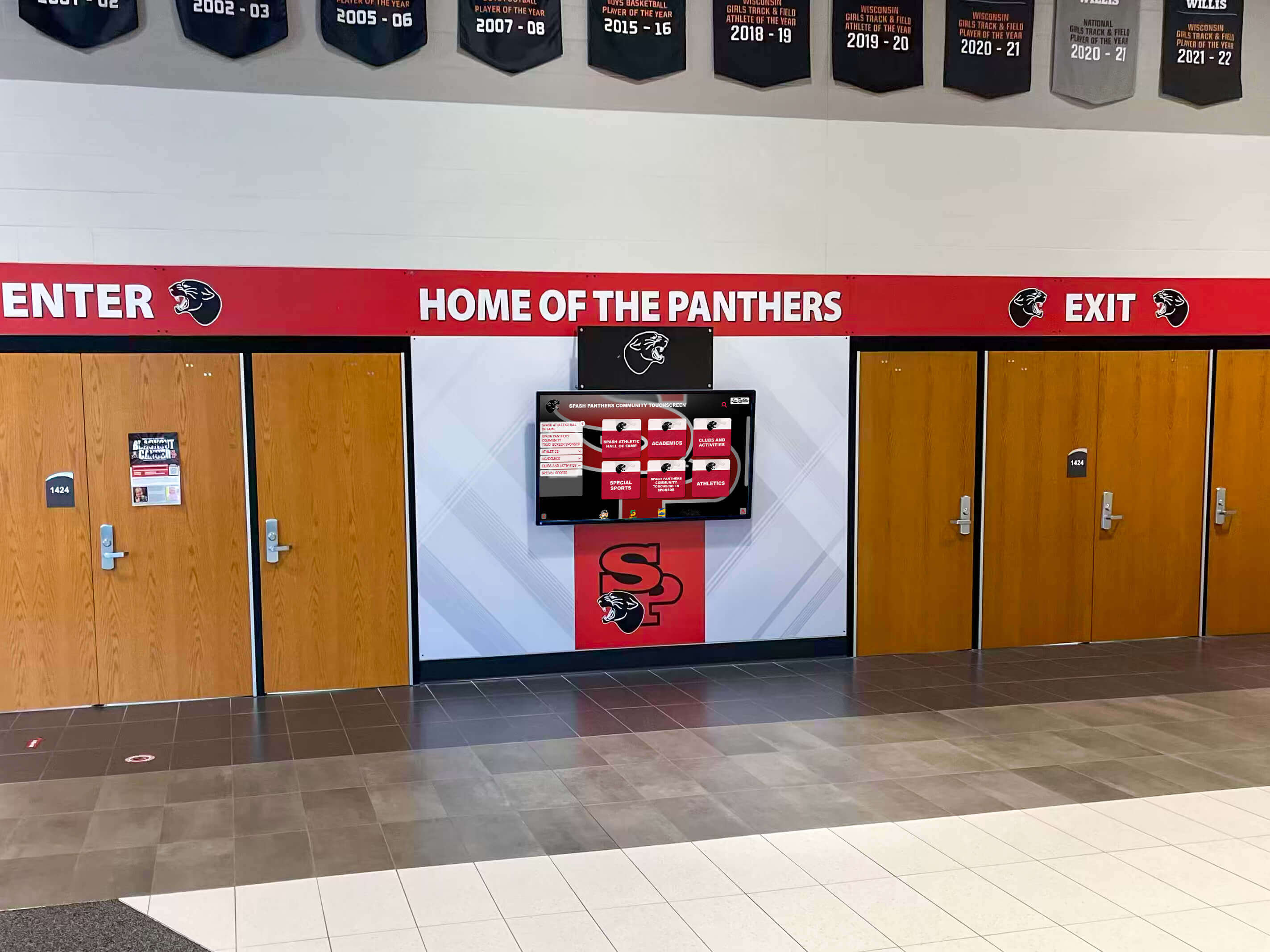
Entrance displays create first impressions showcasing program pride and achievement to all facility visitors
Construction Quality Considerations
Durability factors affecting lifespan:
- Hemmed edges preventing fraying
- Reinforced grommets for secure hanging
- UV-resistant inks preventing fading
- Double-stitched seams on high-quality banners
- Appropriate weight for hanging method and location
- Waterproofing for semi-outdoor or humidity-prone locations
Quality construction extends banner lifespan from 3-5 years to 10+ years, justifying higher initial investment.
Maintenance and Replacement
Preserving banner appearance over time:
- Regular dusting and cleaning schedules
- Inspection for damage, fading, or wear
- Rotation systems reducing constant light exposure
- Professional cleaning for stained or soiled banners
- Proactive replacement before deterioration becomes embarrassing
- Archival storage for retired banners preserving program history
Many successful programs establish banner replacement budgets anticipating gradual deterioration rather than reacting to obvious problems.
Banner Display Methods and Facility Placement
Strategic installation maximizes visibility and impact while addressing practical constraints.
Traditional Hanging Systems
Ceiling and wall mounting approaches:
Rafter and Ceiling Hanging
Classic gymnasium display method:
- Cables or chains suspended from ceiling structures
- Appropriate for high-ceiling facilities (15+ feet)
- Requires secure structural attachment points
- Professional installation ensuring safety
- Organized arrangement by sport, chronology, or achievement type
- Height considerations balancing visibility with athletic activity clearance
Ceiling height determines visibility—banners hung too high become unreadable despite prominent position.
Wall Mounting and Bracketing
Alternative to ceiling suspension:
- Mounted directly to gymnasium or fieldhouse walls
- Works in facilities with lower ceilings or limited hanging points
- Requires adequate wall space for banner dimensions
- Protected from athletic activity by elevated placement
- Framing systems providing more formal appearance
- Easier to update and maintain than ceiling-hung options
Wall mounting works particularly well for specific recognition areas like hall of fame walls or entrance displays.
Portable and Temporary Display Systems
Flexible recognition for multiple uses:
- Retractable banner stands for special events and ceremonies
- Portable systems moved between facilities
- Temporary displays during championship seasons
- Event-specific recognition at competitions
- Indoor/outdoor flexibility for various celebrations
- Storage considerations for portable equipment
Portable systems enable recognition in spaces beyond primary athletic facilities, extending visibility to school-wide audiences.
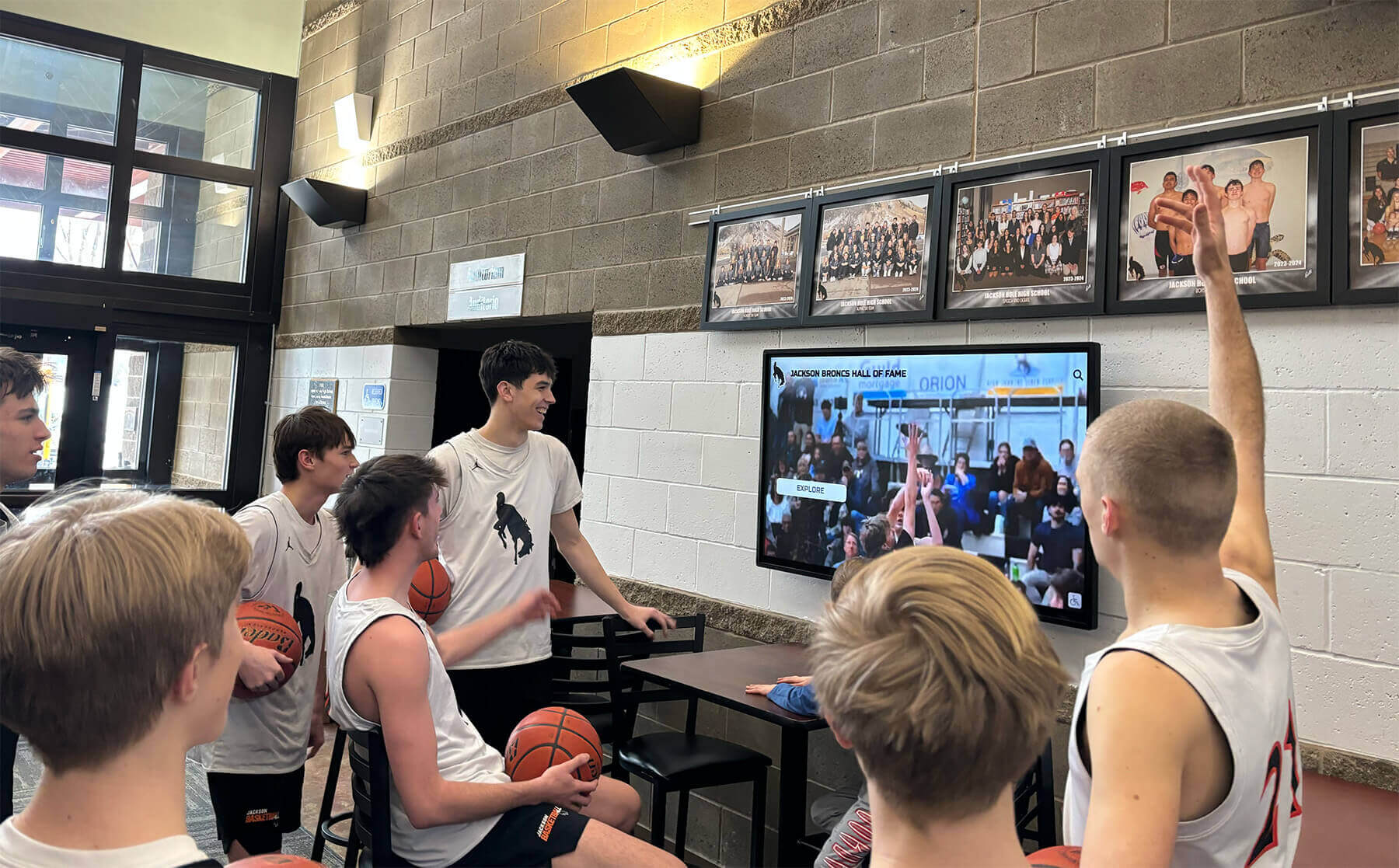
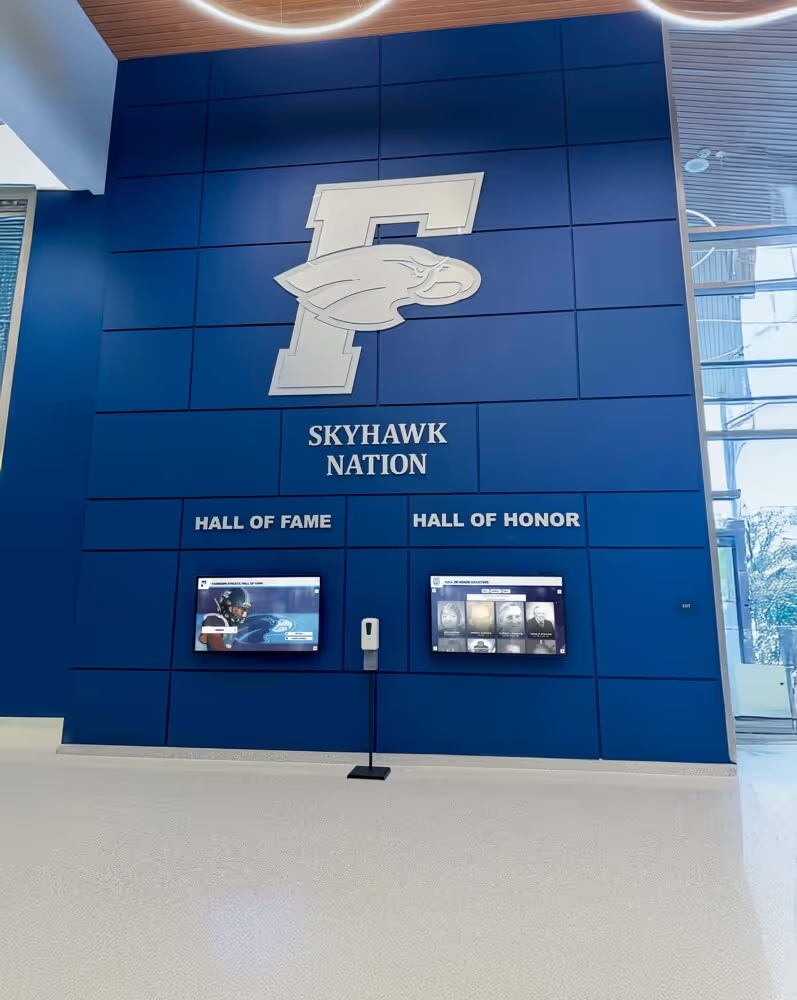
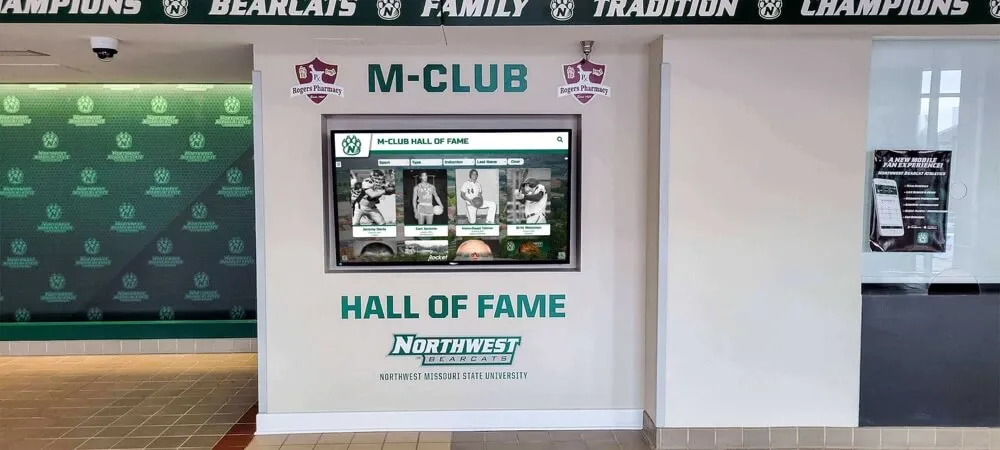
Lobby and entrance displays reach diverse audiences while creating gathering points around athletic achievement
Strategic Placement Considerations
Optimizing visibility and impact:
Primary Viewing Area Positioning
Maximizing audience exposure:
- Visible from main bleacher seating during events
- Prominent in facility entrances and lobbies
- Positioned above or around playing surfaces where appropriate
- Sightlines from multiple vantage points
- Balanced distribution avoiding cluttered single-wall concentration
- Natural focal points drawing attention
The most effective banner displays consider how visitors, athletes, and spectators actually move through and use facilities.
Sport-Specific Versus Centralized Display
Organizational approaches:
Centralized display: All sports together in main gymnasium or common area
- Creates comprehensive program achievement showcase
- Easier to maintain consistent appearance and organization
- Builds overall athletic program identity
- May require prioritization when space becomes limited
Sport-specific display: Banners in relevant sport venues
- Basketball banners in gymnasium, swimming in natatorium, etc.
- Creates sport-focused environments
- Provides adequate space for each program’s recognition
- Requires multiple spaces and coordination across facilities
Many schools employ hybrid approaches with major achievements centralized and sport-specific recognition in respective venues.
Chronological Versus Achievement Hierarchy
Arrangement strategies:
- Chronological organization: Newest achievements first, creating historical progression
- Achievement hierarchy: State championships most prominent, followed by conference, then other recognition
- Sport-based organization: All basketball banners together, all football together, etc.
- Balanced distribution: Ensuring visual balance across facility regardless of achievement concentration in specific sports
Clear organizational logic helps visitors understand banner meaning and significance without detailed examination.
For schools hosting athlete recognition events, sports banquet planning approaches provide frameworks for comprehensive celebration extending beyond physical displays.
Challenges and Limitations of Traditional Sports Banners
Despite widespread use, physical banner systems face inherent constraints affecting recognition programs.
Space Constraints and Selection Challenges
Physical limitations forcing difficult decisions:
Finite Display Capacity
Reality of physical constraints:
- Limited wall and ceiling space in most facilities
- Each banner added requires removing existing recognition or constraining future additions
- Forced prioritization of which achievements warrant banner status
- Unequal recognition across sports based on championship frequency
- No room for near-championship achievements or runner-up seasons
- Historical achievements eventually removed to accommodate recent success
These space pressures create no-win scenarios where deserving achievements go unrecognized or historical banners disappear.
Criteria Inconsistency Concerns
Defining banner-worthy achievement:
- What level of success qualifies (state, conference, regional)?
- Individual versus team achievement balance
- Handling sports with different championship structures
- Evolving standards as programs achieve more success
- Grandfathering historical banners with different criteria
- Community expectations and pressure around specific teams or athletes
Transparent, consistent criteria prevent controversy, but space limitations may force criteria changes over time causing perceived unfairness.
Visual Clutter and Overcrowding
Diminishing returns from excessive banners:
- Too many banners creating cluttered appearance
- Individual banners losing impact when surrounded by dozens of others
- Readability declining as banners placed higher or farther from viewing areas
- Inconsistent sizes and styles creating disjointed appearance
- Aesthetic concerns about “too many” versus adequate recognition
Balancing comprehensive recognition with clean, impactful presentation challenges programs with extensive achievement histories.
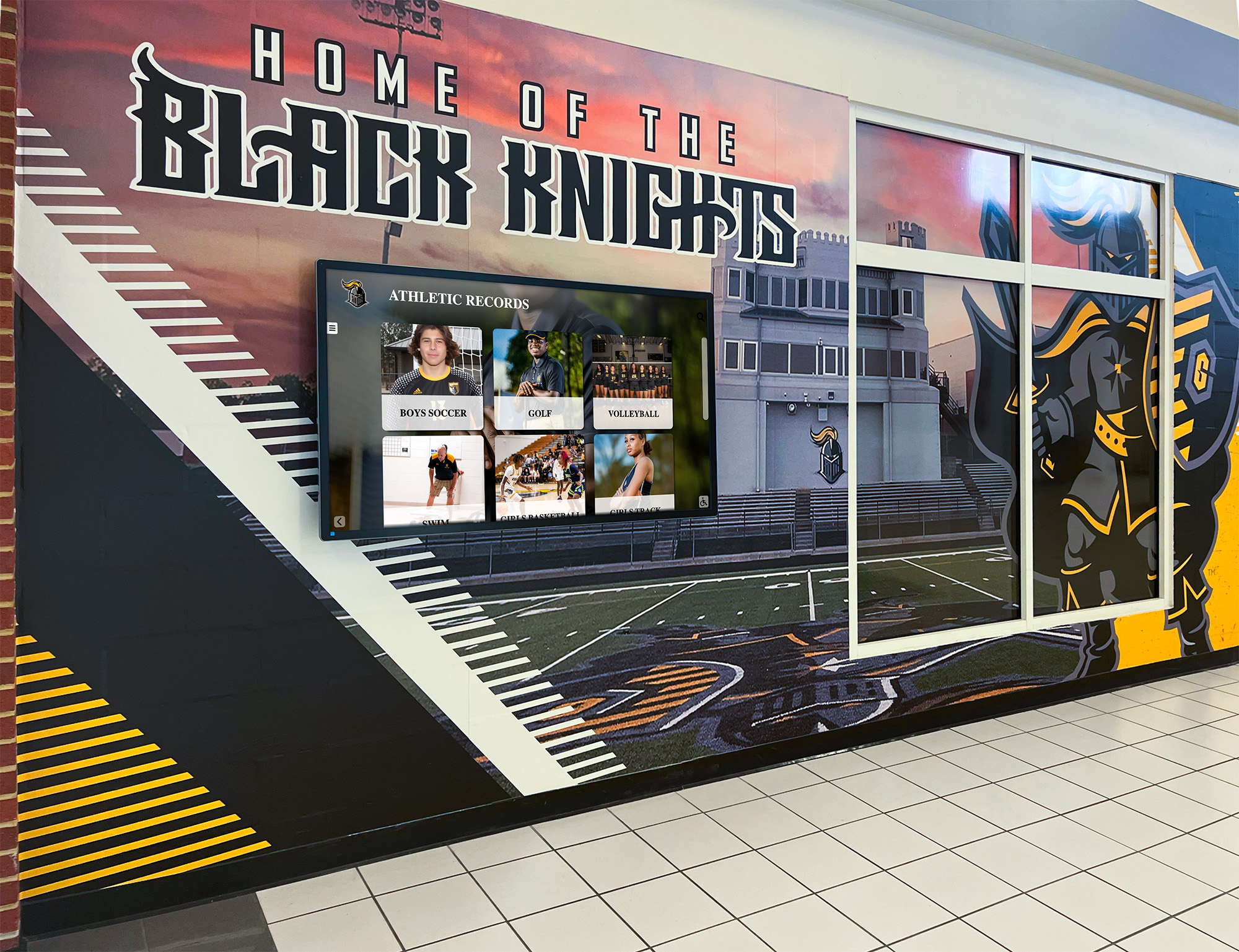
Integrated murals and displays create cohesive athletic environments celebrating both history and current achievement
Cost and Budget Considerations
Financial realities affecting banner programs:
Production and Installation Expenses
Accumulating costs:
- Individual banner production: $200-$600 depending on size and quality
- Installation and hanging services: $100-$300 per banner
- Framing systems for wall-mounted displays: $300-$800+
- Volume discounts available but requiring batch production
- Quality variation affecting price and longevity
- Shipping costs for rush orders or special circumstances
Successful seasons can quickly generate $2,000-$5,000+ in banner costs when multiple teams achieve recognition-worthy success simultaneously.
Ongoing Replacement Needs
Maintenance budget requirements:
- 3-5 year average lifespan for standard vinyl banners
- Fading, damage, and deterioration requiring replacement
- Updated designs when school rebrands or changes colors/logos
- Cumulative costs as banner collection grows
- Deferred maintenance resulting in shabby appearance
- Archive or disposal decisions for replaced banners
Banner program costs extend far beyond initial purchase, requiring sustained budget allocation or accepting deteriorating displays.
Opportunity Costs
Resource allocation decisions:
- Banner funding competing with equipment, uniforms, and program needs
- Facilities budgets balancing recognition with functional improvements
- Booster support directed toward banners versus direct athlete benefits
- Perception that excessive banner spending indicates misplaced priorities
- Impact on other forms of athlete recognition and celebration
While banners provide lasting recognition, schools must balance investment in commemoration versus current program needs.
Maintenance and Replacement Challenges
Practical difficulties maintaining banner quality:
Physical Deterioration
Time and environmental damage:
- UV exposure from windows and skylights causing fading
- Dust accumulation diminishing appearance
- Tears and damage from athletic equipment or accidents
- Humidity and temperature fluctuations affecting materials
- Hanging hardware loosening or failing over time
- Uneven wear creating inconsistent appearance across banner collection
Deteriorated banners undermine rather than enhance program image, yet replacement requires ongoing budget allocation.
Updating for Rebranding
Institutional changes affecting banners:
- School name or mascot changes requiring banner replacement
- Color or logo updates making old banners dated
- Conference realignment changing league affiliations
- Outdated typography and design styles
- Inconsistent appearance between new and historical banners
- Cost of replacing entire banner collection at once
Major institutional changes can effectively obsolete entire banner collections, creating substantial unexpected expenses.
Removal and Archive Decisions
Managing retired banners:
- When to remove outdated or deteriorated banners
- Storage for removed banners preserving program history
- Alumni relations concerns about removing their achievements
- Disposal versus archival decisions
- Donation to athletes or community members
- Digital documentation before physical removal
These decisions carry emotional weight for alumni and community members with personal connections to banner achievements.
For schools exploring comprehensive recognition beyond traditional banners, trophy display alternatives provide frameworks for diverse approaches.
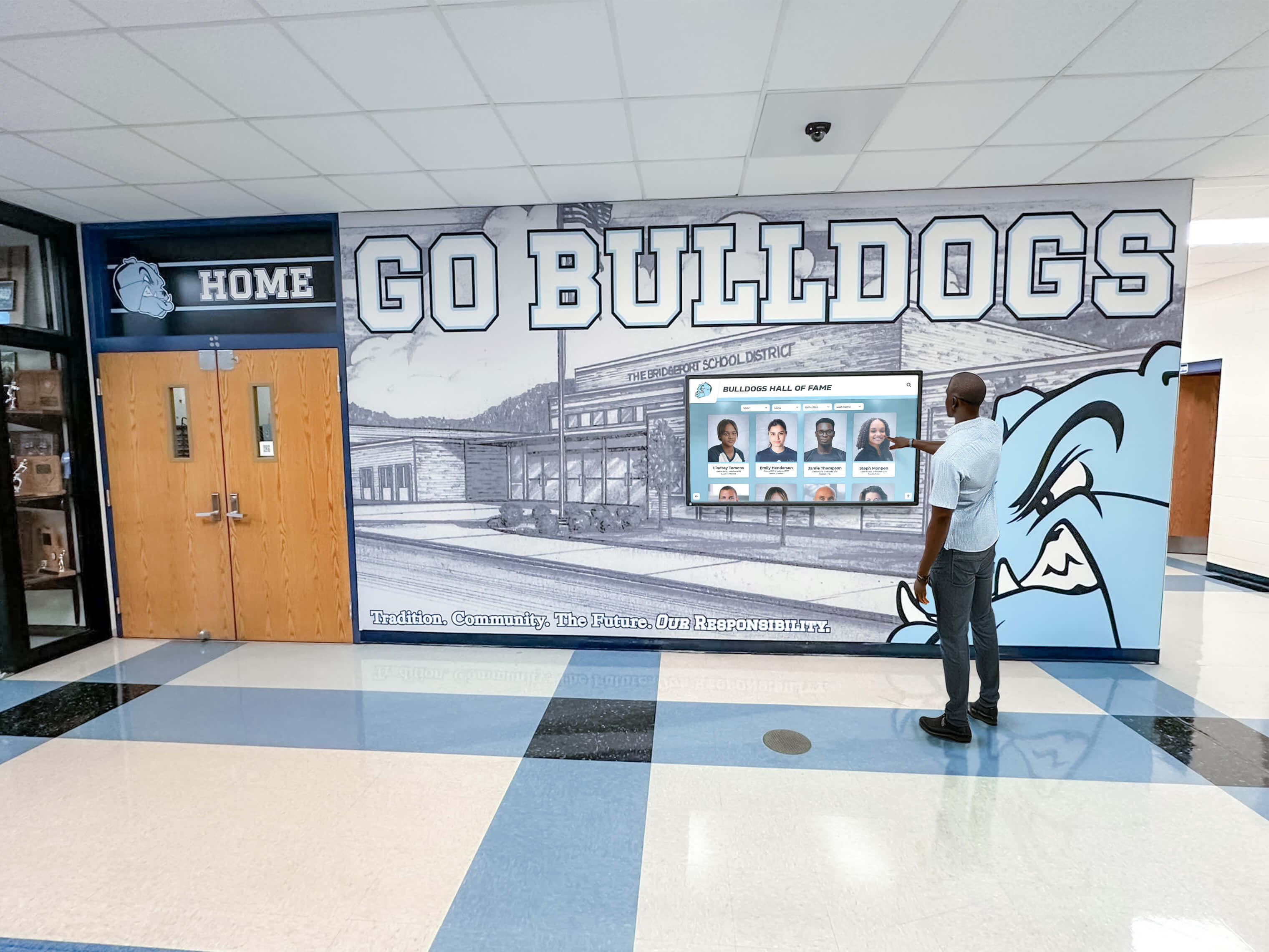
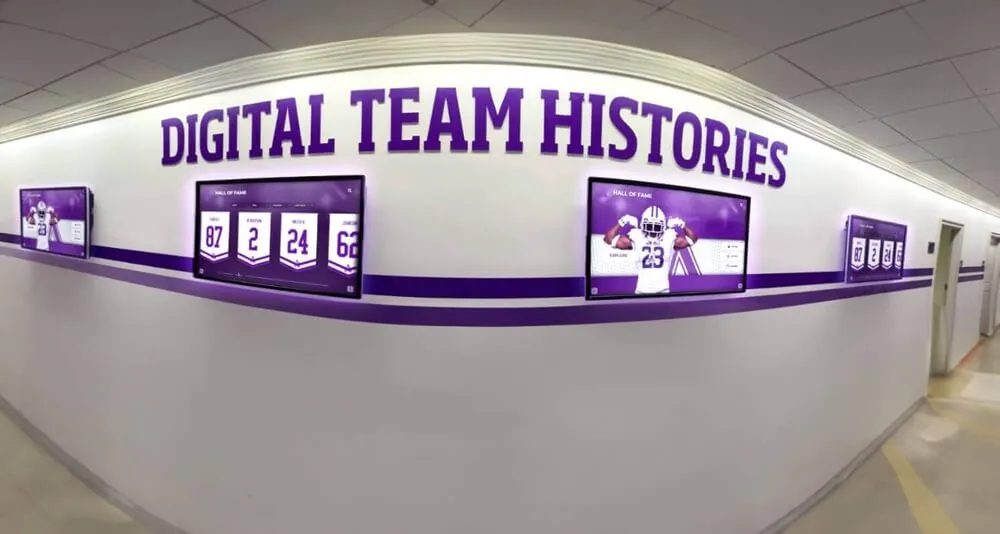
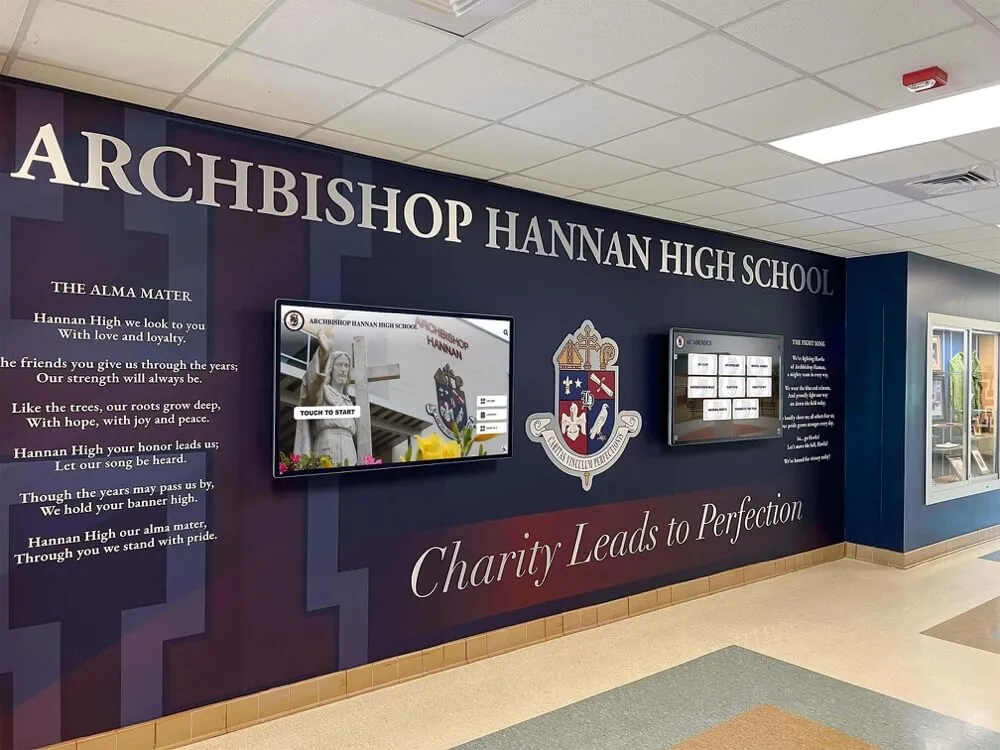
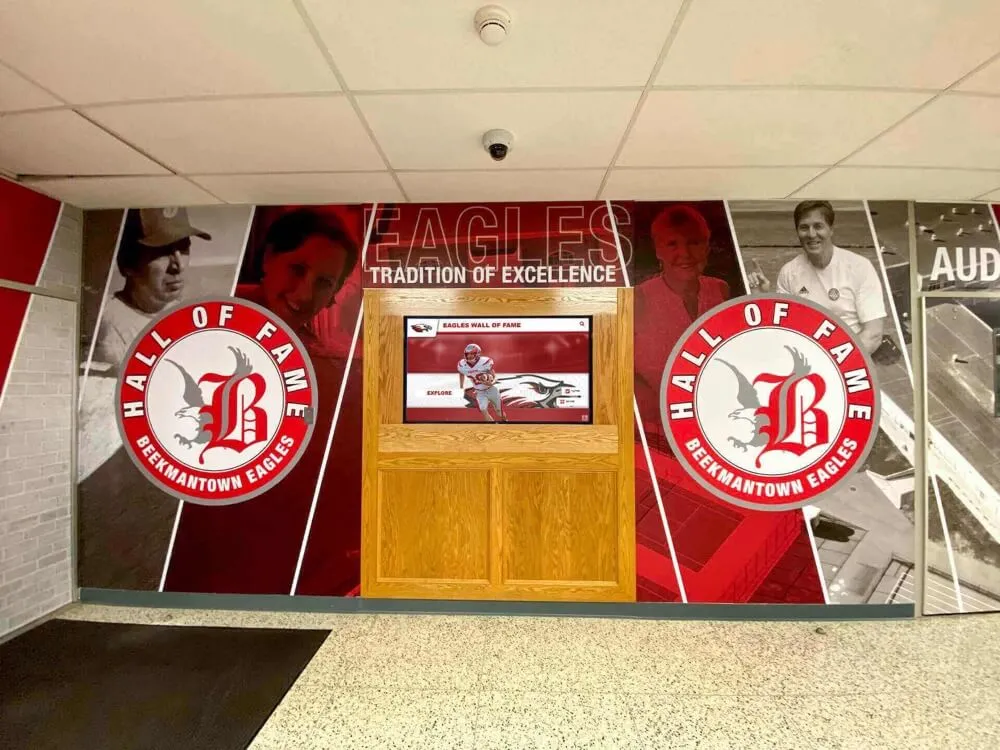
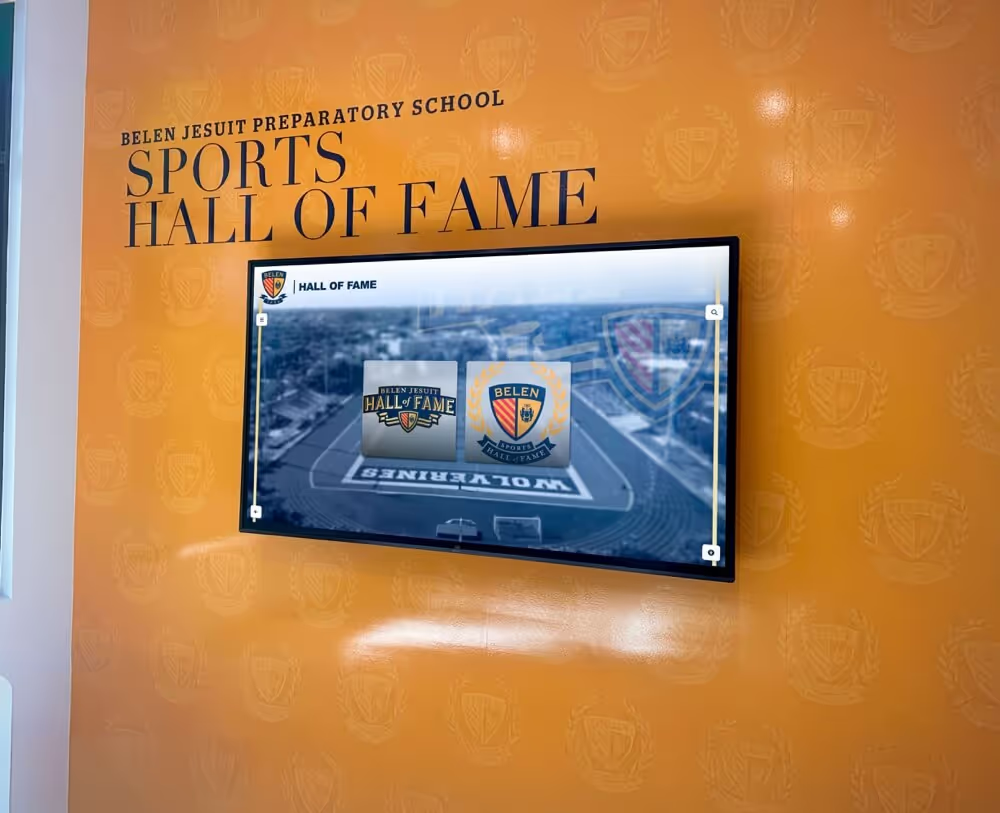
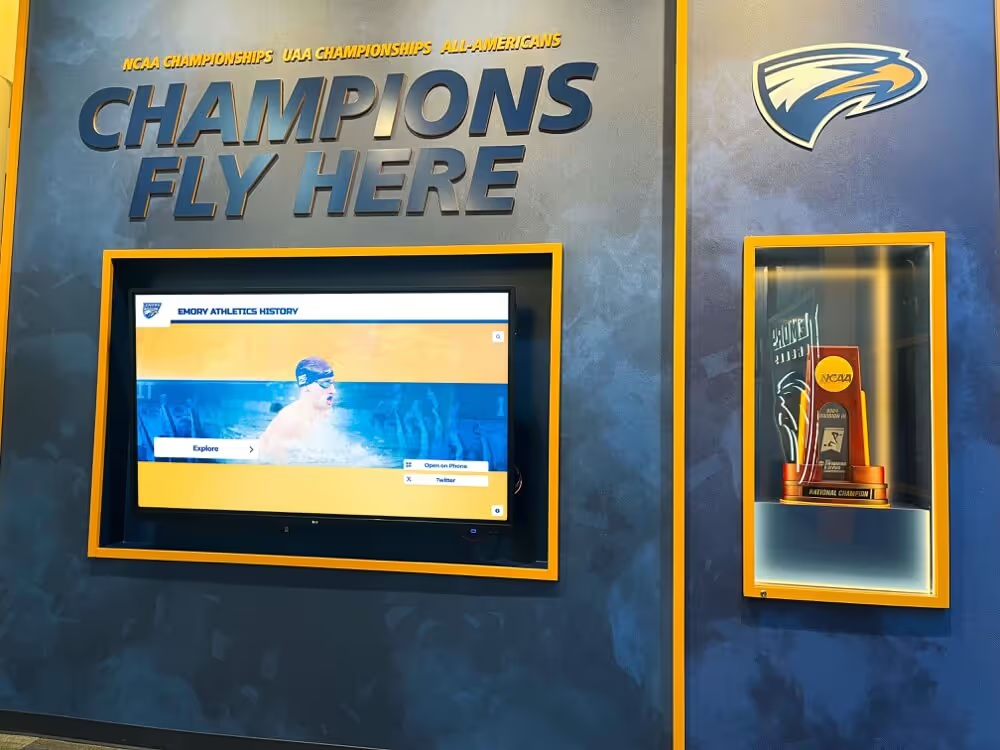
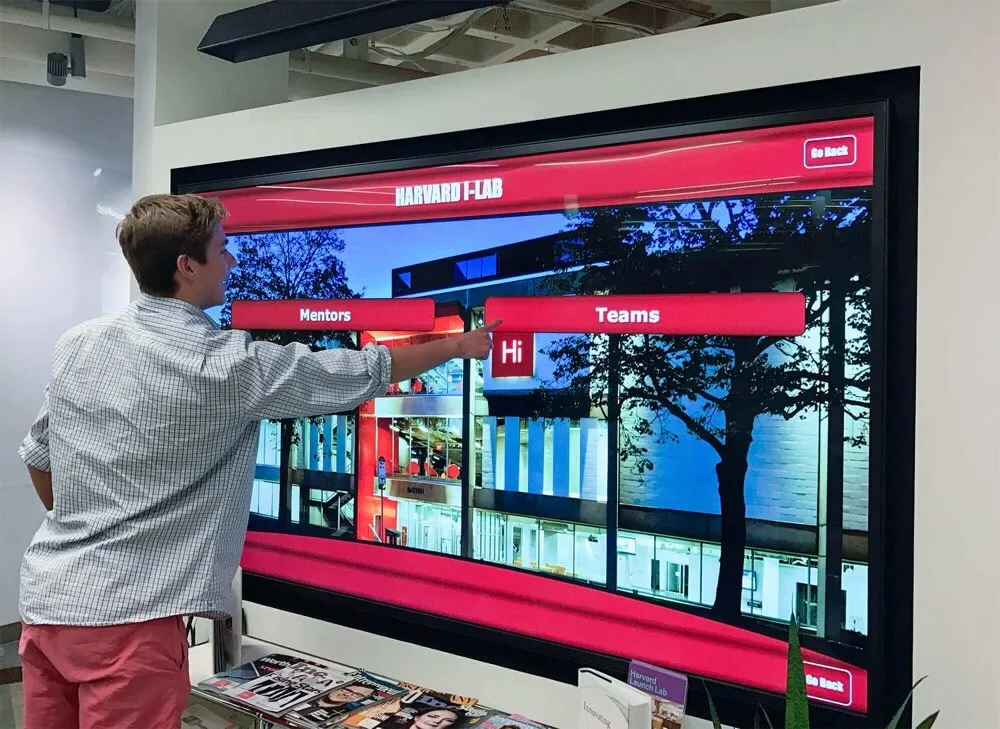
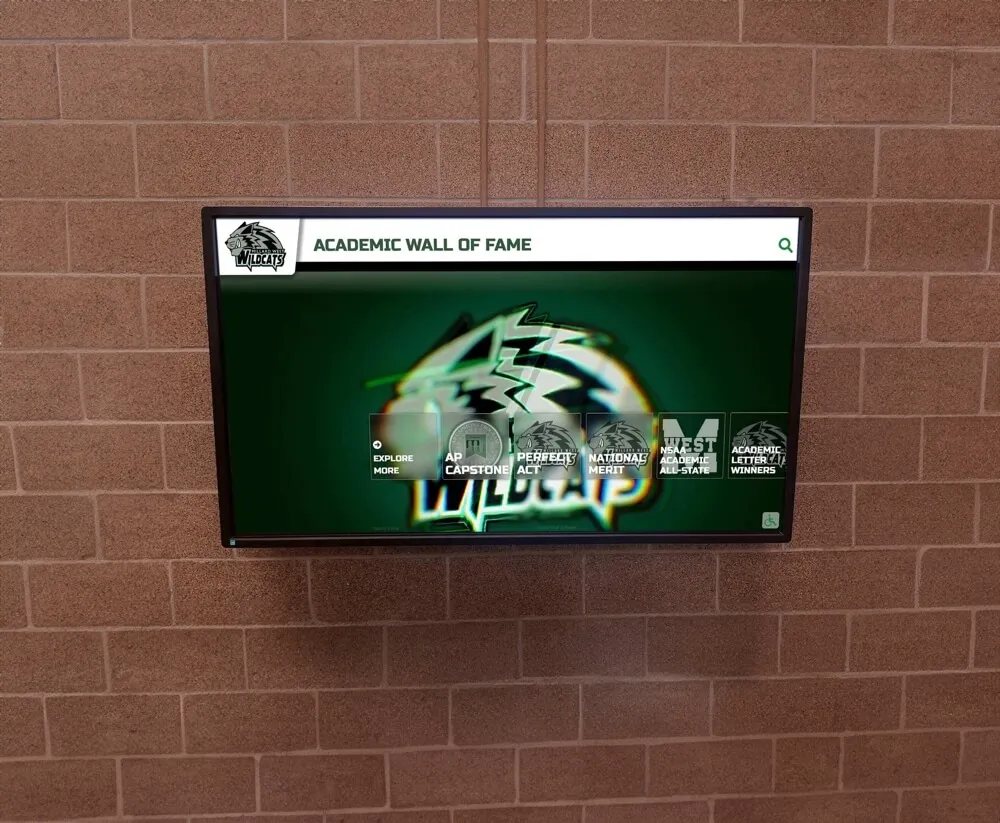
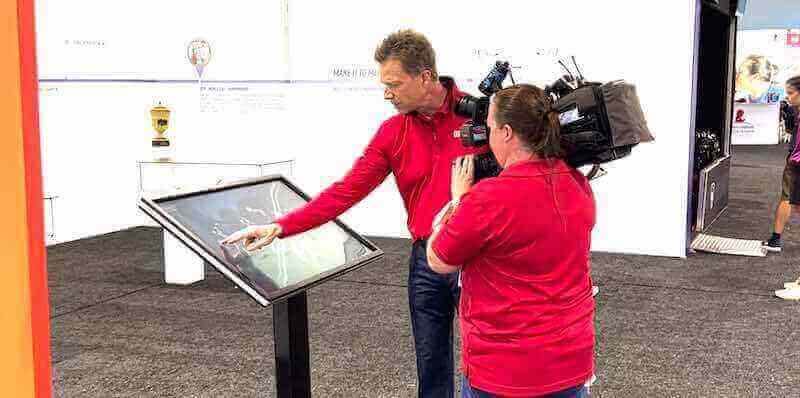
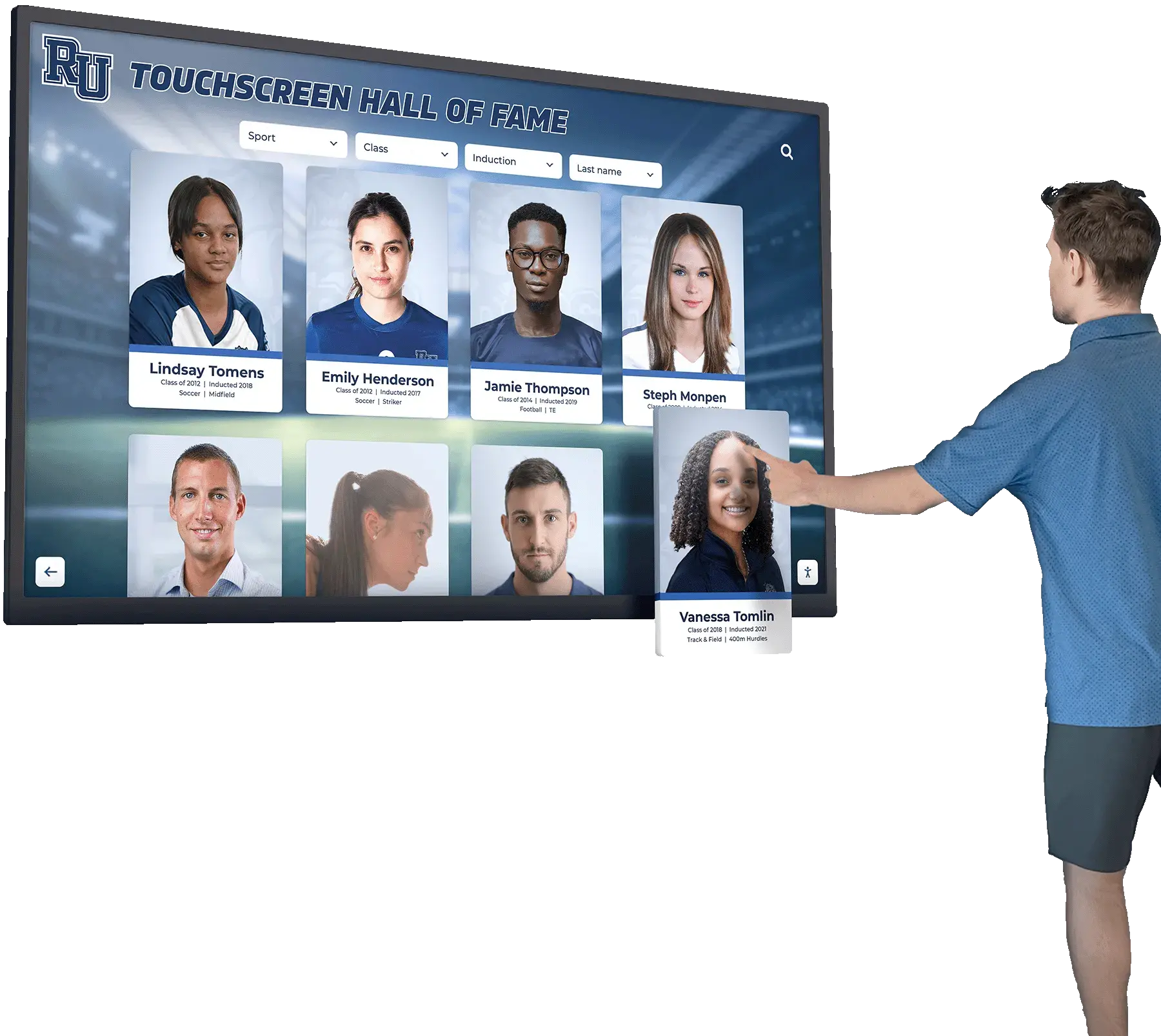
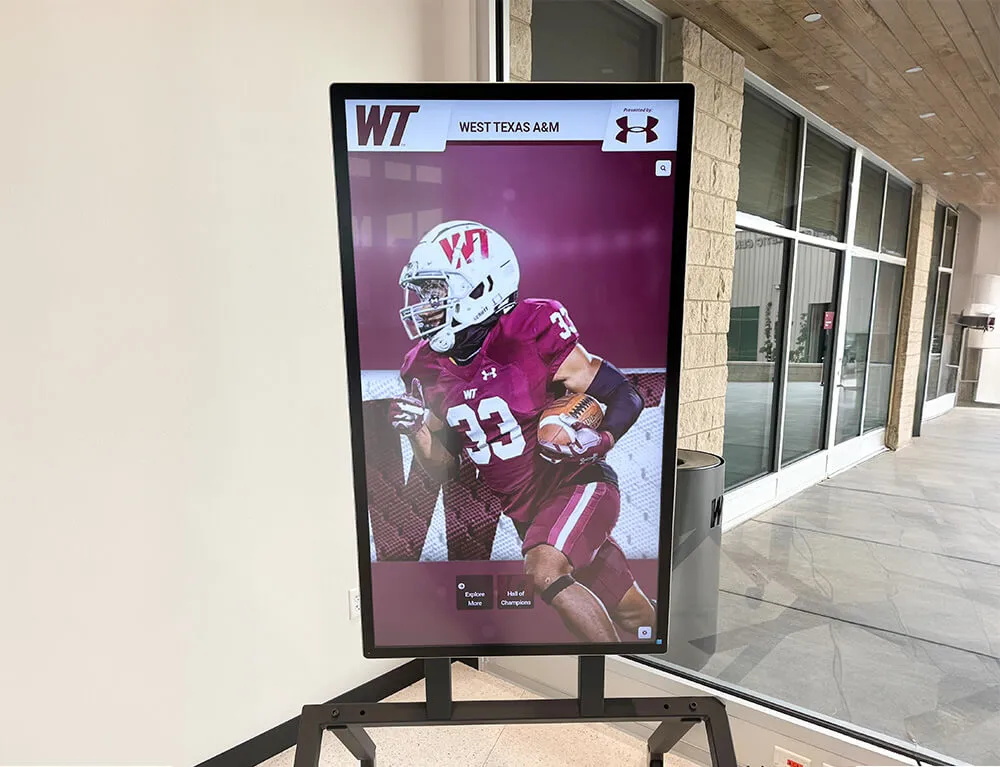
Interactive touchscreen displays enable comprehensive recognition without physical space constraints, showcasing unlimited achievements
Digital Alternatives to Traditional Sports Banners
Modern technology addresses traditional banner limitations while creating more engaging, comprehensive recognition systems.
Digital Display Recognition Systems
Interactive platforms transforming athletic recognition:
Unlimited Recognition Capacity
Overcoming space constraints:
- Single display showcasing unlimited achievements across all sports and decades
- Every championship, conference title, and recognition-worthy achievement included
- No forced choices about which accomplishments deserve visibility
- Historical and current achievements equally accessible
- Individual athlete recognition alongside team success
- Statistical records and performance milestones beyond championship focus
Solutions like Touch Archive eliminate the painful space-driven decisions that leave deserving achievements unrecognized in traditional banner systems.
Dynamic and Current Information
Always up-to-date recognition:
- Immediate updates when new achievements occur
- Current season highlights alongside historical success
- Rotating featured content highlighting diverse achievements
- Seasonal relevance as sports enter competition periods
- No physical production or installation delays
- Remote content management from anywhere
Schools report recognition happens immediately rather than waiting months for banner production and installation following championship seasons.
Comprehensive Multimedia Documentation
Rich content beyond simple text:
- Team photographs from championship seasons
- Individual athlete profiles with biographical information
- Action photography and competition imagery
- Video highlights of championship moments
- Detailed statistics and performance records
- Coach reflections and athlete testimonials
- Historical context and program evolution narratives
This depth creates engaging experiences impossible with static fabric banners, connecting current athletes to rich program histories.
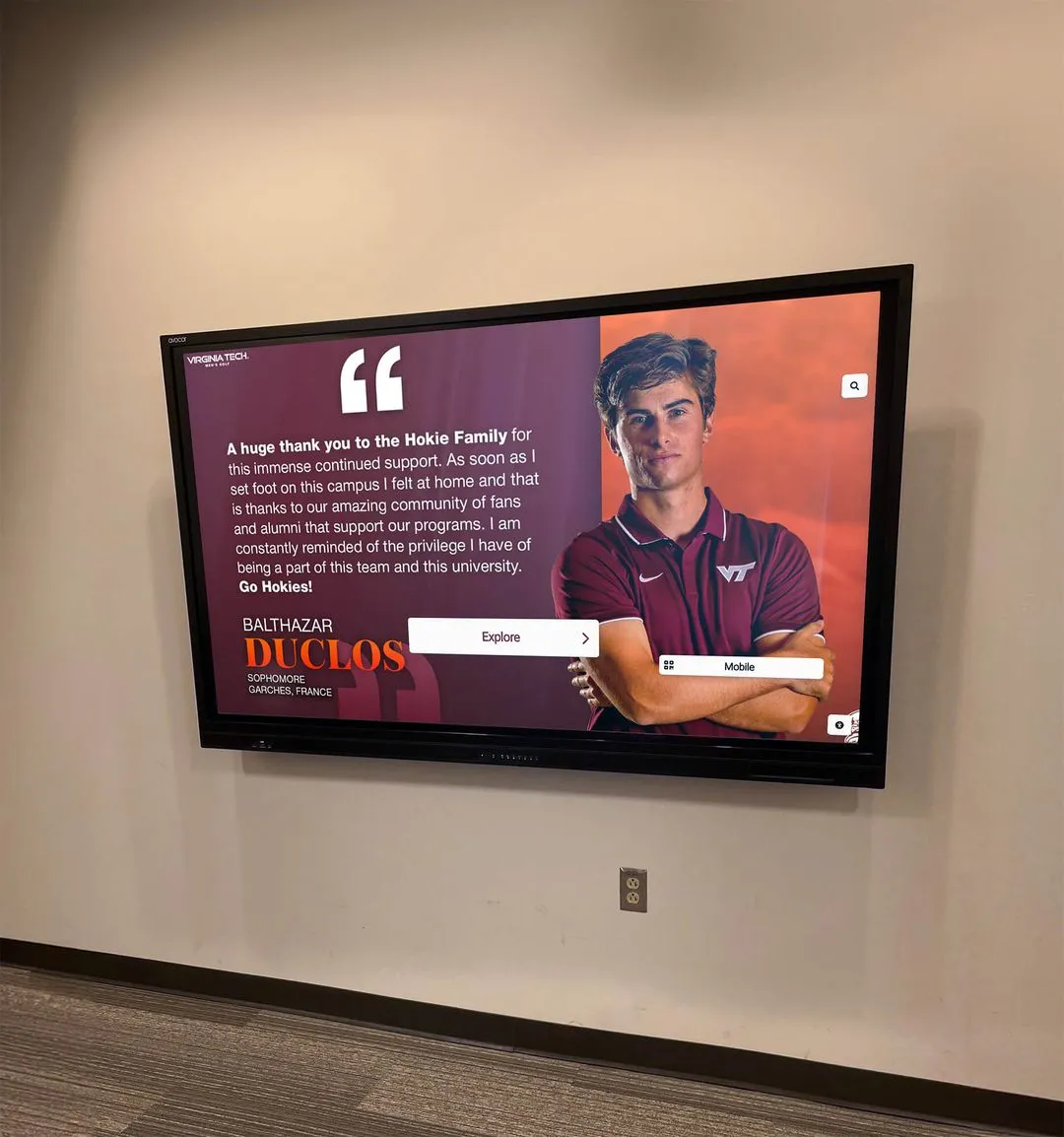
Programs implementing digital recognition displays report dramatically increased engagement from athletes, families, and facility visitors compared to traditional static banners.
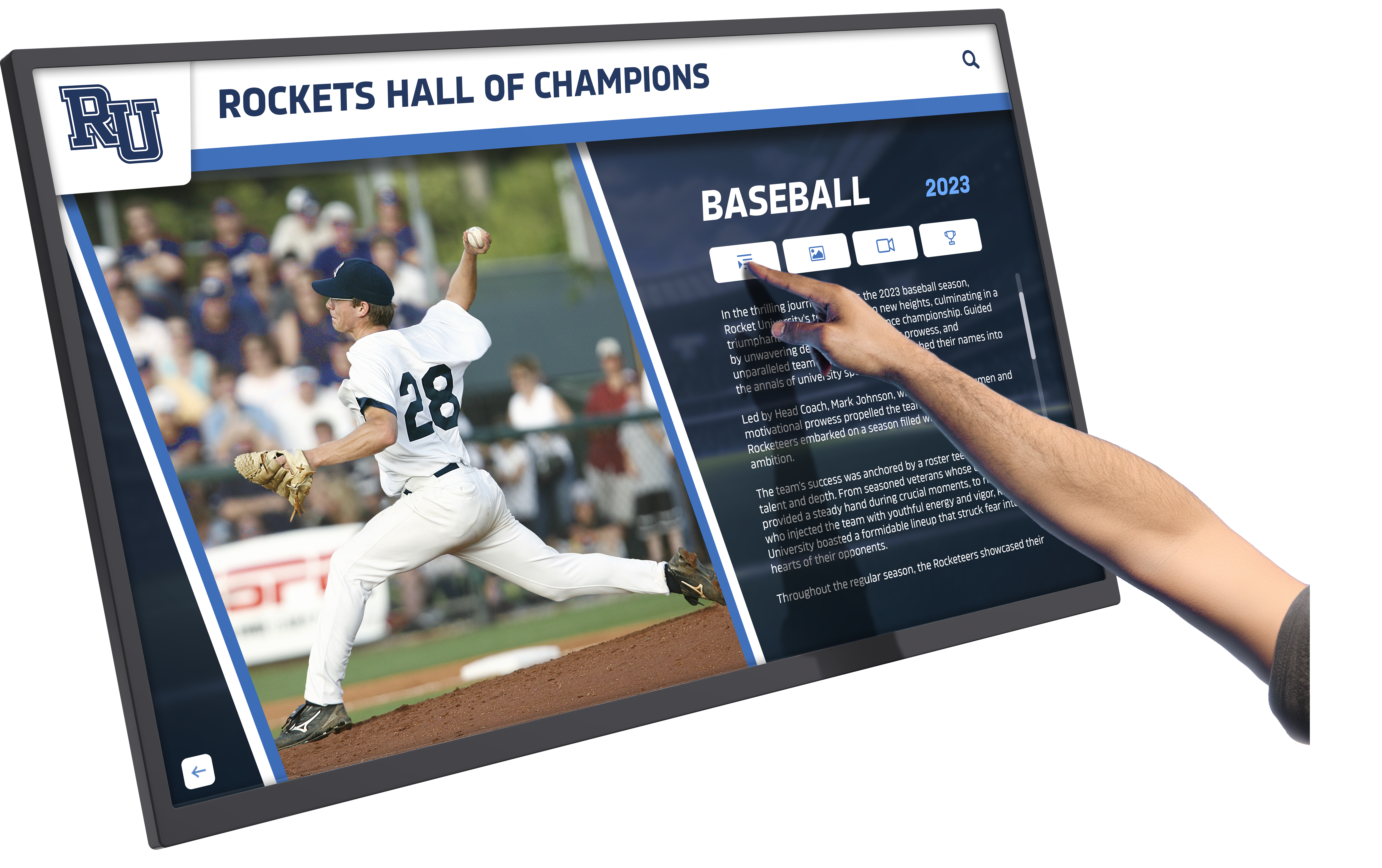
Touchscreen interfaces make exploring athletic achievements intuitive and engaging for all ages
Benefits of Digital Recognition Systems
Practical and philosophical advantages over traditional approaches:
Inclusive Recognition Philosophy
Celebrating broader achievement:
- Recognition extends beyond just championships
- Academic achievements integrated with athletic success
- Participation and improvement honored alongside winning
- Individual contributors in team sports receive appropriate recognition
- Senior recognition and career milestones documented
- Community service and leadership acknowledged
Digital systems support modern recognition philosophies valuing diverse contributions rather than exclusively championship focus.
Cost-Effectiveness Over Time
Financial advantages:
- No recurring production costs for new achievements
- Single installation serving unlimited future recognition needs
- No replacement expenses from deterioration or fading
- Reduced administrative time versus coordinating banner production
- Multi-purpose displays serving broader communication needs
- Return on investment within 3-5 years versus continuous banner expenses
While initial investment exceeds individual banner costs, total cost of ownership over 5-10 years typically favors digital systems.
Enhanced Engagement and Accessibility
Improved user experience:
- Interactive exploration enabling personal discovery
- Search functionality locating specific athletes or achievements
- Filtering by sport, year, achievement type, or athlete name
- Comparison features showing performance relative to records
- Social sharing spreading recognition beyond physical facility
- Web access extending visibility to remote audiences
- Mobile-optimized interfaces for anywhere viewing
This interactivity creates engagement impossible with static displays, particularly among younger generations expecting digital experiences.
Organizations implementing comprehensive recognition systems like Rocket Alumni Solutions transform how schools celebrate athletic achievement while addressing the practical and philosophical limitations of traditional banner approaches.
Hybrid Approaches Combining Traditional and Digital
Balanced recognition leveraging both methods:
Selective Banner Display
Maintaining tradition for most significant achievements:
- Traditional banners for state championships and most prestigious accomplishments
- Digital systems for comprehensive documentation of all achievements
- Physical banners creating atmosphere and tradition
- Digital displays providing depth and accessibility
- Clear criteria distinguishing banner-worthy from digital-only recognition
- Budget allocation between both recognition methods
This approach honors traditional banner culture while expanding recognition capacity through technology.
Digital Banner Simulation
Technology preserving banner aesthetic:
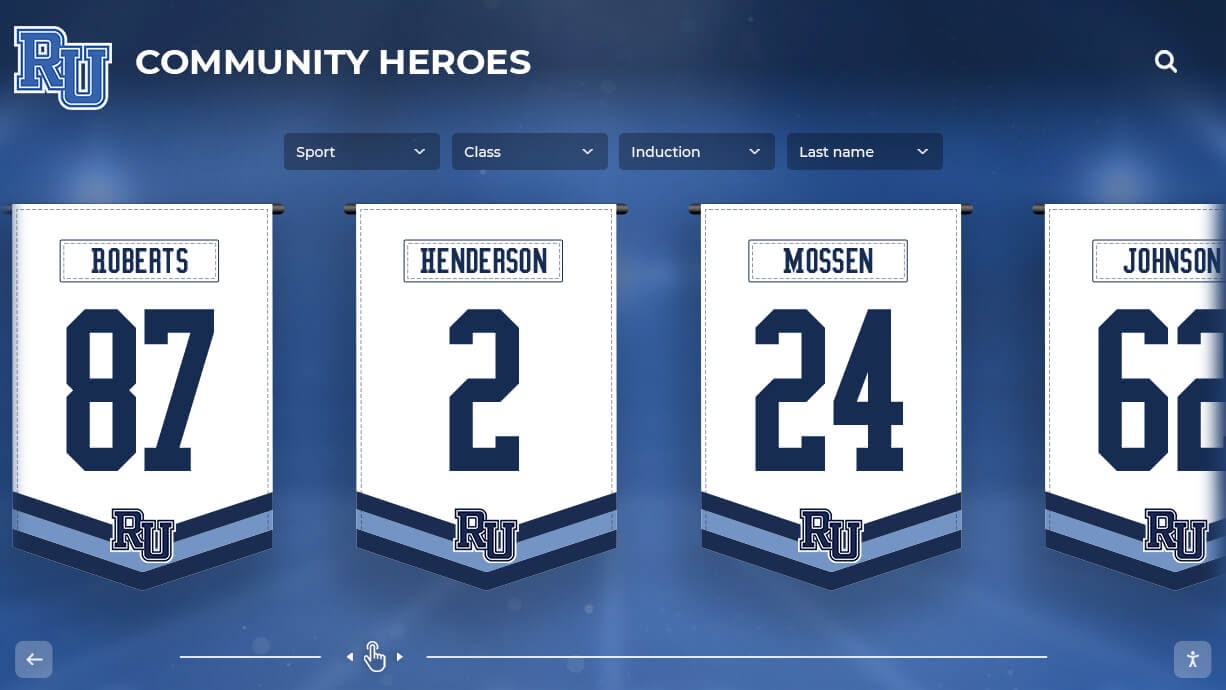
- Digital displays showing virtual banner graphics
- Traditional banner visual style in digital format
- Rotating virtual banners on displays
- Unlimited “hanging” space without physical constraints
- Updates and additions without production costs
- Traditional appearance with modern functionality
Virtual banners particularly appeal to communities deeply attached to traditional banner culture but facing space and budget constraints.
Complementary Recognition Systems
Coordinated physical and digital programs:
- Banners directing visitors to digital displays for complete information
- QR codes on banners linking to detailed digital content
- Physical banners celebrating seasonal achievements, digital preserving history
- Entrance banners creating impact, digital displays providing depth
- Different recognition purposes served by appropriate medium
Strategic integration leverages each approach’s strengths rather than viewing them as competing alternatives.
For comprehensive athletic recognition planning, hall of fame program approaches provide frameworks for integrated recognition systems.
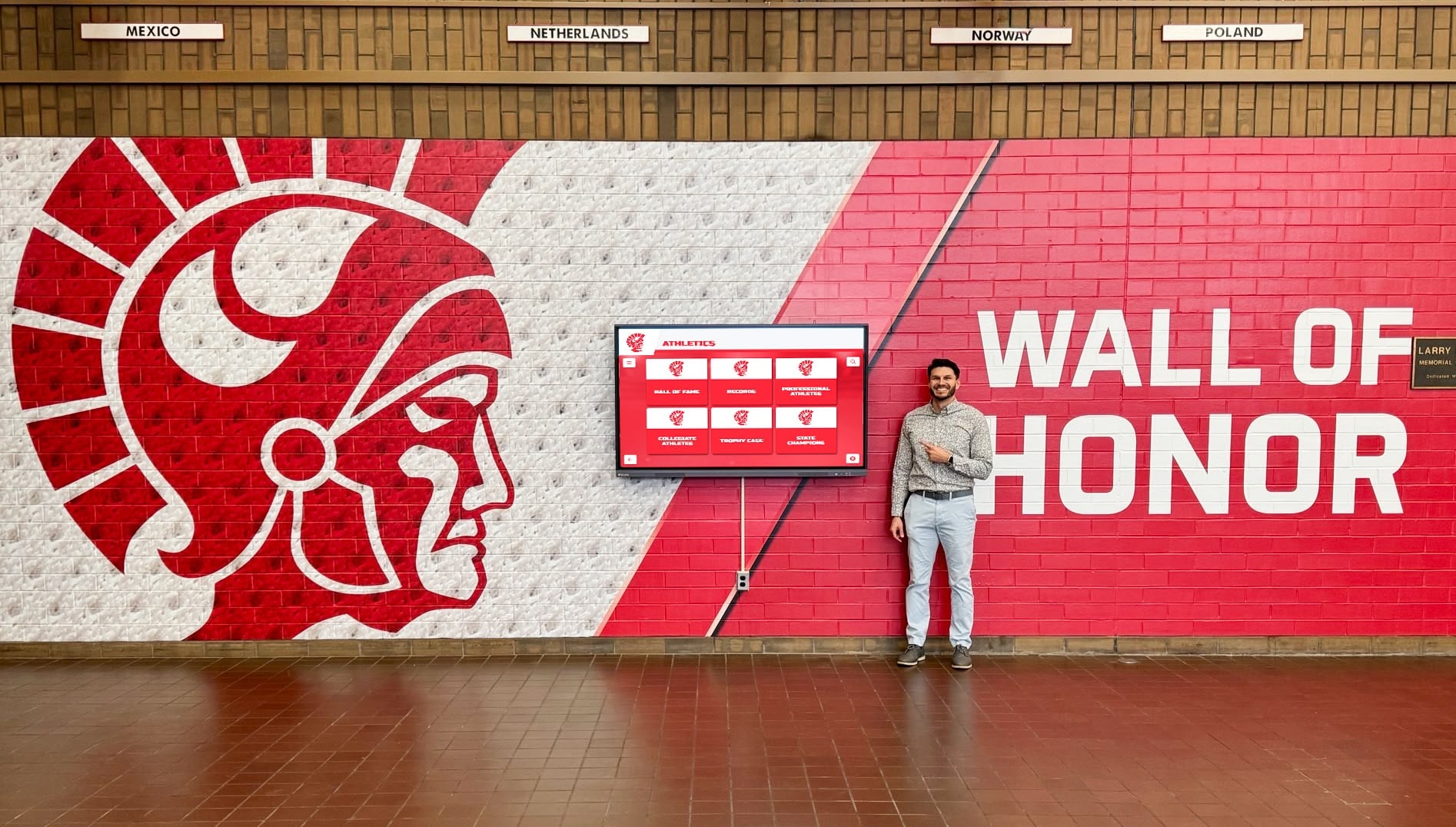
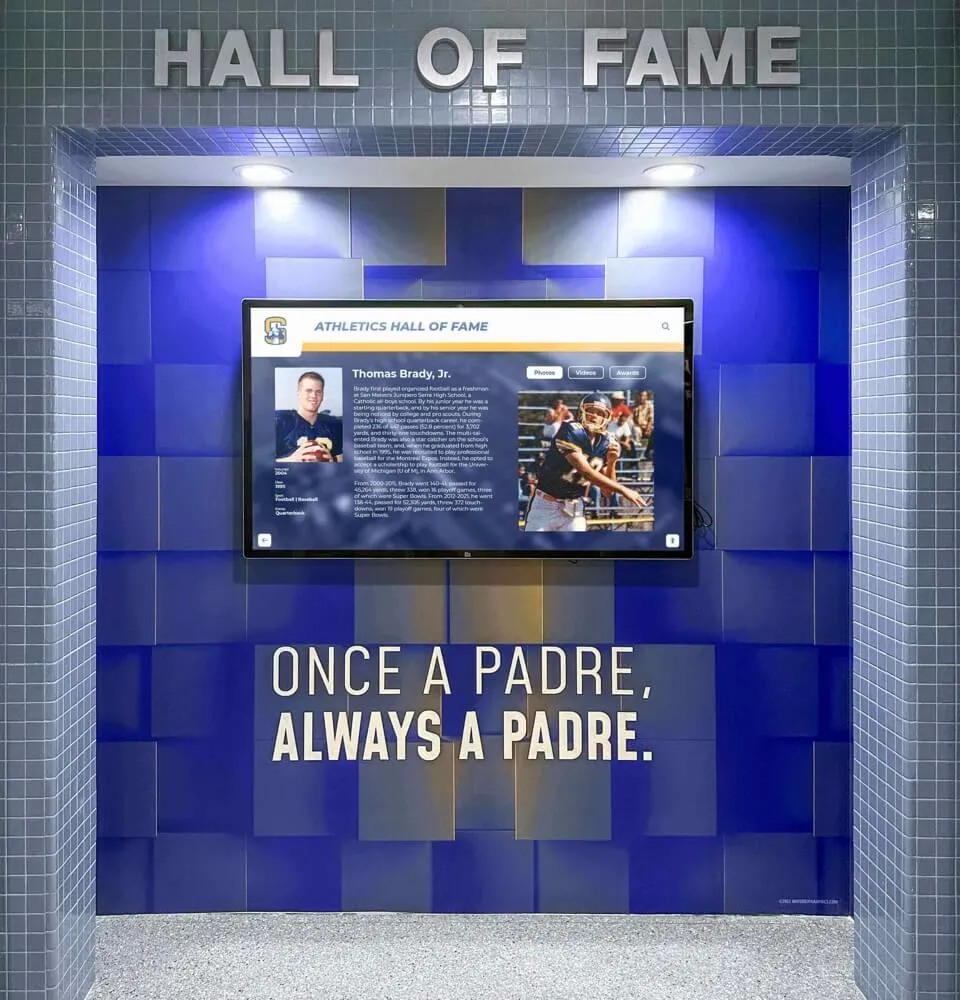
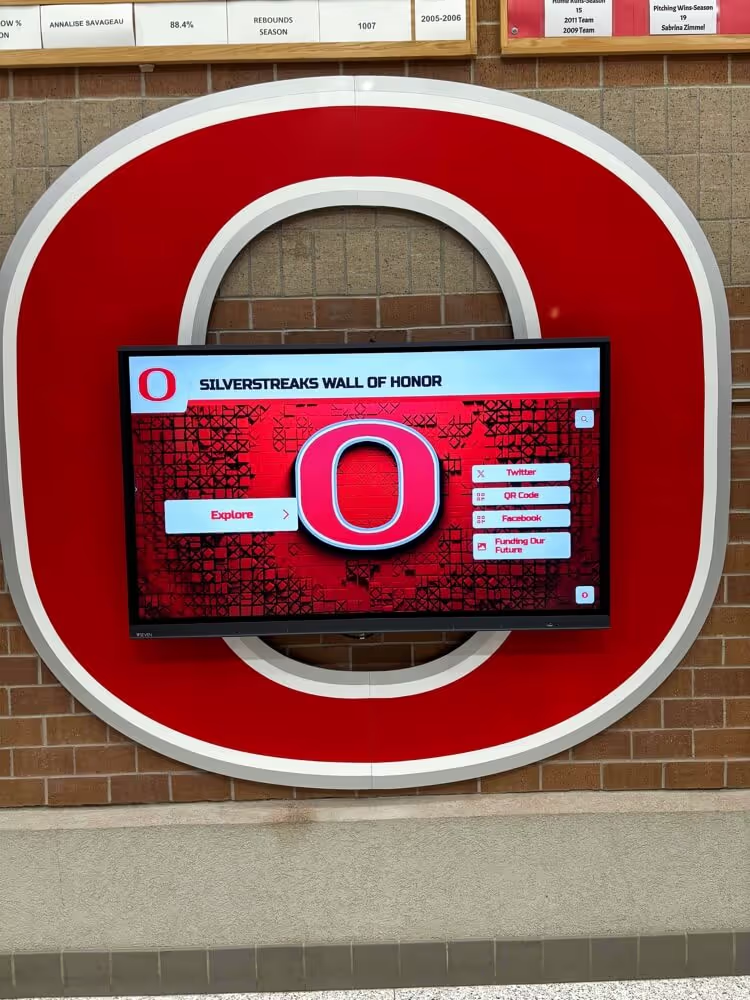
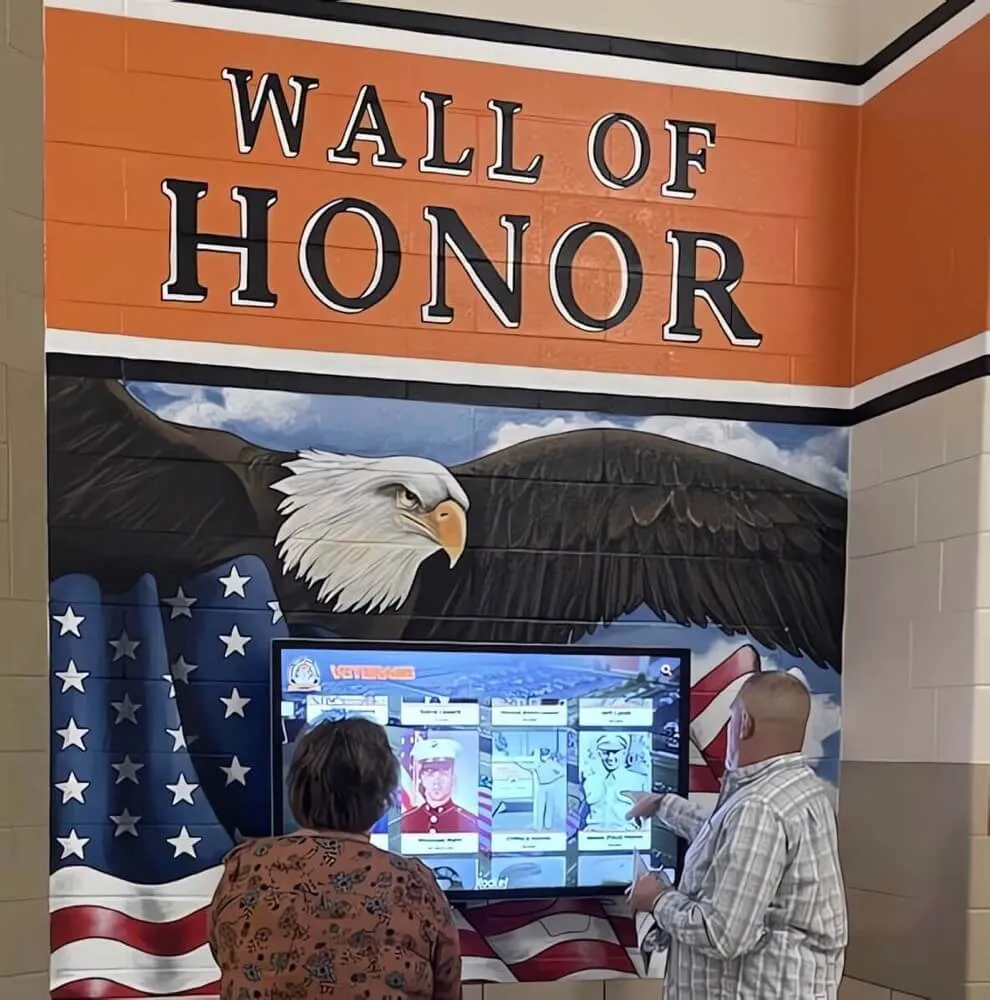
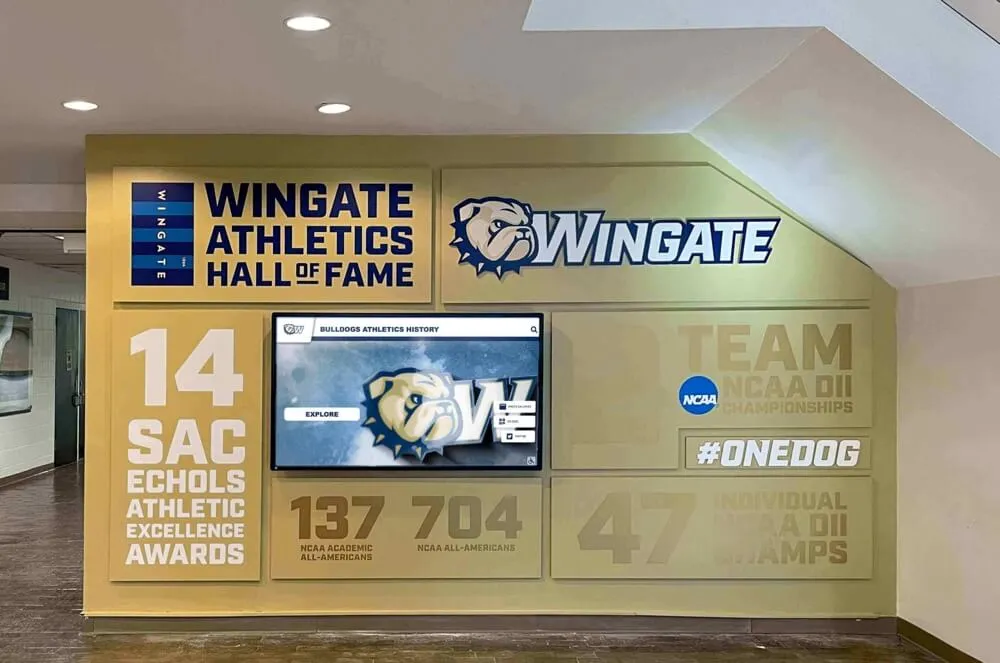
Wall of honor displays combine traditional aesthetic appeal with modern recognition capabilities
Planning and Implementing Sports Banner Programs
Systematic approaches ensure recognition systems serve program goals effectively.
Establishing Recognition Criteria
Creating clear, transparent standards:
Achievement Qualification Standards
Defining banner-worthy accomplishments:
- Championship levels warranting recognition (state, conference, regional)
- Individual achievement thresholds (state qualifiers, record holders, All-Americans)
- Team success criteria (win thresholds, playoff advancement)
- Multi-year achievements versus single-season recognition
- Special circumstances and exceptional achievement provisions
- Consistency across sports accounting for competitive structure differences
Written criteria prevent favoritism perceptions and guide difficult decisions when space constrains recognition.
Selection and Approval Process
Governance ensuring appropriate recognition:
- Athletic director review and recommendation
- Principal or administrative approval
- Booster club or athletic association input
- Clear timeline from achievement to recognition
- Exception processes for unique circumstances
- Appeals or reconsideration procedures
- Documentation of decisions and rationale
Formal processes prevent controversy and ensure consistent application of criteria across sports and years.
Periodic Criteria Review
Evolving standards appropriately:
- Regular evaluation of whether criteria remain appropriate
- Adjustments reflecting program success levels
- Balancing tradition with current recognition philosophy
- Community input in major criteria changes
- Grandfather clauses for historical banners under previous standards
- Communication of criteria changes and rationale
Criteria should serve program goals rather than become rigid rules preventing appropriate recognition evolution.
Budget Planning and Resource Allocation
Financial planning for sustainable recognition:
Initial Program Investment
Startup costs and planning:
- Survey of existing recognition and condition assessment
- Decision between traditional banner continuation versus digital transition
- Initial banner or display system investment
- Installation and professional services
- Design and content development
- Contingency for unexpected expenses
Comprehensive upfront planning prevents cost overruns and ensures sufficient resources for quality implementation.
Ongoing Maintenance Budgets
Sustaining recognition quality:
- Annual banner production for new achievements
- Replacement schedule for deteriorating banners
- Digital system content management and updates
- Cleaning and maintenance services
- Technology refresh cycles for digital systems
- Emergency replacement for damage or accidents
Sustainable recognition requires ongoing budget allocation rather than assuming one-time expense.
Funding Sources
Generating recognition resources:
- School athletic department operational budgets
- Booster club fundraising and donations
- Naming rights or sponsorship for display systems
- Alumni contributions supporting program recognition
- Grant applications for facility improvements
- Community business partnerships
- Student activity funds where appropriate
Diversified funding reduces dependence on single budget source while engaging stakeholders in recognition program.
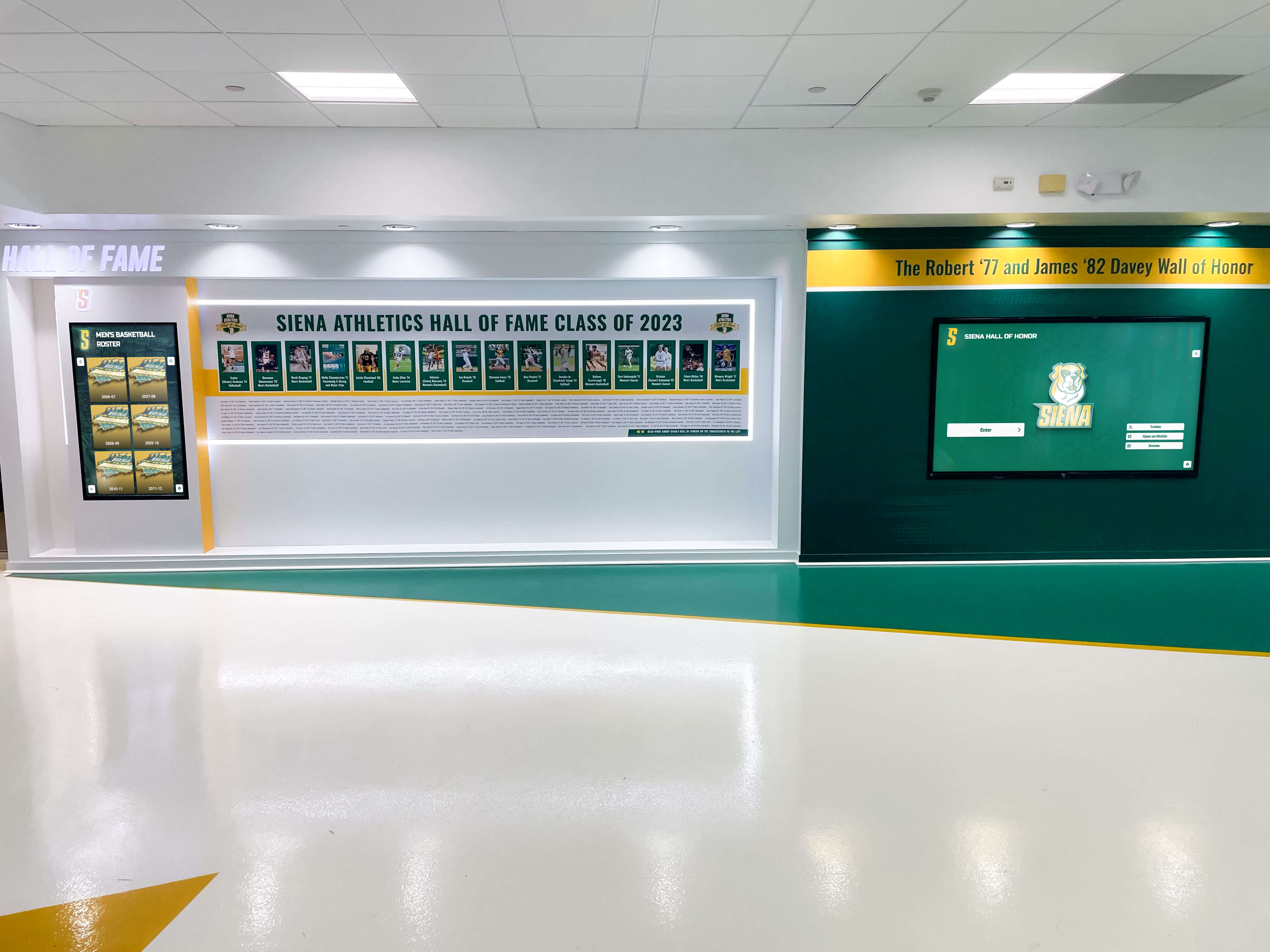
Comprehensive championship displays create lasting program narratives honoring achievement across all sports
Community Engagement and Stakeholder Input
Building support for recognition approaches:
Alumni and Tradition Considerations
Respecting program history:
- Understanding emotional connections to traditional banners
- Communication about recognition changes or updates
- Alumni input on historical athlete recognition
- Transition planning respecting established traditions
- Documentation and archival of removed physical banners
- Alumni involvement in new recognition systems
Particularly when transitioning from traditional to digital approaches, alumni engagement prevents resistance and builds support.
Current Athlete and Family Perspectives
Meeting current stakeholder needs:
- Student athlete input on recognition preferences
- Parent perspectives on inclusive versus championship-focused recognition
- Understanding generational differences in technology expectations
- Communication about how recognition honors their achievements
- Balance between celebrating past and focusing on present
- Athlete participation in recognition events and celebrations
Recognition systems should motivate current athletes rather than exclusively honoring history.
Broader School Community
School-wide recognition considerations:
- Administrative priorities for athletic facility use
- Academic achievement balance with athletic recognition
- School branding and visual identity consistency
- Budget constraints and competing facility needs
- Integration with broader school recognition programs
- Communication to students, staff, and visitors about athletic excellence
Effective athletic recognition enhances rather than conflicts with broader school goals and culture.
For schools implementing comprehensive recognition systems, athletic recognition best practices provide frameworks for building culture of appreciation across all achievement dimensions.
Creative Banner Design Ideas and Trends
Innovative approaches creating distinctive, impactful recognition:
Modern Design Aesthetics
Contemporary visual approaches:
Minimalist and Clean Design
Sophisticated simplicity:
- Bold typography with generous white space
- Limited color palettes emphasizing school colors
- Modern sans-serif fonts with high readability
- Strategic use of graphics versus text-heavy designs
- Professional appearance rivaling college and professional displays
- Timeless aesthetics aging better than trendy designs
Minimalist approaches create impact through restraint rather than visual complexity.
Photography Integration
Image-rich banner designs:
- Action photography from championship seasons
- Team photographs with banner text overlays
- Photo collages celebrating multiple moments
- Black and white imagery for classic appearance
- Sport-specific iconic moments
- Coach and athlete portraits for individual recognition
Photographic elements create emotional connections impossible with purely text-based designs.
Dimensional and Textured Elements
Going beyond flat designs:
- Layered materials creating depth
- Appliqué lettering and numbers
- Metallic or reflective elements
- Embroidered details on premium banners
- Mixed media combining fabrics and rigid elements
- Three-dimensional letter mounting
Premium construction and materials elevate banner from basic recognition to impressive artistic installations.
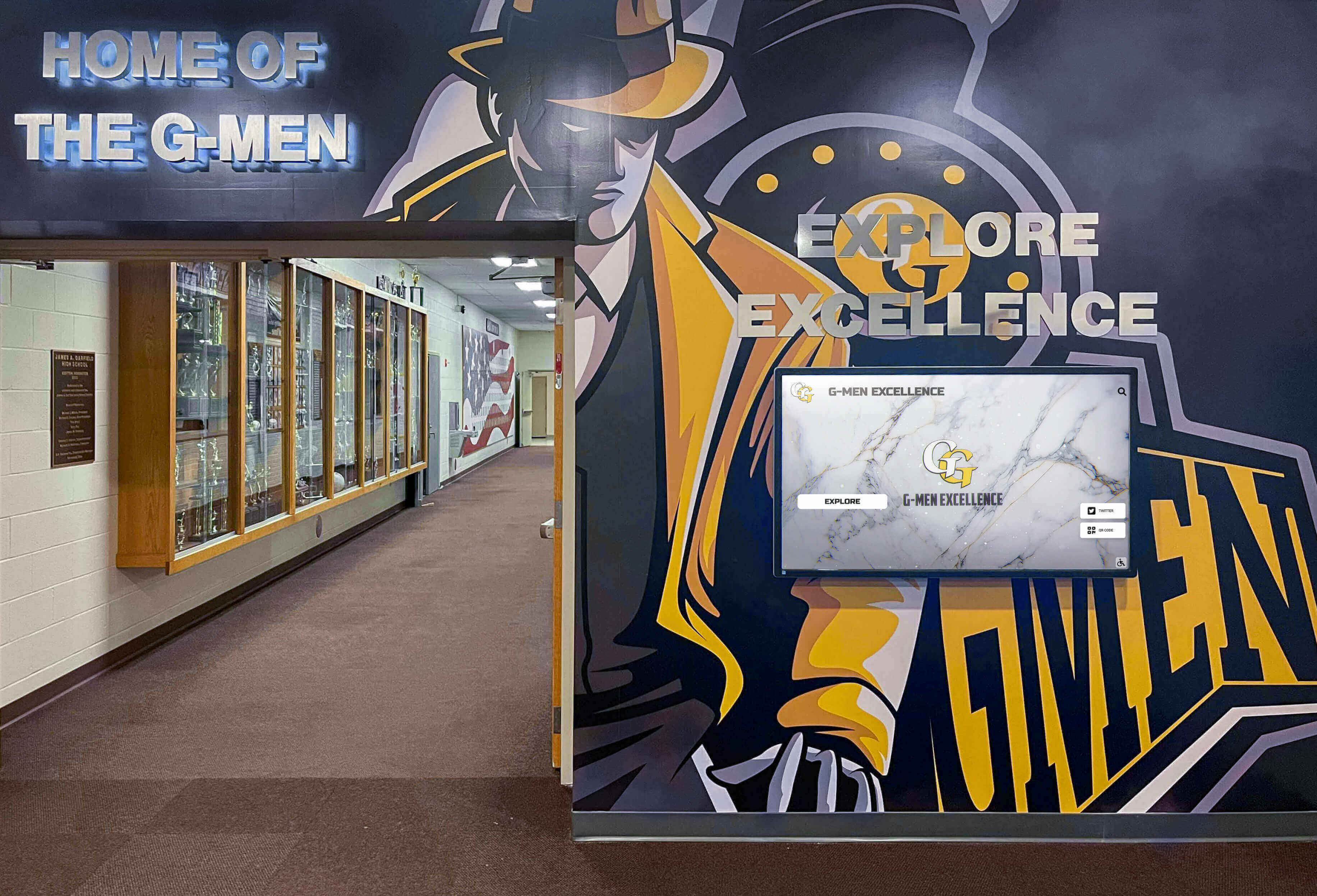
Coordinated branding across murals, displays, and trophy cases creates cohesive athletic facility identity
Sport-Specific Design Approaches
Tailored recognition reflecting sport characteristics:
Team Sport Championship Banners
Collaborative achievement emphasis:
- Roster listings honoring every team member
- Position groups or unit recognition
- Season statistics and key victories
- Playoff or tournament bracket documentation
- Championship game details and scores
- Multiple years for programs with sustained success
Team banners balance star player recognition with acknowledgment of every contributor’s role in championship success.
Individual Sport Achievement Banners
Athlete-focused recognition:
- State champion wrestlers, swimmers, track athletes
- State meet place finishers and qualifiers
- Individual records and performances
- Competition brackets or heat assignments
- Personal bests and season progressions
- Multiple individuals on shared banners or individual recognition
Individual sport banners create recognition opportunities for athletes whose excellence might otherwise receive less visibility than team sports.
Multi-Sport Athlete Recognition
Celebrating athletic versatility:
- Athletes lettering in multiple sports
- Seasonal achievement across sports
- Career-spanning multi-sport excellence
- Academic and athletic combination honors
- Special recognition for rare three-sport athletes
- Naming rights for display sponsorship by honored athletes
Multi-sport banners acknowledge increasingly rare athletic versatility deserving special recognition.
Innovative Recognition Concepts
Expanding beyond traditional championship focus:
Academic and Athletic Excellence
Balanced achievement celebration:
- Scholar-athlete designation integration
- GPA requirements for banner inclusion
- Academic All-State and All-American recognition
- College scholarship athlete acknowledgment
- Combined academic and athletic milestones
- Student-athlete of the year honors
These banners communicate program values beyond pure athletic success.
Character and Leadership Recognition
Values-based acknowledgment:
- Sportsmanship award recipients
- Team captain and leadership recognition
- Community service and volunteer work
- Overcoming adversity and inspirational stories
- Most improved athletes
- Program culture carriers and mentor athletes
Character recognition creates pathways for athletes who may never win championships but embody program values.
Milestone and Record Achievement
Performance-based recognition:
- Scoring milestones (1,000 points, etc.)
- Career statistical achievements
- Program records by event or position
- Consecutive game streaks and participation
- Tournament appearance records
- All-time program leaders by category
Milestone banners honor sustained excellence and career achievement beyond single-season championship focus.
For schools developing inclusive recognition programs, student achievement showcase approaches provide frameworks for comprehensive celebration.
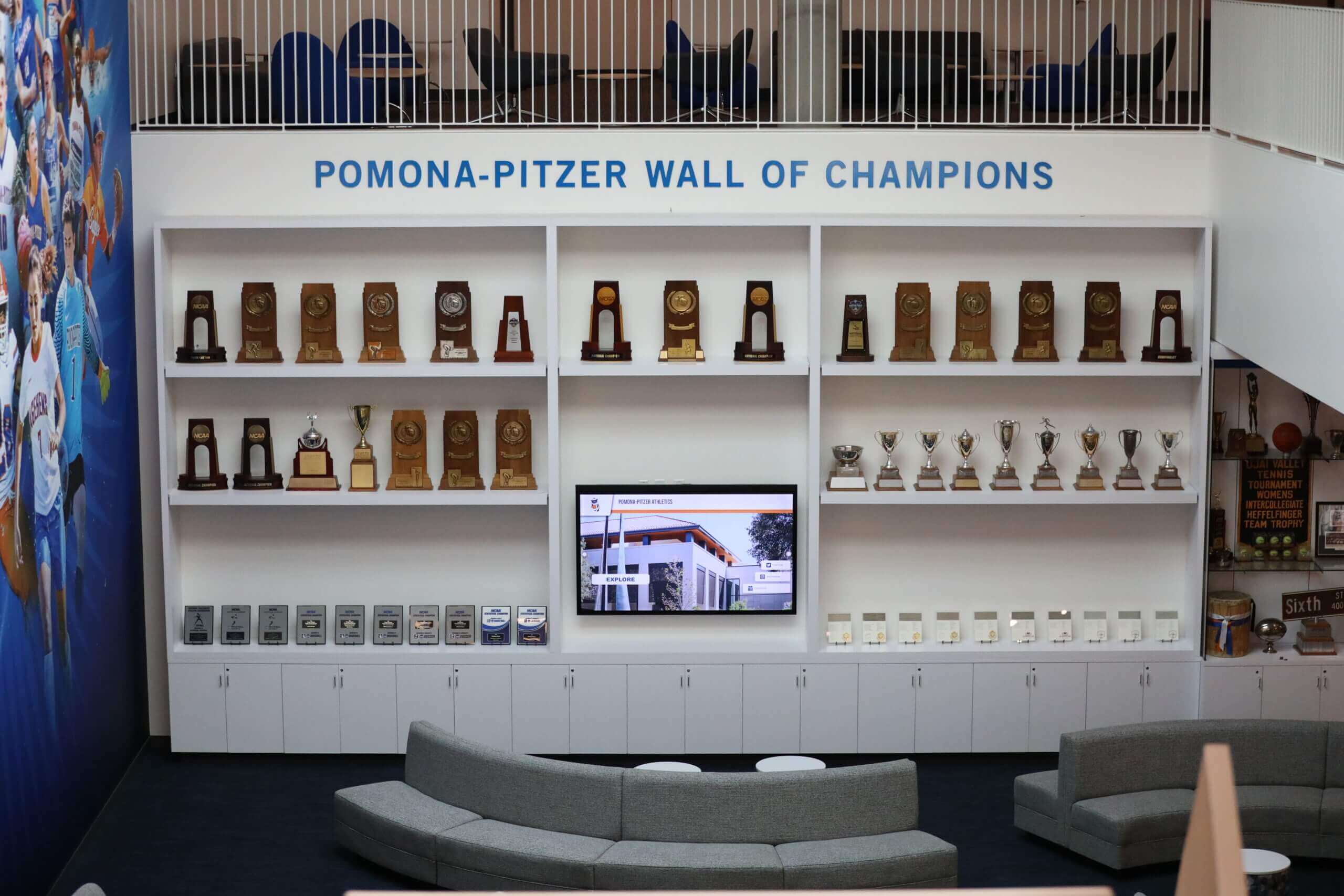
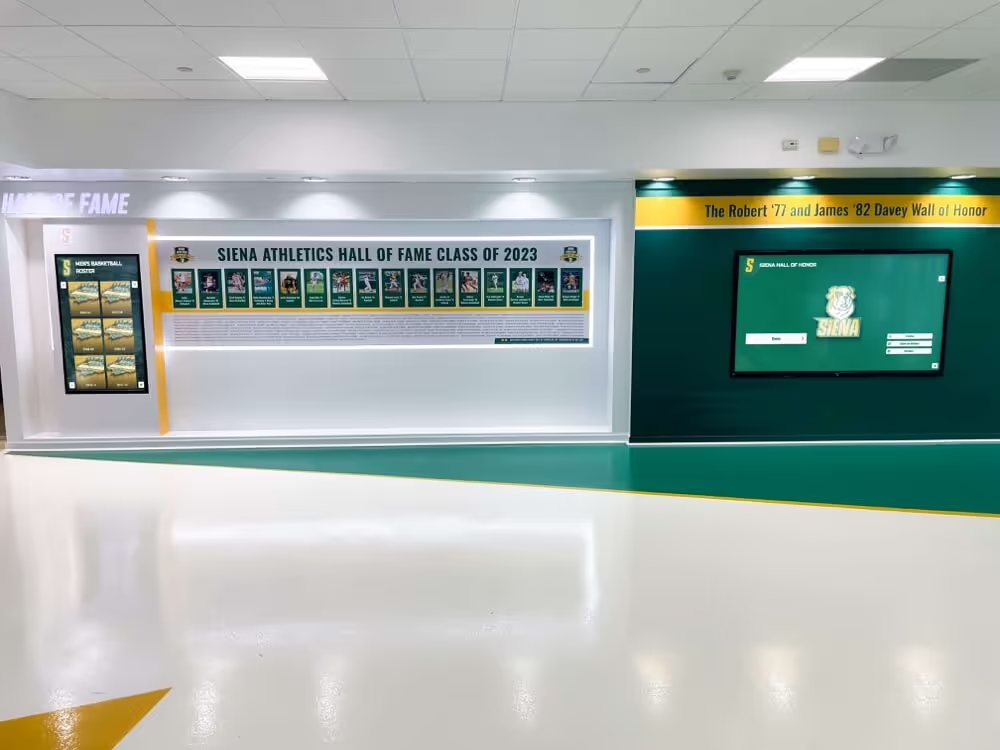
Coordinated trophy displays and wall recognition create impressive athletic lounges celebrating program excellence
Conclusion: Building Sports Banner Programs That Inspire
Sports banners represent more than decorative facility elements—they serve as visual records of athletic excellence that connect current athletes to program tradition while celebrating achievements that matter to school communities. When implemented thoughtfully with attention to clear criteria, quality design, strategic placement, and sustainable maintenance, banner programs become lasting testaments to program culture that inspire athletes while building community pride.
The approaches explored in this guide provide frameworks for developing recognition systems that honor achievement while addressing the practical constraints of budget, space, and changing recognition philosophies. From establishing transparent selection criteria and planning sustainable budgets to exploring modern alternatives addressing traditional limitations, these strategies ensure your athletic achievements receive recognition proportional to the dedication athletes invest pursuing excellence.
Transform Your Athletic Recognition Program
Discover how interactive digital displays can help you celebrate unlimited achievements, honor every athlete, and build lasting program pride without the space and budget constraints of traditional banners. Create comprehensive recognition systems that inspire current athletes while preserving complete program history.
Request a DemoModern recognition technology enables schools to overcome the forced choices between championship-only focus versus inclusive recognition, between celebrating history versus highlighting current athletes, and between comprehensive documentation versus manageable costs. Solutions like Touch Archive help athletic programs create permanent digital archives showcasing every achievement across all sports and decades while building program pride that attracts athletes, engages alumni, and strengthens community support.
As athletic programs increasingly recognize diverse pathways to excellence—from championship performance to character leadership, from statistical milestones to academic achievement—thoughtful recognition systems communicate that every contribution matters while maintaining appropriate hierarchy acknowledging exceptional accomplishment. These balanced approaches build inclusive program cultures where all athletes feel valued while championship pursuit remains aspirational goal inspiring greatest efforts.
Whether continuing traditional banner programs with refined approaches or transitioning to modern digital alternatives addressing space and budget constraints, the principles explored in this guide provide direction for creating recognition systems that serve your athletes, honor your history, and inspire future generations to add their own achievements to your program’s growing legacy.
Ready to explore recognition solutions for your athletic program? Learn how Touch Archive helps schools create impressive recognition systems celebrating championships, honoring individuals, and preserving complete program histories through engaging interactive displays that transform how communities connect with athletic excellence.