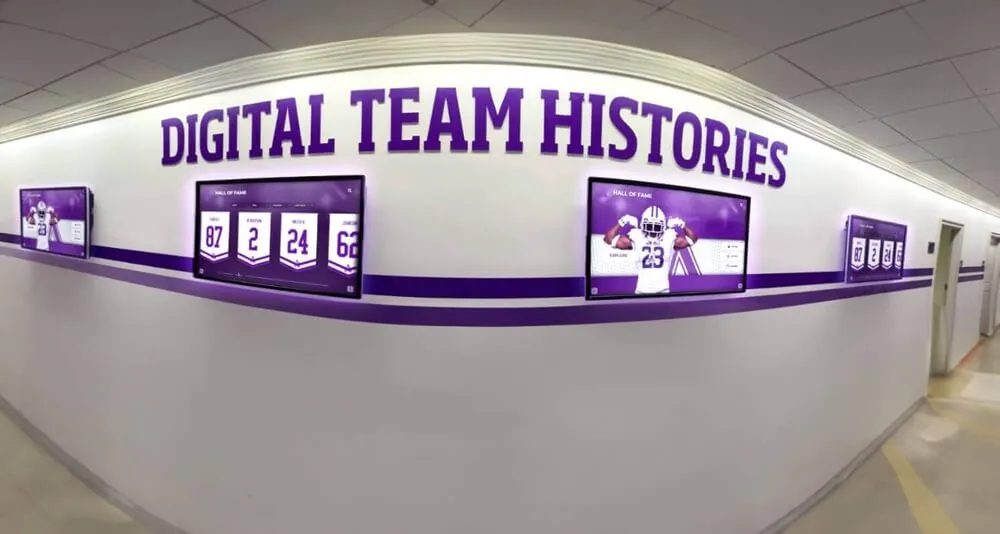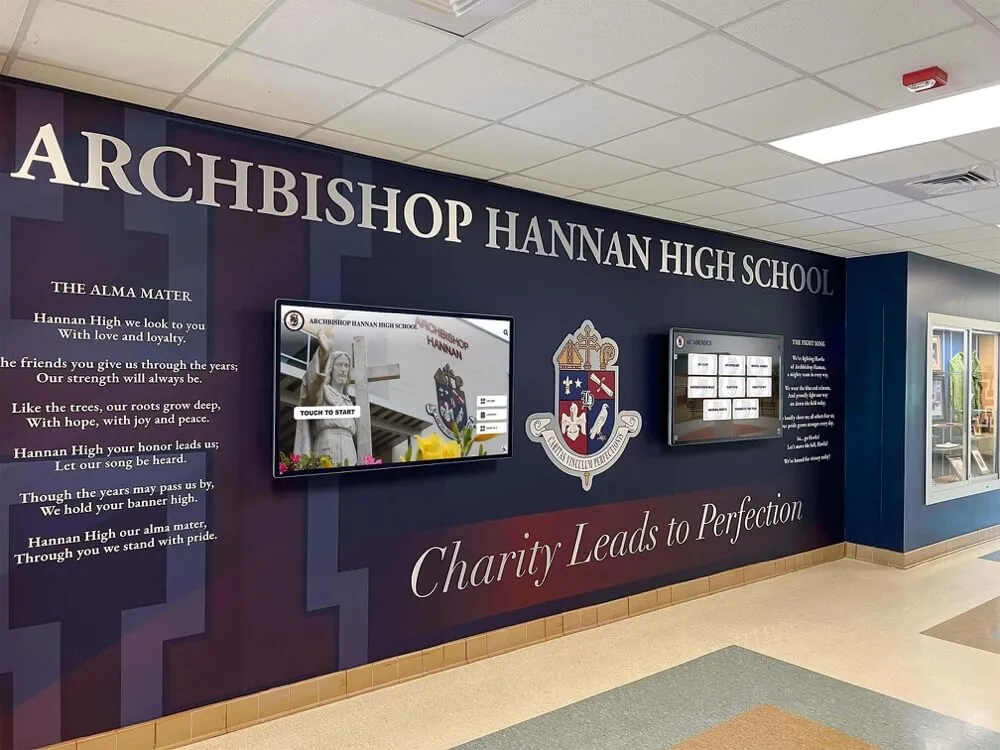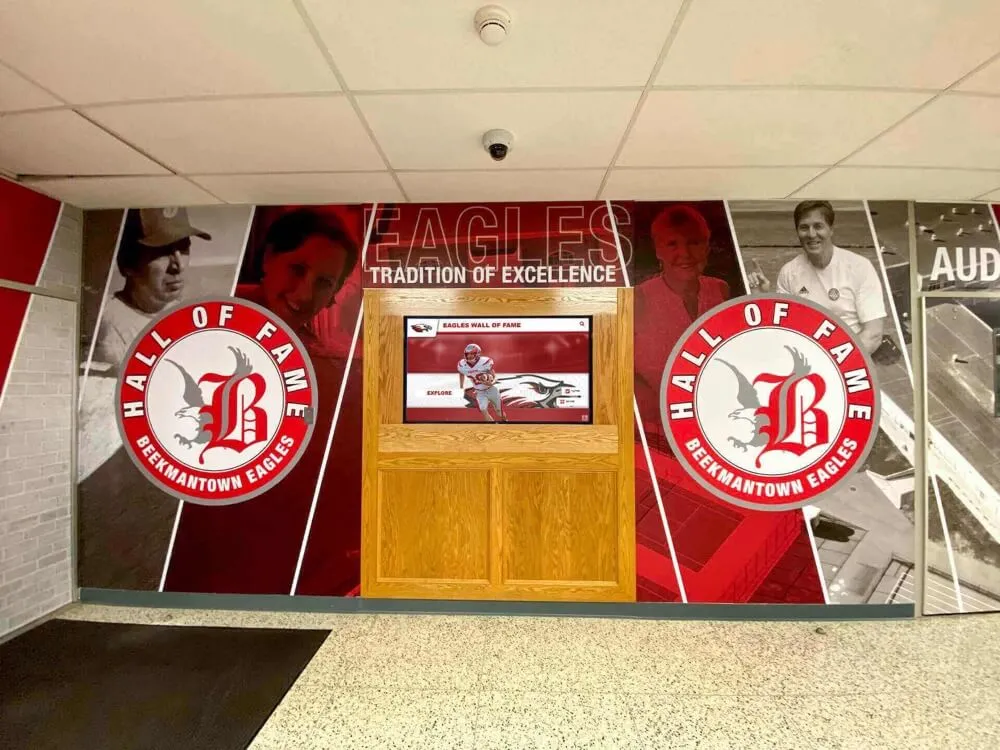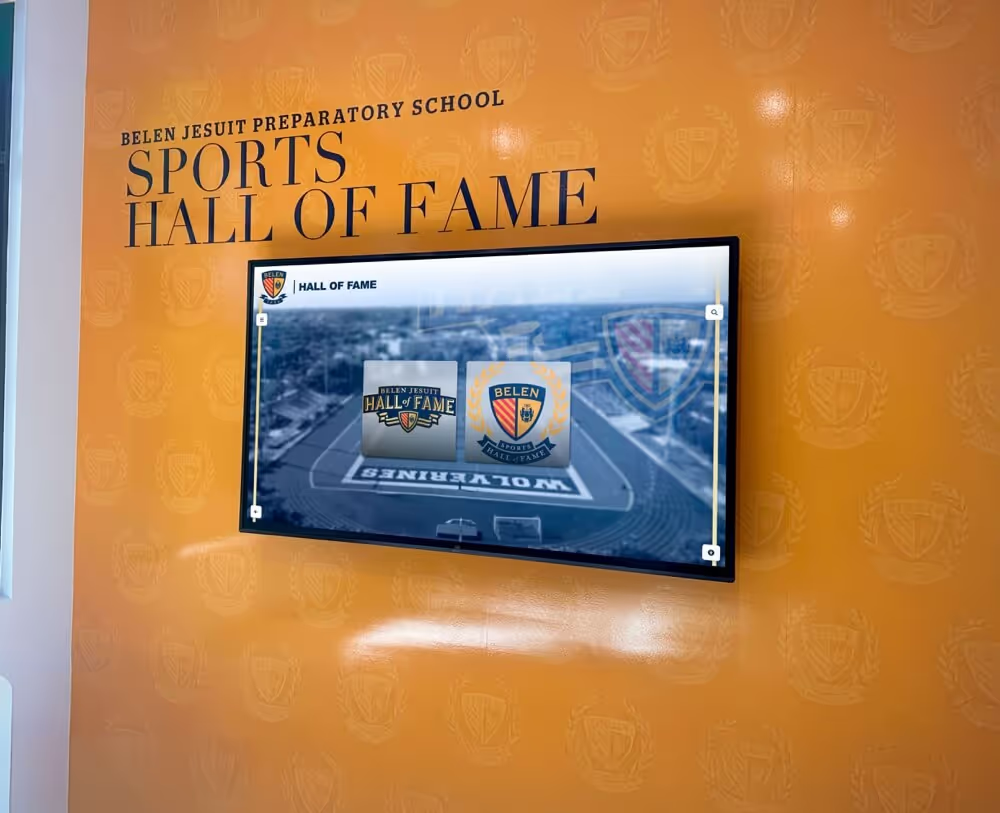




High school athletic directors and administrators face a universal challenge: trophy cases overflowing with decades of achievements, limited wall space, and the impossible task of deciding which accomplishments deserve visibility. As programs accumulate championships, individual awards, and team recognition year after year, physical display space reaches capacity while recent achievements compete with historical trophies for attention.
This space crisis forces difficult choices. Do you remove older trophies to make room for new ones, diminishing past athletes’ recognition? Do you purchase additional trophy cases that consume valuable lobby space? Do you leave recent achievements in storage where nobody sees them? Each option feels inadequate because every trophy represents athlete dedication, team sacrifice, and community pride that deserves lasting visibility.
Touchscreen displays transform this space constraint from an unsolvable problem into an opportunity. Digital recognition systems preserve unlimited achievements without physical space limitations, create engaging interactive experiences that static trophy cases cannot match, and honor every athlete and team regardless of when they competed. This guide explores how high schools can implement touchscreen displays in gym lobbies to solve overcrowding while enhancing athletic recognition.
The shift from physical trophy cases to digital displays represents more than space management—it fundamentally improves how schools honor athletic achievement. Modern touchscreen technology enables searchable archives, multimedia storytelling, automatic record updates, and accessibility features impossible with traditional trophy cases, all while preserving complete program history permanently.

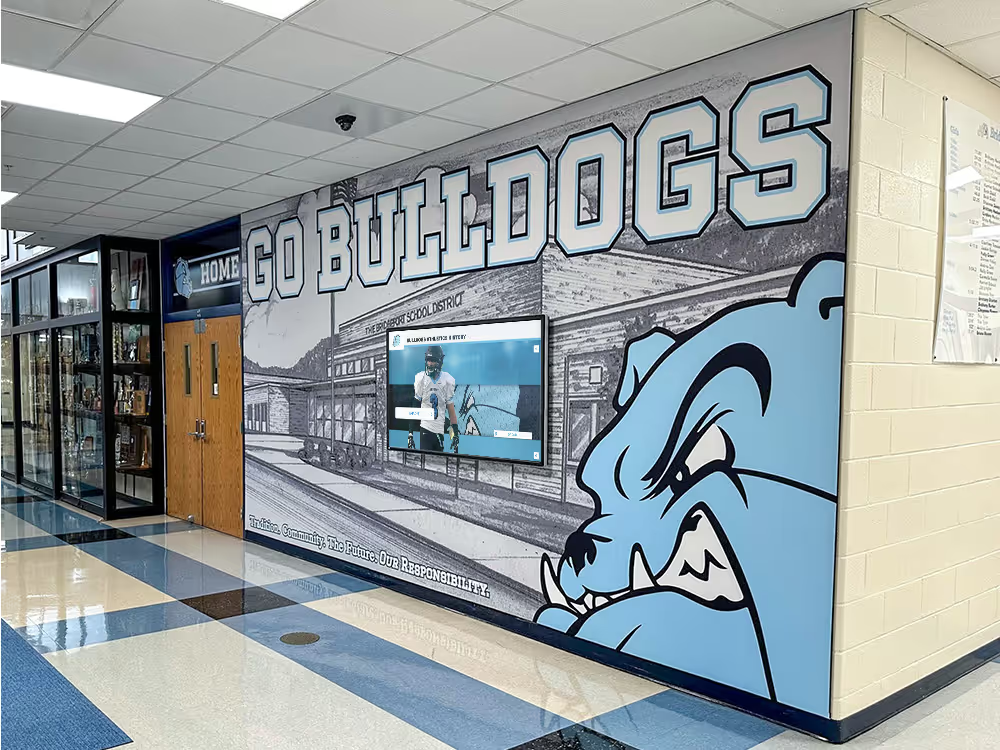
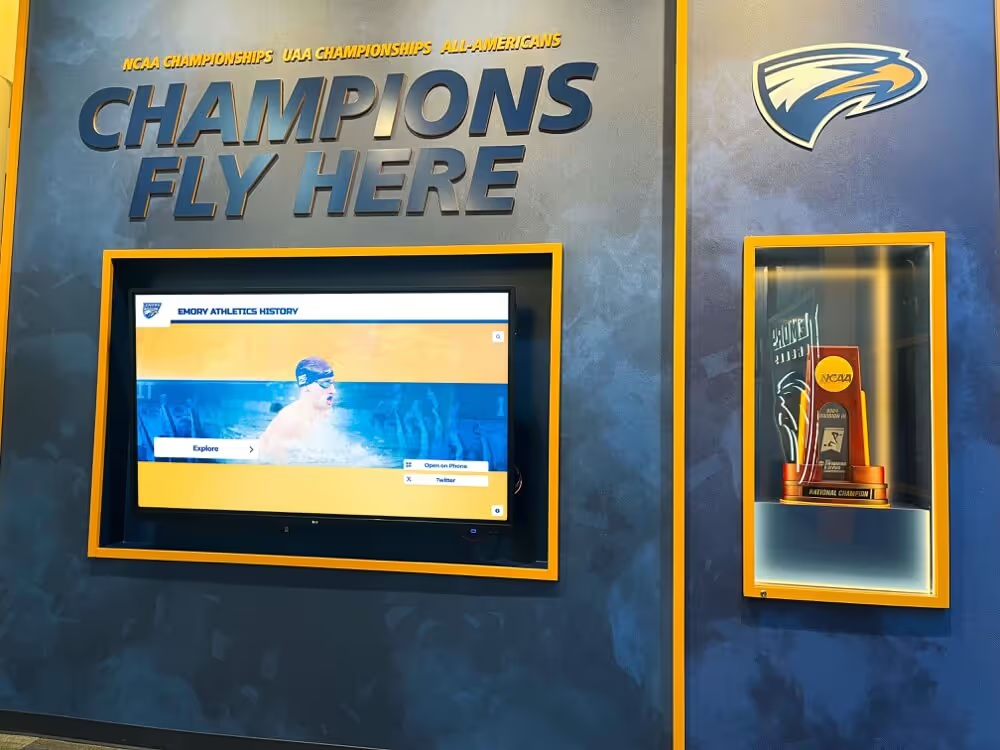
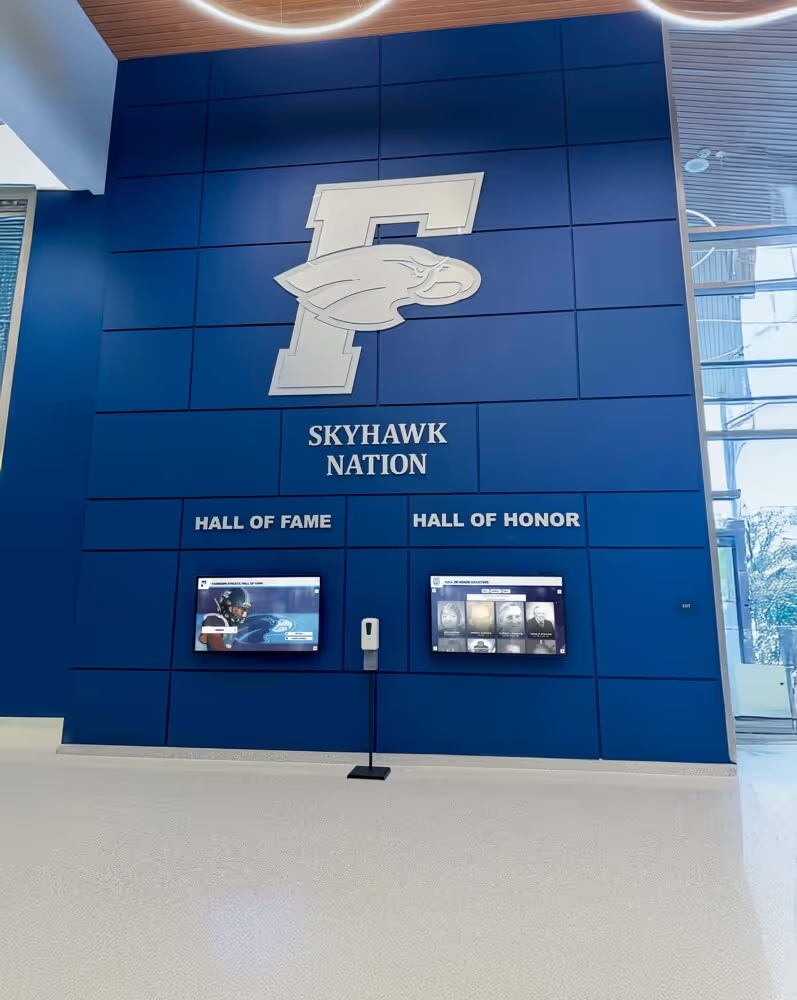
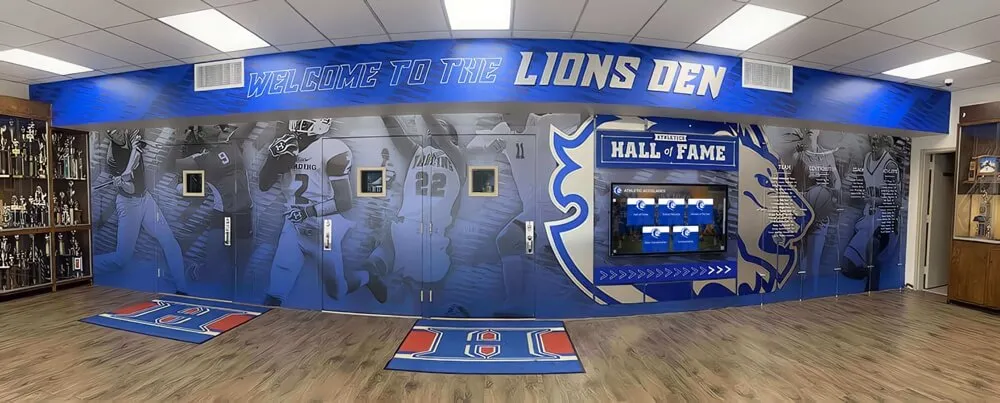
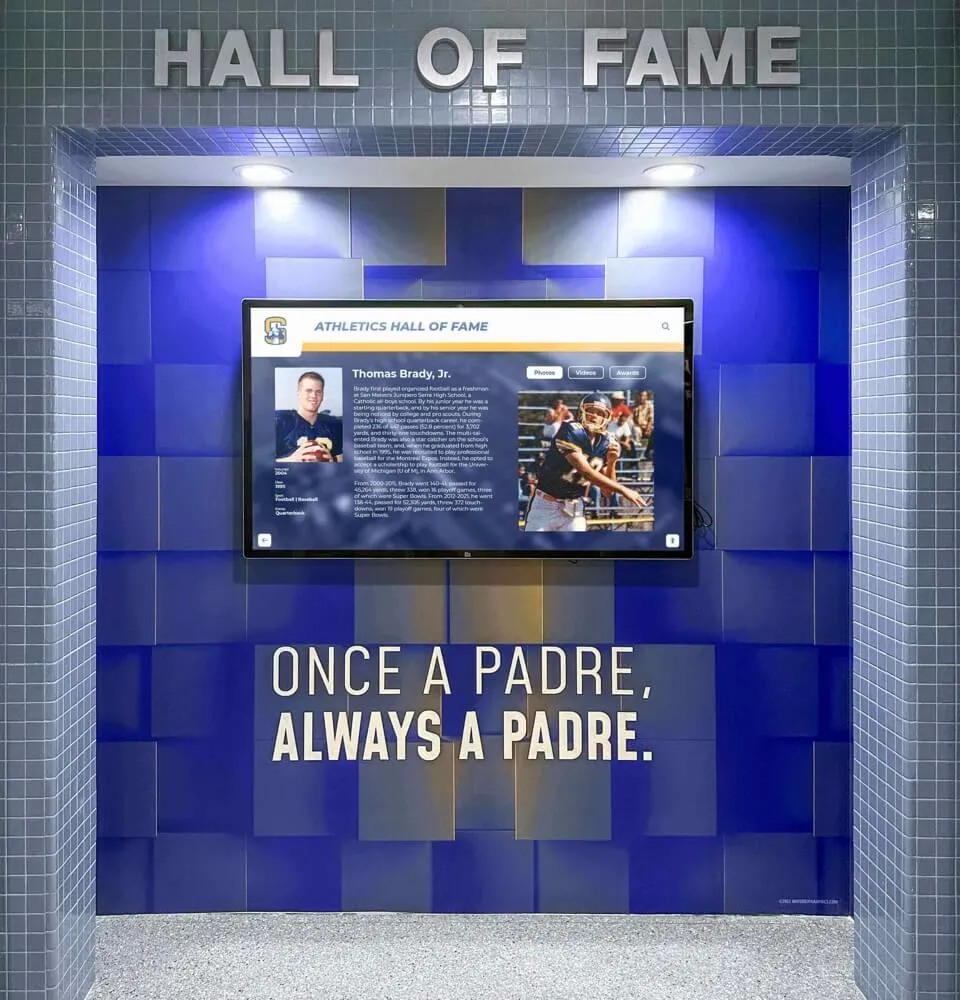
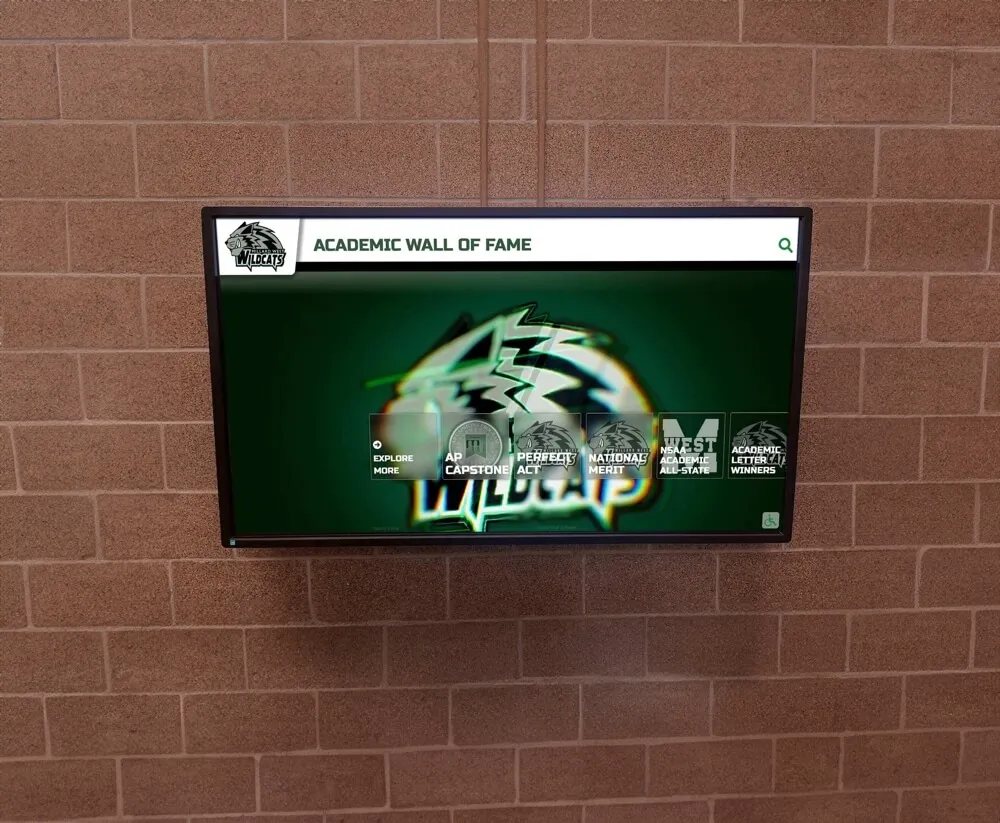
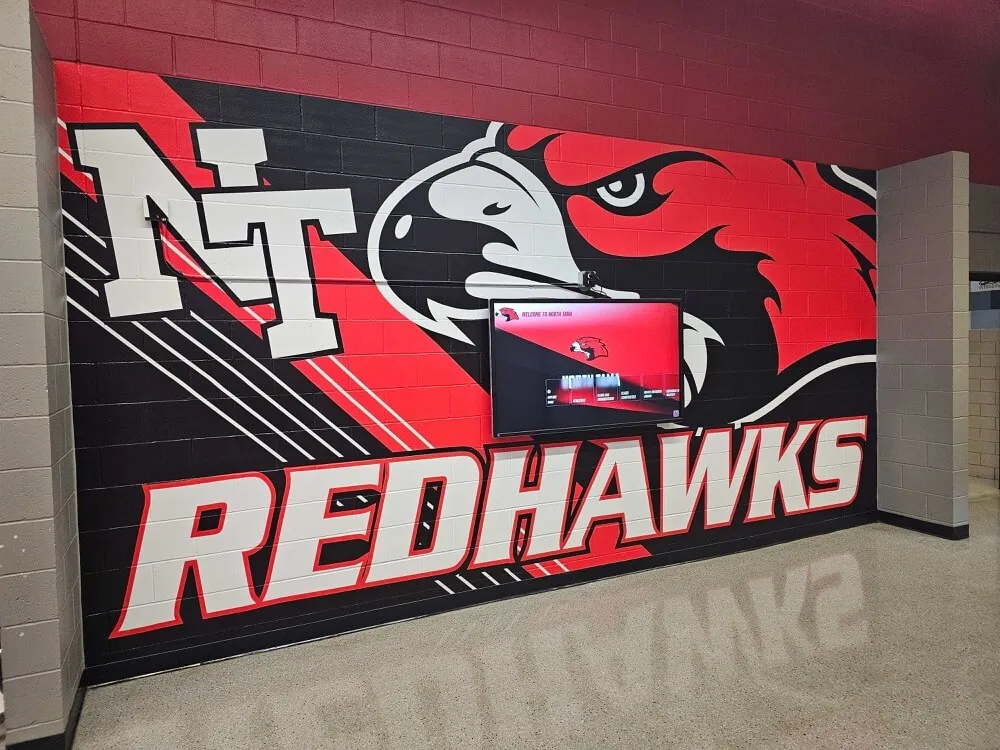
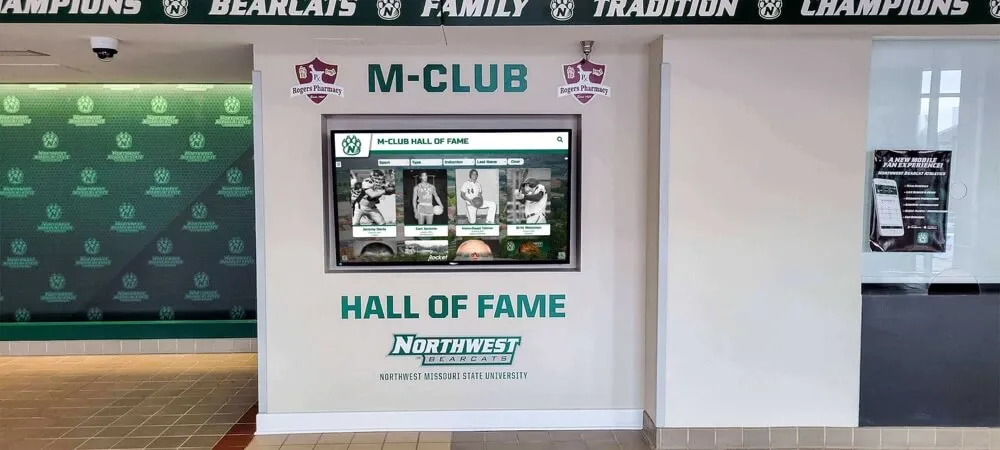
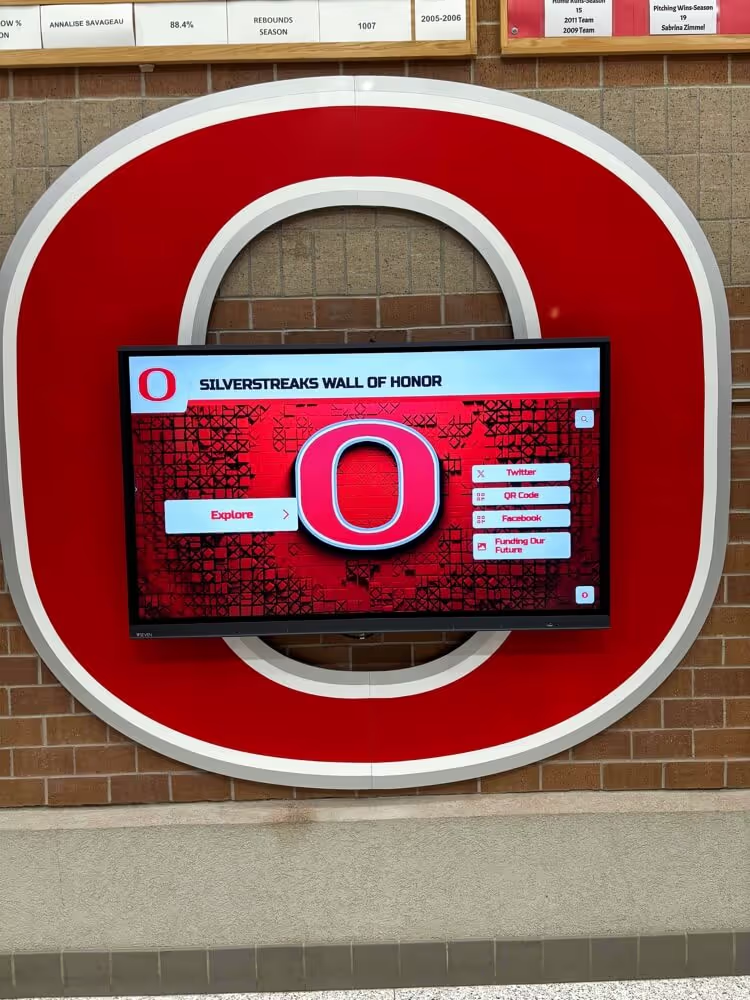
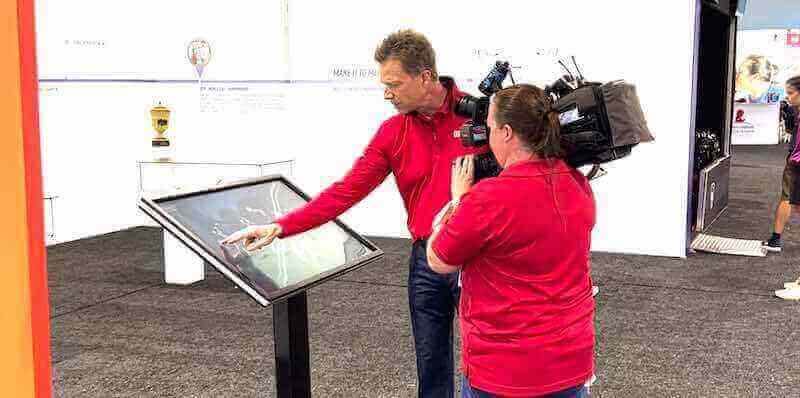
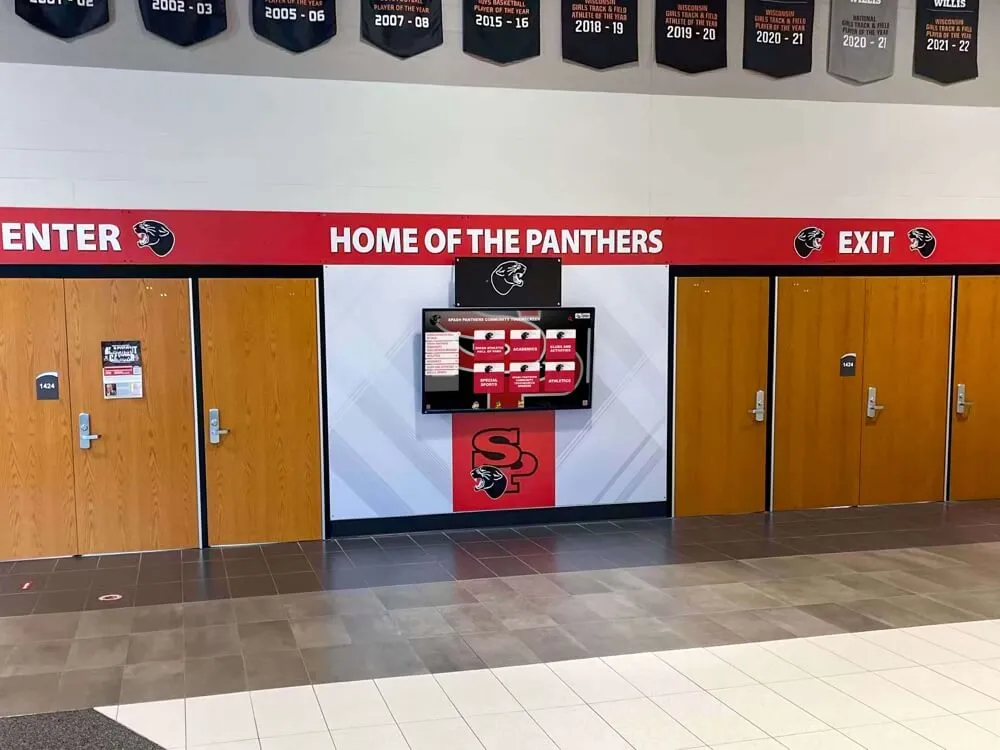
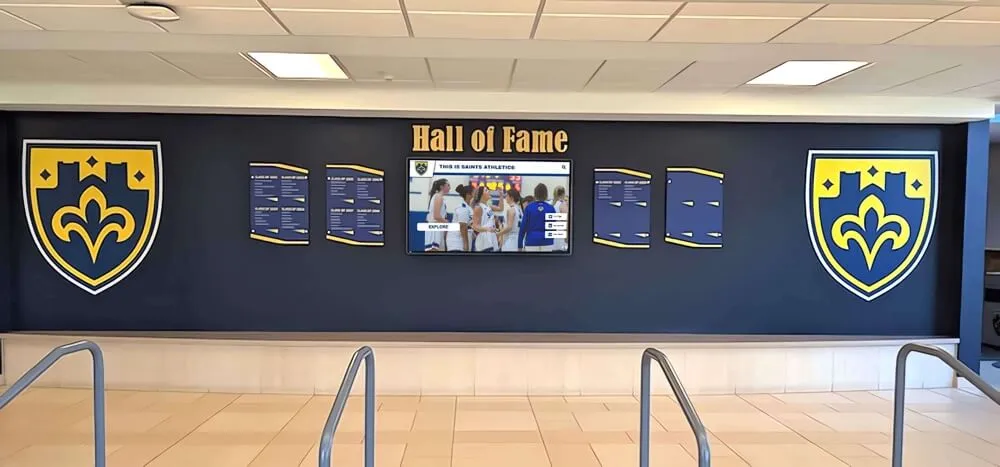
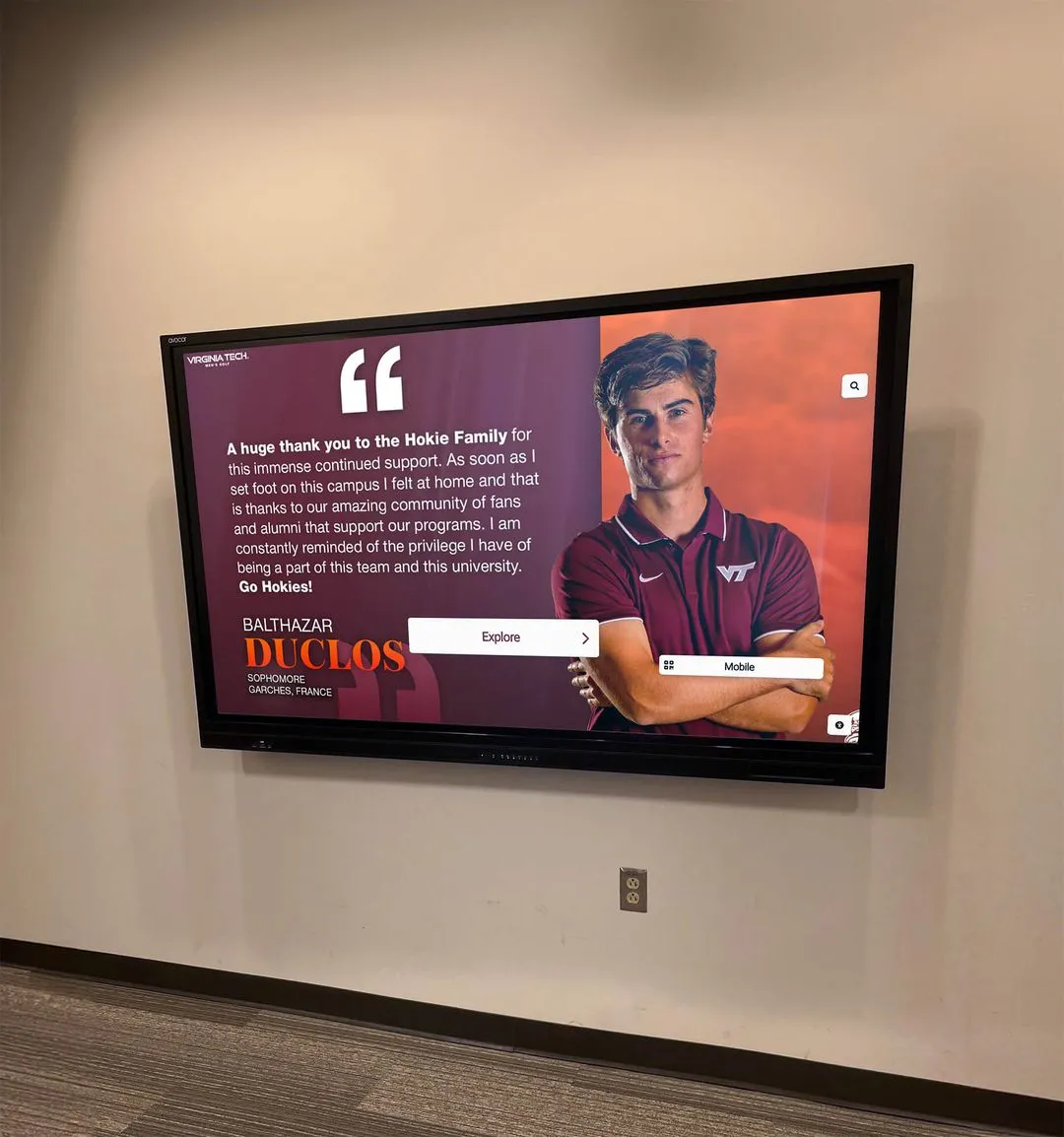
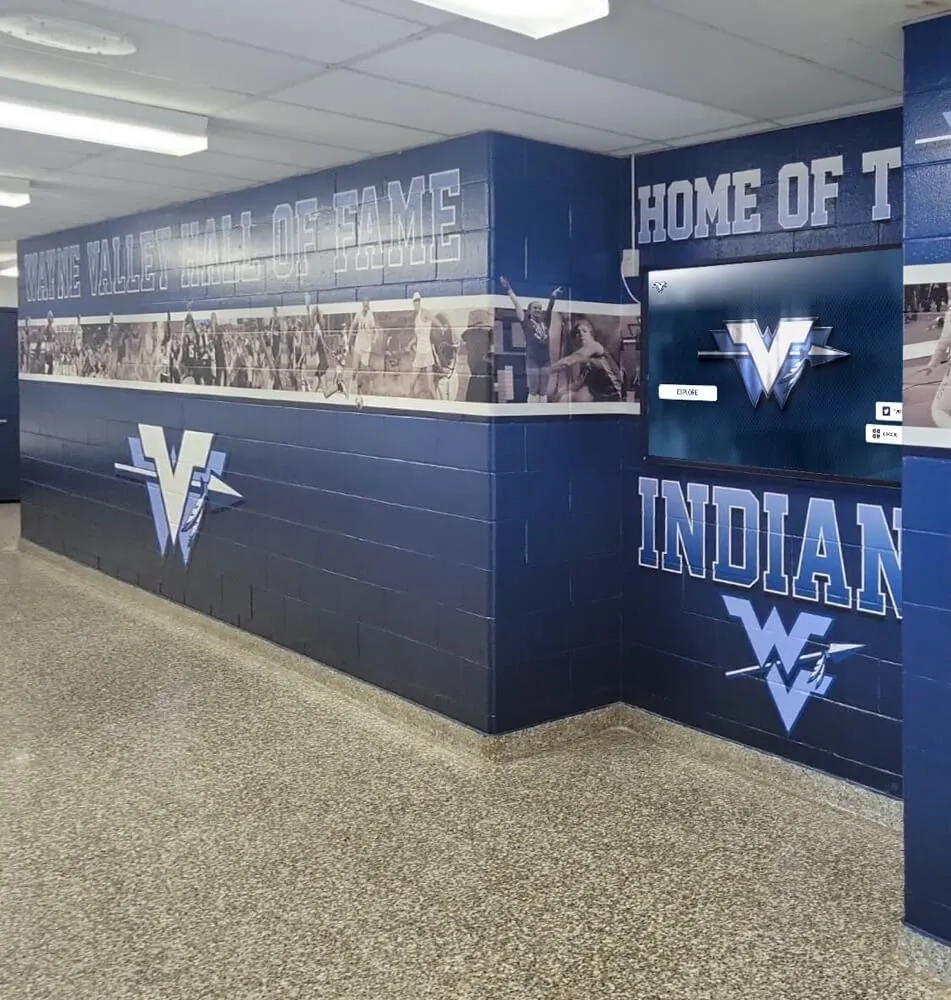
Modern touchscreen displays provide unlimited recognition capacity while creating focal points in gym lobbies and athletic facilities
Why Traditional Trophy Cases No Longer Work for Growing Athletic Programs
Understanding the limitations of physical trophy displays clarifies why touchscreen solutions have become essential for comprehensive athletic recognition.
The Inevitable Space Capacity Crisis
Successful athletic programs generate more recognition than physical spaces can accommodate:
Accumulation Mathematics Create Impossible Situations
Consider typical athletic program growth patterns:
- High schools typically offer 15-25 varsity sports across all seasons
- Each sport generates team championships, individual awards, conference recognition, and milestone achievements
- Twenty years of athletic success produces hundreds of trophies, plaques, and recognition items
- Traditional trophy cases hold approximately 30-50 items depending on size
- Physical wall space limits total trophy case installation
Even with multiple trophy cases filling lobby walls, schools can display perhaps 10-15% of accumulated achievements. The remaining 85-90% sits in storage, invisible to current students, families, and community members who would be inspired by that history.
Recent Achievement Visibility Problems
Physical capacity constraints create recognition inequities:
- Current athletes’ accomplishments remain in boxes waiting for display space
- Last decade’s achievements gradually disappear as cases fill with recent additions
- Historical program milestones get removed to accommodate new trophies
- Different sports receive unequal recognition based on space availability when cases fill
- Individual awards for state qualifications, conference honors, and milestone achievements never receive public display
Schools facing these challenges recognize that physical trophy cases fundamentally cannot serve comprehensive recognition needs for active, successful athletic programs.
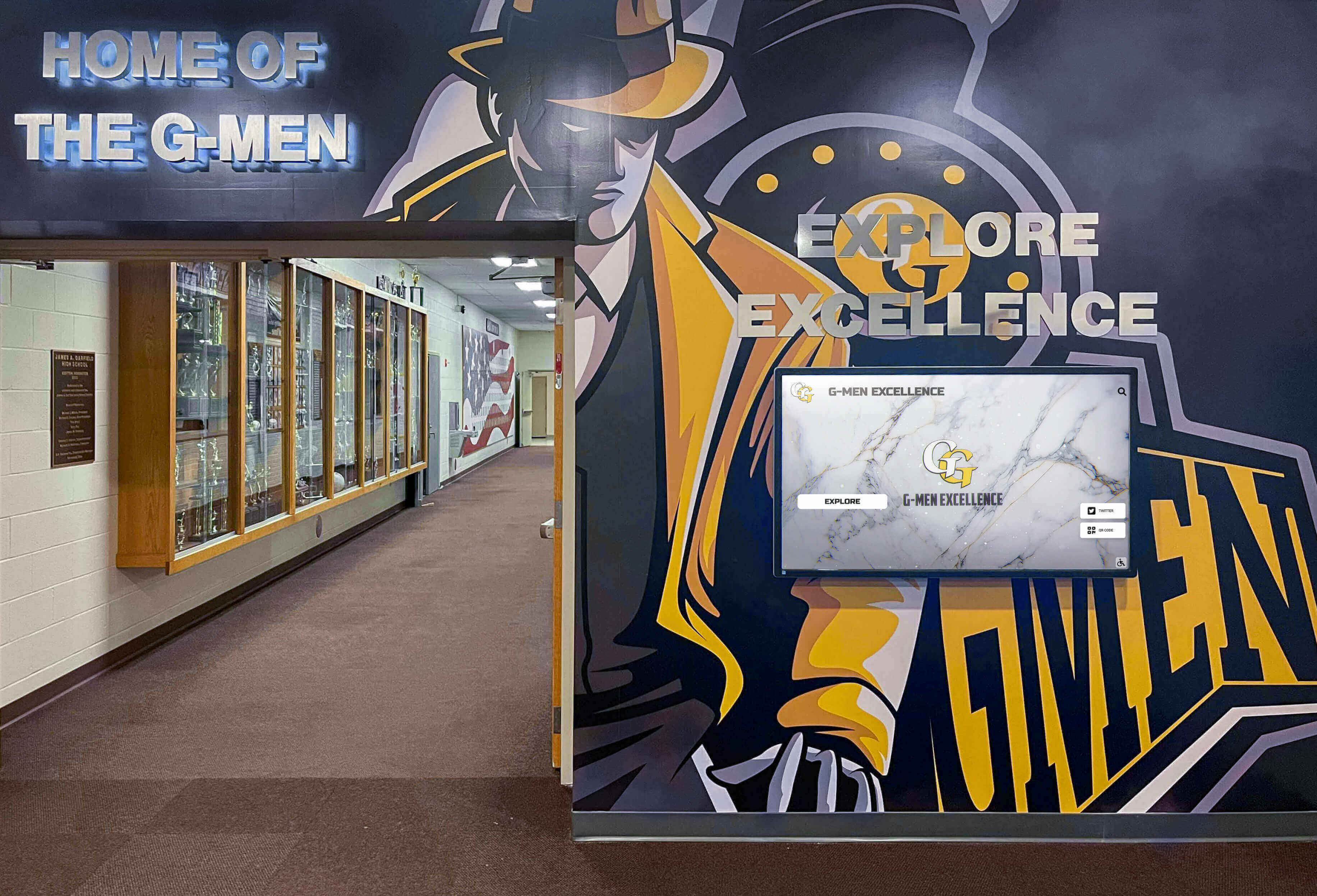
Many schools combine traditional trophy cases with digital displays during transition periods before fully adopting interactive recognition systems
Maintenance and Update Challenges
Physical trophy displays require ongoing labor that strains athletic department resources:
Constant Reorganization and Curation
Managing physical displays consumes significant time:
- Athletic directors spend hours deciding which trophies to display versus store
- Seasonal rotation requires physically moving heavy trophy cases or removing/replacing items
- Dust accumulation demands regular cleaning of cases and individual trophies
- Aging trophies require polishing and maintenance to prevent tarnished appearance
- Case locks break requiring repair or replacement
- Glass panels chip or break requiring professional replacement
According to athletic facilities management data, schools spend an average of 40-60 hours annually managing physical trophy displays—time that could otherwise support coaching, program development, or student-athlete needs.
Information Decay and Context Loss
Static trophy displays gradually lose meaning:
- Engraved plates provide minimal context about achievements
- Visitors cannot tell championship level, competition strength, or historical significance
- Team member names get lost as only coaches or MVPs receive individual recognition
- Record-setting performances lack context showing how marks related to previous standards
- Historical achievements become mysteries as community memory fades and staff turn over
Without searchable information and detailed context, trophy cases become collections of mysterious objects rather than inspiring achievement records connecting past and present.
Accessibility and Engagement Limitations
Physical trophy cases serve passive viewing rather than active engagement:
Physical Accessibility Barriers
Traditional displays exclude significant portions of school communities:
- Cases mounted high on walls remain unreadable for wheelchair users and young visitors
- Dim lobby lighting makes engraved plates difficult to read
- Reflective glass creates viewing challenges for visitors with vision impairments
- Crowded placement forces visitors to navigate tight spaces to view displays
- Trophies placed in rear rows remain invisible behind front items
These accessibility issues mean that physical limitations, not lack of interest, prevent many community members from engaging with athletic achievement recognition.
Limited Engagement Opportunities
Static displays cannot create interactive experiences:
- Visitors walk past trophy cases with brief glances rather than sustained engagement
- No ability to search for specific athletes, teams, or achievements
- Cannot filter by sport, year, or achievement type to find relevant recognition
- Photos, videos, and multimedia content impossible to incorporate
- Alumni cannot find their own achievements without examining every trophy
- Family connections to past athletes remain invisible
Research on museum engagement shows that interactive digital displays generate 30% longer dwell time and 25% higher satisfaction compared to static exhibits. These engagement principles apply equally to school athletic recognition, where digital interactivity transforms passive viewing into active exploration.
For schools evaluating trophy display options, digital trophy case solutions provide alternatives that overcome physical limitations.
How Touchscreen Displays Solve Gym Lobby Trophy Overcrowding
Digital recognition systems eliminate space constraints while creating enhanced athletic recognition experiences.
Unlimited Recognition Capacity
Touchscreen displays fundamentally change achievement documentation from space-limited to unlimited:
Complete Historical Preservation
Digital platforms like Touch Archive enable comprehensive recognition impossible with physical displays:
- Document every championship team from program founding to present
- Recognize every all-conference, all-state, and individual honor recipient
- Preserve milestone achievements including scoring records, championship appearances, and program firsts
- Include every varsity letter winner creating searchable athlete directories
- Archive retired jerseys, hall of fame inductees, and distinguished alumni
This unlimited capacity ensures that achievement recognition never requires removing past athletes to accommodate new accomplishments. Every generation receives equal visibility regardless of when they competed.
No Forced Prioritization Decisions
Digital systems eliminate the painful choices physical spaces require:
- Include both team championships and individual achievement awards
- Recognize all sports equally without favoring certain programs
- Display both recent accomplishments and historical milestones
- Honor athletes at every level from conference recognition through state championships
- Celebrate both statistical achievements and intangible contributions
Athletic directors report that removing recognition prioritization represents one of the most valuable benefits of digital display systems. Programs no longer face difficult conversations about whose achievements deserve visibility versus storage.
Easy Continuous Expansion
Adding recognition to digital systems requires minimal effort:
- Remote content updates from any internet-connected device
- New achievements added immediately without installation or hardware changes
- Bulk import capabilities for historical records digitization
- Template systems accelerating profile creation
- Automated sorting and organization as content grows
This simplicity means that recognition stays current rather than falling behind as update burden overwhelms staff capacity.
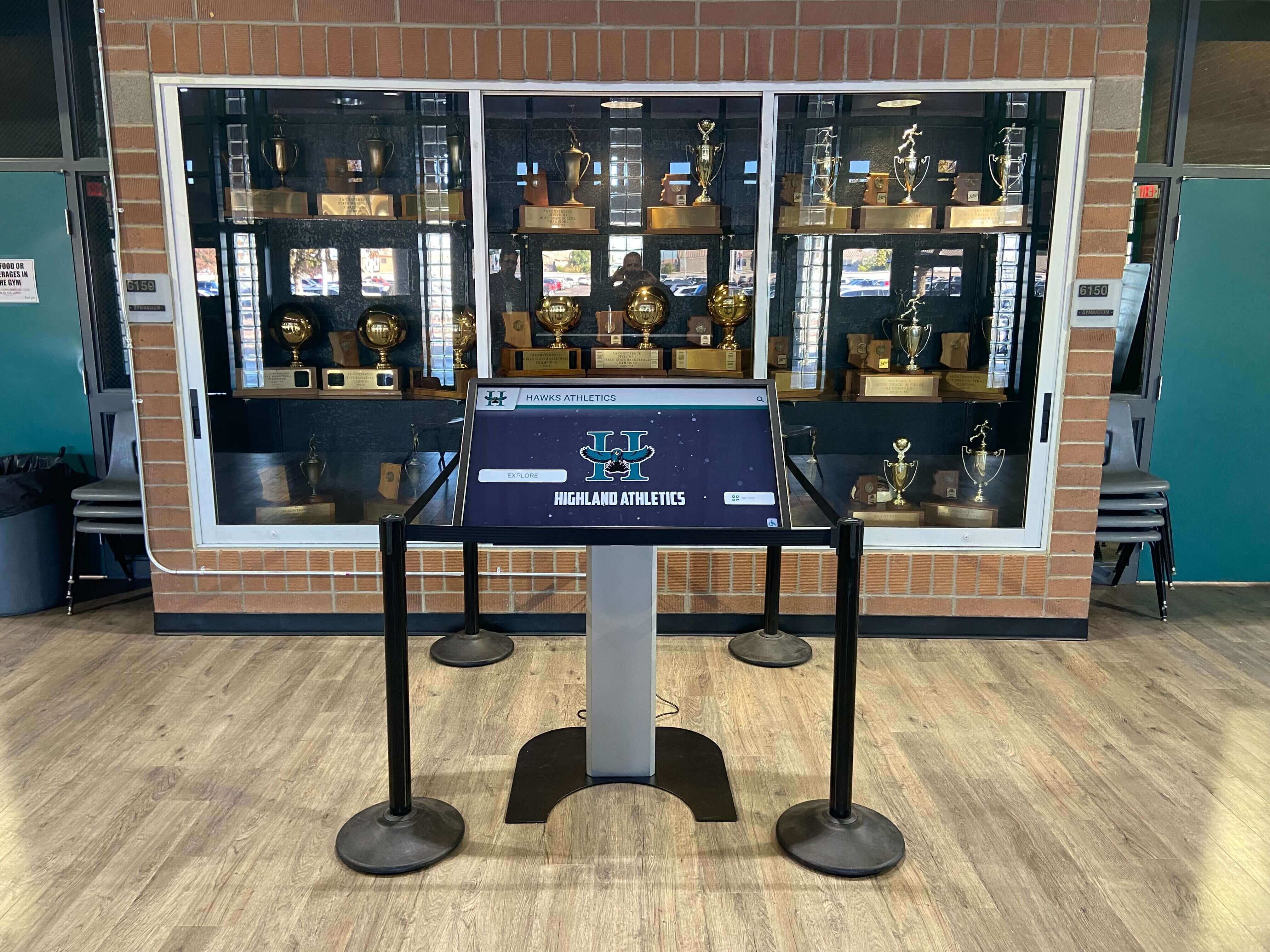
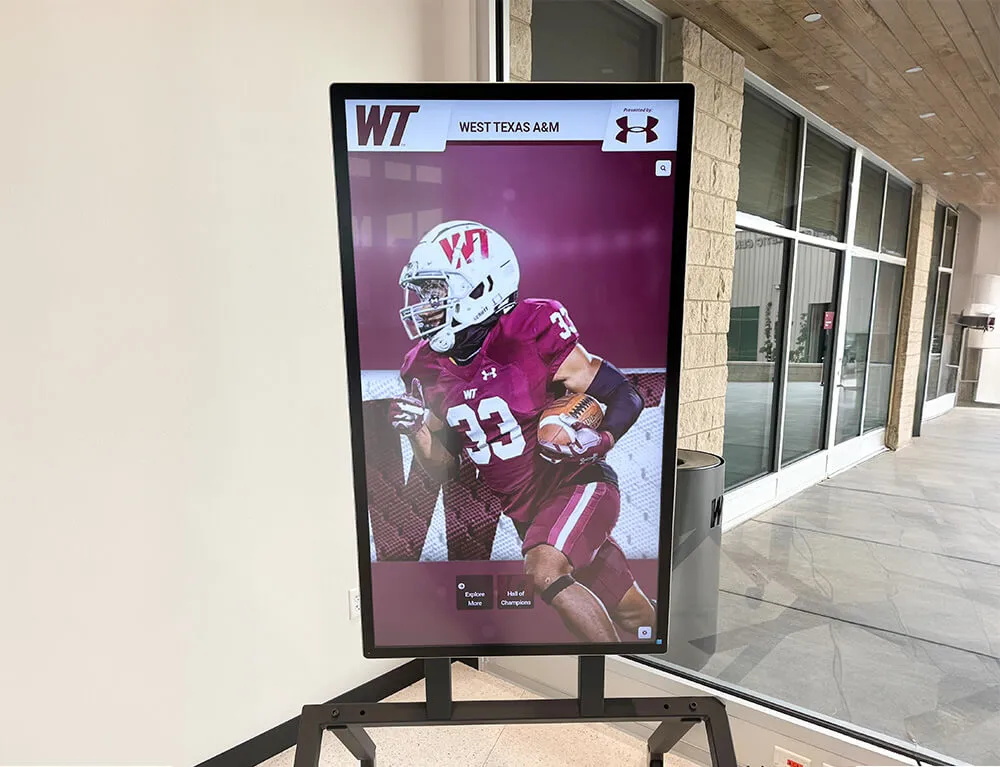
Touchscreen kiosks can be integrated with existing trophy cases during transition periods, gradually moving recognition digital
Enhanced Information and Context
Digital displays provide comprehensive context impossible with physical trophies:
Rich Athlete and Team Profiles
Touchscreen systems support detailed achievement documentation:
- Individual athlete profiles including photos, sports played, years active, and complete achievement lists
- Team championship pages with full rosters, season records, memorable games, and coaching staff
- Record board displays showing school records, record holders, and performance history
- Coaching milestone recognition including career wins, championships, and tenure accomplishments
- Multi-sport athlete profiles celebrating participation across multiple programs
This depth transforms recognition from name-and-date listings to comprehensive stories honoring complete athletic careers.
Multimedia Storytelling Capabilities
Digital platforms incorporate content types impossible in trophy cases:
- Championship game photos and team celebration images
- Video highlights from memorable competitions and seasons
- Season recap narratives providing context and storytelling
- Coach and athlete interviews discussing significant achievements
- Historical program photos showing facility, uniform, and team evolution
These multimedia elements create emotional connections that static trophies cannot match, making athletic history accessible and inspiring for current athletes.
Searchable and Filterable Content
Interactive displays enable targeted information discovery:
- Search by athlete name to find all achievements and recognitions
- Filter by sport to view program-specific accomplishments
- Sort by year to explore specific seasons or eras
- View by achievement type (championships, conference honors, records, etc.)
- Family search enabling parents and alumni to find relatives’ recognitions
This searchability transforms achievement displays from passive decoration to active research tools that serve diverse stakeholder needs.
For comprehensive athletic recognition systems beyond just trophies, explore digital hall of fame displays for high schools.
Improved Accessibility and Inclusion
Digital recognition systems serve broader audiences than physical trophy cases:
Universal Design Features
Touchscreen displays incorporate accessibility impossible with physical cases:
- Screen reader compatibility for visitors with vision impairments
- Adjustable text sizing enabling comfortable reading for all ages
- High contrast viewing modes improving readability
- Audio descriptions supplementing visual content
- Wheelchair-accessible mounting heights ensuring all visitors can interact
- Multiple language support for diverse school communities
These features ensure athletic recognition serves every community member regardless of physical ability or language background.
Remote and Mobile Access
Modern digital recognition extends beyond physical lobby displays:
- Web-accessible versions enabling anywhere viewing
- Mobile-responsive interfaces supporting smartphone and tablet access
- QR codes in gym lobbies linking to digital recognition platforms
- Alumni access from anywhere maintaining connection to school athletic programs
- Family sharing enabling extended relatives to view athlete recognition
This accessibility means that geographic distance no longer limits who can engage with athletic achievement recognition—especially valuable for alumni communities.
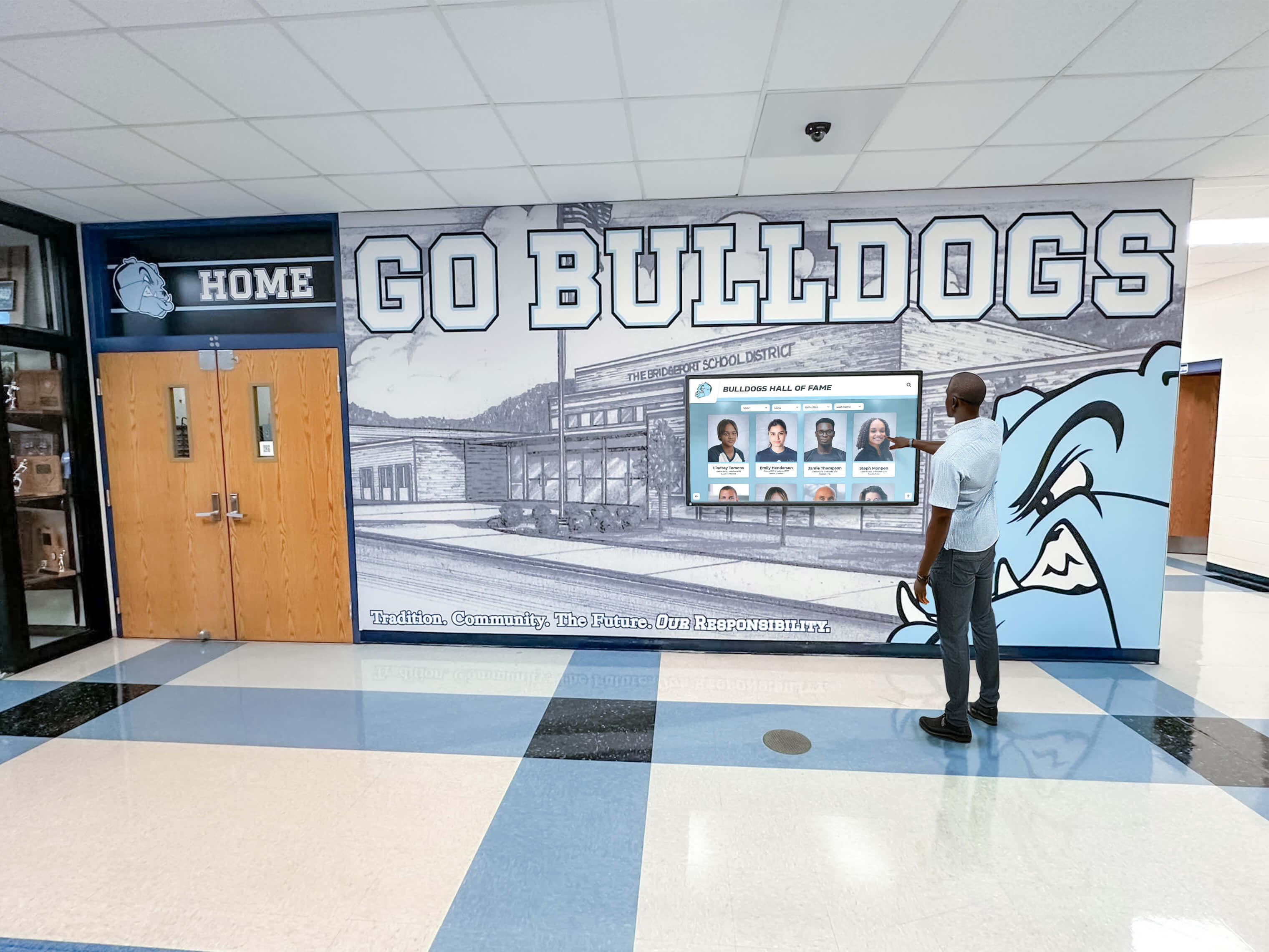
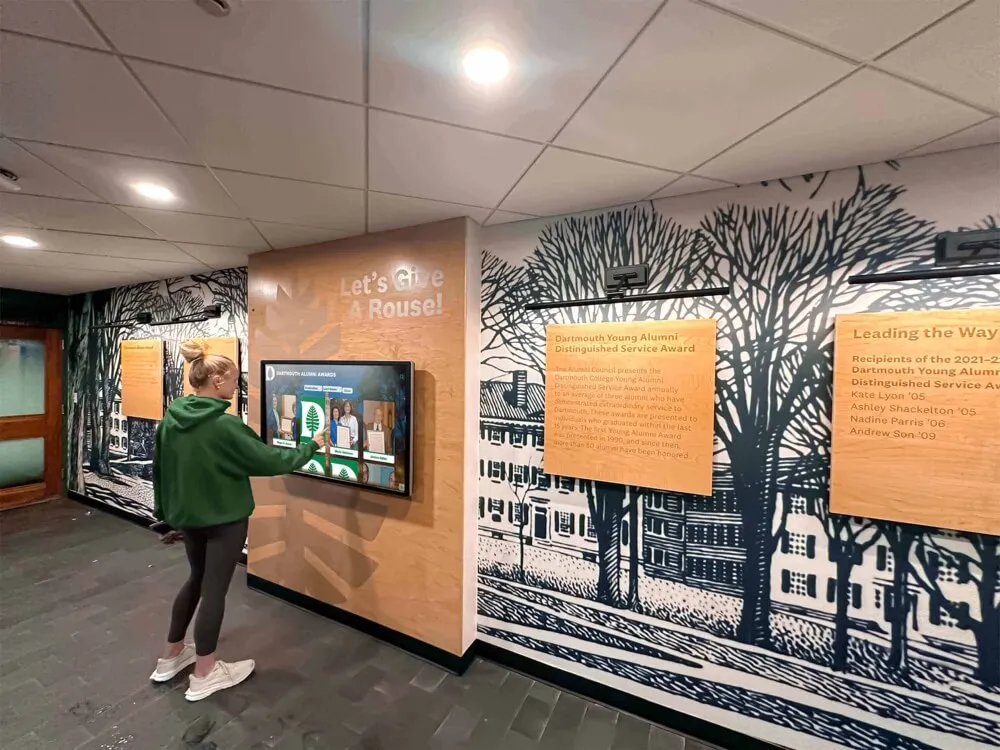
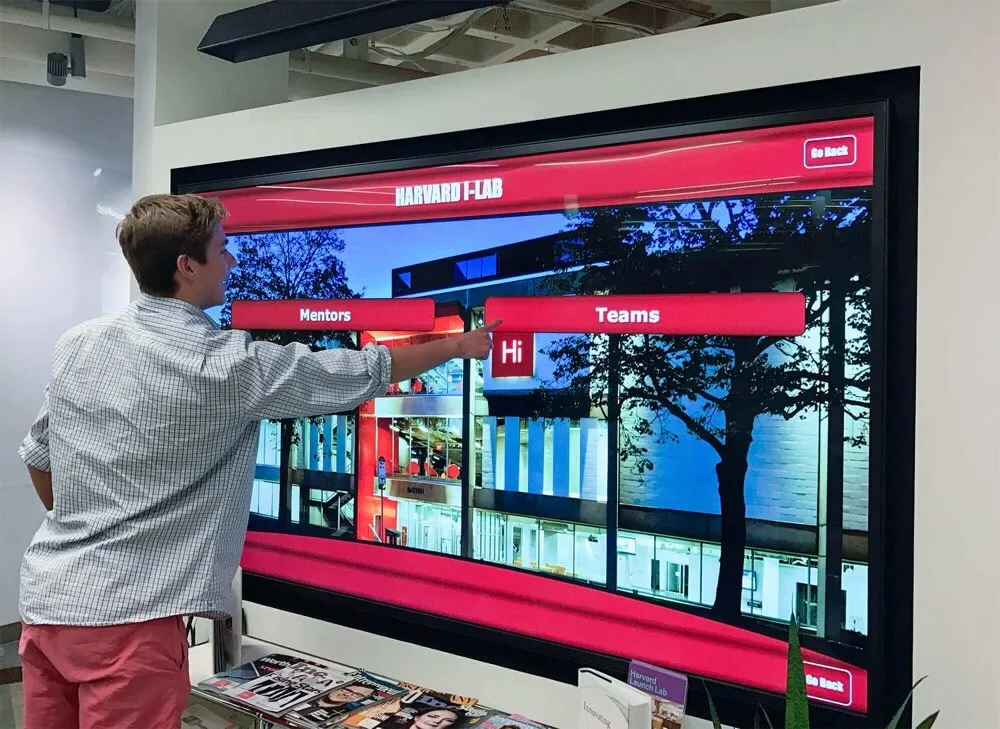
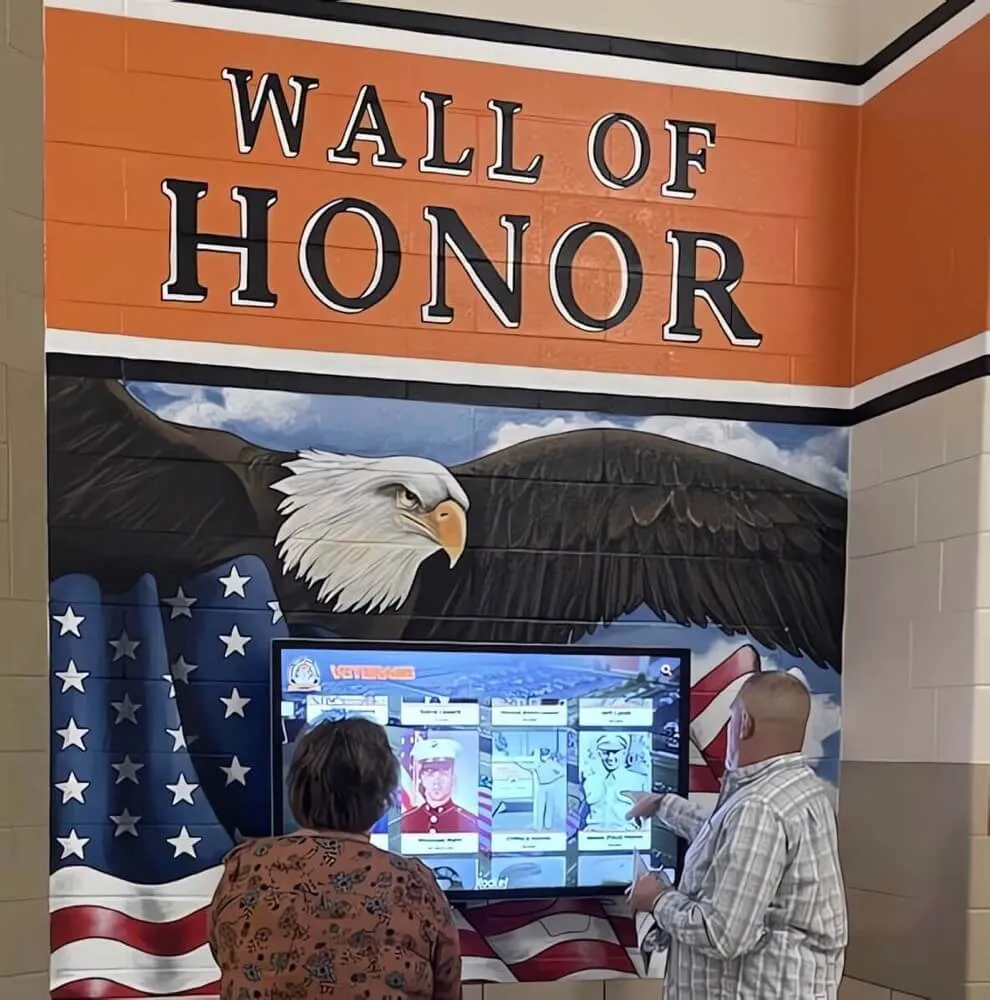
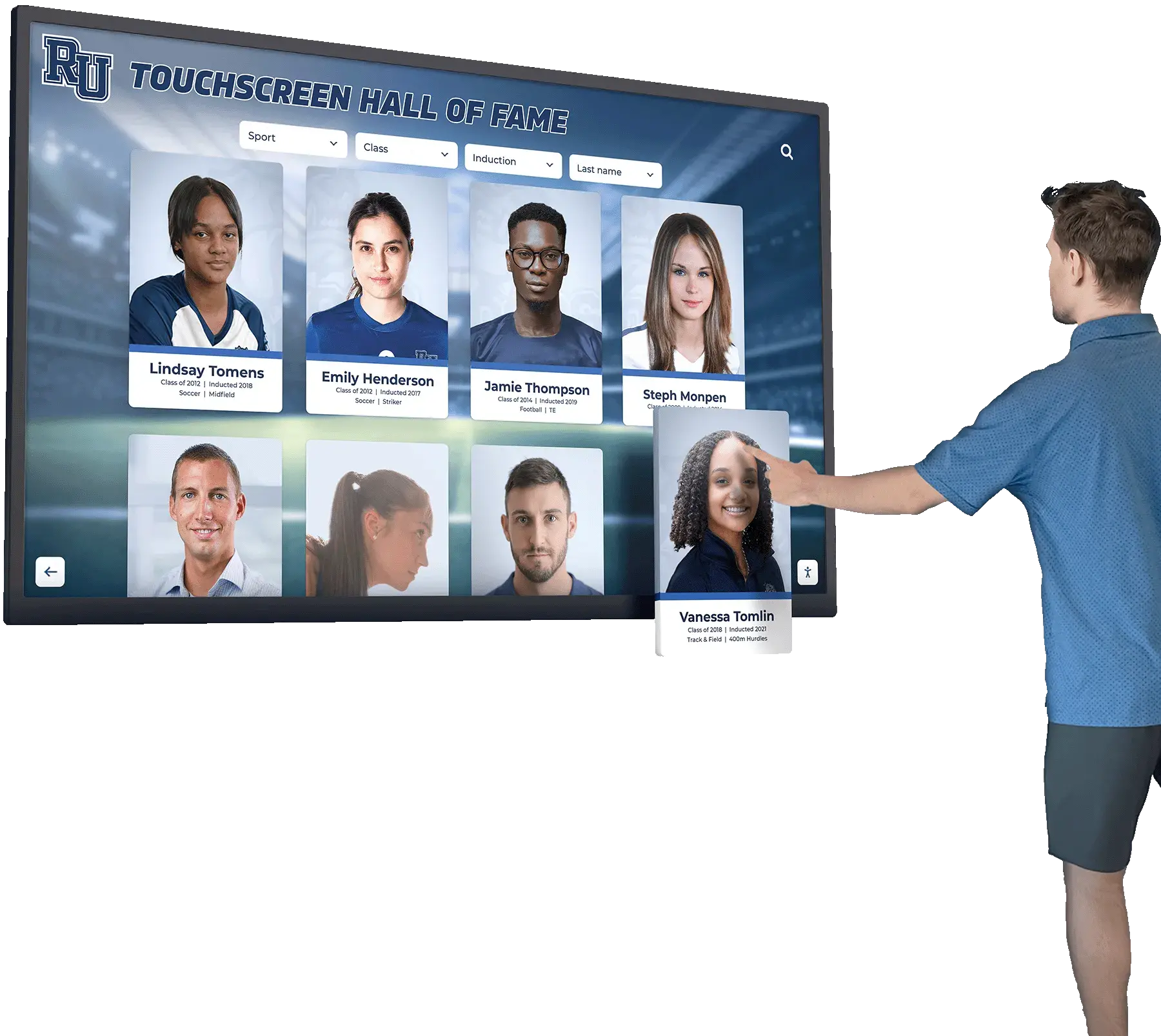
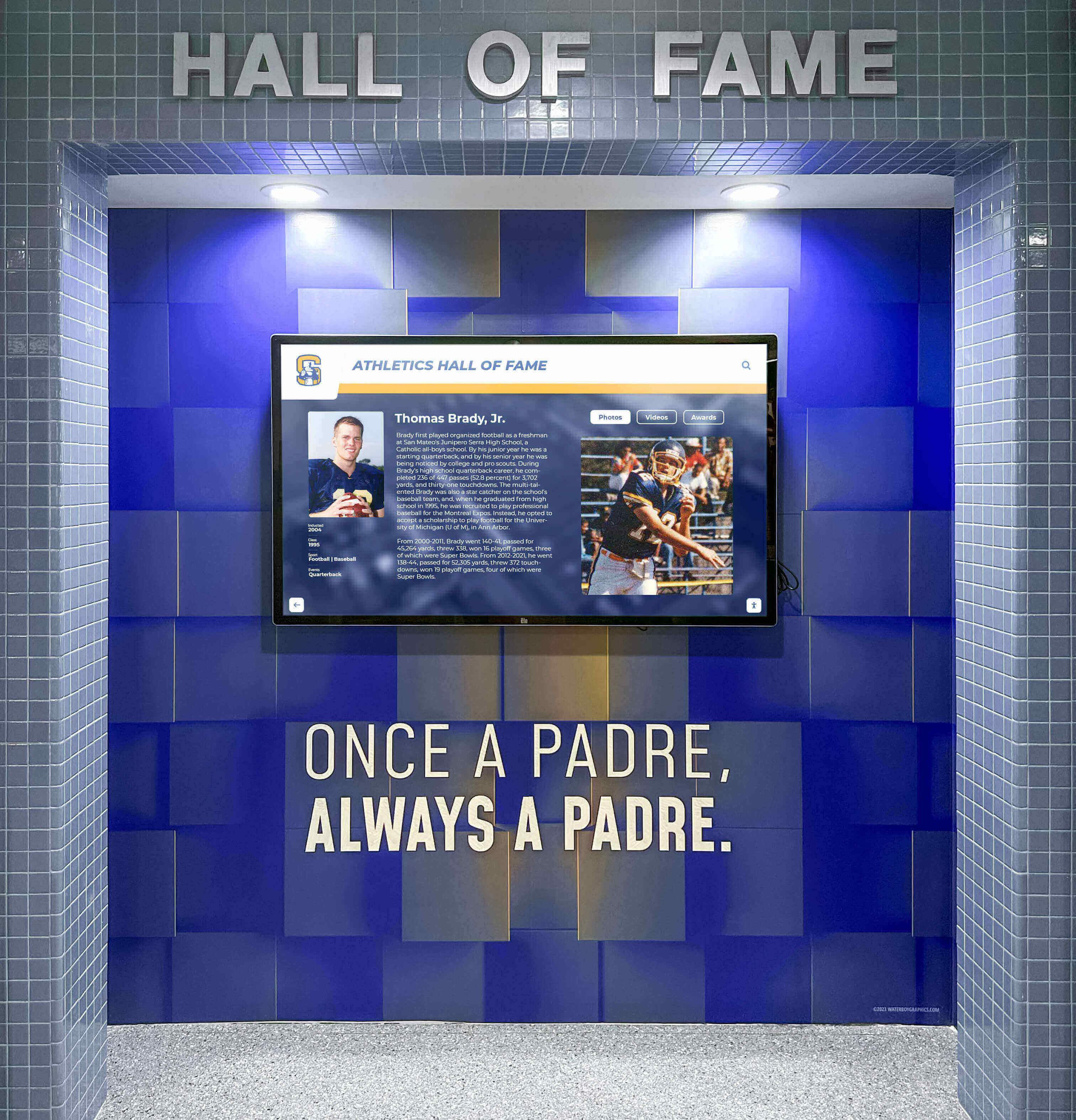
Interactive touchscreens create engaging experiences where students actively explore athletic history rather than passively viewing static displays
Essential Features for Gym Lobby Touchscreen Displays
Effective athletic recognition systems require specific capabilities addressing school needs.
Intuitive User Interface Design
Touchscreen displays must work for diverse gym lobby visitors with varying technology comfort:
Simple Navigation Patterns
Effective interfaces enable exploration without instructions:
- Large, clearly labeled navigation buttons designed for standing users
- Visual sport icons enabling recognition-based navigation
- Prominent search bar for finding specific athletes or achievements
- Clear “Home” button visible on every screen
- Minimal text on overview screens with details accessible through interaction
- Consistent layout across all content maintaining familiar patterns
National Museums Scotland research demonstrated that clear navigation paths achieved 91% completion rates for interactive exhibits, while confusing interfaces led to abandonment. These design principles apply equally to school athletic recognition displays.
Multiple Browsing Pathways
Different visitors have different information needs:
- Browse by sport to explore specific program achievements
- Browse by year to see specific season or graduating class accomplishments
- Browse by achievement type (championships, records, honors, etc.)
- Browse by athlete name through alphabetical directories
- Browse featured content highlighting recent or significant achievements
- Browse historical eras exploring program development over decades
This flexibility accommodates both targeted searching (finding specific athletes) and exploratory browsing (discovering program history).
Content Management System Requirements
Backend systems determine whether displays remain current or gradually become outdated:
Non-Technical Staff Accessibility
Athletic directors and coaches must update content without developer assistance:
- Web-based content management accessible from any device
- Simple form-based interfaces for adding athletes and achievements
- Template systems maintaining consistent formatting automatically
- Image upload tools with automatic resizing and optimization
- Bulk import capabilities for historical data entry
- Preview modes showing how content appears before publishing
Platforms requiring technical expertise for content updates inevitably become outdated as busy athletic staff lack time or capability to request developer assistance for every change.
Real-Time Update Capability
Digital displays should reflect current information immediately:
- Remote updates publishing instantly to displays
- Scheduled publishing automating future content releases
- Multiple administrator accounts enabling distributed content management
- Activity logs tracking who added or modified content
- Version control allowing content rollback if errors occur
- Offline content caching ensuring displays function during network outages
This flexibility enables celebrating achievements immediately after they occur rather than waiting weeks or months for trophy engraving and installation.
Comprehensive Data Organization
Effective systems structure athletic recognition logically:
- Athlete profiles serving as central content hubs
- Automatic relationship mapping connecting athletes to teams, achievements, and records
- Season organization grouping achievements by academic year
- Sport categorization enabling program-specific browsing
- Achievement taxonomy organizing recognition types consistently
- Tag systems enabling flexible content connections
This structured data foundation enables sophisticated search, filtering, and content relationship capabilities that make large recognition archives navigable.
Solutions like Rocket Alumni Solutions provide comprehensive content management specifically designed for athletic recognition needs.
Hardware Specifications for School Environments
School gym lobbies require durable, reliable display hardware:
Display Size and Placement Considerations
Selecting appropriate hardware for high-traffic athletic facilities:
- 55-65 inch displays for individual kiosk installations
- 75+ inch displays for main lobby focal point installations
- Multiple smaller displays for distributed recognition throughout facilities
- Portrait versus landscape orientation based on content and space
- Wall-mounted installations versus freestanding kiosk enclosures
- Viewing height and angle considerations for standing visitors
Strategic placement maximizes engagement—museum research shows location represents the single biggest factor influencing interactive display usage. Gym lobby entrances see highest traffic and therefore highest engagement.
Durability and School Environment Requirements
Athletic facilities demand commercial-grade equipment:
- Commercial displays rated for 16+ hour daily operation
- Vandal-resistant touchscreen technologies (infrared or projected capacitive)
- Tempered glass screen protection preventing damage
- Secure mounting preventing theft or tampering
- Cable management concealing and protecting connections
- Temperature and humidity tolerances for facility environments
Consumer-grade displays fail quickly in school settings. Commercial equipment costs more initially but provides dramatically longer service life and reliability.
Network Connectivity and Technical Infrastructure
Digital displays require reliable network access:
- Wired ethernet preferred for stability and security
- WiFi connectivity acceptable for locations where wired access is difficult
- Dedicated network circuits preventing bandwidth contention
- Surge protection safeguarding equipment from power fluctuations
- Battery backup (UPS) maintaining operation during brief outages
- Remote management capabilities enabling technical support
Schools should involve IT departments early in planning to ensure proper network infrastructure and security compliance.
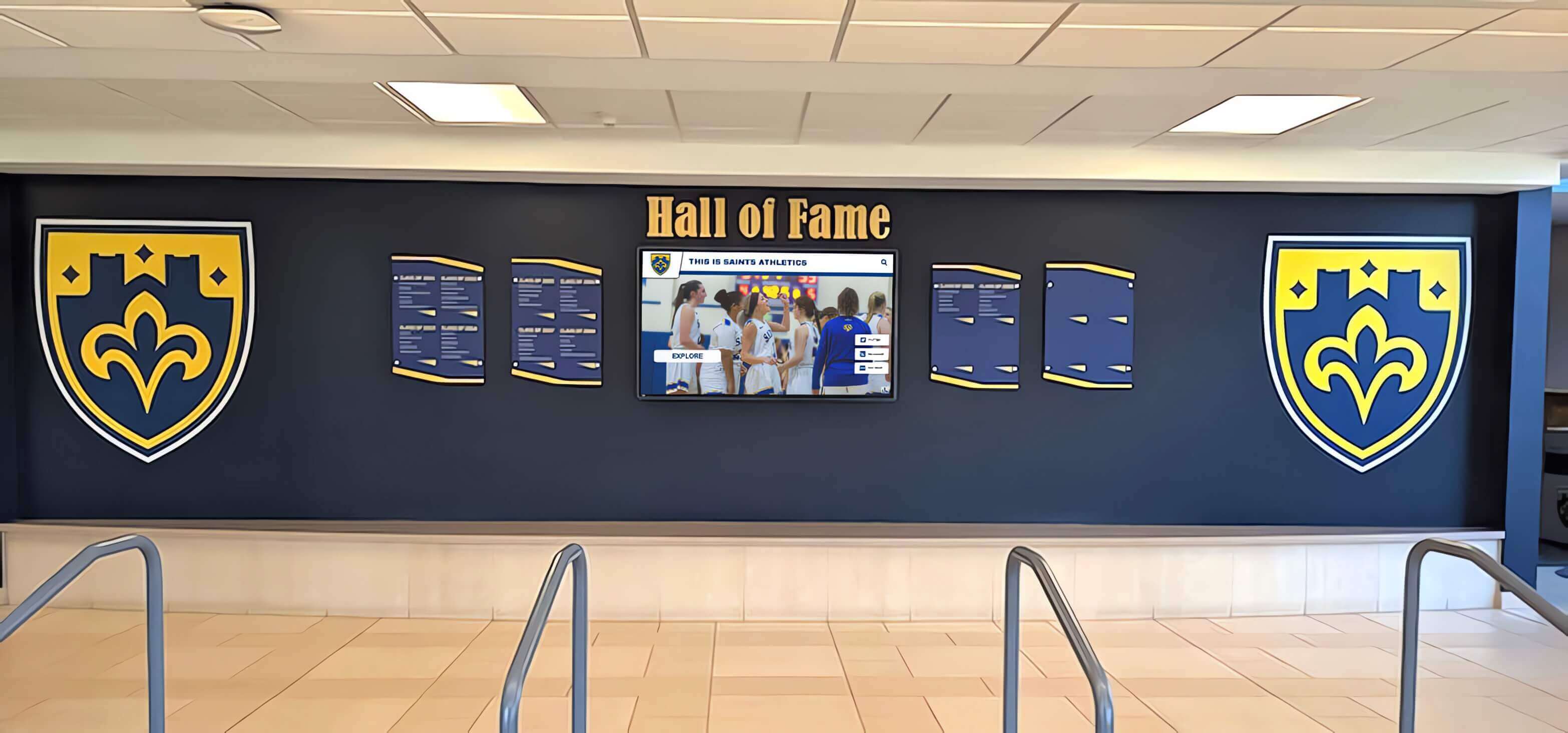
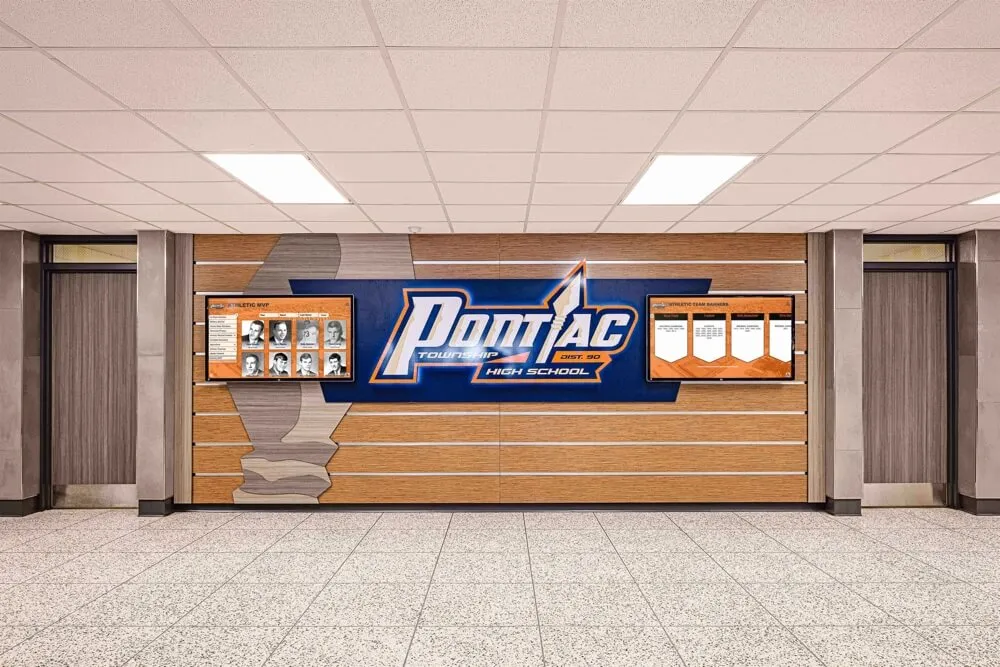
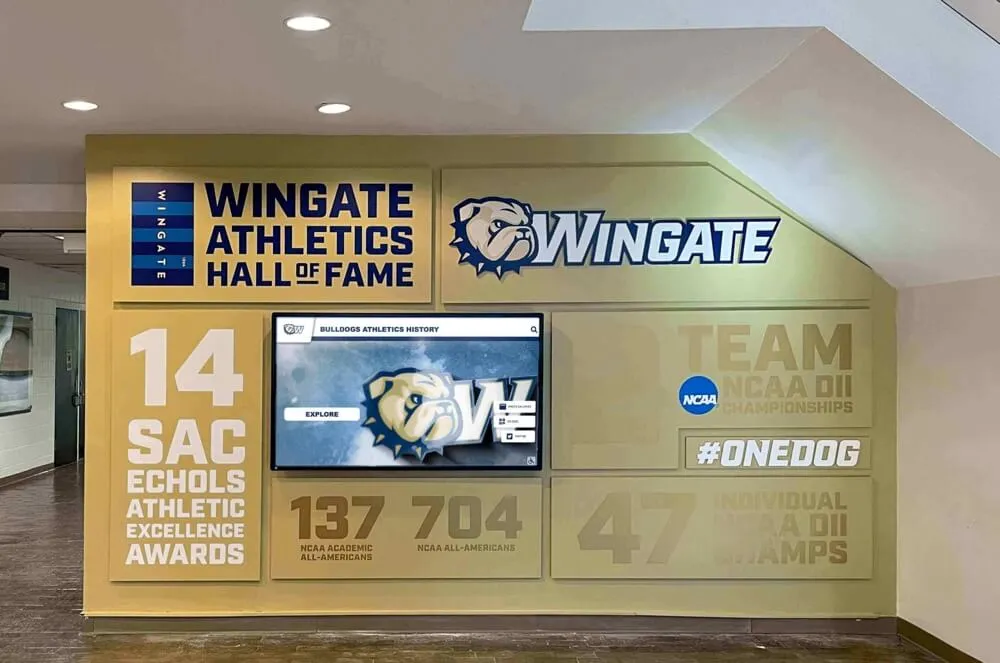
Digital displays integrate seamlessly with school branding and architectural design while providing unlimited recognition capacity
Implementation Process: From Overcrowded Trophy Cases to Digital Recognition
Strategic planning ensures successful touchscreen display deployment addressing school needs.
Assessment and Planning Phase
Understanding current state and defining goals:
Current Trophy and Recognition Inventory
Document existing recognition to inform digital implementation:
- Photograph all trophies, plaques, and physical recognition items
- List achievements represented including teams, individuals, and years
- Identify gaps in recognition caused by space limitations
- Document trophies currently in storage not displayed
- Survey stakeholders about recognition priorities and concerns
- Assess physical display space availability and constraints
This assessment reveals recognition scope and helps prioritize digital content development.
Goal Definition and Success Metrics
Establish clear objectives for digital recognition systems:
- Determine primary goals (space management, enhanced engagement, improved accessibility, etc.)
- Identify key stakeholder groups (current athletes, alumni, families, recruits, community)
- Define success metrics (engagement tracking, stakeholder satisfaction, content completeness)
- Set budget parameters for hardware, software, and implementation
- Establish timeline for implementation phases
- Determine physical trophy disposition plans
Clear goals guide design decisions and enable measuring implementation success.
Historical Data Collection Requirements
Prepare for comprehensive digital recognition:
- Gather athletic records from existing trophy inscriptions
- Search school archives, yearbooks, and athletic records
- Interview long-tenured coaches and athletic staff
- Contact alumni for information and photos
- Research local media coverage of past achievements
- Organize historical data for efficient digital entry
This research phase determines how far back digital recognition will extend. Many schools start with recent decades and gradually add historical achievements as resources allow.
Content Development and Digitization
Creating comprehensive digital athletic recognition:
Prioritized Content Creation Workflow
Systematic approach to building digital recognition archives:
- Current Season Recognition: Add ongoing achievements immediately demonstrating system currency
- Recent Graduate Classes: Document past 3-5 years honoring recent alumni and current student memories
- Significant Historical Milestones: Include championship teams and record holders creating program context
- Systematic Era Documentation: Work backward through program history year by year
- Continuous Current Updates: Maintain recognition currency as seasons progress
This phased approach ensures displays provide value immediately while building comprehensive historical archives over time.
Content Quality Standards
Maintaining professional recognition quality:
- High-resolution photos appropriate for large displays (minimum 1920x1080 pixels)
- Consistent naming conventions and data formatting
- Verified achievement information with source documentation
- Complete athlete profiles rather than partial incomplete records
- Proofread text free from spelling or grammatical errors
- Appropriate imagery meeting school conduct and privacy standards
Quality control processes prevent embarrassing errors while building credible athletic recognition archives.
Multimedia Content Integration
Enhancing recognition with rich media:
- Championship game videos edited to 2-3 minute highlights
- Season recap slideshows with memorable moments
- Coach interview recordings discussing significant achievements
- Historical photos digitized from yearbooks and archives
- Team celebration images from championship celebrations
- Video messages from distinguished alumni sharing memories
Multimedia content creates emotional connections that text and photos alone cannot achieve, making athletic history compelling for current students.
For schools managing both athletic and academic recognition, explore comprehensive student achievement recognition programs.
Hardware Installation and Launch
Professional implementation ensuring long-term success:
Professional Installation Requirements
Quality installation prevents future problems:
- Certified commercial display installers with school experience
- Proper electrical work meeting building codes
- Secure mounting with anti-theft hardware
- Professional cable management concealing wiring
- Network configuration and security compliance
- Integration with existing school systems where applicable
Attempting DIY installation of expensive commercial displays risks damage, poor appearance, and safety issues. Professional installation represents worthwhile investment.
Staff Training and Support Systems
Enabling independent content management:
- Hands-on training for athletic staff on content management
- Written documentation and quick reference guides
- Video tutorials for common tasks
- Dedicated support contacts for technical assistance
- Regular check-ins during initial months identifying improvement needs
- Knowledge transfer ensuring multiple staff members can manage system
Training multiple staff members prevents single-person dependencies that leave systems unmaintained when individuals are unavailable.
Launch and Community Communication
Celebrating new recognition systems:
- Formal unveiling event inviting community, alumni, and stakeholders
- Media coverage highlighting recognition investment
- Social media campaign showcasing new capabilities
- Alumni newsletter articles explaining access and features
- Student demonstrations teaching peers about interactive exploration
- Ongoing promotion maintaining awareness and encouraging engagement
Effective launch communication maximizes community awareness and engagement with new recognition systems.
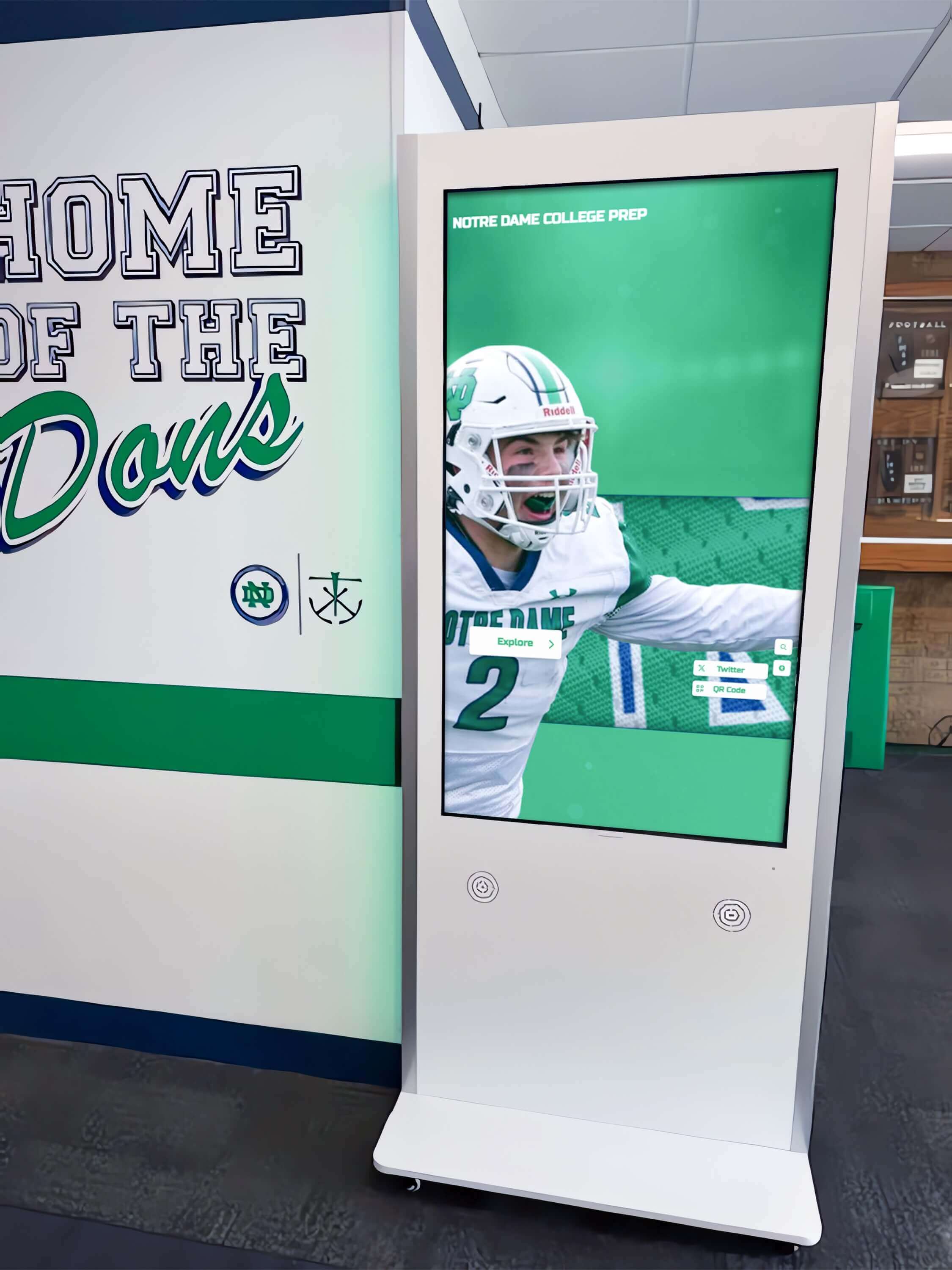
Freestanding kiosk installations provide flexibility for optimal placement in gym lobbies and athletic facility entrances
Maintaining Physical Trophies While Transitioning Digital
Schools can honor traditional recognition while adopting digital systems:
Hybrid Approach Options
Combining physical and digital recognition during transitions:
Featured Trophy Case with Digital Augmentation
Preserve select physical items while digitizing comprehensive recognition:
- Maintain single trophy case displaying most significant championships
- Rotate featured trophies seasonally highlighting different sports and eras
- Include adjacent touchscreen accessing complete digital achievement archives
- Use physical trophies as focal points directing attention to digital displays
- Preserve emotional connection to traditional recognition while adding digital capability
This hybrid approach respects tradition while solving space constraints through digital expansion.
Archived Trophy Photography and Documentation
Preserve trophy significance even when removing physical displays:
- Professional photography of every trophy before storage or disposal
- Detailed documentation including inscriptions and achievement context
- Digital trophy case interfaces showing trophy images in searchable archives
- 360-degree photography enabling virtual examination
- Historical context explaining trophy significance and competition level
This documentation ensures that removing physical trophies doesn’t mean losing historical recognition—it merely changes the format.
Alumni and Community Engagement Around Transitions
Managing stakeholder concerns about physical trophy removal:
- Transparent communication explaining space constraints and recognition inequities
- Showcasing digital system capabilities demonstrating enhanced recognition
- Alumni opportunities to contribute historical information and photos
- Community input on featured trophy selection for retained physical cases
- Clear messaging that digital transition enhances rather than diminishes recognition
Proactive stakeholder engagement prevents resistance to change while building support for improved recognition systems.
Trophy Disposition Options
Thoughtful approaches to physical trophy collections:
Offering Trophies to Recipients
Returning physical recognition to athletes and families:
- Notifications to athletes offering personal trophy retrieval
- Scheduled pickup days enabling convenient collection
- Shipped trophies for distant alumni willing to cover shipping
- Photo documentation before distribution preserving visual records
- Clear deadlines after which unclaimed trophies face alternate disposition
Many athletes and families cherish opportunities to receive trophies that otherwise would sit unseen in storage.
Historical Archive Creation
Preserving select significant items:
- School historical archives retaining most significant championships
- Rotating exhibits in administration areas or alumni centers
- Donated items to local historical societies preserving community heritage
- Permanent displays in newly renovated facilities or board rooms
- Special collections available for viewing by appointment
This selective preservation maintains connection to tradition while acknowledging that not every item can remain permanently displayed.
Respectful Disposal for Unclaimed Items
Handling trophies not preserved or claimed:
- Professional recycling of metal components when possible
- Documenting items before disposal maintaining historical records
- Clear communication ensuring stakeholders understand disposition processes
- Opportunities for final viewing or documentation before disposal
- Appreciation for achievements represented even as physical items are removed
Thoughtful disposition processes honor the achievements trophies represent even when physical items cannot be permanently maintained.
For schools navigating transitions from physical to digital recognition, digital wall of fame implementation guides provide helpful frameworks.
Maximizing Touchscreen Display Impact and Engagement
Strategic approaches ensure digital recognition systems achieve full potential:
Content Strategies That Drive Engagement
Creating recognition content that resonates with diverse audiences:
Current Athlete Connection and Motivation
Using digital recognition to inspire current programs:
- Season-start presentations showcasing program history and standards
- Record board displays showing current athletes’ progress toward historical marks
- Championship team comparisons enabling current teams to understand legacy
- Athlete profile templates encouraging current participation
- Recognition celebrations immediately after achievements occur
Athletic directors report that digital recognition systems significantly increase current athlete awareness of program traditions and history, creating motivation to uphold and extend excellence.
Alumni Engagement and Community Building
Maintaining connections with graduated athletes:
- Alumni notifications when new recognition content features their achievements
- Social media campaigns highlighting historical achievements and athletes
- Reunion event programming incorporating digital recognition exploration
- Alumni contribution opportunities adding photos and memories to profiles
- Searchable alumni directories enabling reconnection with former teammates
Digital recognition becomes platform for ongoing alumni engagement rather than static historical documentation.
Recruiting and Program Promotion
Leveraging recognition for program development:
- Facility tours for prospective athletes showcasing program tradition
- Digital recognition access during virtual recruiting
- Social media content featuring historical excellence
- Competition documentation demonstrating program competitive levels
- Coaching tenure recognition building program stability narratives
Comprehensive athletic recognition communicates program quality and tradition to prospective athletes and families evaluating school options.
Analytics and Continuous Improvement
Using engagement data to optimize recognition systems:
Tracking Meaningful Engagement Metrics
Modern touchscreen systems provide detailed usage data:
- Interaction frequency revealing display engagement levels
- Popular content identification showing which achievements resonate most
- Search query analysis revealing what visitors seek
- Time-of-day patterns identifying peak usage periods
- Sport popularity comparison across different seasons
- Content completion rates showing whether visitors fully explore profiles
This data enables evidence-based content refinement improving visitor experiences.
Iterative Content and Interface Optimization
Continuous improvement based on actual usage:
- A/B testing different home screen designs measuring engagement impact
- Navigation pattern analysis identifying clearer organizational approaches
- Search functionality refinement based on query patterns
- Multimedia content performance comparison (video vs. photo engagement)
- Seasonal content rotation maintaining freshness for repeat visitors
Digital systems enable ongoing optimization impossible with static physical displays, ensuring recognition remains engaging over time.
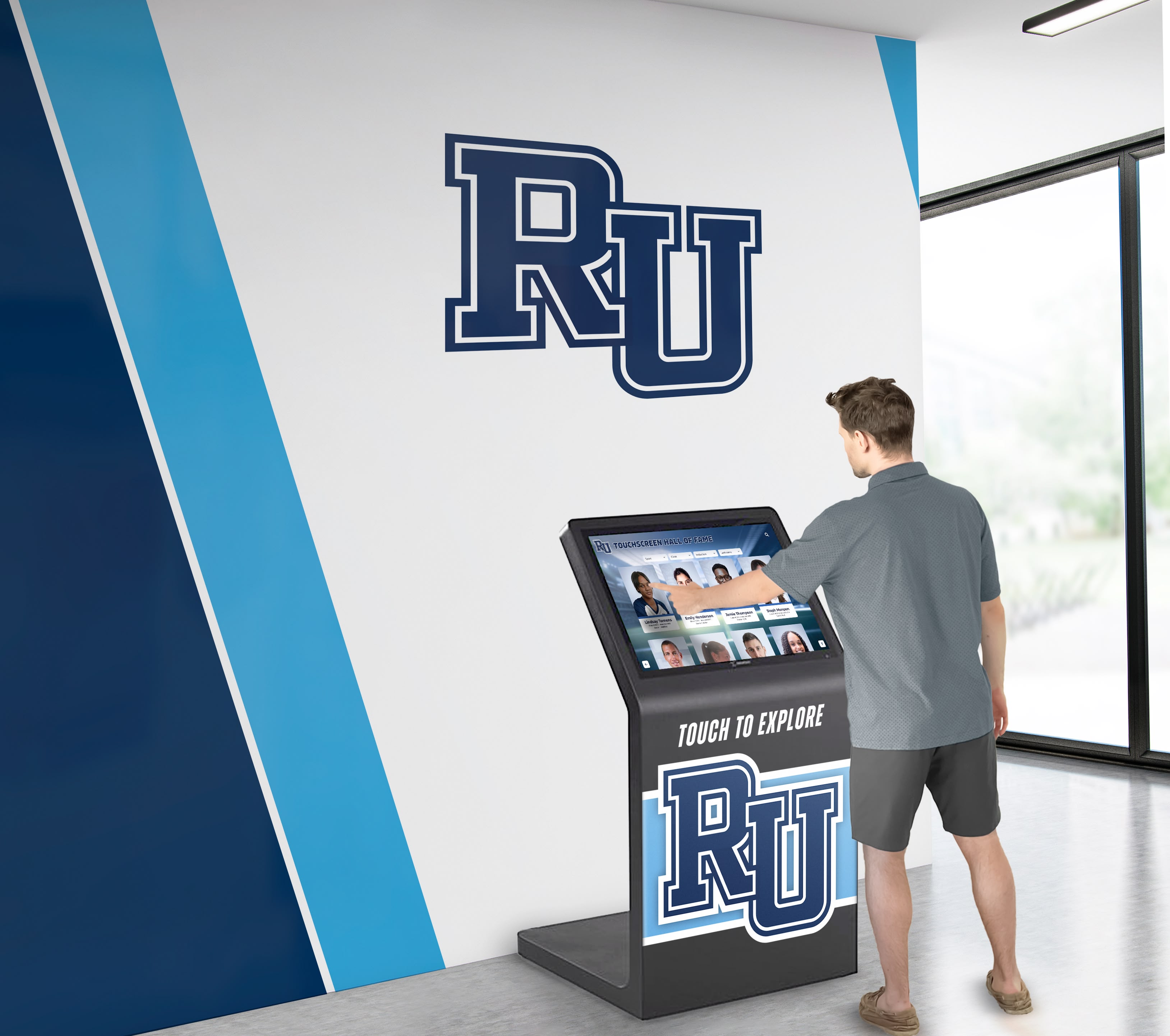
Strategic lobby placement ensures maximum visibility and engagement from students, families, and community visitors
Budget Considerations and Investment Planning
Understanding costs enables realistic planning for digital recognition systems:
Initial Implementation Costs
One-time expenses for touchscreen display systems:
Hardware Investment
Commercial display equipment for school environments:
- 55-65 inch touchscreen display: $3,000-$6,000 per unit
- 75+ inch large-format display: $6,000-$10,000 per unit
- Freestanding kiosk enclosure with security: $2,000-$4,000
- Professional mounting hardware and installation: $1,000-$2,500
- Network infrastructure upgrades if needed: $500-$2,000
- Multiple displays for larger facilities: costs scale per unit
Most high schools start with single gym lobby installation before expanding to additional athletic facility locations.
Software and Content Platform
Digital recognition platform licensing:
- Content management platform setup: $1,000-$3,000
- Initial annual software licensing: $1,500-$3,500 depending on features
- Content development and historical digitization: $2,000-$8,000 depending on scope
- Training and onboarding: $500-$1,500
- Custom design and branding: $1,000-$3,000 if desired
Platform selection significantly impacts both initial and ongoing costs. Comprehensive athletic recognition platforms like Touch Archive include features specifically designed for school trophy and achievement display needs.
Total Initial Investment Range
Typical high school implementations:
- Basic single-display system: $8,000-$15,000
- Comprehensive system with extensive historical content: $15,000-$30,000
- Multi-display installations across athletic facilities: $25,000-$50,000+
While these investments exceed physical trophy case costs, unlimited digital capacity and enhanced capabilities often justify higher initial expenses.
Ongoing Operational Costs
Annual expenses for digital recognition maintenance:
Software and Support
Recurring licensing and maintenance:
- Annual software licensing: $1,500-$3,500 depending on platform and features
- Technical support and cloud hosting: typically included in licensing
- Content updates and additions: minimal ongoing cost with trained staff
- Platform upgrades and new features: typically included in licensing
- Network connectivity costs: minimal addition to existing school network
Most digital recognition platforms include cloud hosting, technical support, and software updates in annual licensing fees, providing predictable ongoing costs.
Hardware Maintenance and Replacement
Long-term equipment considerations:
- Commercial displays: 5-7 year expected service life with continuous operation
- Hardware replacement planning: $3,000-$10,000 per display on 5-7 year cycles
- Minimal maintenance during service life with commercial equipment
- Touchscreen cleaning supplies: nominal annual cost
- Occasional repairs: $200-$800 if needed outside warranty
Long-Term Cost Comparison to Physical Trophies
Digital systems often prove more cost-effective over time:
- No ongoing trophy purchase costs ($50-$500 per trophy annually)
- No engraving expenses for plaques and awards ($20-$100 per item)
- No trophy case expansion purchases ($2,000-$8,000 per case)
- Reduced administrative time managing physical displays (40-60 hours annually)
- Unlimited capacity eliminating forced choices about recognition
Many schools find that total recognition costs decrease after initial digital implementation despite ongoing software licensing.
Funding Strategies and Revenue Opportunities
Generating resources for digital recognition investments:
Traditional School Funding Approaches
Budget allocation and fundraising:
- Athletic department budget allocation from operational funds
- Booster club fundraising specifically for recognition systems
- Alumni association contributions supporting program improvement
- Memorial or dedication opportunities naming displays after distinguished alumni or donors
- Capital campaign inclusion for facility improvement projects
- Grant applications for educational technology investments
Sponsorship Revenue Opportunities
Digital displays can generate ongoing revenue:
- Corporate sponsor logo inclusion on home screens or sport pages
- Business sponsor recognition for supporting athletic program archives
- Rotating sponsor messages on screensaver or transition screens
- Sponsored content sections like “Player of the Week presented by [Business]”
- Premium sponsorship levels with dedicated recognition sections
Schools report that sponsor revenue from digital displays often covers annual software licensing costs while providing additional athletic program funding.
For schools exploring multiple athletic facility improvements, comprehensive athletic recognition system costs provide context for budget planning.
Real-World Considerations and Best Practices
Practical insights from schools that successfully implemented touchscreen recognition:
Common Implementation Challenges and Solutions
Anticipating obstacles enables proactive planning:
Staff Capacity and Training Concerns
Challenge: Athletic staff worried about learning new systems and ongoing content management burden.
Solutions:
- Select platforms with genuinely simple, non-technical content management interfaces
- Provide thorough hands-on training with ongoing reference materials
- Start with basic content and expand gradually as comfort increases
- Assign specific responsibilities preventing diffusion of ownership
- Schedule regular check-ins providing support during initial months
- Celebrate successes building confidence and enthusiasm
Schools successful with digital recognition report that initial training investment pays significant dividends as staff become comfortable with platforms.
Historical Information Gaps
Challenge: Incomplete records for historical achievements creating recognition gaps.
Solutions:
- Accept that complete historical documentation may be impossible
- Acknowledge gaps transparently rather than presenting incomplete records as comprehensive
- Create ongoing historical research projects involving students or alumni volunteers
- Update historical content continuously as additional information emerges
- Start with available information and expand over time
- Use community engagement to crowdsource historical achievements and photos
Perfect historical accuracy represents ideal rather than requirement—partial recognition of past achievements exceeds complete absence of historical documentation.
Technology Reliability Concerns
Challenge: Worries about displays failing or becoming outdated requiring replacement.
Solutions:
- Invest in commercial-grade hardware designed for continuous operation
- Select established software platforms with track records of reliability
- Implement proper network infrastructure and power protection
- Establish vendor support agreements providing responsive assistance
- Plan for long-term hardware replacement as part of total ownership cost
- Maintain offline content caching ensuring displays function during network issues
Commercial equipment and professional support minimize reliability concerns that plague consumer-grade technology in school environments.
Success Factors for Digital Recognition Systems
Characteristics shared by highly successful implementations:
Strong Administrative Support and Vision
Athletic directors championing digital recognition:
- Clear articulation of benefits and vision for comprehensive recognition
- Willingness to invest time and resources in quality implementation
- Commitment to maintaining content currency and quality
- Support for change management as community adjusts to new systems
- Patience during initial learning curves and content development
Leadership commitment represents single biggest predictor of successful digital recognition adoption.
Community Engagement and Communication
Building stakeholder investment:
- Early involvement of coaches, athletes, and alumni in planning
- Transparent communication about goals and processes
- Opportunities for community contribution of historical content
- Celebration of milestones and accomplishments during implementation
- Ongoing promotion maintaining awareness and engagement
Schools that treat digital recognition as community project rather than administrative initiative achieve broader engagement and support.
Commitment to Content Quality and Currency
Maintaining recognition system value:
- Established processes for adding achievements as they occur
- Quality standards preventing low-quality content from diminishing system credibility
- Regular content review identifying and correcting errors
- Continuous historical research expanding retrospective coverage
- Seasonal content updates maintaining relevance and freshness
Digital systems become stale and ignored without commitment to ongoing content management—technological capability alone cannot ensure success.
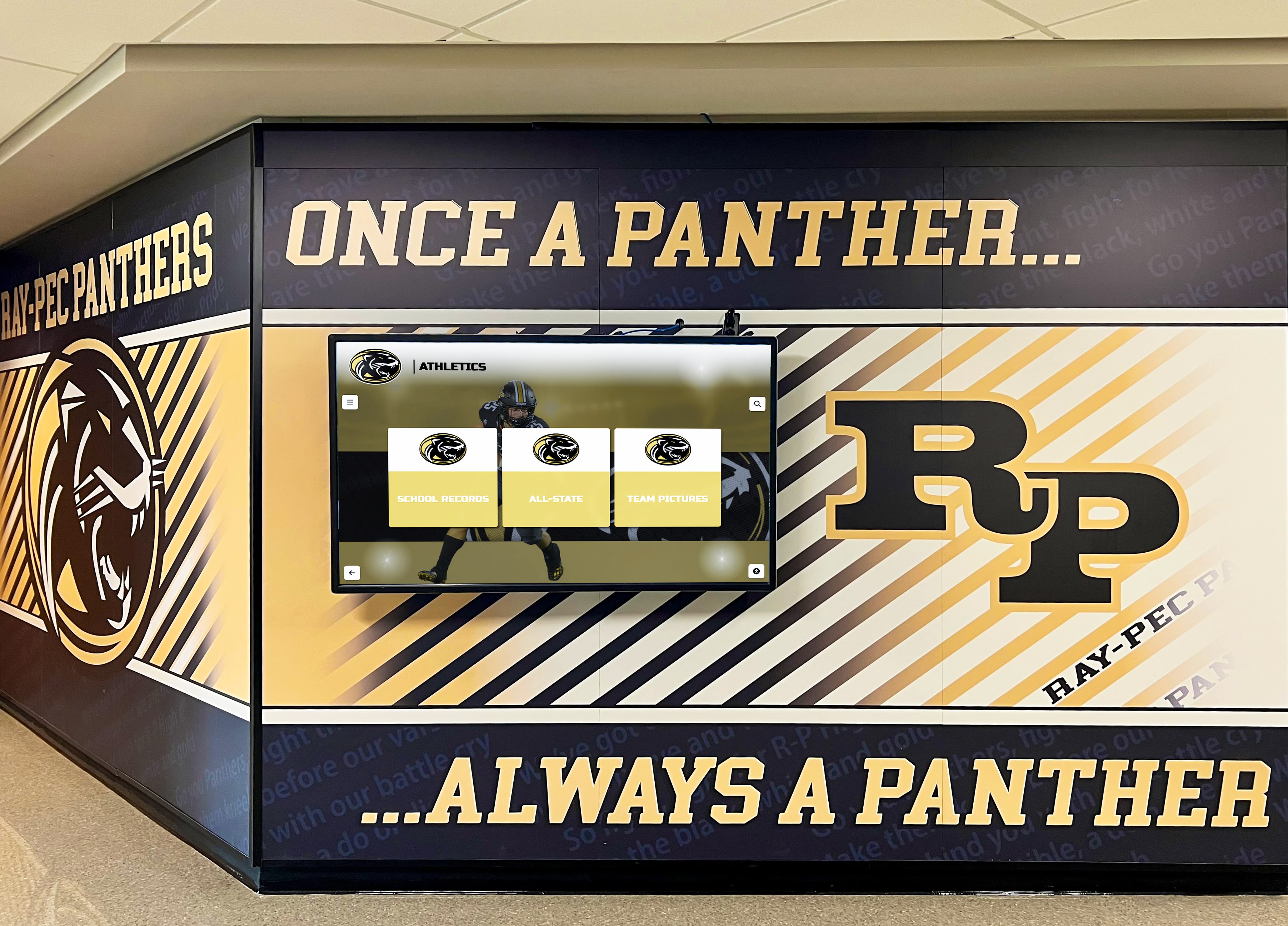
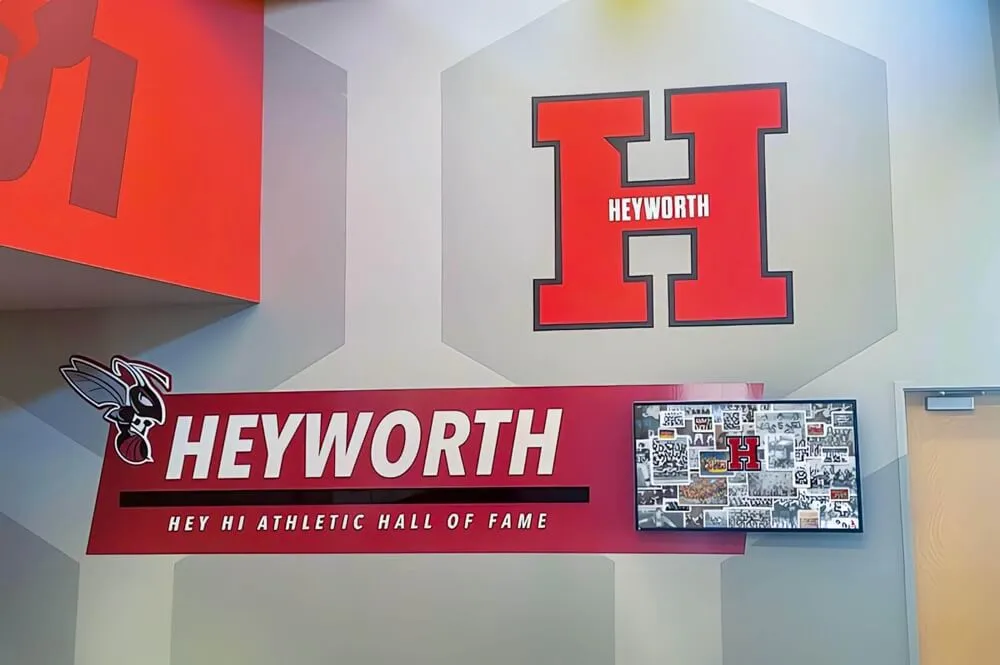
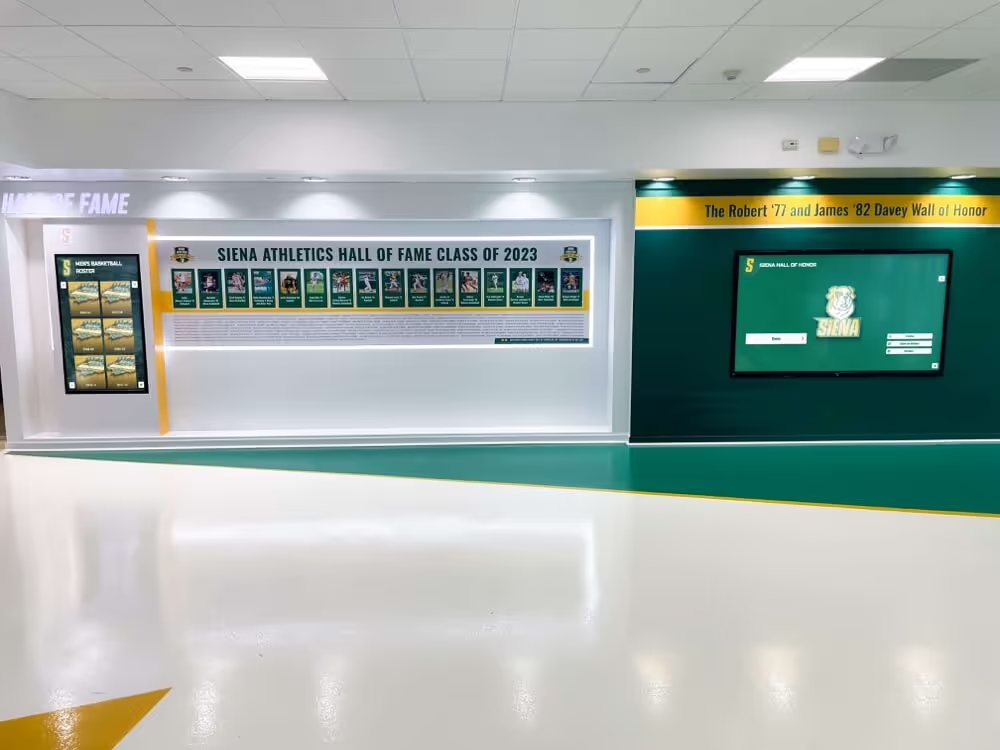
Integrating digital displays with athletic facility branding creates cohesive environments honoring program traditions
Beyond Trophies: Expanding Athletic Recognition Content
Digital displays enable recognition categories impossible with physical trophies:
Comprehensive Athletic Recognition Opportunities
Expanding beyond championship trophies:
Individual Milestone Recognition
Celebrating personal achievement markers:
- Career scoring milestones (1000-point scorers in basketball, 100-goal scorers in soccer, etc.)
- School record holders with performance history and progression
- All-conference and all-state honor recipients across all sports
- Academic All-American and scholar-athlete recognition
- Senior athlete profiles celebrating complete four-year careers
- Captains and team leadership recognition
- Sportsmanship and character award recipients
These individual recognitions honor athletes whose achievements might never generate physical trophies but deserve acknowledgment.
Coaching and Staff Recognition
Honoring program leadership:
- Career milestone achievements (wins, years of service, championships)
- Coaching hall of fame with complete career documentation
- Assistant coach and athletic staff recognition
- Volunteer coach appreciation
- Trainer and support staff acknowledgment
- Distinguished service awards for non-coaching athletic contributions
Comprehensive recognition includes everyone contributing to athletic program success.
Athletic Participation and Program Building
Celebrating involvement beyond championships:
- Varsity letter winner directories creating searchable alumni records
- Team photos from every season preserving program history
- Multi-sport athlete recognition
- Athletic program growth and participation trend documentation
- Facility improvement and program development timelines
- Booster and parent volunteer recognition
- Alumni donor acknowledgment supporting programs
This comprehensive approach honors athletic department as complete community rather than focusing exclusively on championship achievement.
For schools interested in recognition beyond athletics, explore academic and extracurricular recognition programs.
Integration With Other School Recognition
Connecting athletic recognition to broader institutional systems:
Academic Achievement Integration
Honoring student-athlete academic excellence:
- Scholar-athlete recognition programs
- Academic honor roll alongside athletic achievements
- National Honor Society members who also compete athletically
- College signing day recognition with scholarship information
- Distinguished graduate tracking showing post-high school success
This integration emphasizes holistic student development rather than athletics in isolation.
School-Wide Achievement Archives
Expanding touchscreen displays beyond athletics:
- Fine arts recognition (theater, music, visual arts achievements)
- Academic competition success (Science Olympiad, Math League, debate, etc.)
- Community service and leadership recognition
- Student organization and club achievements
- School history and traditions documentation
Some schools implement single comprehensive recognition systems serving all achievement areas rather than separate athletic displays.
Future Developments in Athletic Recognition Technology
Emerging capabilities will further enhance digital trophy recognition:
Artificial Intelligence and Automation
AI features simplifying recognition management:
Automated Content Population
Machine learning streamlining recognition processes:
- Automatic athlete profile generation from school information systems
- Sport schedule integration pulling team rosters and results
- Social media content analysis suggesting achievement recognition
- Photo organization and tagging based on facial recognition
- Natural language processing extracting achievement information from articles and announcements
These automation capabilities reduce administrative burden maintaining comprehensive recognition systems.
Personalized Recognition Experiences
AI-enabled customization for individual visitors:
- Recognition of returning users suggesting relevant new content
- Personalized recommendations based on interaction history
- Custom tour generation matching visitor interests and available time
- Family connections automatically highlighting related athletes
- Alumni-specific interfaces emphasizing their era and teammates
Personalization increases engagement by making large recognition archives feel personally relevant.
Extended Reality Integration
AR and VR enhancing physical space recognition:
Augmented Reality Enhancements
Smartphone experiences extending touchscreen content:
- QR codes enabling mobile device access to additional content
- AR trophy visualization placing historical trophies in gym lobby virtually
- Video content playable on personal devices
- Take-home digital content extending engagement beyond visits
- Social sharing capabilities amplifying recognition reach
AR bridges physical gym lobby experiences with extended digital engagement.
Enhanced Analytics and Insights
Advanced measurement improving recognition effectiveness:
Comprehensive Engagement Measurement
Understanding recognition system impact:
- Visitor demographics and interaction patterns
- Content popularity and engagement duration metrics
- Search query analysis revealing information needs
- Alumni engagement tracking measuring connection maintenance
- Return visitor identification and behavior analysis
- A/B testing results guiding content optimization
These insights enable evidence-based recognition system refinement maximizing community value.
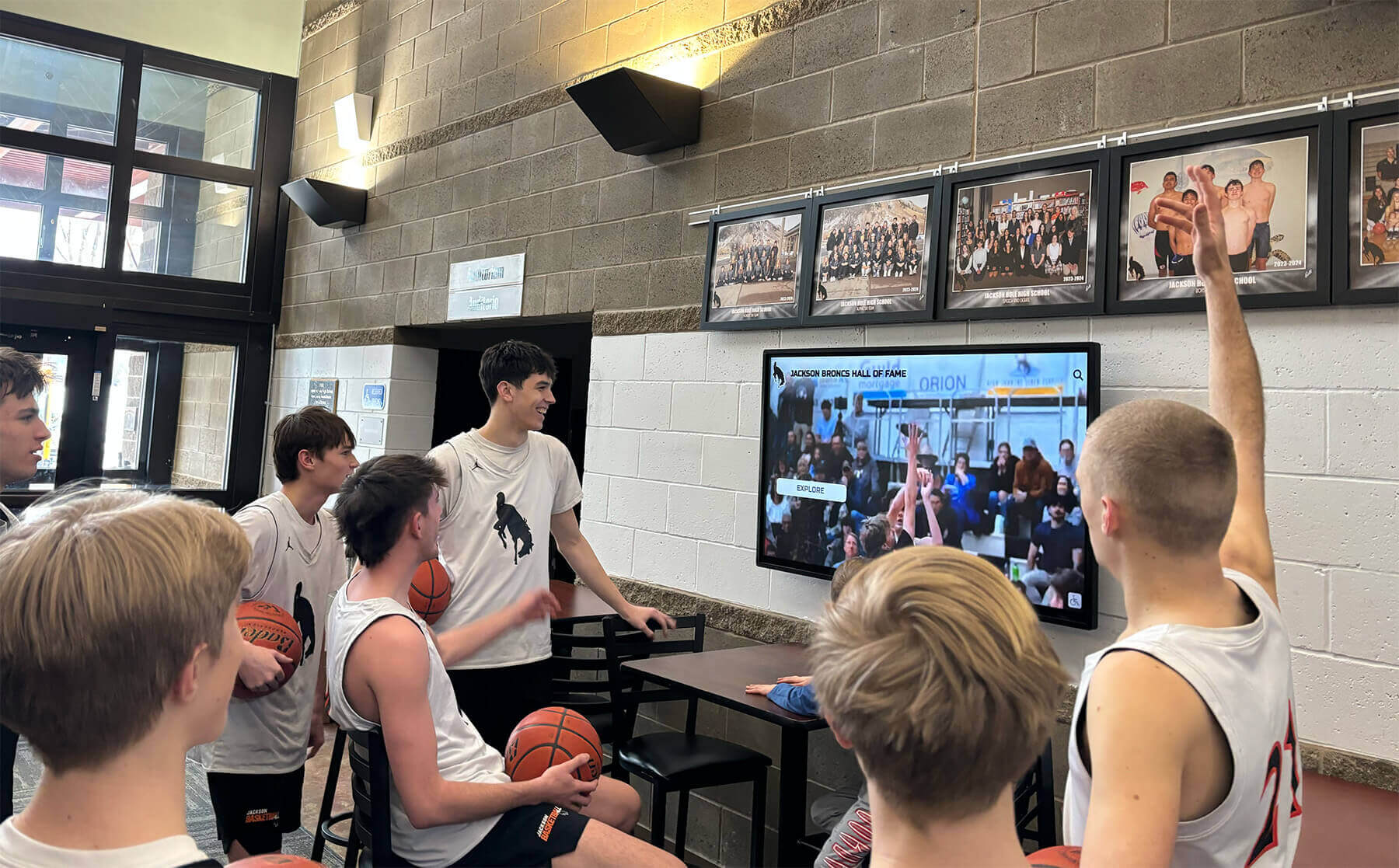
Digital displays create natural gathering spaces where students engage with athletic program history and current season highlights
Conclusion: Transforming Athletic Recognition Through Digital Innovation
Overcrowded trophy cases represent opportunity rather than problem when schools embrace touchscreen display technology. Digital recognition systems fundamentally solve space constraints that force impossible choices about which achievements deserve visibility, while simultaneously creating enhanced engagement experiences impossible with static physical trophies. By implementing thoughtful touchscreen solutions in gym lobbies, high schools honor complete athletic program history while inspiring current athletes through accessible, searchable, and meaningful recognition.
The benefits extend far beyond space management. Unlimited digital capacity ensures every athlete receives recognition regardless of when they competed or which sport they played. Interactive exploration transforms passive trophy viewing into active engagement where students discover program traditions, alumni find their achievements, and families share athletic heritage. Multimedia capabilities preserve championship moments through photos and videos that static trophies cannot convey. Accessibility features ensure recognition serves every community member regardless of physical ability or language background.
Ready to Transform Your Gym Lobby Trophy Display?
Discover how Touch Archive touchscreen solutions help high schools preserve unlimited athletic achievements while creating engaging digital recognition that inspires current athletes and honors program history.
Book a DemoImplementation requires thoughtful planning addressing content development, staff training, and community engagement—but schools successfully adopting digital recognition report that initial investment generates lasting value through enhanced recognition, reduced administrative burden, and improved stakeholder connection. Modern platforms like Touch Archive eliminate technical barriers through simple content management interfaces, cloud-based remote updates, and responsive support enabling athletic directors to maintain comprehensive recognition without specialized technical expertise.
The transition from physical trophies to digital displays need not be abrupt or disrespectful of tradition. Hybrid approaches preserving select significant trophies while digitizing comprehensive archives honor past recognition methods while adopting enhanced capabilities. Thoughtful trophy disposition offering items to recipients or preserving select championships in historical archives demonstrates respect for physical artifacts even as digital systems provide superior access and engagement.
Your athletic program has decades of achievement deserving recognition. Your current athletes need connection to tradition and program excellence. Your alumni deserve lasting acknowledgment of their contributions. Your families want to celebrate achievements and share pride. Touchscreen displays in gym lobbies deliver on all these needs simultaneously while solving space constraints that traditional trophy cases cannot address.
Start planning your digital athletic recognition transformation today with confidence that thoughtful implementation will create displays serving your athletic community for generations—preserving every achievement, inspiring every athlete, and honoring every contribution to program success regardless of physical space limitations that previously forced difficult recognition choices.
Ready to explore how touchscreen displays can solve your trophy overcrowding while enhancing athletic recognition? See how Touch Archive helps high schools preserve complete athletic history through engaging digital displays, or request a personalized demo to discuss your specific gym lobby recognition needs and learn how digital solutions can transform your athletic program’s approach to honoring achievement.