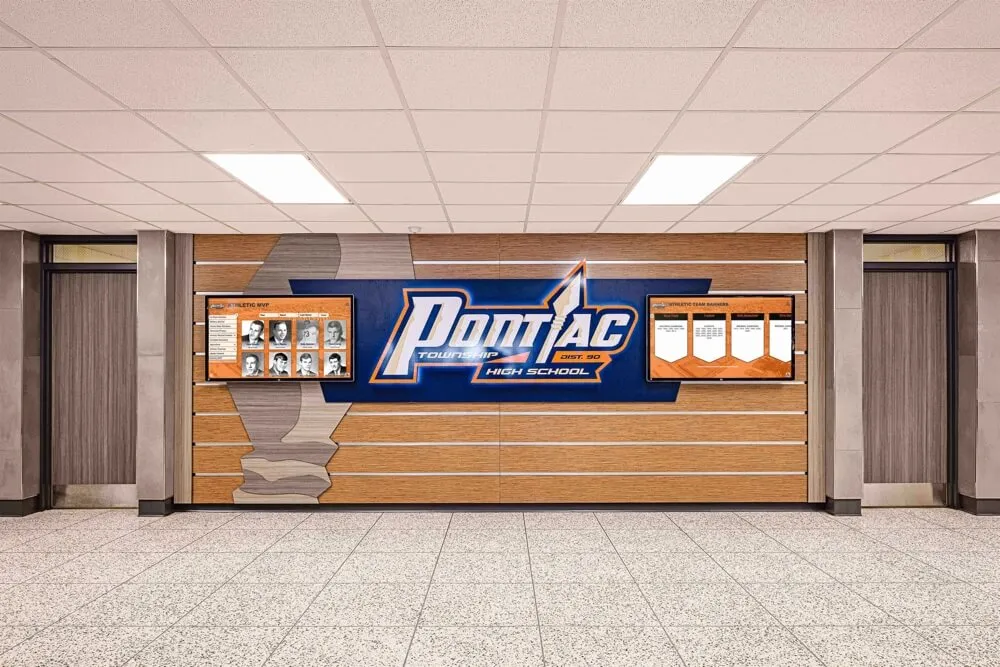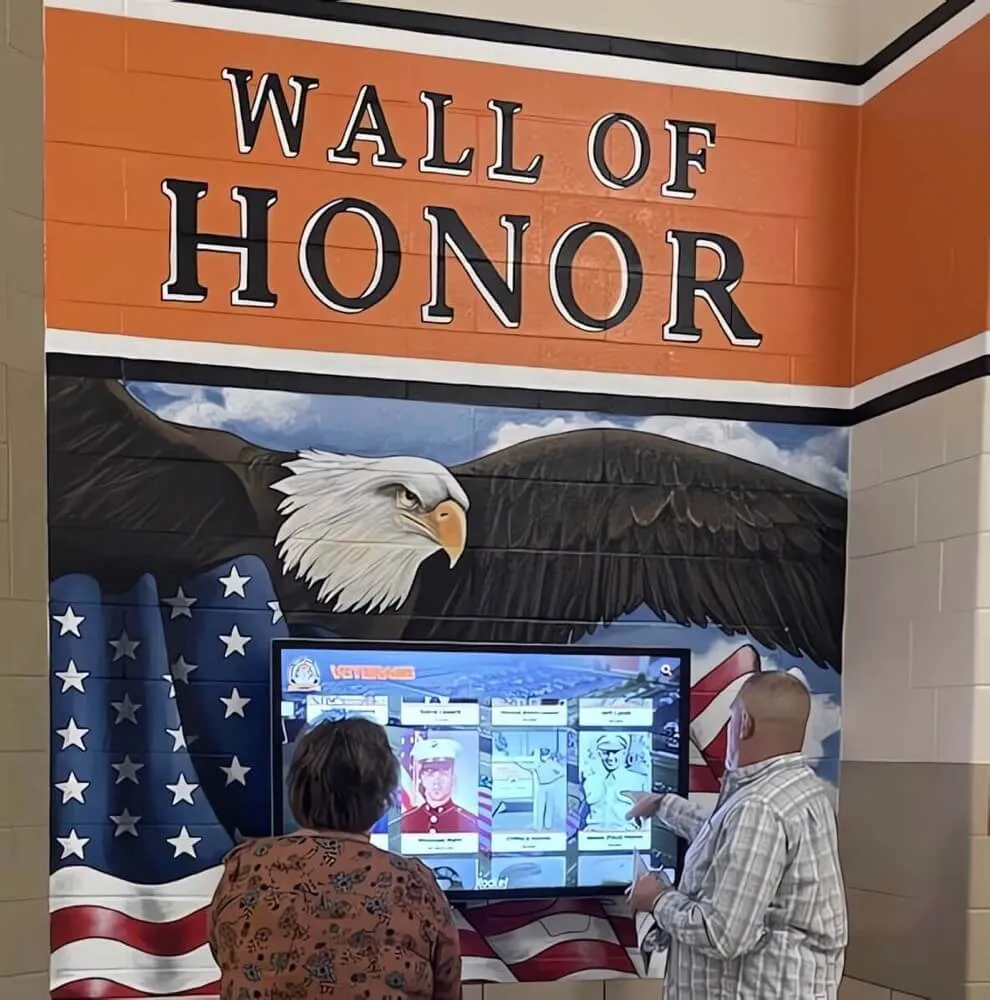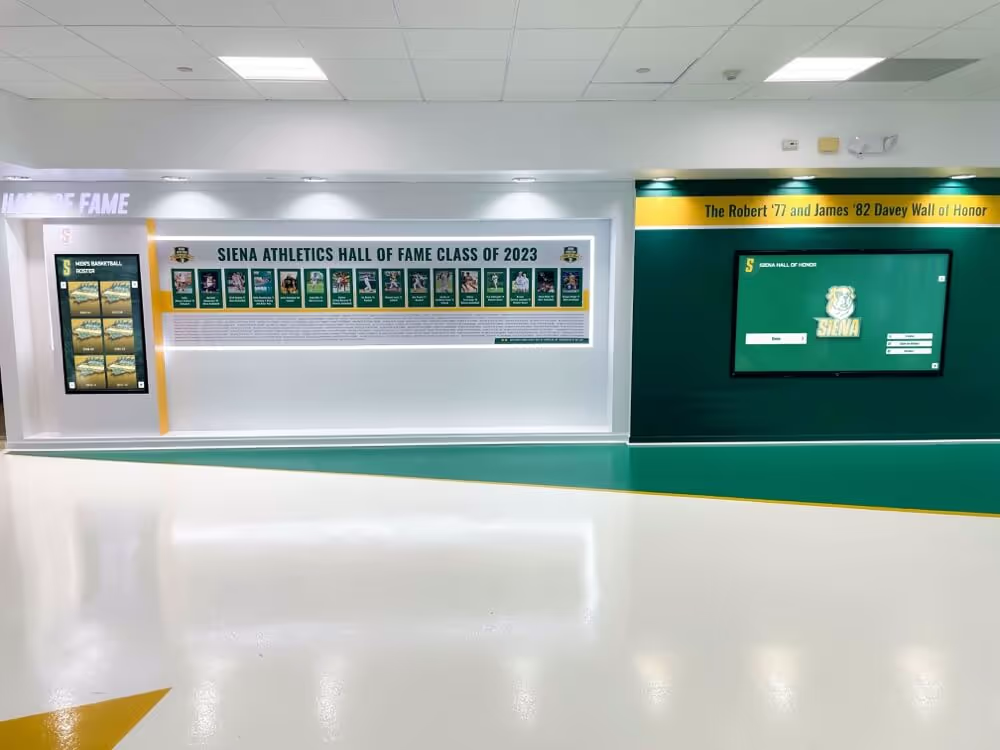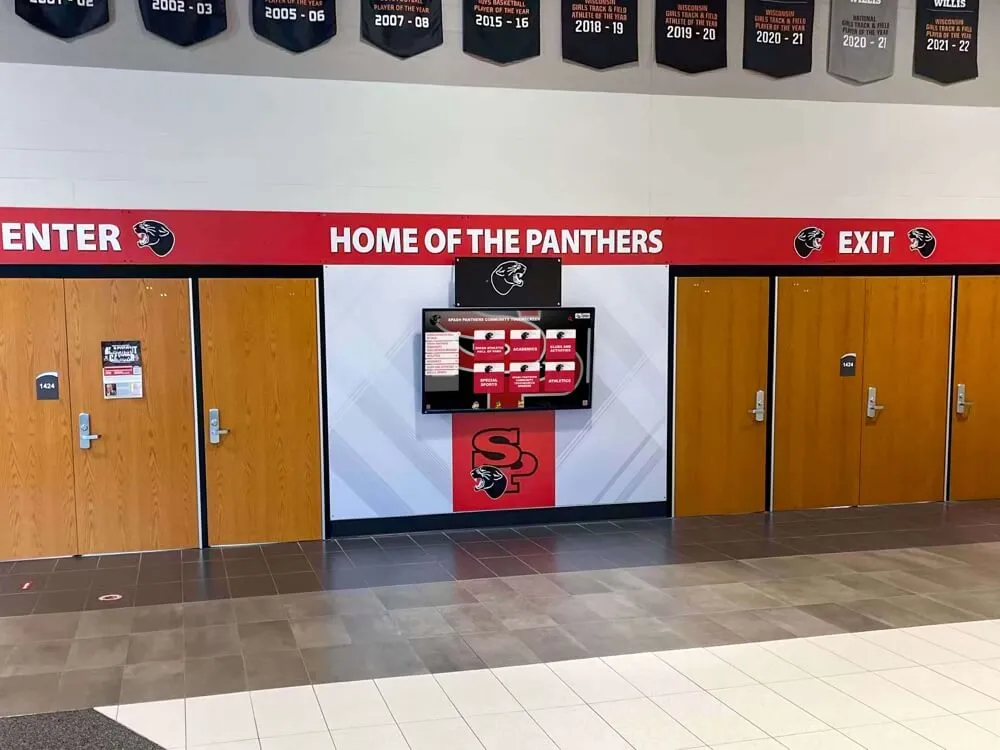




Schools nationwide face a common challenge: creating engaging, inspiring environments that reflect institutional identity while operating within limited facility budgets. Traditional paint refreshes fade quickly, physical displays consume valuable wall space, and creating cohesive branding throughout sprawling campuses often feels impossible without significant construction investment.
Wall wraps for schools offer a compelling solution—transforming plain walls, hallways, gymnasiums, and common spaces into vibrant showcases of school spirit, achievement, and educational content. These large-format vinyl graphics combine durability, visual impact, and flexibility at a fraction of the cost of traditional renovation approaches.
This comprehensive guide explores everything educational administrators and facilities managers need to know about wall wraps: from planning and design through installation and maintenance, including how to integrate physical wall graphics with digital recognition displays for maximum impact.
Wall wraps represent more than decorative additions to school facilities—they’re strategic tools for reinforcing institutional culture, celebrating achievements, wayfinding, and creating environments where students, staff, and visitors feel welcomed and inspired. Understanding how to effectively deploy wall graphics requires considering design principles, material selection, installation logistics, and long-term maintenance.

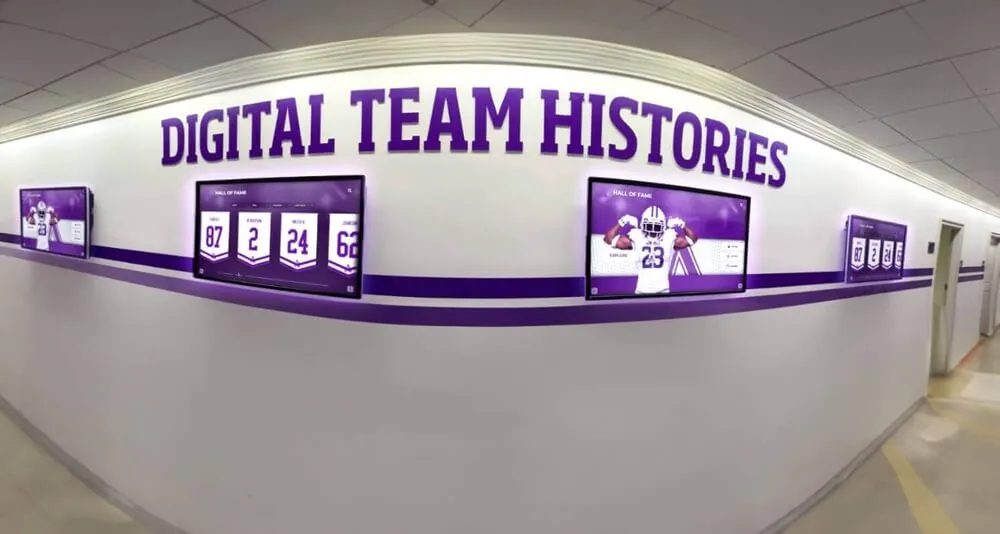
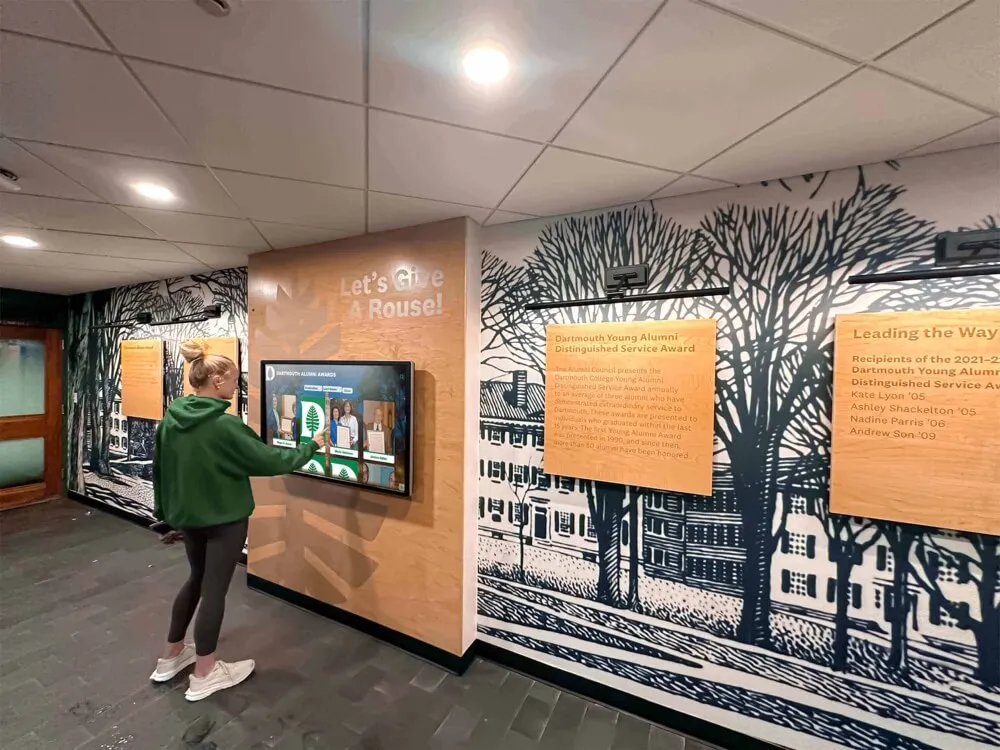
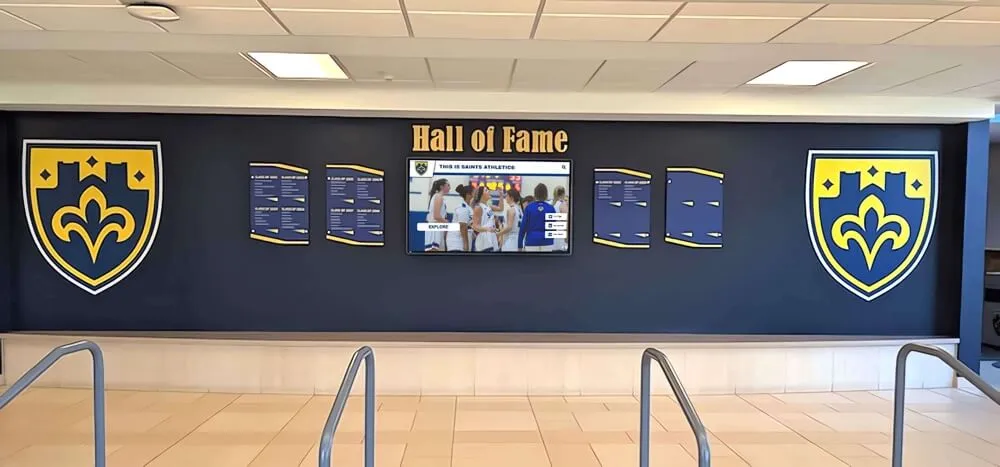
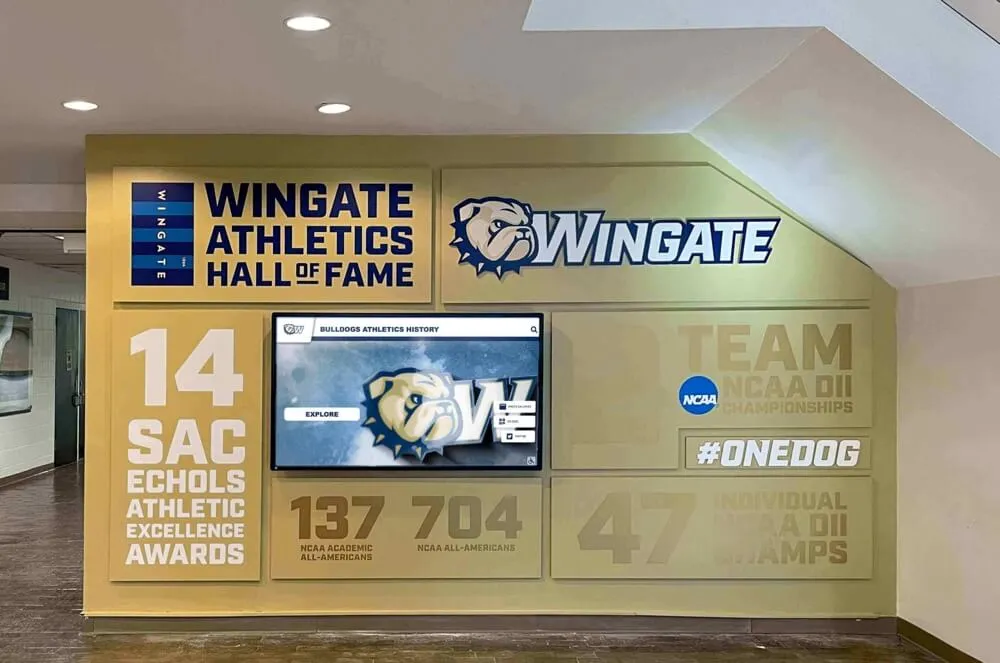
Professional wall wraps transform school lobbies into branded showcases celebrating institutional identity and achievement
What Are Wall Wraps for Schools?
Wall wraps are large-format vinyl graphics professionally designed and installed to cover entire walls or significant wall sections within educational facilities. Unlike painted murals or traditional signage, wall wraps are printed on specialized adhesive-backed vinyl materials specifically formulated for interior wall application.
Core Components of School Wall Wraps
Vinyl Base Material Professional wall wraps use specialized vinyl designed for wall application, formulated to adhere securely to common school wall surfaces including painted cinder block, drywall, and other standard materials. Quality vinyl provides vibrant color reproduction, maintains flexibility during installation, and removes cleanly when replacement becomes necessary.
Print Technology Modern large-format printing produces photographic-quality graphics with exceptional color accuracy and detail. Digital printing enables complete customization including logos, photography, text elements, and complex designs impossible to achieve through traditional painting.
Protective Lamination Professional wall graphics include protective laminate layers—typically matte or gloss finish—that shield printed surfaces from scuffs, scratches, and daily wear inherent to educational environments. This protective layer significantly extends wrap lifespan while simplifying maintenance.
Professional Installation System Successful wall wrap application requires specialized tools and techniques. Professional installers ensure proper surface preparation, precise alignment, bubble-free application, and seamless panel connections when graphics span multiple vinyl sheets.
Wall Wraps Versus Alternative Approaches
Wall Wraps vs. Paint Traditional paint allows color changes but lacks the photographic detail, complex graphics, and logo reproduction that vinyl wraps provide. Paint also requires complete wall preparation, extended drying time, and ongoing touch-ups. Wall wraps install faster, provide superior graphics quality, and resist damage better than paint in high-traffic areas.
Wall Wraps vs. Mounted Signs Individual mounted signs require hardware installation creating permanent wall penetrations. Wall wraps cover expansive areas without mounting holes, provide unified designs rather than disconnected elements, and cost less per square foot for large-scale installations.
Wall Wraps vs. Decals Decals work well for small accent graphics but become impractical for room-scale installations. Wall wraps designed for full-wall coverage provide seamless appearance and unified designs spanning entire spaces.
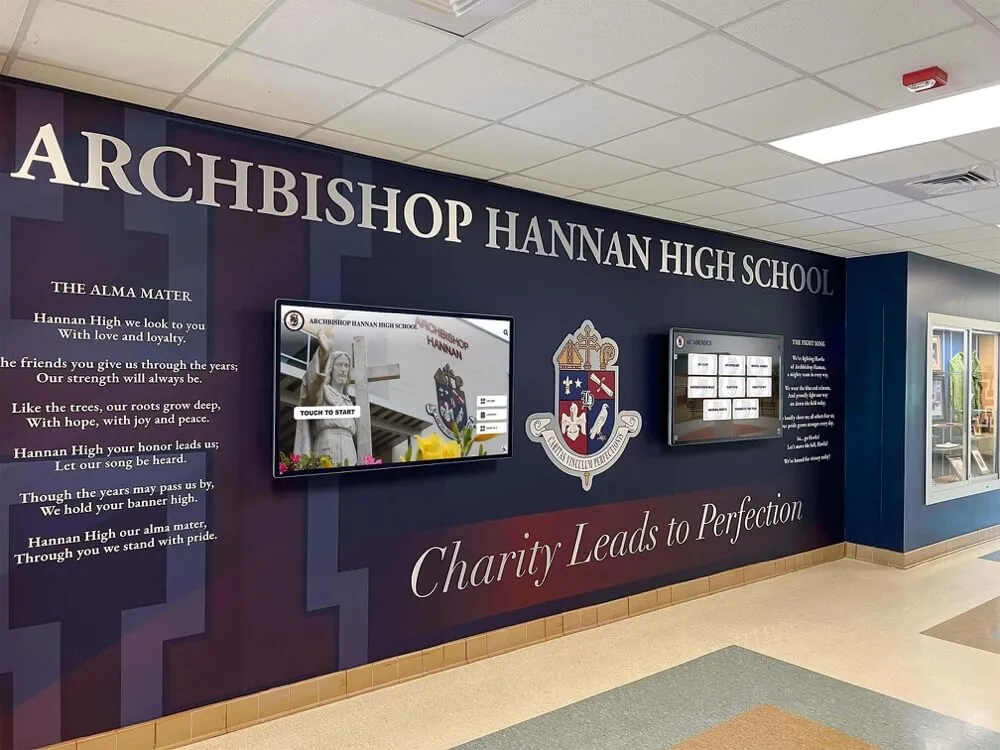
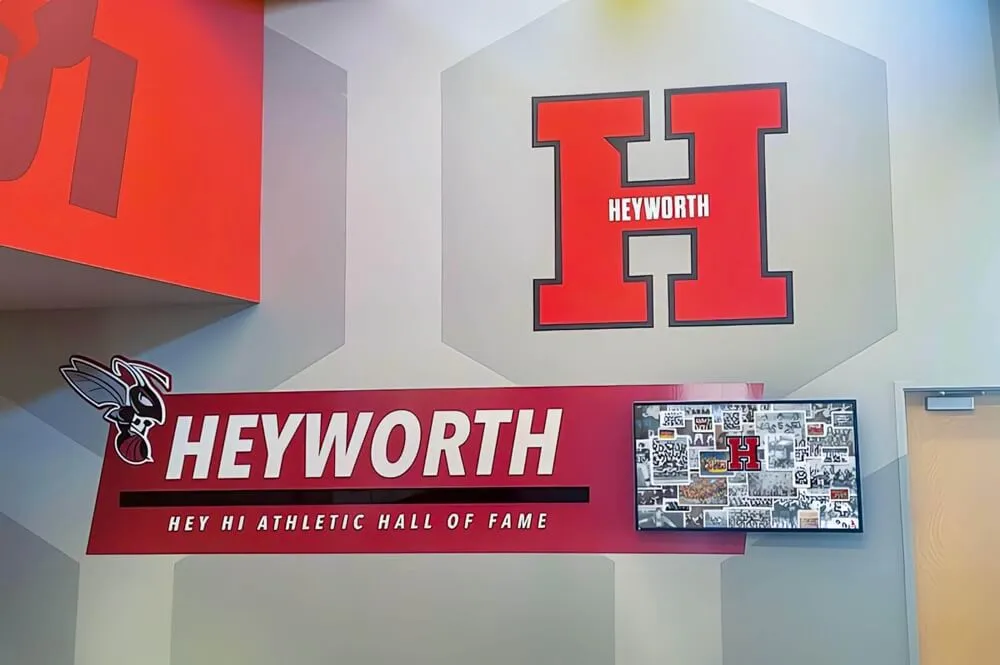
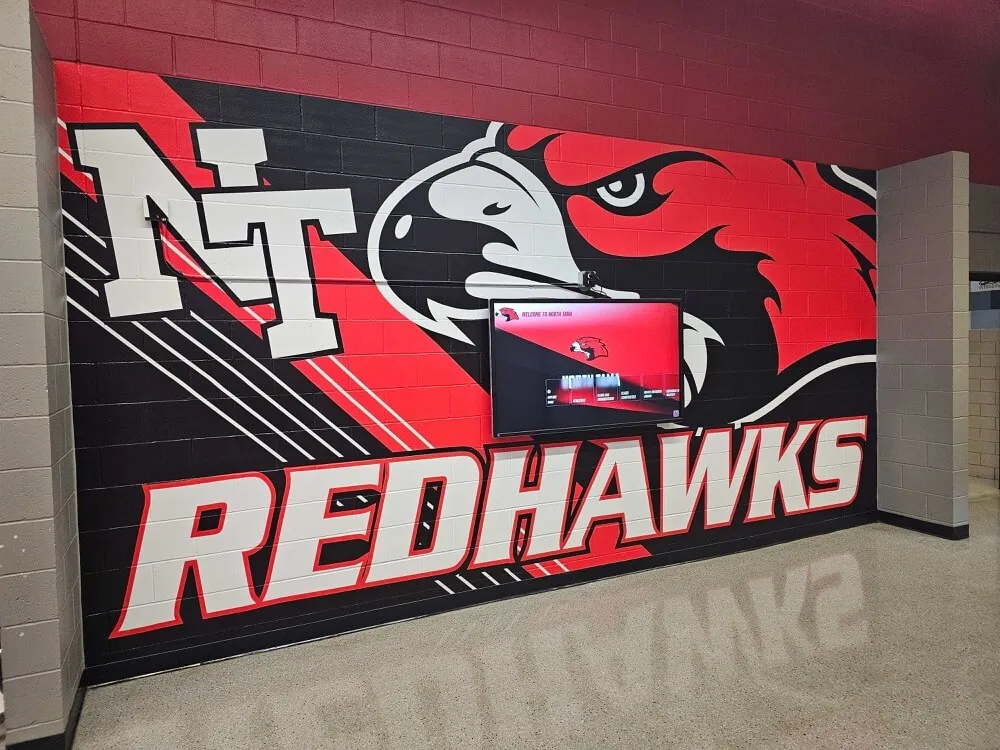
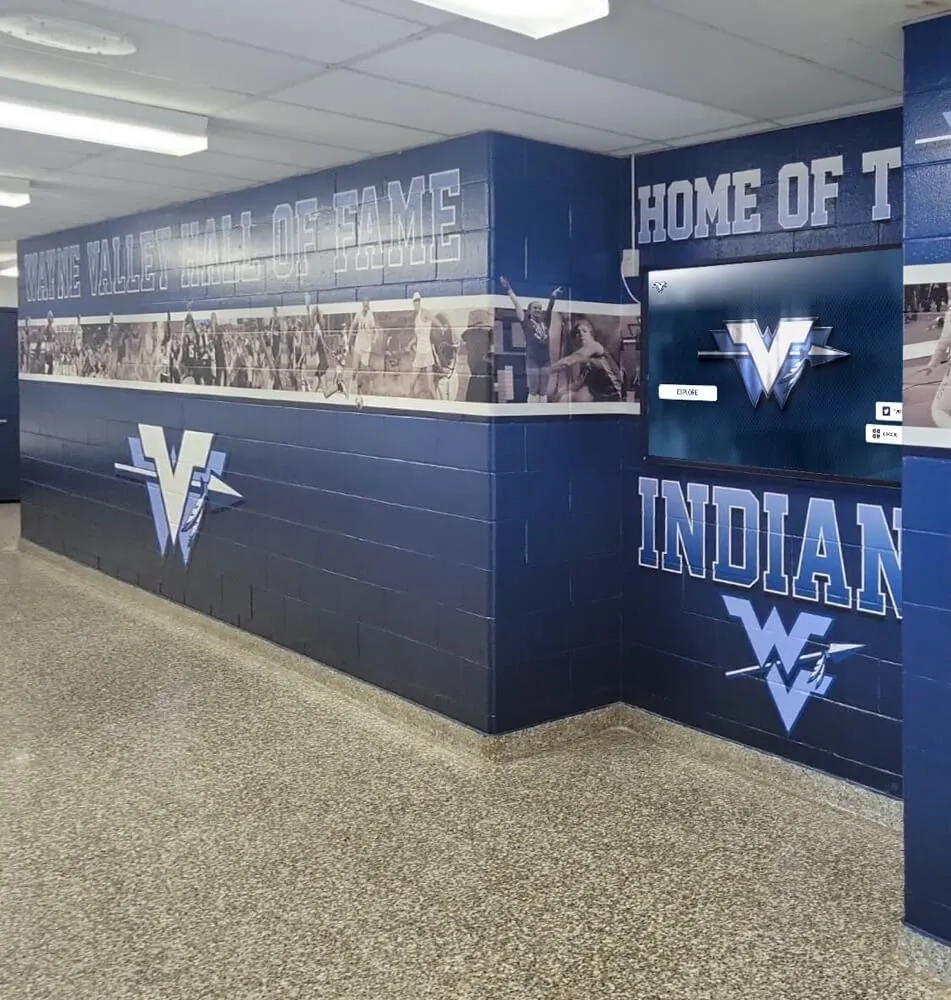
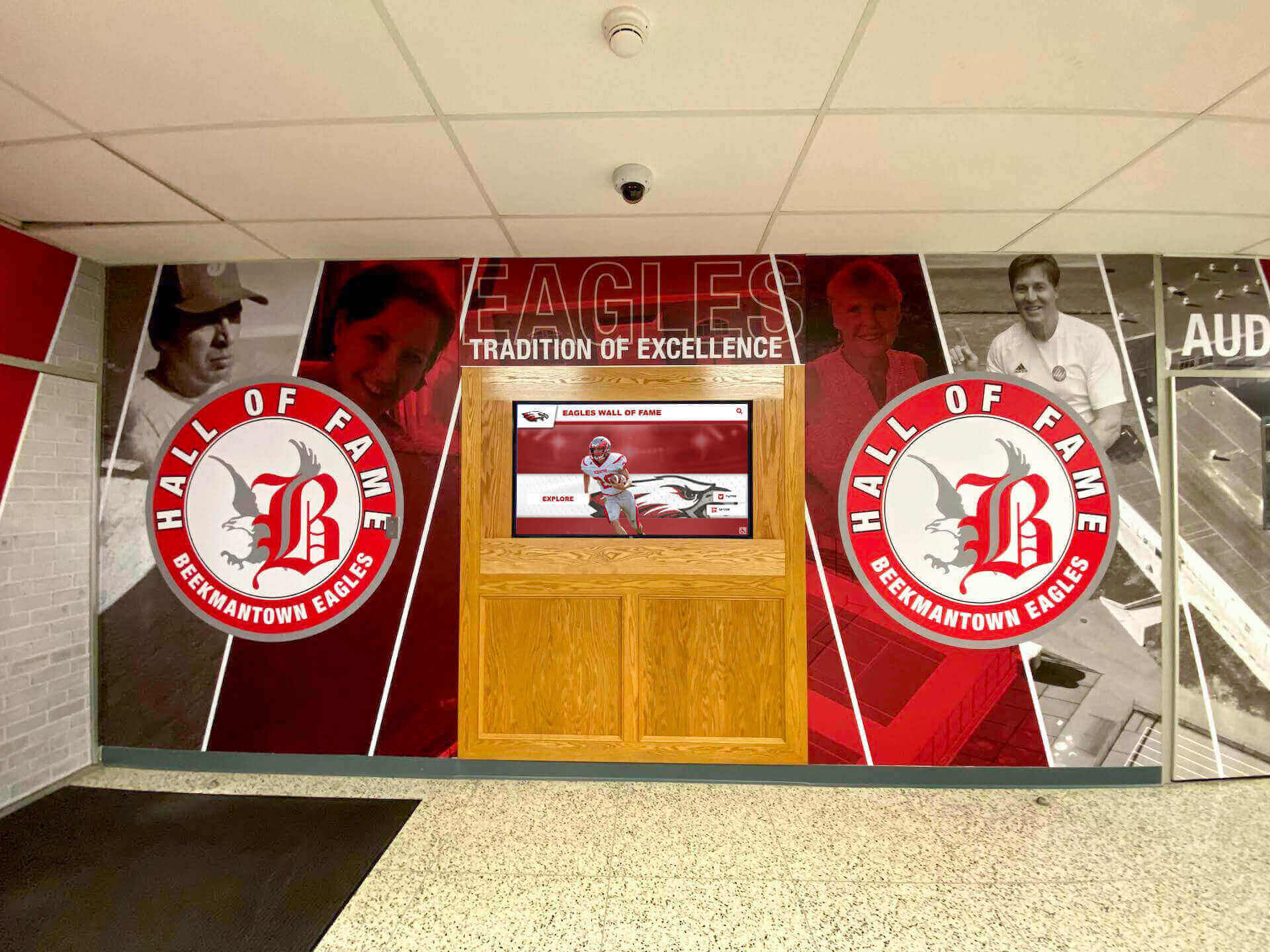
Wall wraps integrate school mascots, team colors, and branding elements while accommodating digital displays
According to research on The Benefits of Wall Wraps for Educational Institutions, vinyl wall wraps typically last 10 years for interior installations when properly maintained, providing exceptional long-term value compared to paint which requires refreshing every 2-3 years in high-traffic school environments.
Benefits of Wall Wraps in Educational Environments
Educational institutions implementing strategic wall wrap programs report significant benefits extending beyond simple aesthetic improvements.
Strengthening School Identity and Spirit
Wall graphics provide powerful tools for reinforcing institutional identity throughout campus:
Visual Brand Consistency Wall wraps enable consistent branding across facilities regardless of architectural differences. Schools can maintain unified color schemes, logo usage, and design themes from entryways through classrooms, gymnasiums, and administrative areas.
Mascot and Tradition Celebration Oversized mascot graphics, school mottos, founding dates, and tradition imagery create immersive environments that constantly reinforce what makes each school unique. Students surrounded by these visual reminders develop stronger connections to institutional identity.
Athletic Program Visibility Schools can showcase team achievements, current rosters, championship banners, and sport-specific graphics throughout athletic facilities. Wall wraps in gymnasiums, locker rooms, and training facilities build program pride while intimidating visiting teams.
Color and Energy Enhancement Strategic use of school colors through wall graphics dramatically transforms dull corridors and dated spaces into vibrant environments reflecting institutional energy and pride without expensive renovation.
Creating Engaging Learning Environments
Beyond branding, wall wraps serve educational purposes:
Curriculum Support Graphics Educational content wraps featuring maps, timelines, scientific diagrams, mathematical concepts, historical figures, and subject-specific content transform walls into learning resources. Students encounter educational reinforcement throughout their day in hallways, cafeterias, and common areas.
Inspirational Messaging Motivational quotes from notable figures, growth mindset reminders, character education themes, and academic encouragement messages provide consistent positive reinforcement throughout facilities.
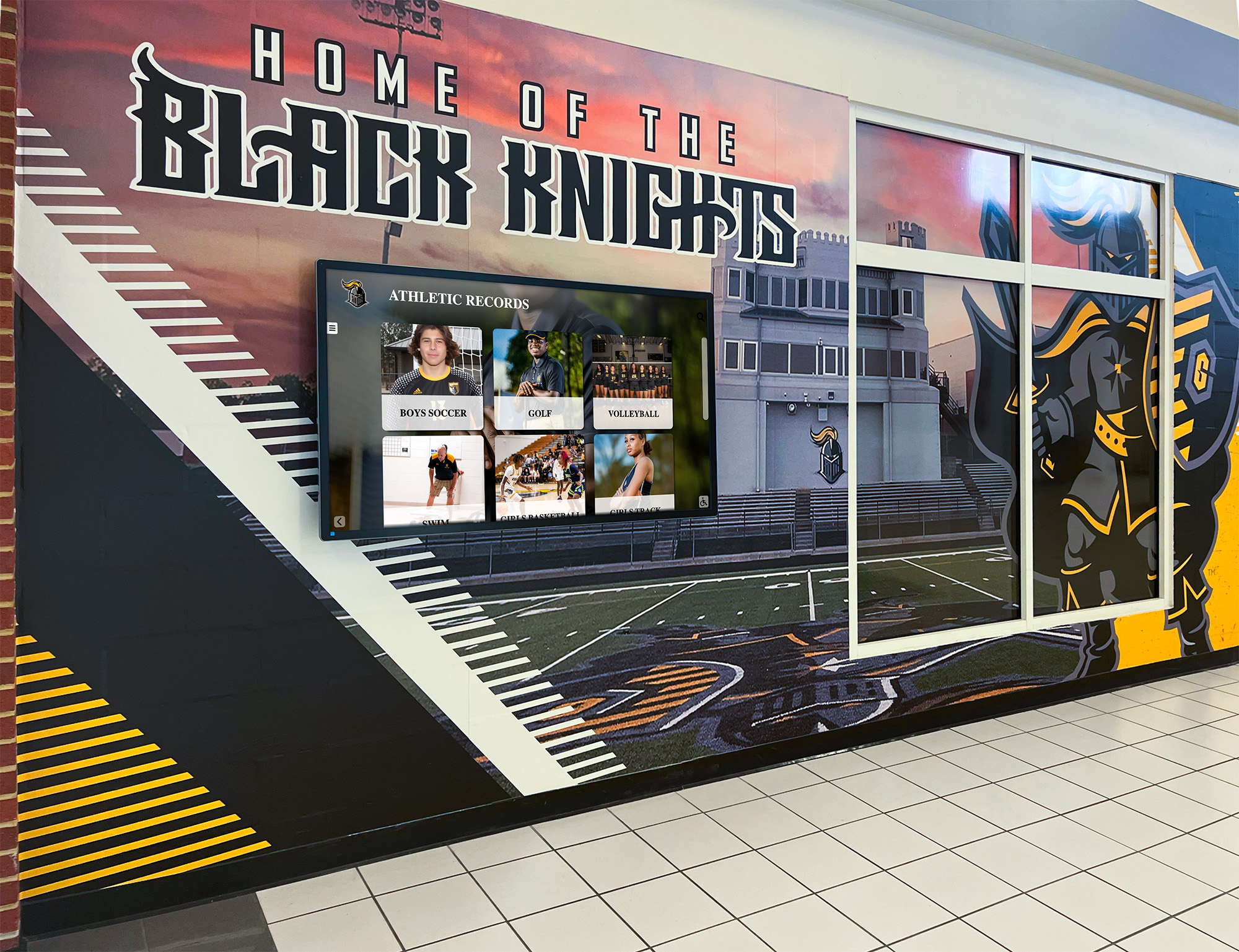
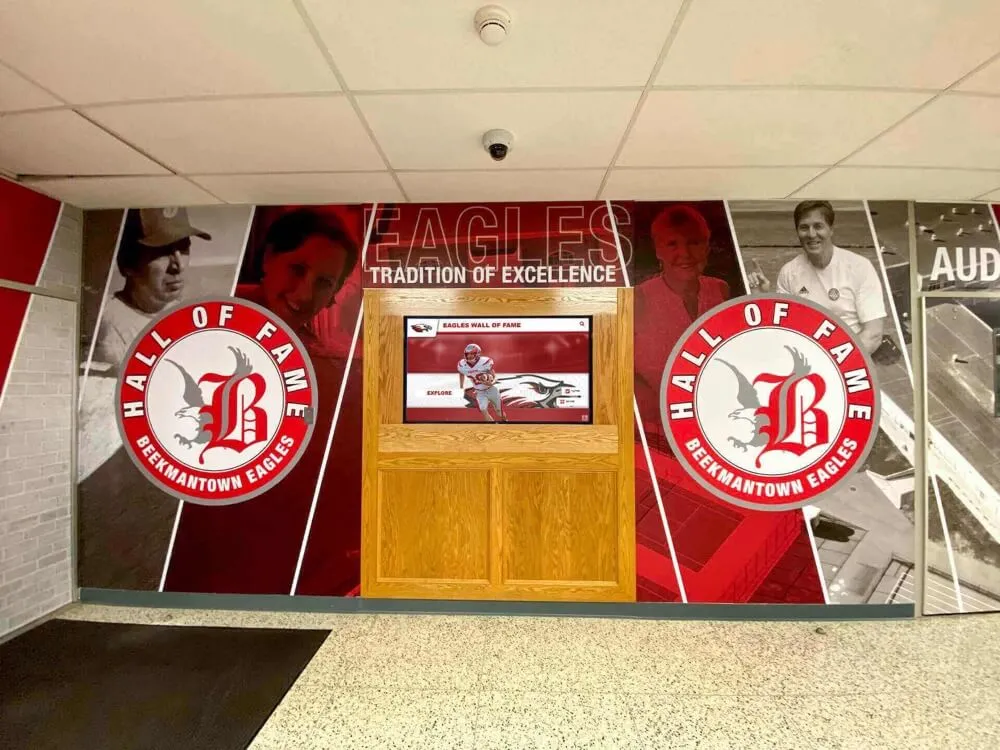
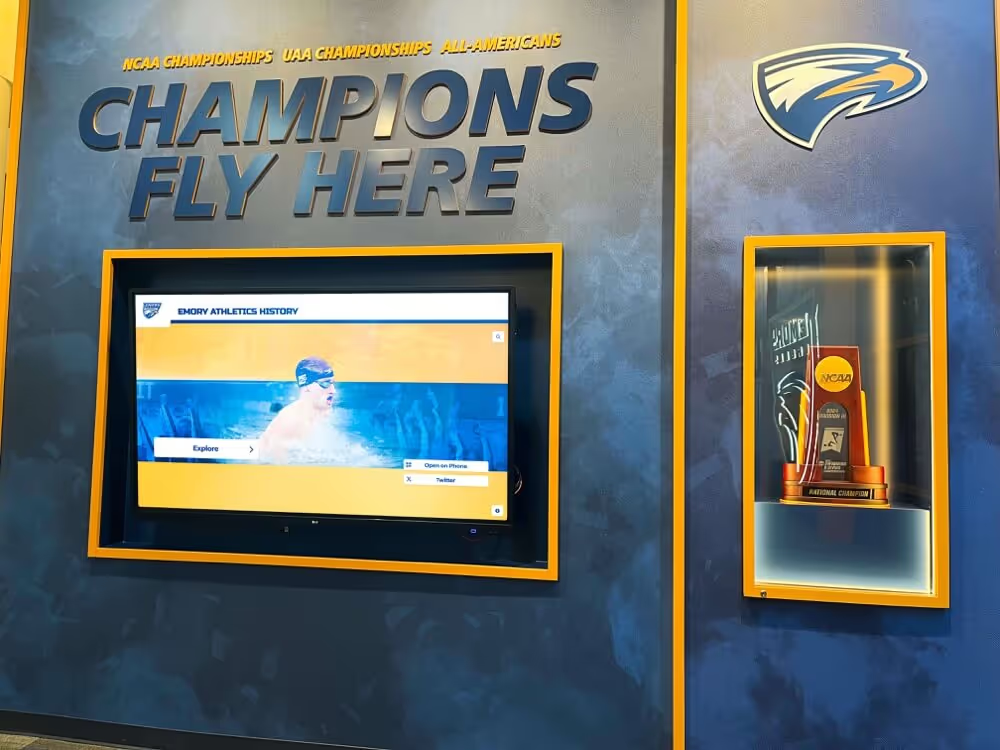
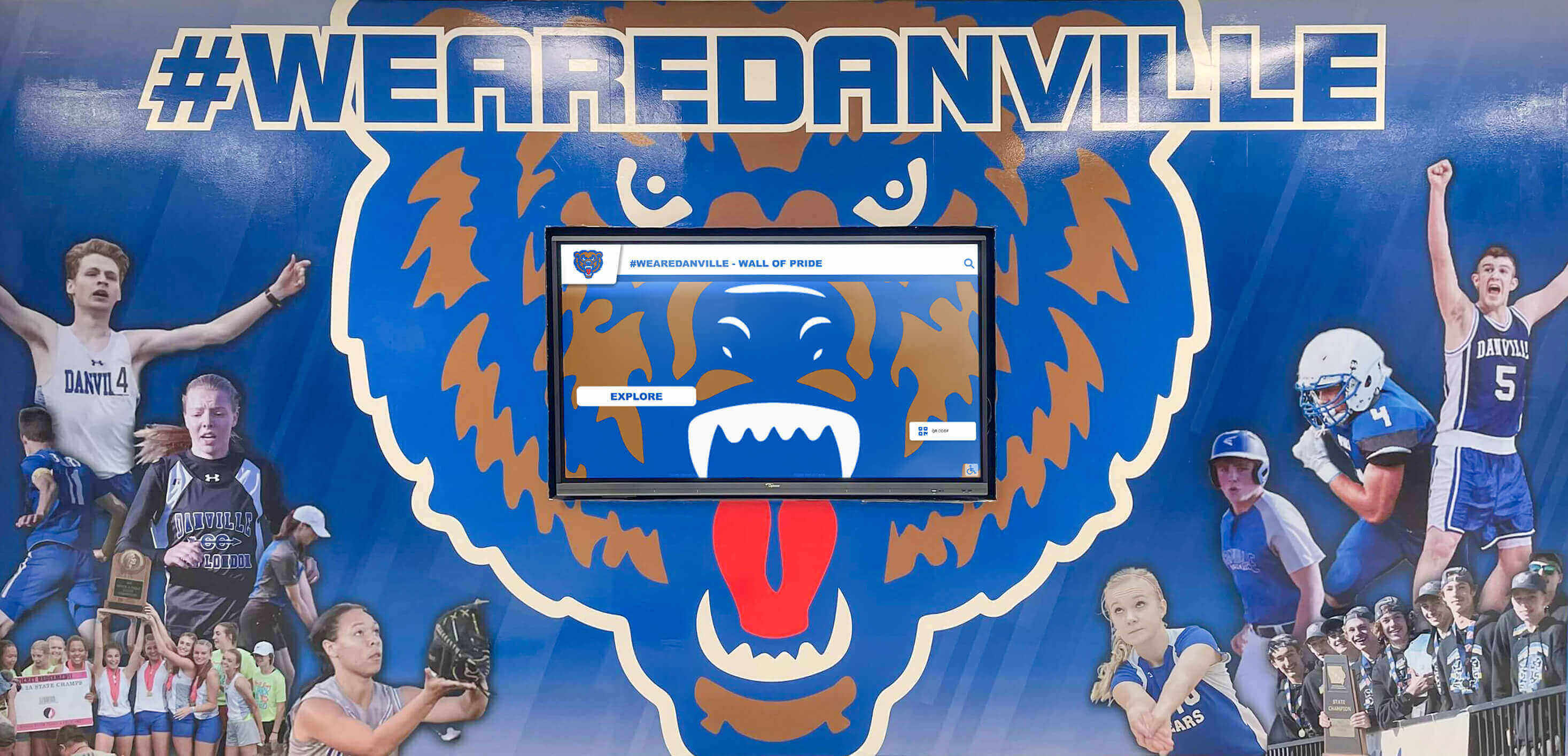
Comprehensive wall wraps create immersive environments celebrating athletic heritage and current achievements
Wayfinding Enhancement Large-format directional graphics, building maps, and room identification help visitors navigate complex facilities while reinforcing visual branding. Color-coded wing designations and visual landmarks reduce confusion in sprawling campuses.
Achievement Recognition Integration Wall graphics can incorporate recognition elements including honor roll displays, college acceptance lists, championship documentation, and achievement timelines. These static recognition elements work alongside digital recognition displays for comprehensive celebration.
Practical Operational Benefits
Wall wraps provide advantages beyond aesthetics:
Cost-Effective Transformation According to The Benefits of Wall Wraps for Educational Institutions, wall wraps cost significantly less than painting while providing superior results. Large-scale installations typically cost less per square foot than premium paint application while delivering graphics quality paint cannot match.
Rapid Installation Professional installation of wall wraps typically completes in days rather than the weeks required for painting including prep, application, and drying. Schools can transform spaces during breaks or weekends with minimal disruption.
Superior Durability Quality vinyl wall wraps with protective lamination resist scuffs, marks, and daily wear far better than painted surfaces in high-traffic school environments. The protective coating creates a scuff-resistant shield particularly valuable in hallways, stairwells, and athletic facilities.
Easy Maintenance Vinyl surfaces clean easily with standard cleaning solutions, unlike painted walls that show every mark and require frequent touch-ups. Most scuffs and marks wipe away without damaging graphics.
Damage Concealment Wall wraps can cover existing wall imperfections, outdated finishes, and minor damage without extensive surface preparation required for quality paint jobs. This makes them excellent for refreshing aging facilities without major renovation.
Simplified Updates When institutional priorities change, mascots update, or design trends evolve, wall wraps remove cleanly allowing fresh installations without extensive wall preparation. This flexibility supports evolving institutional needs over time.
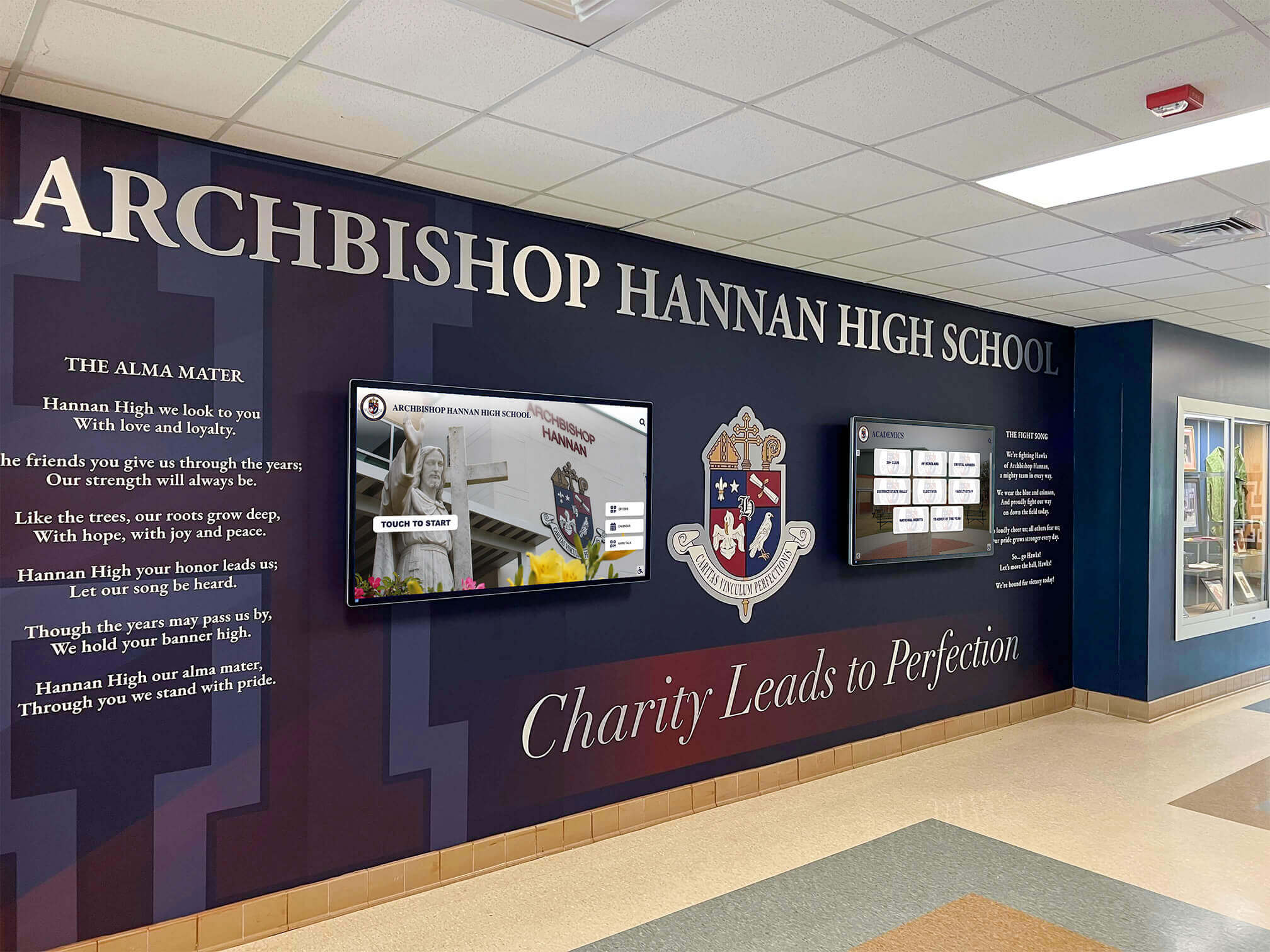
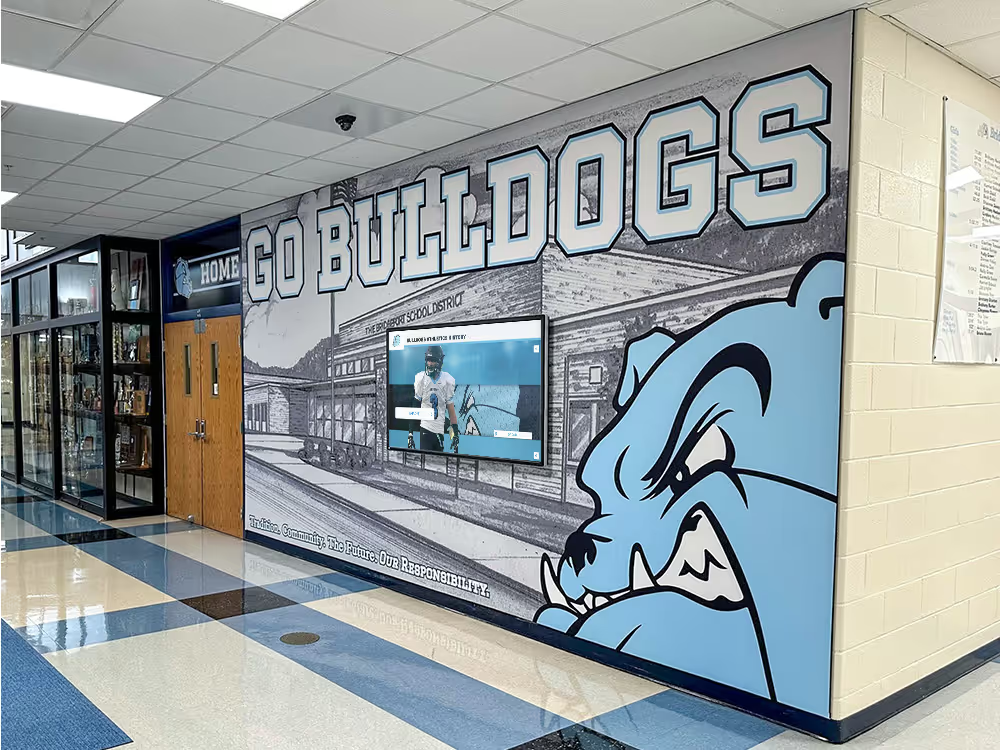
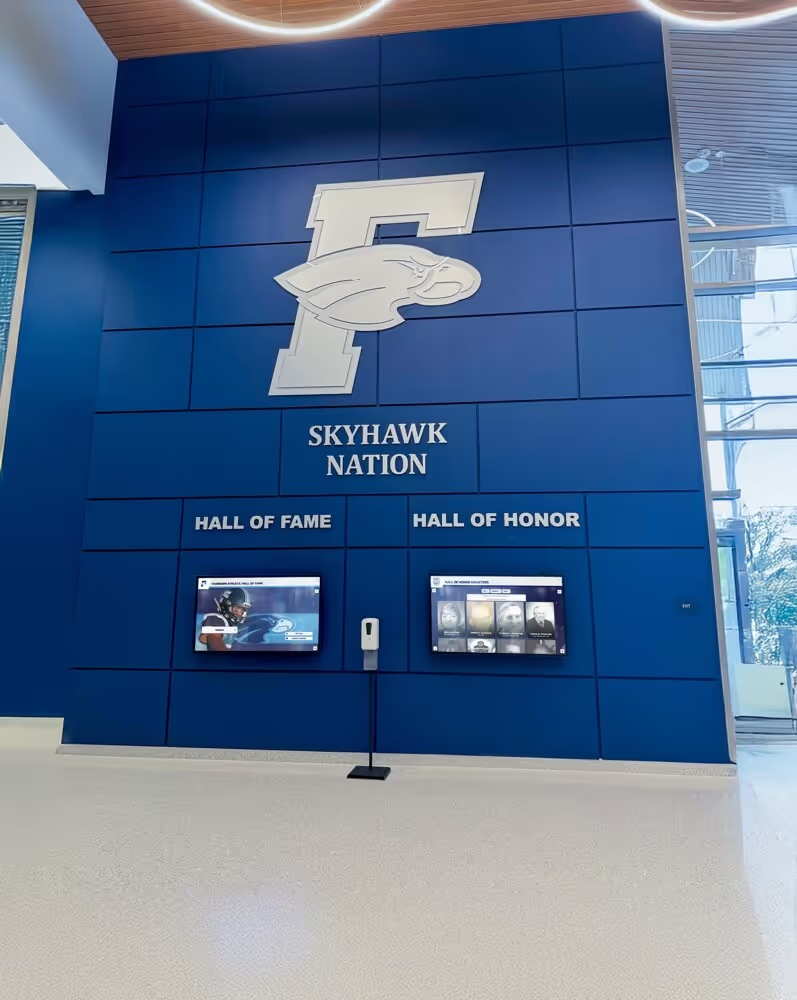
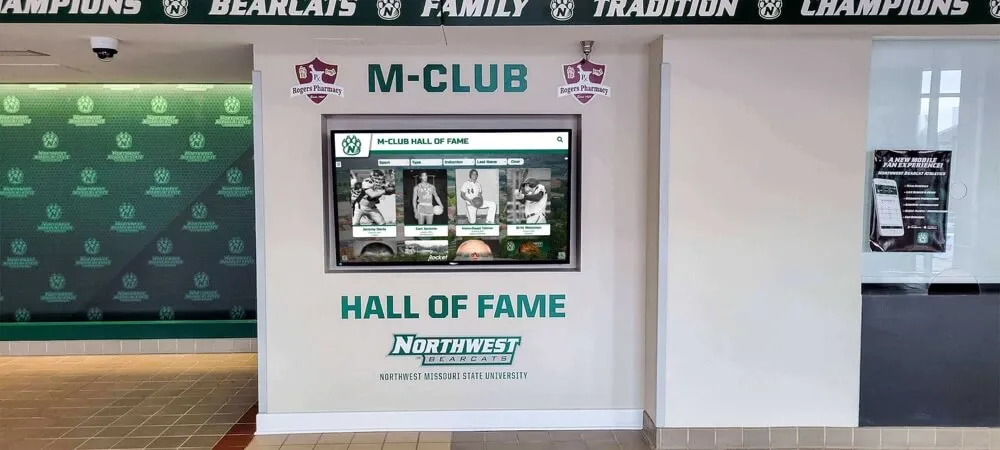
Strategic wall wraps in entry areas create impressive first impressions while incorporating school crests and digital displays
Strategic Planning for School Wall Wraps
Successful wall wrap programs require thoughtful planning addressing institutional goals, design considerations, budget, and implementation logistics.
Defining Wall Wrap Objectives
Clear objectives guide effective wall wrap decisions:
Primary Purpose Identification Determine whether wall wraps primarily serve branding, recognition, wayfinding, educational support, or multiple purposes. Purpose clarity shapes design direction and location selection.
Target Audience Consideration Consider who primarily experiences different spaces. Student-focused designs differ from administrative area graphics targeting parents and visitors. Athletic facilities warrant sport-specific graphics while academic wings might emphasize educational content.
Longevity Expectations Some content remains timeless (school mascots, founding dates, core values) while other elements need regular updating (current rosters, recent achievements, contemporary design trends). Balance permanent and changeable elements appropriately.
Cultural and Community Values Wall graphics should reflect institutional values, celebrate diversity, and avoid content that might alienate any community segment. Inclusive design ensures all students see themselves represented.
Strategic Location Selection
Not all wall spaces merit equal investment:
High-Impact Priority Locations Focus initial investments on spaces creating maximum impression:
Main Entry and Lobby Areas First impressions matter profoundly. Entry graphics set tone for entire facility, communicating professionalism, pride, and institutional values immediately. These spaces warrant premium design and materials.
Central Hallways and Commons Spaces with consistent traffic throughout school days provide ongoing exposure justifying significant graphic investment. Main corridors connecting building sections offer excellent visibility.
Gymnasium and Athletic Facilities Sports venues benefit from bold, energetic graphics showcasing athletic identity. These spaces create home-field advantage during competitions while building program pride for participants and spectators.
Cafeteria and Assembly Spaces Gathering spaces where entire student bodies congregate provide opportunities for community-building graphics including school values, achievement recognition, and inclusive messaging.
Stairwells and Vertical Spaces Stairs often feature the tallest continuous walls in school buildings, providing canvas for dramatic vertical installations visible throughout multi-story atriums.
Secondary Location Considerations After addressing priority areas, consider:
Classroom Exterior Corridors Subject-specific graphics outside classroom wings reinforce academic programs—STEM imagery near science rooms, literary themes near English departments, historical timelines near social studies areas.
Administrative and Counseling Areas Professional graphics in administrative spaces reassure visitors while office-adjacent walls can feature mission statements, historical milestones, and institutional achievements.
Athletic Team Spaces Locker rooms, training facilities, and team meeting rooms benefit from sport-specific motivation and identity graphics building program culture.
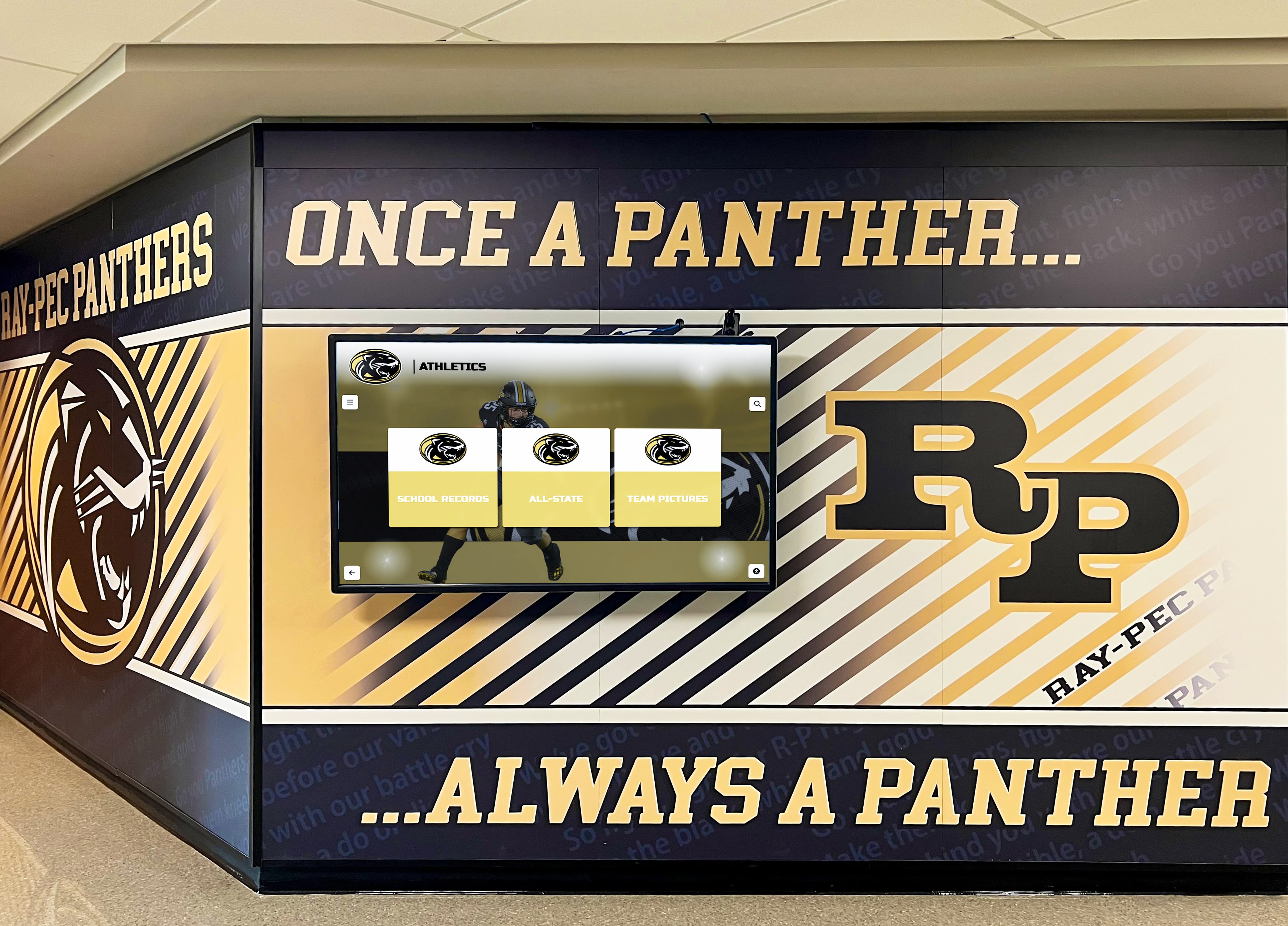
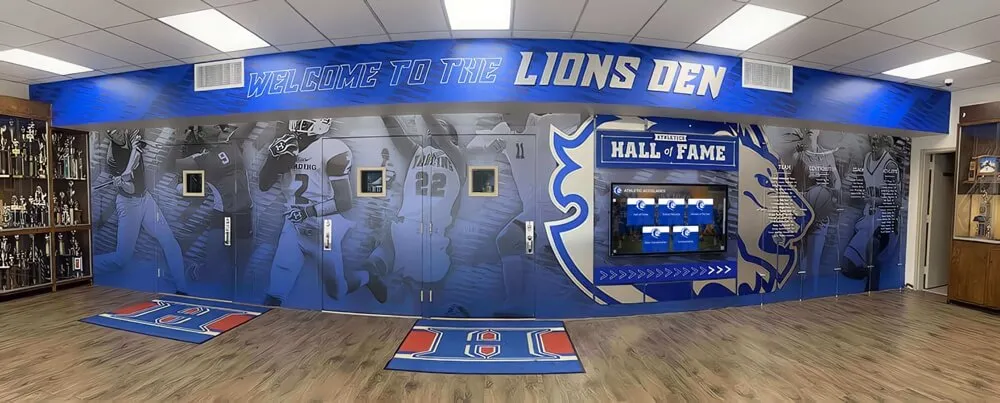
Athletic hallways featuring wall wraps create immersive program environments while integrating digital content displays
Budget Development and Resource Allocation
Wall wrap costs vary significantly based on scope and materials:
Cost Factors Understanding Multiple variables affect total investment:
Square Footage Price typically ranges from $8-15 per square foot installed for interior wall wraps depending on design complexity, material quality, and project scale. Larger installations generally achieve better per-square-foot pricing.
Design Complexity Simple designs with solid colors and basic logos cost less than complex photographic compositions, intricate patterns, or designs requiring precise color matching and detailed elements.
Surface Preparation Requirements Walls requiring significant repair, texture smoothing, or special primer treatments increase total costs beyond vinyl material and installation labor.
Installation Accessibility Spaces requiring scaffolding, lift equipment, or after-hours installation cost more than easily accessible locations with standard work schedules.
Material Quality Selections Premium vinyl with enhanced durability and superior protective lamination costs more initially but provides better longevity, potentially delivering lower total cost of ownership over time.
For schools evaluating how to balance traditional physical displays with modern technology, consider how wall wraps complement interactive touchscreen displays for recognition, creating comprehensive visual environments celebrating achievement.
Phased Implementation Strategy Schools with limited budgets should implement strategically:
Phase 1: High-Impact Showcase Begin with main entry and primary lobby creating immediate transformation visible to all visitors. Successful initial installation builds stakeholder support for expansion.
Phase 2: Athletic Facilities Follow with gymnasium and athletic spaces where graphics dramatically enhance home-field advantage and program pride. Athletic community often provides booster support for these investments.
Phase 3: Main Corridors Expand to central hallways and high-traffic areas providing broad student exposure. These installations reinforce institutional identity daily.
Phase 4: Specialized Spaces Complete program with department-specific graphics, stairwells, and remaining lower-priority spaces as budget allows.
Phased approaches enable quality over quantity while demonstrating value building support for continued investment.
Design Principles for Effective School Wall Wraps
Professional design separates impactful installations from disappointing results.
Visual Design Fundamentals
Color Strategy Effective school wall wraps leverage color psychology and institutional branding:
School Color Dominance Primary school colors should dominate designs maintaining brand consistency. Secondary and accent colors provide visual interest without diluting core identity.
Contrast for Readability Text elements require sufficient contrast with backgrounds ensuring readability from typical viewing distances. Dark text on light backgrounds or vice versa works better than low-contrast combinations.
Color Temperature Consideration Warm colors (reds, oranges, yellows) create energy appropriate for athletic spaces while cooler colors (blues, greens, purples) work well in academic areas requiring focus.
Finish Selection Matte finishes reduce glare in bright spaces while glossy finishes create vibrancy in areas with controlled lighting. Most school applications benefit from matte or satin finishes avoiding distracting reflections.
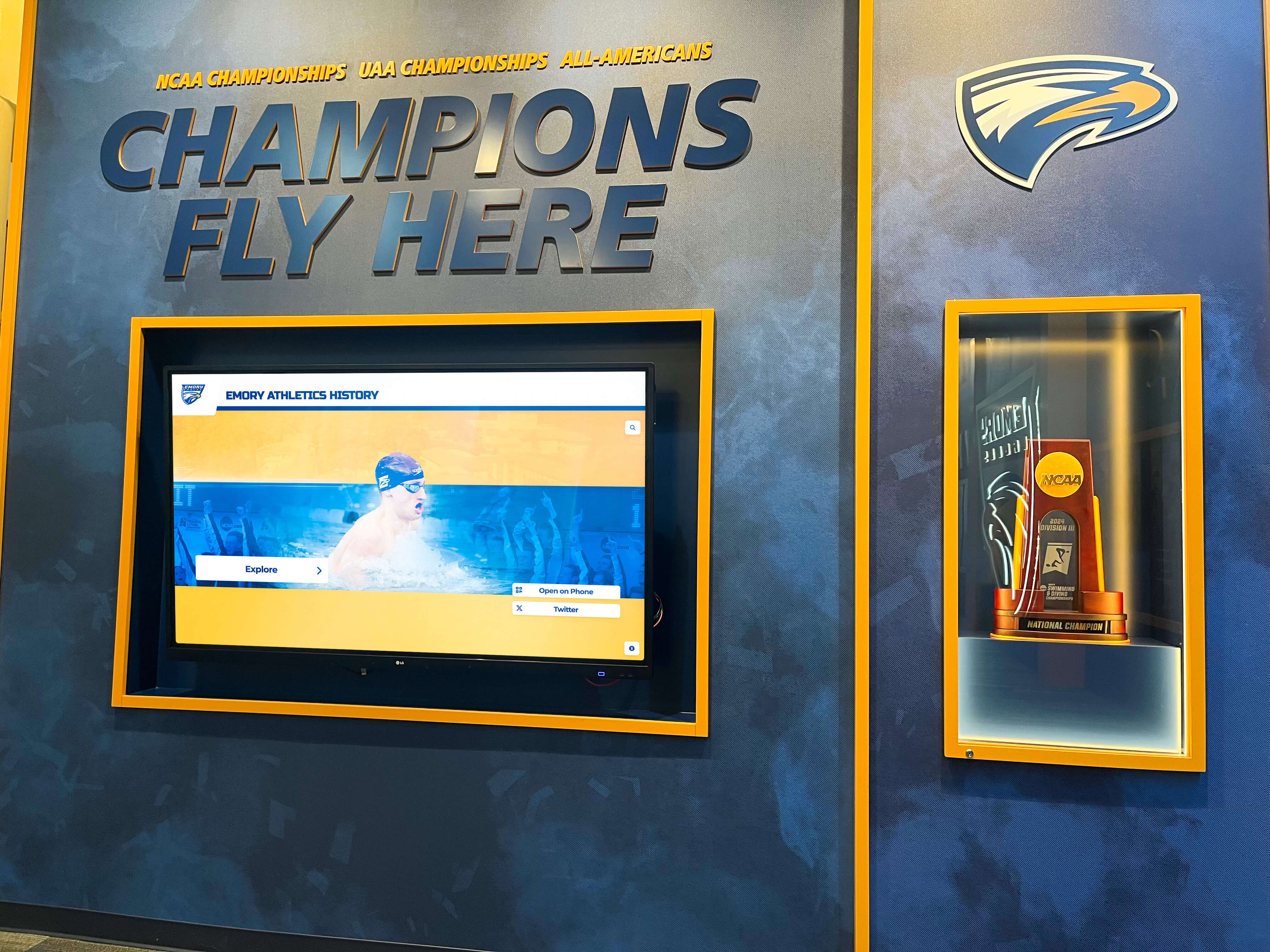
Championship walls combining physical trophies with wall graphics create powerful visual impact celebrating program success
Typography and Readability
Font Selection Choose professional fonts matching institutional brand guidelines. Avoid novelty fonts that become dated quickly or reduce readability. Sans-serif fonts generally read better on large-format graphics than serif alternatives.
Hierarchy and Scale Establish clear visual hierarchy with primary messages in largest type, secondary information smaller, and supporting details appropriately scaled. Headlines should be readable from across spaces while supporting copy accommodates closer viewing.
Text Quantity Management Wall graphics work best with concise messaging. Viewers rarely read lengthy text on walls. Prioritize impact statements, key facts, and brief inspiring messages over paragraph-length content.
Spacing and Breathing Room Crowded designs overwhelm viewers. Incorporate appropriate whitespace allowing individual elements to breathe. Margins, padding, and deliberate spacing create sophisticated appearance distinguishing professional from amateur installations.
Content and Messaging Strategy
Timeless Versus Changeable Content
Permanent Content Elements Design core graphics around content remaining relevant indefinitely:
- School mascot and logos
- Founding dates and historical milestones
- Geographic community identity
- Core institutional values and mission
- School colors and iconic imagery
Flexible Content Integration Plan for elements requiring updates:
- Current year designations (avoid hard-coding specific years)
- Achievement recognition (design allowing additions)
- Staff and student names (consider changeable overlays)
- Program-specific information (design modular systems)
Inclusivity and Representation
Wall graphics should reflect entire school community:
Diverse Imagery Include people imagery representing student body diversity in terms of race, ethnicity, gender, ability, and other characteristics. Ensure all community members see themselves reflected.
Multiple Program Representation Balance athletic recognition with academic achievement, arts programs, career technical education, and extracurricular involvement. Comprehensive representation validates all forms of student success.
Accessible Design Principles Consider visual accessibility including appropriate color contrast for vision-impaired viewers, text size accommodating various reading abilities, and content meaningful across age ranges and backgrounds.
Professional Design Development
Working With Design Professionals
Quality results typically require professional expertise:
Graphic Designer Selection Choose designers with specific experience in large-format environmental graphics. Portfolio review should demonstrate wall wrap projects, educational facility experience, and design range matching your vision.
Collaborative Design Process Effective design emerges through collaboration between school stakeholders and designers. Provide comprehensive information about institutional history, values, community priorities, and specific content requirements.
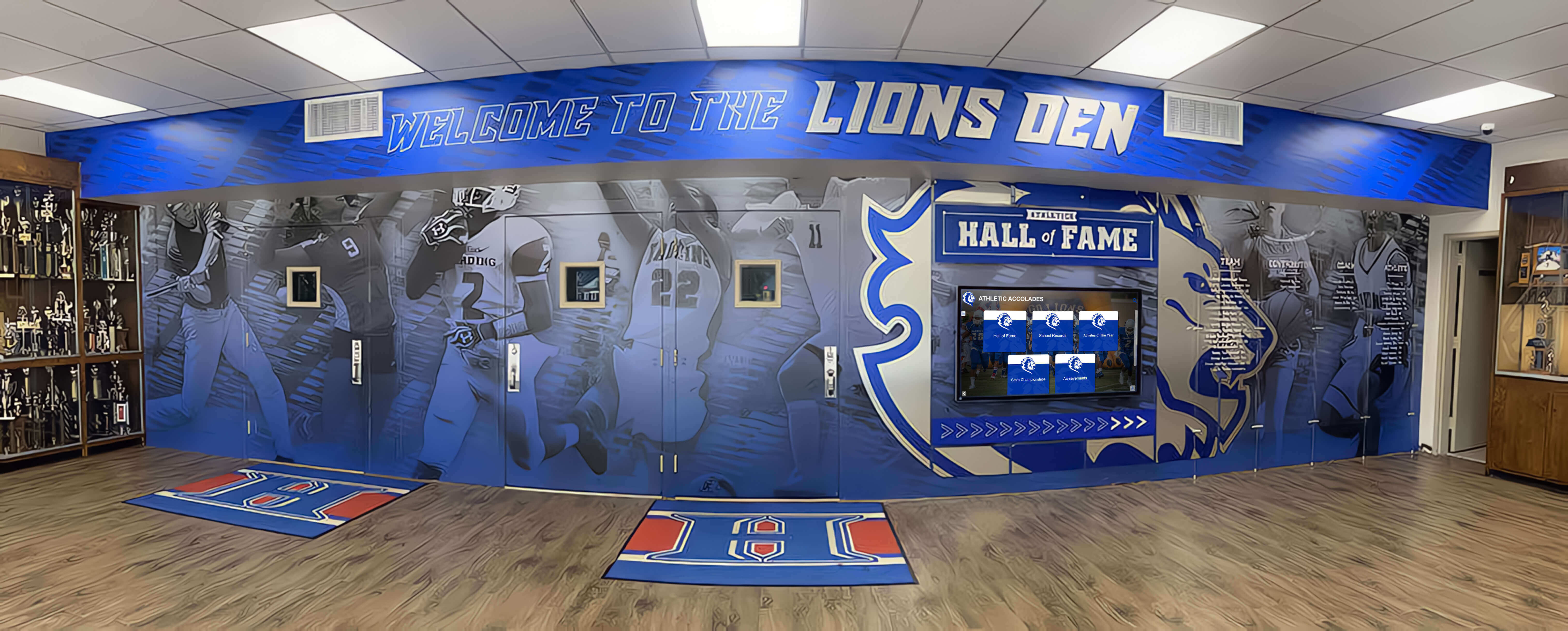
Coordinated wall graphics and trophy cases create comprehensive recognition environments celebrating school heritage
Revision and Refinement Expect multiple design iterations. Review proofs carefully for accuracy in spelling, dates, statistics, and visual details. Share drafts with diverse stakeholders catching errors before production.
Technical Specification Review Ensure design files meet production requirements including resolution, color mode, bleed allowances, and format specifications. Professional print providers should guide technical requirements.
For schools planning wall installations that will incorporate recognition elements, explore how digital recognition systems complement physical displays creating comprehensive celebration spaces.
Material Selection and Technical Specifications
Vinyl material choices significantly impact appearance, durability, and longevity.
Vinyl Material Options
Cast Vinyl Premium cast vinyl provides superior conformability around corners and irregular surfaces. It resists shrinkage better than calendered alternatives and typically offers longest lifespan. Cast vinyl works best for high-value installations warranting premium investment.
Calendered Vinyl Mid-grade calendered vinyl costs less than cast options while still providing acceptable performance for most interior school applications. Modern calendered materials offer good durability for flat wall installations.
Specialty Vinyl Options Specific applications benefit from specialized materials:
- Textured vinyl simulates materials like brick or wood grain
- Fabric-backed vinyl provides acoustic properties for spaces where sound control matters
- Magnetic vinyl enables changeable graphics when flexibility matters
- Dry-erase vinyl creates writable surfaces for interactive applications
Lamination and Protection
Laminate Functions Protective lamination serves multiple purposes:
- Shields printed graphics from UV exposure preventing fading
- Creates scuff-resistant surface protecting from daily contact
- Simplifies cleaning and maintenance
- Enhances visual depth and color saturation
- Extends graphic lifespan significantly
Finish Options Matte/Flat Lamination Reduces glare in bright spaces, provides sophisticated non-reflective appearance, and hides minor imperfections better than gloss finishes. Best for most school applications.
Gloss Lamination Creates vibrant, saturated appearance with enhanced color depth. Works well in controlled lighting but can create distracting reflections in bright areas with windows or overhead lighting.
Satin/Luster Lamination Provides middle ground between matte and gloss, offering slight sheen without excessive reflection. Versatile choice suitable for varied lighting conditions.
According to vinyl wrap industry standards, interior wall wraps with proper lamination typically last 10 years before requiring replacement, providing exceptional return on investment compared to alternative approaches requiring more frequent updates.
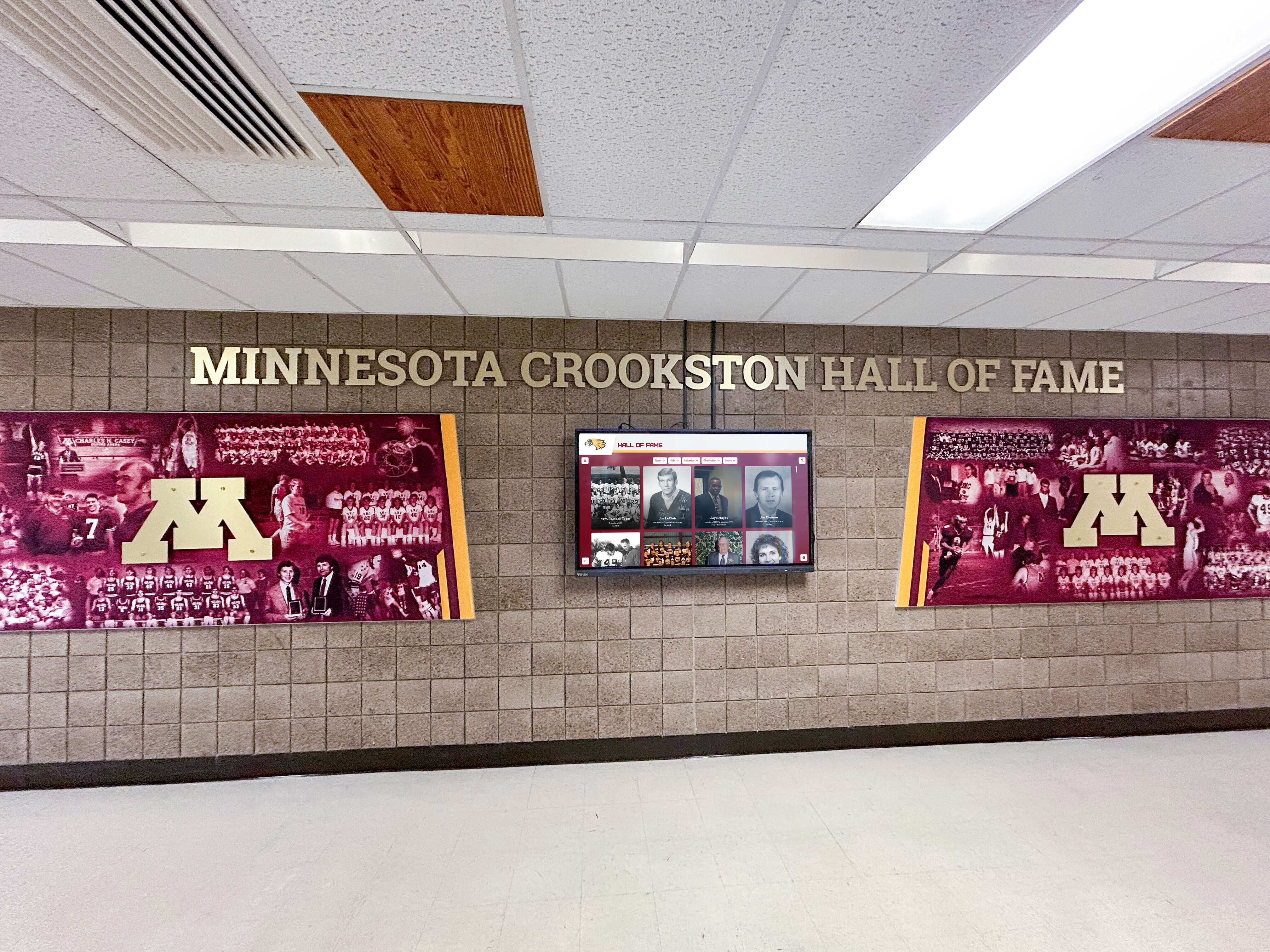
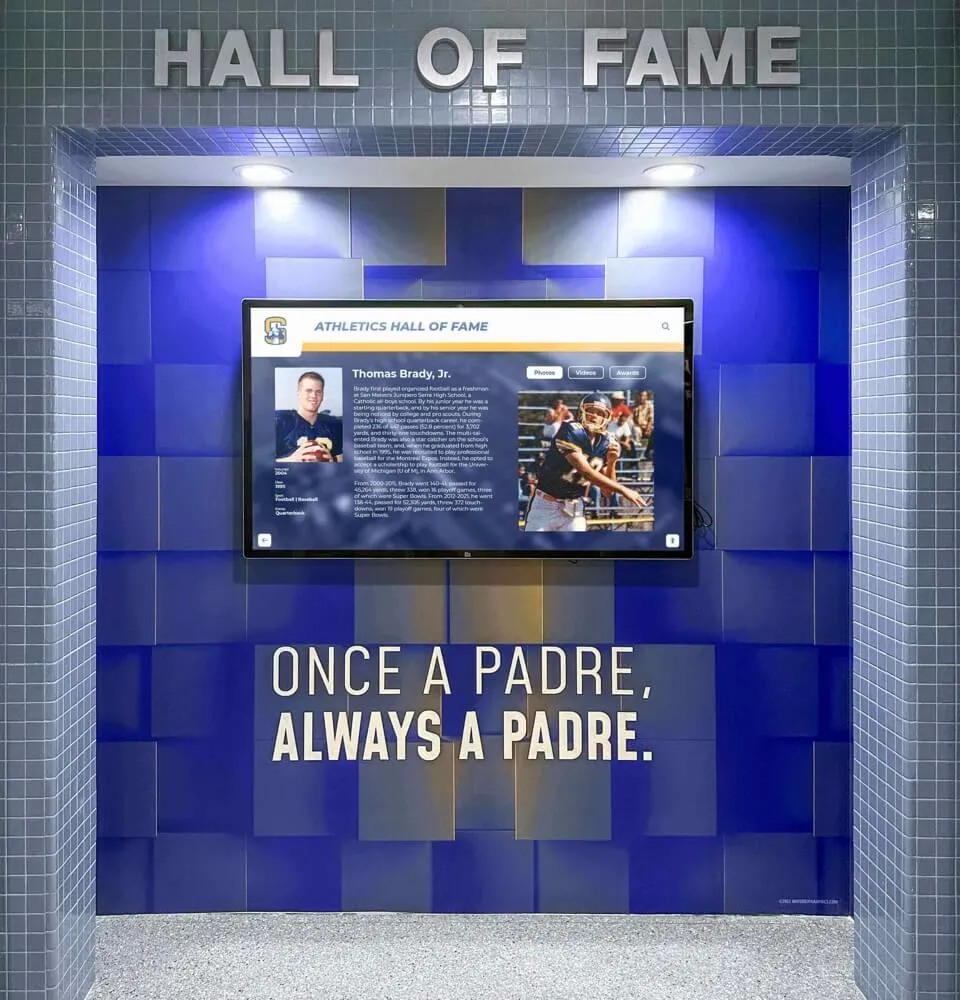
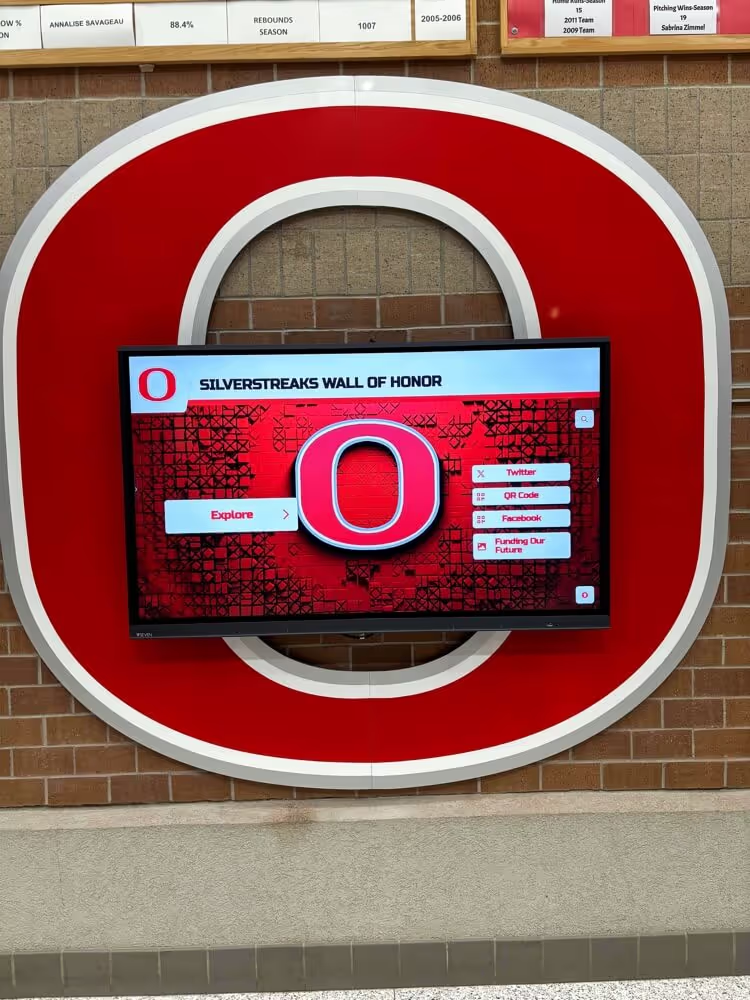
Professional wall graphics combine institutional colors with integrated digital displays creating cohesive recognition environments
Surface Preparation Requirements
Successful installation begins with proper surface preparation:
Wall Surface Assessment Not all wall surfaces accept vinyl equally:
Ideal Surfaces
- Smooth painted drywall
- Painted cinder block (smooth finish)
- Sealed concrete walls
- Clean, non-textured painted surfaces
Challenging Surfaces
- Heavily textured walls (may require skim coating)
- Unpainted cinder block (requires sealing)
- Fresh paint (requires curing time)
- Walls with grease or residue (requires thorough cleaning)
Surface Preparation Steps Professional installation includes:
- Thorough cleaning removing dust, oil, and contaminants
- Minor repair of cracks and holes
- Sanding of rough areas
- Primer application when necessary
- Adequate drying time before vinyl application
Installation Environment Optimal installation conditions include:
- Temperature between 65-75°F during application
- Controlled humidity (avoid extremely dry or humid conditions)
- Dust-free environment (HVAC systems may need temporary shutdown)
- Adequate lighting for precise alignment
Installation Process and Timeline
Understanding installation procedures helps schools plan around academic schedules.
Professional Installation Steps
Pre-Installation Phase Site Survey and Measurement Professional installers conduct thorough site surveys confirming wall dimensions, identifying installation challenges, assessing access requirements, and planning panel layout for seamless appearance.
Production Timeline Large-format printing, lamination, and finishing typically require 1-2 weeks depending on project scale and production queue. Rush services available at premium pricing when scheduling demands quick turnaround.
Installation Scheduling Coordinate timing with school schedules:
- Summer break installations avoid student disruption
- Holiday breaks provide shorter installation windows
- Weekend installations minimize academic impact
- After-hours work accommodates occupied buildings
Installation Execution
Professional installation typically proceeds as follows:
Day 1: Surface Preparation
- Protect floors and adjacent surfaces
- Complete final wall cleaning
- Apply primer if necessary
- Allow adequate drying time
Day 2-3: Panel Application
- Position and align initial panels
- Apply vinyl using squeegees removing air bubbles
- Trim excess material at edges and corners
- Install subsequent panels with precise seam alignment
- Work methodically across entire installation area
Day 4: Finishing and Cleanup
- Inspect all seams and edges
- Address any bubbles or lifting areas
- Remove application tape gradually
- Clean all surfaces
- Restore furniture and room function
Installation Duration Variables
Timeline depends on multiple factors:
- Project scale: Small installations complete in single day while large multi-wall projects require several days
- Design complexity: Simple designs apply faster than intricate multi-panel compositions requiring precise alignment
- Surface condition: Problematic surfaces requiring extensive prep extend timeline
- Accessibility: Standard walls install faster than high walls requiring scaffolding or areas with obstacles
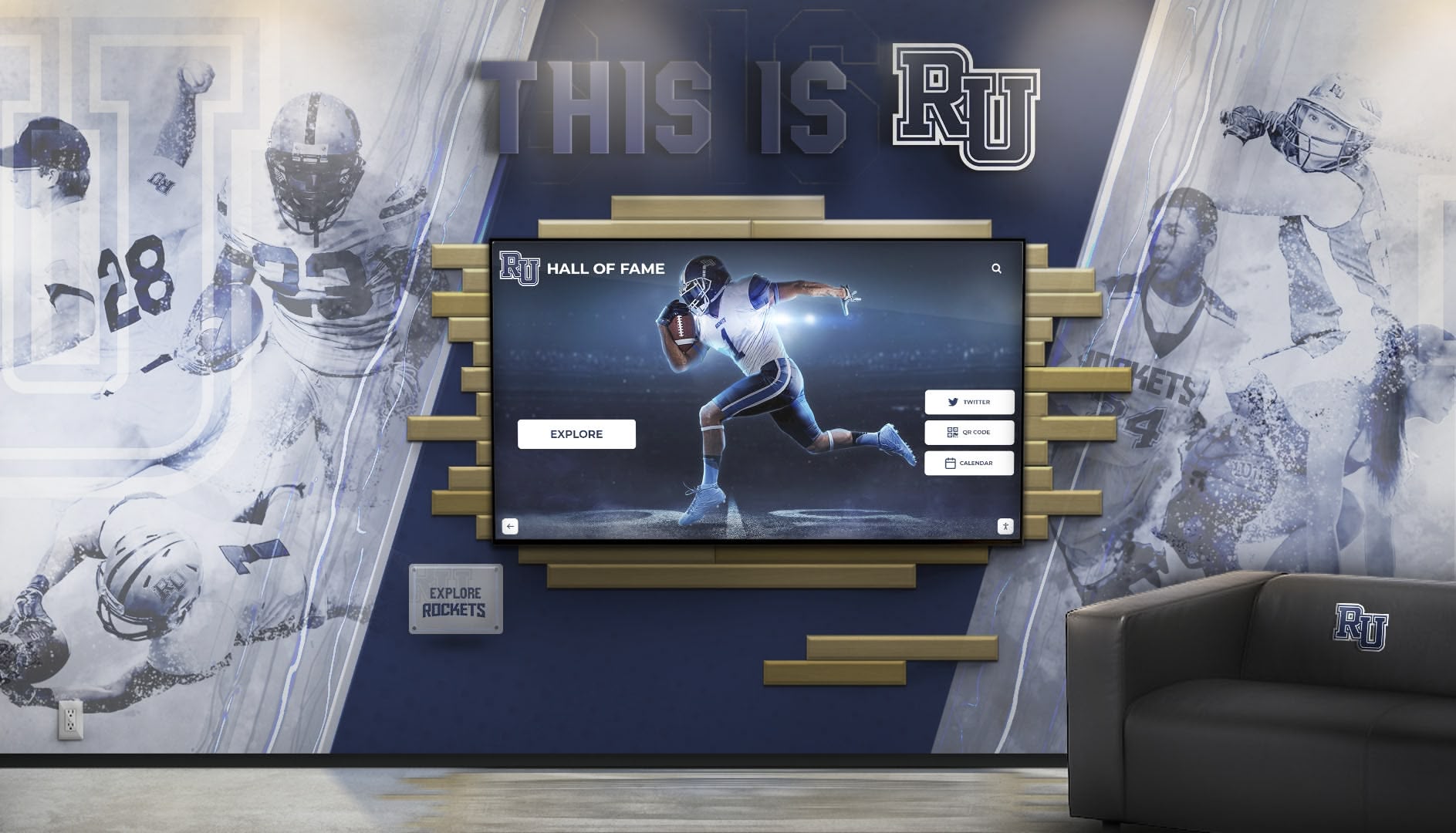
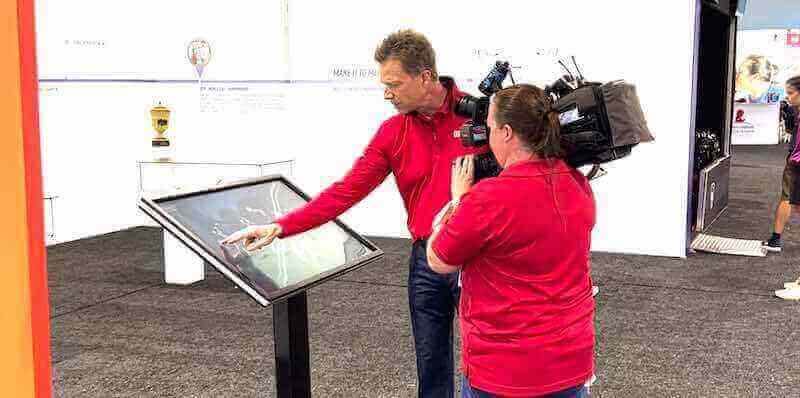
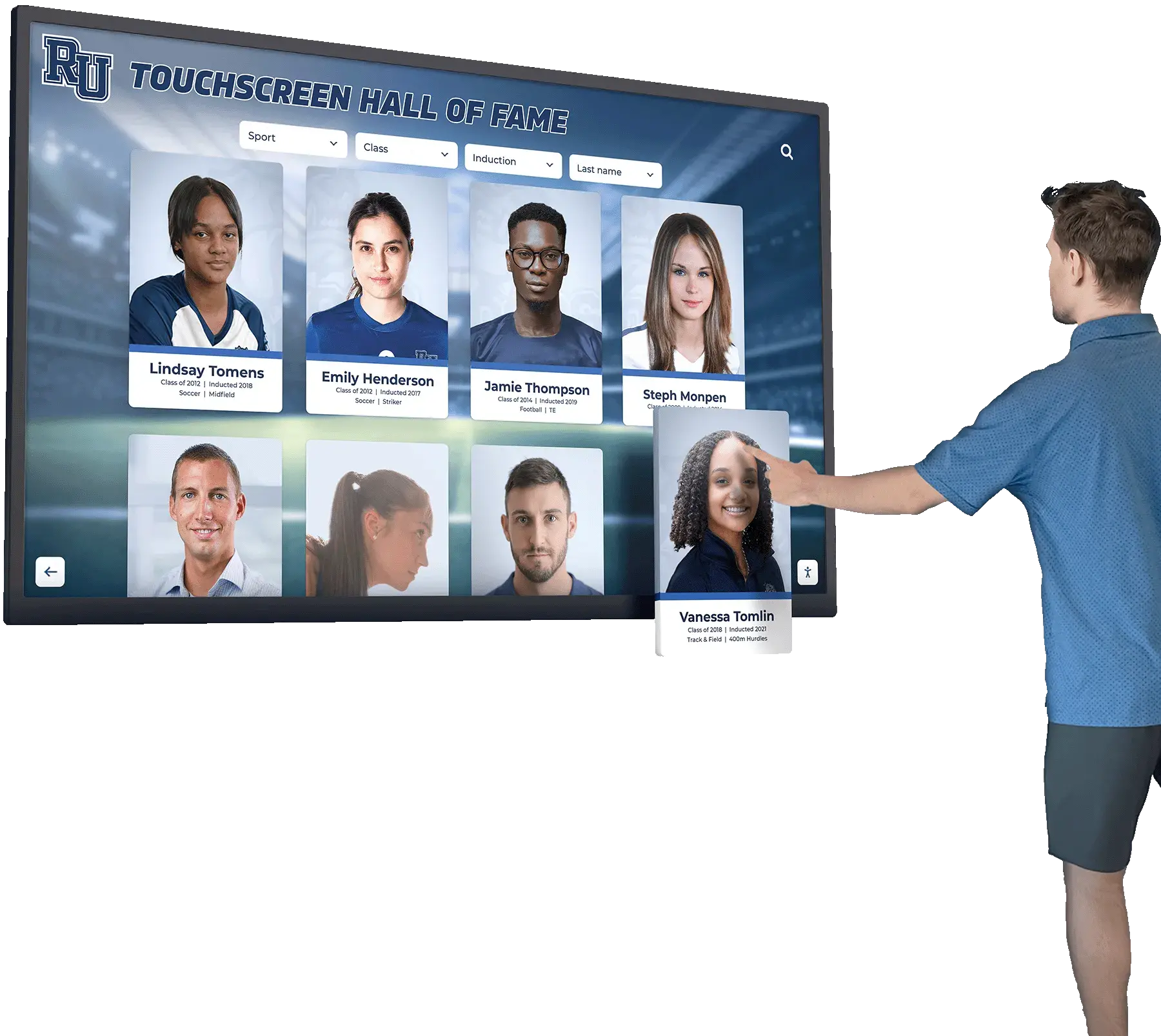
Modern installations combine wall graphics with interactive touchscreen technology creating comprehensive recognition spaces
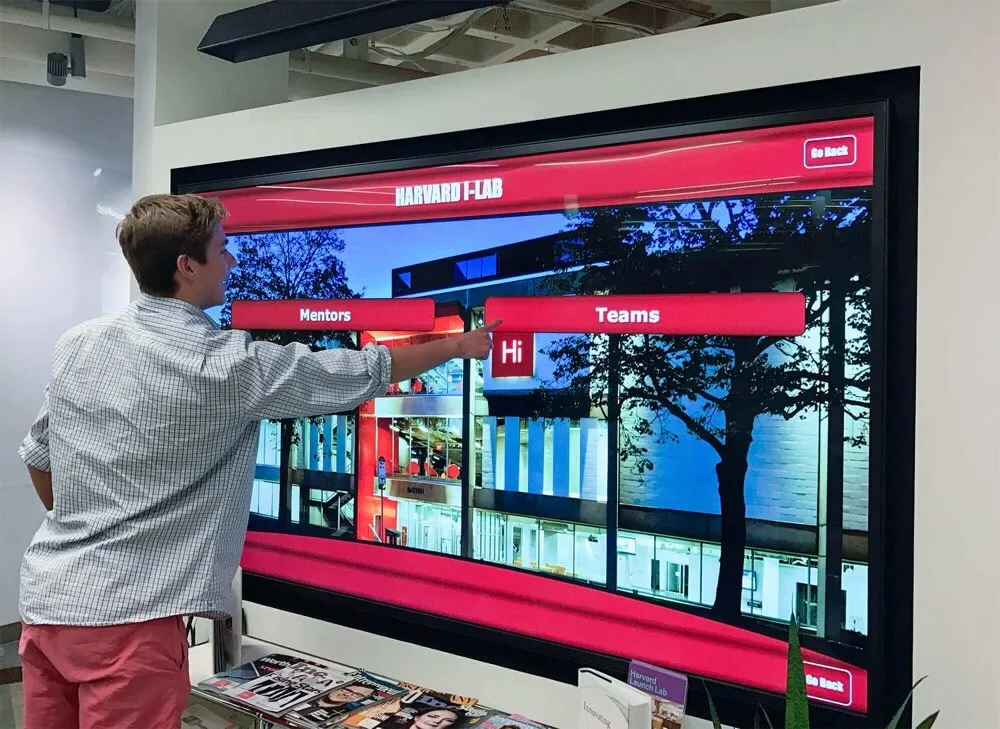
Many schools find that combining traditional wall wraps with digital touchscreen displays creates flexible systems where permanent branding elements on walls complement updatable digital recognition content, eliminating the need to modify wall graphics when current achievement information changes.
Quality Control and Acceptance
Installation Inspection Carefully inspect completed installations:
- Verify complete adhesion with no lifting edges
- Check seam alignment and visibility
- Confirm color accuracy matching approved proofs
- Identify any damage requiring repair
- Document any installation defects requiring correction
Punch List Development Create detailed list of any installation issues requiring contractor attention before final payment. Professional installers should address punch list items promptly.
Warranty Documentation Obtain warranty information covering:
- Material defect warranties (typically manufacturer-provided)
- Installation workmanship warranties (installer responsibility)
- Coverage periods and claim procedures
- Maintenance requirements affecting warranty validity
Maintenance and Longevity
Proper maintenance maximizes wall wrap lifespan and appearance.
Regular Maintenance Procedures
Routine Cleaning Wall wraps require minimal maintenance:
Standard Cleaning Protocol
- Wipe surfaces with soft, damp cloth removing dust and light marks
- Use mild soap and water solution for stubborn marks
- Avoid abrasive cleaners or rough scrubbing materials
- Never use solvents or harsh chemicals
- Dry surfaces completely after cleaning
Frequency Recommendations
- High-traffic areas: monthly cleaning
- Normal areas: quarterly cleaning
- Low-traffic spaces: semi-annual cleaning
Stain and Mark Removal Most marks respond to gentle cleaning, but specific stains may require targeted approaches:
- Pencil/pen marks: Soft eraser or isopropyl alcohol
- Scuff marks: Magic eraser or mild abrasive
- Adhesive residue: Careful application of adhesive remover
- Food/beverage: Mild soap solution
Damage Prevention
Protect wall wrap investment through:
- Installing bumper guards or protective panels in areas prone to equipment contact
- Educating custodial staff on proper cleaning techniques
- Addressing lifting edges immediately preventing further peeling
- Maintaining appropriate facility temperature and humidity
- Avoiding tape or adhesive application directly to vinyl
Expected Lifespan and Replacement
Longevity Expectations Interior wall wraps typically last:
- 10+ years in low-traffic protected areas
- 7-10 years in normal hallways and common spaces
- 5-7 years in high-impact athletic facilities with heavy equipment contact
Replacement Indicators Consider replacement when:
- Visible fading appears despite indoor installation
- Edge lifting becomes widespread
- Content becomes outdated requiring refresh
- Damage accumulation exceeds acceptable appearance
- Institutional rebranding necessitates updates
Removal Process Professional removal ensures wall protection:
- Apply heat loosening adhesive bond
- Peel vinyl carefully at appropriate angle
- Remove adhesive residue with appropriate solvents
- Repair any wall damage before new installation
- Professional removal prevents wall damage common with improper technique
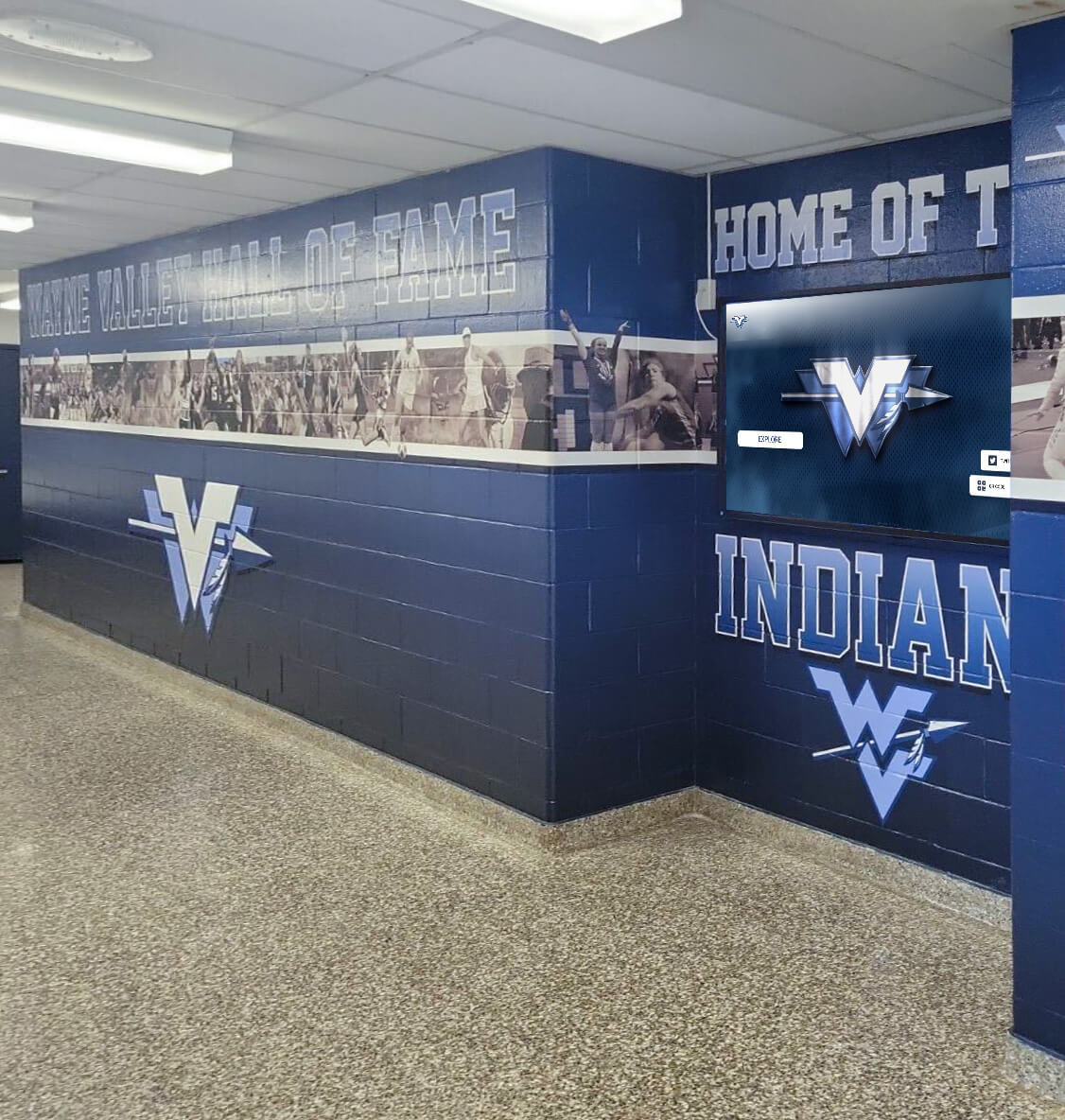
Well-maintained wall wraps retain appearance and impact for years in school environments with proper care
Integrating Wall Wraps With Digital Recognition Displays
The most effective recognition environments combine traditional wall graphics with modern digital displays.
Complementary Recognition Strategies
Physical and Digital Synergy Wall wraps and digital displays serve different recognition purposes:
Wall Wrap Strengths
- Permanent institutional identity and branding
- Timeless achievement categories and program information
- Large-scale visual impact creating immersive environments
- Cost-effective coverage of expansive wall areas
- Zero ongoing operational costs after installation
Digital Display Advantages
- Current achievement information updating regularly
- Searchable databases enabling visitors to find specific individuals
- Unlimited recognition capacity unconstrained by physical space
- Detailed profiles with photos, statistics, and achievements
- Easy content updates without physical modifications
Combined Implementation Strategic integration provides comprehensive recognition:
Wall Graphics for Context Install wall wraps establishing visual themes, showcasing mascots, displaying school colors, and presenting unchanging recognition categories. These graphics frame and contextualize digital content.
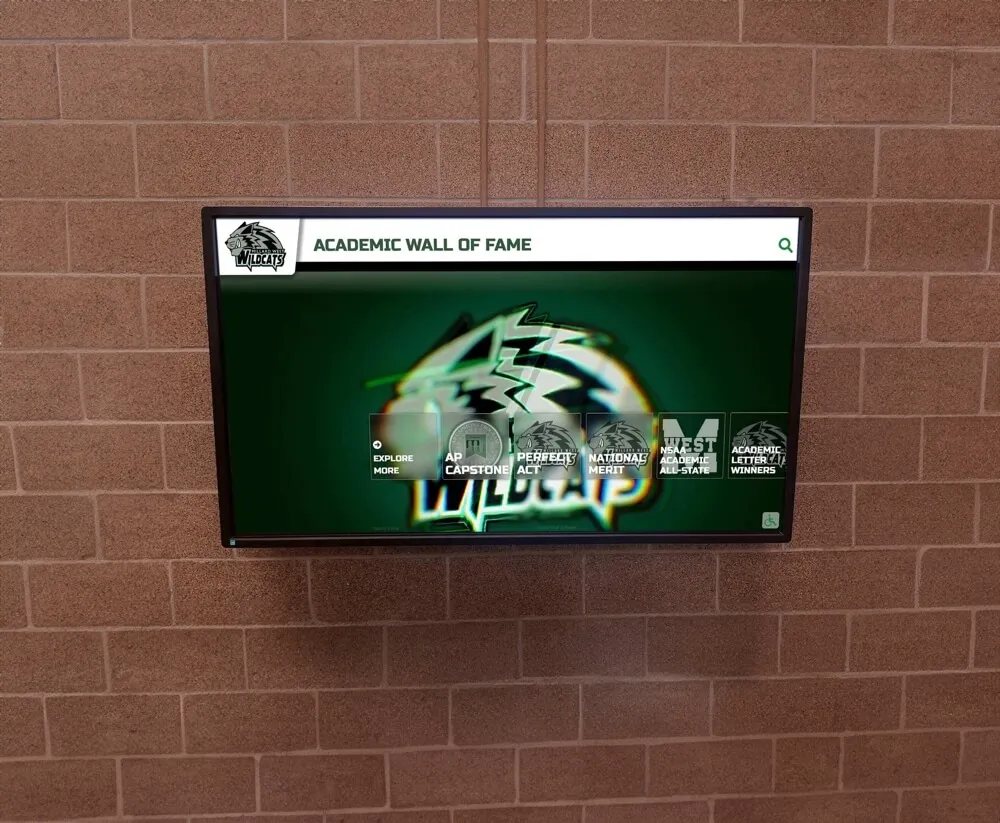
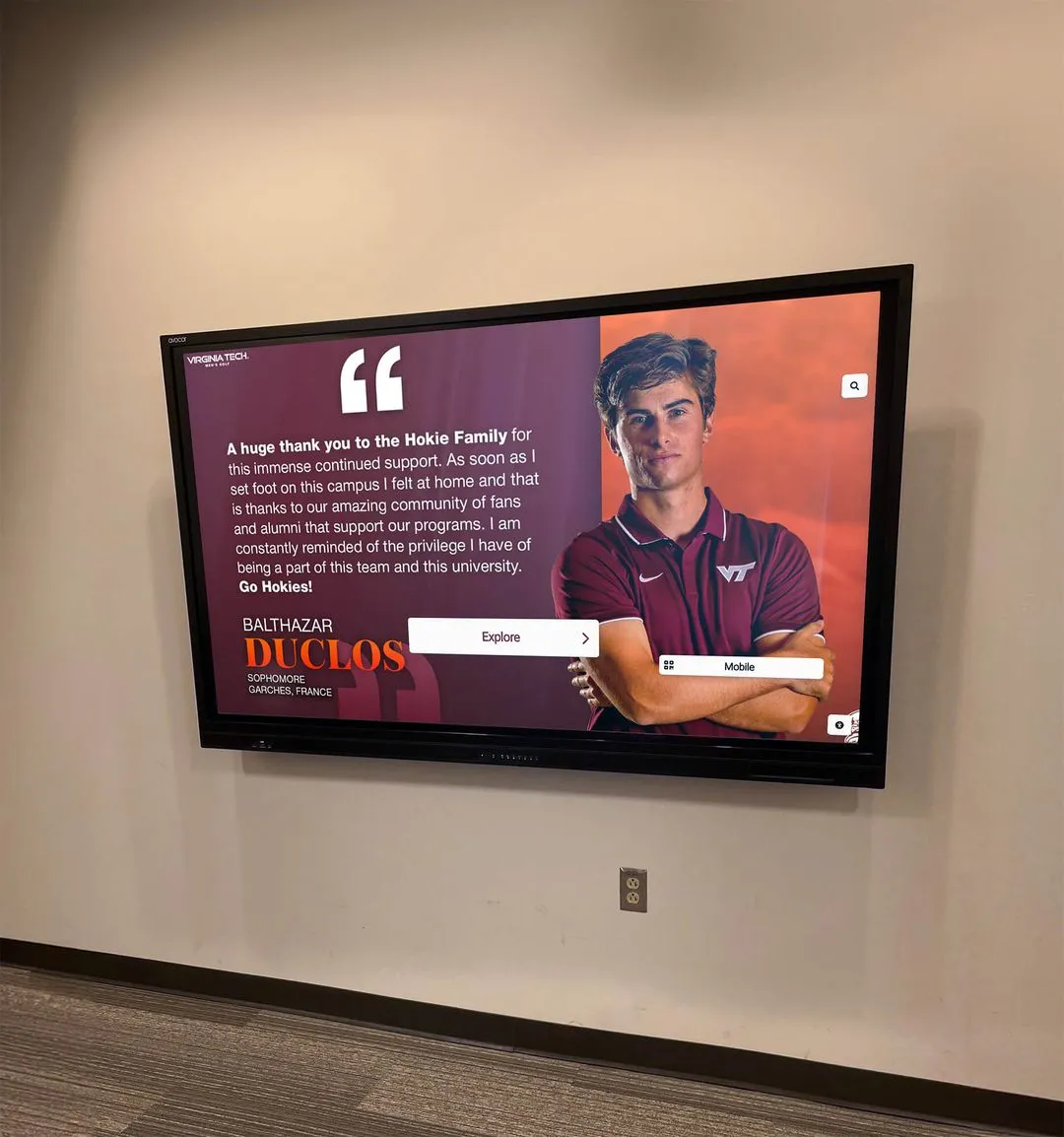
Digital Displays for Current Content Mount interactive touchscreen displays within wall wrap environments presenting current honor roll, recent championships, current student-athlete profiles, and regularly updating achievement information.
This combination delivers the visual impact of wall graphics without the inflexibility of static content, enabling schools to maintain current recognition without repeatedly modifying wall installations.
Design Integration Strategies
Coordinated Visual Design Ensure wall graphics and digital displays work cohesively:
- Match color palettes between physical and digital elements
- Coordinate typography and font selections
- Align design themes and visual styles
- Plan physical wall graphics around digital display placement
- Consider sightlines ensuring both elements remain visible
Spatial Planning Strategic placement maximizes both elements:
- Position digital displays at comfortable viewing height within wall graphic environment
- Design wall graphics directing attention toward interactive elements
- Ensure adequate space around digital displays preventing crowding
- Consider viewing distances for both static graphics and interactive screens
- Plan for electrical and data connectivity requirements for digital displays
For schools planning comprehensive recognition spaces, explore digital display solutions for schools that integrate with traditional wall graphics creating unified environments.
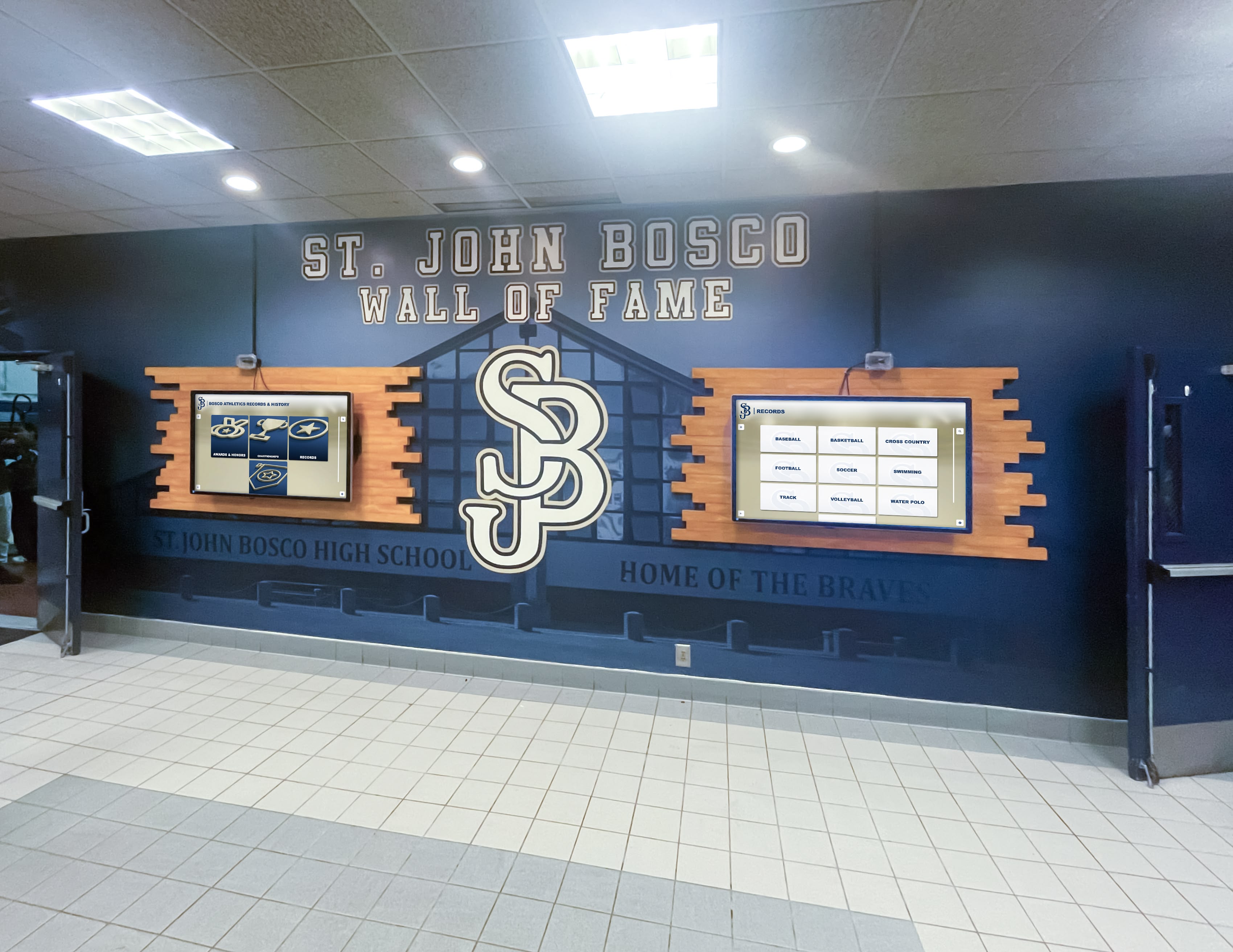
Integrated installations featuring wall graphics alongside multiple digital displays create comprehensive recognition showcases
Common Wall Wrap Applications in Schools
Different school spaces benefit from specific wall wrap approaches.
Entry and Administrative Areas
Main Entrance Installations First impressions establish tone for entire facility:
- Large-scale school logo and mascot graphics
- Mission statement and core values displays
- Founding date and institutional history highlights
- Welcome messaging in multiple languages
- Visual timeline showing school evolution
Administrative Office Graphics Professional appearance matters in administrative spaces:
- Refined typography and sophisticated color palettes
- Achievement highlights and academic excellence displays
- College acceptance and scholarship information
- Staff directory and organizational structure
- Community partnership recognition
Athletic Facilities
Gymnasium Wall Wraps Athletic venues benefit from high-impact graphics:
- Oversized mascot imagery dominating end walls
- Championship banner documentation
- Retired jersey recognition displays
- Athletic department branding and identity
- Motivational messaging for athletes and spectators
Locker Room Graphics Team spaces build program culture:
- Sport-specific motivational content
- Team values and expectations
- Historical program achievement references
- Position-specific educational content
- Roster and current season information (using changeable overlays)
Weight Room and Training Facilities Training spaces benefit from motivational design:
- Inspirational athletic quotes and imagery
- Proper technique instruction graphics
- Safety reminder messaging
- Program record boards
- Athletic performance standards
Academic Spaces
Hallway and Corridor Applications Central circulation spaces provide consistent exposure:
- Wayfinding and directional graphics
- Subject-specific educational content
- Historical timelines and institutional heritage
- Student achievement recognition
- College and career pathway information
Department-Specific Graphics Academic wings benefit from subject-appropriate design:
- STEM imagery and scientific concepts near science classrooms
- Literary quotes and author references near English departments
- Historical events and figures near social studies areas
- Mathematical concepts and formulas near math classrooms
- Foreign language and cultural content near world language programs
Library and Media Center Learning commons warrant thoughtful graphics:
- Reading promotion and literacy messaging
- Author and book recommendations
- Research process instruction
- Information literacy concepts
- Quiet study reminders and expectations
Common Areas and Gathering Spaces
Cafeteria Graphics Dining areas accommodate various messaging:
- Nutrition information and healthy eating promotion
- School community values and behavioral expectations
- Student artwork showcases
- Lunch period schedules and procedures
- Cultural celebration and diversity recognition
Stairwell Installations Vertical spaces offer dramatic impact opportunities:
- Multi-story installations creating visual landmarks
- Sequential information across floor levels
- Motivational messaging encountered during transitions
- Physical activity and health promotion
- Emergency wayfinding and evacuation route identification
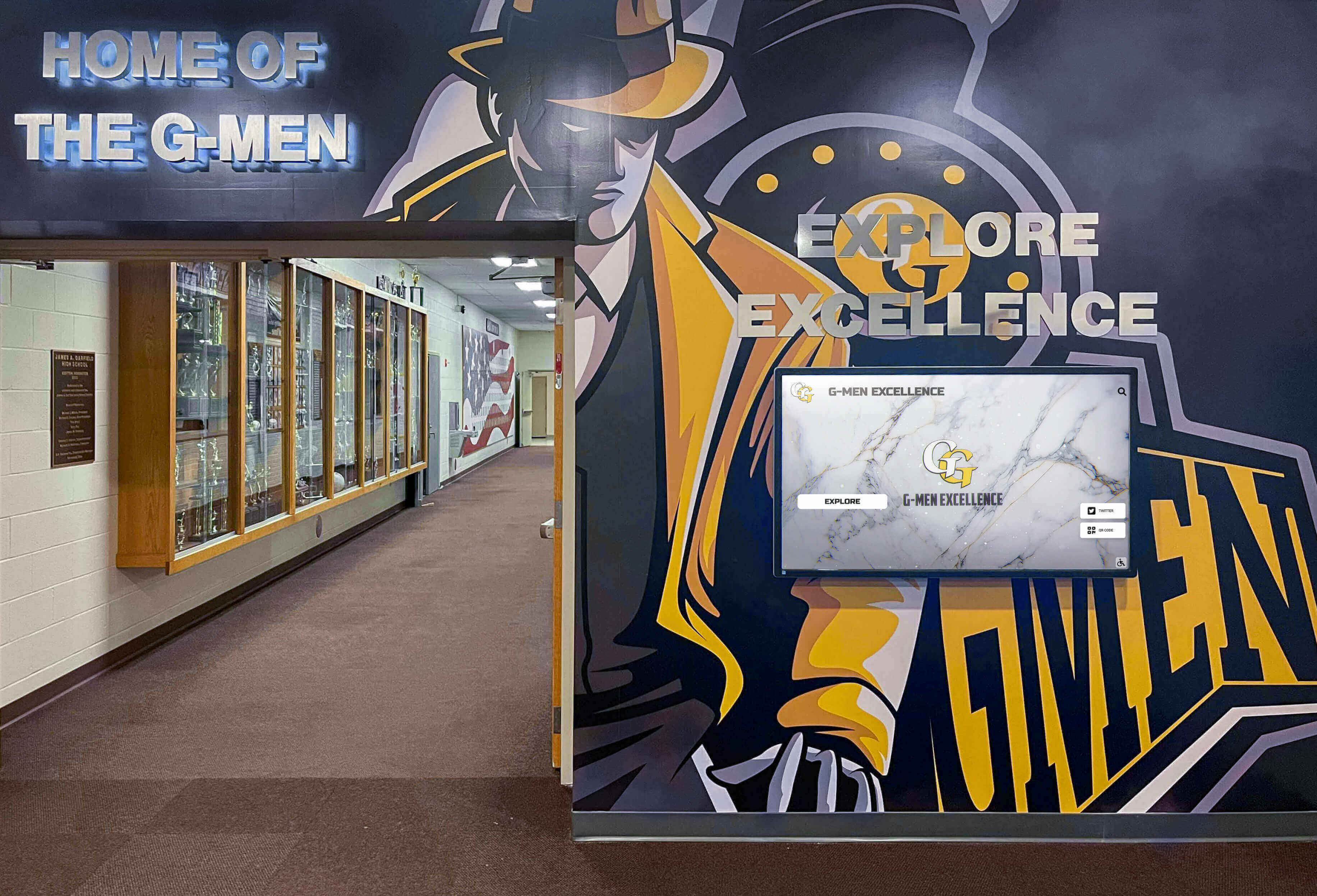
Comprehensive athletics areas combine wall murals, trophy displays, and digital screens creating immersive program showcases
Implementation Challenges and Solutions
Schools implementing wall wrap programs encounter common challenges with established solutions.
Budget Constraints
Challenge: Limited facility budgets make comprehensive installation difficult.
Solutions:
- Phased implementation: Begin with high-impact entrance areas building stakeholder support for expansion
- Booster group fundraising: Athletic boosters often fund gymnasium and athletic facility graphics
- Grant applications: Facility improvement grants sometimes cover wall graphics as learning environment enhancements
- Partnership opportunities: Local businesses may sponsor wall wraps receiving discrete recognition
- Prioritize high-impact areas: Better to fully complete priority spaces than spread insufficient budget across entire campus
Content Development Challenges
Challenge: Developing appropriate content requires design expertise schools may lack internally.
Solutions:
- Professional design services: Investment in professional design services typically delivers superior results justifying cost
- Vendor design packages: Many wall wrap installers offer design services bundled with production and installation
- Template customization: Some providers offer customizable templates reducing custom design costs
- Student involvement: Advanced art students can contribute design elements under professional guidance
- Committee collaboration: Stakeholder committees ensure content reflects diverse perspectives and community values
Stakeholder Agreement
Challenge: Achieving consensus on designs, locations, and priorities involves multiple stakeholders with varied perspectives.
Solutions:
- Clear decision framework: Establish who makes final decisions preventing endless debate
- Committee representation: Include diverse stakeholder representation ensuring broad input
- Multiple design options: Present several design directions gathering feedback before refinement
- Prioritization process: Use structured prioritization identifying areas of agreement
- Pilot projects: Small initial installations demonstrate value building support for expansion
Maintenance and Damage Management
Challenge: High-traffic school environments risk damaging even durable wall graphics.
Solutions:
- Strategic protection: Install protective barriers or bumpers in areas prone to equipment contact
- Quality material selection: Premium vinyl and lamination provide superior damage resistance
- Staff training: Educate custodial staff on proper cleaning preventing damage
- Prompt repairs: Address lifting edges and minor damage immediately preventing escalation
- Replacement planning: Budget for periodic replacement in highest-impact areas
Technology Integration Complexity
Challenge: Coordinating wall graphics with digital display installation involves multiple trades and precise planning.
Solutions:
- Advance planning: Design wall graphics accounting for digital display placement before production
- Vendor coordination: Ensure wall wrap and digital display installers coordinate timing and specifications
- Infrastructure preparation: Complete electrical and data installations before wall graphic application
- Mock-up review: Review physical mockups or detailed renderings confirming layout before production
- Single-source providers: Some companies offer both wall graphics and digital display installation simplifying coordination
Selecting Wall Wrap Vendors and Partners
Vendor selection significantly impacts results and experience.
Vendor Evaluation Criteria
Experience and Portfolio Review vendor qualifications carefully:
- Specific experience with educational facility projects
- Portfolio demonstrating quality, design range, and project scale
- References from other schools and educational institutions
- Years in business and financial stability
- Professional certifications and training
Design Capabilities Assess design services:
- In-house design team versus outsourced services
- Design process and stakeholder collaboration approach
- Revision policy and iteration allowance
- Technical expertise in large-format graphics
- Understanding of educational environment requirements
Production Quality Evaluate production capabilities:
- Printing technology and equipment quality
- Material selection and sourcing
- Quality control procedures
- Production capacity and typical timelines
- Ability to handle rush projects when necessary
Installation Expertise Installation quality matters enormously:
- Professional installer training and certification
- Installation crew size and experience level
- Equipment availability for challenging installations
- Insurance coverage and liability protection
- Workmanship warranty terms and duration
Project Management Effective coordination ensures smooth implementation:
- Single point of contact for project duration
- Communication frequency and responsiveness
- Timeline management and schedule adherence
- Problem-solving approach when challenges emerge
- Post-installation support availability
Proposal and Contract Considerations
Detailed Scope Documentation Comprehensive proposals should specify:
- Exact square footage and coverage areas
- Material specifications including vinyl type and lamination
- Design services included versus additional charges
- Surface preparation scope and responsibilities
- Installation timeline and scheduling requirements
- Project milestones and payment schedule
- Warranty coverage and duration
- Exclusions and items not included
Pricing Structure Clarity Understand complete costs:
- Material costs separated from labor
- Design fees itemized clearly
- Surface preparation charges if applicable
- Installation costs including equipment and labor
- Travel or mobilization fees if applicable
- Change order procedures and pricing
- Payment terms and schedule
Warranty and Support Secure appropriate protections:
- Material defect warranty (typically manufacturer-provided)
- Installation workmanship warranty duration
- Warranty claim procedures and response timeframes
- Maintenance requirements affecting warranty
- Post-installation support availability
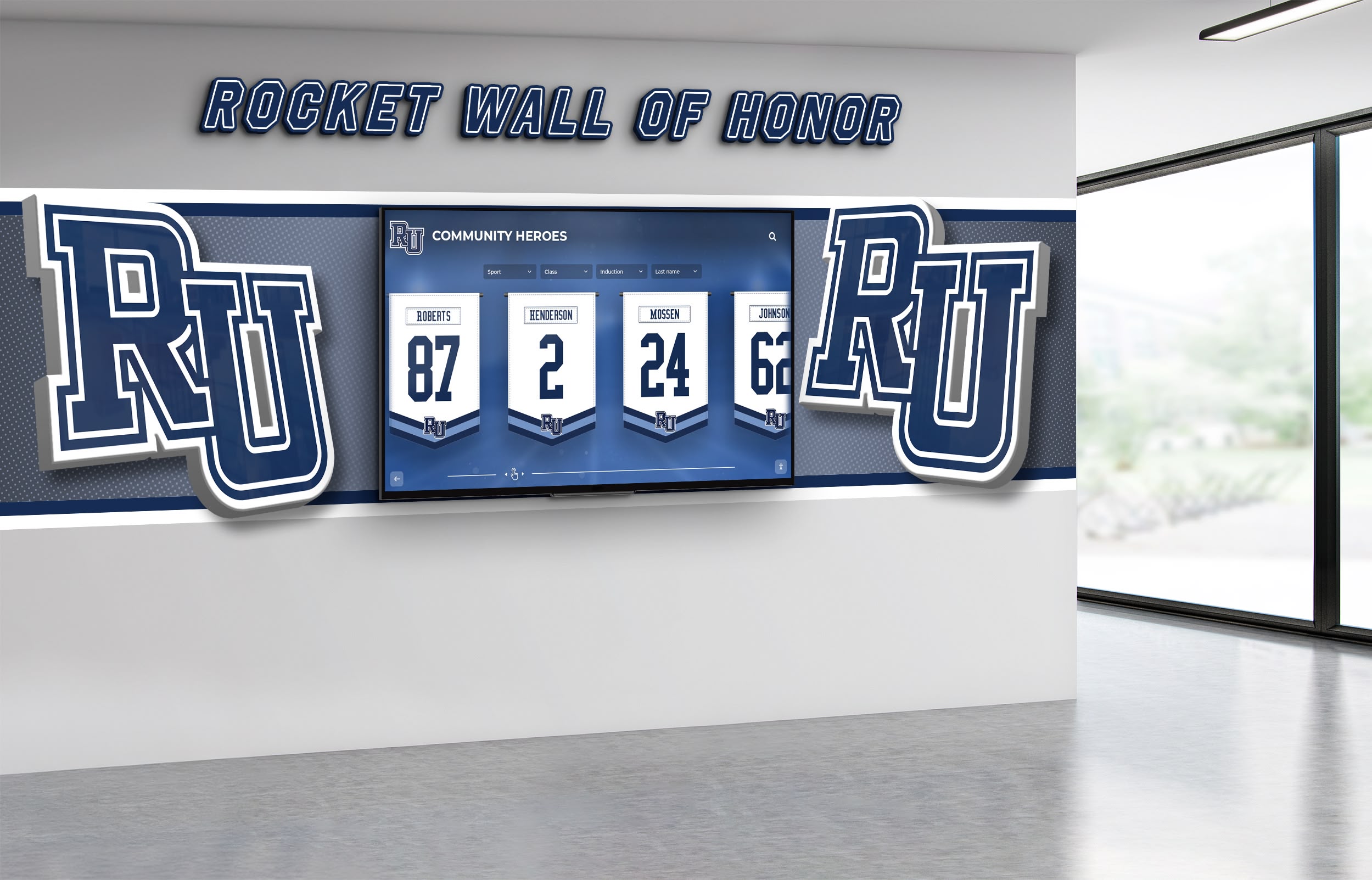
Modern recognition environments seamlessly integrate wall graphics with digital displays creating comprehensive showcases
Case Study Approaches: Wall Wrap Applications by School Type
Different educational institutions benefit from customized approaches.
Elementary Schools
Design Considerations Elementary facilities warrant age-appropriate approaches:
- Bright, engaging colors capturing young attention
- Character education and behavioral expectation graphics
- Alphabet, number, and basic concept educational content
- Growth mindset and encouragement messaging
- Diverse representation ensuring all students see themselves
Content Priorities Elementary wall wraps typically emphasize:
- School mascot and identity in child-friendly style
- Reading promotion and literacy encouragement
- Core values and character education
- Wayfinding using colors and visual symbols
- Student artwork displays celebrating creativity
Safety and Durability Elementary applications require:
- Enhanced protective lamination withstanding contact
- Non-toxic materials meeting school safety standards
- Rounded corners and safe edge treatments
- Easy-clean surfaces addressing frequent marks
- Secure installation preventing peeling attractive to curious children
Middle Schools
Transitional Environment Design Middle school graphics balance maturity with age-appropriateness:
- Sophisticated design avoiding elementary appearance
- Identity and belonging messaging during difficult developmental period
- Academic pathway information introducing career exploration
- Diversity and inclusion themes supporting acceptance
- Achievement recognition motivating academic and behavioral excellence
Content Focus Areas Middle school installations often feature:
- Subject-specific educational content supporting curriculum
- Anti-bullying and character education messaging
- Athletics and extracurricular program promotion
- Organizational wayfinding for larger facilities
- Student voice through periodically rotating design elements
High Schools
College and Career Ready Messaging Secondary school graphics prepare students for next steps:
- College acceptance and scholarship celebration
- Career pathway exploration and technical program promotion
- Alumni success stories connecting current students to futures
- Academic rigor and advanced coursework encouragement
- Athletic program pride and tradition
Comprehensive Identity Systems High school installations typically include:
- Extensive athletic facility graphics building home advantage
- Academic department identity establishing subject pride
- Historical timeline celebrating decades of tradition
- Achievement recognition across multiple dimensions
- Professional aesthetics reflecting institutional maturity
Post-Secondary Institutions
College and University Applications Higher education facilities warrant sophisticated approaches:
- Alumni achievement showcases
- Research and academic excellence documentation
- Athletic program tradition and championship history
- Donor recognition and fundraising campaign promotion
- Campus navigation for visitors and new students
Professional Design Standards Post-secondary graphics require:
- Refined aesthetics matching institutional brand guidelines
- Sophisticated typography and restrained color palettes
- Archival content preserving institutional history
- Integration with digital alumni recognition systems
- Professional wayfinding for complex campuses
Future Trends in School Wall Graphics
Wall wrap technology and applications continue evolving.
Emerging Technologies
Augmented Reality Integration Future wall graphics may incorporate AR elements:
- QR codes triggering digital content overlays
- Interactive experiences accessible via mobile devices
- Animated content appearing through smartphone cameras
- Historical imagery transforming to contemporary views
- Additional information layers beyond static graphics
Smart Material Development Material innovation enables new capabilities:
- Color-changing materials responding to environmental conditions
- Antimicrobial surfaces supporting health initiatives
- Enhanced durability extending replacement cycles
- Improved installation characteristics simplifying application
- Recyclable materials supporting sustainability goals
Digital Printing Advances Production technology improvements enable:
- Enhanced color accuracy and consistency
- Finer detail resolution
- Faster production reducing lead times
- Expanded material compatibility
- Reduced costs through production efficiency
Design Trend Evolution
Sustainability Emphasis Environmental consciousness influences design:
- Nature-inspired biophilic designs supporting wellbeing
- Sustainability messaging and environmental education
- Recycled and eco-friendly material preferences
- Energy efficiency through strategic color selection
- Longevity-focused design reducing replacement frequency
Inclusive Design Priorities Expanding accessibility and representation:
- Universal design principles accommodating all abilities
- Multilingual content serving diverse communities
- Culturally responsive design celebrating all backgrounds
- Gender-inclusive messaging and imagery
- Neurodiverse-friendly design considerations
Integrated Systems Approach Comprehensive environmental design thinking:
- Coordinated wall graphics, signage, and digital displays
- Unified brand experiences across all touchpoints
- Physical and digital content strategy alignment
- Modular design systems enabling phased implementation
- Flexible frameworks accommodating future evolution
Conclusion: Transforming School Environments Through Strategic Wall Wraps
Wall wraps represent powerful tools for transforming educational facilities into engaging, inspiring environments that celebrate achievement, reinforce institutional identity, and support learning objectives. When strategically planned, professionally designed, and properly installed, vinyl wall graphics deliver dramatic visual impact at costs significantly below traditional renovation approaches while providing flexibility impossible with permanent construction.
The most effective school wall wrap programs emerge from clear objective definition, thoughtful location prioritization, professional design collaboration, quality material selection, and expert installation. Schools succeed by viewing wall graphics not as decorative additions but as strategic investments in institutional culture, student engagement, and community connection.
Ready to Transform Your School Environment?
Discover how combining wall wraps with modern digital recognition displays creates comprehensive showcases celebrating every achievement while maintaining your school's unique identity and traditions.
Book a DemoModern recognition strategies increasingly combine traditional wall graphics providing permanent visual context with digital touchscreen displays delivering current, searchable content. This integration delivers the emotional impact of large-scale graphics without the inflexibility of static content requiring physical modification every time achievements update.
Whether beginning with high-impact entrance transformations, comprehensive athletic facility installations, or phased campus-wide programs, wall wraps enable schools to create environments reflecting their unique identity, celebrating their achievements, and inspiring their communities. The combination of strategic planning, professional execution, and thoughtful maintenance ensures these investments deliver value for years while supporting institutional missions through powerful visual communication.
Your school environment communicates volumes about institutional priorities, pride, and professionalism. Strategic wall wrap implementation transforms facilities into showcases worthy of your students, staff, and community while staying within facility improvement budgets. Start with priority spaces creating immediate impact, then expand systematically as budget allows and stakeholder support builds.
Ready to begin transforming your school environment? Explore comprehensive recognition solutions combining wall graphics with digital displays at Rocket Alumni Solutions, or contact our team to explore how wall wraps and interactive technology can work together celebrating your school’s unique story.
Sources: