



Small to medium public high schools face unique challenges when it comes to recognizing student achievement. With limited budgets, small administrative teams, and competing priorities, these schools need recognition solutions that deliver maximum impact without demanding extensive resources. Many administrators assume that comprehensive digital recognition systems like Rocket Alumni Solutions represent unaffordable luxury reserved for large, well-funded districts.
This assumption overlooks how modern digital recognition platforms actually address the specific constraints facing smaller public schools. Rather than adding complexity and expense, well-designed systems reduce ongoing costs, minimize administrative burden, and provide recognition capacity impossible with traditional approaches. The question isn’t whether small schools can afford comprehensive recognition—it’s whether they can afford to continue with outdated methods that consume resources while delivering limited results.
Small to medium public high schools between 200-1,200 students represent the sweet spot where Rocket Alumni Solutions delivers outsized value. These institutions have sufficient recognition needs to justify dedicated systems while lacking resources for extensive manual maintenance. This comprehensive analysis explores why Rocket specifically serves this segment effectively, addressing budget realities, implementation requirements, and practical outcomes from similar schools.
Public high schools operating with constrained budgets and limited staff naturally scrutinize every expenditure carefully. Recognition systems must justify costs through measurable benefits while avoiding ongoing expenses that strain annual budgets. Understanding how Rocket addresses these requirements specifically for smaller public schools requires examining both capabilities and practical implementation realities.

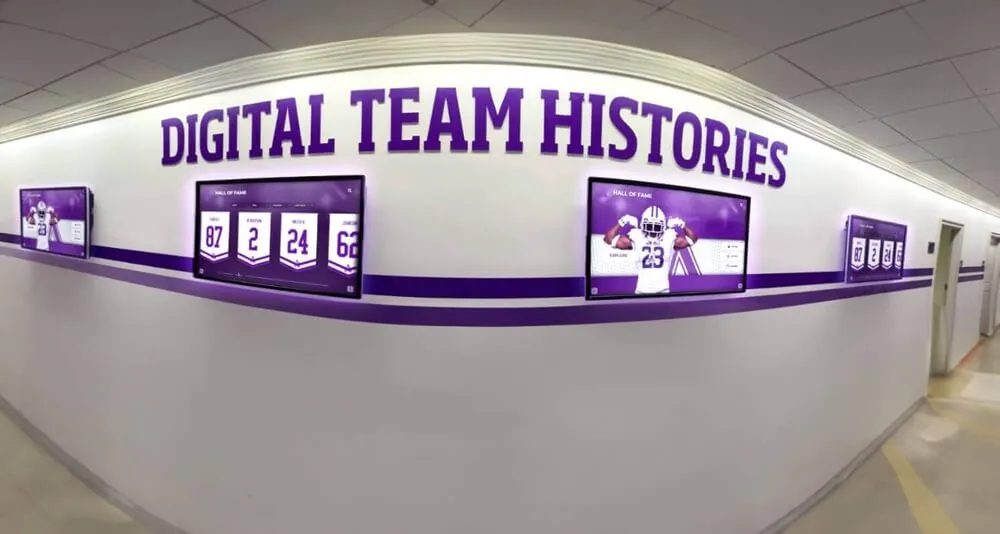
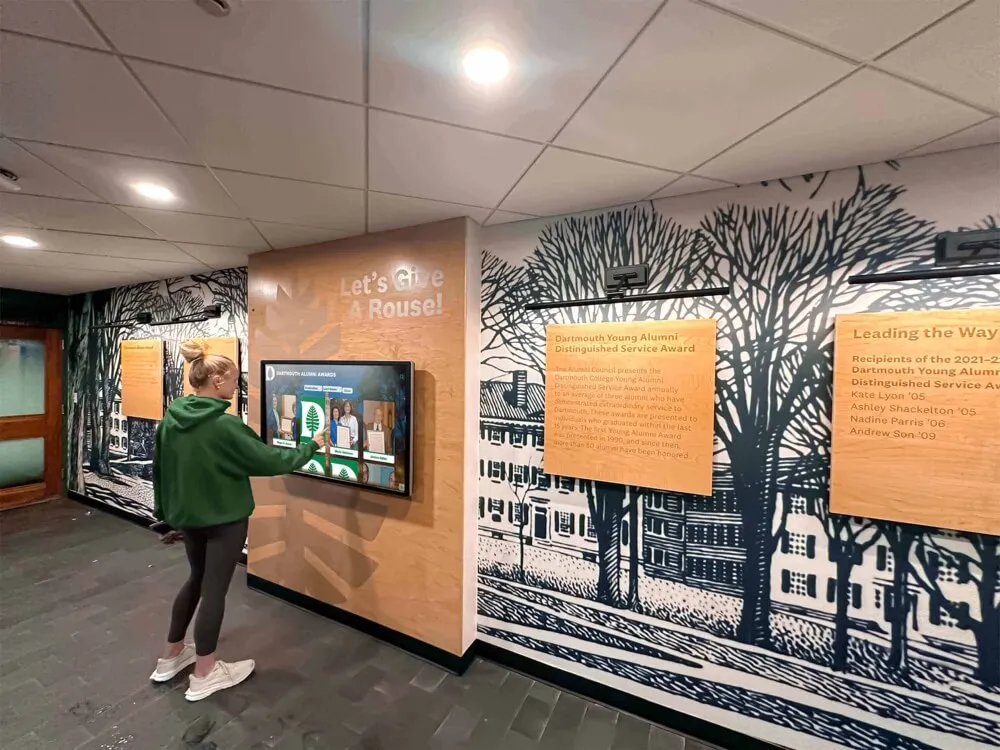
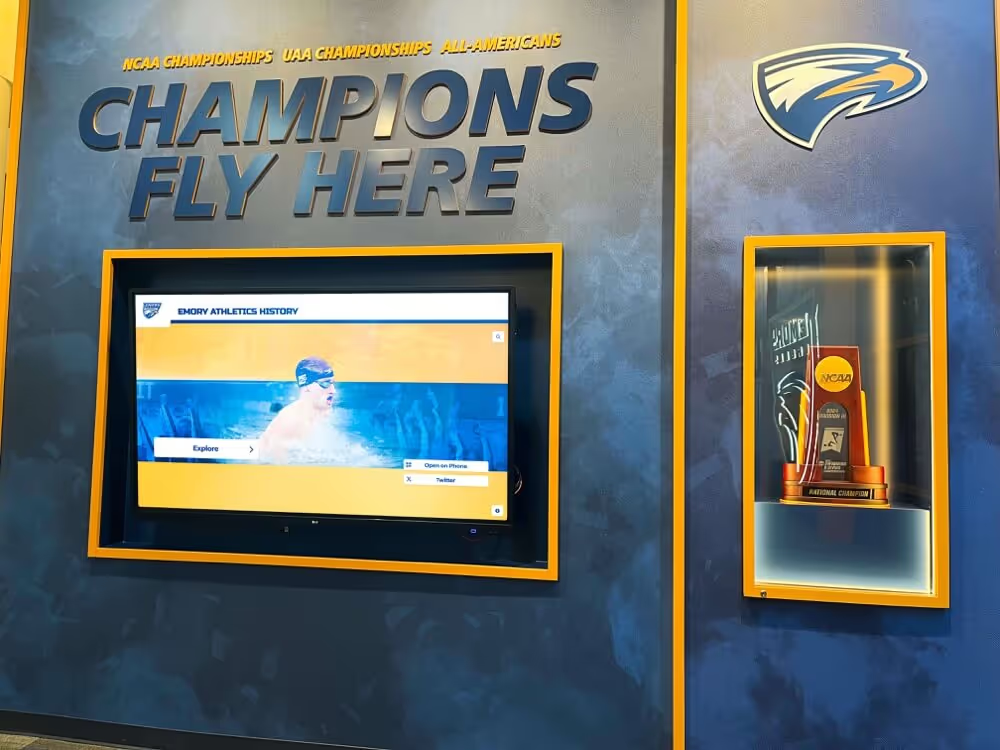
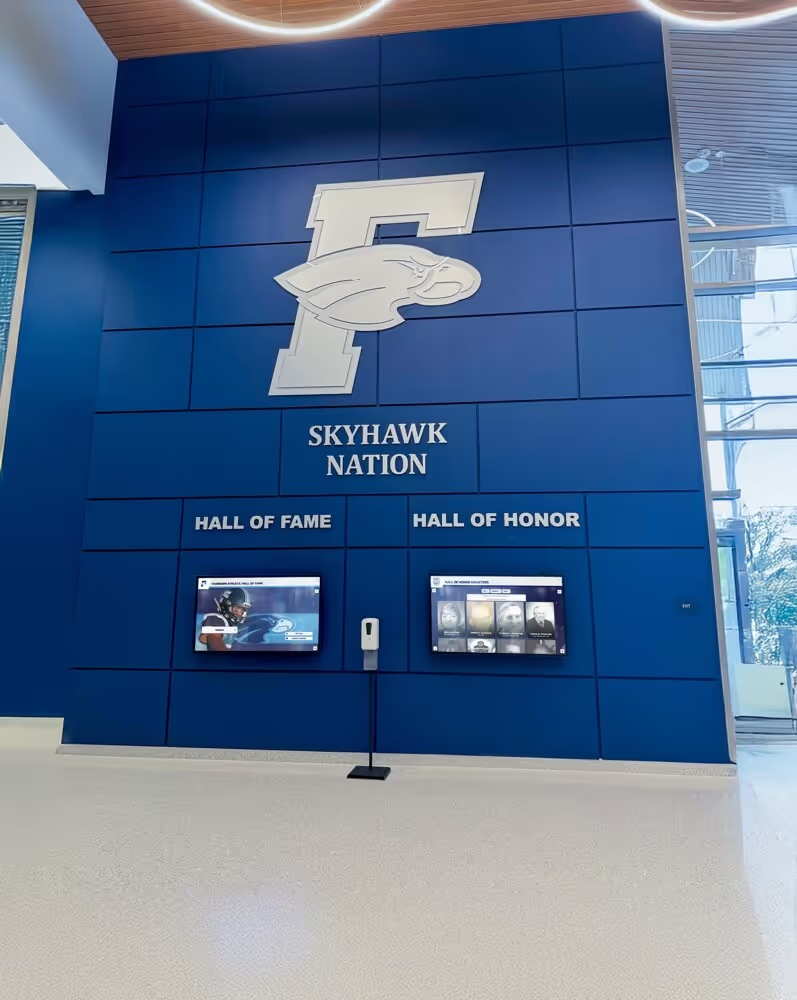
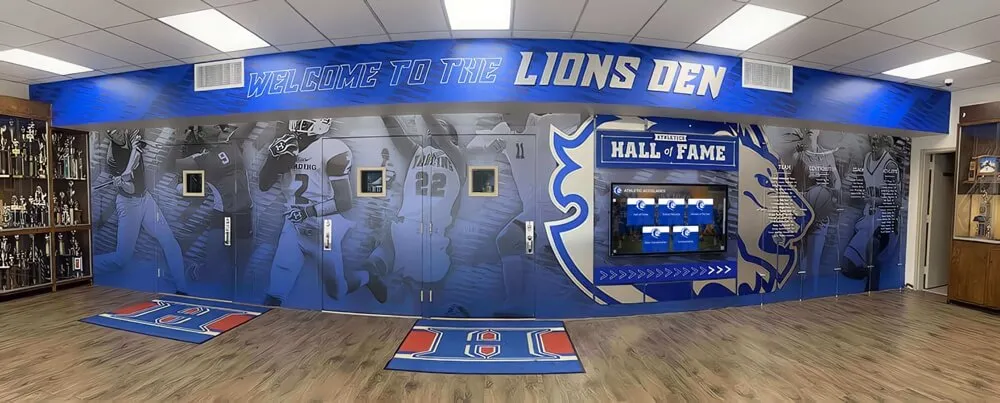
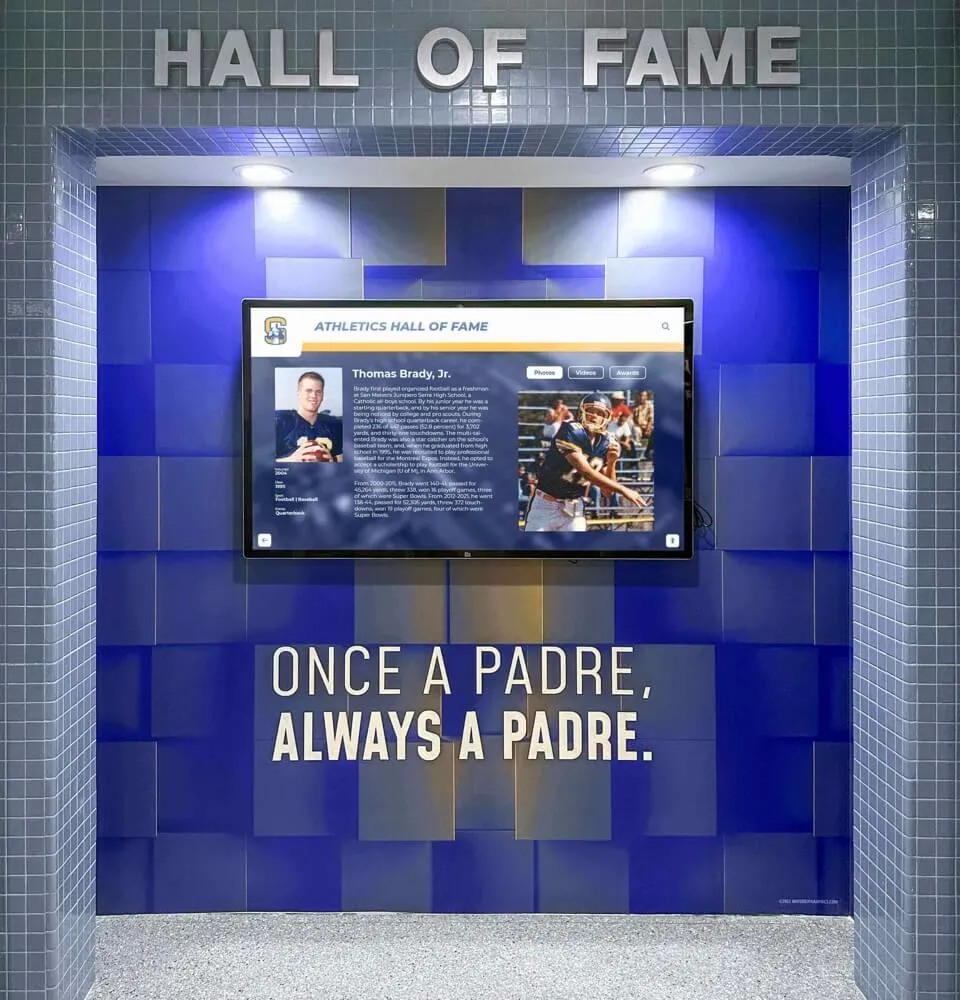
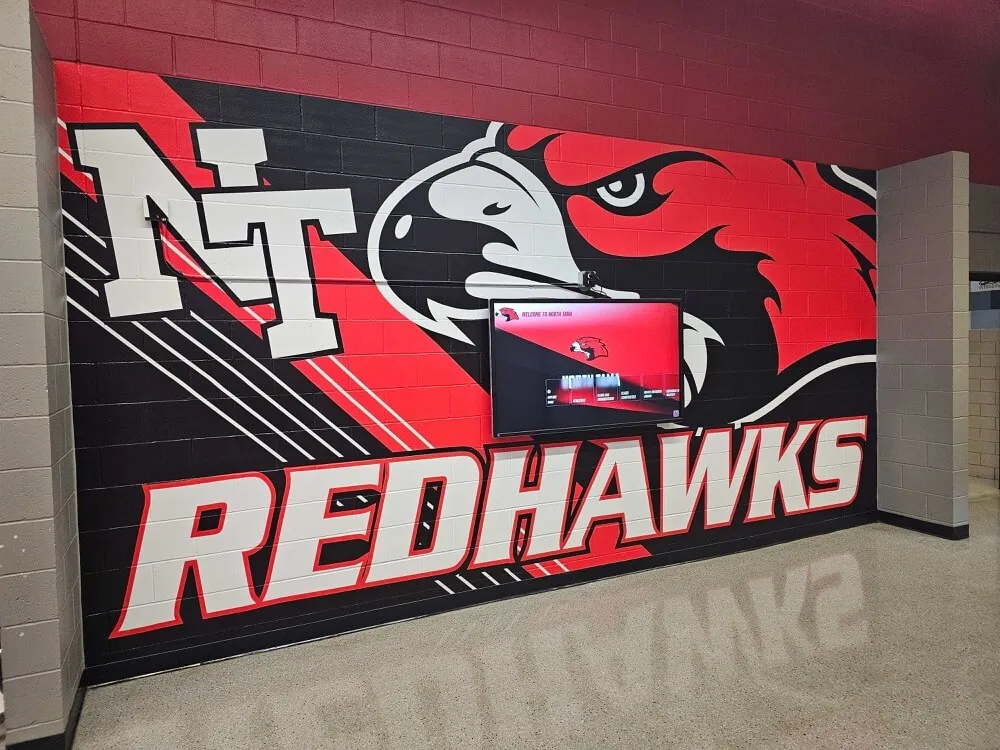
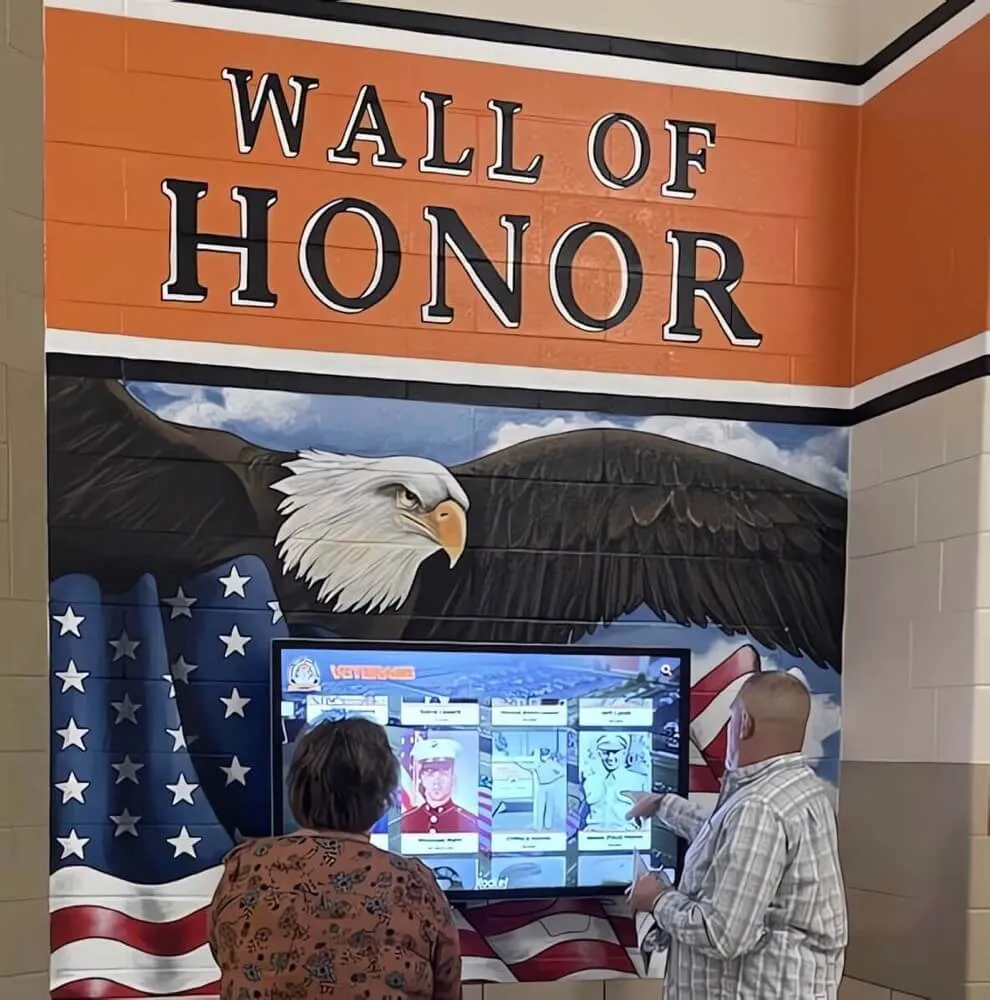
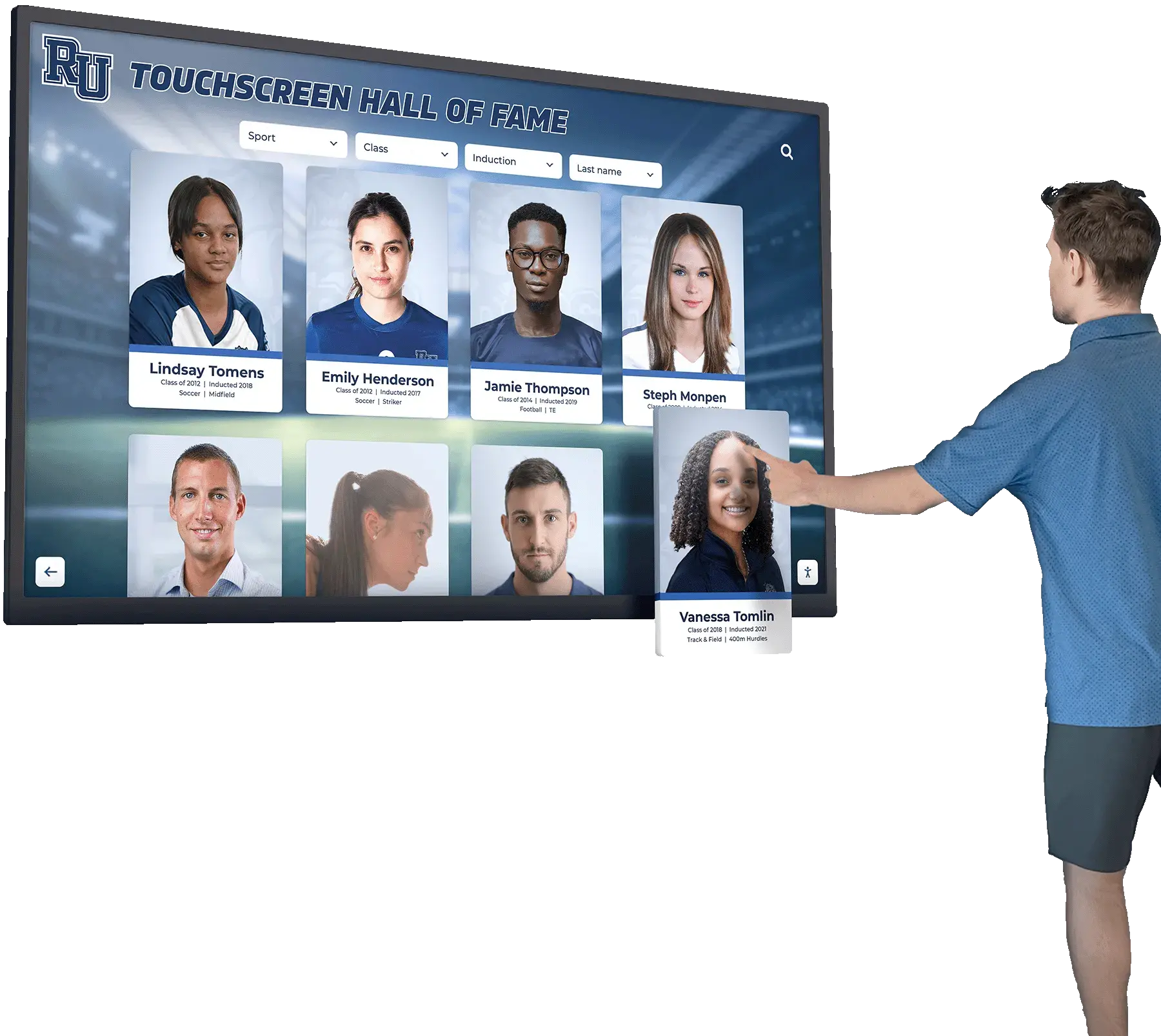
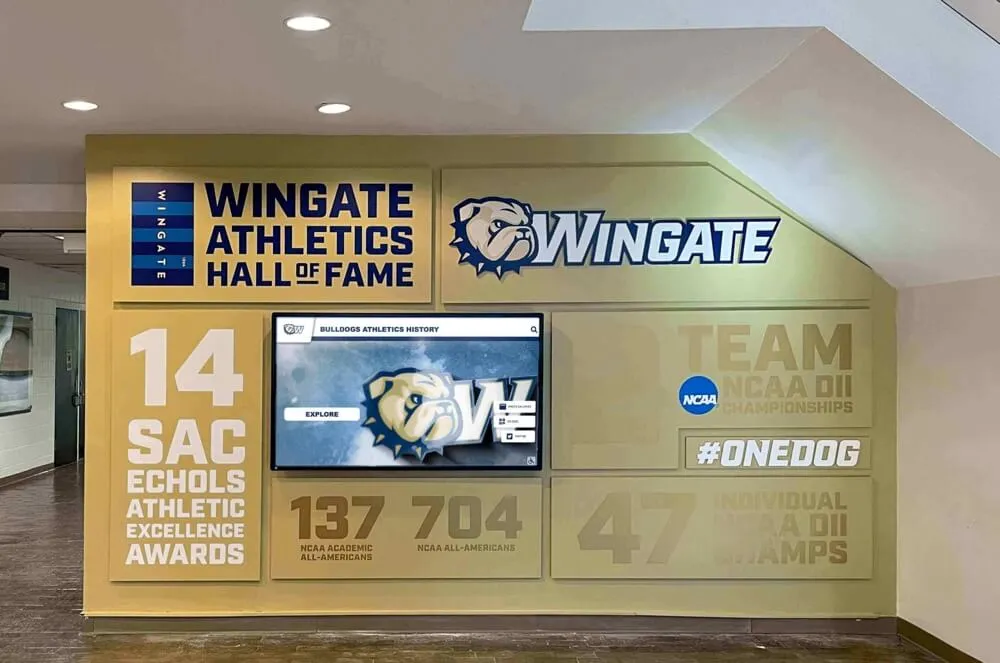
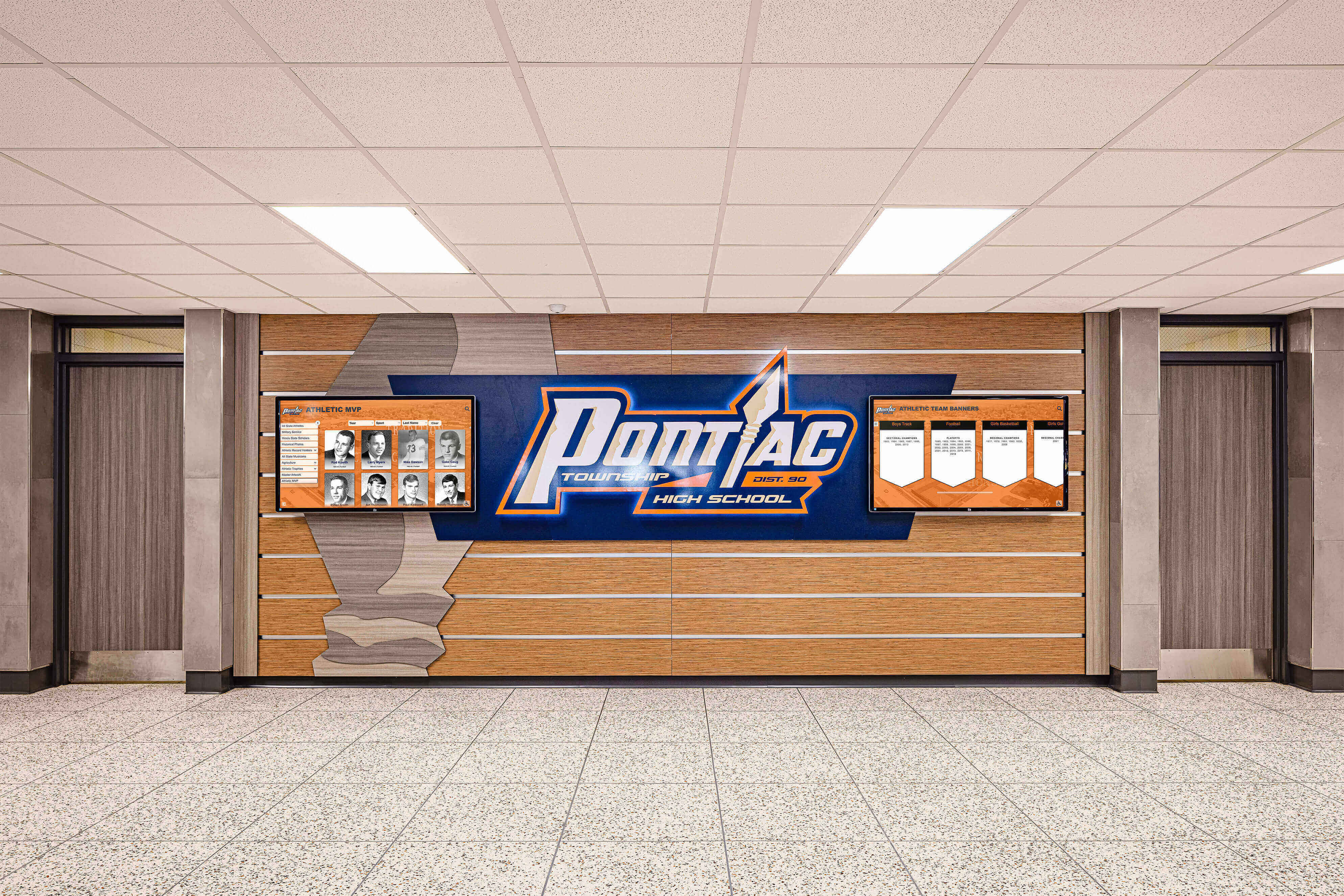
Small public high schools create impactful recognition environments using digital displays that highlight athletics, academics, and community achievements
Understanding Small to Medium Public High School Recognition Needs
Before examining why Rocket serves smaller public schools effectively, understanding the specific recognition landscape these institutions navigate provides essential context.
The Demographic and Resource Reality
Small to medium public high schools operate in distinct environments:
Enrollment Characteristics
Schools in this category typically serve 200-1,200 students across grades 9-12:
- Student populations large enough to generate meaningful achievements across multiple areas
- Sufficient athletic teams fielding 10-20 sports depending on season and facilities
- Academic programs including honors societies, AP courses, and distinguished graduates
- Arts programs with theater, music, and visual arts accomplishments deserving recognition
- Community service and leadership activities contributing to well-rounded student development
This enrollment range creates recognition needs far exceeding what traditional plaques and trophy cases can accommodate, yet budget allocations remain modest compared to larger districts.
Administrative Capacity Constraints
Small to medium schools operate with minimal staff dedicated to recognition tasks:
- Single athletic director often coaching multiple sports while managing entire department
- Principal and assistant principals balancing recognition with instructional leadership responsibilities
- Office administrators handling recognition alongside attendance, registration, and daily operations
- No dedicated communications or marketing staff managing public relations and displays
- Limited IT support focused on instructional technology rather than display systems
- Volunteer parent organizations providing occasional assistance but not systematic management
This staffing reality means recognition systems must operate efficiently without requiring constant attention or technical troubleshooting.
Budget Allocation Pressures
Public school funding creates specific financial constraints:
- Per-pupil allocations prioritizing instruction, facilities maintenance, and essential operations
- Technology budgets focused primarily on classroom learning rather than recognition displays
- Discretionary spending requiring board approval and community transparency
- Competing priorities including curriculum materials, equipment replacement, and program expansion
- Scrutiny of non-instructional expenditures requiring clear value demonstration
- Annual subscription costs easier to justify than large capital investments
Schools exploring comprehensive recognition approaches must demonstrate both initial affordability and sustainable ongoing costs fitting constrained public school budgets.
Multi-Purpose Recognition Requirements
Unlike specialized programs focusing solely on athletics or academics, public high schools need comprehensive recognition spanning diverse achievement categories:
Athletic Achievement Recognition
Sports programs generate substantial recognition needs:
- Conference and state championships across 10-20 varsity sports annually
- Individual athlete achievements including all-conference, all-state, and record-breaking performances
- Team milestones such as consecutive winning seasons and playoff appearances
- Senior athlete career recognition celebrating four-year participation and development
- Coaching accomplishments including milestone wins and program building
- Historical program documentation preserving tradition and creating identity
Academic Excellence Documentation
Academic achievements deserve equal visibility:
- National Honor Society and academic honor society inductions
- Valedictorians, salutatorians, and distinguished graduates across graduating classes
- Scholarship recipients earning college recognition and financial support
- Academic competition winners in science fairs, spelling bees, mathematics contests, and debate tournaments
- Advanced Placement scholars and dual enrollment students pursuing college-level coursework
- Perfect attendance and academic improvement recognition celebrating consistent effort
For schools implementing academic recognition programs, digital systems enable equal treatment across athletic and academic accomplishments.
Arts and Extracurricular Achievements
Well-rounded recognition includes diverse accomplishments:
- Theater productions with cast recognition, award-winning performances, and memorable shows
- Music programs documenting all-state musicians, concert performances, and competition victories
- Visual arts achievements including exhibits, competitions, and portfolio recognitions
- Student government leaders and class officers serving school communities
- Community service recognition honoring volunteer hours and service project leadership
- Career and technical education achievements including certifications and competition success
This breadth of recognition categories requires flexible systems accommodating diverse content types rather than specialized solutions serving single purposes.
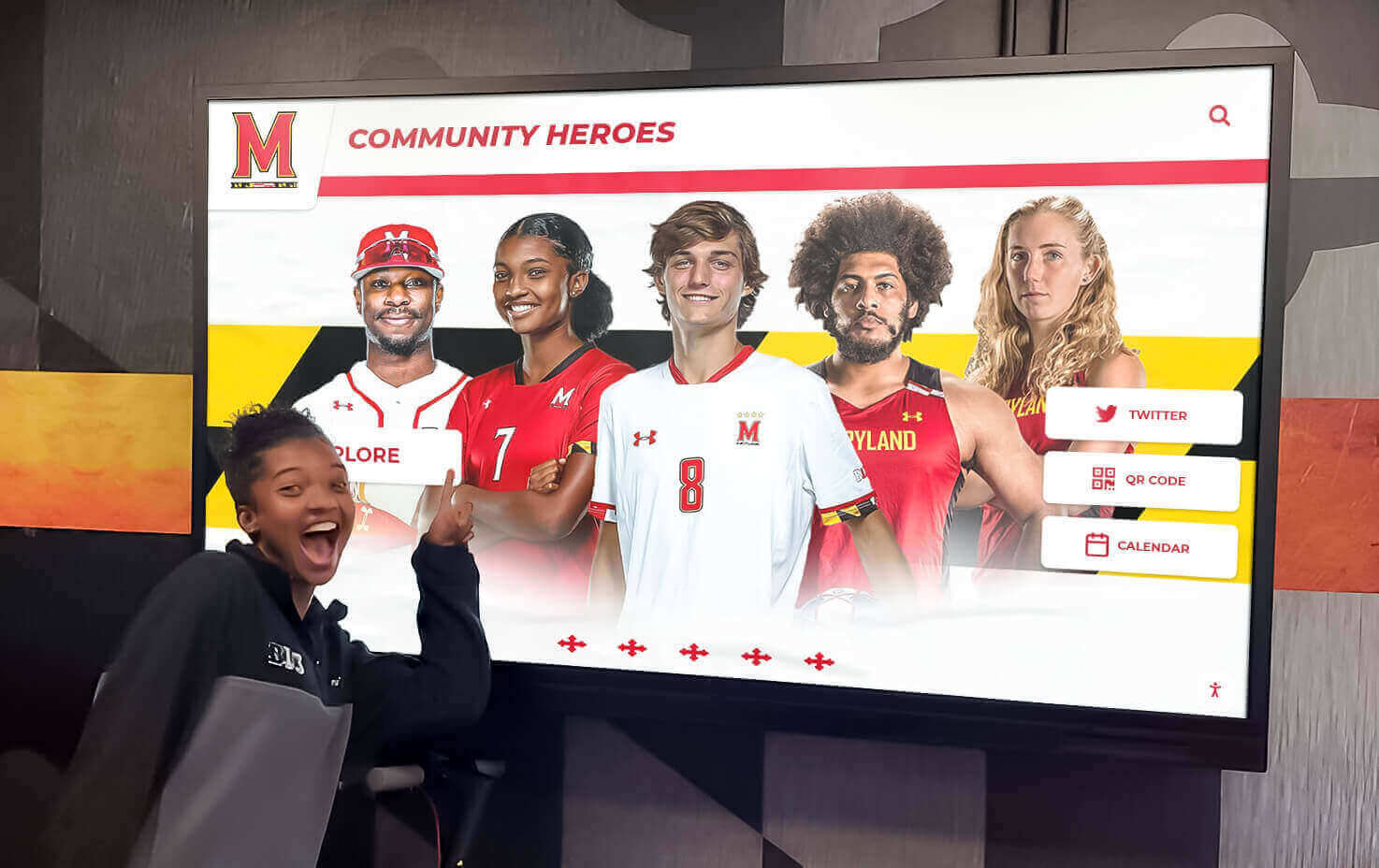
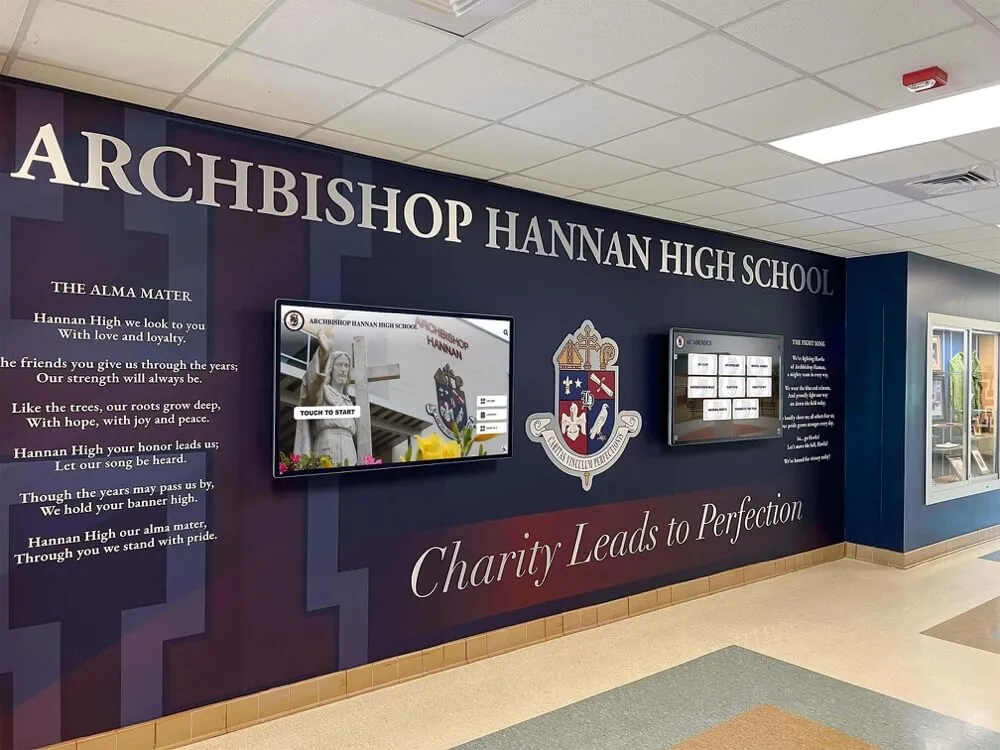
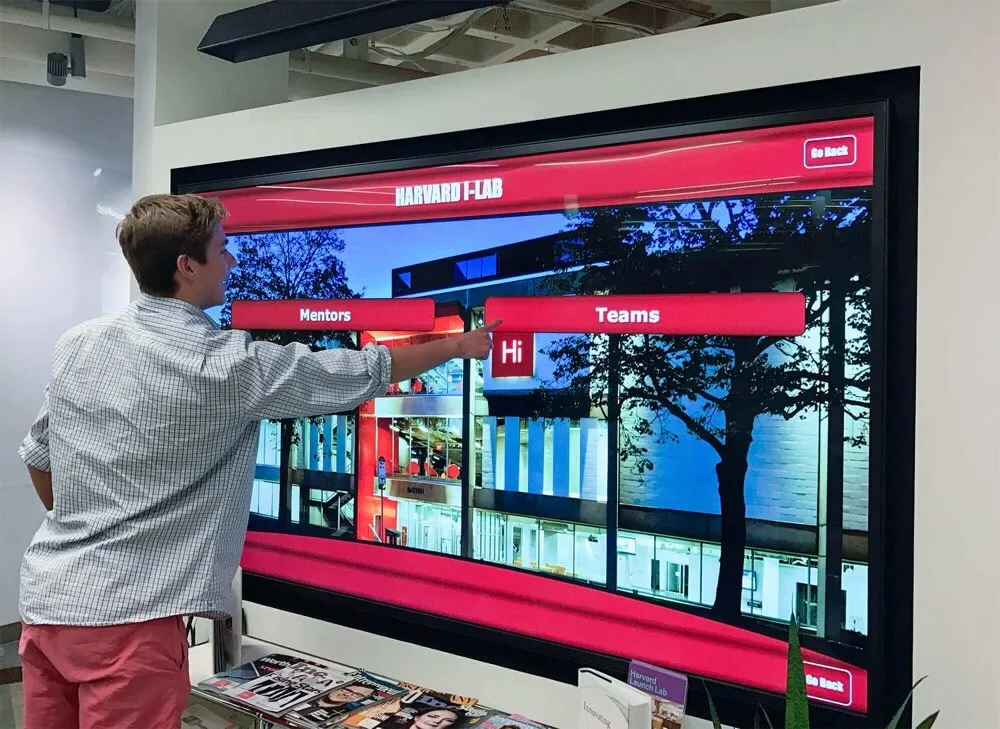
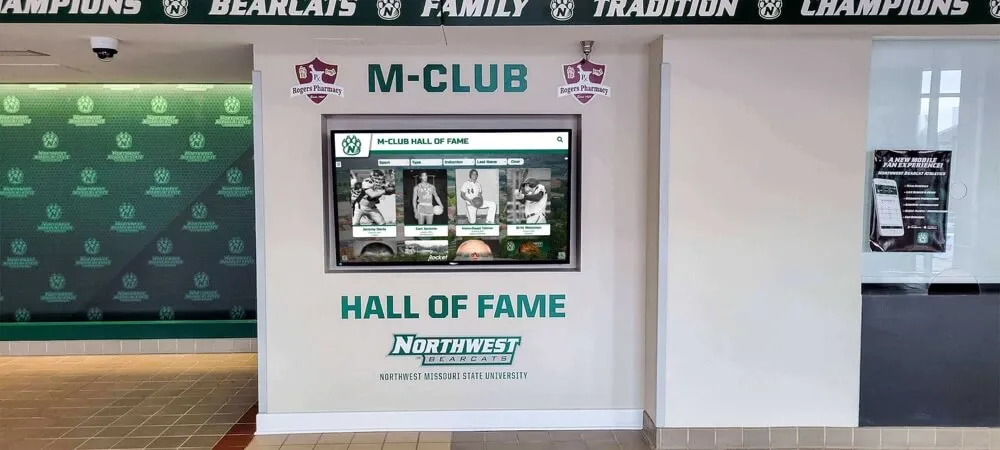
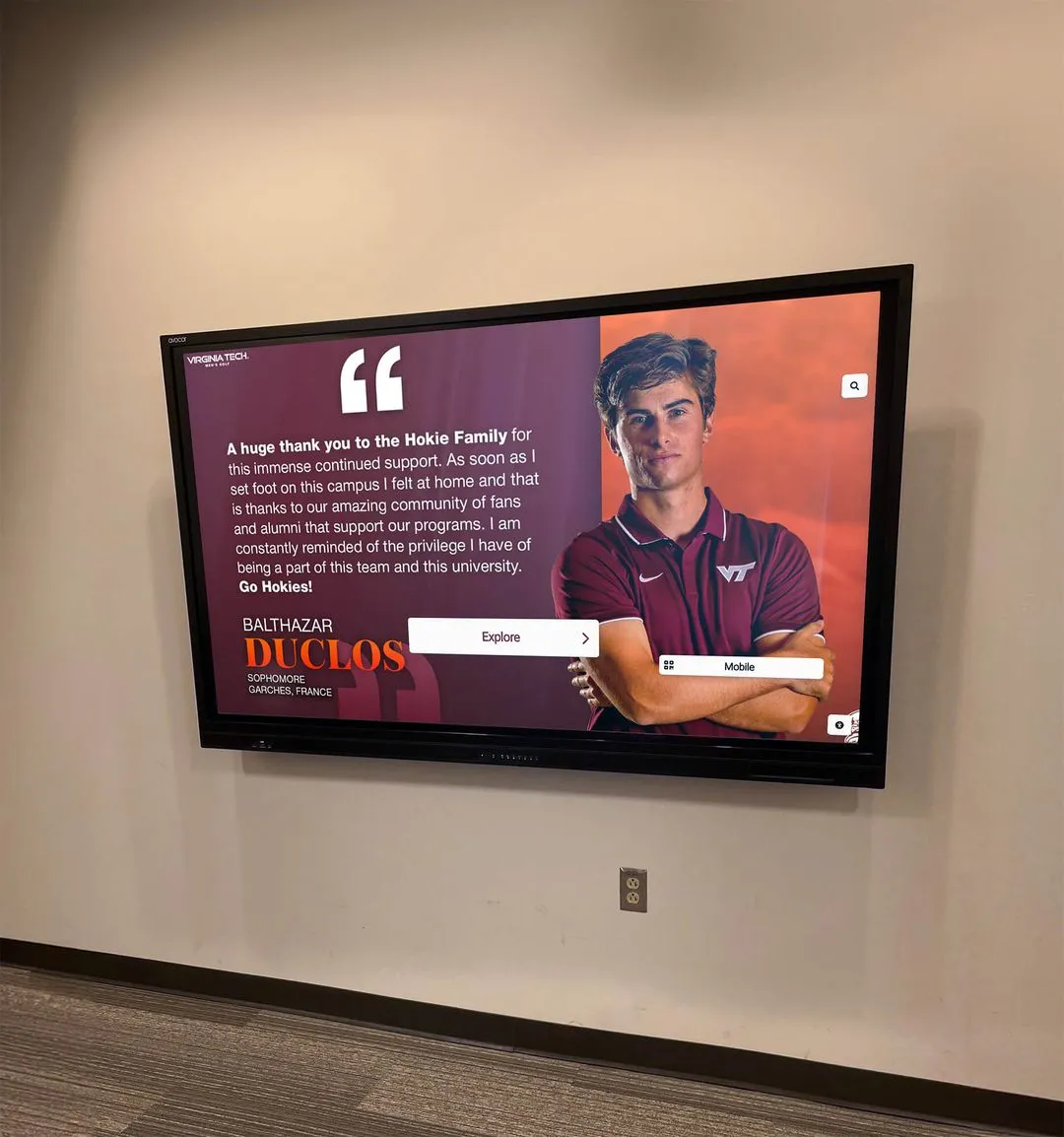
Interactive displays enable students to explore achievements across athletics, academics, and arts, creating personal connections with school tradition
Why Traditional Recognition Methods Fail Small Public Schools
Understanding Rocket’s value requires examining why conventional recognition approaches prove inadequate for resource-constrained schools.
Physical Plaque and Trophy Case Limitations
Traditional recognition creates accumulating problems:
Inevitable Space Exhaustion
Physical displays reach capacity quickly:
- Standard trophy cases hold 30-50 items before appearing overcrowded
- Successful programs generate 50-100 recognition-worthy achievements annually
- Within 3-5 years, schools exhaust available display space throughout facilities
- Wall space limitations prevent indefinite expansion regardless of budget
- Storage rooms fill with boxed trophies and plaques never seen by current students
- Recognition inequality emerges as newer achievements displace historical accomplishments
Recurring Expense Burdens
Physical recognition generates continuous costs:
- Individual plaques cost $50-150 each for engraving and mounting
- Trophy cases range $2,000-6,000 per unit plus installation labor
- Annual plaque expenses easily reach $3,000-5,000 for active recognition programs
- Ten-year cumulative costs exceed $30,000-50,000 before considering case expansion
- Budget allocations for physical recognition compete with instructional priorities
- No residual value when schools exhaust space and require system replacement
High Maintenance Requirements
Traditional displays demand ongoing attention:
- Regular cleaning preventing dust accumulation and maintaining appearance
- Seasonal reorganization accommodating new achievements and removing outdated content
- Physical installation requiring ladders, tools, and facilities staff time
- Trophy polishing preventing tarnish diminishing program image
- Glass repair or replacement addressing breakage and wear
- Lock mechanism maintenance ensuring case security
Schools transitioning from traditional trophy displays to digital systems report immediate relief from maintenance burden while expanding recognition capacity.
Manual Digital Signage Approaches
Some schools attempt digital recognition using presentation software or basic signage platforms:
Content Creation Burden
Slideshow approaches require extensive ongoing work:
- Designing individual slides for each athlete, achievement, or announcement
- Maintaining consistent formatting across hundreds of slides
- Manual image resizing, cropping, and optimization for display
- Text layout balancing readability, information density, and aesthetics
- Version control tracking who edited what and when across multiple contributors
- File management organizing presentation versions and backup copies
Update Logistics Challenges
Keeping content current proves difficult:
- Gathering information from coaches, teachers, and activity sponsors after each season
- Follow-up communications requesting photos, rosters, and achievement details
- Manual data entry transcribing information into presentation format
- Proofreading preventing typos and errors in manually-typed content
- Coordinating updates across multiple displays when schools have several installations
- File transfer logistics moving updated presentations to display hardware
Technical Management Issues
Basic signage creates ongoing technical demands:
- Troubleshooting playback failures when presentations crash or freeze
- Managing automatic restart after power outages or system updates
- Coordinating display timing ensuring content rotates at appropriate intervals
- Hardware maintenance addressing failing media players or display issues
- Network connectivity problems preventing remote management
- Software version compatibility across multiple display installations
Research on school digital signage indicates manually-maintained systems require 30-50 hours annually per display for content updates and technical management—time small school staff cannot afford.
The Rocket Advantage: Purpose-Built for School Recognition
Rocket Alumni Solutions addresses small public school needs through features specifically designed for resource-constrained educational environments.
Budget-Aligned Pricing Structure
Financial accessibility represents a primary concern for public schools:
Transparent Subscription Model
Rocket’s pricing eliminates surprise costs:
- Annual subscription fees starting under $2,000 for complete platform access
- All-inclusive pricing covering unlimited users, unlimited content entries, and unlimited updates
- No per-display fees enabling multi-location installations without multiplying costs
- Predictable annual budgeting without variable charges or hidden expenses
- Hardware pricing clearly separated from software allowing phased implementation
- Multi-year subscription options providing budget predictability and modest discounts
This pricing structure often costs less annually than traditional physical plaque and engraving expenses for active recognition programs, while providing unlimited digital capacity.
Cost Comparison Reality
Examining total cost of ownership reveals advantages:
Traditional Recognition Annual Costs
- Plaques and trophies: $2,500-4,000 annually
- Engraving services: $1,500-2,500 annually
- Trophy case expansion: $2,000-6,000 every 3-5 years
- Maintenance supplies and labor: $500-1,000 annually
- Total annual average: $5,500-8,500
Rocket Digital Recognition Annual Costs
- Software subscription: $1,500-2,500 annually
- Hardware (amortized over 7 years): $800-1,200 annually
- Maintenance and updates: $0 (included in subscription)
- Content management time savings: reduces 30-50 hours annually
- Total annual average: $2,300-3,700
Digital recognition typically costs 50-70% less annually than traditional approaches while providing unlimited recognition capacity and superior engagement.
Grant Funding Compatibility
Public schools often access funding beyond operating budgets:
- Technology grants frequently cover interactive touchscreen installations
- Educational foundation donations support one-time hardware purchases
- Booster clubs and athletic associations fund athletic recognition components
- Parent organizations sponsor academic or arts recognition initiatives
- Local business partnerships provide sponsorship revenue opportunities
- District technology refresh cycles may include recognition display hardware
Rocket’s clear hardware/software separation enables schools to pursue grant funding for initial capital investment while managing modest annual subscriptions through operating budgets.
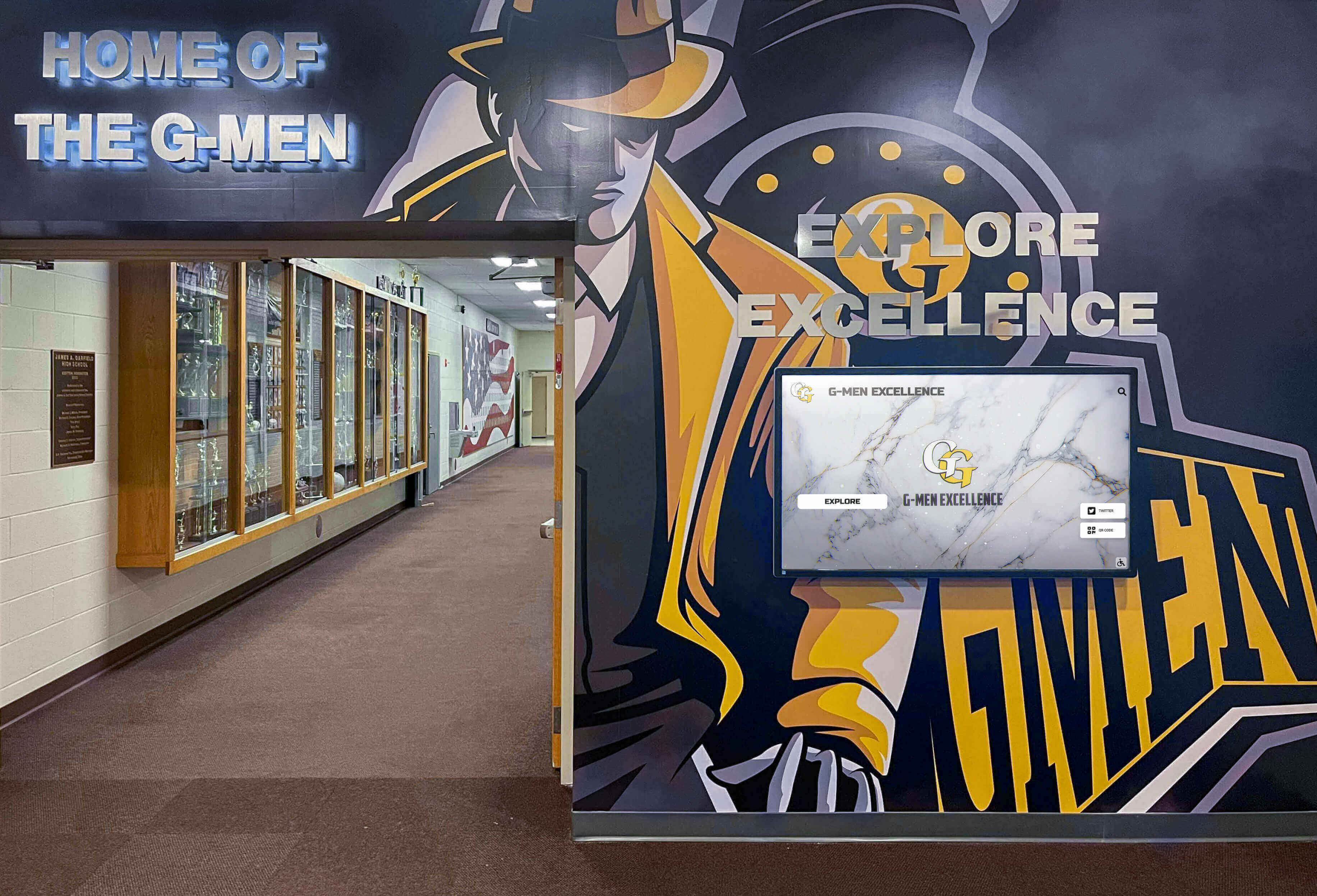
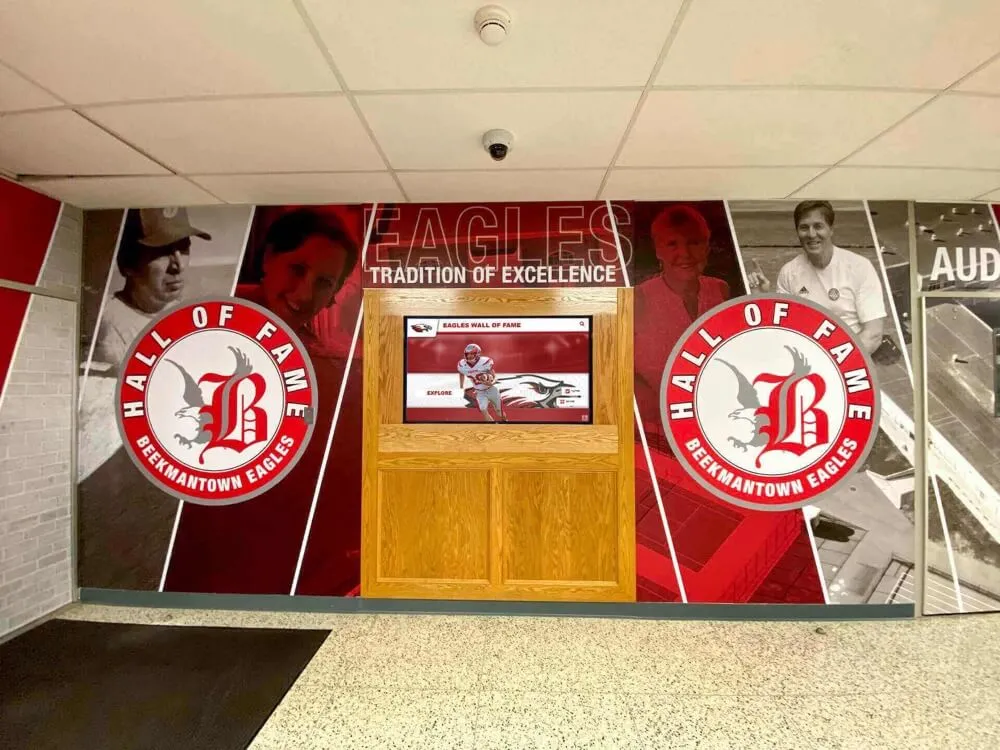
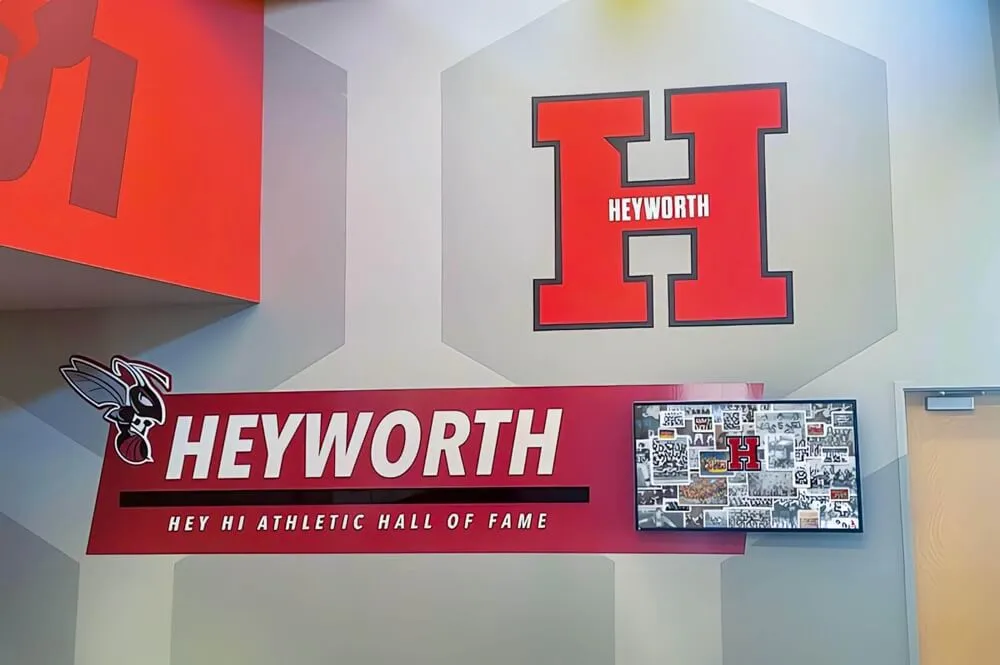
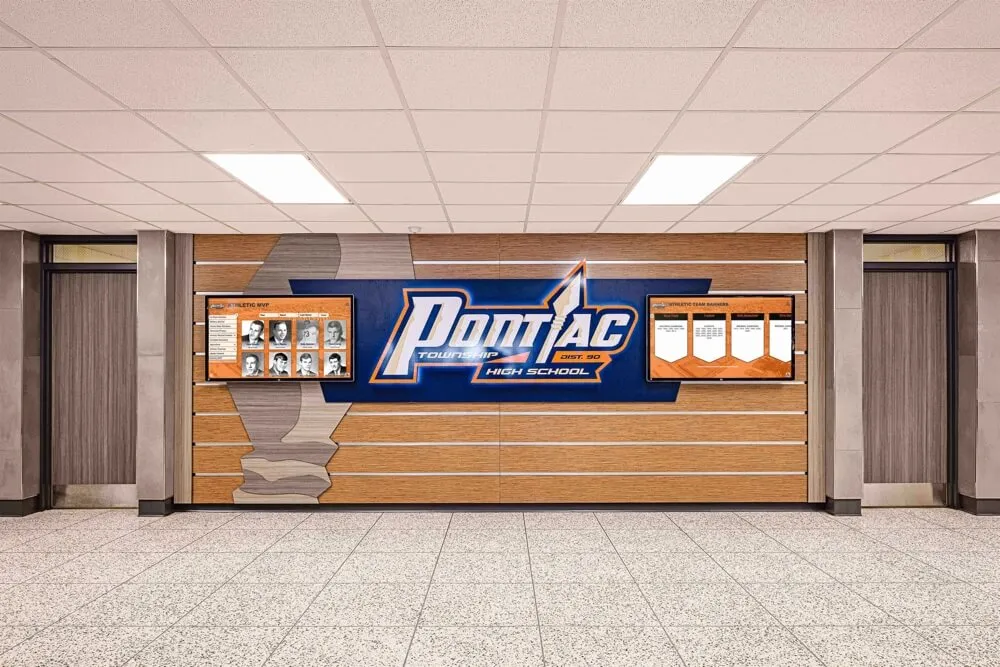
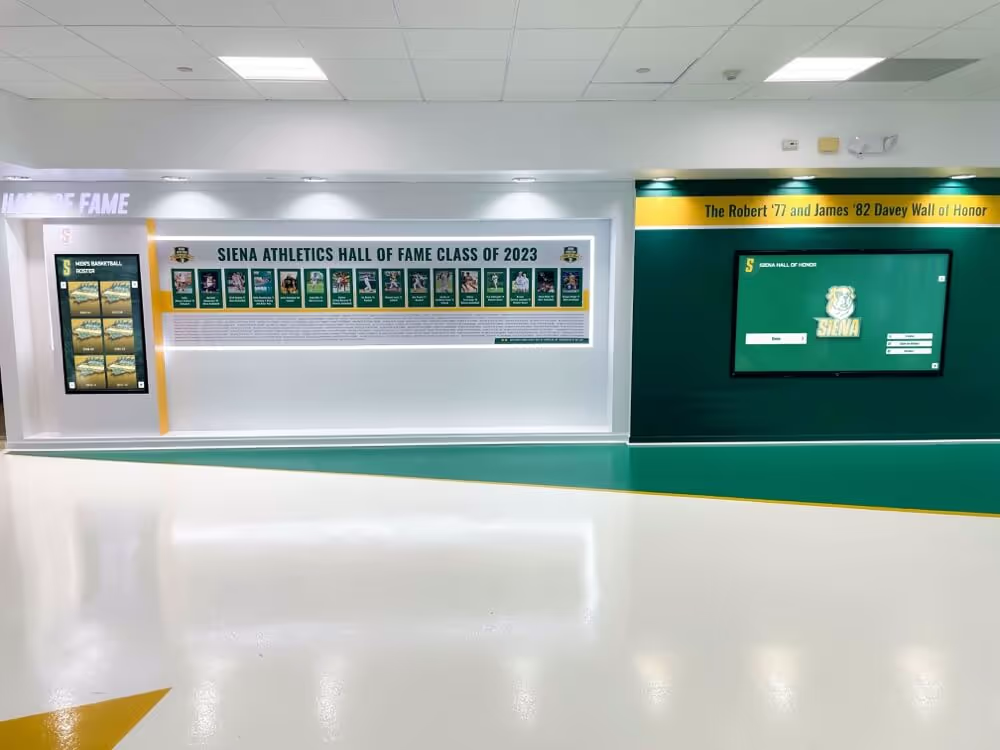
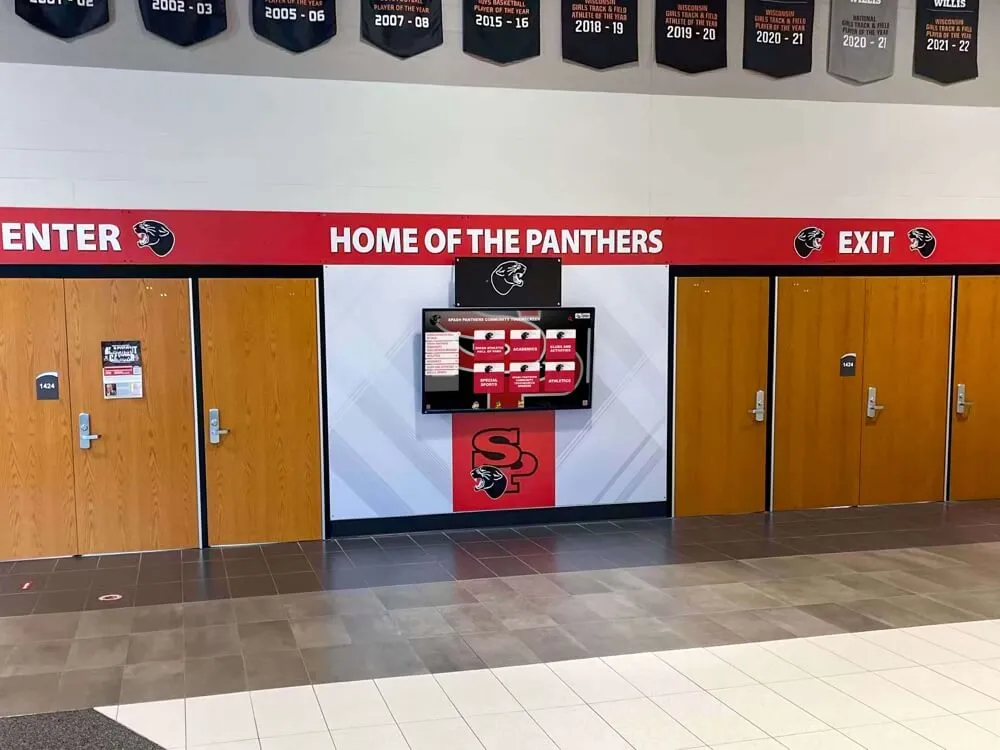
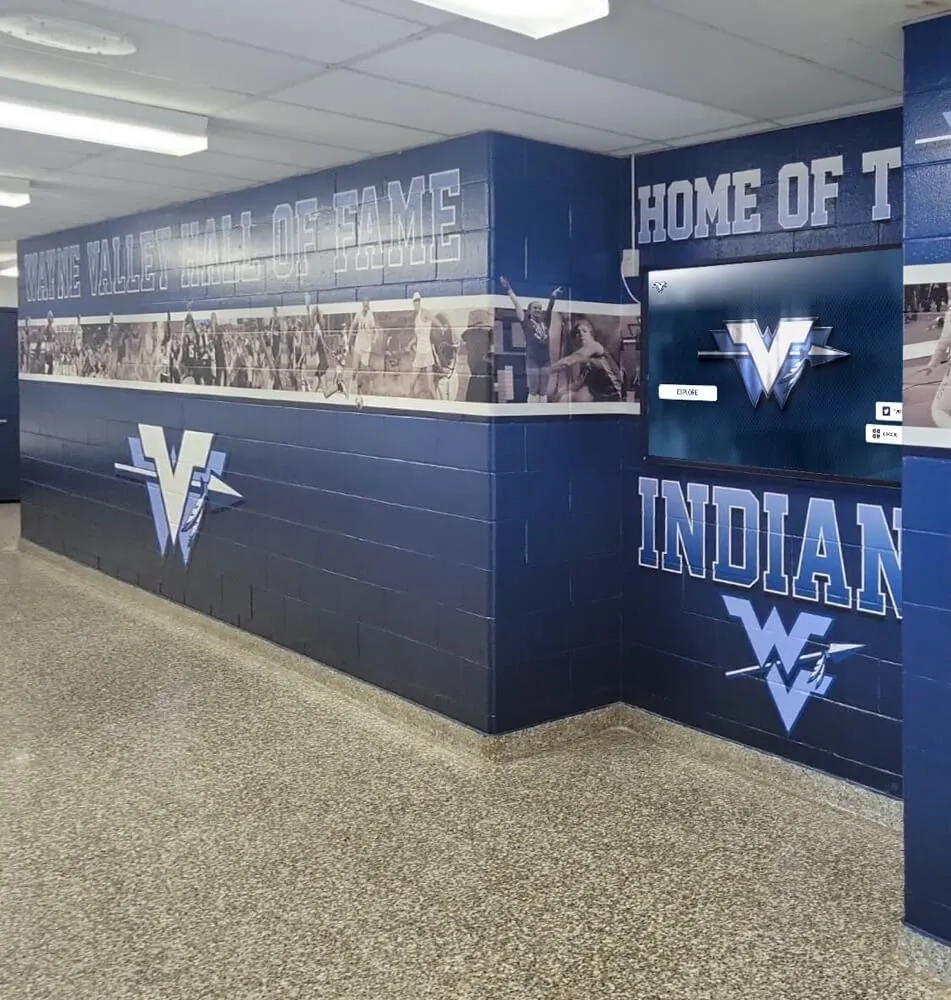
Strategic hallway placements create daily visibility for comprehensive recognition displaying athletics, academics, and school history
Minimal Implementation and Maintenance Requirements
Resource-constrained schools need systems that work efficiently without demanding constant attention.
Straightforward Initial Setup
Getting started with Rocket proves simpler than many administrators expect:
Guided Implementation Process
Rocket provides implementation support reducing school burden:
- Dedicated implementation specialists guiding initial configuration
- Template designs based on school colors, mascot, and branding preferences
- Data import assistance helping migrate existing achievement records
- Training sessions teaching content management to designated staff members
- Hardware installation coordination ensuring proper mounting and connectivity
- Testing and validation confirming system operation before official launch
Schools typically complete initial implementation within 2-4 weeks from decision to live display, with most work handled by Rocket staff rather than school personnel.
Flexible Phased Approach
Schools can start simply and expand naturally:
- Begin with current year athletics only, adding historical content gradually over time
- Launch with single display in main lobby, expanding to additional locations as budget allows
- Start with basic team and achievement information, adding detailed athlete profiles later
- Focus initially on most active programs, incorporating additional sports and activities incrementally
- Populate content during summer months when administrative capacity increases
- Scale complexity based on available volunteer support and staff time
This flexibility prevents implementation from becoming overwhelming project requiring extensive upfront investment of scarce administrative time.
Dramatic Maintenance Reduction
Ongoing management proves far simpler than traditional or manual digital approaches:
Web-Based Content Management
Updating recognition requires minimal effort:
- Simple web forms replacing presentation design work and manual formatting
- Mobile-responsive interface enabling updates from any device, anywhere, anytime
- Intuitive navigation requiring minimal training for new users
- Photo upload capabilities with automatic optimization for display
- Bulk entry options adding multiple athletes or achievements efficiently
- Preview function testing changes before publishing to live displays
- Change tracking showing recent modifications and identifying contributors
Athletic directors and administrators report content updates taking 75-90% less time compared to maintaining presentation-based signage or physical plaques.
Automated Technical Management
System maintenance happens automatically:
- Cloud hosting eliminating need for file transfers, backups, or local storage
- Automatic display refresh pulling latest content from remote servers
- Remote troubleshooting and updates requiring no school IT involvement
- Persistent connectivity maintaining display operation through network interruptions
- Platform updates and security patches applied by Rocket without school action
- Performance optimization and content delivery managed centrally
This automated infrastructure means schools focus on content—adding achievements and photos—rather than technical administration, display troubleshooting, or system maintenance.
Distributed Management Options
Content responsibility can spread across multiple people:
- Permission controls enabling coaches to add their own team content
- Approval workflows ensuring principal review before publication if desired
- Department-specific access allowing academic, athletic, and arts administrators to manage relevant sections independently
- Parent volunteer contributions accepted through controlled submission interfaces
- Student leadership involvement gathering and entering peer recognition information
- Alumni association participation documenting historical achievements and maintaining archives
For schools implementing student achievement recognition, distributed management enables sustainable recognition programs without overwhelming single administrators.

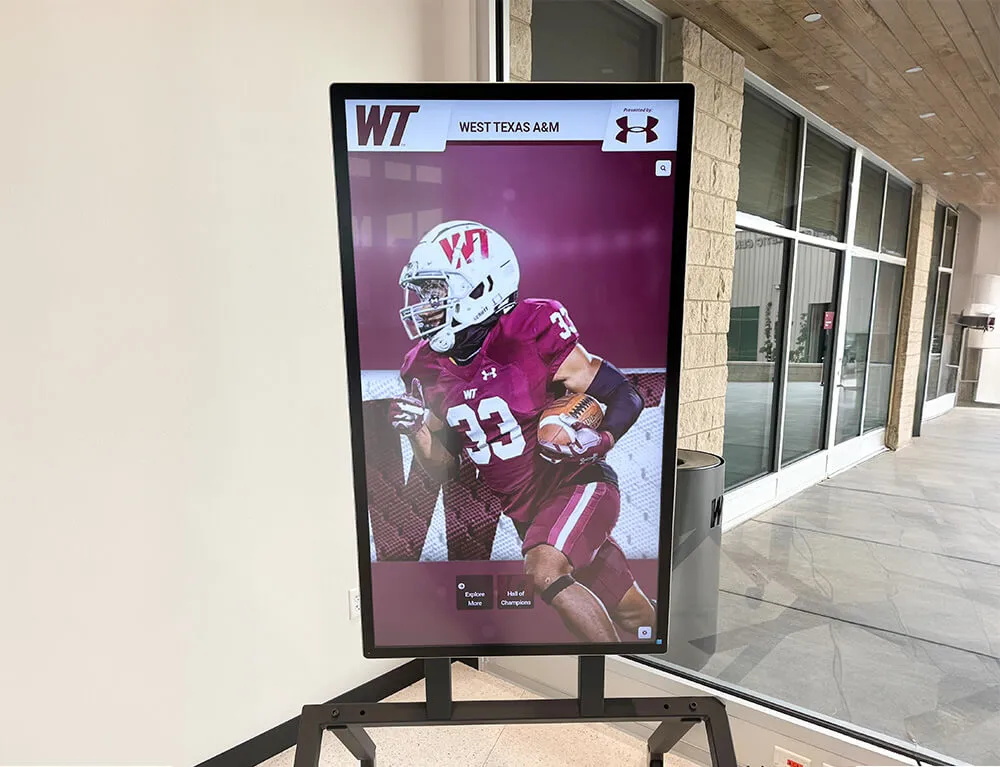
Intuitive touch interfaces enable visitors of all ages to explore achievements independently without staff assistance or technical knowledge
Comprehensive Recognition Capacity
Small schools benefit disproportionately from systems accommodating unlimited diverse content.
All Achievement Categories in Single System
Rather than separate solutions for different recognition types, Rocket consolidates everything:
Athletic Recognition Features
Comprehensive sports documentation includes:
- Hall of fame inductees with complete career profiles across all sports
- Championship teams with full rosters, statistics, and tournament documentation
- Individual record holders automatically organized by sport and event
- All-conference and all-state performers with honors and achievement details
- Senior athlete recognition celebrating graduating class contributions
- Coaching milestones and program leadership history
- Multi-sport athlete profiles celebrating diverse participation
Academic Achievement Integration
Academic accomplishments receive equal treatment:
- Honor society members including National Honor Society, subject-specific societies, and state organizations
- Distinguished graduates including valedictorians, salutatorians, and scholarship recipients
- Academic competition winners across science, mathematics, humanities, and arts competitions
- Perfect attendance and academic improvement recognition
- AP Scholars and dual enrollment students pursuing advanced coursework
- Academic All-State athletes demonstrating excellence in classroom and competition
Arts and Activities Documentation
Comprehensive recognition extends beyond athletics and academics:
- Theater productions with cast information, award recognition, and performance documentation
- All-state musicians and music competition achievements
- Visual arts recognition including exhibits, portfolio achievements, and competition success
- Student government officers and class leadership positions
- Career and technical education certifications and competition accomplishments
- Community service recognition honoring volunteer contributions
This comprehensive capacity means schools make single investment serving all recognition needs rather than purchasing separate systems for different achievement categories or choosing which accomplishments to honor based on available display space.
Historical Archive Preservation
Digital systems protect and preserve complete institutional history:
Unlimited Timeline Documentation
Rocket accommodates recognition spanning entire school history:
- Document achievements from school founding through present day without space constraints
- Preserve historical photographs and documentation preventing institutional memory loss
- Enable browsing by decade revealing program evolution and historical excellence
- Connect current students with school tradition and legacy
- Create searchable archives allowing specific athlete or achievement lookup across any time period
- Maintain context for retired jersey numbers, facility dedications, and program milestones
Schools report alumni frequently expressing surprise and appreciation discovering their own achievements documented decades later—recognition that would be invisible in physical-only systems where space constraints force removal of historical content.
Family and Community Connection
Comprehensive archives enable personal discovery:
- Alumni search their own achievements during campus visits or reunions
- Families discover connections across generations finding multiple relatives honored
- Current athletes explore program history identifying role models and setting goals
- Prospective students research tradition and excellence during recruitment
- Community members engage with institutional legacy strengthening school support
- Graduating classes maintain permanent connection through documented achievements
For institutions implementing digital archival systems, this connection between past and present creates living history rather than static displays.

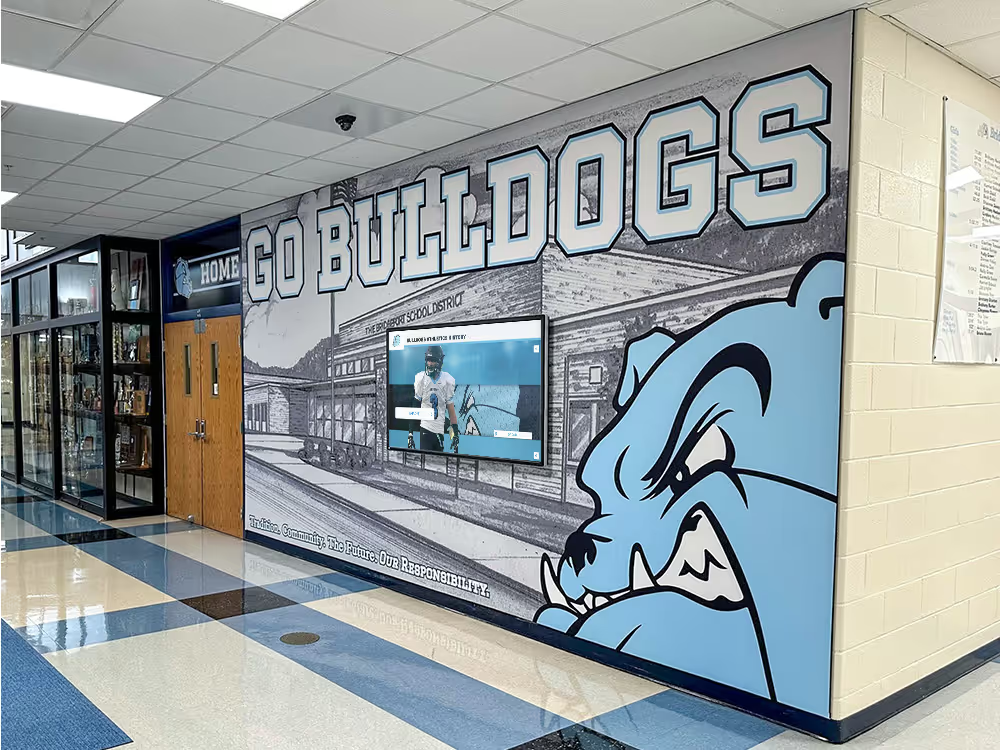
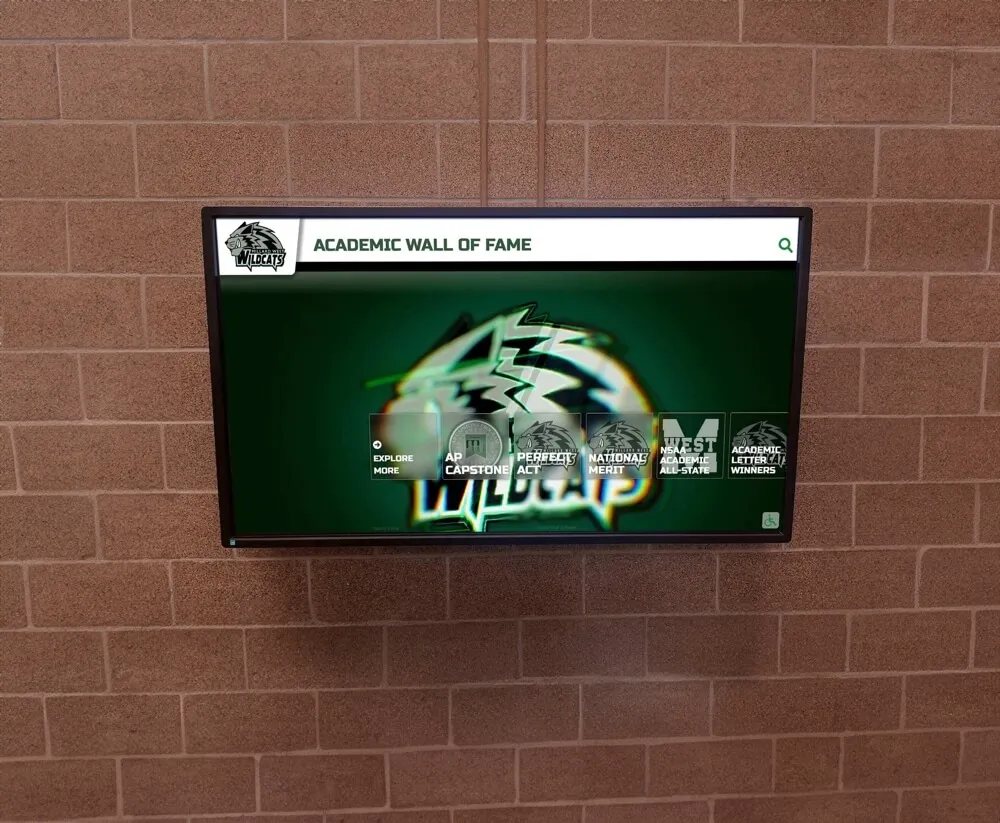
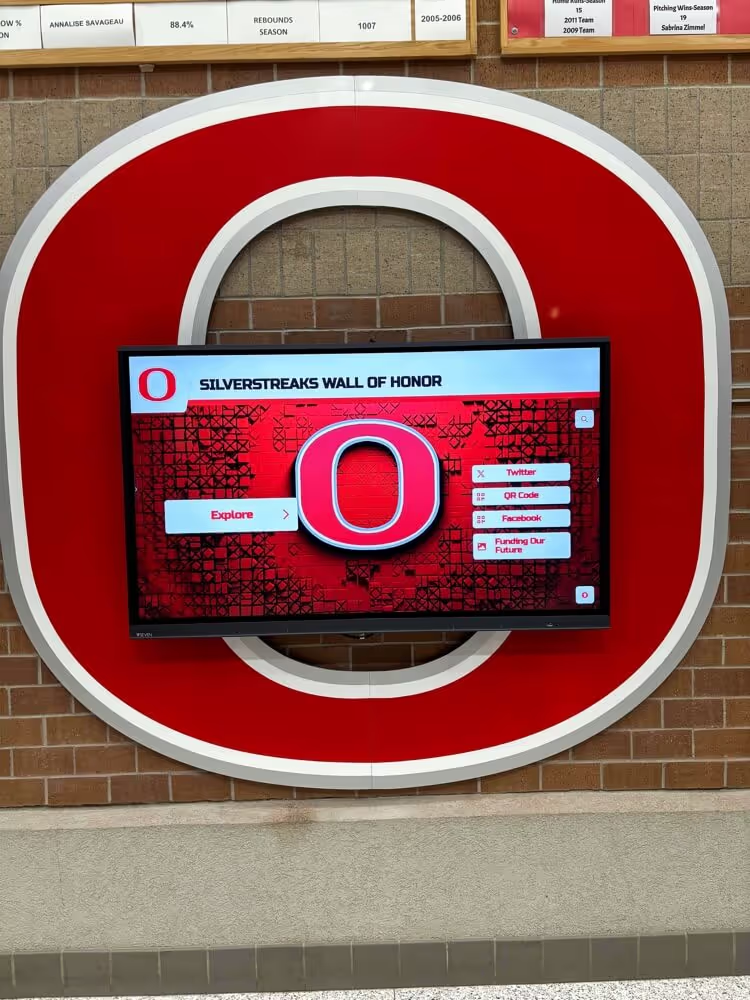
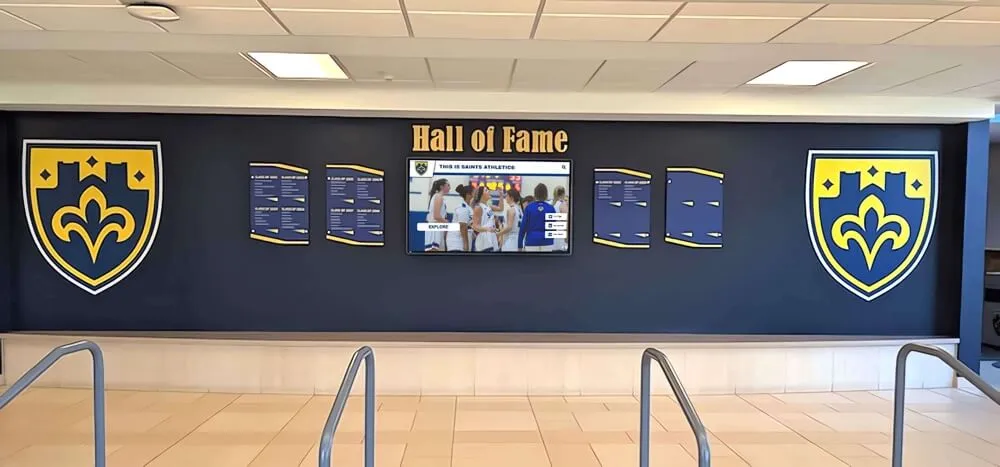
Digital walls of honor preserve unlimited achievements while maintaining visual impact through thoughtful design and organized presentation
Enhanced Student Engagement and School Culture
Recognition systems influence school culture significantly when implemented effectively.
Creating Daily Visibility
Strategic placement ensures regular student interaction:
High-Traffic Location Benefits
Main lobby and hallway installations create natural touchpoints:
- Students pass recognition displays multiple times daily during class changes
- Families view achievements during evening events, conferences, and performances
- Visitors experience school culture immediately upon entering facilities
- Athletes gather around displays during season discussing team achievements and individual progress
- Prospective families exploring school during tours engage with tradition and excellence
- Alumni returning for reunions discover their own achievements preserved permanently
This regular exposure creates continuous reinforcement of achievement culture and school pride rather than recognition confined to special occasions or specific events.
Interactive Exploration Patterns
Touchscreen engagement differs fundamentally from passive viewing:
- Students actively search for friends, teammates, and family members rather than glancing at static content
- Small groups gather exploring together, discussing discoveries and sharing reactions
- Return visits occur as new content is added maintaining sustained interest throughout years
- Personal achievement discovery creates emotional connection and pride
- Casual exploration reveals historical context and school traditions students never knew existed
Research consistently shows interactive displays generate 8-12 minutes of engagement compared to 30-60 seconds for static trophy cases—a 10-15x engagement increase creating substantially stronger cultural impact.
Motivation Through Visible Recognition
Documented achievement motivates current students:
Aspirational Role Models
Historical excellence creates standards and goals:
- Current athletes see record progression understanding what excellence requires
- Academic achievers view previous scholars establishing achievement expectations
- Underclassmen observe senior recognition understanding multi-year contribution value
- Struggling students find hope through recognized improvement and persistence stories
- Diverse achievement categories show multiple pathways to recognition beyond single talent area
Team and Program Pride
Comprehensive documentation builds collective identity:
- Team tradition becomes tangible through documented championship history and program milestones
- Current athletes understand they contribute to legacy larger than single season
- Program building across years becomes visible as coaching tenures and achievement patterns emerge
- School pride strengthens as community members engage with documented excellence
- Recruiting advantage emerges as prospective students research program tradition
Schools implementing comprehensive athletic recognition report measurable improvement in program culture, student motivation, and community support.
Scalability and Future-Proofing
Small schools planning recognition systems must consider growth and evolution.
Starting Simple, Expanding Naturally
Rocket enables graduated implementation matching available resources:
Phase 1: Essential Recognition
Initial deployment focuses on immediate needs:
- Current year athletic teams with rosters and schedules
- Recent championship documentation with basic information
- Graduating senior recognition from past 2-3 years
- Simple navigation and straightforward content organization
- Single display in main lobby establishing foundation
Phase 2: Expanding Content Depth
Natural growth adds detail and history:
- Individual athlete profiles for recent letter winners
- Extended historical documentation covering past decade
- Academic achievement integration adding honor society and scholarship recipients
- Enhanced media including photo galleries and achievement details
- Additional display locations in athletic facilities or academic wings
Phase 3: Comprehensive Implementation
Full platform utilization emerges over time:
- Complete historical archives spanning school history
- Detailed athlete profiles with statistics, photos, and career documentation
- Arts and activities integration creating true comprehensive recognition
- Multiple display coordination across campus
- Analytics tracking engagement and identifying popular content
- Community features enabling alumni contributions and updates
This graduated approach prevents overwhelming initial implementation while preserving future expansion capability without system replacement or content migration.
Technical Evolution and Platform Updates
Modern cloud-based platforms prevent obsolescence:
Continuous Improvement Without Cost
Subscription models include ongoing platform development:
- New features and capabilities added regularly at no additional cost
- User interface improvements enhancing usability based on feedback across client base
- Mobile responsiveness automatically improving as standards evolve
- Security updates applied immediately protecting system integrity
- Performance optimization maintaining fast, responsive displays
- Accessibility enhancements ensuring compliance with evolving standards
Schools avoid the upgrade costs and compatibility issues inherent in purchased software requiring periodic replacement as technology advances.
Hardware Refresh Flexibility
Display technology evolves predictably:
- Commercial display panels typically operate 7-10 years before replacement consideration
- Hardware refreshes integrate with normal district technology replacement cycles
- Updated hardware connects to existing platform without content recreation
- Display size increases become possible without system redesign
- New locations added without platform version or compatibility concerns
This separation between platform and hardware prevents recognition systems from becoming obsolete as display technology improves, ensuring long-term investment protection.
For schools evaluating long-term technology planning, cloud-based recognition systems align with modern infrastructure approaches avoiding legacy system maintenance burdens.
Real Benefits for Resource-Constrained Schools
Translating features into practical outcomes reveals why small public schools specifically benefit:
Time Savings and Efficiency Gains
Administrative time represents the scarcest resource in small schools:
Quantified Maintenance Reduction
Schools report dramatic efficiency improvements:
- Content updates require 75-90% less time compared to presentation-based signage
- Zero physical installation time eliminating ladder work, drilling, and facilities coordination
- Automated organization removing need for manual sorting, categorizing, and filing
- Error correction taking seconds rather than requiring plaque replacement at $50-150 per fix
- Collaborative management distributing work across coaches and teachers rather than centralizing burden
- Annual time investment reduced from 60-80 hours to 15-25 hours for equivalent recognition scope
This time liberation enables athletic directors and administrators to focus on program development, student support, and educational leadership rather than recognition logistics and maintenance.
Streamlined Communication
Recognition updates simplify information gathering:
- Web forms standardize information collection from coaches and sponsors
- Clear specifications eliminate confusion about required details
- Self-service coach portals enable direct content entry by responsible parties
- Automatic reminders request information at appropriate seasonal intervals
- Dashboard views show content completeness identifying gaps requiring attention
- Preview capabilities enable submitter verification before administrative review
Schools report communication friction decreasing substantially when systems provide clear pathways for content contribution rather than requiring administrators to chase information through emails and conversations.
Budget Predictability and Cost Control
Public school budget processes benefit from stable recognition expenses:
Known Annual Costs
Fixed subscription pricing enables accurate budgeting:
- Annual fees remain constant across multi-year periods providing budget certainty
- No surprise costs from unanticipated repairs, replacements, or capacity expansion
- Inflation adjustments applied minimally through predictable renewal increases
- Multi-year subscriptions available locking rates for extended budget planning periods
- Hardware costs amortized across expected lifespan creating predictable allocations
This predictability contrasts sharply with traditional recognition where physical capacity limitations create unpredictable expenses as schools pursue case expansion, building modifications, or recognition program reductions.
Eliminated Recurring Recognition Expenses
Digital systems remove traditional cost categories:
- Zero plaque engraving costs regardless of recognition volume
- No trophy purchase expenses for documentation and visibility purposes
- Eliminated physical installation labor and hardware requirements
- Removed glass cleaning supplies and trophy polishing materials
- No case repair, lock replacement, or lighting maintenance expenses
Athletic directors report annual budget savings of $3,000-6,000 after implementing Rocket, with cumulative savings exceeding system costs within 18-36 months even before considering expanded recognition capacity and improved student engagement benefits.
Community Engagement and Support
Recognition visibility strengthens community connections:
Enhanced Family Involvement
Comprehensive recognition engages families:
- Parents attend events specifically to see student recognition displayed
- Families photograph achievement displays sharing on social media
- Alumni return during visits exploring their own documented careers
- Grandparents discover family legacy through multi-generational documentation
- Community members express pride in comprehensive program documentation
This visibility translates into increased booster club participation, enhanced volunteerism, and stronger financial support for school programs and initiatives.
Fundraising and Sponsorship Opportunities
Digital recognition creates revenue possibilities:
- Sponsor recognition integrated naturally within achievement displays
- Business supporters receive visibility through featured content and acknowledgments
- Alumni associations sponsor historical documentation and archive development
- Naming rights for digital displays or specific content sections
- Event-based sponsorships for senior recognition, hall of fame ceremonies, and achievement celebrations
Schools implementing donor recognition integration report new revenue streams partially or fully offsetting annual platform costs.
Making the Decision: Is Rocket Right for Your School?
Understanding whether Rocket fits your specific situation requires honest assessment:
Ideal Fit Indicators
Schools derive maximum value when these factors align:
Recognition Volume Justifies System Investment
Your school generates sufficient achievement content:
- 8-15+ varsity sports competing at conference or state levels
- Active academic programs with honor society, scholarship recipients, and competition participants
- Arts and activities producing documented accomplishments deserving visibility
- Historical achievements worth documenting creating institutional archives
- Current physical displays reaching capacity or requiring expansion
Administrative Capacity Extremely Limited
Staff time constraints make maintenance reduction valuable:
- Athletic director manages multiple duties beyond recognition
- No dedicated communications staff handling displays and public recognition
- Volunteer organizations provide sporadic rather than systematic support
- Current recognition systems consume excessive staff time relative to results
- Manual processes creating errors, delays, and update failures
Long-Term Perspective and Commitment
Leadership approaches recognition strategically:
- School invests in programs for multi-year periods rather than pursuing short-term solutions
- Recognition viewed as strategic cultural investment rather than discretionary expense
- Administrative continuity likely maintaining system management across years
- Community values tradition and historical documentation
- Budget capacity accommodates modest annual subscriptions within operating expenses
Potential Concerns and Honest Limitations
Some schools might consider alternative approaches:
Extremely Minimal Recognition Needs
Very small schools with limited programs might find simpler solutions adequate:
- Single sport or very limited athletic offerings generating minimal recognition content
- Few academic achievements beyond honor roll warranting special documentation
- Physical trophy cases with available capacity sufficient for foreseeable needs
- Presentation-based signage meeting needs with acceptable maintenance investment
Severe Short-Term Budget Constraints
Schools facing immediate financial limitations might delay implementation:
- Unable to access hardware funding through grants, donations, or technology budgets
- Annual operating budgets genuinely unable to accommodate modest subscription costs
- Pending enrollment changes or program reductions creating recognition uncertainty
- District-level technology restrictions preventing internet-connected display installations
Technical Infrastructure Limitations
Rare situations might create technical obstacles:
- Facilities completely lacking reliable internet connectivity without infrastructure improvement paths
- Security policies prohibiting internet-connected devices in desired installation locations
- Existing technology contracts mandating specific vendors or platforms preventing new systems
For schools navigating budget considerations, exploring flexible pricing options including multi-year subscriptions and phased hardware implementation can make comprehensive recognition achievable within constrained budgets.
Getting Started: Implementation Path for Small Public Schools
Schools ready to move forward typically follow clear implementation sequence:
Phase 1: Planning and Budget Development
Initial planning establishes foundation:
Needs Assessment and Goal Setting
Define specific objectives:
- Inventory current recognition methods and identify limitations
- Survey coaches, teachers, and administrators about recognition priorities
- Determine which achievement categories to include initially versus future phases
- Identify potential installation locations considering visibility and traffic patterns
- Establish success metrics measuring engagement, usage, and cultural impact
Budget and Funding Development
Secure necessary resources:
- Calculate first-year costs including hardware, installation, and annual subscription
- Identify potential funding sources (operating budget, grants, donations, booster clubs)
- Prepare board presentation materials explaining value proposition and budget request
- Explore technology grant opportunities through state education departments or foundations
- Coordinate with district technology planning ensuring infrastructure support
- Establish multi-year budget projections demonstrating sustainable ongoing costs
Phase 2: Vendor Engagement and Design
Partner with Rocket specialists developing implementation plan:
Initial Consultation and Demonstration
Understand platform capabilities:
- Schedule demonstration with Rocket representatives reviewing platform features
- Discuss specific school needs, priorities, and constraints
- Review implementation process, timeline, and support resources
- Clarify hardware requirements and installation logistics
- Understand content management workflows and training provisions
- Address questions and concerns from decision-makers and stakeholders
Design and Configuration Planning
Customize platform for your school:
- Select templates and design elements matching school colors and branding
- Plan content structure organizing athletics, academics, arts, and history
- Determine initial content scope balancing comprehensive documentation with realistic implementation timeline
- Identify staff members responsible for content management and ongoing updates
- Schedule implementation timeline coordinating hardware installation with content development
- Establish launch date targeting period maximizing visibility and impact
Phase 3: Implementation and Launch
Deploy system and begin operations:
Hardware Installation
Complete physical setup:
- Mount display hardware in designated locations following installation specifications
- Connect networking infrastructure enabling internet connectivity and remote management
- Test touchscreen functionality and content display quality
- Verify mobile device access through QR codes if implemented
- Conduct final walkthrough ensuring professional appearance and proper operation
Content Population and Training
Prepare for active use:
- Enter initial athlete, team, and achievement records according to planned scope
- Upload photographs and media assets creating visually engaging presentations
- Organize navigation structure ensuring intuitive browsing and search
- Train designated staff members on content management interface and workflows
- Develop content update procedures establishing responsibilities and timelines
- Schedule launch event or announcement generating awareness and excitement
Ongoing Operations and Expansion
Maintain momentum after launch:
- Establish regular content update schedule aligned with athletic seasons and academic calendars
- Monitor engagement through analytics identifying popular content and usage patterns
- Gather feedback from students, families, and staff suggesting improvements
- Plan content expansion adding historical documentation and additional achievement categories gradually
- Consider additional display locations extending recognition visibility across campus
- Evaluate opportunities for sponsorship or donor recognition generating revenue
Conclusion: Transforming Recognition for Resource-Conscious Schools
Small to medium public high schools deserve recognition systems matching their ambitions rather than accepting limitations imposed by outdated approaches. Rocket Alumni Solutions specifically addresses the constraints these schools face—limited budgets, minimal administrative capacity, and diverse recognition needs across athletics, academics, and activities—through comprehensive platforms designed for educational environments.
The value proposition proves straightforward: comprehensive recognition capabilities typically costing less than traditional physical approaches while demanding far less ongoing maintenance and providing unlimited capacity for documenting achievement. Schools investing in Rocket eliminate perpetual space constraints, reduce annual recognition expenses, and create engaging displays strengthening culture and community connection.
Rather than representing unaffordable luxury, modern digital recognition systems deliver practical solutions enabling small schools to honor every student achievement comprehensively while operating within realistic budget and staffing constraints. The question shifts from “can we afford this” to “can we afford to continue struggling with inadequate traditional methods consuming resources while delivering limited results.”
For administrators ready to transform recognition at their schools, book a demo to see how Rocket specifically addresses small to medium public high school needs through budget-aligned pricing, minimal maintenance requirements, and comprehensive recognition capacity perfectly matched to your school’s unique situation.