Athletic Archive Timecode Metadata Guide: Make Historic Game Video Searchable
An athletic archive timecode metadata guide is a documented set of standards and procedures a school or athletic department uses to attach precise time references — hours, minutes, and seconds — to meaningful moments inside digitized sports video, making those moments discoverable without requiring anyone to watch an entire recording from start to finish. The direct answer: timecode metadata transforms an unnavigable two-hour game recording into a searchable index of key plays, athlete appearances, ceremonies, and interviews. A game-winning field goal labeled 01:14:37 with athlete identifiers for every player visible in the sequence becomes findable through a catalog search, a digital archive display, or a hall of fame nomination workflow — none of which are possible from a raw video file with no internal index. This guide covers the four core timecode tasks for athletic video archives — key play indexing, ceremony documentation, interview timestamping, and athlete appearance tagging — with a complete metadata field table, timestamp format examples, and a practical workflow written for athletic directors, archive coordinators, IT staff, and booster volunteers managing historic sports video collections.
Read More
Athletic Archive Redaction Policy: Protect Privacy Without Erasing School History
An athletic archive redaction policy is the institution’s documented framework for deciding which information in historical athletic records — rosters, programs, photographs, scorebooks, award logs, and recognition displays — may be removed or obscured from public access in response to a privacy concern, a formal request, or a change in applicable law, while preserving the institution’s complete historical record for administrative and archival purposes.
Read More
Athletic Archive Metadata Standards for Searchable School History
Athletic archive metadata standards are the agreed-upon field names, value formats, and controlled vocabularies that allow a school’s historical records — athlete names, seasons, sports, awards, and statistics — to be searched, sorted, filtered, and displayed consistently regardless of who entered the data or which system holds it. Without standards, a database of ten thousand records becomes an unsearchable list: “Basketball” in one entry, “Boys Basketball” in another, “BB-Varsity” in a third, and “M. Johnson” in the athlete field where one staff member typed “Marcus Johnson” and another typed “Johnson, M.”
Read More
Athletic Memorabilia Loan Agreement: A Template for School Displays and Archives
An athletic memorabilia loan agreement is a written document that records the terms under which a donor, alumnus, or family lends physical artifacts — game-worn jerseys, championship trophies, framed records, or historic photographs — to a school for display, archiving, or digitization. Without a signed agreement, questions about ownership, responsibility for damage, display permissions, and return timelines have no written baseline to reference. A clear loan agreement protects both the lender and the institution, creates a legal record of the artifact’s custody status, and removes ambiguity from every subsequent decision about how the item is handled, shown, and eventually returned.
Read More
Athletic Memorabilia Condition Report: A Template for Jerseys, Trophies, and Photos
An athletic memorabilia condition report is a structured document that records the physical state of a school artifact—a game-worn jersey, championship trophy, or historic team photograph—at a specific point in time. Completing one before a piece is displayed, digitized, loaned to a partner institution, or moved into long-term storage creates a verifiable baseline that protects both the institution and the artifact. Without it, questions about when damage occurred are impossible to answer, conservation decisions lack objective reference points, and the documentation that makes an item archive-ready is simply missing.
Read More
Former Athlete Information Form: Collecting Alumni Updates, Photos, and Honors
Recognizing a former athlete without accurate information is a risk most schools discover too late. A name misspelled on a hall of fame plaque, a graduation year that turns out to be wrong, or a championship photo that shows up three sizes too small — these errors damage the credibility of recognition programs and frustrate the alumni you are trying to honor. A well-designed former athlete information form prevents every one of those problems before they occur.
Read More
Athletic Director Interview Questions About Records, Recognition, and Community Engagement
When a school district prepares to hire its next athletic director, the interview process often reveals more about the institution’s values than the candidate’s résumé ever could. The questions a search committee asks—and the answers they reward—signal what the school genuinely cares about: championship banners, or championship culture; seasonal wins, or generational memory. Increasingly, forward-thinking schools structure athletic director interviews around a distinct cluster of concerns: how will this person steward our records, govern our recognition programs, maintain our halls of fame, and keep alumni connected across the decades? This guide collects and explains those questions so that both hiring committees and candidates arrive prepared.
Read More
Old Sports Photos: How Schools Digitize, Tag, and Display Athletic History
Every school athletic program has a backlog of old sports photos: shoeboxes of team portraits from the 1970s, binders of newspaper clippings, a dusty stack of negatives from a state championship season nobody has thought about in years. These images are irreplaceable primary sources—visual evidence of athletes, coaches, and communities that no document or database can replace. Yet most of them are deteriorating in storage rooms, inaccessible to the students, alumni, and families who would value them most.
Read More
Varsity Letter Frames: What to Display, Digitize, and Preserve for School History
A varsity letter frame is one of the most personal athletic recognition items a school can provide—a physical home for a letter patch, a season photograph, game stats, or a combination of mementos that marks a specific chapter of a student-athlete’s career. For athletic directors and school administrators, varsity letter frames are also a stewardship decision: how these items are displayed, stored, and eventually digitized determines whether the achievement lives on for decades or quietly fades in a closet.
Read More
Free Softball Player Profile Template PDF: What Schools Should Capture for Archives and Recognition
Every spring, coaches gather rosters of talented student-athletes, document their achievements through demanding seasons, and then watch those records quietly disappear into dusty binders or overloaded filing cabinets. By the time a school wants to nominate a former player for a hall of fame, plan a recognition banquet, or answer an alumni’s question about a championship season from fifteen years ago, the details are gone.
Read More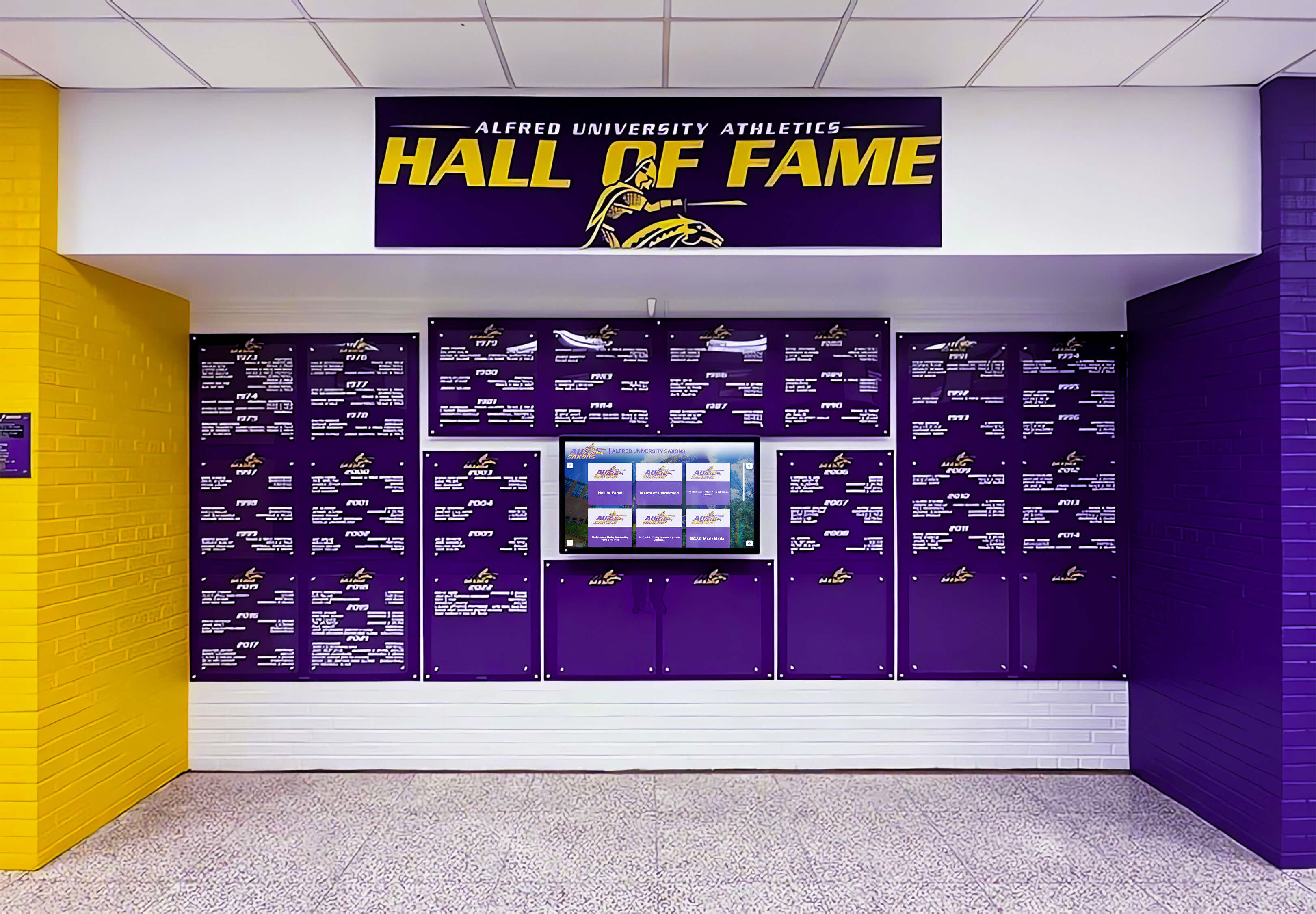
Athletic Department Culture: Building School Athletic Pride
Walk into any school whose athletic program commands genuine respect and you’ll notice something distinct before you see a single scoreboard—the building itself tells the story. Championship banners span gymnasium rafters. Hallway displays trace decades of competing athletes back through time. Coaches greet student-athletes by name. The energy is tangible. That atmosphere doesn’t emerge by accident. It’s the product of deliberate, sustained work on athletic department culture: the shared values, rituals, recognition systems, and physical environments that shape how athletes, coaches, staff, families, and communities experience a school’s sports programs.
Read MoreHow to Choose a Baseball Display Case for Your School's Trophy Hall
Every signed baseball tells a story—a perfect game pitched under Friday night lights, a championship-winning home run, or a historic season that defined a program. These treasured artifacts deserve proper protection and display, yet many athletic directors struggle to select baseball display cases that balance visibility, preservation, and budget while fitting within existing trophy hall layouts.
Read MoreHall of Fame Selection Criteria: How Schools Decide Inductees and Display Them Digitally
Athletic directors and school administrators often face questions about hall of fame selections: Who deserves induction? What criteria determine eligibility? How should the selection committee evaluate candidates? And once inducted, how should these honorees be recognized in ways that preserve their achievements permanently while making them accessible to current students, alumni, and visitors?
Read MoreHow to Digitize Old Yearbooks for Hall of Fame Displays Without Damage: Complete Preservation Guide
Schools and athletic programs face a common preservation challenge: old yearbooks contain invaluable historical photographs perfect for hall of fame displays, yet these aging volumes are often delicate, irreplaceable, and at risk of permanent damage through handling. Athletic directors need team photos from championship seasons, administrators want to showcase notable alumni, and recognition committees seek historical images—but traditional methods of extracting these photos damage the books themselves.
Read More
Rocket Recognition: Modern Digital Recognition Solutions for Schools and Organizations
Schools, athletic programs, and organizations face mounting challenges preserving and displaying achievements appropriately. Traditional recognition walls reach capacity, trophy cases overflow, and physical plaques require costly updates whenever information changes. Facilities managers struggle to showcase decades of accomplishments within limited physical space while keeping displays current and accessible to diverse audiences.
Read More